Geothermal Energy Market Research Report 2033

Geothermal Energy Market Research Report 2033

Segments - by Technology (Binary Cycle, Flash Steam, Dry Steam), by Application (Electricity Generation, Direct Use, District Heating, Greenhouse Heating, Others), by End-User (Residential, Commercial, Industrial, Others), by Power Plant Type (Geothermal Power Plants, Geothermal Heat Pumps)

https://growthmarketreports.com/Raksha
Author : Raksha Sharma
https://growthmarketreports.com/Vaibhav
Fact-checked by : V. Chandola
https://growthmarketreports.com/Shruti
Editor : Shruti Bhat

Upcoming | Report ID :EP-707 | 4.2 Rating | 77 Reviews | 265 Pages | Format : Docx PDF

Report Description


Geothermal Energy Market Outlook

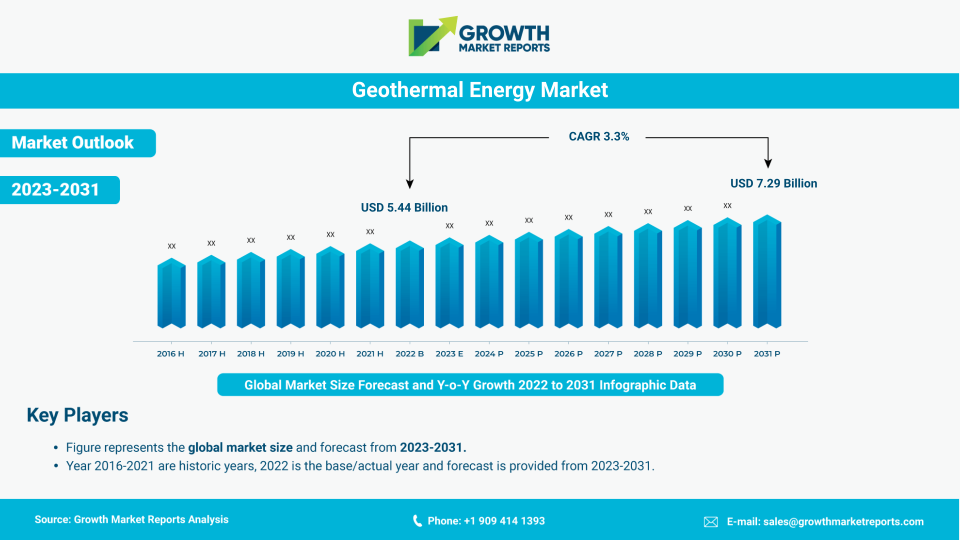
According to our latest research, the global geothermal energy market size reached USD 7.4 billion in 2024, reflecting a robust expansion driven by increasing demand for sustainable energy solutions. The market is projected to grow at a CAGR of 7.2% from 2025 to 2033, reaching an estimated USD 13.9 billion by 2033. This growth is primarily fueled by the global shift towards renewable energy, government incentives, and advancements in geothermal technologies, which are making geothermal energy more accessible and cost-effective across diverse regions.

A significant factor propelling the geothermal energy market is the escalating awareness of environmental sustainability and the urgent need to reduce carbon emissions. Governments worldwide are setting ambitious renewable energy targets, and geothermal energy, with its low carbon footprint and baseload power capabilities, is gaining prominence as a reliable alternative to fossil fuels. Financial incentives, tax breaks, and supportive regulatory frameworks are encouraging investments in geothermal projects, particularly in regions with high geothermal potential. Furthermore, the integration of geothermal energy into national grids is being prioritized to ensure energy security and diversification, which is further boosting market growth.

Technological advancements are playing a pivotal role in accelerating the adoption of geothermal energy. Innovations such as Enhanced Geothermal Systems (EGS), binary cycle power plants, and improved drilling techniques are expanding the range of viable geothermal resources, even in regions previously considered unsuitable. These advancements are reducing exploration risks and operational costs, making geothermal projects more economically feasible. Additionally, the development of hybrid power plants that combine geothermal energy with other renewables, such as solar and wind, is enhancing overall energy efficiency and grid stability, thereby increasing the attractiveness of geothermal investments.

Another crucial driver is the growing demand for direct use applications of geothermal energy, including district heating, greenhouse heating, and industrial processes. These applications are particularly prominent in Europe and North America, where infrastructure for district heating is well established. The versatility of geothermal energy in providing both electricity and heat makes it a valuable resource for various sectors, from residential to industrial. As urbanization and industrialization continue to rise, especially in emerging economies, the demand for sustainable heating and cooling solutions is expected to surge, further propelling market growth.

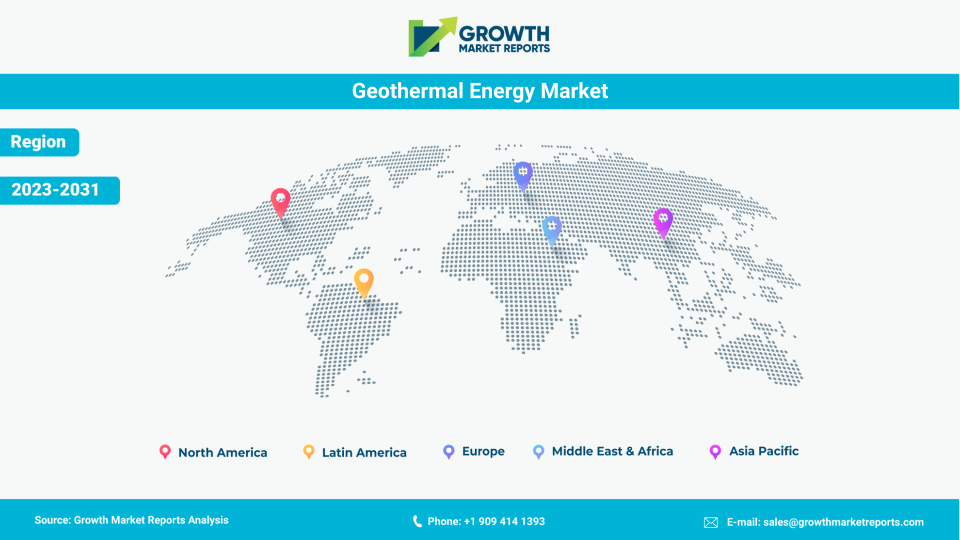
Regionally, the geothermal energy market exhibits significant variation, with Asia Pacific and North America leading in terms of installed capacity and project development. Countries such as the United States, Indonesia, the Philippines, and Turkey are at the forefront, leveraging their abundant geothermal resources. Europe, driven by robust policy support and the need to decarbonize its energy mix, is also witnessing substantial growth in geothermal investments. Meanwhile, Latin America and the Middle East & Africa are emerging as promising markets, supported by increasing exploration activities and international collaborations aimed at harnessing untapped geothermal potential.

Global Geothermal Energy Industry Outlook

Technology Analysis

The geothermal energy market is segmented by technology into binary cycle, flash steam, and dry steam systems, each offering unique advantages and applications. Binary cycle technology has gained significant traction in recent years due to its ability to utilize lower temperature geothermal resources, which are more widely available globally. This technology operates by transferring heat from geothermal water to a secondary fluid with a lower boiling point, allowing electricity generation even from moderate-temperature reservoirs. The versatility and efficiency of binary cycle plants are making them increasingly popular, especially in regions where high-temperature resources are scarce but moderate-temperature resources are abundant.

Geothermal Turbine Maintenance is an essential aspect of ensuring the longevity and efficiency of geothermal power plants. Regular maintenance routines are necessary to address the wear and tear that turbines experience due to high temperatures and pressures. This involves inspecting and servicing components such as blades, bearings, and seals to prevent failures and optimize performance. Advances in predictive maintenance technologies, including the use of sensors and data analytics, are enabling operators to anticipate issues before they lead to costly downtimes. By implementing robust maintenance strategies, geothermal power plants can maintain high operational efficiency and extend the lifespan of their turbines, thus enhancing the overall viability of geothermal energy projects.

Flash steam plants remain the most widely used geothermal technology worldwide, particularly in areas with high-temperature geothermal reservoirs. These systems work by depressurizing hot water from underground, causing it to vaporize or "flash" into steam, which then drives turbines to generate electricity. Flash steam technology is highly efficient and suitable for large-scale power generation, making it the preferred choice for utility-scale geothermal projects in geothermal-rich countries like the United States, Indonesia, and Kenya. However, the requirement for high-temperature resources limits its deployment to specific geographies.

Dry steam plants are the oldest form of geothermal power generation and are predominantly found in locations where underground reservoirs produce steam directly, such as The Geysers in California. While dry steam technology is highly efficient and requires less complex infrastructure compared to other methods, its application is limited by the scarcity of naturally occurring dry steam fields. As a result, the growth of this segment is relatively slow compared to binary cycle and flash steam technologies. Nevertheless, ongoing research and development efforts are focused on enhancing the efficiency and operational lifespan of existing dry steam plants.

The ongoing evolution of geothermal technologies is marked by significant investments in research and development, aimed at improving plant efficiency, reducing operational costs, and expanding the geographical scope of geothermal energy. Enhanced Geothermal Systems (EGS), which involve artificially creating geothermal reservoirs, are emerging as a game-changing technology, potentially unlocking vast new resources in previously untapped regions. The integration of digital technologies, such as remote sensing and real-time monitoring, is also optimizing plant performance and maintenance, contributing to the overall growth and competitiveness of the geothermal energy market.

Report Scope

Attributes Details
Report Title Geothermal Energy Market Research Report 2033
By Technology Binary Cycle, Flash Steam, Dry Steam
By Application Electricity Generation, Direct Use, District Heating, Greenhouse Heating, Others
By End-User Residential, Commercial, Industrial, Others
By Power Plant Type Geothermal Power Plants, Geothermal Heat Pumps
Regions Covered North America, Europe, APAC, Latin America, MEA
Base Year 2024
Historic Data 2018-2023
Forecast Period 2025-2033
Number of Pages 265
Number of Tables & Figures 392
Customization Available Yes, the report can be customized as per your need.

Application Analysis

The geothermal energy market is categorized by application into electricity generation, direct use, district heating, greenhouse heating, and others. Electricity generation remains the dominant application, accounting for a substantial share of the market. The reliability of geothermal power as a baseload energy source, capable of operating independently of weather conditions, gives it a significant advantage over intermittent renewables like solar and wind. This makes geothermal energy an attractive option for countries seeking to enhance grid stability and reduce reliance on fossil fuels. The global push towards decarbonization and energy security is expected to sustain the strong demand for geothermal electricity generation in the coming years.

Direct use applications of geothermal energy are gaining momentum, particularly in regions with established infrastructure for district heating. These applications encompass a wide range of uses, from heating buildings and greenhouses to supporting various industrial processes. In Europe, district heating systems powered by geothermal energy are expanding rapidly, driven by stringent emission reduction targets and the need for sustainable urban heating solutions. Greenhouse heating, which leverages geothermal energy to create optimal growing conditions, is also witnessing increased adoption, especially in countries with cold climates and a strong agricultural sector.

District heating represents a significant growth area within the geothermal energy market. The ability to provide continuous, low-emission heat to residential, commercial, and public buildings makes geothermal district heating systems highly attractive, particularly in densely populated urban areas. Countries such as Iceland, Germany, and the Netherlands are leading the way in deploying geothermal district heating networks, supported by favorable policies and investments in infrastructure. The scalability and efficiency of these systems are expected to drive further market expansion, especially as cities strive to achieve carbon neutrality.

The others segment includes innovative applications such as geothermal cooling, spa and wellness centers, and desalination. These niche uses are gradually gaining prominence as technological advancements enable the efficient harnessing of geothermal energy for diverse purposes. For instance, geothermal cooling systems are being adopted in commercial buildings to reduce energy consumption and operational costs. The versatility of geothermal energy, combined with ongoing research and development, is expected to unlock new application areas, contributing to the overall growth and diversification of the market.

End-User Analysis

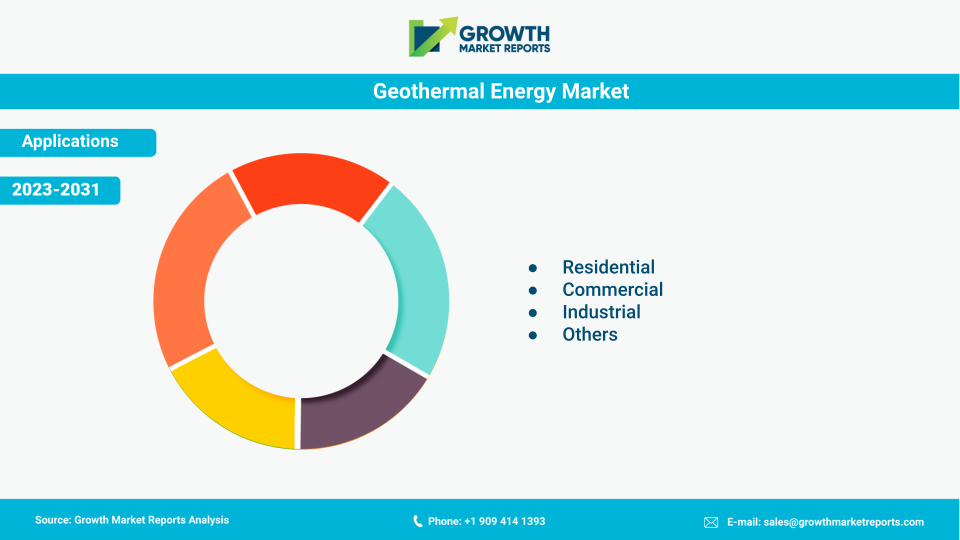
The geothermal energy market is segmented by end-user into residential, commercial, industrial, and others, each with distinct requirements and growth drivers. Residential end-users are increasingly adopting geothermal heat pumps for space heating and cooling, driven by rising energy costs and growing environmental awareness. The ability of geothermal systems to provide consistent and efficient heating and cooling throughout the year makes them an attractive option for homeowners, particularly in regions with extreme temperature variations. Government incentives and rebate programs are further encouraging the adoption of geothermal solutions in the residential sector.

Commercial end-users, including office buildings, shopping centers, and educational institutions, are leveraging geothermal energy to reduce operating costs and achieve sustainability targets. The long-term cost savings associated with geothermal heating and cooling systems, combined with their low maintenance requirements, are driving adoption in the commercial sector. Additionally, the integration of geothermal energy into green building certifications, such as LEED, is incentivizing developers to incorporate geothermal solutions into new construction projects, thereby expanding the market.

Industrial end-users represent a significant growth opportunity for the geothermal energy market. Industries with high energy demands, such as food processing, pulp and paper, and chemical manufacturing, are increasingly turning to geothermal energy for process heating and cooling. The reliability and cost-effectiveness of geothermal systems are particularly appealing to industrial users seeking to enhance operational efficiency and reduce carbon emissions. As industrial decarbonization becomes a priority, the adoption of geothermal energy in this segment is expected to accelerate.

The others category includes public sector entities, municipalities, and organizations involved in innovative geothermal applications, such as district energy systems and community heating projects. These end-users are often at the forefront of adopting geothermal energy, supported by public funding and policy initiatives aimed at promoting sustainable energy solutions. The collaborative efforts between governments, utilities, and private sector players are fostering the development of large-scale geothermal projects, further driving market growth across diverse end-user segments.

Power Plant Type Analysis

The geothermal energy market is further segmented by power plant type into geothermal power plants and geothermal heat pumps. Geothermal power plants are primarily focused on large-scale electricity generation, utilizing high-temperature geothermal resources to produce steam and drive turbines. These plants are typically located in regions with significant geothermal activity, such as the Pacific Ring of Fire. The scalability and reliability of geothermal power plants make them a vital component of national energy strategies, particularly in countries seeking to diversify their energy mix and reduce greenhouse gas emissions.

Geothermal heat pumps (GHPs) are gaining widespread adoption in both residential and commercial sectors for space heating and cooling. Unlike traditional power plants, GHPs leverage the stable temperature of the earth to provide efficient thermal energy exchange, resulting in significant energy savings and reduced environmental impact. The growing emphasis on energy efficiency and the increasing adoption of green building standards are driving the demand for geothermal heat pumps. Technological advancements in GHP systems, such as improved heat exchangers and smart controls, are further enhancing their performance and market appeal.

The integration of geothermal heat pumps into district heating and cooling networks is emerging as a key trend, particularly in urban areas with high population density. These systems offer a sustainable solution for meeting the heating and cooling needs of multiple buildings, reducing reliance on conventional energy sources and lowering overall carbon emissions. The ability to retrofit existing infrastructure with geothermal heat pumps is also expanding the addressable market, enabling older buildings to benefit from modern, energy-efficient solutions.

The ongoing transition towards decentralized energy systems is expected to boost the adoption of both geothermal power plants and heat pumps. As energy consumers seek greater control over their energy supply and costs, the flexibility and efficiency of geothermal solutions are becoming increasingly attractive. The combination of centralized power generation and distributed heating and cooling systems positions geothermal energy as a versatile and resilient component of the global energy landscape.

Opportunities & Threats

The geothermal energy market presents numerous opportunities for growth and innovation. One of the most promising opportunities lies in the development of Enhanced Geothermal Systems (EGS), which have the potential to unlock vast new geothermal resources in regions previously considered unsuitable for conventional geothermal projects. EGS technology involves creating artificial reservoirs by fracturing hot rock formations, enabling the extraction of geothermal energy from a much broader geographical area. This breakthrough has the potential to significantly expand the global geothermal resource base, driving new investments and project development in both developed and emerging markets.

Another key opportunity is the integration of geothermal energy with other renewable energy sources, such as solar and wind, to create hybrid power plants. These systems can enhance grid stability and reliability by providing continuous, baseload power, complementing the intermittent nature of other renewables. The development of advanced energy storage solutions, coupled with digital technologies for real-time monitoring and optimization, is further enhancing the value proposition of geothermal energy. Additionally, the growing demand for sustainable heating and cooling solutions in urban areas presents significant opportunities for the expansion of geothermal district heating and cooling networks.

Despite the numerous opportunities, the geothermal energy market faces several restraining factors. One of the primary challenges is the high upfront cost and risk associated with geothermal exploration and drilling. The identification and development of viable geothermal resources require substantial investments in geological surveys, drilling, and infrastructure, with no guarantee of success. This financial risk can deter potential investors, particularly in regions with limited access to capital or underdeveloped regulatory frameworks. Addressing these challenges will require continued innovation in exploration technologies, risk mitigation strategies, and supportive policy measures to attract investment and drive market growth.

Regional Outlook

The regional outlook for the geothermal energy market reveals significant disparities in market size, growth rates, and resource availability. Asia Pacific is the leading region, with a market value of approximately USD 2.7 billion in 2024, driven by countries such as Indonesia and the Philippines, which possess abundant geothermal resources. The region is expected to maintain a strong growth trajectory, supported by government initiatives, international partnerships, and increasing investments in new geothermal projects. The rapid urbanization and rising energy demand in Asia Pacific are further fueling the adoption of geothermal energy for both electricity generation and direct use applications.

North America holds a significant share of the global geothermal energy market, valued at around USD 2.1 billion in 2024. The United States is the largest contributor, with extensive geothermal power generation capacity, particularly in states like California and Nevada. The region is witnessing steady growth, with a projected CAGR of 6.8% through 2033, driven by supportive policies, technological advancements, and increasing demand for renewable energy. The expansion of geothermal heat pump installations in residential and commercial sectors is also contributing to market growth in North America.

Europe is emerging as a key market for geothermal energy, with a 2024 market size of USD 1.6 billion. The region is characterized by strong policy support, ambitious renewable energy targets, and a well-established district heating infrastructure. Countries such as Iceland, Germany, and Turkey are leading the way in geothermal development, leveraging both high-temperature resources for power generation and moderate-temperature resources for direct use applications. The focus on decarbonizing the heating sector and enhancing energy security is expected to drive continued growth in the European geothermal energy market.

Geothermal Energy Market Statistics

Competitor Outlook

The competitive landscape of the geothermal energy market is characterized by a mix of established players, emerging companies, and regional specialists, all vying for market share through technological innovation, strategic partnerships, and project development. Major companies are investing heavily in research and development to enhance the efficiency and cost-effectiveness of geothermal technologies, while also expanding their global footprint through the development of new projects and acquisitions. The market is also witnessing increased collaboration between public and private sector entities, aimed at accelerating the deployment of geothermal energy and overcoming barriers to entry in new markets.

Leading players in the geothermal energy market are focusing on the development of advanced technologies, such as Enhanced Geothermal Systems (EGS), binary cycle power plants, and digital solutions for real-time monitoring and optimization. These innovations are enabling companies to tap into previously inaccessible geothermal resources, reduce operational costs, and improve the overall performance of geothermal projects. The ability to offer integrated solutions, encompassing project development, engineering, procurement, and operation and maintenance services, is emerging as a key differentiator in the competitive landscape.

The market is also witnessing the entry of new players, particularly in regions with untapped geothermal potential. These companies are leveraging local expertise, innovative business models, and partnerships with international organizations to accelerate project development and gain a foothold in the market. The increasing focus on sustainability and the transition to renewable energy is attracting investment from a diverse range of stakeholders, including utilities, independent power producers, and financial institutions, further intensifying competition and driving market growth.

Some of the major companies operating in the geothermal energy market include Ormat Technologies Inc., Calpine Corporation, Enel Green Power, Mitsubishi Power Ltd., Toshiba Energy Systems & Solutions Corporation, Fuji Electric Co. Ltd., and Reykjavik Geothermal. Ormat Technologies is a global leader in geothermal power plant development and operation, with a strong presence in the United States, Kenya, and Indonesia. Calpine Corporation is one of the largest geothermal power producers in North America, operating the renowned Geysers complex in California. Enel Green Power has a diversified portfolio of geothermal projects across Europe, North America, and Latin America, focusing on technological innovation and sustainability.

Mitsubishi Power Ltd. and Toshiba Energy Systems & Solutions Corporation are leading providers of geothermal power plant equipment and services, with a strong track record in project delivery and technological innovation. Fuji Electric Co. Ltd. is renowned for its expertise in geothermal turbines and generators, supporting projects worldwide. Reykjavik Geothermal specializes in the development of geothermal projects in emerging markets, leveraging its expertise in resource assessment and project management. These companies, along with numerous regional players, are driving the growth and competitiveness of the global geothermal energy market through continuous innovation and strategic expansion.

Key Players

  • Ormat Technologies Inc.
  • Calpine Corporation
  • Enel Green Power S.p.A.
  • Chevron Corporation
  • KenGen (Kenya Electricity Generating Company)
  • Contact Energy Limited
  • Pertamina Geothermal Energy
  • Toshiba Energy Systems & Solutions Corporation
  • Mitsubishi Power, Ltd.
  • Fuji Electric Co., Ltd.
  • Ansaldo Energia S.p.A.
  • Turboden S.p.A.
  • Halliburton Company
  • Baker Hughes Company
  • Exergy S.p.A.
  • Atlas Copco AB
  • Siemens Energy AG
  • Mannvit Engineering
  • Climeon AB
  • GreenFire Energy Inc.
Geothermal Energy Market Overview

Segments

The Geothermal Energy market has been segmented on the basis of

Technology

  • Binary Cycle
  • Flash Steam
  • Dry Steam

Application

  • Electricity Generation
  • Direct Use
  • District Heating
  • Greenhouse Heating
  • Others

End-User

  • Residential
  • Commercial
  • Industrial
  • Others

Power Plant Type

  • Geothermal Power Plants
  • Geothermal Heat Pumps

Competitive Landscape

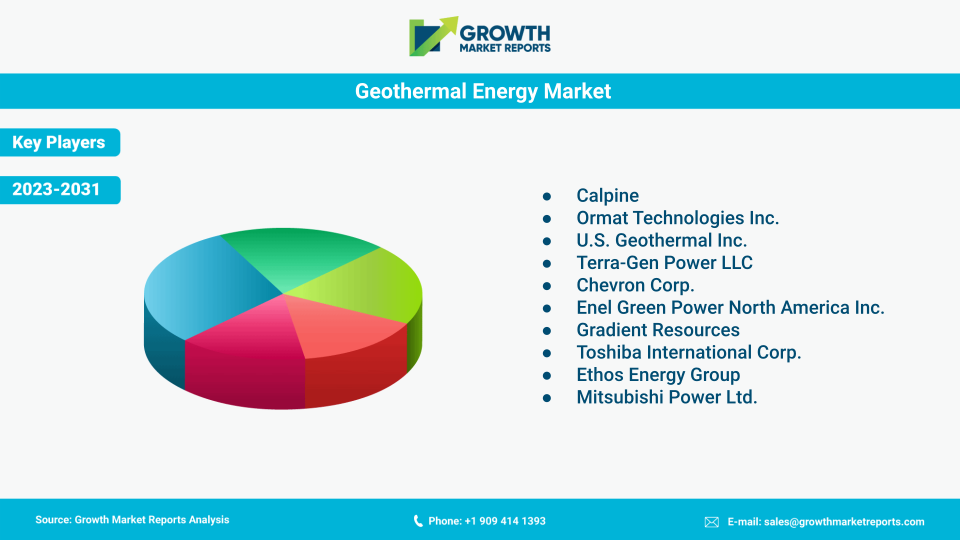
Key players competing in the geothermal energy market include Calpine, Ormat Technologies Inc., U.S. Geothermal Inc., Terra-Gen Power LLC, Chevron Corp., Enel Green Power North America Inc., Gradient Resources, Toshiba International Corp., EthosEnergy Group, ThermaSource LLC, Engie SA, Tetra Tech Inc., Mitsubishi Power Ltd.

Due to the competitive nature of the market some of the players are adopting several business strategies such as mergers, acquisitions, partnerships, collaborations, capacity expansion, and product launches to enhance their market shares. For instance, In October 2020, Mitsubishi Power Ltd completed renovation of its geothermal plant located in in Oita Prefecture, Japan. Renovation was undertaken to increase the power output of the plant by two megawatts (MW) compared to the previous facility.

Geothermal Energy Market Key Players

Frequently Asked Questions

Geothermal energy is increasingly being combined with solar and wind in hybrid power plants to enhance grid stability and provide continuous, baseload power, complementing intermittent renewables.

Key companies include Ormat Technologies Inc., Calpine Corporation, Enel Green Power, Mitsubishi Power Ltd., Toshiba Energy Systems & Solutions Corporation, Fuji Electric Co. Ltd., and Reykjavik Geothermal, among others.

Major challenges include high upfront costs and exploration risks, limited availability of high-temperature resources, and the need for supportive regulatory frameworks and investment.

Enhanced Geothermal Systems (EGS) involve creating artificial geothermal reservoirs, enabling energy extraction from previously unsuitable regions. EGS technology could significantly expand the global geothermal resource base.

Geothermal heat pumps are increasingly adopted in residential and commercial sectors for space heating and cooling, offering significant energy savings and supporting green building initiatives.

Geothermal energy is primarily used for electricity generation, direct use (such as district heating and greenhouse heating), and industrial processes. Electricity generation remains the dominant application globally.

The main technologies are binary cycle, flash steam, and dry steam systems. Binary cycle is suitable for moderate-temperature resources, flash steam is used for high-temperature reservoirs, and dry steam is limited to areas with naturally occurring steam.

Asia Pacific and North America are leading regions, with significant contributions from countries like the United States, Indonesia, the Philippines, and Turkey. Europe is also experiencing substantial growth due to strong policy support.

Key growth drivers include increasing demand for sustainable energy, government incentives, advancements in geothermal technologies, and the global shift towards reducing carbon emissions.

The global geothermal energy market reached USD 7.4 billion in 2024 and is projected to grow at a CAGR of 7.2% from 2025 to 2033, reaching approximately USD 13.9 billion by 2033.

Table Of Content

Chapter 1 Executive Summary
Chapter 2 Assumptions and Acronyms Used
Chapter 3 Research Methodology
Chapter 4 Geothermal Energy Market Overview
   4.1 Introduction
      4.1.1 Market Taxonomy
      4.1.2 Market Definition
      4.1.3 Macro-Economic Factors Impacting the Market Growth
   4.2 Geothermal Energy Market Dynamics
      4.2.1 Market Drivers
      4.2.2 Market Restraints
      4.2.3 Market Opportunity
   4.3 Geothermal Energy Market - Supply Chain Analysis
      4.3.1 List of Key Suppliers
      4.3.2 List of Key Distributors
      4.3.3 List of Key Consumers
   4.4 Key Forces Shaping the Geothermal Energy Market
      4.4.1 Bargaining Power of Suppliers
      4.4.2 Bargaining Power of Buyers
      4.4.3 Threat of Substitution
      4.4.4 Threat of New Entrants
      4.4.5 Competitive Rivalry
   4.5 Global Geothermal Energy Market Size & Forecast, 2023-2032
      4.5.1 Geothermal Energy Market Size and Y-o-Y Growth
      4.5.2 Geothermal Energy Market Absolute $ Opportunity

Chapter 5 Global Geothermal Energy Market Analysis and Forecast By Technology
   5.1 Introduction
      5.1.1 Key Market Trends & Growth Opportunities By Technology
      5.1.2 Basis Point Share (BPS) Analysis By Technology
      5.1.3 Absolute $ Opportunity Assessment By Technology
   5.2 Geothermal Energy Market Size Forecast By Technology
      5.2.1 Binary Cycle
      5.2.2 Flash Steam
      5.2.3 Dry Steam
   5.3 Market Attractiveness Analysis By Technology

Chapter 6 Global Geothermal Energy Market Analysis and Forecast By Application
   6.1 Introduction
      6.1.1 Key Market Trends & Growth Opportunities By Application
      6.1.2 Basis Point Share (BPS) Analysis By Application
      6.1.3 Absolute $ Opportunity Assessment By Application
   6.2 Geothermal Energy Market Size Forecast By Application
      6.2.1 Electricity Generation
      6.2.2 Direct Use
      6.2.3 District Heating
      6.2.4 Greenhouse Heating
      6.2.5 Others
   6.3 Market Attractiveness Analysis By Application

Chapter 7 Global Geothermal Energy Market Analysis and Forecast By End-User
   7.1 Introduction
      7.1.1 Key Market Trends & Growth Opportunities By End-User
      7.1.2 Basis Point Share (BPS) Analysis By End-User
      7.1.3 Absolute $ Opportunity Assessment By End-User
   7.2 Geothermal Energy Market Size Forecast By End-User
      7.2.1 Residential
      7.2.2 Commercial
      7.2.3 Industrial
      7.2.4 Others
   7.3 Market Attractiveness Analysis By End-User

Chapter 8 Global Geothermal Energy Market Analysis and Forecast By Power Plant Type
   8.1 Introduction
      8.1.1 Key Market Trends & Growth Opportunities By Power Plant Type
      8.1.2 Basis Point Share (BPS) Analysis By Power Plant Type
      8.1.3 Absolute $ Opportunity Assessment By Power Plant Type
   8.2 Geothermal Energy Market Size Forecast By Power Plant Type
      8.2.1 Geothermal Power Plants
      8.2.2 Geothermal Heat Pumps
   8.3 Market Attractiveness Analysis By Power Plant Type

Chapter 9 Global Geothermal Energy Market Analysis and Forecast by Region
   9.1 Introduction
      9.1.1 Key Market Trends & Growth Opportunities By Region
      9.1.2 Basis Point Share (BPS) Analysis By Region
      9.1.3 Absolute $ Opportunity Assessment By Region
   9.2 Geothermal Energy Market Size Forecast By Region
      9.2.1 North America
      9.2.2 Europe
      9.2.3 Asia Pacific
      9.2.4 Latin America
      9.2.5 Middle East & Africa (MEA)
   9.3 Market Attractiveness Analysis By Region

Chapter 10 Coronavirus Disease (COVID-19) Impact 
   10.1 Introduction 
   10.2 Current & Future Impact Analysis 
   10.3 Economic Impact Analysis 
   10.4 Government Policies 
   10.5 Investment Scenario

Chapter 11 North America Geothermal Energy Analysis and Forecast
   11.1 Introduction
   11.2 North America Geothermal Energy Market Size Forecast by Country
      11.2.1 U.S.
      11.2.2 Canada
   11.3 Basis Point Share (BPS) Analysis by Country
   11.4 Absolute $ Opportunity Assessment by Country
   11.5 Market Attractiveness Analysis by Country
   11.6 North America Geothermal Energy Market Size Forecast By Technology
      11.6.1 Binary Cycle
      11.6.2 Flash Steam
      11.6.3 Dry Steam
   11.7 Basis Point Share (BPS) Analysis By Technology 
   11.8 Absolute $ Opportunity Assessment By Technology 
   11.9 Market Attractiveness Analysis By Technology
   11.10 North America Geothermal Energy Market Size Forecast By Application
      11.10.1 Electricity Generation
      11.10.2 Direct Use
      11.10.3 District Heating
      11.10.4 Greenhouse Heating
      11.10.5 Others
   11.11 Basis Point Share (BPS) Analysis By Application 
   11.12 Absolute $ Opportunity Assessment By Application 
   11.13 Market Attractiveness Analysis By Application
   11.14 North America Geothermal Energy Market Size Forecast By End-User
      11.14.1 Residential
      11.14.2 Commercial
      11.14.3 Industrial
      11.14.4 Others
   11.15 Basis Point Share (BPS) Analysis By End-User 
   11.16 Absolute $ Opportunity Assessment By End-User 
   11.17 Market Attractiveness Analysis By End-User
   11.18 North America Geothermal Energy Market Size Forecast By Power Plant Type
      11.18.1 Geothermal Power Plants
      11.18.2 Geothermal Heat Pumps
   11.19 Basis Point Share (BPS) Analysis By Power Plant Type 
   11.20 Absolute $ Opportunity Assessment By Power Plant Type 
   11.21 Market Attractiveness Analysis By Power Plant Type

Chapter 12 Europe Geothermal Energy Analysis and Forecast
   12.1 Introduction
   12.2 Europe Geothermal Energy Market Size Forecast by Country
      12.2.1 Germany
      12.2.2 France
      12.2.3 Italy
      12.2.4 U.K.
      12.2.5 Spain
      12.2.6 Russia
      12.2.7 Rest of Europe
   12.3 Basis Point Share (BPS) Analysis by Country
   12.4 Absolute $ Opportunity Assessment by Country
   12.5 Market Attractiveness Analysis by Country
   12.6 Europe Geothermal Energy Market Size Forecast By Technology
      12.6.1 Binary Cycle
      12.6.2 Flash Steam
      12.6.3 Dry Steam
   12.7 Basis Point Share (BPS) Analysis By Technology 
   12.8 Absolute $ Opportunity Assessment By Technology 
   12.9 Market Attractiveness Analysis By Technology
   12.10 Europe Geothermal Energy Market Size Forecast By Application
      12.10.1 Electricity Generation
      12.10.2 Direct Use
      12.10.3 District Heating
      12.10.4 Greenhouse Heating
      12.10.5 Others
   12.11 Basis Point Share (BPS) Analysis By Application 
   12.12 Absolute $ Opportunity Assessment By Application 
   12.13 Market Attractiveness Analysis By Application
   12.14 Europe Geothermal Energy Market Size Forecast By End-User
      12.14.1 Residential
      12.14.2 Commercial
      12.14.3 Industrial
      12.14.4 Others
   12.15 Basis Point Share (BPS) Analysis By End-User 
   12.16 Absolute $ Opportunity Assessment By End-User 
   12.17 Market Attractiveness Analysis By End-User
   12.18 Europe Geothermal Energy Market Size Forecast By Power Plant Type
      12.18.1 Geothermal Power Plants
      12.18.2 Geothermal Heat Pumps
   12.19 Basis Point Share (BPS) Analysis By Power Plant Type 
   12.20 Absolute $ Opportunity Assessment By Power Plant Type 
   12.21 Market Attractiveness Analysis By Power Plant Type

Chapter 13 Asia Pacific Geothermal Energy Analysis and Forecast
   13.1 Introduction
   13.2 Asia Pacific Geothermal Energy Market Size Forecast by Country
      13.2.1 China
      13.2.2 Japan
      13.2.3 South Korea
      13.2.4 India
      13.2.5 Australia
      13.2.6 South East Asia (SEA)
      13.2.7 Rest of Asia Pacific (APAC)
   13.3 Basis Point Share (BPS) Analysis by Country
   13.4 Absolute $ Opportunity Assessment by Country
   13.5 Market Attractiveness Analysis by Country
   13.6 Asia Pacific Geothermal Energy Market Size Forecast By Technology
      13.6.1 Binary Cycle
      13.6.2 Flash Steam
      13.6.3 Dry Steam
   13.7 Basis Point Share (BPS) Analysis By Technology 
   13.8 Absolute $ Opportunity Assessment By Technology 
   13.9 Market Attractiveness Analysis By Technology
   13.10 Asia Pacific Geothermal Energy Market Size Forecast By Application
      13.10.1 Electricity Generation
      13.10.2 Direct Use
      13.10.3 District Heating
      13.10.4 Greenhouse Heating
      13.10.5 Others
   13.11 Basis Point Share (BPS) Analysis By Application 
   13.12 Absolute $ Opportunity Assessment By Application 
   13.13 Market Attractiveness Analysis By Application
   13.14 Asia Pacific Geothermal Energy Market Size Forecast By End-User
      13.14.1 Residential
      13.14.2 Commercial
      13.14.3 Industrial
      13.14.4 Others
   13.15 Basis Point Share (BPS) Analysis By End-User 
   13.16 Absolute $ Opportunity Assessment By End-User 
   13.17 Market Attractiveness Analysis By End-User
   13.18 Asia Pacific Geothermal Energy Market Size Forecast By Power Plant Type
      13.18.1 Geothermal Power Plants
      13.18.2 Geothermal Heat Pumps
   13.19 Basis Point Share (BPS) Analysis By Power Plant Type 
   13.20 Absolute $ Opportunity Assessment By Power Plant Type 
   13.21 Market Attractiveness Analysis By Power Plant Type

Chapter 14 Latin America Geothermal Energy Analysis and Forecast
   14.1 Introduction
   14.2 Latin America Geothermal Energy Market Size Forecast by Country
      14.2.1 Brazil
      14.2.2 Mexico
      14.2.3 Rest of Latin America (LATAM)
   14.3 Basis Point Share (BPS) Analysis by Country
   14.4 Absolute $ Opportunity Assessment by Country
   14.5 Market Attractiveness Analysis by Country
   14.6 Latin America Geothermal Energy Market Size Forecast By Technology
      14.6.1 Binary Cycle
      14.6.2 Flash Steam
      14.6.3 Dry Steam
   14.7 Basis Point Share (BPS) Analysis By Technology 
   14.8 Absolute $ Opportunity Assessment By Technology 
   14.9 Market Attractiveness Analysis By Technology
   14.10 Latin America Geothermal Energy Market Size Forecast By Application
      14.10.1 Electricity Generation
      14.10.2 Direct Use
      14.10.3 District Heating
      14.10.4 Greenhouse Heating
      14.10.5 Others
   14.11 Basis Point Share (BPS) Analysis By Application 
   14.12 Absolute $ Opportunity Assessment By Application 
   14.13 Market Attractiveness Analysis By Application
   14.14 Latin America Geothermal Energy Market Size Forecast By End-User
      14.14.1 Residential
      14.14.2 Commercial
      14.14.3 Industrial
      14.14.4 Others
   14.15 Basis Point Share (BPS) Analysis By End-User 
   14.16 Absolute $ Opportunity Assessment By End-User 
   14.17 Market Attractiveness Analysis By End-User
   14.18 Latin America Geothermal Energy Market Size Forecast By Power Plant Type
      14.18.1 Geothermal Power Plants
      14.18.2 Geothermal Heat Pumps
   14.19 Basis Point Share (BPS) Analysis By Power Plant Type 
   14.20 Absolute $ Opportunity Assessment By Power Plant Type 
   14.21 Market Attractiveness Analysis By Power Plant Type

Chapter 15 Middle East & Africa (MEA) Geothermal Energy Analysis and Forecast
   15.1 Introduction
   15.2 Middle East & Africa (MEA) Geothermal Energy Market Size Forecast by Country
      15.2.1 Saudi Arabia
      15.2.2 South Africa
      15.2.3 UAE
      15.2.4 Rest of Middle East & Africa (MEA)
   15.3 Basis Point Share (BPS) Analysis by Country
   15.4 Absolute $ Opportunity Assessment by Country
   15.5 Market Attractiveness Analysis by Country
   15.6 Middle East & Africa (MEA) Geothermal Energy Market Size Forecast By Technology
      15.6.1 Binary Cycle
      15.6.2 Flash Steam
      15.6.3 Dry Steam
   15.7 Basis Point Share (BPS) Analysis By Technology 
   15.8 Absolute $ Opportunity Assessment By Technology 
   15.9 Market Attractiveness Analysis By Technology
   15.10 Middle East & Africa (MEA) Geothermal Energy Market Size Forecast By Application
      15.10.1 Electricity Generation
      15.10.2 Direct Use
      15.10.3 District Heating
      15.10.4 Greenhouse Heating
      15.10.5 Others
   15.11 Basis Point Share (BPS) Analysis By Application 
   15.12 Absolute $ Opportunity Assessment By Application 
   15.13 Market Attractiveness Analysis By Application
   15.14 Middle East & Africa (MEA) Geothermal Energy Market Size Forecast By End-User
      15.14.1 Residential
      15.14.2 Commercial
      15.14.3 Industrial
      15.14.4 Others
   15.15 Basis Point Share (BPS) Analysis By End-User 
   15.16 Absolute $ Opportunity Assessment By End-User 
   15.17 Market Attractiveness Analysis By End-User
   15.18 Middle East & Africa (MEA) Geothermal Energy Market Size Forecast By Power Plant Type
      15.18.1 Geothermal Power Plants
      15.18.2 Geothermal Heat Pumps
   15.19 Basis Point Share (BPS) Analysis By Power Plant Type 
   15.20 Absolute $ Opportunity Assessment By Power Plant Type 
   15.21 Market Attractiveness Analysis By Power Plant Type

Chapter 16 Competition Landscape 
   16.1 Geothermal Energy Market: Competitive Dashboard
   16.2 Global Geothermal Energy Market: Market Share Analysis, 2023
   16.3 Company Profiles (Details – Overview, Financials, Developments, Strategy) 
      16.3.1 Ormat Technologies Inc.
Calpine Corporation
Enel Green Power S.p.A.
Chevron Corporation
KenGen (Kenya Electricity Generating Company)
Contact Energy Limited
Pertamina Geothermal Energy
Toshiba Energy Systems & Solutions Corporation
Mitsubishi Power, Ltd.
Fuji Electric Co., Ltd.
Ansaldo Energia S.p.A.
Turboden S.p.A.
Halliburton Company
Baker Hughes Company
Exergy S.p.A.
Atlas Copco AB
Siemens Energy AG
Mannvit Engineering
Climeon AB
GreenFire Energy Inc.

Methodology

Our Clients

sinopec
General Mills
Pfizer
General Electric
FedEx Logistics
Deloitte
Nestle SA
The John Holland Group