Segments - by Product Type (Bolt-Action Sniper Rifles, Semi-Automatic Sniper Rifles, Anti-Material Rifles, Others), by Caliber (Below 0.50 Caliber, 0.50 Caliber and Above), by Application (Military, Law Enforcement, Civilian, Others), by Range (Short Range, Medium Range, Long Range), by Distribution Channel (Direct Sales, Distributors, Online Sales, Others)
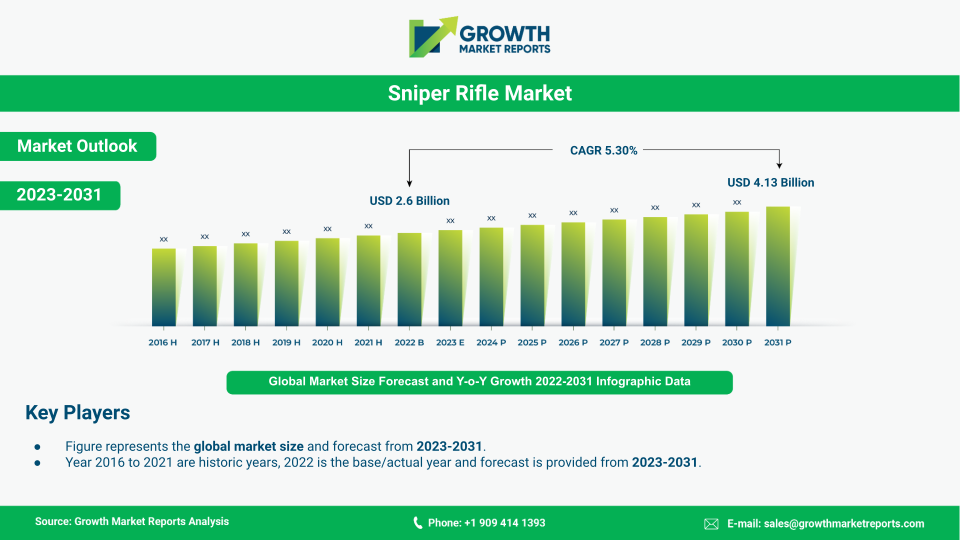
According to our latest research, the global sniper rifle market size reached USD 1.47 billion in 2024, driven by increasing defense modernization programs, law enforcement procurement, and growing civilian interest in precision shooting sports. The market is expected to expand at a robust CAGR of 5.9% from 2025 to 2033, reaching a projected value of USD 2.53 billion by 2033. This growth trajectory is fueled primarily by heightened military investments, evolving security threats, and technological advancements in rifle design and manufacturing.
The primary growth factor for the sniper rifle market is the rising demand for advanced precision weaponry among military and law enforcement agencies worldwide. Nations are increasingly prioritizing the modernization of their armed forces, often incorporating next-generation sniper systems into their arsenals to enhance operational effectiveness. The proliferation of asymmetric warfare, counter-terrorism operations, and border security challenges has further underscored the need for highly accurate, long-range rifles that can deliver precise engagement in diverse environments. As a result, major defense contractors and manufacturers are investing heavily in research and development to introduce innovative features such as improved optics, modular platforms, and lighter materials, all of which contribute to the market's robust expansion.
Another significant driver is the growing participation of civilians in long-range shooting sports and hunting activities, particularly in North America and Europe. The popularity of competitive shooting events and recreational marksmanship has spurred demand for civilian-legal variants of sniper rifles, often featuring enhanced ergonomics and user-friendly designs. Additionally, the expansion of online sales channels and specialized distributors has made it easier for enthusiasts to access a wide variety of sniper rifle models, further stimulating market growth. Moreover, the increasing prevalence of private security agencies and the need for specialized firearms for asset protection have also contributed to the steady rise in demand across multiple end-user segments.
Technological innovation remains a cornerstone of the sniper rifle market's growth. The integration of advanced materials such as carbon fiber and high-strength alloys has resulted in rifles that are both lighter and more durable, improving mobility and reducing operator fatigue. Enhanced optics systems, including thermal and night vision capabilities, have significantly increased the effectiveness of sniper rifles in low-light and adverse weather conditions. Furthermore, the adoption of digital fire control systems and ballistics calculators has enabled shooters to achieve greater accuracy at extended ranges, making modern sniper rifles indispensable tools for both military and civilian applications. These advancements are expected to continue driving market competitiveness and differentiation over the forecast period.
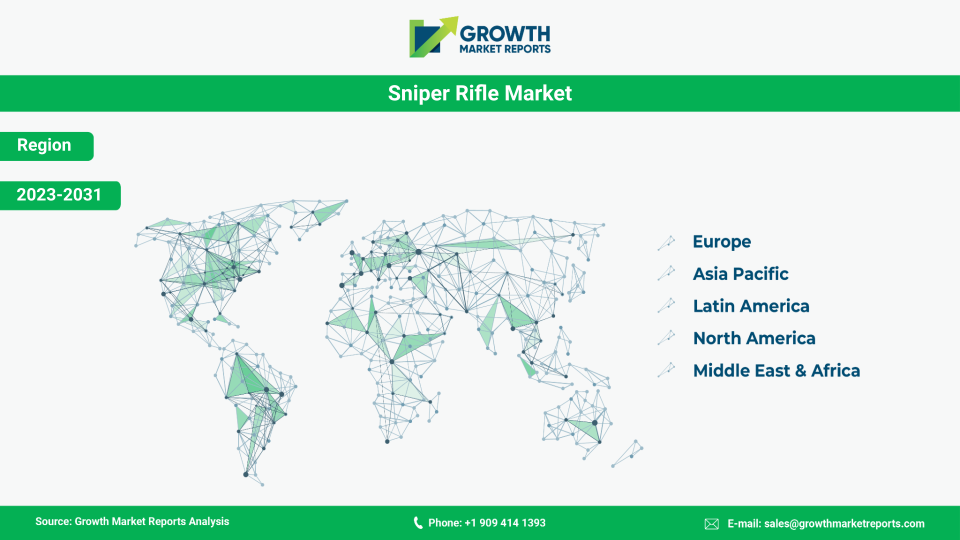
From a regional perspective, North America currently leads the global sniper rifle market, accounting for the largest revenue share in 2024, followed closely by Europe and Asia Pacific. The United States, in particular, is a major market, driven by substantial defense budgets, ongoing military modernization, and a robust civilian shooting sports culture. Europe’s growth is propelled by increasing defense spending among NATO members and heightened security concerns. Meanwhile, the Asia Pacific region is experiencing rapid growth due to rising military expenditures in countries such as India, China, and South Korea, as well as the expansion of law enforcement agencies. Latin America and the Middle East & Africa, while smaller in market share, are witnessing steady growth driven by security modernization and counter-terrorism initiatives.
The sniper rifle market is segmented by product type into bolt-action sniper rifles, semi-automatic sniper rifles, anti-material rifles, and others. Bolt-action sniper rifles continue to dominate the market due to their renowned accuracy, reliability, and simplicity of design. These rifles are favored by military snipers and law enforcement marksmen for their ability to deliver consistent precision over long distances, making them the weapon of choice for many elite units. The enduring popularity of bolt-action platforms is also attributed to their ease of maintenance and adaptability to various calibers and mission profiles. Manufacturers are continuously refining bolt-action designs with improved triggers, barrels, and stocks to meet evolving operational requirements.
Semi-automatic sniper rifles are gaining traction, particularly in scenarios that demand rapid follow-up shots and higher rates of fire without sacrificing accuracy. These rifles are increasingly being adopted by military and police forces engaged in urban warfare, counter-insurgency, and special operations. Advances in gas-operated systems, recoil mitigation, and magazine capacity have made semi-automatic sniper rifles more competitive with traditional bolt-action models. Their versatility and ability to engage multiple targets quickly are highly valued in dynamic combat environments, contributing to their growing market share.
Anti-material rifles represent a specialized segment designed to engage hard targets such as vehicles, equipment, and fortified positions. These rifles typically chamber large-caliber rounds, often .50 BMG or above, and are capable of delivering devastating firepower at extended ranges. The demand for anti-material rifles is being driven by modern battlefield requirements, where disabling enemy infrastructure and neutralizing high-value assets are critical mission objectives. Law enforcement agencies also utilize these rifles for specific tasks such as disabling vehicles or breaching barriers during high-risk operations.
The "others" category includes emerging product types and hybrid platforms that combine features from bolt-action and semi-automatic designs. Innovations such as modular sniper systems, which allow users to switch calibers and configurations, are gaining popularity among both military and civilian users. These systems offer unparalleled flexibility and can be tailored to specific mission profiles, further expanding the addressable market. The ongoing evolution of sniper rifle technology is expected to blur the lines between traditional segments, fostering greater competition and innovation in the years ahead.
| Attributes | Details |
| Report Title | Sniper Rifle Market Research Report 2033 |
| By Product Type | Bolt-Action Sniper Rifles, Semi-Automatic Sniper Rifles, Anti-Material Rifles, Others |
| By Caliber | Below 0.50 Caliber, 0.50 Caliber and Above |
| By Application | Military, Law Enforcement, Civilian, Others |
| By Range | Short Range, Medium Range, Long Range |
| By Distribution Channel | Direct Sales, Distributors, Online Sales, Others |
| Regions Covered | North America, Europe, APAC, Latin America, MEA |
| Countries Covered | North America (United States, Canada), Europe (Germany, France, Italy, United Kingdom, Spain, Russia, Rest of Europe), Asia Pacific (China, Japan, South Korea, India, Australia, South East Asia (SEA), Rest of Asia Pacific), Latin America (Mexico, Brazil, Rest of Latin America), Middle East & Africa (Saudi Arabia, South Africa, United Arab Emirates, Rest of Middle East & Africa) |
| Base Year | 2024 |
| Historic Data | 2018-2023 |
| Forecast Period | 2025-2033 |
| Number of Pages | 280 |
| Number of Tables & Figures | 364 |
| Customization Available | Yes, the report can be customized as per your need. |
The sniper rifle market is segmented by caliber into below 0.50 caliber and 0.50 caliber and above. Rifles chambered in calibers below 0.50, such as .308 Winchester, 7.62x51mm NATO, and .338 Lapua Magnum, remain the most widely used across military, law enforcement, and civilian applications. These calibers offer a balance of manageable recoil, high accuracy, and sufficient stopping power for most operational scenarios. Their widespread adoption is supported by the availability of ammunition, established training protocols, and the proven performance of these rounds in both combat and competition settings.
The 0.50 caliber and above segment is characterized by rifles designed for extreme long-range engagements and anti-material applications. The .50 BMG (Browning Machine Gun) round, for example, is renowned for its ability to penetrate armor and disable vehicles at distances exceeding 1,500 meters. These rifles are primarily used by military and specialized law enforcement units, although their use is expanding into civilian long-range shooting competitions and hunting of large game. The development of new high-caliber cartridges, such as the .416 Barrett, is further diversifying this segment and attracting interest from precision shooting enthusiasts seeking maximum range and impact.
Technological advancements in ammunition, such as improved ballistics and reduced wind drift, have enhanced the effectiveness of both sub-.50 and .50 caliber rifles. Manufacturers are investing in the development of match-grade rounds, polymer-tipped bullets, and specialized loads tailored to specific operational needs. These innovations are enabling shooters to achieve greater accuracy, flatter trajectories, and increased terminal performance, regardless of caliber. The continued evolution of ammunition technology is expected to play a pivotal role in shaping market trends and end-user preferences.
The choice of caliber is often dictated by mission requirements, regulatory considerations, and end-user preferences. Military and law enforcement agencies typically select calibers based on anticipated engagement distances, target types, and logistical factors. Civilian shooters, on the other hand, prioritize factors such as recoil management, ammunition cost, and competition rules. As the sniper rifle market continues to expand, manufacturers are offering a broader range of caliber options to cater to diverse customer needs, further driving market growth.
The sniper rifle market is segmented by application into military, law enforcement, civilian, and others. The military segment accounts for the largest share of market revenue, owing to sustained investments in sniper training, equipment modernization, and the procurement of advanced rifle systems. Military forces worldwide rely on sniper rifles for a wide range of missions, including reconnaissance, counter-sniper operations, and force protection. The increasing prevalence of asymmetric warfare and the need for precision engagement in complex environments have reinforced the importance of sniper capabilities within modern armed forces.
Law enforcement agencies represent a significant and growing segment of the sniper rifle market. Police tactical teams, SWAT units, and specialized law enforcement divisions utilize sniper rifles for hostage rescue, counter-terrorism, and high-risk warrant service. The demand for rifles with enhanced accuracy, rapid deployment capabilities, and compatibility with advanced optics is driving procurement decisions in this segment. Additionally, ongoing urbanization and the rise of transnational crime have necessitated the adoption of specialized sniper platforms tailored to law enforcement missions.
The civilian application segment is experiencing steady growth, fueled by the increasing popularity of long-range shooting sports, hunting, and recreational marksmanship. Civilian shooters are seeking rifles that offer precision, reliability, and customizable features, often mirroring the performance characteristics of their military and law enforcement counterparts. The proliferation of shooting competitions, such as Precision Rifle Series (PRS) events, has further stimulated demand for high-quality sniper rifles among enthusiasts and professional shooters alike.
The "others" category encompasses applications such as private security, wildlife management, and specialized industrial uses. Private security firms are increasingly equipping their personnel with sniper rifles for asset protection and critical infrastructure defense. In the field of wildlife management, sniper rifles are used for population control, research, and the humane culling of invasive species. These niche applications, while smaller in scale, contribute to the overall diversification and resilience of the sniper rifle market.
The sniper rifle market is segmented by range into short range, medium range, and long range. Short-range sniper rifles are designed for engagements within 500 meters and are typically used in urban environments, close-quarters combat, and law enforcement operations. These rifles prioritize maneuverability, rapid target acquisition, and compatibility with suppressors and compact optics. The growing focus on urban security and counter-terrorism has heightened demand for short-range sniper platforms capable of delivering precise shots in confined spaces.
Medium-range sniper rifles, optimized for engagements between 500 and 1,000 meters, represent a versatile segment that balances portability with extended reach. These rifles are widely used by both military and law enforcement personnel for a variety of missions, including perimeter defense, overwatch, and interdiction. Advances in optics, ballistics, and modular design have enhanced the performance of medium-range rifles, enabling operators to adapt quickly to changing tactical scenarios. The versatility of this segment makes it a popular choice for agencies seeking multi-role sniper solutions.
Long-range sniper rifles, capable of accurately engaging targets beyond 1,000 meters, are the pinnacle of precision shooting technology. These rifles are primarily employed by military snipers and competitive shooters who require maximum accuracy, consistency, and terminal performance at extreme distances. The development of specialized cartridges, high-magnification optics, and advanced fire control systems has pushed the boundaries of long-range marksmanship, enabling shooters to achieve unprecedented levels of performance. The demand for long-range sniper rifles is expected to grow as militaries and shooting sports organizations continue to prioritize extended-range engagement capabilities.
The choice of range is closely linked to operational requirements, environmental factors, and end-user training. Urban operations, for example, often necessitate short- to medium-range platforms, while open terrain and mountainous regions may favor long-range systems. Manufacturers are responding to these diverse needs by offering modular platforms and interchangeable barrel systems that allow users to customize their rifles for specific engagement distances. This trend towards modularity and adaptability is expected to shape the future of the sniper rifle market.
The sniper rifle market is segmented by distribution channel into direct sales, distributors, online sales, and others. Direct sales remain the preferred channel for military and law enforcement procurement, as they enable end-users to engage directly with manufacturers for customized solutions, after-sales support, and training services. Direct sales channels are characterized by long-term contracts, rigorous testing and evaluation processes, and close collaboration between buyers and suppliers. This approach ensures that rifles meet stringent operational requirements and are tailored to the unique needs of each organization.
Distributors play a critical role in expanding the reach of sniper rifle manufacturers, particularly in regions with complex regulatory environments or limited direct access to end-users. Distributors facilitate the import, export, and local distribution of rifles, often providing value-added services such as maintenance, training, and spare parts supply. The presence of established distributor networks is a key factor in the market penetration of international brands and the adoption of new technologies in emerging markets.
Online sales are an emerging and rapidly growing channel, especially for civilian and recreational customers. The proliferation of e-commerce platforms and specialized online retailers has made it easier for consumers to research, compare, and purchase sniper rifles from the comfort of their homes. Online sales channels offer a wide selection of models, competitive pricing, and convenient delivery options, making them increasingly popular among shooting enthusiasts and hobbyists. However, online sales are subject to strict regulatory oversight, including background checks and licensing requirements, which vary by jurisdiction.
Other distribution channels include government tenders, auctions, and specialized trade shows, which provide opportunities for manufacturers to showcase their products to a targeted audience of decision-makers and industry professionals. These channels are particularly important for securing large-scale contracts and establishing brand presence in new markets. The ongoing evolution of distribution strategies, including the integration of digital technologies and customer relationship management tools, is expected to enhance the efficiency and effectiveness of sniper rifle sales and support.
The sniper rifle market presents significant opportunities for growth, particularly in the areas of technological innovation and product differentiation. The integration of advanced materials, digital fire control systems, and modular designs offers manufacturers the chance to develop next-generation sniper platforms that deliver superior performance, versatility, and user experience. The growing adoption of smart optics, rangefinders, and ballistic calculators is enabling shooters to achieve greater accuracy and consistency, even in challenging conditions. These technological advancements not only enhance the operational effectiveness of sniper rifles but also create new revenue streams through the sale of accessories, upgrades, and support services.
Another major opportunity lies in the expansion of the civilian and law enforcement markets, particularly in emerging economies with rising security needs and disposable incomes. The increasing popularity of shooting sports, hunting, and recreational marksmanship is driving demand for high-quality sniper rifles and related equipment. Manufacturers can capitalize on this trend by offering customizable, user-friendly platforms that cater to the specific preferences of civilian shooters. Additionally, the ongoing modernization of law enforcement agencies in regions such as Asia Pacific, Latin America, and the Middle East presents lucrative opportunities for suppliers of specialized sniper solutions and training services.
Despite these opportunities, the sniper rifle market faces several restraining factors, chief among them being stringent regulatory frameworks governing the sale, transfer, and use of firearms. National and international regulations, including export controls, licensing requirements, and background checks, can significantly limit market access and increase compliance costs for manufacturers and distributors. Moreover, public concerns regarding gun violence and the potential misuse of sniper rifles may lead to further restrictions and negatively impact market growth. Navigating this complex regulatory landscape requires ongoing investment in compliance, advocacy, and stakeholder engagement to ensure sustainable market development.
North America remains the dominant region in the global sniper rifle market, accounting for approximately 38% of total revenue in 2024. The United States, in particular, is a major driver of market growth, supported by substantial defense budgets, ongoing military modernization programs, and a vibrant civilian shooting sports culture. The presence of leading manufacturers, advanced R&D capabilities, and robust distribution networks further strengthen North America’s position as a global hub for sniper rifle innovation and production. Over the forecast period, the region is expected to maintain steady growth, with a projected CAGR of 5.2% through 2033.
Europe is the second-largest regional market, capturing around 27% of global sniper rifle revenues in 2024. The region’s growth is fueled by increased defense spending among NATO members, heightened security concerns, and the adoption of advanced sniper systems by both military and law enforcement agencies. Countries such as Germany, the United Kingdom, and France are investing in the procurement of next-generation sniper rifles to enhance their operational capabilities and meet evolving security challenges. The popularity of shooting sports and hunting in countries like Finland, Norway, and Switzerland also supports the expansion of the civilian market segment.
The Asia Pacific region is witnessing the fastest growth in the sniper rifle market, with a projected CAGR of 7.1% from 2025 to 2033. Rapid military modernization, rising defense budgets, and the expansion of law enforcement agencies in countries such as China, India, South Korea, and Australia are driving demand for advanced sniper systems. The region’s growing participation in international shooting competitions and the increasing popularity of recreational marksmanship are further contributing to market expansion. While Latin America and the Middle East & Africa represent smaller shares of the global market, they are experiencing steady growth due to security modernization initiatives and counter-terrorism efforts, particularly in Brazil, Saudi Arabia, and the United Arab Emirates.
The global sniper rifle market is characterized by intense competition among a diverse array of manufacturers, ranging from established defense contractors to specialized firearms companies and emerging technology innovators. The competitive landscape is shaped by ongoing investments in research and development, strategic partnerships, and a relentless focus on product differentiation. Leading players are continuously enhancing their product portfolios with advanced features such as modularity, lightweight construction, and integrated digital systems to meet the evolving needs of military, law enforcement, and civilian customers. The ability to offer comprehensive solutions, including training, maintenance, and support services, is increasingly seen as a key differentiator in securing long-term contracts and building customer loyalty.
Innovation is a critical driver of competitive advantage in the sniper rifle market. Companies are leveraging cutting-edge technologies such as 3D printing, advanced metallurgy, and artificial intelligence to develop rifles that deliver superior accuracy, reliability, and user experience. The integration of smart optics, wireless connectivity, and data analytics is enabling shooters to achieve greater situational awareness and precision, even in the most challenging operational environments. Manufacturers are also investing in the development of environmentally sustainable materials and processes to address growing concerns about the environmental impact of firearms production and use.
Strategic collaborations and joint ventures are playing an increasingly important role in the sniper rifle market, enabling companies to access new markets, share technological expertise, and accelerate product development. Defense contractors are partnering with optics manufacturers, ammunition suppliers, and digital technology firms to deliver integrated sniper solutions that meet the stringent requirements of modern armed forces and law enforcement agencies. The ability to offer complete, turnkey solutions is becoming a key factor in winning large-scale procurement contracts and establishing a strong market presence.
Some of the major companies operating in the global sniper rifle market include Barrett Firearms Manufacturing, Accuracy International, Sako (Beretta Holding), FN Herstal, Remington Arms, Steyr Arms, Desert Tech, Savage Arms, and Zastava Arms. Barrett Firearms is renowned for its .50 BMG rifles, which are widely used by military and law enforcement agencies around the world. Accuracy International is a leading provider of precision bolt-action rifles, known for their reliability and performance in extreme conditions. Sako, a subsidiary of Beretta Holding, offers a range of high-precision sniper platforms favored by both military and civilian shooters. FN Herstal and Remington Arms are established players with a broad portfolio of sniper and tactical rifles, while Steyr Arms and Desert Tech are recognized for their innovative designs and modular platforms.
These companies are continuously expanding their global footprint through strategic acquisitions, distribution agreements, and the establishment of local manufacturing facilities. They are also investing in customer support, training, and after-sales services to enhance customer satisfaction and build long-term relationships. The competitive landscape is expected to remain dynamic and highly innovative, with new entrants and disruptive technologies challenging established players and driving the evolution of the sniper rifle market over the forecast period.
The Sniper Rifle market has been segmented on the basis of
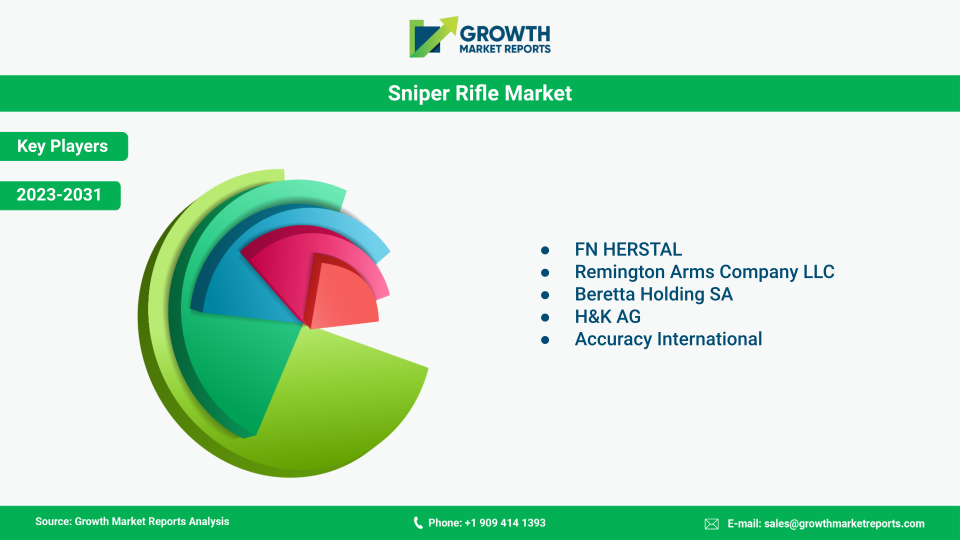
Key players competing in the sniper rifle market include FN HERSTAL, Remington Arms Company LLC, Beretta Holding SA, H&K AG, and Accuracy International.
Major players include Barrett Firearms Manufacturing, Accuracy International, Sako (Beretta Holding), FN Herstal, Remington Arms, Steyr Arms, Desert Tech, Savage Arms, and Zastava Arms.
Distribution channels include direct sales (mainly for military and law enforcement), distributors, online sales (growing among civilians), and specialized channels like government tenders and trade shows.
Innovations include the use of advanced materials (carbon fiber, high-strength alloys), enhanced optics (thermal, night vision), digital fire control systems, and modular rifle platforms.
Sniper rifles are primarily used by military and law enforcement agencies, but civilian applications such as long-range shooting sports, hunting, and private security are also growing.
The market is segmented into below 0.50 caliber (e.g., .308 Winchester, .338 Lapua Magnum) and 0.50 caliber and above (e.g., .50 BMG, .416 Barrett), with sub-.50 calibers being the most widely used.
Bolt-action sniper rifles dominate due to their accuracy and reliability, but semi-automatic and anti-material rifles are also gaining traction for specific military and law enforcement applications.
North America leads the global sniper rifle market, followed by Europe and Asia Pacific. The United States is the largest individual market, while Asia Pacific is experiencing the fastest growth.
Key growth drivers include defense modernization programs, increasing law enforcement procurement, technological advancements in rifle design, and rising civilian interest in precision shooting sports.
The sniper rifle market is expected to grow at a CAGR of 5.9% from 2025 to 2033, reaching a projected value of USD 2.53 billion by 2033.
As of 2024, the global sniper rifle market size reached USD 1.47 billion, with strong growth projected through 2033.