Segments - by Product Type (Communication Devices, Surveillance Systems, Protective Gear, Emergency Medical Equipment, Others), by Application (Law Enforcement, Disaster Management, Search and Rescue, Border Security, Others), by End User (Federal Agencies, State and Local Agencies, Military, Others), by Technology (AI and Analytics, Drones and Robotics, Biometric Systems, Others)
This report is updated with the latest market data and insights as of June 2026. Base year: 2025 | Forecast period: 2026-2034
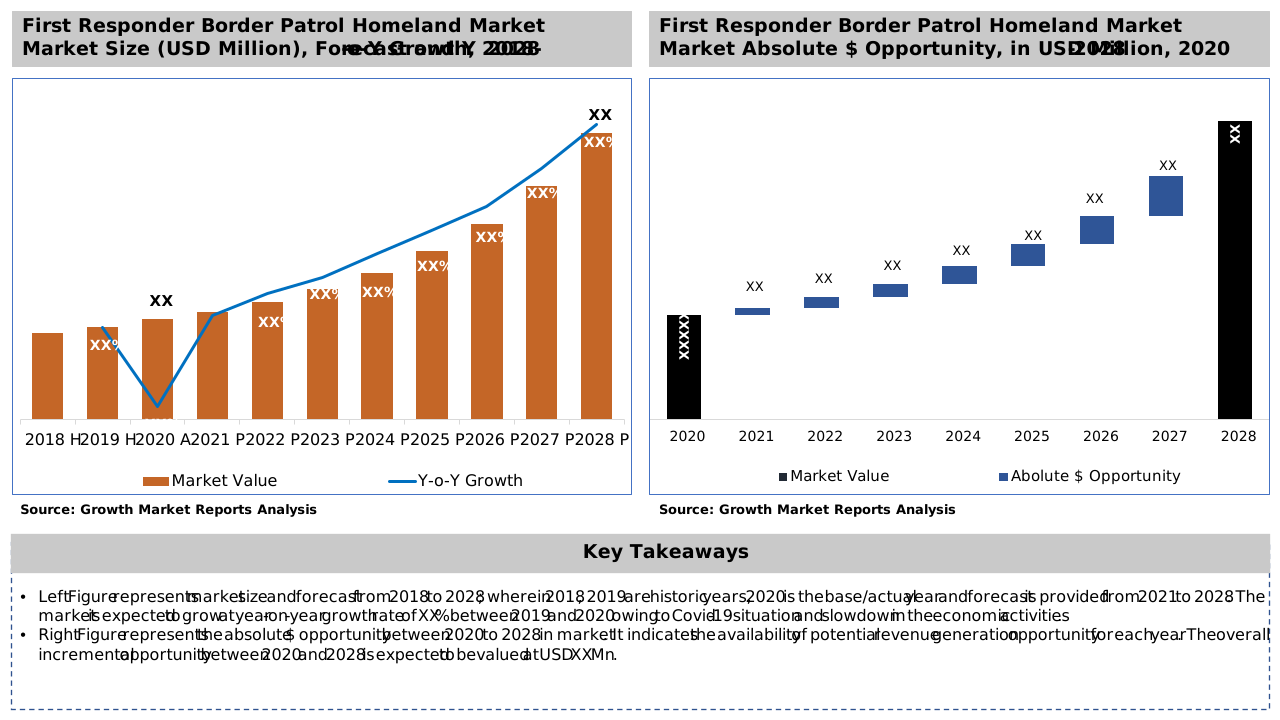
As per our latest research, the global First Responder Border Patrol Homeland market size stood at USD 26.6 billion in 2025, reflecting a robust industry driven by increasing security needs and rapid technological advancements across law enforcement, emergency response, and border security domains. The market is expected to grow at a notable CAGR of 7.2% from 2026 to 2034, reaching a forecasted value of USD 49.8 billion by 2034. This impressive expansion is underpinned by rising geopolitical tensions, heightened cross-border threats, and the accelerating adoption of advanced security technologies by law enforcement and homeland security agencies worldwide.
Several factors are fueling the expansion of the First Responder Border Patrol Homeland market. One of the primary drivers is the escalating complexity of global threats, including terrorism, organized crime, and irregular migration. These challenges necessitate the deployment of sophisticated solutions such as AI-powered surveillance, integrated communication systems, and advanced protective gear to ensure the safety and efficiency of first responders. Governments are increasingly allocating higher budgets to homeland security programs and border management, recognizing the critical need for rapid response and robust defense mechanisms. This increased funding is directly translating into greater procurement of innovative products and solutions, further propelling market growth.
Another significant growth factor is the technological revolution sweeping across the security landscape. The integration of artificial intelligence, drones, robotics, and biometric systems is transforming the operational capabilities of first responders and border patrol units. These technologies enable real-time situational awareness, faster decision-making, and more effective resource deployment during emergencies or security incidents. The demand for seamless interoperability among devices and systems is also prompting manufacturers to innovate and develop solutions that enhance communication, data sharing, and coordination among various agencies. As a result, the market is witnessing a surge in research and development activities, leading to the introduction of next-generation products tailored for complex operational environments.
Furthermore, the global trend toward urbanization and the increasing frequency of natural disasters are expanding the scope of this market. Urban centers present unique security challenges, including crowd management, critical infrastructure protection, and rapid emergency response. The proliferation of smart city initiatives is leading to the deployment of integrated surveillance and emergency management systems, which are now indispensable for both routine operations and crisis situations. Additionally, climate change is contributing to more frequent and severe natural disasters, necessitating advanced search and rescue equipment and disaster management solutions. These factors collectively create a fertile ground for market growth, as agencies worldwide prioritize investments in state-of-the-art technologies and equipment.
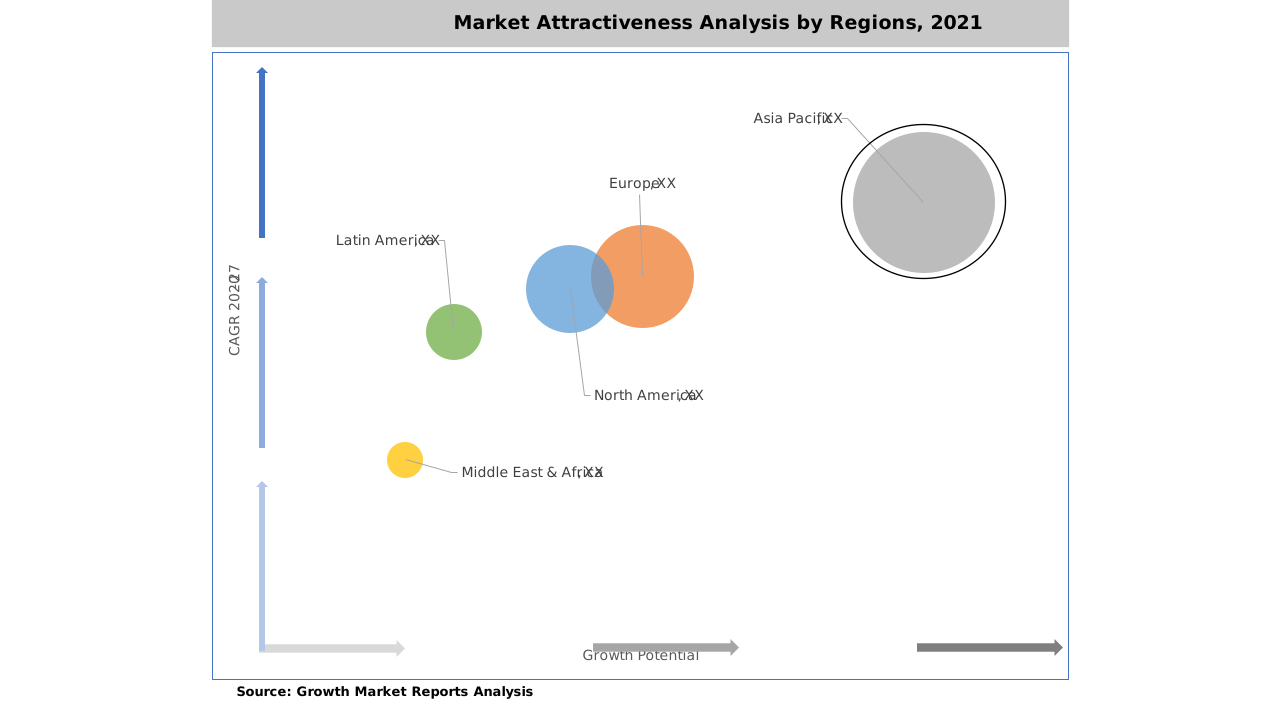
On the regional front, North America continues to dominate the First Responder Border Patrol Homeland market owing to its significant investments in homeland security, advanced technological infrastructure, and a proactive approach to countering evolving threats. The United States leads in terms of market share, driven by substantial government spending and ongoing modernization initiatives across federal, state, and local agencies. Europe follows closely, with countries like the UK, Germany, and France focusing on border security and counter-terrorism measures. Meanwhile, the Asia Pacific region is emerging as a lucrative market, fueled by rising security concerns, increasing cross-border activities, and the adoption of cutting-edge technologies. Latin America and the Middle East and Africa are also witnessing steady growth, primarily driven by efforts to address internal security challenges and improve disaster response capabilities.
The Product Type segment in the First Responder Border Patrol Homeland market is a critical factor shaping the industry's overall landscape. Communication devices, such as radios, mobile terminals, and satellite phones, remain the backbone of first responder operations, ensuring seamless coordination among teams during emergencies. The demand for these devices is rising as agencies seek to upgrade to digital, encrypted, and interoperable systems that facilitate secure and reliable communication across different jurisdictions. The emergence of broadband LTE and FirstNet-compatible networks alongside push-to-talk solutions is further enhancing the capabilities of first responders, enabling them to share real-time data, images, and videos that are vital for situational awareness and rapid decision-making. Strong growth in first responder communications infrastructure is underpinning procurement across this sub-segment through 2034.
Surveillance systems represent the largest product category by revenue share, encompassing a range of technologies such as fixed and mobile cameras, drones, radar systems, and integrated command centers. The adoption of AI-powered analytics and facial recognition technologies is revolutionizing the way surveillance is conducted, allowing for proactive threat detection and efficient monitoring of vast border stretches and critical infrastructure. The growing use of drones and unmanned aerial vehicles (UAVs) for aerial surveillance and reconnaissance is particularly noteworthy, as these platforms offer unparalleled coverage and flexibility in challenging terrains and remote locations. As security threats evolve, the need for advanced surveillance solutions is expected to drive substantial investment and innovation in this sub-segment throughout the forecast period.
Protective gear constitutes an essential component of the market, ensuring the safety and well-being of first responders operating in hazardous environments. This category includes body armor, helmets, ballistic shields, and chemical, biological, radiological, and nuclear (CBRN) protective equipment. The increasing prevalence of high-risk operations, such as counter-terrorism and riot control, is boosting the demand for lightweight, durable, and ergonomically designed protective gear. Manufacturers are leveraging advanced materials and smart textiles to enhance comfort, mobility, and protection levels, addressing the evolving needs of end users. The focus on user-centric design and compliance with stringent safety standards is expected to sustain the growth of this segment through 2034.
Emergency medical equipment is also experiencing significant growth, driven by the need to provide immediate medical assistance during disasters, accidents, and security incidents. This segment covers a wide range of products, including trauma kits, automated external defibrillators (AEDs), portable ventilators, and advanced life support systems. The integration of telemedicine capabilities and real-time health monitoring devices is transforming emergency medical response, enabling first responders to deliver timely and effective care even in remote or hostile environments. The heightened emphasis on responder health and safety, coupled with the increasing frequency of mass casualty events, is fueling the demand for innovative and reliable medical equipment.
Other product types, such as detection and monitoring devices, rescue tools, and decontamination systems, also play a vital role in the comprehensive preparedness and response strategies of homeland security agencies. These solutions address specific operational requirements such as hazardous material detection, victim extraction, and environmental monitoring. The ongoing evolution of threats and the need for multi-functional, adaptable solutions are prompting continuous advancements in this sub-segment. Overall, the diverse range of product types available in the market underscores the importance of a holistic approach to first responder and border patrol operations, ensuring readiness for a wide array of scenarios.
| Attributes | Details |
| Report Title | First Responder Border Patrol Homeland Market Research Report 2034 |
| By Product Type | Communication Devices, Surveillance Systems, Protective Gear, Emergency Medical Equipment, Others |
| By Application | Law Enforcement, Disaster Management, Search and Rescue, Border Security, Others |
| By End User | Federal Agencies, State and Local Agencies, Military, Others |
| By Technology | AI and Analytics, Drones and Robotics, Biometric Systems, Others |
| Regions Covered | North America, Europe, APAC, Latin America, MEA |
| Base Year | 2025 |
| Historic Data | 2019-2024 |
| Forecast Period | 2026-2034 |
| Number of Pages | 272 |
| Number of Tables & Figures | 328 |
| Customization Available | Yes, the report can be customized as per your need. |
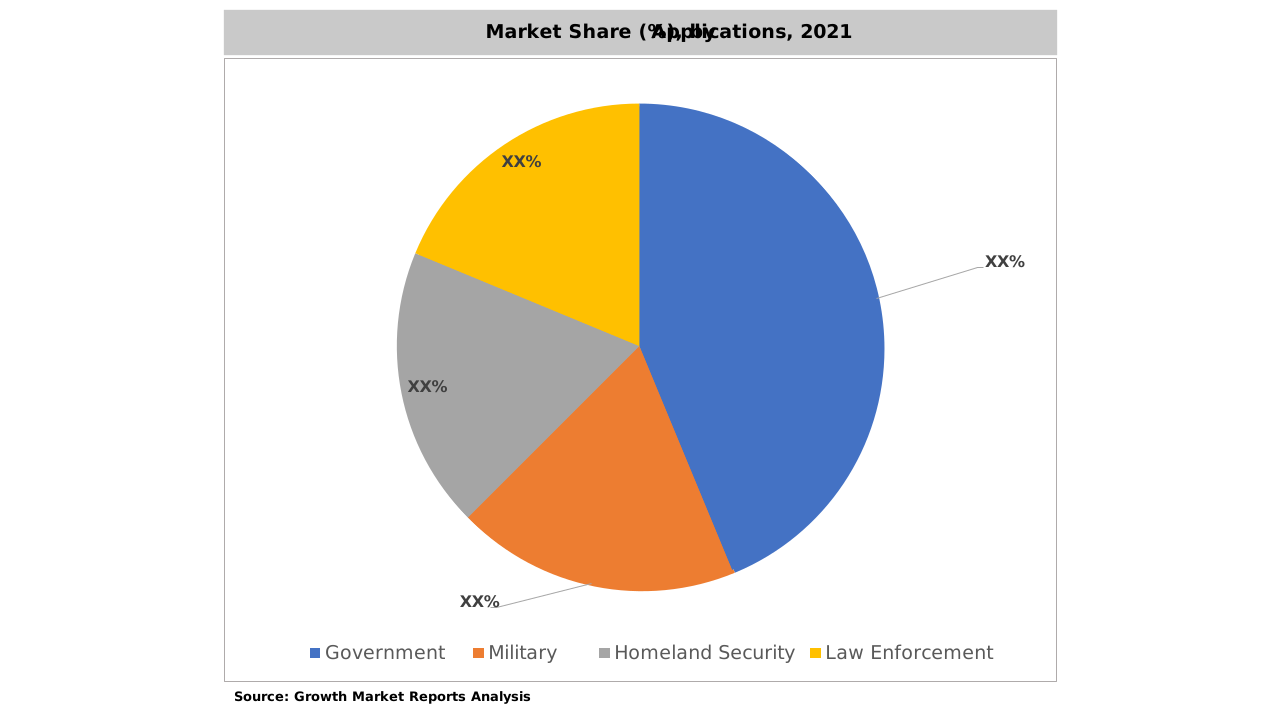
The Application segment of the First Responder Border Patrol Homeland market is broad, reflecting the diverse operational roles and responsibilities of first responders and security agencies. Law enforcement remains the largest application area, with agencies relying on advanced technologies and equipment to maintain public order, prevent crime, and respond to emergencies. The integration of body-worn cameras, real-time data analytics, and mobile command centers is enhancing the efficiency and accountability of law enforcement personnel. The increasing complexity of urban environments and the rise in civil unrest are driving continuous investment in modernizing law enforcement capabilities, ensuring rapid and effective response to emerging threats.
Disaster management is another critical application, encompassing preparedness, response, recovery, and mitigation activities during natural and man-made disasters. First responders play a pivotal role in coordinating rescue operations, providing medical assistance, and restoring order in the aftermath of disasters. The adoption of integrated emergency management systems, GIS-based situational awareness tools, and mobile medical units is revolutionizing disaster response, enabling agencies to deploy resources more efficiently and minimize the impact on affected populations. The growing frequency and severity of natural disasters, intensified by ongoing climate shifts, are compelling governments and organizations to invest in state-of-the-art disaster management solutions as a core budget priority through 2034.
Search and rescue operations are highly specialized and demand a unique set of tools and technologies. Drones, thermal imaging cameras, and advanced communication systems are increasingly being utilized to locate and extract victims in challenging environments such as collapsed buildings, wilderness areas, and disaster zones. The ability to operate in extreme conditions and coordinate multi-agency response efforts is critical to the success of search and rescue missions. The development of ruggedized, portable, and easy-to-deploy equipment is addressing the specific needs of search and rescue teams, ensuring they can handle a wide range of scenarios efficiently and safely.
Border security is a rapidly growing application area, driven by the need to prevent irregular migration, smuggling, and cross-border crime. Advanced surveillance systems, biometric identification technologies, and unmanned vehicles are being deployed to monitor and secure borders effectively. The integration of AI and analytics is enabling agencies to detect and respond to potential threats in real time, enhancing overall national border security. The increasing sophistication of criminal organizations and the evolving nature of border threats are prompting continuous innovation and investment, and our analysis of border management systems and technologies highlights this as one of the most dynamic application segments heading into 2034.
Other applications, such as critical infrastructure protection, crowd management, and hazardous material response, also contribute significantly to the market. These areas require specialized equipment and technologies to address unique operational challenges and ensure the safety of both responders and the public. The ongoing evolution of threats and the need for comprehensive, integrated solutions are driving the expansion of the application segment, highlighting the critical role of first responders and homeland security agencies in safeguarding society.
The End User segment in the First Responder Border Patrol Homeland market is characterized by a diverse array of stakeholders, each with unique operational requirements and procurement priorities. Federal agencies, such as national police forces, customs and border protection authorities, and homeland security departments, are the primary consumers of advanced security technologies and equipment. These agencies typically operate with substantial budgets and are at the forefront of adopting cutting-edge solutions to address evolving threats. The emphasis on national security, counter-terrorism, and border management is driving sustained investment in modernizing federal agency capabilities, ensuring they remain equipped to respond to a wide range of scenarios well into the 2030s.
State and local agencies represent a significant and growing segment of the market, encompassing regional police departments, fire services, emergency medical teams, and disaster response units. These agencies often operate in close coordination with federal counterparts and play a critical role in community safety and emergency response. The decentralization of security responsibilities and the increasing frequency of local emergencies are prompting state and local agencies to invest in interoperable communication systems, mobile command centers, and specialized equipment tailored to their operational needs. Budget constraints and the need for cost-effective solutions are influencing procurement decisions, driving demand for scalable and adaptable technologies that deliver strong operational value.
Military organizations are increasingly involved in homeland security and disaster response operations, leveraging their expertise, resources, and advanced technologies to support civil authorities. The integration of military-grade equipment, such as armored vehicles, tactical drones, and secure communication networks, is enhancing the operational capabilities of first responders and border patrol units. The growing trend toward civil-military cooperation, particularly during large-scale emergencies and security incidents, is fostering greater collaboration and knowledge sharing between military and civilian agencies. This synergy is driving the adoption of dual-use technologies and promoting innovation across the market.
Other end users, including private security firms, non-governmental organizations (NGOs), and critical infrastructure operators, also contribute to demand for first responder and homeland security solutions. These stakeholders often operate in high-risk environments or provide support during major incidents, necessitating access to reliable and effective equipment. The increasing outsourcing of security and emergency response functions to private entities is creating new opportunities for market growth, as these organizations seek to enhance their capabilities and meet stringent regulatory requirements. The diverse and evolving needs of end users underscore the importance of flexible, user-centric solutions that can be tailored to specific operational contexts.
The dynamic interplay between different end user groups is shaping the overall trajectory of the market, driving innovation, and fostering the development of solutions that address the unique challenges faced by each stakeholder. The emphasis on interoperability, scalability, and ease of deployment is expected to remain a key focus area, ensuring that first responders and homeland security agencies are equipped to protect lives and property in an increasingly complex and uncertain world through 2034.
The Technology segment is at the heart of the transformation sweeping across the First Responder Border Patrol Homeland market. Artificial intelligence (AI) and analytics are revolutionizing the way agencies process and interpret vast amounts of data, enabling real-time threat detection, predictive analysis, and informed decision-making. AI-driven surveillance systems, facial recognition, and behavioral pattern analysis tools are enhancing the ability of first responders to identify and respond to potential threats proactively. The integration of machine learning algorithms and big data analytics is also facilitating more effective resource allocation, incident management, and post-event analysis, driving operational efficiency and improving outcomes for agencies at every level.
Drones and robotics are rapidly gaining traction as indispensable tools for first responders and border patrol units. Unmanned aerial vehicles (UAVs) and ground robots are being deployed for surveillance, reconnaissance, search and rescue, and hazardous material detection. These platforms offer significant advantages in terms of coverage, flexibility, and safety, enabling agencies to operate in challenging or dangerous environments without exposing personnel to unnecessary risk. The ongoing development of autonomous and semi-autonomous systems is further expanding the capabilities of drones and robotics, paving the way for more sophisticated and effective solutions in operational field deployments throughout the 2026-2034 forecast window.
Biometric systems are playing an increasingly important role in enhancing security and identity management for border patrol and homeland security operations. Technologies such as fingerprint recognition, facial recognition, and iris scanning are being integrated into access control systems, border checkpoints, and surveillance networks to verify identities and prevent unauthorized entry. The growing emphasis on secure and efficient border management, coupled with the need to combat identity fraud and terrorism, is driving the adoption of advanced biometric solutions. The integration of biometrics with other technologies, such as AI and analytics, is creating new opportunities for innovation and efficiency across the market.
Other emerging technologies, including Internet of Things (IoT) devices, next-generation communication networks, and cybersecurity solutions, are also contributing to the evolution of the market. IoT-enabled sensors and devices are providing real-time data on environmental conditions, equipment status, and personnel location, enhancing situational awareness and operational coordination. The continued rollout of 5G networks is enabling faster and more reliable communication, supporting the deployment of data-intensive applications such as live video streaming and remote diagnostics. As the threat landscape becomes more complex, the need for robust cybersecurity measures is also increasing, ensuring the integrity and confidentiality of sensitive operational information.
The rapid pace of technological innovation is both a challenge and an opportunity for the market, requiring agencies to stay abreast of the latest developments and invest in ongoing training and capacity building. The focus on interoperability, scalability, and user-friendly interfaces is expected to drive the adoption of new technologies, ensuring that first responders and homeland security agencies can leverage the full potential of digital transformation to enhance their operational effectiveness and resilience through 2034.
The First Responder Border Patrol Homeland market is brimming with opportunities driven by the convergence of advanced technologies and the growing emphasis on integrated security solutions. The increasing adoption of AI, drones, and biometric systems presents significant growth avenues for manufacturers and solution providers. Governments and agencies are seeking to harness the power of data analytics and automation to enhance situational awareness, streamline operations, and improve response times. The proliferation of smart city initiatives and the integration of security systems with urban infrastructure are creating new opportunities for market players to deliver comprehensive, end-to-end solutions that address the unique challenges of urban environments. Additionally, the rising focus on public-private partnerships and cross-border collaboration is opening up new markets and fostering innovation in the development of interoperable and scalable solutions.
Another major opportunity lies in the increasing demand for customized and user-centric solutions that cater to the specific needs of different end users and operational contexts. The growing involvement of military organizations, private security firms, and NGOs in homeland security and disaster response is expanding the addressable market and driving the development of specialized products and services. The emphasis on training, simulation, and capacity building is also creating opportunities for companies to offer value-added services and support, ensuring that agencies are equipped to leverage the full potential of advanced technologies. The ongoing evolution of threats and the need for agile, adaptable solutions are expected to sustain strong demand for innovation and investment throughout the 2026-2034 forecast period.
Despite the numerous opportunities, the market faces several restraints and threats that could hinder its growth trajectory. One of the primary challenges is the high cost of advanced technologies and equipment, which can be a significant barrier for smaller agencies and organizations with limited budgets. The complexity of integrating new solutions with existing infrastructure and legacy systems also poses operational and technical challenges, requiring significant investment in training and change management. Additionally, concerns around data privacy, cybersecurity, and the ethical use of AI and surveillance technologies are prompting increased scrutiny and regulatory oversight from governments globally. These factors could slow the pace of adoption and necessitate the development of robust governance frameworks to ensure the responsible and effective use of emerging technologies through the forecast period.
The regional landscape of the First Responder Border Patrol Homeland market is characterized by significant variations in market size, growth rates, and adoption patterns, reflecting the unique security challenges and priorities of each region. North America remains the largest market, accounting for approximately USD 10.9 billion in 2025, driven by substantial government spending, advanced technological infrastructure, and a proactive approach to addressing evolving threats. The United States leads the region, with federal, state, and local agencies investing heavily in modernizing their capabilities and adopting next-generation solutions. Canada is also making significant strides in enhancing its border security and emergency response capabilities, contributing to the overall growth of the region.
Europe is the second-largest market, with a value of around USD 7.2 billion in 2025, and is expected to grow at a steady CAGR of 6.7% through 2034. Countries such as the UK, Germany, France, and Italy are prioritizing investments in border security, counter-terrorism, and disaster management, driven by the increasing frequency of security incidents and the need to comply with stringent regulatory requirements. The ongoing integration of advanced technologies such as AI-powered surveillance and biometric identification systems is enhancing the operational capabilities of European agencies and driving market growth. Cross-border collaboration and information sharing among EU member states are also fostering the development of interoperable and scalable solutions tailored to regional security priorities.
The Asia Pacific region is emerging as the fastest-growing market, with a market size of USD 5.2 billion in 2025, fueled by rising security concerns, increasing cross-border activities, and the adoption of advanced technologies. Countries such as China, India, Japan, and Australia are investing heavily in modernizing their border security and emergency response infrastructure, recognizing the need to address both traditional and non-traditional security threats. The rapid urbanization and the increasing frequency of natural disasters are also driving demand for integrated surveillance and disaster management solutions across the region. Latin America and the Middle East and Africa regions, with market sizes of approximately USD 1.7 billion and USD 1.6 billion respectively in 2025, are witnessing steady growth as governments prioritize internal security and disaster response capabilities. The focus on capacity building, training, and the adoption of cost-effective solutions is expected to drive continued expansion in these regions through 2034.
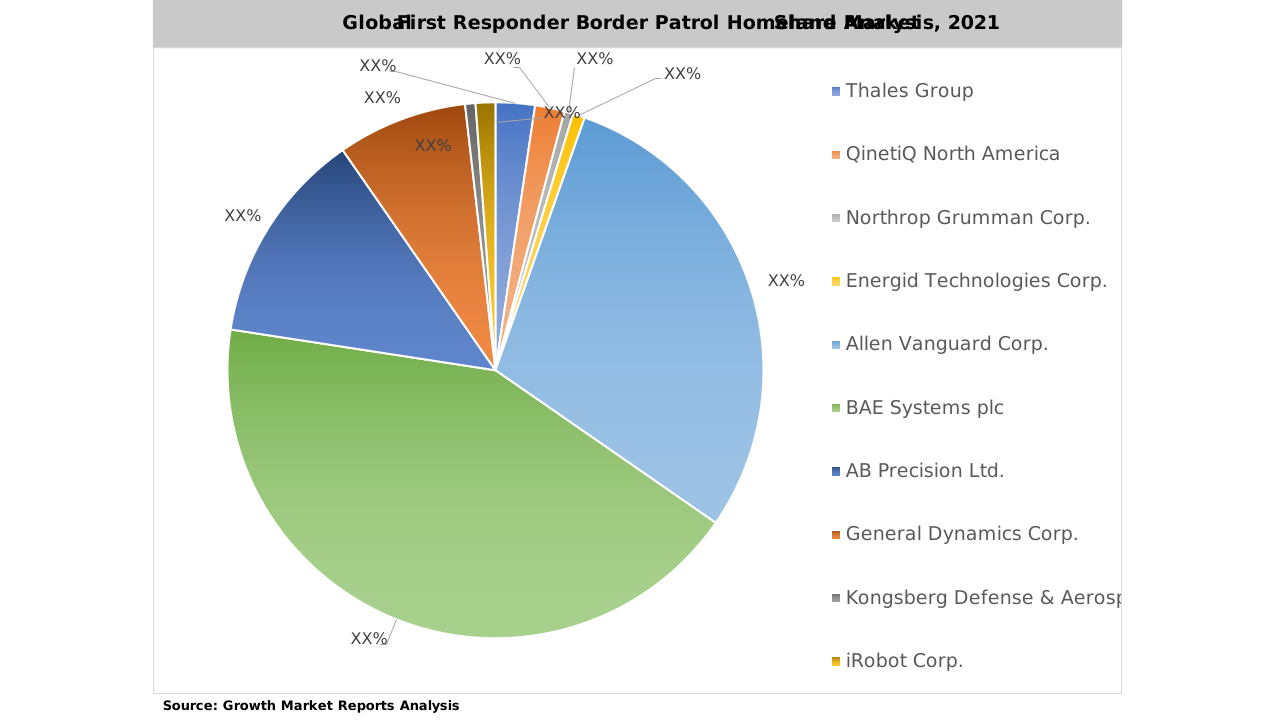
The competitive landscape of the First Responder Border Patrol Homeland market is highly dynamic and characterized by intense rivalry among leading global and regional players. The market is dominated by a mix of established defense contractors, technology specialists, and integrated solution providers, all vying for a share of the rapidly growing market. Companies are focusing on innovation, strategic partnerships, and acquisitions to strengthen their product portfolios and expand their geographic footprint. The emphasis on research and development is driving the introduction of next-generation solutions that address the evolving needs of first responders and homeland security agencies, ensuring they remain at the forefront of operational effectiveness and resilience.
The market is witnessing a trend toward consolidation, with larger players acquiring smaller firms to enhance their technological capabilities and broaden their offerings. This consolidation is enabling companies to leverage synergies, streamline operations, and achieve economies of scale, thereby improving their competitive position. At the same time, the entry of new players, particularly those specializing in emerging technologies such as AI, drones, and cybersecurity, is intensifying competition and driving innovation. The focus on interoperability, user-centric design, and compliance with regulatory standards is shaping competitive dynamics, with companies striving to differentiate themselves through quality, reliability, and customer support.
Strategic collaborations and public-private partnerships are becoming increasingly important in the market, as agencies seek to leverage the expertise and resources of private sector partners to address complex security challenges. Companies are working closely with government agencies, research institutions, and industry associations to develop and deploy integrated solutions that meet the specific needs of different end users. The emphasis on long-term relationships, customized solutions, and value-added services is driving customer loyalty and repeat business, further strengthening the competitive position of leading players. The overall competitive intensity is expected to increase through 2034 as new technological paradigms, including generative AI and autonomous systems, reshape procurement requirements.
Some of the major companies operating in the First Responder Border Patrol Homeland market include Motorola Solutions, L3Harris Technologies, Thales Group, Teledyne FLIR, Honeywell International, General Dynamics, Elbit Systems, Safran Group, Leonardo S.p.A., BAE Systems, Lockheed Martin, Northrop Grumman, Leidos Holdings, and AXON Enterprise. Motorola Solutions is renowned for its advanced communication systems and command center software, serving a wide range of law enforcement and emergency response agencies globally. L3Harris Technologies specializes in secure communication, surveillance, and border security solutions, leveraging its expertise in defense and aerospace to deliver cutting-edge products for both domestic and international clients.
Thales Group and Teledyne FLIR are leaders in surveillance and detection technologies, offering a comprehensive range of thermal imaging cameras, sensors, and integrated command centers. Honeywell International and General Dynamics are major players in protective gear, emergency medical equipment, and integrated security solutions, catering to the diverse needs of first responders and homeland security agencies. Elbit Systems, Safran, Leonardo, and BAE Systems are prominent in the development of advanced surveillance, biometric, and unmanned systems, leveraging their extensive experience in defense and aerospace to drive innovation. AXON Enterprise has emerged as a significant force in body-worn cameras and digital evidence management, increasingly relevant to both law enforcement and border patrol modernization programs.
These companies are continuously investing in research and development to stay ahead of the competition and address the evolving needs of their customers. The focus on sustainability, digital transformation, and the integration of emerging technologies is expected to remain a key driver of competitive differentiation in the market. As the demand for advanced first responder and homeland security solutions continues to grow through 2034, the competitive landscape is likely to become even more dynamic, with new entrants and disruptive technologies reshaping the industry in the years to come.
The First Responder Border Patrol Homeland market has been segmented on the basis of
Key challenges include the high procurement and integration costs of advanced technologies, which strain budgets of smaller state and local agencies. Cybersecurity vulnerabilities in networked surveillance and communication systems pose growing risks. Ethical and regulatory concerns around AI-driven surveillance and biometric data privacy are increasing oversight requirements. Additionally, interoperability issues between legacy infrastructure and next-generation platforms remain a persistent operational barrier.
Leading companies include Motorola Solutions, L3Harris Technologies, Thales Group, Teledyne FLIR, Honeywell International, General Dynamics, Elbit Systems, Safran Group, Leonardo S.p.A., BAE Systems, Lockheed Martin, Northrop Grumman, Leidos Holdings, and AXON Enterprise. These players compete on the basis of technological innovation, product integration, regulatory compliance, and long-term government contracts.
The primary applications include law enforcement, disaster management, search and rescue, and border security. Law enforcement is the largest application area, followed by border security, which is growing rapidly due to increased deployment of AI surveillance and biometric identification at national borders. Disaster management and search and rescue applications are expanding in response to the rising frequency of climate-related emergencies.
Federal agencies such as customs and border protection and national homeland security departments are the largest end users. State and local agencies including regional police, fire services, and emergency medical teams represent a significant and growing segment. Military organizations also consume a substantial share of the market, particularly for dual-use surveillance, communication, and unmanned systems.
AI and analytics, drones and robotics, and biometric systems are the three primary technology pillars reshaping the market. AI enables real-time threat detection and predictive situational awareness. Drones and autonomous ground robots extend operational reach into hazardous or remote areas. Biometric systems such as facial recognition and iris scanning are enhancing identity verification at border checkpoints and access control points.
The major product types are Surveillance Systems (31.2% share), Communication Devices (27.5%), Protective Gear (18.4%), Emergency Medical Equipment (13.6%), and Others including detection, rescue, and decontamination tools (9.3%). Surveillance systems and communication devices collectively account for the majority of market revenue in 2025.
Key growth drivers include rising geopolitical threats and cross-border crime, increased government allocations to homeland and border security, rapid adoption of AI-powered surveillance and analytics, growing frequency of natural disasters requiring advanced emergency response, and smart city initiatives integrating public safety infrastructure with real-time monitoring systems.
North America leads the market with approximately 40.8% of global revenue in 2025, primarily driven by the United States' extensive federal homeland security spending. Europe holds the second-largest share at around 27.1%, while Asia Pacific is the fastest-growing region, accounting for approximately 19.4% of the market and expanding rapidly due to rising cross-border security concerns.
The market is projected to grow at a CAGR of 7.2% during the forecast period from 2026 to 2034, reaching an estimated USD 49.8 billion by 2034. This growth is driven by escalating geopolitical tensions, increased government homeland security budgets, and the rapid integration of AI, drones, and biometric technologies.
As of 2025, the global First Responder Border Patrol Homeland market is valued at approximately USD 26.6 billion, reflecting sustained investment in security technologies, border management infrastructure, and emergency response capabilities across government and military agencies worldwide.