Nitrogenous Fertilizer Market Research Report 2033

Nitrogenous Fertilizer Market Research Report 2033

Segments - by Product Type (Urea, Ammonium Nitrate, Ammonium Sulfate, Ammonia, Calcium Ammonium Nitrate, Others), by Application (Cereals & Grains, Oilseeds & Pulses, Fruits & Vegetables, Others), by Form (Liquid, Granular, Powder), by Distribution Channel (Direct Sales, Retail, Online)

https://growthmarketreports.com/Raksha
Author : Raksha Sharma
https://growthmarketreports.com/Vaibhav
Fact-checked by : V. Chandola
https://growthmarketreports.com/Shruti
Editor : Shruti Bhat

Upcoming | Report ID :MC-4579 | 4.2 Rating | 78 Reviews | 275 Pages | Format : Docx PDF

Report Description


Nitrogenous Fertilizer Market Outlook

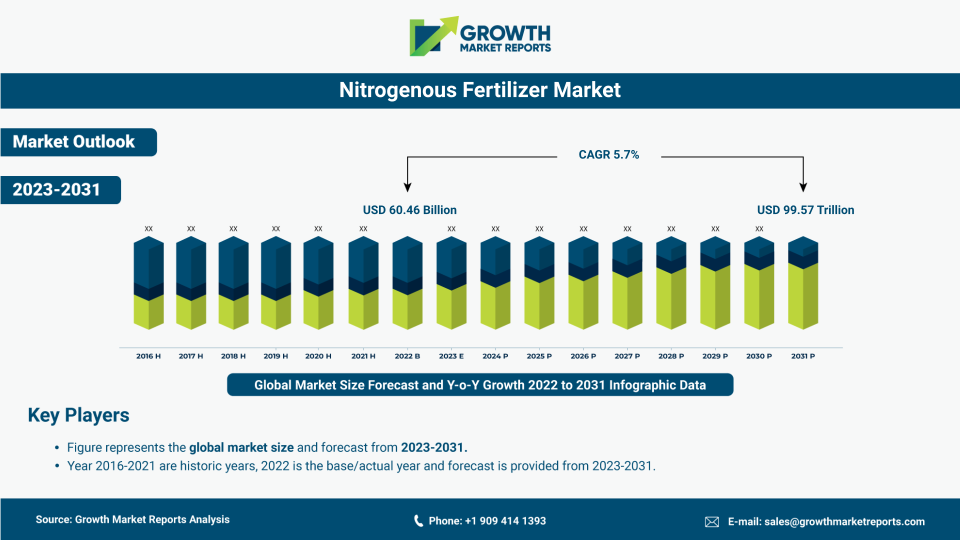
According to our latest research, the global nitrogenous fertilizer market size reached USD 67.2 billion in 2024, reflecting robust demand from agricultural sectors worldwide. The market is projected to expand at a steady CAGR of 4.1% during the forecast period, reaching an estimated USD 96.3 billion by 2033. This growth is primarily driven by the increasing need for enhanced crop yields, the intensification of modern farming practices, and the rising global population, which is fueling the demand for food production. As per our comprehensive analysis, the nitrogenous fertilizer market is experiencing notable advancements in product innovation and distribution strategies, further propelling its expansion across key regions.

The primary growth factor for the nitrogenous fertilizer market is the escalating demand for high-yield agricultural outputs due to the ever-expanding global population. As arable land becomes increasingly scarce, farmers are adopting intensive cultivation techniques that necessitate the use of efficient fertilizers to maximize productivity. Nitrogenous fertilizers, owing to their critical role in enhancing plant growth and chlorophyll formation, are at the forefront of this agricultural transformation. Additionally, governmental initiatives in several countries to ensure food security and boost agricultural productivity through subsidies and awareness programs are further stimulating market growth. The integration of advanced agronomic practices and precision agriculture technologies is also contributing to the optimized application of nitrogenous fertilizers, reducing wastage and improving crop outcomes.

Another significant driver of market expansion is the continuous innovation in fertilizer formulations and the development of environment-friendly products. Manufacturers are increasingly focusing on creating nitrogenous fertilizers that not only improve nutrient uptake efficiency but also minimize environmental impact, such as nitrate leaching and greenhouse gas emissions. The introduction of controlled-release and stabilized nitrogen fertilizers is gaining traction, as these products offer sustained nutrient availability and mitigate the adverse effects associated with traditional fertilizers. Furthermore, the adoption of digital platforms for fertilizer advisory services and the use of data-driven insights are enabling farmers to make informed decisions, thereby enhancing the overall efficacy of nitrogenous fertilizer usage.

The rapid growth in emerging economies, particularly in Asia Pacific and Latin America, is playing a pivotal role in shaping the nitrogenous fertilizer market landscape. These regions are witnessing significant investments in agricultural infrastructure, improved irrigation systems, and the proliferation of commercial farming operations. The increasing awareness regarding the benefits of balanced fertilization and the expansion of agro-input retail networks are further catalyzing the adoption of nitrogenous fertilizers. Moreover, the rising trend of contract farming and public-private partnerships in the agricultural sector is fostering market penetration, especially in rural and semi-urban areas. The overall positive outlook for the global agricultural sector, coupled with favorable policy frameworks, is expected to sustain the upward trajectory of the nitrogenous fertilizer market in the coming years.

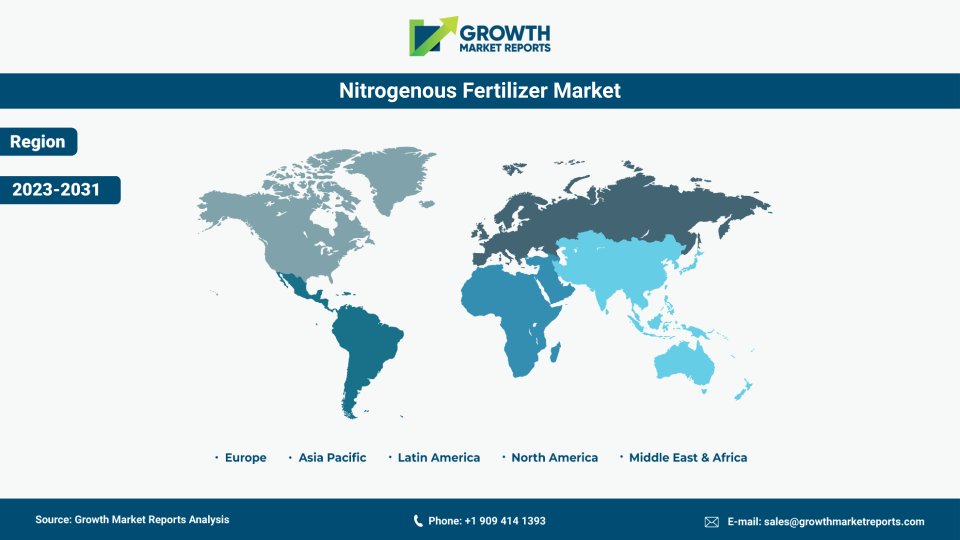
Regionally, Asia Pacific dominates the global nitrogenous fertilizer market, accounting for the largest share in both production and consumption. The region's substantial agricultural base, coupled with high population density and strong governmental support for fertilizer adoption, underpins its leading position. North America and Europe are also significant contributors, benefiting from advanced farming technologies, high awareness levels, and the presence of major industry players. Latin America and the Middle East & Africa are emerging as promising markets, driven by increasing investments in agriculture and the adoption of modern farming practices. The regional dynamics are further influenced by climatic conditions, crop patterns, and regulatory frameworks, which collectively shape the demand and supply landscape for nitrogenous fertilizers.

Global Nitrogenous Fertilizer Industry Outlook

Product Type Analysis

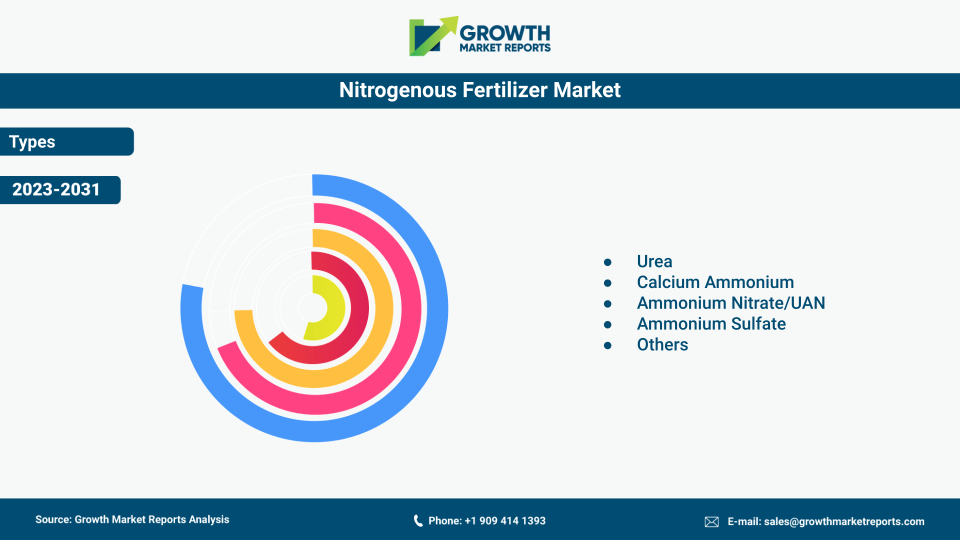
The nitrogenous fertilizer market is segmented by product type into urea, ammonium nitrate, ammonium sulfate, ammonia, calcium ammonium nitrate, and others. Urea continues to lead the segment, accounting for the highest market share due to its high nitrogen content, cost-effectiveness, and widespread application across various crops. Urea's versatility and compatibility with different soil types make it the preferred choice for farmers globally. The ongoing advancements in urea production technologies, such as energy-efficient synthesis processes and improved granulation techniques, are enhancing product quality and supply reliability. Additionally, the integration of urea with urease inhibitors and other stabilizers is gaining momentum, as these innovations help reduce nitrogen losses and improve nutrient use efficiency.

Ammonium nitrate is another critical product type, valued for its rapid nitrogen release and high solubility, making it suitable for both direct application and as a component in blended fertilizers. However, its usage is subject to stringent regulatory controls in several regions due to safety and security concerns associated with its potential misuse. Despite these challenges, the demand for ammonium nitrate remains robust in regions with established safety protocols and advanced distribution infrastructure. The market for ammonium sulfate is also expanding, particularly in areas with sulfur-deficient soils, as it provides both nitrogen and sulfur nutrients essential for optimal crop growth. The dual nutrient advantage of ammonium sulfate is increasingly recognized by agronomists and farmers, driving its adoption in key agricultural markets.

Ammonia, primarily used as a feedstock for the synthesis of other nitrogenous fertilizers, holds a significant position in the market. The direct application of anhydrous ammonia is prevalent in large-scale commercial farming operations, especially in North America. The growing investments in ammonia production facilities and the development of green ammonia using renewable energy sources are expected to reshape the supply landscape in the coming years. Calcium ammonium nitrate, with its balanced nutrient profile and low volatility, is gaining popularity in regions with temperate climates and intensive crop cultivation. The product's ability to improve soil structure and reduce the risk of nitrogen leaching is particularly valued in sustainable agriculture practices.

The "Others" category encompasses specialty nitrogenous fertilizers and customized blends tailored to specific crop and soil requirements. These products are witnessing increased demand in horticulture, high-value crop segments, and precision agriculture applications. The trend towards customized nutrient solutions and the adoption of site-specific fertilization strategies are driving innovation in this segment. Manufacturers are investing in research and development to create novel formulations that address emerging challenges such as climate variability, soil degradation, and regulatory compliance. The overall product type landscape is characterized by a dynamic interplay of technological advancements, regulatory frameworks, and evolving farmer preferences, shaping the future trajectory of the nitrogenous fertilizer market.

Report Scope

Attributes Details
Report Title Nitrogenous Fertilizer Market Research Report 2033
By Product Type Urea, Ammonium Nitrate, Ammonium Sulfate, Ammonia, Calcium Ammonium Nitrate, Others
By Application Cereals & Grains, Oilseeds & Pulses, Fruits & Vegetables, Others
By Form Liquid, Granular, Powder
By Distribution Channel Direct Sales, Retail, Online
Regions Covered North America, Europe, APAC, Latin America, MEA
Base Year 2024
Historic Data 2018-2023
Forecast Period 2025-2033
Number of Pages 275
Number of Tables & Figures 294
Customization Available Yes, the report can be customized as per your need.

Application Analysis

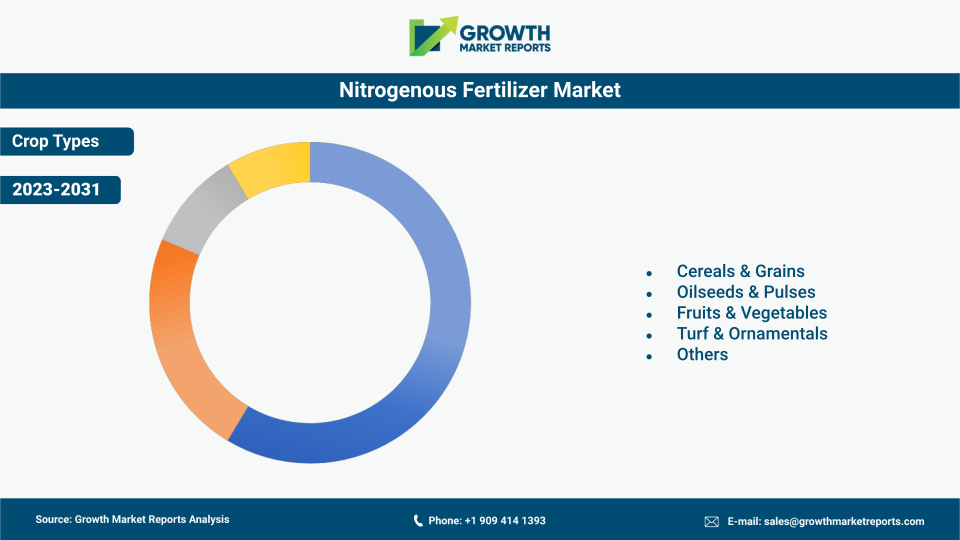
The application segment of the nitrogenous fertilizer market is categorized into cereals & grains, oilseeds & pulses, fruits & vegetables, and others. Cereals & grains represent the largest application area, driven by the global demand for staple foods such as rice, wheat, and maize. The intensive cultivation of these crops, particularly in Asia Pacific and Africa, necessitates the extensive use of nitrogenous fertilizers to achieve optimal yields and meet food security objectives. The adoption of high-yielding crop varieties, coupled with government-led initiatives to promote balanced fertilization, is further bolstering the demand in this segment. The integration of precision farming techniques and real-time soil nutrient monitoring is enabling targeted fertilizer application, enhancing efficiency, and reducing environmental impact.

Oilseeds & pulses constitute a significant and growing segment, supported by the rising global consumption of edible oils and protein-rich foods. Nitrogenous fertilizers play a crucial role in promoting vegetative growth and improving the protein content of oilseeds and pulses. The expansion of commercial cultivation in emerging economies, coupled with the increasing adoption of mechanized farming practices, is driving the uptake of nitrogenous fertilizers in this segment. Furthermore, research and development efforts focused on crop-specific fertilizer recommendations and nutrient management plans are contributing to improved productivity and sustainability in oilseed and pulse production systems.

The fruits & vegetables segment is witnessing rapid growth, fueled by the increasing consumer preference for healthy diets and the expansion of horticultural production worldwide. Nitrogenous fertilizers are essential for supporting the intensive nutrient requirements of fruit and vegetable crops, which often have short growth cycles and high yield potentials. The adoption of protected cultivation methods, such as greenhouse and hydroponic farming, is further accelerating the demand for high-quality nitrogenous fertilizers tailored to specific crop needs. The trend towards organic and residue-free produce is also influencing the development of specialized nitrogenous fertilizers that comply with stringent quality standards and regulatory requirements.

Other applications encompass a diverse range of crops, including forage, ornamental plants, and industrial crops. The demand for nitrogenous fertilizers in these segments is driven by the need to enhance biomass production, improve plant health, and support diversified agricultural systems. The growing emphasis on sustainable land management and integrated nutrient management practices is fostering the adoption of nitrogenous fertilizers in non-traditional crop segments. The increasing availability of customized fertilizer blends and advisory services is enabling farmers to optimize nutrient applications based on crop-specific requirements and local agro-climatic conditions, thereby maximizing returns on investment and contributing to overall market growth.

Form Analysis

The nitrogenous fertilizer market is segmented by form into liquid, granular, and powder formulations. Granular fertilizers dominate the market, accounting for the largest share due to their ease of handling, storage, and application. Granular forms are preferred for broad-acre crops and large-scale farming operations, as they can be easily applied using mechanized equipment and provide uniform nutrient distribution. The development of advanced granulation technologies and the introduction of coated and slow-release granules are enhancing product performance and reducing nutrient losses. The widespread availability of granular fertilizers through established distribution channels further supports their leading position in the market.

Liquid nitrogenous fertilizers are gaining traction, particularly in precision agriculture and high-value crop segments. The ability to apply liquid fertilizers through fertigation systems and foliar sprays offers several advantages, including rapid nutrient uptake, flexibility in application timing, and compatibility with other agrochemicals. Liquid formulations are increasingly used in horticulture, greenhouse cultivation, and specialty crop production, where precise nutrient management is critical for achieving desired quality and yield parameters. The ongoing innovation in liquid fertilizer formulations, such as the incorporation of micronutrients and biostimulants, is expanding the application scope and driving market growth in this segment.

Powdered nitrogenous fertilizers, while representing a smaller share of the market, are valued for their solubility and suitability for custom blending. Powder forms are commonly used in fertigation and hydroponic systems, as they dissolve quickly and provide immediate nutrient availability to plants. The demand for powdered fertilizers is also supported by the growing trend of on-farm fertilizer mixing and the need for tailored nutrient solutions in intensive farming systems. Manufacturers are focusing on improving the physical properties and shelf life of powdered fertilizers to enhance their appeal and usability among farmers.

The choice of fertilizer form is influenced by several factors, including crop type, soil conditions, farming practices, and regional preferences. The increasing adoption of precision agriculture technologies and the emphasis on sustainable nutrient management are driving the demand for innovative fertilizer forms that offer enhanced efficiency and environmental compatibility. The market is witnessing a shift towards value-added formulations that address specific agronomic challenges, such as nutrient leaching, volatilization, and soil health degradation. The ongoing research and development efforts aimed at optimizing fertilizer forms and application methods are expected to play a crucial role in shaping the future dynamics of the nitrogenous fertilizer market.

Distribution Channel Analysis

The distribution channel segment of the nitrogenous fertilizer market encompasses direct sales, retail, and online channels. Direct sales remain the predominant distribution mode, particularly in large-scale commercial farming operations and institutional procurement. Fertilizer manufacturers and distributors establish direct relationships with large agribusinesses, cooperatives, and government agencies to ensure timely and efficient supply of products. Direct sales channels offer several advantages, including bulk purchasing, customized product offerings, and technical support services. The growing trend of contract farming and public-private partnerships in the agricultural sector is further strengthening the role of direct sales in the market.

Retail channels play a vital role in reaching small and medium-sized farmers, especially in developing regions with fragmented agricultural landscapes. Agro-input retailers, cooperatives, and local dealers serve as the primary points of contact for farmers seeking access to nitrogenous fertilizers and related advisory services. The expansion of retail networks and the introduction of branded outlets are enhancing product availability and visibility in rural and semi-urban areas. Retailers also play a key role in disseminating information on best practices, new product launches, and government schemes, thereby influencing farmer purchasing decisions and driving market growth.

Online distribution channels are emerging as a significant growth avenue, driven by the increasing digitalization of agriculture and the proliferation of e-commerce platforms. Online sales offer several benefits, including convenience, access to a wide range of products, competitive pricing, and doorstep delivery. The adoption of online channels is particularly pronounced in developed regions with high internet penetration and digital literacy levels. Fertilizer manufacturers and agritech startups are leveraging digital platforms to offer value-added services such as crop advisory, soil testing, and personalized fertilizer recommendations, enhancing the overall customer experience. The ongoing investments in digital infrastructure and the integration of mobile payment solutions are expected to accelerate the growth of online distribution channels in the coming years.

The distribution landscape is characterized by a dynamic interplay of traditional and modern channels, each catering to specific customer segments and regional requirements. The increasing focus on supply chain efficiency, inventory management, and last-mile delivery is prompting manufacturers and distributors to adopt innovative logistics solutions and collaborative business models. The integration of digital technologies, such as blockchain and IoT, is enhancing transparency, traceability, and trust in the fertilizer supply chain. The evolving distribution ecosystem is expected to play a pivotal role in shaping market access, product reach, and customer engagement in the nitrogenous fertilizer market.

Opportunities & Threats

The nitrogenous fertilizer market is poised for significant opportunities in the coming years, driven by the growing focus on sustainable agriculture and the adoption of advanced farming technologies. The increasing awareness of the environmental impact of conventional fertilizers is creating demand for eco-friendly and slow-release nitrogenous fertilizers that minimize nutrient losses and reduce greenhouse gas emissions. The development of precision agriculture solutions, such as remote sensing, soil mapping, and variable rate application, is enabling farmers to optimize fertilizer use and improve crop productivity. The rising trend of organic farming and the demand for residue-free produce are also opening new avenues for the development of bio-based and organic nitrogenous fertilizers. Furthermore, the expansion of contract farming, public-private partnerships, and government support for agricultural innovation are expected to create lucrative growth opportunities for market players.

The market also presents opportunities for value chain integration and the development of customized nutrient solutions tailored to specific crop and soil requirements. The increasing adoption of digital platforms and mobile applications for fertilizer advisory services is enhancing farmer access to information and enabling data-driven decision-making. The proliferation of agritech startups and the entry of new players are fostering competition and innovation in the market. The growing emphasis on circular economy principles and the utilization of waste-derived nitrogen sources, such as biogas digestate and industrial by-products, are expected to drive the development of sustainable fertilizer solutions. The ongoing investments in research and development, coupled with favorable regulatory frameworks, are creating a conducive environment for the growth and diversification of the nitrogenous fertilizer market.

Despite the positive outlook, the nitrogenous fertilizer market faces several restraining factors, including environmental concerns, regulatory challenges, and fluctuating raw material prices. The excessive and improper use of nitrogenous fertilizers can lead to soil degradation, water pollution, and greenhouse gas emissions, prompting stringent regulations and restrictions on fertilizer application in several regions. The increasing scrutiny of fertilizer manufacturing processes and the push for carbon-neutral production are adding to compliance costs and operational complexities for manufacturers. The volatility in the prices of key raw materials, such as natural gas and ammonia, can impact profit margins and supply stability. Additionally, the growing competition from alternative nutrient sources, such as organic fertilizers and biostimulants, poses a threat to the market share of conventional nitrogenous fertilizers. The successful navigation of these challenges will require concerted efforts by industry stakeholders, policymakers, and research institutions to promote sustainable and responsible fertilizer use.

Regional Outlook

The Asia Pacific region dominates the nitrogenous fertilizer market, accounting for over 48% of the global market share in 2024, with a market value of approximately USD 32.3 billion. This dominance is attributed to the region's vast agricultural base, high population density, and strong governmental support for fertilizer adoption. Major countries such as China, India, and Indonesia are leading consumers and producers of nitrogenous fertilizers, driven by the need to ensure food security and enhance crop productivity. The ongoing investments in agricultural infrastructure, irrigation systems, and research and development are further strengthening the region's position in the global market. The Asia Pacific market is expected to grow at a CAGR of 4.5% during the forecast period, outpacing other regions and solidifying its leadership in the industry.

North America represents a significant market for nitrogenous fertilizers, with a market size of USD 13.6 billion in 2024. The region benefits from advanced farming technologies, high awareness levels, and the presence of major industry players. The adoption of precision agriculture, sustainable farming practices, and regulatory frameworks aimed at minimizing environmental impact are shaping the demand for nitrogenous fertilizers in North America. The United States and Canada are the key markets, with a strong focus on corn, wheat, and soybean cultivation. The region is also witnessing increased investments in green ammonia production and the development of eco-friendly fertilizer solutions. The North American market is projected to grow steadily, supported by technological advancements and a favorable policy environment.

Europe accounts for approximately USD 9.8 billion of the global nitrogenous fertilizer market in 2024, characterized by a strong emphasis on environmental sustainability and regulatory compliance. The region is at the forefront of adopting best practices in fertilizer application, including the use of controlled-release and stabilized nitrogen products. The European Union's Common Agricultural Policy and the Farm to Fork Strategy are driving the transition towards sustainable nutrient management and reduced chemical inputs. Latin America and the Middle East & Africa are emerging as promising markets, with a combined market size of USD 11.5 billion in 2024. These regions are benefiting from increasing investments in agriculture, the expansion of commercial farming operations, and the adoption of modern farming practices. The regional dynamics are influenced by climatic conditions, crop patterns, and socio-economic factors, shaping the demand and supply landscape for nitrogenous fertilizers.

Nitrogenous Fertilizer Market Statistics

Competitor Outlook

The competitive landscape of the nitrogenous fertilizer market is characterized by the presence of several global and regional players, each striving to enhance their market position through product innovation, strategic partnerships, and capacity expansions. The market is highly consolidated, with the top players accounting for a significant share of the global revenue. Leading companies are investing heavily in research and development to create advanced fertilizer formulations that address emerging challenges such as nutrient use efficiency, environmental sustainability, and regulatory compliance. The focus on value-added products, such as coated and slow-release fertilizers, is driving differentiation and creating new growth opportunities for market participants.

Mergers, acquisitions, and joint ventures are common strategies adopted by key players to expand their geographic footprint, diversify product portfolios, and strengthen distribution networks. The integration of digital technologies and data analytics is enabling companies to offer tailored solutions and enhance customer engagement. The growing emphasis on sustainable production practices and the development of green ammonia and bio-based fertilizers are reshaping the competitive dynamics of the market. Companies are also focusing on backward integration to secure raw material supplies and optimize production costs, thereby enhancing profitability and operational efficiency.

The competitive landscape is further influenced by the entry of new players, particularly in emerging markets, and the proliferation of agritech startups offering innovative solutions for nutrient management and advisory services. The increasing collaboration between fertilizer manufacturers, research institutions, and government agencies is fostering innovation and driving the adoption of best practices in fertilizer application. The market is witnessing a shift towards customer-centric business models, with a focus on providing comprehensive solutions that encompass product supply, technical support, and digital advisory services. The ongoing investments in capacity expansions and the development of new production facilities are expected to intensify competition and drive market growth in the coming years.

Some of the major companies operating in the nitrogenous fertilizer market include Yara International ASA, Nutrien Ltd., CF Industries Holdings, Inc., The Mosaic Company, EuroChem Group AG, OCI Nitrogen, and Koch Fertilizer, LLC. Yara International is a global leader in the production and distribution of nitrogen-based fertilizers, with a strong focus on sustainability and innovation. Nutrien Ltd. is one of the largest integrated agri-businesses, offering a wide range of nitrogenous fertilizers and crop advisory services. CF Industries Holdings is a leading producer of ammonia and urea, with a robust distribution network and a commitment to operational excellence. The Mosaic Company specializes in the production of phosphate and nitrogen-based fertilizers, with a strong presence in North and South America. EuroChem Group AG and OCI Nitrogen are prominent players in the European and global markets, known for their advanced production technologies and diversified product portfolios. Koch Fertilizer, LLC is a major supplier of nitrogenous fertilizers in North America, with a focus on innovation and customer service. These companies are at the forefront of driving technological advancements, sustainability initiatives, and market expansion in the nitrogenous fertilizer industry.

Key Players

  • Yara International ASA
  • Nutrien Ltd.
  • CF Industries Holdings, Inc.
  • The Mosaic Company
  • EuroChem Group AG
  • OCI N.V.
  • Bunge Limited
  • Koch Fertilizer, LLC
  • Sinofert Holdings Limited
  • Coromandel International Limited
  • Indian Farmers Fertiliser Cooperative Limited (IFFCO)
  • Uralkali PJSC
  • Haifa Group
  • SABIC (Saudi Basic Industries Corporation)
  • Agrium Inc.
  • TogliattiAzot
  • Acron Group
  • BASF SE
  • Rashtriya Chemicals & Fertilizers Ltd (RCF)
  • China National Chemical Corporation (ChemChina)
Nitrogenous Fertilizer Market Overview

Segments

The Nitrogenous Fertilizer market has been segmented on the basis of

Product Type

  • Urea
  • Ammonium Nitrate
  • Ammonium Sulfate
  • Ammonia
  • Calcium Ammonium Nitrate
  • Others

Application

  • Cereals & Grains
  • Oilseeds & Pulses
  • Fruits & Vegetables
  • Others

Form

  • Liquid
  • Granular
  • Powder

Distribution Channel

  • Direct Sales
  • Retail
  • Online

Competitive Landscape

Key players in the global nitrogenous fertilizer market are Kynoch Fertilizer; Sorfert; Bunge Ltd.; Nutrien Ltd.; Yara; Omnia Holdings Limited; Sasol; Aquasol Nutri; TriomfSA; Rolfes Agri (Pty) Ltd.; OCI Nitrogen; ICL Fertilizers; Eurochem Group AG; CF Industries Holdings Inc.; Koch Fertilizer, LLC; Hellagrolip SA; Coromandal International Limited; Haifa Group; and Notore Chemical Industries Plc.
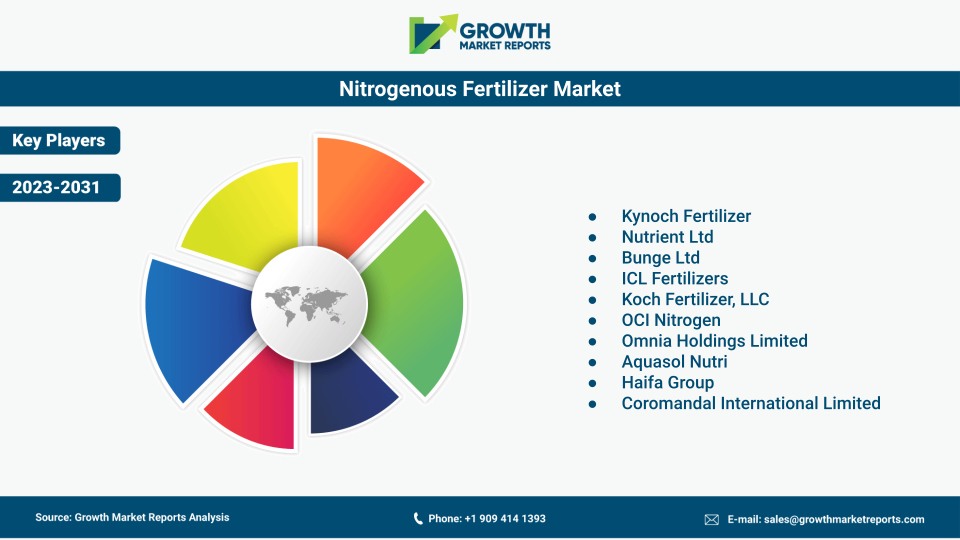

Nitrogenous Fertilizer Market Key Players

Frequently Asked Questions

Opportunities include sustainable and precision agriculture, digital advisory platforms, and bio-based fertilizers. Challenges involve environmental concerns, regulatory restrictions, raw material price volatility, and competition from organic alternatives.

Major players include Yara International ASA, Nutrien Ltd., CF Industries Holdings, The Mosaic Company, EuroChem Group AG, OCI Nitrogen, Koch Fertilizer, and others.

Trends include the development of eco-friendly and slow-release fertilizers, adoption of precision agriculture, integration of digital advisory services, and the use of green ammonia and bio-based products.

Distribution channels include direct sales (to large farms and institutions), retail (agro-input shops and cooperatives), and online platforms, with digital channels gaining traction for advisory and convenience.

Nitrogenous fertilizers are available in granular, liquid, and powder forms. Granular is preferred for large-scale farming, liquid for precision and high-value crops, and powder for fertigation and custom blending.

Cereals & grains (such as rice, wheat, and maize) are the largest application segment, followed by oilseeds & pulses, fruits & vegetables, and other crops like forage and industrial plants.

The main product types are urea, ammonium nitrate, ammonium sulfate, ammonia, calcium ammonium nitrate, and specialty/customized blends.

Asia Pacific leads the market with over 48% share, followed by North America and Europe. Latin America and the Middle East & Africa are emerging as promising markets due to increased agricultural investments.

Key growth drivers include increasing demand for higher crop yields, intensification of modern farming practices, rising global population, government initiatives for food security, and advancements in fertilizer technologies.

The global nitrogenous fertilizer market reached USD 67.2 billion in 2024 and is projected to grow at a CAGR of 4.1%, reaching approximately USD 96.3 billion by 2033.

Table Of Content

Chapter 1 Executive Summary
Chapter 2 Assumptions and Acronyms Used
Chapter 3 Research Methodology
Chapter 4 Nitrogenous Fertilizer Market Overview
   4.1 Introduction
      4.1.1 Market Taxonomy
      4.1.2 Market Definition
      4.1.3 Macro-Economic Factors Impacting the Market Growth
   4.2 Nitrogenous Fertilizer Market Dynamics
      4.2.1 Market Drivers
      4.2.2 Market Restraints
      4.2.3 Market Opportunity
   4.3 Nitrogenous Fertilizer Market - Supply Chain Analysis
      4.3.1 List of Key Suppliers
      4.3.2 List of Key Distributors
      4.3.3 List of Key Consumers
   4.4 Key Forces Shaping the Nitrogenous Fertilizer Market
      4.4.1 Bargaining Power of Suppliers
      4.4.2 Bargaining Power of Buyers
      4.4.3 Threat of Substitution
      4.4.4 Threat of New Entrants
      4.4.5 Competitive Rivalry
   4.5 Global Nitrogenous Fertilizer Market Size & Forecast, 2023-2032
      4.5.1 Nitrogenous Fertilizer Market Size and Y-o-Y Growth
      4.5.2 Nitrogenous Fertilizer Market Absolute $ Opportunity

Chapter 5 Global Nitrogenous Fertilizer Market Analysis and Forecast By Product Type
   5.1 Introduction
      5.1.1 Key Market Trends & Growth Opportunities By Product Type
      5.1.2 Basis Point Share (BPS) Analysis By Product Type
      5.1.3 Absolute $ Opportunity Assessment By Product Type
   5.2 Nitrogenous Fertilizer Market Size Forecast By Product Type
      5.2.1 Urea
      5.2.2 Ammonium Nitrate
      5.2.3 Ammonium Sulfate
      5.2.4 Ammonia
      5.2.5 Calcium Ammonium Nitrate
      5.2.6 Others
   5.3 Market Attractiveness Analysis By Product Type

Chapter 6 Global Nitrogenous Fertilizer Market Analysis and Forecast By Application
   6.1 Introduction
      6.1.1 Key Market Trends & Growth Opportunities By Application
      6.1.2 Basis Point Share (BPS) Analysis By Application
      6.1.3 Absolute $ Opportunity Assessment By Application
   6.2 Nitrogenous Fertilizer Market Size Forecast By Application
      6.2.1 Cereals & Grains
      6.2.2 Oilseeds & Pulses
      6.2.3 Fruits & Vegetables
      6.2.4 Others
   6.3 Market Attractiveness Analysis By Application

Chapter 7 Global Nitrogenous Fertilizer Market Analysis and Forecast By Form
   7.1 Introduction
      7.1.1 Key Market Trends & Growth Opportunities By Form
      7.1.2 Basis Point Share (BPS) Analysis By Form
      7.1.3 Absolute $ Opportunity Assessment By Form
   7.2 Nitrogenous Fertilizer Market Size Forecast By Form
      7.2.1 Liquid
      7.2.2 Granular
      7.2.3 Powder
   7.3 Market Attractiveness Analysis By Form

Chapter 8 Global Nitrogenous Fertilizer Market Analysis and Forecast By Distribution Channel
   8.1 Introduction
      8.1.1 Key Market Trends & Growth Opportunities By Distribution Channel
      8.1.2 Basis Point Share (BPS) Analysis By Distribution Channel
      8.1.3 Absolute $ Opportunity Assessment By Distribution Channel
   8.2 Nitrogenous Fertilizer Market Size Forecast By Distribution Channel
      8.2.1 Direct Sales
      8.2.2 Retail
      8.2.3 Online
   8.3 Market Attractiveness Analysis By Distribution Channel

Chapter 9 Global Nitrogenous Fertilizer Market Analysis and Forecast by Region
   9.1 Introduction
      9.1.1 Key Market Trends & Growth Opportunities By Region
      9.1.2 Basis Point Share (BPS) Analysis By Region
      9.1.3 Absolute $ Opportunity Assessment By Region
   9.2 Nitrogenous Fertilizer Market Size Forecast By Region
      9.2.1 North America
      9.2.2 Europe
      9.2.3 Asia Pacific
      9.2.4 Latin America
      9.2.5 Middle East & Africa (MEA)
   9.3 Market Attractiveness Analysis By Region

Chapter 10 Coronavirus Disease (COVID-19) Impact 
   10.1 Introduction 
   10.2 Current & Future Impact Analysis 
   10.3 Economic Impact Analysis 
   10.4 Government Policies 
   10.5 Investment Scenario

Chapter 11 North America Nitrogenous Fertilizer Analysis and Forecast
   11.1 Introduction
   11.2 North America Nitrogenous Fertilizer Market Size Forecast by Country
      11.2.1 U.S.
      11.2.2 Canada
   11.3 Basis Point Share (BPS) Analysis by Country
   11.4 Absolute $ Opportunity Assessment by Country
   11.5 Market Attractiveness Analysis by Country
   11.6 North America Nitrogenous Fertilizer Market Size Forecast By Product Type
      11.6.1 Urea
      11.6.2 Ammonium Nitrate
      11.6.3 Ammonium Sulfate
      11.6.4 Ammonia
      11.6.5 Calcium Ammonium Nitrate
      11.6.6 Others
   11.7 Basis Point Share (BPS) Analysis By Product Type 
   11.8 Absolute $ Opportunity Assessment By Product Type 
   11.9 Market Attractiveness Analysis By Product Type
   11.10 North America Nitrogenous Fertilizer Market Size Forecast By Application
      11.10.1 Cereals & Grains
      11.10.2 Oilseeds & Pulses
      11.10.3 Fruits & Vegetables
      11.10.4 Others
   11.11 Basis Point Share (BPS) Analysis By Application 
   11.12 Absolute $ Opportunity Assessment By Application 
   11.13 Market Attractiveness Analysis By Application
   11.14 North America Nitrogenous Fertilizer Market Size Forecast By Form
      11.14.1 Liquid
      11.14.2 Granular
      11.14.3 Powder
   11.15 Basis Point Share (BPS) Analysis By Form 
   11.16 Absolute $ Opportunity Assessment By Form 
   11.17 Market Attractiveness Analysis By Form
   11.18 North America Nitrogenous Fertilizer Market Size Forecast By Distribution Channel
      11.18.1 Direct Sales
      11.18.2 Retail
      11.18.3 Online
   11.19 Basis Point Share (BPS) Analysis By Distribution Channel 
   11.20 Absolute $ Opportunity Assessment By Distribution Channel 
   11.21 Market Attractiveness Analysis By Distribution Channel

Chapter 12 Europe Nitrogenous Fertilizer Analysis and Forecast
   12.1 Introduction
   12.2 Europe Nitrogenous Fertilizer Market Size Forecast by Country
      12.2.1 Germany
      12.2.2 France
      12.2.3 Italy
      12.2.4 U.K.
      12.2.5 Spain
      12.2.6 Russia
      12.2.7 Rest of Europe
   12.3 Basis Point Share (BPS) Analysis by Country
   12.4 Absolute $ Opportunity Assessment by Country
   12.5 Market Attractiveness Analysis by Country
   12.6 Europe Nitrogenous Fertilizer Market Size Forecast By Product Type
      12.6.1 Urea
      12.6.2 Ammonium Nitrate
      12.6.3 Ammonium Sulfate
      12.6.4 Ammonia
      12.6.5 Calcium Ammonium Nitrate
      12.6.6 Others
   12.7 Basis Point Share (BPS) Analysis By Product Type 
   12.8 Absolute $ Opportunity Assessment By Product Type 
   12.9 Market Attractiveness Analysis By Product Type
   12.10 Europe Nitrogenous Fertilizer Market Size Forecast By Application
      12.10.1 Cereals & Grains
      12.10.2 Oilseeds & Pulses
      12.10.3 Fruits & Vegetables
      12.10.4 Others
   12.11 Basis Point Share (BPS) Analysis By Application 
   12.12 Absolute $ Opportunity Assessment By Application 
   12.13 Market Attractiveness Analysis By Application
   12.14 Europe Nitrogenous Fertilizer Market Size Forecast By Form
      12.14.1 Liquid
      12.14.2 Granular
      12.14.3 Powder
   12.15 Basis Point Share (BPS) Analysis By Form 
   12.16 Absolute $ Opportunity Assessment By Form 
   12.17 Market Attractiveness Analysis By Form
   12.18 Europe Nitrogenous Fertilizer Market Size Forecast By Distribution Channel
      12.18.1 Direct Sales
      12.18.2 Retail
      12.18.3 Online
   12.19 Basis Point Share (BPS) Analysis By Distribution Channel 
   12.20 Absolute $ Opportunity Assessment By Distribution Channel 
   12.21 Market Attractiveness Analysis By Distribution Channel

Chapter 13 Asia Pacific Nitrogenous Fertilizer Analysis and Forecast
   13.1 Introduction
   13.2 Asia Pacific Nitrogenous Fertilizer Market Size Forecast by Country
      13.2.1 China
      13.2.2 Japan
      13.2.3 South Korea
      13.2.4 India
      13.2.5 Australia
      13.2.6 South East Asia (SEA)
      13.2.7 Rest of Asia Pacific (APAC)
   13.3 Basis Point Share (BPS) Analysis by Country
   13.4 Absolute $ Opportunity Assessment by Country
   13.5 Market Attractiveness Analysis by Country
   13.6 Asia Pacific Nitrogenous Fertilizer Market Size Forecast By Product Type
      13.6.1 Urea
      13.6.2 Ammonium Nitrate
      13.6.3 Ammonium Sulfate
      13.6.4 Ammonia
      13.6.5 Calcium Ammonium Nitrate
      13.6.6 Others
   13.7 Basis Point Share (BPS) Analysis By Product Type 
   13.8 Absolute $ Opportunity Assessment By Product Type 
   13.9 Market Attractiveness Analysis By Product Type
   13.10 Asia Pacific Nitrogenous Fertilizer Market Size Forecast By Application
      13.10.1 Cereals & Grains
      13.10.2 Oilseeds & Pulses
      13.10.3 Fruits & Vegetables
      13.10.4 Others
   13.11 Basis Point Share (BPS) Analysis By Application 
   13.12 Absolute $ Opportunity Assessment By Application 
   13.13 Market Attractiveness Analysis By Application
   13.14 Asia Pacific Nitrogenous Fertilizer Market Size Forecast By Form
      13.14.1 Liquid
      13.14.2 Granular
      13.14.3 Powder
   13.15 Basis Point Share (BPS) Analysis By Form 
   13.16 Absolute $ Opportunity Assessment By Form 
   13.17 Market Attractiveness Analysis By Form
   13.18 Asia Pacific Nitrogenous Fertilizer Market Size Forecast By Distribution Channel
      13.18.1 Direct Sales
      13.18.2 Retail
      13.18.3 Online
   13.19 Basis Point Share (BPS) Analysis By Distribution Channel 
   13.20 Absolute $ Opportunity Assessment By Distribution Channel 
   13.21 Market Attractiveness Analysis By Distribution Channel

Chapter 14 Latin America Nitrogenous Fertilizer Analysis and Forecast
   14.1 Introduction
   14.2 Latin America Nitrogenous Fertilizer Market Size Forecast by Country
      14.2.1 Brazil
      14.2.2 Mexico
      14.2.3 Rest of Latin America (LATAM)
   14.3 Basis Point Share (BPS) Analysis by Country
   14.4 Absolute $ Opportunity Assessment by Country
   14.5 Market Attractiveness Analysis by Country
   14.6 Latin America Nitrogenous Fertilizer Market Size Forecast By Product Type
      14.6.1 Urea
      14.6.2 Ammonium Nitrate
      14.6.3 Ammonium Sulfate
      14.6.4 Ammonia
      14.6.5 Calcium Ammonium Nitrate
      14.6.6 Others
   14.7 Basis Point Share (BPS) Analysis By Product Type 
   14.8 Absolute $ Opportunity Assessment By Product Type 
   14.9 Market Attractiveness Analysis By Product Type
   14.10 Latin America Nitrogenous Fertilizer Market Size Forecast By Application
      14.10.1 Cereals & Grains
      14.10.2 Oilseeds & Pulses
      14.10.3 Fruits & Vegetables
      14.10.4 Others
   14.11 Basis Point Share (BPS) Analysis By Application 
   14.12 Absolute $ Opportunity Assessment By Application 
   14.13 Market Attractiveness Analysis By Application
   14.14 Latin America Nitrogenous Fertilizer Market Size Forecast By Form
      14.14.1 Liquid
      14.14.2 Granular
      14.14.3 Powder
   14.15 Basis Point Share (BPS) Analysis By Form 
   14.16 Absolute $ Opportunity Assessment By Form 
   14.17 Market Attractiveness Analysis By Form
   14.18 Latin America Nitrogenous Fertilizer Market Size Forecast By Distribution Channel
      14.18.1 Direct Sales
      14.18.2 Retail
      14.18.3 Online
   14.19 Basis Point Share (BPS) Analysis By Distribution Channel 
   14.20 Absolute $ Opportunity Assessment By Distribution Channel 
   14.21 Market Attractiveness Analysis By Distribution Channel

Chapter 15 Middle East & Africa (MEA) Nitrogenous Fertilizer Analysis and Forecast
   15.1 Introduction
   15.2 Middle East & Africa (MEA) Nitrogenous Fertilizer Market Size Forecast by Country
      15.2.1 Saudi Arabia
      15.2.2 South Africa
      15.2.3 UAE
      15.2.4 Rest of Middle East & Africa (MEA)
   15.3 Basis Point Share (BPS) Analysis by Country
   15.4 Absolute $ Opportunity Assessment by Country
   15.5 Market Attractiveness Analysis by Country
   15.6 Middle East & Africa (MEA) Nitrogenous Fertilizer Market Size Forecast By Product Type
      15.6.1 Urea
      15.6.2 Ammonium Nitrate
      15.6.3 Ammonium Sulfate
      15.6.4 Ammonia
      15.6.5 Calcium Ammonium Nitrate
      15.6.6 Others
   15.7 Basis Point Share (BPS) Analysis By Product Type 
   15.8 Absolute $ Opportunity Assessment By Product Type 
   15.9 Market Attractiveness Analysis By Product Type
   15.10 Middle East & Africa (MEA) Nitrogenous Fertilizer Market Size Forecast By Application
      15.10.1 Cereals & Grains
      15.10.2 Oilseeds & Pulses
      15.10.3 Fruits & Vegetables
      15.10.4 Others
   15.11 Basis Point Share (BPS) Analysis By Application 
   15.12 Absolute $ Opportunity Assessment By Application 
   15.13 Market Attractiveness Analysis By Application
   15.14 Middle East & Africa (MEA) Nitrogenous Fertilizer Market Size Forecast By Form
      15.14.1 Liquid
      15.14.2 Granular
      15.14.3 Powder
   15.15 Basis Point Share (BPS) Analysis By Form 
   15.16 Absolute $ Opportunity Assessment By Form 
   15.17 Market Attractiveness Analysis By Form
   15.18 Middle East & Africa (MEA) Nitrogenous Fertilizer Market Size Forecast By Distribution Channel
      15.18.1 Direct Sales
      15.18.2 Retail
      15.18.3 Online
   15.19 Basis Point Share (BPS) Analysis By Distribution Channel 
   15.20 Absolute $ Opportunity Assessment By Distribution Channel 
   15.21 Market Attractiveness Analysis By Distribution Channel

Chapter 16 Competition Landscape 
   16.1 Nitrogenous Fertilizer Market: Competitive Dashboard
   16.2 Global Nitrogenous Fertilizer Market: Market Share Analysis, 2023
   16.3 Company Profiles (Details – Overview, Financials, Developments, Strategy) 
      16.3.1 Yara International ASA
Nutrien Ltd.
CF Industries Holdings, Inc.
The Mosaic Company
EuroChem Group AG
OCI N.V.
Bunge Limited
Koch Fertilizer, LLC
Sinofert Holdings Limited
Coromandel International Limited
Indian Farmers Fertiliser Cooperative Limited (IFFCO)
Uralkali PJSC
Haifa Group
SABIC (Saudi Basic Industries Corporation)
Agrium Inc.
TogliattiAzot
Acron Group
BASF SE
Rashtriya Chemicals & Fertilizers Ltd (RCF)
China National Chemical Corporation (ChemChina)

Methodology

Our Clients

General Mills
The John Holland Group
Honda Motor Co. Ltd.
Nestle SA
FedEx Logistics
Microsoft
Siemens Healthcare
General Electric