In-pipe Hydro Systems Market Report 2034

In-pipe Hydro Systems Market Report 2034

Segments - by Product Type (Micro In-pipe Hydro Systems, Small In-pipe Hydro Systems, Large In-pipe Hydro Systems), by Application (Municipal Water Supply, Industrial Water Systems, Irrigation, Wastewater Treatment, Others), by Installation Type (New Installation, Retrofit), by Power Output (Up to 10 kW, 11–50 kW, Above 50 kW), by End-User (Municipal, Industrial, Agricultural, Commercial, Others)

https://growthmarketreports.com/Raksha
Author : Raksha Sharma
https://growthmarketreports.com/Vaibhav
Fact-checked by : V. Chandola
https://growthmarketreports.com/Shruti
Editor : Shruti Bhat

Last Updated : Jun, 2026 | Report ID :EP-2852 | 4.5 Rating | 69 Reviews | 294 Pages | Format : Docx PDF

Report Description

This report is updated with the latest market data and insights as of June 2026. Base year: 2025  |  Forecast period: 2026-2034


In-pipe Hydro Systems Market Outlook

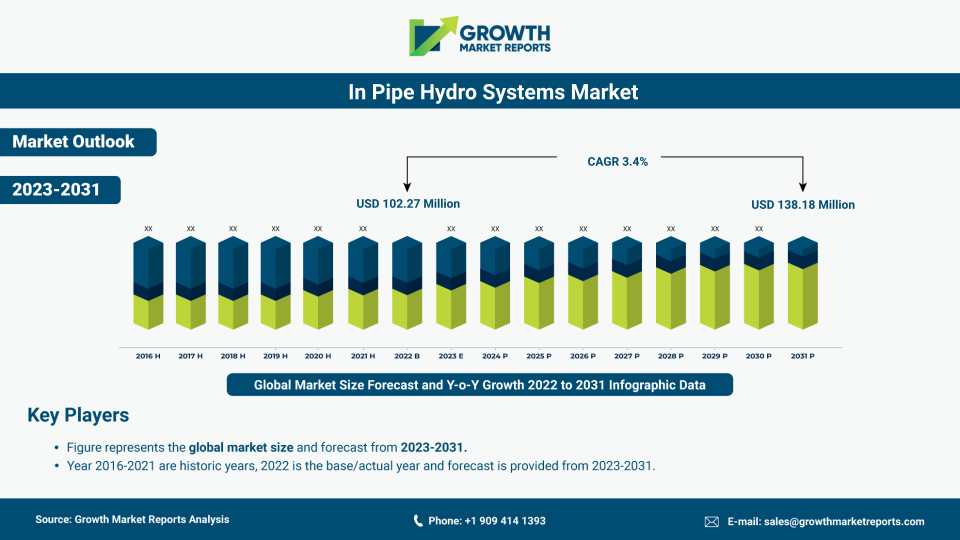
According to our latest research, the global in-pipe hydro systems market size reached USD 1.24 billion in 2025, reflecting robust momentum in the adoption of sustainable energy solutions embedded within water infrastructure. The market is projected to expand at a CAGR of 8.7% over the 2026-2034 forecast period, reaching approximately USD 2.61 billion by 2034. This growth is primarily driven by increasing demand for renewable energy integration within existing water networks, rising emphasis on decarbonization, and the accelerating need for decentralized power generation across both developed and emerging economies.

Global In-pipe Hydro Systems Market Size Forecast 2025-2034, USD Billion

One of the primary growth factors for the in-pipe hydro systems market is the global shift toward sustainable energy sources. Governments and regulatory bodies worldwide are implementing stringent policies to reduce carbon emissions and promote renewables, with the 2025 policy environment significantly more favorable than even five years prior. In-pipe hydro systems, which harness the kinetic and potential energy of flowing water within pipelines to generate electricity, are increasingly recognized as a reliable and eco-friendly solution. These systems integrate seamlessly into municipal water supply networks, industrial water systems, and irrigation channels, offering a non-intrusive way to generate clean power without large-scale infrastructure overhaul or significant environmental impact. The ability to retrofit existing pipelines further enhances their appeal, allowing utilities and industries to maximize energy recovery and operational efficiency. Related innovations in in-pipe micro hydro valve energy recovery are expanding the range of pipeline conditions under which cost-effective generation is achievable.

Another significant driver is growing urbanization and the expansion of water infrastructure across both developed and developing regions. Rapid urban growth necessitates modernization of water supply systems, creating ample opportunities for in-pipe hydro deployment. Municipalities are investing heavily in smart water management solutions, and in-pipe hydro systems fit well within this paradigm by providing dual benefit: supporting grid stability with distributed generation and offsetting operational costs through on-site power production. The scalability of these systems, from micro to large-scale installations, caters to applications ranging from small rural communities to large metropolitan networks, further fueling market penetration.

Technological advancements and cost reductions are also propelling the market forward. Innovations in turbine design, advanced composite materials, and digital control systems have significantly improved the efficiency and reliability of in-pipe hydro equipment. As manufacturing processes become more streamlined and economies of scale are realized, overall installation and maintenance costs have decreased, making these systems accessible to a broader customer base. The growing adoption of digital monitoring and analytics enables real-time performance optimization, predictive maintenance, and seamless integration with smart grids, enhancing the value proposition for end-users. The convergence of in-pipe hydro with stormwater micro hydro generation concepts is also opening new application frontiers in urban drainage infrastructure.

From a regional perspective, Asia Pacific is expected to remain the largest and fastest-growing market for in-pipe hydro systems through 2034, driven by extensive water infrastructure investment, rapid urbanization, and supportive government mandates promoting renewable energy. North America and Europe are also witnessing substantial growth, fueled by the modernization of aging water networks and increasing sustainability commitments from utilities and industrial operators. Meanwhile, emerging markets in Latin America and the Middle East and Africa are gradually adopting these technologies as part of broader initiatives to improve water management and energy access.

Product Type Analysis

The in-pipe hydro systems market is segmented by product type into micro, small, and large in-pipe hydro systems. Micro in-pipe hydro systems, typically with capacities up to 10 kW, are gaining traction for their flexibility and ease of integration, particularly in remote or decentralized locations. These systems are ideal for small-scale water pipelines, rural water supply schemes, and localized energy needs. Their compact design, low maintenance requirements, and ability to operate efficiently at low flow rates make them a preferred choice for municipalities and agricultural users seeking to harness untapped energy potential from existing infrastructure. Research into pico-hydro turbine technology is further informing the design of next-generation micro systems capable of operating in very low-head pipeline environments.

In-pipe Hydro Systems Market Share by Product Type 2025

Small in-pipe hydro systems, generally ranging from 11 kW to 50 kW, are increasingly adopted by industrial facilities and medium-sized municipal water networks. These systems strike a balance between scalability and cost-effectiveness, providing sufficient power output to offset a significant portion of operational energy consumption. Their applicability extends to wastewater treatment plants, irrigation channels, and commercial complexes, where consistent water flow can be leveraged to generate renewable electricity. The modular nature of small in-pipe hydro systems allows phased installations, facilitating gradual expansion as demand grows or infrastructure upgrades are implemented.

Large in-pipe hydro systems, with capacities above 50 kW, are predominantly utilized in extensive municipal and industrial water distribution networks. These systems are designed to handle high flow rates and substantial pressure differentials, enabling the generation of significant quantities of electricity. Large-scale installations often require customized engineering solutions, advanced control systems, and robust monitoring infrastructure to ensure optimal performance and grid compatibility. While the initial investment can be substantial, the long-term energy savings and environmental benefits make them an attractive proposition for utilities and large industrial players seeking to enhance sustainability and resilience. The choice of product type is heavily influenced by the specific application, available water flow, pipeline characteristics, and end-user requirements, and manufacturers continue to expand their portfolios to address all three segments.

Ongoing research and development efforts are aimed at improving turbine efficiency, reducing installation complexity, and enhancing system durability, which are expected to drive adoption across all product segments through 2034. Manufacturers are also exploring synergies with adjacent technologies, such as advanced pipeline repair and rehabilitation systems, to streamline the integration of hydro components during planned maintenance windows and minimize total project costs.

Report Scope

Attributes Details
Report Title In-pipe Hydro Systems Market Research Report 2034
By Product Type Micro In-pipe Hydro Systems, Small In-pipe Hydro Systems, Large In-pipe Hydro Systems
By Application Municipal Water Supply, Industrial Water Systems, Irrigation, Wastewater Treatment, Others
By Installation Type New Installation, Retrofit
By Power Output Up to 10 kW, 11-50 kW, Above 50 kW
By End-User Municipal, Industrial, Agricultural, Commercial, Others
Regions Covered North America, Europe, APAC, Latin America, MEA
Base Year 2025
Historic Data 2019-2024
Forecast Period 2026-2034
Number of Pages 294
Number of Tables & Figures 377
Customization Available Yes, the report can be customized as per your need.

Application Analysis

The in-pipe hydro systems market serves a wide array of applications, with municipal water supply being the largest segment. Municipalities are increasingly leveraging in-pipe hydro technologies to generate clean electricity from existing water distribution networks, reducing energy costs and supporting sustainability goals. These systems are particularly effective in gravity-fed pipelines, where consistent flow and pressure can be harnessed without disrupting water delivery. The ability to retrofit in-pipe hydro systems into existing infrastructure allows cities to maximize energy recovery without extensive capital investment or major construction activity.

The industrial water systems segment is witnessing significant growth, driven by the need for energy efficiency and cost optimization in manufacturing and processing facilities. Industries with substantial water usage, including food and beverage, pharmaceuticals, and chemicals, are increasingly adopting in-pipe hydro systems to recover wasted energy and reduce their carbon footprint. These systems can be integrated into process water lines, cooling systems, and wastewater treatment facilities, providing a reliable source of on-site renewable power and enhancing overall operational sustainability.

In the irrigation sector, in-pipe hydro systems are being deployed to support sustainable agriculture and rural electrification initiatives. Irrigation networks often involve long-distance water conveyance and significant elevation changes, creating ideal conditions for energy recovery. By installing in-pipe hydro turbines in main canals or distribution pipelines, agricultural communities can generate electricity for local use, powering pumps, lighting, or small-scale processing equipment. The broader potential of water-powered rural generation is also examined in research on hydrokinetic power for irrigation systems, which highlights complementary technology pathways for farm-level energy independence. This reduces dependence on fossil fuels and supports the development of resilient rural economies.

Wastewater treatment facilities represent another important application area, where in-pipe hydro systems capture energy from effluent flows and reduce the overall energy intensity of treatment processes. Integration of these systems helps utilities offset operational costs, comply with environmental regulations, and demonstrate leadership in sustainable water management. Other emerging applications include commercial buildings, campuses, and data centers, where in-pipe hydro systems are being explored as part of broader energy efficiency and sustainability strategies.

Installation Type Analysis

The installation type segment of the in-pipe hydro systems market is bifurcated into new installations and retrofits. New installations involve the integration of in-pipe hydro systems during the construction of new water infrastructure projects. This approach allows for optimal system design, seamless integration, and the incorporation of advanced monitoring and control technologies from the outset. New installations are particularly prevalent in regions experiencing rapid urbanization, infrastructure expansion, and greenfield development, notably across Asia Pacific and parts of the Middle East.

Retrofit installations are gaining significant traction in mature markets with extensive existing water networks. Retrofitting involves installing in-pipe hydro systems within operational pipelines, often without the need for major modifications or service interruptions. This approach enables utilities and industries to extract additional value from their assets, enhance energy efficiency, and meet sustainability targets with minimal disruption. The growing emphasis on asset optimization and lifecycle management is driving the adoption of retrofit solutions, especially in North America and Europe, where aging infrastructure presents both challenges and opportunities for energy recovery.

The decision between new installation and retrofit is influenced by project scale, budget constraints, regulatory requirements, and the condition of existing infrastructure. While new installations offer greater design flexibility and long-term performance benefits, retrofits provide a cost-effective pathway for immediate energy savings and emissions reduction. Manufacturers and service providers are increasingly offering turnkey solutions tailored to both installation types, including site assessment, engineering, procurement, and commissioning services.

The ongoing digitalization of water infrastructure is further enhancing the value proposition of both new and retrofit in-pipe hydro systems. Advanced sensors, data analytics, and remote monitoring capabilities enable real-time performance optimization, predictive maintenance, and integration with smart grid platforms. This digital transformation is expected to drive further adoption of in-pipe hydro technologies across diverse installation scenarios, supporting the transition toward more resilient and sustainable water and energy systems through 2034.

Power Output Analysis

The power output segment of the in-pipe hydro systems market is categorized into up to 10 kW, 11-50 kW, and above 50 kW. Systems with a power output of up to 10 kW are primarily used in micro and small-scale applications, such as rural water supply schemes, small communities, and standalone facilities. These systems are valued for their simplicity, low cost, and ability to operate efficiently in low-flow environments. They are particularly well-suited for decentralized energy generation, supporting rural electrification and off-grid applications in developing regions.

The 11-50 kW segment caters to medium-sized municipal, industrial, and commercial applications. These systems offer a balance between scalability and cost-effectiveness, providing sufficient power to offset operational energy consumption and reduce reliance on grid electricity. Their modular design allows phased implementation and easy integration into existing infrastructure, making them an attractive option for utilities and businesses seeking to enhance energy efficiency and sustainability across the 2026-2034 forecast period.

Systems with a power output above 50 kW are designed for large-scale municipal and industrial applications, where high flow rates and significant pressure differentials exist. These systems are capable of generating substantial quantities of electricity, supporting grid stability, and contributing to overall energy mix diversification. Deployment of high-capacity in-pipe hydro systems often involves customized engineering solutions, advanced control systems, and robust monitoring infrastructure to ensure optimal performance and regulatory compliance.

The choice of power output is determined by available water flow, pipeline diameter, pressure conditions, and end-user requirements. Manufacturers are continually innovating to enhance the efficiency and reliability of systems across all power output categories, leveraging advances in turbine aerodynamics, materials science, and digital control technologies. The growing focus on distributed generation and energy resilience is expected to drive further adoption across all power output segments through 2034.

End-User Analysis

The end-user landscape for the in-pipe hydro systems market is diverse, encompassing municipal, industrial, agricultural, commercial, and other sectors. Municipalities represent the largest end-user segment, driven by the need to enhance energy efficiency, reduce operational costs, and meet sustainability targets. In-pipe hydro systems are increasingly integrated into municipal water supply and wastewater treatment networks, providing a reliable source of renewable electricity and supporting broader smart city initiatives. Municipal water system operators in particular are drawn to the dual benefit of energy generation and improved pipeline pressure management.

The industrial sector is a significant adopter of in-pipe hydro technologies, particularly in industries with high water usage and stringent sustainability requirements. By harnessing the energy potential of process water lines, cooling systems, and effluent streams, industrial facilities can reduce their carbon footprint, lower energy costs, and demonstrate environmental leadership. The ability to retrofit in-pipe hydro systems into existing infrastructure further enhances their appeal for industrial users seeking to optimize asset performance and comply with evolving regulatory standards.

In the agricultural sector, in-pipe hydro systems are deployed to support sustainable irrigation practices, rural electrification, and on-farm energy generation. These systems enable farmers and agricultural cooperatives to harness the kinetic energy of irrigation water, reducing dependence on diesel generators and grid electricity. The resulting energy savings and emissions reductions contribute to the development of resilient and self-sufficient rural communities, supporting broader goals of food security and rural development.

Commercial and other end-users, including campuses, data centers, and large real estate developments, are also exploring the potential of in-pipe hydro systems as part of integrated energy management strategies. These users are motivated by the need to enhance energy efficiency, reduce operational costs, and meet corporate sustainability objectives. The flexibility and scalability of in-pipe hydro technologies make them well-suited for a wide range of commercial applications, from small-scale installations to large campus-wide deployments.

Opportunities & Threats

The in-pipe hydro systems market presents significant opportunities for growth, particularly in the context of global efforts to transition toward sustainable energy and water management practices. The increasing adoption of smart water infrastructure, coupled with the need for decentralized and resilient energy solutions, is driving demand for in-pipe hydro technologies across municipal, industrial, and agricultural sectors. The ability to retrofit existing pipelines and maximize energy recovery from water flows offers a compelling value proposition for utilities and industries seeking to enhance sustainability, reduce costs, and comply with regulatory requirements. Furthermore, ongoing technological advancements and cost reductions are expanding the addressable market and enabling deployment in new and emerging applications.

Another key opportunity lies in the integration of digital technologies and data analytics with in-pipe hydro systems. The adoption of advanced sensors, real-time monitoring, and predictive maintenance tools is enabling utilities and industries to optimize system performance, minimize downtime, and enhance asset management. This digital transformation is facilitating the development of smart water-energy networks, supporting grid stability, and enabling the seamless integration of distributed renewable generation. As governments and private sector players increasingly prioritize sustainability and resilience through the 2026-2034 period, the demand for innovative in-pipe hydro solutions is expected to continue growing, driving further investment and innovation in the market.

Despite these opportunities, the market faces several restraining factors that could hinder growth. High initial capital costs, particularly for large-scale and customized installations, can pose a barrier to adoption, especially in regions with limited financial resources or competing infrastructure priorities. Regulatory uncertainties, permitting challenges, and the need for specialized engineering expertise can also slow project development and increase implementation timelines. In addition, variability in water flow and pressure conditions can impact system performance and limit applicability in certain contexts. Addressing these challenges will require ongoing collaboration between policymakers, industry stakeholders, and technology providers to streamline regulatory processes, enhance financing mechanisms, and promote best practices in system design and deployment.

Regional Outlook

The Asia Pacific region dominates the in-pipe hydro systems market, accounting for the largest share of global revenue in 2025, with a market size of approximately USD 465 million. This leadership is driven by rapid urbanization, significant investments in water infrastructure, and supportive government policies promoting renewable energy adoption. Countries such as China, India, and Japan are leading the way in deploying in-pipe hydro technologies, leveraging their extensive water networks and growing focus on sustainability. The region is expected to maintain its leadership position over the 2026-2034 forecast period, supported by a robust pipeline of infrastructure projects and increasing awareness of the benefits of energy recovery from water systems.

In-pipe Hydro Systems Market Regional Share 2025

North America is the second-largest market, with a market size of around USD 332 million in 2025. The region is characterized by modernization of aging water infrastructure, a strong regulatory framework supporting renewable energy, and a growing emphasis on energy efficiency and sustainability. The United States and Canada are at the forefront of in-pipe hydro adoption, with utilities and industries increasingly investing in both new installations and retrofit projects. The North American market is projected to grow at a CAGR of approximately 7.9% through 2034, driven by ongoing infrastructure upgrades and the integration of digital technologies across municipal and industrial water systems.

Europe holds a significant share of the global market, with a market size of approximately USD 257 million in 2025. The region benefits from a well-established water infrastructure, strong policy support for renewable energy, and a mature ecosystem of technology providers and service companies. Countries such as Germany, the United Kingdom, and France are leading adopters of in-pipe hydro systems, leveraging their experience in sustainable water management and energy recovery. Meanwhile, Latin America and the Middle East and Africa are emerging as promising markets, with a combined market size of around USD 186 million in 2025. These regions are gradually embracing in-pipe hydro technologies as part of broader efforts to improve water management, enhance energy access, and support sustainable development, and their growth trajectory is expected to accelerate as project pipelines mature and financing mechanisms improve through 2034.

Competitor Outlook

The in-pipe hydro systems market is characterized by a dynamic and competitive landscape, with a mix of established multinational players, emerging technology providers, and specialized engineering firms. Leading companies are focusing on expanding their product portfolios, enhancing system efficiency, and offering comprehensive solutions that cater to a wide range of applications and customer needs. Strategic partnerships, mergers and acquisitions, and collaborations with utilities and government agencies are common strategies employed by market participants to strengthen their market position and drive innovation through the 2026-2034 period.

Innovation is a key differentiator in this market, with companies investing heavily in research and development to improve turbine design, reduce installation complexity, and enhance system durability. The integration of digital technologies, including advanced sensors, data analytics, and remote monitoring, is enabling providers to offer value-added services such as real-time performance optimization, predictive maintenance, and energy management solutions. This focus on innovation is helping companies differentiate their offerings, capture new market opportunities, and address the evolving needs of customers across diverse sectors.

The competitive landscape is also shaped by the increasing emphasis on sustainability, regulatory compliance, and cost-effectiveness. Companies are working closely with policymakers, utilities, and industry stakeholders to promote best practices, streamline regulatory processes, and develop standardized solutions that facilitate widespread adoption of in-pipe hydro technologies. The growing importance of financing mechanisms, including public-private partnerships and performance-based contracts, is influencing competitive dynamics, enabling providers to offer flexible and scalable solutions that meet the unique requirements of different end-users.

Some of the major companies operating in the in-pipe hydro systems market include Lucid Energy, Rentricity Inc., Xylem Inc., Natel Energy, Toshiba Corporation, GE Vernova, Siemens AG, Flowserve Corporation, Andritz Hydro, Voith Hydro, Mavel a.s., Mueller Water Products, Hydrospin, Grundfos Holding A/S, Pentair plc, VAG Group, Cornell Pump Company, and SUEZ Water Technologies and Solutions. Rentricity Inc. is a pioneer in energy recovery solutions for water infrastructure, offering innovative in-pipe hydro systems that enable utilities to generate clean electricity from existing pipelines. Lucid Energy is known for its patented in-pipe turbine technology, which has been deployed in several high-profile municipal water projects across North America. Xylem Inc. is a global leader in water technology, providing a comprehensive portfolio of products and services for water and wastewater management. Andritz Hydro and Voith Hydro bring decades of large-scale hydropower engineering expertise to the in-pipe segment, while Mavel a.s. and Hydrospin focus on compact, high-efficiency systems for distributed applications.

These companies are continually investing in product development, strategic partnerships, and market expansion initiatives to enhance their competitive position and capture new growth opportunities. By leveraging their technical expertise, global reach, and commitment to sustainability, leading players in the in-pipe hydro systems market are well-positioned to support the transition toward more resilient and sustainable water and energy systems through 2034 and beyond.

Key Players

  • Lucid Energy
  • Rentricity Inc.
  • Xylem Inc.
  • Natel Energy
  • Toshiba Corporation
  • GE Vernova
  • Siemens AG
  • Flowserve Corporation
  • Andritz Hydro
  • Voith Hydro
  • Mavel a.s.
  • Mueller Water Products
  • Hydrospin
  • Grundfos Holding A/S
  • Pentair plc
  • VAG Group
  • Cornell Pump Company
  • SUEZ Water Technologies and Solutions

Segments

The In-pipe Hydro Systems market has been segmented on the basis of

Product Type

  • Micro In-pipe Hydro Systems
  • Small In-pipe Hydro Systems
  • Large In-pipe Hydro Systems

Application

  • Municipal Water Supply
  • Industrial Water Systems
  • Irrigation
  • Wastewater Treatment
  • Others

Installation Type

  • New Installation
  • Retrofit

Power Output

  • Up to 10 kW
  • 11–50 kW
  • Above 50 kW

End-User

  • Municipal
  • Industrial
  • Agricultural
  • Commercial
  • Others

Frequently Asked Questions

Digital transformation is substantially enhancing the value proposition of in-pipe hydro systems. Advanced IoT sensors, SCADA integration, cloud-based analytics, and AI-driven predictive maintenance tools are enabling real-time performance monitoring, optimized turbine control, and proactive fault detection. This reduces downtime, extends equipment lifespan, and lowers operational costs. Connectivity with smart grid platforms allows distributed in-pipe hydro generation to contribute actively to grid balancing and demand response programs. By 2034, digitally enabled in-pipe hydro systems are expected to become the industry standard, with data-driven optimization delivering measurable improvements in energy yield and asset utilization across all end-user segments.

The market faces several headwinds, including relatively high upfront capital costs for large-scale or custom installations, complex permitting and regulatory environments in certain jurisdictions, and variability in pipeline flow and pressure conditions that can limit energy recovery potential. A shortage of specialized engineering expertise in emerging markets can slow project development. Additionally, competition from other distributed renewable technologies such as rooftop solar requires in-pipe hydro providers to clearly communicate long-term value and reliability advantages to potential customers.

The market includes established multinationals and specialized technology companies. Key players include Lucid Energy, Rentricity Inc., Xylem Inc., Natel Energy, Toshiba Corporation, GE Vernova, Siemens AG, Flowserve Corporation, Andritz Hydro, Voith Hydro, Mavel a.s., Mueller Water Products, Hydrospin, Grundfos Holding A/S, Pentair plc, VAG Group, Cornell Pump Company, and SUEZ Water Technologies and Solutions. These firms compete through product innovation, strategic partnerships, and comprehensive turnkey project capabilities.

Retrofit installations allow utilities and industries to extract renewable electricity from operational pipelines without requiring new construction or major service interruptions. This approach maximizes the value of existing water assets, delivers measurable energy cost savings, and supports sustainability and emissions-reduction goals. The relative speed of deployment compared with greenfield projects means faster return on investment. As explored in research on micro hydro solutions for municipal water pipelines, retrofit projects in mature North American and European markets are among the most commercially attractive opportunities in the sector through 2034.

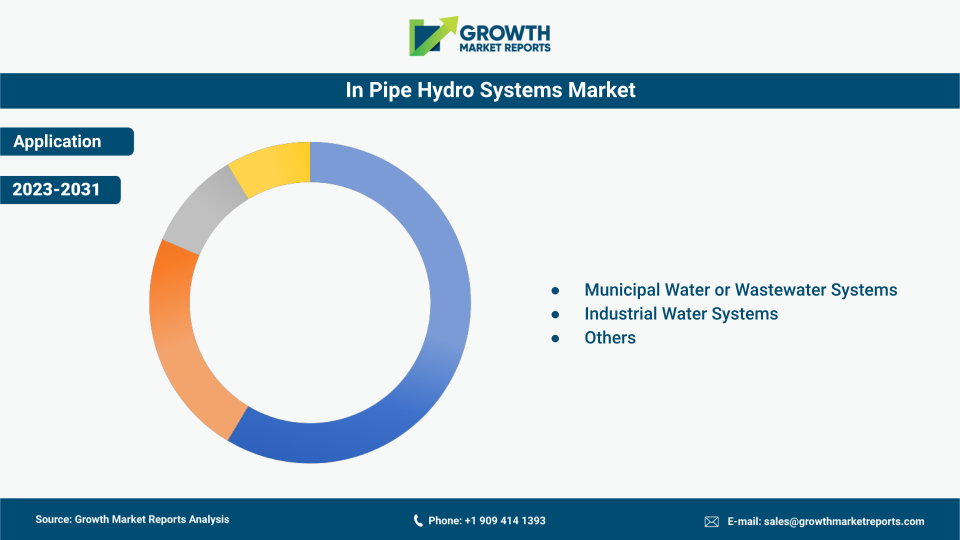
Municipal water supply is the largest application, accounting for the biggest revenue share, as cities integrate these systems into gravity-fed distribution networks to offset operational energy costs. Industrial water systems represent a fast-growing segment, with food, beverage, pharmaceutical, and chemical manufacturers adopting in-pipe hydro to reduce energy spend and carbon emissions. Irrigation networks in agricultural regions benefit from energy recovery along long conveyance pipelines, supporting rural electrification. Wastewater treatment plants use these systems to capture energy from effluent flows, while commercial campuses and data centers are emerging adopters seeking on-site renewable generation.

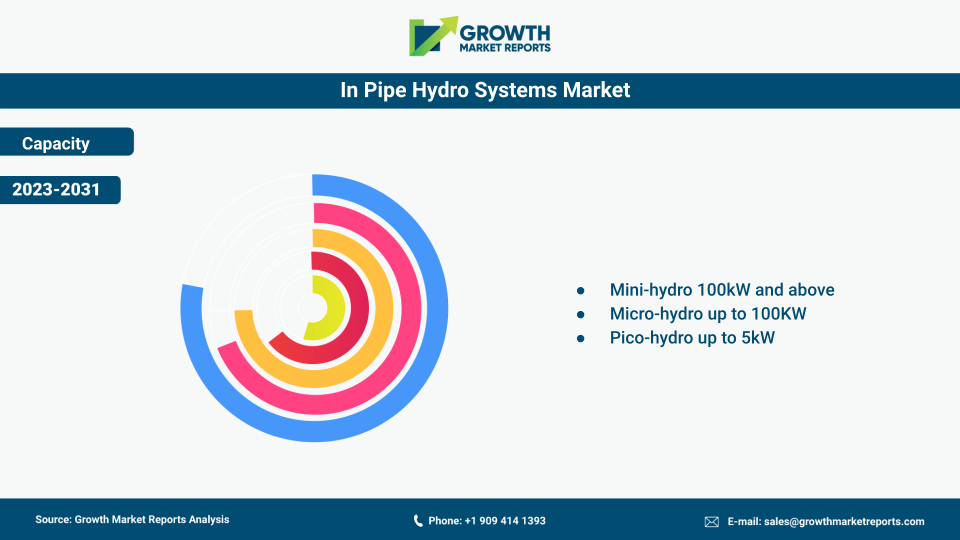
The market offers three primary product types. Micro in-pipe hydro systems typically produce up to 10 kW and are suited for rural, decentralized, or small-scale pipeline applications. Small in-pipe hydro systems generate between 11 kW and 50 kW and serve medium-sized municipal networks, industrial facilities, and commercial complexes. Large in-pipe hydro systems exceed 50 kW and are deployed in high-flow municipal distribution networks and major industrial water systems, delivering substantial electricity output and supporting grid stability. Advances in turbine design and materials continue to improve performance across all three categories.

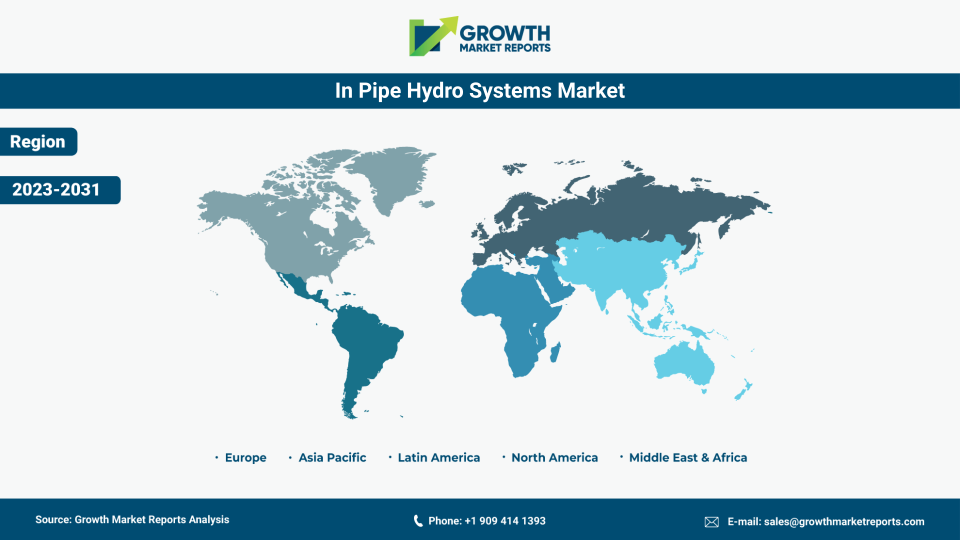
Asia Pacific leads the global market with approximately 37.5% of revenue in 2025, driven by rapid urbanization, large-scale water infrastructure investments, and pro-renewable policies in China, India, and Japan. North America holds the second-largest share at around 26.8%, supported by modernization of aging water networks and strong regulatory frameworks in the United States and Canada. Europe accounts for roughly 20.7% of the market, benefiting from mature water infrastructure and ambitious EU sustainability directives. Latin America and the Middle East and Africa are emerging markets with growing adoption as part of broader water and energy access initiatives.

Key drivers include global decarbonization mandates, the expansion of smart water infrastructure, rising operational energy costs for utilities, and the growing need for resilient distributed power generation. Governments worldwide are strengthening renewable energy targets and carbon-reduction frameworks, which creates direct incentives for utilities and industries to adopt energy recovery technologies. Technological improvements that have lowered installation costs and improved turbine efficiency also play a major role in accelerating market growth through 2034.

In-pipe hydro systems are compact energy recovery devices installed inside existing water pipelines or as inline components in new water infrastructure. They capture the kinetic and potential energy of flowing water, converting it into electricity through turbine-generator units without disrupting normal water delivery. The generated power can be fed into the local grid, used on-site, or stored for later use. Systems are available in micro, small, and large configurations to suit a wide range of pipeline diameters, flow rates, and pressure conditions.

The global in-pipe hydro systems market reached USD 1.24 billion in 2025, the base year for this study. The market is projected to expand at a CAGR of 8.7% over the 2026-2034 forecast period, reaching approximately USD 2.61 billion by 2034. This growth is underpinned by rising demand for decentralized renewable energy, increasing investments in smart water infrastructure, and supportive government policies targeting decarbonization across both developed and emerging economies.

Table Of Content

Chapter 1 Executive Summary
Chapter 2 Assumptions and Acronyms Used
Chapter 3 Research Methodology
Chapter 4 In-pipe Hydro Systems Market Overview
   4.1 Introduction
      4.1.1 Market Taxonomy
      4.1.2 Market Definition
      4.1.3 Macro-Economic Factors Impacting the Market Growth
   4.2 In-pipe Hydro Systems Market Dynamics
      4.2.1 Market Drivers
      4.2.2 Market Restraints
      4.2.3 Market Opportunity
   4.3 In-pipe Hydro Systems Market - Supply Chain Analysis
      4.3.1 List of Key Suppliers
      4.3.2 List of Key Distributors
      4.3.3 List of Key Consumers
   4.4 Key Forces Shaping the In-pipe Hydro Systems Market
      4.4.1 Bargaining Power of Suppliers
      4.4.2 Bargaining Power of Buyers
      4.4.3 Threat of Substitution
      4.4.4 Threat of New Entrants
      4.4.5 Competitive Rivalry
   4.5 Global In-pipe Hydro Systems Market Size & Forecast, 2023-2032
      4.5.1 In-pipe Hydro Systems Market Size and Y-o-Y Growth
      4.5.2 In-pipe Hydro Systems Market Absolute $ Opportunity

Chapter 5 Global In-pipe Hydro Systems Market Analysis and Forecast By Product Type
   5.1 Introduction
      5.1.1 Key Market Trends & Growth Opportunities By Product Type
      5.1.2 Basis Point Share (BPS) Analysis By Product Type
      5.1.3 Absolute $ Opportunity Assessment By Product Type
   5.2 In-pipe Hydro Systems Market Size Forecast By Product Type
      5.2.1 Micro In-pipe Hydro Systems
      5.2.2 Small In-pipe Hydro Systems
      5.2.3 Large In-pipe Hydro Systems
   5.3 Market Attractiveness Analysis By Product Type

Chapter 6 Global In-pipe Hydro Systems Market Analysis and Forecast By Application
   6.1 Introduction
      6.1.1 Key Market Trends & Growth Opportunities By Application
      6.1.2 Basis Point Share (BPS) Analysis By Application
      6.1.3 Absolute $ Opportunity Assessment By Application
   6.2 In-pipe Hydro Systems Market Size Forecast By Application
      6.2.1 Municipal Water Supply
      6.2.2 Industrial Water Systems
      6.2.3 Irrigation
      6.2.4 Wastewater Treatment
      6.2.5 Others
   6.3 Market Attractiveness Analysis By Application

Chapter 7 Global In-pipe Hydro Systems Market Analysis and Forecast By Installation Type
   7.1 Introduction
      7.1.1 Key Market Trends & Growth Opportunities By Installation Type
      7.1.2 Basis Point Share (BPS) Analysis By Installation Type
      7.1.3 Absolute $ Opportunity Assessment By Installation Type
   7.2 In-pipe Hydro Systems Market Size Forecast By Installation Type
      7.2.1 New Installation
      7.2.2 Retrofit
   7.3 Market Attractiveness Analysis By Installation Type

Chapter 8 Global In-pipe Hydro Systems Market Analysis and Forecast By Power Output
   8.1 Introduction
      8.1.1 Key Market Trends & Growth Opportunities By Power Output
      8.1.2 Basis Point Share (BPS) Analysis By Power Output
      8.1.3 Absolute $ Opportunity Assessment By Power Output
   8.2 In-pipe Hydro Systems Market Size Forecast By Power Output
      8.2.1 Up to 10 kW
      8.2.2 11–50 kW
      8.2.3 Above 50 kW
   8.3 Market Attractiveness Analysis By Power Output

Chapter 9 Global In-pipe Hydro Systems Market Analysis and Forecast By End-User
   9.1 Introduction
      9.1.1 Key Market Trends & Growth Opportunities By End-User
      9.1.2 Basis Point Share (BPS) Analysis By End-User
      9.1.3 Absolute $ Opportunity Assessment By End-User
   9.2 In-pipe Hydro Systems Market Size Forecast By End-User
      9.2.1 Municipal
      9.2.2 Industrial
      9.2.3 Agricultural
      9.2.4 Commercial
      9.2.5 Others
   9.3 Market Attractiveness Analysis By End-User

Chapter 10 Global In-pipe Hydro Systems Market Analysis and Forecast by Region
   10.1 Introduction
      10.1.1 Key Market Trends & Growth Opportunities By Region
      10.1.2 Basis Point Share (BPS) Analysis By Region
      10.1.3 Absolute $ Opportunity Assessment By Region
   10.2 In-pipe Hydro Systems Market Size Forecast By Region
      10.2.1 North America
      10.2.2 Europe
      10.2.3 Asia Pacific
      10.2.4 Latin America
      10.2.5 Middle East & Africa (MEA)
   10.3 Market Attractiveness Analysis By Region

Chapter 11 Coronavirus Disease (COVID-19) Impact 
   11.1 Introduction 
   11.2 Current & Future Impact Analysis 
   11.3 Economic Impact Analysis 
   11.4 Government Policies 
   11.5 Investment Scenario

Chapter 12 North America In-pipe Hydro Systems Analysis and Forecast
   12.1 Introduction
   12.2 North America In-pipe Hydro Systems Market Size Forecast by Country
      12.2.1 U.S.
      12.2.2 Canada
   12.3 Basis Point Share (BPS) Analysis by Country
   12.4 Absolute $ Opportunity Assessment by Country
   12.5 Market Attractiveness Analysis by Country
   12.6 North America In-pipe Hydro Systems Market Size Forecast By Product Type
      12.6.1 Micro In-pipe Hydro Systems
      12.6.2 Small In-pipe Hydro Systems
      12.6.3 Large In-pipe Hydro Systems
   12.7 Basis Point Share (BPS) Analysis By Product Type 
   12.8 Absolute $ Opportunity Assessment By Product Type 
   12.9 Market Attractiveness Analysis By Product Type
   12.10 North America In-pipe Hydro Systems Market Size Forecast By Application
      12.10.1 Municipal Water Supply
      12.10.2 Industrial Water Systems
      12.10.3 Irrigation
      12.10.4 Wastewater Treatment
      12.10.5 Others
   12.11 Basis Point Share (BPS) Analysis By Application 
   12.12 Absolute $ Opportunity Assessment By Application 
   12.13 Market Attractiveness Analysis By Application
   12.14 North America In-pipe Hydro Systems Market Size Forecast By Installation Type
      12.14.1 New Installation
      12.14.2 Retrofit
   12.15 Basis Point Share (BPS) Analysis By Installation Type 
   12.16 Absolute $ Opportunity Assessment By Installation Type 
   12.17 Market Attractiveness Analysis By Installation Type
   12.18 North America In-pipe Hydro Systems Market Size Forecast By Power Output
      12.18.1 Up to 10 kW
      12.18.2 11–50 kW
      12.18.3 Above 50 kW
   12.19 Basis Point Share (BPS) Analysis By Power Output 
   12.20 Absolute $ Opportunity Assessment By Power Output 
   12.21 Market Attractiveness Analysis By Power Output
   12.22 North America In-pipe Hydro Systems Market Size Forecast By End-User
      12.22.1 Municipal
      12.22.2 Industrial
      12.22.3 Agricultural
      12.22.4 Commercial
      12.22.5 Others
   12.23 Basis Point Share (BPS) Analysis By End-User 
   12.24 Absolute $ Opportunity Assessment By End-User 
   12.25 Market Attractiveness Analysis By End-User

Chapter 13 Europe In-pipe Hydro Systems Analysis and Forecast
   13.1 Introduction
   13.2 Europe In-pipe Hydro Systems Market Size Forecast by Country
      13.2.1 Germany
      13.2.2 France
      13.2.3 Italy
      13.2.4 U.K.
      13.2.5 Spain
      13.2.6 Russia
      13.2.7 Rest of Europe
   13.3 Basis Point Share (BPS) Analysis by Country
   13.4 Absolute $ Opportunity Assessment by Country
   13.5 Market Attractiveness Analysis by Country
   13.6 Europe In-pipe Hydro Systems Market Size Forecast By Product Type
      13.6.1 Micro In-pipe Hydro Systems
      13.6.2 Small In-pipe Hydro Systems
      13.6.3 Large In-pipe Hydro Systems
   13.7 Basis Point Share (BPS) Analysis By Product Type 
   13.8 Absolute $ Opportunity Assessment By Product Type 
   13.9 Market Attractiveness Analysis By Product Type
   13.10 Europe In-pipe Hydro Systems Market Size Forecast By Application
      13.10.1 Municipal Water Supply
      13.10.2 Industrial Water Systems
      13.10.3 Irrigation
      13.10.4 Wastewater Treatment
      13.10.5 Others
   13.11 Basis Point Share (BPS) Analysis By Application 
   13.12 Absolute $ Opportunity Assessment By Application 
   13.13 Market Attractiveness Analysis By Application
   13.14 Europe In-pipe Hydro Systems Market Size Forecast By Installation Type
      13.14.1 New Installation
      13.14.2 Retrofit
   13.15 Basis Point Share (BPS) Analysis By Installation Type 
   13.16 Absolute $ Opportunity Assessment By Installation Type 
   13.17 Market Attractiveness Analysis By Installation Type
   13.18 Europe In-pipe Hydro Systems Market Size Forecast By Power Output
      13.18.1 Up to 10 kW
      13.18.2 11–50 kW
      13.18.3 Above 50 kW
   13.19 Basis Point Share (BPS) Analysis By Power Output 
   13.20 Absolute $ Opportunity Assessment By Power Output 
   13.21 Market Attractiveness Analysis By Power Output
   13.22 Europe In-pipe Hydro Systems Market Size Forecast By End-User
      13.22.1 Municipal
      13.22.2 Industrial
      13.22.3 Agricultural
      13.22.4 Commercial
      13.22.5 Others
   13.23 Basis Point Share (BPS) Analysis By End-User 
   13.24 Absolute $ Opportunity Assessment By End-User 
   13.25 Market Attractiveness Analysis By End-User

Chapter 14 Asia Pacific In-pipe Hydro Systems Analysis and Forecast
   14.1 Introduction
   14.2 Asia Pacific In-pipe Hydro Systems Market Size Forecast by Country
      14.2.1 China
      14.2.2 Japan
      14.2.3 South Korea
      14.2.4 India
      14.2.5 Australia
      14.2.6 South East Asia (SEA)
      14.2.7 Rest of Asia Pacific (APAC)
   14.3 Basis Point Share (BPS) Analysis by Country
   14.4 Absolute $ Opportunity Assessment by Country
   14.5 Market Attractiveness Analysis by Country
   14.6 Asia Pacific In-pipe Hydro Systems Market Size Forecast By Product Type
      14.6.1 Micro In-pipe Hydro Systems
      14.6.2 Small In-pipe Hydro Systems
      14.6.3 Large In-pipe Hydro Systems
   14.7 Basis Point Share (BPS) Analysis By Product Type 
   14.8 Absolute $ Opportunity Assessment By Product Type 
   14.9 Market Attractiveness Analysis By Product Type
   14.10 Asia Pacific In-pipe Hydro Systems Market Size Forecast By Application
      14.10.1 Municipal Water Supply
      14.10.2 Industrial Water Systems
      14.10.3 Irrigation
      14.10.4 Wastewater Treatment
      14.10.5 Others
   14.11 Basis Point Share (BPS) Analysis By Application 
   14.12 Absolute $ Opportunity Assessment By Application 
   14.13 Market Attractiveness Analysis By Application
   14.14 Asia Pacific In-pipe Hydro Systems Market Size Forecast By Installation Type
      14.14.1 New Installation
      14.14.2 Retrofit
   14.15 Basis Point Share (BPS) Analysis By Installation Type 
   14.16 Absolute $ Opportunity Assessment By Installation Type 
   14.17 Market Attractiveness Analysis By Installation Type
   14.18 Asia Pacific In-pipe Hydro Systems Market Size Forecast By Power Output
      14.18.1 Up to 10 kW
      14.18.2 11–50 kW
      14.18.3 Above 50 kW
   14.19 Basis Point Share (BPS) Analysis By Power Output 
   14.20 Absolute $ Opportunity Assessment By Power Output 
   14.21 Market Attractiveness Analysis By Power Output
   14.22 Asia Pacific In-pipe Hydro Systems Market Size Forecast By End-User
      14.22.1 Municipal
      14.22.2 Industrial
      14.22.3 Agricultural
      14.22.4 Commercial
      14.22.5 Others
   14.23 Basis Point Share (BPS) Analysis By End-User 
   14.24 Absolute $ Opportunity Assessment By End-User 
   14.25 Market Attractiveness Analysis By End-User

Chapter 15 Latin America In-pipe Hydro Systems Analysis and Forecast
   15.1 Introduction
   15.2 Latin America In-pipe Hydro Systems Market Size Forecast by Country
      15.2.1 Brazil
      15.2.2 Mexico
      15.2.3 Rest of Latin America (LATAM)
   15.3 Basis Point Share (BPS) Analysis by Country
   15.4 Absolute $ Opportunity Assessment by Country
   15.5 Market Attractiveness Analysis by Country
   15.6 Latin America In-pipe Hydro Systems Market Size Forecast By Product Type
      15.6.1 Micro In-pipe Hydro Systems
      15.6.2 Small In-pipe Hydro Systems
      15.6.3 Large In-pipe Hydro Systems
   15.7 Basis Point Share (BPS) Analysis By Product Type 
   15.8 Absolute $ Opportunity Assessment By Product Type 
   15.9 Market Attractiveness Analysis By Product Type
   15.10 Latin America In-pipe Hydro Systems Market Size Forecast By Application
      15.10.1 Municipal Water Supply
      15.10.2 Industrial Water Systems
      15.10.3 Irrigation
      15.10.4 Wastewater Treatment
      15.10.5 Others
   15.11 Basis Point Share (BPS) Analysis By Application 
   15.12 Absolute $ Opportunity Assessment By Application 
   15.13 Market Attractiveness Analysis By Application
   15.14 Latin America In-pipe Hydro Systems Market Size Forecast By Installation Type
      15.14.1 New Installation
      15.14.2 Retrofit
   15.15 Basis Point Share (BPS) Analysis By Installation Type 
   15.16 Absolute $ Opportunity Assessment By Installation Type 
   15.17 Market Attractiveness Analysis By Installation Type
   15.18 Latin America In-pipe Hydro Systems Market Size Forecast By Power Output
      15.18.1 Up to 10 kW
      15.18.2 11–50 kW
      15.18.3 Above 50 kW
   15.19 Basis Point Share (BPS) Analysis By Power Output 
   15.20 Absolute $ Opportunity Assessment By Power Output 
   15.21 Market Attractiveness Analysis By Power Output
   15.22 Latin America In-pipe Hydro Systems Market Size Forecast By End-User
      15.22.1 Municipal
      15.22.2 Industrial
      15.22.3 Agricultural
      15.22.4 Commercial
      15.22.5 Others
   15.23 Basis Point Share (BPS) Analysis By End-User 
   15.24 Absolute $ Opportunity Assessment By End-User 
   15.25 Market Attractiveness Analysis By End-User

Chapter 16 Middle East & Africa (MEA) In-pipe Hydro Systems Analysis and Forecast
   16.1 Introduction
   16.2 Middle East & Africa (MEA) In-pipe Hydro Systems Market Size Forecast by Country
      16.2.1 Saudi Arabia
      16.2.2 South Africa
      16.2.3 UAE
      16.2.4 Rest of Middle East & Africa (MEA)
   16.3 Basis Point Share (BPS) Analysis by Country
   16.4 Absolute $ Opportunity Assessment by Country
   16.5 Market Attractiveness Analysis by Country
   16.6 Middle East & Africa (MEA) In-pipe Hydro Systems Market Size Forecast By Product Type
      16.6.1 Micro In-pipe Hydro Systems
      16.6.2 Small In-pipe Hydro Systems
      16.6.3 Large In-pipe Hydro Systems
   16.7 Basis Point Share (BPS) Analysis By Product Type 
   16.8 Absolute $ Opportunity Assessment By Product Type 
   16.9 Market Attractiveness Analysis By Product Type
   16.10 Middle East & Africa (MEA) In-pipe Hydro Systems Market Size Forecast By Application
      16.10.1 Municipal Water Supply
      16.10.2 Industrial Water Systems
      16.10.3 Irrigation
      16.10.4 Wastewater Treatment
      16.10.5 Others
   16.11 Basis Point Share (BPS) Analysis By Application 
   16.12 Absolute $ Opportunity Assessment By Application 
   16.13 Market Attractiveness Analysis By Application
   16.14 Middle East & Africa (MEA) In-pipe Hydro Systems Market Size Forecast By Installation Type
      16.14.1 New Installation
      16.14.2 Retrofit
   16.15 Basis Point Share (BPS) Analysis By Installation Type 
   16.16 Absolute $ Opportunity Assessment By Installation Type 
   16.17 Market Attractiveness Analysis By Installation Type
   16.18 Middle East & Africa (MEA) In-pipe Hydro Systems Market Size Forecast By Power Output
      16.18.1 Up to 10 kW
      16.18.2 11–50 kW
      16.18.3 Above 50 kW
   16.19 Basis Point Share (BPS) Analysis By Power Output 
   16.20 Absolute $ Opportunity Assessment By Power Output 
   16.21 Market Attractiveness Analysis By Power Output
   16.22 Middle East & Africa (MEA) In-pipe Hydro Systems Market Size Forecast By End-User
      16.22.1 Municipal
      16.22.2 Industrial
      16.22.3 Agricultural
      16.22.4 Commercial
      16.22.5 Others
   16.23 Basis Point Share (BPS) Analysis By End-User 
   16.24 Absolute $ Opportunity Assessment By End-User 
   16.25 Market Attractiveness Analysis By End-User

Chapter 17 Competition Landscape 
   17.1 In-pipe Hydro Systems Market: Competitive Dashboard
   17.2 Global In-pipe Hydro Systems Market: Market Share Analysis, 2023
   17.3 Company Profiles (Details – Overview, Financials, Developments, Strategy) 
      17.3.1 Lucid Energy
      17.3.2 Rentricity Inc.
      17.3.3 Xylem Inc.
      17.3.4 Natel Energy
      17.3.5 Toshiba Corporation
      17.3.6 GE Vernova
      17.3.7 Siemens AG
      17.3.8 Flowserve Corporation
      17.3.9 Andritz Hydro
      17.3.10 Voith Hydro
      17.3.11 Mavel a.s.
      17.3.12 Mueller Water Products
      17.3.13 Hydrospin
      17.3.14 Grundfos Holding A/S
      17.3.15 Pentair plc
      17.3.16 VAG Group
      17.3.17 Cornell Pump Company
      17.3.18 SUEZ Water Technologies and Solutions

Methodology

Our Clients

Pfizer
The John Holland Group
General Mills
Siemens Healthcare
Dassault Aviation
FedEx Logistics
Nestle SA
Microsoft