Segments - by Product Type (Flexible E-paper Displays, Rigid E-paper Displays), by Application (E-Readers, Wearable Devices, Mobile Devices, Signage, Retail, Automotive, Others), by Technology (Electrophoretic, Electrowetting, Cholesteric, Electrochromic, Others), by End-User (Consumer Electronics, Retail, Automotive, Healthcare, Education, Others)
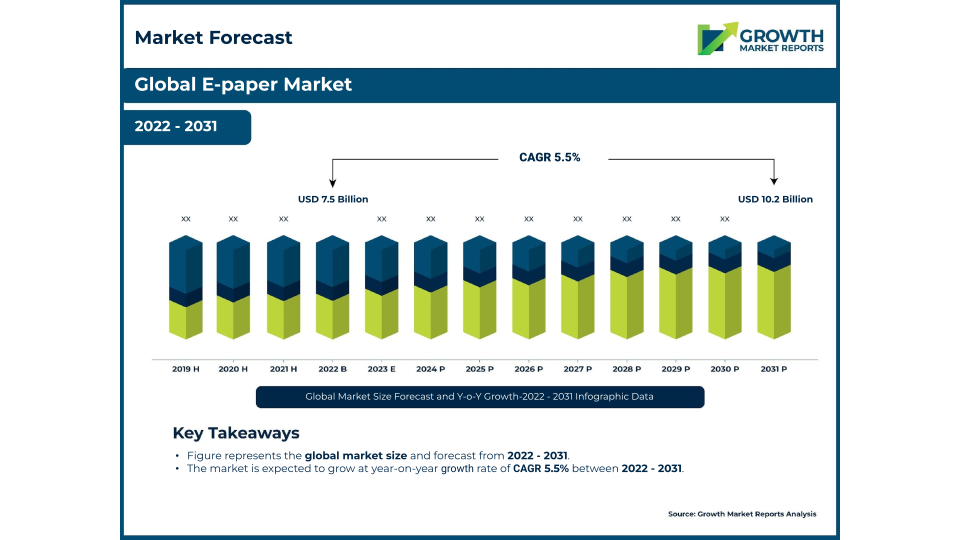
As per our latest research findings, the global e-paper market size reached USD 4.12 billion in 2024, reflecting a robust demand landscape across multiple industries. The market is projected to grow at a CAGR of 7.6% from 2025 to 2033, translating into a forecasted market value of USD 7.99 billion by 2033. This impressive growth is primarily driven by increasing adoption in consumer electronics, retail, and automotive sectors, as well as the rising demand for energy-efficient display technologies. The e-paper market continues to evolve rapidly, supported by ongoing innovations in display technologies and expanding application areas, making it a pivotal segment within the global display industry.
One of the key growth factors propelling the e-paper market is the escalating demand for energy-efficient and easily readable display solutions. E-paper displays, known for their ultra-low power consumption and superior readability under direct sunlight, are increasingly being integrated into e-readers, electronic shelf labels, and digital signage. These attributes make e-paper a preferred choice over traditional LCD and OLED displays in applications where prolonged battery life and eye comfort are critical. Furthermore, the growing awareness regarding sustainable and eco-friendly technologies is prompting manufacturers and end-users to shift towards e-paper displays, which consume significantly less energy and contribute to reduced electronic waste.
Another significant driver is the rapid expansion of the retail and logistics sectors, which are leveraging e-paper technologies for dynamic pricing, inventory management, and real-time information updates. The adoption of electronic shelf labels (ESLs) based on e-paper technology is transforming retail environments by enabling instant price changes, improving operational efficiency, and enhancing the overall customer experience. Similarly, in logistics and warehousing, e-paper-based solutions are being used for smart labels and digital signage, facilitating seamless tracking and management of goods. This trend is further bolstered by the increasing digitization of retail operations and the need for flexible, scalable, and cost-effective display solutions.
Technological advancements in e-paper displays, such as the development of flexible and color e-paper, are also fueling market growth. Flexible e-paper displays are opening new avenues in wearable devices, foldable smartphones, and automotive dashboards, where traditional rigid displays are less practical. The emergence of color e-paper is broadening application possibilities in advertising and digital signage, where vibrant visuals are essential. Additionally, ongoing research in electrophoretic, electrowetting, and other e-paper technologies is enhancing display performance, durability, and responsiveness, further solidifying e-paper's position as a disruptive force in the global display market.
The role of E-Paper Display Driver ICs is becoming increasingly significant in the e-paper market. These integrated circuits are crucial for managing the display functions of e-paper screens, ensuring efficient power usage and optimal performance. As e-paper displays are adopted in more diverse applications, from e-readers to digital signage, the demand for advanced display driver ICs is on the rise. These ICs enable precise control over the electrophoretic particles in e-paper, enhancing image stability and refresh rates. Moreover, innovations in E-Paper Display Driver IC technology are paving the way for more complex and feature-rich e-paper applications, supporting the market's growth trajectory.
From a regional perspective, the Asia Pacific region continues to dominate the e-paper market, accounting for the largest revenue share in 2024. This dominance is attributed to the presence of major consumer electronics manufacturers, rapid urbanization, and the proliferation of smart retail solutions across countries like China, Japan, and South Korea. North America and Europe are also significant contributors, driven by technological innovation and widespread adoption in retail, automotive, and healthcare sectors. Meanwhile, emerging markets in Latin America and the Middle East & Africa are gradually embracing e-paper technologies, presenting lucrative growth opportunities for market players in the coming years.
The e-paper market by product type is broadly segmented into flexible e-paper displays and rigid e-paper displays. Flexible e-paper displays are gaining significant traction owing to their lightweight, bendable, and durable properties. These displays are increasingly being adopted in wearable devices, foldable smartphones, and innovative signage solutions, as they can conform to various shapes and surfaces. The flexibility of these displays not only enhances their usability in unique form factors but also opens up new design possibilities for manufacturers aiming to deliver cutting-edge products. The ongoing advancements in flexible substrate materials and manufacturing processes are expected to further accelerate the adoption of flexible e-paper displays across diverse industry verticals.
Rigid e-paper displays, on the other hand, remain the backbone of traditional applications such as e-readers and electronic shelf labels. These displays offer high resolution, excellent contrast, and superior readability under varying lighting conditions, making them an ideal choice for devices that require static or semi-static content display. The widespread use of rigid e-paper displays in e-readers has been a major growth driver for the segment, with leading brands continually enhancing display quality and device functionality to cater to evolving consumer preferences. Despite the growing interest in flexible alternatives, rigid e-paper displays are expected to maintain a strong presence in the market due to their cost-effectiveness and proven performance.
The competitive dynamics between flexible and rigid e-paper displays are shaping the overall market landscape. While flexible displays are poised for rapid growth in emerging applications, rigid displays are expected to sustain their dominance in established segments. Market players are investing significantly in research and development to improve the flexibility, color reproduction, and durability of e-paper displays, aiming to capture a larger share of the expanding market. As technology matures, the gap between flexible and rigid displays in terms of performance and cost is expected to narrow, paving the way for broader adoption across multiple sectors.
Consumer preferences and industry requirements are also influencing the adoption patterns of different e-paper product types. For instance, in the automotive sector, flexible e-paper displays are being explored for dashboard and infotainment applications, where curved and irregular surfaces are common. In contrast, rigid displays continue to dominate in applications where flat, durable, and cost-effective solutions are preferred, such as in digital signage and retail shelf labels. The interplay between these product types will continue to drive innovation and competition in the e-paper market, shaping its future trajectory.
| Attributes | Details |
| Report Title | E-paper Market Research Report 2033 |
| By Product Type | Flexible E-paper Displays, Rigid E-paper Displays |
| By Application | E-Readers, Wearable Devices, Mobile Devices, Signage, Retail, Automotive, Others |
| By Technology | Electrophoretic, Electrowetting, Cholesteric, Electrochromic, Others |
| By End-User | Consumer Electronics, Retail, Automotive, Healthcare, Education, Others |
| Regions Covered | North America, Europe, APAC, Latin America, MEA |
| Base Year | 2024 |
| Historic Data | 2018-2023 |
| Forecast Period | 2025-2033 |
| Number of Pages | 269 |
| Number of Tables & Figures | 393 |
| Customization Available | Yes, the report can be customized as per your need. |
The e-paper market encompasses a wide range of applications, including e-readers, wearable devices, mobile devices, signage, retail, automotive, and others. E-readers remain the largest application segment, owing to the unparalleled readability, low power consumption, and lightweight nature of e-paper displays. The proliferation of digital reading habits and the increasing availability of e-books have fueled the demand for e-readers, particularly in developed markets. Major e-reader manufacturers continue to innovate by incorporating advanced e-paper technologies that offer higher resolution, faster refresh rates, and enhanced durability, thereby attracting a broader consumer base.
Wearable devices represent a rapidly growing application segment for e-paper displays. The unique characteristics of e-paper, such as flexibility, thinness, and low energy requirements, make it an ideal choice for smartwatches, fitness trackers, and other wearable electronics. These displays enable manufacturers to create lightweight, comfortable, and long-lasting devices that cater to the needs of health-conscious and tech-savvy consumers. The integration of e-paper displays in wearable devices is expected to surge further as the market for health and fitness monitoring devices expands globally.
In the realm of mobile devices, e-paper displays are being explored for secondary screens, e-note devices, and innovative form factors. While traditional LCD and OLED screens dominate primary displays, e-paper offers distinct advantages for applications that require prolonged usage and minimal eye strain. The adoption of e-paper in mobile devices is also driven by the growing demand for digital note-taking and productivity tools, particularly among students and professionals. As manufacturers continue to experiment with hybrid and dual-screen devices, the role of e-paper in enhancing user experience is expected to gain prominence.
Signage and retail applications are witnessing a significant uptick in e-paper adoption, driven by the need for dynamic, cost-effective, and environmentally friendly display solutions. Electronic shelf labels, digital price tags, and interactive signage powered by e-paper are transforming retail environments by enabling real-time updates, reducing operational costs, and minimizing paper waste. In the automotive sector, e-paper displays are being utilized for instrument clusters, infotainment systems, and heads-up displays, offering superior visibility and energy efficiency compared to conventional displays. The versatility of e-paper technology is enabling its penetration into a diverse array of applications, positioning it as a critical enabler of digital transformation across industries.
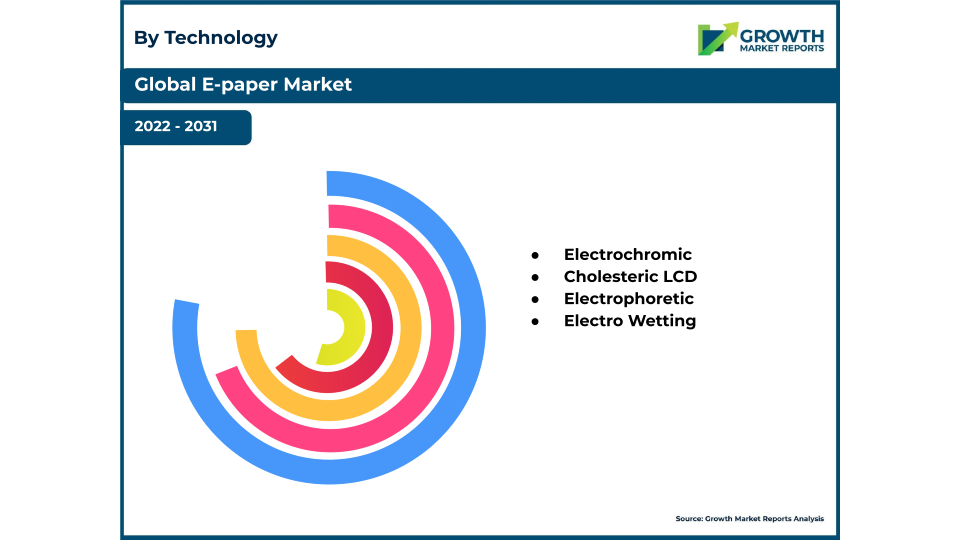
The e-paper market is characterized by the adoption of various display technologies, including electrophoretic, electrowetting, cholesteric, electrochromic, and others. Electrophoretic technology is the most widely used in commercial e-paper displays, particularly in e-readers and electronic shelf labels. This technology leverages the movement of charged pigment particles within a fluid to create images, resulting in displays that are highly readable under ambient light and consume power only when the display content changes. The dominance of electrophoretic displays is attributed to their mature manufacturing processes, proven reliability, and widespread acceptance among end-users.
Electrowetting technology is gaining momentum for applications that require color displays and faster refresh rates. This technology manipulates the shape of a liquid droplet using an electric field, enabling the creation of vibrant, full-color images. Electrowetting displays are being explored for use in advertising, signage, and mobile devices, where color performance and responsiveness are critical. Ongoing research and development efforts are focused on improving the scalability, durability, and cost-effectiveness of electrowetting displays to accelerate their commercial adoption.
Cholesteric and electrochromic e-paper technologies offer unique advantages in specific application areas. Cholesteric displays, known for their ability to reflect ambient light and produce color images without backlighting, are being utilized in smart cards, labels, and low-power signage. Electrochromic displays, which change color in response to electrical voltage, are finding applications in smart windows, automotive mirrors, and adaptive displays. These technologies expand the functional possibilities of e-paper, enabling new use cases that go beyond traditional display applications.
The ongoing evolution of e-paper technologies is marked by continuous improvements in color reproduction, refresh rates, flexibility, and integration capabilities. Market players are investing heavily in research to overcome technical challenges such as limited color range, slow refresh rates, and durability concerns. As these challenges are addressed, the adoption of advanced e-paper technologies is expected to accelerate, opening up new opportunities for innovation and market expansion. The interplay between different e-paper technologies will continue to shape the competitive landscape and drive the future growth of the e-paper market.
The e-paper market serves a diverse range of end-users, including consumer electronics, retail, automotive, healthcare, education, and others. Consumer electronics remain the largest end-user segment, driven by the widespread adoption of e-paper displays in e-readers, smartwatches, and other personal devices. The demand for lightweight, portable, and energy-efficient devices is fueling the integration of e-paper technology in consumer electronics, with manufacturers continually innovating to enhance display quality and user experience.
The retail sector is emerging as a major end-user of e-paper displays, particularly in the form of electronic shelf labels, digital signage, and smart price tags. The ability to update pricing and product information in real-time, coupled with significant cost savings and environmental benefits, is driving the adoption of e-paper solutions in retail environments. Leading retailers are leveraging e-paper technology to streamline operations, improve customer engagement, and gain a competitive edge in an increasingly digital marketplace.
In the automotive industry, e-paper displays are being integrated into dashboards, infotainment systems, and heads-up displays to provide clear, glare-free information to drivers and passengers. The energy-efficient nature of e-paper is particularly advantageous in electric vehicles, where power conservation is a priority. Automotive manufacturers are also exploring the use of e-paper for exterior displays, such as license plates and signage, to enhance vehicle functionality and safety.
Healthcare and education are also significant end-user segments for the e-paper market. In healthcare, e-paper displays are being used for patient monitoring, electronic medical records, and smart labels, offering benefits such as reduced power consumption, improved readability, and enhanced data security. In education, e-paper-based e-textbooks and digital note-taking devices are transforming the learning experience by providing interactive, lightweight, and environmentally friendly alternatives to traditional paper materials. The versatility of e-paper technology is enabling its adoption across a wide spectrum of end-user industries, driving sustained market growth.
The e-paper market presents numerous opportunities for growth and innovation, particularly in the realm of sustainable and energy-efficient display solutions. As environmental concerns and regulatory pressures intensify, organizations across industries are seeking alternatives to traditional display technologies that consume less power and generate minimal electronic waste. E-paper displays, with their ultra-low power requirements and recyclability, are well-positioned to capitalize on this trend. Additionally, the ongoing development of flexible and color e-paper technologies is opening up new application areas in wearables, foldable devices, and advertising, creating ample opportunities for market players to differentiate their offerings and capture emerging demand.
Another significant opportunity lies in the integration of e-paper displays with IoT and smart device ecosystems. As the adoption of connected devices accelerates, there is a growing need for low-power, always-on display solutions that can seamlessly interface with sensors, networks, and cloud platforms. E-paper technology, with its ability to retain images without continuous power and its compatibility with wireless communication protocols, is ideally suited for smart labels, digital signage, and other IoT-enabled applications. Market players that invest in developing integrated solutions and forging strategic partnerships are likely to gain a competitive advantage in this rapidly evolving landscape.
Despite the abundant opportunities, the e-paper market faces certain restraining factors that could impede its growth. One of the primary challenges is the relatively high cost of advanced e-paper displays compared to traditional LCD and OLED technologies. The complexity of manufacturing flexible and color e-paper displays, coupled with limited economies of scale, has resulted in higher production costs and pricing pressures. Additionally, technical limitations such as slower refresh rates, limited color reproduction, and durability concerns in certain applications may hinder widespread adoption. Addressing these challenges will require sustained investment in research and development, process optimization, and collaboration across the value chain to drive down costs and enhance product performance.
The Asia Pacific region dominated the e-paper market in 2024, accounting for approximately USD 1.78 billion of the global revenue. This leadership is driven by the strong presence of leading display manufacturers, rapid urbanization, and the proliferation of smart retail and consumer electronics across countries such as China, Japan, South Korea, and Taiwan. The region benefits from robust supply chain capabilities, significant investments in research and development, and a large consumer base that is increasingly embracing digital technologies. The Asia Pacific market is expected to maintain its dominance through 2033, supported by continued innovation and expanding application areas.
North America is another significant contributor to the e-paper market, with a market value of USD 1.11 billion in 2024. The region's growth is fueled by the widespread adoption of e-paper technologies in retail, automotive, and healthcare sectors, as well as the presence of major technology companies and research institutions. The United States, in particular, is at the forefront of innovation in e-paper applications, with a strong focus on sustainable and energy-efficient solutions. The North American market is projected to grow at a CAGR of 7.2% through 2033, driven by increasing investments in digital transformation and smart infrastructure.
Europe holds a substantial share of the global e-paper market, with a market size of USD 0.78 billion in 2024. The region is characterized by a strong emphasis on sustainability, regulatory support for green technologies, and a mature retail sector that is increasingly adopting electronic shelf labels and digital signage. Countries such as Germany, the United Kingdom, and France are leading the adoption of e-paper solutions in both commercial and public sector applications. Meanwhile, Latin America and the Middle East & Africa are emerging as promising markets, with growing investments in smart retail, logistics, and education. Although these regions currently account for a smaller share of the global market, they offer significant long-term growth potential as digital transformation initiatives gain momentum.
The e-paper market is characterized by a dynamic and competitive landscape, with a mix of established players and innovative startups vying for market share. Leading companies are focusing on expanding their product portfolios, enhancing technological capabilities, and forging strategic partnerships to strengthen their market positions. The competition is particularly intense in high-growth segments such as flexible and color e-paper displays, where technological innovation and differentiation are key to gaining a competitive edge. Major players are also investing in research and development to address technical challenges, reduce production costs, and improve the performance and durability of e-paper displays.
Mergers and acquisitions, collaborations, and joint ventures are common strategies employed by market participants to accelerate product development, expand geographic reach, and tap into new application areas. The competitive landscape is further shaped by the entry of new players, particularly in emerging markets, who are leveraging advanced manufacturing techniques and localized solutions to cater to specific customer needs. Intellectual property rights, patents, and proprietary technologies play a critical role in shaping the competitive dynamics, with leading players actively protecting their innovations to maintain market leadership.
The market is witnessing a growing trend towards vertical integration, with companies seeking to control the entire value chain from raw material sourcing to end-product manufacturing. This approach enables players to ensure quality, reduce costs, and respond more rapidly to changing market demands. Additionally, partnerships with technology providers, system integrators, and end-users are becoming increasingly important for developing integrated solutions that address the evolving needs of customers across different industries. The ability to offer customized, scalable, and cost-effective e-paper solutions is emerging as a key differentiator in the competitive landscape.
Some of the major companies operating in the e-paper market include E Ink Holdings Inc., CLEARink Displays, Plastic Logic, Pervasive Displays Inc., and Samsung Display. E Ink Holdings Inc. is widely recognized as a pioneer and global leader in electrophoretic e-paper technology, supplying displays for a wide range of applications, including e-readers, electronic shelf labels, and signage. CLEARink Displays is known for its innovative reflective display technology, which offers vibrant color performance and fast refresh rates, positioning the company as a key player in next-generation e-paper solutions.
Plastic Logic specializes in flexible e-paper displays, catering to the growing demand for lightweight and bendable displays in wearable devices and smart cards. Pervasive Displays Inc. focuses on small and medium-sized e-paper modules for applications in retail, healthcare, and industrial sectors. Samsung Display, a major player in the broader display industry, is actively investing in e-paper research and development, leveraging its expertise in advanced materials and manufacturing processes to drive innovation in the market. These companies, along with several others, are shaping the future of the e-paper market through continuous innovation, strategic partnerships, and a relentless focus on meeting the evolving needs of customers worldwide.
The E-paper market has been segmented on the basis of
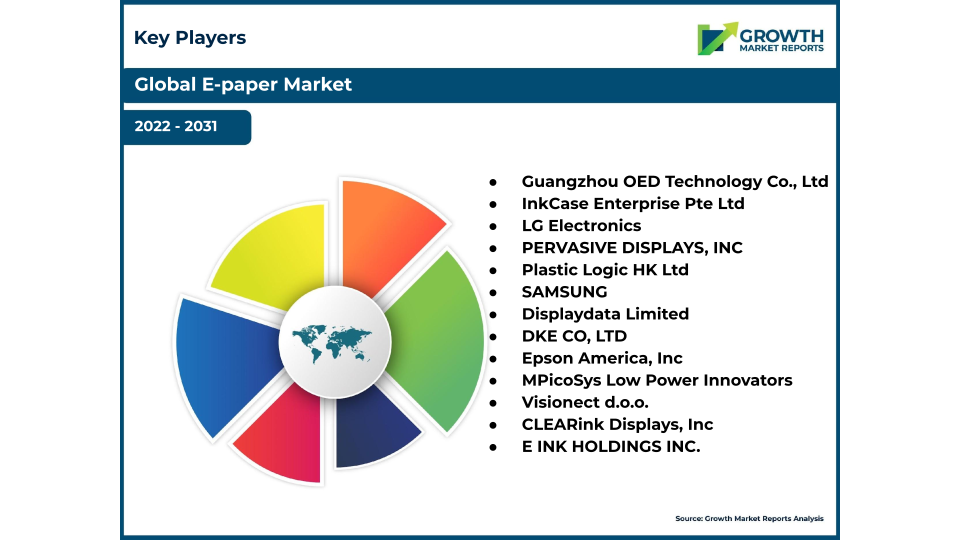
Key players competing in the global e paper market are Guangzhou OED Technology Co., Ltd; InkCase Enterprise Pte Ltd; LG Electronics; PERVASIVE DISPLAYS, INC; Plastic Logic HK Ltd; SAMSUNG; Displaydata Limited; DKE CO, LTD; Epson America, Inc; MPicoSys Low Power Innovators; Visionect d.o.o.; CLEARink Displays, Inc; and E INK HOLDINGS INC.
These major companies adopt various business development strategies including mergers, acquisitions, partnerships, collaboration, product launches, and production capacity expansion to expand their consumer base and enhance their market share.
Yes, e-paper solutions can be customized for various applications and industries, including consumer electronics, retail, automotive, healthcare, and education, to meet specific operational and functional requirements.
E-paper is used in electronic shelf labels, digital price tags, and signage for real-time updates, dynamic pricing, and inventory management, improving operational efficiency and customer experience in retail and logistics.
Major players include E Ink Holdings Inc., CLEARink Displays, Plastic Logic, Pervasive Displays Inc., Samsung Display, Sony Corporation, LG Display, BOE Technology, Visionect, and Amazon.com, Inc., among others.
Opportunities include the demand for sustainable, energy-efficient displays and integration with IoT devices. Challenges include higher costs compared to LCD/OLED, slower refresh rates, limited color reproduction, and durability concerns.
The main e-paper display technologies include electrophoretic (most common), electrowetting (for color and fast refresh), cholesteric (color without backlighting), and electrochromic (used in smart windows and adaptive displays).
Asia Pacific dominates the e-paper market due to the presence of major electronics manufacturers, rapid urbanization, and adoption of smart retail solutions. North America and Europe are also significant contributors, with growing adoption in retail, automotive, and healthcare.
Flexible e-paper displays are lightweight, bendable, and durable, making them ideal for wearables, foldable smartphones, and innovative signage. Rigid e-paper displays are commonly used in e-readers and electronic shelf labels due to their high resolution and readability.
E-paper technology is widely used in e-readers, wearable devices, mobile devices, digital signage, electronic shelf labels, retail, and automotive displays, as well as in healthcare and education sectors.
Key growth drivers include increasing demand for energy-efficient and easily readable displays, rising adoption in consumer electronics, retail, and automotive sectors, and growing awareness of sustainable and eco-friendly technologies.
The global e-paper market reached USD 4.12 billion in 2024 and is projected to grow at a CAGR of 7.6% from 2025 to 2033, reaching an estimated value of USD 7.99 billion by 2033.