Softgel Manufacturing Equipment Market Research Report 2033

Softgel Manufacturing Equipment Market Research Report 2033

Segments - by Equipment Type (Encapsulation Machines, Drying Tunnels, Inspection Machines, Polishing Machines, Others), by Application (Pharmaceuticals, Nutraceuticals, Cosmetics, Others), by End-User (Contract Manufacturing Organizations, Pharmaceutical Companies, Nutraceutical Companies, Others)

https://growthmarketreports.com/raksha
Author : Raksha Sharma
https://growthmarketreports.com/Vaibhav
Fact-checked by : V. Chandola
https://growthmarketreports.com/Shruti
Editor : Shruti Bhat

Upcoming | Report ID :HC-5396 | 4.0 Rating | 41 Reviews | 276 Pages | Format : Docx PDF

Report Description


Softgel Manufacturing Equipment Market Outlook

As per our latest research, the global Softgel Manufacturing Equipment Market size reached USD 698.2 million in 2024, reflecting robust demand across pharmaceutical and nutraceutical sectors. The market is expected to grow at a CAGR of 5.7% from 2025 to 2033, reaching a projected value of USD 1,153.4 million by 2033. This growth is primarily fueled by increasing adoption of softgel capsules due to their superior bioavailability, ease of swallowing, and rising consumer preference for innovative drug delivery systems. The market's expansion is also underpinned by technological advancements in encapsulation and inspection machinery, supporting higher production efficiency and quality assurance.

The growth trajectory of the Softgel Manufacturing Equipment Market is strongly influenced by the escalating demand for softgel capsules in the pharmaceutical and nutraceutical industries. Softgel capsules offer significant advantages over traditional dosage forms, such as enhanced absorption of active ingredients, improved patient compliance due to ease of swallowing, and the ability to encapsulate both liquid and semi-solid formulations. The pharmaceutical sector, in particular, is witnessing a surge in the development of complex formulations that require advanced encapsulation techniques, driving the need for state-of-the-art manufacturing equipment. Additionally, the increasing geriatric population and the prevalence of chronic diseases globally are propelling the demand for softgel-based medications, further amplifying the requirement for efficient manufacturing solutions.

Another critical growth factor is the rising trend of dietary supplements and nutraceuticals, especially in developed markets such as North America and Europe. Consumers are increasingly seeking preventive healthcare solutions and wellness products, leading to a boom in nutraceutical softgel products. This surge in demand necessitates high-throughput, reliable, and automated softgel manufacturing equipment to meet market needs efficiently. Innovations in encapsulation machines, drying tunnels, and inspection systems are enabling manufacturers to scale up production while maintaining stringent quality standards. Moreover, the growing popularity of plant-based and clean-label softgel products is compelling equipment manufacturers to develop versatile machinery that can handle diverse formulations and materials.

Technological advancements are playing a pivotal role in shaping the future of the Softgel Manufacturing Equipment Market. The integration of automation, digital monitoring, and real-time quality control systems in encapsulation and inspection machines is enhancing operational efficiency and minimizing human intervention. These advancements are not only reducing production costs but also ensuring consistent product quality, which is essential in regulated industries such as pharmaceuticals and nutraceuticals. Furthermore, the adoption of Industry 4.0 principles, including the use of IoT-enabled devices and data analytics, is enabling predictive maintenance and process optimization, driving further growth in the market. As regulatory requirements become more stringent, the demand for equipment that complies with global quality and safety standards is expected to rise, presenting new opportunities for manufacturers.

From a regional perspective, Asia Pacific stands out as the fastest-growing market for softgel manufacturing equipment, driven by the expansion of pharmaceutical and nutraceutical manufacturing hubs in countries like China and India. The region's cost-effective manufacturing capabilities, coupled with increasing investments in healthcare infrastructure and rising consumer health awareness, are fueling market growth. North America and Europe continue to dominate in terms of market share, supported by established pharmaceutical industries, stringent regulatory frameworks, and a high prevalence of lifestyle-related health conditions. Latin America and the Middle East & Africa are emerging as promising markets, with growing investments in healthcare and increasing adoption of advanced drug delivery systems. The overall regional outlook remains positive, with each region presenting unique growth opportunities and challenges for market participants.

Softgel Capsules are increasingly becoming the preferred choice for consumers and healthcare providers alike, thanks to their unique advantages. These capsules offer a seamless delivery method for a variety of formulations, including those that are liquid or semi-solid in nature. Their ability to enhance the bioavailability of active ingredients makes them particularly valuable in the pharmaceutical sector, where precise dosing and efficacy are critical. Moreover, the ease of swallowing softgel capsules and their ability to mask unpleasant tastes or odors further contribute to their growing popularity. As the demand for user-friendly and effective drug delivery systems rises, the role of softgel capsules in the market is expected to expand significantly, driving innovation in manufacturing equipment to keep pace with this trend.

Global Softgel Manufacturing Equipment Industry Outlook

Equipment Type Analysis

The Equipment Type segment of the Softgel Manufacturing Equipment Market encompasses encapsulation machines, drying tunnels, inspection machines, polishing machines, and other auxiliary equipment. Encapsulation machines represent the cornerstone of softgel production, accounting for the largest share of the market due to their critical role in forming, filling, and sealing softgel capsules. These machines have evolved significantly, with manufacturers investing in automation, real-time monitoring, and precision engineering to enhance throughput and reduce downtime. The growing demand for high-speed, multi-lane encapsulation systems is particularly notable in large-scale pharmaceutical and nutraceutical manufacturing facilities, where efficiency and scalability are paramount.

Drying tunnels are another essential component in the softgel manufacturing process, ensuring the proper drying and curing of capsules to achieve the desired mechanical strength and stability. Innovations in drying tunnel design, such as energy-efficient airflow systems and integrated humidity control, are helping manufacturers reduce operational costs while maintaining product quality. As the industry shifts towards environmentally sustainable practices, there is a growing emphasis on the development of eco-friendly drying solutions that minimize energy consumption and carbon footprint. The adoption of continuous and modular drying systems is also gaining traction, enabling flexible production lines that can be easily scaled or reconfigured to meet changing market demands.

Inspection machines play a pivotal role in quality assurance, detecting defects such as leaks, cracks, and size inconsistencies in softgel capsules. The integration of advanced vision systems, artificial intelligence, and machine learning algorithms is revolutionizing the inspection process, allowing for real-time, high-precision defect detection and reducing the risk of product recalls. Automated inspection solutions are becoming increasingly popular, particularly in regulated markets where compliance with stringent quality standards is non-negotiable. These advancements are not only improving product safety and efficacy but also enhancing manufacturing efficiency by minimizing manual inspection and associated labor costs.

Polishing machines and other auxiliary equipment, such as sorting and packaging systems, are integral to the post-encapsulation process, ensuring that softgel capsules meet aesthetic and functional requirements before reaching the market. Polishing machines remove excess oil and improve the visual appeal of capsules, while advanced packaging solutions protect product integrity during storage and distribution. The growing trend towards customized and branded softgel products is driving demand for flexible, high-precision polishing and packaging equipment. Equipment manufacturers are responding by offering modular, easy-to-clean designs that facilitate quick changeovers and minimize downtime, supporting the production of a diverse range of softgel products.

Report Scope

Attributes Details
Report Title Softgel Manufacturing Equipment Market Research Report 2033
By Equipment Type Encapsulation Machines, Drying Tunnels, Inspection Machines, Polishing Machines, Others
By Application Pharmaceuticals, Nutraceuticals, Cosmetics, Others
By End-User Contract Manufacturing Organizations, Pharmaceutical Companies, Nutraceutical Companies, Others
Regions Covered North America, Europe, APAC, Latin America, MEA
Base Year 2024
Historic Data 2018-2023
Forecast Period 2025-2033
Number of Pages 276
Number of Tables & Figures 331
Customization Available Yes, the report can be customized as per your need.

Application Analysis

The Application segment of the Softgel Manufacturing Equipment Market is dominated by the pharmaceuticals sector, which accounts for the largest share due to the widespread use of softgel capsules in prescription and over-the-counter medications. Pharmaceutical companies rely on advanced manufacturing equipment to produce high-quality, uniform softgel capsules that meet stringent regulatory requirements. The ability to encapsulate complex formulations, including poorly soluble drugs and combination therapies, is driving the adoption of state-of-the-art encapsulation and inspection machinery. Additionally, the increasing prevalence of chronic diseases and the growing demand for personalized medicine are fueling the need for flexible and scalable manufacturing solutions in the pharmaceutical sector.

The nutraceuticals segment is experiencing rapid growth, propelled by rising consumer awareness of preventive healthcare and the benefits of dietary supplements. Softgel capsules are favored in the nutraceutical industry for their ability to deliver bioactive compounds, such as omega-3 fatty acids, vitamins, and herbal extracts, in a convenient and palatable form. Nutraceutical manufacturers are investing in advanced softgel manufacturing equipment to enhance production efficiency, ensure product consistency, and comply with evolving regulatory standards. The shift towards plant-based and clean-label supplements is also influencing equipment design, with a focus on versatility and compatibility with a wide range of raw materials.

Cosmetics represent a niche but growing application for softgel manufacturing equipment, particularly in the development of encapsulated skincare and beauty products. The encapsulation of active ingredients in softgel capsules enables targeted delivery, prolonged release, and improved stability, offering distinct advantages in cosmetic formulations. Manufacturers in the cosmetics industry are leveraging advanced encapsulation and drying technologies to create innovative products that cater to consumer demand for high-performance, science-backed solutions. The trend towards personalized and functional beauty products is expected to drive further growth in this segment, creating new opportunities for equipment providers.

Other applications, including veterinary medicine and specialty chemicals, are emerging as potential growth areas for the Softgel Manufacturing Equipment Market. The versatility of softgel technology in encapsulating a wide range of active ingredients, coupled with advancements in equipment design, is enabling manufacturers to explore new markets and applications. As the benefits of softgel capsules become more widely recognized across industries, demand for specialized manufacturing equipment is expected to rise, supporting market expansion and diversification.

End-User Analysis

The End-User segment of the Softgel Manufacturing Equipment Market is characterized by a diverse range of stakeholders, including contract manufacturing organizations (CMOs), pharmaceutical companies, nutraceutical companies, and others. CMOs represent a significant and rapidly growing end-user group, driven by the increasing trend of outsourcing softgel production to specialized service providers. Pharmaceutical and nutraceutical companies are leveraging the expertise and advanced equipment capabilities of CMOs to reduce capital expenditure, accelerate time-to-market, and ensure compliance with regulatory standards. This shift towards contract manufacturing is creating substantial opportunities for equipment manufacturers, who must cater to the unique needs of high-volume, multi-product facilities.

Pharmaceutical companies remain key end-users of softgel manufacturing equipment, investing in advanced machinery to support in-house production of proprietary formulations and ensure quality control. The growing focus on R&D and the development of novel drug delivery systems are driving demand for versatile, high-precision equipment that can accommodate a wide range of formulations and batch sizes. Pharmaceutical manufacturers are also prioritizing equipment that supports compliance with Good Manufacturing Practices (GMP) and other regulatory requirements, further emphasizing the importance of quality and reliability in equipment selection.

Nutraceutical companies are increasingly adopting sophisticated softgel manufacturing equipment to meet rising consumer demand for dietary supplements and functional foods. The ability to produce high-quality, customized softgel products is a key differentiator in the competitive nutraceutical market. Equipment manufacturers are responding by offering modular, scalable solutions that enable nutraceutical companies to quickly adapt to changing market trends and regulatory requirements. The emphasis on product innovation and differentiation is expected to drive continued investment in advanced manufacturing technologies within this end-user segment.

Other end-users, including veterinary medicine manufacturers and specialty product companies, are recognizing the benefits of softgel technology and investing in appropriate manufacturing equipment. As the market for softgel capsules expands beyond traditional pharmaceutical and nutraceutical applications, equipment providers are developing specialized solutions to address the unique requirements of these emerging end-user groups. The increasing adoption of softgel technology across diverse industries is expected to fuel long-term growth and innovation in the Softgel Manufacturing Equipment Market.

Opportunities & Threats

The Softgel Manufacturing Equipment Market presents a wealth of opportunities for growth and innovation, driven by evolving consumer preferences, technological advancements, and expanding application areas. One of the most significant opportunities lies in the development of automated, high-throughput manufacturing systems that enable large-scale production of softgel capsules with minimal human intervention. The integration of IoT, artificial intelligence, and data analytics into manufacturing equipment is facilitating real-time monitoring, predictive maintenance, and process optimization, enhancing operational efficiency and reducing production costs. Equipment manufacturers that invest in R&D and embrace digital transformation are well-positioned to capitalize on these trends and gain a competitive edge in the market.

Another promising opportunity is the rising demand for plant-based and clean-label softgel products, particularly in the nutraceutical and cosmetics sectors. Consumers are increasingly seeking products that align with their values and preferences, such as vegan, non-GMO, and allergen-free formulations. This trend is driving the need for versatile manufacturing equipment that can handle a wide range of raw materials and encapsulation techniques. Equipment providers that offer flexible, easy-to-clean, and modular solutions are likely to attract a growing customer base and expand their market presence. Additionally, the emergence of new applications for softgel technology, such as veterinary medicine and specialty chemicals, presents untapped growth potential for innovative equipment manufacturers.

Despite these opportunities, the market faces several restraining factors that could hinder growth. One of the primary challenges is the high capital investment required for advanced softgel manufacturing equipment, which can be a barrier for small and medium-sized enterprises (SMEs) and new market entrants. The complexity of regulatory compliance, particularly in the pharmaceutical sector, adds to the cost and risk associated with equipment procurement and operation. Furthermore, supply chain disruptions, fluctuations in raw material prices, and the need for skilled personnel to operate and maintain sophisticated machinery can pose additional challenges for market participants. Addressing these restraining factors will be essential for sustaining long-term growth and competitiveness in the Softgel Manufacturing Equipment Market.

Regional Outlook

The Asia Pacific region is emerging as a powerhouse in the Softgel Manufacturing Equipment Market, with a market size of approximately USD 185.6 million in 2024 and an anticipated CAGR of 7.1% through 2033. This robust growth is fueled by the rapid expansion of pharmaceutical and nutraceutical manufacturing in countries such as China, India, and South Korea. The region benefits from cost-effective labor, favorable government policies, and increasing investments in healthcare infrastructure. As local manufacturers continue to upgrade their production capabilities and adopt advanced manufacturing technologies, Asia Pacific is expected to capture a larger share of the global market in the coming years.

North America remains a dominant player in the Softgel Manufacturing Equipment Market, accounting for a market size of USD 238.7 million in 2024. The region's growth is underpinned by a mature pharmaceutical industry, a high prevalence of chronic diseases, and strong consumer demand for dietary supplements and wellness products. The presence of leading equipment manufacturers, coupled with a focus on innovation and compliance with stringent regulatory standards, ensures that North America maintains its leadership position. The market is characterized by continuous investment in R&D, the adoption of automation and digitalization, and strategic partnerships between equipment providers and end-users.

Europe follows closely, with a market size of USD 174.5 million in 2024, driven by a well-established pharmaceutical sector, high healthcare expenditure, and increasing awareness of preventive healthcare. The region's regulatory environment, which emphasizes product quality and safety, is fostering the adoption of advanced manufacturing equipment. Latin America and the Middle East & Africa, with market sizes of USD 56.8 million and USD 42.6 million respectively in 2024, are experiencing steady growth as local manufacturers invest in modernizing their production facilities and expanding their product portfolios. While these regions currently represent a smaller share of the global market, they offer significant long-term growth potential as healthcare infrastructure improves and consumer demand for softgel products rises.

Softgel Manufacturing Equipment Market Statistics

Competitor Outlook

The competitive landscape of the Softgel Manufacturing Equipment Market is characterized by the presence of both global industry leaders and regional players, each vying for market share through innovation, strategic partnerships, and expansion into new markets. Leading companies are focusing on developing advanced, automated manufacturing solutions that address the evolving needs of pharmaceutical, nutraceutical, and cosmetic manufacturers. The market is witnessing increased investment in R&D, with a particular emphasis on enhancing equipment precision, throughput, and flexibility. Companies are also prioritizing the integration of digital technologies, such as IoT and AI, to offer real-time monitoring, predictive maintenance, and data-driven process optimization.

Strategic collaborations and mergers and acquisitions are common strategies employed by key players to strengthen their market position and expand their product portfolios. By partnering with contract manufacturing organizations and end-users, equipment manufacturers are able to gain valuable insights into customer needs and develop tailored solutions that address specific production challenges. The trend towards modular, scalable equipment is enabling manufacturers to cater to a diverse range of applications and batch sizes, further enhancing their competitive advantage. Additionally, companies are investing in customer support and after-sales services to build long-term relationships and ensure customer satisfaction.

The market is also witnessing the emergence of regional players, particularly in Asia Pacific, who are leveraging cost advantages and local market knowledge to compete with established global manufacturers. These companies are focusing on offering value-driven solutions that cater to the specific needs of local customers, such as compact, energy-efficient equipment and flexible financing options. As the market continues to evolve, competition is expected to intensify, with innovation, quality, and customer-centricity emerging as key differentiators for success.

Major companies operating in the Softgel Manufacturing Equipment Market include Bosch Packaging Technology, Technophar, Changsung Softgel System Ltd., SKY Softgel & Pack Co., Ltd., Kamata Co., Ltd., and Tooltronics. Bosch Packaging Technology is renowned for its advanced encapsulation and inspection solutions, offering a comprehensive portfolio of equipment for pharmaceutical and nutraceutical manufacturers. Technophar is a global leader in softgel encapsulation technology, known for its innovative, high-speed machines and commitment to quality and reliability. Changsung Softgel System Ltd. and SKY Softgel & Pack Co., Ltd. are prominent players in the Asia Pacific region, offering a wide range of manufacturing solutions tailored to local market needs. Kamata Co., Ltd. and Tooltronics are recognized for their expertise in precision engineering and customer support, catering to both large-scale manufacturers and niche market segments.

These companies are continually investing in R&D to stay ahead of industry trends and address emerging challenges, such as the demand for plant-based softgel products and the integration of digital technologies. By focusing on innovation, quality, and customer service, leading manufacturers are well-positioned to capitalize on the growing opportunities in the global Softgel Manufacturing Equipment Market and drive long-term industry growth.

Key Players

  • Changsung Softgel System Co., Ltd.
  • Technophar Equipment & Service Ltd.
  • SKY Softgel & Pack Co., Ltd.
  • Kamata Co., Ltd.
  • Tooltronics
  • Pharmagel Technology
  • Long March Tianmin Pharmaceutical Machinery Co., Ltd.
  • Bochang Co., Ltd.
  • Jiangsu Shengli Machinery Manufacturing Co., Ltd.
  • SaintyCo
  • R.P. Products Pharma Equipments Pvt. Ltd.
  • GIC Engineering Pvt. Ltd.
  • Vega Group
  • Kothari Pharma Technologies Pvt. Ltd.
  • Elmach Packages India Pvt. Ltd.
  • Shinva Medical Instrument Co., Ltd.
  • Sejong Pharmatech Co., Ltd.
  • Qualicaps
  • CapPlus Technologies
  • Zhejiang Fuchang Machinery Co., Ltd.
Softgel Manufacturing Equipment Market Overview

Segments

The Softgel Manufacturing Equipment market has been segmented on the basis of

Equipment Type

  • Encapsulation Machines
  • Drying Tunnels
  • Inspection Machines
  • Polishing Machines
  • Others

Application

  • Pharmaceuticals
  • Nutraceuticals
  • Cosmetics
  • Others

End-User

  • Contract Manufacturing Organizations
  • Pharmaceutical Companies
  • Nutraceutical Companies
  • Others

Competitive Landscape

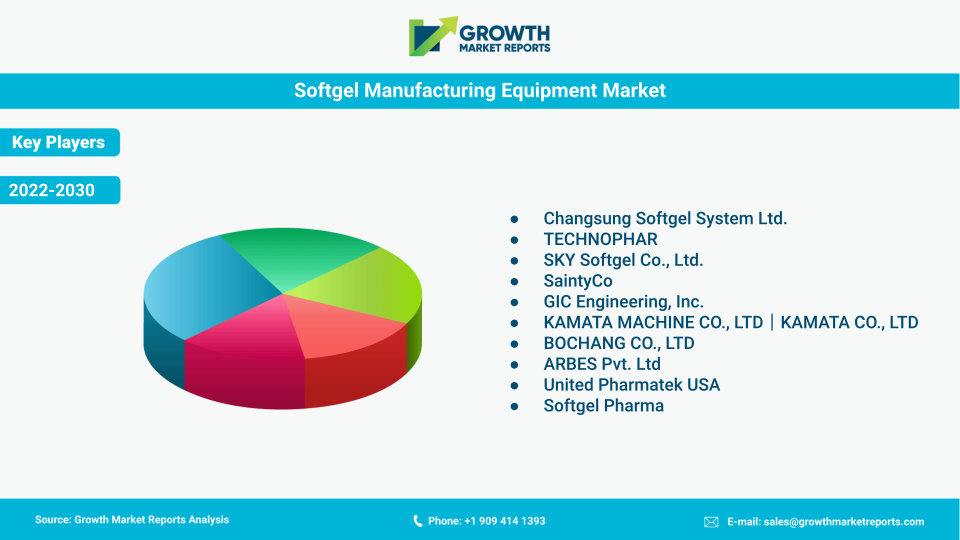
Top players in the market include Changsung Softgel System Ltd., TECHNOPHAR, SKY Softgel Co., Ltd., SaintyCo, GIC Engineering, Inc., KAMATA MACHINE CO., LTDKAMATA CO., LTD, BOCHANG CO., LTD, ARBES Pvt. Ltd, United Pharmatek USA, and Softgel Pharma.These companies are considered key manufacturers of softgel manufacturing equipment based on their revenue, product offerings, regional presence, and supply chain management system.

The players are adopting key strategies such as acquisition, collaborations, and geographical expansion where potential opportunities for Softgel Manufacturing Equipment Market.

Softgel Manufacturing Equipment Market Key Players

Frequently Asked Questions

Additional company profiles can be provided on request. For a discussion related to above findings, click Speak to Analyst.

Factors such as competitive strength and market positioning are key areas considered while selecting top companies to be profiled.

Increasing focus on soft gel capsules by Pharmaceutical Industry, and Growing usage of soft gel encapsulation machines in the supplement industry are expected to drive the market growth during the forecast period.

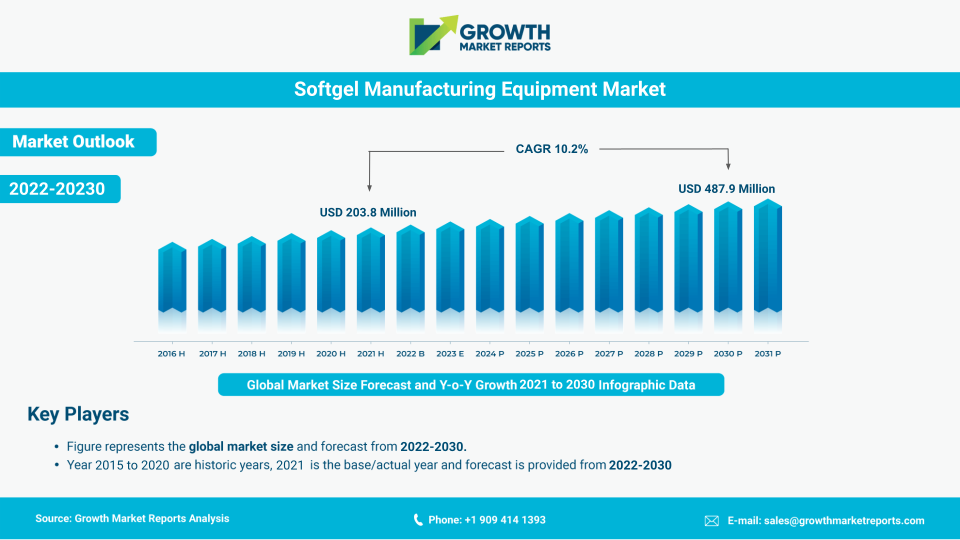
According to this Growth Market Reports, the global Softgel Manufacturing Equipment Market is likely to register a CAGR of 10.2% during the forecast period 2022-2030, with an anticipated valuation of USD 487.9 million by the end of 2030.

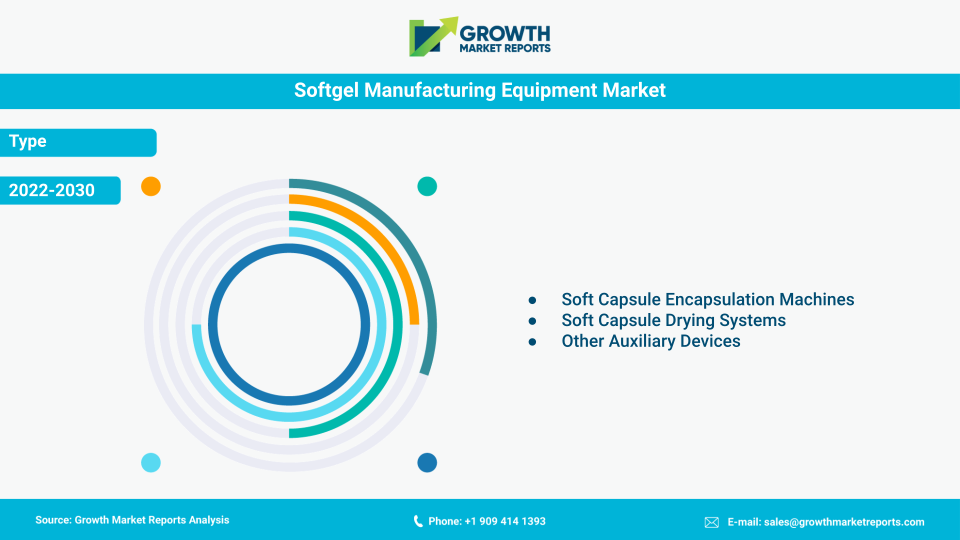
The major types of Softgel Manufacturing Equipments are Soft Capsule Encapsulation Machines, Soft Capsule Drying Systems, and Other Auxiliary Devices.

Factors such as Healthcare Expenditure, and Regulatory Environment are analyzed in the final report.

Major manufacturers are Changsung Softgel System Ltd., TECHNOPHAR, SKY Softgel Co., Ltd., SaintyCo, GIC Engineering, Inc., KAMATA MACHINE CO., LTD|KAMATA CO., LTD, BOCHANG CO., LTD, ARBES Pvt. Ltd, United Pharmatek USA, and Softgel Pharma.

The market is expected to witness a significant decrease in growth between 2019 and 2020 owing to the COVID 19 pandemic in the Softgel Manufacturing Equipment Market.

In addition to market size (in US$ Million), company market share (in % for the base year 2021), current and future market trends, and technology landscape are provided.

The base year considered for the global Softgel Manufacturing Equipment Market report is 2021. The complete analysis period is 2015 to 2030, wherein, 2015 to 2020 are the historic years, and the forecast is provided from 2022 to 2030.

Table Of Content

Chapter 1 Executive Summary
Chapter 2 Assumptions and Acronyms Used
Chapter 3 Research Methodology
Chapter 4 Softgel Manufacturing Equipment Market Overview
   4.1 Introduction
      4.1.1 Market Taxonomy
      4.1.2 Market Definition
      4.1.3 Macro-Economic Factors Impacting the Market Growth
   4.2 Softgel Manufacturing Equipment Market Dynamics
      4.2.1 Market Drivers
      4.2.2 Market Restraints
      4.2.3 Market Opportunity
   4.3 Softgel Manufacturing Equipment Market - Supply Chain Analysis
      4.3.1 List of Key Suppliers
      4.3.2 List of Key Distributors
      4.3.3 List of Key Consumers
   4.4 Key Forces Shaping the Softgel Manufacturing Equipment Market
      4.4.1 Bargaining Power of Suppliers
      4.4.2 Bargaining Power of Buyers
      4.4.3 Threat of Substitution
      4.4.4 Threat of New Entrants
      4.4.5 Competitive Rivalry
   4.5 Global Softgel Manufacturing Equipment Market Size & Forecast, 2023-2032
      4.5.1 Softgel Manufacturing Equipment Market Size and Y-o-Y Growth
      4.5.2 Softgel Manufacturing Equipment Market Absolute $ Opportunity

Chapter 5 Global Softgel Manufacturing Equipment Market Analysis and Forecast By Equipment Type
   5.1 Introduction
      5.1.1 Key Market Trends & Growth Opportunities By Equipment Type
      5.1.2 Basis Point Share (BPS) Analysis By Equipment Type
      5.1.3 Absolute $ Opportunity Assessment By Equipment Type
   5.2 Softgel Manufacturing Equipment Market Size Forecast By Equipment Type
      5.2.1 Encapsulation Machines
      5.2.2 Drying Tunnels
      5.2.3 Inspection Machines
      5.2.4 Polishing Machines
      5.2.5 Others
   5.3 Market Attractiveness Analysis By Equipment Type

Chapter 6 Global Softgel Manufacturing Equipment Market Analysis and Forecast By Application
   6.1 Introduction
      6.1.1 Key Market Trends & Growth Opportunities By Application
      6.1.2 Basis Point Share (BPS) Analysis By Application
      6.1.3 Absolute $ Opportunity Assessment By Application
   6.2 Softgel Manufacturing Equipment Market Size Forecast By Application
      6.2.1 Pharmaceuticals
      6.2.2 Nutraceuticals
      6.2.3 Cosmetics
      6.2.4 Others
   6.3 Market Attractiveness Analysis By Application

Chapter 7 Global Softgel Manufacturing Equipment Market Analysis and Forecast By End-User
   7.1 Introduction
      7.1.1 Key Market Trends & Growth Opportunities By End-User
      7.1.2 Basis Point Share (BPS) Analysis By End-User
      7.1.3 Absolute $ Opportunity Assessment By End-User
   7.2 Softgel Manufacturing Equipment Market Size Forecast By End-User
      7.2.1 Contract Manufacturing Organizations
      7.2.2 Pharmaceutical Companies
      7.2.3 Nutraceutical Companies
      7.2.4 Others
   7.3 Market Attractiveness Analysis By End-User

Chapter 8 Global Softgel Manufacturing Equipment Market Analysis and Forecast by Region
   8.1 Introduction
      8.1.1 Key Market Trends & Growth Opportunities By Region
      8.1.2 Basis Point Share (BPS) Analysis By Region
      8.1.3 Absolute $ Opportunity Assessment By Region
   8.2 Softgel Manufacturing Equipment Market Size Forecast By Region
      8.2.1 North America
      8.2.2 Europe
      8.2.3 Asia Pacific
      8.2.4 Latin America
      8.2.5 Middle East & Africa (MEA)
   8.3 Market Attractiveness Analysis By Region

Chapter 9 Coronavirus Disease (COVID-19) Impact 
   9.1 Introduction 
   9.2 Current & Future Impact Analysis 
   9.3 Economic Impact Analysis 
   9.4 Government Policies 
   9.5 Investment Scenario

Chapter 10 North America Softgel Manufacturing Equipment Analysis and Forecast
   10.1 Introduction
   10.2 North America Softgel Manufacturing Equipment Market Size Forecast by Country
      10.2.1 U.S.
      10.2.2 Canada
   10.3 Basis Point Share (BPS) Analysis by Country
   10.4 Absolute $ Opportunity Assessment by Country
   10.5 Market Attractiveness Analysis by Country
   10.6 North America Softgel Manufacturing Equipment Market Size Forecast By Equipment Type
      10.6.1 Encapsulation Machines
      10.6.2 Drying Tunnels
      10.6.3 Inspection Machines
      10.6.4 Polishing Machines
      10.6.5 Others
   10.7 Basis Point Share (BPS) Analysis By Equipment Type 
   10.8 Absolute $ Opportunity Assessment By Equipment Type 
   10.9 Market Attractiveness Analysis By Equipment Type
   10.10 North America Softgel Manufacturing Equipment Market Size Forecast By Application
      10.10.1 Pharmaceuticals
      10.10.2 Nutraceuticals
      10.10.3 Cosmetics
      10.10.4 Others
   10.11 Basis Point Share (BPS) Analysis By Application 
   10.12 Absolute $ Opportunity Assessment By Application 
   10.13 Market Attractiveness Analysis By Application
   10.14 North America Softgel Manufacturing Equipment Market Size Forecast By End-User
      10.14.1 Contract Manufacturing Organizations
      10.14.2 Pharmaceutical Companies
      10.14.3 Nutraceutical Companies
      10.14.4 Others
   10.15 Basis Point Share (BPS) Analysis By End-User 
   10.16 Absolute $ Opportunity Assessment By End-User 
   10.17 Market Attractiveness Analysis By End-User

Chapter 11 Europe Softgel Manufacturing Equipment Analysis and Forecast
   11.1 Introduction
   11.2 Europe Softgel Manufacturing Equipment Market Size Forecast by Country
      11.2.1 Germany
      11.2.2 France
      11.2.3 Italy
      11.2.4 U.K.
      11.2.5 Spain
      11.2.6 Russia
      11.2.7 Rest of Europe
   11.3 Basis Point Share (BPS) Analysis by Country
   11.4 Absolute $ Opportunity Assessment by Country
   11.5 Market Attractiveness Analysis by Country
   11.6 Europe Softgel Manufacturing Equipment Market Size Forecast By Equipment Type
      11.6.1 Encapsulation Machines
      11.6.2 Drying Tunnels
      11.6.3 Inspection Machines
      11.6.4 Polishing Machines
      11.6.5 Others
   11.7 Basis Point Share (BPS) Analysis By Equipment Type 
   11.8 Absolute $ Opportunity Assessment By Equipment Type 
   11.9 Market Attractiveness Analysis By Equipment Type
   11.10 Europe Softgel Manufacturing Equipment Market Size Forecast By Application
      11.10.1 Pharmaceuticals
      11.10.2 Nutraceuticals
      11.10.3 Cosmetics
      11.10.4 Others
   11.11 Basis Point Share (BPS) Analysis By Application 
   11.12 Absolute $ Opportunity Assessment By Application 
   11.13 Market Attractiveness Analysis By Application
   11.14 Europe Softgel Manufacturing Equipment Market Size Forecast By End-User
      11.14.1 Contract Manufacturing Organizations
      11.14.2 Pharmaceutical Companies
      11.14.3 Nutraceutical Companies
      11.14.4 Others
   11.15 Basis Point Share (BPS) Analysis By End-User 
   11.16 Absolute $ Opportunity Assessment By End-User 
   11.17 Market Attractiveness Analysis By End-User

Chapter 12 Asia Pacific Softgel Manufacturing Equipment Analysis and Forecast
   12.1 Introduction
   12.2 Asia Pacific Softgel Manufacturing Equipment Market Size Forecast by Country
      12.2.1 China
      12.2.2 Japan
      12.2.3 South Korea
      12.2.4 India
      12.2.5 Australia
      12.2.6 South East Asia (SEA)
      12.2.7 Rest of Asia Pacific (APAC)
   12.3 Basis Point Share (BPS) Analysis by Country
   12.4 Absolute $ Opportunity Assessment by Country
   12.5 Market Attractiveness Analysis by Country
   12.6 Asia Pacific Softgel Manufacturing Equipment Market Size Forecast By Equipment Type
      12.6.1 Encapsulation Machines
      12.6.2 Drying Tunnels
      12.6.3 Inspection Machines
      12.6.4 Polishing Machines
      12.6.5 Others
   12.7 Basis Point Share (BPS) Analysis By Equipment Type 
   12.8 Absolute $ Opportunity Assessment By Equipment Type 
   12.9 Market Attractiveness Analysis By Equipment Type
   12.10 Asia Pacific Softgel Manufacturing Equipment Market Size Forecast By Application
      12.10.1 Pharmaceuticals
      12.10.2 Nutraceuticals
      12.10.3 Cosmetics
      12.10.4 Others
   12.11 Basis Point Share (BPS) Analysis By Application 
   12.12 Absolute $ Opportunity Assessment By Application 
   12.13 Market Attractiveness Analysis By Application
   12.14 Asia Pacific Softgel Manufacturing Equipment Market Size Forecast By End-User
      12.14.1 Contract Manufacturing Organizations
      12.14.2 Pharmaceutical Companies
      12.14.3 Nutraceutical Companies
      12.14.4 Others
   12.15 Basis Point Share (BPS) Analysis By End-User 
   12.16 Absolute $ Opportunity Assessment By End-User 
   12.17 Market Attractiveness Analysis By End-User

Chapter 13 Latin America Softgel Manufacturing Equipment Analysis and Forecast
   13.1 Introduction
   13.2 Latin America Softgel Manufacturing Equipment Market Size Forecast by Country
      13.2.1 Brazil
      13.2.2 Mexico
      13.2.3 Rest of Latin America (LATAM)
   13.3 Basis Point Share (BPS) Analysis by Country
   13.4 Absolute $ Opportunity Assessment by Country
   13.5 Market Attractiveness Analysis by Country
   13.6 Latin America Softgel Manufacturing Equipment Market Size Forecast By Equipment Type
      13.6.1 Encapsulation Machines
      13.6.2 Drying Tunnels
      13.6.3 Inspection Machines
      13.6.4 Polishing Machines
      13.6.5 Others
   13.7 Basis Point Share (BPS) Analysis By Equipment Type 
   13.8 Absolute $ Opportunity Assessment By Equipment Type 
   13.9 Market Attractiveness Analysis By Equipment Type
   13.10 Latin America Softgel Manufacturing Equipment Market Size Forecast By Application
      13.10.1 Pharmaceuticals
      13.10.2 Nutraceuticals
      13.10.3 Cosmetics
      13.10.4 Others
   13.11 Basis Point Share (BPS) Analysis By Application 
   13.12 Absolute $ Opportunity Assessment By Application 
   13.13 Market Attractiveness Analysis By Application
   13.14 Latin America Softgel Manufacturing Equipment Market Size Forecast By End-User
      13.14.1 Contract Manufacturing Organizations
      13.14.2 Pharmaceutical Companies
      13.14.3 Nutraceutical Companies
      13.14.4 Others
   13.15 Basis Point Share (BPS) Analysis By End-User 
   13.16 Absolute $ Opportunity Assessment By End-User 
   13.17 Market Attractiveness Analysis By End-User

Chapter 14 Middle East & Africa (MEA) Softgel Manufacturing Equipment Analysis and Forecast
   14.1 Introduction
   14.2 Middle East & Africa (MEA) Softgel Manufacturing Equipment Market Size Forecast by Country
      14.2.1 Saudi Arabia
      14.2.2 South Africa
      14.2.3 UAE
      14.2.4 Rest of Middle East & Africa (MEA)
   14.3 Basis Point Share (BPS) Analysis by Country
   14.4 Absolute $ Opportunity Assessment by Country
   14.5 Market Attractiveness Analysis by Country
   14.6 Middle East & Africa (MEA) Softgel Manufacturing Equipment Market Size Forecast By Equipment Type
      14.6.1 Encapsulation Machines
      14.6.2 Drying Tunnels
      14.6.3 Inspection Machines
      14.6.4 Polishing Machines
      14.6.5 Others
   14.7 Basis Point Share (BPS) Analysis By Equipment Type 
   14.8 Absolute $ Opportunity Assessment By Equipment Type 
   14.9 Market Attractiveness Analysis By Equipment Type
   14.10 Middle East & Africa (MEA) Softgel Manufacturing Equipment Market Size Forecast By Application
      14.10.1 Pharmaceuticals
      14.10.2 Nutraceuticals
      14.10.3 Cosmetics
      14.10.4 Others
   14.11 Basis Point Share (BPS) Analysis By Application 
   14.12 Absolute $ Opportunity Assessment By Application 
   14.13 Market Attractiveness Analysis By Application
   14.14 Middle East & Africa (MEA) Softgel Manufacturing Equipment Market Size Forecast By End-User
      14.14.1 Contract Manufacturing Organizations
      14.14.2 Pharmaceutical Companies
      14.14.3 Nutraceutical Companies
      14.14.4 Others
   14.15 Basis Point Share (BPS) Analysis By End-User 
   14.16 Absolute $ Opportunity Assessment By End-User 
   14.17 Market Attractiveness Analysis By End-User

Chapter 15 Competition Landscape 
   15.1 Softgel Manufacturing Equipment Market: Competitive Dashboard
   15.2 Global Softgel Manufacturing Equipment Market: Market Share Analysis, 2023
   15.3 Company Profiles (Details – Overview, Financials, Developments, Strategy) 
      15.3.1 Changsung Softgel System Co., Ltd.
Technophar Equipment & Service Ltd.
SKY Softgel & Pack Co., Ltd.
Kamata Co., Ltd.
Tooltronics
Pharmagel Technology
Long March Tianmin Pharmaceutical Machinery Co., Ltd.
Bochang Co., Ltd.
Jiangsu Shengli Machinery Manufacturing Co., Ltd.
SaintyCo
R.P. Products Pharma Equipments Pvt. Ltd.
GIC Engineering Pvt. Ltd.
Vega Group
Kothari Pharma Technologies Pvt. Ltd.
Elmach Packages India Pvt. Ltd.
Shinva Medical Instrument Co., Ltd.
Sejong Pharmatech Co., Ltd.
Qualicaps
CapPlus Technologies
Zhejiang Fuchang Machinery Co., Ltd.

Methodology

Our Clients

sinopec
Microsoft
Honda Motor Co. Ltd.
The John Holland Group
General Electric
FedEx Logistics
Siemens Healthcare
Deloitte