Smart Utilities Management Market Research Report 2033

Smart Utilities Management Market Research Report 2033

Segments - by Component (Software, Hardware, Services), by Application (Electricity Management, Water Management, Gas Management, Waste Management, Others), by Deployment Mode (On-Premises, Cloud), by Utility Type (Public Utilities, Private Utilities), by End-User (Residential, Commercial, Industrial, Municipal)

https://growthmarketreports.com/Raksha
Author : Raksha Sharma
https://growthmarketreports.com/Vaibhav
Fact-checked by : V. Chandola
https://growthmarketreports.com/Shruti
Editor : Shruti Bhat

Upcoming | Report ID :EP-3645 | 4.5 Rating | 29 Reviews | 260 Pages | Format : Docx PDF

Report Description


Smart Utilities Management Market Outlook

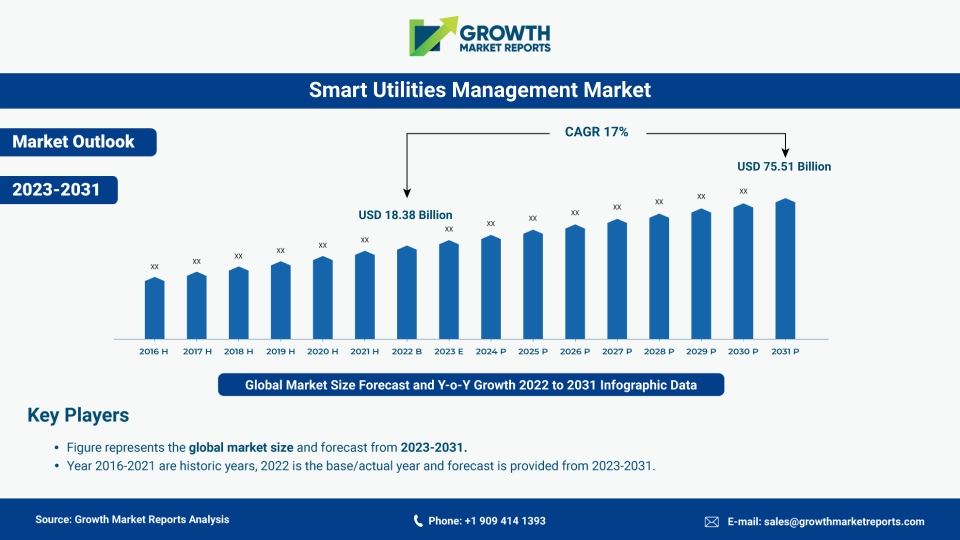
According to the latest research, the global Smart Utilities Management market size reached USD 24.7 billion in 2024, reflecting robust adoption across major economies. The market is projected to expand at a compelling CAGR of 13.1% from 2025 to 2033, reaching a forecasted value of approximately USD 70.7 billion by 2033. This remarkable growth trajectory is primarily fueled by the increasing integration of advanced digital technologies, such as IoT, AI, and big data analytics, into utility operations, as well as the global push for sustainable resource management and energy efficiency.

The growth of the Smart Utilities Management market is being driven by the escalating demand for efficient resource utilization and sustainability across urban and rural regions. With the rapid pace of urbanization and a rising global population, utility providers face mounting pressure to optimize their distribution networks for electricity, water, gas, and waste management. The integration of smart meters, real-time monitoring systems, and automated controls enables utilities to reduce operational costs, minimize losses, and enhance service reliability. Furthermore, government mandates and regulatory frameworks are increasingly prioritizing the adoption of smart utility solutions, compelling both public and private sector utilities to modernize their infrastructure to meet evolving environmental and economic standards.

Another significant growth factor for the Smart Utilities Management market is the proliferation of digitalization initiatives across the utility sector. The deployment of cloud-based platforms, advanced analytics, and AI-driven decision-making tools is transforming traditional utility operations into intelligent, data-driven ecosystems. These technologies empower utilities to predict demand fluctuations, streamline maintenance schedules, and detect anomalies in real time, thereby reducing downtime and improving customer satisfaction. Additionally, the convergence of smart grids, smart water networks, and automated waste management systems is fostering a holistic approach to urban resource management, further stimulating market expansion.

The market’s upward trajectory is also supported by increased investments in smart infrastructure projects worldwide. Public-private partnerships and significant funding from international development agencies are accelerating the rollout of smart utility solutions in both developed and emerging economies. As cities strive to become more resilient and adaptive to climate change, there is a growing emphasis on integrating renewable energy sources and advanced water conservation techniques into utility networks. This trend not only drives innovation in smart utilities management but also opens new avenues for market players to introduce scalable, interoperable, and future-proof solutions tailored to diverse regional needs.

From a regional standpoint, Asia Pacific stands out as the fastest-growing market for Smart Utilities Management, owing to rapid urbanization, large-scale smart city initiatives, and substantial government investments in digital infrastructure. Meanwhile, North America and Europe continue to lead in terms of market maturity, driven by stringent regulatory standards, high technology adoption rates, and the presence of established utility providers. Latin America and the Middle East & Africa are also witnessing increased adoption, particularly as governments prioritize infrastructure modernization and sustainable resource management to address growing urban populations and environmental challenges.

Global Smart Utilities Management Industry Outlook

Component Analysis

The component segment of the Smart Utilities Management market is broadly categorized into software, hardware, and services, each playing a pivotal role in the successful deployment and operation of smart utility systems. Software solutions, including utility management platforms, analytics tools, and customer engagement applications, represent a significant share of the market due to their critical function in data integration, real-time monitoring, and predictive analytics. The growing need for centralized control and automation in utility networks is driving continuous innovation in software offerings, with vendors increasingly focusing on cloud-based and AI-powered platforms to enhance scalability and flexibility.

Hardware components, such as smart meters, sensors, communication devices, and edge computing infrastructure, form the backbone of smart utilities management systems. The proliferation of IoT-enabled devices has revolutionized the way utilities collect and transmit data from distributed assets, enabling more granular and accurate resource monitoring. As utilities aim to minimize losses and optimize asset performance, investments in advanced hardware solutions have surged, particularly in regions undertaking large-scale grid modernization and smart water network projects. The hardware segment is expected to witness sustained growth as utilities continue to upgrade legacy infrastructure and expand their digital footprint.

Services constitute another critical component of the Smart Utilities Management market, encompassing consulting, integration, maintenance, and managed services. With the complexity of deploying and managing integrated smart utility solutions, the demand for specialized service providers has grown substantially. Utilities are increasingly relying on third-party experts to ensure seamless system integration, ongoing technical support, and continuous optimization of their smart infrastructure investments. The rise of outcome-based service models and performance contracts is further propelling the growth of the services segment, as utilities seek to maximize ROI and minimize operational risks.

The interplay between software, hardware, and services is essential for delivering end-to-end smart utility solutions that address the unique challenges faced by different utility providers. As the market evolves, there is a clear trend toward the convergence of these components into unified platforms that offer holistic visibility, control, and intelligence across electricity, water, gas, and waste management operations. Market participants are increasingly adopting open standards and interoperable architectures to facilitate seamless integration and future-proof their offerings, thereby enhancing value for utility customers across the globe.

Report Scope

Attributes Details
Report Title Smart Utilities Management Market Research Report 2033
By Component Software, Hardware, Services
By Application Electricity Management, Water Management, Gas Management, Waste Management, Others
By Deployment Mode On-Premises, Cloud
By Utility Type Public Utilities, Private Utilities
By End-User Residential, Commercial, Industrial, Municipal
Regions Covered North America, Europe, APAC, Latin America, MEA
Base Year 2024
Historic Data 2018-2023
Forecast Period 2025-2033
Number of Pages 260
Number of Tables & Figures 251
Customization Available Yes, the report can be customized as per your need.

Application Analysis

The application segment of the Smart Utilities Management market encompasses electricity management, water management, gas management, waste management, and other utility operations. Electricity management remains the dominant application, driven by the widespread adoption of smart grids, advanced metering infrastructure, and demand response systems. Utilities are leveraging real-time data analytics and automation to optimize energy distribution, reduce grid losses, and integrate renewable energy sources, thereby enhancing grid reliability and sustainability. The ongoing transition toward decentralized energy generation and storage further underscores the importance of intelligent electricity management solutions in achieving efficient and resilient power systems.

Water management is another rapidly growing application area within the Smart Utilities Management market. As water scarcity and quality concerns intensify worldwide, utilities are investing in smart water meters, leak detection systems, and automated control valves to minimize losses, improve billing accuracy, and ensure equitable resource distribution. The integration of IoT and AI technologies is enabling utilities to monitor water quality, detect anomalies, and respond to incidents in real time, thereby reducing operational costs and enhancing customer satisfaction. Governments and regulatory authorities are also playing a crucial role in promoting smart water management through incentives and mandates, particularly in regions facing acute water stress.

Gas management applications are witnessing increased adoption as utilities seek to enhance safety, optimize distribution networks, and comply with stringent environmental regulations. Smart gas meters, remote monitoring systems, and predictive maintenance tools are enabling utilities to detect leaks, prevent accidents, and ensure uninterrupted supply. The growing focus on reducing greenhouse gas emissions and improving energy efficiency is driving innovation in gas management solutions, with market players introducing advanced analytics platforms and cloud-based control systems to support real-time decision-making and regulatory compliance.

Waste management is emerging as a critical application within the Smart Utilities Management market, particularly in urban areas grappling with rising waste volumes and environmental concerns. Smart waste collection systems, route optimization software, and sensor-enabled bins are helping municipalities and private operators streamline operations, reduce costs, and minimize environmental impact. The integration of data analytics and IoT technologies is also facilitating better resource recovery and recycling, supporting the transition toward a circular economy. Other applications, such as district heating and cooling, further expand the scope of smart utilities management, offering utilities new opportunities to enhance operational efficiency and sustainability.

Deployment Mode Analysis

The deployment mode segment of the Smart Utilities Management market is divided into on-premises and cloud-based solutions, each offering distinct advantages and challenges. On-premises deployment remains prevalent among utilities with stringent data security and regulatory requirements, particularly in regions with limited cloud infrastructure or concerns over data sovereignty. On-premises solutions offer greater control over system customization, integration, and maintenance, making them suitable for large-scale utility providers with complex operational needs. However, the high upfront capital expenditure and ongoing maintenance costs associated with on-premises deployments can pose challenges for smaller utilities or those with limited IT resources.

Cloud-based deployment is rapidly gaining traction as utilities seek to leverage the scalability, flexibility, and cost-efficiency of cloud infrastructure. Cloud solutions enable utilities to access advanced analytics, real-time monitoring, and remote management capabilities without the need for significant upfront investments in hardware or IT personnel. The ability to integrate with other cloud-based applications and third-party platforms further enhances the value proposition of cloud deployment, supporting seamless data sharing and collaboration across utility operations. As cybersecurity and data privacy standards continue to evolve, cloud service providers are investing heavily in robust security measures to address utility concerns and drive broader adoption.

The shift toward cloud-based deployment is being accelerated by the growing demand for agile and future-proof smart utilities management solutions. Cloud platforms enable utilities to rapidly scale their operations, deploy new features, and respond to changing regulatory requirements with minimal disruption. The adoption of hybrid deployment models, which combine on-premises and cloud-based components, is also gaining momentum as utilities seek to balance security, control, and scalability. Hybrid models allow utilities to retain sensitive data on-premises while leveraging the flexibility and innovation offered by cloud-based services for non-critical applications.

Overall, the deployment mode segment is characterized by a dynamic interplay between traditional on-premises solutions and emerging cloud-based models. As digital transformation initiatives accelerate across the utility sector, the adoption of cloud-based smart utilities management platforms is expected to outpace on-premises deployments, particularly among small and medium-sized utilities seeking to modernize their operations without incurring significant capital costs. Market participants are responding by offering flexible deployment options and tailored migration services to support utilities at every stage of their digital transformation journey.

Utility Type Analysis

The utility type segment of the Smart Utilities Management market is segmented into public utilities and private utilities, each with unique operational priorities and challenges. Public utilities, which are typically owned or operated by government entities, account for a significant share of the market due to their responsibility for delivering essential services to large populations. These organizations are often at the forefront of smart utility adoption, driven by government mandates, regulatory compliance, and the need to ensure equitable access to resources. Public utilities are investing heavily in smart metering, grid modernization, and digital transformation initiatives to enhance service reliability, reduce losses, and support sustainability goals.

Private utilities, on the other hand, are characterized by their focus on profitability, operational efficiency, and customer satisfaction. These entities are often more agile in adopting new technologies and business models, leveraging smart utilities management solutions to optimize resource utilization, reduce operational costs, and differentiate their service offerings. The competitive landscape in the private utilities sector is driving continuous innovation, with market players introducing advanced analytics, customer engagement platforms, and value-added services to capture market share and enhance customer loyalty.

The distinction between public and private utilities also influences the pace and scale of smart utilities management adoption. Public utilities may face budget constraints, bureaucratic hurdles, and longer procurement cycles, which can slow the implementation of new technologies. However, their large-scale operations and access to government funding provide significant opportunities for market growth, particularly in regions with ambitious smart city and sustainability initiatives. Private utilities, while more nimble, may face challenges in accessing capital for large-scale infrastructure upgrades, particularly in emerging markets with limited access to financing.

Collaboration between public and private utilities is increasingly common, with joint ventures, public-private partnerships, and shared infrastructure projects driving innovation and expanding market opportunities. Such collaborations enable the pooling of resources, expertise, and risk, facilitating the deployment of integrated smart utilities management solutions that benefit both providers and end-users. As the market evolves, the lines between public and private utilities are expected to blur, with hybrid models and new business partnerships emerging to address the complex challenges of modern utility management.

End-User Analysis

The end-user segment of the Smart Utilities Management market comprises residential, commercial, industrial, and municipal users, each with distinct requirements and adoption drivers. Residential users are increasingly demanding smart utility solutions that offer real-time consumption data, personalized energy-saving recommendations, and enhanced billing transparency. The proliferation of smart meters and home automation systems is empowering consumers to monitor and manage their electricity, water, and gas usage more effectively, driving increased engagement and satisfaction. Utilities are responding by offering tailored solutions and digital platforms that enhance the residential customer experience and support broader sustainability goals.

Commercial end-users, including office buildings, retail centers, and hospitality establishments, are leveraging smart utilities management solutions to optimize resource consumption, reduce operational costs, and comply with environmental regulations. The integration of building management systems, energy analytics platforms, and automated controls enables commercial users to achieve significant efficiency gains, reduce carbon footprints, and enhance occupant comfort. The growing emphasis on green building certifications and corporate sustainability initiatives is further driving the adoption of smart utilities management solutions in the commercial sector.

Industrial end-users, such as manufacturing facilities, warehouses, and processing plants, represent a significant growth opportunity for the Smart Utilities Management market. These users face unique challenges related to high energy and water consumption, process optimization, and regulatory compliance. Smart utilities management solutions enable industrial users to monitor resource usage in real time, identify inefficiencies, and implement targeted improvements to enhance productivity and reduce costs. The adoption of predictive maintenance, advanced analytics, and IoT-enabled sensors is transforming industrial utility management, supporting the transition toward Industry 4.0 and smart manufacturing.

Municipal end-users, including city governments and public service providers, are at the forefront of smart utilities management adoption, particularly in the context of smart city initiatives. Municipalities are investing in integrated platforms that enable centralized monitoring and control of electricity, water, gas, and waste management systems, supporting efficient resource allocation and improved service delivery. The deployment of smart street lighting, automated waste collection, and water conservation programs is helping cities achieve sustainability targets, enhance public safety, and improve quality of life for residents. As urban populations continue to grow, municipal end-users are expected to play an increasingly important role in driving market expansion.

Opportunities & Threats

The Smart Utilities Management market presents significant opportunities for innovation and growth, particularly as utilities and governments worldwide prioritize sustainability, efficiency, and customer engagement. The ongoing digital transformation of utility operations creates a fertile environment for the introduction of new technologies, business models, and value-added services. Opportunities abound in areas such as advanced data analytics, AI-driven decision-making, and the integration of distributed energy resources, which enable utilities to optimize operations, reduce costs, and enhance resilience. The growing focus on renewable energy integration, climate adaptation, and circular economy principles further expands the scope for smart utilities management, offering market players the chance to develop solutions that address pressing global challenges.

Another major opportunity lies in the expansion of smart utilities management solutions into emerging markets, where rapid urbanization and infrastructure development are creating strong demand for efficient and sustainable utility services. Governments in Asia Pacific, Latin America, and the Middle East & Africa are investing heavily in smart city projects, grid modernization, and water conservation initiatives, opening new avenues for market growth. The rise of public-private partnerships and innovative financing models is enabling utilities to overcome budget constraints and accelerate the adoption of smart technologies. Vendors that can offer scalable, interoperable, and cost-effective solutions tailored to the unique needs of emerging markets are well-positioned to capture a significant share of future market growth.

Despite these opportunities, the Smart Utilities Management market faces several restraining factors that could impede its growth trajectory. High upfront capital investments, particularly for large-scale infrastructure upgrades and technology deployments, remain a significant barrier for many utilities, especially in developing regions. The complexity of integrating new solutions with legacy systems, coupled with concerns over data security, privacy, and regulatory compliance, can slow adoption and increase operational risk. Additionally, the shortage of skilled personnel with expertise in digital technologies, data analytics, and utility operations poses a challenge for utilities seeking to modernize their networks. Addressing these restraining factors will require continued collaboration between industry stakeholders, governments, and technology providers to develop innovative solutions, training programs, and regulatory frameworks that support sustainable market growth.

Regional Outlook

The regional landscape of the Smart Utilities Management market is characterized by varying levels of maturity, adoption, and growth potential. In North America, the market reached approximately USD 8.1 billion in 2024, driven by stringent regulatory standards, high technology adoption rates, and the presence of leading utility providers. The United States and Canada are at the forefront of smart grid deployment, renewable energy integration, and advanced metering infrastructure, creating a robust ecosystem for smart utilities management. The region is expected to maintain steady growth, supported by ongoing investments in infrastructure modernization, cybersecurity, and digital transformation initiatives.

Europe accounted for around USD 6.3 billion in 2024, reflecting strong regulatory support for sustainability, energy efficiency, and climate adaptation. The European Union’s ambitious targets for renewable energy, carbon neutrality, and smart city development are driving significant investments in smart utilities management solutions across electricity, water, and waste management sectors. Countries such as Germany, the United Kingdom, and France are leading the way in grid modernization, water conservation, and circular economy initiatives. The region is projected to grow at a CAGR of 11.8% through 2033, as utilities continue to embrace digital technologies and innovative business models.

The Asia Pacific region stands out as the fastest-growing market, with a market size of USD 7.4 billion in 2024 and a projected CAGR of 16.2% through 2033. Rapid urbanization, large-scale smart city projects, and substantial government investments in digital infrastructure are fueling the adoption of smart utilities management solutions in countries such as China, India, Japan, and South Korea. The region’s diverse regulatory landscape and varying levels of infrastructure maturity present both challenges and opportunities for market players. Meanwhile, Latin America and the Middle East & Africa together accounted for approximately USD 2.9 billion in 2024, with growth driven by infrastructure modernization, public-private partnerships, and targeted sustainability initiatives. As these regions continue to urbanize and address resource management challenges, the adoption of smart utilities management solutions is expected to accelerate, creating new opportunities for market expansion.

Smart Utilities Management Market Statistics

Competitor Outlook

The competitive landscape of the Smart Utilities Management market is highly dynamic, characterized by the presence of global technology giants, specialized solution providers, and emerging startups. Leading players are continuously investing in research and development to introduce innovative products, enhance platform capabilities, and expand their service portfolios. The market is witnessing a trend toward strategic partnerships, mergers, and acquisitions, as companies seek to strengthen their market position, access new customer segments, and accelerate the adoption of integrated smart utility solutions. The emphasis on interoperability, scalability, and cybersecurity is driving collaboration between hardware vendors, software developers, and service providers, resulting in a vibrant and competitive ecosystem.

Market leaders are focusing on the development of end-to-end smart utilities management platforms that offer comprehensive visibility, control, and intelligence across electricity, water, gas, and waste management operations. These platforms leverage advanced analytics, AI, and IoT technologies to enable utilities to optimize resource allocation, reduce operational costs, and enhance customer engagement. Vendors are also prioritizing the integration of renewable energy sources, distributed energy resources, and demand response capabilities to support the transition toward sustainable and resilient utility networks. The ability to offer tailored solutions that address the unique needs of different utility types, deployment modes, and regional markets is a key differentiator in the competitive landscape.

The market is also characterized by the emergence of innovative startups and niche players that are introducing disruptive technologies and business models. These companies are leveraging cloud computing, AI, and data analytics to offer agile, cost-effective, and scalable solutions for utilities of all sizes. The rise of open standards, API-driven integration, and platform-as-a-service offerings is lowering barriers to entry and fostering greater competition, driving continuous innovation and value creation for utility customers. Established players are responding by investing in ecosystem partnerships, developer programs, and co-innovation initiatives to stay ahead of market trends and deliver next-generation smart utilities management solutions.

Some of the major companies operating in the Smart Utilities Management market include Siemens AG, Schneider Electric, ABB Ltd., IBM Corporation, Oracle Corporation, Honeywell International Inc., Itron Inc., Sensus (Xylem Inc.), Landis+Gyr Group AG, and General Electric Company. Siemens AG and Schneider Electric are recognized for their comprehensive smart grid and utility management platforms, offering solutions that span across electricity, water, and gas sectors. ABB Ltd. and General Electric Company are leading providers of advanced metering infrastructure, grid automation, and predictive maintenance solutions. IBM Corporation and Oracle Corporation are at the forefront of software and analytics, enabling utilities to harness the power of big data and AI for operational optimization and customer engagement.

Itron Inc., Sensus (a Xylem company), and Landis+Gyr Group AG are renowned for their expertise in smart metering, data management, and IoT-enabled device integration. These companies are continuously expanding their product portfolios and global footprint to address the evolving needs of utilities in both developed and emerging markets. Honeywell International Inc. is a key player in building automation and industrial IoT, offering integrated solutions for energy management, water conservation, and waste reduction. Collectively, these companies are shaping the future of the Smart Utilities Management market by driving innovation, fostering collaboration, and delivering value-added solutions that support the transition toward sustainable, efficient, and resilient utility networks worldwide.

Key Players

  • Siemens AG
  • Schneider Electric SE
  • ABB Ltd.
  • General Electric Company
  • IBM Corporation
  • Oracle Corporation
  • Honeywell International Inc.
  • Itron Inc.
  • Landis+Gyr Group AG
  • Sensus (Xylem Inc.)
  • Eaton Corporation plc
  • Cisco Systems, Inc.
  • Aclara Technologies LLC
  • Kamstrup A/S
  • Trilliant Holdings, Inc.
  • Enel X S.r.l.
  • Silver Spring Networks (now part of Itron)
  • Elster Group GmbH (Honeywell)
  • Tantalus Systems Corp.
  • SAP SE
Smart Utilities Management Market Overview

Segments

The Smart Utilities Management market has been segmented on the basis of

Component

  • Software
  • Hardware
  • Services

Application

  • Electricity Management
  • Water Management
  • Gas Management
  • Waste Management
  • Others

Deployment Mode

  • On-Premises
  • Cloud

Utility Type

  • Public Utilities
  • Private Utilities

End-User

  • Residential
  • Commercial
  • Industrial
  • Municipal

Competitive Landscape

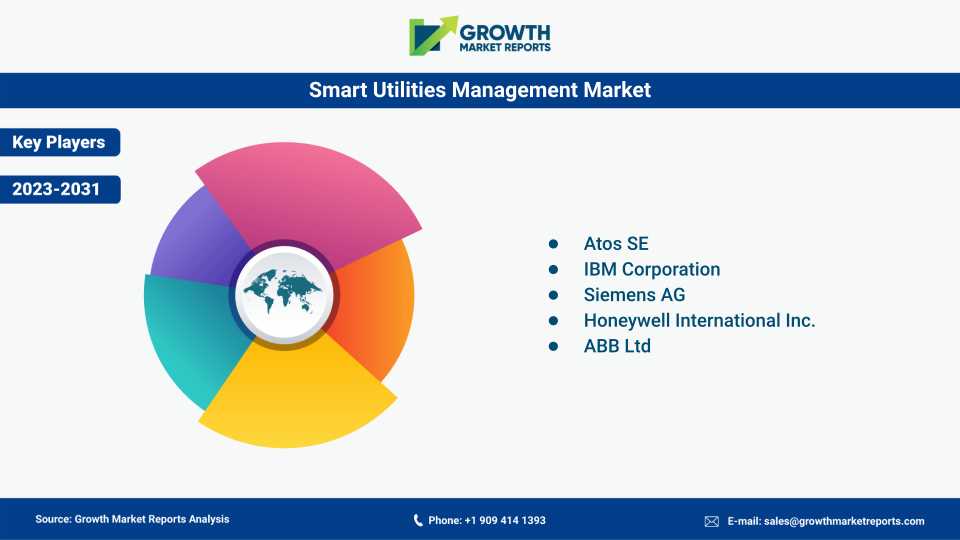
Key players competing in the global smart utilities management market are Atos SE; IBM Corporation; Siemens AG; Honeywell International Inc.; and ABB Ltd. The companies are focusing on business strategies and long-term agreements with other industry players for new product developments, acquisitions, expansions & investments to expand their market share.

  • In April 2019, Atos SE announced its achievement of Internet of Things (IoT) Partner Specialization in the Google Cloud Partner Specialization Program. The company aimed to prove its expertise and success in building customer solutions in the Internet of Things (IoT) field using Google Cloud Platform technology by earning the partner specialization.

  • In January 2019, Siemens AG announced its partnership with utilities of Canada. The company aimed to expand its research & development activities for technological advancement for electrical grid in Canada.

Smart Utilities Management Market Key Players

Frequently Asked Questions

End-users include residential, commercial, industrial, and municipal sectors, each leveraging smart utilities management to optimize resource use, reduce costs, and improve service delivery.

Opportunities include expanding into emerging markets, integrating renewable energy, leveraging advanced analytics and AI, and developing scalable, interoperable solutions for diverse regional needs.

Challenges include high upfront capital investments, integration with legacy systems, data security and privacy concerns, regulatory compliance, and a shortage of skilled personnel.

Leading companies include Siemens AG, Schneider Electric, ABB Ltd., IBM Corporation, Oracle Corporation, Honeywell International Inc., Itron Inc., Sensus (Xylem Inc.), Landis+Gyr Group AG, and General Electric Company.

On-premises solutions offer greater control and are preferred where data security is critical, while cloud-based solutions provide scalability, flexibility, and cost-efficiency, making them increasingly popular, especially among smaller utilities.

Key applications include electricity management, water management, gas management, waste management, and other utility operations such as district heating and cooling.

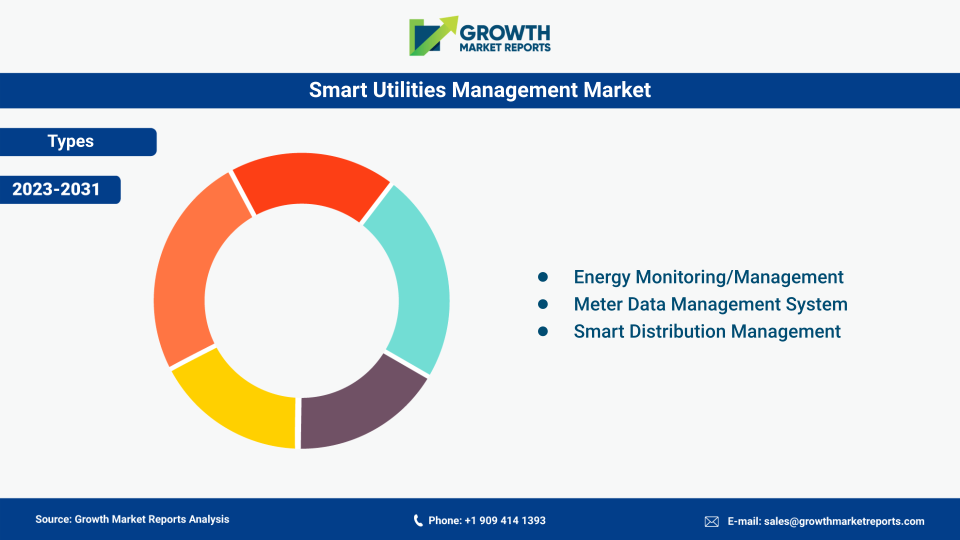
The market is segmented into software (management platforms, analytics, customer engagement), hardware (smart meters, sensors, communication devices), and services (consulting, integration, maintenance, managed services).

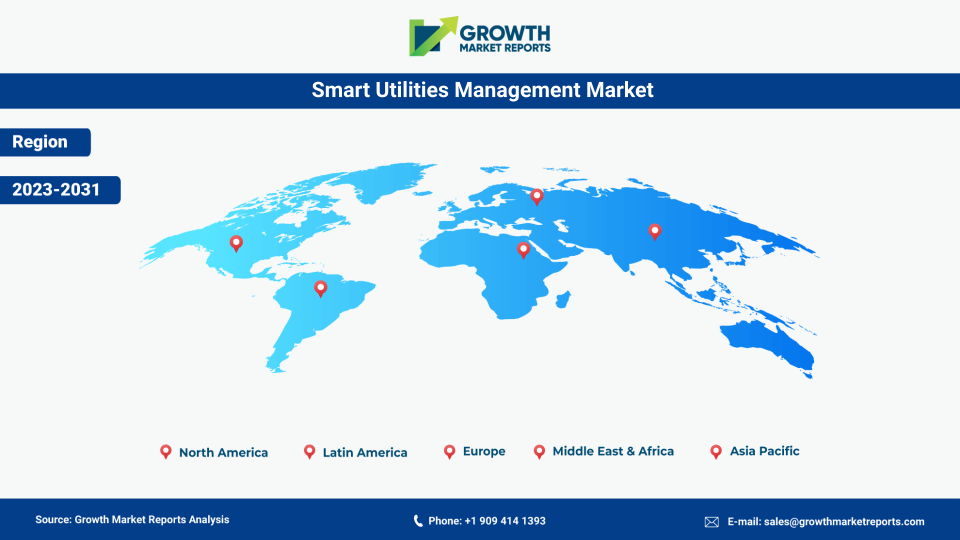
Asia Pacific is the fastest-growing region due to rapid urbanization and smart city projects. North America and Europe lead in market maturity, while Latin America and the Middle East & Africa are seeing increased adoption driven by infrastructure modernization.

Key growth drivers include the integration of IoT, AI, and big data analytics into utility operations, increasing demand for efficient resource utilization, sustainability initiatives, government mandates, and investments in smart infrastructure.

The global Smart Utilities Management market reached USD 24.7 billion in 2024 and is projected to grow at a CAGR of 13.1% from 2025 to 2033, reaching approximately USD 70.7 billion by 2033.

Table Of Content

Chapter 1 Executive Summary
Chapter 2 Assumptions and Acronyms Used
Chapter 3 Research Methodology
Chapter 4 Smart Utilities Management Market Overview
   4.1 Introduction
      4.1.1 Market Taxonomy
      4.1.2 Market Definition
      4.1.3 Macro-Economic Factors Impacting the Market Growth
   4.2 Smart Utilities Management Market Dynamics
      4.2.1 Market Drivers
      4.2.2 Market Restraints
      4.2.3 Market Opportunity
   4.3 Smart Utilities Management Market - Supply Chain Analysis
      4.3.1 List of Key Suppliers
      4.3.2 List of Key Distributors
      4.3.3 List of Key Consumers
   4.4 Key Forces Shaping the Smart Utilities Management Market
      4.4.1 Bargaining Power of Suppliers
      4.4.2 Bargaining Power of Buyers
      4.4.3 Threat of Substitution
      4.4.4 Threat of New Entrants
      4.4.5 Competitive Rivalry
   4.5 Global Smart Utilities Management Market Size & Forecast, 2023-2032
      4.5.1 Smart Utilities Management Market Size and Y-o-Y Growth
      4.5.2 Smart Utilities Management Market Absolute $ Opportunity

Chapter 5 Global Smart Utilities Management Market Analysis and Forecast By Component
   5.1 Introduction
      5.1.1 Key Market Trends & Growth Opportunities By Component
      5.1.2 Basis Point Share (BPS) Analysis By Component
      5.1.3 Absolute $ Opportunity Assessment By Component
   5.2 Smart Utilities Management Market Size Forecast By Component
      5.2.1 Software
      5.2.2 Hardware
      5.2.3 Services
   5.3 Market Attractiveness Analysis By Component

Chapter 6 Global Smart Utilities Management Market Analysis and Forecast By Application
   6.1 Introduction
      6.1.1 Key Market Trends & Growth Opportunities By Application
      6.1.2 Basis Point Share (BPS) Analysis By Application
      6.1.3 Absolute $ Opportunity Assessment By Application
   6.2 Smart Utilities Management Market Size Forecast By Application
      6.2.1 Electricity Management
      6.2.2 Water Management
      6.2.3 Gas Management
      6.2.4 Waste Management
      6.2.5 Others
   6.3 Market Attractiveness Analysis By Application

Chapter 7 Global Smart Utilities Management Market Analysis and Forecast By Deployment Mode
   7.1 Introduction
      7.1.1 Key Market Trends & Growth Opportunities By Deployment Mode
      7.1.2 Basis Point Share (BPS) Analysis By Deployment Mode
      7.1.3 Absolute $ Opportunity Assessment By Deployment Mode
   7.2 Smart Utilities Management Market Size Forecast By Deployment Mode
      7.2.1 On-Premises
      7.2.2 Cloud
   7.3 Market Attractiveness Analysis By Deployment Mode

Chapter 8 Global Smart Utilities Management Market Analysis and Forecast By Utility Type
   8.1 Introduction
      8.1.1 Key Market Trends & Growth Opportunities By Utility Type
      8.1.2 Basis Point Share (BPS) Analysis By Utility Type
      8.1.3 Absolute $ Opportunity Assessment By Utility Type
   8.2 Smart Utilities Management Market Size Forecast By Utility Type
      8.2.1 Public Utilities
      8.2.2 Private Utilities
   8.3 Market Attractiveness Analysis By Utility Type

Chapter 9 Global Smart Utilities Management Market Analysis and Forecast By End-User
   9.1 Introduction
      9.1.1 Key Market Trends & Growth Opportunities By End-User
      9.1.2 Basis Point Share (BPS) Analysis By End-User
      9.1.3 Absolute $ Opportunity Assessment By End-User
   9.2 Smart Utilities Management Market Size Forecast By End-User
      9.2.1 Residential
      9.2.2 Commercial
      9.2.3 Industrial
      9.2.4 Municipal
   9.3 Market Attractiveness Analysis By End-User

Chapter 10 Global Smart Utilities Management Market Analysis and Forecast by Region
   10.1 Introduction
      10.1.1 Key Market Trends & Growth Opportunities By Region
      10.1.2 Basis Point Share (BPS) Analysis By Region
      10.1.3 Absolute $ Opportunity Assessment By Region
   10.2 Smart Utilities Management Market Size Forecast By Region
      10.2.1 North America
      10.2.2 Europe
      10.2.3 Asia Pacific
      10.2.4 Latin America
      10.2.5 Middle East & Africa (MEA)
   10.3 Market Attractiveness Analysis By Region

Chapter 11 Coronavirus Disease (COVID-19) Impact 
   11.1 Introduction 
   11.2 Current & Future Impact Analysis 
   11.3 Economic Impact Analysis 
   11.4 Government Policies 
   11.5 Investment Scenario

Chapter 12 North America Smart Utilities Management Analysis and Forecast
   12.1 Introduction
   12.2 North America Smart Utilities Management Market Size Forecast by Country
      12.2.1 U.S.
      12.2.2 Canada
   12.3 Basis Point Share (BPS) Analysis by Country
   12.4 Absolute $ Opportunity Assessment by Country
   12.5 Market Attractiveness Analysis by Country
   12.6 North America Smart Utilities Management Market Size Forecast By Component
      12.6.1 Software
      12.6.2 Hardware
      12.6.3 Services
   12.7 Basis Point Share (BPS) Analysis By Component 
   12.8 Absolute $ Opportunity Assessment By Component 
   12.9 Market Attractiveness Analysis By Component
   12.10 North America Smart Utilities Management Market Size Forecast By Application
      12.10.1 Electricity Management
      12.10.2 Water Management
      12.10.3 Gas Management
      12.10.4 Waste Management
      12.10.5 Others
   12.11 Basis Point Share (BPS) Analysis By Application 
   12.12 Absolute $ Opportunity Assessment By Application 
   12.13 Market Attractiveness Analysis By Application
   12.14 North America Smart Utilities Management Market Size Forecast By Deployment Mode
      12.14.1 On-Premises
      12.14.2 Cloud
   12.15 Basis Point Share (BPS) Analysis By Deployment Mode 
   12.16 Absolute $ Opportunity Assessment By Deployment Mode 
   12.17 Market Attractiveness Analysis By Deployment Mode
   12.18 North America Smart Utilities Management Market Size Forecast By Utility Type
      12.18.1 Public Utilities
      12.18.2 Private Utilities
   12.19 Basis Point Share (BPS) Analysis By Utility Type 
   12.20 Absolute $ Opportunity Assessment By Utility Type 
   12.21 Market Attractiveness Analysis By Utility Type
   12.22 North America Smart Utilities Management Market Size Forecast By End-User
      12.22.1 Residential
      12.22.2 Commercial
      12.22.3 Industrial
      12.22.4 Municipal
   12.23 Basis Point Share (BPS) Analysis By End-User 
   12.24 Absolute $ Opportunity Assessment By End-User 
   12.25 Market Attractiveness Analysis By End-User

Chapter 13 Europe Smart Utilities Management Analysis and Forecast
   13.1 Introduction
   13.2 Europe Smart Utilities Management Market Size Forecast by Country
      13.2.1 Germany
      13.2.2 France
      13.2.3 Italy
      13.2.4 U.K.
      13.2.5 Spain
      13.2.6 Russia
      13.2.7 Rest of Europe
   13.3 Basis Point Share (BPS) Analysis by Country
   13.4 Absolute $ Opportunity Assessment by Country
   13.5 Market Attractiveness Analysis by Country
   13.6 Europe Smart Utilities Management Market Size Forecast By Component
      13.6.1 Software
      13.6.2 Hardware
      13.6.3 Services
   13.7 Basis Point Share (BPS) Analysis By Component 
   13.8 Absolute $ Opportunity Assessment By Component 
   13.9 Market Attractiveness Analysis By Component
   13.10 Europe Smart Utilities Management Market Size Forecast By Application
      13.10.1 Electricity Management
      13.10.2 Water Management
      13.10.3 Gas Management
      13.10.4 Waste Management
      13.10.5 Others
   13.11 Basis Point Share (BPS) Analysis By Application 
   13.12 Absolute $ Opportunity Assessment By Application 
   13.13 Market Attractiveness Analysis By Application
   13.14 Europe Smart Utilities Management Market Size Forecast By Deployment Mode
      13.14.1 On-Premises
      13.14.2 Cloud
   13.15 Basis Point Share (BPS) Analysis By Deployment Mode 
   13.16 Absolute $ Opportunity Assessment By Deployment Mode 
   13.17 Market Attractiveness Analysis By Deployment Mode
   13.18 Europe Smart Utilities Management Market Size Forecast By Utility Type
      13.18.1 Public Utilities
      13.18.2 Private Utilities
   13.19 Basis Point Share (BPS) Analysis By Utility Type 
   13.20 Absolute $ Opportunity Assessment By Utility Type 
   13.21 Market Attractiveness Analysis By Utility Type
   13.22 Europe Smart Utilities Management Market Size Forecast By End-User
      13.22.1 Residential
      13.22.2 Commercial
      13.22.3 Industrial
      13.22.4 Municipal
   13.23 Basis Point Share (BPS) Analysis By End-User 
   13.24 Absolute $ Opportunity Assessment By End-User 
   13.25 Market Attractiveness Analysis By End-User

Chapter 14 Asia Pacific Smart Utilities Management Analysis and Forecast
   14.1 Introduction
   14.2 Asia Pacific Smart Utilities Management Market Size Forecast by Country
      14.2.1 China
      14.2.2 Japan
      14.2.3 South Korea
      14.2.4 India
      14.2.5 Australia
      14.2.6 South East Asia (SEA)
      14.2.7 Rest of Asia Pacific (APAC)
   14.3 Basis Point Share (BPS) Analysis by Country
   14.4 Absolute $ Opportunity Assessment by Country
   14.5 Market Attractiveness Analysis by Country
   14.6 Asia Pacific Smart Utilities Management Market Size Forecast By Component
      14.6.1 Software
      14.6.2 Hardware
      14.6.3 Services
   14.7 Basis Point Share (BPS) Analysis By Component 
   14.8 Absolute $ Opportunity Assessment By Component 
   14.9 Market Attractiveness Analysis By Component
   14.10 Asia Pacific Smart Utilities Management Market Size Forecast By Application
      14.10.1 Electricity Management
      14.10.2 Water Management
      14.10.3 Gas Management
      14.10.4 Waste Management
      14.10.5 Others
   14.11 Basis Point Share (BPS) Analysis By Application 
   14.12 Absolute $ Opportunity Assessment By Application 
   14.13 Market Attractiveness Analysis By Application
   14.14 Asia Pacific Smart Utilities Management Market Size Forecast By Deployment Mode
      14.14.1 On-Premises
      14.14.2 Cloud
   14.15 Basis Point Share (BPS) Analysis By Deployment Mode 
   14.16 Absolute $ Opportunity Assessment By Deployment Mode 
   14.17 Market Attractiveness Analysis By Deployment Mode
   14.18 Asia Pacific Smart Utilities Management Market Size Forecast By Utility Type
      14.18.1 Public Utilities
      14.18.2 Private Utilities
   14.19 Basis Point Share (BPS) Analysis By Utility Type 
   14.20 Absolute $ Opportunity Assessment By Utility Type 
   14.21 Market Attractiveness Analysis By Utility Type
   14.22 Asia Pacific Smart Utilities Management Market Size Forecast By End-User
      14.22.1 Residential
      14.22.2 Commercial
      14.22.3 Industrial
      14.22.4 Municipal
   14.23 Basis Point Share (BPS) Analysis By End-User 
   14.24 Absolute $ Opportunity Assessment By End-User 
   14.25 Market Attractiveness Analysis By End-User

Chapter 15 Latin America Smart Utilities Management Analysis and Forecast
   15.1 Introduction
   15.2 Latin America Smart Utilities Management Market Size Forecast by Country
      15.2.1 Brazil
      15.2.2 Mexico
      15.2.3 Rest of Latin America (LATAM)
   15.3 Basis Point Share (BPS) Analysis by Country
   15.4 Absolute $ Opportunity Assessment by Country
   15.5 Market Attractiveness Analysis by Country
   15.6 Latin America Smart Utilities Management Market Size Forecast By Component
      15.6.1 Software
      15.6.2 Hardware
      15.6.3 Services
   15.7 Basis Point Share (BPS) Analysis By Component 
   15.8 Absolute $ Opportunity Assessment By Component 
   15.9 Market Attractiveness Analysis By Component
   15.10 Latin America Smart Utilities Management Market Size Forecast By Application
      15.10.1 Electricity Management
      15.10.2 Water Management
      15.10.3 Gas Management
      15.10.4 Waste Management
      15.10.5 Others
   15.11 Basis Point Share (BPS) Analysis By Application 
   15.12 Absolute $ Opportunity Assessment By Application 
   15.13 Market Attractiveness Analysis By Application
   15.14 Latin America Smart Utilities Management Market Size Forecast By Deployment Mode
      15.14.1 On-Premises
      15.14.2 Cloud
   15.15 Basis Point Share (BPS) Analysis By Deployment Mode 
   15.16 Absolute $ Opportunity Assessment By Deployment Mode 
   15.17 Market Attractiveness Analysis By Deployment Mode
   15.18 Latin America Smart Utilities Management Market Size Forecast By Utility Type
      15.18.1 Public Utilities
      15.18.2 Private Utilities
   15.19 Basis Point Share (BPS) Analysis By Utility Type 
   15.20 Absolute $ Opportunity Assessment By Utility Type 
   15.21 Market Attractiveness Analysis By Utility Type
   15.22 Latin America Smart Utilities Management Market Size Forecast By End-User
      15.22.1 Residential
      15.22.2 Commercial
      15.22.3 Industrial
      15.22.4 Municipal
   15.23 Basis Point Share (BPS) Analysis By End-User 
   15.24 Absolute $ Opportunity Assessment By End-User 
   15.25 Market Attractiveness Analysis By End-User

Chapter 16 Middle East & Africa (MEA) Smart Utilities Management Analysis and Forecast
   16.1 Introduction
   16.2 Middle East & Africa (MEA) Smart Utilities Management Market Size Forecast by Country
      16.2.1 Saudi Arabia
      16.2.2 South Africa
      16.2.3 UAE
      16.2.4 Rest of Middle East & Africa (MEA)
   16.3 Basis Point Share (BPS) Analysis by Country
   16.4 Absolute $ Opportunity Assessment by Country
   16.5 Market Attractiveness Analysis by Country
   16.6 Middle East & Africa (MEA) Smart Utilities Management Market Size Forecast By Component
      16.6.1 Software
      16.6.2 Hardware
      16.6.3 Services
   16.7 Basis Point Share (BPS) Analysis By Component 
   16.8 Absolute $ Opportunity Assessment By Component 
   16.9 Market Attractiveness Analysis By Component
   16.10 Middle East & Africa (MEA) Smart Utilities Management Market Size Forecast By Application
      16.10.1 Electricity Management
      16.10.2 Water Management
      16.10.3 Gas Management
      16.10.4 Waste Management
      16.10.5 Others
   16.11 Basis Point Share (BPS) Analysis By Application 
   16.12 Absolute $ Opportunity Assessment By Application 
   16.13 Market Attractiveness Analysis By Application
   16.14 Middle East & Africa (MEA) Smart Utilities Management Market Size Forecast By Deployment Mode
      16.14.1 On-Premises
      16.14.2 Cloud
   16.15 Basis Point Share (BPS) Analysis By Deployment Mode 
   16.16 Absolute $ Opportunity Assessment By Deployment Mode 
   16.17 Market Attractiveness Analysis By Deployment Mode
   16.18 Middle East & Africa (MEA) Smart Utilities Management Market Size Forecast By Utility Type
      16.18.1 Public Utilities
      16.18.2 Private Utilities
   16.19 Basis Point Share (BPS) Analysis By Utility Type 
   16.20 Absolute $ Opportunity Assessment By Utility Type 
   16.21 Market Attractiveness Analysis By Utility Type
   16.22 Middle East & Africa (MEA) Smart Utilities Management Market Size Forecast By End-User
      16.22.1 Residential
      16.22.2 Commercial
      16.22.3 Industrial
      16.22.4 Municipal
   16.23 Basis Point Share (BPS) Analysis By End-User 
   16.24 Absolute $ Opportunity Assessment By End-User 
   16.25 Market Attractiveness Analysis By End-User

Chapter 17 Competition Landscape 
   17.1 Smart Utilities Management Market: Competitive Dashboard
   17.2 Global Smart Utilities Management Market: Market Share Analysis, 2023
   17.3 Company Profiles (Details – Overview, Financials, Developments, Strategy) 
      17.3.1 Siemens AG
Schneider Electric SE
ABB Ltd.
General Electric Company
IBM Corporation
Oracle Corporation
Honeywell International Inc.
Itron Inc.
Landis+Gyr Group AG
Sensus (Xylem Inc.)
Eaton Corporation plc
Cisco Systems, Inc.
Aclara Technologies LLC
Kamstrup A/S
Trilliant Holdings, Inc.
Enel X S.r.l.
Silver Spring Networks (now part of Itron)
Elster Group GmbH (Honeywell)
Tantalus Systems Corp.
SAP SE

Methodology

Our Clients

Siemens Healthcare
Pfizer
Deloitte
Nestle SA
Honda Motor Co. Ltd.
sinopec
Microsoft
Dassault Aviation