Segments - by Technology (Gas Turbines, Steam Turbines, Reciprocating Engines, Fuel Cells, Others), by Application (Residential, Commercial, Industrial, Utilities), by Fuel Type (Natural Gas, Coal, Biomass, Others), by Capacity (Up to 10 MW, 10–50 MW, Above 50 MW)
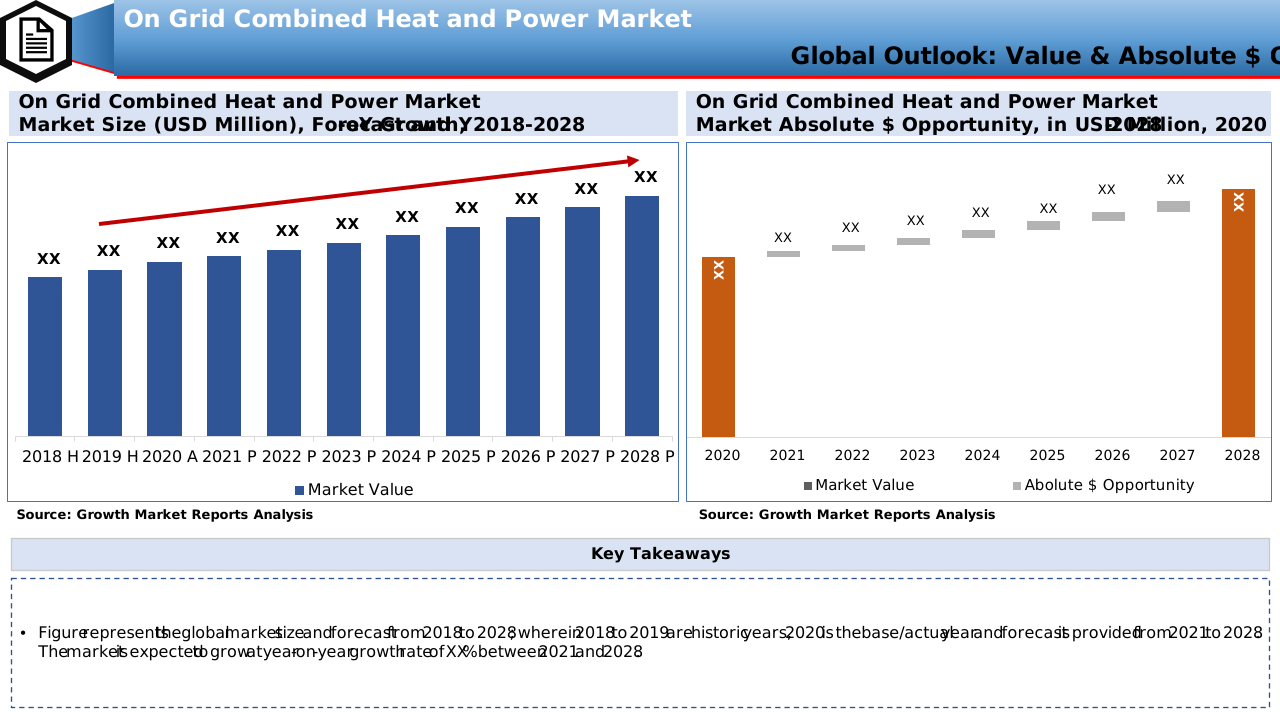
According to our latest research, the global On Grid Combined Heat and Power (CHP) market size reached USD 28.4 billion in 2024, reflecting robust adoption across key industrial and commercial sectors. The market is projected to expand at a CAGR of 6.7% from 2025 to 2033, reaching an estimated USD 51.3 billion by 2033. This growth trajectory is underpinned by increasing demand for energy-efficient solutions, stringent governmental regulations on emissions, and rising investments in sustainable power generation infrastructure worldwide. The On Grid Combined Heat and Power market is witnessing a paradigm shift as energy security and operational cost reduction become top priorities for both private and public sector stakeholders.
One of the primary growth factors driving the On Grid Combined Heat and Power market is the rising emphasis on energy efficiency and sustainability. Governments and regulatory bodies across the globe are implementing stricter emission standards and incentivizing the adoption of cleaner energy technologies. CHP systems, by simultaneously generating electricity and useful thermal energy from a single fuel source, significantly enhance overall energy efficiency, often achieving efficiency rates of up to 80%. This dual-generation capability not only curtails greenhouse gas emissions but also helps organizations reduce their energy costs. The integration of CHP systems into on-grid frameworks further enables grid stability and resilience, making them an attractive option for urban centers and industrial hubs striving to meet ambitious climate targets without compromising on energy reliability.
Another critical driver for the On Grid Combined Heat and Power market is the growing industrialization and urbanization in emerging economies, particularly in Asia Pacific and Latin America. These regions are witnessing a surge in demand for reliable and uninterrupted power supply due to rapid expansion of manufacturing, commercial, and residential infrastructure. CHP systems offer a compelling solution by providing continuous power and heat, reducing dependency on conventional grid electricity, and minimizing operational disruptions. Additionally, the declining cost of key technologies such as gas turbines, reciprocating engines, and fuel cells is making CHP systems more accessible to a broader range of end-users. The ability to utilize diverse fuel types, including natural gas, biomass, and even coal, further enhances the versatility and appeal of On Grid CHP installations across varied industrial contexts.
Technological advancements and ongoing innovation are further propelling the On Grid Combined Heat and Power market forward. The development of high-efficiency gas turbines, advanced fuel cells, and intelligent control systems is enabling the deployment of more compact, flexible, and scalable CHP solutions. These advancements are particularly relevant for commercial buildings, utilities, and residential complexes seeking to optimize their energy consumption patterns. Moreover, the integration of digital monitoring and automation tools is facilitating real-time performance tracking, predictive maintenance, and seamless integration with smart grid infrastructures. As a result, end-users are increasingly adopting On Grid CHP solutions to achieve greater operational agility, reduce carbon footprints, and enhance overall energy management capabilities.
From a regional perspective, Europe remains at the forefront of On Grid Combined Heat and Power market adoption, driven by supportive regulatory frameworks, ambitious renewable energy targets, and extensive investments in grid modernization. North America is also witnessing significant growth, fueled by the need for grid resilience, decarbonization initiatives, and the proliferation of distributed energy resources. Meanwhile, Asia Pacific is emerging as a high-growth region, with countries such as China, India, and Japan investing heavily in CHP infrastructure to meet burgeoning energy demands and address environmental concerns. The Middle East & Africa and Latin America are gradually catching up, leveraging CHP systems to diversify their energy mix and enhance grid reliability in regions with intermittent power supply challenges.
The On Grid Combined Heat and Power market is characterized by a diverse range of technologies, each catering to specific operational requirements and end-user needs. Gas turbines have emerged as one of the most widely adopted technologies, particularly in large-scale industrial and utility applications. These systems are renowned for their high efficiency, reliability, and ability to operate on multiple fuel sources, including natural gas and biogas. Gas turbines are especially well-suited for continuous power and heat generation, making them ideal for facilities with consistent energy demands. The ongoing evolution of turbine design, including the adoption of advanced materials and aerodynamics, is further enhancing their performance, reducing maintenance costs, and extending operational lifespans. As environmental regulations tighten, the adoption of low-emission gas turbines is expected to gain further momentum, especially in regions with stringent air quality standards.
The versatility of Combined Heat and Power systems is one of their most attractive features, allowing them to be tailored to the specific needs of different sectors. In the commercial and industrial sectors, for instance, CHP systems can provide a consistent and reliable energy supply, which is crucial for operations that cannot afford downtime. This reliability, combined with the cost savings from improved energy efficiency, makes CHP a compelling choice for businesses looking to enhance their sustainability credentials while also reducing operational costs. As more industries recognize these benefits, the adoption of Combined Heat and Power systems is expected to accelerate, driving further advancements in technology and efficiency.
Steam turbines represent another critical technology segment within the On Grid Combined Heat and Power market. These systems are particularly prevalent in industries with substantial process heat requirements, such as chemical manufacturing, pulp and paper, and district heating networks. Steam turbines excel in harnessing waste heat from various industrial processes, converting it into additional electrical power and useful thermal energy. This capability not only maximizes fuel utilization but also significantly reduces overall energy costs for end-users. Recent advancements in steam cycle efficiency and heat recovery technologies are making steam turbines increasingly attractive for retrofitting existing power plants and integrating with renewable energy sources, thereby supporting broader decarbonization efforts.
The reciprocating engines segment is gaining traction, especially among commercial and residential users seeking flexible, modular, and cost-effective CHP solutions. Reciprocating engines are valued for their rapid start-up times, scalability, and ability to operate efficiently at partial loads. This makes them ideal for applications with variable energy demands, such as hospitals, hotels, and office buildings. The versatility of reciprocating engines in utilizing a wide range of fuels, including natural gas, biogas, and liquid fuels, adds to their appeal in markets with diverse energy resources. Manufacturers are continually enhancing engine designs to improve efficiency, reduce emissions, and extend maintenance intervals, further strengthening their position in the On Grid CHP market.
The integration of Combined Heat and Power systems into existing energy infrastructures is a strategic move that many regions are exploring to enhance energy resilience. By providing a decentralized source of energy, CHP systems can reduce the strain on traditional grid systems, particularly during peak demand periods. This decentralization not only helps in managing energy loads more effectively but also contributes to a more stable and reliable energy supply. As energy demands continue to rise globally, the strategic deployment of Combined Heat and Power systems will be crucial in ensuring that energy supply keeps pace with demand, while also supporting broader environmental goals.
Fuel cells are at the forefront of innovation within the On Grid Combined Heat and Power market, offering ultra-clean, highly efficient energy generation with near-zero emissions. While still in the early stages of commercialization compared to turbines and engines, fuel cells are gaining acceptance in niche applications where environmental considerations and space constraints are paramount. These systems are particularly suitable for urban installations, data centers, and critical infrastructure requiring uninterrupted power supply. The ongoing reduction in fuel cell costs, coupled with advancements in hydrogen production and storage technologies, is expected to accelerate their adoption in the coming years. Other emerging technologies, such as microturbines and organic Rankine cycles, are also contributing to the diversification and resilience of the On Grid CHP technology landscape.
| Attributes | Details |
| Report Title | On Grid Combined Heat and Power Market Research Report 2033 |
| By Technology | Gas Turbines, Steam Turbines, Reciprocating Engines, Fuel Cells, Others |
| By Application | Residential, Commercial, Industrial, Utilities |
| By Fuel Type | Natural Gas, Coal, Biomass, Others |
| By Capacity | Up to 10 MW, 10–50 MW, Above 50 MW |
| Regions Covered | North America, Europe, APAC, Latin America, MEA |
| Base Year | 2024 |
| Historic Data | 2018-2023 |
| Forecast Period | 2025-2033 |
| Number of Pages | 286 |
| Number of Tables & Figures | 351 |
| Customization Available | Yes, the report can be customized as per your need. |
The application landscape of the On Grid Combined Heat and Power market is broad and multifaceted, encompassing residential, commercial, industrial, and utility sectors. Within the residential segment, the adoption of CHP systems is gaining traction in regions with high energy prices and robust policy support for distributed generation. Homeowners and residential complexes are increasingly leveraging small-scale CHP units to achieve energy independence, reduce utility bills, and enhance energy security. The integration of smart home technologies and demand response systems is further facilitating the seamless operation of residential CHP installations, enabling homeowners to optimize energy consumption and participate in grid balancing initiatives.
The commercial sector represents a significant growth avenue for the On Grid Combined Heat and Power market, driven by the need for reliable, cost-effective, and sustainable energy solutions. Commercial buildings such as hotels, hospitals, shopping malls, and educational institutions have substantial and often continuous requirements for both electricity and heating or cooling. CHP systems enable these facilities to achieve substantial energy savings, reduce carbon footprints, and comply with increasingly stringent energy efficiency standards. The ability to integrate CHP systems with building management and automation platforms is further enhancing operational efficiency, enabling commercial end-users to monitor and control energy usage in real time.
In the industrial segment, CHP systems are playing a pivotal role in supporting energy-intensive processes and enhancing overall operational resilience. Industries such as chemicals, pharmaceuticals, food and beverage, and pulp and paper are leveraging CHP solutions to meet their high thermal and electrical loads, minimize energy waste, and reduce exposure to volatile grid electricity prices. The flexibility to utilize various fuel types and the capability to operate in tandem with renewable energy sources are making CHP systems an integral component of industrial decarbonization strategies. Additionally, the implementation of advanced monitoring and predictive maintenance tools is enabling industrial users to maximize system uptime and optimize long-term performance.
The utility sector is witnessing a surge in the deployment of large-scale On Grid CHP systems to enhance grid stability, manage peak demand, and support the integration of intermittent renewable energy sources. Utilities are increasingly investing in CHP infrastructure as part of broader grid modernization and decarbonization initiatives. By providing dispatchable, high-efficiency power and heat, CHP systems are helping utilities improve overall grid reliability, reduce transmission losses, and meet regulatory requirements for emissions reduction. The growing trend of district energy networks and microgrid deployments is further driving the adoption of On Grid CHP solutions in the utility sector, particularly in urban and densely populated areas.
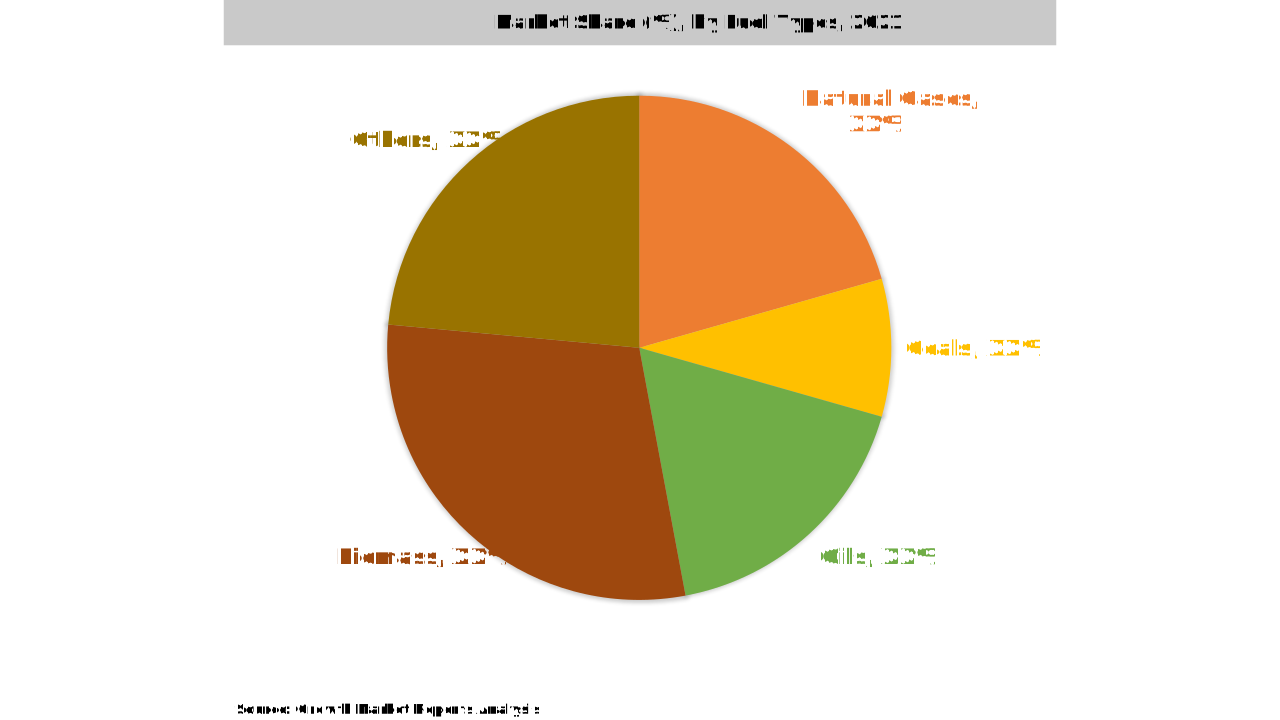
The fuel type segment is a critical determinant of the performance, cost-effectiveness, and environmental impact of On Grid Combined Heat and Power systems. Natural gas remains the dominant fuel source for CHP installations globally, accounting for a significant share of the market in 2024. The widespread availability, relatively low cost, and clean-burning characteristics of natural gas make it an ideal choice for both new and retrofit CHP projects. Natural gas-fired CHP systems offer high efficiency, low emissions, and operational flexibility, making them suitable for a wide range of applications across residential, commercial, industrial, and utility sectors. The ongoing expansion of natural gas infrastructure and the emergence of liquefied natural gas (LNG) supply chains are further supporting the growth of this segment.
Coal-based CHP systems continue to play a role in regions with abundant coal resources and established coal-fired power infrastructure. While coal offers the advantage of low fuel costs and high energy density, its environmental impact has prompted a gradual shift towards cleaner alternatives in many markets. Nevertheless, advanced coal gasification and carbon capture technologies are being explored to mitigate emissions and enhance the sustainability of coal-fired CHP installations. In countries such as China and India, coal-based CHP remains a viable option for large-scale industrial and utility applications, particularly where natural gas supply is limited or prohibitively expensive.
The biomass segment is gaining momentum as a renewable and carbon-neutral fuel source for On Grid Combined Heat and Power systems. Biomass CHP installations utilize organic materials such as agricultural residues, wood chips, and municipal waste to generate electricity and heat, thereby supporting circular economy initiatives and reducing reliance on fossil fuels. The adoption of biomass CHP is particularly strong in regions with robust agricultural and forestry sectors, as well as in countries with aggressive renewable energy targets. Technological advancements in biomass gasification, combustion, and anaerobic digestion are enhancing the efficiency and scalability of biomass CHP systems, making them increasingly attractive for decentralized energy generation.
Other emerging fuel types, including hydrogen, biogas, and synthetic fuels, are beginning to make inroads into the On Grid CHP market. The transition towards a hydrogen economy is creating new opportunities for ultra-clean CHP systems, particularly in regions investing heavily in hydrogen production and infrastructure. Biogas, derived from organic waste and wastewater treatment processes, offers a sustainable and locally sourced fuel option for CHP installations, especially in rural and agricultural communities. As the market continues to evolve, the diversification of fuel sources is expected to enhance the resilience and sustainability of On Grid CHP systems, enabling end-users to adapt to changing regulatory and market conditions.
The capacity segment of the On Grid Combined Heat and Power market is typically categorized into Up to 10 MW, 10–50 MW, and Above 50 MW, each serving distinct market needs and end-user profiles. The Up to 10 MW category primarily caters to small-scale commercial, residential, and institutional applications. These compact CHP systems are favored for their ease of installation, modularity, and suitability for distributed generation. They are particularly effective in supporting energy needs for schools, hospitals, hotels, and multi-family residential buildings. The ability to deploy these systems close to the point of consumption reduces transmission losses and enhances energy security, making them a preferred choice for urban and decentralized energy networks.
The 10–50 MW capacity segment is witnessing significant growth, driven by demand from medium to large commercial facilities, industrial plants, and district energy networks. These systems strike a balance between scalability and operational flexibility, enabling end-users to achieve substantial energy savings and emissions reductions. The integration of advanced control systems and real-time monitoring tools is further enhancing the performance and reliability of CHP installations in this capacity range. Industrial parks, university campuses, and municipal utilities are increasingly adopting 10–50 MW CHP systems to meet their complex energy requirements and support broader sustainability objectives.
The Above 50 MW segment is dominated by large-scale industrial complexes, utility providers, and district heating networks requiring high-capacity, continuous power and heat generation. These systems are often custom-designed to meet the specific operational needs of end-users, incorporating multiple turbines, engines, or fuel cells to ensure redundancy and maximize efficiency. Large-scale CHP installations play a critical role in grid stabilization, peak load management, and the integration of renewable energy sources. The ability to operate in both base-load and peaking modes makes them invaluable assets for utilities and industrial operators seeking to enhance grid resilience and optimize energy costs.
Across all capacity segments, there is a growing emphasis on modularity, scalability, and digitalization. The adoption of containerized CHP solutions, remote monitoring platforms, and predictive maintenance tools is enabling end-users to optimize system performance, minimize downtime, and extend equipment lifespans. As energy demand patterns evolve and regulatory frameworks become more stringent, the capacity segmentation of the On Grid CHP market is expected to become increasingly nuanced, with tailored solutions emerging to address the unique needs of diverse end-user groups.
The On Grid Combined Heat and Power market presents a wealth of opportunities for stakeholders across the value chain. One of the most promising opportunities lies in the integration of CHP systems with renewable energy sources and smart grid infrastructures. By leveraging advanced control systems and digital platforms, end-users can optimize energy consumption, participate in demand response programs, and enhance overall grid stability. The ongoing transition towards decentralized energy generation is creating new avenues for CHP deployment in urban centers, remote communities, and industrial clusters. Additionally, the growing focus on hydrogen and biogas as alternative fuel sources is opening up new markets for ultra-clean and flexible CHP solutions. Governments and utilities are increasingly offering incentives, grants, and favorable regulatory frameworks to accelerate the adoption of CHP technologies, further expanding the addressable market for manufacturers and service providers.
Another significant opportunity stems from the modernization and retrofitting of existing power generation infrastructure. Many industrial facilities and utilities are seeking to upgrade aging power plants to meet stricter emissions standards and improve operational efficiency. CHP systems offer a cost-effective and scalable solution for enhancing the performance of existing assets, reducing fuel consumption, and minimizing environmental impact. The development of modular and containerized CHP units is enabling rapid deployment and integration with legacy systems, minimizing downtime and capital expenditure. As the global push towards decarbonization intensifies, the demand for high-efficiency, low-emission CHP solutions is expected to surge, creating lucrative opportunities for technology providers, EPC contractors, and aftermarket service providers.
Despite the favorable market outlook, the On Grid Combined Heat and Power market faces several restraining factors that could impede growth. One of the primary challenges is the high initial capital investment required for CHP system installation, particularly for large-scale and advanced technology solutions. While the long-term operational savings and environmental benefits are substantial, the upfront costs can be prohibitive for small and medium-sized enterprises, residential users, and organizations with limited access to financing. Additionally, the complexity of permitting, interconnection, and regulatory compliance can create barriers to entry, especially in regions with fragmented or evolving policy frameworks. The volatility of fuel prices, particularly for natural gas and biomass, also poses a risk to the economic viability of CHP projects, underscoring the need for robust risk management and long-term supply agreements.
The regional distribution of the On Grid Combined Heat and Power market reflects varying levels of adoption, regulatory support, and market maturity. Europe leads the global market, accounting for USD 10.6 billion in 2024, driven by ambitious climate policies, extensive district heating networks, and strong governmental support for energy efficiency initiatives. Countries such as Germany, the United Kingdom, and the Netherlands are at the forefront of CHP deployment, leveraging advanced technologies and integrated energy planning to achieve their decarbonization targets. The European market is expected to maintain a steady growth trajectory, with a projected CAGR of 5.9% through 2033, as ongoing investments in grid modernization and renewable energy integration drive further adoption of CHP solutions.
In North America, the On Grid Combined Heat and Power market is valued at USD 7.2 billion in 2024, with the United States accounting for the lionÂ’s share. The region is characterized by a strong focus on grid resilience, energy security, and emissions reduction, particularly in the wake of extreme weather events and grid disruptions. State-level incentives, federal grants, and supportive regulatory frameworks are encouraging the deployment of CHP systems in commercial, industrial, and utility sectors. The North American market is poised for robust growth, with a projected CAGR of 6.4% over the forecast period, as utilities and industrial operators increasingly invest in distributed energy resources and microgrid solutions.
The Asia Pacific region is emerging as a high-growth market, with a current market size of USD 6.8 billion in 2024. Rapid industrialization, urbanization, and rising energy demand are driving significant investments in CHP infrastructure across countries such as China, India, and Japan. Government initiatives aimed at improving energy efficiency, reducing air pollution, and diversifying the energy mix are further accelerating the adoption of On Grid CHP systems. The Asia Pacific market is expected to register the highest CAGR of 8.2% through 2033, as technological advancements and declining equipment costs make CHP solutions increasingly accessible to a broader range of end-users. Meanwhile, the Middle East & Africa and Latin America are gradually expanding their CHP footprints, with a combined market size of USD 3.8 billion in 2024, leveraging CHP systems to enhance grid reliability and support economic diversification efforts.
The competitive landscape of the On Grid Combined Heat and Power market is characterized by the presence of established multinational corporations, regional players, and a growing number of technology innovators. Leading companies are focusing on product differentiation, technological innovation, and strategic partnerships to strengthen their market positions and expand their global reach. The market is witnessing increased consolidation as larger players acquire specialized technology providers and service companies to enhance their product portfolios and service offerings. Intense competition is driving continuous innovation in system design, fuel flexibility, digital integration, and emissions control technologies, enabling market leaders to address the evolving needs of diverse end-user segments.
Key players are investing heavily in research and development to enhance the efficiency, reliability, and environmental performance of their CHP solutions. The adoption of advanced materials, digital monitoring platforms, and predictive analytics is enabling manufacturers to deliver high-performance systems with reduced maintenance requirements and extended operational lifespans. Companies are also focusing on expanding their aftermarket service capabilities, offering comprehensive maintenance, remote monitoring, and performance optimization services to maximize customer value and foster long-term relationships. The growing emphasis on sustainability and corporate social responsibility is prompting market leaders to develop ultra-clean CHP solutions powered by renewable fuels, hydrogen, and biogas, positioning themselves as partners of choice for organizations pursuing ambitious decarbonization goals.
Collaboration and strategic alliances are becoming increasingly important in the On Grid Combined Heat and Power market, as companies seek to leverage complementary strengths and accelerate market entry. Partnerships between technology providers, EPC contractors, utilities, and government agencies are facilitating the deployment of large-scale CHP projects, particularly in emerging markets with complex regulatory and infrastructure challenges. Joint ventures and licensing agreements are enabling companies to access new markets, share risk, and drive innovation in system design and integration. The ability to offer turnkey solutions, including project financing, engineering, installation, and ongoing support, is emerging as a key differentiator for market leaders seeking to capture a larger share of the expanding CHP market.
Some of the major companies operating in the On Grid Combined Heat and Power market include Siemens AG, General Electric Company, Mitsubishi Power Ltd., Caterpillar Inc., MAN Energy Solutions SE, 2G Energy AG, Cummins Inc., Wärtsilä Corporation, Kawasaki Heavy Industries Ltd., and Capstone Green Energy Corporation. Siemens AG and General Electric Company are recognized for their broad product portfolios, global presence, and leadership in gas turbine and digital solutions. Mitsubishi Power Ltd. and MAN Energy Solutions SE are renowned for their expertise in large-scale industrial and utility CHP systems, while Caterpillar Inc. and Cummins Inc. are leading providers of reciprocating engine-based CHP solutions. Wärtsilä Corporation and Kawasaki Heavy Industries Ltd. are at the forefront of marine and distributed CHP applications, leveraging advanced engine and fuel cell technologies. 2G Energy AG and Capstone Green Energy Corporation are recognized for their focus on modular, high-efficiency CHP systems tailored for commercial and residential applications. These companies are driving innovation, expanding their global footprints, and shaping the future of the On Grid Combined Heat and Power market through continuous investment in technology, partnerships, and customer-centric solutions.
The On Grid Combined Heat and Power market has been segmented on the basis of
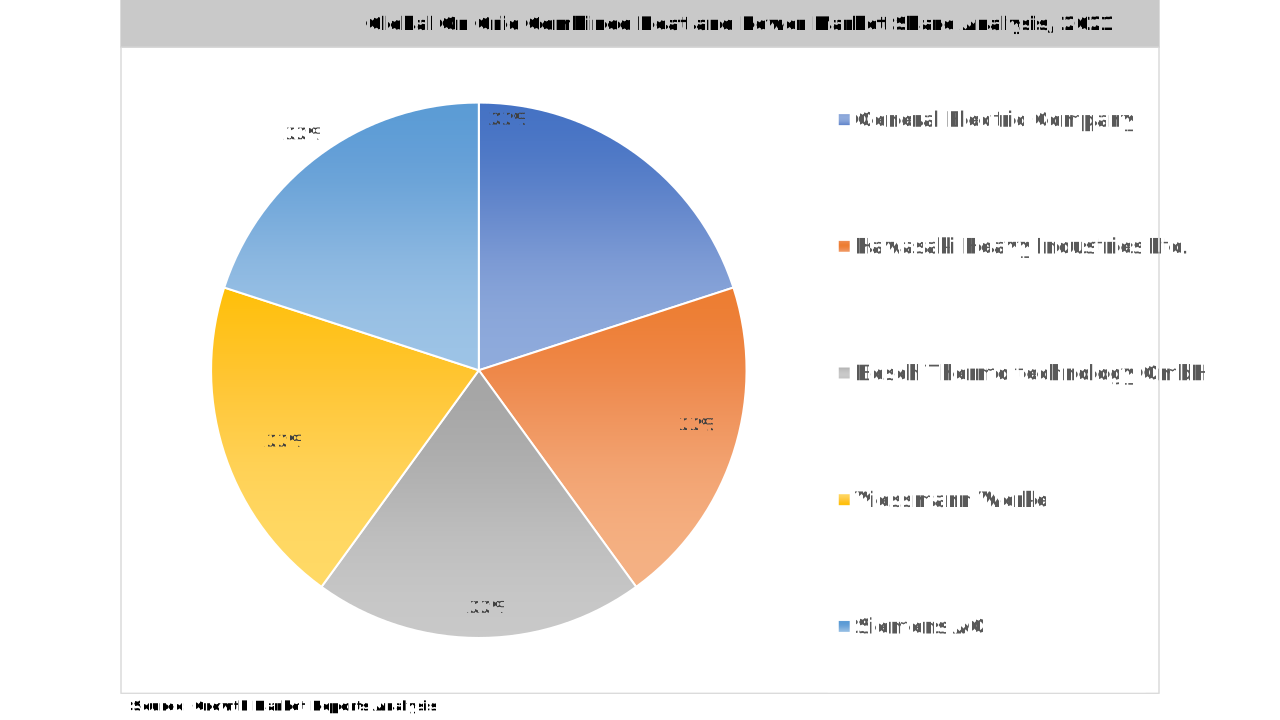
Key players competing in the on grid combined heat and power market includes General Electric Company; Kawasaki Heavy Industries Ltd.; Bosch Thermo technology GmbH; Viessmann Werke; and Siemens AG.
Some of these players are engaging in business strategies such as mergers, acquisitions, partnerships, collaborations, capacity expansion, and product launches to enhance their market share.
Technological advancements such as high-efficiency turbines, advanced fuel cells, digital monitoring, and automation are enabling more compact, flexible, and scalable CHP solutions, supporting decarbonization and smart grid integration.
Challenges include high initial capital investment, complex permitting and regulatory processes, fuel price volatility, and the need for robust risk management and long-term supply agreements.
Key players include Siemens AG, General Electric Company, Caterpillar Inc., Mitsubishi Power Ltd., MAN Energy Solutions SE, Cummins Inc., Wärtsilä Corporation, Kawasaki Heavy Industries Ltd., 2G Energy AG, and Capstone Green Energy Corporation.
Benefits include higher energy efficiency (up to 80%), reduced greenhouse gas emissions, lower energy costs, improved grid stability, and the ability to use diverse fuel sources.
Natural gas is the dominant fuel, followed by coal, biomass, biogas, and emerging fuels like hydrogen and synthetic fuels. The choice of fuel impacts efficiency, cost, and environmental performance.
On Grid CHP systems are widely used in residential, commercial, industrial, and utility sectors, providing reliable electricity and heat for buildings, manufacturing plants, and district energy networks.
Major technologies include gas turbines, steam turbines, reciprocating engines, and fuel cells. Each technology serves different operational needs and end-user segments.
Europe leads the market due to strong regulatory support and ambitious climate policies, followed by North America and Asia Pacific, with the latter expected to see the highest CAGR due to rapid industrialization and urbanization.
Key growth drivers include increasing demand for energy-efficient solutions, stricter government regulations on emissions, rising investments in sustainable power infrastructure, and the need for energy security and operational cost reduction.
As of 2024, the global On Grid Combined Heat and Power (CHP) market is valued at USD 28.4 billion and is projected to reach USD 51.3 billion by 2033, growing at a CAGR of 6.7% from 2025 to 2033.