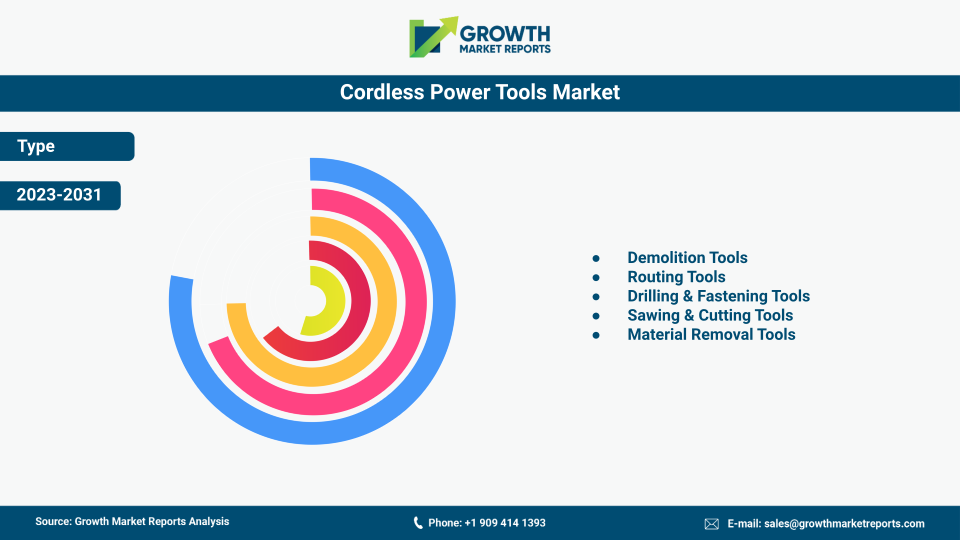
Segments - by Product Type (Drills, Saws, Sanders, Wrenches, Grinders, Others), by Battery Type (Lithium-Ion, Nickel-Cadmium, Nickel-Metal Hydride, Others), by Application (Construction, Automotive, Aerospace, Electronics, Others), by End-User (Professional, DIY), by Distribution Channel (Online, Offline)
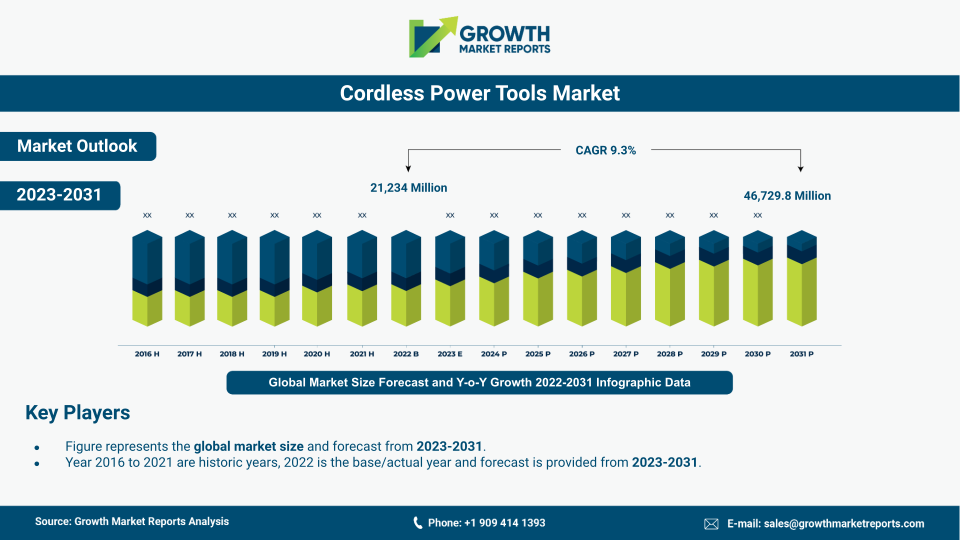
According to our latest research, the global cordless power tools market size reached USD 26.4 billion in 2024, reflecting robust demand across both professional and consumer segments. The market is expected to grow at a CAGR of 8.3% from 2025 to 2033, with the value forecasted to reach USD 54.4 billion by 2033. This strong growth is being driven by the rapid adoption of advanced battery technologies, increasing urbanization, and the expansion of construction and automotive industries worldwide.
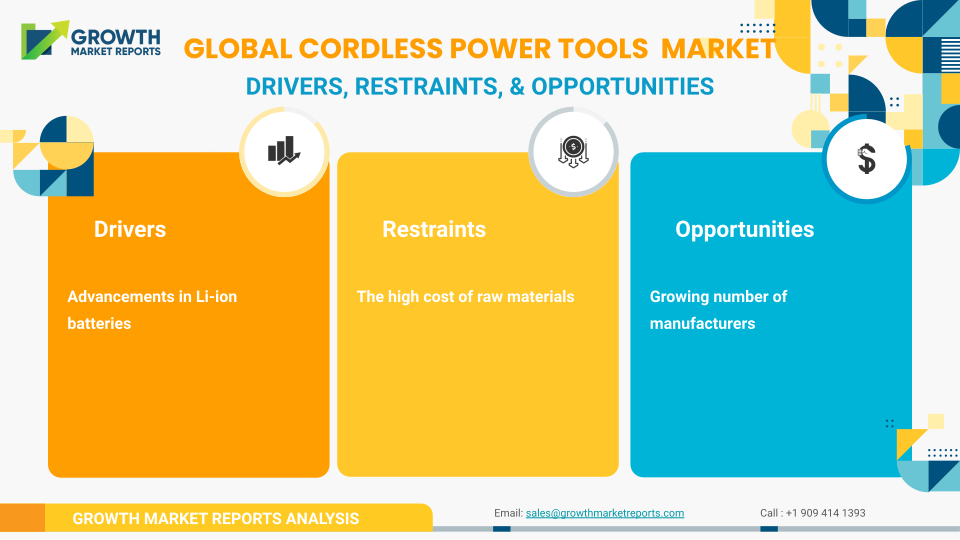
One of the primary growth factors fueling the expansion of the cordless power tools market is the ongoing technological advancement in battery technology, particularly the widespread adoption of lithium-ion batteries. These batteries provide higher energy density, longer runtimes, and faster charging capabilities compared to traditional alternatives, making cordless tools more efficient and appealing for both professionals and DIY users. Additionally, the growing trend of tool electrification in sectors such as construction and automotive maintenance has significantly contributed to the rising market demand. As end-users increasingly prioritize portability, flexibility, and convenience, manufacturers are focusing on developing lightweight and ergonomic designs that further enhance the user experience, thereby expanding the market’s reach.
Another key driver for the cordless power tools market is the surge in construction and infrastructure development activities, especially in emerging economies. Governments and private investors are pouring resources into large-scale projects such as smart cities, transportation networks, and commercial complexes, all of which require efficient and reliable power tools for timely completion. The automotive and electronics sectors are also major contributors, as the need for precision, mobility, and efficiency in assembly and repair work continues to rise. The proliferation of do-it-yourself (DIY) culture, particularly in North America and Europe, has further boosted the adoption of cordless power tools among hobbyists and homeowners, who seek high-performance solutions for home improvement and maintenance tasks.
The market is also benefitting from the increasing penetration of e-commerce platforms, which has made cordless power tools more accessible to a broader customer base. Online distribution channels offer a wide variety of brands and models, competitive pricing, and the convenience of home delivery, thereby attracting both professional contractors and DIY enthusiasts. Furthermore, manufacturers are leveraging digital marketing and social media campaigns to raise awareness about the latest product innovations and safety features, further stimulating demand. The integration of smart technologies, such as Bluetooth connectivity and IoT-enabled diagnostics, is emerging as a differentiator, enabling users to monitor tool performance and maintenance needs in real time.
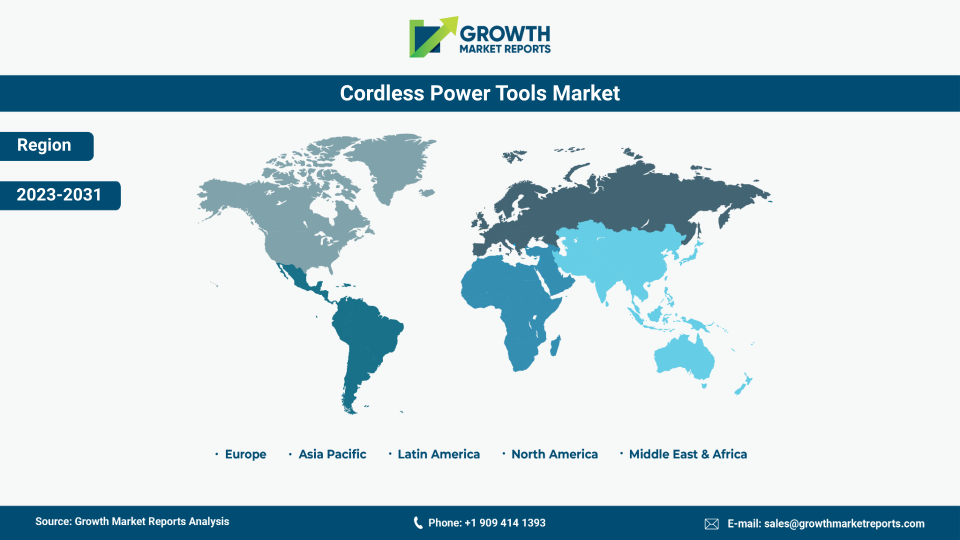
From a regional perspective, the cordless power tools market demonstrates considerable variation in growth patterns and adoption rates. North America currently leads the market, accounting for the largest share due to its mature construction industry, high disposable incomes, and strong DIY culture. Europe follows closely, driven by stringent safety regulations and a focus on sustainable construction practices. The Asia Pacific region is witnessing the fastest growth, propelled by rapid industrialization, urbanization, and increasing investments in infrastructure development. Latin America and the Middle East & Africa are also emerging as promising markets, supported by expanding construction activities and growing awareness of the benefits of cordless power tools.
The cordless power tools market is segmented by product type into drills, saws, sanders, wrenches, grinders, and others, with each category addressing unique user requirements across diverse end-use applications. Drills represent the largest segment, driven by their versatility and widespread use in both professional and DIY projects. Technological advancements, such as brushless motors and enhanced torque control, have significantly improved the performance and longevity of cordless drills, making them indispensable tools in construction, woodworking, and metalworking industries. Saws, including circular saws, reciprocating saws, and jigsaws, are gaining traction due to their ability to deliver clean, precise cuts in various materials, supported by innovations in blade technology and safety features.
Sanders, which include orbital, belt, and detail sanders, are increasingly favored for finishing and surface preparation tasks in woodworking, automotive refinishing, and home improvement projects. Manufacturers are focusing on reducing vibration and noise levels while enhancing dust collection systems, thereby improving user comfort and workplace safety. Wrenches and grinders, although traditionally associated with industrial applications, are experiencing rising demand among automotive repair shops and metal fabrication units. The introduction of compact, high-torque models has expanded their usability in confined spaces and heavy-duty tasks, further broadening their market appeal.
The “others” category encompasses specialized cordless power tools such as nail guns, impact drivers, and rotary hammers, which are witnessing steady growth due to their application-specific advantages. For instance, impact drivers are preferred for driving screws and bolts in dense materials, while rotary hammers are essential for masonry and demolition work. The continuous evolution of accessory compatibility and modular tool systems is enabling users to customize their toolkits for specific projects, thereby enhancing productivity and reducing operational costs. This trend is particularly pronounced among professional contractors and service technicians who require a diverse range of tools for varied jobsite conditions.
Overall, the product type segment of the cordless power tools market is characterized by intense competition and rapid innovation, with leading manufacturers investing heavily in research and development to introduce next-generation features. Ergonomics, safety, and energy efficiency remain key focus areas, as users increasingly demand tools that combine high performance with ease of use and minimal maintenance requirements. The growing preference for multi-functional and interchangeable tool platforms is expected to further drive segment growth over the forecast period.
| Attributes | Details |
| Report Title | Cordless Power Tools Market Research Report 2033 |
| By Product Type | Drills, Saws, Sanders, Wrenches, Grinders, Others |
| By Battery Type | Lithium-Ion, Nickel-Cadmium, Nickel-Metal Hydride, Others |
| By Application | Construction, Automotive, Aerospace, Electronics, Others |
| By End-User | Professional, DIY |
| By Distribution Channel | Online, Offline |
| Regions Covered | North America, Europe, APAC, Latin America, MEA |
| Countries Covered | North America (United States, Canada), Europe (Germany, France, Italy, United Kingdom, Spain, Russia, Rest of Europe), Asia Pacific (China, Japan, South Korea, India, Australia, South East Asia (SEA), Rest of Asia Pacific), Latin America (Mexico, Brazil, Rest of Latin America), Middle East & Africa (Saudi Arabia, South Africa, United Arab Emirates, Rest of Middle East & Africa) |
| Base Year | 2024 |
| Historic Data | 2018-2023 |
| Forecast Period | 2025-2033 |
| Number of Pages | 299 |
| Number of Tables & Figures | 347 |
| Customization Available | Yes, the report can be customized as per your need. |
Battery technology is a critical determinant of performance, cost, and user satisfaction in the cordless power tools market. The market is segmented by battery type into lithium-ion, nickel-cadmium, nickel-metal hydride, and others. Lithium-ion batteries dominate the market, accounting for the largest share due to their superior energy density, lightweight construction, and long lifecycle. These batteries support fast charging and deep discharge cycles, enabling users to work longer with minimal downtime. The declining cost of lithium-ion technology, coupled with ongoing improvements in safety and thermal management, is further driving its adoption across all product categories.
Nickel-cadmium batteries, once the industry standard, are gradually being phased out due to environmental concerns and the availability of better alternatives. However, they still retain a niche presence in certain heavy-duty applications where robustness and low-temperature performance are prioritized over weight and energy density. Nickel-metal hydride batteries offer a middle ground between nickel-cadmium and lithium-ion, providing improved capacity and reduced environmental impact. They are often used in entry-level or budget-friendly cordless tools, catering to price-sensitive consumers and occasional users.
The “others” category includes emerging battery chemistries such as solid-state and lithium-polymer, which promise further enhancements in safety, energy density, and form factor flexibility. While these technologies are still in the early stages of commercialization, they hold significant potential to disrupt the market in the coming years. Manufacturers are also exploring hybrid power solutions and interchangeable battery platforms that allow users to power multiple tools with a single battery pack, thereby reducing costs and simplifying inventory management.
In summary, the battery type segment remains a focal point for innovation and differentiation in the cordless power tools market. The shift towards sustainable and high-performance battery solutions is expected to accelerate, driven by regulatory pressures, consumer preferences, and the need for longer runtimes and faster charging. Manufacturers that can effectively balance performance, safety, and cost will be well-positioned to capture a larger share of this dynamic market segment.
The application landscape of the cordless power tools market is diverse, encompassing construction, automotive, aerospace, electronics, and other sectors. The construction segment accounts for the largest market share, fueled by the increasing demand for efficient, portable, and versatile tools on job sites. Cordless power tools are indispensable for tasks such as drilling, fastening, cutting, and finishing, enabling workers to operate in areas with limited access to electrical outlets. The ongoing boom in residential, commercial, and infrastructure development projects worldwide continues to drive segment growth, with contractors seeking tools that deliver high performance and reliability under demanding conditions.
The automotive sector represents another significant application area, driven by the need for precision, speed, and mobility in vehicle assembly, maintenance, and repair operations. Cordless tools such as impact wrenches, ratchets, and polishers are increasingly preferred for their ability to access tight spaces and deliver consistent torque without the constraints of power cords. The shift towards electric vehicles and smart manufacturing processes is further boosting demand for advanced cordless solutions that support automation, data logging, and predictive maintenance.
In the aerospace industry, cordless power tools are valued for their lightweight design, portability, and ability to operate in confined or remote environments. Technicians rely on these tools for assembly, maintenance, and inspection tasks, where precision and safety are paramount. The adoption of smart tools equipped with sensors and connectivity features is enhancing quality control and reducing human error, thereby improving overall operational efficiency.
The electronics sector, though smaller in comparison, is witnessing growing adoption of cordless power tools for assembly, repair, and prototyping applications. The demand for compact, low-voltage tools with fine control and anti-static features is rising, as manufacturers strive to improve productivity and product quality. Other applications, such as furniture making, metalworking, and home improvement, are also contributing to market growth, driven by the increasing popularity of DIY projects and the availability of user-friendly, affordable cordless solutions.
The cordless power tools market caters to a broad spectrum of end-users, primarily segmented into professional and DIY (do-it-yourself) users. Professional users, including contractors, technicians, and industrial workers, represent the largest and most lucrative segment. These users demand high-performance, durable, and reliable tools that can withstand intensive use in challenging environments. Manufacturers are responding by offering premium product lines with advanced features such as brushless motors, electronic controls, and integrated safety mechanisms. The emphasis on productivity, ergonomics, and total cost of ownership is driving the adoption of cordless solutions among professionals across construction, automotive, aerospace, and manufacturing sectors.
The DIY segment, while smaller in terms of revenue, is experiencing rapid growth due to the rising popularity of home improvement, renovation, and hobbyist activities. Cordless power tools are particularly appealing to DIY users for their ease of use, portability, and safety compared to corded alternatives. Manufacturers are targeting this segment with affordable, lightweight, and aesthetically appealing products that offer intuitive controls and comprehensive safety features. The proliferation of online tutorials, influencer marketing, and community forums is further encouraging consumers to undertake DIY projects, thereby boosting demand for entry-level and mid-range cordless tools.
The distinction between professional and DIY users is gradually blurring, as both segments increasingly seek tools that combine performance, convenience, and value. Hybrid product lines, which offer professional-grade features at accessible price points, are gaining traction among semi-professional users and small business owners. This trend is prompting manufacturers to adopt flexible production strategies and modular design approaches that cater to a wide range of user preferences and budgets.
In summary, the end-user segment of the cordless power tools market is undergoing significant transformation, driven by changing user expectations, technological advancements, and evolving work practices. Companies that can effectively address the distinct needs of both professional and DIY users, while maintaining high standards of quality and innovation, will be well-positioned to capture long-term growth opportunities.
Distribution channels play a pivotal role in shaping the competitive dynamics and growth trajectory of the cordless power tools market. The market is segmented into online and offline channels, each offering unique advantages and challenges. Offline channels, including specialty stores, hardware outlets, and authorized dealers, continue to account for the majority of sales, particularly among professional users who value personalized service, product demonstrations, and after-sales support. These channels are also preferred for high-value or specialized tools, where expert advice and warranty services are critical purchasing factors.
However, the online segment is witnessing exponential growth, driven by the increasing penetration of e-commerce platforms and changing consumer buying behaviors. Online channels offer unparalleled convenience, a wide selection of brands and models, competitive pricing, and access to customer reviews and ratings. The COVID-19 pandemic accelerated the shift towards digital shopping, prompting manufacturers and retailers to enhance their online presence and invest in user-friendly websites, mobile apps, and digital marketing campaigns. The availability of detailed product information, instructional videos, and virtual consultations is further empowering customers to make informed purchasing decisions.
Manufacturers are adopting omnichannel strategies to seamlessly integrate offline and online touchpoints, ensuring a consistent and engaging customer experience. Initiatives such as click-and-collect, virtual showrooms, and loyalty programs are gaining popularity, as companies strive to build brand loyalty and drive repeat purchases. The use of advanced analytics and customer relationship management (CRM) tools is enabling retailers to personalize marketing efforts, optimize inventory, and respond swiftly to changing market trends.
Despite the rapid growth of online channels, challenges such as counterfeit products, warranty issues, and the lack of hands-on experience remain significant concerns for both consumers and manufacturers. Addressing these challenges through robust authentication mechanisms, transparent return policies, and enhanced customer support will be critical for sustaining long-term growth in the online segment. Overall, the distribution channel landscape in the cordless power tools market is evolving rapidly, with digital transformation emerging as a key enabler of market expansion and customer engagement.
The cordless power tools market presents a multitude of opportunities for growth and innovation, particularly in the areas of smart technology integration, sustainability, and emerging market penetration. The advent of IoT-enabled power tools, equipped with sensors and Bluetooth connectivity, is opening new avenues for data-driven tool management, predictive maintenance, and remote diagnostics. These features are particularly valuable for fleet operators, contractors, and industrial users seeking to optimize productivity and minimize downtime. Additionally, the growing emphasis on sustainability and environmental stewardship is prompting manufacturers to develop eco-friendly tools, recyclable battery systems, and energy-efficient manufacturing processes, thereby appealing to environmentally conscious consumers and meeting regulatory requirements.
Another significant opportunity lies in the expansion into emerging markets, where rapid urbanization, infrastructure development, and rising disposable incomes are creating substantial demand for cordless power tools. Countries in Asia Pacific, Latin America, and the Middle East & Africa are witnessing a construction boom, supported by government investments and private sector participation. Companies that can offer affordable, durable, and easy-to-use tools tailored to local market needs stand to gain a competitive advantage. Strategic partnerships with local distributors, investments in localized manufacturing, and targeted marketing campaigns are essential strategies for capturing market share in these high-growth regions.
However, the cordless power tools market also faces several restraining factors that could impede its growth trajectory. High initial costs, particularly for advanced lithium-ion powered tools, remain a significant barrier for price-sensitive consumers and small businesses. The risk of counterfeit products, especially in online channels, poses challenges related to quality assurance and brand reputation. Additionally, supply chain disruptions, raw material price volatility, and regulatory complexities related to battery disposal and recycling could impact market stability. Addressing these challenges through innovation, strategic partnerships, and robust quality control mechanisms will be critical for sustaining long-term market growth.
Regionally, the cordless power tools market is dominated by North America, which accounted for approximately USD 8.9 billion in revenue in 2024. The region’s leadership is underpinned by a mature construction industry, high adoption of advanced technologies, and a strong culture of DIY home improvement. The United States remains the largest individual market, with robust demand from both professional and consumer segments. Canada is also witnessing steady growth, supported by investments in infrastructure and residential construction. The presence of leading manufacturers and a well-developed distribution network further contribute to North America’s dominant position in the global market.
Europe is the second-largest market, with revenues reaching USD 7.2 billion in 2024. The region’s growth is driven by stringent safety and environmental regulations, a focus on sustainable construction practices, and the increasing adoption of smart building technologies. Countries such as Germany, the United Kingdom, and France are leading the way in innovation and market penetration, supported by government initiatives and private sector investments. The European market is expected to grow at a CAGR of 7.5% over the forecast period, with opportunities emerging in Eastern Europe and the Nordic countries as well.
The Asia Pacific region is experiencing the fastest growth, with market revenues reaching USD 6.1 billion in 2024. Rapid industrialization, urbanization, and infrastructure development in countries such as China, India, and Southeast Asia are driving demand for cordless power tools across construction, automotive, and manufacturing sectors. The region’s large and growing workforce, coupled with rising disposable incomes and increasing awareness of advanced tool technologies, is creating a fertile environment for market expansion. Local manufacturers are also playing a key role in driving innovation and price competitiveness, further accelerating regional growth. Latin America and the Middle East & Africa, with revenues of USD 2.3 billion and USD 1.9 billion respectively in 2024, are emerging as important markets, supported by ongoing construction activities and government investments in infrastructure.
The cordless power tools market is characterized by intense competition, rapid technological innovation, and a strong focus on product differentiation. Leading players are investing heavily in research and development to introduce next-generation tools that offer enhanced performance, safety, and user experience. The market is witnessing a wave of consolidation, with strategic mergers and acquisitions enabling companies to expand their product portfolios, strengthen distribution networks, and access new customer segments. Collaboration with battery manufacturers, technology providers, and industry associations is also emerging as a key strategy for driving innovation and ensuring compliance with evolving regulatory standards.
Brand reputation, product quality, and after-sales service are critical factors influencing customer loyalty and purchasing decisions in the cordless power tools market. Companies are leveraging digital marketing, influencer partnerships, and targeted advertising campaigns to build brand awareness and engage with customers across multiple touchpoints. The shift towards e-commerce and omnichannel retailing is prompting manufacturers to enhance their online presence, optimize supply chain operations, and invest in advanced analytics for demand forecasting and inventory management. Customization, modularity, and accessory compatibility are becoming important differentiators, as users seek flexible and cost-effective solutions tailored to their specific needs.
Sustainability and corporate social responsibility are gaining prominence, with leading manufacturers adopting eco-friendly materials, energy-efficient manufacturing processes, and responsible battery disposal practices. The integration of smart technologies, such as IoT connectivity, real-time diagnostics, and predictive maintenance, is further enhancing product value and user satisfaction. Companies that can effectively balance innovation, quality, and sustainability will be well-positioned to capture long-term growth opportunities and build lasting competitive advantage.
Some of the major players in the cordless power tools market include Stanley Black & Decker, Bosch, Makita Corporation, Hilti Group, Techtronic Industries (TTI), DEWALT, Milwaukee Tool, Hitachi Koki, and Festool. Stanley Black & Decker and Bosch are global leaders, known for their extensive product portfolios, strong R&D capabilities, and widespread distribution networks. Makita Corporation and Hilti Group are recognized for their focus on professional-grade tools and commitment to innovation. Techtronic Industries, through its Milwaukee and Ryobi brands, has established a strong presence in both professional and DIY segments, leveraging advanced battery technologies and smart tool platforms. DEWALT and Hitachi Koki are also prominent players, offering a wide range of cordless solutions with a focus on durability and performance.
These companies are continuously expanding their product lines, investing in new technologies, and exploring strategic partnerships to strengthen their market position. For example, Milwaukee Tool has pioneered the development of smart, connected tools that provide real-time performance data and remote diagnostics, while Festool is renowned for its precision engineering and modular system approach. As competition intensifies, companies are expected to increase their focus on customer-centric innovation, operational efficiency, and sustainable business practices to maintain their leadership in the dynamic and rapidly evolving cordless power tools market.
The Cordless Power Tools market has been segmented on the basis of
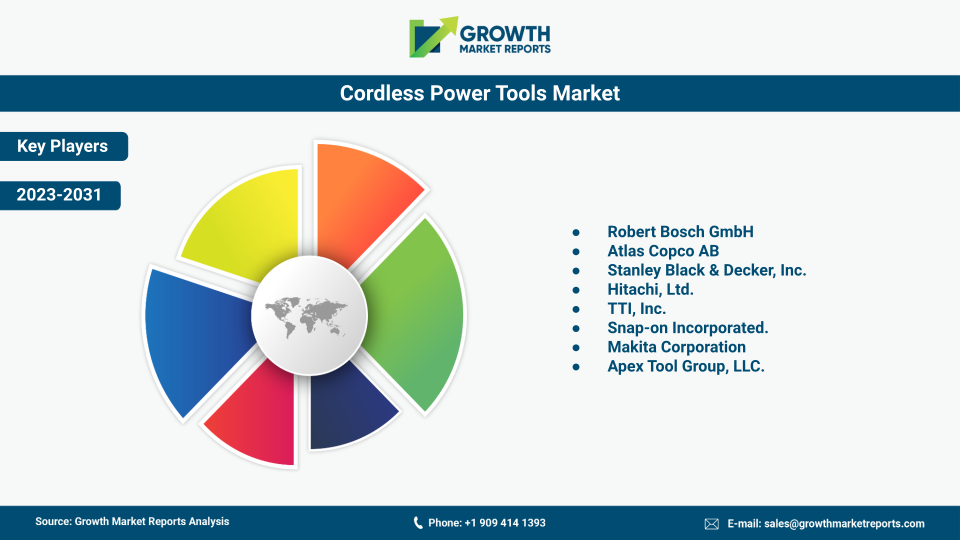
Key competitors in the global cordless power tools market are Robert Bosch GmbH; Atlas Copco AB; Stanley Black & Decker, Inc.; Hitachi, Ltd.; TTI, Inc.; Snap-on Incorporated.; Makita Corporation; and Apex Tool Group, LLC. These companies are utilizing strategies such as acquisitions, partnerships, mergers, collaboration, product launches, and production expansion to boost their consumer base around the world. For instance,
Major players include Stanley Black & Decker, Bosch, Makita Corporation, Hilti Group, Techtronic Industries (TTI), DEWALT, Milwaukee Tool, Hitachi Koki, and Festool.
Key trends include the integration of smart technologies like IoT and Bluetooth, ergonomic and lightweight designs, and the development of eco-friendly and energy-efficient tools.
The main end-users are professionals such as contractors and technicians, as well as DIY users including homeowners and hobbyists.
The rise of e-commerce has made cordless power tools more accessible, offering a wide selection, competitive pricing, and convenience, which is driving significant growth in online sales.
Drills are the largest segment, followed by saws, sanders, wrenches, grinders, and specialized tools like nail guns and impact drivers.
North America leads the market, followed by Europe. The Asia Pacific region is experiencing the fastest growth due to rapid industrialization and infrastructure development.
Key growth drivers include advancements in battery technology, increasing urbanization, expansion of construction and automotive industries, and the growing popularity of DIY culture.
Lithium-ion batteries dominate the market due to their high energy density, lightweight design, long lifecycle, and fast charging capabilities.
The cordless power tools market is expected to grow at a CAGR of 8.3% from 2025 to 2033, reaching a value of USD 54.4 billion by 2033.
As of 2024, the global cordless power tools market size reached USD 26.4 billion, reflecting strong demand from both professional and consumer segments.