Canned Motor Pumps Market Outlook 2031
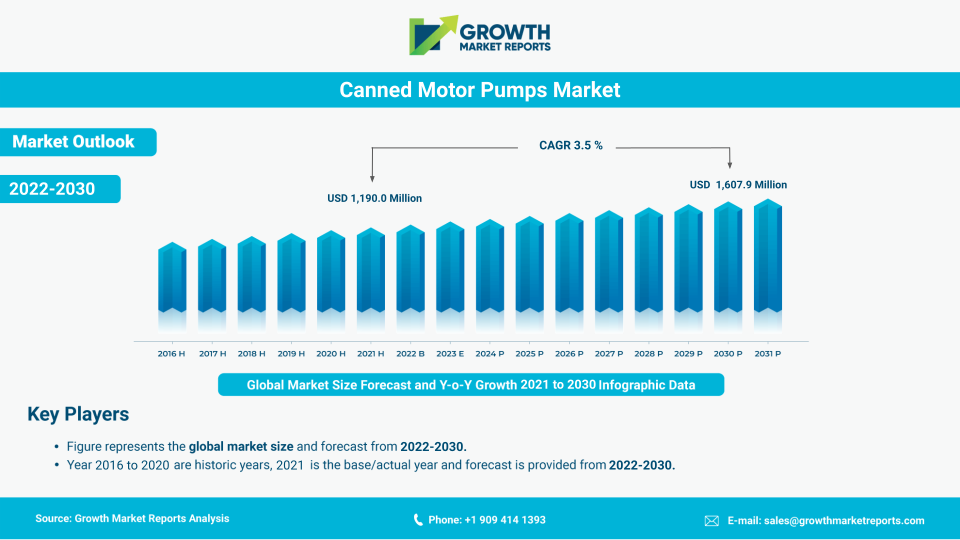
The global canned motor pumps market size was valued at USD 1,190.0 Mn in 2021 and is projected to reach USD 1,607.9 Mn by 2030, expanding at a CAGR of 3.5% during the forecast period, 2022-2030. The chemical industry is one of the leading end-users of canned motor pumps, and its demand for the pumps is a major market driver for the global canned motor pumps market growth.
Several of the liquids utilized by the chemical industry are extremely caustic, dangerous, or toxic. Canned motor pumps are intended to easily handle these types of liquids, which makes them a vital component of the chemical industry's infrastructure. They are utilized for the transfer of liquids that require special handlings, such as acids, caustics, solvents, and other substances.
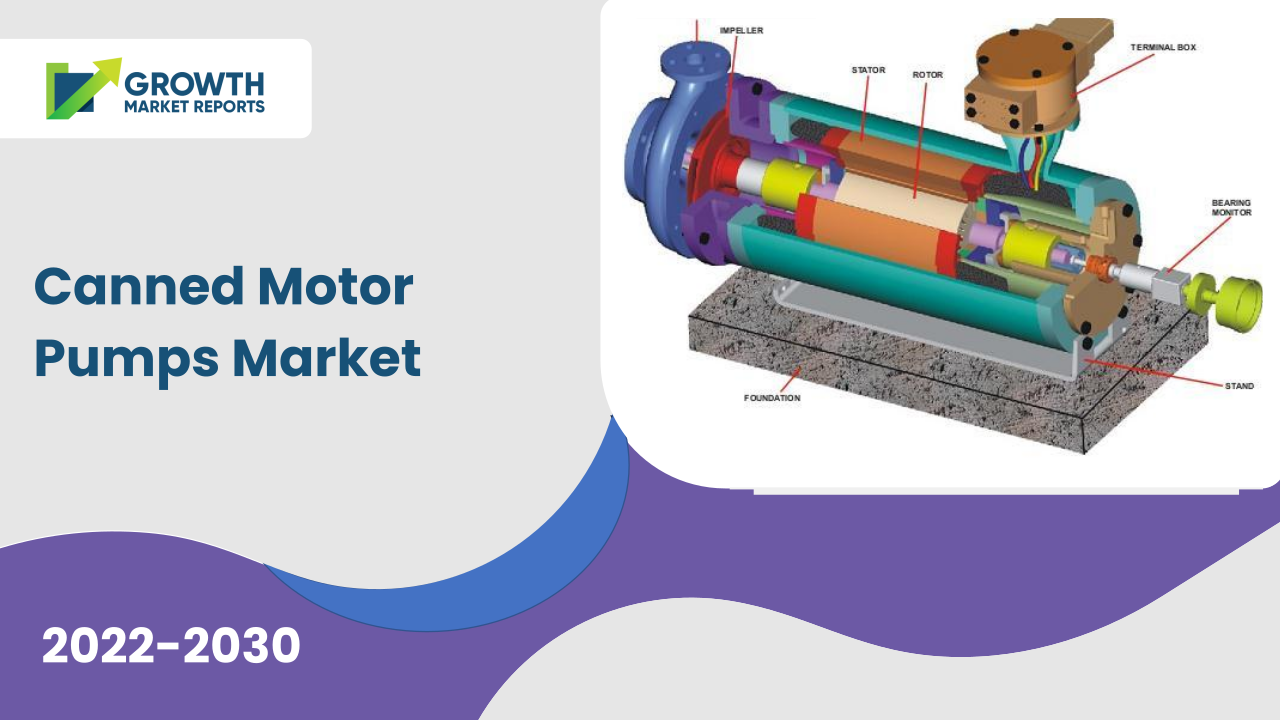
A canned motor pump's motor is a brushless DC motor powered by an external power supply. The motor and pump components are often composed of corrosion-resistant materials, such as stainless steel or ceramic to ensure long-lasting performance and durability.
The pumped liquid cools the motor while lubricating the bearings and interior components. Canned motor pumps are utilized in high-pressure and high-temperature applications, as well as in restricted spaces and spaces requiring reduced noise and vibration.
Canned Motor Pumps Market Dynamics
Major Drivers
Rising Demand from the Chemical Industry
The chemical industry is one of the leading end-users of canned motor pumps, and its demand for the pumps is a major market driver for the global canned motor pumps market growth. Several of the liquids utilized by the chemical industry are extremely caustic, dangerous, or toxic.
Canned motor pumps are intended to easily handle these types of liquids, which makes them a vital component of the chemical industry's infrastructure. They are utilized for the transfer of liquids that require special handling, such as acids, caustics, solvents, and other substances.
Additionally, traditional pumps require mechanical seals to prevent leaking. However, these seals wear out and require maintenance. The lack of seals in the design of canned motor pumps removes the risk of leakage and emissions. This facilitates the chemical industry to adhere to tight safety and environmental laws.
The chemical industry requires pumps that may be tailored to their individual requirements, such as construction materials and flow rate. Canned motor pumps are preferred for chemical processing applications, as these are customizable.
Furthermore, canned motor pumps offer dependability and long service life, both of which are essential for the chemical industry. Oftentimes, chemical processing is a continuous process, and any interruption results in substantial losses.
Canned motor pumps are preferred by the chemical industry, due to their ability to work constantly with minimal maintenance. Overall, the rising demand from the chemical industry is a key market driver for the global canned motor pumps market growth, and this trend is anticipated to continue as the chemical industry continues to develop and flourish during the forecast period.
Increasing Need for Energy-efficient Pumping Solutions
The increasing demand for energy-efficient pumping solutions is a major market driver for the global canned motor pumps market growth. Following are a few of the reasons for the increasing demand:
- Canned motor pumps reduce energy consumption and operating costs. Rising energy prices propel industries to minimize their operational expenses and enhance their bottom line. Canned motor pumps are a viable choice for achieving these objectives.
- Industries are increasingly focused on lowering their carbon impact and fulfilling their environmental objectives. Energy-efficient pumping technologies, such as canned motor pumps, help businesses reach these goals, by minimizing their energy consumption and greenhouse gas emissions.
- Businesses that implement energy-efficient pumping systems obtain a competitive advantage over their competitors. These businesses attract clients that value sustainability and ethical business practices, by lowering their operational expenses and enhancing their environmental performance.
Increasing demand for energy-efficient pumping solutions is anticipated to promote the adoption of canned motor pumps in a variety of industries, such as chemical processing, oil & gas, and water treatment in the coming years.
Canned motor pump demand is projected to rise in the coming period, as businesses continue to prioritize energy efficiency and sustainability.
Major Restraints
Cost is one of the major market restraints for the global canned motor pumps market. Canned motor pumps are more expensive than conventional pumps, due to their complicated design and construction.
Hermetic sealing of the pump is one of the key contributors to the high cost of canned motor pumps. This design necessitates additional components and manufacturing methods, which might raise the cost of production, to ensure that the pump is entirely sealed.
Additionally, the unique nature of canned motor pumps necessitates high-precision machining, specific materials, and sophisticated production techniques, all of which can increase the overall price. Canned motor pumps are specialized products that are only utilized for specific applications, such as the transfer of hazardous or corrosive fluids.
The high price of canned motor pumps impedes entry for some potential clients, particularly those in emerging economies or with restricted capital investment budgets. This limits market penetration and adoption rates, which restrains the global canned motor pump market growth.
Despite the high price, canned motor pumps continue to be in demand, due to their energy efficiency, dependability, and ability to handle caustic or hazardous fluids. As a result, leading manufacturers continue to spend in R&D to find ways to reduce production costs and make canned motor pumps more accessible to a broader client base.
Emerging Opportunities
Technological improvements offer growth opportunities to the global canned motor pumps market. Growing demand for energy-efficient and high-performance pumps propel manufacturers to invest in R&D to improve the design and materials of canned motor pumps.
The key technical developments that are anticipated to promote growth in the canned motor pump market are as the following:
- Development of new materials that increase the performance and dependability of canned motor pumps is one of the key focuses of manufacturers. For instance, new materials that are resistant to corrosion or withstand high temperatures are created to allow pumps to be used in a wide variety of applications.
- Motor design advancements result in an increase in power output and enhanced efficiency. For instance, manufacturers create new motor designs that can work at high speeds without affecting dependability or efficiency.
- The usage of smart pump technology is increasing across a variety of industries, allowing pumps to be remotely monitored and operated. This technology enhances pump performance and minimizes maintenance expenses, making it an appealing option for clients.
Overall, these technical improvements offer substantial potential opportunities for the global canned motor pumps market. Manufacturers continue to create pumps that satisfy the evolving needs of customers and remain competitive in a market that is constantly evolving, by investing in research & development and being on the cutting edge of new technologies.
Scope of Canned Motor Pumps Market Report
The report on the global canned motor pumps market includes an assessment of the market, trends, segments, and regional markets. Overview and dynamics have also been included in the report.
|
Attributes
|
Details
|
|
Report Title
|
Canned Motor Pumps Market – Global Industry Analysis, Size, Share, Growth, Trends, and Forecast
|
|
Base Year
|
2021
|
|
Historic Data
|
2016–2020
|
|
Forecast Period
|
2022–2030
|
|
Segmentation
|
Type (Standard Pumps, High-Temperature Pumps, Reverse Circulation Pumps, Others), Capacity (Low, Medium, High), End-use (Chemical & Petrochemical, Oil & Gas, Power, Water & Wastewater, Food & Beverages, Others).
|
|
Regional Scope
|
Asia Pacific, North America, Latin America, Europe, and Middle East & Africa
|
|
Report Coverage
|
Company Share, Market Analysis and Size, Competitive Landscape, Growth Factors, and Trends, and Revenue Forecast
|
|
Key Players Covered
|
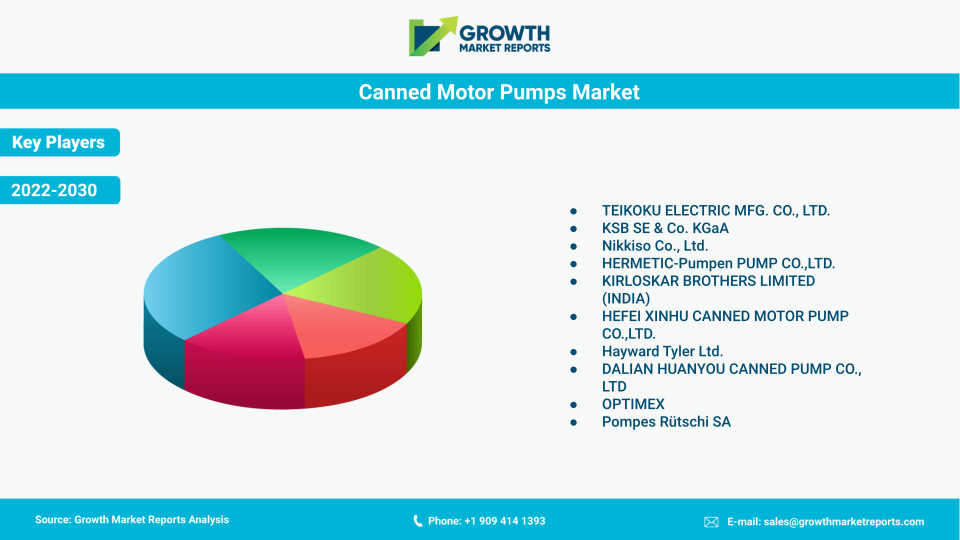
TEIKOKU ELECTRIC MFG. CO., LTD., KSB SE & Co. KGaA, Nikkiso Co., Ltd., HERMETIC-Pumpen PUMP CO.,LTD., KIRLOSKAR BROTHERS LIMITED (INDIA), HEFEI XINHU CANNED MOTOR PUMP CO.,LTD., Hayward Tyler Ltd., DALIAN HUANYOU CANNED PUMP CO., LTD, OPTIMEX, Pompes Rütschi SA, Dynamic Pumps & Projects (I) Pvt Ltd, HERMAG pumps, Crispumps and MONIBA ANAND ELECTRICALS PVT. LTD
|
Canned Motor Pumps Market Segment Insights
Type Segment Analysis
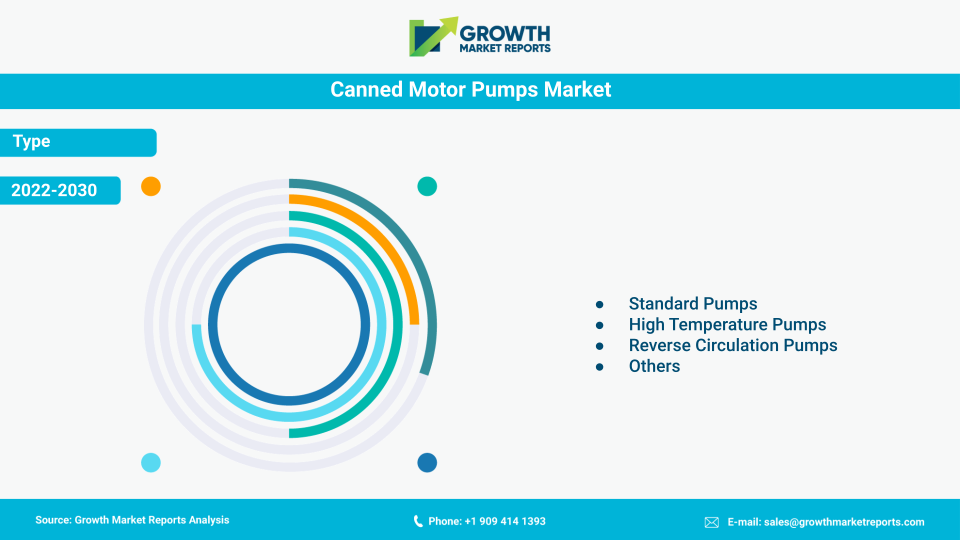
Based on type, the standard canned motor pumps segment held a market share of 39.5% in 2021 and is expected to expand at a CAGR of XX% in 2030. These pumps are simple to install and maintain, and their compact design made of the required components enables simple installation and maintenance.
The reverse circulation pumps segment held a market share of XX% in 2021 and is projected to expand at a CAGR of XX% in 2030. This type of pump has a suitable structure for handling saturated liquified gases with high vapor pressure, such as ammonia and propylene. The others segment is expected to hold a market share of 9.2% in 2030.
Capacity Segment Analysis
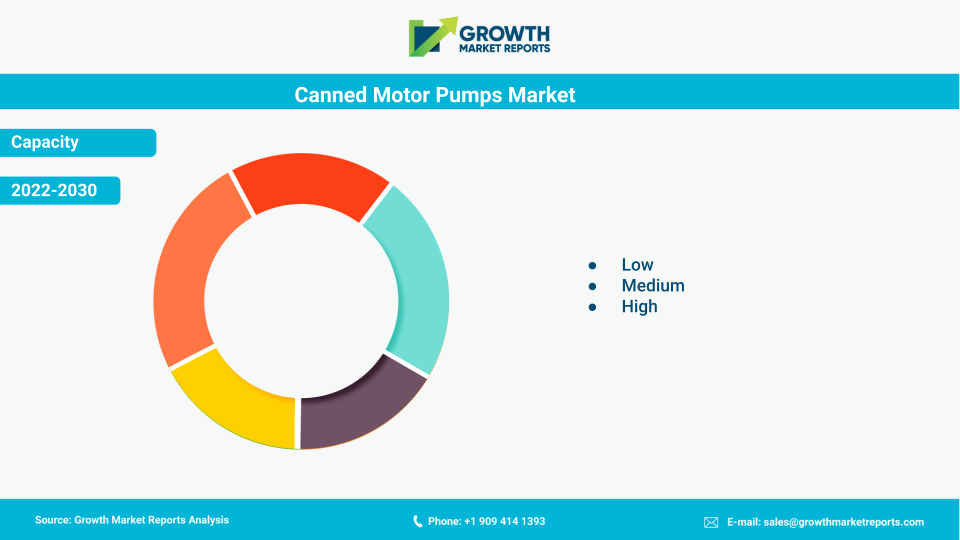
In terms of capacity, the global Canned Motor Pumps Market is divided into low-capacity, medium-capacity, and high-capacity pumps.
The low-capacity canned motor pump segment held a market share of XX% in 2021 and is expected to expand at a CAGR of XX% in 2030. These types of pumps are compact in design and easy to handle. These pumps are widely used where a low flow rate is required.
End-use Segment Analysis
Based on End-use, the global Canned Motor Pumps Market is segregated into chemical & petrochemicals, oil & gas, power, water & wastewater, food & beverage, and others.
The chemical & petrochemical segment is expected to hold a market share of 40.1% in 2030 and is projected to expand at a CAGR of 4.2% in 2030. The leakage-free design of canned motor pumps ensures the safe handling of hazardous and valuable products, while high availability and long service lifetime are characteristic features associated with these pumps.
The oil & gas segment is expected to hold a market share of 30.5% in 2030. Canned motor pumps eliminate the risk of liquid leakage and contribute to environmental quality reduction.
Regional Analysis
On the basis of region, the global canned motor pumps market is segmented into North America, Europe, Asia Pacific, Latin America, and the Middle East & Africa.
Asia Pacific hold the largest share of the market in 2021 and projected to expand at a CAGR of XX% during the forecast period. Increasing need for energy-efficient and low-maintenance pumping solutions in various industries, such as chemical, oil & gas, and water & wastewater, is the primary driver of the canned motor pumps market growth in this region.
Increasing investments in infrastructure development and industrialization in rising economies, such as China and India, are also driving market in Asia Pacific.

Key Benefits for Industry Participants & Stakeholders
- In-depth Analysis of the Global Canned Motor Pumps Market
- Historical, Current, and Projected Market Size in terms of Value
- Potential & Niche Segments and Regions Exhibiting Promising Growth Covered
- Industry Drivers, Restraints, and Opportunities Covered in the Study
- Recent Industry Trends and Developments
- Competitive Landscape & Strategies of Key Players
- Neutral Perspective on Global Canned Motor Pumps Market Performance
Segments
Type
- Standard Pumps
- High Temperature Pumps
- Reverse Circulation Pumps
- Others
Capacity
End-use
- Chemical & Petrochemical
- Oil & Gas
- Power
- Water & Wastewater
- Food & Beverages
- Others
Key Market Players Profiled in the Report
- TEIKOKU ELECTRIC MFG. CO., LTD.
- KSB SE & Co. KGaA
- Nikkiso Co., Ltd.
- HERMETIC-Pumpen PUMP CO.,LTD.
- KIRLOSKAR BROTHERS LIMITED (INDIA)
- HEFEI XINHU CANNED MOTOR PUMP CO.,LTD.
- Hayward Tyler Ltd.
- DALIAN HUANYOU CANNED PUMP CO., LTD
- OPTIMEX
- Pompes Rütschi SA
- Dynamic Pumps & Projects (I) Pvt Ltd
- HERMAG pumps
- Crispumps
- MONIBA ANAND ELECTRICALS PVT. LTD
Competitive Landscape
Key players operating in the market are TEIKOKU ELECTRIC MFG. CO., LTD., KSB SE & Co. KGaA, Nikkiso Co., Ltd., HERMETIC-Pumpen PUMP CO.,LTD., KIRLOSKAR BROTHERS LIMITED (INDIA), HEFEI XINHU CANNED MOTOR PUMP CO.,LTD., Hayward Tyler Ltd., DALIAN HUANYOU CANNED PUMP CO., LTD, OPTIMEX, Pompes Rütschi SA, Dynamic Pumps & Projects (I) Pvt Ltd, HERMAG pumps, Crispumps and MONIBA ANAND ELECTRICALS PVT. LTD.
These companies are considered as key manufacturers of methylamine based on their revenue, research development (R&D) activities, product offerings, regional presence, and supply chain management system.
Players are adopting key strategies such as acquisitions, collaborations, and geographical expansion for potential opportunities in the methylamine market.










 Request For Customization
 Enquiry Before Buying
 Speak With Analyst