Zircon Market Research Report 2033

Zircon Market Research Report 2033

Segments - by Type (Colorless Zircon, Colored Zircon), by Application (Jewelry, Ceramics, Refractories, Foundry Sands, Chemicals, Others), by End-Use Industry (Construction, Automotive, Electronics, Healthcare, Others)

https://growthmarketreports.com/Raksha
Author : Raksha Sharma
https://growthmarketreports.com/Vaibhav
Fact-checked by : V. Chandola
https://growthmarketreports.com/Shruti
Editor : Shruti Bhat

Upcoming | Report ID :MC-697 | 4.0 Rating | 39 Reviews | 277 Pages | Format : Docx PDF

Report Description


Zircon Market Outlook

According to our latest research, the global zircon market size in 2024 stands at USD 2.1 billion, supported by a rising demand across diverse industrial sectors and a robust supply chain. The market is expected to witness a steady CAGR of 5.2% from 2025 to 2033, reaching a forecasted value of USD 3.3 billion by 2033. This growth is primarily driven by the increasing application of zircon in ceramics, refractories, and the jewelry industry, as well as technological advancements in extraction and processing techniques. As per our latest research, the market’s upward trajectory is further bolstered by expanding construction and automotive industries, particularly in emerging economies.

One of the primary growth factors for the zircon market is the surging demand for zircon-based ceramics. Zircon’s unique properties, such as high thermal stability, chemical inertness, and strong refractoriness, make it an essential raw material in the production of ceramic tiles and sanitaryware. The rapid urbanization and infrastructural development in Asia Pacific and the Middle East are fueling the construction sector, which in turn drives the consumption of zircon in ceramics. Furthermore, the growing trend of premium and designer tiles in residential and commercial projects is contributing significantly to the increased uptake of zircon. The ceramics segment accounts for a substantial share of the overall zircon consumption, and this is expected to continue as modern construction practices become more prevalent globally.

Another key driver is the expanding use of zircon in the foundry and refractory industries. Zircon sand’s high melting point and resistance to slag and metal penetration make it indispensable in foundry molds and refractory bricks used in steel and glass manufacturing. The ongoing industrialization in developing regions, coupled with capacity expansions in steel and glass production, is translating into higher demand for zircon-based materials. Additionally, technological innovations in foundry processes and the development of advanced refractory products are enhancing the performance and efficiency of these industries, further propelling the need for high-quality zircon. This trend is particularly notable in China and India, where industrial growth rates remain robust.

The jewelry industry also plays a pivotal role in the growth of the zircon market, especially with the rising popularity of colored zircon as a gemstone alternative. Zircon’s brilliance, dispersion, and affordability compared to diamonds have made it a favored choice among jewelry designers and consumers. The increasing consumer inclination towards unique and vibrant gemstones is driving the demand for both colorless and colored zircon. Furthermore, the growing middle-class population in emerging economies, with an increasing disposable income, is boosting the sales of zircon-based jewelry. This, combined with effective marketing strategies by jewelry brands, is expected to sustain the demand for zircon in the coming years.

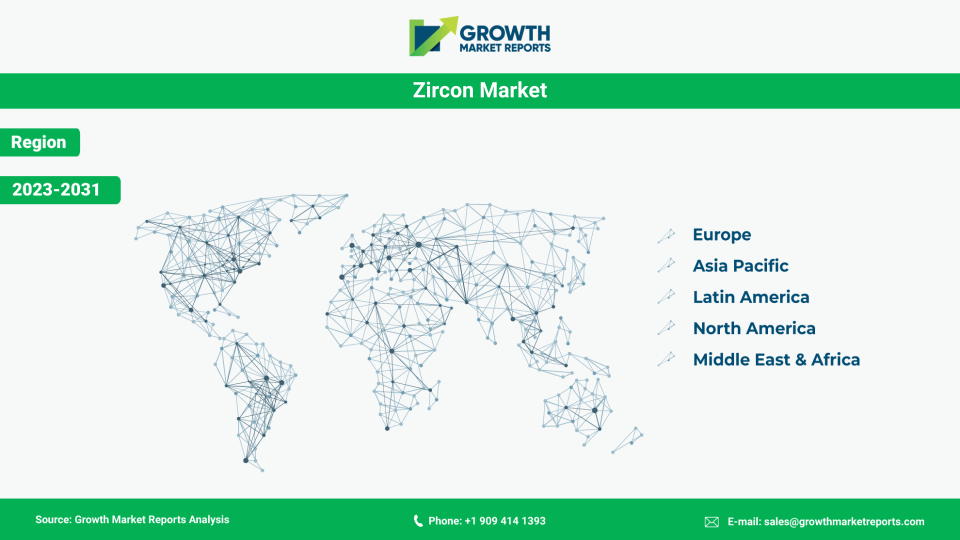
From a regional perspective, Asia Pacific holds the largest share of the global zircon market, accounting for more than 45% of total consumption in 2024. The region’s dominance is attributed to the rapid expansion of the construction and ceramics industries in China, India, and Southeast Asian countries. North America and Europe follow, driven by steady demand in the automotive and electronics sectors. Meanwhile, the Middle East & Africa region is emerging as a significant market, supported by infrastructural investments and the development of new industrial zones. Latin America, though smaller in market share, is witnessing gradual growth due to increasing mining activities and industrialization. The regional landscape is expected to evolve as new sources of zircon and innovative applications emerge, shaping the future trajectory of the global market.

Global Zircon Industry Outlook

Type Analysis

The zircon market is segmented by type into colorless zircon and colored zircon, each catering to distinct end-use applications and consumer preferences. Colorless zircon, often referred to as “Matura diamond,” is highly valued in the jewelry sector due to its brilliance and affordability compared to natural diamonds. This segment has seen consistent growth, especially in emerging markets where consumers seek alternatives to traditional gemstones. The technological advancements in cutting and polishing have further enhanced the appeal of colorless zircon, making it a preferred choice for fine jewelry and decorative items. The rising popularity of sustainable and ethically sourced gemstones also contributes to the demand for colorless zircon, as it offers a responsible alternative to mined diamonds.

Colored zircon, available in hues such as blue, yellow, green, and brown, is gaining traction in both the jewelry and decorative stone markets. Blue zircon, in particular, is highly sought after for its vivid color and rarity, commanding premium prices in the gemstone market. The demand for colored zircon is driven by changing consumer preferences towards unique and vibrant jewelry pieces. Jewelry designers are increasingly incorporating colored zircon into contemporary collections, leveraging its natural beauty and versatility. Additionally, colored zircon is used in various decorative applications, including inlays and artistic works, which further broadens its market reach. This segment is expected to experience robust growth, supported by ongoing innovations in gemstone treatment and enhancement techniques.

Beyond jewelry, both colorless and colored zircon find applications in industrial sectors, albeit to a lesser extent. Colorless zircon is preferred in high-purity applications such as electronics and optics, where clarity and low impurity levels are critical. The electronics industry, in particular, values zircon for its dielectric properties and resistance to thermal shock, making it suitable for use in capacitors and other electronic components. Colored zircon, on the other hand, is occasionally used in specialty ceramics and artistic creations, where aesthetic appeal is a primary consideration. The dual utility of zircon types across both consumer and industrial domains underscores the material’s versatility and broad market potential.

The supply dynamics of colorless and colored zircon are influenced by geological factors and mining practices. While colorless zircon is more abundant and easier to process, high-quality colored zircon is relatively rare and often requires additional treatment to enhance its color. This supply-demand dynamic affects pricing and market accessibility, with colored zircon typically commanding higher prices due to its scarcity and desirability. The mining sector is continually investing in exploration and beneficiation technologies to improve the yield and quality of both zircon types, ensuring a stable supply to meet growing market demands. As consumer awareness and preferences continue to evolve, the zircon market by type is poised for sustained expansion.

Report Scope

Attributes Details
Report Title Zircon Market Research Report 2033
By Type Colorless Zircon, Colored Zircon
By Application Jewelry, Ceramics, Refractories, Foundry Sands, Chemicals, Others
By End-Use Industry Construction, Automotive, Electronics, Healthcare, Others
Regions Covered North America, Europe, APAC, Latin America, MEA
Base Year 2024
Historic Data 2018-2023
Forecast Period 2025-2033
Number of Pages 277
Number of Tables & Figures 307
Customization Available Yes, the report can be customized as per your need.

Application Analysis

The application landscape of the zircon market is diverse, with ceramics emerging as the dominant segment. Zircon’s unique physical and chemical properties, such as high refractoriness, low thermal expansion, and resistance to corrosion, make it an indispensable raw material in the production of ceramic tiles, sanitaryware, and tableware. The ceramics industry, particularly in Asia Pacific and Europe, is experiencing robust growth due to urbanization, housing projects, and the rising demand for aesthetically pleasing interiors. The increasing preference for premium and designer tiles, coupled with advancements in ceramic manufacturing technologies, is driving the consumption of zircon in this segment. The ceramics application is expected to maintain its leading position, supported by ongoing construction activities and infrastructure development worldwide.

The refractories segment represents another significant application area for zircon. Refractory bricks and castables made from zircon are essential in high-temperature industrial processes, such as steelmaking, glass production, and non-ferrous metal smelting. Zircon’s ability to withstand extreme temperatures and its resistance to chemical attack make it a preferred choice for lining furnaces, kilns, and reactors. The global expansion of the steel and glass industries, especially in China and India, is fueling the demand for high-performance refractory materials. Furthermore, ongoing research and development efforts are focused on enhancing the durability and efficiency of zircon-based refractories, further solidifying their importance in critical industrial applications.

In the foundry sands application, zircon plays a crucial role in the casting of metals, particularly in precision foundry processes. Zircon sand is valued for its high thermal conductivity, low thermal expansion, and excellent mold release properties, making it ideal for producing intricate metal castings with superior surface finish. The automotive and aerospace industries, which require complex and high-quality metal components, are major consumers of zircon-based foundry sands. The increasing adoption of advanced casting techniques and the growing demand for lightweight and durable metal parts are expected to drive the growth of this application segment. Additionally, the foundry sector is witnessing a shift towards environmentally friendly and recyclable materials, further boosting the use of zircon sands.

The chemicals application segment encompasses the use of zircon in the production of zirconium chemicals, which are utilized in various industrial processes, including catalysts, pigments, and water treatment. Zirconium chemicals derived from zircon are essential in the manufacture of pigments for ceramics and paints, as well as in the production of advanced materials for electronics and healthcare. The growing demand for high-performance materials in these industries is driving the consumption of zircon-based chemicals. Furthermore, ongoing innovations in chemical processing and the development of new applications for zirconium compounds are expected to create additional growth opportunities in this segment.

Other applications of zircon include its use in nuclear fuel rods, abrasives, and optical materials, highlighting the material’s versatility and adaptability. The increasing focus on sustainable and energy-efficient technologies is prompting research into new uses for zircon, particularly in the fields of renewable energy and environmental protection. As industries continue to evolve and diversify, the application spectrum of zircon is expected to expand, further supporting the overall growth of the global zircon market.

End-Use Industry Analysis

The construction industry is the largest end-use sector for zircon, accounting for a significant share of global consumption. The ongoing boom in residential, commercial, and infrastructure projects, particularly in emerging economies, is driving the demand for zircon-based ceramics, tiles, and sanitaryware. The increasing focus on sustainable and energy-efficient buildings is also contributing to the uptake of advanced ceramic materials, which rely heavily on zircon for their superior performance characteristics. Additionally, government initiatives aimed at improving urban infrastructure and housing are further boosting the construction sector, thereby supporting the growth of the zircon market. The construction industry’s reliance on high-quality building materials ensures a stable and growing demand for zircon in the coming years.

The automotive industry is another key end-use sector for zircon, especially in the production of foundry molds and refractory materials used in engine components and exhaust systems. The shift towards lightweight and fuel-efficient vehicles is driving the adoption of advanced casting and manufacturing techniques, which require high-performance materials such as zircon. The growing demand for electric vehicles and the expansion of automotive manufacturing facilities in Asia Pacific and North America are expected to further propel the consumption of zircon in this sector. Additionally, ongoing research into new automotive materials and the development of innovative manufacturing processes are creating new opportunities for zircon suppliers.

The electronics industry leverages zircon’s unique dielectric and thermal properties in the production of capacitors, insulators, and other electronic components. The rapid growth of the electronics sector, driven by increasing consumer demand for smartphones, computers, and other electronic devices, is translating into higher consumption of zircon-based materials. The trend towards miniaturization and the development of high-performance electronic devices are further boosting the demand for zircon in this industry. Additionally, ongoing advancements in electronic materials and the integration of zircon into new applications, such as advanced sensors and energy storage devices, are expected to create additional growth avenues.

The healthcare industry utilizes zircon in the manufacture of dental ceramics, prosthetics, and medical devices, capitalizing on its biocompatibility, strength, and resistance to corrosion. The increasing adoption of zirconia-based dental implants and prosthetic devices is driving the growth of this segment, particularly in developed markets. The rising prevalence of dental disorders and the growing aging population are further contributing to the demand for zircon in healthcare applications. Additionally, ongoing research into the development of new zircon-based biomaterials is expected to expand the use of zircon in medical and dental fields.

Other end-use industries for zircon include aerospace, energy, and environmental sectors, where zircon’s unique properties are leveraged for specialized applications. The ongoing diversification of industrial activities and the emergence of new technologies are expected to broaden the end-use spectrum of zircon, supporting the overall growth and resilience of the global zircon market.

Opportunities & Threats

The zircon market presents numerous opportunities for growth and innovation, particularly in the development of advanced materials and sustainable technologies. The increasing demand for high-performance ceramics and refractories in construction, automotive, and industrial sectors is creating significant opportunities for zircon suppliers. The trend towards energy-efficient and environmentally friendly building materials is expected to drive the adoption of zircon-based products, particularly in emerging markets. Additionally, ongoing research into the development of new zircon applications, such as in renewable energy and environmental protection, is opening up new avenues for market expansion. The integration of zircon into advanced manufacturing processes, such as additive manufacturing and nanotechnology, also holds promise for future growth.

Another major opportunity lies in the exploration and development of new zircon reserves, particularly in underexplored regions such as Africa and Latin America. The discovery of high-grade zircon deposits, coupled with advancements in mining and beneficiation technologies, is expected to enhance the global supply of zircon and reduce dependency on traditional sources. Strategic partnerships and investments in mining infrastructure are likely to play a crucial role in unlocking the potential of these new reserves. Furthermore, the increasing focus on sustainable mining practices and the adoption of circular economy principles are expected to improve the environmental footprint of zircon production, making it more attractive to environmentally conscious consumers and industries.

Despite the numerous opportunities, the zircon market faces certain restraining factors, most notably the volatility in raw material prices and supply chain disruptions. Fluctuations in zircon sand prices, driven by changes in mining regulations, geopolitical tensions, and environmental concerns, can impact the profitability of manufacturers and end-users. Additionally, the concentration of zircon production in a few key regions increases the risk of supply shortages and market instability. The industry must also contend with stringent environmental regulations and the growing scrutiny of mining practices, which may require significant investments in compliance and sustainability initiatives. Addressing these challenges will be critical to ensuring the long-term growth and stability of the global zircon market.

Regional Outlook

The Asia Pacific region dominates the global zircon market, accounting for over 45% of total consumption in 2024, with a market value of approximately USD 945 million. The region’s leadership is driven by the rapid expansion of the construction, ceramics, and automotive industries in countries such as China, India, and Indonesia. China, in particular, is the largest consumer and producer of zircon, benefiting from a robust manufacturing sector and extensive infrastructure development. The increasing urbanization and rising disposable incomes in Asia Pacific are further fueling the demand for zircon-based products, particularly in the construction and jewelry sectors. The region is expected to maintain a strong CAGR of 5.8% through 2033, supported by ongoing industrialization and investments in new technologies.

In North America, the zircon market is valued at around USD 420 million in 2024, driven by steady demand in the automotive, electronics, and healthcare industries. The United States is the primary market within the region, benefiting from advanced manufacturing capabilities and a strong focus on innovation. The adoption of high-performance materials in automotive and electronic applications is supporting the growth of the zircon market in North America. Additionally, the region’s well-established healthcare sector is contributing to the demand for zircon-based dental and medical products. While growth rates are relatively moderate compared to Asia Pacific, North America remains a key market for high-value and technologically advanced zircon applications.

Europe represents another significant market for zircon, with a 2024 market size of approximately USD 370 million. The region’s demand is primarily driven by the ceramics, refractories, and automotive industries, particularly in countries such as Germany, Italy, and Spain. The increasing focus on sustainable construction practices and the adoption of advanced ceramic materials are supporting the growth of the zircon market in Europe. Additionally, ongoing investments in research and development, as well as the presence of leading ceramic and refractory manufacturers, are enhancing the region’s market position. The Middle East & Africa and Latin America, though smaller in market size, are witnessing gradual growth due to increasing industrialization and the development of new zircon mining projects. These regions are expected to play an increasingly important role in the global zircon supply chain, particularly as new reserves are developed and brought online.

Zircon Market Statistics

Competitor Outlook

The competitive landscape of the global zircon market is characterized by the presence of several large multinational corporations and a number of regional players. The market is moderately consolidated, with the top five companies accounting for a significant share of global production and supply. Intense competition exists not only in terms of pricing and product quality but also in the development of innovative applications and sustainable mining practices. Companies are increasingly investing in research and development to enhance the performance characteristics of zircon-based materials and to expand their product portfolios. Strategic partnerships, mergers, and acquisitions are common strategies employed by leading players to strengthen their market position and access new growth opportunities.

The zircon market is also witnessing a trend towards vertical integration, with major producers investing in downstream processing and value-added product manufacturing. This approach enables companies to capture a larger share of the value chain and to offer customized solutions to end-users across various industries. Additionally, the adoption of advanced mining and beneficiation technologies is helping companies improve yield, reduce costs, and minimize environmental impact. The focus on sustainability and responsible sourcing is becoming increasingly important, as customers and regulators demand higher standards of environmental stewardship and social responsibility from zircon producers.

Regional players, particularly in Asia Pacific and Africa, are expanding their market presence through investments in new mining projects and the development of local processing facilities. These companies are leveraging their proximity to key end-use industries and their understanding of local market dynamics to gain a competitive edge. However, they face challenges related to access to capital, regulatory compliance, and the need to adopt best practices in mining and processing. The entry of new players and the development of alternative materials also add to the competitive intensity, requiring established companies to continually innovate and adapt to changing market conditions.

Some of the major companies operating in the global zircon market include Iluka Resources Limited, Rio Tinto Group, Tronox Holdings plc, Kenmare Resources plc, and Indo Mines Ltd. Iluka Resources is a leading producer of zircon and other mineral sands, with operations spanning Australia and Sierra Leone. The company is known for its focus on sustainable mining and advanced beneficiation technologies. Rio Tinto Group is another major player, with significant zircon mining operations in Australia and a strong emphasis on environmental responsibility. Tronox Holdings plc is a vertically integrated producer, offering a wide range of zircon-based products for industrial and consumer applications. Kenmare Resources plc operates one of the world’s largest mineral sands mines in Mozambique, supplying zircon to global markets. Indo Mines Ltd is focused on the development of new zircon deposits in Indonesia, with a strategy centered on local value addition and sustainable practices.

These companies are continuously investing in capacity expansions, technological upgrades, and sustainability initiatives to maintain their competitive advantage. The adoption of digital technologies, such as automation and data analytics, is helping companies optimize their operations and improve resource efficiency. Collaboration with customers and research institutions is also enabling the development of new zircon applications and the discovery of innovative solutions to industry challenges. As the global zircon market continues to evolve, the ability to adapt to changing market dynamics and to deliver high-quality, sustainable products will be key determinants of long-term success for market participants.

Key Players

  • Iluka Resources Limited
  • Tronox Holdings plc
  • Rio Tinto Group
  • Kenmare Resources plc
  • Indo Minerals and Metals
  • MZI Resources Ltd
  • Eramet S.A.
  • Base Resources Limited
  • Cristal Mining Australia Ltd
  • VV Mineral
  • Doral Mineral Sands Pty Ltd
  • PYX Resources Ltd
  • TiZir Limited
  • Sierra Rutile Limited
  • Southern Ionics Minerals, LLC
  • Mineral Commodities Ltd
  • Astron Corporation Limited
  • Kimkang LLC
  • Trimex Sands Pvt Ltd
  • Zircon Industry Association (ZIA) Members
Zircon Market Overview

Segments

The Zircon market has been segmented on the basis of

Type

  • Colorless Zircon
  • Colored Zircon

Application

  • Jewelry
  • Ceramics
  • Refractories
  • Foundry Sands
  • Chemicals
  • Others

End-Use Industry

  • Construction
  • Automotive
  • Electronics
  • Healthcare
  • Others

Competitive Landscape

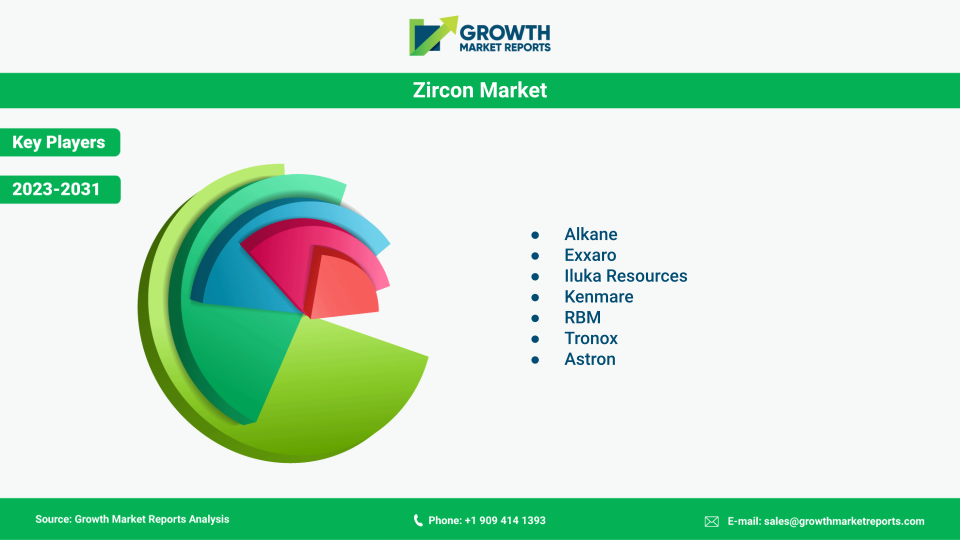
Key players operating in the global zircon market include Alkane; Exxaro; Iluka Resources; Kenmare; RBM; Tronox; Astron; Zircon Corporation; Chemours; Cristal Mining; Luxfer Group; and Molycorp. These players engage in collaborations, mergers & acquisitions, agreements, and partnerships to strengthen their geographical presence.

  • In May 2023, Zircon Corporation announced a new corporate identity for its parent company, ZRCN Inc. (ZRCN). The new name shows the company's strategic plan to apply its proprietary sensor-based technology to an expanded mix of global markets, including commercial buildings, and others.

 Zircon Market Key Players

Frequently Asked Questions

The key players in the zircon market includes Alkane; Exxaro; IlukaResources; Kenmare; RBM; Tronox; Astron; Zircon Corporation; Chemours; Cristal Mining; Luxfer Group; and Molycorp

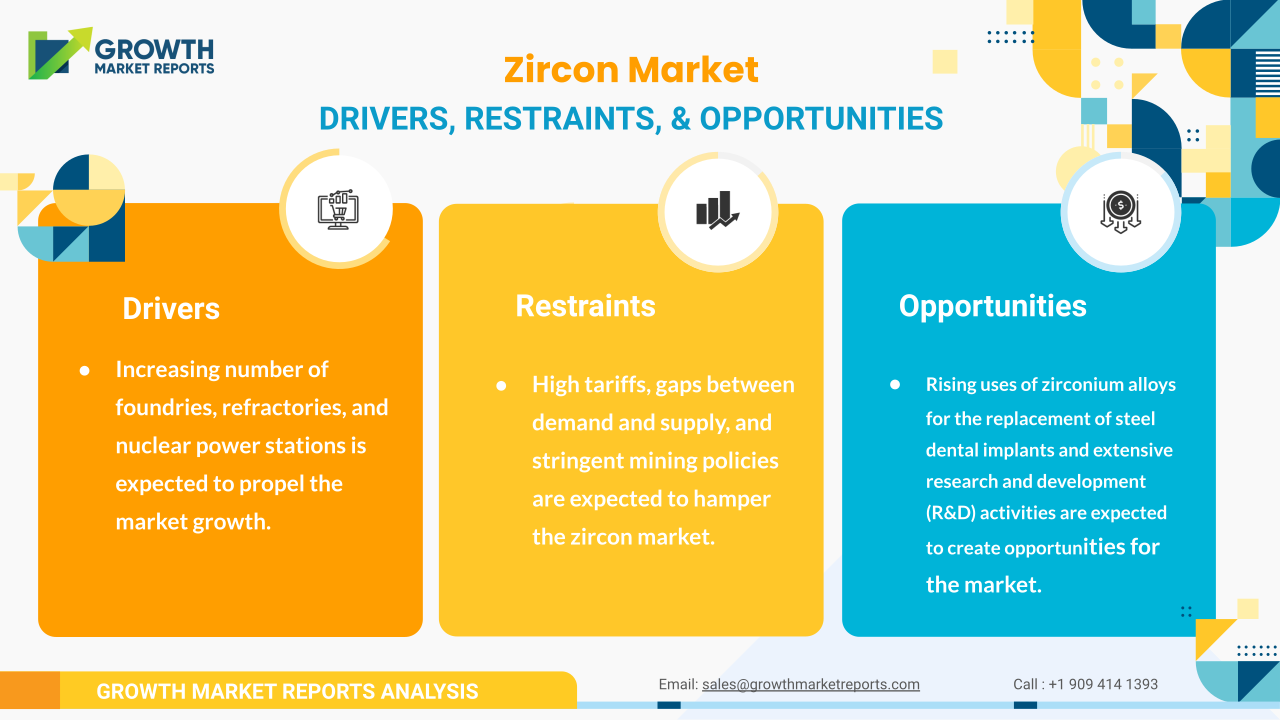
The factors including the uses of zircon in the foundry and ceramic industry are boosting the market.

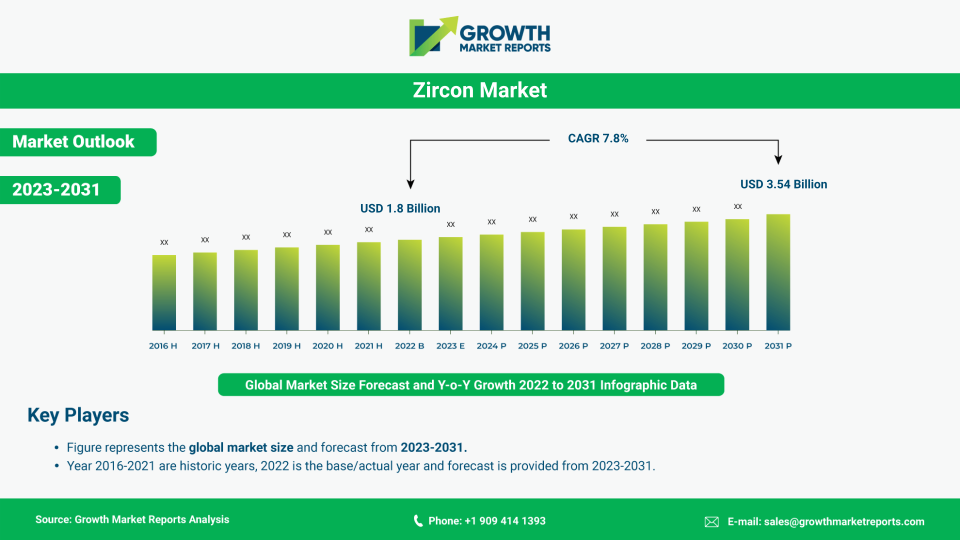
The global zircon market expanding at a CAGR of 7.8% during the forecast period, 2023–2031

The global zircon market size was valued at USD 1.8 Billion in 2022 and is expected to surpass USD 3.54 Billion by 2031

Table Of Content

Chapter 1 Executive Summary
Chapter 2 Assumptions and Acronyms Used
Chapter 3 Research Methodology
Chapter 4 Zircon Market Overview
   4.1 Introduction
      4.1.1 Market Taxonomy
      4.1.2 Market Definition
      4.1.3 Macro-Economic Factors Impacting the Market Growth
   4.2 Zircon Market Dynamics
      4.2.1 Market Drivers
      4.2.2 Market Restraints
      4.2.3 Market Opportunity
   4.3 Zircon Market - Supply Chain Analysis
      4.3.1 List of Key Suppliers
      4.3.2 List of Key Distributors
      4.3.3 List of Key Consumers
   4.4 Key Forces Shaping the Zircon Market
      4.4.1 Bargaining Power of Suppliers
      4.4.2 Bargaining Power of Buyers
      4.4.3 Threat of Substitution
      4.4.4 Threat of New Entrants
      4.4.5 Competitive Rivalry
   4.5 Global Zircon Market Size & Forecast, 2023-2032
      4.5.1 Zircon Market Size and Y-o-Y Growth
      4.5.2 Zircon Market Absolute $ Opportunity

Chapter 5 Global Zircon Market Analysis and Forecast By Type
   5.1 Introduction
      5.1.1 Key Market Trends & Growth Opportunities By Type
      5.1.2 Basis Point Share (BPS) Analysis By Type
      5.1.3 Absolute $ Opportunity Assessment By Type
   5.2 Zircon Market Size Forecast By Type
      5.2.1 Colorless Zircon
      5.2.2 Colored Zircon
   5.3 Market Attractiveness Analysis By Type

Chapter 6 Global Zircon Market Analysis and Forecast By Application
   6.1 Introduction
      6.1.1 Key Market Trends & Growth Opportunities By Application
      6.1.2 Basis Point Share (BPS) Analysis By Application
      6.1.3 Absolute $ Opportunity Assessment By Application
   6.2 Zircon Market Size Forecast By Application
      6.2.1 Jewelry
      6.2.2 Ceramics
      6.2.3 Refractories
      6.2.4 Foundry Sands
      6.2.5 Chemicals
      6.2.6 Others
   6.3 Market Attractiveness Analysis By Application

Chapter 7 Global Zircon Market Analysis and Forecast By End-Use Industry
   7.1 Introduction
      7.1.1 Key Market Trends & Growth Opportunities By End-Use Industry
      7.1.2 Basis Point Share (BPS) Analysis By End-Use Industry
      7.1.3 Absolute $ Opportunity Assessment By End-Use Industry
   7.2 Zircon Market Size Forecast By End-Use Industry
      7.2.1 Construction
      7.2.2 Automotive
      7.2.3 Electronics
      7.2.4 Healthcare
      7.2.5 Others
   7.3 Market Attractiveness Analysis By End-Use Industry

Chapter 8 Global Zircon Market Analysis and Forecast by Region
   8.1 Introduction
      8.1.1 Key Market Trends & Growth Opportunities By Region
      8.1.2 Basis Point Share (BPS) Analysis By Region
      8.1.3 Absolute $ Opportunity Assessment By Region
   8.2 Zircon Market Size Forecast By Region
      8.2.1 North America
      8.2.2 Europe
      8.2.3 Asia Pacific
      8.2.4 Latin America
      8.2.5 Middle East & Africa (MEA)
   8.3 Market Attractiveness Analysis By Region

Chapter 9 Coronavirus Disease (COVID-19) Impact 
   9.1 Introduction 
   9.2 Current & Future Impact Analysis 
   9.3 Economic Impact Analysis 
   9.4 Government Policies 
   9.5 Investment Scenario

Chapter 10 North America Zircon Analysis and Forecast
   10.1 Introduction
   10.2 North America Zircon Market Size Forecast by Country
      10.2.1 U.S.
      10.2.2 Canada
   10.3 Basis Point Share (BPS) Analysis by Country
   10.4 Absolute $ Opportunity Assessment by Country
   10.5 Market Attractiveness Analysis by Country
   10.6 North America Zircon Market Size Forecast By Type
      10.6.1 Colorless Zircon
      10.6.2 Colored Zircon
   10.7 Basis Point Share (BPS) Analysis By Type 
   10.8 Absolute $ Opportunity Assessment By Type 
   10.9 Market Attractiveness Analysis By Type
   10.10 North America Zircon Market Size Forecast By Application
      10.10.1 Jewelry
      10.10.2 Ceramics
      10.10.3 Refractories
      10.10.4 Foundry Sands
      10.10.5 Chemicals
      10.10.6 Others
   10.11 Basis Point Share (BPS) Analysis By Application 
   10.12 Absolute $ Opportunity Assessment By Application 
   10.13 Market Attractiveness Analysis By Application
   10.14 North America Zircon Market Size Forecast By End-Use Industry
      10.14.1 Construction
      10.14.2 Automotive
      10.14.3 Electronics
      10.14.4 Healthcare
      10.14.5 Others
   10.15 Basis Point Share (BPS) Analysis By End-Use Industry 
   10.16 Absolute $ Opportunity Assessment By End-Use Industry 
   10.17 Market Attractiveness Analysis By End-Use Industry

Chapter 11 Europe Zircon Analysis and Forecast
   11.1 Introduction
   11.2 Europe Zircon Market Size Forecast by Country
      11.2.1 Germany
      11.2.2 France
      11.2.3 Italy
      11.2.4 U.K.
      11.2.5 Spain
      11.2.6 Russia
      11.2.7 Rest of Europe
   11.3 Basis Point Share (BPS) Analysis by Country
   11.4 Absolute $ Opportunity Assessment by Country
   11.5 Market Attractiveness Analysis by Country
   11.6 Europe Zircon Market Size Forecast By Type
      11.6.1 Colorless Zircon
      11.6.2 Colored Zircon
   11.7 Basis Point Share (BPS) Analysis By Type 
   11.8 Absolute $ Opportunity Assessment By Type 
   11.9 Market Attractiveness Analysis By Type
   11.10 Europe Zircon Market Size Forecast By Application
      11.10.1 Jewelry
      11.10.2 Ceramics
      11.10.3 Refractories
      11.10.4 Foundry Sands
      11.10.5 Chemicals
      11.10.6 Others
   11.11 Basis Point Share (BPS) Analysis By Application 
   11.12 Absolute $ Opportunity Assessment By Application 
   11.13 Market Attractiveness Analysis By Application
   11.14 Europe Zircon Market Size Forecast By End-Use Industry
      11.14.1 Construction
      11.14.2 Automotive
      11.14.3 Electronics
      11.14.4 Healthcare
      11.14.5 Others
   11.15 Basis Point Share (BPS) Analysis By End-Use Industry 
   11.16 Absolute $ Opportunity Assessment By End-Use Industry 
   11.17 Market Attractiveness Analysis By End-Use Industry

Chapter 12 Asia Pacific Zircon Analysis and Forecast
   12.1 Introduction
   12.2 Asia Pacific Zircon Market Size Forecast by Country
      12.2.1 China
      12.2.2 Japan
      12.2.3 South Korea
      12.2.4 India
      12.2.5 Australia
      12.2.6 South East Asia (SEA)
      12.2.7 Rest of Asia Pacific (APAC)
   12.3 Basis Point Share (BPS) Analysis by Country
   12.4 Absolute $ Opportunity Assessment by Country
   12.5 Market Attractiveness Analysis by Country
   12.6 Asia Pacific Zircon Market Size Forecast By Type
      12.6.1 Colorless Zircon
      12.6.2 Colored Zircon
   12.7 Basis Point Share (BPS) Analysis By Type 
   12.8 Absolute $ Opportunity Assessment By Type 
   12.9 Market Attractiveness Analysis By Type
   12.10 Asia Pacific Zircon Market Size Forecast By Application
      12.10.1 Jewelry
      12.10.2 Ceramics
      12.10.3 Refractories
      12.10.4 Foundry Sands
      12.10.5 Chemicals
      12.10.6 Others
   12.11 Basis Point Share (BPS) Analysis By Application 
   12.12 Absolute $ Opportunity Assessment By Application 
   12.13 Market Attractiveness Analysis By Application
   12.14 Asia Pacific Zircon Market Size Forecast By End-Use Industry
      12.14.1 Construction
      12.14.2 Automotive
      12.14.3 Electronics
      12.14.4 Healthcare
      12.14.5 Others
   12.15 Basis Point Share (BPS) Analysis By End-Use Industry 
   12.16 Absolute $ Opportunity Assessment By End-Use Industry 
   12.17 Market Attractiveness Analysis By End-Use Industry

Chapter 13 Latin America Zircon Analysis and Forecast
   13.1 Introduction
   13.2 Latin America Zircon Market Size Forecast by Country
      13.2.1 Brazil
      13.2.2 Mexico
      13.2.3 Rest of Latin America (LATAM)
   13.3 Basis Point Share (BPS) Analysis by Country
   13.4 Absolute $ Opportunity Assessment by Country
   13.5 Market Attractiveness Analysis by Country
   13.6 Latin America Zircon Market Size Forecast By Type
      13.6.1 Colorless Zircon
      13.6.2 Colored Zircon
   13.7 Basis Point Share (BPS) Analysis By Type 
   13.8 Absolute $ Opportunity Assessment By Type 
   13.9 Market Attractiveness Analysis By Type
   13.10 Latin America Zircon Market Size Forecast By Application
      13.10.1 Jewelry
      13.10.2 Ceramics
      13.10.3 Refractories
      13.10.4 Foundry Sands
      13.10.5 Chemicals
      13.10.6 Others
   13.11 Basis Point Share (BPS) Analysis By Application 
   13.12 Absolute $ Opportunity Assessment By Application 
   13.13 Market Attractiveness Analysis By Application
   13.14 Latin America Zircon Market Size Forecast By End-Use Industry
      13.14.1 Construction
      13.14.2 Automotive
      13.14.3 Electronics
      13.14.4 Healthcare
      13.14.5 Others
   13.15 Basis Point Share (BPS) Analysis By End-Use Industry 
   13.16 Absolute $ Opportunity Assessment By End-Use Industry 
   13.17 Market Attractiveness Analysis By End-Use Industry

Chapter 14 Middle East & Africa (MEA) Zircon Analysis and Forecast
   14.1 Introduction
   14.2 Middle East & Africa (MEA) Zircon Market Size Forecast by Country
      14.2.1 Saudi Arabia
      14.2.2 South Africa
      14.2.3 UAE
      14.2.4 Rest of Middle East & Africa (MEA)
   14.3 Basis Point Share (BPS) Analysis by Country
   14.4 Absolute $ Opportunity Assessment by Country
   14.5 Market Attractiveness Analysis by Country
   14.6 Middle East & Africa (MEA) Zircon Market Size Forecast By Type
      14.6.1 Colorless Zircon
      14.6.2 Colored Zircon
   14.7 Basis Point Share (BPS) Analysis By Type 
   14.8 Absolute $ Opportunity Assessment By Type 
   14.9 Market Attractiveness Analysis By Type
   14.10 Middle East & Africa (MEA) Zircon Market Size Forecast By Application
      14.10.1 Jewelry
      14.10.2 Ceramics
      14.10.3 Refractories
      14.10.4 Foundry Sands
      14.10.5 Chemicals
      14.10.6 Others
   14.11 Basis Point Share (BPS) Analysis By Application 
   14.12 Absolute $ Opportunity Assessment By Application 
   14.13 Market Attractiveness Analysis By Application
   14.14 Middle East & Africa (MEA) Zircon Market Size Forecast By End-Use Industry
      14.14.1 Construction
      14.14.2 Automotive
      14.14.3 Electronics
      14.14.4 Healthcare
      14.14.5 Others
   14.15 Basis Point Share (BPS) Analysis By End-Use Industry 
   14.16 Absolute $ Opportunity Assessment By End-Use Industry 
   14.17 Market Attractiveness Analysis By End-Use Industry

Chapter 15 Competition Landscape 
   15.1 Zircon Market: Competitive Dashboard
   15.2 Global Zircon Market: Market Share Analysis, 2023
   15.3 Company Profiles (Details – Overview, Financials, Developments, Strategy) 
      15.3.1 Iluka Resources Limited
Tronox Holdings plc
Rio Tinto Group
Kenmare Resources plc
Indo Minerals and Metals
MZI Resources Ltd
Eramet S.A.
Base Resources Limited
Cristal Mining Australia Ltd
VV Mineral
Doral Mineral Sands Pty Ltd
PYX Resources Ltd
TiZir Limited
Sierra Rutile Limited
Southern Ionics Minerals, LLC
Mineral Commodities Ltd
Astron Corporation Limited
Kimkang LLC
Trimex Sands Pvt Ltd
Zircon Industry Association (ZIA) Members

Methodology

Our Clients

General Electric
Pfizer
Deloitte
Microsoft
Dassault Aviation
Siemens Healthcare
sinopec
Nestle SA