Yield Monitoring Devices Market Research Report 2033

Yield Monitoring Devices Market Research Report 2033

Segments - by Product Type (GPS-Based Yield Monitors, Sensor-Based Yield Monitors, Others), by Application (Precision Farming, Crop Management, Soil Monitoring, Others), by Component (Hardware, Software, Services), by Farm Size (Small Farms, Medium Farms, Large Farms), by End-User (Agriculture, Research Institutes, Others)

https://growthmarketreports.com/Anuradha
Author : Anuradha B. More
https://growthmarketreports.com/Vaibhav
Fact-checked by : Vaibhav Chandola
https://growthmarketreports.com/Shruti
Editor : Shruti Bhat

Upcoming | Report ID :FB-521 | 4.6 Rating | 29 Reviews | 286 Pages | Format : Docx PDF

Report Description


Yield Monitoring Devices Market Outlook

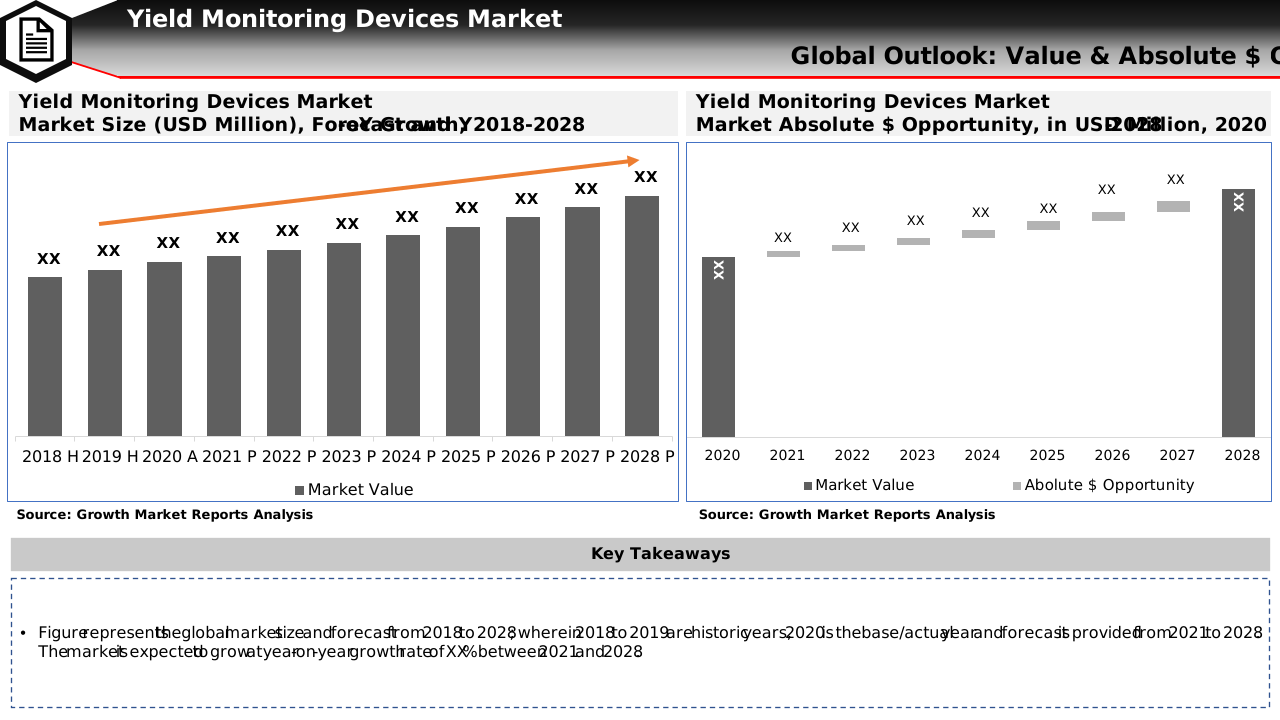
According to our latest research, the global Yield Monitoring Devices market size reached USD 2.1 billion in 2024, demonstrating robust expansion driven by the increasing adoption of precision agriculture technologies. The market is projected to grow at a CAGR of 8.7% from 2025 to 2033, reaching an estimated USD 4.4 billion by 2033. This impressive growth is primarily fueled by rising demand for efficient farm management solutions, ongoing technological advancements, and the push towards sustainable agriculture practices worldwide.

One of the primary growth factors for the Yield Monitoring Devices market is the escalating need for maximizing crop yields while minimizing resource inputs. Farmers and agribusinesses are increasingly under pressure to produce more food with fewer resources due to population growth, land scarcity, and environmental concerns. Yield monitoring devices, which provide real-time data on crop performance and field variability, play a pivotal role in helping farmers make data-driven decisions. By integrating these devices into their operations, producers can optimize planting, fertilization, and irrigation strategies, leading to improved productivity and profitability. The integration of IoT, AI, and advanced sensors has further enhanced the accuracy and utility of yield monitoring systems, making them indispensable tools in modern agriculture.

Another significant driver is the growing emphasis on precision farming across both developed and emerging markets. Precision agriculture relies on detailed, site-specific information to manage fields more effectively, and yield monitoring devices are at the heart of this transformation. These devices enable farmers to analyze spatial variability within fields, identify underperforming areas, and tailor interventions accordingly. The result is not only higher yields but also reduced environmental impact through optimized use of fertilizers, pesticides, and water. Government initiatives promoting smart agriculture and the availability of subsidies for technology adoption have further accelerated the uptake of yield monitoring solutions, particularly in regions such as North America, Europe, and parts of Asia Pacific.

The market is also benefiting from the increasing collaboration between technology providers, agricultural equipment manufacturers, and research institutions. These partnerships have led to the development of more user-friendly, integrated, and cost-effective yield monitoring devices, broadening their appeal to small and medium-sized farms. Furthermore, the proliferation of data analytics platforms and cloud-based services has enabled seamless integration of yield data with other farm management systems, providing actionable insights for farmers. However, challenges related to data privacy, standardization, and the high initial cost of advanced devices persist, particularly in developing regions. Nonetheless, ongoing research and innovation are expected to address these barriers, paving the way for sustained market growth.

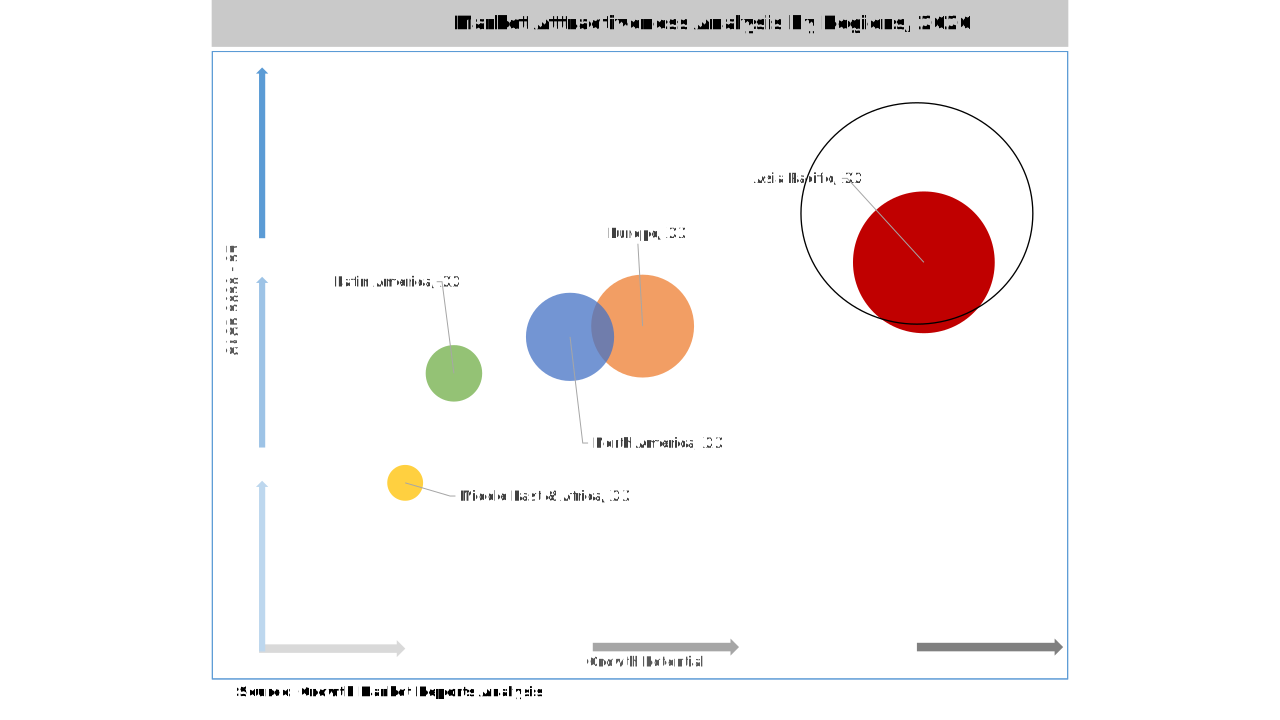
Regionally, North America continues to dominate the Yield Monitoring Devices market, accounting for the largest share in 2024, followed by Europe and Asia Pacific. The presence of large-scale commercial farms, early adoption of precision agriculture technologies, and strong government support have contributed to North America's leadership position. Europe is also witnessing significant growth, driven by stringent environmental regulations and a focus on sustainable farming practices. Meanwhile, the Asia Pacific region is emerging as a key growth market, fueled by rapid technological adoption, increasing investments in agriculture, and rising awareness among farmers about the benefits of yield monitoring. Latin America and the Middle East & Africa are expected to experience steady growth, albeit from a smaller base, as awareness and infrastructure improve.

Global Yield Monitoring Devices Industry Outlook

Product Type Analysis

The Yield Monitoring Devices market is segmented by product type into GPS-Based Yield Monitors, Sensor-Based Yield Monitors, and Others. GPS-Based Yield Monitors represent the most widely adopted segment, owing to their ability to provide highly accurate, location-specific data on crop yields. These devices utilize satellite positioning to map yield variability within fields, enabling precise application of inputs and facilitating field-specific management decisions. The integration of GPS technology has revolutionized yield data collection, making it possible for farmers to analyze performance at a granular level and implement variable rate technology (VRT) for optimal resource allocation. The widespread availability of GPS infrastructure and falling costs of satellite services have further propelled the adoption of GPS-based solutions.

Sensor-Based Yield Monitors have gained significant traction in recent years, driven by advancements in sensor technology and the need for real-time, in-situ monitoring. These devices employ a range of sensors, including optical, ultrasonic, and near-infrared, to measure parameters such as crop biomass, moisture content, and nutrient levels. Sensor-based systems are particularly valuable for continuous monitoring throughout the growing season, providing timely data for immediate decision-making. Their ability to capture subtle changes in crop health and environmental conditions makes them indispensable for precision crop management. The increasing integration of sensors with wireless communication and IoT platforms has expanded their utility, allowing for remote monitoring and automated data collection.

The "Others" category in product type includes hybrid systems and emerging technologies that combine multiple data sources and advanced analytics. These solutions often integrate GPS, sensor, and drone-based data to provide a comprehensive view of field conditions. Hybrid yield monitoring devices are gaining popularity among large-scale and technologically advanced farms seeking to leverage multiple data streams for enhanced decision-making. The ongoing development of machine learning algorithms and AI-powered analytics is expected to further drive innovation in this segment, enabling more accurate yield predictions and proactive intervention strategies.

Despite the clear advantages, each product type faces unique challenges. GPS-Based Yield Monitors require reliable satellite connectivity and can be affected by signal obstructions, while Sensor-Based Yield Monitors may require frequent calibration and maintenance to ensure accuracy. Hybrid systems, though highly effective, often come with higher upfront costs and greater complexity, which can be a barrier for small and medium-sized farms. Nevertheless, the overall trend is towards greater integration and interoperability, with manufacturers focusing on developing user-friendly, scalable solutions that cater to diverse farm sizes and operational needs.

In summary, the product type segment of the Yield Monitoring Devices market is characterized by rapid technological evolution, increasing adoption of integrated solutions, and a strong focus on accuracy and ease of use. As precision agriculture continues to gain momentum globally, demand for advanced yield monitoring devices across all product types is expected to remain robust, driving further innovation and market expansion.

Report Scope

Attributes Details
Report Title Yield Monitoring Devices Market Research Report 2033
By Product Type GPS-Based Yield Monitors, Sensor-Based Yield Monitors, Others
By Application Precision Farming, Crop Management, Soil Monitoring, Others
By Component Hardware, Software, Services
By Farm Size Small Farms, Medium Farms, Large Farms
By End-User Agriculture, Research Institutes, Others
Regions Covered North America, Europe, APAC, Latin America, MEA
Base Year 2024
Historic Data 2018-2023
Forecast Period 2025-2033
Number of Pages 286
Number of Tables & Figures 361
Customization Available Yes, the report can be customized as per your need.

Application Analysis

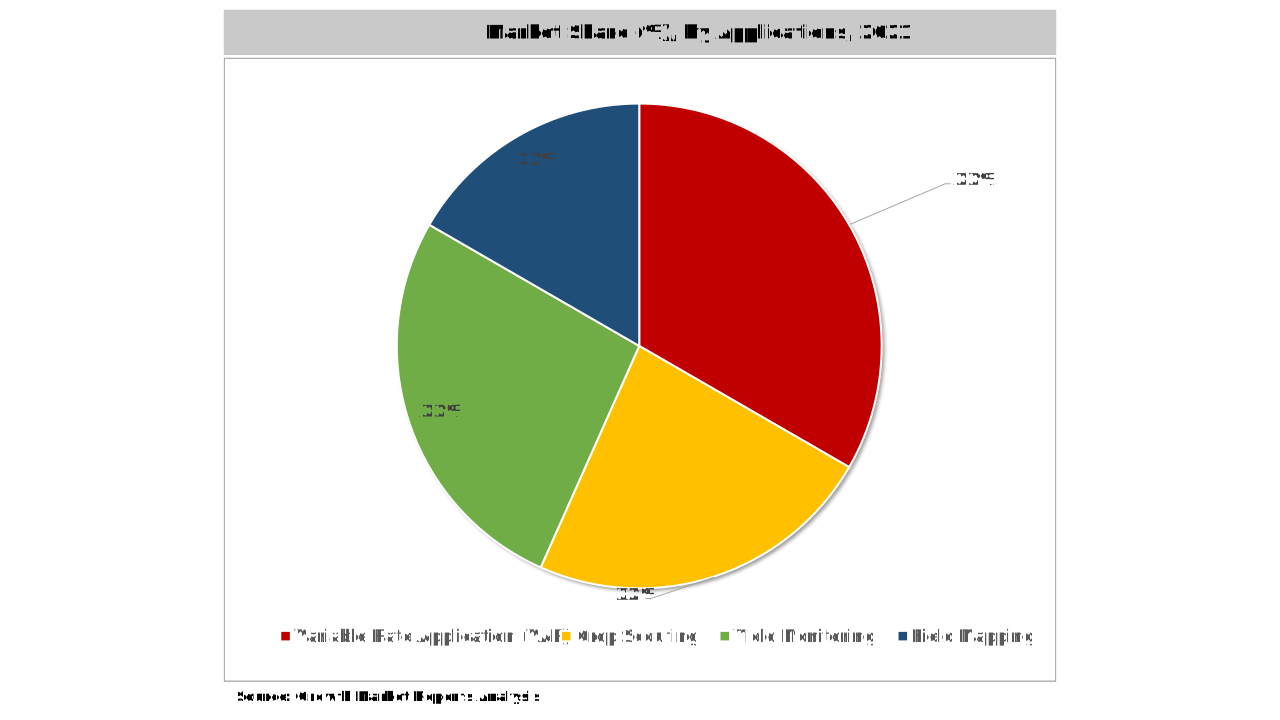
The application segment of the Yield Monitoring Devices market encompasses Precision Farming, Crop Management, Soil Monitoring, and Others. Precision Farming remains the dominant application, accounting for a significant share of the market. Yield monitoring devices are integral to precision farming, enabling farmers to collect and analyze data at the micro-field level. This data-driven approach allows for site-specific management of crops, optimizing input usage and maximizing yields. Precision farming applications benefit from yield monitors' ability to provide real-time feedback, facilitating immediate adjustments to planting, fertilization, and irrigation practices. As the global focus on sustainable agriculture intensifies, the adoption of precision farming technologies is expected to accelerate, further boosting demand for yield monitoring devices.

Crop Management is another critical application area, where yield monitoring devices play a vital role in tracking crop performance throughout the growing season. By continuously monitoring parameters such as plant health, growth rates, and stress factors, these devices enable early detection of issues and timely intervention. Crop management applications are particularly important for high-value and specialty crops, where even minor yield improvements can have a significant impact on profitability. The integration of yield data with other agronomic information, such as weather patterns and pest incidence, allows for comprehensive crop management strategies that enhance both yield and quality.

Soil Monitoring is an emerging application segment within the Yield Monitoring Devices market, driven by the recognition that soil health is fundamental to sustainable crop production. Yield monitors equipped with soil sensors can measure key parameters such as moisture content, nutrient levels, and compaction, providing valuable insights for soil management. By correlating yield variability with soil characteristics, farmers can implement targeted soil amendments and conservation practices, improving long-term productivity and resource efficiency. The growing adoption of soil monitoring solutions is expected to drive innovation in sensor technology and data analytics, further expanding the market for yield monitoring devices.

The "Others" application category includes research, education, and government initiatives aimed at advancing agricultural science and policy. Research institutions and universities utilize yield monitoring devices to conduct field trials, evaluate new crop varieties, and develop best management practices. Government agencies leverage yield data for crop insurance programs, food security assessments, and policy formulation. These applications, while smaller in scale compared to commercial farming, play a crucial role in driving technological advancement and market awareness. As public and private sector collaboration in agriculture intensifies, the contribution of these applications to the overall market is expected to grow.

Overall, the application segment of the Yield Monitoring Devices market is characterized by diversification and increasing sophistication. The convergence of precision farming, crop management, and soil monitoring is creating new opportunities for integrated solutions that offer comprehensive, actionable insights. As farmers and agribusinesses seek to enhance productivity, profitability, and sustainability, the demand for advanced yield monitoring applications is set to rise, driving continued market growth and innovation.

Component Analysis

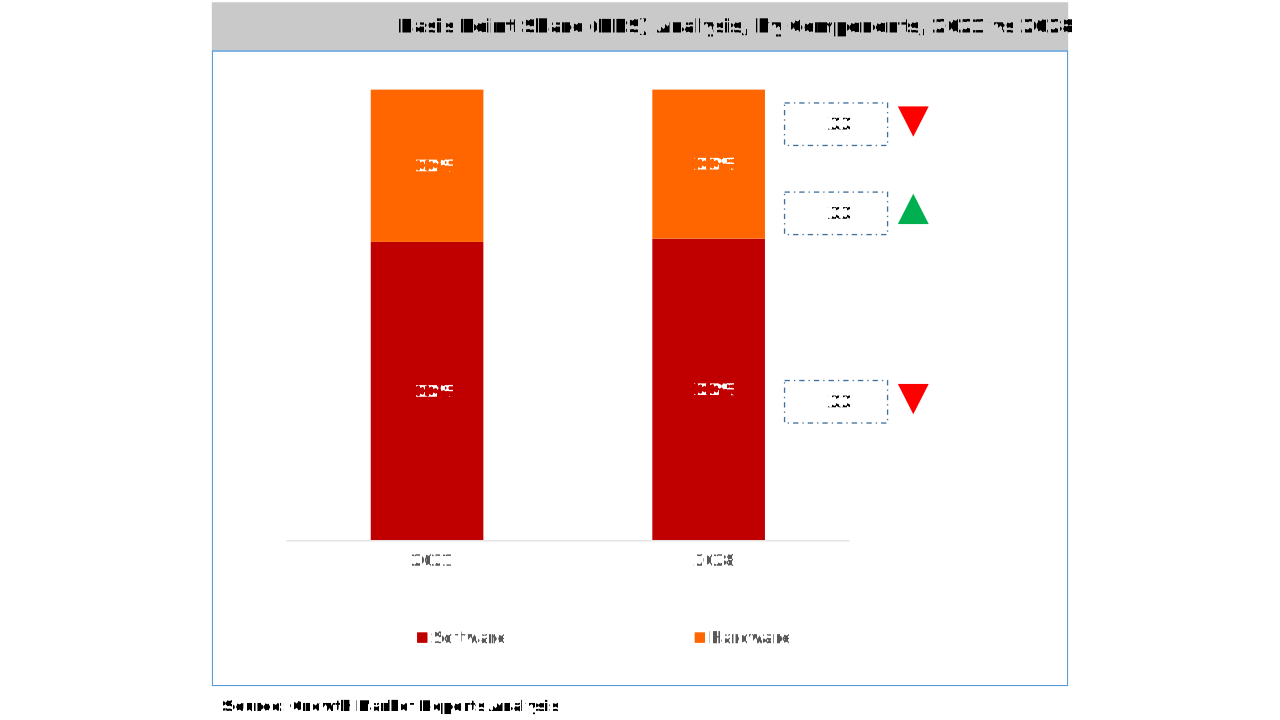
The Yield Monitoring Devices market by component is segmented into Hardware, Software, and Services, each playing a distinct role in the value chain. Hardware forms the backbone of yield monitoring systems, encompassing sensors, GPS units, data loggers, and communication modules. Advances in hardware technology have significantly improved the accuracy, reliability, and durability of yield monitors, enabling them to operate in diverse and challenging field conditions. The growing trend towards miniaturization and integration has resulted in more compact and user-friendly devices, facilitating widespread adoption across farm sizes. Hardware remains the largest component segment by revenue, reflecting its critical importance in data acquisition and system performance.

Software is an increasingly important component of the Yield Monitoring Devices market, providing the analytical capabilities necessary to transform raw data into actionable insights. Modern yield monitoring software platforms offer advanced features such as data visualization, geospatial mapping, trend analysis, and predictive modeling. The integration of AI and machine learning algorithms has further enhanced the ability to detect patterns, forecast yields, and recommend optimal management practices. Cloud-based software solutions have gained popularity due to their scalability, ease of access, and ability to support real-time decision-making. As the volume and complexity of agricultural data continue to grow, demand for sophisticated software platforms is expected to rise, driving innovation and market expansion.

Services represent a vital component of the Yield Monitoring Devices market, encompassing installation, calibration, maintenance, training, and technical support. The complexity of yield monitoring systems, particularly in large-scale and technologically advanced operations, necessitates specialized services to ensure optimal performance and data accuracy. Service providers play a key role in bridging the gap between technology developers and end-users, offering customized solutions tailored to specific farm needs. The growing emphasis on after-sales support and continuous system optimization has led to the emergence of service-based business models, such as subscription and managed services. These models provide farmers with ongoing access to expertise and technical resources, enhancing the value proposition of yield monitoring devices.

The interplay between hardware, software, and services is driving the development of integrated yield monitoring solutions that offer seamless user experiences and end-to-end functionality. Manufacturers are increasingly focusing on interoperability, enabling their devices to connect with third-party platforms and equipment. This trend is particularly important in the context of digital agriculture, where data integration across multiple systems is essential for holistic farm management. The rise of open-source software and standardized communication protocols is expected to further accelerate this trend, promoting innovation and competition within the market.

In conclusion, the component segment of the Yield Monitoring Devices market is characterized by rapid technological advancement, increasing integration, and a growing emphasis on user-centric solutions. As farmers seek to harness the full potential of yield monitoring technologies, demand for advanced hardware, intelligent software, and comprehensive services is set to remain strong, propelling the market towards sustained growth and evolution.

Farm Size Analysis

The Yield Monitoring Devices market by farm size is segmented into Small Farms, Medium Farms, and Large Farms, each with unique requirements and adoption patterns. Large Farms have historically been the primary adopters of yield monitoring devices, driven by their substantial resources, scale of operations, and focus on maximizing efficiency. These farms often operate across vast acreages, making it imperative to monitor yield variability and manage inputs precisely. The ability to generate detailed yield maps and implement variable rate technology offers significant cost savings and productivity gains for large-scale producers. As a result, large farms account for the largest share of the market, particularly in regions such as North America, Europe, and Australia.

Medium Farms represent a growing segment within the Yield Monitoring Devices market, as technological advancements and falling costs have made yield monitoring solutions more accessible. These farms typically operate on a scale that justifies investment in precision agriculture technologies but may face budget constraints compared to larger operations. The availability of modular and scalable yield monitoring systems has enabled medium-sized farms to adopt technology incrementally, aligning investment with operational needs and financial capacity. Government incentives and cooperative purchasing programs have also played a role in driving adoption among medium farms, particularly in emerging markets.

Small Farms, while traditionally slower to adopt advanced yield monitoring devices, are increasingly recognizing the benefits of data-driven farming. The proliferation of affordable, user-friendly devices and the availability of mobile-based solutions have lowered barriers to entry for smallholders. In many developing regions, small farms constitute the majority of agricultural producers, making this segment critical for market expansion. Initiatives by governments, NGOs, and agritech startups to provide training, financing, and technical support are further encouraging adoption among small farmers. As digital literacy improves and infrastructure develops, small farms are expected to become a significant growth driver for the market.

Each farm size segment faces unique challenges and opportunities in adopting yield monitoring devices. Large farms benefit from economies of scale and access to capital but may encounter complexity in integrating data across multiple operations. Medium farms must balance investment with operational needs, while small farms often require targeted support and tailored solutions. Manufacturers and service providers are responding by developing flexible, scalable products and offering financing options to cater to diverse customer segments. The trend towards democratization of technology is expected to continue, with an increasing focus on inclusivity and accessibility.

In summary, the farm size segment of the Yield Monitoring Devices market is evolving rapidly, with growing adoption across all scales of operation. As technology becomes more affordable and user-friendly, and as awareness of the benefits of yield monitoring spreads, the market is poised for broad-based growth, supporting farmers of all sizes in their quest for higher productivity and sustainability.

End-User Analysis

The Yield Monitoring Devices market by end-user is segmented into Agriculture, Research Institutes, and Others, reflecting the diverse range of stakeholders involved in yield monitoring. The Agriculture segment, comprising commercial farmers, agribusinesses, and cooperatives, dominates the market by a significant margin. These end-users rely on yield monitoring devices to optimize crop production, reduce costs, and enhance profitability. The integration of yield data into broader farm management systems enables comprehensive decision-making, from input planning to harvest logistics. As the agricultural sector faces mounting pressure to feed a growing global population sustainably, the role of yield monitoring in driving efficiency and productivity is becoming increasingly vital.

Research Institutes represent an important end-user segment, leveraging yield monitoring devices for scientific research, technology development, and policy analysis. Universities, government research agencies, and private research organizations utilize these devices to conduct field trials, evaluate new crop varieties, and assess the impact of management practices on yield and sustainability. The data generated through research applications informs best practices, supports technology transfer, and guides public policy. As the focus on evidence-based agriculture intensifies, demand from research institutions is expected to remain strong, contributing to ongoing innovation and market development.

The "Others" end-user category includes educational institutions, government agencies, and non-governmental organizations involved in agricultural development, extension services, and capacity building. These stakeholders play a critical role in promoting technology adoption, particularly among smallholder farmers and underserved communities. By providing training, demonstration projects, and technical support, they help bridge the gap between technology developers and end-users, facilitating the diffusion of yield monitoring devices. As public and private sector collaboration in agriculture intensifies, the contribution of these end-users to market growth is expected to increase.

Each end-user segment has distinct requirements and priorities, shaping the development and deployment of yield monitoring solutions. Commercial farmers prioritize ease of use, integration with existing systems, and return on investment, while researchers focus on data accuracy, reliability, and customization. Government and non-profit organizations emphasize affordability, scalability, and impact on food security and rural development. Manufacturers and service providers are responding by offering tailored solutions, flexible pricing models, and comprehensive support services to meet the diverse needs of end-users.

In conclusion, the end-user segment of the Yield Monitoring Devices market is characterized by diversity, innovation, and a growing emphasis on collaboration. As stakeholders across the agricultural value chain recognize the value of yield monitoring, demand for advanced, user-centric solutions is set to rise, driving further market growth and technological advancement.

Opportunities & Threats

The Yield Monitoring Devices market presents significant opportunities for growth and innovation, driven by the ongoing digital transformation of agriculture. One of the most promising opportunities lies in the integration of yield monitoring devices with emerging technologies such as artificial intelligence, machine learning, and the Internet of Things (IoT). By leveraging these technologies, manufacturers can develop next-generation yield monitoring solutions that offer predictive analytics, automated decision support, and seamless integration with other farm management systems. This convergence of technologies has the potential to revolutionize farm operations, enabling real-time, data-driven decision-making that maximizes productivity and sustainability. The growing availability of cloud-based platforms and mobile applications is further expanding access to yield monitoring solutions, particularly among small and medium-sized farms.

Another major opportunity is the expanding adoption of precision agriculture in emerging markets. As countries in Asia Pacific, Latin America, and Africa invest in modernizing their agricultural sectors, demand for yield monitoring devices is expected to surge. Government initiatives promoting smart agriculture, coupled with rising awareness among farmers about the benefits of data-driven farming, are creating favorable conditions for market growth. Partnerships between technology providers, equipment manufacturers, and local stakeholders are facilitating the development of affordable, context-specific solutions tailored to the needs of smallholder farmers. As digital infrastructure and literacy improve, these markets are poised to become significant drivers of global market expansion.

Despite the numerous opportunities, the Yield Monitoring Devices market faces several challenges that could restrain growth. One of the primary threats is the high initial cost of advanced yield monitoring systems, which can be a barrier for small and resource-constrained farmers. While prices have declined in recent years, the total cost of ownership, including installation, maintenance, and training, remains a concern. Additionally, issues related to data privacy, security, and standardization pose challenges for widespread adoption. Farmers may be hesitant to share sensitive yield data, and the lack of interoperability between different devices and platforms can hinder seamless integration. Addressing these challenges will require concerted efforts from industry stakeholders, policymakers, and researchers to develop affordable, user-friendly, and secure solutions that meet the diverse needs of the agricultural sector.

Regional Outlook

North America remains the largest regional market for Yield Monitoring Devices, accounting for approximately 38% of the global market share in 2024, with a market size of nearly USD 800 million. The region's leadership is underpinned by the early adoption of precision agriculture technologies, a well-established digital infrastructure, and strong government support for sustainable farming practices. The United States, in particular, is a major contributor, with large-scale commercial farms driving demand for advanced yield monitoring solutions. Canada is also witnessing increasing adoption, supported by government incentives and a growing focus on data-driven agriculture. The North American market is expected to maintain a healthy CAGR of around 7.9% through 2033, supported by ongoing innovation and the integration of AI and IoT technologies.

Europe is the second-largest market, with a 2024 market size of approximately USD 630 million, representing about 30% of the global market. The region's growth is driven by stringent environmental regulations, a strong focus on sustainability, and the widespread adoption of precision farming practices. Countries such as Germany, France, and the Netherlands are at the forefront of technological innovation, leveraging yield monitoring devices to optimize resource use and reduce environmental impact. The European Union's Common Agricultural Policy (CAP) and various national initiatives are providing financial incentives for technology adoption, further boosting market growth. The European market is projected to grow at a CAGR of 8.2% from 2025 to 2033, reflecting sustained investment in digital agriculture.

The Asia Pacific region is emerging as a key growth market for Yield Monitoring Devices, with a 2024 market size of approximately USD 420 million, accounting for 20% of the global market. Rapid population growth, rising food demand, and increasing investments in agricultural modernization are driving demand for yield monitoring solutions across countries such as China, India, Australia, and Japan. Governments in the region are actively promoting smart agriculture through subsidies, training programs, and infrastructure development. The Asia Pacific market is expected to register the fastest CAGR of 10.4% through 2033, as awareness and adoption of precision agriculture technologies continue to expand. Latin America and the Middle East & Africa, while currently accounting for smaller shares of the global market, are poised for steady growth as digital infrastructure improves and awareness spreads.

Yield Monitoring Devices Market Statistics

Competitor Outlook

The Yield Monitoring Devices market is characterized by a highly competitive landscape, with a mix of established agricultural equipment manufacturers, technology providers, and innovative startups vying for market share. Leading companies are focusing on product innovation, strategic partnerships, and geographic expansion to strengthen their market positions. The trend towards integrated, user-friendly solutions is driving collaboration between hardware and software developers, resulting in comprehensive yield monitoring systems that cater to a wide range of customer needs. Mergers and acquisitions are also shaping the competitive landscape, as larger players seek to acquire niche technologies and expand their product portfolios.

Key players in the market are investing heavily in research and development to enhance the accuracy, reliability, and functionality of their yield monitoring devices. The integration of advanced technologies such as AI, machine learning, and IoT is enabling the development of next-generation solutions that offer predictive analytics, automated decision support, and real-time data visualization. Companies are also focusing on interoperability, ensuring that their devices can seamlessly connect with third-party platforms and equipment. This approach is particularly important in the context of digital agriculture, where data integration across multiple systems is essential for holistic farm management.

In addition to technological innovation, leading companies are prioritizing customer support and after-sales services to differentiate themselves in the market. Comprehensive training, technical support, and maintenance services are critical for ensuring optimal system performance and customer satisfaction. Many companies are adopting service-based business models, such as subscription and managed services, to provide ongoing access to expertise and technical resources. These models enhance the value proposition of yield monitoring devices, particularly for small and medium-sized farms that may lack in-house technical expertise.

The competitive landscape is further characterized by the entry of new players, particularly in emerging markets, who are developing affordable, context-specific solutions tailored to local needs. These companies are leveraging partnerships with local stakeholders, including government agencies, cooperatives, and research institutions, to drive adoption and expand market reach. As the market continues to evolve, competition is expected to intensify, driving further innovation and delivering greater value to end-users.

Major companies operating in the Yield Monitoring Devices market include John Deere, AGCO Corporation, Trimble Inc., CNH Industrial, Topcon Positioning Systems, Raven Industries, Precision Planting, and Hexagon Agriculture. John Deere is a global leader, known for its advanced yield monitoring systems and integrated farm management solutions. AGCO Corporation and CNH Industrial offer comprehensive portfolios of precision agriculture technologies, including yield monitors, sensors, and data analytics platforms. Trimble Inc. and Topcon Positioning Systems are recognized for their expertise in GPS and geospatial technologies, providing highly accurate yield mapping solutions. Raven Industries and Precision Planting are known for their innovative sensor technologies and data analytics capabilities, while Hexagon Agriculture offers integrated digital agriculture solutions for large-scale operations.

These companies are continually expanding their product offerings, investing in R&D, and forming strategic alliances to maintain their competitive edge. Their commitment to innovation, customer-centricity, and sustainability positions them as key players in the ongoing digital transformation of agriculture. As the Yield Monitoring Devices market continues to grow and evolve, these companies are expected to play a pivotal role in shaping the future of precision agriculture and supporting farmers worldwide in their quest for higher productivity, profitability, and sustainability.

Key Players

  • Ag Leader Technology
  • Trimble Inc.
  • Deere & Company (John Deere)
  • Topcon Positioning Systems
  • Raven Industries
  • Case IH (CNH Industrial)
  • Precision Planting
  • AGCO Corporation
  • CLAAS Group
  • Hexagon Agriculture
  • SST Development Group, Inc.
  • Farmers Edge Inc.
  • TeeJet Technologies
  • CropX Technologies
  • Sentera
  • Kubota Corporation
  • Valmont Industries
  • Lindsay Corporation
  • DICKEY-john Corporation
  • Yara International ASA
Yield Monitoring Devices Market Overview

Segments

The Yield Monitoring Devices market has been segmented on the basis of

Product Type

  • GPS-Based Yield Monitors
  • Sensor-Based Yield Monitors
  • Others

Application

  • Precision Farming
  • Crop Management
  • Soil Monitoring
  • Others

Component

  • Hardware
  • Software
  • Services

Farm Size

  • Small Farms
  • Medium Farms
  • Large Farms

End-User

  • Agriculture
  • Research Institutes
  • Others

Competitive Landscape

Some of the key players competing in the global yield monitoring devices market include Trimble Navigation Ltd; Topcon Precision Agriculture; Ag Leader Technology; Case IH Deere &Company; AgJunction Inc; TeeJet Technologies; Raven Industries Ltd; and AGCO Corporation.
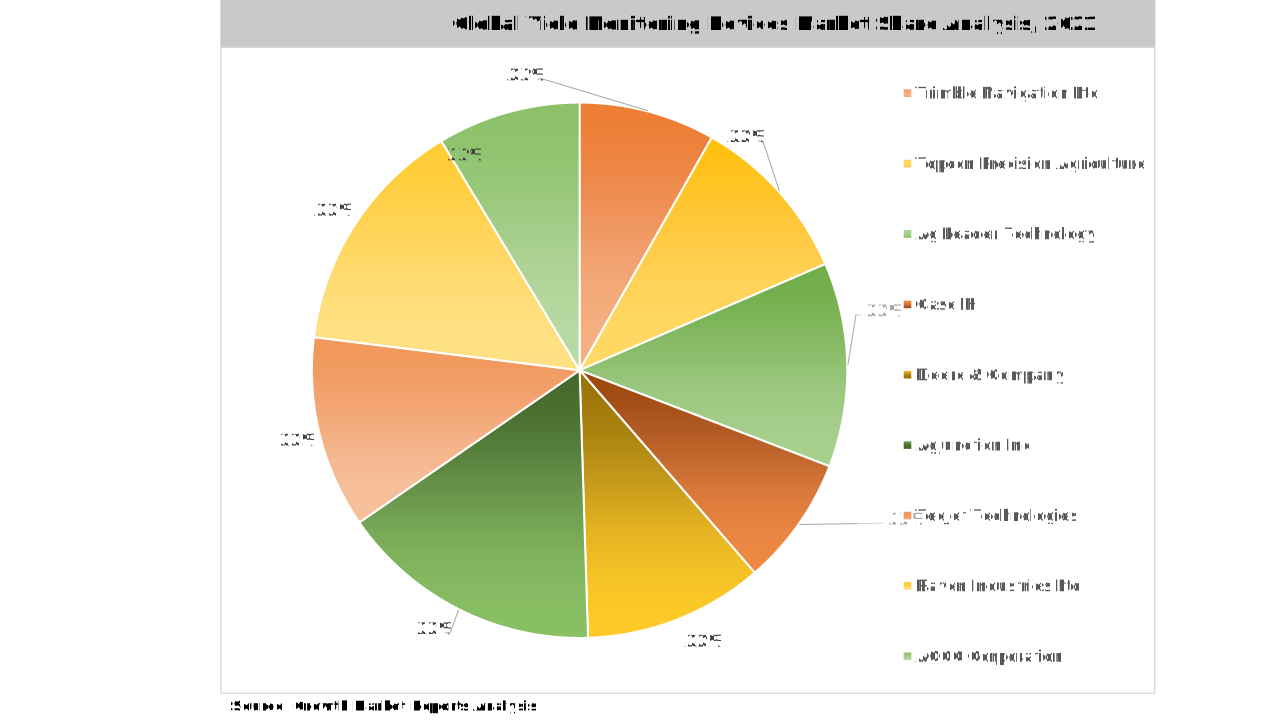

Global Yield Monitoring Devices Market Key Players

Frequently Asked Questions

Opportunities include integration with AI, machine learning, and IoT for predictive analytics, expanding adoption in emerging markets, and the development of affordable, user-friendly solutions for small and medium-sized farms.

The market is segmented by farm size into small, medium, and large farms, with large farms being the primary adopters. By end-user, it includes agriculture (commercial farmers, cooperatives), research institutes, and others (government, NGOs).

Major companies include John Deere, AGCO Corporation, Trimble Inc., CNH Industrial, Topcon Positioning Systems, Raven Industries, Precision Planting, Hexagon Agriculture, and others.

Key challenges include high initial costs, data privacy and security concerns, lack of standardization and interoperability, and the need for ongoing maintenance and technical support.

Yield monitoring systems consist of hardware (sensors, GPS units, data loggers), software (data visualization, analytics, predictive modeling), and services (installation, calibration, maintenance, and technical support).

Yield monitoring devices provide real-time data on crop performance and field variability, enabling farmers to optimize planting, fertilization, and irrigation, leading to improved productivity, profitability, and sustainable resource use.

The market is segmented into GPS-Based Yield Monitors, Sensor-Based Yield Monitors, and hybrid/other emerging technologies. GPS-based monitors are the most widely adopted due to their accuracy and location-specific data.

North America is the largest market, followed by Europe and Asia Pacific. North America's dominance is due to early adoption, large-scale commercial farms, and strong government support. Asia Pacific is the fastest-growing region due to rapid technological adoption and rising investments in agriculture.

Key growth drivers include the increasing adoption of precision agriculture, demand for efficient farm management, technological advancements (such as IoT, AI, and advanced sensors), and the push for sustainable agriculture practices.

The global Yield Monitoring Devices market reached USD 2.1 billion in 2024 and is projected to grow at a CAGR of 8.7% from 2025 to 2033, reaching approximately USD 4.4 billion by 2033.

Table Of Content

Chapter 1 Executive Summary
Chapter 2 Assumptions and Acronyms Used
Chapter 3 Research Methodology
Chapter 4 Yield Monitoring Devices Market Overview
   4.1 Introduction
      4.1.1 Market Taxonomy
      4.1.2 Market Definition
      4.1.3 Macro-Economic Factors Impacting the Market Growth
   4.2 Yield Monitoring Devices Market Dynamics
      4.2.1 Market Drivers
      4.2.2 Market Restraints
      4.2.3 Market Opportunity
   4.3 Yield Monitoring Devices Market - Supply Chain Analysis
      4.3.1 List of Key Suppliers
      4.3.2 List of Key Distributors
      4.3.3 List of Key Consumers
   4.4 Key Forces Shaping the Yield Monitoring Devices Market
      4.4.1 Bargaining Power of Suppliers
      4.4.2 Bargaining Power of Buyers
      4.4.3 Threat of Substitution
      4.4.4 Threat of New Entrants
      4.4.5 Competitive Rivalry
   4.5 Global Yield Monitoring Devices Market Size & Forecast, 2023-2032
      4.5.1 Yield Monitoring Devices Market Size and Y-o-Y Growth
      4.5.2 Yield Monitoring Devices Market Absolute $ Opportunity

Chapter 5 Global Yield Monitoring Devices Market Analysis and Forecast By Product Type
   5.1 Introduction
      5.1.1 Key Market Trends & Growth Opportunities By Product Type
      5.1.2 Basis Point Share (BPS) Analysis By Product Type
      5.1.3 Absolute $ Opportunity Assessment By Product Type
   5.2 Yield Monitoring Devices Market Size Forecast By Product Type
      5.2.1 GPS-Based Yield Monitors
      5.2.2 Sensor-Based Yield Monitors
      5.2.3 Others
   5.3 Market Attractiveness Analysis By Product Type

Chapter 6 Global Yield Monitoring Devices Market Analysis and Forecast By Application
   6.1 Introduction
      6.1.1 Key Market Trends & Growth Opportunities By Application
      6.1.2 Basis Point Share (BPS) Analysis By Application
      6.1.3 Absolute $ Opportunity Assessment By Application
   6.2 Yield Monitoring Devices Market Size Forecast By Application
      6.2.1 Precision Farming
      6.2.2 Crop Management
      6.2.3 Soil Monitoring
      6.2.4 Others
   6.3 Market Attractiveness Analysis By Application

Chapter 7 Global Yield Monitoring Devices Market Analysis and Forecast By Component
   7.1 Introduction
      7.1.1 Key Market Trends & Growth Opportunities By Component
      7.1.2 Basis Point Share (BPS) Analysis By Component
      7.1.3 Absolute $ Opportunity Assessment By Component
   7.2 Yield Monitoring Devices Market Size Forecast By Component
      7.2.1 Hardware
      7.2.2 Software
      7.2.3 Services
   7.3 Market Attractiveness Analysis By Component

Chapter 8 Global Yield Monitoring Devices Market Analysis and Forecast By Farm Size
   8.1 Introduction
      8.1.1 Key Market Trends & Growth Opportunities By Farm Size
      8.1.2 Basis Point Share (BPS) Analysis By Farm Size
      8.1.3 Absolute $ Opportunity Assessment By Farm Size
   8.2 Yield Monitoring Devices Market Size Forecast By Farm Size
      8.2.1 Small Farms
      8.2.2 Medium Farms
      8.2.3 Large Farms
   8.3 Market Attractiveness Analysis By Farm Size

Chapter 9 Global Yield Monitoring Devices Market Analysis and Forecast By End-User
   9.1 Introduction
      9.1.1 Key Market Trends & Growth Opportunities By End-User
      9.1.2 Basis Point Share (BPS) Analysis By End-User
      9.1.3 Absolute $ Opportunity Assessment By End-User
   9.2 Yield Monitoring Devices Market Size Forecast By End-User
      9.2.1 Agriculture
      9.2.2 Research Institutes
      9.2.3 Others
   9.3 Market Attractiveness Analysis By End-User

Chapter 10 Global Yield Monitoring Devices Market Analysis and Forecast by Region
   10.1 Introduction
      10.1.1 Key Market Trends & Growth Opportunities By Region
      10.1.2 Basis Point Share (BPS) Analysis By Region
      10.1.3 Absolute $ Opportunity Assessment By Region
   10.2 Yield Monitoring Devices Market Size Forecast By Region
      10.2.1 North America
      10.2.2 Europe
      10.2.3 Asia Pacific
      10.2.4 Latin America
      10.2.5 Middle East & Africa (MEA)
   10.3 Market Attractiveness Analysis By Region

Chapter 11 Coronavirus Disease (COVID-19) Impact 
   11.1 Introduction 
   11.2 Current & Future Impact Analysis 
   11.3 Economic Impact Analysis 
   11.4 Government Policies 
   11.5 Investment Scenario

Chapter 12 North America Yield Monitoring Devices Analysis and Forecast
   12.1 Introduction
   12.2 North America Yield Monitoring Devices Market Size Forecast by Country
      12.2.1 U.S.
      12.2.2 Canada
   12.3 Basis Point Share (BPS) Analysis by Country
   12.4 Absolute $ Opportunity Assessment by Country
   12.5 Market Attractiveness Analysis by Country
   12.6 North America Yield Monitoring Devices Market Size Forecast By Product Type
      12.6.1 GPS-Based Yield Monitors
      12.6.2 Sensor-Based Yield Monitors
      12.6.3 Others
   12.7 Basis Point Share (BPS) Analysis By Product Type 
   12.8 Absolute $ Opportunity Assessment By Product Type 
   12.9 Market Attractiveness Analysis By Product Type
   12.10 North America Yield Monitoring Devices Market Size Forecast By Application
      12.10.1 Precision Farming
      12.10.2 Crop Management
      12.10.3 Soil Monitoring
      12.10.4 Others
   12.11 Basis Point Share (BPS) Analysis By Application 
   12.12 Absolute $ Opportunity Assessment By Application 
   12.13 Market Attractiveness Analysis By Application
   12.14 North America Yield Monitoring Devices Market Size Forecast By Component
      12.14.1 Hardware
      12.14.2 Software
      12.14.3 Services
   12.15 Basis Point Share (BPS) Analysis By Component 
   12.16 Absolute $ Opportunity Assessment By Component 
   12.17 Market Attractiveness Analysis By Component
   12.18 North America Yield Monitoring Devices Market Size Forecast By Farm Size
      12.18.1 Small Farms
      12.18.2 Medium Farms
      12.18.3 Large Farms
   12.19 Basis Point Share (BPS) Analysis By Farm Size 
   12.20 Absolute $ Opportunity Assessment By Farm Size 
   12.21 Market Attractiveness Analysis By Farm Size
   12.22 North America Yield Monitoring Devices Market Size Forecast By End-User
      12.22.1 Agriculture
      12.22.2 Research Institutes
      12.22.3 Others
   12.23 Basis Point Share (BPS) Analysis By End-User 
   12.24 Absolute $ Opportunity Assessment By End-User 
   12.25 Market Attractiveness Analysis By End-User

Chapter 13 Europe Yield Monitoring Devices Analysis and Forecast
   13.1 Introduction
   13.2 Europe Yield Monitoring Devices Market Size Forecast by Country
      13.2.1 Germany
      13.2.2 France
      13.2.3 Italy
      13.2.4 U.K.
      13.2.5 Spain
      13.2.6 Russia
      13.2.7 Rest of Europe
   13.3 Basis Point Share (BPS) Analysis by Country
   13.4 Absolute $ Opportunity Assessment by Country
   13.5 Market Attractiveness Analysis by Country
   13.6 Europe Yield Monitoring Devices Market Size Forecast By Product Type
      13.6.1 GPS-Based Yield Monitors
      13.6.2 Sensor-Based Yield Monitors
      13.6.3 Others
   13.7 Basis Point Share (BPS) Analysis By Product Type 
   13.8 Absolute $ Opportunity Assessment By Product Type 
   13.9 Market Attractiveness Analysis By Product Type
   13.10 Europe Yield Monitoring Devices Market Size Forecast By Application
      13.10.1 Precision Farming
      13.10.2 Crop Management
      13.10.3 Soil Monitoring
      13.10.4 Others
   13.11 Basis Point Share (BPS) Analysis By Application 
   13.12 Absolute $ Opportunity Assessment By Application 
   13.13 Market Attractiveness Analysis By Application
   13.14 Europe Yield Monitoring Devices Market Size Forecast By Component
      13.14.1 Hardware
      13.14.2 Software
      13.14.3 Services
   13.15 Basis Point Share (BPS) Analysis By Component 
   13.16 Absolute $ Opportunity Assessment By Component 
   13.17 Market Attractiveness Analysis By Component
   13.18 Europe Yield Monitoring Devices Market Size Forecast By Farm Size
      13.18.1 Small Farms
      13.18.2 Medium Farms
      13.18.3 Large Farms
   13.19 Basis Point Share (BPS) Analysis By Farm Size 
   13.20 Absolute $ Opportunity Assessment By Farm Size 
   13.21 Market Attractiveness Analysis By Farm Size
   13.22 Europe Yield Monitoring Devices Market Size Forecast By End-User
      13.22.1 Agriculture
      13.22.2 Research Institutes
      13.22.3 Others
   13.23 Basis Point Share (BPS) Analysis By End-User 
   13.24 Absolute $ Opportunity Assessment By End-User 
   13.25 Market Attractiveness Analysis By End-User

Chapter 14 Asia Pacific Yield Monitoring Devices Analysis and Forecast
   14.1 Introduction
   14.2 Asia Pacific Yield Monitoring Devices Market Size Forecast by Country
      14.2.1 China
      14.2.2 Japan
      14.2.3 South Korea
      14.2.4 India
      14.2.5 Australia
      14.2.6 South East Asia (SEA)
      14.2.7 Rest of Asia Pacific (APAC)
   14.3 Basis Point Share (BPS) Analysis by Country
   14.4 Absolute $ Opportunity Assessment by Country
   14.5 Market Attractiveness Analysis by Country
   14.6 Asia Pacific Yield Monitoring Devices Market Size Forecast By Product Type
      14.6.1 GPS-Based Yield Monitors
      14.6.2 Sensor-Based Yield Monitors
      14.6.3 Others
   14.7 Basis Point Share (BPS) Analysis By Product Type 
   14.8 Absolute $ Opportunity Assessment By Product Type 
   14.9 Market Attractiveness Analysis By Product Type
   14.10 Asia Pacific Yield Monitoring Devices Market Size Forecast By Application
      14.10.1 Precision Farming
      14.10.2 Crop Management
      14.10.3 Soil Monitoring
      14.10.4 Others
   14.11 Basis Point Share (BPS) Analysis By Application 
   14.12 Absolute $ Opportunity Assessment By Application 
   14.13 Market Attractiveness Analysis By Application
   14.14 Asia Pacific Yield Monitoring Devices Market Size Forecast By Component
      14.14.1 Hardware
      14.14.2 Software
      14.14.3 Services
   14.15 Basis Point Share (BPS) Analysis By Component 
   14.16 Absolute $ Opportunity Assessment By Component 
   14.17 Market Attractiveness Analysis By Component
   14.18 Asia Pacific Yield Monitoring Devices Market Size Forecast By Farm Size
      14.18.1 Small Farms
      14.18.2 Medium Farms
      14.18.3 Large Farms
   14.19 Basis Point Share (BPS) Analysis By Farm Size 
   14.20 Absolute $ Opportunity Assessment By Farm Size 
   14.21 Market Attractiveness Analysis By Farm Size
   14.22 Asia Pacific Yield Monitoring Devices Market Size Forecast By End-User
      14.22.1 Agriculture
      14.22.2 Research Institutes
      14.22.3 Others
   14.23 Basis Point Share (BPS) Analysis By End-User 
   14.24 Absolute $ Opportunity Assessment By End-User 
   14.25 Market Attractiveness Analysis By End-User

Chapter 15 Latin America Yield Monitoring Devices Analysis and Forecast
   15.1 Introduction
   15.2 Latin America Yield Monitoring Devices Market Size Forecast by Country
      15.2.1 Brazil
      15.2.2 Mexico
      15.2.3 Rest of Latin America (LATAM)
   15.3 Basis Point Share (BPS) Analysis by Country
   15.4 Absolute $ Opportunity Assessment by Country
   15.5 Market Attractiveness Analysis by Country
   15.6 Latin America Yield Monitoring Devices Market Size Forecast By Product Type
      15.6.1 GPS-Based Yield Monitors
      15.6.2 Sensor-Based Yield Monitors
      15.6.3 Others
   15.7 Basis Point Share (BPS) Analysis By Product Type 
   15.8 Absolute $ Opportunity Assessment By Product Type 
   15.9 Market Attractiveness Analysis By Product Type
   15.10 Latin America Yield Monitoring Devices Market Size Forecast By Application
      15.10.1 Precision Farming
      15.10.2 Crop Management
      15.10.3 Soil Monitoring
      15.10.4 Others
   15.11 Basis Point Share (BPS) Analysis By Application 
   15.12 Absolute $ Opportunity Assessment By Application 
   15.13 Market Attractiveness Analysis By Application
   15.14 Latin America Yield Monitoring Devices Market Size Forecast By Component
      15.14.1 Hardware
      15.14.2 Software
      15.14.3 Services
   15.15 Basis Point Share (BPS) Analysis By Component 
   15.16 Absolute $ Opportunity Assessment By Component 
   15.17 Market Attractiveness Analysis By Component
   15.18 Latin America Yield Monitoring Devices Market Size Forecast By Farm Size
      15.18.1 Small Farms
      15.18.2 Medium Farms
      15.18.3 Large Farms
   15.19 Basis Point Share (BPS) Analysis By Farm Size 
   15.20 Absolute $ Opportunity Assessment By Farm Size 
   15.21 Market Attractiveness Analysis By Farm Size
   15.22 Latin America Yield Monitoring Devices Market Size Forecast By End-User
      15.22.1 Agriculture
      15.22.2 Research Institutes
      15.22.3 Others
   15.23 Basis Point Share (BPS) Analysis By End-User 
   15.24 Absolute $ Opportunity Assessment By End-User 
   15.25 Market Attractiveness Analysis By End-User

Chapter 16 Middle East & Africa (MEA) Yield Monitoring Devices Analysis and Forecast
   16.1 Introduction
   16.2 Middle East & Africa (MEA) Yield Monitoring Devices Market Size Forecast by Country
      16.2.1 Saudi Arabia
      16.2.2 South Africa
      16.2.3 UAE
      16.2.4 Rest of Middle East & Africa (MEA)
   16.3 Basis Point Share (BPS) Analysis by Country
   16.4 Absolute $ Opportunity Assessment by Country
   16.5 Market Attractiveness Analysis by Country
   16.6 Middle East & Africa (MEA) Yield Monitoring Devices Market Size Forecast By Product Type
      16.6.1 GPS-Based Yield Monitors
      16.6.2 Sensor-Based Yield Monitors
      16.6.3 Others
   16.7 Basis Point Share (BPS) Analysis By Product Type 
   16.8 Absolute $ Opportunity Assessment By Product Type 
   16.9 Market Attractiveness Analysis By Product Type
   16.10 Middle East & Africa (MEA) Yield Monitoring Devices Market Size Forecast By Application
      16.10.1 Precision Farming
      16.10.2 Crop Management
      16.10.3 Soil Monitoring
      16.10.4 Others
   16.11 Basis Point Share (BPS) Analysis By Application 
   16.12 Absolute $ Opportunity Assessment By Application 
   16.13 Market Attractiveness Analysis By Application
   16.14 Middle East & Africa (MEA) Yield Monitoring Devices Market Size Forecast By Component
      16.14.1 Hardware
      16.14.2 Software
      16.14.3 Services
   16.15 Basis Point Share (BPS) Analysis By Component 
   16.16 Absolute $ Opportunity Assessment By Component 
   16.17 Market Attractiveness Analysis By Component
   16.18 Middle East & Africa (MEA) Yield Monitoring Devices Market Size Forecast By Farm Size
      16.18.1 Small Farms
      16.18.2 Medium Farms
      16.18.3 Large Farms
   16.19 Basis Point Share (BPS) Analysis By Farm Size 
   16.20 Absolute $ Opportunity Assessment By Farm Size 
   16.21 Market Attractiveness Analysis By Farm Size
   16.22 Middle East & Africa (MEA) Yield Monitoring Devices Market Size Forecast By End-User
      16.22.1 Agriculture
      16.22.2 Research Institutes
      16.22.3 Others
   16.23 Basis Point Share (BPS) Analysis By End-User 
   16.24 Absolute $ Opportunity Assessment By End-User 
   16.25 Market Attractiveness Analysis By End-User

Chapter 17 Competition Landscape 
   17.1 Yield Monitoring Devices Market: Competitive Dashboard
   17.2 Global Yield Monitoring Devices Market: Market Share Analysis, 2023
   17.3 Company Profiles (Details – Overview, Financials, Developments, Strategy) 
      17.3.1 Ag Leader Technology
Trimble Inc.
Deere & Company (John Deere)
Topcon Positioning Systems
Raven Industries
Case IH (CNH Industrial)
Precision Planting
AGCO Corporation
CLAAS Group
Hexagon Agriculture
SST Development Group, Inc.
Farmers Edge Inc.
TeeJet Technologies
CropX Technologies
Sentera
Kubota Corporation
Valmont Industries
Lindsay Corporation
DICKEY-john Corporation
Yara International ASA

Methodology

Our Clients

Honda Motor Co. Ltd.
Deloitte
Dassault Aviation
Siemens Healthcare
FedEx Logistics
sinopec
Microsoft
Pfizer