Segments - by Service Type (Maintenance, Repair, Overhaul), by Application (Onshore, Offshore), by Service Provider (OEM, Independent Service Provider, In-house), by Turbine Capacity (Below 1 MW, 1–3 MW, Above 3 MW)
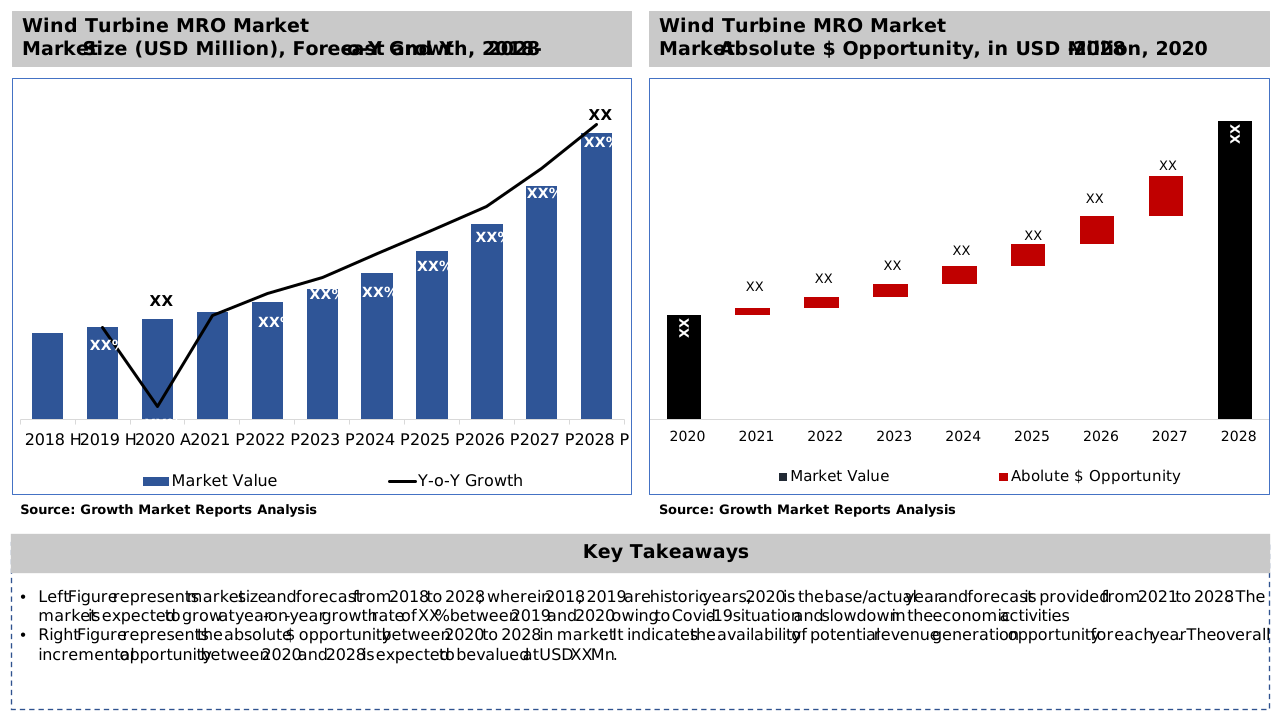
According to our latest research, the global Wind Turbine MRO market size is valued at USD 15.7 billion in 2024, reflecting the robust expansion of the renewable energy sector. The market is anticipated to grow at a CAGR of 8.4% from 2025 to 2033, reaching a forecasted value of USD 32.6 billion by 2033. This strong growth trajectory is primarily driven by the accelerating deployment of wind power installations worldwide, increasing investments in clean energy infrastructure, and the rising need for efficient maintenance, repair, and overhaul (MRO) services to maximize turbine uptime and operational efficiency.
One of the primary growth factors propelling the wind turbine MRO market is the surging global emphasis on renewable energy to mitigate climate change and reduce dependence on fossil fuels. Governments and private sector players are increasingly investing in wind energy projects, both onshore and offshore, to meet stringent emission reduction targets and transition toward sustainable energy portfolios. As the installed base of wind turbines expands, the demand for comprehensive MRO services grows in tandem, ensuring that turbines operate at peak efficiency and reliability throughout their lifecycle. Additionally, the aging of existing wind farms, particularly in mature markets like Europe and North America, is generating substantial opportunities for repair and overhaul services to extend asset lifespans and optimize return on investment.
Technological advancements are another significant driver fueling the growth of the wind turbine MRO market. The integration of digital technologies such as predictive analytics, Internet of Things (IoT) sensors, and remote monitoring systems has revolutionized the way maintenance and repair operations are conducted. These innovations enable proactive identification of potential faults, minimize unplanned downtime, and reduce maintenance costs by optimizing resource allocation. Furthermore, the development of advanced materials and components for wind turbines has increased their reliability and longevity, but also necessitates specialized MRO expertise to manage the complexity of modern turbine systems. As a result, service providers are increasingly investing in training and upskilling their workforce to keep pace with evolving technological requirements.
The growing trend toward offshore wind energy deployment is also significantly influencing the wind turbine MRO market. Offshore wind farms, characterized by larger and more complex turbines, present unique maintenance challenges due to their remote locations and harsh operating environments. This has led to increased demand for specialized MRO services, including the use of autonomous drones, remotely operated vehicles (ROVs), and advanced logistics solutions to ensure timely and cost-effective maintenance. As offshore wind capacity continues to expand, particularly in regions such as Europe, Asia Pacific, and North America, the need for robust and innovative MRO strategies will become even more critical to ensure the reliability and safety of these high-value assets.
Offshore Wind Turbine Maintenance is becoming increasingly crucial as the deployment of offshore wind farms accelerates. These installations, often located in remote and challenging marine environments, require specialized maintenance strategies to ensure their longevity and efficiency. The harsh conditions and logistical challenges associated with offshore sites necessitate the use of advanced technologies such as autonomous drones and remotely operated vehicles for inspections and repairs. As the offshore wind sector continues to grow, particularly in regions like Europe and Asia Pacific, the demand for innovative and robust maintenance solutions is expected to rise, driving further advancements in the field.
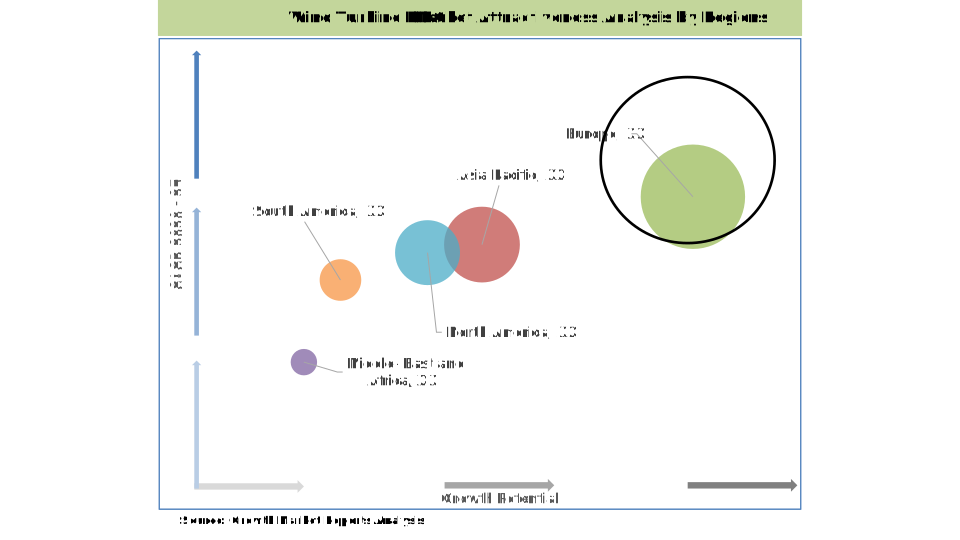
Regionally, Europe remains the dominant market for wind turbine MRO services, owing to its large installed base of wind power assets and early adoption of renewable energy policies. However, Asia Pacific is rapidly emerging as a key growth region, driven by aggressive wind energy targets in countries like China and India, coupled with increasing investments in both onshore and offshore wind projects. North America also presents substantial growth potential, supported by favorable regulatory frameworks and a strong pipeline of new wind installations. The Middle East & Africa and Latin America, while still nascent markets, are expected to witness accelerated growth over the forecast period as governments diversify their energy mix and invest in sustainable development initiatives.
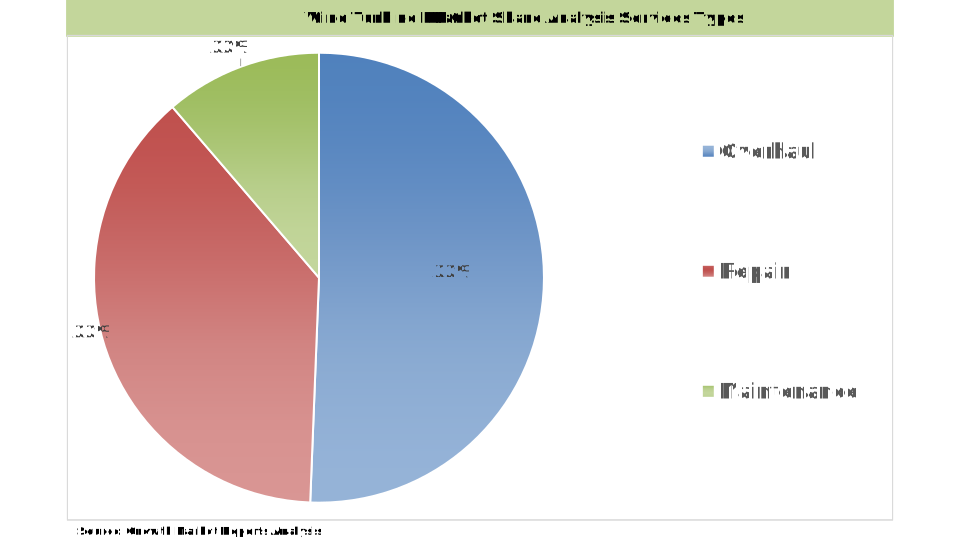
The wind turbine MRO market is broadly segmented by service type into maintenance, repair, and overhaul, each catering to distinct operational needs. Maintenance services, which constitute the largest share of the market, involve routine inspections, lubrication, and performance monitoring to ensure optimal turbine functionality and prevent unexpected breakdowns. The increasing complexity of wind turbines, coupled with the high costs associated with unplanned downtime, has made preventive and predictive maintenance strategies essential for asset owners. As a result, service providers are leveraging advanced diagnostic tools and condition monitoring systems to deliver value-added maintenance solutions that minimize operational disruptions and extend turbine lifespans.
Repair services represent a critical component of the wind turbine MRO market, addressing both minor and major component failures that can significantly impact turbine performance. The growing prevalence of aging wind farms, particularly in mature markets, has led to an uptick in demand for repair services targeting key components such as gearboxes, generators, blades, and control systems. Service providers are increasingly adopting innovative repair techniques, including composite material patching and in-situ repairs, to reduce downtime and maintenance costs. Additionally, the use of digital twins and real-time data analytics is enabling more accurate fault diagnosis and targeted repair interventions, further enhancing the efficiency and effectiveness of repair operations.
Overhaul services, while representing a smaller share of the market compared to maintenance and repair, are nonetheless vital for ensuring the long-term reliability and safety of wind turbines. Overhaul operations typically involve the comprehensive refurbishment or replacement of major turbine components, often as part of scheduled life extension programs or after significant operational wear. The rising trend of repowering aging wind farms, wherein older turbines are upgraded with new components or replaced with more efficient models, is driving demand for specialized overhaul services. Service providers are responding by developing tailored overhaul solutions that address the unique needs of different turbine models and operational environments, thereby maximizing asset value for wind farm owners.
The service type segment is also witnessing increased adoption of remote and automated maintenance solutions, particularly in offshore wind applications where access is challenging and costly. The deployment of drones, robotic inspection systems, and remote monitoring platforms is enabling service providers to conduct detailed inspections and minor repairs without the need for extensive human intervention. This not only improves safety and reduces operational risks but also enhances the scalability and cost-effectiveness of MRO services across large and geographically dispersed wind farms. As digitalization continues to transform the wind energy sector, the service type landscape is expected to evolve further, with a growing emphasis on integrated and data-driven MRO solutions.
Turbine Repowering Services are gaining traction as a strategic approach to enhance the performance and extend the lifespan of existing wind farms. Repowering involves upgrading older turbines with more efficient models or replacing key components to boost energy output and reliability. This process not only improves the operational efficiency of wind farms but also aligns with sustainability goals by maximizing the use of existing infrastructure. As the global wind energy sector matures, particularly in regions with a significant number of aging installations, the demand for repowering services is expected to grow, offering substantial opportunities for service providers specializing in this niche.
| Attributes | Details |
| Report Title | Wind Turbine MRO Market Research Report 2033 |
| By Service Type | Maintenance, Repair, Overhaul |
| By Application | Onshore, Offshore |
| By Service Provider | OEM, Independent Service Provider, In-house |
| By Turbine Capacity | Below 1 MW, 1–3 MW, Above 3 MW |
| Regions Covered | North America, Europe, APAC, Latin America, MEA |
| Base Year | 2024 |
| Historic Data | 2018-2023 |
| Forecast Period | 2025-2033 |
| Number of Pages | 296 |
| Number of Tables & Figures | 372 |
| Customization Available | Yes, the report can be customized as per your need. |
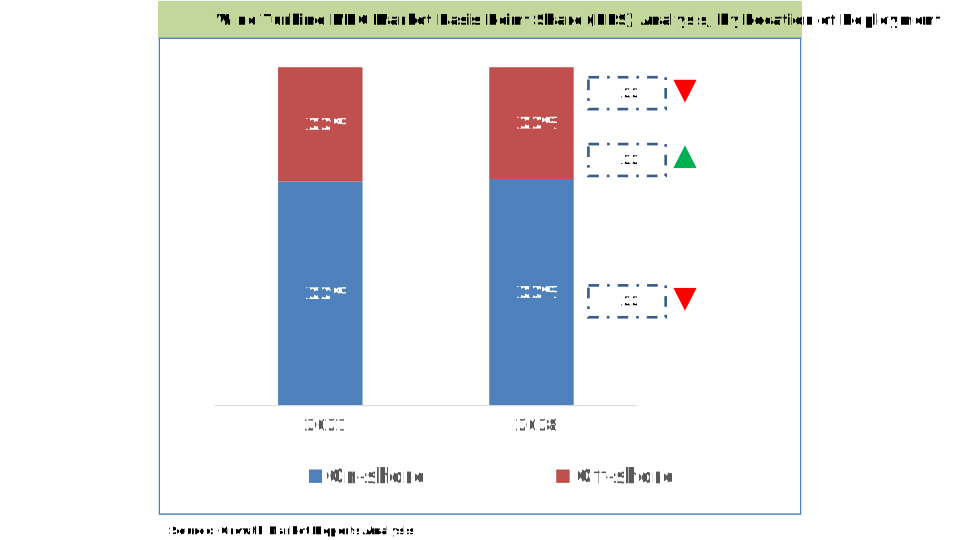
The application segment of the wind turbine MRO market is divided into onshore and offshore, each presenting unique operational challenges and opportunities. Onshore wind farms, which account for the majority of global wind capacity, benefit from relatively easier access and lower maintenance costs compared to their offshore counterparts. The widespread deployment of onshore wind projects across diverse geographies has created a robust demand for MRO services tailored to a variety of turbine models and site conditions. Service providers are leveraging their extensive experience and local presence to deliver customized maintenance, repair, and overhaul solutions that address the specific needs of onshore wind farm operators, thereby ensuring high levels of asset availability and performance.
Offshore wind applications, while representing a smaller share of the total installed capacity, are experiencing rapid growth due to their superior wind resources and larger turbine sizes. The remote and challenging environments of offshore wind farms necessitate specialized MRO strategies, including the use of advanced logistics, weather forecasting, and remote monitoring technologies. Service providers operating in the offshore segment are investing heavily in workforce training, safety protocols, and innovative maintenance solutions to address the unique risks and complexities associated with offshore operations. As offshore wind projects continue to scale up in size and capacity, the demand for high-value, technologically advanced MRO services is expected to increase significantly.
The integration of digital technologies is transforming both onshore and offshore MRO operations, enabling more efficient and proactive maintenance practices. Predictive analytics, IoT-enabled sensors, and real-time data monitoring are being deployed to optimize maintenance schedules, reduce unplanned downtime, and extend turbine lifespans. These innovations are particularly valuable in offshore applications, where the cost and complexity of maintenance activities are considerably higher. By leveraging digital tools, service providers can enhance the reliability and cost-effectiveness of their MRO offerings, delivering greater value to wind farm operators and supporting the continued growth of the wind energy sector.
The increasing focus on sustainability and lifecycle management is also shaping the application landscape of the wind turbine MRO market. Asset owners are prioritizing long-term performance optimization and environmental stewardship by adopting best practices in maintenance, repair, and overhaul. This includes the use of environmentally friendly lubricants, recycling of worn components, and implementation of energy-efficient maintenance processes. As regulatory requirements and stakeholder expectations around sustainability continue to evolve, MRO service providers are adapting their offerings to align with the broader goals of the wind energy industry, further driving growth and innovation in the application segment.
The wind turbine MRO market is characterized by a diverse ecosystem of service providers, including original equipment manufacturers (OEMs), independent service providers (ISPs), and in-house teams operated by wind farm owners. OEMs have traditionally dominated the market, leveraging their deep technical expertise, proprietary knowledge of turbine designs, and established global service networks to deliver comprehensive MRO solutions. Many OEMs offer long-term service agreements and performance-based contracts, ensuring consistent maintenance quality and minimizing operational risks for asset owners. The strong brand reputation and extensive resources of OEMs make them a preferred choice for many large-scale wind projects, particularly in the offshore segment where technical complexity is high.
Independent service providers have emerged as a dynamic and competitive force in the wind turbine MRO market, offering a wide range of maintenance, repair, and overhaul services across multiple turbine brands and models. ISPs are often able to provide more flexible and cost-effective solutions compared to OEMs, particularly for aging wind farms and out-of-warranty assets. Their ability to innovate and adapt quickly to changing market demands has enabled ISPs to capture a growing share of the MRO market, especially in regions with a large installed base of diverse turbine technologies. Strategic partnerships and collaborations with technology providers are further enhancing the capabilities and market reach of leading ISPs.
In-house service teams, operated directly by wind farm owners or operators, represent another important segment of the wind turbine MRO market. By developing internal maintenance and repair capabilities, asset owners can exercise greater control over operational costs, maintenance schedules, and workforce management. In-house teams are particularly common among large utility-scale wind farm operators with significant experience and resources, allowing them to tailor MRO strategies to their specific operational requirements. However, the complexity of modern turbine technologies and the need for specialized expertise often necessitate collaboration with OEMs or ISPs for certain high-value or technically demanding maintenance activities.
The competitive landscape among service providers is intensifying as the wind turbine MRO market matures and evolves. Service providers are increasingly differentiating themselves through the adoption of digital technologies, development of specialized service offerings, and investment in workforce training and certification. The trend toward integrated and performance-based service models is also gaining traction, with providers offering end-to-end solutions that encompass maintenance, repair, overhaul, and asset management. As the market continues to expand, collaboration and consolidation among service providers are expected to increase, driving further innovation and value creation in the service provider segment.
The wind turbine MRO market is segmented by turbine capacity into below 1 MW, 1–3 MW, and above 3 MW categories, each presenting distinct maintenance and operational requirements. Turbines with capacities below 1 MW are typically deployed in small-scale or distributed wind projects, often in remote or off-grid locations. The maintenance needs of these smaller turbines are generally less complex, but the dispersed nature of installations can pose logistical challenges for service providers. As distributed wind energy gains traction in rural and developing regions, the demand for cost-effective and scalable MRO solutions for sub-1 MW turbines is expected to grow, creating new opportunities for specialized service providers.
Wind Farm Asset Management is emerging as a critical component in the optimization of wind energy operations. Effective asset management strategies encompass a range of activities, from routine maintenance and performance monitoring to strategic planning and lifecycle management. By integrating digital technologies such as predictive analytics and IoT-enabled sensors, asset managers can enhance the reliability and efficiency of wind farms, reduce operational costs, and extend the lifespan of turbines. As the wind energy sector continues to expand, the role of asset management in ensuring sustainable and profitable operations is becoming increasingly important, driving demand for comprehensive and data-driven asset management solutions.
The 1–3 MW turbine segment represents the largest share of the global wind turbine MRO market, reflecting the widespread adoption of medium-sized turbines in both onshore and offshore wind projects. These turbines strike a balance between power output, efficiency, and maintenance complexity, making them the preferred choice for a broad range of applications. The maintenance and repair requirements for 1–3 MW turbines are more demanding than those for smaller units, necessitating advanced diagnostic tools, skilled technicians, and comprehensive service strategies. Service providers are increasingly offering bundled maintenance packages and predictive analytics solutions to address the specific needs of this segment, ensuring high levels of asset availability and operational efficiency.
Turbines with capacities above 3 MW are predominantly deployed in large-scale utility and offshore wind projects, where maximizing energy output and minimizing downtime are critical priorities. The sheer size and complexity of these high-capacity turbines require specialized MRO expertise, advanced inspection technologies, and robust logistics support. Offshore wind farms, in particular, are driving demand for innovative maintenance solutions that can address the unique challenges of operating in harsh marine environments. Service providers are responding by investing in workforce training, remote monitoring platforms, and autonomous inspection technologies to deliver high-value MRO services for above 3 MW turbines.
The increasing trend toward larger turbine capacities is reshaping the MRO landscape, driving the need for more sophisticated maintenance strategies and technologies. As turbine sizes continue to grow, the cost and complexity of maintenance activities are expected to increase, placing a premium on predictive maintenance, remote diagnostics, and automated inspection solutions. Service providers that can deliver scalable, technology-driven MRO offerings tailored to the needs of high-capacity turbines are well-positioned to capture a growing share of the market. The turbine capacity segment is thus a key focus area for innovation and investment in the wind turbine MRO market.
The wind turbine MRO market presents significant opportunities for growth and innovation, driven by the global transition to renewable energy and the increasing focus on asset optimization. The rapid expansion of wind power installations, particularly in emerging markets, is creating substantial demand for comprehensive MRO services to ensure the reliability and longevity of wind assets. The integration of digital technologies, such as predictive analytics, IoT-enabled sensors, and remote monitoring platforms, is enabling service providers to deliver more efficient, proactive, and cost-effective maintenance solutions. These advancements are not only reducing operational costs and downtime but also enhancing the overall value proposition for wind farm owners and operators. Additionally, the growing trend toward performance-based service agreements and integrated asset management solutions is opening up new revenue streams and business models for MRO providers.
Another major opportunity lies in the offshore wind segment, which is experiencing rapid growth due to its superior wind resources and increasing government support. The unique maintenance challenges associated with offshore wind farms, including difficult access and harsh operating environments, are driving demand for innovative MRO solutions such as autonomous drones, remotely operated vehicles, and advanced logistics support. Service providers that can develop and deliver specialized offshore MRO offerings are well-positioned to capitalize on this high-growth segment. Furthermore, the ongoing repowering and refurbishment of aging wind farms, particularly in mature markets, is generating significant demand for overhaul and upgrade services, creating additional opportunities for MRO providers to expand their market presence and service portfolios.
Despite these opportunities, the wind turbine MRO market faces several restraining factors that could impact its growth trajectory. One of the primary challenges is the shortage of skilled technicians and specialized workforce required to perform complex maintenance and repair tasks, particularly for high-capacity and offshore turbines. The increasing technical complexity of modern wind turbines, coupled with the need for advanced diagnostic and inspection technologies, is raising the bar for workforce training and certification. Additionally, the high upfront costs associated with digitalization and automation of MRO operations can be a barrier for smaller service providers and asset owners. Regulatory uncertainties, supply chain disruptions, and fluctuating commodity prices also pose risks to market stability and growth. Addressing these challenges will require concerted efforts from industry stakeholders to invest in workforce development, technology adoption, and collaborative partnerships.
Europe continues to lead the global wind turbine MRO market, accounting for approximately 38% of the total market value in 2024, or around USD 6.0 billion. The region's dominance is underpinned by its large installed base of wind power assets, early adoption of renewable energy policies, and a well-established ecosystem of service providers. Countries such as Germany, the United Kingdom, Denmark, and Spain are at the forefront of wind energy deployment and innovation, driving demand for advanced MRO solutions. The European market is also characterized by a strong focus on offshore wind, which is creating new opportunities for specialized MRO services and technologies. The region is expected to maintain a steady growth trajectory over the forecast period, supported by ongoing investments in wind energy infrastructure and asset optimization.
Asia Pacific is emerging as the fastest-growing region in the wind turbine MRO market, with a projected CAGR of 10.1% from 2025 to 2033. The region's market size is estimated at USD 4.8 billion in 2024, driven by aggressive wind energy targets in China, India, Japan, and South Korea. China, in particular, is the world's largest wind power market and is investing heavily in both onshore and offshore wind projects. The rapid expansion of wind capacity in Asia Pacific is generating substantial demand for MRO services, particularly as the installed base of turbines ages and requires more frequent maintenance and repair. Local service providers are increasingly adopting digital technologies and forming strategic partnerships to enhance their capabilities and meet the evolving needs of the market.
North America represents another significant market for wind turbine MRO services, with a market size of USD 3.2 billion in 2024. The United States and Canada are the primary contributors to regional growth, supported by favorable regulatory frameworks, tax incentives, and a strong pipeline of new wind installations. The North American market is characterized by a diverse mix of onshore and offshore wind projects, creating demand for a wide range of MRO solutions. The region is also witnessing increased adoption of digital maintenance technologies and performance-based service agreements, driving innovation and efficiency in MRO operations. Latin America and the Middle East & Africa, while currently accounting for smaller shares of the global market, are expected to experience accelerated growth over the forecast period as governments invest in renewable energy infrastructure and diversify their energy mix.
The competitive landscape of the wind turbine MRO market is characterized by the presence of a mix of global original equipment manufacturers (OEMs), independent service providers (ISPs), and local in-house teams. The market is highly dynamic, with competition intensifying as service providers strive to differentiate themselves through technological innovation, service quality, and value-added offerings. Leading OEMs leverage their proprietary knowledge, extensive service networks, and long-term service agreements to maintain a strong foothold in the market. At the same time, ISPs are gaining traction by offering flexible, cost-effective solutions and targeting out-of-warranty and multi-brand wind farms. The trend toward digitalization and data-driven maintenance is further reshaping the competitive landscape, with service providers investing in advanced analytics, remote monitoring, and predictive maintenance capabilities to enhance their service offerings and gain a competitive edge.
Strategic partnerships, mergers, and acquisitions are increasingly common in the wind turbine MRO market, as companies seek to expand their geographic reach, diversify their service portfolios, and access new technologies. Collaboration between OEMs and ISPs is also on the rise, enabling the delivery of integrated and comprehensive MRO solutions that address the full spectrum of maintenance, repair, and overhaul needs. The growing importance of offshore wind and high-capacity turbines is driving further specialization and innovation among service providers, with a focus on developing tailored solutions for complex and demanding operational environments. As the market continues to evolve, the ability to deliver high-quality, reliable, and cost-effective MRO services will be a key determinant of competitive success.
Workforce development and training are critical areas of focus for market players, given the increasing technical complexity of modern wind turbines and the shortage of skilled technicians. Leading service providers are investing in training programs, certification schemes, and knowledge-sharing initiatives to build a highly skilled and adaptable workforce capable of meeting the evolving needs of the industry. The adoption of digital tools and remote inspection technologies is also enabling service providers to enhance operational efficiency, reduce costs, and improve safety outcomes. As the wind turbine MRO market matures, the emphasis on innovation, collaboration, and workforce excellence will continue to shape the competitive landscape.
Major companies operating in the wind turbine MRO market include Siemens Gamesa Renewable Energy, Vestas Wind Systems, GE Renewable Energy, Nordex SE, Suzlon Energy, Enercon GmbH, Goldwind, and Senvion. Siemens Gamesa and Vestas are recognized for their global service networks, advanced digital maintenance solutions, and long-term service agreements. GE Renewable Energy is a leader in digitalization and predictive analytics, offering comprehensive MRO services across a wide range of turbine models. Nordex and Suzlon focus on delivering cost-effective and flexible MRO solutions, particularly in emerging markets. Enercon and Goldwind have established strong regional presences, leveraging their technical expertise and local knowledge to deliver tailored MRO services. Senvion, despite recent restructuring, continues to provide specialized maintenance and repair solutions for its installed base. These companies are continuously innovating and expanding their service offerings to address the evolving needs of the wind energy sector and maintain their competitive positions in the global market.
The Wind Turbine MRO market has been segmented on the basis of
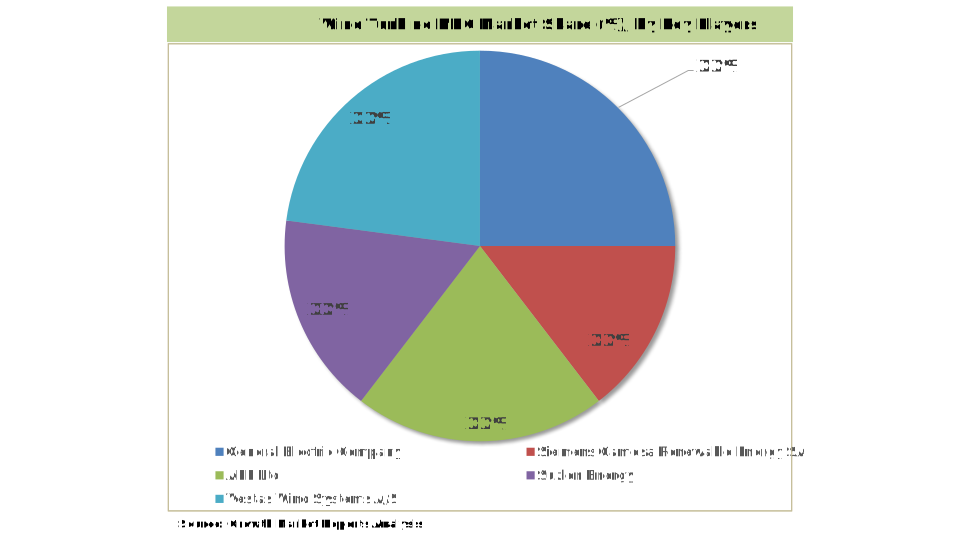
Key players competing in the wind turbine MRO market include General Electric Company; Siemens Gamesa Renewable Energy SA; ABB Ltd; Suzlon Energy; Vestas Wind Systems A/S.
Some of these players are targeting on business strategies such as mergers, acquisitions, partnerships, collaborations, capacity expansion, and product launches to increase their market shares. For instance.
In October 2021, Siemens AG and Deutsch bahn (DB) presents the first automatic train that operates itself on rail traffic.
Trends include the adoption of digital and automated maintenance solutions, performance-based service agreements, integration of advanced analytics, and a focus on sustainability and lifecycle management.
Onshore wind farms benefit from easier access and lower maintenance costs, while offshore wind farms require specialized MRO strategies due to remote locations and harsh environments, often utilizing drones, ROVs, and advanced logistics.
Key companies include Siemens Gamesa Renewable Energy, Vestas Wind Systems, GE Renewable Energy, Nordex SE, Suzlon Energy, Enercon GmbH, Goldwind, Senvion, and others.
Challenges include a shortage of skilled technicians, increasing technical complexity of turbines, high upfront costs for digitalization, regulatory uncertainties, supply chain disruptions, and fluctuating commodity prices.
Europe is the dominant market, accounting for about 38% of the global value, followed by Asia Pacific (fastest-growing), North America, Latin America, and the Middle East & Africa.
The main service types are maintenance (routine inspections, lubrication, monitoring), repair (fixing or replacing faulty components), and overhaul (comprehensive refurbishment or replacement of major parts).
Digital technologies such as predictive analytics, IoT sensors, and remote monitoring are enabling proactive maintenance, reducing unplanned downtime, and optimizing resource allocation, which lowers maintenance costs and increases turbine reliability.
Key growth drivers include the global shift toward renewable energy, increasing wind power installations, rising investments in clean energy infrastructure, and the need for efficient MRO services to maximize turbine uptime and operational efficiency.
The wind turbine MRO market is expected to grow at a CAGR of 8.4% from 2025 to 2033, reaching USD 32.6 billion by 2033.
As of 2024, the global wind turbine MRO (Maintenance, Repair, and Overhaul) market is valued at USD 15.7 billion.