Segments - by Product Type (Adapters, Routers, Docking Stations, Others), by Technology (802.11ad, 802.11ay), by Application (Consumer Electronics, Networking Devices, Industrial, Automotive, Others), by End-User (Residential, Commercial, Industrial)
According to our latest research, the global WiGig market size stood at USD 2.1 billion in 2024, demonstrating robust growth driven by the increasing demand for ultra-high-speed wireless connectivity. The market is poised to expand at a CAGR of 25.7% from 2025 to 2033, reaching a projected value of USD 16.1 billion by 2033. This remarkable growth trajectory is primarily fueled by the proliferation of data-intensive applications, rising adoption of next-generation consumer electronics, and the need for seamless, high-bandwidth wireless communication in both enterprise and residential environments.
A key factor propelling the WiGig market is the rapid evolution of wireless communication standards and the integration of WiGig technology into an expanding array of devices. With the exponential increase in data consumption due to 4K/8K video streaming, virtual and augmented reality, and cloud-based gaming, traditional Wi-Fi technologies are often insufficient to deliver the required performance. WiGig, based on the IEEE 802.11ad and 802.11ay standards, operates in the 60 GHz frequency band, enabling multi-gigabit data rates and ultra-low latency. This makes it ideal for applications demanding high throughput and real-time responsiveness, such as wireless docking, high-speed file transfers, and wireless display connectivity, thereby accelerating its adoption across various sectors.
The growing trend toward smart homes and the Internet of Things (IoT) ecosystem is another significant growth driver for the WiGig market. As consumers increasingly embrace connected devices, from smart TVs and speakers to security systems and home automation hubs, the need for reliable, high-speed wireless networking has become paramount. WiGig technology addresses this need by providing the bandwidth necessary to support simultaneous device connections without compromising speed or stability. Additionally, the enterprise sector is leveraging WiGig for wireless office environments, enabling flexible workspaces, rapid data sharing, and enhanced collaboration, which further boosts market growth.
Technological advancements and ongoing investments in R&D by leading market players are also fostering innovation in the WiGig space. Companies are focusing on enhancing the range, efficiency, and interoperability of WiGig-enabled devices, making them more accessible and affordable for mainstream consumers and businesses alike. The emergence of 802.11ay, which offers improved range and throughput over its predecessor 802.11ad, is expected to unlock new opportunities in industrial automation, automotive connectivity, and smart infrastructure. As regulatory bodies worldwide allocate more spectrum for unlicensed use in the 60 GHz band, market participants are poised to capitalize on the expanding ecosystem of WiGig-compatible products and solutions.
Regionally, North America leads the global WiGig market, driven by early technology adoption, a strong presence of leading manufacturers, and substantial investments in digital infrastructure. However, the Asia Pacific region is emerging as a high-growth market, fueled by rapid urbanization, rising disposable income, and government initiatives to promote smart cities and digital transformation. Europe also holds a significant share, supported by advancements in industrial automation and automotive sectors. Meanwhile, Latin America and the Middle East & Africa are witnessing gradual uptake as awareness and affordability of WiGig technology improve.
The WiGig market by product type is segmented into adapters, routers, docking stations, and others, each playing a critical role in the overall ecosystem. Adapters are essential for enabling legacy devices to take advantage of WiGig’s high-speed capabilities, making them a popular choice among both consumers and enterprises seeking to upgrade existing infrastructure without complete hardware replacement. These adapters are widely used in office environments for wireless docking solutions and in consumer electronics for connecting high-definition displays, contributing significantly to market revenue. The increasing demand for seamless and cable-free connectivity in both residential and commercial spaces is expected to sustain strong growth in this segment.
Routers represent another vital segment within the WiGig market, as they serve as the central hub for wireless data transmission across multiple devices. The adoption of WiGig-enabled routers is gaining traction, particularly in environments that require ultra-fast data transfer rates and minimal latency, such as smart homes, gaming setups, and enterprise workspaces. With the rising consumption of bandwidth-intensive content and the proliferation of connected devices, WiGig routers offer a compelling solution for managing network congestion and delivering consistent performance. Manufacturers are continually enhancing these routers with advanced features like beamforming, MU-MIMO, and seamless integration with existing Wi-Fi networks, further driving their adoption.
Docking stations equipped with WiGig technology are transforming the way users interact with their computing devices, especially in enterprise and educational settings. These docking stations enable users to connect laptops and other mobile devices to peripherals, displays, and networks wirelessly, providing unmatched flexibility and convenience. The trend toward hot-desking, remote work, and collaborative office environments has spurred demand for WiGig docking solutions, as they eliminate cable clutter and streamline workspace management. As organizations prioritize agility and employee experience, the docking station segment is expected to witness robust growth throughout the forecast period.
The “others” category encompasses a diverse range of WiGig-enabled products, including wireless VR headsets, cameras, and specialized industrial equipment. This segment, while smaller in comparison to adapters, routers, and docking stations, is rapidly evolving as new use cases for ultra-high-speed wireless connectivity emerge. For instance, industries such as healthcare are exploring WiGig for real-time data transfer in medical imaging, while automotive manufacturers are integrating WiGig into in-car entertainment and infotainment systems. The versatility of WiGig technology ensures that the “others” segment will continue to expand as innovation drives the development of novel applications.
| Attributes | Details |
| Report Title | WiGig Market Research Report 2033 |
| By Product Type | Adapters, Routers, Docking Stations, Others |
| By Technology | 802.11ad, 802.11ay |
| By Application | Consumer Electronics, Networking Devices, Industrial, Automotive, Others |
| By End-User | Residential, Commercial, Industrial |
| Regions Covered | North America, Europe, APAC, Latin America, MEA |
| Base Year | 2024 |
| Historic Data | 2018-2023 |
| Forecast Period | 2025-2033 |
| Number of Pages | 280 |
| Number of Tables & Figures | 338 |
| Customization Available | Yes, the report can be customized as per your need. |
The WiGig market is primarily driven by two key technology standards: 802.11ad and 802.11ay. The 802.11ad standard, which marked the initial commercialization of WiGig, provides data rates up to 7 Gbps and operates in the 60 GHz frequency band. This technology is well-suited for short-range, high-throughput applications such as wireless docking, HD video streaming, and rapid file transfers. Its adoption has been particularly strong in consumer electronics and office environments, where the need for cable-free, high-speed connectivity is paramount. Despite its impressive speed, the range limitations of 802.11ad have prompted ongoing innovation to address broader use cases.
The introduction of the 802.11ay standard represents a significant technological leap for the WiGig market. Building upon the foundation of 802.11ad, 802.11ay enhances data rates to up to 40 Gbps, extends range, and supports multi-user MIMO (MU-MIMO), making it suitable for more demanding and diverse applications. This advancement enables WiGig technology to penetrate new verticals, including industrial automation, smart factories, and connected vehicles, where reliable, low-latency wireless communication is critical. The growing deployment of 802.11ay-based solutions is expected to accelerate market growth and foster the development of next-generation wireless ecosystems.
The coexistence of 802.11ad and 802.11ay in the market offers end-users flexibility in selecting the technology that best fits their requirements. While 802.11ad remains popular for consumer and office applications due to its cost-effectiveness and maturity, 802.11ay is gaining momentum in enterprise and industrial settings that demand higher performance and scalability. Manufacturers are increasingly offering dual-standard devices to cater to a broader customer base and facilitate seamless transitions as organizations upgrade their wireless infrastructure. This dual-technology approach is instrumental in maximizing market penetration and supporting diverse use cases.
Ongoing research and development efforts are focused on further enhancing the capabilities of WiGig technology, such as improving energy efficiency, reducing interference, and enabling better integration with other wireless protocols. These advancements are critical for supporting emerging applications like augmented reality, autonomous vehicles, and high-density IoT deployments. As the technology matures and economies of scale drive down costs, the adoption of both 802.11ad and 802.11ay is expected to accelerate, solidifying WiGig’s position as a cornerstone of next-generation wireless connectivity.
WiGig technology is making significant inroads across a variety of application areas, including consumer electronics, networking devices, industrial automation, automotive, and others. In the consumer electronics segment, WiGig is increasingly being integrated into high-end smartphones, laptops, tablets, and smart TVs to enable seamless wireless data transfer, ultra-fast media streaming, and immersive virtual reality experiences. The demand for high-definition content and low-latency gaming is propelling manufacturers to incorporate WiGig into their flagship products, thereby enhancing user experience and driving market growth.
Networking devices such as access points, routers, and wireless bridges represent another major application area for WiGig technology. The need for robust, high-capacity wireless networks in enterprise environments, educational institutions, and public spaces is fueling the adoption of WiGig-enabled networking solutions. These devices are particularly valuable in scenarios where wired connectivity is impractical or cost-prohibitive, providing a flexible and scalable alternative for high-speed data transmission. As organizations embrace digital transformation and remote work models, the deployment of WiGig networking devices is expected to rise significantly.
The industrial sector is leveraging WiGig technology to support the growing demand for wireless automation, real-time monitoring, and machine-to-machine communication. Applications such as wireless robotics, automated guided vehicles, and industrial IoT devices benefit from WiGig’s low latency and high bandwidth, enabling efficient and reliable operations in smart factories and warehouses. The adoption of WiGig in industrial settings is further supported by the trend toward Industry 4.0 and the increasing focus on operational efficiency and productivity.
In the automotive industry, WiGig is being explored for a range of innovative applications, including in-car entertainment, wireless data transfer between vehicles and infrastructure, and advanced driver assistance systems. The ability to transmit large volumes of data quickly and securely is essential for supporting connected and autonomous vehicles, making WiGig an attractive solution for automotive OEMs and suppliers. As the automotive sector continues to evolve toward greater connectivity and automation, the integration of WiGig technology is expected to become increasingly prevalent.
Other emerging applications of WiGig include healthcare, where it is used for high-speed transmission of medical images and data, and smart cities, where it supports wireless surveillance, public Wi-Fi, and intelligent transportation systems. The versatility and performance advantages of WiGig position it as a key enabler of next-generation applications across diverse industries, ensuring sustained market growth in the years ahead.
The WiGig market caters to a diverse range of end-users, including residential, commercial, and industrial segments, each with unique requirements and adoption drivers. In the residential sector, the proliferation of smart home devices and the growing demand for high-speed internet access are driving the adoption of WiGig-enabled solutions. Homeowners are increasingly seeking wireless connectivity that can support multiple devices simultaneously, stream high-definition content, and enable seamless gaming and virtual reality experiences. WiGig technology addresses these needs by delivering multi-gigabit speeds and low latency, making it an attractive choice for modern households.
The commercial sector, encompassing offices, retail establishments, educational institutions, and hospitality venues, represents a significant market for WiGig technology. Businesses are leveraging WiGig to create flexible, cable-free workspaces, enhance collaboration through wireless conferencing and file sharing, and improve customer experiences in retail and hospitality settings. The shift toward remote and hybrid work models has further accelerated the adoption of WiGig in commercial environments, as organizations seek to provide employees with reliable, high-speed wireless connectivity regardless of location. The ability to support high device density and ensure consistent performance is a key advantage of WiGig in commercial deployments.
Industrial end-users are increasingly adopting WiGig technology to support automation, real-time monitoring, and wireless communication in manufacturing plants, warehouses, and logistics centers. The need for reliable, high-bandwidth connectivity to support machine-to-machine communication, data analytics, and process optimization is driving the deployment of WiGig-enabled solutions in industrial settings. The technology’s ability to operate in challenging environments, coupled with its low latency and high throughput, makes it well-suited for supporting Industry 4.0 initiatives and the digital transformation of industrial operations.
Across all end-user segments, the adoption of WiGig is being facilitated by ongoing advancements in device interoperability, ease of integration, and cost-effectiveness. As the ecosystem of WiGig-compatible products expands and economies of scale drive down prices, adoption barriers are expected to diminish, enabling broader penetration across residential, commercial, and industrial markets. The versatility of WiGig technology ensures that it can address the unique connectivity needs of each end-user segment, supporting a wide range of applications and use cases.
The WiGig market presents a wealth of opportunities for technological innovation and market expansion. One of the most promising opportunities lies in the integration of WiGig with emerging technologies such as augmented reality, virtual reality, and the Internet of Things. The ability to deliver ultra-high-speed, low-latency wireless connectivity is critical for enabling immersive experiences and supporting real-time data exchange in complex IoT ecosystems. As industries such as healthcare, automotive, and manufacturing embrace digital transformation, the demand for WiGig-enabled solutions is expected to surge, creating new revenue streams for manufacturers and service providers.
Another significant opportunity for the WiGig market is the growing trend toward smart cities and digital infrastructure development. Governments and municipalities worldwide are investing in smart city initiatives to enhance urban living, improve public safety, and optimize resource management. WiGig technology can play a pivotal role in supporting wireless surveillance, public Wi-Fi, intelligent transportation systems, and connected infrastructure, driving its adoption in urban environments. The expansion of 5G networks and the increasing availability of unlicensed spectrum in the 60 GHz band further enhance the market potential for WiGig, enabling seamless integration with other wireless technologies and supporting the development of next-generation connectivity solutions.
Despite the numerous growth opportunities, the WiGig market faces certain restraining factors that could hinder its expansion. One of the primary challenges is the limited range and penetration of WiGig signals, which can be obstructed by physical barriers such as walls and furniture. While ongoing advancements in beamforming and antenna technologies are helping to mitigate these limitations, the short range of WiGig remains a concern for some applications, particularly in large or complex environments. Additionally, the relatively high cost of WiGig-enabled devices compared to traditional Wi-Fi solutions may pose a barrier to adoption, especially in price-sensitive markets. Addressing these challenges will be critical for unlocking the full potential of the WiGig market.
North America continues to dominate the global WiGig market, accounting for approximately 38% of total revenue in 2024, which translates to around USD 798 million. The region’s leadership is attributed to early adoption of advanced wireless technologies, a strong presence of leading market players, and significant investments in digital infrastructure. The United States, in particular, is at the forefront of WiGig deployment, driven by high consumer demand for premium electronics, enterprise digitization, and the proliferation of smart homes and offices. Canada is also witnessing steady growth, supported by government initiatives to promote broadband connectivity and smart city development.
The Asia Pacific region is emerging as the fastest-growing market for WiGig, with a projected CAGR of 29.3% from 2025 to 2033. In 2024, the region accounted for approximately 28% of the global market, or USD 588 million. Rapid urbanization, rising disposable income, and increasing adoption of smart devices are key factors driving demand for WiGig-enabled solutions in countries such as China, Japan, South Korea, and India. Government initiatives to promote digital transformation, coupled with the expansion of 5G networks and investments in smart infrastructure, are further accelerating market growth in the region. The presence of major electronics manufacturers and a thriving startup ecosystem also contribute to the region’s dynamic WiGig market landscape.
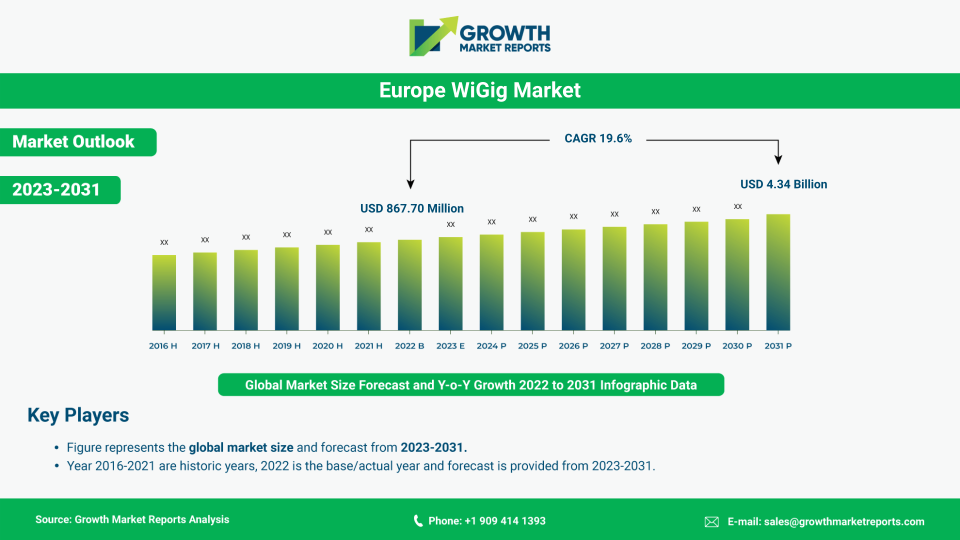
Europe represents a significant share of the global WiGig market, accounting for around 22% of total revenue in 2024, or approximately USD 462 million. The region’s growth is supported by advancements in industrial automation, automotive innovation, and the increasing adoption of smart home technologies. Countries such as Germany, the United Kingdom, and France are leading the way in deploying WiGig solutions across various sectors, including manufacturing, healthcare, and transportation. The European Union’s focus on digitalization and sustainable urban development is expected to drive further adoption of WiGig technology in the coming years. Meanwhile, Latin America and the Middle East & Africa are gradually embracing WiGig as awareness and affordability improve, collectively accounting for the remaining 12% of the global market.
The competitive landscape of the WiGig market is characterized by intense rivalry among global technology giants, specialized networking companies, and innovative startups. Market leaders are focused on expanding their product portfolios, enhancing technological capabilities, and strengthening their distribution networks to capture a larger share of the rapidly growing market. Strategic partnerships, mergers and acquisitions, and investments in research and development are common strategies employed by key players to maintain their competitive edge and drive innovation in WiGig technology.
Leading companies are investing heavily in the development of next-generation WiGig solutions that offer improved range, throughput, and interoperability. These efforts are aimed at addressing the evolving needs of consumers and enterprises, as well as capitalizing on emerging opportunities in industrial automation, automotive connectivity, and smart infrastructure. Collaboration with chipset manufacturers, device OEMs, and service providers is also a critical component of market strategy, enabling companies to deliver integrated solutions that offer seamless user experiences and maximize the value of WiGig technology.
In addition to established players, the WiGig market is witnessing the entry of new entrants and startups that are bringing innovative products and business models to the table. These companies are leveraging advancements in semiconductor technology, antenna design, and software optimization to develop cost-effective and high-performance WiGig solutions. The dynamic nature of the market fosters a culture of continuous innovation, with companies competing to introduce breakthrough products and capture emerging growth opportunities.
Some of the major companies operating in the WiGig market include Qualcomm Technologies Inc., Broadcom Inc., Intel Corporation, Cisco Systems Inc., Panasonic Corporation, Dell Technologies Inc., Netgear Inc., TP-Link Technologies Co. Ltd., and Samsung Electronics Co. Ltd. Qualcomm is a pioneer in WiGig chipset development and has played a pivotal role in advancing the adoption of the technology across various device categories. Broadcom and Intel are also prominent players, offering a wide range of WiGig solutions for consumer electronics, networking devices, and industrial applications. Cisco and Dell are leveraging their expertise in enterprise networking to deliver WiGig-enabled solutions for commercial and industrial environments.
Panasonic and Samsung are at the forefront of integrating WiGig technology into consumer electronics, including smart TVs, laptops, and smartphones, while Netgear and TP-Link are leading providers of WiGig-enabled routers and networking devices. These companies are continuously innovating to enhance product performance, reduce costs, and expand the range of applications supported by WiGig technology. The collective efforts of these market leaders and emerging players are driving the growth and evolution of the global WiGig market, positioning it for sustained expansion in the years ahead.
The WiGig market has been segmented on the basis of
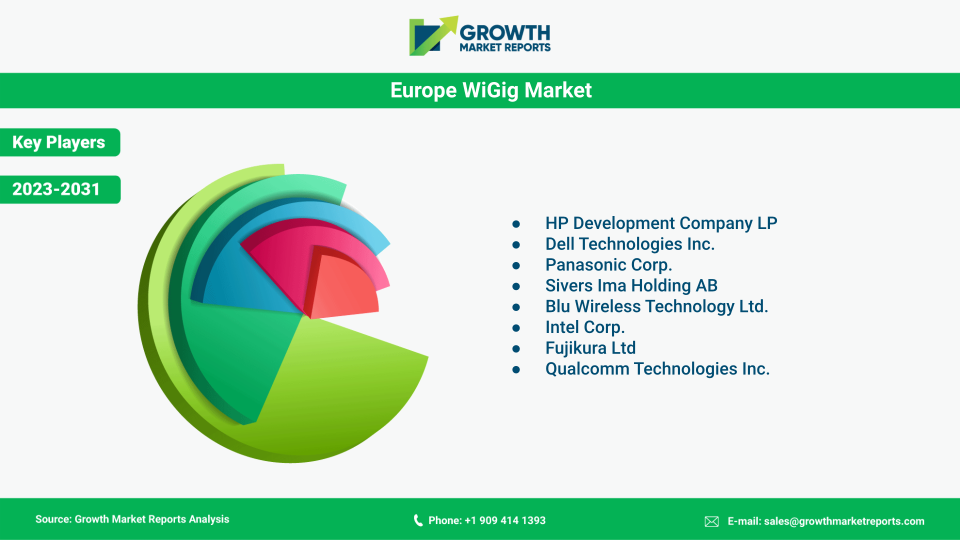
Key players competing in the Europe WiGig market include HP Development Company LP; Dell Technologies Inc.; Panasonic Corp.; Sivers Ima Holding AB; Blu Wireless Technology Ltd.; Intel Corp.; Fujikura Ltd; Qualcomm Technologies Inc.; Broadcom Inc.; Cisco Systems Inc.; and Lenovo Group Ltd.
Some of these players are using several market strategies such as acquisitions, merger, collaborations, partnerships, capacity expansion, and product launches to enhance their market shares and raise their production line of the business in the coming years.
Yes, WiGig is increasingly used in smart homes and IoT ecosystems to provide reliable, high-speed wireless networking for multiple connected devices, supporting applications like smart TVs, security systems, and home automation hubs.
WiGig is used in consumer electronics for high-speed data transfer and media streaming, in networking devices for robust wireless networks, in industrial automation for real-time monitoring, and in automotive for in-car entertainment and connected vehicle solutions.
Major companies in the WiGig market include Qualcomm Technologies Inc., Intel Corporation, Broadcom Inc., Cisco Systems Inc., Panasonic Corporation, Samsung Electronics Co. Ltd., Netgear Inc., TP-Link Technologies Co. Ltd., and Dell Technologies Inc.
Opportunities include integration with AR/VR, IoT, and smart city infrastructure. Challenges include limited signal range and penetration, and the relatively high cost of WiGig-enabled devices compared to traditional Wi-Fi solutions.
North America leads the global WiGig market, followed by Asia Pacific and Europe. North America benefits from early technology adoption and strong digital infrastructure, while Asia Pacific is the fastest-growing region due to rapid urbanization and smart device adoption.
802.11ad offers data rates up to 7 Gbps and is suited for short-range, high-throughput applications. 802.11ay builds on this by providing up to 40 Gbps speeds, extended range, and multi-user MIMO support, making it suitable for more demanding and diverse applications.
The main product types in the WiGig market are adapters, routers, docking stations, and other devices such as wireless VR headsets, cameras, and industrial equipment.
Key industries driving WiGig adoption include consumer electronics, networking devices, industrial automation, automotive, and smart home/IoT sectors. Applications range from high-definition media streaming and gaming to industrial automation and in-car entertainment.
The global WiGig market was valued at USD 2.1 billion in 2024 and is expected to reach USD 16.1 billion by 2033, growing at a CAGR of 25.7% from 2025 to 2033.
WiGig is a wireless communication technology based on IEEE 802.11ad and 802.11ay standards, operating in the 60 GHz frequency band. It enables ultra-high-speed, multi-gigabit data rates and ultra-low latency, making it ideal for applications like wireless docking, high-speed file transfers, and wireless display connectivity.