Segments - by Component (Solutions, Services), by Deployment Mode (On-Premises, Cloud), by Organization Size (Small and Medium Enterprises, Large Enterprises), by Application (BFSI, Healthcare, IT and Telecommunications, Manufacturing, Retail, Government, Others)
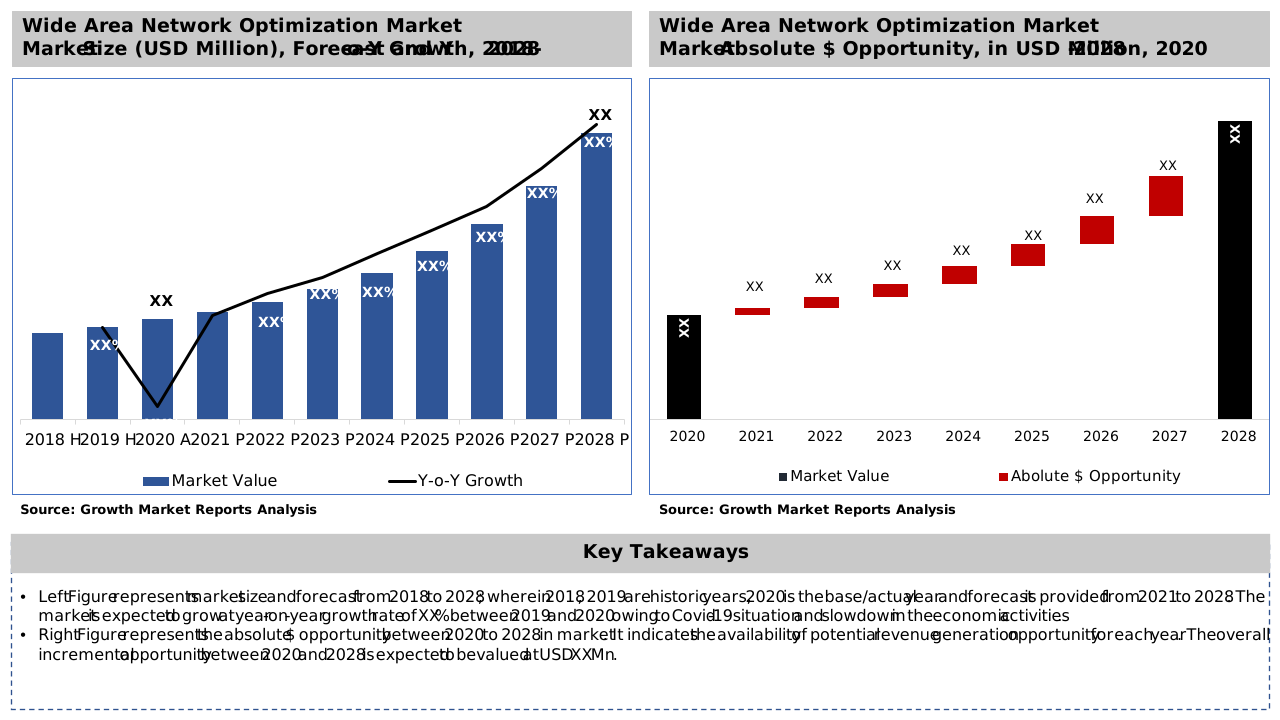
According to our latest research, the global Wide Area Network (WAN) Optimization market size reached USD 1.82 billion in 2024, reflecting robust demand across multiple industries. The market is exhibiting a strong growth trajectory with a CAGR of 7.1% from 2025 to 2033, and is forecasted to attain a value of USD 3.37 billion by 2033. This remarkable expansion is driven by the increasing need for efficient network performance, the proliferation of cloud-based applications, and the surge in remote workforce adoption worldwide.
One of the primary growth factors propelling the WAN optimization market is the rapid digital transformation initiatives undertaken by enterprises of all sizes. As organizations increasingly migrate their operations to the cloud and adopt Software-as-a-Service (SaaS) applications, the demand for seamless connectivity and robust network performance has become paramount. WAN optimization solutions play a pivotal role in enhancing application responsiveness, reducing latency, and ensuring reliable access to critical business applications, regardless of user location. Additionally, the exponential growth in data traffic, driven by video conferencing, real-time collaboration, and cloud storage, has further underscored the necessity for advanced WAN optimization technologies capable of managing bandwidth and improving network efficiency.
Another significant driver is the rising security concerns and the need for compliance with stringent data protection regulations. As data traverses across geographically dispersed locations, organizations face heightened risks related to data breaches and cyber threats. WAN optimization solutions are increasingly being integrated with security features such as encryption, secure tunneling, and traffic monitoring, enabling businesses to safeguard sensitive information while optimizing network performance. This dual capability is particularly valuable in sectors like BFSI, healthcare, and government, where data integrity and compliance are non-negotiable. Furthermore, advancements in artificial intelligence and machine learning are enabling WAN optimization tools to provide predictive analytics and automated network adjustments, further enhancing their value proposition.
The evolution of hybrid and multi-cloud environments has also contributed to the sustained growth of the WAN optimization market. Enterprises are adopting complex network architectures that span on-premises data centers, public and private clouds, and edge locations. WAN optimization solutions are instrumental in ensuring consistent application performance and user experience across these heterogeneous environments. The ability to dynamically route traffic, prioritize critical applications, and compress data streams has become essential for organizations seeking to maximize the benefits of digital transformation while minimizing operational costs. As businesses continue to embrace agile and distributed IT infrastructures, the role of WAN optimization in enabling scalable and resilient network connectivity will only become more pronounced.
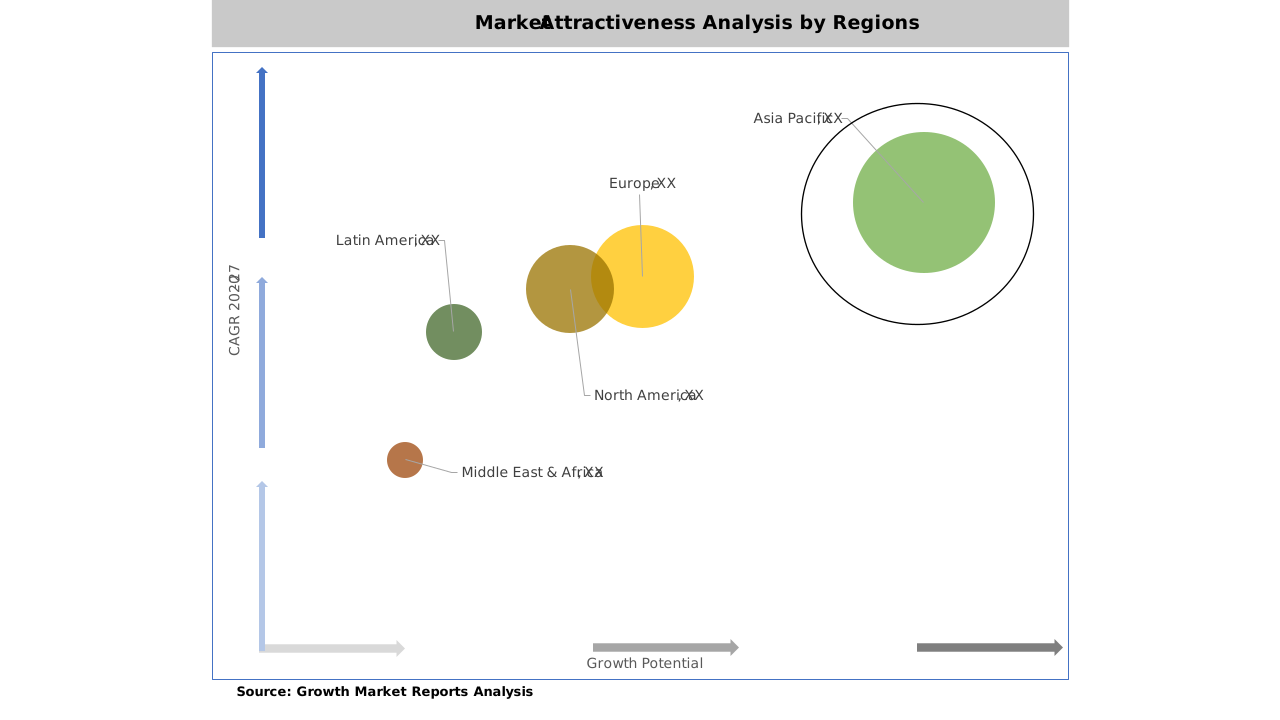
From a regional perspective, North America continues to dominate the WAN optimization market, accounting for the largest revenue share in 2024. This leadership position can be attributed to the early adoption of advanced networking technologies, the presence of leading market players, and significant investments in IT infrastructure. However, the Asia Pacific region is emerging as a high-growth market, driven by rapid industrialization, increasing cloud adoption, and government initiatives aimed at enhancing digital connectivity. Europe also demonstrates steady growth, supported by robust regulatory frameworks and a strong focus on digital innovation. Meanwhile, Latin America and the Middle East & Africa are witnessing gradual adoption, with opportunities arising from the expansion of telecom networks and enterprise digitization efforts.
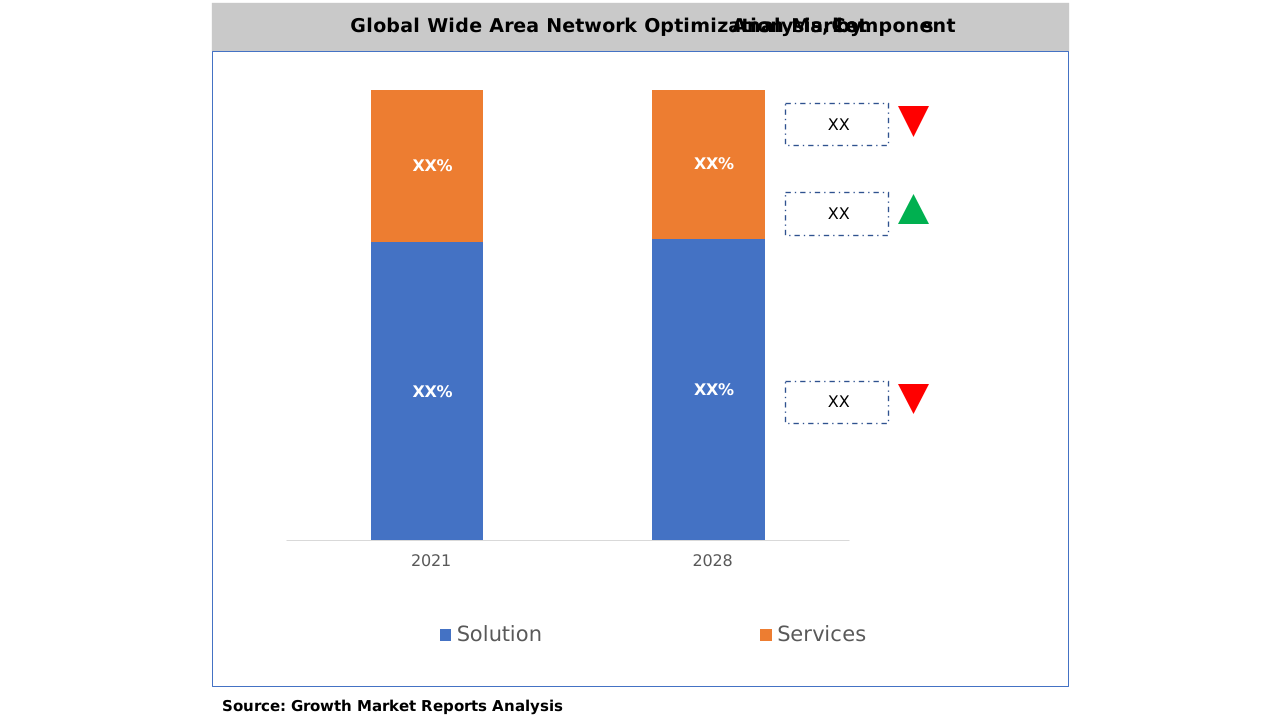
The WAN optimization market by component is broadly segmented into solutions and services, each playing a distinct yet complementary role in driving market growth. Solutions typically encompass a suite of hardware and software products designed to optimize data transfer, improve bandwidth utilization, and enhance application performance across wide area networks. These solutions include WAN optimization controllers, network monitoring tools, and application acceleration platforms. The increasing complexity of enterprise networks, coupled with the need for real-time data access and minimal downtime, has led to heightened demand for comprehensive WAN optimization solutions that can be seamlessly integrated into existing IT infrastructures. Vendors are continually innovating to offer scalable, feature-rich solutions that cater to the evolving needs of modern enterprises.
On the other hand, services constitute a significant portion of the WAN optimization market, encompassing consulting, implementation, support, and managed services. As organizations strive to maximize the ROI of their WAN optimization investments, they are increasingly turning to specialized service providers for expert guidance and ongoing support. Consulting services assist businesses in assessing their network requirements, designing tailored optimization strategies, and ensuring smooth deployment. Implementation services facilitate the seamless integration of WAN optimization solutions into complex network environments, minimizing disruption to business operations. Ongoing support and managed services are crucial for maintaining optimal network performance, addressing emerging challenges, and adapting to changing business needs.
The solutions segment currently dominates the market in terms of revenue, owing to the widespread adoption of advanced hardware and software platforms by large enterprises and service providers. However, the services segment is expected to exhibit higher growth rates over the forecast period, driven by the increasing complexity of network architectures and the growing preference for outsourcing network management functions. The rise of cloud-based WAN optimization services is also contributing to this trend, enabling organizations to leverage scalable optimization capabilities without the need for significant upfront investments in hardware or software.
Furthermore, the integration of artificial intelligence and machine learning into WAN optimization solutions is transforming the competitive landscape. Vendors are leveraging these technologies to deliver intelligent, adaptive optimization capabilities that can automatically adjust to changing network conditions and application requirements. This innovation is enhancing the value proposition of both solutions and services, enabling organizations to achieve higher levels of network efficiency, security, and agility. As the demand for real-time analytics and predictive insights continues to grow, the convergence of AI and WAN optimization is expected to drive significant advancements in the market.
In summary, the component segment of the WAN optimization market is characterized by a dynamic interplay between solutions and services, each contributing to the overall growth and evolution of the market. Organizations are increasingly seeking integrated, end-to-end offerings that combine robust optimization technologies with expert services, enabling them to navigate the complexities of modern network environments and achieve their digital transformation objectives.
| Attributes | Details |
| Report Title | Wide Area Network Optimization Market Research Report 2033 |
| By Component | Solutions, Services |
| By Deployment Mode | On-Premises, Cloud |
| By Organization Size | Small and Medium Enterprises, Large Enterprises |
| By Application | BFSI, Healthcare, IT and Telecommunications, Manufacturing, Retail, Government, Others |
| Regions Covered | North America, Europe, APAC, Latin America, MEA |
| Base Year | 2024 |
| Historic Data | 2018-2023 |
| Forecast Period | 2025-2033 |
| Number of Pages | 254 |
| Number of Tables & Figures | 360 |
| Customization Available | Yes, the report can be customized as per your need. |
The deployment mode segment of the WAN optimization market is bifurcated into on-premises and cloud-based solutions, each catering to distinct organizational needs and preferences. On-premises deployment remains a popular choice among large enterprises and organizations with stringent security and compliance requirements. This deployment mode offers greater control over network infrastructure, data privacy, and customization, making it ideal for industries such as BFSI, healthcare, and government. On-premises WAN optimization solutions are often integrated with existing network hardware and managed by in-house IT teams, ensuring tailored optimization strategies and rapid response to network issues.
However, the growing adoption of cloud computing and the shift towards hybrid IT environments have fueled the demand for cloud-based WAN optimization solutions. Cloud deployment offers unparalleled scalability, flexibility, and cost-efficiency, enabling organizations to rapidly provision optimization capabilities and adapt to changing business needs. Cloud-based solutions are particularly attractive to small and medium enterprises (SMEs) and organizations with distributed workforces, as they eliminate the need for significant upfront investments in hardware and reduce the burden on internal IT resources. The ability to manage and monitor network performance from a centralized cloud platform also enhances visibility and control, facilitating proactive network management and optimization.
The cloud-based deployment segment is experiencing the fastest growth, driven by the proliferation of SaaS applications, the increasing adoption of multi-cloud strategies, and the rise of remote and hybrid work models. Vendors are responding to this trend by offering cloud-native WAN optimization solutions that can be seamlessly integrated with leading cloud platforms and services. These solutions leverage advanced technologies such as software-defined wide area networking (SD-WAN), artificial intelligence, and automation to deliver dynamic, adaptive optimization capabilities that align with the demands of modern digital enterprises.
Despite the rapid growth of cloud-based deployment, on-premises solutions continue to hold significant market share, particularly in sectors where data sovereignty, regulatory compliance, and network customization are critical considerations. Many organizations are adopting a hybrid approach, combining on-premises and cloud-based optimization solutions to achieve the optimal balance of control, flexibility, and scalability. This hybrid deployment model is expected to gain traction over the forecast period, as enterprises seek to leverage the benefits of both deployment modes to support their digital transformation initiatives.
In conclusion, the deployment mode segment of the WAN optimization market reflects the diverse needs and preferences of modern enterprises. While cloud-based solutions are driving market growth and innovation, on-premises deployment remains a vital component of the market, particularly for organizations with complex, mission-critical network requirements. The ongoing evolution of hybrid deployment models is expected to shape the future of the WAN optimization market, enabling organizations to achieve enhanced network performance, security, and agility.
The WAN optimization market is segmented by organization size into Small and Medium Enterprises (SMEs) and Large Enterprises, each with unique requirements and adoption drivers. Large enterprises, with their expansive and complex network infrastructures, have traditionally been the primary adopters of WAN optimization solutions. These organizations operate across multiple locations, manage vast volumes of data, and require high-performance networks to support critical business applications and workflows. WAN optimization solutions enable large enterprises to enhance application performance, reduce bandwidth costs, and ensure seamless connectivity across geographically dispersed sites. The focus on digital transformation, globalization, and cloud adoption has further intensified the demand for advanced WAN optimization technologies among large enterprises.
Small and medium enterprises (SMEs) represent a rapidly growing segment of the WAN optimization market, driven by the increasing accessibility and affordability of cloud-based solutions. SMEs are recognizing the importance of robust network performance in supporting business growth, enhancing productivity, and delivering superior customer experiences. Cloud-based WAN optimization solutions are particularly well-suited to the needs of SMEs, offering scalable, cost-effective optimization capabilities without the need for significant capital investments. The ability to quickly deploy and manage optimization solutions from the cloud enables SMEs to adapt to changing business requirements and compete effectively in the digital economy.
The adoption patterns and priorities of SMEs and large enterprises differ significantly, shaping the competitive landscape of the WAN optimization market. Large enterprises prioritize advanced features such as application acceleration, traffic prioritization, and integrated security, often opting for customized solutions that align with their specific network architectures and compliance requirements. In contrast, SMEs seek simplicity, ease of deployment, and cost-effectiveness, favoring cloud-native solutions that offer rapid time-to-value and minimal management overhead. Vendors are responding to these diverse needs by offering a range of solutions tailored to the unique challenges and opportunities faced by organizations of all sizes.
The growing trend towards remote and hybrid work models is also influencing adoption patterns across both segments. Large enterprises are investing in WAN optimization solutions to support distributed workforces, ensure secure access to corporate applications, and maintain high levels of productivity. SMEs, meanwhile, are leveraging cloud-based optimization solutions to enable remote work, streamline operations, and enhance collaboration. The convergence of these trends is driving innovation and competition in the WAN optimization market, as vendors strive to deliver scalable, flexible, and user-friendly solutions that meet the evolving needs of modern organizations.
In summary, the organization size segment of the WAN optimization market is characterized by distinct adoption drivers and solution preferences. While large enterprises continue to drive demand for advanced, customizable optimization technologies, SMEs are emerging as a significant growth segment, fueled by the increasing adoption of cloud-based solutions and the growing recognition of the strategic importance of network optimization in achieving business objectives.
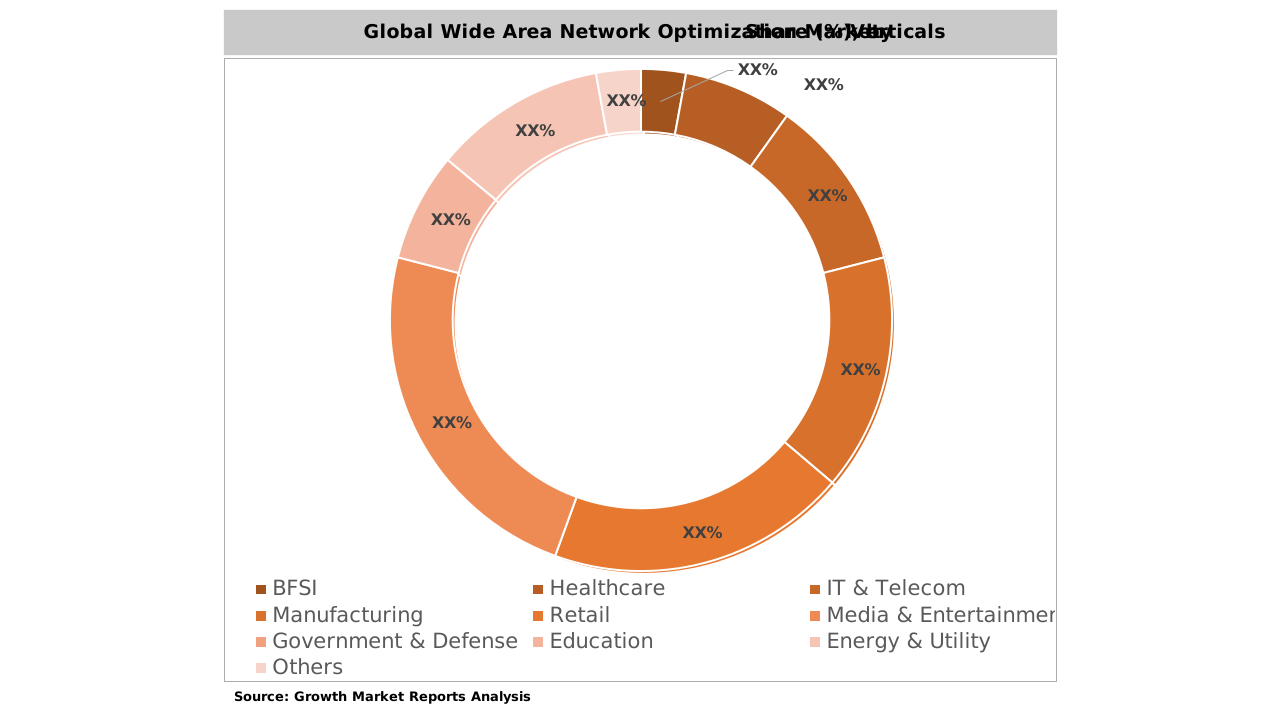
The WAN optimization market serves a diverse array of applications, including BFSI, Healthcare, IT and Telecommunications, Manufacturing, Retail, Government, and others. Each sector exhibits unique requirements and challenges, shaping the adoption and deployment of WAN optimization solutions. The BFSI sector, for instance, relies heavily on secure, high-performance networks to support real-time transactions, data analytics, and regulatory compliance. WAN optimization solutions enable financial institutions to enhance application performance, reduce latency, and ensure the integrity and security of sensitive financial data. The growing adoption of digital banking, mobile payments, and cloud-based financial services is further driving demand for advanced WAN optimization technologies in this sector.
Healthcare organizations are increasingly adopting WAN optimization solutions to support the delivery of high-quality patient care, facilitate telemedicine, and ensure the secure transmission of electronic health records (EHRs). The need for real-time access to medical data, seamless collaboration between healthcare providers, and compliance with stringent data protection regulations has made WAN optimization a critical component of healthcare IT infrastructure. Solutions that offer integrated security, data compression, and application acceleration are particularly valued in this sector, enabling healthcare organizations to optimize network performance while safeguarding patient privacy.
The IT and telecommunications sector is another major adopter of WAN optimization solutions, driven by the need to manage large volumes of data, support cloud-based services, and deliver high-quality user experiences. Telecom operators and service providers leverage WAN optimization technologies to enhance network efficiency, reduce operational costs, and deliver value-added services to enterprise customers. The proliferation of 5G networks, IoT devices, and edge computing is further fueling demand for scalable, intelligent WAN optimization solutions that can adapt to the evolving demands of the digital landscape.
Manufacturing and retail organizations are also embracing WAN optimization to support digital supply chains, enable real-time inventory management, and enhance customer engagement. In manufacturing, WAN optimization solutions facilitate seamless communication between production facilities, suppliers, and distribution centers, enabling agile and responsive operations. Retailers, meanwhile, leverage WAN optimization to support omnichannel strategies, enhance point-of-sale (POS) systems, and deliver personalized customer experiences. The government sector is adopting WAN optimization to support e-government initiatives, enhance public service delivery, and ensure the security and reliability of critical infrastructure.
Across all application segments, the common thread is the need for reliable, high-performance networks that can support digital transformation, enhance operational efficiency, and deliver superior user experiences. WAN optimization solutions are playing a pivotal role in meeting these requirements, enabling organizations across diverse sectors to achieve their strategic objectives and drive sustainable growth in an increasingly connected world.
The WAN optimization market presents a wealth of opportunities for vendors, service providers, and enterprises alike. One of the most significant opportunities lies in the continued adoption of cloud computing and the proliferation of hybrid and multi-cloud environments. As organizations increasingly distribute their applications and data across multiple cloud platforms, the need for seamless, high-performance connectivity becomes paramount. WAN optimization solutions that can dynamically adapt to changing network conditions, prioritize critical applications, and ensure consistent user experiences across cloud environments are poised for strong demand. Vendors that can deliver innovative, cloud-native optimization solutions with integrated security and analytics capabilities will be well-positioned to capture a larger share of this expanding market.
Another key opportunity is the integration of artificial intelligence and machine learning into WAN optimization solutions. AI-powered optimization tools can provide real-time insights into network performance, predict potential bottlenecks, and automate network adjustments to maintain optimal performance. This capability is particularly valuable in complex, dynamic network environments where manual management is impractical. The rise of edge computing and IoT applications also presents new opportunities for WAN optimization, as organizations seek to optimize data flows and ensure reliable connectivity at the network edge. Vendors that can innovate in these areas and deliver scalable, intelligent optimization solutions will be well-positioned to capitalize on emerging market trends.
Despite these opportunities, the WAN optimization market faces several restraining factors that could impact growth. One of the primary challenges is the increasing complexity of network architectures, driven by the adoption of hybrid and multi-cloud environments, edge computing, and IoT. Managing and optimizing these complex networks requires specialized expertise and advanced technologies, which may be beyond the reach of some organizations, particularly SMEs. Additionally, concerns related to data privacy, security, and regulatory compliance can pose barriers to adoption, especially in highly regulated industries. The rapid pace of technological change also presents a challenge, as organizations must continually invest in upgrading their network infrastructure to keep pace with evolving requirements and threats.
The regional analysis of the WAN optimization market reveals significant variations in adoption patterns, market size, and growth rates across different geographies. North America remains the largest market, accounting for approximately USD 720 million in revenue in 2024. The region's leadership is underpinned by the early adoption of advanced networking technologies, the presence of leading vendors, and substantial investments in IT infrastructure. The United States, in particular, is a major contributor to market growth, driven by the widespread adoption of cloud computing, digital transformation initiatives, and the increasing prevalence of remote and hybrid work models. Canada is also witnessing steady growth, supported by government initiatives to enhance digital connectivity and the adoption of advanced networking solutions by enterprises across various sectors.
Asia Pacific is emerging as the fastest-growing region in the WAN optimization market, with a projected CAGR of 9.2% from 2025 to 2033. The region's rapid industrialization, expanding digital economy, and increasing investments in IT infrastructure are driving demand for WAN optimization solutions. China, India, Japan, and South Korea are the primary growth engines, supported by government initiatives to enhance digital connectivity, the proliferation of cloud services, and the expansion of telecom networks. The growing adoption of digital technologies by SMEs and large enterprises alike is further fueling market growth, as organizations seek to optimize network performance and support business expansion across diverse geographies.
Europe holds a significant share of the global WAN optimization market, with revenues reaching USD 540 million in 2024. The region's growth is driven by robust regulatory frameworks, a strong focus on digital innovation, and the widespread adoption of cloud-based solutions. The United Kingdom, Germany, and France are leading markets, supported by investments in IT infrastructure and the increasing adoption of digital transformation initiatives by enterprises across various sectors. Latin America and the Middle East & Africa are witnessing gradual adoption, with market sizes of USD 60 million and USD 40 million respectively in 2024. Opportunities in these regions are arising from the expansion of telecom networks, government-led digitization initiatives, and the growing adoption of cloud-based services by enterprises seeking to enhance network performance and support business growth.
The competitive landscape of the WAN optimization market is characterized by intense rivalry among global and regional players, each vying to capture a larger share of the rapidly expanding market. Leading vendors are investing heavily in research and development to deliver innovative, feature-rich solutions that address the evolving needs of enterprises operating in complex, distributed network environments. The market is witnessing a wave of consolidation, with established players acquiring niche technology providers to enhance their product portfolios and expand their geographic reach. Strategic partnerships and alliances are also becoming increasingly common, as vendors seek to leverage complementary capabilities and accelerate the development of next-generation optimization solutions.
Innovation is a key differentiator in the WAN optimization market, with vendors focusing on the integration of advanced technologies such as artificial intelligence, machine learning, and automation. These capabilities enable the delivery of intelligent, adaptive optimization solutions that can dynamically adjust to changing network conditions and application requirements. The rise of cloud computing and the shift towards hybrid IT environments are driving demand for cloud-native WAN optimization solutions, prompting vendors to develop scalable, flexible offerings that can be seamlessly integrated with leading cloud platforms and services. Security is also a critical focus area, with vendors incorporating advanced encryption, secure tunneling, and traffic monitoring features to address the growing threat landscape and ensure compliance with stringent data protection regulations.
Customer-centricity is another defining characteristic of the competitive landscape, with vendors placing a strong emphasis on delivering exceptional customer experiences and value-added services. Comprehensive support, consulting, and managed services are becoming increasingly important differentiators, as organizations seek to maximize the ROI of their WAN optimization investments and navigate the complexities of modern network environments. Vendors are also focusing on delivering user-friendly, intuitive solutions that can be easily deployed and managed by organizations of all sizes, from SMEs to large enterprises.
Some of the major players in the WAN optimization market include Riverbed Technology, Cisco Systems, Citrix Systems, Silver Peak (now part of Aruba Networks), Aryaka Networks, FatPipe Networks, and Huawei Technologies. Riverbed Technology is widely recognized for its advanced WAN optimization controllers and robust application acceleration solutions, catering to a diverse range of industries. Cisco Systems offers a comprehensive portfolio of WAN optimization and SD-WAN solutions, leveraging its extensive networking expertise and global presence. Citrix Systems is known for its integrated networking and application delivery solutions, providing enterprises with secure, high-performance connectivity across distributed environments. Silver Peak, now part of Aruba Networks, specializes in SD-WAN and WAN optimization solutions that enable enterprises to achieve agile, cloud-first networking architectures.
Aryaka Networks stands out for its cloud-first WAN optimization and SD-WAN solutions, offering global connectivity and application acceleration services to enterprises with distributed operations. FatPipe Networks is recognized for its innovative WAN optimization and SD-WAN technologies, enabling organizations to achieve enhanced network performance and reliability. Huawei Technologies is a major player in the Asia Pacific region, offering a wide range of networking and WAN optimization solutions tailored to the needs of enterprises and service providers. These companies are continuously expanding their product portfolios, forging strategic partnerships, and investing in R&D to maintain their competitive edge and address the evolving demands of the WAN optimization market.
In conclusion, the WAN optimization market is characterized by dynamic competition, rapid innovation, and a relentless focus on meeting the evolving needs of modern enterprises. As organizations continue to embrace digital transformation, cloud computing, and distributed work models, the demand for advanced WAN optimization solutions will only intensify, driving further growth and innovation in this vibrant market.
The Wide Area Network Optimization market has been segmented on the basis of
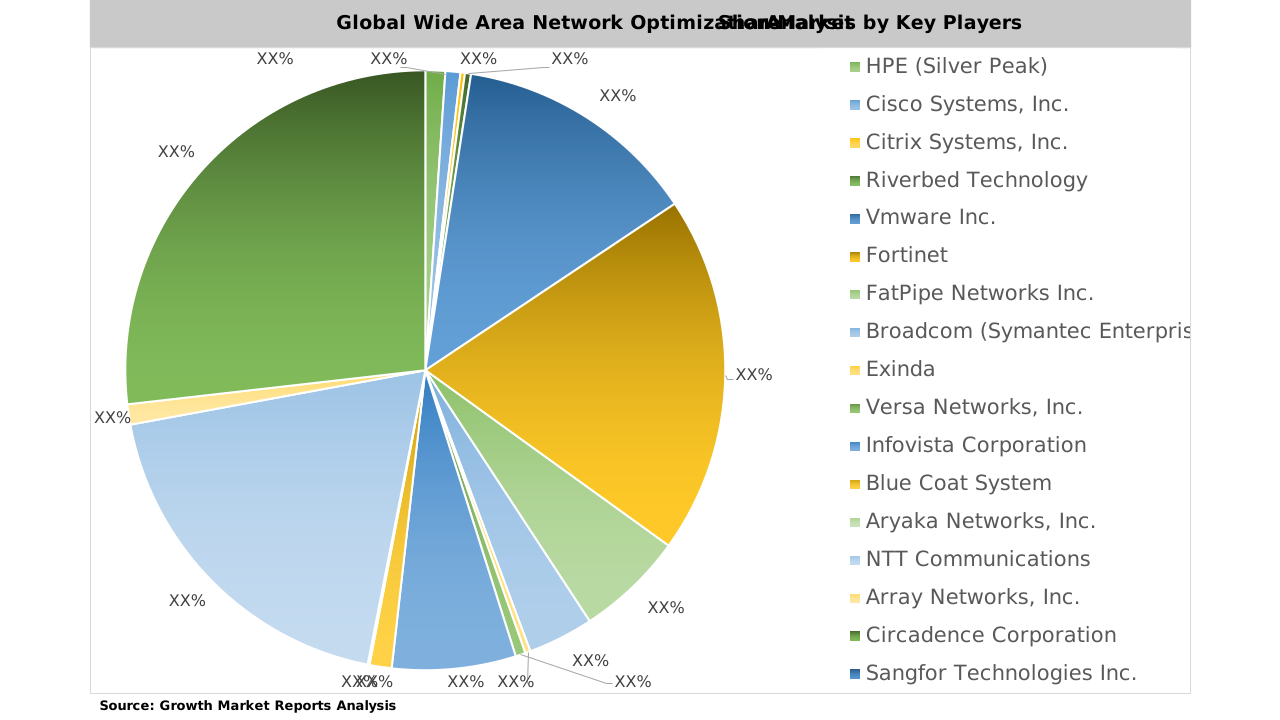
Key players competing in the wide area network optimization market include HPE (Silver Peak); Cisco Systems, Inc.; Citrix Systems, Inc.; Riverbed Technology; Vmware Inc.; Fortinet; FatPipe Networks Inc.; Broadcom (Symantec Enterprise); Exinda; Versa Networks, Inc.; Infovista Corporation; Blue Coat System; Aryaka Networks, Inc.; NTT Communications; Array Networks, Inc.; Circadence Corporation; and Sangfor Technologies Inc.
Some of these players are using several market strategies such as acquisitions, merger, collaborations, partnerships, capacity expansion, and product launches to enhance their market shares and to generate revenue and raise their production line of the business in the coming years.
Key trends include the rise of cloud-native WAN optimization, integration of AI and automation, growing demand for managed and consulting services, and the adoption of hybrid deployment models that combine on-premises and cloud solutions for maximum flexibility and performance.
Challenges include the increasing complexity of network architectures (due to hybrid and multi-cloud environments), data privacy and compliance concerns, and the need for continuous investment in new technologies to keep up with evolving threats and requirements.
Key vendors include Cisco Systems, Riverbed Technology, Citrix Systems, Silver Peak (Aruba Networks), Aryaka Networks, FatPipe Networks, Huawei Technologies, Juniper Networks, and others. These companies offer a range of solutions and services for different enterprise needs.
North America leads the WAN optimization market, followed by Europe and Asia Pacific. North America benefits from early technology adoption and major market players, while Asia Pacific is the fastest-growing region due to rapid industrialization and digital transformation.
Artificial intelligence (AI) and machine learning are increasingly being integrated into WAN optimization tools to provide predictive analytics, automate network adjustments, and deliver intelligent, adaptive optimization based on real-time network conditions.
Modern WAN optimization solutions integrate security features such as encryption, secure tunneling, and traffic monitoring. These capabilities help protect sensitive data as it moves across networks and support compliance with data protection regulations.
WAN optimization solutions can be deployed on-premises or in the cloud. On-premises deployment offers greater control and is preferred by organizations with strict compliance needs, while cloud-based solutions provide scalability, flexibility, and cost-efficiency, making them popular among SMEs and distributed enterprises.
Key industries benefiting from WAN optimization include BFSI (banking, financial services, and insurance), healthcare, IT and telecommunications, manufacturing, retail, and government. These sectors require secure, high-performance networks for critical applications and compliance.
The global WAN optimization market reached USD 1.82 billion in 2024 and is projected to grow at a CAGR of 7.1% from 2025 to 2033, reaching USD 3.37 billion by 2033. This growth is driven by digital transformation, cloud migration, and the rise of remote workforces.
WAN optimization refers to technologies and solutions designed to improve the efficiency, speed, and reliability of data transfer across wide area networks (WANs). It is important because it enhances application performance, reduces latency, and ensures seamless connectivity for organizations with distributed operations, especially as cloud adoption and remote work increase.