Segments - by Product Type (Scotch Whisky, American Whisky, Irish Whisky, Canadian Whisky, Japanese Whisky, Others), by Distribution Channel (On-Trade, Off-Trade, Online Retail, Specialty Stores, Supermarkets/Hypermarkets, Others), by Age (Below 12 Years, 12-18 Years, 18-30 Years, Above 30 Years), by Packaging (Bottles, Cans, Others)
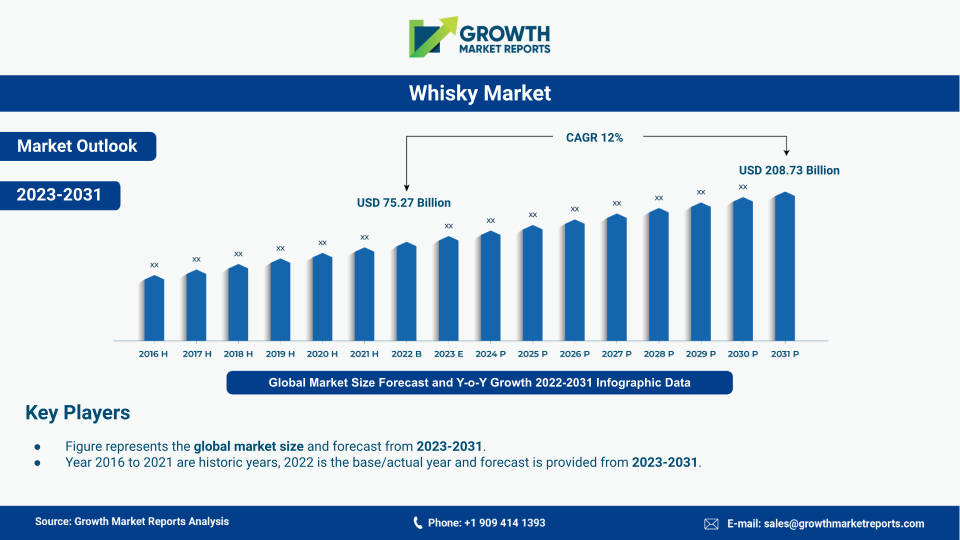
According to our latest research, the global whisky market size in 2024 stands at USD 71.4 billion, reflecting robust demand across both emerging and developed economies. The market is expected to grow at a CAGR of 6.1% from 2025 to 2033, reaching a forecasted value of approximately USD 121.3 billion by the end of 2033. This growth trajectory is primarily driven by evolving consumer preferences, increasing disposable incomes, and the premiumization trend sweeping through the global alcoholic beverages industry. As per our latest research, the whisky market is witnessing significant transformation, underpinned by innovations in product offerings and the expansion of distribution channels.
One of the key growth factors propelling the whisky market is the rising inclination towards premium and super-premium whisky variants, especially among millennials and urban consumers. The growing appreciation for craft spirits, coupled with the influence of Western culture in emerging markets, has led to a surge in demand for high-quality, aged whiskies. Brands are responding by introducing limited-edition releases and leveraging storytelling about heritage and craftsmanship to attract discerning consumers. Additionally, whisky tourism, which includes distillery tours and tasting experiences, is further enhancing brand engagement and fostering loyalty among enthusiasts. This experiential approach is not only boosting direct sales but also amplifying word-of-mouth marketing, thereby expanding the consumer base globally.
Another significant driver is the diversification of whisky offerings to cater to a broader demographic. Traditionally, whisky was perceived as a drink for older males, but recent years have seen a conscious effort by brands to appeal to younger audiences and women through innovative flavors, attractive packaging, and targeted marketing campaigns. The proliferation of flavored whiskies and ready-to-drink (RTD) whisky cocktails has opened new avenues for consumption, particularly in markets like North America and Asia Pacific. Furthermore, the increasing penetration of e-commerce platforms has made premium and niche whisky brands more accessible, enabling consumers to explore a wider variety of products from the comfort of their homes.
Sustainability and responsible consumption are also shaping the whisky marketÂ’s growth trajectory. Consumers are becoming more conscious of the environmental impact of their purchases, prompting distilleries to invest in sustainable sourcing of raw materials, energy-efficient production processes, and eco-friendly packaging. The adoption of organic and locally sourced ingredients is gaining momentum, especially in Europe and North America, where regulatory frameworks and consumer awareness are more pronounced. This shift towards sustainability not only enhances brand reputation but also opens up new market segments among environmentally conscious consumers, thereby contributing to the overall expansion of the whisky market.
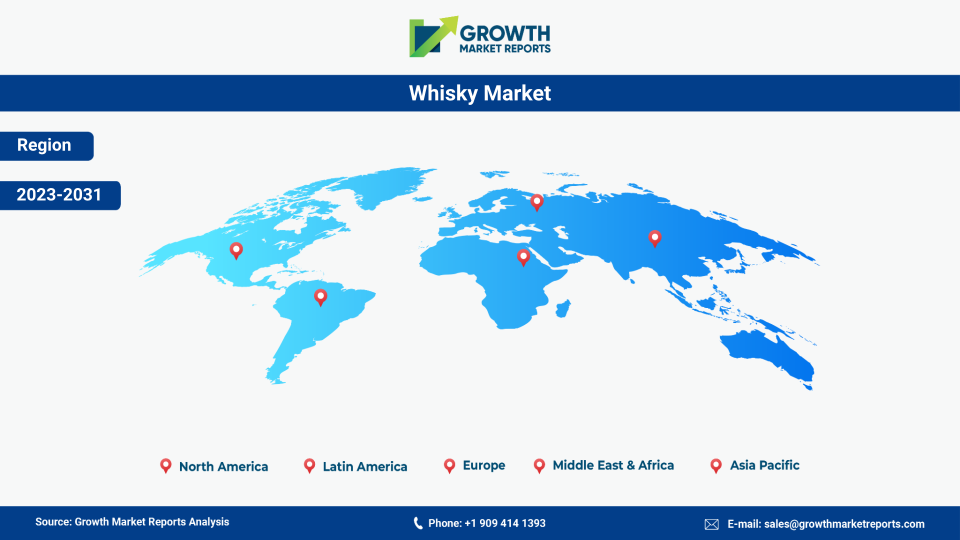
From a regional perspective, Asia Pacific is emerging as a powerhouse in the global whisky market, driven by rapid urbanization, rising disposable incomes, and a burgeoning middle class with a taste for premium spirits. Countries like India, China, and Japan are witnessing exponential growth in whisky consumption, with local brands gaining prominence alongside established international labels. North America and Europe continue to be mature markets with steady growth, supported by a strong culture of whisky appreciation and a well-developed distribution network. Meanwhile, Latin America, the Middle East, and Africa are gradually catching up, fueled by increasing exposure to global trends and expanding retail infrastructure. The interplay of these regional dynamics is expected to shape the competitive landscape and growth opportunities in the whisky market over the forecast period.
Malt Whiskey, a distinguished category within the whisky market, continues to captivate enthusiasts with its rich flavors and intricate production process. Originating primarily from Scotland, malt whiskey is crafted using malted barley and distilled in pot stills, which contribute to its unique taste profile. The appreciation for malt whiskey has grown significantly, driven by its association with tradition and craftsmanship. Connoisseurs often seek out single malt varieties, known for their depth and complexity, as they offer a distinct expression of the distillery's character. The rising demand for malt whiskey is reflected in the increasing number of distilleries experimenting with innovative aging techniques and cask finishes, further enriching the diversity of offerings available to consumers.
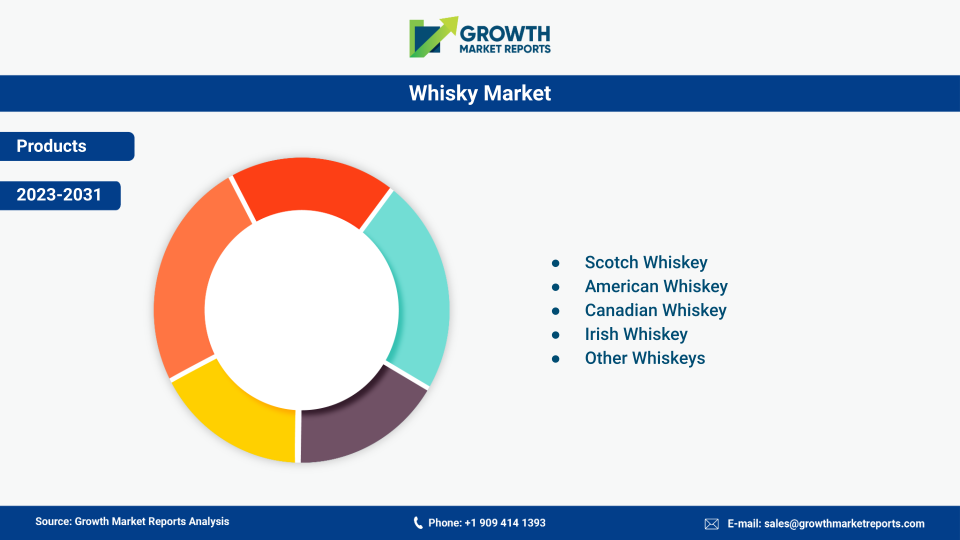
The whisky market is segmented by product type into Scotch Whisky, American Whisky, Irish Whisky, Canadian Whisky, Japanese Whisky, and Others. Among these, Scotch Whisky continues to dominate the global landscape, owing to its rich heritage, stringent quality standards, and strong brand equity. The appeal of single malt and blended Scotch whiskies remains unparalleled, particularly in Europe, North America, and parts of Asia. The ongoing trend of premiumization has further elevated the demand for aged Scotch whiskies, with consumers willing to pay a premium for unique flavor profiles and limited editions. Distilleries are capitalizing on this trend by investing in innovative maturation techniques and cask finishes, thereby offering a diverse portfolio to cater to varied palates.
American Whisky, particularly Bourbon and Tennessee whiskey, is experiencing robust growth, driven by the resurgence of cocktail culture and the global popularity of American spirits. The versatility of American whiskies in mixology, coupled with their approachable price points, has made them a favorite among younger consumers and bartenders alike. The craft distilling movement in the United States has also played a pivotal role in revitalizing the category, with small-batch and artisanal expressions gaining traction in both domestic and international markets. This segment is expected to witness continued expansion, supported by innovative product launches and strategic collaborations with hospitality partners.
The Irish Whisky segment is undergoing a renaissance, marked by double-digit growth rates in several key markets. The smooth and approachable character of Irish whisky, combined with effective branding and storytelling, has resonated with a global audience. Major players are investing heavily in capacity expansion and brand building, while new entrants are introducing contemporary expressions to appeal to younger consumers. The revival of historic distilleries and the emergence of craft producers are adding dynamism to the segment, positioning Irish whisky as a formidable contender in the global whisky market.
Japanese Whisky has carved a niche for itself, renowned for its meticulous craftsmanship, subtle flavors, and limited availability. The international acclaim garnered by Japanese whiskies, including prestigious awards and critical recognition, has fueled demand among collectors and connoisseurs. However, supply constraints due to limited aged stocks pose a challenge, often resulting in premium pricing and allocation strategies. Despite these challenges, Japanese whisky continues to command a loyal following, particularly in Asia and North America, where consumers value authenticity and quality. The “Others” category, which includes emerging whisky-producing regions such as Taiwan and India, is also gaining momentum, driven by innovation and the growing acceptance of non-traditional whisky styles.
The allure of a Scottish Whisky Bar is undeniable, offering a curated experience that transports patrons to the heart of Scotland's whisky heritage. These establishments are more than just places to enjoy a drink; they are cultural hubs where enthusiasts can immerse themselves in the rich history and tradition of Scottish whisky. With an extensive selection of whiskies from various regions, a Scottish Whisky Bar provides an opportunity for patrons to explore the nuances of different expressions, from the peaty notes of Islay to the smooth, honeyed flavors of Speyside. The ambiance, often complemented by knowledgeable staff and thoughtfully paired food offerings, enhances the overall experience, making a visit to a Scottish Whisky Bar a memorable journey into the world of whisky.
| Attributes | Details |
| Report Title | Whisky Market Research Report 2033 |
| By Product Type | Scotch Whisky, American Whisky, Irish Whisky, Canadian Whisky, Japanese Whisky, Others |
| By Distribution Channel | On-Trade, Off-Trade, Online Retail, Specialty Stores, Supermarkets/Hypermarkets, Others |
| By Age | Below 12 Years, 12-18 Years, 18-30 Years, Above 30 Years |
| By Packaging | Bottles, Cans, Others |
| Regions Covered | North America, Europe, APAC, Latin America, MEA |
| Base Year | 2024 |
| Historic Data | 2018-2023 |
| Forecast Period | 2025-2033 |
| Number of Pages | 283 |
| Number of Tables & Figures | 371 |
| Customization Available | Yes, the report can be customized as per your need. |
The whisky marketÂ’s distribution landscape is evolving rapidly, with a diverse array of channels catering to different consumer preferences. On-trade channels, including bars, restaurants, and hotels, play a critical role in brand building and consumer education. These venues offer curated experiences, such as whisky tastings and food pairings, which enhance consumer engagement and foster brand loyalty. The on-trade segment is particularly significant in urban centers and tourist destinations, where experiential consumption is on the rise. Brands are increasingly collaborating with mixologists and chefs to create bespoke offerings, further elevating the profile of whisky in the premium spirits category.
Off-trade channels, comprising liquor stores, supermarkets, and hypermarkets, account for a substantial share of whisky sales, especially in markets with stringent alcohol regulations. The convenience and accessibility offered by these outlets make them the preferred choice for everyday purchases and gifting occasions. Supermarkets and hypermarkets, in particular, are leveraging their extensive reach and promotional capabilities to drive volume sales, often featuring exclusive deals and in-store tastings to attract consumers. Specialty stores, on the other hand, cater to enthusiasts seeking rare and premium expressions, providing personalized recommendations and expert advice.
The advent of online retail has revolutionized the whisky market, offering unprecedented convenience and product variety to consumers. E-commerce platforms enable direct-to-consumer sales, bypassing traditional intermediaries and expanding market reach. The digitalization of the retail landscape has also facilitated the rise of subscription services and virtual tasting events, allowing brands to engage with consumers in innovative ways. Online retail is particularly popular among tech-savvy millennials and urban dwellers, who value convenience and access to global brands. Regulatory changes in several countries, permitting online alcohol sales, are further accelerating the growth of this channel.
Other distribution channels, such as duty-free shops and boutique retailers, cater to niche segments and affluent travelers. Duty-free outlets at airports and border crossings offer exclusive products and attractive pricing, making them a popular choice for international travelers and collectors. Boutique retailers, often located in upscale neighborhoods or tourist hotspots, provide a curated selection of premium and limited-edition whiskies, accompanied by expert guidance and personalized service. The interplay of these diverse distribution channels is enhancing market penetration and enabling brands to tailor their strategies to specific consumer segments and occasions.
The whisky market is segmented by age into Below 12 Years, 12-18 Years, 18-30 Years, and Above 30 Years, reflecting the industryÂ’s emphasis on maturation and aging as key determinants of quality and value. Whiskies aged below 12 years are typically positioned as entry-level offerings, appealing to price-sensitive consumers and those new to the category. These expressions often feature a lighter flavor profile and are well-suited for mixing in cocktails, making them popular among younger consumers and in markets where whisky is consumed as a social drink.
The 12-18 years segment represents a significant portion of the market, catering to enthusiasts seeking a balance between affordability and complexity. Whiskies in this age range are often positioned as premium offerings, with enhanced depth of flavor and greater smoothness compared to younger expressions. This segment is particularly popular in mature markets, where consumers are willing to pay a premium for aged spirits that offer a distinctive drinking experience. Brands are leveraging this segment to introduce special editions and cask finishes, further differentiating their portfolios and attracting collectors.
Whiskies aged 18-30 years are highly coveted, commanding premium prices and often released as limited editions. These expressions are characterized by rich, complex flavors and exceptional smoothness, appealing to connoisseurs and collectors. The scarcity of aged stocks, coupled with the time and resources required for extended maturation, contributes to the exclusivity and desirability of this segment. Distilleries are increasingly investing in inventory management and aging facilities to ensure a steady supply of older whiskies, recognizing the growing demand among affluent consumers and luxury hospitality venues.
The Above 30 years segment represents the pinnacle of the whisky market, comprising ultra-premium and collectible expressions that are often auctioned at prestigious events. These rare whiskies are prized for their unparalleled complexity, depth, and character, with some bottles fetching record prices on the secondary market. The allure of aged whisky is further enhanced by compelling narratives about the distilleryÂ’s heritage, the provenance of the casks, and the unique conditions of maturation. While this segment accounts for a relatively small share of total volume, it plays a crucial role in shaping brand prestige and attracting high-net-worth individuals to the category.
Packaging is a critical aspect of the whisky market, influencing consumer perceptions, brand differentiation, and purchase decisions. The majority of whiskies are sold in bottles, which remain the preferred packaging format due to their ability to preserve the integrity and flavor of the spirit. Glass bottles, in particular, are favored for their premium feel, durability, and recyclability. Distilleries invest heavily in bottle design, incorporating unique shapes, embossing, and labeling to convey brand identity and heritage. Limited-edition releases often feature bespoke packaging, such as wooden boxes or engraved decanters, to enhance their appeal to collectors and gift buyers.
The emergence of cans as a packaging format is a relatively recent development in the whisky market, driven by the rise of ready-to-drink (RTD) whisky cocktails and the demand for convenience. Canned whisky beverages are gaining popularity among younger consumers and in markets where outdoor consumption and portability are valued. The lightweight and shatterproof nature of cans makes them ideal for events, festivals, and travel, while their smaller serving sizes cater to moderation and responsible drinking. Brands are leveraging this trend to introduce innovative flavors and formats, expanding the occasions and settings in which whisky can be enjoyed.
Other packaging formats, such as pouches, miniatures, and gift packs, cater to specific consumer needs and gifting occasions. Miniature bottles are particularly popular as collectibles, souvenirs, or sampling options, allowing consumers to explore different expressions without committing to a full-sized bottle. Gift packs, often featuring branded glassware or accessories, are strategically positioned during festive seasons and special events to drive incremental sales. The adoption of sustainable packaging materials, such as recycled glass, biodegradable labels, and eco-friendly closures, is also gaining traction, reflecting the industryÂ’s commitment to environmental stewardship and meeting the expectations of eco-conscious consumers.
Innovations in packaging technology, including smart labels, tamper-evident seals, and augmented reality experiences, are enhancing consumer engagement and brand transparency. Smart labels enable traceability and authentication, providing consumers with information about the provenance and production process of their whisky. Augmented reality features, accessible via smartphones, offer interactive storytelling and immersive experiences, further differentiating brands in a competitive marketplace. The convergence of aesthetics, functionality, and sustainability in packaging is expected to play a pivotal role in shaping the future of the whisky market, influencing both consumer preferences and regulatory compliance.
The whisky market presents a plethora of opportunities for both established players and new entrants. One of the most promising avenues is the untapped potential in emerging markets, particularly in Asia Pacific, Latin America, and Africa. As disposable incomes rise and consumer tastes evolve, there is a growing appetite for premium and international whisky brands. Companies that invest in market education, localized marketing strategies, and distribution partnerships are well-positioned to capture this burgeoning demand. Additionally, the expansion of whisky tourism and experiential marketing initiatives offers brands the opportunity to engage directly with consumers, fostering brand loyalty and advocacy. The integration of digital technologies, such as e-commerce platforms and virtual tastings, further enhances market accessibility and enables brands to reach a global audience.
Innovation in product offerings and packaging is another key opportunity for growth in the whisky market. The rise of craft distilleries and artisanal expressions has reinvigorated consumer interest, providing alternatives to mainstream brands and catering to niche preferences. Flavored whiskies, organic and sustainably produced variants, and limited-edition releases are attracting new consumer segments and driving incremental sales. The growing emphasis on health and wellness is also prompting brands to explore lower-alcohol and calorie-conscious formulations, broadening the appeal of whisky to health-conscious consumers. Strategic collaborations with hospitality partners, mixologists, and influencers are further amplifying brand visibility and driving trial among younger demographics.
Despite these opportunities, the whisky market faces several restraining factors that could impede growth. Regulatory challenges, including stringent alcohol advertising laws, import/export restrictions, and high excise duties, pose significant barriers to market entry and expansion, particularly in developing countries. The volatility of raw material prices, such as barley and corn, and supply chain disruptions can impact production costs and profit margins. Additionally, the growing trend of health consciousness and moderation in alcohol consumption, especially among younger consumers, presents a long-term challenge to volume growth. Brands must navigate these complexities by adopting agile business models, investing in compliance and sustainability, and continuously innovating to stay relevant in a dynamic market environment.
Asia Pacific is at the forefront of the global whisky market, accounting for approximately USD 23.5 billion in sales in 2024, with a projected CAGR of 8.2% through 2033. The regionÂ’s rapid urbanization, expanding middle class, and increasing exposure to international lifestyles are driving robust demand for both domestic and imported whiskies. India and China are the primary growth engines, with local brands gaining prominence alongside established international labels. Japan continues to be a key player, renowned for its high-quality and award-winning whiskies. The proliferation of modern retail channels and the rise of whisky appreciation clubs are further enhancing market penetration and consumer engagement in the region.
North America remains a mature and highly lucrative market, with sales reaching USD 19.1 billion in 2024. The United States, in particular, is a major producer and consumer of whisky, led by the popularity of Bourbon, Tennessee whiskey, and Rye. The regionÂ’s vibrant cocktail culture, coupled with the resurgence of craft distilling, is fueling innovation and diversification within the category. Canada is also witnessing steady growth, driven by the premiumization trend and the export of Canadian whisky to international markets. The well-developed distribution infrastructure, coupled with favorable regulatory frameworks, supports sustained market expansion in North America.
Europe is another significant market, generating USD 17.8 billion in whisky sales in 2024. The regionÂ’s rich heritage and tradition of whisky production, particularly in Scotland and Ireland, underpin its strong market position. European consumers exhibit a high level of sophistication and appreciation for aged and premium whiskies, driving demand for single malts and limited-edition releases. The growth of whisky tourism, especially in Scotland and Ireland, is contributing to brand building and export revenues. Meanwhile, Latin America and the Middle East & Africa are emerging as promising markets, collectively accounting for USD 11.0 billion in sales. These regions are benefiting from increasing exposure to global trends, expanding retail infrastructure, and targeted marketing initiatives by leading brands.
The global whisky market is characterized by intense competition, with both multinational conglomerates and independent distilleries vying for market share. The competitive landscape is shaped by a combination of heritage brands with deep-rooted traditions and innovative newcomers leveraging agility and creativity. Companies are investing heavily in product innovation, marketing, and distribution to differentiate themselves and capture consumer loyalty. Strategic mergers and acquisitions are commonplace, enabling firms to expand their portfolios, enter new markets, and achieve operational efficiencies. The emphasis on premiumization and experiential marketing is driving brands to continuously elevate their offerings and engage consumers through immersive storytelling and unique experiences.
Brand equity and heritage play a crucial role in the whisky market, with established names such as Johnnie Walker, Jack DanielÂ’s, and Jameson commanding significant consumer trust and recognition. These brands leverage their rich histories, consistent quality, and global distribution networks to maintain leadership positions. At the same time, the rise of craft and artisanal distilleries is injecting dynamism into the market, offering consumers a diverse array of flavor profiles and production techniques. Craft distillers often emphasize local sourcing, small-batch production, and innovative cask finishes, appealing to consumers seeking authenticity and exclusivity.
Digital transformation is reshaping the competitive landscape, with brands increasingly leveraging e-commerce, social media, and data analytics to engage consumers and drive sales. Online platforms enable direct-to-consumer interactions, personalized recommendations, and targeted promotions, enhancing brand visibility and customer loyalty. The adoption of digital marketing strategies, including influencer partnerships and virtual events, is particularly effective in reaching younger demographics and expanding market reach. Companies are also investing in sustainability initiatives, recognizing the growing importance of environmental responsibility in shaping consumer perceptions and regulatory compliance.
Major companies operating in the global whisky market include Diageo plc, Pernod Ricard SA, Brown-Forman Corporation, Suntory Holdings Limited, William Grant & Sons Ltd, Bacardi Limited, and Beam Suntory Inc. Diageo, with its flagship brand Johnnie Walker, remains a dominant force, leveraging its extensive portfolio and global distribution capabilities. Pernod Ricard, owner of iconic brands such as Chivas Regal and Jameson, continues to expand its presence through strategic acquisitions and innovation. Brown-Forman, known for Jack DanielÂ’s and Woodford Reserve, is at the forefront of the American whisky segment, while Suntory Holdings and Beam Suntory are leading players in the Japanese and global markets, respectively. William Grant & Sons, with brands like Glenfiddich and The Balvenie, is renowned for its commitment to quality and craftsmanship, while BacardiÂ’s DewarÂ’s brand is a key player in the blended Scotch segment. These companies are continuously evolving their strategies to stay ahead in a dynamic and competitive market, investing in brand building, sustainability, and digital transformation to capture emerging opportunities and address evolving consumer preferences.
The Whisky market has been segmented on the basis of
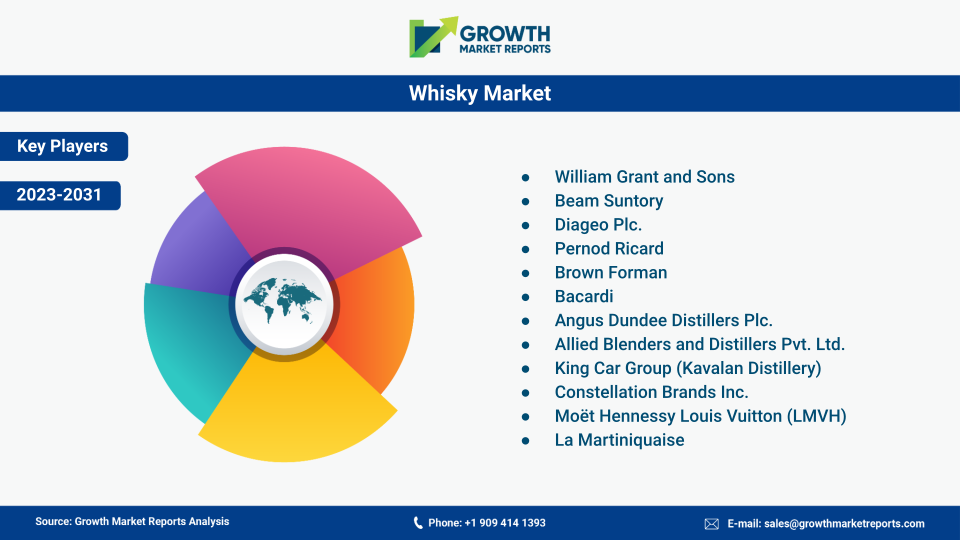
Key players in the global whisky market are William Grant and Sons, Beam Suntory, Diageo Plc., Pernod Ricard, Brown Forman, Bacardi, Angus Dundee Distillers Plc., Allied Blenders and Distillers Pvt. Ltd., King Car Group (Kavalan Distillery), Constellation Brands Inc., Moët Hennessy Louis Vuitton (LMVH) and La Martiniquaise. These players engage in mergers & acquisitions, collaborations, agreements, and partnerships to strengthen their geographical presence.
Sustainability is shaping the industry through eco-friendly packaging, organic and locally sourced ingredients, and energy-efficient production processes, especially in Europe and North America where consumer awareness is high.
Key players include Diageo, Pernod Ricard, Beam Suntory, Brown-Forman, William Grant & Sons, Bacardi Limited, The Edrington Group, Suntory Holdings, Asahi Group Holdings, and others.
Opportunities include growth in emerging markets, innovation in products and packaging, and digital transformation. Threats include regulatory challenges, fluctuating raw material prices, and rising health consciousness among consumers.
Packaging plays a crucial role in brand differentiation and consumer perception. Bottles remain the most popular format, but cans, miniatures, and gift packs are gaining traction. Sustainable and innovative packaging is also becoming increasingly important.
Major distribution channels include on-trade (bars, restaurants, hotels), off-trade (liquor stores, supermarkets, specialty stores), online retail, and duty-free shops. Online retail is rapidly growing, especially among millennials and urban consumers.
The whisky market is segmented into Scotch Whisky, American Whisky, Irish Whisky, Canadian Whisky, Japanese Whisky, and Others (including emerging regions like Taiwan and India).
Key trends include premiumization, the rise of craft and super-premium whiskies, whisky tourism, innovative flavors, sustainable production, and the growing popularity of ready-to-drink (RTD) whisky cocktails.
Asia Pacific is emerging as a powerhouse, with rapid growth in India, China, and Japan. North America and Europe remain mature markets, while Latin America, the Middle East, and Africa are gradually expanding due to increased exposure to global trends.
The whisky market is expected to grow at a CAGR of 6.1% from 2025 to 2033, reaching approximately USD 121.3 billion by the end of 2033.
According to the latest research, the global whisky market size in 2024 is valued at USD 71.4 billion, reflecting strong demand across both emerging and developed economies.