Whey Protein Market Report 2025-2034

Whey Protein Market Report 2025-2034

Segments - by Product Type (Whey Protein Concentrate, Whey Protein Isolate, Hydrolyzed Whey Protein), by Application (Nutritional Supplements, Food & Beverages, Pharmaceuticals, Animal Feed, Others), by Form (Powder, Liquid), by Distribution Channel (Online Stores, Supermarkets/Hypermarkets, Specialty Stores, Others), by End-User (Sports Nutrition, Infant Nutrition, Functional Food, Others)

https://growthmarketreports.com/Anuradha
Author : Anuradha B. More
https://growthmarketreports.com/Vaibhav
Fact-checked by : Vaibhav Chandola
https://growthmarketreports.com/Shruti
Editor : Shruti Bhat

Last Updated : Jun, 2026 | Report ID :FB-2743 | 4.9 Rating | 59 Reviews | 279 Pages | Format : Docx PDF

Report Description

This report is updated with the latest market data and insights as of June 2026. Base year: 2025  |  Forecast period: 2026-2034


Whey Protein Market Outlook

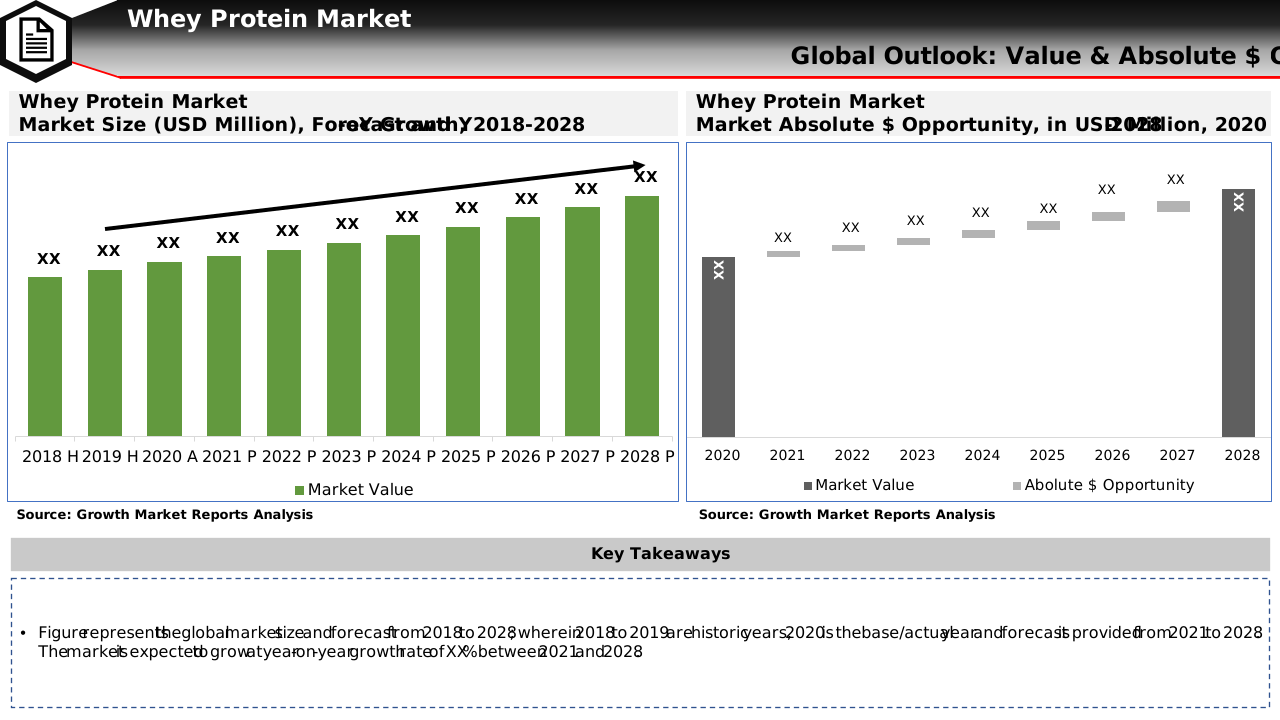
According to our latest research, the global whey protein market size reached USD 14.2 billion in 2025. The market is anticipated to grow at a robust CAGR of 8.3% from 2026 to 2034, driven by increasing health consciousness, the surging popularity of sports and fitness activities, and the rising adoption of protein-rich diets worldwide. By 2034, the whey protein market is forecasted to attain a value of USD 29.4 billion. This substantial growth trajectory is attributed to expanding applications across nutritional supplements, food and beverages, pharmaceuticals, and animal feed, as well as ongoing innovation in product formulations and distribution strategies.

Global Whey protein Market Size Forecast 2025-2034, USD Billion

One of the primary growth factors propelling the whey protein market is the escalating demand for functional foods and beverages that offer additional health benefits beyond basic nutrition. Consumers in 2025 are increasingly seeking products fortified with protein to support muscle growth, weight management, and overall wellness. The proliferation of fitness centers, gyms, and sports clubs has fostered a deeply entrenched culture of health and fitness, leading to a surge in the consumption of protein supplements, especially among millennials and Generation Z. Furthermore, the growing prevalence of lifestyle-related diseases such as obesity and type 2 diabetes has prompted consumers to adopt healthier dietary habits, further fueling the demand for whey protein products globally.

Another significant driver is the rapid expansion of the sports nutrition industry, which has emerged as a major end-user of whey protein. Athletes and fitness enthusiasts rely on whey protein for its superior amino acid profile, rapid digestibility, and proven efficacy in muscle recovery and performance enhancement. Manufacturers are capitalizing on this trend by launching innovative whey protein formulations tailored to specific athletic needs, such as pre- and post-workout blends, ready-to-drink shakes, and protein bars. The increasing endorsement of sports nutrition products by professional athletes and social media influencers has amplified consumer awareness and trust, thereby accelerating market growth during the 2026-2034 forecast period.

Technological advancements in whey protein processing and extraction techniques are further contributing to market expansion. The development of high-purity whey protein isolates and hydrolyzed whey proteins has enabled manufacturers to cater to consumers with specific dietary requirements, such as lactose intolerance and food allergies. Additionally, the integration of whey protein into diverse product categories, including infant nutrition, pharmaceuticals, and animal feed, is broadening the market's scope. Strategic partnerships, mergers, and acquisitions among key players are also enhancing production capabilities and global reach, fostering a competitive yet dynamic market landscape through 2034.

Whey protein is not only a staple in the diets of athletes and fitness enthusiasts but also plays a pivotal role in the broader spectrum of health and wellness. Its high-quality protein content, rich in essential amino acids, makes it an ideal choice for muscle repair and growth. Beyond sports nutrition, whey protein is increasingly recognized for its potential benefits in weight management and metabolic health. As consumers become more health-conscious in 2025 and beyond, the demand for whey protein as a versatile dietary supplement continues to rise, offering significant opportunities for innovation in product formulations that cater to diverse health needs.

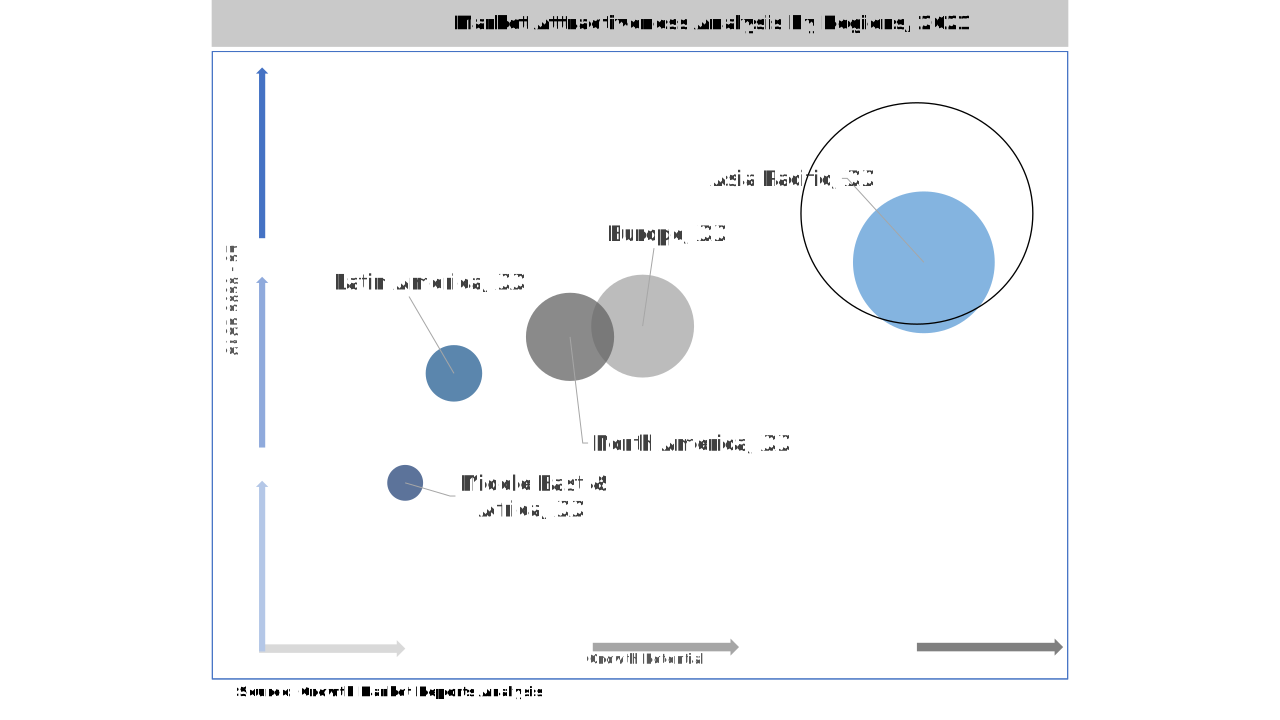
Regionally, North America continues to dominate the global whey protein market, accounting for approximately 35.8% of total market share in 2025, followed closely by Europe and Asia Pacific. The United States, in particular, has witnessed sustained growth due to high consumer awareness, a well-established fitness culture, and widespread availability of whey protein products across multiple distribution channels. Meanwhile, the Asia Pacific region is experiencing the fastest growth, with countries such as China, India, and Japan emerging as lucrative markets due to rising disposable incomes, rapid urbanization, and increasing adoption of Western dietary patterns. The Middle East and Africa and Latin America are also displaying promising potential, driven by evolving consumer preferences and expanding retail infrastructure.

Product Type Analysis

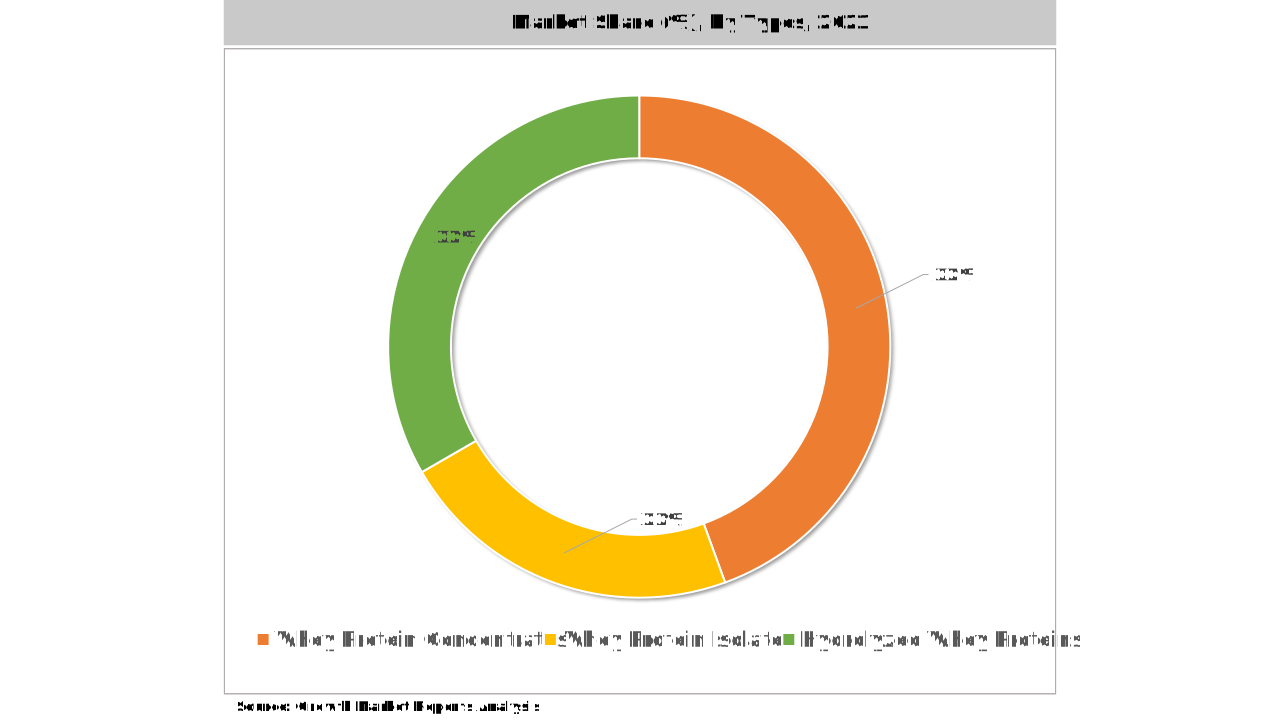
The whey protein market is segmented by product type into whey protein concentrate (WPC), whey protein isolate (WPI), and hydrolyzed whey protein (HWP). Whey protein concentrate remains the most widely consumed variant, holding approximately 52.5% of market share in 2025, owing to its balanced protein content (typically 70-80%) and cost-effectiveness. WPC is favored by both mainstream consumers and athletes for its nutritional value and versatility in applications ranging from shakes to baked goods. The relatively lower price point compared to isolates and hydrolysates makes WPC accessible to a broader demographic, further entrenching its position as the leading segment through the forecast period.

Whey protein Market Share by Product Type 2025

Whey protein isolate, characterized by its higher protein content (typically above 90%) and minimal lactose and fat, is gaining traction among health-conscious individuals and those with lactose intolerance. WPI accounts for approximately 32.0% of market share in 2025 and is especially popular in the sports nutrition and medical nutrition segments, where purity and rapid absorption are paramount. The increasing focus on clean-label and allergen-free products has prompted manufacturers to invest in advanced filtration technologies, ensuring that isolates meet stringent quality standards. As a result, demand for WPI is expected to witness a significant uptick during the 2026-2034 forecast period.

Hydrolyzed whey protein, which undergoes enzymatic hydrolysis to break down protein chains into smaller peptides, is prized for its superior digestibility and reduced allergenicity. Representing approximately 15.5% of market share in 2025, this product type is predominantly used in specialized applications such as infant nutrition, clinical nutrition, and sports recovery products. The rapid absorption and hypoallergenic properties of hydrolyzed whey protein make it ideal for sensitive populations, including infants and patients with compromised digestive systems. Although it commands a premium price, growing awareness of its benefits is expected to drive steady expansion in this segment through 2034.

Innovation within each product type is fueling market differentiation and consumer engagement in 2025. Manufacturers are developing flavored and fortified variants, incorporating additional nutrients such as vitamins, minerals, and probiotics to enhance the functional profile of whey protein products. The introduction of organic and grass-fed whey protein options is also resonating with environmentally conscious consumers, further diversifying the product landscape. Collectively, these developments underscore the dynamic evolution of the whey protein market by product type and set a strong foundation for growth across the forecast period.

The versatility of whey protein extends beyond traditional applications, finding its way into innovative food and beverage products that cater to modern dietary trends. With its ability to enhance the nutritional profile of foods, whey protein is being incorporated into a variety of products, from protein-enriched snacks to meal replacement shakes. This trend is driven by consumers' growing preference for functional foods that support active lifestyles and overall well-being. As the market evolves through 2034, manufacturers are exploring new ways to integrate whey protein into everyday foods, making it easier for consumers to meet their daily protein intake goals.

Report Scope

Attributes Details
Report Title Whey Protein Market Research Report 2034
By Product Type Whey Protein Concentrate, Whey Protein Isolate, Hydrolyzed Whey Protein
By Application Nutritional Supplements, Food & Beverages, Pharmaceuticals, Animal Feed, Others
By Form Powder, Liquid
By Distribution Channel Online Stores, Supermarkets/Hypermarkets, Specialty Stores, Others
By End-User Sports Nutrition, Infant Nutrition, Functional Food, Others
Regions Covered North America, Europe, APAC, Latin America, MEA
Base Year 2025
Historic Data 2019-2024
Forecast Period 2026-2034
Number of Pages 279
Number of Tables & Figures 364
Customization Available Yes, the report can be customized as per your need.

Application Analysis

The application spectrum of whey protein is broad, encompassing nutritional supplements, food and beverages, pharmaceuticals, animal feed, and others. Nutritional supplements represent the largest application segment in 2025, driven by the sustained demand for protein powders, bars, and ready-to-drink beverages among fitness enthusiasts, athletes, and individuals seeking convenient sources of high-quality protein. The proliferation of e-commerce platforms and specialty stores has made nutritional supplements more accessible, further stimulating market growth in this segment through the 2026-2034 forecast period.

In the food and beverages sector, whey protein is increasingly being incorporated into a wide array of products, including baked goods, dairy alternatives, snacks, and meal replacements. The functional properties of whey protein, such as its ability to enhance texture, solubility, and shelf life, make it a valuable ingredient for food manufacturers aiming to meet the rising consumer demand for nutritious and protein-enriched foods. The trend toward clean-label and fortified foods is also prompting innovation in this segment, with manufacturers developing products that cater to various dietary preferences and health needs across global markets.

Pharmaceutical applications of whey protein are gaining prominence in 2025, particularly in clinical nutrition and medical foods designed for patients with specific dietary requirements. Whey protein's high bioavailability and complete amino acid profile make it an ideal ingredient for formulations targeting muscle wasting, malnutrition, and recovery from surgery or illness. The increasing prevalence of chronic diseases and the aging global population are expected to drive further growth in this segment through 2034, as healthcare providers and patients alike recognize the therapeutic benefits of whey protein supplementation.

The use of whey protein in animal feed is another emerging application, fueled by the need for high-quality protein sources in livestock and pet nutrition. Whey protein enhances growth rates, feed efficiency, and overall animal health, making it a valuable additive in animal husbandry. As the global demand for animal-derived food products continues to rise, the adoption of whey protein in animal feed formulations is likely to expand, creating new growth avenues for market participants during the forecast period.

Form Analysis

The whey protein market is segmented by form into powder and liquid variants, with powder form dominating the market in 2025 due to its superior stability, longer shelf life, and ease of transportation and storage. Powdered whey protein is highly versatile and can be easily incorporated into a variety of products, from shakes and smoothies to baked goods and nutritional bars. Its convenience and cost-effectiveness make it the preferred choice for both manufacturers and consumers, especially in the sports nutrition and dietary supplements sectors.

In the realm of infant nutrition, whey protein stands out for its superior digestibility and nutritional benefits, making it a key ingredient in infant formulas. The hypoallergenic properties of whey protein, combined with its complete amino acid profile, support healthy growth and development in infants. As parents become more informed about the nutritional needs of their children, the demand for high-quality whey protein-based products is expected to increase steadily through 2034. This presents a significant opportunity for manufacturers to innovate and expand their offerings in the infant nutrition segment, ensuring that products meet the highest safety and quality standards.

Liquid whey protein, while accounting for a smaller share of the market, is gaining popularity in ready-to-drink beverages and clinical nutrition applications in 2025. The liquid form offers the advantage of immediate consumption without the need for reconstitution, appealing to on-the-go consumers and those seeking hassle-free nutrition solutions. Advances in packaging and preservation technologies are enabling manufacturers to extend the shelf life of liquid whey protein products, thereby addressing one of the primary challenges associated with this form.

The choice between powder and liquid forms is often dictated by end-user preferences, product application, and distribution logistics. Sports nutrition brands may favor powders for their flexibility in serving sizes and flavor customization, while beverage companies might opt for liquid whey protein to cater to consumers seeking convenience and rapid absorption. The rise of meal replacement drinks and protein-enriched beverages is expected to bolster demand for liquid whey protein, particularly in urban markets where time constraints drive the adoption of on-the-go nutrition through the 2026-2034 period.

Manufacturers are also exploring innovative delivery formats to enhance the appeal and functionality of whey protein products. These include single-serve sachets, effervescent tablets, and concentrated shots, which cater to diverse consumer needs and usage occasions. The ongoing evolution of product forms underscores the adaptability of whey protein to changing market dynamics and consumer lifestyles, ensuring sustained growth across both powder and liquid segments during the forecast period.

Distribution Channel Analysis

Distribution channels play a pivotal role in shaping the accessibility and visibility of whey protein products. The market is segmented into online stores, supermarkets and hypermarkets, specialty stores, and others. Online stores have witnessed exponential growth through 2025, driven by the convenience of home delivery, a wide product assortment, and the ability to compare prices and reviews. The digital transformation of the retail sector, coupled with the proliferation of health and wellness e-commerce platforms, has significantly expanded the reach of whey protein products to urban and rural consumers alike.

Supermarkets and hypermarkets continue to be key distribution channels in 2025, offering consumers the advantage of physical product inspection and immediate purchase. The presence of dedicated health and wellness sections in these retail outlets has enhanced the visibility of whey protein products, attracting a diverse customer base ranging from fitness enthusiasts to families seeking nutritious food options. Promotional activities, in-store sampling, and attractive packaging further stimulate impulse purchases and brand loyalty in this channel.

Specialty stores, including health food stores, nutrition outlets, and sports supplement shops, cater to a niche segment of informed and discerning consumers. These stores offer personalized advice, product demonstrations, and tailored recommendations, fostering trust and engagement among customers. The expertise of store personnel and the availability of premium and specialty whey protein products position specialty stores as preferred destinations for serious athletes, bodybuilders, and health-conscious individuals seeking curated solutions.

Other distribution channels, such as pharmacies, gyms, and wellness centers, are also gaining traction, particularly for medical nutrition and sports-specific products. The diversification of distribution networks is enabling manufacturers to tap into new customer segments and expand their market footprint. Strategic partnerships with retail chains, online marketplaces, and specialty outlets are further enhancing the accessibility and penetration of whey protein products globally through 2034.

End-User Analysis

The whey protein market serves a diverse array of end-users, including sports nutrition, infant nutrition, functional food, and others. Sports nutrition remains the dominant end-user segment, accounting for the largest share of market revenue in 2025. The growing emphasis on physical fitness, athletic performance, and muscle recovery has propelled the adoption of whey protein supplements among athletes, bodybuilders, and fitness enthusiasts. The availability of tailored formulations, such as pre-workout and post-workout blends, has further cemented whey protein's position as the protein of choice in the sports nutrition industry.

Infant nutrition represents a critical and highly regulated end-user segment, with whey protein serving as a key ingredient in infant formula and specialized baby foods. The superior digestibility, hypoallergenic properties, and balanced amino acid profile of whey protein make it ideal for supporting infant growth and development. Stringent quality standards and rigorous safety protocols govern the use of whey protein in this segment, ensuring that products meet the nutritional needs of infants and comply with regulatory requirements across global markets.

Functional food is an emerging and high-growth end-user segment in 2025, driven by the increasing demand for foods that offer health benefits beyond basic nutrition. Whey protein is being incorporated into a wide range of functional foods, including yogurts, cereals, snacks, and meal replacements, to enhance their protein content and nutritional value. The trend toward preventive healthcare and wellness is driving innovation in this segment, with manufacturers developing products that cater to specific health goals such as weight management, immune support, and digestive health.

Other end-user segments, such as clinical nutrition, elderly nutrition, and animal nutrition, are also contributing to market growth through the forecast period. The versatility of whey protein and its proven health benefits are enabling manufacturers to develop targeted solutions for diverse consumer groups, from patients recovering from illness to seniors seeking to maintain muscle mass and vitality. The expanding application base and evolving consumer preferences are expected to drive sustained growth across all end-user segments from 2026 to 2034.

Opportunities & Threats

The whey protein market presents numerous opportunities for growth and innovation in 2025 and beyond. One of the most promising avenues is the development of hybrid protein products that combine the benefits of whey protein with those of plant-derived proteins. This approach caters to the growing segment of flexitarian and environmentally conscious consumers who seek sustainable and ethically sourced protein options. Additionally, the rising demand for personalized nutrition and functional foods is creating opportunities for manufacturers to develop customized whey protein formulations tailored to specific health goals, dietary preferences, and lifestyle needs. The integration of advanced technologies, such as precision fermentation and bioengineering, is opening new frontiers in product development and quality enhancement.

Another significant opportunity lies in expanding the geographic footprint of whey protein products, particularly in emerging markets across Asia Pacific, Latin America, and the Middle East and Africa. Rapid urbanization, rising disposable incomes, and increasing awareness of health and wellness are driving demand for protein-rich foods and supplements in these regions. Strategic investments in local production facilities, distribution networks, and marketing initiatives can enable companies to capture untapped market potential and establish a strong presence in high-growth regions. Furthermore, collaborations with local partners, healthcare providers, and fitness organizations can enhance brand visibility and consumer trust, accelerating market penetration and adoption through 2034.

Despite the favorable growth outlook, the whey protein market faces certain restraints that could impede its expansion. One of the primary challenges is the volatility of raw material prices, particularly milk, which directly impacts production costs and profit margins. Fluctuations in milk supply due to climatic conditions, regulatory changes, and market dynamics can create pricing pressures and supply chain disruptions. Additionally, the growing prevalence of lactose intolerance and dairy allergies among consumers is prompting a shift toward alternative protein sources, potentially limiting the addressable market for whey protein products. Regulatory complexities, labeling requirements, and quality assurance standards also pose challenges for manufacturers seeking to enter new markets or launch innovative products during the forecast period.

Regional Outlook

Regionally, the North American whey protein market led the global landscape in 2025, accounting for a market size of approximately USD 5.1 billion and representing around 35.8% of global revenue. The United States remains the largest contributor, driven by high consumer awareness, a robust fitness culture, and widespread availability of whey protein products through multiple distribution channels. The presence of leading market players, advanced manufacturing infrastructure, and a well-established regulatory framework further bolster North America's dominance. The region is expected to maintain steady growth during the 2026-2034 forecast period, supported by ongoing innovation and evolving consumer preferences.

Whey protein Market Regional Share 2025

Europe is the second-largest regional market, with a market size of approximately USD 4.2 billion in 2025, representing around 29.6% of global revenue. Countries such as Germany, the United Kingdom, France, and the Netherlands are at the forefront of market development, owing to strong demand for sports nutrition, functional foods, and infant nutrition products. The European market is characterized by stringent quality standards, sustainability initiatives, and a growing emphasis on organic and clean-label products. The region is projected to grow at a CAGR of approximately 7.5% through 2034, driven by increasing health consciousness and the adoption of protein-rich diets among diverse population segments.

The Asia Pacific region is emerging as the fastest-growing market, with a market size of approximately USD 3.0 billion in 2025 and a projected CAGR of 10.2% from 2026 to 2034. Rapid urbanization, rising disposable incomes, and the influence of Western dietary patterns are fueling demand for whey protein products in countries such as China, India, and Japan. The expanding middle class, coupled with growing awareness of the benefits of protein supplementation, is driving market penetration and adoption throughout the region. Strategic investments in local production, distribution, and marketing are expected to further accelerate growth. Meanwhile, Latin America and the Middle East and Africa are also displaying steady growth, with market sizes of approximately USD 1.2 billion and USD 0.7 billion respectively in 2025, supported by evolving consumer preferences and expanding retail infrastructure.

Competitor Outlook

The global whey protein market in 2025 is highly competitive, characterized by the presence of numerous multinational corporations, regional players, and emerging startups. The competitive landscape is shaped by continuous innovation, aggressive marketing strategies, and a relentless focus on quality and differentiation. Leading companies are investing heavily in research and development to enhance product formulations, improve functional attributes, and cater to evolving consumer demands. Strategic partnerships, mergers, and acquisitions are common, enabling companies to expand their product portfolios, enter new markets, and strengthen their global footprint heading into the 2026-2034 forecast period.

Product innovation is a key differentiator in the whey protein market, with companies striving to introduce novel flavors, functional ingredients, and delivery formats to capture consumer interest. The trend toward clean-label, organic, and non-GMO products is prompting manufacturers to adopt sustainable sourcing practices and transparent labeling. Companies are also leveraging digital platforms, influencer marketing, and targeted advertising to engage with consumers and build brand loyalty. The integration of advanced technologies, such as microfiltration, ultrafiltration, and enzymatic hydrolysis, is enabling manufacturers to produce high-purity and specialized whey protein variants that cater to specific dietary needs and applications.

Supply chain optimization and operational efficiency are critical success factors in the competitive landscape as of 2025. Leading players are investing in state-of-the-art manufacturing facilities, robust quality control systems, and efficient logistics networks to ensure consistent product quality and timely delivery. The ability to adapt to changing market dynamics, regulatory requirements, and consumer preferences is essential for sustained growth and competitiveness through 2034. Companies are also focusing on sustainability initiatives, such as reducing carbon footprint, minimizing waste, and promoting responsible sourcing, to align with the values of environmentally conscious consumers worldwide.

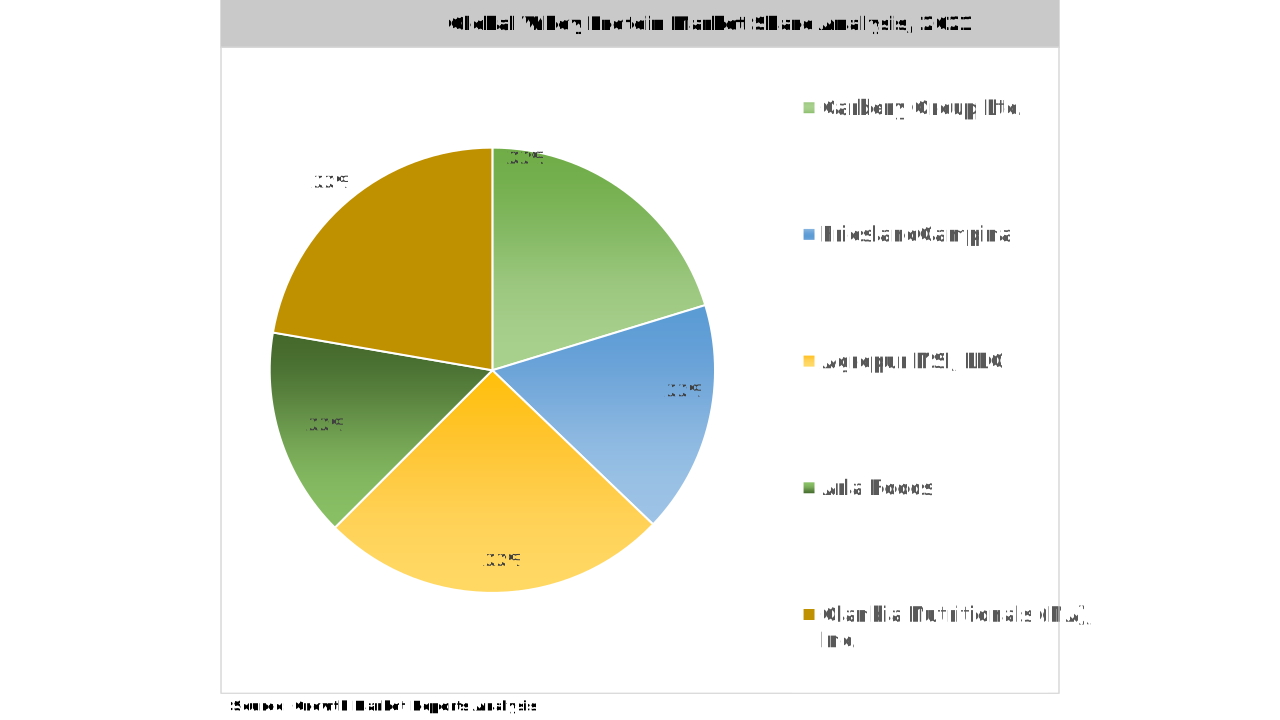
Some of the major companies operating in the global whey protein market include Glanbia plc, Arla Foods Ingredients Group, Fonterra Co-operative Group, Hilmar Cheese Company, Saputo Inc., Agropur Cooperative, Lactalis Ingredients, FrieslandCampina, Carbery Group, Kerry Group, DMK Group, Milk Specialties Global, Leprino Foods Company, Valio Ltd., and Meggle Group. Glanbia plc is renowned for its extensive portfolio of whey protein products and strong presence in sports nutrition and functional foods. Arla Foods Ingredients Group is a leading supplier of high-quality whey protein ingredients for infant nutrition and clinical applications. Fonterra Co-operative Group leverages its robust dairy supply chain to offer a wide range of whey protein concentrates and isolates. Hilmar Cheese Company and Saputo Inc. are recognized for their innovation in whey protein processing and commitment to quality. Agropur Cooperative, Lactalis Ingredients, FrieslandCampina, Carbery Group, and Kerry Group are also prominent players, known for their global reach, product diversity, and focus on sustainability.

These companies are actively engaged in product launches, capacity expansions, and strategic collaborations to strengthen their market position and capitalize on emerging opportunities through the 2026-2034 forecast period. The emphasis on research and development, customer-centric innovation, and sustainable business practices is expected to drive continued growth and competitiveness in the global whey protein market.

Key Players

  • Glanbia plc
  • Arla Foods Ingredients Group
  • Fonterra Co-operative Group
  • Hilmar Cheese Company
  • Lactalis Ingredients
  • Saputo Inc.
  • Agropur Cooperative
  • Kerry Group
  • FrieslandCampina
  • Carbery Group
  • DMK Group
  • Milk Specialties Global
  • Leprino Foods Company
  • Valio Ltd.
  • Meggle Group
  • Tatua Co-operative Dairy Company
  • Sachsenmilch Leppersdorf GmbH
  • Amco Proteins

Segments

The Whey protein market has been segmented on the basis of

Product Type

  • Whey Protein Concentrate
  • Whey Protein Isolate
  • Hydrolyzed Whey Protein

Application

  • Nutritional Supplements
  • Food & Beverages
  • Pharmaceuticals
  • Animal Feed
  • Others

Form

  • Powder
  • Liquid

Distribution Channel

  • Online Stores
  • Supermarkets/Hypermarkets
  • Specialty Stores
  • Others

End-User

  • Sports Nutrition
  • Infant Nutrition
  • Functional Food
  • Others

Frequently Asked Questions

Leading companies in the global whey protein market include Glanbia plc, Arla Foods Ingredients Group, Fonterra Co-operative Group, Hilmar Cheese Company, Lactalis Ingredients, Saputo Inc., Agropur Cooperative, Kerry Group, FrieslandCampina, Carbery Group, DMK Group, Milk Specialties Global, Leprino Foods Company, Valio Ltd., and Meggle Group. These players compete through continuous product innovation, strategic mergers and acquisitions, capacity expansions, and sustainability-driven sourcing and manufacturing practices.

Key trends include the development of organic and grass-fed whey protein products, the rise of personalized nutrition solutions, and integration of whey protein into novel delivery formats such as protein-enriched snacks and beverages. Opportunities are particularly strong in emerging markets across Asia Pacific, Latin America, and the Middle East and Africa, where urbanization and growing middle-class populations are driving demand. Hybrid protein formulations combining whey with plant-based proteins are also gaining momentum, catering to flexitarian and sustainability-focused consumers.

The major end-users of whey protein are sports nutrition, infant nutrition, functional food, and other segments including clinical and elderly nutrition. Sports nutrition is the largest end-user segment in 2025, driven by robust demand from athletes, bodybuilders, and fitness enthusiasts. Infant nutrition is a critical regulated segment where whey protein serves as a key ingredient in infant formulas. Functional food is an emerging high-growth segment, incorporating whey protein into everyday foods to meet evolving consumer health and wellness goals.

Whey protein reaches consumers through multiple distribution channels, including online stores, supermarkets and hypermarkets, specialty stores, and others such as pharmacies and gyms. Online stores are the fastest-growing channel, driven by the convenience of home delivery, competitive pricing, and a wide product range. Supermarkets and hypermarkets offer strong visibility and accessibility, while specialty health and nutrition stores provide expert guidance and premium product assortments for discerning consumers.

Powdered whey protein is the most popular form, commanding the dominant share of the market in 2025. Its advantages include superior stability, extended shelf life, ease of transportation, and versatility across product formats such as shakes, baked goods, and nutritional bars. Liquid whey protein is the smaller but growing segment, gaining traction in ready-to-drink beverages and clinical nutrition applications, supported by advances in packaging and preservation technologies.

Whey protein is applied across nutritional supplements, food and beverages, pharmaceuticals, animal feed, and other specialty uses. Nutritional supplements constitute the largest application segment, encompassing protein powders, bars, and ready-to-drink shakes. The food and beverages sector is a fast-growing application area, with whey protein incorporated into baked goods, dairy alternatives, snacks, and meal replacements. Pharmaceutical and clinical nutrition applications are also expanding, driven by aging populations and increased focus on therapeutic nutrition.

The three primary types of whey protein are whey protein concentrate (WPC), whey protein isolate (WPI), and hydrolyzed whey protein (HWP). WPC, with a protein content of roughly 70-80%, is the most widely consumed due to its cost-effectiveness and versatility. WPI offers a higher protein purity above 90% with minimal lactose and fat, making it popular among health-focused and lactose-intolerant consumers. HWP undergoes enzymatic hydrolysis for superior digestibility and reduced allergenicity, ideal for infant and clinical nutrition.

North America leads the global whey protein market, accounting for approximately 35.8% of the market share in 2025, with a market value of around USD 5.1 billion. Europe follows as the second-largest region. Asia Pacific is the fastest-growing region, projected to expand at a CAGR exceeding 10% through 2034, fueled by urbanization, rising disposable incomes, and growing awareness of protein supplementation in countries such as China, India, and Japan.

Key growth drivers include escalating consumer demand for high-protein diets, the rapid expansion of the global fitness and sports nutrition industry, increasing prevalence of lifestyle-related diseases prompting healthier dietary choices, technological advancements in whey protein processing, and growing adoption of functional foods and beverages. The rising popularity of ready-to-drink protein beverages and protein bars among millennials and Gen Z consumers is also a significant accelerant.

According to our latest research, the global whey protein market reached USD 14.2 billion in 2025. The market is projected to grow at a CAGR of 8.3% from 2026 to 2034, reaching approximately USD 29.4 billion by 2034, driven by rising health consciousness, expanding sports nutrition demand, and broadening applications across food, beverages, and pharmaceuticals.

Table Of Content

Chapter 1 Executive Summary
Chapter 2 Assumptions and Acronyms Used
Chapter 3 Research Methodology
Chapter 4 Whey protein Market Overview
   4.1 Introduction
      4.1.1 Market Taxonomy
      4.1.2 Market Definition
      4.1.3 Macro-Economic Factors Impacting the Market Growth
   4.2 Whey protein Market Dynamics
      4.2.1 Market Drivers
      4.2.2 Market Restraints
      4.2.3 Market Opportunity
   4.3 Whey protein Market - Supply Chain Analysis
      4.3.1 List of Key Suppliers
      4.3.2 List of Key Distributors
      4.3.3 List of Key Consumers
   4.4 Key Forces Shaping the Whey protein Market
      4.4.1 Bargaining Power of Suppliers
      4.4.2 Bargaining Power of Buyers
      4.4.3 Threat of Substitution
      4.4.4 Threat of New Entrants
      4.4.5 Competitive Rivalry
   4.5 Global Whey protein Market Size & Forecast, 2023-2032
      4.5.1 Whey protein Market Size and Y-o-Y Growth
      4.5.2 Whey protein Market Absolute $ Opportunity

Chapter 5 Global Whey protein Market Analysis and Forecast By Product Type
   5.1 Introduction
      5.1.1 Key Market Trends & Growth Opportunities By Product Type
      5.1.2 Basis Point Share (BPS) Analysis By Product Type
      5.1.3 Absolute $ Opportunity Assessment By Product Type
   5.2 Whey protein Market Size Forecast By Product Type
      5.2.1 Whey Protein Concentrate
      5.2.2 Whey Protein Isolate
      5.2.3 Hydrolyzed Whey Protein
   5.3 Market Attractiveness Analysis By Product Type

Chapter 6 Global Whey protein Market Analysis and Forecast By Application
   6.1 Introduction
      6.1.1 Key Market Trends & Growth Opportunities By Application
      6.1.2 Basis Point Share (BPS) Analysis By Application
      6.1.3 Absolute $ Opportunity Assessment By Application
   6.2 Whey protein Market Size Forecast By Application
      6.2.1 Nutritional Supplements
      6.2.2 Food & Beverages
      6.2.3 Pharmaceuticals
      6.2.4 Animal Feed
      6.2.5 Others
   6.3 Market Attractiveness Analysis By Application

Chapter 7 Global Whey protein Market Analysis and Forecast By Form
   7.1 Introduction
      7.1.1 Key Market Trends & Growth Opportunities By Form
      7.1.2 Basis Point Share (BPS) Analysis By Form
      7.1.3 Absolute $ Opportunity Assessment By Form
   7.2 Whey protein Market Size Forecast By Form
      7.2.1 Powder
      7.2.2 Liquid
   7.3 Market Attractiveness Analysis By Form

Chapter 8 Global Whey protein Market Analysis and Forecast By Distribution Channel
   8.1 Introduction
      8.1.1 Key Market Trends & Growth Opportunities By Distribution Channel
      8.1.2 Basis Point Share (BPS) Analysis By Distribution Channel
      8.1.3 Absolute $ Opportunity Assessment By Distribution Channel
   8.2 Whey protein Market Size Forecast By Distribution Channel
      8.2.1 Online Stores
      8.2.2 Supermarkets/Hypermarkets
      8.2.3 Specialty Stores
      8.2.4 Others
   8.3 Market Attractiveness Analysis By Distribution Channel

Chapter 9 Global Whey protein Market Analysis and Forecast By End-User
   9.1 Introduction
      9.1.1 Key Market Trends & Growth Opportunities By End-User
      9.1.2 Basis Point Share (BPS) Analysis By End-User
      9.1.3 Absolute $ Opportunity Assessment By End-User
   9.2 Whey protein Market Size Forecast By End-User
      9.2.1 Sports Nutrition
      9.2.2 Infant Nutrition
      9.2.3 Functional Food
      9.2.4 Others
   9.3 Market Attractiveness Analysis By End-User

Chapter 10 Global Whey protein Market Analysis and Forecast by Region
   10.1 Introduction
      10.1.1 Key Market Trends & Growth Opportunities By Region
      10.1.2 Basis Point Share (BPS) Analysis By Region
      10.1.3 Absolute $ Opportunity Assessment By Region
   10.2 Whey protein Market Size Forecast By Region
      10.2.1 North America
      10.2.2 Europe
      10.2.3 Asia Pacific
      10.2.4 Latin America
      10.2.5 Middle East & Africa (MEA)
   10.3 Market Attractiveness Analysis By Region

Chapter 11 Coronavirus Disease (COVID-19) Impact 
   11.1 Introduction 
   11.2 Current & Future Impact Analysis 
   11.3 Economic Impact Analysis 
   11.4 Government Policies 
   11.5 Investment Scenario

Chapter 12 North America Whey protein Analysis and Forecast
   12.1 Introduction
   12.2 North America Whey protein Market Size Forecast by Country
      12.2.1 U.S.
      12.2.2 Canada
   12.3 Basis Point Share (BPS) Analysis by Country
   12.4 Absolute $ Opportunity Assessment by Country
   12.5 Market Attractiveness Analysis by Country
   12.6 North America Whey protein Market Size Forecast By Product Type
      12.6.1 Whey Protein Concentrate
      12.6.2 Whey Protein Isolate
      12.6.3 Hydrolyzed Whey Protein
   12.7 Basis Point Share (BPS) Analysis By Product Type 
   12.8 Absolute $ Opportunity Assessment By Product Type 
   12.9 Market Attractiveness Analysis By Product Type
   12.10 North America Whey protein Market Size Forecast By Application
      12.10.1 Nutritional Supplements
      12.10.2 Food & Beverages
      12.10.3 Pharmaceuticals
      12.10.4 Animal Feed
      12.10.5 Others
   12.11 Basis Point Share (BPS) Analysis By Application 
   12.12 Absolute $ Opportunity Assessment By Application 
   12.13 Market Attractiveness Analysis By Application
   12.14 North America Whey protein Market Size Forecast By Form
      12.14.1 Powder
      12.14.2 Liquid
   12.15 Basis Point Share (BPS) Analysis By Form 
   12.16 Absolute $ Opportunity Assessment By Form 
   12.17 Market Attractiveness Analysis By Form
   12.18 North America Whey protein Market Size Forecast By Distribution Channel
      12.18.1 Online Stores
      12.18.2 Supermarkets/Hypermarkets
      12.18.3 Specialty Stores
      12.18.4 Others
   12.19 Basis Point Share (BPS) Analysis By Distribution Channel 
   12.20 Absolute $ Opportunity Assessment By Distribution Channel 
   12.21 Market Attractiveness Analysis By Distribution Channel
   12.22 North America Whey protein Market Size Forecast By End-User
      12.22.1 Sports Nutrition
      12.22.2 Infant Nutrition
      12.22.3 Functional Food
      12.22.4 Others
   12.23 Basis Point Share (BPS) Analysis By End-User 
   12.24 Absolute $ Opportunity Assessment By End-User 
   12.25 Market Attractiveness Analysis By End-User

Chapter 13 Europe Whey protein Analysis and Forecast
   13.1 Introduction
   13.2 Europe Whey protein Market Size Forecast by Country
      13.2.1 Germany
      13.2.2 France
      13.2.3 Italy
      13.2.4 U.K.
      13.2.5 Spain
      13.2.6 Russia
      13.2.7 Rest of Europe
   13.3 Basis Point Share (BPS) Analysis by Country
   13.4 Absolute $ Opportunity Assessment by Country
   13.5 Market Attractiveness Analysis by Country
   13.6 Europe Whey protein Market Size Forecast By Product Type
      13.6.1 Whey Protein Concentrate
      13.6.2 Whey Protein Isolate
      13.6.3 Hydrolyzed Whey Protein
   13.7 Basis Point Share (BPS) Analysis By Product Type 
   13.8 Absolute $ Opportunity Assessment By Product Type 
   13.9 Market Attractiveness Analysis By Product Type
   13.10 Europe Whey protein Market Size Forecast By Application
      13.10.1 Nutritional Supplements
      13.10.2 Food & Beverages
      13.10.3 Pharmaceuticals
      13.10.4 Animal Feed
      13.10.5 Others
   13.11 Basis Point Share (BPS) Analysis By Application 
   13.12 Absolute $ Opportunity Assessment By Application 
   13.13 Market Attractiveness Analysis By Application
   13.14 Europe Whey protein Market Size Forecast By Form
      13.14.1 Powder
      13.14.2 Liquid
   13.15 Basis Point Share (BPS) Analysis By Form 
   13.16 Absolute $ Opportunity Assessment By Form 
   13.17 Market Attractiveness Analysis By Form
   13.18 Europe Whey protein Market Size Forecast By Distribution Channel
      13.18.1 Online Stores
      13.18.2 Supermarkets/Hypermarkets
      13.18.3 Specialty Stores
      13.18.4 Others
   13.19 Basis Point Share (BPS) Analysis By Distribution Channel 
   13.20 Absolute $ Opportunity Assessment By Distribution Channel 
   13.21 Market Attractiveness Analysis By Distribution Channel
   13.22 Europe Whey protein Market Size Forecast By End-User
      13.22.1 Sports Nutrition
      13.22.2 Infant Nutrition
      13.22.3 Functional Food
      13.22.4 Others
   13.23 Basis Point Share (BPS) Analysis By End-User 
   13.24 Absolute $ Opportunity Assessment By End-User 
   13.25 Market Attractiveness Analysis By End-User

Chapter 14 Asia Pacific Whey protein Analysis and Forecast
   14.1 Introduction
   14.2 Asia Pacific Whey protein Market Size Forecast by Country
      14.2.1 China
      14.2.2 Japan
      14.2.3 South Korea
      14.2.4 India
      14.2.5 Australia
      14.2.6 South East Asia (SEA)
      14.2.7 Rest of Asia Pacific (APAC)
   14.3 Basis Point Share (BPS) Analysis by Country
   14.4 Absolute $ Opportunity Assessment by Country
   14.5 Market Attractiveness Analysis by Country
   14.6 Asia Pacific Whey protein Market Size Forecast By Product Type
      14.6.1 Whey Protein Concentrate
      14.6.2 Whey Protein Isolate
      14.6.3 Hydrolyzed Whey Protein
   14.7 Basis Point Share (BPS) Analysis By Product Type 
   14.8 Absolute $ Opportunity Assessment By Product Type 
   14.9 Market Attractiveness Analysis By Product Type
   14.10 Asia Pacific Whey protein Market Size Forecast By Application
      14.10.1 Nutritional Supplements
      14.10.2 Food & Beverages
      14.10.3 Pharmaceuticals
      14.10.4 Animal Feed
      14.10.5 Others
   14.11 Basis Point Share (BPS) Analysis By Application 
   14.12 Absolute $ Opportunity Assessment By Application 
   14.13 Market Attractiveness Analysis By Application
   14.14 Asia Pacific Whey protein Market Size Forecast By Form
      14.14.1 Powder
      14.14.2 Liquid
   14.15 Basis Point Share (BPS) Analysis By Form 
   14.16 Absolute $ Opportunity Assessment By Form 
   14.17 Market Attractiveness Analysis By Form
   14.18 Asia Pacific Whey protein Market Size Forecast By Distribution Channel
      14.18.1 Online Stores
      14.18.2 Supermarkets/Hypermarkets
      14.18.3 Specialty Stores
      14.18.4 Others
   14.19 Basis Point Share (BPS) Analysis By Distribution Channel 
   14.20 Absolute $ Opportunity Assessment By Distribution Channel 
   14.21 Market Attractiveness Analysis By Distribution Channel
   14.22 Asia Pacific Whey protein Market Size Forecast By End-User
      14.22.1 Sports Nutrition
      14.22.2 Infant Nutrition
      14.22.3 Functional Food
      14.22.4 Others
   14.23 Basis Point Share (BPS) Analysis By End-User 
   14.24 Absolute $ Opportunity Assessment By End-User 
   14.25 Market Attractiveness Analysis By End-User

Chapter 15 Latin America Whey protein Analysis and Forecast
   15.1 Introduction
   15.2 Latin America Whey protein Market Size Forecast by Country
      15.2.1 Brazil
      15.2.2 Mexico
      15.2.3 Rest of Latin America (LATAM)
   15.3 Basis Point Share (BPS) Analysis by Country
   15.4 Absolute $ Opportunity Assessment by Country
   15.5 Market Attractiveness Analysis by Country
   15.6 Latin America Whey protein Market Size Forecast By Product Type
      15.6.1 Whey Protein Concentrate
      15.6.2 Whey Protein Isolate
      15.6.3 Hydrolyzed Whey Protein
   15.7 Basis Point Share (BPS) Analysis By Product Type 
   15.8 Absolute $ Opportunity Assessment By Product Type 
   15.9 Market Attractiveness Analysis By Product Type
   15.10 Latin America Whey protein Market Size Forecast By Application
      15.10.1 Nutritional Supplements
      15.10.2 Food & Beverages
      15.10.3 Pharmaceuticals
      15.10.4 Animal Feed
      15.10.5 Others
   15.11 Basis Point Share (BPS) Analysis By Application 
   15.12 Absolute $ Opportunity Assessment By Application 
   15.13 Market Attractiveness Analysis By Application
   15.14 Latin America Whey protein Market Size Forecast By Form
      15.14.1 Powder
      15.14.2 Liquid
   15.15 Basis Point Share (BPS) Analysis By Form 
   15.16 Absolute $ Opportunity Assessment By Form 
   15.17 Market Attractiveness Analysis By Form
   15.18 Latin America Whey protein Market Size Forecast By Distribution Channel
      15.18.1 Online Stores
      15.18.2 Supermarkets/Hypermarkets
      15.18.3 Specialty Stores
      15.18.4 Others
   15.19 Basis Point Share (BPS) Analysis By Distribution Channel 
   15.20 Absolute $ Opportunity Assessment By Distribution Channel 
   15.21 Market Attractiveness Analysis By Distribution Channel
   15.22 Latin America Whey protein Market Size Forecast By End-User
      15.22.1 Sports Nutrition
      15.22.2 Infant Nutrition
      15.22.3 Functional Food
      15.22.4 Others
   15.23 Basis Point Share (BPS) Analysis By End-User 
   15.24 Absolute $ Opportunity Assessment By End-User 
   15.25 Market Attractiveness Analysis By End-User

Chapter 16 Middle East & Africa (MEA) Whey protein Analysis and Forecast
   16.1 Introduction
   16.2 Middle East & Africa (MEA) Whey protein Market Size Forecast by Country
      16.2.1 Saudi Arabia
      16.2.2 South Africa
      16.2.3 UAE
      16.2.4 Rest of Middle East & Africa (MEA)
   16.3 Basis Point Share (BPS) Analysis by Country
   16.4 Absolute $ Opportunity Assessment by Country
   16.5 Market Attractiveness Analysis by Country
   16.6 Middle East & Africa (MEA) Whey protein Market Size Forecast By Product Type
      16.6.1 Whey Protein Concentrate
      16.6.2 Whey Protein Isolate
      16.6.3 Hydrolyzed Whey Protein
   16.7 Basis Point Share (BPS) Analysis By Product Type 
   16.8 Absolute $ Opportunity Assessment By Product Type 
   16.9 Market Attractiveness Analysis By Product Type
   16.10 Middle East & Africa (MEA) Whey protein Market Size Forecast By Application
      16.10.1 Nutritional Supplements
      16.10.2 Food & Beverages
      16.10.3 Pharmaceuticals
      16.10.4 Animal Feed
      16.10.5 Others
   16.11 Basis Point Share (BPS) Analysis By Application 
   16.12 Absolute $ Opportunity Assessment By Application 
   16.13 Market Attractiveness Analysis By Application
   16.14 Middle East & Africa (MEA) Whey protein Market Size Forecast By Form
      16.14.1 Powder
      16.14.2 Liquid
   16.15 Basis Point Share (BPS) Analysis By Form 
   16.16 Absolute $ Opportunity Assessment By Form 
   16.17 Market Attractiveness Analysis By Form
   16.18 Middle East & Africa (MEA) Whey protein Market Size Forecast By Distribution Channel
      16.18.1 Online Stores
      16.18.2 Supermarkets/Hypermarkets
      16.18.3 Specialty Stores
      16.18.4 Others
   16.19 Basis Point Share (BPS) Analysis By Distribution Channel 
   16.20 Absolute $ Opportunity Assessment By Distribution Channel 
   16.21 Market Attractiveness Analysis By Distribution Channel
   16.22 Middle East & Africa (MEA) Whey protein Market Size Forecast By End-User
      16.22.1 Sports Nutrition
      16.22.2 Infant Nutrition
      16.22.3 Functional Food
      16.22.4 Others
   16.23 Basis Point Share (BPS) Analysis By End-User 
   16.24 Absolute $ Opportunity Assessment By End-User 
   16.25 Market Attractiveness Analysis By End-User

Chapter 17 Competition Landscape 
   17.1 Whey protein Market: Competitive Dashboard
   17.2 Global Whey protein Market: Market Share Analysis, 2023
   17.3 Company Profiles (Details – Overview, Financials, Developments, Strategy) 
      17.3.1 Glanbia plc
      17.3.2 Arla Foods Ingredients Group
      17.3.3 Fonterra Co-operative Group
      17.3.4 Hilmar Cheese Company
      17.3.5 Lactalis Ingredients
      17.3.6 Saputo Inc.
      17.3.7 Agropur Cooperative
      17.3.8 Kerry Group
      17.3.9 FrieslandCampina
      17.3.10 Carbery Group
      17.3.11 DMK Group
      17.3.12 Milk Specialties Global
      17.3.13 Leprino Foods Company
      17.3.14 Valio Ltd.
      17.3.15 Meggle Group
      17.3.16 Tatua Co-operative Dairy Company
      17.3.17 Sachsenmilch Leppersdorf GmbH
      17.3.18 Amco Proteins

Methodology

Our Clients

Pfizer
Microsoft
General Electric
sinopec
The John Holland Group
Deloitte
Nestle SA
Dassault Aviation