Wheat Seed Market Research Report 2033

Wheat Seed Market Research Report 2033

Segments - by Seed Type (Hybrid Wheat Seeds, Open-Pollinated Varieties, Certified Seeds, Others), by Trait (Conventional, Genetically Modified), by Application (Food, Feed, Industrial, Others), by Distribution Channel (Direct Sales, Retailers, Online Stores, Others)

https://growthmarketreports.com/Anuradha
Author : Anuradha B. More
https://growthmarketreports.com/Vaibhav
Fact-checked by : Vaibhav Chandola
https://growthmarketreports.com/Shruti
Editor : Shruti Bhat

Upcoming | Report ID :FB-2234 | 4.5 Rating | 58 Reviews | 288 Pages | Format : Docx PDF

Report Description


Wheat Seed Market Outlook

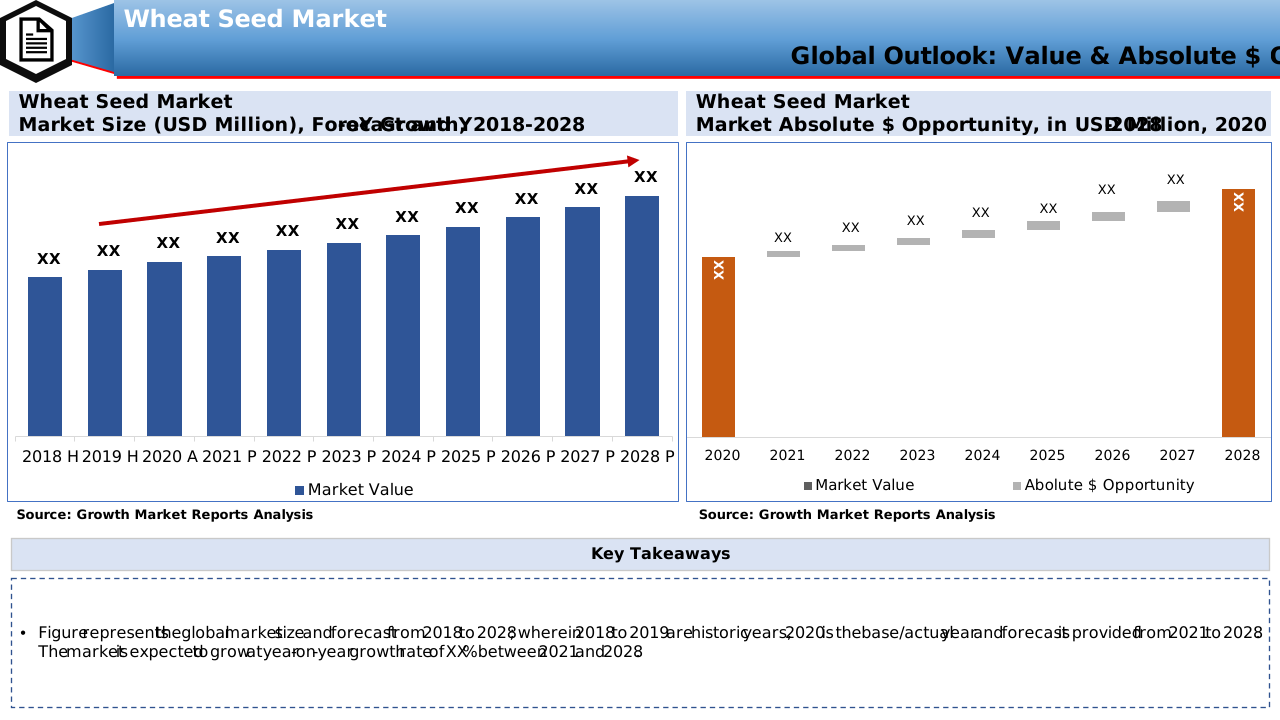
According to our latest research, the global wheat seed market size in 2024 is valued at USD 7.8 billion. The market is expected to expand at a robust CAGR of 4.9% from 2025 to 2033, reaching a forecasted size of USD 12.1 billion by 2033. This steady growth is primarily driven by increasing global demand for wheat as a staple food, advancements in seed technology, and the need for higher crop yields to support a growing population. The wheat seed market is witnessing dynamic shifts as stakeholders focus on improved seed varieties and innovative agricultural practices to address evolving challenges in food security and climate resilience.

One of the primary growth factors influencing the expansion of the wheat seed market is the escalating global demand for wheat-based food products. Wheat remains a key dietary staple for billions of people worldwide, accounting for a significant portion of daily caloric intake in many regions. As the world population continues to rise, especially in developing nations, the pressure to enhance wheat production intensifies. This has led to increased adoption of high-yielding and disease-resistant wheat seed varieties, enabling farmers to achieve better productivity per hectare. Additionally, urbanization and changing dietary habits are driving consumption of processed wheat products, further stimulating demand for quality wheat seeds that can sustain large-scale commercial cultivation.

Technological advancements in seed development are also playing a pivotal role in the growth trajectory of the wheat seed market. The introduction of hybrid wheat seeds, genetically modified traits, and precision breeding techniques have revolutionized the industry. These innovations enable the production of wheat seeds with enhanced resistance to pests, diseases, and adverse environmental conditions, as well as improved nutritional profiles and baking qualities. Seed companies are investing heavily in research and development to create proprietary seed varieties that offer significant advantages over traditional open-pollinated varieties. This ongoing innovation cycle is fostering competition and encouraging the adoption of certified and specialized wheat seeds among progressive farmers worldwide.

Government policies and initiatives supporting sustainable agriculture and food security are further fueling the wheat seed market's expansion. Many countries have implemented subsidy programs, favorable regulatory frameworks, and public-private partnerships aimed at promoting the use of certified and high-quality seeds. These measures are designed to ensure that farmers have access to superior planting materials, leading to increased crop resilience and productivity. Moreover, global concerns about climate change and its impact on agriculture are prompting investments in climate-smart wheat seed varieties, which can withstand drought, heat, and other environmental stresses. Such policy-driven support is creating a conducive environment for market growth and encouraging the adoption of innovative seed technologies.

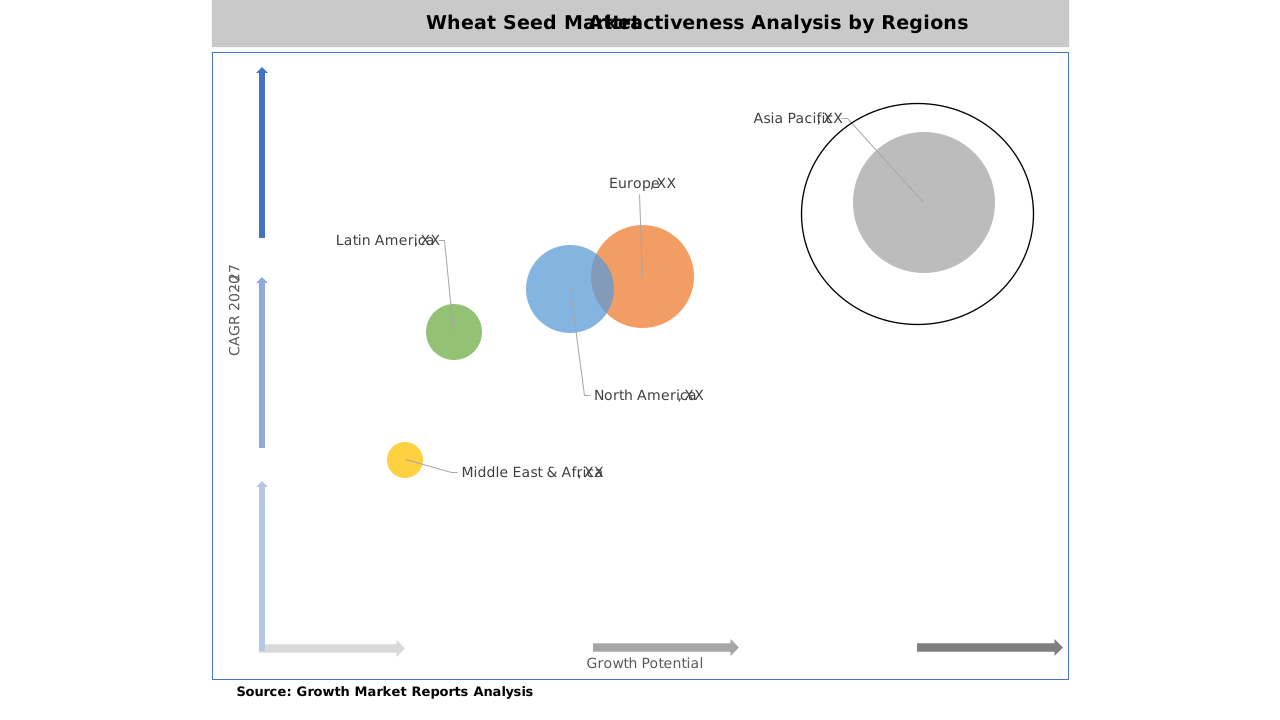
Regionally, the wheat seed market exhibits significant diversity, with Asia Pacific leading in both production and consumption. The region's dominance is attributed to its vast arable land, favorable agro-climatic conditions, and large population base. North America and Europe also contribute substantially to market growth, driven by advanced farming practices and high adoption rates of certified seed varieties. Meanwhile, emerging economies in Latin America and the Middle East & Africa are witnessing increased investments in agricultural infrastructure and technology transfer, paving the way for future market expansion. This regional variation reflects the unique challenges and opportunities present in different parts of the world, shaping the overall dynamics of the global wheat seed market.

Global Wheat Seed Industry Outlook

Seed Type Analysis

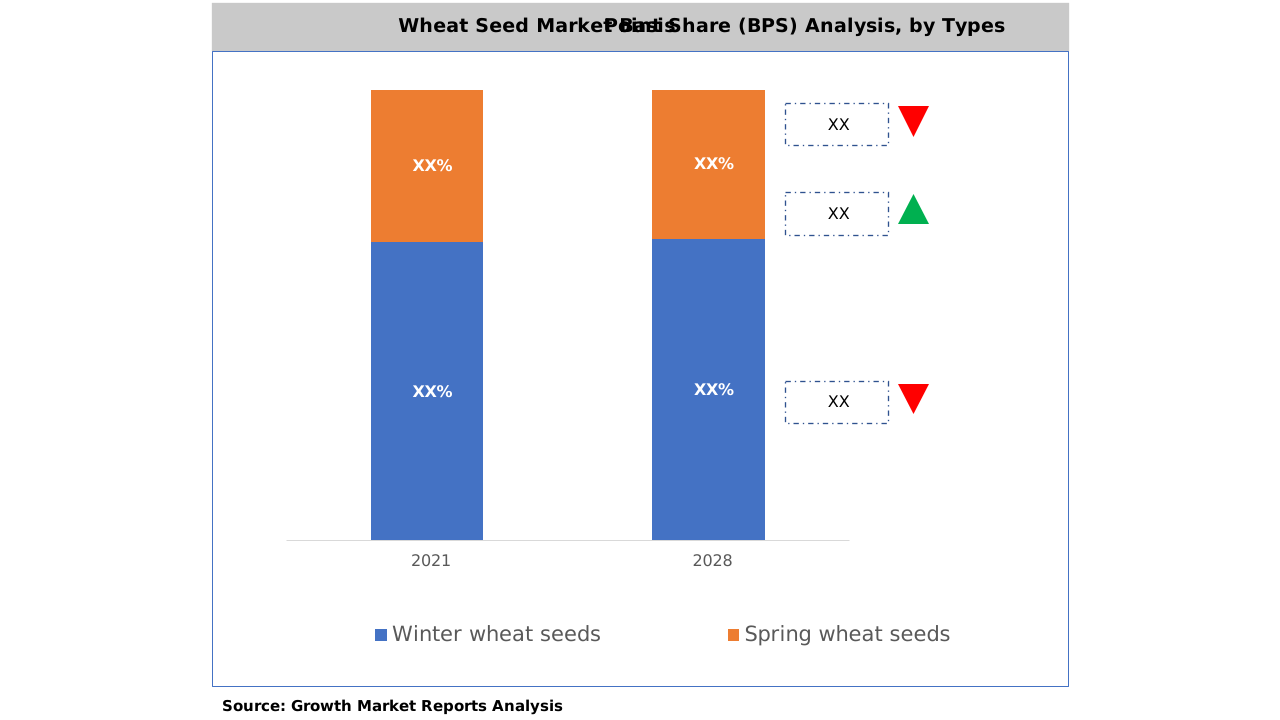
The seed type segment of the wheat seed market is categorized into hybrid wheat seeds, open-pollinated varieties, certified seeds, and others. Hybrid wheat seeds are gaining significant traction due to their superior yield potential, disease resistance, and adaptability to diverse agro-climatic conditions. The adoption of hybrid seeds is particularly pronounced in regions with intensive wheat cultivation, where maximizing productivity and profitability is paramount. Seed companies are continuously investing in research and development to create hybrid varieties that offer enhanced performance, driving the segment's growth. However, the high cost of hybrid seeds and the need for specialized agronomic practices may limit their adoption among smallholder farmers in developing regions.

Open-pollinated varieties (OPVs) continue to hold a substantial share of the wheat seed market, especially in regions where traditional farming practices prevail. These varieties are favored for their affordability, ease of seed saving, and adaptability to local conditions. OPVs are often preferred by resource-constrained farmers who rely on saved seeds for subsequent planting seasons. However, the yield potential and disease resistance of OPVs generally lag behind those of hybrid or certified seeds, prompting gradual shifts towards improved seed types in areas with access to better resources and extension services. The interplay between tradition and innovation is evident in this segment, as farmers weigh the benefits of cost savings against the promise of higher productivity.

Certified seeds represent another critical segment, characterized by stringent quality standards and official certification processes. These seeds are produced under controlled conditions and undergo rigorous testing to ensure genetic purity, germination rates, and resistance to pests and diseases. The use of certified seeds is strongly promoted by governments and agricultural organizations as a means to boost crop yields and food security. Farmers who adopt certified seeds benefit from improved crop performance and reduced risk of crop failure, making this segment increasingly popular in both developed and developing regions. The expansion of certified seed distribution networks and awareness campaigns is expected to further accelerate the segment's growth in the coming years.

Other seed types, including farmer-saved seeds and locally developed varieties, continue to play a role in certain markets, particularly in remote or underserved areas. While these seeds may lack the advanced traits of commercial varieties, they often possess unique adaptations to local environmental conditions and cultural preferences. The preservation of traditional seed varieties is also important for maintaining genetic diversity and resilience within the global wheat gene pool. As the wheat seed market evolves, there is growing recognition of the need to balance innovation with conservation, ensuring that both modern and traditional seed systems can coexist and contribute to sustainable agricultural development.

Report Scope

Attributes Details
Report Title Wheat Seed Market Research Report 2033
By Seed Type Hybrid Wheat Seeds, Open-Pollinated Varieties, Certified Seeds, Others
By Trait Conventional, Genetically Modified
By Application Food, Feed, Industrial, Others
By Distribution Channel Direct Sales, Retailers, Online Stores, Others
Regions Covered North America, Europe, APAC, Latin America, MEA
Base Year 2024
Historic Data 2018-2023
Forecast Period 2025-2033
Number of Pages 288
Number of Tables & Figures 397
Customization Available Yes, the report can be customized as per your need.

Trait Analysis

The trait segment in the wheat seed market is primarily divided into conventional and genetically modified (GM) wheat seeds. Conventional wheat seeds, which include both hybrid and open-pollinated varieties, dominate the market due to widespread consumer acceptance and established regulatory frameworks. These seeds are bred using traditional methods such as selective breeding and cross-pollination to enhance desirable traits like yield, disease resistance, and drought tolerance. The ongoing development of new conventional varieties is driven by the need to address emerging challenges in pest management, climate adaptation, and food quality, ensuring that farmers have access to a diverse portfolio of high-performing seeds.

Genetically modified wheat seeds represent a relatively small but rapidly evolving segment of the market. GM seeds are engineered to express specific traits, such as resistance to herbicides, insects, or environmental stresses, through the introduction of foreign genes. While the commercial cultivation of GM wheat remains limited in many countries due to regulatory and consumer concerns, ongoing research and field trials are paving the way for future adoption. The potential benefits of GM wheat include increased productivity, reduced reliance on chemical inputs, and enhanced nutritional profiles. However, the segment faces significant challenges related to public perception, trade restrictions, and biosafety regulations, which may slow its market penetration in the near term.

Despite these challenges, there is growing interest in the development of gene-edited wheat varieties using advanced technologies such as CRISPR-Cas9. These techniques allow for precise modifications of the wheat genome without introducing foreign DNA, potentially circumventing some of the regulatory hurdles associated with traditional GM crops. The emergence of gene-edited wheat offers new opportunities for addressing complex agronomic challenges, such as resistance to emerging diseases, climate resilience, and improved grain quality. As regulatory frameworks evolve and consumer awareness increases, the trait segment is expected to witness significant innovation and diversification, shaping the future landscape of the wheat seed market.

Overall, the trait segment reflects the broader trends of innovation, regulation, and consumer preference that characterize the global wheat seed market. The balance between conventional and genetically modified seeds will continue to evolve as new technologies emerge, regulatory barriers are addressed, and market dynamics shift in response to changing global needs. Stakeholders across the value chain, from seed developers to policymakers and farmers, will play a crucial role in determining the trajectory of this segment and its impact on global food security and agricultural sustainability.

Application Analysis

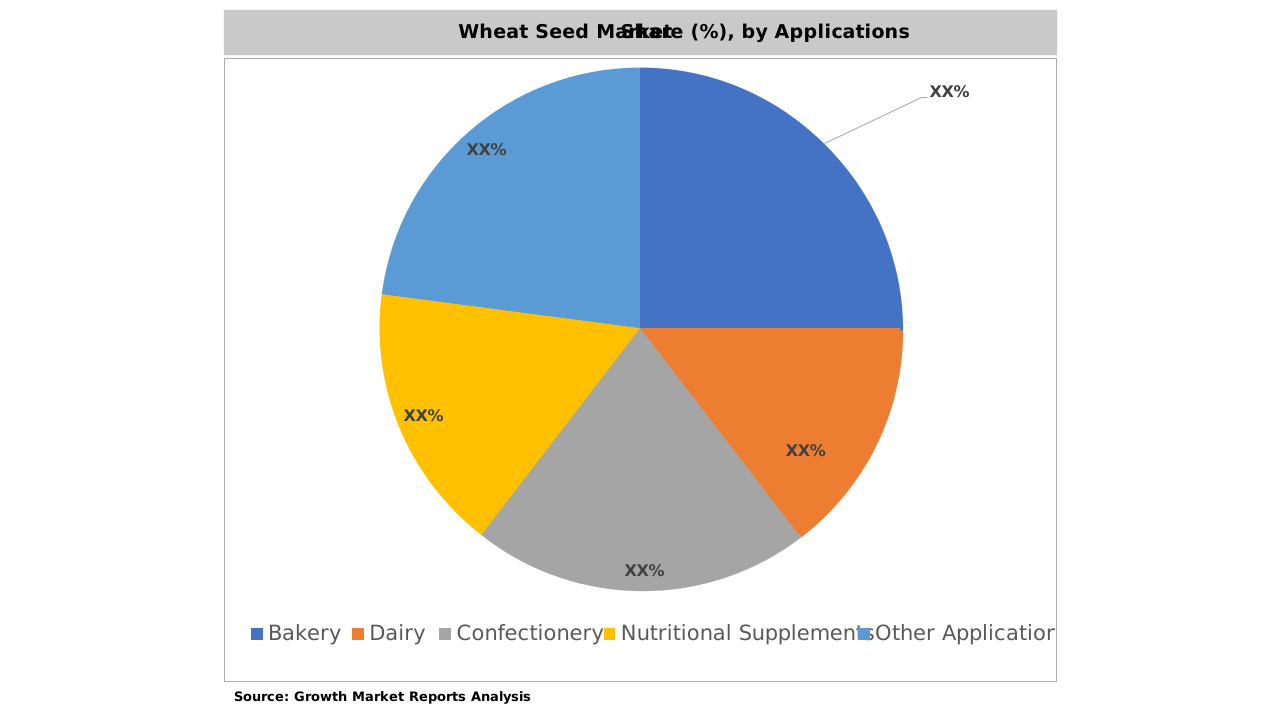
The application segment of the wheat seed market is broadly categorized into food, feed, industrial, and others. The food segment dominates the market, accounting for the largest share of wheat seed utilization worldwide. Wheat is a staple ingredient in a wide range of food products, including bread, pasta, noodles, and baked goods, making it a critical component of global food security. The growing demand for processed and convenience foods, particularly in urban areas, is driving the adoption of high-quality wheat seeds that can deliver consistent yields and superior grain characteristics. Seed companies are responding to this demand by developing varieties tailored to specific end-use requirements, such as high-protein wheat for bread-making or soft wheat for pastries.

The feed segment represents another significant application area, particularly in regions with large livestock industries. Wheat and its by-products are commonly used as feed ingredients for poultry, cattle, and swine, providing essential nutrients and energy for animal growth. The expansion of the global meat and dairy sectors is fueling demand for feed-grade wheat, prompting farmers to select seed varieties that offer high biomass production and nutritional value. The integration of wheat seeds into feed supply chains highlights the interconnectedness of crop and livestock production systems, as well as the importance of seed quality in supporting overall agricultural productivity.

Industrial applications of wheat seeds are gaining prominence, driven by the growing demand for biofuels, bioplastics, and other value-added products derived from wheat. The use of wheat as a feedstock for ethanol production is particularly notable in regions with supportive bioenergy policies and abundant wheat supplies. Industrial demand is also influencing breeding priorities, with seed developers focusing on traits such as starch content, fermentability, and processing efficiency. As the bioeconomy continues to expand, the industrial segment is expected to play an increasingly important role in shaping the direction of wheat seed innovation and market growth.

Other applications of wheat seeds include their use in specialty products, research, and seed multiplication programs. These niche segments, while smaller in scale, contribute to the overall diversity and resilience of the wheat seed market. For example, the development of specialty wheat varieties for organic farming, gluten-free diets, or pharmaceutical applications is creating new opportunities for seed companies and farmers alike. The continuous diversification of application areas underscores the versatility and adaptability of wheat as a crop, as well as the critical role of seed innovation in meeting evolving market demands.

Distribution Channel Analysis

The distribution channel segment of the wheat seed market encompasses direct sales, retailers, online stores, and others. Direct sales remain a dominant channel, particularly in regions with well-established relationships between seed companies and large-scale commercial farmers. This channel allows for personalized service, technical support, and tailored product offerings, fostering loyalty and repeat business. Direct sales are often preferred for high-value seed varieties, such as hybrids and certified seeds, where quality assurance and after-sales support are critical considerations for buyers. The expansion of direct sales networks is enabling seed companies to reach new customer segments and strengthen their market presence.

Retailers, including agricultural input stores and cooperatives, play a vital role in the distribution of wheat seeds, especially in rural and underserved areas. Retailers serve as important intermediaries, providing farmers with access to a wide range of seed options, agronomic advice, and complementary inputs such as fertilizers and crop protection products. The presence of knowledgeable and trusted retailers can significantly influence farmers' seed selection decisions, making this channel a key driver of market penetration and adoption of improved seed varieties. Efforts to strengthen retailer networks and enhance their capacity are essential for expanding the reach of high-quality wheat seeds and supporting agricultural development at the grassroots level.

Online stores are emerging as a dynamic and rapidly growing distribution channel, driven by the digitalization of agriculture and increasing internet penetration in rural areas. E-commerce platforms offer farmers the convenience of browsing, comparing, and purchasing wheat seeds from the comfort of their homes, often with access to detailed product information and customer reviews. The rise of online seed sales is particularly notable in developed markets, where logistical infrastructure and digital literacy are well established. However, challenges related to delivery logistics, payment systems, and trust in online transactions may limit the growth of this channel in certain regions. Nonetheless, the ongoing digital transformation of agriculture is expected to drive further innovation and expansion in online seed distribution.

Other distribution channels, such as government agencies, NGOs, and community-based organizations, also play a role in the dissemination of wheat seeds, particularly in the context of development projects, disaster response, and seed multiplication initiatives. These channels are often critical in reaching marginalized or vulnerable populations who may lack access to commercial seed markets. The integration of multiple distribution channels is essential for ensuring equitable access to high-quality wheat seeds and supporting inclusive agricultural growth. As the wheat seed market continues to evolve, the optimization of distribution strategies will be a key determinant of market success and impact.

Opportunities & Threats

The wheat seed market presents a wealth of opportunities for stakeholders across the value chain. One of the most significant opportunities lies in the development and commercialization of climate-resilient wheat seed varieties that can withstand the increasing frequency and severity of weather extremes. As climate change continues to pose risks to global food security, there is growing demand for seeds that offer enhanced tolerance to drought, heat, salinity, and emerging pests and diseases. Seed companies that invest in advanced breeding technologies, such as gene editing and marker-assisted selection, are well positioned to capture market share and drive innovation in this space. Additionally, the expansion of digital agriculture and precision farming offers new avenues for integrating seed selection with data-driven decision-making, further enhancing productivity and sustainability.

Another key opportunity in the wheat seed market is the rising demand for specialty and value-added wheat products, such as organic, gluten-free, and nutritionally enhanced varieties. Changing consumer preferences, health consciousness, and regulatory support for healthier diets are driving the development of differentiated seed offerings that cater to niche markets. Seed companies that can effectively identify and respond to these trends stand to benefit from premium pricing and brand differentiation. Furthermore, the expansion of public-private partnerships, capacity-building initiatives, and international collaborations is creating a supportive ecosystem for innovation, knowledge sharing, and market access, particularly in emerging economies.

Despite these opportunities, the wheat seed market faces several restraining factors that could impede its growth. One of the primary challenges is the persistence of regulatory barriers and consumer resistance to genetically modified and gene-edited wheat varieties. Public concerns about the safety, environmental impact, and ethical implications of biotechnology continue to influence policy decisions and market acceptance, particularly in key export markets. Additionally, issues related to intellectual property rights, seed piracy, and counterfeit seeds pose risks to the integrity of the market and the profitability of seed companies. Addressing these challenges will require coordinated efforts among industry stakeholders, policymakers, and civil society to build trust, ensure transparency, and promote responsible innovation.

Regional Outlook

The Asia Pacific region dominates the global wheat seed market, accounting for approximately 42% of the total market value in 2024, or about USD 3.3 billion. This leadership is driven by the region's vast agricultural landscape, high wheat consumption, and government support for seed technology adoption. Countries such as China, India, and Pakistan are major producers and consumers of wheat, with ongoing investments in research, extension services, and infrastructure aimed at boosting productivity. The region is also witnessing rapid adoption of hybrid and certified seed varieties, supported by favorable policies and growing awareness among farmers. The Asia Pacific wheat seed market is projected to grow at a CAGR of 5.4% through 2033, outpacing the global average and reinforcing its position as a key growth engine.

In North America, the wheat seed market is valued at approximately USD 1.6 billion in 2024, driven by advanced farming practices, high adoption rates of certified and hybrid seeds, and a strong focus on research and innovation. The United States and Canada are leading contributors, benefiting from well-developed supply chains, regulatory support, and access to cutting-edge seed technologies. The region's market is characterized by a strong emphasis on quality, traceability, and sustainability, with seed companies partnering closely with farmers to deliver customized solutions. North America is expected to maintain steady growth over the forecast period, supported by ongoing investments in biotechnology, digital agriculture, and climate-smart seed development.

Europe holds a significant share of the wheat seed market, with a market value of around USD 1.4 billion in 2024. The region is known for its strict regulatory standards, emphasis on environmental sustainability, and high demand for specialty wheat varieties. Countries such as France, Germany, and the United Kingdom are at the forefront of seed innovation, leveraging public and private sector collaboration to drive market growth. The Latin America and Middle East & Africa regions, with market sizes of USD 0.8 billion and USD 0.7 billion respectively, are experiencing increased adoption of improved seed varieties, driven by efforts to enhance food security and adapt to changing climatic conditions. These regions are expected to register above-average growth rates as investments in agricultural modernization and technology transfer gain momentum.

Wheat Seed Market Statistics

Competitor Outlook

The wheat seed market is characterized by intense competition and a dynamic landscape of global and regional players. Leading seed companies are leveraging their research and development capabilities, extensive product portfolios, and global distribution networks to capture market share and drive innovation. The competitive environment is shaped by ongoing investments in breeding programs, strategic partnerships, mergers and acquisitions, and expansion into emerging markets. Companies are also focusing on sustainability, digital transformation, and customer-centric solutions to differentiate themselves and create long-term value for stakeholders.

A key trend in the competitive landscape is the increasing emphasis on proprietary seed technologies and intellectual property protection. Major players are investing heavily in the development of hybrid, certified, and genetically modified wheat seed varieties with unique traits and performance advantages. These efforts are supported by robust patent portfolios, licensing agreements, and collaborative research initiatives aimed at accelerating the commercialization of new products. At the same time, companies are working to address challenges related to seed piracy, counterfeit products, and regulatory compliance, which can undermine market integrity and erode trust among farmers and stakeholders.

The competitive dynamics of the wheat seed market are also influenced by the rise of digital agriculture and precision farming. Leading companies are integrating digital tools, data analytics, and decision support systems into their seed offerings, enabling farmers to optimize seed selection, planting, and crop management practices. These innovations are enhancing the value proposition of wheat seeds and creating new opportunities for differentiation and customer engagement. As the market continues to evolve, companies that can effectively combine advanced seed technologies with digital solutions and agronomic expertise are likely to emerge as industry leaders.

Major companies operating in the global wheat seed market include Bayer CropScience AG, Syngenta AG, Corteva Agriscience, Limagrain Group, KWS Saat SE & Co. KGaA, RAGT Semences, AGT Food and Ingredients, and Mahyco. Bayer and Syngenta are recognized for their extensive R&D pipelines and strong presence in both developed and emerging markets. Corteva Agriscience, a spin-off from DowDuPont, has rapidly established itself as a leader in hybrid and certified wheat seeds, leveraging its global reach and innovation capabilities. Limagrain and KWS Saat are prominent European players with a strong focus on sustainability, quality, and customer service.

RAGT Semences and AGT Food and Ingredients are known for their specialized offerings and deep expertise in wheat breeding and seed production. Mahyco, based in India, is a key player in the Asia Pacific market, with a focus on hybrid and climate-resilient seed varieties. These companies are continuously expanding their product portfolios, investing in new technologies, and forging strategic partnerships to stay ahead in a highly competitive market. The collective efforts of these industry leaders are driving innovation, improving farmer livelihoods, and contributing to global food security through the development and dissemination of high-quality wheat seeds.

Key Players

  • Bayer AG
  • Syngenta Group
  • Corteva Agriscience
  • BASF SE
  • KWS SAAT SE & Co. KGaA
  • Limagrain Group
  • RAGT Semences
  • AGT Food and Ingredients Inc.
  • Mahyco (Maharashtra Hybrid Seeds Company Limited)
  • DLF Seeds A/S
  • Advanta Seeds (UPL Limited)
  • Land O'Lakes, Inc. (WinField United)
  • Sakata Seed Corporation
  • Enza Zaden
  • Nuziveedu Seeds Ltd.
  • ProHarvest Seeds
  • Sevita International
  • WestBred (Monsanto/Bayer)
  • TruFlex/Pioneer Seeds
  • C&M Seeds
Wheat Seed Market Overview

Segments

The Wheat Seed market has been segmented on the basis of

Seed Type

  • Hybrid Wheat Seeds
  • Open-Pollinated Varieties
  • Certified Seeds
  • Others

Trait

  • Conventional
  • Genetically Modified

Application

  • Food
  • Feed
  • Industrial
  • Others

Distribution Channel

  • Direct Sales
  • Retailers
  • Online Stores
  • Others

Competitive Landscape

Key players competing in the wheat seed market are AgroVegetal S.A.; Syngenta International AG (AgriPro Seeds); Corteva Agri Science (Pioneer Seeds); ProHarvest Seeds, Inc.; and Groupe Limagrain.

Major industry players are expanding their production capacity and increasing research & development (R&D) activities to increase their market share.

In January 2021, Syngenta International AG (AgriPro Seeds) introduced an adapted soft white spring wheat to its product portfolio.
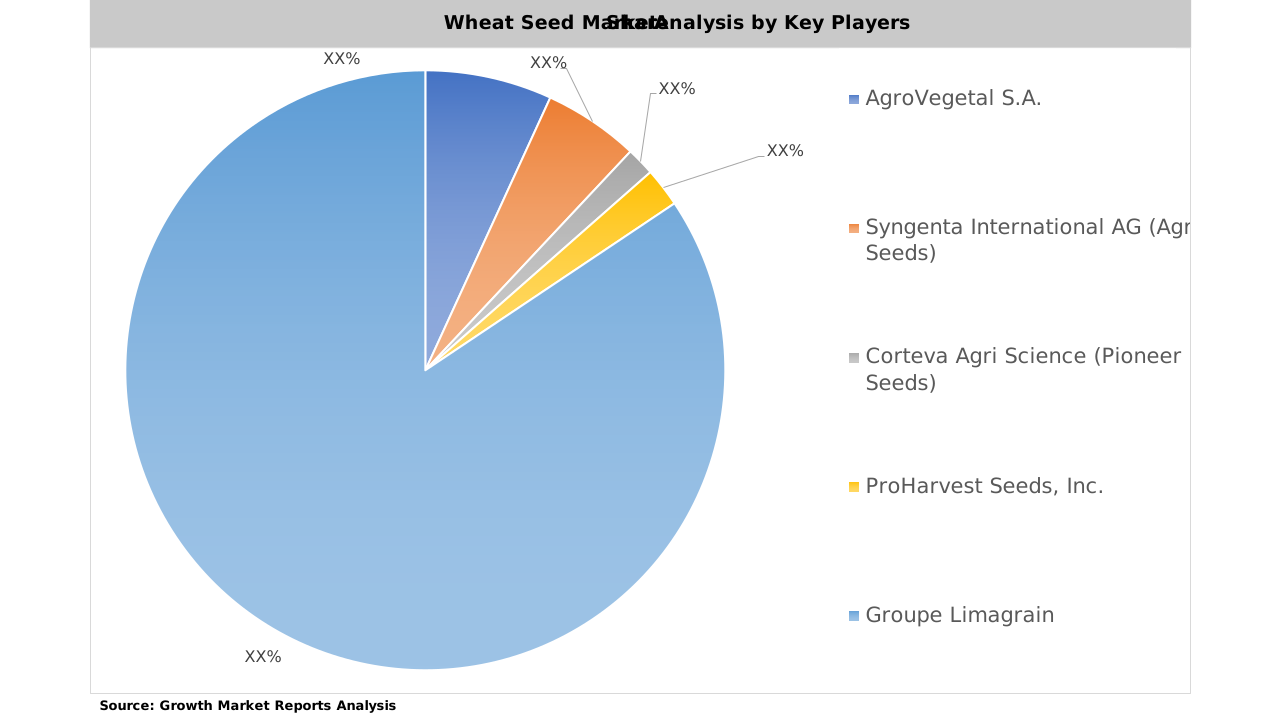

Wheat Seed Market keyplayers

Frequently Asked Questions

Key challenges include regulatory barriers and consumer resistance to genetically modified seeds, intellectual property issues, seed piracy, counterfeit seeds, and the need for climate-resilient varieties.

Wheat seeds are distributed through direct sales, retailers (agricultural input stores and cooperatives), online stores, and other channels such as government agencies and NGOs.

Major players include Bayer CropScience AG, Syngenta AG, Corteva Agriscience, Limagrain Group, KWS Saat SE & Co. KGaA, RAGT Semences, AGT Food and Ingredients, and Mahyco.

Wheat seeds are primarily used for food production, animal feed, industrial applications (such as biofuels and bioplastics), and specialty products.

Technological advancements such as hybridization, genetic modification, and precision breeding are enabling the development of wheat seeds with improved yield, disease resistance, and climate resilience.

Key growth drivers include increasing global demand for wheat-based food products, advancements in seed technology, adoption of high-yielding and disease-resistant varieties, and supportive government policies.

The main types of wheat seeds are hybrid wheat seeds, open-pollinated varieties (OPVs), certified seeds, and other locally developed or farmer-saved seeds.

Asia Pacific leads in both production and consumption of wheat seeds, followed by North America and Europe.

The wheat seed market is expected to grow at a CAGR of 4.9% from 2025 to 2033, reaching USD 12.1 billion by 2033.

The global wheat seed market is valued at USD 7.8 billion in 2024.

Table Of Content

Chapter 1 Executive Summary
Chapter 2 Assumptions and Acronyms Used
Chapter 3 Research Methodology
Chapter 4 Wheat Seed Market Overview
   4.1 Introduction
      4.1.1 Market Taxonomy
      4.1.2 Market Definition
      4.1.3 Macro-Economic Factors Impacting the Market Growth
   4.2 Wheat Seed Market Dynamics
      4.2.1 Market Drivers
      4.2.2 Market Restraints
      4.2.3 Market Opportunity
   4.3 Wheat Seed Market - Supply Chain Analysis
      4.3.1 List of Key Suppliers
      4.3.2 List of Key Distributors
      4.3.3 List of Key Consumers
   4.4 Key Forces Shaping the Wheat Seed Market
      4.4.1 Bargaining Power of Suppliers
      4.4.2 Bargaining Power of Buyers
      4.4.3 Threat of Substitution
      4.4.4 Threat of New Entrants
      4.4.5 Competitive Rivalry
   4.5 Global Wheat Seed Market Size & Forecast, 2023-2032
      4.5.1 Wheat Seed Market Size and Y-o-Y Growth
      4.5.2 Wheat Seed Market Absolute $ Opportunity

Chapter 5 Global Wheat Seed Market Analysis and Forecast By Seed Type
   5.1 Introduction
      5.1.1 Key Market Trends & Growth Opportunities By Seed Type
      5.1.2 Basis Point Share (BPS) Analysis By Seed Type
      5.1.3 Absolute $ Opportunity Assessment By Seed Type
   5.2 Wheat Seed Market Size Forecast By Seed Type
      5.2.1 Hybrid Wheat Seeds
      5.2.2 Open-Pollinated Varieties
      5.2.3 Certified Seeds
      5.2.4 Others
   5.3 Market Attractiveness Analysis By Seed Type

Chapter 6 Global Wheat Seed Market Analysis and Forecast By Trait
   6.1 Introduction
      6.1.1 Key Market Trends & Growth Opportunities By Trait
      6.1.2 Basis Point Share (BPS) Analysis By Trait
      6.1.3 Absolute $ Opportunity Assessment By Trait
   6.2 Wheat Seed Market Size Forecast By Trait
      6.2.1 Conventional
      6.2.2 Genetically Modified
   6.3 Market Attractiveness Analysis By Trait

Chapter 7 Global Wheat Seed Market Analysis and Forecast By Application
   7.1 Introduction
      7.1.1 Key Market Trends & Growth Opportunities By Application
      7.1.2 Basis Point Share (BPS) Analysis By Application
      7.1.3 Absolute $ Opportunity Assessment By Application
   7.2 Wheat Seed Market Size Forecast By Application
      7.2.1 Food
      7.2.2 Feed
      7.2.3 Industrial
      7.2.4 Others
   7.3 Market Attractiveness Analysis By Application

Chapter 8 Global Wheat Seed Market Analysis and Forecast By Distribution Channel
   8.1 Introduction
      8.1.1 Key Market Trends & Growth Opportunities By Distribution Channel
      8.1.2 Basis Point Share (BPS) Analysis By Distribution Channel
      8.1.3 Absolute $ Opportunity Assessment By Distribution Channel
   8.2 Wheat Seed Market Size Forecast By Distribution Channel
      8.2.1 Direct Sales
      8.2.2 Retailers
      8.2.3 Online Stores
      8.2.4 Others
   8.3 Market Attractiveness Analysis By Distribution Channel

Chapter 9 Global Wheat Seed Market Analysis and Forecast by Region
   9.1 Introduction
      9.1.1 Key Market Trends & Growth Opportunities By Region
      9.1.2 Basis Point Share (BPS) Analysis By Region
      9.1.3 Absolute $ Opportunity Assessment By Region
   9.2 Wheat Seed Market Size Forecast By Region
      9.2.1 North America
      9.2.2 Europe
      9.2.3 Asia Pacific
      9.2.4 Latin America
      9.2.5 Middle East & Africa (MEA)
   9.3 Market Attractiveness Analysis By Region

Chapter 10 Coronavirus Disease (COVID-19) Impact 
   10.1 Introduction 
   10.2 Current & Future Impact Analysis 
   10.3 Economic Impact Analysis 
   10.4 Government Policies 
   10.5 Investment Scenario

Chapter 11 North America Wheat Seed Analysis and Forecast
   11.1 Introduction
   11.2 North America Wheat Seed Market Size Forecast by Country
      11.2.1 U.S.
      11.2.2 Canada
   11.3 Basis Point Share (BPS) Analysis by Country
   11.4 Absolute $ Opportunity Assessment by Country
   11.5 Market Attractiveness Analysis by Country
   11.6 North America Wheat Seed Market Size Forecast By Seed Type
      11.6.1 Hybrid Wheat Seeds
      11.6.2 Open-Pollinated Varieties
      11.6.3 Certified Seeds
      11.6.4 Others
   11.7 Basis Point Share (BPS) Analysis By Seed Type 
   11.8 Absolute $ Opportunity Assessment By Seed Type 
   11.9 Market Attractiveness Analysis By Seed Type
   11.10 North America Wheat Seed Market Size Forecast By Trait
      11.10.1 Conventional
      11.10.2 Genetically Modified
   11.11 Basis Point Share (BPS) Analysis By Trait 
   11.12 Absolute $ Opportunity Assessment By Trait 
   11.13 Market Attractiveness Analysis By Trait
   11.14 North America Wheat Seed Market Size Forecast By Application
      11.14.1 Food
      11.14.2 Feed
      11.14.3 Industrial
      11.14.4 Others
   11.15 Basis Point Share (BPS) Analysis By Application 
   11.16 Absolute $ Opportunity Assessment By Application 
   11.17 Market Attractiveness Analysis By Application
   11.18 North America Wheat Seed Market Size Forecast By Distribution Channel
      11.18.1 Direct Sales
      11.18.2 Retailers
      11.18.3 Online Stores
      11.18.4 Others
   11.19 Basis Point Share (BPS) Analysis By Distribution Channel 
   11.20 Absolute $ Opportunity Assessment By Distribution Channel 
   11.21 Market Attractiveness Analysis By Distribution Channel

Chapter 12 Europe Wheat Seed Analysis and Forecast
   12.1 Introduction
   12.2 Europe Wheat Seed Market Size Forecast by Country
      12.2.1 Germany
      12.2.2 France
      12.2.3 Italy
      12.2.4 U.K.
      12.2.5 Spain
      12.2.6 Russia
      12.2.7 Rest of Europe
   12.3 Basis Point Share (BPS) Analysis by Country
   12.4 Absolute $ Opportunity Assessment by Country
   12.5 Market Attractiveness Analysis by Country
   12.6 Europe Wheat Seed Market Size Forecast By Seed Type
      12.6.1 Hybrid Wheat Seeds
      12.6.2 Open-Pollinated Varieties
      12.6.3 Certified Seeds
      12.6.4 Others
   12.7 Basis Point Share (BPS) Analysis By Seed Type 
   12.8 Absolute $ Opportunity Assessment By Seed Type 
   12.9 Market Attractiveness Analysis By Seed Type
   12.10 Europe Wheat Seed Market Size Forecast By Trait
      12.10.1 Conventional
      12.10.2 Genetically Modified
   12.11 Basis Point Share (BPS) Analysis By Trait 
   12.12 Absolute $ Opportunity Assessment By Trait 
   12.13 Market Attractiveness Analysis By Trait
   12.14 Europe Wheat Seed Market Size Forecast By Application
      12.14.1 Food
      12.14.2 Feed
      12.14.3 Industrial
      12.14.4 Others
   12.15 Basis Point Share (BPS) Analysis By Application 
   12.16 Absolute $ Opportunity Assessment By Application 
   12.17 Market Attractiveness Analysis By Application
   12.18 Europe Wheat Seed Market Size Forecast By Distribution Channel
      12.18.1 Direct Sales
      12.18.2 Retailers
      12.18.3 Online Stores
      12.18.4 Others
   12.19 Basis Point Share (BPS) Analysis By Distribution Channel 
   12.20 Absolute $ Opportunity Assessment By Distribution Channel 
   12.21 Market Attractiveness Analysis By Distribution Channel

Chapter 13 Asia Pacific Wheat Seed Analysis and Forecast
   13.1 Introduction
   13.2 Asia Pacific Wheat Seed Market Size Forecast by Country
      13.2.1 China
      13.2.2 Japan
      13.2.3 South Korea
      13.2.4 India
      13.2.5 Australia
      13.2.6 South East Asia (SEA)
      13.2.7 Rest of Asia Pacific (APAC)
   13.3 Basis Point Share (BPS) Analysis by Country
   13.4 Absolute $ Opportunity Assessment by Country
   13.5 Market Attractiveness Analysis by Country
   13.6 Asia Pacific Wheat Seed Market Size Forecast By Seed Type
      13.6.1 Hybrid Wheat Seeds
      13.6.2 Open-Pollinated Varieties
      13.6.3 Certified Seeds
      13.6.4 Others
   13.7 Basis Point Share (BPS) Analysis By Seed Type 
   13.8 Absolute $ Opportunity Assessment By Seed Type 
   13.9 Market Attractiveness Analysis By Seed Type
   13.10 Asia Pacific Wheat Seed Market Size Forecast By Trait
      13.10.1 Conventional
      13.10.2 Genetically Modified
   13.11 Basis Point Share (BPS) Analysis By Trait 
   13.12 Absolute $ Opportunity Assessment By Trait 
   13.13 Market Attractiveness Analysis By Trait
   13.14 Asia Pacific Wheat Seed Market Size Forecast By Application
      13.14.1 Food
      13.14.2 Feed
      13.14.3 Industrial
      13.14.4 Others
   13.15 Basis Point Share (BPS) Analysis By Application 
   13.16 Absolute $ Opportunity Assessment By Application 
   13.17 Market Attractiveness Analysis By Application
   13.18 Asia Pacific Wheat Seed Market Size Forecast By Distribution Channel
      13.18.1 Direct Sales
      13.18.2 Retailers
      13.18.3 Online Stores
      13.18.4 Others
   13.19 Basis Point Share (BPS) Analysis By Distribution Channel 
   13.20 Absolute $ Opportunity Assessment By Distribution Channel 
   13.21 Market Attractiveness Analysis By Distribution Channel

Chapter 14 Latin America Wheat Seed Analysis and Forecast
   14.1 Introduction
   14.2 Latin America Wheat Seed Market Size Forecast by Country
      14.2.1 Brazil
      14.2.2 Mexico
      14.2.3 Rest of Latin America (LATAM)
   14.3 Basis Point Share (BPS) Analysis by Country
   14.4 Absolute $ Opportunity Assessment by Country
   14.5 Market Attractiveness Analysis by Country
   14.6 Latin America Wheat Seed Market Size Forecast By Seed Type
      14.6.1 Hybrid Wheat Seeds
      14.6.2 Open-Pollinated Varieties
      14.6.3 Certified Seeds
      14.6.4 Others
   14.7 Basis Point Share (BPS) Analysis By Seed Type 
   14.8 Absolute $ Opportunity Assessment By Seed Type 
   14.9 Market Attractiveness Analysis By Seed Type
   14.10 Latin America Wheat Seed Market Size Forecast By Trait
      14.10.1 Conventional
      14.10.2 Genetically Modified
   14.11 Basis Point Share (BPS) Analysis By Trait 
   14.12 Absolute $ Opportunity Assessment By Trait 
   14.13 Market Attractiveness Analysis By Trait
   14.14 Latin America Wheat Seed Market Size Forecast By Application
      14.14.1 Food
      14.14.2 Feed
      14.14.3 Industrial
      14.14.4 Others
   14.15 Basis Point Share (BPS) Analysis By Application 
   14.16 Absolute $ Opportunity Assessment By Application 
   14.17 Market Attractiveness Analysis By Application
   14.18 Latin America Wheat Seed Market Size Forecast By Distribution Channel
      14.18.1 Direct Sales
      14.18.2 Retailers
      14.18.3 Online Stores
      14.18.4 Others
   14.19 Basis Point Share (BPS) Analysis By Distribution Channel 
   14.20 Absolute $ Opportunity Assessment By Distribution Channel 
   14.21 Market Attractiveness Analysis By Distribution Channel

Chapter 15 Middle East & Africa (MEA) Wheat Seed Analysis and Forecast
   15.1 Introduction
   15.2 Middle East & Africa (MEA) Wheat Seed Market Size Forecast by Country
      15.2.1 Saudi Arabia
      15.2.2 South Africa
      15.2.3 UAE
      15.2.4 Rest of Middle East & Africa (MEA)
   15.3 Basis Point Share (BPS) Analysis by Country
   15.4 Absolute $ Opportunity Assessment by Country
   15.5 Market Attractiveness Analysis by Country
   15.6 Middle East & Africa (MEA) Wheat Seed Market Size Forecast By Seed Type
      15.6.1 Hybrid Wheat Seeds
      15.6.2 Open-Pollinated Varieties
      15.6.3 Certified Seeds
      15.6.4 Others
   15.7 Basis Point Share (BPS) Analysis By Seed Type 
   15.8 Absolute $ Opportunity Assessment By Seed Type 
   15.9 Market Attractiveness Analysis By Seed Type
   15.10 Middle East & Africa (MEA) Wheat Seed Market Size Forecast By Trait
      15.10.1 Conventional
      15.10.2 Genetically Modified
   15.11 Basis Point Share (BPS) Analysis By Trait 
   15.12 Absolute $ Opportunity Assessment By Trait 
   15.13 Market Attractiveness Analysis By Trait
   15.14 Middle East & Africa (MEA) Wheat Seed Market Size Forecast By Application
      15.14.1 Food
      15.14.2 Feed
      15.14.3 Industrial
      15.14.4 Others
   15.15 Basis Point Share (BPS) Analysis By Application 
   15.16 Absolute $ Opportunity Assessment By Application 
   15.17 Market Attractiveness Analysis By Application
   15.18 Middle East & Africa (MEA) Wheat Seed Market Size Forecast By Distribution Channel
      15.18.1 Direct Sales
      15.18.2 Retailers
      15.18.3 Online Stores
      15.18.4 Others
   15.19 Basis Point Share (BPS) Analysis By Distribution Channel 
   15.20 Absolute $ Opportunity Assessment By Distribution Channel 
   15.21 Market Attractiveness Analysis By Distribution Channel

Chapter 16 Competition Landscape 
   16.1 Wheat Seed Market: Competitive Dashboard
   16.2 Global Wheat Seed Market: Market Share Analysis, 2023
   16.3 Company Profiles (Details – Overview, Financials, Developments, Strategy) 
      16.3.1 Bayer AG
Syngenta Group
Corteva Agriscience
BASF SE
KWS SAAT SE & Co. KGaA
Limagrain Group
RAGT Semences
AGT Food and Ingredients Inc.
Mahyco (Maharashtra Hybrid Seeds Company Limited)
DLF Seeds A/S
Advanta Seeds (UPL Limited)
Land O'Lakes, Inc. (WinField United)
Sakata Seed Corporation
Enza Zaden
Nuziveedu Seeds Ltd.
ProHarvest Seeds
Sevita International
WestBred (Monsanto/Bayer)
TruFlex/Pioneer Seeds
C&M Seeds

Methodology

Our Clients

Microsoft
The John Holland Group
Pfizer
Deloitte
FedEx Logistics
Nestle SA
Dassault Aviation
General Mills