Segments - by Component (Software, Services), by Deployment Mode (On-Premises, Cloud), by Application (Social Media Management, Targeting and Behavioral Analysis, Display Advertising Optimization, Multichannel Campaign Analysis, Performance Monitoring, Others), by End-User (Retail and E-commerce, BFSI, Healthcare, Media and Entertainment, IT and Telecommunications, Government, Others)
According to our latest research, the global web analytics market size was valued at USD 8.4 billion in 2024, reflecting robust growth driven by the increasing adoption of digital platforms across industries. The market is projected to expand at a compound annual growth rate (CAGR) of 17.2% from 2025 to 2033, reaching an estimated USD 36.8 billion by 2033. This significant upsurge is primarily attributed to the escalating demand for actionable insights, data-driven decision-making, and the proliferation of online consumer activity. As per the latest research, enterprises worldwide are leveraging advanced web analytics tools to enhance customer engagement, improve marketing strategies, and drive business outcomes.
One of the principal growth factors fueling the web analytics market is the exponential increase in digitalization and internet penetration. Organizations across various sectors are rapidly transitioning their operations online, resulting in a surge of data generation through multiple digital touchpoints. This digital transformation has heightened the need for sophisticated web analytics solutions that can process vast volumes of data, extract meaningful patterns, and provide actionable insights. Moreover, the rise in e-commerce activities, coupled with the growing popularity of social media platforms, has created a fertile environment for the adoption of web analytics, enabling businesses to track consumer behavior, measure campaign effectiveness, and optimize user experiences.
Another critical driver for the web analytics market is the integration of artificial intelligence (AI) and machine learning (ML) technologies. These advanced technologies are revolutionizing the way organizations analyze web data by enabling predictive analytics, real-time reporting, and personalized recommendations. AI-powered web analytics tools can automatically identify trends, anomalies, and customer preferences, empowering businesses to make data-driven decisions faster and more accurately. Furthermore, the increasing focus on omnichannel marketing strategies and the need to unify customer data across different platforms have further accelerated the demand for comprehensive web analytics solutions.
The regulatory landscape and growing emphasis on data privacy and compliance are also shaping the web analytics market. With the implementation of stringent data protection regulations such as the General Data Protection Regulation (GDPR) in Europe and the California Consumer Privacy Act (CCPA) in the United States, organizations are compelled to adopt web analytics tools that ensure data security and privacy. This has led to the development of privacy-centric analytics platforms that offer enhanced data governance features, enabling businesses to comply with global regulatory requirements while still deriving valuable insights from web data. The ability to balance data-driven innovation with privacy considerations is becoming a key differentiator for vendors in this dynamic market.
In the realm of digital transformation, Construction Analytics is emerging as a pivotal tool for the construction industry. As companies strive to enhance operational efficiency and project management, the integration of analytics solutions is becoming increasingly vital. Construction Analytics enables firms to harness data from various sources, such as project timelines, resource allocation, and financial metrics, to gain actionable insights. This data-driven approach facilitates better decision-making, risk management, and cost optimization, ultimately leading to improved project outcomes. The growing adoption of IoT devices and smart construction technologies is further fueling the demand for Construction Analytics, as it allows for real-time monitoring and predictive maintenance. By leveraging these advanced analytics capabilities, construction companies can enhance productivity, reduce delays, and ensure compliance with safety regulations, thereby gaining a competitive edge in the market.
From a regional perspective, North America continues to dominate the web analytics market, accounting for the largest share in 2024, followed by Europe and Asia Pacific. The regionÂ’s leadership is attributed to the presence of major technology providers, a mature digital ecosystem, and high levels of investment in analytics infrastructure. However, Asia Pacific is expected to witness the fastest growth during the forecast period, driven by the rapid adoption of digital technologies, expanding internet user base, and increasing investments in e-commerce and digital marketing. The growing awareness among businesses in emerging economies about the benefits of web analytics is further propelling market growth in this region.
The web analytics market by component is bifurcated into software and services, with each segment playing a pivotal role in market expansion. The software segment holds the lionÂ’s share of the market, driven by the continuous evolution of analytics platforms that offer advanced functionalities such as real-time data tracking, predictive analytics, and customizable dashboards. Leading vendors are consistently updating their software offerings to include AI and ML capabilities, seamless integration with third-party applications, and enhanced user interfaces. The demand for user-friendly, scalable, and secure web analytics software is intensifying as organizations strive to gain a competitive edge through data-driven insights.
Services, encompassing consulting, implementation, training, and support, are witnessing increased demand as organizations seek expert guidance to maximize the value of their analytics investments. The complexity of deploying and managing web analytics solutions, particularly in large enterprises with diverse digital assets, necessitates specialized services. Service providers are focusing on delivering end-to-end solutions, from strategy formulation to ongoing optimization, ensuring that clients achieve measurable business outcomes. The growing trend of outsourcing analytics management to third-party experts is also contributing to the robust growth of the services segment.
Customization and flexibility are key differentiators in the component landscape. Software vendors are offering modular solutions that allow businesses to tailor analytics functionalities according to their unique requirements. This trend is especially prominent among small and medium enterprises (SMEs), which often require cost-effective, scalable solutions that can be easily integrated with existing IT infrastructure. The ability to provide seamless interoperability with other business applications, such as customer relationship management (CRM) and marketing automation platforms, is enhancing the appeal of web analytics software.
The introduction of Shrink Analytics Platform is revolutionizing the retail sector by addressing the persistent challenge of inventory shrinkage. This innovative platform leverages advanced analytics to identify patterns and anomalies in inventory data, enabling retailers to pinpoint the root causes of shrinkage, such as theft, administrative errors, or supplier discrepancies. By providing real-time insights and predictive analytics, the Shrink Analytics Platform empowers retailers to implement targeted strategies to mitigate losses and optimize inventory management. The platform's ability to integrate with existing retail systems and provide a comprehensive view of inventory dynamics is particularly valuable in today's fast-paced retail environment. As retailers continue to face pressure to improve margins and enhance customer satisfaction, the adoption of Shrink Analytics Platform is expected to grow, offering a significant opportunity for vendors specializing in retail analytics solutions.
Furthermore, the rising demand for cloud-based web analytics solutions is reshaping the component market. Cloud deployment offers numerous advantages, including lower upfront costs, scalability, remote accessibility, and automatic updates. As a result, both software and services are increasingly being delivered through cloud models, enabling businesses to quickly adapt to changing market dynamics and customer preferences. The convergence of software and services in the cloud is fostering innovation and driving the adoption of integrated web analytics platforms across industries.
| Attributes | Details |
| Report Title | Web Analytics Market Research Report 2033 |
| By Component | Software, Services |
| By Deployment Mode | On-Premises, Cloud |
| By Application | Social Media Management, Targeting and Behavioral Analysis, Display Advertising Optimization, Multichannel Campaign Analysis, Performance Monitoring, Others |
| By End-User | Retail and E-commerce, BFSI, Healthcare, Media and Entertainment, IT and Telecommunications, Government, Others |
| Regions Covered | North America, Europe, APAC, Latin America, MEA |
| Base Year | 2024 |
| Historic Data | 2018-2023 |
| Forecast Period | 2025-2033 |
| Number of Pages | 261 |
| Number of Tables & Figures | 374 |
| Customization Available | Yes, the report can be customized as per your need. |
The deployment mode segment of the web analytics market is categorized into on-premises and cloud-based solutions, each offering distinct advantages and challenges. The cloud deployment mode has emerged as the dominant segment, accounting for a substantial share of the market in 2024. The widespread adoption of cloud-based web analytics solutions is primarily attributed to their cost-effectiveness, scalability, and ease of implementation. Organizations are increasingly migrating to the cloud to leverage the benefits of real-time data processing, seamless updates, and the ability to access analytics tools from anywhere, thereby enhancing operational efficiency and agility.
On-premises deployment, while experiencing a gradual decline in market share, remains relevant for organizations with stringent data security and compliance requirements. Industries such as banking, financial services, and insurance (BFSI), as well as government agencies, often prefer on-premises solutions to maintain greater control over sensitive data. These organizations invest heavily in robust IT infrastructure and dedicated security protocols to ensure the confidentiality and integrity of their data. However, the higher upfront costs and ongoing maintenance associated with on-premises deployment can be a deterrent for smaller enterprises.
The shift towards hybrid deployment models is gaining traction as businesses seek to balance the advantages of cloud and on-premises solutions. Hybrid models enable organizations to store critical data on-premises while leveraging the scalability and flexibility of the cloud for less sensitive operations. This approach is particularly attractive to enterprises undergoing digital transformation, as it allows them to modernize their analytics capabilities without compromising on security or regulatory compliance. Vendors are responding to this trend by offering hybrid web analytics platforms that provide seamless data integration and unified management across deployment environments.
The rise of Community Analytics Platform is transforming the way organizations engage with their communities and stakeholders. This platform provides a comprehensive suite of tools to analyze community interactions, sentiment, and engagement across various channels, including social media, forums, and events. By leveraging Community Analytics Platform, organizations can gain a deeper understanding of community needs, preferences, and feedback, enabling them to tailor their strategies and communications accordingly. This data-driven approach not only enhances community engagement but also fosters transparency and trust, which are crucial for building long-term relationships. The platform's ability to provide actionable insights and facilitate real-time communication is particularly beneficial for public sector organizations, non-profits, and businesses seeking to strengthen their community ties. As the importance of community engagement continues to grow, the adoption of Community Analytics Platform is set to increase, offering significant benefits for organizations across various sectors.
The deployment mode landscape is also influenced by advancements in cloud security and data governance. Cloud service providers are investing heavily in enhancing their security frameworks, offering features such as encryption, multi-factor authentication, and compliance certifications to address customer concerns. As trust in cloud security continues to grow, an increasing number of organizations are expected to transition their web analytics workloads to the cloud, further accelerating market growth. The ongoing evolution of deployment models underscores the importance of flexibility, scalability, and security in the web analytics market.
The application segment of the web analytics market is highly diverse, reflecting the wide range of use cases across industries. Social media management has emerged as a key application area, driven by the growing importance of social media platforms in brand building, customer engagement, and lead generation. Web analytics tools enable businesses to monitor social media interactions, measure the impact of campaigns, and gain insights into audience preferences. The ability to analyze sentiment, track influencers, and optimize content strategies is making social media management a critical component of digital marketing efforts.
Targeting and behavioral analysis represent another major application, as organizations strive to deliver personalized experiences to their customers. Web analytics solutions provide deep insights into user behavior, preferences, and purchase patterns, enabling businesses to segment their audience and tailor marketing messages accordingly. The integration of AI and ML algorithms enhances the accuracy and granularity of behavioral analysis, empowering marketers to predict customer needs and drive higher conversion rates. This application is particularly valuable in e-commerce and retail, where understanding customer journeys is essential for maximizing sales and customer loyalty.
Display advertising optimization is gaining momentum as businesses seek to maximize the return on investment (ROI) from their digital advertising spend. Web analytics platforms offer advanced tracking and attribution capabilities, allowing marketers to measure the effectiveness of display ads, identify high-performing channels, and allocate budgets more efficiently. Real-time analytics and automated reporting streamline the optimization process, enabling marketers to make data-driven adjustments to their campaigns for improved outcomes. The growing complexity of digital advertising ecosystems is fueling demand for sophisticated analytics tools that can handle multi-channel attribution and cross-device tracking.
Multichannel campaign analysis and performance monitoring are integral applications that support holistic marketing strategies. Web analytics solutions provide a unified view of campaign performance across various digital channels, including websites, email, social media, and mobile apps. This comprehensive approach enables organizations to assess the effectiveness of their marketing initiatives, identify areas for improvement, and optimize resource allocation. Performance monitoring tools offer real-time visibility into key metrics such as traffic, engagement, conversions, and revenue, empowering businesses to respond quickly to changing market conditions. The ability to integrate data from multiple sources and generate actionable insights is a significant value proposition for web analytics platforms.
The end-user segment of the web analytics market encompasses a broad spectrum of industries, each with unique requirements and adoption drivers. Retail and e-commerce companies are at the forefront of web analytics adoption, leveraging these tools to enhance customer experiences, optimize product offerings, and drive sales growth. The ability to track customer journeys, analyze conversion funnels, and personalize marketing messages is critical for success in the highly competitive retail landscape. E-commerce players are increasingly investing in advanced analytics platforms that offer real-time insights, predictive modeling, and seamless integration with inventory and order management systems.
The banking, financial services, and insurance (BFSI) sector is another major end-user, utilizing web analytics to improve customer engagement, detect fraud, and enhance risk management. Financial institutions rely on analytics tools to monitor digital interactions, assess customer satisfaction, and identify opportunities for cross-selling and upselling. The integration of web analytics with core banking and CRM systems enables BFSI organizations to deliver personalized services and maintain regulatory compliance. The growing adoption of digital banking and fintech solutions is further driving demand for robust web analytics capabilities in this sector.
Healthcare organizations are increasingly adopting web analytics to improve patient engagement, streamline operations, and enhance service delivery. Analytics tools enable healthcare providers to monitor website traffic, assess the effectiveness of digital health campaigns, and optimize patient acquisition strategies. The ability to analyze patient journeys, track appointment bookings, and measure satisfaction levels is becoming essential for healthcare providers seeking to deliver high-quality, patient-centric care. The ongoing digital transformation of the healthcare sector is expected to fuel continued growth in web analytics adoption.
Media and entertainment, IT and telecommunications, and government sectors are also significant end-users of web analytics solutions. Media companies leverage analytics to understand audience preferences, optimize content distribution, and maximize advertising revenues. IT and telecommunications firms use analytics to monitor service performance, enhance customer support, and drive innovation. Government agencies employ web analytics to improve citizen engagement, streamline service delivery, and ensure transparency. The diverse needs of these end-users are driving the development of industry-specific analytics solutions that address unique challenges and regulatory requirements.
The web analytics market presents a myriad of opportunities for growth and innovation. The proliferation of connected devices and the Internet of Things (IoT) is generating unprecedented volumes of data, creating new avenues for analytics applications. Organizations can leverage web analytics to gain insights into device usage patterns, optimize user experiences, and develop new revenue streams. The integration of web analytics with emerging technologies such as augmented reality (AR), virtual reality (VR), and voice search is opening up exciting possibilities for personalized marketing and immersive customer experiences. As businesses continue to embrace digital transformation, the demand for advanced analytics solutions that can handle complex, multi-channel environments is expected to soar.
Another significant opportunity lies in the growing adoption of self-service analytics and democratization of data. As organizations strive to become more data-driven, there is a rising demand for analytics tools that empower business users to access, analyze, and visualize data without relying on IT specialists. Vendors are responding by developing user-friendly, intuitive platforms that offer drag-and-drop functionality, interactive dashboards, and natural language processing capabilities. The ability to democratize data access and foster a culture of data-driven decision-making is emerging as a key competitive advantage for businesses across industries.
Despite the promising outlook, the web analytics market faces several restraining factors. Data privacy and security concerns remain a significant challenge, particularly in light of evolving regulatory requirements and increasing cyber threats. Organizations must navigate a complex landscape of data protection laws and ensure that their analytics practices comply with global standards. The risk of data breaches, unauthorized access, and misuse of personal information can undermine customer trust and result in substantial financial and reputational damage. Addressing these challenges requires ongoing investment in robust security frameworks, employee training, and continuous monitoring of analytics systems.
North America continues to lead the global web analytics market, with a market size of USD 3.6 billion in 2024. The regionÂ’s dominance is underpinned by the presence of leading technology providers, a mature digital ecosystem, and high levels of investment in analytics infrastructure. The United States, in particular, accounts for the largest share of the North American market, driven by widespread adoption of digital marketing strategies and a strong focus on customer experience management. The region is also characterized by a high degree of regulatory compliance, with organizations investing in privacy-centric analytics solutions to meet evolving legal requirements.
Europe is the second-largest regional market, valued at USD 2.2 billion in 2024, and is expected to grow at a CAGR of 16.2% from 2025 to 2033. The regionÂ’s growth is fueled by increasing digitalization, rising internet penetration, and the proliferation of e-commerce activities. Countries such as the United Kingdom, Germany, and France are at the forefront of web analytics adoption, supported by strong government initiatives and a vibrant startup ecosystem. The implementation of the General Data Protection Regulation (GDPR) has accelerated the demand for privacy-compliant analytics solutions, prompting vendors to enhance their data governance capabilities.
Asia Pacific is poised to witness the fastest growth during the forecast period, with a market size of USD 1.5 billion in 2024. The regionÂ’s rapid expansion is driven by the burgeoning digital economy, increasing smartphone penetration, and the rise of online retail and digital advertising. China, India, and Japan are the key markets, supported by large populations, expanding middle classes, and growing investments in digital infrastructure. The increasing awareness among businesses about the benefits of web analytics, coupled with government initiatives to promote digital innovation, is expected to propel market growth in Asia Pacific. Latin America and the Middle East & Africa are also experiencing steady growth, albeit from a smaller base, as businesses in these regions recognize the value of data-driven decision-making.
The web analytics market is characterized by intense competition, with a diverse array of global and regional players vying for market share. The competitive landscape is marked by continuous innovation, strategic partnerships, mergers and acquisitions, and a relentless focus on product differentiation. Leading vendors are investing heavily in research and development to enhance their analytics platforms with advanced features such as AI-powered insights, real-time reporting, and seamless integration with other business applications. The ability to offer scalable, secure, and user-friendly solutions is a key success factor in this dynamic market.
A significant trend in the competitive landscape is the emergence of niche players and startups that specialize in industry-specific analytics solutions. These companies are leveraging deep domain expertise and agile development methodologies to address the unique needs of sectors such as retail, healthcare, and finance. By offering tailored solutions and personalized support, niche players are able to carve out a distinct market position and compete effectively against larger, established vendors. The growing demand for customization and flexibility is fueling the rise of these specialized providers.
Strategic collaborations and ecosystem partnerships are playing a crucial role in shaping the competitive dynamics of the web analytics market. Vendors are forming alliances with cloud service providers, digital marketing agencies, and technology consultants to expand their reach and deliver integrated solutions. These partnerships enable vendors to offer end-to-end analytics services, from data collection and processing to visualization and actionable insights. The ability to provide a seamless customer experience across the analytics value chain is becoming a key differentiator in the market.
Some of the major companies operating in the web analytics market include Google LLC, Adobe Inc., IBM Corporation, Oracle Corporation, Microsoft Corporation, SAS Institute Inc., AT Internet, Webtrends, Mixpanel, and Hotjar. Google Analytics remains the most widely used platform, offering a comprehensive suite of tools for tracking website performance, user behavior, and marketing ROI. Adobe Analytics is renowned for its advanced capabilities in predictive analytics, data visualization, and integration with the Adobe Experience Cloud. IBM and Oracle provide enterprise-grade analytics solutions that cater to the complex needs of large organizations, with a strong focus on security, scalability, and compliance.
Microsoft has made significant strides in the web analytics market with its Azure-based analytics offerings, emphasizing integration with other Microsoft products and services. SAS Institute is recognized for its robust statistical analysis and data mining capabilities, catering to organizations with advanced analytics requirements. AT Internet and Webtrends are established players with a strong presence in the European market, offering privacy-centric analytics solutions that comply with regional regulations. Mixpanel and Hotjar are popular among SMEs and startups, providing user-friendly, cost-effective platforms that focus on user experience and conversion optimization. The competitive landscape is expected to remain dynamic, with ongoing innovation and strategic initiatives shaping the future of the web analytics market.
The Web Analytics market has been segmented on the basis of
Some key players competing in the global web analytics market include Adobe Systems Incorporated.; AT Internet; Clicktale; Google Analytics; MicroStrategy Incorporated; Mixpanel; Teradata Corporation; Omniture Inc.; Webtrends Corp.; and Yahoo Analytics.
These major companies are actively engaged in various market strategies, including mergers, product launches, and expansion of production units, to diversify their business operations and increase their existing consumer base. For instance,
In June 2022, Snap Inc. and Google Cloud joined forces to leverage Google's advanced data, analytics, and AI/ML technologies for the development of Snapchat. This collaboration involves Snap's adoption of Google Cloud TPU for deep learning recommendation models, resulting in an improved user experience and personalized solutions. This partnership builds upon their longstanding relationship spanning over a decade.
In January 2022, the IBM Institute for Business Value, in collaboration with the National Retail Federation, the largest retail trade association worldwide, published their latest global study titled, ‘Consumers want it all’. This study highlights the growing consumer inclination towards sustainability and the emergence of diverse shopping patterns across various digital, physical, and mobile touchpoints.
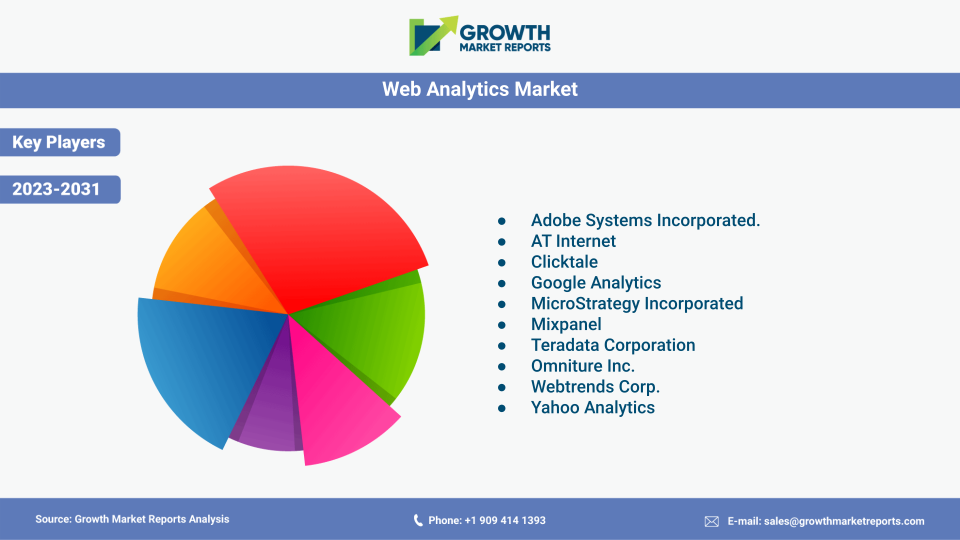
Some of the key players competing in the global web analytics market include Google Analytics, Omniture Inc., Webtrends Corp., and Yahoo Analytics.
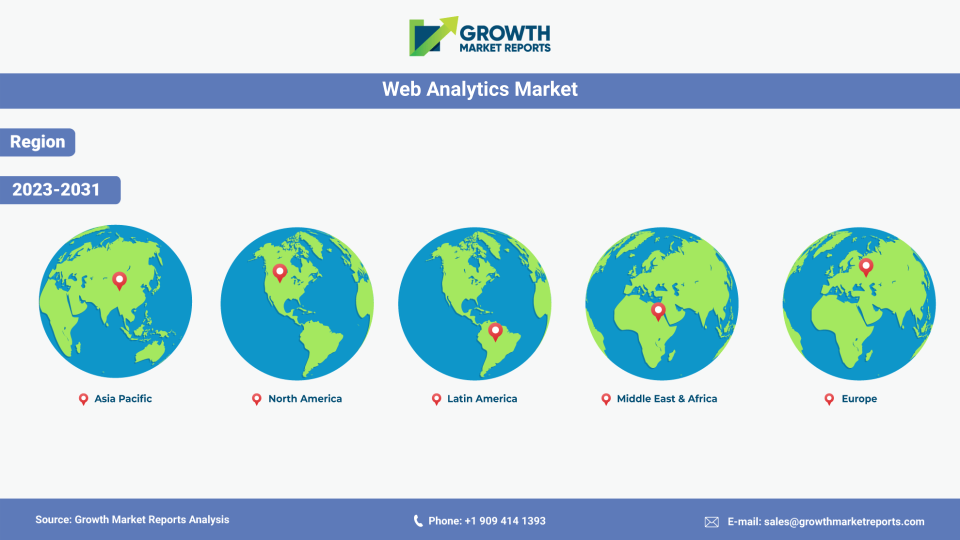
North America is projected to dominate the market in the coming years owing to the wide adoption of advanced and latest technology among various organizations to enhance their websites publishing about services and products.
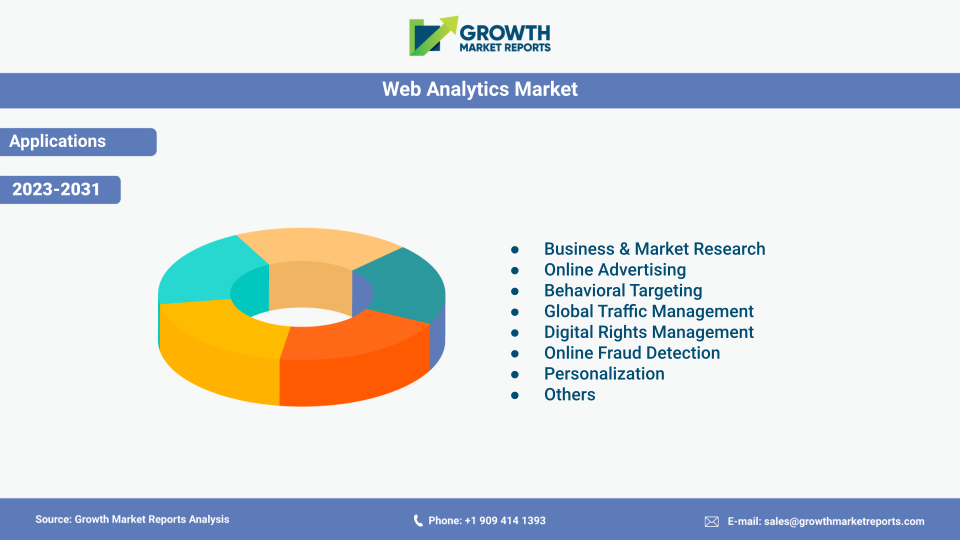
The on-site segment is expected to represent a key market share during the forecast period owing to the wide adoption of the types for various applications especially online advertising and online fraud detection purposes across industries.
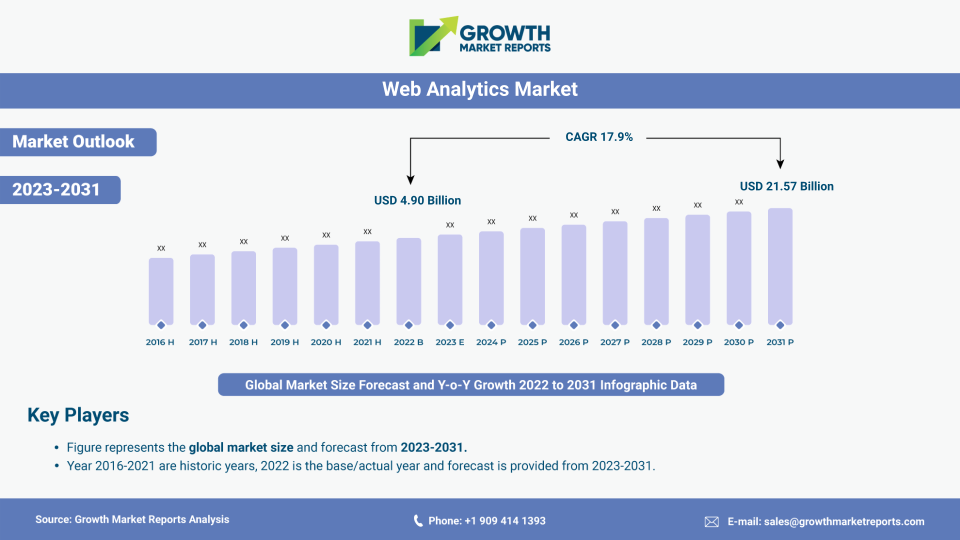
The Web Analytics Market is studied from 2023 - 2031.
Web Analytics Market is growing at a CAGR of 17.9% in forecast period.
The global Web Analytics Market size was valued at USD 4.90 Billion in 2022.