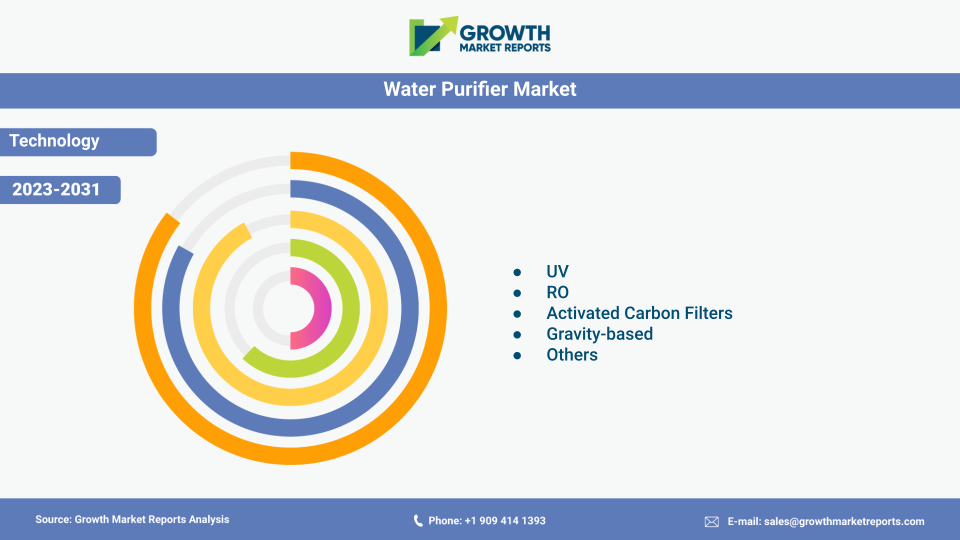
Segments - by Technology (RO, UV, Gravity-Based, Activated Carbon, Others), by Product Type (Under Sink, Countertop, Faucet-Mounted, Pitcher, Others), by End-User (Residential, Commercial, Industrial), by Distribution Channel (Online, Offline)
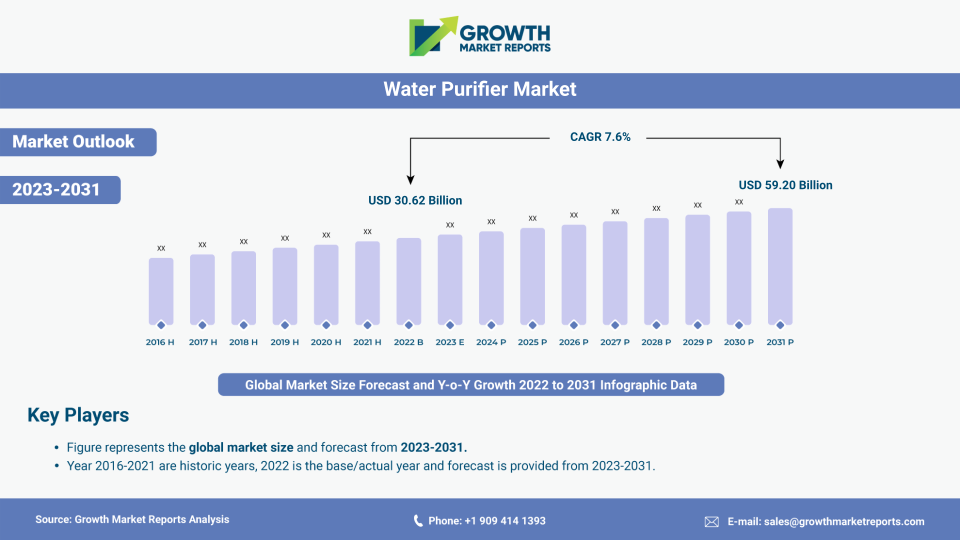
According to our latest research, the global water purifier market size in 2024 stands at USD 47.2 billion, reflecting robust demand for advanced water purification solutions worldwide. The market is experiencing a healthy growth trajectory, with a CAGR of 8.6% anticipated during the forecast period from 2025 to 2033. By the end of 2033, the market is forecasted to reach USD 99.6 billion, propelled by rising consumer awareness regarding waterborne diseases, increasing urbanization, and the growing need for safe drinking water. As per our latest research, factors such as technological advancements in purification technologies and stringent regulatory standards for water quality are significantly driving the market forward.
One of the primary growth factors for the water purifier market is the escalating incidence of water contamination and the corresponding increase in waterborne diseases globally. With rapid industrialization and urban expansion, pollutants from agricultural runoff, industrial waste, and inadequate sewage treatment continue to compromise water sources. Consumers are increasingly prioritizing health and wellness, leading to a heightened demand for reliable water purification systems in both residential and commercial settings. Governments and international organizations are also launching awareness campaigns and implementing stricter water quality regulations, further fueling the adoption of advanced water purification technologies across the globe.
Another significant driver is the evolution and integration of innovative purification technologies such as reverse osmosis (RO), ultraviolet (UV) purification, and activated carbon filtration. These technologies offer enhanced efficiency in removing a broad spectrum of contaminants, including bacteria, viruses, heavy metals, and chemical impurities. The market is witnessing a surge in R&D investments by leading manufacturers to develop compact, energy-efficient, and user-friendly water purifiers. Additionally, the proliferation of Internet of Things (IoT) and smart home ecosystems is encouraging the development of intelligent water purifiers with real-time monitoring and maintenance alerts, thereby expanding their appeal among tech-savvy consumers.
Affordability and accessibility of water purification solutions are also playing a pivotal role in market expansion, especially in emerging economies. The increasing availability of low-cost gravity-based and pitcher-type water purifiers is making safe drinking water accessible to lower-income groups and rural populations. At the same time, the growth of online retail channels is simplifying product comparison, selection, and delivery, thereby supporting market penetration even in remote areas. These factors collectively contribute to the sustained growth of the water purifier market, making it a critical segment in the global home appliances and water treatment industry.
As the water purifier market continues to expand, manufacturers are increasingly recognizing the importance of Water Purifier Manufacturer Liability Insurance. This type of insurance is crucial for protecting companies from potential claims related to product defects or failures that could lead to consumer harm. With the growing complexity of purification technologies and the heightened expectations for product safety, liability insurance provides a safety net that allows manufacturers to focus on innovation and quality assurance. It also enhances consumer confidence, as buyers are more likely to trust brands that are backed by comprehensive liability coverage. As regulatory standards become more stringent, having robust liability insurance will be an essential component of risk management strategies for companies in this sector.
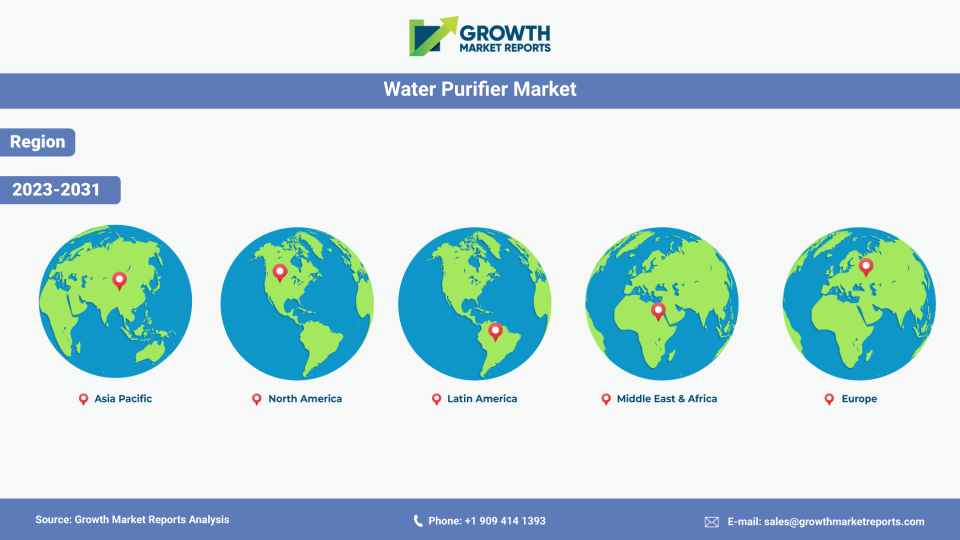
From a regional perspective, Asia Pacific remains the dominant force in the water purifier market, accounting for the largest share in 2024. This leadership is attributed to high population density, rapid urbanization, and increasing concerns about water quality in countries such as China, India, and Southeast Asian nations. North America and Europe are also significant contributors, driven by stringent regulatory frameworks and high consumer awareness. Meanwhile, the Middle East & Africa and Latin America are emerging as high-potential markets, supported by improving infrastructure and government initiatives to ensure access to safe drinking water. The regional dynamics are expected to evolve further as technological adoption and income levels rise across developing economies.
The technology segment of the water purifier market is characterized by a diverse range of purification methods, each catering to specific contamination challenges and user preferences. Reverse Osmosis (RO) technology leads this segment, owing to its superior capability in removing dissolved salts, heavy metals, and microbial contaminants from water. RO-based purifiers are especially popular in regions where groundwater and municipal water supplies are heavily contaminated. The technologyÂ’s effectiveness, however, comes with challenges such as water wastage and the need for electricity, which manufacturers are addressing through innovations like water-saving RO systems and hybrid models that integrate multiple purification technologies. The growing demand for high-capacity and commercial-grade RO purifiers is also expanding the marketÂ’s scope beyond residential applications.
Ultraviolet (UV) purification is another critical technology, widely adopted for its ability to neutralize bacteria, viruses, and other pathogens without altering the taste or chemical composition of water. UV purifiers are particularly effective in urban areas with relatively low levels of dissolved solids but high microbial contamination. The segment is witnessing advancements such as the integration of UV-LEDs for enhanced energy efficiency and longer operational life. These innovations are making UV purifiers a preferred choice for both residential and institutional users, especially in regions where waterborne diseases are prevalent and electricity supply is stable.
Gravity-based water purifiers have gained substantial traction in emerging markets due to their affordability, ease of use, and independence from electricity. These systems typically employ activated carbon, sediment filters, and sometimes ceramic elements to remove particulate matter, chlorine, and some bacteria. Gravity-based purifiers are particularly beneficial for rural and off-grid communities, where access to electricity is limited. Manufacturers are focusing on enhancing the filtration efficiency and durability of these products, making them suitable for diverse water quality conditions. The segmentÂ’s growth is further supported by government and NGO initiatives aimed at improving access to safe drinking water in underserved regions.
Activated carbon filtration remains a foundational technology in the water purifier market, valued for its effectiveness in removing chlorine, organic compounds, and unpleasant odors from water. Often used in combination with other purification methods, activated carbon filters are integral to both point-of-use and whole-house purification systems. The segment is experiencing innovation in filter material and design, with the introduction of advanced carbon block filters and coconut shell-based carbons that offer higher adsorption capacity and longer service life. These advancements are enhancing the appeal of activated carbon purifiers among health-conscious consumers seeking comprehensive water treatment solutions.
Other emerging technologies, such as ultrafiltration (UF), electrolysis, and nanotechnology-based filters, are gradually making inroads into the market. These technologies offer unique benefits, such as the removal of viruses and finer particulates, and are increasingly being incorporated into multi-stage purification systems. The technology landscape in the water purifier market is thus marked by continuous innovation, with manufacturers striving to balance efficiency, affordability, and sustainability to meet the evolving needs of global consumers.
| Attributes | Details |
| Report Title | Water Purifier Market Research Report 2033 |
| By Technology | RO, UV, Gravity-Based, Activated Carbon, Others |
| By Product Type | Under Sink, Countertop, Faucet-Mounted, Pitcher, Others |
| By End-User | Residential, Commercial, Industrial |
| By Distribution Channel | Online, Offline |
| Regions Covered | North America, Europe, APAC, Latin America, MEA |
| Base Year | 2024 |
| Historic Data | 2018-2023 |
| Forecast Period | 2025-2033 |
| Number of Pages | 295 |
| Number of Tables & Figures | 374 |
| Customization Available | Yes, the report can be customized as per your need. |
The product type segment of the water purifier market encompasses a wide array of designs tailored to meet the diverse needs of households, businesses, and institutions. Under sink water purifiers are gaining popularity, especially in urban and high-income households, due to their discreet installation, large capacity, and ability to deliver purified water directly to kitchen faucets. These systems often combine multiple purification technologies, including RO, UV, and activated carbon, to provide comprehensive water treatment. The segment is witnessing growth as consumers seek solutions that do not compromise kitchen aesthetics and offer convenience through features like automated filter replacement alerts and leak detection.
Countertop water purifiers remain a staple in the market, favored for their portability, ease of installation, and suitability for rental properties and small apartments. These units typically offer a balance between performance and affordability, making them accessible to a broad consumer base. Countertop models are available in various configurations, from basic gravity-based systems to advanced multi-stage purifiers with digital displays and smart connectivity. The segment is evolving with the introduction of compact designs and enhanced filtration capabilities, catering to the growing demand for space-saving and efficient water purification solutions.
Faucet-mounted water purifiers provide a convenient and cost-effective solution for households seeking to improve the quality of tap water without investing in more elaborate systems. These devices are easy to install and maintain, making them ideal for renters and frequent movers. While traditionally limited in filtration capacity, recent advancements have enabled faucet-mounted purifiers to incorporate multiple filter stages, including activated carbon and ceramic filters, thereby enhancing their ability to remove a wider range of contaminants. The segment continues to grow as manufacturers focus on improving filter life, water flow rates, and compatibility with different faucet types.
Pitcher water purifiers represent another accessible and user-friendly product category, particularly popular in North America and Europe. These portable units use gravity and activated carbon filters to remove chlorine, particulates, and some heavy metals, offering an affordable solution for individuals and small families. Pitcher purifiers are often chosen for their simplicity, low maintenance requirements, and suitability for chilled water storage in refrigerators. The segment is experiencing innovation in filter design, with the introduction of indicators for filter replacement and enhanced materials that extend filter life and improve contaminant removal efficiency.
Other product types, including wall-mounted and bottle purifiers, are also contributing to the marketÂ’s diversity. Wall-mounted units are especially prevalent in Asia Pacific, where space constraints and high water contamination levels drive demand for efficient, space-saving solutions. Bottle purifiers, equipped with UV or filtration technology, cater to travelers and outdoor enthusiasts, expanding the marketÂ’s reach into niche segments. The broad range of product types available ensures that the water purifier market can address the unique needs and preferences of a global consumer base.
The end-user segmentation of the water purifier market is pivotal in understanding the distinct requirements and purchasing behaviors across different user groups. The residential segment dominates the market, accounting for the largest share in 2024. This is largely due to increasing consumer awareness about the health risks associated with contaminated drinking water and the growing trend of health-conscious living. Households are investing in advanced water purification systems to ensure the safety and well-being of family members, particularly in regions where municipal water quality is inconsistent. The residential market is characterized by a preference for compact, easy-to-install, and low-maintenance purifiers, with a growing inclination towards smart and connected devices that offer real-time monitoring and automated maintenance.
The commercial segment is experiencing significant growth, driven by the hospitality, healthcare, educational, and food service industries. Businesses and institutions are under increasing pressure to provide safe and clean drinking water to employees, customers, and guests, in compliance with health and safety regulations. Commercial water purifiers are typically larger in capacity and equipped with advanced features such as multi-stage purification, high flow rates, and automated cleaning systems. The segment is also seeing rising demand for customized solutions tailored to specific industry requirements, such as hospitals requiring ultra-pure water for medical procedures or restaurants seeking to enhance the taste and quality of beverages.
The industrial segment, while smaller in comparison to residential and commercial, plays a crucial role in the water purifier market. Industries such as pharmaceuticals, food and beverage processing, and electronics manufacturing require high-purity water for various production processes. Industrial water purification systems are designed to handle large volumes and are equipped with advanced technologies such as reverse osmosis, ultrafiltration, and deionization. The segment is witnessing growth as manufacturers invest in upgrading water treatment infrastructure to meet stringent quality standards and minimize environmental impact. The adoption of modular and scalable purification solutions is also increasing, allowing industries to efficiently manage varying water quality requirements and operational demands.
Across all end-user segments, there is a growing emphasis on sustainability and environmental responsibility. Consumers and businesses alike are seeking water purifiers that minimize water wastage, reduce energy consumption, and utilize eco-friendly materials. Manufacturers are responding by developing products with improved efficiency, recyclable components, and features that promote responsible water use. This shift towards sustainability is expected to shape the future trajectory of the water purifier market, influencing product development, marketing strategies, and consumer preferences.
The distribution channel landscape in the water purifier market is evolving rapidly, with both online and offline channels playing significant roles in product accessibility and consumer engagement. The offline segment, comprising specialty stores, supermarkets, hypermarkets, and authorized dealers, continues to hold a substantial share of the market. Offline channels offer consumers the advantage of physical product inspection, personalized recommendations, and after-sales support, which are particularly valued in emerging markets and among first-time buyers. Retailers are increasingly adopting experiential marketing strategies, such as product demonstrations and in-store water testing, to educate consumers and drive sales.
The online distribution channel is witnessing exponential growth, fueled by the proliferation of e-commerce platforms, increased internet penetration, and changing consumer shopping habits. Online channels offer unparalleled convenience, enabling consumers to compare products, read reviews, and make informed purchasing decisions from the comfort of their homes. The availability of detailed product information, competitive pricing, and doorstep delivery are significant factors driving the adoption of online sales. Manufacturers and retailers are leveraging digital marketing, influencer partnerships, and targeted advertising to reach a broader audience and enhance brand visibility.
Hybrid distribution models are emerging as a key trend, with manufacturers integrating online and offline channels to provide a seamless omnichannel experience. For example, consumers can research products online and complete their purchase in-store, or vice versa, with options for home delivery and installation services. This approach caters to the diverse preferences of modern consumers and helps brands build stronger relationships through personalized engagement and after-sales support. The integration of digital tools, such as virtual consultations and augmented reality product visualization, is further enhancing the customer journey and driving higher conversion rates.
The distribution channel landscape is also being shaped by the entry of direct-to-consumer (DTC) brands, which bypass traditional retail intermediaries to offer competitively priced products and enhanced customer service. DTC brands are leveraging data analytics and customer feedback to continuously improve product offerings and tailor marketing strategies. The rise of subscription-based models for filter replacement and maintenance services is another trend gaining traction, providing consumers with convenience and ensuring recurring revenue streams for manufacturers. As the distribution ecosystem continues to evolve, companies that effectively leverage both online and offline channels will be best positioned to capture market share and drive sustained growth.
The water purifier market is replete with opportunities that can be leveraged by both existing players and new entrants. One of the most promising opportunities lies in the untapped potential of rural and peri-urban areas, particularly in developing countries where access to clean drinking water remains a challenge. Governments, NGOs, and private companies can collaborate to introduce affordable and robust purification solutions tailored to the unique needs of these communities. Additionally, the growing trend of smart home integration presents a significant opportunity for manufacturers to develop intelligent water purifiers equipped with IoT connectivity, real-time monitoring, and predictive maintenance features. These advancements not only enhance user convenience but also open new avenues for value-added services and customer engagement.
Another major opportunity is the increasing demand for sustainable and eco-friendly water purification technologies. Consumers are becoming more environmentally conscious and are seeking products that minimize water wastage, reduce energy consumption, and utilize recyclable materials. Manufacturers can capitalize on this trend by investing in R&D to develop green technologies and by obtaining certifications that validate their commitment to sustainability. The expansion of the commercial and industrial segments also presents growth opportunities, as businesses and institutions seek customized solutions to meet stringent water quality standards and regulatory requirements. Strategic partnerships, mergers, and acquisitions can further enable companies to expand their product portfolios, enhance technological capabilities, and enter new markets.
Despite the numerous opportunities, the water purifier market faces several restraining factors. One of the primary challenges is the high initial cost of advanced purification systems, particularly RO and multi-stage units, which can be prohibitive for low-income households and small businesses. Additionally, the lack of consumer awareness and education regarding the importance of water purification and the available technologies can impede market penetration, especially in rural and underdeveloped regions. The presence of counterfeit and substandard products in the market also poses a significant threat, undermining consumer trust and potentially leading to health risks. Manufacturers and regulatory bodies must work together to address these challenges through awareness campaigns, subsidies, and stringent quality control measures.
The Asia Pacific region leads the global water purifier market, accounting for approximately 41% of the total market value in 2024, which translates to around USD 19.4 billion. This dominance is driven by high population density, rapid urbanization, and increasing concerns about water quality in countries such as China, India, and Indonesia. The region is witnessing strong government initiatives to improve access to clean drinking water, coupled with rising consumer awareness and disposable incomes. The market in Asia Pacific is expected to grow at a CAGR of 9.3% during the forecast period, outpacing other regions and solidifying its position as the primary growth engine for the global water purifier market.
North America holds a significant share of the water purifier market, valued at approximately USD 12.1 billion in 2024. The region benefits from high consumer awareness, stringent regulatory standards for water quality, and a strong presence of leading market players. The United States and Canada are the primary contributors, with a well-established infrastructure for both residential and commercial water purification solutions. The market is characterized by a high adoption rate of advanced technologies, such as smart water purifiers and multi-stage filtration systems. North America is expected to maintain steady growth, supported by ongoing technological innovation and the increasing prevalence of contaminants in municipal water supplies.
Europe is another key market, with a value of USD 8.7 billion in 2024, driven by stringent water quality regulations and a strong focus on sustainability. Countries such as Germany, the United Kingdom, and France are leading adopters of advanced water purification technologies, with a growing emphasis on eco-friendly and energy-efficient solutions. The region is also witnessing increased demand from the commercial and institutional sectors, particularly in healthcare and hospitality. Meanwhile, Latin America and the Middle East & Africa are emerging as high-potential markets, collectively accounting for USD 7 billion in 2024. These regions are benefiting from improving infrastructure, rising consumer awareness, and government initiatives aimed at ensuring access to safe drinking water. The market dynamics in these regions are expected to evolve rapidly as income levels rise and technological adoption increases.
The water purifier market is characterized by intense competition, with a mix of global giants, regional players, and emerging startups vying for market share. The competitive landscape is defined by continuous innovation, aggressive marketing strategies, and a strong focus on product differentiation. Leading companies are investing heavily in research and development to introduce advanced technologies, improve filtration efficiency, and enhance user convenience. The integration of smart features, such as IoT connectivity and real-time monitoring, is becoming a key differentiator, as consumers increasingly seek intelligent and connected home solutions. Price competitiveness remains a critical factor, particularly in emerging markets, where affordability is a primary consideration for consumers.
Mergers, acquisitions, and strategic partnerships are common strategies employed by market leaders to expand their product portfolios, enter new markets, and strengthen their technological capabilities. Companies are also focusing on expanding their distribution networks, both online and offline, to enhance product accessibility and customer engagement. The rise of direct-to-consumer brands and subscription-based models is further intensifying competition, as these players leverage digital platforms to offer personalized services and build long-term customer relationships. The ability to adapt to changing consumer preferences, regulatory requirements, and technological advancements is crucial for maintaining a competitive edge in this dynamic market.
Sustainability and corporate social responsibility are emerging as important themes in the competitive landscape, with consumers increasingly favoring brands that demonstrate a commitment to environmental stewardship and ethical business practices. Companies are responding by developing eco-friendly products, reducing water and energy consumption, and supporting community initiatives aimed at improving access to clean water. Brand reputation, product quality, and after-sales service are key factors influencing consumer loyalty and brand preference in the water purifier market.
Some of the major companies operating in the global water purifier market include Kent RO Systems Ltd., A. O. Smith Corporation, Eureka Forbes Ltd., LG Electronics Inc., Panasonic Corporation, Whirlpool Corporation, Unilever PLC (Pureit), Coway Co., Ltd., and Xiaomi Corporation. Kent RO Systems Ltd. is renowned for its extensive range of RO and UV water purifiers, with a strong presence in the Indian and Asian markets. A. O. Smith Corporation has established itself as a leader in North America, offering technologically advanced and energy-efficient water purification solutions. Eureka Forbes Ltd., a pioneer in the Indian market, is known for its innovative products and extensive distribution network.
LG Electronics Inc. and Panasonic Corporation are leveraging their expertise in consumer electronics to develop smart and feature-rich water purifiers, targeting both residential and commercial segments. Whirlpool Corporation and Unilever PLC (Pureit) are focusing on expanding their product offerings and market presence through strategic partnerships and acquisitions. Coway Co., Ltd., a leading player in South Korea and Southeast Asia, is recognized for its emphasis on design, technology, and customer service. Xiaomi Corporation, a relatively new entrant, is rapidly gaining market share through its affordable and technologically advanced water purifiers, particularly in China and other Asian markets. These companies are continuously innovating and expanding their global footprint, shaping the future landscape of the water purifier market.
The Water Purifier market has been segmented on the basis of
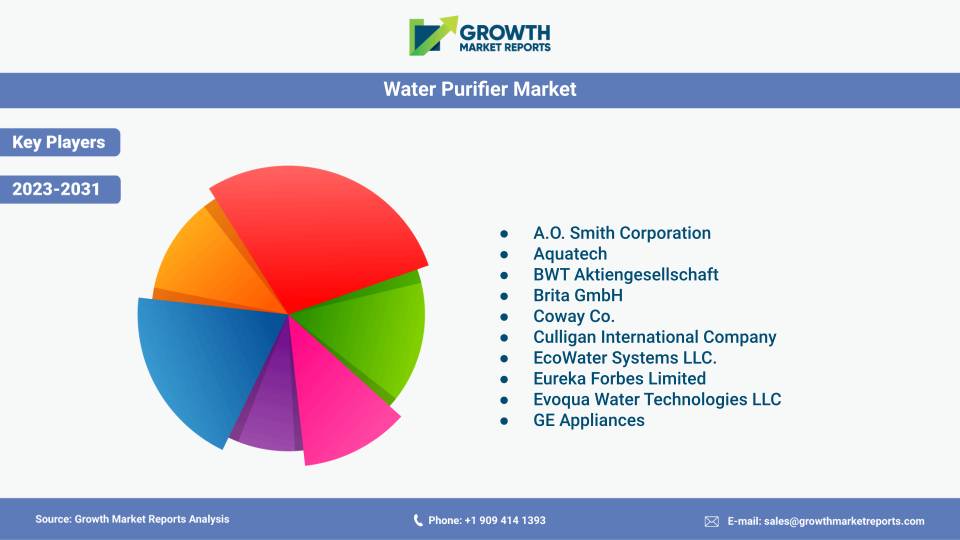
Major players in the global water purifier market include A.O. Smith Corporation, Aquatech, BWT Aktiengesellschaft, Brita GmbH, Coway Co., Culligan International Company, EcoWater Systems LLC., Eureka Forbes Limited, Evoqua Water Technologies LLC, GE Appliances, KENT RO Systems Limited, and Kinetico Inc.
Many companies have adopted research and development as a business strategy tool to withstand the competition. The strategy is aimed at providing better quality and new features products to customers.
Challenges include the high initial cost of advanced systems, lack of consumer awareness in some regions, and the presence of counterfeit or substandard products.
Key trends include the integration of IoT and smart features, development of energy-efficient and eco-friendly systems, multi-stage purification, and innovations in filter materials and design.
Major companies include Kent RO Systems Ltd., A. O. Smith Corporation, Eureka Forbes Ltd., LG Electronics Inc., Panasonic Corporation, Whirlpool Corporation, Unilever PLC (Pureit), Coway Co., Ltd., and Xiaomi Corporation.
Both online and offline channels play significant roles. Online sales are growing rapidly due to convenience and product variety, while offline stores offer personalized service and after-sales support.
The main product types include under sink, countertop, faucet-mounted, pitcher, wall-mounted, and bottle purifiers, catering to diverse residential, commercial, and industrial needs.
Growth is driven by rising consumer awareness of waterborne diseases, increasing urbanization, technological advancements, stricter water quality regulations, and the need for safe drinking water.
Key water purification technologies include Reverse Osmosis (RO), Ultraviolet (UV) purification, gravity-based filtration, activated carbon filtration, ultrafiltration (UF), electrolysis, and nanotechnology-based filters.
Asia Pacific leads the water purifier market, accounting for the largest share in 2024, followed by North America and Europe. The Middle East & Africa and Latin America are emerging as high-potential markets.
The water purifier market is expected to grow at a CAGR of 8.6% during the forecast period from 2025 to 2033.
The global water purifier market size in 2024 is estimated at USD 47.2 billion, reflecting strong demand for advanced water purification solutions worldwide.