Segments - by Product Type (Cordless Water Flosser, Countertop Water Flosser, Faucet Attached Water Flosser, Others), by Application (Dental Clinics, Hospitals, Home Care, Others), by Distribution Channel (Online Stores, Supermarkets/Hypermarkets, Specialty Stores, Others), by End-User (Adults, Children, Others)
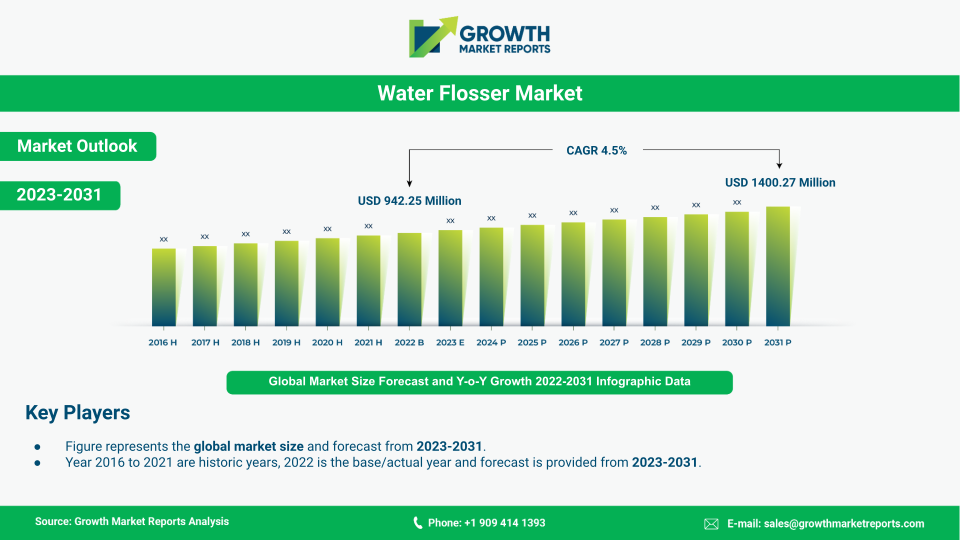
According to our latest research, the global water flosser market size was valued at USD 1.23 billion in 2024, with robust industry dynamics propelling a healthy growth rate. The market is set to expand at a CAGR of 7.9% during the forecast period, reaching an estimated USD 2.43 billion by 2033. This impressive growth trajectory is primarily attributed to increasing consumer awareness about oral hygiene, technological advancements in oral care devices, and a surge in dental health concerns globally. As per our comprehensive analysis, the water flosser market is undergoing a transformation, driven by both product innovation and changing consumer preferences.
A significant growth factor for the water flosser market is the rising prevalence of dental diseases, such as gingivitis, periodontitis, and dental caries, which has heightened the importance of preventive oral care. The World Health Organization estimates that oral diseases affect nearly 3.5 billion people worldwide, reinforcing the need for effective oral hygiene solutions. Water flossers, with their ability to remove plaque and debris from hard-to-reach areas, are increasingly recommended by dental professionals as an adjunct to traditional flossing. This growing endorsement from healthcare practitioners, coupled with a surge in dental clinics recommending water flossers for post-surgical care and routine maintenance, has significantly bolstered product adoption across diverse demographic segments.
Another key driver is the technological evolution within the water flosser market. Manufacturers are focusing on integrating advanced features such as adjustable water pressure, multiple nozzle attachments, and portable designs to cater to the evolving needs of consumers. The advent of cordless and rechargeable water flossers has particularly resonated with urban populations seeking convenience and portability. Furthermore, the incorporation of smart technology, such as Bluetooth connectivity and mobile app integration for personalized oral care tracking, is enhancing the user experience and fostering brand loyalty. These innovations are not only expanding the market base but also encouraging repeat purchases and higher average selling prices.
The increasing penetration of e-commerce and the proliferation of online health and wellness platforms have also contributed to the growth of the water flosser market. Online distribution channels provide consumers with access to a wide range of products, detailed product information, and user reviews, thereby facilitating informed purchasing decisions. The convenience of doorstep delivery and frequent promotional campaigns offered by online retailers have further accelerated market growth, particularly among tech-savvy, health-conscious millennials and Gen Z consumers. As a result, manufacturers are increasingly investing in digital marketing strategies and direct-to-consumer sales models to capture a larger share of the burgeoning online market.
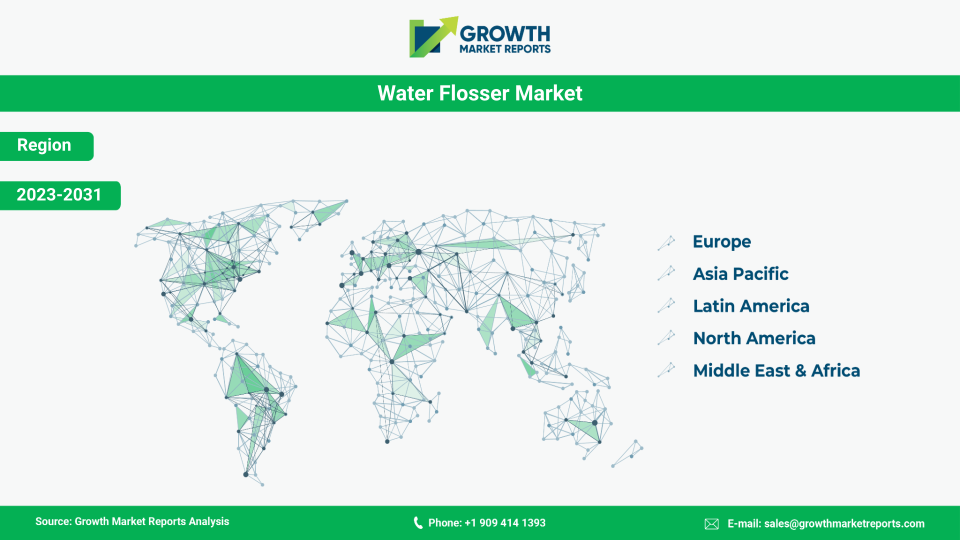
Regionally, North America continues to dominate the water flosser market, accounting for a substantial share in 2024, followed by Europe and Asia Pacific. The high level of oral health awareness, widespread adoption of advanced dental care products, and a strong presence of leading market players underpin North America’s market leadership. Meanwhile, the Asia Pacific region is emerging as the fastest-growing market, fueled by rising disposable incomes, increasing urbanization, and a growing emphasis on preventive healthcare. Countries such as China, India, and Japan are witnessing a surge in demand for water flossers, supported by expanding dental care infrastructure and government-led oral health initiatives. Latin America and the Middle East & Africa, though smaller in market size, are expected to register steady growth, driven by improving healthcare access and rising consumer awareness.
The product type segment of the water flosser market encompasses cordless water flossers, countertop water flossers, faucet-attached water flossers, and other variants. Among these, cordless water flossers have emerged as the most popular choice in 2024, capturing the largest market share. Their lightweight, portable design and ease of use make them ideal for both home and travel purposes. Consumers increasingly prefer cordless models due to their rechargeable batteries, compact form factor, and ability to deliver effective cleaning without the constraints of a power cord. Manufacturers are responding to this demand by introducing innovative features such as multiple pressure settings, waterproof construction, and ergonomic designs, further driving the adoption of cordless water flossers.
Countertop water flossers, while slightly less popular than cordless models, continue to maintain a strong presence in the market. These devices are favored for their powerful water pressure, larger water reservoirs, and suitability for multi-user households. Dental clinics and hospitals often opt for countertop models due to their robust performance and ability to accommodate frequent use. The introduction of advanced countertop units with customizable pressure controls, multiple nozzle attachments, and easy-to-clean components has enhanced their appeal among both professional and home users. Additionally, the trend towards family-oriented oral care solutions is expected to sustain demand for countertop water flossers in the coming years.
Faucet-attached water flossers represent a niche yet steadily growing segment within the market. These devices are designed to be connected directly to a faucet, offering a continuous water supply and eliminating the need for refilling a reservoir. Faucet-attached models are particularly popular in regions with limited access to advanced oral care products, as they offer a cost-effective and efficient solution for maintaining oral hygiene. However, their adoption is somewhat limited by installation complexity and compatibility issues with certain faucet designs. Manufacturers are addressing these challenges by developing universal adapters and simplified installation mechanisms, which are expected to drive incremental growth in this segment.
Other product types, such as travel-sized water flossers and combination devices that integrate brushing and flossing functions, are also gaining traction, especially among frequent travelers and consumers seeking comprehensive oral care solutions. These innovative products are designed to cater to specific user needs, such as portability, multifunctionality, and compatibility with different water sources. The growing emphasis on personalized oral care and the increasing availability of product variants tailored to different age groups and dental conditions are expected to further diversify the product landscape within the water flosser market.
| Attributes | Details |
| Report Title | Water Flosser Market Research Report 2033 |
| By Product Type | Cordless Water Flosser, Countertop Water Flosser, Faucet Attached Water Flosser, Others |
| By Application | Dental Clinics, Hospitals, Home Care, Others |
| By Distribution Channel | Online Stores, Supermarkets/Hypermarkets, Specialty Stores, Others |
| By End-User | Adults, Children, Others |
| Regions Covered | North America, Europe, APAC, Latin America, MEA |
| Base Year | 2024 |
| Historic Data | 2018-2023 |
| Forecast Period | 2025-2033 |
| Number of Pages | 269 |
| Number of Tables & Figures | 273 |
| Customization Available | Yes, the report can be customized as per your need. |
The application segment of the water flosser market is broadly categorized into dental clinics, hospitals, home care, and others. Dental clinics represent a significant application area, as oral health professionals increasingly recommend water flossers for both preventive and therapeutic purposes. The use of water flossers in post-surgical care, orthodontic maintenance, and the management of periodontal diseases has become standard practice in many dental clinics worldwide. Dental professionals value these devices for their ability to enhance patient compliance, reduce the risk of infection, and improve overall treatment outcomes. As a result, manufacturers are collaborating with dental practitioners to develop professional-grade water flossers tailored to clinical settings.
Hospitals also constitute a key application area, particularly in departments specializing in oral and maxillofacial surgery, oncology, and geriatric care. Water flossers are increasingly utilized in hospitals to support oral hygiene among patients with limited mobility, compromised immune systems, or those undergoing complex dental procedures. The integration of water flossers into hospital oral care protocols is driven by their effectiveness in minimizing the risk of healthcare-associated infections and promoting faster recovery. Manufacturers are focusing on developing hospital-grade water flossers with enhanced safety features, sterilizable components, and user-friendly interfaces to meet the stringent requirements of healthcare institutions.
Home care remains the largest and fastest-growing application segment, fueled by the rising trend of self-care and preventive health management. Consumers are increasingly investing in advanced oral care devices for daily use, driven by heightened awareness of the link between oral health and overall well-being. Water flossers are particularly popular among individuals with braces, implants, or sensitive gums, as they provide a gentle yet effective cleaning experience. The proliferation of online tutorials, product reviews, and endorsements by dental professionals has further accelerated the adoption of water flossers in home care settings. Manufacturers are capitalizing on this trend by offering a wide range of user-friendly, aesthetically appealing, and affordable products tailored to home users.
Other application areas, such as elderly care facilities, schools, and community health centers, are also contributing to market growth. These institutions are increasingly incorporating water flossers into their oral hygiene programs to address the unique needs of specific population groups, such as children, the elderly, and individuals with disabilities. The development of age-appropriate and condition-specific water flossers is expected to unlock new growth opportunities within these niche application areas, further expanding the overall market reach.
The distribution channel segment of the water flosser market is segmented into online stores, supermarkets/hypermarkets, specialty stores, and others. Online stores have emerged as the dominant distribution channel in 2024, accounting for the highest sales volume and value. The convenience of browsing, comparing, and purchasing products from the comfort of home has made online platforms the preferred choice for a growing number of consumers. E-commerce giants and dedicated oral care websites offer a wide selection of water flossers, detailed product descriptions, customer reviews, and competitive pricing, enabling consumers to make informed purchasing decisions. The proliferation of digital payment options, easy returns, and frequent promotional campaigns further enhance the attractiveness of online stores.
Supermarkets and hypermarkets continue to play a significant role in the distribution of water flossers, particularly in developed markets. These retail outlets provide consumers with the opportunity to physically examine products, seek assistance from knowledgeable staff, and benefit from in-store promotions. The presence of dedicated oral care sections and partnerships with leading water flosser brands have strengthened the position of supermarkets and hypermarkets as key distribution channels. However, the shift towards online shopping, accelerated by the COVID-19 pandemic, has prompted many retailers to invest in omni-channel strategies, integrating online and offline sales to cater to evolving consumer preferences.
Specialty stores, such as dental supply shops and health and wellness boutiques, cater to a niche segment of consumers seeking expert advice and premium products. These outlets are particularly popular among dental professionals, caregivers, and health-conscious individuals who prioritize quality and performance over price. Specialty stores often stock a curated selection of high-end water flossers, offer personalized product recommendations, and provide after-sales support, thereby enhancing the overall customer experience. The growing demand for professional-grade and specialized oral care products is expected to sustain the relevance of specialty stores in the water flosser market.
Other distribution channels, including pharmacies, department stores, and direct sales, also contribute to market growth, albeit to a lesser extent. Pharmacies, in particular, are witnessing increased demand for water flossers as part of their expanding health and wellness product portfolios. Direct sales models, such as subscription-based services and manufacturer-owned retail outlets, are gaining traction among consumers seeking convenience and exclusive offers. The diversification of distribution channels is enabling manufacturers to reach a broader customer base and adapt to changing retail dynamics.
The end-user segment of the water flosser market is segmented into adults, children, and others. Adults represent the largest end-user group, accounting for the majority of water flosser sales in 2024. This dominance is attributed to the higher prevalence of dental issues such as gum disease, tooth decay, and orthodontic conditions among adults. The increasing adoption of water flossers by adults seeking to enhance their oral hygiene routines, prevent dental problems, and maintain overall health is a key growth driver. Manufacturers are targeting this segment with a wide range of products featuring adjustable pressure settings, ergonomic designs, and advanced cleaning modes tailored to adult users.
Children constitute a growing end-user segment, as parents and caregivers become increasingly aware of the importance of early oral hygiene practices. Pediatric dental professionals recommend water flossers for children with braces, retainers, or difficulty using traditional floss. The development of child-friendly water flossers featuring gentle pressure settings, fun designs, and safety features is driving adoption among younger users. Educational initiatives, school-based oral health programs, and endorsements by pediatric dentists are further promoting the use of water flossers among children, contributing to long-term market growth.
The "others" category includes elderly individuals, people with disabilities, and patients with specific medical conditions that affect oral health. This segment is gaining attention as manufacturers develop specialized water flossers designed to address the unique needs of these user groups. Elderly individuals, in particular, benefit from water flossers due to age-related challenges such as reduced dexterity, gum sensitivity, and the presence of dental prosthetics. The integration of user-friendly features, such as large buttons, easy-grip handles, and simplified controls, is enhancing accessibility and driving adoption among these populations.
The increasing emphasis on personalized oral care and the development of condition-specific water flossers are expected to further segment the end-user market. Manufacturers are leveraging consumer insights and feedback to design products that cater to diverse age groups, dental conditions, and lifestyle preferences. This focus on customization and inclusivity is anticipated to unlock new growth opportunities and enhance the overall value proposition of water flossers in the coming years.
The water flosser market is poised for significant growth, driven by several promising opportunities. One of the most notable opportunities lies in the untapped potential of emerging markets, particularly in Asia Pacific and Latin America, where rising disposable incomes and increasing awareness of oral health are creating new demand. Manufacturers can capitalize on this trend by expanding their distribution networks, launching region-specific products, and collaborating with local dental associations to promote oral hygiene. Additionally, the growing adoption of tele-dentistry and digital health platforms presents an opportunity for water flosser brands to integrate their products into virtual oral care consultations, thereby reaching a broader audience and enhancing patient engagement.
Another major opportunity is the ongoing trend toward product innovation and technological advancement. The integration of smart features, such as Bluetooth connectivity, mobile app compatibility, and real-time usage tracking, is transforming the water flosser market into a tech-driven industry. Companies that invest in research and development to create differentiated, high-performance products are likely to gain a competitive edge. Furthermore, the increasing demand for eco-friendly and sustainable oral care solutions presents an opportunity for manufacturers to develop water-efficient, recyclable, and biodegradable products, catering to environmentally conscious consumers and aligning with global sustainability goals.
Despite these opportunities, the water flosser market faces certain restraining factors that could hinder growth. One of the primary challenges is the relatively high cost of advanced water flossers compared to traditional flossing methods, which may limit adoption among price-sensitive consumers, particularly in developing regions. Additionally, the lack of awareness and misconceptions about the efficacy and safety of water flossers in certain markets pose a barrier to widespread acceptance. Manufacturers must invest in targeted educational campaigns, collaborate with dental professionals, and offer affordable product options to overcome these challenges and drive market penetration.
North America remains the leading region in the global water flosser market, accounting for approximately USD 520 million in market value in 2024. The region’s dominance is underpinned by high oral health awareness, a well-established dental care infrastructure, and a strong presence of leading market players. The United States, in particular, represents the largest national market, driven by a high prevalence of dental diseases, a culture of preventive healthcare, and robust consumer spending on personal care products. Canada also contributes significantly to regional growth, supported by government-led oral health initiatives and a growing emphasis on innovative dental care solutions.
Europe holds the second-largest share of the water flosser market, with a market value of approximately USD 320 million in 2024. The region benefits from a high standard of living, widespread adoption of advanced oral care products, and strong regulatory support for dental health. Countries such as Germany, the United Kingdom, and France are at the forefront of market growth, driven by increasing consumer demand for premium oral care devices and the presence of prominent dental care brands. The European market is expected to grow at a steady CAGR of 7.1% during the forecast period, supported by ongoing product innovation and expanding retail networks.
The Asia Pacific region is emerging as the fastest-growing market for water flossers, with a market value of USD 250 million in 2024 and a projected CAGR of 9.2% through 2033. Rapid urbanization, rising disposable incomes, and increasing awareness of oral hygiene are driving demand across key markets such as China, India, Japan, and South Korea. The expansion of dental care infrastructure, coupled with government-led health campaigns and growing penetration of e-commerce, is further accelerating market growth in the region. Latin America and the Middle East & Africa, though smaller in market size, are witnessing steady growth, driven by improving healthcare access, rising consumer awareness, and targeted marketing efforts by leading brands.
The water flosser market is characterized by intense competition, with a mix of established multinational corporations and emerging regional players vying for market share. The competitive landscape is shaped by continuous product innovation, aggressive marketing strategies, and a strong focus on customer engagement. Leading companies are investing heavily in research and development to introduce advanced features, enhance product performance, and differentiate their offerings in a crowded marketplace. The increasing trend toward mergers, acquisitions, and strategic partnerships is further intensifying competition, as companies seek to expand their product portfolios, enter new markets, and leverage synergies for accelerated growth.
Brand reputation, product quality, and pricing remain critical differentiators in the water flosser market. Companies with a strong track record of delivering reliable, high-performance products and exceptional customer service are able to command premium pricing and foster brand loyalty. The rise of direct-to-consumer sales models and the proliferation of online retail platforms have lowered entry barriers for new players, enabling smaller brands to gain visibility and compete effectively with established giants. However, the ability to scale operations, invest in marketing, and maintain consistent product quality remains a key challenge for emerging players.
The competitive landscape is also being shaped by the growing emphasis on sustainability and corporate social responsibility. Companies that prioritize eco-friendly manufacturing practices, ethical sourcing, and community engagement are increasingly favored by environmentally conscious consumers. The integration of smart technology and personalized oral care solutions is creating new avenues for differentiation, as companies seek to enhance the user experience and deliver tangible health benefits. The ability to anticipate and respond to evolving consumer preferences, regulatory requirements, and technological advancements will be critical for sustained success in the water flosser market.
Some of the major companies operating in the global water flosser market include Waterpik (a subsidiary of Church & Dwight Co., Inc.), Philips Sonicare (Koninklijke Philips N.V.), Panasonic Corporation, Oral-B (Procter & Gamble), H2ofloss, Jetpik, ToiletTree Products, and Hydro Floss. Waterpik is widely recognized as a pioneer and market leader, known for its extensive product portfolio, innovative features, and strong distribution network. Philips Sonicare and Oral-B are also prominent players, leveraging their global brand recognition and expertise in oral care technology to capture significant market share. Panasonic Corporation offers a range of cordless and countertop models known for their reliability and performance, while H2ofloss and Jetpik focus on delivering affordable, feature-rich solutions for value-conscious consumers.
These leading companies are continuously expanding their product lines, investing in digital marketing, and forging partnerships with dental professionals to strengthen their market position. For instance, Waterpik has launched several new models featuring advanced pressure control, Bluetooth connectivity, and mobile app integration, targeting tech-savvy consumers. Philips Sonicare has focused on sustainability, introducing water-efficient models and recyclable packaging. Oral-B’s collaboration with dental associations and its emphasis on educational campaigns have reinforced its reputation as a trusted oral care brand. As competition intensifies, companies are expected to prioritize innovation, customer engagement, and sustainability to secure long-term growth in the dynamic water flosser market.
The Water Flosser market has been segmented on the basis of
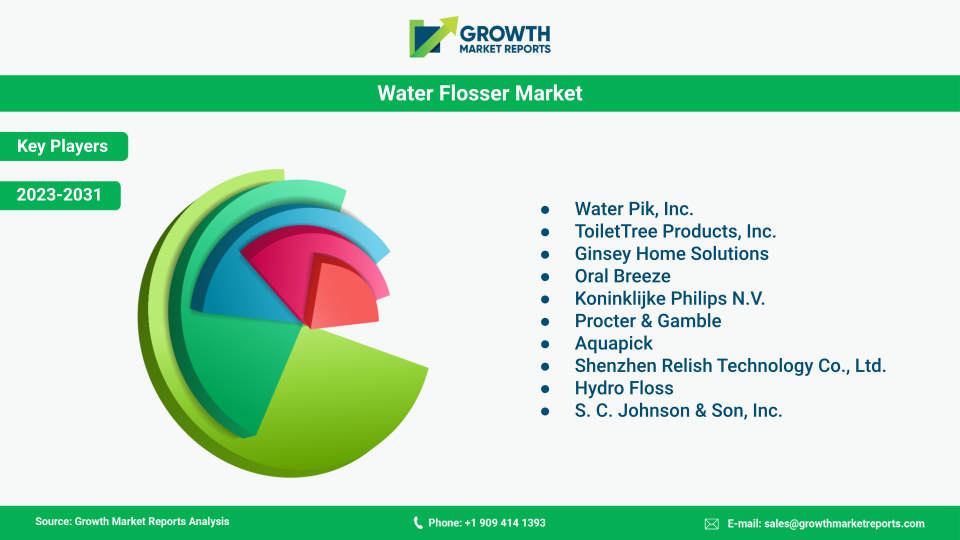
Some major players competing in the global water flosser market include Water Pik, Inc.; ToiletTree Products, Inc.; Ginsey Home Solutions; Oral Breeze; Koninklijke Philips N.V.; Procter & Gamble; Aquapick; Shenzhen Relish Technology Co., Ltd.; Hydro Floss; and S. C. Johnson & Son, Inc. These businesses focus on product modernization to gain their greater share in the global market.
Water Pik, Inc. is a major manufacturer of advanced personal healthcare products sold under the Waterpik brand name. The company’s products are sold over a variety of channels, such as drug store chains, mass-merchandisers, and specialty retailers. Its headquartered is in Fort Collins, CO, which operates facilities in the U.S., Canada and the United Kingdom. With its persistent commitment to modernization, health and wellness, and sustainability, the company has been recognized for award-winning design and technology, plus it has acquired over 500 patents during the last 50 years.
Recently, Waterpik presented ‘Waterpik Sonic-Fusion’ that provides an effective and one-step oral care treatment for a complete clean. Sonic-Fusion enables flossing and brushing at the same time.
Water flossers are used in dental clinics for preventive and post-surgical care, in hospitals for patients with limited mobility, and increasingly in home care for daily oral hygiene, especially among individuals with braces or implants.
Major companies include Waterpik (Church & Dwight), Philips Sonicare, Panasonic Corporation, Oral-B (Procter & Gamble), H2ofloss, Jetpik, ToiletTree Products, and Hydro Floss.
Opportunities include expanding into emerging markets, integrating smart technology, and developing eco-friendly products. Challenges involve higher costs compared to traditional flossing and lack of awareness in some regions.
Adults are the largest end-user group, but adoption among children and the elderly is rising due to targeted product features and increased awareness of oral hygiene benefits for all age groups.
Online stores are the dominant distribution channel, followed by supermarkets/hypermarkets and specialty stores. E-commerce growth is fueled by convenience, product variety, and promotional campaigns.
North America leads the market due to high oral health awareness and advanced dental care infrastructure, while Asia Pacific is the fastest-growing region, driven by rising incomes, urbanization, and expanding dental care infrastructure.
Manufacturers are integrating features like adjustable water pressure, multiple nozzle attachments, smart technology (Bluetooth, app integration), and portable designs, enhancing user experience and driving market growth.
Cordless water flossers are the most popular product type in 2024, favored for their portability, rechargeable batteries, and ease of use for both home and travel.
Key growth drivers include increasing consumer awareness of oral hygiene, technological advancements in oral care devices, rising prevalence of dental diseases, and the growing endorsement of water flossers by dental professionals.
The global water flosser market was valued at USD 1.23 billion in 2024 and is expected to reach USD 2.43 billion by 2033, growing at a CAGR of 7.9% during the forecast period.