Segments - by Product Type (Semi-Conductive Water Blocking Tapes, Non-Conductive Water Blocking Tapes), by Material (Polyester, Non-Woven, Aramid, Others), by Application (Power Cables, Communication Cables, Submarine Cables, Others), by End-Use Industry (Telecommunications, Energy & Utilities, Construction, Automotive, Others)
According to our latest research, the global water blocking tapes market size reached USD 561.3 million in 2024, reflecting robust demand across various industries. The market is projected to grow at a CAGR of 5.8% from 2025 to 2033, reaching an estimated USD 934.7 million by 2033. This steady expansion is primarily driven by the surging adoption of advanced cable protection solutions, particularly in the telecommunications and energy sectors, where water ingress prevention is critical to maintaining operational reliability and longevity of cable infrastructure.
One of the key growth factors propelling the water blocking tapes market is the rapid expansion of global telecommunications networks. As next-generation technologies such as 5G and fiber-to-the-home (FTTH) become mainstream, the demand for high-performance cables that can withstand harsh environmental conditions has surged. Water blocking tapes are integral to ensuring the integrity of these cables by preventing moisture penetration, which can otherwise lead to signal degradation and costly maintenance. Additionally, the proliferation of data centers and the increasing need for uninterrupted data transmission further fuel the uptake of water blocking tapes, as network operators prioritize long-term reliability and minimal downtime.
Another significant driver is the accelerating investment in renewable energy and grid modernization projects. The energy and utilities sector, particularly in regions prioritizing sustainable infrastructure, relies heavily on power and submarine cables protected by water blocking tapes. The transition toward smart grids and offshore wind farms has intensified the requirement for cables that can endure challenging environments, including underwater and underground installations. Water blocking tapes, particularly those made from advanced materials such as aramid and non-woven fabrics, offer superior performance, thereby supporting the growing infrastructure needs of the energy sector and contributing to the overall growth of the market.
Technological advancements in material science have also played a pivotal role in shaping the water blocking tapes market. Innovations in tape formulations, such as the development of non-conductive and semi-conductive variants, have enabled manufacturers to cater to a wider array of applications and industry-specific requirements. Enhanced durability, improved flexibility, and increased compatibility with various cable types have made modern water blocking tapes more attractive to end users. Furthermore, the growing emphasis on sustainability and the use of eco-friendly materials in tape production are expected to open new avenues for market expansion, as regulatory bodies and consumers alike demand greener solutions.
From a regional perspective, the Asia Pacific region stands out as the fastest-growing and most lucrative market for water blocking tapes. This growth is underpinned by massive infrastructure development initiatives, rapid urbanization, and significant investments in telecommunications and energy projects across countries like China, India, and Japan. North America and Europe also maintain substantial shares, driven by ongoing modernization of legacy cable networks and stringent regulatory standards pertaining to cable safety and reliability. Meanwhile, emerging markets in Latin America and the Middle East & Africa are witnessing increasing adoption, albeit at a slower pace, as they gradually upgrade their cable infrastructure to support economic development and digital transformation.
The water blocking tapes market is broadly segmented by product type into semi-conductive water blocking tapes and non-conductive water blocking tapes. Semi-conductive water blocking tapes are primarily utilized in applications where controlled conductivity is essential, such as in medium and high-voltage power cables. These tapes provide a dual function: they block water ingress while also managing the electrical field within the cable, thereby preventing partial discharges and enhancing cable reliability. Their adoption is particularly high in the energy and utilities sector, where the integrity and safety of power transmission lines are paramount.
Non-conductive water blocking tapes, on the other hand, are designed for applications where electrical insulation is required alongside water resistance. These tapes are widely used in telecommunications and communication cables, where signal clarity and minimal interference are crucial. The demand for non-conductive variants has surged in recent years due to the proliferation of fiber optic networks and the increasing complexity of cable designs. Their lightweight nature, ease of installation, and compatibility with a variety of cable materials make them a preferred choice for both new installations and retrofitting projects.
In terms of market share, non-conductive water blocking tapes currently dominate the global landscape, accounting for over 60% of the total market revenue in 2024. This dominance can be attributed to their extensive application in the rapidly growing telecommunications sector, where the need for high-performance, moisture-resistant cables is ever-increasing. However, the semi-conductive segment is expected to witness a higher CAGR over the forecast period, driven by the modernization of power grids and the expansion of renewable energy infrastructure, which demand more sophisticated cable protection solutions.
Manufacturers are continually innovating within both product categories to enhance performance attributes such as swelling speed, tensile strength, and environmental resistance. The integration of nanotechnology and advanced polymer blends has further improved the effectiveness of water blocking tapes, enabling them to meet the evolving requirements of diverse end-use industries. As cable designs become more complex and the operating environments more challenging, the role of both semi-conductive and non-conductive water blocking tapes will continue to expand, driving sustained growth across the segment.
| Attributes | Details |
| Report Title | Water Blocking Tapes Market Research Report 2033 |
| By Product Type | Semi-Conductive Water Blocking Tapes, Non-Conductive Water Blocking Tapes |
| By Material | Polyester, Non-Woven, Aramid, Others |
| By Application | Power Cables, Communication Cables, Submarine Cables, Others |
| By End-Use Industry | Telecommunications, Energy & Utilities, Construction, Automotive, Others |
| Regions Covered | North America, Europe, APAC, Latin America, MEA |
| Base Year | 2024 |
| Historic Data | 2018-2023 |
| Forecast Period | 2025-2033 |
| Number of Pages | 262 |
| Number of Tables & Figures | 340 |
| Customization Available | Yes, the report can be customized as per your need. |
The water blocking tapes market is segmented by material into polyester, non-woven, aramid, and others, each offering unique performance characteristics. Polyester-based tapes are among the most commonly used due to their excellent mechanical properties, cost-effectiveness, and compatibility with a wide range of cable types. These tapes provide reliable water blocking capabilities and are particularly favored in applications where moderate performance and affordability are key considerations. Their widespread adoption in the telecommunications and construction industries has contributed significantly to the overall growth of the market.
Non-woven water blocking tapes have gained significant traction in recent years due to their superior swelling properties and high water absorption capacity. These tapes are engineered to rapidly expand upon contact with moisture, creating an effective barrier that prevents water migration along the cable. Non-woven tapes are especially popular in submarine and underground cable applications, where the risk of water ingress is heightened. Their flexibility and ease of handling make them suitable for automated cable manufacturing processes, further driving their adoption in high-volume production environments.
Aramid-based water blocking tapes represent the premium segment of the market, offering exceptional strength, heat resistance, and durability. Aramid fibers, such as Kevlar, are renowned for their ability to withstand extreme mechanical stresses and harsh environmental conditions. These tapes are predominantly used in high-end applications, including power transmission and submarine cables, where maximum protection and longevity are required. Although aramid tapes command a higher price point, their unparalleled performance justifies their use in critical infrastructure projects, contributing to the segment's steady growth.
Other materials, including hybrid blends and specialty polymers, are also making inroads into the water blocking tapes market. These materials are often tailored to meet specific performance requirements, such as enhanced fire resistance, chemical stability, or environmental sustainability. The ongoing research and development efforts aimed at creating next-generation materials are expected to broaden the application scope of water blocking tapes, enabling manufacturers to address the diverse needs of end users across different industries and geographies.
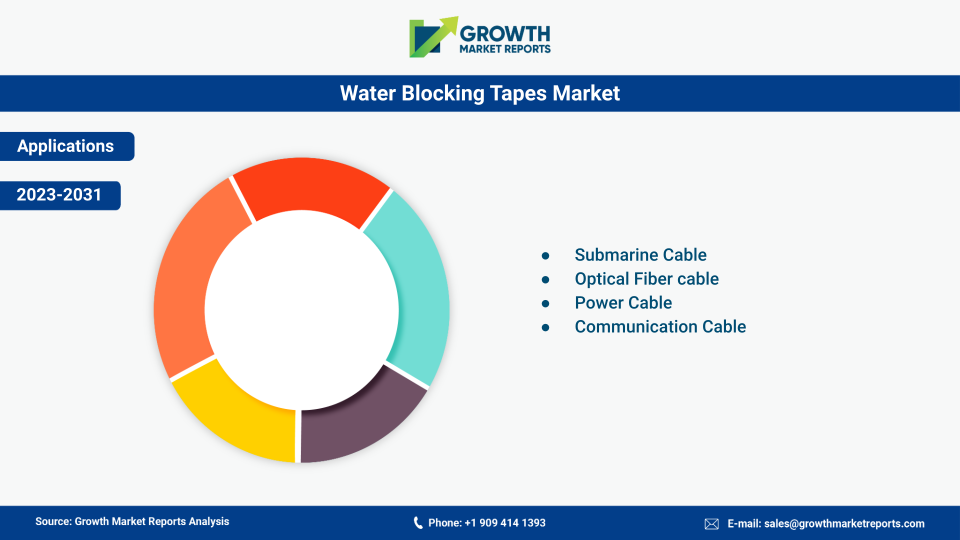
By application, the water blocking tapes market is categorized into power cables, communication cables, submarine cables, and others. Power cables represent a substantial share of the market, driven by the ongoing expansion and modernization of electrical grids worldwide. Water blocking tapes play a critical role in protecting power cables from moisture ingress, which can lead to insulation breakdown and electrical faults. The increasing deployment of underground and submarine power transmission lines, particularly in renewable energy projects, has further amplified the demand for high-performance water blocking tapes in this segment.
Communication cables are another major application area, accounting for a significant portion of market revenue. The exponential growth of broadband networks, the rollout of 5G infrastructure, and the rising demand for high-speed internet connectivity have necessitated the use of advanced cable protection solutions. Water blocking tapes are essential for ensuring the reliability and longevity of communication cables, especially in environments prone to water exposure. The trend toward fiber optic networks, which are more sensitive to moisture, has further bolstered the adoption of water blocking tapes in this segment.
Submarine cables, which are used for transcontinental data transmission and offshore energy projects, require the highest level of protection against water ingress. Water blocking tapes used in submarine cables are engineered to withstand extreme pressures and prolonged exposure to seawater. These tapes are often made from premium materials such as aramid or specialized non-woven fabrics, offering superior swelling and sealing properties. The growing investment in submarine cable projects, driven by the need for global connectivity and offshore wind energy, is expected to drive robust growth in this application segment.
Other applications of water blocking tapes include specialty cables used in industrial automation, automotive wiring, and building infrastructure. As industries continue to digitize and automate their operations, the need for reliable cable protection solutions is becoming increasingly important. Water blocking tapes are being integrated into a broader range of cable types, supporting the diverse and evolving requirements of modern infrastructure and industrial systems.
The water blocking tapes market serves a variety of end-use industries, including telecommunications, energy & utilities, construction, automotive, and others. The telecommunications sector is the largest consumer, accounting for over 35% of global market demand in 2024. This dominance is attributed to the relentless expansion of global communication networks, the adoption of advanced broadband technologies, and the increasing complexity of cable installations. Water blocking tapes are indispensable in ensuring the performance and reliability of telecommunication cables, particularly in regions with high humidity or frequent rainfall.
The energy and utilities segment is another major end-user, driven by the need to protect power transmission and distribution cables from water-induced failures. The shift toward renewable energy sources, such as wind and solar, has led to the deployment of extensive underground and submarine cable networks, where water blocking tapes play a vital role. Utilities are increasingly investing in advanced cable protection solutions to minimize downtime, reduce maintenance costs, and enhance the resilience of their infrastructure against environmental challenges.
In the construction industry, water blocking tapes are used to safeguard electrical wiring and communication cables in commercial, residential, and industrial buildings. As construction practices evolve to incorporate smart technologies and energy-efficient systems, the demand for reliable cable protection has intensified. Water blocking tapes help prevent moisture-related issues that can compromise electrical safety and building performance, making them a critical component in modern construction projects.
The automotive industry, while a smaller segment, is witnessing growing adoption of water blocking tapes, particularly in electric vehicles (EVs) and connected car technologies. As vehicles become more reliant on sophisticated wiring and electronic systems, the need to protect these components from water ingress has become increasingly important. Water blocking tapes are being integrated into automotive wiring harnesses to ensure the durability and reliability of electrical systems, supporting the broader trend toward vehicle electrification and connectivity.
The water blocking tapes market presents significant opportunities for growth, particularly in emerging economies where infrastructure development is accelerating. Rapid urbanization, increasing investments in telecommunications and energy projects, and the expansion of industrial automation are creating a fertile ground for market expansion. Manufacturers can capitalize on these trends by offering innovative, high-performance water blocking tapes tailored to the specific needs of different regions and industries. The growing emphasis on sustainability and the use of eco-friendly materials also presents an opportunity for companies to differentiate themselves and capture a larger share of the market by aligning with global environmental standards and customer preferences.
Another major opportunity lies in technological innovation and product differentiation. Advances in material science, such as the development of nanocomposite tapes and bio-based polymers, are enabling the creation of water blocking tapes with enhanced performance characteristics. Companies that invest in research and development to create tapes with faster swelling, higher tensile strength, and improved resistance to extreme temperatures and chemicals will be well-positioned to meet the evolving demands of end users. Strategic partnerships with cable manufacturers and infrastructure developers can also help companies expand their market reach and establish long-term supply agreements, further strengthening their competitive position.
Despite these opportunities, the water blocking tapes market faces certain restraints that could impede growth. One of the primary challenges is the volatility in raw material prices, particularly for specialty fibers and polymers used in high-performance tapes. Fluctuations in the cost of raw materials can impact profit margins and create uncertainty for manufacturers. Additionally, the market is characterized by intense competition, with numerous players vying for market share through price-based strategies. This competitive pressure can lead to margin erosion and limit the ability of companies to invest in innovation and capacity expansion. Regulatory compliance and the need to meet stringent industry standards also pose challenges, particularly for new entrants and smaller players.
The Asia Pacific region leads the global water blocking tapes market, accounting for approximately 41% of the total market value in 2024, or about USD 230.1 million. This dominance is driven by rapid industrialization, large-scale infrastructure development, and significant investments in telecommunications and energy projects across key countries like China, India, Japan, and South Korea. The region's robust construction sector, coupled with government initiatives to expand high-speed internet access and modernize power grids, continues to fuel demand for advanced cable protection solutions. The Asia Pacific market is expected to exhibit the highest CAGR of 6.3% through 2033, outpacing other regions as urbanization and digital transformation accelerate.
North America holds a substantial share of the market, with a value of USD 134.7 million in 2024, representing about 24% of the global market. The region benefits from ongoing investments in upgrading legacy cable networks, the proliferation of data centers, and the expansion of renewable energy infrastructure. The United States and Canada are at the forefront of technological innovation, driving the adoption of high-performance water blocking tapes in both the telecommunications and energy sectors. Stringent regulatory standards regarding cable safety and reliability further support market growth, as industry players prioritize compliance and the use of advanced materials.
Europe follows closely, with a market size of USD 117.9 million in 2024, or 21% of the global total. The region's focus on sustainable infrastructure, energy transition, and digital connectivity has led to increased demand for water blocking tapes, particularly in submarine and underground cable projects. Countries such as Germany, France, and the United Kingdom are leading adopters, leveraging advanced tape technologies to support their ambitious climate and connectivity goals. Meanwhile, Latin America and the Middle East & Africa collectively account for the remaining 14% of the global market, with growth driven by gradual upgrades to cable infrastructure and rising investments in energy and telecommunications.
The water blocking tapes market is characterized by a highly competitive landscape, with a mix of global giants and regional players vying for market share. The market’s dynamic nature has fostered continuous innovation, as companies seek to differentiate themselves through product development, material advancements, and value-added services. Leading manufacturers are heavily investing in research and development to create next-generation tapes that offer superior water resistance, mechanical strength, and environmental sustainability. Strategic collaborations with cable manufacturers and infrastructure developers are also common, enabling companies to secure long-term contracts and expand their footprint in high-growth regions.
Mergers and acquisitions have become a prominent strategy among major players, aimed at expanding product portfolios, gaining access to new markets, and leveraging synergies in manufacturing and distribution. The focus on sustainability and compliance with international standards is another key trend, with companies increasingly adopting eco-friendly materials and processes to align with regulatory requirements and customer expectations. Digitalization of supply chains and the use of advanced analytics for demand forecasting and inventory management are further enhancing the competitive edge of market leaders, allowing them to respond swiftly to changing market dynamics.
Price competition remains intense, particularly in the lower and mid-tier segments of the market, where commoditization of basic water blocking tapes has led to margin pressures. However, in the premium segment, differentiated by advanced materials and performance features, companies are able to command higher prices and maintain healthier margins. The ability to offer customized solutions tailored to specific industry needs, such as high-speed swelling tapes for submarine cables or lightweight variants for automotive applications, is increasingly seen as a key differentiator in the market.
Some of the major players in the global water blocking tapes market include Scapa Group plc, 3M Company, Tesa SE, Saint-Gobain, PPG Industries, Inc., and Furukawa Electric Co., Ltd. Scapa Group plc is renowned for its broad portfolio of cable protection tapes, with a strong emphasis on innovation and customer-centric solutions. 3M Company leverages its vast expertise in material science to offer high-performance tapes tailored to the needs of the telecommunications and energy sectors. Tesa SE and Saint-Gobain are recognized for their commitment to sustainability and the development of eco-friendly tape solutions. PPG Industries, Inc. and Furukawa Electric Co., Ltd. are notable for their focus on advanced materials and strategic partnerships with leading cable manufacturers.
These companies continue to shape the competitive landscape through a combination of technological leadership, global reach, and a deep understanding of customer requirements. Their ongoing investments in research and development, coupled with a focus on operational excellence and sustainability, position them well to capitalize on the growth opportunities within the water blocking tapes market. As the market evolves, the ability to anticipate industry trends, respond to regulatory changes, and deliver innovative, high-value solutions will remain critical to long-term success.
The Water Blocking Tapes market has been segmented on the basis of
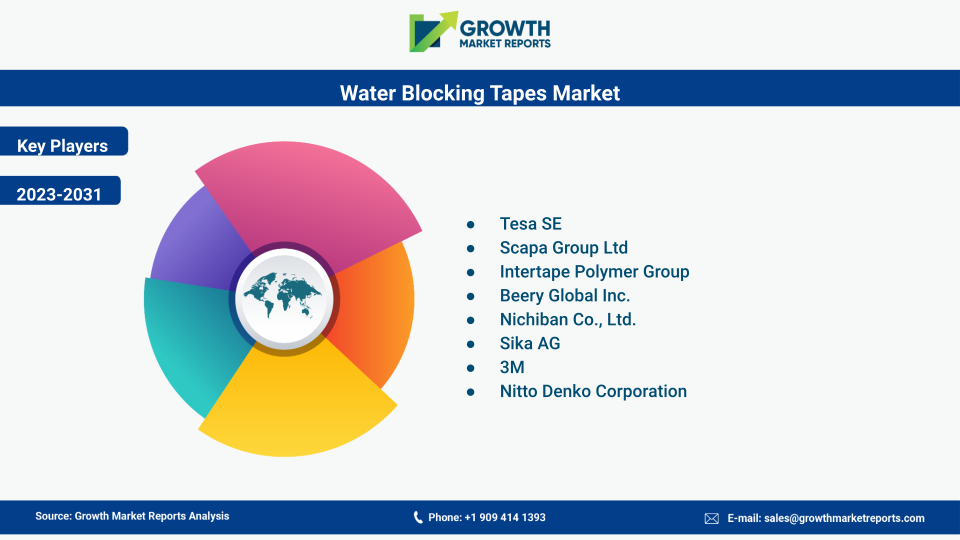
Key players competing in the global water blocking tapes market are Tesa SE; Scapa Group Ltd; Intertape Polymer Group; Beery Global Inc.; Nichiban Co., Ltd.; Sika AG; 3M; and Nitto Denko Corporation.
These firms are employing a variety of inorganic and organic techniques to get a foothold in the water blocking tapes sector. The research offers a comprehensive competitive analysis of these top competitors in the water blocking tapes market, including company biographies, recent developments, and important market strategies.

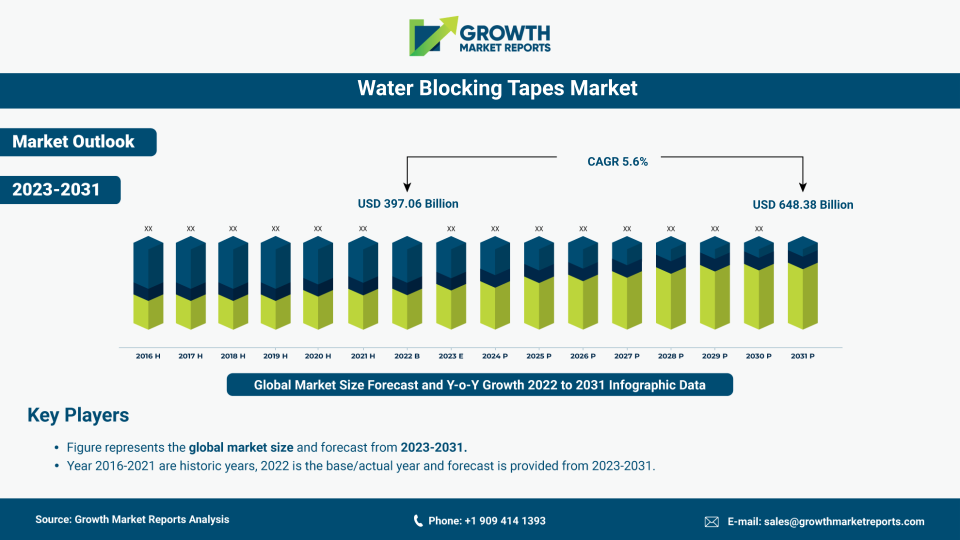
The global water blocking tapes market size was valued at USD 397.06 million in 2022.
Rising demand for latency free telecommunication devices is expected to drive the market.
The global water blocking tapes market is expanding at a CAGR of 5.6% during the forecast period, 2023–2031.
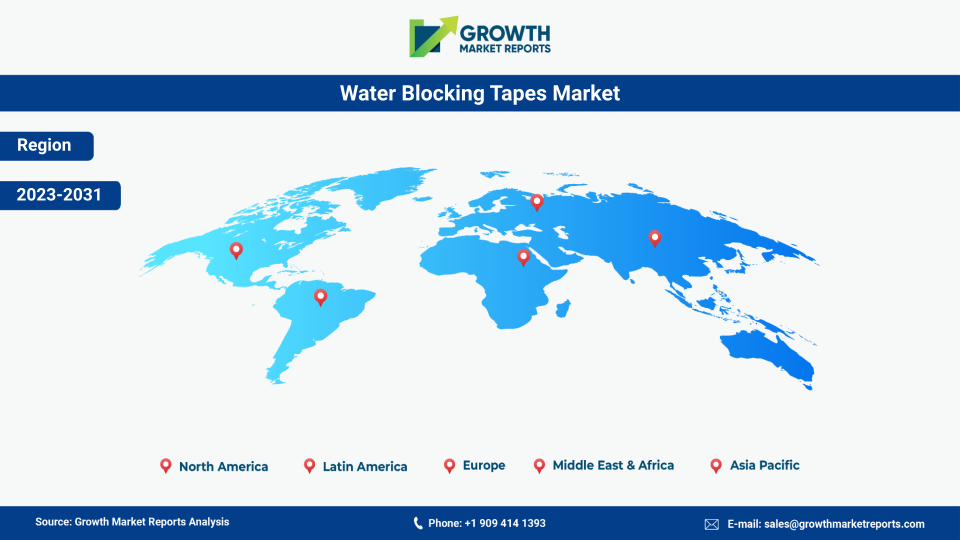
Asia Pacific is expected to constitute a key share of the market during the forecast period.
Key players competing in the global water blocking tapes market are Tesa SE; Scapa Group Ltd; Intertape Polymer Group; Beery Global Inc.; Nichiban Co., Ltd.; Sika AG; 3M; and Nitto Denko Corporation.