Segments - by Technology (Membrane Separation, Biological, Chemical, Sludge Treatment, Disinfection, Others), by Application (Municipal, Industrial, Residential, Commercial), by End-User (Oil & Gas, Power Generation, Chemicals, Food & Beverage, Pharmaceuticals, Others)
According to our latest research, the global Water and Wastewater Treatment (WWT) Technology market size reached USD 75.3 billion in 2024, demonstrating robust expansion, and is expected to grow at a CAGR of 6.8% from 2025 to 2033. By 2033, the market is forecasted to attain a value of USD 137.2 billion, driven by escalating water scarcity, tightening environmental regulations, and increasing industrial demand for sustainable water management solutions. The rising necessity for advanced WWT technologies is being propelled by urbanization, population growth, and the need for efficient resource management across municipal, industrial, residential, and commercial sectors.
A primary growth factor in the Water and Wastewater Treatment (WWT) Technology market is the intensification of global water scarcity, which is compelling governments and industries to invest in innovative treatment solutions. As freshwater resources become increasingly limited due to climate change, pollution, and over-extraction, the adoption of advanced WWT technologies such as membrane separation, biological treatments, and chemical processes is accelerating. These technologies not only ensure the availability of potable water but also facilitate the reuse and recycling of treated wastewater, thereby enhancing water sustainability. The growing awareness among stakeholders regarding the importance of water conservation and the implementation of stringent discharge standards are further catalyzing market growth.
Another significant driver is the rapid pace of urbanization and industrialization, particularly in emerging economies. Expanding urban populations and the proliferation of manufacturing facilities are placing unprecedented pressure on existing water infrastructure. This has led to a surge in demand for scalable and efficient WWT technologies capable of addressing both municipal and industrial wastewater challenges. Industries such as oil & gas, power generation, chemicals, food & beverage, and pharmaceuticals are increasingly adopting advanced treatment systems to comply with environmental regulations, minimize operational risks, and achieve sustainability targets. The integration of digital technologies and automation in WWT processes is also enhancing operational efficiency and enabling real-time monitoring, further supporting industry growth.
The evolving regulatory landscape is playing a pivotal role in shaping the Water and Wastewater Treatment Technology market. Governments across the globe are enforcing stricter effluent discharge norms and promoting the adoption of resource-efficient technologies through incentives and subsidies. This regulatory push is particularly pronounced in regions facing acute water stress, where authorities are prioritizing investments in water infrastructure and encouraging public-private partnerships. In addition, the increasing focus on circular economy principles and zero-liquid discharge (ZLD) initiatives is driving the deployment of advanced treatment solutions capable of maximizing water recovery and minimizing environmental impact. The convergence of regulatory, economic, and environmental imperatives is thus creating a fertile ground for technological innovation and market expansion.
Wastewater Treatment is a critical component in the broader water management strategy, addressing the challenges posed by urbanization and industrialization. As cities expand and industries grow, the volume of wastewater generated increases, necessitating efficient treatment solutions to prevent environmental degradation. Modern wastewater treatment processes not only focus on removing contaminants but also on recovering valuable resources such as energy and nutrients. This dual approach supports the principles of a circular economy, where waste is minimized, and resources are reused. The integration of advanced technologies in wastewater treatment is essential for achieving sustainability goals and ensuring the availability of clean water for future generations.
Regionally, the Asia Pacific market is emerging as a dominant force in the global Water and Wastewater Treatment Technology landscape, accounting for a significant share of total market revenues in 2024. This growth is underpinned by rapid industrialization, urban expansion, and substantial investments in water infrastructure across countries such as China, India, and Southeast Asian nations. North America and Europe continue to witness steady demand for advanced WWT solutions, driven by mature industrial sectors and stringent regulatory frameworks. Meanwhile, the Middle East & Africa and Latin America are experiencing rising adoption of WWT technologies, spurred by increasing awareness of water scarcity issues and the need to upgrade aging infrastructure. The regional outlook for the market remains highly positive, with Asia Pacific expected to maintain its leadership position through 2033, supported by robust economic growth and proactive policy measures.
The Water and Wastewater Treatment (WWT) Technology market is characterized by a diverse array of technological solutions, each tailored to specific treatment requirements and end-user needs. Among the most prominent technologies are membrane separation, biological treatment, chemical treatment, sludge treatment, and disinfection. Membrane separation technologies, including reverse osmosis, ultrafiltration, and nanofiltration, have gained significant traction due to their high efficiency in removing contaminants and enabling water reuse. These systems are widely adopted in both municipal and industrial applications, offering advantages such as compact design, scalability, and minimal chemical usage. The ongoing advancements in membrane materials and module configurations are further enhancing performance and reducing operational costs, making membrane-based solutions increasingly attractive.
Biological treatment technologies, such as activated sludge processes, trickling filters, and biofilm reactors, remain foundational in the WWT sector. These methods leverage microbial activity to degrade organic matter and nutrients, making them especially suitable for municipal wastewater treatment and industries with high organic loads. The integration of advanced biological processes, including Moving Bed Biofilm Reactor (MBBR) and Membrane Bioreactor (MBR) systems, is driving improvements in treatment efficiency and effluent quality. These innovations are also facilitating the reduction of sludge production and energy consumption, aligning with the growing emphasis on sustainable and cost-effective operations.
Chemical treatment solutions, encompassing coagulation, flocculation, precipitation, and oxidation, are essential for the removal of suspended solids, heavy metals, and other persistent pollutants. These technologies are often deployed as pre-treatment or post-treatment steps to complement biological and membrane processes. Recent developments in green chemistry and the use of environmentally benign reagents are addressing concerns related to chemical residues and secondary pollution. The adoption of advanced oxidation processes (AOPs) is also expanding, offering superior efficacy in degrading complex organic compounds and emerging contaminants, such as pharmaceuticals and microplastics.
Sludge treatment and disinfection technologies play a critical role in ensuring the safe disposal and reuse of treated water and residuals. Sludge treatment processes, including thickening, dewatering, digestion, and thermal drying, are being optimized to reduce waste volumes and recover valuable resources, such as biogas and nutrients. Disinfection technologies, such as chlorination, ultraviolet (UV) irradiation, and ozonation, are vital for eliminating pathogens and ensuring compliance with public health standards. The increasing adoption of advanced disinfection methods, particularly UV and ozone-based systems, is driven by their effectiveness, minimal byproduct formation, and compatibility with modern treatment plants. Collectively, the technological landscape of the WWT market is evolving towards greater efficiency, sustainability, and adaptability to diverse water quality challenges.
| Attributes | Details |
| Report Title | Water and Wastewater Treatment (WWT) Technology Market Research Report 2033 |
| By Technology | Membrane Separation, Biological, Chemical, Sludge Treatment, Disinfection, Others |
| By Application | Municipal, Industrial, Residential, Commercial |
| By End-User | Oil & Gas, Power Generation, Chemicals, Food & Beverage, Pharmaceuticals, Others |
| Regions Covered | North America, Europe, APAC, Latin America, MEA |
| Base Year | 2024 |
| Historic Data | 2018-2023 |
| Forecast Period | 2025-2033 |
| Number of Pages | 261 |
| Number of Tables & Figures | 352 |
| Customization Available | Yes, the report can be customized as per your need. |
The application landscape of the Water and Wastewater Treatment Technology market is segmented into municipal, industrial, residential, and commercial sectors, each exhibiting distinct growth dynamics and technological requirements. The municipal segment represents the largest application area, driven by the imperative to provide safe and reliable water services to growing urban populations. Municipalities are investing heavily in upgrading existing water infrastructure and deploying advanced treatment technologies to meet stringent regulatory standards and address emerging contaminants. The integration of smart water management systems and data analytics is enhancing operational efficiency, leak detection, and asset management, thereby optimizing resource allocation and reducing operational costs.
Industrial applications constitute a rapidly expanding segment, fueled by the need for process water, compliance with environmental regulations, and the pursuit of sustainability objectives. Key industries such as oil & gas, power generation, chemicals, food & beverage, and pharmaceuticals are increasingly adopting customized WWT solutions to manage complex effluent streams and minimize environmental impact. The deployment of zero-liquid discharge (ZLD) systems, water recycling, and resource recovery technologies is gaining momentum, enabling industries to reduce freshwater consumption, lower treatment costs, and enhance corporate social responsibility profiles. The convergence of industrial digitalization and WWT technologies is further enabling predictive maintenance, real-time monitoring, and process optimization.
The residential sector is witnessing growing demand for decentralized and compact WWT systems, particularly in regions with limited access to centralized infrastructure. The proliferation of small-scale treatment units, greywater recycling systems, and point-of-use purification technologies is addressing the needs of individual households, residential complexes, and rural communities. The increasing awareness of waterborne diseases, coupled with rising disposable incomes, is driving the adoption of advanced residential water treatment solutions. Manufacturers are focusing on developing user-friendly, energy-efficient, and low-maintenance products to cater to this segmentÂ’s unique requirements.
Commercial applications, encompassing hotels, hospitals, office buildings, and shopping centers, are also emerging as significant contributors to market growth. The need to maintain high water quality standards, ensure regulatory compliance, and achieve sustainability certifications is prompting commercial establishments to invest in advanced WWT technologies. The adoption of modular and scalable treatment systems is enabling flexibility and cost-effectiveness, while the integration of water reuse and rainwater harvesting solutions is supporting broader sustainability goals. The commercial segmentÂ’s growth is further supported by increasing urbanization, the expansion of service industries, and the implementation of green building standards.
The end-user landscape for Water and Wastewater Treatment Technology is highly diverse, reflecting the wide-ranging needs and challenges faced by different sectors. The oil & gas industry is a major end-user, driven by the need to manage large volumes of produced water, comply with strict environmental standards, and minimize operational risks. Advanced WWT technologies are being deployed to treat complex effluents containing hydrocarbons, heavy metals, and other hazardous substances. The adoption of mobile and modular treatment units is enabling flexibility and cost savings, particularly in remote and offshore locations. The industryÂ’s focus on water reuse, resource recovery, and environmental stewardship is further propelling investments in innovative treatment solutions.
Power generation is another key end-user segment, with thermal and nuclear power plants requiring substantial quantities of high-quality water for cooling and steam generation. The need to treat and recycle process water, manage blowdown and cooling tower effluents, and comply with water discharge regulations is driving the adoption of advanced WWT technologies. The integration of zero-liquid discharge (ZLD) systems and closed-loop water management strategies is enabling power plants to minimize water consumption, reduce environmental impact, and enhance operational resilience. The growing emphasis on renewable energy and decarbonization is also influencing water management practices in this sector.
The chemicals industry is characterized by complex wastewater streams containing a wide range of organic and inorganic contaminants. The need to ensure compliance with stringent discharge standards, recover valuable byproducts, and minimize waste generation is driving the deployment of advanced chemical, biological, and membrane-based treatment solutions. The integration of process automation, real-time monitoring, and predictive analytics is enabling chemical manufacturers to optimize treatment performance, reduce costs, and enhance environmental compliance. The increasing adoption of sustainable chemistry and circular economy principles is further shaping water management practices in the chemicals sector.
Food & beverage and pharmaceuticals are also prominent end-users, with both industries facing unique water quality and safety requirements. The need to ensure product quality, comply with food safety and pharmaceutical regulations, and achieve water efficiency targets is driving investments in state-of-the-art WWT technologies. The adoption of water recycling, reuse, and resource recovery solutions is enabling these industries to reduce operational costs, enhance sustainability, and mitigate supply chain risks. The focus on hygiene, contamination control, and traceability is further supporting the deployment of advanced treatment systems tailored to the specific needs of food & beverage and pharmaceutical manufacturers.
Other end-users, including textiles, mining, pulp & paper, and electronics, are also contributing to market growth, each with their own set of challenges and requirements. The need to address sector-specific contaminants, manage variable effluent loads, and comply with evolving regulatory standards is driving the adoption of customized WWT solutions across these industries. The increasing focus on water stewardship, resource efficiency, and corporate social responsibility is further encouraging end-users to invest in advanced treatment technologies and sustainable water management practices.
The Water and Wastewater Treatment Technology market presents a multitude of opportunities for growth and innovation, particularly in the context of rising global water stress and the increasing adoption of circular economy principles. The ongoing digital transformation of the water sector, characterized by the integration of IoT, artificial intelligence, and big data analytics, is enabling real-time monitoring, predictive maintenance, and process optimization. These advancements are enhancing operational efficiency, reducing downtime, and enabling data-driven decision-making, thereby creating significant value for utilities and industrial users. The growing emphasis on water reuse, resource recovery, and energy-efficient treatment processes is opening new avenues for technology providers, particularly in regions facing acute water scarcity and regulatory pressures.
Another major opportunity lies in the expansion of decentralized and modular WWT solutions, which are particularly well-suited to rural, remote, and rapidly urbanizing areas. The development of compact, low-cost, and easy-to-maintain treatment systems is enabling broader access to safe water and sanitation services, supporting public health and economic development objectives. The increasing focus on sustainable infrastructure, green building standards, and climate resilience is further driving demand for innovative WWT technologies. Public-private partnerships, international funding initiatives, and government incentives are also playing a critical role in accelerating market adoption, particularly in emerging economies.
Despite these opportunities, the market faces several restraining factors, including high capital and operational costs associated with advanced treatment technologies. The complexity of integrating new systems with existing infrastructure, the need for skilled personnel, and concerns related to technology reliability and scalability can pose challenges for end-users. Additionally, regulatory uncertainties, variations in water quality standards, and limited access to financing in certain regions may hinder market growth. Addressing these challenges will require ongoing innovation, capacity building, and collaboration among stakeholders across the value chain.
The regional distribution of the Water and Wastewater Treatment Technology market reflects varying levels of infrastructure development, regulatory stringency, and water scarcity challenges. In 2024, Asia Pacific emerged as the largest regional market, accounting for approximately USD 28.7 billion of global revenues. This dominance is underpinned by rapid industrialization, urbanization, and significant government investments in water infrastructure across China, India, Japan, and Southeast Asian countries. The region is expected to maintain a high CAGR of 7.5% through 2033, supported by proactive policy measures, rising environmental awareness, and the adoption of advanced treatment technologies.
North America follows closely, with a market size of USD 18.2 billion in 2024, driven by mature industrial sectors, stringent regulatory frameworks, and a strong focus on sustainability and water reuse. The United States and Canada are leading adopters of innovative WWT solutions, with significant investments in upgrading aging infrastructure and integrating digital technologies for enhanced operational efficiency. The region is also witnessing increased adoption of decentralized and modular treatment systems, particularly in response to climate-related challenges and the need for resilient water management solutions.
Europe represents another significant market, with revenues reaching USD 15.9 billion in 2024. The region benefits from a well-established regulatory framework, high levels of public investment, and a strong emphasis on circular economy principles. Countries such as Germany, France, and the United Kingdom are at the forefront of adopting advanced WWT technologies, driven by ambitious sustainability targets and the need to address emerging contaminants. The Middle East & Africa and Latin America, with market sizes of USD 7.0 billion and USD 5.5 billion respectively in 2024, are experiencing growing demand for WWT solutions, spurred by increasing water scarcity, infrastructure development, and regulatory reforms. While these regions currently represent smaller shares of the global market, they offer significant long-term growth potential, particularly as governments and industries prioritize investments in water and wastewater management.
The competitive landscape of the Water and Wastewater Treatment Technology market is characterized by the presence of both global giants and specialized regional players, each vying to capture market share through technological innovation, strategic partnerships, and comprehensive service offerings. Leading companies are investing heavily in research and development to introduce next-generation treatment solutions that address emerging contaminants, enhance energy efficiency, and support water reuse and resource recovery. The integration of digital technologies, such as IoT-enabled sensors, advanced analytics, and automation platforms, is enabling market leaders to differentiate their offerings and deliver greater value to customers across municipal, industrial, residential, and commercial segments.
Mergers, acquisitions, and strategic alliances are common strategies employed by major players to expand their geographic footprint, access new customer segments, and strengthen their technology portfolios. Companies are increasingly focusing on providing end-to-end solutions, encompassing design, engineering, installation, operation, and maintenance services. This holistic approach is enabling them to build long-term relationships with clients and secure recurring revenue streams. The emphasis on sustainability, regulatory compliance, and customer-centric innovation is further shaping competitive dynamics, with companies striving to align their offerings with evolving market needs and societal expectations.
Regional and local players are also making significant contributions to market growth, particularly in emerging economies where they possess deep market knowledge, established distribution networks, and the ability to deliver customized solutions. These companies are often at the forefront of developing low-cost, decentralized, and modular treatment systems tailored to the specific challenges of rural and peri-urban areas. The competitive landscape is thus marked by a dynamic interplay between global scale and local expertise, with collaboration and knowledge sharing emerging as key drivers of innovation and market expansion.
Among the major companies operating in the Water and Wastewater Treatment Technology market are Veolia Environnement, Suez SA, Xylem Inc., Ecolab Inc., Pentair plc, Evoqua Water Technologies, Kurita Water Industries, and Aquatech International. Veolia and Suez, both headquartered in France, are renowned for their comprehensive portfolios spanning municipal, industrial, and commercial applications, as well as their global presence and leadership in sustainability initiatives. Xylem Inc. and Ecolab Inc., based in the United States, are recognized for their focus on digital water solutions, advanced analytics, and customer-centric innovation. Pentair and Evoqua Water Technologies offer a wide range of membrane, filtration, and disinfection technologies, catering to diverse end-user needs. Kurita Water Industries, a leading Japanese player, is known for its expertise in chemical and biological treatment solutions, while Aquatech International specializes in zero-liquid discharge, water recycling, and resource recovery technologies. These companies are continually advancing their product offerings, forging strategic partnerships, and expanding their global reach to capitalize on the growing demand for sustainable water and wastewater management solutions.
The Water and Wastewater Treatment (WWT) Technology market has been segmented on the basis of
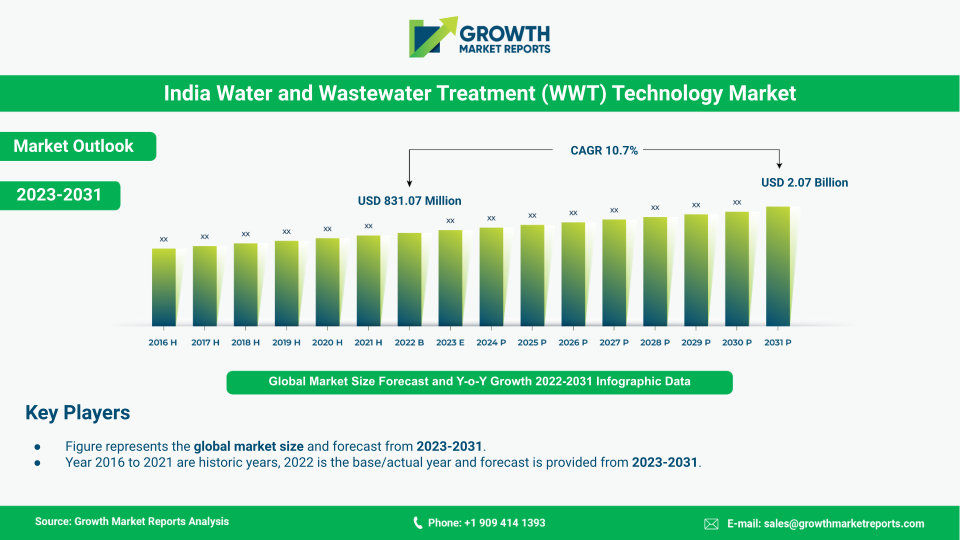
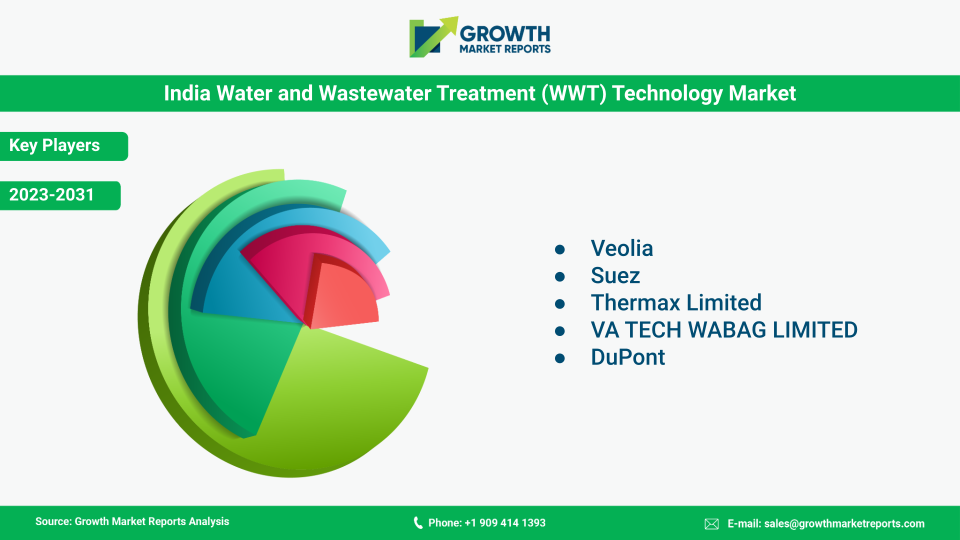
Some of the key market players competing in the India water and wastewater treatment technology market are Veolia; Suez; Thermax Limited; VA TECH WABAG LIMITED; DuPont.
These key players are constantly implementing several marketing strategies such as merger & acquisitions, capital investments, partnerships, and new product development to sustain industry position in the market. Suez signed an agreement with specialty chemical company LANXESS to purchase the reverse osmosis membrane portfolio.
Yes, the report offers customization options to meet specific client requirements.
Emerging trends include the adoption of advanced membrane and biological processes, zero-liquid discharge (ZLD) systems, resource recovery, decentralized and modular solutions, and the integration of green chemistry and circular economy principles.
Key players include Veolia Environnement, Suez SA, Xylem Inc., Ecolab Inc., Pentair plc, Evoqua Water Technologies, Kurita Water Industries, and Aquatech International, among others.
Challenges include high capital and operational costs, integration complexity with existing infrastructure, need for skilled personnel, regulatory uncertainties, and limited access to financing in some regions.
Digital transformation, including IoT, AI, and big data analytics, is enabling real-time monitoring, predictive maintenance, and process optimization, which enhances operational efficiency and supports data-driven decision-making for utilities and industries.
Major end-users include the oil & gas, power generation, chemicals, food & beverage, pharmaceuticals, textiles, mining, pulp & paper, and electronics industries, as well as municipal, residential, and commercial sectors.
Prominent technologies include membrane separation (reverse osmosis, ultrafiltration, nanofiltration), biological treatment (activated sludge, MBBR, MBR), chemical treatment (coagulation, flocculation, oxidation), sludge treatment, and disinfection (chlorination, UV, ozonation).
Asia Pacific is the dominant region, followed by North America and Europe. Asia Pacific's growth is driven by rapid industrialization, urban expansion, and significant investments in water infrastructure, especially in China, India, and Southeast Asia.
Key drivers include escalating water scarcity, tightening environmental regulations, increasing industrial demand for sustainable water management, rapid urbanization, and the need for efficient resource management across various sectors.
The global Water and Wastewater Treatment (WWT) Technology market reached USD 75.3 billion in 2024 and is expected to grow at a CAGR of 6.8% from 2025 to 2033, reaching USD 137.2 billion by 2033.