Wallpaper Market Research Report 2033

Wallpaper Market Research Report 2033

Segments - by Product Type (Vinyl Wallpaper, Non-woven Wallpaper, Paper-based Wallpaper, Fabric Wallpaper, Others), by Application (Residential, Commercial, Industrial), by Distribution Channel (Online Stores, Specialty Stores, Supermarkets/Hypermarkets, Others), by End-User (Households, Hospitality, Healthcare, Offices, Retail, Others)

https://growthmarketreports.com/Debadatta
Author : Debadatta Patel
https://growthmarketreports.com/Vaibhav
Fact-checked by : V. Chandola
https://growthmarketreports.com/Shruti
Editor : Shruti Bhat

Upcoming | Report ID :CG-3610 | 4.7 Rating | 48 Reviews | 285 Pages | Format : Docx PDF

Report Description


Wallpaper Market Outlook

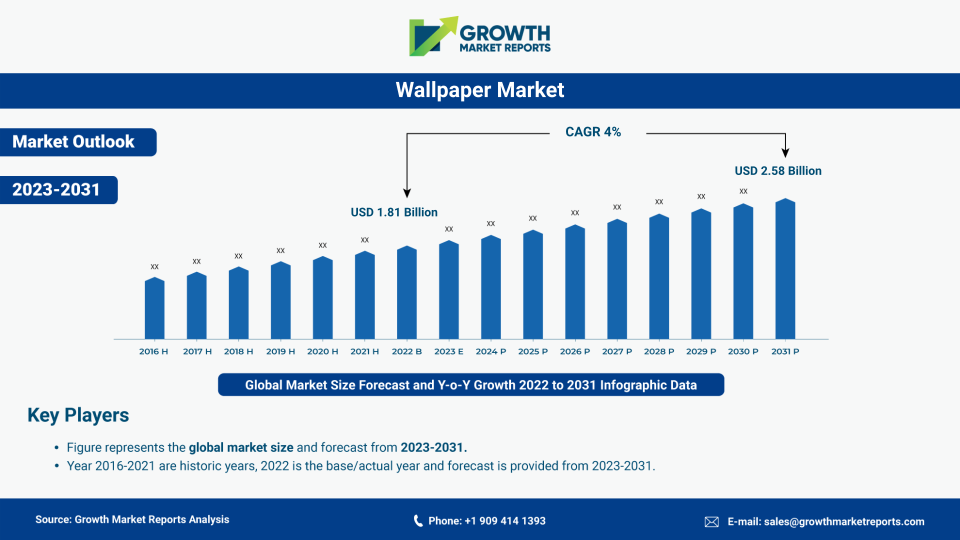
According to our latest research, the global wallpaper market size reached USD 12.4 billion in 2024, driven by robust demand across both residential and commercial sectors. The industry is projected to exhibit a CAGR of 4.8% from 2025 to 2033, with the market size forecasted to reach USD 18.9 billion by 2033. This growth is underpinned by evolving interior design trends, increasing urbanization, and the rising preference for aesthetic enhancement in living and workspaces. As per our analysis, the wallpaper market is poised for sustained expansion, supported by technological advancements in wallpaper materials and printing techniques, as well as growing consumer awareness regarding eco-friendly and customizable décor options.

One of the primary growth factors for the wallpaper market is the surge in urbanization and the consequent rise in residential and commercial construction activities. Rapid urban development, especially in emerging economies, has led to a significant increase in the construction of new homes, offices, hotels, and retail spaces. This has directly contributed to the heightened demand for wallpapers as an effective and attractive wall covering solution. Additionally, the shift towards smaller living spaces in urban areas has prompted consumers to seek innovative ways to personalize their interiors, making wallpapers a popular choice due to their versatility, ease of application, and wide array of designs. The ability to quickly transform spaces without extensive renovation work further enhances the appeal of wallpapers among urban dwellers and property developers alike.

Technological innovation is another critical driver propelling the wallpaper market forward. The introduction of advanced printing technologies, such as digital printing, has revolutionized the industry by enabling the production of high-resolution, customizable, and intricate designs. This has allowed manufacturers to cater to diverse consumer preferences, from minimalist patterns to elaborate murals. Moreover, the development of eco-friendly and sustainable wallpaper materials, including non-woven and recycled paper-based options, aligns with the growing global emphasis on environmental responsibility. These advancements not only expand the market reach but also attract environmentally conscious consumers, thereby fostering market growth. The integration of smart and functional wallpapers, such as those with antimicrobial or sound-absorbing properties, further enhances the value proposition for both residential and commercial end-users.

The increasing influence of interior design trends and the growing popularity of home improvement projects have also contributed significantly to the expansion of the wallpaper market. Social media platforms and home décor magazines have played a pivotal role in shaping consumer preferences, with more individuals seeking inspiration for unique and personalized interiors. The trend of do-it-yourself (DIY) home renovation has gained momentum, with wallpapers being favored for their ease of installation and ability to instantly refresh spaces. Additionally, collaborations between designers, artists, and wallpaper manufacturers have resulted in exclusive collections that cater to niche markets and high-end consumers. These factors, combined with the rising disposable incomes and changing lifestyles, are expected to sustain the upward trajectory of the wallpaper market in the coming years.

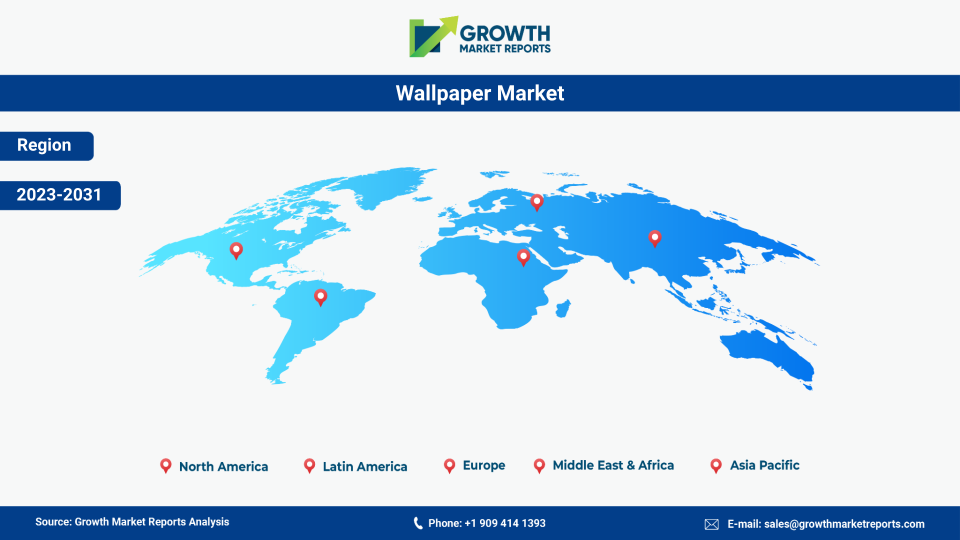
Regionally, the Asia Pacific market is emerging as a dominant force in the wallpaper industry, accounting for the largest share in 2024. This growth is fueled by rapid urbanization, increasing construction activities, and rising consumer spending on home décor in countries such as China, India, and Japan. North America and Europe also represent significant markets, driven by high standards of living, established interior design industries, and a strong focus on home improvement. The Middle East & Africa and Latin America are witnessing steady growth, supported by expanding real estate sectors and increasing awareness of modern interior design solutions. Each region presents unique opportunities and challenges, influenced by cultural preferences, economic conditions, and regulatory environments, making regional analysis essential for market players seeking to expand their global footprint.

Global Wallpaper Industry Outlook

Product Type Analysis

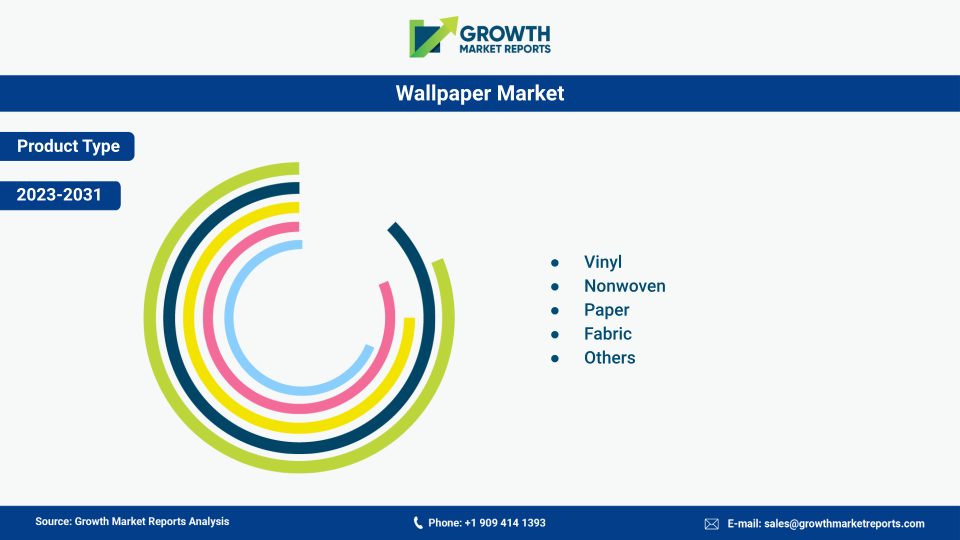
The wallpaper market is segmented by product type into vinyl wallpaper, non-woven wallpaper, paper-based wallpaper, fabric wallpaper, and others. Vinyl wallpaper continues to dominate the market, owing to its durability, water resistance, and ease of maintenance. This segment appeals particularly to commercial spaces such as hotels, restaurants, and offices, where high foot traffic necessitates robust wall coverings. The widespread adoption of vinyl wallpaper is also attributed to its versatile design options, ranging from simple textures to vibrant patterns, making it suitable for various interior styles. Furthermore, advancements in vinyl manufacturing have resulted in improved eco-friendliness and reduced emissions, addressing environmental concerns and broadening its consumer base.

Non-woven wallpaper is gaining significant traction, especially in the premium segment, due to its superior breathability, ease of application, and removal without damaging underlying walls. This product type is favored by homeowners who frequently update their interiors, as well as by the hospitality industry, which values quick turnaround times during renovations. Non-woven wallpapers are often manufactured using sustainable materials, aligning with the increasing consumer demand for eco-friendly products. The segment is also driven by innovations in printing technology, enabling the creation of bespoke designs and textures that cater to the evolving tastes of design-conscious consumers.

Paper-based wallpaper, once the most common type, still holds a considerable share of the market, particularly in price-sensitive regions and among consumers seeking traditional aesthetics. While paper-based wallpapers are less durable compared to their vinyl or non-woven counterparts, they are highly valued for their affordability and classic appeal. Manufacturers are focusing on enhancing the quality of paper-based wallpapers by incorporating protective coatings and using recycled materials, thereby extending their lifespan and environmental compatibility. The resurgence of vintage and retro design trends has also contributed to the renewed interest in paper-based wallpapers.

Fabric wallpaper, though representing a smaller share of the market, is experiencing steady growth, especially in luxury residential and hospitality projects. The tactile quality, sophisticated appearance, and acoustic benefits of fabric wallpapers make them a preferred choice for high-end applications. Innovations in stain-resistant and washable fabric wallpapers are expanding their suitability to a broader range of environments, including commercial spaces. The "others" category, encompassing specialty wallpapers such as metallic, cork, and natural fiber-based options, is also witnessing growth as consumers and designers seek unique and sustainable wall covering solutions. Overall, the product type segment is characterized by continuous innovation and diversification to meet the dynamic demands of the global market.

Report Scope

Attributes Details
Report Title Wallpaper Market Research Report 2033
By Product Type Vinyl Wallpaper, Non-woven Wallpaper, Paper-based Wallpaper, Fabric Wallpaper, Others
By Application Residential, Commercial, Industrial
By Distribution Channel Online Stores, Specialty Stores, Supermarkets/Hypermarkets, Others
By End-User Households, Hospitality, Healthcare, Offices, Retail, Others
Regions Covered North America, Europe, APAC, Latin America, MEA
Base Year 2024
Historic Data 2018-2023
Forecast Period 2025-2033
Number of Pages 285
Number of Tables & Figures 366
Customization Available Yes, the report can be customized as per your need.

Application Analysis

The application segment of the wallpaper market is broadly categorized into residential, commercial, and industrial uses. The residential segment remains the largest contributor to market revenue, driven by the growing emphasis on personalized and stylish home interiors. Homeowners increasingly view wallpapers as an affordable and impactful way to transform living spaces, bedrooms, and feature walls. The rise of DIY culture and the availability of peel-and-stick wallpaper options have further democratized access to wallpaper products, enabling consumers to undertake home improvement projects with ease. Seasonal and thematic wallpapers are also gaining popularity, allowing for quick updates in line with changing trends and occasions.

The commercial application segment is witnessing robust growth, supported by the expansion of the hospitality, retail, and office sectors. Businesses recognize the role of interior design in creating memorable customer experiences and reinforcing brand identity. Wallpapers are extensively used in hotels, restaurants, retail stores, and corporate offices to enhance ambiance, convey brand messaging, and differentiate spaces. The demand for durable, washable, and fire-retardant wallpapers is particularly strong in commercial settings where safety and maintenance are paramount. Customization is a key trend in this segment, with businesses opting for bespoke designs that reflect their corporate identity or thematic concepts.

The industrial application segment, while smaller in comparison, is gradually expanding as factories, warehouses, and other industrial facilities seek to improve their working environments. Wallpapers in industrial settings are primarily used for administrative offices, meeting rooms, and employee lounges, where aesthetics and comfort are increasingly valued. The adoption of functional wallpapers with properties such as antimicrobial, moisture resistance, and sound absorption is gaining traction, especially in industries where hygiene and noise control are critical. This segment also benefits from the growing trend of repurposing industrial spaces for creative and commercial uses, further driving the demand for innovative wall covering solutions.

Across all application segments, the trend towards sustainability and eco-friendliness is evident, with both residential and commercial buyers seeking wallpapers that are free from harmful chemicals and made from renewable resources. The integration of technology, such as wallpapers with embedded LEDs or smart functionalities, is emerging as a niche but promising area, particularly in commercial and high-end residential projects. Overall, the application segment reflects the diverse and evolving needs of end-users, with manufacturers responding through product innovation and customization.

Distribution Channel Analysis

The wallpaper market's distribution channels include online stores, specialty stores, supermarkets/hypermarkets, and others. Online stores have witnessed exponential growth in recent years, fueled by the proliferation of e-commerce platforms and changing consumer shopping behaviors. The convenience of browsing extensive product catalogs, accessing customer reviews, and comparing prices online has made this channel particularly attractive to tech-savvy and younger consumers. Online retailers often offer exclusive designs, virtual room visualization tools, and doorstep delivery, enhancing the overall buying experience. The COVID-19 pandemic further accelerated the shift towards online shopping, with many traditional retailers expanding their digital presence to capture a broader customer base.

Specialty stores remain a vital distribution channel, especially for consumers seeking expert advice, personalized service, and the ability to physically examine wallpaper samples. These stores often cater to high-end and niche markets, offering exclusive designer collections and customization options. Interior designers and architects frequently collaborate with specialty stores to source unique wallpaper solutions for their projects. The in-store experience, including consultations and installation services, adds significant value for customers who prioritize quality and professional support over price.

Supermarkets and hypermarkets play a crucial role in making wallpapers accessible to a wider audience, particularly in regions where DIY home improvement is prevalent. These retail outlets typically stock a range of affordable, ready-to-install wallpaper options, catering to budget-conscious consumers and first-time buyers. The presence of wallpapers alongside other home improvement products encourages impulse purchases and facilitates one-stop shopping. While this channel may not offer the same level of product diversity or expertise as specialty stores, it remains an important driver of market penetration, especially in suburban and rural areas.

The "others" category encompasses a variety of distribution channels, including home improvement centers, hardware stores, and direct sales through interior designers or contractors. These channels often serve specific market segments, such as bulk buyers or commercial clients, who require tailored solutions and volume discounts. Manufacturers are increasingly exploring omnichannel strategies, integrating online and offline channels to provide a seamless customer experience. This approach enables consumers to research products online and make purchases in-store, or vice versa, thereby maximizing convenience and satisfaction. The distribution channel segment is characterized by intense competition and continuous innovation in service delivery, with market players striving to differentiate themselves through value-added offerings.

End-User Analysis

The end-user segment of the wallpaper market includes households, hospitality, healthcare, offices, retail, and others. Households represent the largest end-user group, driven by the widespread adoption of wallpapers for home decoration and renovation projects. Consumers in this segment are increasingly seeking wallpapers that combine aesthetic appeal with functionality, such as moisture resistance for kitchens and bathrooms or sound absorption for bedrooms and living areas. The growing trend of open-plan living spaces has also spurred demand for feature walls and accent wallpapers that add visual interest and define different zones within the home.

The hospitality sector is a major consumer of wallpapers, utilizing them to create distinctive and memorable guest experiences in hotels, resorts, restaurants, and bars. Wallpapers are used to convey brand identity, enhance ambiance, and differentiate spaces within hospitality establishments. The demand for durable, easy-to-clean, and fire-retardant wallpapers is particularly high in this sector, given the need to comply with safety regulations and maintain high standards of hygiene. Custom-designed wallpapers that reflect local culture or thematic concepts are increasingly popular among luxury and boutique hotels seeking to offer unique and immersive environments for their guests.

In the healthcare sector, the adoption of wallpapers is driven by the need to create calming and welcoming environments for patients, visitors, and staff. Hospitals, clinics, and care facilities are increasingly using wallpapers with soothing colors, nature-inspired designs, and antimicrobial properties to enhance patient well-being and support infection control efforts. The integration of functional wallpapers that contribute to noise reduction and easy maintenance is also gaining traction in healthcare settings. This segment is expected to witness steady growth as healthcare providers prioritize patient experience and facility aesthetics.

The offices and retail segments are experiencing growing demand for wallpapers as businesses seek to create inspiring workspaces and attractive retail environments. In offices, wallpapers are used to reinforce corporate branding, promote employee well-being, and facilitate flexible space design. In retail settings, wallpapers play a key role in visual merchandising and store differentiation, helping brands to attract and engage customers. The "others" category includes educational institutions, government buildings, and public spaces, where wallpapers are used for both decorative and functional purposes. Overall, the end-user segment reflects the diverse applications and evolving requirements of different sectors, with manufacturers responding through targeted product development and customization.

Opportunities & Threats

The wallpaper market presents a plethora of opportunities for growth and innovation, particularly in the areas of product development and market expansion. The increasing demand for eco-friendly and sustainable wallpapers offers significant potential for manufacturers to differentiate themselves and capture environmentally conscious consumers. The advent of smart and functional wallpapers, such as those with integrated lighting, sound absorption, or antimicrobial properties, opens up new avenues for application in both residential and commercial settings. Additionally, the growing popularity of customizable and digitally printed wallpapers allows companies to cater to niche markets and individual preferences, thereby enhancing customer loyalty and market penetration. The expansion of e-commerce and omnichannel retail strategies further broadens the reach of wallpaper products, enabling manufacturers to tap into previously underserved markets and demographics.

Emerging markets, particularly in Asia Pacific and Latin America, offer substantial growth opportunities due to rapid urbanization, rising disposable incomes, and increasing awareness of modern interior design trends. Strategic partnerships with local distributors, interior designers, and real estate developers can facilitate market entry and expansion in these regions. The trend towards renovation and refurbishment of existing buildings, driven by changing consumer preferences and regulatory requirements, also creates opportunities for wallpaper manufacturers and service providers. Moreover, collaborations with artists, designers, and technology companies can lead to the development of exclusive collections and innovative products that set brands apart in a competitive marketplace. Overall, the wallpaper market is characterized by dynamic opportunities for growth, driven by evolving consumer needs and technological advancements.

Despite the favorable growth outlook, the wallpaper market faces certain restraining factors that could impede its expansion. One of the primary challenges is the competition from alternative wall covering solutions, such as paints, tiles, and panels, which may be perceived as more cost-effective or easier to maintain. The relatively high installation and removal costs associated with certain types of wallpapers can also deter price-sensitive consumers. Additionally, fluctuations in raw material prices, particularly for vinyl and other synthetic materials, can impact profit margins and price competitiveness. Environmental concerns related to the use of non-biodegradable materials and volatile organic compounds (VOCs) in some wallpapers may also pose challenges, necessitating continuous innovation in sustainable product development. Market players must navigate these threats by investing in research and development, enhancing product quality, and adopting effective marketing strategies to sustain growth and profitability.

Regional Outlook

The Asia Pacific region continues to dominate the global wallpaper market, accounting for approximately 38% of the total market size in 2024, which translates to around USD 4.7 billion. This dominance is attributed to rapid urbanization, robust construction activity, and rising disposable incomes in key countries such as China, India, and Japan. The region is also witnessing a growing preference for modern and customizable interior design solutions, driven by changing lifestyles and increasing exposure to global design trends. The proliferation of online retail platforms and the expanding presence of international wallpaper brands further contribute to market growth in Asia Pacific. With a projected CAGR of 5.6% from 2025 to 2033, the region is expected to maintain its leadership position and offer lucrative opportunities for market players.

North America represents the second-largest market, with a market size of USD 3.2 billion in 2024, accounting for about 26% of the global market. The region is characterized by high standards of living, a strong culture of home improvement, and a well-established interior design industry. The United States and Canada are the primary contributors to market growth, driven by increasing renovation activities, the popularity of DIY projects, and the presence of leading wallpaper manufacturers. The commercial sector, particularly hospitality and office spaces, is a significant driver of demand in North America. The market is expected to grow steadily over the forecast period, supported by ongoing innovation in product design and distribution strategies.

Europe holds a significant share of the wallpaper market, valued at USD 2.8 billion in 2024, or 23% of the global market size. The region is known for its rich design heritage and strong emphasis on sustainability, which has spurred demand for eco-friendly and premium wallpaper products. Countries such as Germany, the United Kingdom, and France are leading markets within Europe, driven by a combination of residential and commercial demand. The Middle East & Africa and Latin America, with market sizes of USD 1.1 billion and USD 0.6 billion respectively, are experiencing steady growth, fueled by expanding real estate sectors and increasing consumer awareness of modern interior design options. Each region presents unique opportunities and challenges, influenced by local preferences, economic conditions, and regulatory frameworks, making regional strategy a critical component of success in the global wallpaper market.

Wallpaper Market Statistics

Competitor Outlook

The global wallpaper market is characterized by a highly competitive landscape, with numerous international and regional players vying for market share. Competition is intense across all segments, driven by continuous innovation in product design, materials, and printing technologies. Leading companies invest heavily in research and development to introduce new collections, improve product performance, and address emerging consumer trends such as sustainability and customization. Branding, marketing, and distribution strategies play a crucial role in differentiating products and capturing consumer attention in a crowded marketplace. The ability to offer value-added services, such as design consultation, installation support, and after-sales service, is increasingly important for building customer loyalty and sustaining competitive advantage.

Mergers, acquisitions, and strategic partnerships are common strategies employed by market leaders to expand their product portfolios, enter new markets, and strengthen their supply chains. Collaborations with designers, artists, and technology providers enable companies to create exclusive and innovative wallpaper collections that appeal to niche markets and high-end consumers. The rise of e-commerce has also prompted manufacturers to invest in digital marketing and online sales channels, enhancing their reach and responsiveness to changing consumer preferences. Regional players often compete on price and local customization, leveraging their understanding of local tastes and distribution networks to gain a foothold in specific markets.

The competitive landscape is further shaped by the entry of new players, particularly in emerging markets, who bring fresh perspectives and innovative products to the market. These entrants often focus on eco-friendly and affordable wallpaper options, targeting price-sensitive and environmentally conscious consumers. Established players respond by enhancing their sustainability credentials, investing in green manufacturing processes, and obtaining certifications to meet regulatory requirements and consumer expectations. The ongoing evolution of interior design trends and the increasing demand for personalized and functional wallpapers create opportunities for both established and emerging companies to differentiate themselves and capture market share.

Some of the major companies operating in the global wallpaper market include York Wallcoverings, A.S. Création Tapeten AG, Brewster Home Fashions, Sangetsu Corporation, Grandeco Wallfashion Group, and Marburg Wallcoverings. York Wallcoverings is renowned for its extensive product range and collaborations with leading designers, offering both traditional and contemporary wallpaper collections. A.S. Création Tapeten AG, based in Germany, is a prominent European player known for its innovative designs and sustainable manufacturing practices. Brewster Home Fashions, headquartered in the United States, specializes in peel-and-stick and customizable wallpapers, catering to the growing DIY market. Sangetsu Corporation is a leading player in Asia, with a strong focus on premium and eco-friendly products. Grandeco Wallfashion Group and Marburg Wallcoverings are recognized for their high-quality materials and creative designs, serving both residential and commercial markets. These companies, along with numerous regional and niche players, continue to shape the competitive dynamics of the global wallpaper market through innovation, collaboration, and customer-centric strategies.

Key Players

  • A.S. Création Tapeten AG
  • York Wallcoverings, Inc.
  • F. Schumacher & Co.
  • Graham & Brown Ltd.
  • The Sherwin-Williams Company
  • Asian Paints Ltd.
  • Sangetsu Corporation
  • Grandeco Wallfashion Group
  • Walker Greenbank PLC
  • Marburg Wallcoverings
  • Rasch GmbH & Co. KG
  • Brewster Home Fashions
  • Johns Manville Corporation
  • Wallquest, Inc.
  • Arte International
  • Zambaiti Parati S.p.A.
  • Lilycolor Co., Ltd.
  • Texam Home
  • J.Josephson, Inc.
  • Tapetenfabrik Gebr. Rasch GmbH & Co. KG
Wallpaper Market Overview

Segments

The Wallpaper market has been segmented on the basis of

Product Type

  • Vinyl Wallpaper
  • Non-woven Wallpaper
  • Paper-based Wallpaper
  • Fabric Wallpaper
  • Others

Application

  • Residential
  • Commercial
  • Industrial

Distribution Channel

  • Online Stores
  • Specialty Stores
  • Supermarkets/Hypermarkets
  • Others

End-User

  • Households
  • Hospitality
  • Healthcare
  • Offices
  • Retail
  • Others

Competitive Landscape

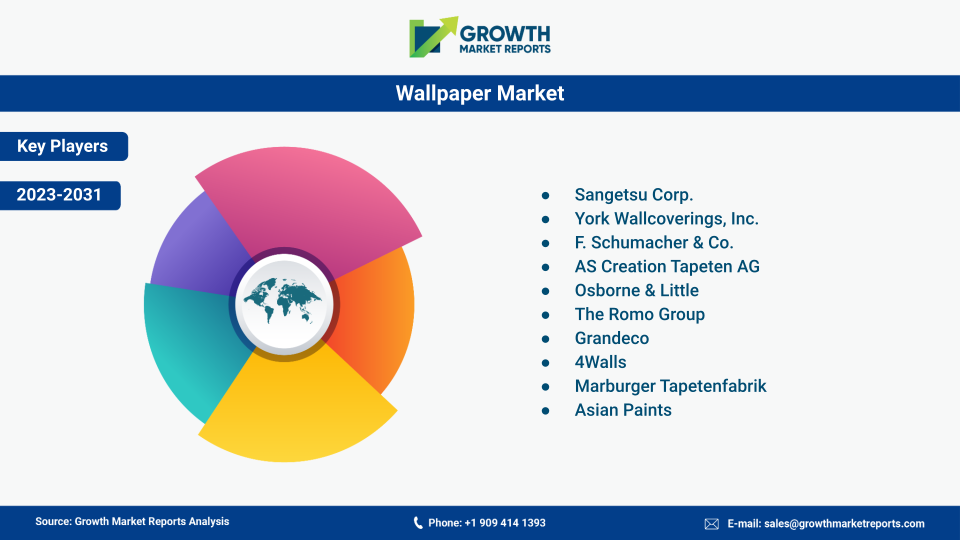
Key players in the global wallpaper market include Sangetsu Corp.; York Wallcoverings, Inc.; F. Schumacher & Co.; AS Creation Tapeten AG; Osborne & Little; The Romo Group; Grandeco; 4Walls; Marburger Tapetenfabrik; and Asian Paints. These players engage in mergers & acquisitions, collaborations, agreements, and partnerships to strengthen their geographical presence, and increase their market share.

Wallpaper Market Key Players

Frequently Asked Questions

Challenges include competition from alternative wall coverings like paint and tiles, high installation/removal costs for some types, raw material price fluctuations, and environmental concerns related to non-biodegradable materials.

Trends include digital printing for customizable designs, eco-friendly and sustainable materials, smart wallpapers with functional properties (e.g., antimicrobial, sound-absorbing), and collaborations with artists and designers.

Major companies include York Wallcoverings, A.S. Création Tapeten AG, Brewster Home Fashions, Sangetsu Corporation, Grandeco Wallfashion Group, and Marburg Wallcoverings.

Wallpaper is widely used in residential, commercial (hospitality, retail, offices), and industrial settings, with the residential segment being the largest contributor to market revenue.

Popular distribution channels include online stores, specialty stores, supermarkets/hypermarkets, and home improvement centers, with online sales growing rapidly due to e-commerce expansion.

Key drivers include urbanization, rising construction activities, evolving interior design trends, technological advancements in printing, and increased consumer preference for eco-friendly and customizable décor.

The main product types are vinyl wallpaper, non-woven wallpaper, paper-based wallpaper, fabric wallpaper, and specialty options like metallic or natural fiber-based wallpapers.

Asia Pacific dominates the wallpaper market, accounting for around 38% of the global share in 2024, followed by North America and Europe.

The wallpaper market is expected to grow at a CAGR of 4.8% from 2025 to 2033, reaching an estimated USD 18.9 billion by 2033.

As of 2024, the global wallpaper market size reached USD 12.4 billion, driven by demand in both residential and commercial sectors.

Table Of Content

Chapter 1 Executive Summary
Chapter 2 Assumptions and Acronyms Used
Chapter 3 Research Methodology
Chapter 4 Wallpaper Market Overview
   4.1 Introduction
      4.1.1 Market Taxonomy
      4.1.2 Market Definition
      4.1.3 Macro-Economic Factors Impacting the Market Growth
   4.2 Wallpaper Market Dynamics
      4.2.1 Market Drivers
      4.2.2 Market Restraints
      4.2.3 Market Opportunity
   4.3 Wallpaper Market - Supply Chain Analysis
      4.3.1 List of Key Suppliers
      4.3.2 List of Key Distributors
      4.3.3 List of Key Consumers
   4.4 Key Forces Shaping the Wallpaper Market
      4.4.1 Bargaining Power of Suppliers
      4.4.2 Bargaining Power of Buyers
      4.4.3 Threat of Substitution
      4.4.4 Threat of New Entrants
      4.4.5 Competitive Rivalry
   4.5 Global Wallpaper Market Size & Forecast, 2023-2032
      4.5.1 Wallpaper Market Size and Y-o-Y Growth
      4.5.2 Wallpaper Market Absolute $ Opportunity

Chapter 5 Global Wallpaper Market Analysis and Forecast By Product Type
   5.1 Introduction
      5.1.1 Key Market Trends & Growth Opportunities By Product Type
      5.1.2 Basis Point Share (BPS) Analysis By Product Type
      5.1.3 Absolute $ Opportunity Assessment By Product Type
   5.2 Wallpaper Market Size Forecast By Product Type
      5.2.1 Vinyl Wallpaper
      5.2.2 Non-woven Wallpaper
      5.2.3 Paper-based Wallpaper
      5.2.4 Fabric Wallpaper
      5.2.5 Others
   5.3 Market Attractiveness Analysis By Product Type

Chapter 6 Global Wallpaper Market Analysis and Forecast By Application
   6.1 Introduction
      6.1.1 Key Market Trends & Growth Opportunities By Application
      6.1.2 Basis Point Share (BPS) Analysis By Application
      6.1.3 Absolute $ Opportunity Assessment By Application
   6.2 Wallpaper Market Size Forecast By Application
      6.2.1 Residential
      6.2.2 Commercial
      6.2.3 Industrial
   6.3 Market Attractiveness Analysis By Application

Chapter 7 Global Wallpaper Market Analysis and Forecast By Distribution Channel
   7.1 Introduction
      7.1.1 Key Market Trends & Growth Opportunities By Distribution Channel
      7.1.2 Basis Point Share (BPS) Analysis By Distribution Channel
      7.1.3 Absolute $ Opportunity Assessment By Distribution Channel
   7.2 Wallpaper Market Size Forecast By Distribution Channel
      7.2.1 Online Stores
      7.2.2 Specialty Stores
      7.2.3 Supermarkets/Hypermarkets
      7.2.4 Others
   7.3 Market Attractiveness Analysis By Distribution Channel

Chapter 8 Global Wallpaper Market Analysis and Forecast By End-User
   8.1 Introduction
      8.1.1 Key Market Trends & Growth Opportunities By End-User
      8.1.2 Basis Point Share (BPS) Analysis By End-User
      8.1.3 Absolute $ Opportunity Assessment By End-User
   8.2 Wallpaper Market Size Forecast By End-User
      8.2.1 Households
      8.2.2 Hospitality
      8.2.3 Healthcare
      8.2.4 Offices
      8.2.5 Retail
      8.2.6 Others
   8.3 Market Attractiveness Analysis By End-User

Chapter 9 Global Wallpaper Market Analysis and Forecast by Region
   9.1 Introduction
      9.1.1 Key Market Trends & Growth Opportunities By Region
      9.1.2 Basis Point Share (BPS) Analysis By Region
      9.1.3 Absolute $ Opportunity Assessment By Region
   9.2 Wallpaper Market Size Forecast By Region
      9.2.1 North America
      9.2.2 Europe
      9.2.3 Asia Pacific
      9.2.4 Latin America
      9.2.5 Middle East & Africa (MEA)
   9.3 Market Attractiveness Analysis By Region

Chapter 10 Coronavirus Disease (COVID-19) Impact 
   10.1 Introduction 
   10.2 Current & Future Impact Analysis 
   10.3 Economic Impact Analysis 
   10.4 Government Policies 
   10.5 Investment Scenario

Chapter 11 North America Wallpaper Analysis and Forecast
   11.1 Introduction
   11.2 North America Wallpaper Market Size Forecast by Country
      11.2.1 U.S.
      11.2.2 Canada
   11.3 Basis Point Share (BPS) Analysis by Country
   11.4 Absolute $ Opportunity Assessment by Country
   11.5 Market Attractiveness Analysis by Country
   11.6 North America Wallpaper Market Size Forecast By Product Type
      11.6.1 Vinyl Wallpaper
      11.6.2 Non-woven Wallpaper
      11.6.3 Paper-based Wallpaper
      11.6.4 Fabric Wallpaper
      11.6.5 Others
   11.7 Basis Point Share (BPS) Analysis By Product Type 
   11.8 Absolute $ Opportunity Assessment By Product Type 
   11.9 Market Attractiveness Analysis By Product Type
   11.10 North America Wallpaper Market Size Forecast By Application
      11.10.1 Residential
      11.10.2 Commercial
      11.10.3 Industrial
   11.11 Basis Point Share (BPS) Analysis By Application 
   11.12 Absolute $ Opportunity Assessment By Application 
   11.13 Market Attractiveness Analysis By Application
   11.14 North America Wallpaper Market Size Forecast By Distribution Channel
      11.14.1 Online Stores
      11.14.2 Specialty Stores
      11.14.3 Supermarkets/Hypermarkets
      11.14.4 Others
   11.15 Basis Point Share (BPS) Analysis By Distribution Channel 
   11.16 Absolute $ Opportunity Assessment By Distribution Channel 
   11.17 Market Attractiveness Analysis By Distribution Channel
   11.18 North America Wallpaper Market Size Forecast By End-User
      11.18.1 Households
      11.18.2 Hospitality
      11.18.3 Healthcare
      11.18.4 Offices
      11.18.5 Retail
      11.18.6 Others
   11.19 Basis Point Share (BPS) Analysis By End-User 
   11.20 Absolute $ Opportunity Assessment By End-User 
   11.21 Market Attractiveness Analysis By End-User

Chapter 12 Europe Wallpaper Analysis and Forecast
   12.1 Introduction
   12.2 Europe Wallpaper Market Size Forecast by Country
      12.2.1 Germany
      12.2.2 France
      12.2.3 Italy
      12.2.4 U.K.
      12.2.5 Spain
      12.2.6 Russia
      12.2.7 Rest of Europe
   12.3 Basis Point Share (BPS) Analysis by Country
   12.4 Absolute $ Opportunity Assessment by Country
   12.5 Market Attractiveness Analysis by Country
   12.6 Europe Wallpaper Market Size Forecast By Product Type
      12.6.1 Vinyl Wallpaper
      12.6.2 Non-woven Wallpaper
      12.6.3 Paper-based Wallpaper
      12.6.4 Fabric Wallpaper
      12.6.5 Others
   12.7 Basis Point Share (BPS) Analysis By Product Type 
   12.8 Absolute $ Opportunity Assessment By Product Type 
   12.9 Market Attractiveness Analysis By Product Type
   12.10 Europe Wallpaper Market Size Forecast By Application
      12.10.1 Residential
      12.10.2 Commercial
      12.10.3 Industrial
   12.11 Basis Point Share (BPS) Analysis By Application 
   12.12 Absolute $ Opportunity Assessment By Application 
   12.13 Market Attractiveness Analysis By Application
   12.14 Europe Wallpaper Market Size Forecast By Distribution Channel
      12.14.1 Online Stores
      12.14.2 Specialty Stores
      12.14.3 Supermarkets/Hypermarkets
      12.14.4 Others
   12.15 Basis Point Share (BPS) Analysis By Distribution Channel 
   12.16 Absolute $ Opportunity Assessment By Distribution Channel 
   12.17 Market Attractiveness Analysis By Distribution Channel
   12.18 Europe Wallpaper Market Size Forecast By End-User
      12.18.1 Households
      12.18.2 Hospitality
      12.18.3 Healthcare
      12.18.4 Offices
      12.18.5 Retail
      12.18.6 Others
   12.19 Basis Point Share (BPS) Analysis By End-User 
   12.20 Absolute $ Opportunity Assessment By End-User 
   12.21 Market Attractiveness Analysis By End-User

Chapter 13 Asia Pacific Wallpaper Analysis and Forecast
   13.1 Introduction
   13.2 Asia Pacific Wallpaper Market Size Forecast by Country
      13.2.1 China
      13.2.2 Japan
      13.2.3 South Korea
      13.2.4 India
      13.2.5 Australia
      13.2.6 South East Asia (SEA)
      13.2.7 Rest of Asia Pacific (APAC)
   13.3 Basis Point Share (BPS) Analysis by Country
   13.4 Absolute $ Opportunity Assessment by Country
   13.5 Market Attractiveness Analysis by Country
   13.6 Asia Pacific Wallpaper Market Size Forecast By Product Type
      13.6.1 Vinyl Wallpaper
      13.6.2 Non-woven Wallpaper
      13.6.3 Paper-based Wallpaper
      13.6.4 Fabric Wallpaper
      13.6.5 Others
   13.7 Basis Point Share (BPS) Analysis By Product Type 
   13.8 Absolute $ Opportunity Assessment By Product Type 
   13.9 Market Attractiveness Analysis By Product Type
   13.10 Asia Pacific Wallpaper Market Size Forecast By Application
      13.10.1 Residential
      13.10.2 Commercial
      13.10.3 Industrial
   13.11 Basis Point Share (BPS) Analysis By Application 
   13.12 Absolute $ Opportunity Assessment By Application 
   13.13 Market Attractiveness Analysis By Application
   13.14 Asia Pacific Wallpaper Market Size Forecast By Distribution Channel
      13.14.1 Online Stores
      13.14.2 Specialty Stores
      13.14.3 Supermarkets/Hypermarkets
      13.14.4 Others
   13.15 Basis Point Share (BPS) Analysis By Distribution Channel 
   13.16 Absolute $ Opportunity Assessment By Distribution Channel 
   13.17 Market Attractiveness Analysis By Distribution Channel
   13.18 Asia Pacific Wallpaper Market Size Forecast By End-User
      13.18.1 Households
      13.18.2 Hospitality
      13.18.3 Healthcare
      13.18.4 Offices
      13.18.5 Retail
      13.18.6 Others
   13.19 Basis Point Share (BPS) Analysis By End-User 
   13.20 Absolute $ Opportunity Assessment By End-User 
   13.21 Market Attractiveness Analysis By End-User

Chapter 14 Latin America Wallpaper Analysis and Forecast
   14.1 Introduction
   14.2 Latin America Wallpaper Market Size Forecast by Country
      14.2.1 Brazil
      14.2.2 Mexico
      14.2.3 Rest of Latin America (LATAM)
   14.3 Basis Point Share (BPS) Analysis by Country
   14.4 Absolute $ Opportunity Assessment by Country
   14.5 Market Attractiveness Analysis by Country
   14.6 Latin America Wallpaper Market Size Forecast By Product Type
      14.6.1 Vinyl Wallpaper
      14.6.2 Non-woven Wallpaper
      14.6.3 Paper-based Wallpaper
      14.6.4 Fabric Wallpaper
      14.6.5 Others
   14.7 Basis Point Share (BPS) Analysis By Product Type 
   14.8 Absolute $ Opportunity Assessment By Product Type 
   14.9 Market Attractiveness Analysis By Product Type
   14.10 Latin America Wallpaper Market Size Forecast By Application
      14.10.1 Residential
      14.10.2 Commercial
      14.10.3 Industrial
   14.11 Basis Point Share (BPS) Analysis By Application 
   14.12 Absolute $ Opportunity Assessment By Application 
   14.13 Market Attractiveness Analysis By Application
   14.14 Latin America Wallpaper Market Size Forecast By Distribution Channel
      14.14.1 Online Stores
      14.14.2 Specialty Stores
      14.14.3 Supermarkets/Hypermarkets
      14.14.4 Others
   14.15 Basis Point Share (BPS) Analysis By Distribution Channel 
   14.16 Absolute $ Opportunity Assessment By Distribution Channel 
   14.17 Market Attractiveness Analysis By Distribution Channel
   14.18 Latin America Wallpaper Market Size Forecast By End-User
      14.18.1 Households
      14.18.2 Hospitality
      14.18.3 Healthcare
      14.18.4 Offices
      14.18.5 Retail
      14.18.6 Others
   14.19 Basis Point Share (BPS) Analysis By End-User 
   14.20 Absolute $ Opportunity Assessment By End-User 
   14.21 Market Attractiveness Analysis By End-User

Chapter 15 Middle East & Africa (MEA) Wallpaper Analysis and Forecast
   15.1 Introduction
   15.2 Middle East & Africa (MEA) Wallpaper Market Size Forecast by Country
      15.2.1 Saudi Arabia
      15.2.2 South Africa
      15.2.3 UAE
      15.2.4 Rest of Middle East & Africa (MEA)
   15.3 Basis Point Share (BPS) Analysis by Country
   15.4 Absolute $ Opportunity Assessment by Country
   15.5 Market Attractiveness Analysis by Country
   15.6 Middle East & Africa (MEA) Wallpaper Market Size Forecast By Product Type
      15.6.1 Vinyl Wallpaper
      15.6.2 Non-woven Wallpaper
      15.6.3 Paper-based Wallpaper
      15.6.4 Fabric Wallpaper
      15.6.5 Others
   15.7 Basis Point Share (BPS) Analysis By Product Type 
   15.8 Absolute $ Opportunity Assessment By Product Type 
   15.9 Market Attractiveness Analysis By Product Type
   15.10 Middle East & Africa (MEA) Wallpaper Market Size Forecast By Application
      15.10.1 Residential
      15.10.2 Commercial
      15.10.3 Industrial
   15.11 Basis Point Share (BPS) Analysis By Application 
   15.12 Absolute $ Opportunity Assessment By Application 
   15.13 Market Attractiveness Analysis By Application
   15.14 Middle East & Africa (MEA) Wallpaper Market Size Forecast By Distribution Channel
      15.14.1 Online Stores
      15.14.2 Specialty Stores
      15.14.3 Supermarkets/Hypermarkets
      15.14.4 Others
   15.15 Basis Point Share (BPS) Analysis By Distribution Channel 
   15.16 Absolute $ Opportunity Assessment By Distribution Channel 
   15.17 Market Attractiveness Analysis By Distribution Channel
   15.18 Middle East & Africa (MEA) Wallpaper Market Size Forecast By End-User
      15.18.1 Households
      15.18.2 Hospitality
      15.18.3 Healthcare
      15.18.4 Offices
      15.18.5 Retail
      15.18.6 Others
   15.19 Basis Point Share (BPS) Analysis By End-User 
   15.20 Absolute $ Opportunity Assessment By End-User 
   15.21 Market Attractiveness Analysis By End-User

Chapter 16 Competition Landscape 
   16.1 Wallpaper Market: Competitive Dashboard
   16.2 Global Wallpaper Market: Market Share Analysis, 2023
   16.3 Company Profiles (Details – Overview, Financials, Developments, Strategy) 
      16.3.1 A.S. Création Tapeten AG
York Wallcoverings, Inc.
F. Schumacher & Co.
Graham & Brown Ltd.
The Sherwin-Williams Company
Asian Paints Ltd.
Sangetsu Corporation
Grandeco Wallfashion Group
Walker Greenbank PLC
Marburg Wallcoverings
Rasch GmbH & Co. KG
Brewster Home Fashions
Johns Manville Corporation
Wallquest, Inc.
Arte International
Zambaiti Parati S.p.A.
Lilycolor Co., Ltd.
Texam Home
J.Josephson, Inc.
Tapetenfabrik Gebr. Rasch GmbH & Co. KG

Methodology

Our Clients

FedEx Logistics
Deloitte
Dassault Aviation
General Electric
The John Holland Group
Pfizer
Siemens Healthcare
Honda Motor Co. Ltd.