Segments - by Product Type (Automatic, Semi-Automatic, Manual), by Application (Food & Beverages, Pharmaceuticals, Chemicals, Cosmetics, Others), by Machine Capacity (Low, Medium, High), by End-User (Food Processing Companies, Packaging Companies, Others), by Distribution Channel (Direct Sales, Distributors, Online Sales)
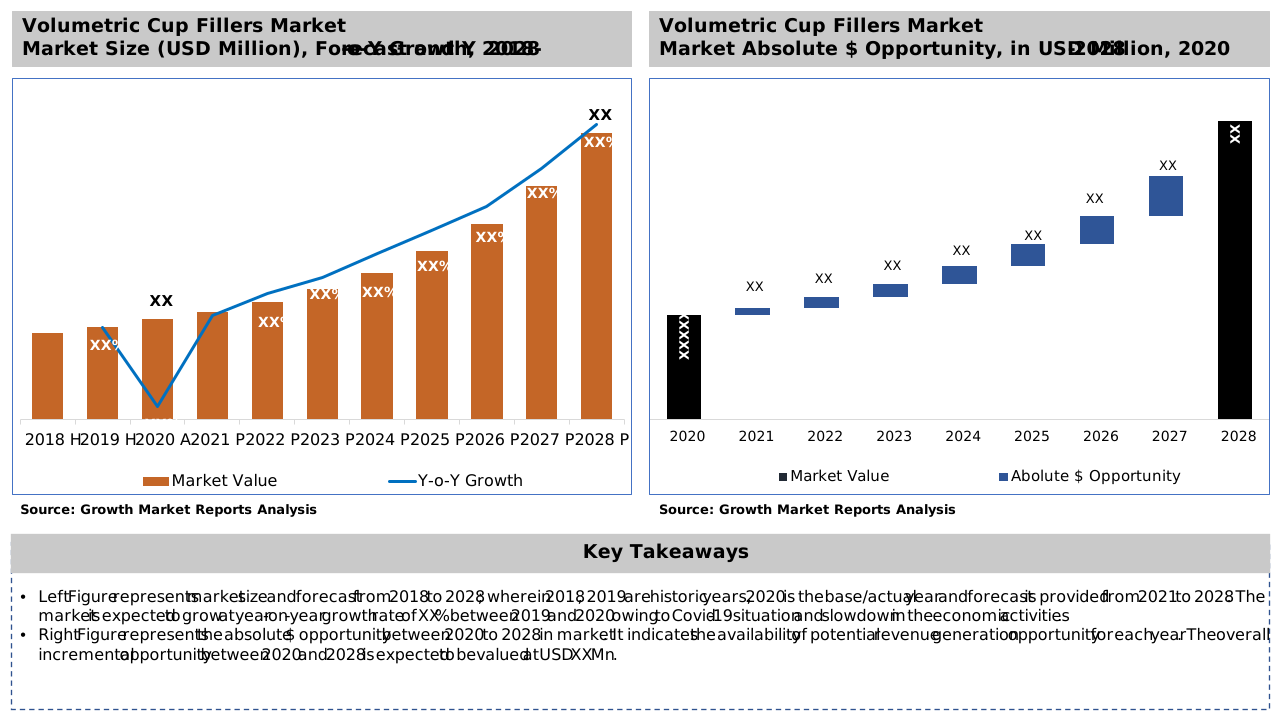
According to the latest research, the global volumetric cup fillers market size reached USD 1.22 billion in 2024, reflecting robust demand across diverse industries. The market is expanding at a compound annual growth rate (CAGR) of 5.8% and is projected to achieve a value of USD 2.06 billion by 2033. This growth is primarily fueled by increasing automation trends in packaging, the rising need for efficient and precise filling solutions, and expanding applications in food and beverage, pharmaceuticals, and chemicals sectors. The volumetric cup fillers market is experiencing significant momentum as manufacturers seek to optimize production speed, reduce product wastage, and ensure consistency in packaging, making volumetric cup fillers an essential part of modern packaging lines.
One of the key growth drivers in the volumetric cup fillers market is the escalating demand for automation in the packaging industry. As manufacturers across the globe strive to increase operational efficiency and minimize human intervention, volumetric cup fillers provide a reliable solution for accurate and consistent filling operations. The integration of advanced technologies such as programmable logic controllers (PLCs), touch-screen interfaces, and Internet of Things (IoT) connectivity has further enhanced the functionality and adaptability of volumetric cup fillers. These technological advancements not only improve throughput but also facilitate real-time monitoring and predictive maintenance, ensuring minimal downtime and optimized resource utilization. As a result, both large-scale and small-scale enterprises are investing in volumetric cup fillers to remain competitive in an increasingly automated manufacturing landscape.
Another significant factor contributing to the growth of the volumetric cup fillers market is the rising demand for packaged food and beverages. With changing lifestyles, urbanization, and the growing preference for convenience foods, the food industry is witnessing a substantial increase in the consumption of ready-to-eat and pre-packaged products. Volumetric cup fillers offer a high degree of accuracy and speed, making them ideal for filling granular, powdery, and free-flowing products such as grains, spices, coffee, and snacks. The ability to handle a wide range of product viscosities and sizes without compromising on filling accuracy makes volumetric cup fillers indispensable for food processing companies. Additionally, stringent regulations regarding food safety and hygiene are compelling manufacturers to adopt automated filling solutions that minimize human contact and reduce contamination risks.
The increasing adoption of volumetric cup fillers in the pharmaceutical and chemical industries is also driving market growth. In these sectors, precision and consistency in filling are paramount to ensure product integrity and regulatory compliance. Volumetric cup fillers are well-suited for handling powders, granules, and small tablets, offering repeatable accuracy and minimal product loss. The pharmaceutical industry, in particular, relies on volumetric fillers for packaging products in precise dosages, which is critical for patient safety and efficacy. Furthermore, the chemical industry benefits from volumetric cup fillers for packaging detergents, fertilizers, and other granular materials, where accurate dosing and efficient packaging processes are essential for both safety and cost-effectiveness.
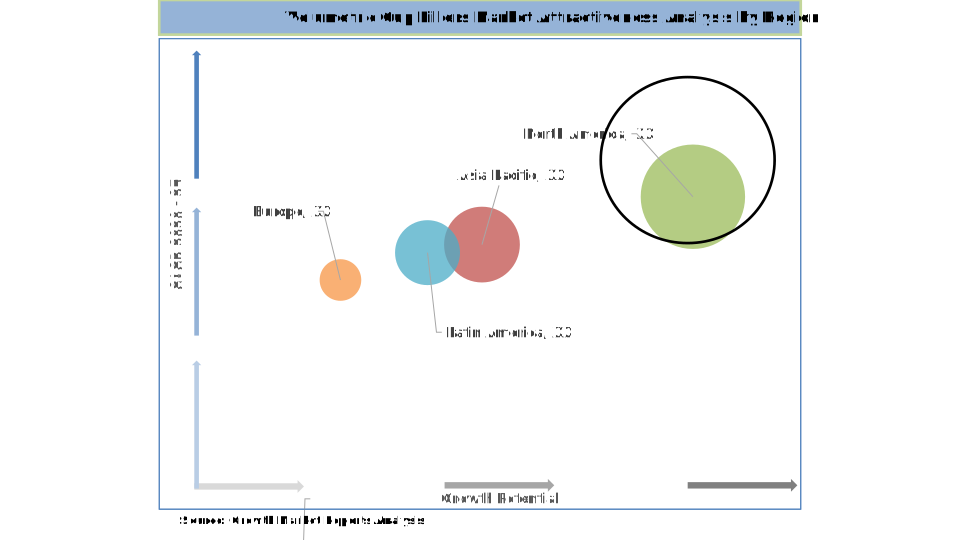
From a regional perspective, Asia Pacific dominates the volumetric cup fillers market owing to the rapid industrialization, expanding food processing sector, and increasing investments in automated packaging solutions. North America and Europe follow closely, driven by stringent quality standards, technological advancements, and the presence of established packaging machinery manufacturers. Latin America and the Middle East & Africa are emerging as high-growth regions, supported by rising consumer demand for packaged goods and the gradual adoption of modern packaging technologies. The regional distribution of the market reflects the global shift towards automation, efficiency, and quality assurance in packaging operations.
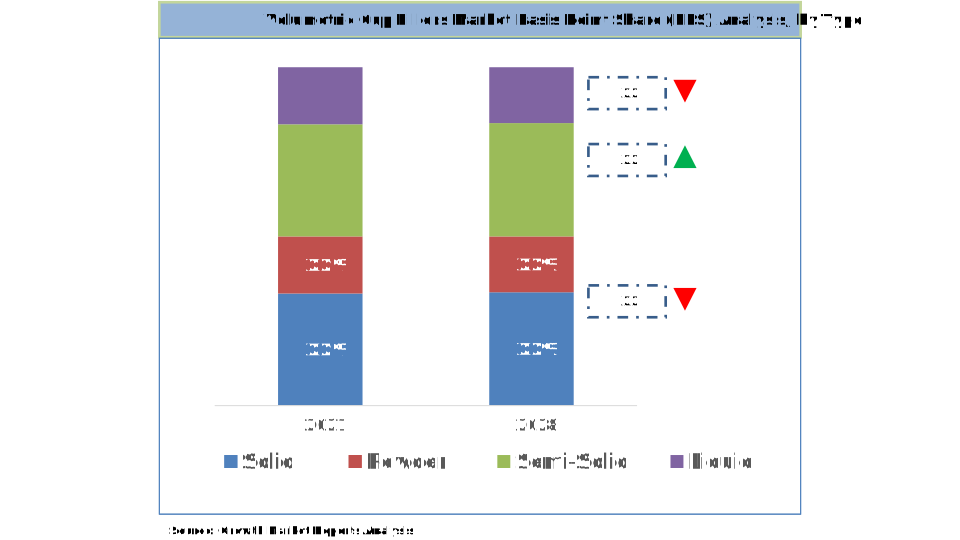
The product type segment in the volumetric cup fillers market is categorized into automatic, semi-automatic, and manual machines. Automatic volumetric cup fillers are witnessing the highest adoption rate, primarily due to their superior efficiency, reduced labor requirements, and ability to handle high-volume production lines. These machines are equipped with advanced control systems, enabling precise adjustments and consistent output, which is critical for industries such as food and pharmaceuticals where accuracy is non-negotiable. The automatic segment is expected to continue its dominance, driven by the rising trend of factory automation and the need for scalable solutions that can adapt to varying production demands.
Semi-automatic volumetric cup fillers occupy a significant share of the market, particularly among small and medium-sized enterprises (SMEs) that require flexibility and cost-effective solutions. These machines offer a balance between manual labor and automation, allowing operators to control certain aspects of the filling process while automating repetitive tasks. Semi-automatic fillers are often preferred in industries where product variety and batch sizes frequently change, as they offer ease of setup and quick changeover capabilities. The growing number of SMEs in developing economies is expected to fuel demand for semi-automatic volumetric cup fillers in the coming years.
Manual volumetric cup fillers, while representing a smaller share of the overall market, remain relevant in niche applications and regions with limited access to capital-intensive machinery. These machines are typically used for low-volume production or in environments where power supply is inconsistent or unavailable. Manual fillers are valued for their simplicity, portability, and low maintenance requirements, making them suitable for small-scale food producers, rural packaging operations, and startups. However, as automation becomes more accessible and affordable, the manual segment is expected to witness slower growth compared to its automated counterparts.
The evolution of product types in the volumetric cup fillers market is closely linked to technological advancements and changing customer preferences. Manufacturers are increasingly focusing on developing modular machines that can be easily upgraded from manual to semi-automatic or fully automatic operation, providing end-users with greater flexibility and scalability. Additionally, the integration of smart sensors, data analytics, and remote monitoring capabilities is transforming traditional volumetric cup fillers into intelligent machines that offer predictive maintenance, real-time performance tracking, and seamless integration with other packaging line equipment.
Overall, the product type segment is characterized by a clear shift towards automation, with automatic and semi-automatic volumetric cup fillers expected to capture the majority of market share over the forecast period. The growing emphasis on operational efficiency, product quality, and labor cost reduction will continue to drive innovation and adoption across all product types, ensuring that volumetric cup fillers remain a critical component of modern packaging operations.
| Attributes | Details |
| Report Title | Volumetric Cup Fillers Market Research Report 2033 |
| By Product Type | Automatic, Semi-Automatic, Manual |
| By Application | Food & Beverages, Pharmaceuticals, Chemicals, Cosmetics, Others |
| By Machine Capacity | Low, Medium, High |
| By End-User | Food Processing Companies, Packaging Companies, Others |
| By Distribution Channel | Direct Sales, Distributors, Online Sales |
| Regions Covered | North America, Europe, APAC, Latin America, MEA |
| Base Year | 2024 |
| Historic Data | 2018-2023 |
| Forecast Period | 2025-2033 |
| Number of Pages | 263 |
| Number of Tables & Figures | 299 |
| Customization Available | Yes, the report can be customized as per your need. |
The application segment of the volumetric cup fillers market encompasses a diverse range of industries, including food and beverages, pharmaceuticals, chemicals, cosmetics, and others. The food and beverage sector represents the largest application segment, accounting for a substantial share of the market. This dominance is attributed to the high demand for packaged foods, snacks, spices, grains, and beverages, all of which require precise and efficient filling solutions to ensure product consistency and minimize wastage. Volumetric cup fillers are particularly well-suited for handling granular and free-flowing products, making them indispensable for food processing companies seeking to enhance productivity and maintain strict quality standards.
In the pharmaceutical industry, volumetric cup fillers play a crucial role in ensuring accurate dosage and contamination-free packaging of powders, granules, and small tablets. Regulatory requirements for precision and hygiene in pharmaceutical packaging are stringent, making automated volumetric cup fillers the preferred choice for manufacturers. The ability to handle a wide range of product viscosities and sizes without compromising on filling accuracy is a key advantage, enabling pharmaceutical companies to streamline their packaging processes and comply with industry standards.
The chemical industry also relies heavily on volumetric cup fillers for packaging a variety of granular and powdered products, such as detergents, fertilizers, and industrial chemicals. These products often require precise dosing to ensure safety, efficacy, and cost-effectiveness. Volumetric cup fillers offer the accuracy and reliability needed to meet these requirements, while also providing the flexibility to handle different product types and packaging formats. The growing demand for specialty chemicals and the expansion of the agrochemical sector are expected to further drive the adoption of volumetric cup fillers in this segment.
Cosmetics manufacturers are increasingly adopting volumetric cup fillers for the packaging of powders, beads, and other granular cosmetic products. The emphasis on product uniformity, attractive packaging, and efficient production processes is driving the integration of automated filling solutions in the cosmetics industry. Volumetric cup fillers enable cosmetic companies to achieve high-speed, accurate filling while maintaining the visual appeal and quality of their products, which is essential in a highly competitive market.
Other applications of volumetric cup fillers include the packaging of pet foods, agricultural products, and specialty materials. The versatility and adaptability of volumetric cup fillers make them suitable for a wide range of industries, each with unique requirements and challenges. As the demand for precise and efficient packaging solutions continues to grow across various sectors, the application segment is expected to witness sustained expansion, reinforcing the importance of volumetric cup fillers in modern manufacturing and packaging operations.
The machine capacity segment in the volumetric cup fillers market is typically classified into low, medium, and high-capacity machines. Low-capacity volumetric cup fillers are designed for small-scale production environments, such as artisanal food producers, startups, and specialty product manufacturers. These machines offer the advantage of compact design, ease of operation, and lower energy consumption, making them ideal for businesses with limited space and budget constraints. Despite their smaller throughput, low-capacity machines provide the same level of accuracy and consistency as larger models, ensuring product quality is maintained.
Medium-capacity volumetric cup fillers cater to mid-sized enterprises and companies experiencing moderate production volumes. These machines strike a balance between speed, efficiency, and cost, making them suitable for a wide range of applications in food processing, pharmaceuticals, and chemicals. Medium-capacity machines are often modular and can be upgraded or integrated with other packaging equipment as production demands increase. Their flexibility and scalability make them a popular choice for companies seeking to expand operations without significant capital investment.
High-capacity volumetric cup fillers are engineered for large-scale manufacturing facilities and high-speed production lines. These machines are capable of handling substantial volumes with minimal downtime, making them essential for industries where efficiency and throughput are critical. High-capacity fillers are equipped with advanced automation features, such as servo-driven motors, automated cup changeover, and integrated quality control systems, ensuring maximum productivity and minimal product loss. The growing trend towards mass production and the need to meet large-scale consumer demand are driving the adoption of high-capacity volumetric cup fillers, particularly in the food and beverage and chemical sectors.
The choice of machine capacity is influenced by several factors, including production volume, product type, packaging format, and available floor space. Manufacturers are increasingly offering customizable solutions that allow end-users to select the optimal machine capacity for their specific needs. This customization extends to features such as cup size, filling speed, and integration with upstream and downstream equipment, enabling companies to optimize their packaging lines for maximum efficiency and cost savings.
Overall, the machine capacity segment reflects the diverse requirements of the volumetric cup fillers market, with solutions available for businesses of all sizes and production scales. As companies continue to focus on operational efficiency, product quality, and scalability, the demand for medium and high-capacity volumetric cup fillers is expected to grow, while low-capacity machines will remain relevant for niche applications and emerging markets.
The end-user segment in the volumetric cup fillers market is primarily divided into food processing companies, packaging companies, and others. Food processing companies constitute the largest end-user group, driven by the need for efficient, accurate, and hygienic filling solutions. These companies rely on volumetric cup fillers to package a wide range of products, from grains and cereals to spices, snacks, and confectionery items. The ability to handle different product types and packaging formats makes volumetric cup fillers a versatile and indispensable tool for food processors seeking to enhance productivity and maintain high standards of quality and safety.
Packaging companies represent another significant end-user segment, providing contract packaging services to various industries, including food, pharmaceuticals, chemicals, and cosmetics. These companies require flexible and reliable filling machines that can accommodate diverse product types and packaging requirements. Volumetric cup fillers offer the adaptability and efficiency needed to meet the demands of multiple clients, making them a preferred choice for packaging service providers. The growth of the contract packaging industry, driven by outsourcing trends and the need for specialized packaging solutions, is expected to boost demand for volumetric cup fillers among packaging companies.
Other end-users of volumetric cup fillers include specialty product manufacturers, agricultural producers, and small-scale businesses. These organizations often have unique requirements, such as customized cup sizes, specialized materials, or low-volume production runs. Volumetric cup fillers provide the flexibility and precision needed to meet these specific needs, enabling smaller companies to compete effectively in their respective markets. The increasing focus on product differentiation and niche market opportunities is expected to drive demand for volumetric cup fillers among a broader range of end-users.
The end-user landscape is also influenced by evolving consumer preferences, regulatory requirements, and technological advancements. As consumers demand higher quality, safer, and more convenient packaged products, end-users are compelled to invest in state-of-the-art filling solutions that deliver consistent results and comply with industry standards. The integration of smart technologies and automation in volumetric cup fillers is further enhancing their appeal to end-users, offering benefits such as real-time monitoring, remote diagnostics, and predictive maintenance.
In summary, the end-user segment of the volumetric cup fillers market is characterized by a diverse and expanding customer base, with food processing and packaging companies leading the way. The ongoing evolution of consumer preferences, industry regulations, and technological innovations will continue to shape the needs and expectations of end-users, driving sustained growth and innovation in the market.
The distribution channel segment in the volumetric cup fillers market includes direct sales, distributors, and online sales. Direct sales remain the dominant distribution channel, as manufacturers prefer to engage directly with end-users to provide customized solutions, technical support, and after-sales services. Direct sales channels enable manufacturers to build strong relationships with customers, understand their specific needs, and offer tailored products and services. This approach is particularly effective for large-scale projects and complex installations, where close collaboration between the manufacturer and end-user is essential for successful implementation.
Distributors play a crucial role in expanding the reach of volumetric cup fillers, especially in regions where manufacturers have limited direct presence. Distributors offer local expertise, inventory management, and technical support, making it easier for end-users to access volumetric cup fillers and related services. The distributor channel is particularly important in emerging markets, where local knowledge and established networks can help manufacturers navigate regulatory requirements, cultural differences, and logistical challenges. The growing demand for volumetric cup fillers in Asia Pacific, Latin America, and the Middle East & Africa is expected to drive the importance of distributor channels in the coming years.
Online sales are emerging as a significant distribution channel in the volumetric cup fillers market, driven by the increasing adoption of digital platforms and e-commerce solutions. Online sales channels offer several advantages, including wider product visibility, easy comparison of features and prices, and convenient ordering processes. Manufacturers are leveraging their websites, online marketplaces, and digital marketing strategies to reach a broader audience and generate leads. The COVID-19 pandemic accelerated the shift towards online sales, as travel restrictions and social distancing measures limited in-person interactions and trade shows. While online sales currently represent a smaller share of the market compared to direct and distributor channels, their importance is expected to grow as digitalization continues to reshape the industrial equipment purchasing process.
The choice of distribution channel is influenced by factors such as product complexity, customer preferences, geographic reach, and the level of technical support required. Manufacturers are increasingly adopting a multi-channel approach, combining direct sales, distributor partnerships, and online platforms to maximize market coverage and customer engagement. This strategy enables manufacturers to cater to the diverse needs of end-users, from large multinational corporations to small local businesses.
In conclusion, the distribution channel segment of the volumetric cup fillers market is evolving rapidly, with direct sales and distributors remaining the primary channels, while online sales gain traction in response to changing customer behaviors and digital transformation trends. The ability to provide comprehensive support, customization, and convenience will be key differentiators for manufacturers and distributors in this competitive market.
Significant opportunities are emerging in the volumetric cup fillers market due to the ongoing shift towards automation and digitalization in manufacturing and packaging industries. The integration of smart technologies such as IoT, artificial intelligence, and machine learning is enabling manufacturers to develop intelligent volumetric cup fillers capable of self-diagnosis, predictive maintenance, and remote monitoring. These advancements not only enhance machine performance and reliability but also provide end-users with valuable insights into production processes, enabling data-driven decision-making and continuous improvement. The growing adoption of Industry 4.0 principles is expected to create new opportunities for innovation, differentiation, and value-added services in the volumetric cup fillers market.
Another major opportunity lies in the expansion of the market into emerging economies, where rapid urbanization, rising disposable incomes, and changing consumer preferences are driving demand for packaged goods. Countries in Asia Pacific, Latin America, and the Middle East & Africa present untapped potential for volumetric cup fillers, as local manufacturers seek to modernize their packaging operations and meet international quality standards. The increasing focus on food safety, hygiene, and regulatory compliance in these regions is further accelerating the adoption of automated filling solutions. Additionally, the growth of e-commerce and direct-to-consumer business models is creating new opportunities for small and medium-sized enterprises to invest in affordable and scalable volumetric cup fillers.
Despite the positive outlook, the volumetric cup fillers market faces certain restraining factors, most notably the high initial investment required for automated filling machines. Small and medium-sized enterprises, particularly in developing regions, may find it challenging to allocate the necessary capital for advanced volumetric cup fillers, opting instead for manual or semi-automatic alternatives. Furthermore, the complexity of integrating volumetric cup fillers with existing production lines and the need for skilled operators and maintenance personnel can pose additional barriers to adoption. Addressing these challenges will require manufacturers to offer flexible financing options, comprehensive training programs, and scalable solutions that cater to the diverse needs and capabilities of end-users.
The Asia Pacific region leads the volumetric cup fillers market, accounting for approximately 38% of the global market size in 2024, equivalent to USD 463.6 million. This dominance is driven by rapid industrialization, a booming food processing sector, and substantial investments in packaging automation across countries like China, India, Japan, and Southeast Asia. The region’s strong manufacturing base and growing consumer demand for packaged goods have created a fertile environment for the adoption of advanced filling solutions. Asia Pacific is also expected to register the highest CAGR of 6.9% during the forecast period, supported by favorable government policies, rising disposable incomes, and the increasing presence of multinational packaging companies.
North America is the second-largest regional market, with a market size of USD 335.6 million in 2024. The region is characterized by high levels of automation, stringent quality standards, and a strong focus on innovation and technological advancement. The presence of leading packaging machinery manufacturers and a well-established food and beverage industry contribute to the robust demand for volumetric cup fillers. North America’s market is further bolstered by the pharmaceutical and chemical sectors, which require precise and reliable filling solutions to comply with regulatory requirements and maintain product integrity. The region is expected to maintain steady growth, supported by ongoing investments in research and development and the adoption of smart manufacturing practices.
Europe holds a significant share of the volumetric cup fillers market, with a market size of USD 292.8 million in 2024. The region’s mature packaging industry, emphasis on sustainability, and strict regulatory environment drive the demand for efficient and environmentally friendly filling solutions. European manufacturers are at the forefront of developing energy-efficient and recyclable packaging technologies, which align with the increasing consumer and regulatory focus on sustainability. Latin America and the Middle East & Africa are emerging as promising markets, with combined revenues of USD 128 million in 2024. These regions are experiencing growing demand for packaged foods, pharmaceuticals, and chemicals, supported by urbanization, population growth, and rising health awareness. The adoption of volumetric cup fillers in these regions is expected to accelerate as local industries modernize and seek to improve efficiency and product quality.
The volumetric cup fillers market is highly competitive, with a mix of global players and regional manufacturers vying for market share. The competitive landscape is characterized by continuous innovation, strategic partnerships, and a strong focus on customer-centric solutions. Leading companies are investing heavily in research and development to enhance the performance, reliability, and versatility of their volumetric cup fillers. The integration of advanced technologies such as automation, IoT, and data analytics is enabling manufacturers to offer intelligent filling solutions that meet the evolving needs of end-users. Companies are also expanding their product portfolios to cater to a wide range of applications and production capacities, ensuring they remain competitive in a dynamic market.
Strategic collaborations and mergers and acquisitions are common strategies employed by key players to strengthen their market position and expand their geographic footprint. By partnering with technology providers, distributors, and end-users, companies can accelerate the development and deployment of innovative solutions, enhance their service offerings, and access new customer segments. The emphasis on sustainability and energy efficiency is also driving manufacturers to develop eco-friendly volumetric cup fillers that reduce energy consumption, minimize product wastage, and support the use of recyclable packaging materials.
Customer support and after-sales service are critical differentiators in the volumetric cup fillers market, as end-users increasingly seek comprehensive solutions that go beyond the initial purchase. Leading companies are offering value-added services such as installation, training, maintenance, and remote diagnostics to ensure optimal machine performance and customer satisfaction. The ability to provide rapid response times, spare parts availability, and technical expertise is essential for building long-term relationships with customers and maintaining a competitive edge.
Major companies operating in the volumetric cup fillers market include All-Fill Inc., IMA Group, Spee-Dee Packaging Machinery, Inc., Accutek Packaging Equipment Companies, Inc., Matrix Packaging Machinery, LLC, Fogg Filler, GEA Group AG, AMS Filling Systems, Inc., and WeighPack Systems Inc.. All-Fill Inc. is renowned for its high-precision automatic and semi-automatic volumetric cup fillers, serving a wide range of industries globally. IMA Group, a leading Italian manufacturer, offers state-of-the-art filling solutions with a strong focus on innovation and sustainability. Spee-Dee Packaging Machinery is recognized for its robust and user-friendly machines, catering to the needs of food, pharmaceutical, and chemical companies.
Accutek Packaging Equipment Companies, Inc. specializes in customizable filling solutions, providing both standard and bespoke machines to meet diverse customer requirements. Matrix Packaging Machinery, LLC is known for its modular and scalable volumetric cup fillers, enabling customers to expand production capacity as needed. Fogg Filler and GEA Group AG are prominent players in the beverage and dairy sectors, offering specialized filling equipment designed for high-speed and hygienic operations. AMS Filling Systems, Inc. and WeighPack Systems Inc. focus on providing flexible and efficient filling solutions for a variety of applications, with an emphasis on automation and ease of integration.
Overall, the competitive landscape of the volumetric cup fillers market is dynamic and rapidly evolving, driven by technological advancements, changing customer expectations, and the need for sustainable and efficient packaging solutions. Companies that prioritize innovation, customer service, and strategic partnerships are well-positioned to capitalize on the growing opportunities in this vibrant market.
The Volumetric Cup Fillers market has been segmented on the basis of
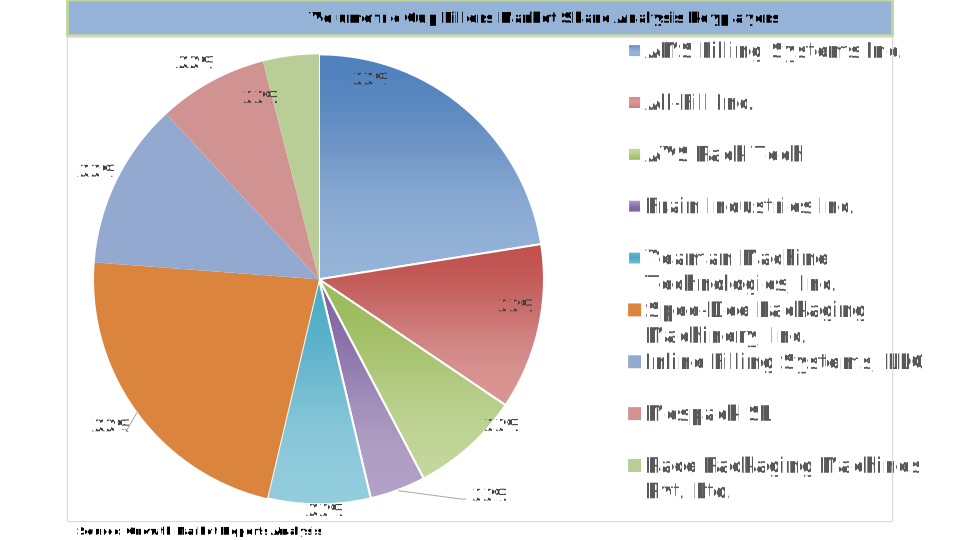
Key players competing in the global volumetric cup fillers market are AMS Filling Systems Inc.; All-Fill Inc.; AVS Pack Tech; Frain Industries Inc.; Yeaman Machine Technologies, Inc.; Spee-Dee Packaging Machinery, Inc.; Inline Filling Systems, LLC; Mespack SL; and Pace Packaging Machines Pvt. Ltd. As part of their efforts to expand their client base and acquire a competitive advantage over competitors, manufacturers operating in the market have adopted various strategic initiatives, such as partnerships, collaborations, and mergers & acquisitions. Moreover, companies are focusing on investment in R&D for development and launching of new products to maintain their competitive positions in the market.
In the food industry, volumetric cup fillers are used for packaging grains, spices, coffee, snacks, and other granular or free-flowing products, ensuring accuracy, speed, and compliance with hygiene standards.
Major players include All-Fill Inc., IMA Group, Spee-Dee Packaging Machinery, Accutek Packaging Equipment, Matrix Packaging Machinery, Fogg Filler, GEA Group AG, AMS Filling Systems, and WeighPack Systems.
High initial investment costs, integration complexity with existing production lines, and the need for skilled operators are key challenges, especially for SMEs in developing regions.
Volumetric cup fillers are distributed through direct sales, distributors, and online sales. Direct sales are dominant, but online channels are growing due to digitalization and e-commerce trends.
Asia Pacific leads the market with rapid industrialization and food processing growth, followed by North America and Europe. Latin America and the Middle East & Africa are emerging as high-growth regions.
Technological advancements like PLCs, IoT connectivity, smart sensors, and data analytics are enhancing machine performance, enabling predictive maintenance, real-time monitoring, and seamless integration with packaging lines.
The market offers automatic, semi-automatic, and manual volumetric cup fillers. Automatic machines dominate due to efficiency and scalability, while semi-automatic and manual types serve SMEs and niche applications.
Volumetric cup fillers are widely used in the food and beverage, pharmaceutical, chemical, cosmetics, and agricultural industries for packaging granular, powdery, and free-flowing products.
Key growth drivers include increasing automation in packaging, demand for efficient and precise filling solutions, rising consumption of packaged foods and beverages, and expanding use in pharmaceuticals and chemicals.
The global volumetric cup fillers market reached USD 1.22 billion in 2024 and is projected to grow at a CAGR of 5.8%, reaching USD 2.06 billion by 2033, driven by automation trends and expanding applications in food, pharmaceuticals, and chemicals.