Segments - by Component (Software, Services), by Deployment Mode (On-Premises, Cloud), by Organization Size (Small and Medium Enterprises, Large Enterprises), by Business Function (Finance, Legal, Sales & Marketing, Others), by End-User (BFSI, Healthcare, IT & Telecommunications, Real Estate, Government, Legal, Others)
As per our latest research, the global Virtual Data Room (VDR) market size in 2024 stands at USD 2.45 billion, demonstrating robust adoption across various industries. The market is projected to grow at a strong CAGR of 13.7% from 2025 to 2033, reaching an anticipated value of USD 7.33 billion by 2033. This remarkable growth is primarily driven by the increasing need for secure digital data sharing, regulatory compliance, and the surge in remote working environments. The deployment of Virtual Data Room solutions is becoming a strategic imperative for organizations seeking to streamline due diligence processes, mergers and acquisitions (M&A), and confidential document management.
One of the most significant growth factors for the Virtual Data Room market is the escalating volume of confidential data exchanged during M&A activities, fundraising, and strategic partnerships. As organizations engage in cross-border transactions and collaborative projects, the necessity for secure, real-time access to sensitive documentation has never been more critical. Virtual Data Rooms provide advanced encryption, granular access controls, and comprehensive audit trails, making them indispensable for industries like BFSI, legal, and healthcare. Moreover, the increasing scrutiny from regulatory bodies regarding data privacy and information security is compelling enterprises to adopt VDRs to ensure compliance and mitigate risks associated with data breaches and unauthorized access.
Another pivotal driver fueling the expansion of the Virtual Data Room market is the rapid digital transformation initiatives undertaken by both large enterprises and SMEs. The proliferation of cloud computing, coupled with the widespread adoption of remote and hybrid work models, has catalyzed the demand for secure, scalable, and user-friendly document management solutions. Virtual Data Rooms not only facilitate efficient collaboration among geographically dispersed teams but also enable organizations to accelerate deal cycles, reduce operational costs, and enhance overall productivity. The integration of artificial intelligence, machine learning, and advanced analytics within VDR platforms is further augmenting their value proposition by automating document indexing, redaction, and compliance checks.
The market is also benefitting from the growing awareness of the importance of information governance and risk management. Enterprises are increasingly recognizing the reputational and financial repercussions of data leaks and cyber threats. Virtual Data Room solutions, with their robust security protocols and customizable workflows, are emerging as the preferred choice for organizations seeking to protect intellectual property, trade secrets, and other confidential assets. Additionally, the expansion of legal and regulatory frameworks such as GDPR, HIPAA, and CCPA is compelling organizations to adopt VDRs as part of their broader data protection strategies, thereby driving sustained market growth.
The emergence of the Digital Sales Room is revolutionizing how businesses conduct transactions and manage client interactions. As organizations increasingly shift towards digital platforms, the Digital Sales Room offers a centralized, secure environment for managing sales processes, client communications, and document exchanges. This innovative approach not only enhances the efficiency and transparency of sales operations but also provides real-time insights into client engagement and deal progression. By integrating advanced analytics and collaboration tools, the Digital Sales Room empowers sales teams to tailor their strategies, improve customer experiences, and accelerate deal closures. As digital transformation continues to reshape the business landscape, the adoption of Digital Sales Rooms is expected to become a critical component of successful sales strategies across industries.
From a regional perspective, North America currently dominates the Virtual Data Room market, accounting for the largest revenue share, followed by Europe and Asia Pacific. The region's leadership can be attributed to the high concentration of M&A activities, stringent regulatory requirements, and the presence of major VDR vendors. However, Asia Pacific is expected to witness the fastest growth over the forecast period, fueled by rapid economic development, increasing digitalization, and the rising adoption of cloud-based solutions. Latin America and the Middle East & Africa are also anticipated to present lucrative opportunities as enterprises in these regions increasingly prioritize secure data management and digital collaboration.
The Virtual Data Room market is segmented by component into Software and Services, each playing a pivotal role in the industryÂ’s growth trajectory. The software segment holds the largest market share, driven by continuous advancements in VDR platforms that offer enhanced security, intuitive user interfaces, and seamless integration with enterprise systems. Organizations are increasingly investing in sophisticated VDR software to facilitate secure document sharing, real-time collaboration, and granular permission settings. The demand for customizable and scalable software solutions is particularly pronounced among large enterprises engaged in complex transactions, where the ability to handle voluminous data and multiple stakeholders is paramount. Furthermore, the integration of AI-powered features such as automated document classification, smart search, and predictive analytics is further enhancing the value proposition of VDR software, enabling organizations to accelerate deal cycles and make data-driven decisions.
On the other hand, the services segment is gaining traction as organizations seek expert guidance for VDR implementation, customization, and ongoing support. Managed services, consulting, and training services are increasingly being sought by enterprises to ensure optimal utilization of VDR platforms and adherence to industry best practices. Service providers are differentiating themselves by offering tailored solutions that address specific industry requirements, regulatory compliance, and workflow optimization. The growing complexity of business transactions, coupled with the need for seamless integration with existing IT infrastructure, is driving demand for specialized services that facilitate smooth deployment and minimize operational disruptions. As organizations prioritize business continuity and risk mitigation, the role of professional services in the VDR market is expected to expand significantly.
The interplay between software and services is creating a holistic ecosystem that caters to diverse organizational needs. Vendors are increasingly adopting a hybrid approach, offering bundled solutions that combine robust software platforms with value-added services such as data migration, training, and technical support. This approach not only enhances customer satisfaction but also fosters long-term partnerships and recurring revenue streams. The trend towards subscription-based pricing models is further democratizing access to advanced VDR solutions, enabling SMEs to leverage enterprise-grade security and collaboration tools without significant upfront investments. As the market matures, we expect to see greater convergence between software innovation and service excellence, driving sustained growth across both segments.
In summary, the component segmentation of the Virtual Data Room market underscores the critical importance of both software and services in enabling secure, efficient, and compliant data management. While software remains the cornerstone of VDR adoption, the growing emphasis on value-added services is shaping the competitive landscape and empowering organizations to derive maximum value from their digital transformation initiatives. As customer expectations evolve and technological advancements accelerate, vendors that can deliver integrated, end-to-end solutions will be best positioned to capitalize on emerging opportunities and drive market leadership.
| Attributes | Details |
| Report Title | Virtual Data Room Market Research Report 2033 |
| By Component | Software, Services |
| By Deployment Mode | On-Premises, Cloud |
| By Organization Size | Small and Medium Enterprises, Large Enterprises |
| By Business Function | Finance, Legal, Sales & Marketing, Others |
| By End-User | BFSI, Healthcare, IT & Telecommunications, Real Estate, Government, Legal, Others |
| Regions Covered | North America, Europe, APAC, Latin America, MEA |
| Base Year | 2024 |
| Historic Data | 2018-2023 |
| Forecast Period | 2025-2033 |
| Number of Pages | 256 |
| Number of Tables & Figures | 286 |
| Customization Available | Yes, the report can be customized as per your need. |
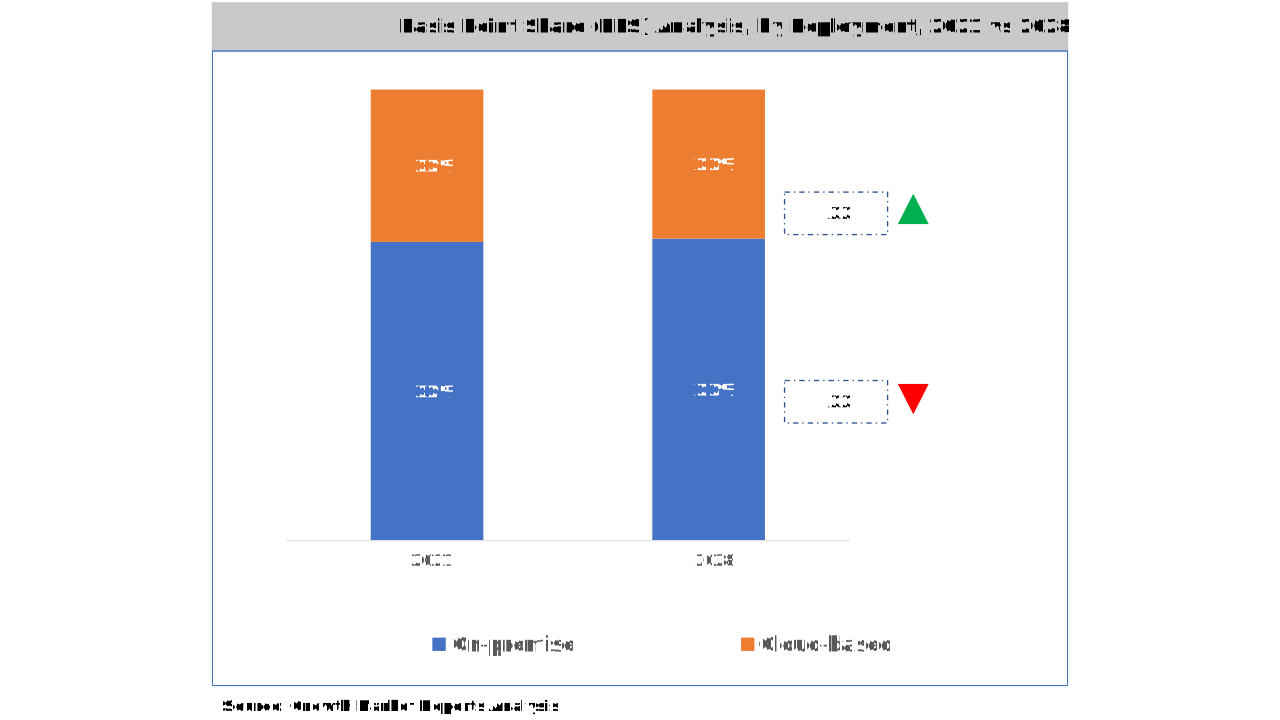
The deployment mode segment of the Virtual Data Room market is bifurcated into On-Premises and Cloud solutions, each catering to distinct organizational preferences and regulatory requirements. The cloud deployment mode has emerged as the dominant segment, accounting for the majority of new VDR implementations in recent years. This shift is attributed to the inherent advantages of cloud-based solutions, including scalability, flexibility, and cost-effectiveness. Organizations are increasingly gravitating towards cloud VDRs to facilitate remote access, support distributed teams, and streamline collaboration across geographies. The pay-as-you-go pricing model offered by cloud providers further reduces capital expenditure, making advanced VDR capabilities accessible to a broader spectrum of enterprises, including SMEs. Moreover, the rapid pace of innovation in cloud infrastructure, coupled with enhanced security protocols and compliance certifications, is alleviating concerns around data sovereignty and privacy.
Despite the growing dominance of cloud solutions, the on-premises deployment mode continues to hold significance, particularly among organizations with stringent data residency requirements and highly sensitive information. Large financial institutions, government agencies, and legal firms often prefer on-premises VDRs to maintain direct control over their data and IT infrastructure. These organizations are willing to invest in dedicated hardware, software licenses, and IT personnel to ensure maximum security and compliance with industry-specific regulations. The on-premises model also offers greater customization and integration capabilities, enabling organizations to tailor VDR platforms to their unique workflows and security protocols. However, the higher upfront costs and ongoing maintenance requirements associated with on-premises deployments are prompting some organizations to explore hybrid models that combine the best of both worlds.
The hybrid deployment model is gaining traction as organizations seek to balance the benefits of cloud scalability with the control and customization offered by on-premises solutions. Hybrid VDRs enable organizations to store sensitive data on-premises while leveraging cloud capabilities for collaboration, analytics, and disaster recovery. This approach is particularly appealing to multinational corporations and regulated industries that must comply with diverse data protection laws across jurisdictions. Vendors are responding to this trend by offering flexible deployment options and seamless interoperability between cloud and on-premises environments. The ability to transition between deployment modes without disrupting business operations is becoming a key differentiator in the competitive landscape.
Looking ahead, the continued evolution of cloud technologies, coupled with advancements in encryption, multi-factor authentication, and zero-trust architectures, is expected to further accelerate the adoption of cloud-based VDRs. However, the on-premises segment will remain relevant for organizations with unique security and compliance needs. As regulatory frameworks evolve and cyber threats become more sophisticated, the choice of deployment mode will increasingly be dictated by a combination of risk tolerance, operational requirements, and strategic priorities. Vendors that offer flexible, secure, and interoperable deployment options will be well-positioned to capture market share and drive innovation in the Virtual Data Room market.
The organization size segment of the Virtual Data Room market is classified into Small and Medium Enterprises (SMEs) and Large Enterprises, each exhibiting distinct adoption patterns and requirements. Large enterprises have traditionally been the primary adopters of VDR solutions, driven by their involvement in complex, high-value transactions such as mergers and acquisitions, fundraising, and strategic partnerships. These organizations manage vast volumes of confidential data and require advanced security features, workflow automation, and integration with enterprise systems. The ability to support multiple projects, users, and stakeholders simultaneously is a key consideration for large enterprises, prompting them to invest in robust, scalable VDR platforms with comprehensive administrative controls and reporting capabilities.
In contrast, SMEs are increasingly recognizing the value of Virtual Data Rooms in enhancing operational efficiency, reducing risk, and supporting growth initiatives. The democratization of VDR technology, facilitated by cloud-based solutions and subscription pricing models, has lowered the barriers to entry for SMEs. These organizations are leveraging VDRs to streamline due diligence, facilitate fundraising, and collaborate securely with external partners. The emphasis on ease of use, affordability, and rapid deployment is shaping the development of VDR solutions tailored to the needs of SMEs. Vendors are responding by offering modular, intuitive platforms with pre-configured templates and guided workflows, enabling SMEs to realize the benefits of secure document management without the complexity and cost associated with enterprise-grade solutions.
The convergence of digital transformation, regulatory compliance, and evolving customer expectations is driving a shift in the VDR adoption landscape. Both large enterprises and SMEs are prioritizing data security, regulatory compliance, and operational agility, albeit with different levels of sophistication and resource allocation. The growing prevalence of remote work, cross-border transactions, and digital collaboration is blurring the traditional boundaries between organization sizes, creating new opportunities for VDR vendors to serve a diverse customer base. The ability to offer scalable, customizable solutions that cater to the unique needs of different organization sizes will be a key determinant of success in the highly competitive Virtual Data Room market.
Furthermore, the integration of artificial intelligence, machine learning, and advanced analytics within VDR platforms is leveling the playing field for SMEs, enabling them to access capabilities previously reserved for large enterprises. Features such as automated document indexing, smart search, and real-time analytics are empowering organizations of all sizes to accelerate deal cycles, enhance decision-making, and mitigate risks. As the market continues to evolve, we expect to see greater convergence between the needs of SMEs and large enterprises, with vendors offering flexible, modular solutions that can be tailored to a wide range of use cases and organizational requirements.
The business function segmentation of the Virtual Data Room market encompasses Finance, Legal, Sales & Marketing, and Others, reflecting the diverse applications of VDR solutions across organizational departments. The finance function represents the largest segment, driven by the critical role of VDRs in facilitating due diligence, M&A transactions, fundraising, and financial audits. Financial professionals rely on VDRs to securely share sensitive documents, manage multiple stakeholders, and maintain comprehensive audit trails. The ability to support complex workflows, automate repetitive tasks, and ensure regulatory compliance is paramount in the finance function, prompting organizations to invest in advanced VDR platforms with robust security features and real-time collaboration capabilities.
The legal function is another major adopter of Virtual Data Room solutions, leveraging VDRs to streamline contract management, litigation support, intellectual property protection, and regulatory compliance. Legal professionals require secure, organized, and easily searchable repositories for confidential documents, as well as granular access controls to manage permissions and track user activity. The growing complexity of legal processes, coupled with the increasing volume of digital evidence, is driving demand for VDR platforms that offer advanced search, redaction, and document comparison tools. The integration of AI-powered features such as contract analytics and predictive risk assessment is further enhancing the value proposition of VDRs in the legal function.
Sales and marketing teams are also recognizing the benefits of Virtual Data Rooms in managing sensitive client information, sharing proprietary materials, and collaborating with external partners. VDRs enable sales professionals to securely distribute product documentation, pricing information, and proposals, while maintaining control over who can access, download, or share these materials. Marketing teams are leveraging VDRs to manage brand assets, track engagement metrics, and facilitate collaboration with agencies and partners. The ability to provide real-time access to up-to-date materials, coupled with detailed activity tracking, is helping sales and marketing teams enhance customer engagement, accelerate deal cycles, and drive revenue growth.
Other business functions, including human resources, procurement, and operations, are increasingly adopting VDR solutions to support secure document management, compliance, and collaboration. The versatility and scalability of modern VDR platforms make them suitable for a wide range of use cases, from employee onboarding and vendor management to supply chain optimization and strategic planning. As organizations continue to embrace digital transformation, the role of Virtual Data Rooms in enabling secure, efficient, and compliant workflows across business functions is expected to expand significantly. Vendors that offer industry-specific solutions and customizable workflows will be well-positioned to capture emerging opportunities and drive market growth.
The end-user segmentation of the Virtual Data Room market includes BFSI, Healthcare, IT & Telecommunications, Real Estate, Government, Legal, and Others, each exhibiting unique adoption drivers and requirements. The BFSI (Banking, Financial Services, and Insurance) sector remains the largest end-user segment, given its reliance on secure, compliant, and efficient data management for M&A, fundraising, audits, and regulatory reporting. Financial institutions are leveraging VDRs to facilitate collaboration among internal and external stakeholders, streamline due diligence processes, and ensure compliance with industry regulations such as GDPR, SOX, and Basel III. The increasing frequency of cross-border transactions, coupled with the rise in cyber threats, is further driving demand for advanced VDR solutions in the BFSI sector.
The healthcare industry is another significant adopter of Virtual Data Rooms, utilizing VDRs to manage sensitive patient data, clinical trial documentation, and intellectual property related to drug development and medical devices. Healthcare organizations face stringent regulatory requirements, including HIPAA and GDPR, necessitating robust data protection and audit capabilities. VDRs enable healthcare providers, pharmaceutical companies, and research institutions to securely share confidential information with partners, regulators, and investors, while maintaining full control over access and usage. The growing trend towards digital health, telemedicine, and collaborative research is expected to further accelerate VDR adoption in the healthcare sector.
IT and telecommunications companies are leveraging Virtual Data Rooms to manage intellectual property, support M&A activities, and facilitate secure collaboration on technology projects. The rapid pace of innovation, coupled with the increasing complexity of technology transactions, is driving demand for VDR platforms that offer advanced security, scalability, and integration capabilities. Real estate firms are utilizing VDRs to streamline property transactions, manage due diligence, and facilitate collaboration among buyers, sellers, and legal advisors. The government and legal sectors are also significant end-users, relying on VDRs to manage confidential documents, support regulatory compliance, and enhance operational efficiency.
Other end-user segments, including energy, manufacturing, and education, are increasingly adopting Virtual Data Room solutions to support secure document management, compliance, and collaboration. The versatility and scalability of modern VDR platforms make them suitable for a wide range of industries and use cases. As organizations across sectors continue to prioritize data security, regulatory compliance, and operational agility, the demand for Virtual Data Room solutions is expected to remain strong, driving sustained growth across end-user segments.
The Virtual Data Room market presents a wealth of opportunities for vendors, investors, and end-users alike. One of the most promising opportunities lies in the continued expansion of M&A activity, particularly in emerging markets and high-growth sectors such as technology, healthcare, and renewable energy. As organizations seek to capitalize on strategic partnerships, acquisitions, and fundraising initiatives, the demand for secure, efficient, and compliant data management solutions will continue to rise. The integration of advanced technologies such as artificial intelligence, machine learning, and blockchain presents additional opportunities for innovation, enabling vendors to offer differentiated solutions that automate document management, enhance security, and deliver actionable insights.
Another significant opportunity is the growing adoption of Virtual Data Rooms by SMEs and non-traditional sectors. The democratization of VDR technology, facilitated by cloud-based solutions and subscription pricing models, is enabling organizations of all sizes and industries to access advanced data management capabilities. Vendors that can offer scalable, customizable, and user-friendly solutions tailored to the unique needs of SMEs and niche markets will be well-positioned to capture new revenue streams and expand their market footprint. Strategic partnerships, channel expansion, and vertical-specific solutions are expected to drive further growth and differentiation in the highly competitive VDR market.
Despite the numerous opportunities, the Virtual Data Room market faces several restraining factors that could impact growth. Chief among these is the rising sophistication and frequency of cyber threats, which pose significant risks to data security and privacy. As VDR platforms become increasingly central to critical business processes, they are likely to become attractive targets for cybercriminals seeking to exploit vulnerabilities and gain unauthorized access to sensitive information. Vendors must invest continuously in advanced security measures, threat intelligence, and incident response capabilities to maintain customer trust and comply with evolving regulatory requirements. Additionally, the complexity of integrating VDR solutions with existing IT infrastructure and legacy systems can pose challenges for organizations, particularly those with limited resources or expertise. Addressing these challenges will be critical to sustaining market growth and ensuring the long-term success of Virtual Data Room solutions.
The regional analysis of the Virtual Data Room market reveals a dynamic and evolving landscape shaped by varying levels of digital maturity, regulatory frameworks, and industry adoption. North America leads the global market, accounting for approximately USD 980 million in revenue in 2024. The regionÂ’s dominance is underpinned by a high concentration of M&A activity, stringent regulatory requirements, and the presence of major VDR vendors. The United States, in particular, is a key growth engine, driven by the adoption of advanced technologies, a robust financial services sector, and a strong focus on data privacy and security. Canada is also witnessing increased adoption of VDR solutions, particularly in the healthcare, legal, and government sectors.
Europe is the second-largest market, with a revenue share of around USD 675 million in 2024. The region is characterized by a complex regulatory environment, including GDPR and industry-specific compliance requirements, which are driving demand for secure, compliant data management solutions. The United Kingdom, Germany, and France are the primary contributors to market growth, supported by active M&A markets, a strong legal sector, and increasing investment in digital transformation initiatives. The focus on cross-border transactions and international collaboration is further fueling demand for Virtual Data Rooms across Europe.
The Asia Pacific region is expected to witness the fastest growth over the forecast period, with a projected CAGR of 16.2% from 2025 to 2033. The market size in Asia Pacific reached approximately USD 490 million in 2024, driven by rapid economic development, increasing digitalization, and the rising adoption of cloud-based solutions. Countries such as China, India, Japan, and Australia are at the forefront of VDR adoption, particularly in the BFSI, healthcare, and technology sectors. The growing emphasis on regulatory compliance, data security, and operational efficiency is expected to drive continued growth in the region. Latin America and Middle East & Africa are also emerging as attractive markets, with increasing enterprise adoption of VDR solutions to support secure data management, digital collaboration, and regulatory compliance.
The competitive landscape of the Virtual Data Room market is characterized by intense rivalry, rapid innovation, and a diverse array of vendors ranging from established players to emerging startups. Market leaders are focusing on product differentiation, technological innovation, and strategic partnerships to strengthen their market position and expand their customer base. The integration of advanced features such as artificial intelligence, machine learning, and blockchain is enabling vendors to offer differentiated solutions that address evolving customer needs and regulatory requirements. The shift towards cloud-based solutions and subscription pricing models is further intensifying competition, as vendors seek to capture new customer segments and drive recurring revenue streams.
Vendors are increasingly investing in research and development to enhance the security, scalability, and usability of their VDR platforms. The focus on user experience, mobile accessibility, and seamless integration with enterprise systems is shaping the development of next-generation VDR solutions. Strategic acquisitions, partnerships, and channel expansion are also playing a critical role in driving market consolidation and enabling vendors to offer end-to-end solutions that cater to the diverse needs of organizations across industries and geographies. The ability to deliver value-added services, such as implementation support, training, and managed services, is emerging as a key differentiator in the highly competitive VDR market.
The market is witnessing the entry of new players, particularly in niche segments and emerging markets, further intensifying competition and driving innovation. Startups are leveraging agile development processes, customer-centric design, and advanced technologies to disrupt traditional business models and capture market share. Established vendors, in turn, are responding by accelerating their innovation cycles, enhancing their product portfolios, and expanding their global footprint through mergers, acquisitions, and strategic alliances. The competitive landscape is expected to remain dynamic and fast-evolving, with vendors continuously seeking new ways to deliver value, differentiate their offerings, and address emerging customer needs.
Some of the major companies operating in the Virtual Data Room market include Intralinks (SS&C Technologies Holdings, Inc.), Datasite (formerly Merrill Corporation), Citrix Systems, Inc. (ShareFile), Box, Inc., Firmex Inc., iDeals Solutions Group, Ansarada, Brainloop AG, SecureDocs, Inc., and EthosData. These companies are recognized for their robust product portfolios, strong security features, and extensive customer support networks. Intralinks remains a market leader, renowned for its advanced security protocols, global reach, and deep expertise in M&A and financial transactions. Datasite is widely regarded for its user-friendly platform, comprehensive analytics, and strong presence in the financial services sector.
Citrix Systems, with its ShareFile solution, has carved out a niche in secure document sharing and collaboration, particularly among legal and professional services firms. Box, Inc. is leveraging its cloud content management expertise to offer scalable, integrated VDR solutions that cater to a wide range of industries. Firmex and iDeals Solutions are recognized for their focus on ease of use, affordability, and customer-centric design, making them popular choices among SMEs and mid-market organizations. Ansarada and Brainloop are noted for their innovation in AI-powered features and regulatory compliance, while SecureDocs and EthosData are gaining traction with their straightforward, cost-effective solutions tailored to specific industry needs.
In conclusion, the Virtual Data Room market is characterized by dynamic competition, rapid innovation, and a relentless focus on security, compliance, and customer value. Vendors that can effectively balance technological advancement with user experience, industry-specific solutions, and value-added services will be best positioned to lead the market and capitalize on emerging opportunities in the years ahead.
The Virtual Data Room market has been segmented on the basis of
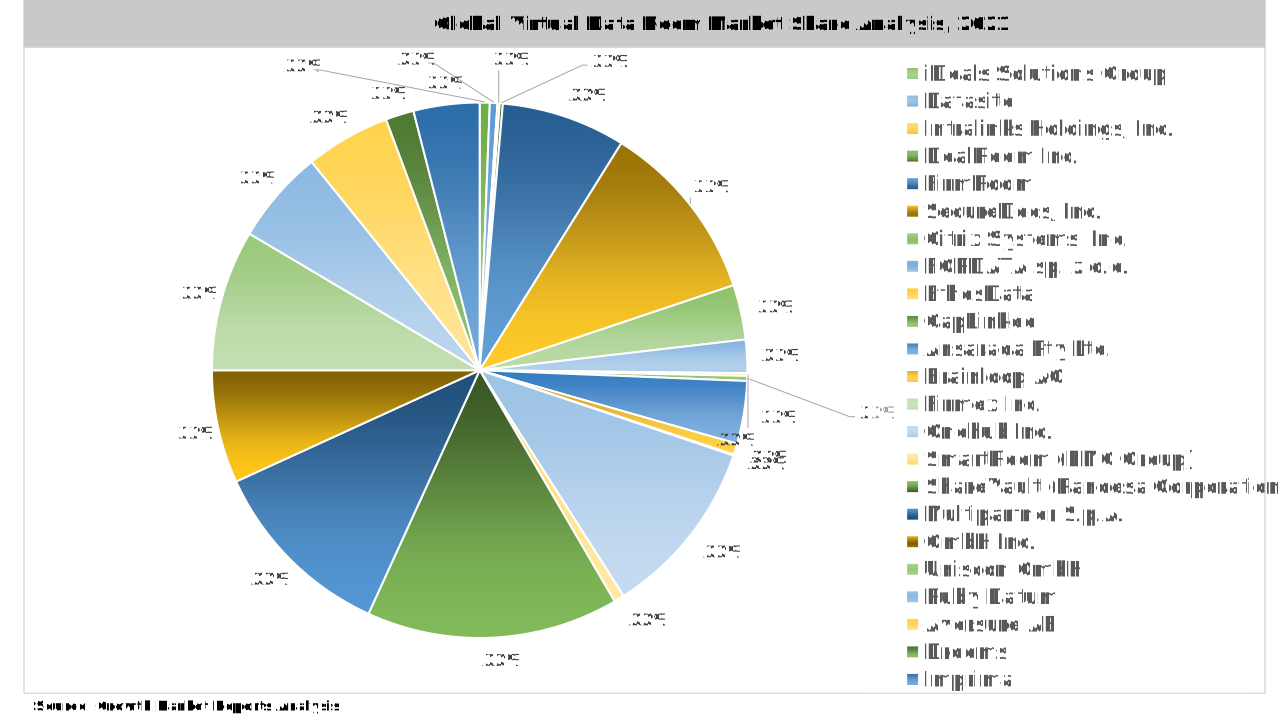
Key players competing in the global virtual data room market are iDeals Solutions Group; Datasite; Intralinks Holdings, Inc.; DealRoom Inc.; FirmRoom; SecureDocs, Inc.; Citrix Systems, Inc.; FORDATA sp. z o.o.; EthosData; CapLinked; Ansarada Pty Ltd.; Brainloop AG; Firmex Inc.; Onehub Inc.; SmartRoom (BMC Group); ShareVault (Pandesa Corporation); Multipartner S.p.A.; GmbH; Uniscon GmbH; Ruby Datum; Aversure AB; Drooms; and Imprima. The main market players are continuously engaged in certain business development activities such as mergers and acquisitions, research and developments, investments for innovative products, and collaborations. For instance, Datasite, which is a SaaS-based VDR solution supplier, launched an AI-powered to simply the mergers and acquisition contracts by giving organized data and smart structuring in June 2020.
The main challenges include the increasing sophistication of cyber threats, integration complexities with legacy IT systems, and the need for continuous investment in security and compliance measures to address evolving regulatory requirements and maintain customer trust.
Major players include Intralinks (SS&C Technologies), Datasite, Citrix Systems (ShareFile), Box, Firmex, iDeals Solutions, Ansarada, Brainloop, SecureDocs, EthosData, ShareVault, CapLinked, SmartRoom, Vault Rooms, Onehub, Drooms, HighQ, RR Donnelley, TransPerfect, and Imprima.
North America currently leads the Virtual Data Room market, followed by Europe and Asia Pacific. Asia Pacific is expected to experience the fastest growth through 2033, driven by rapid digitalization, economic development, and increasing adoption of cloud-based solutions.
Modern VDR software offers advanced encryption, AI-powered document indexing, smart search, predictive analytics, automated compliance checks, intuitive user interfaces, and seamless integration with enterprise systems. These features accelerate deal cycles and improve data-driven decision-making.
Large enterprises use VDRs for complex, high-value transactions and require advanced security and integration features. SMEs are increasingly adopting VDRs for operational efficiency, secure collaboration, and fundraising, benefiting from affordable, user-friendly, and modular cloud-based solutions.
Cloud-based VDRs offer scalability, flexibility, and cost-effectiveness, making them popular for remote access and distributed teams. On-premises VDRs provide greater control and customization, preferred by organizations with strict data residency or security requirements. Hybrid models combine both approaches for maximum flexibility.
The largest adopters of Virtual Data Room solutions are the BFSI (Banking, Financial Services, and Insurance), healthcare, legal, IT & telecommunications, real estate, and government sectors, all of which require secure, compliant, and efficient data management.
Key growth drivers include the rising volume of confidential data in M&A and fundraising activities, increasing regulatory scrutiny, the shift to remote and hybrid work environments, and the integration of advanced technologies like AI and machine learning for document management and compliance.
The global Virtual Data Room market size in 2024 is valued at USD 2.45 billion. It is projected to grow at a CAGR of 13.7% from 2025 to 2033, reaching an estimated USD 7.33 billion by 2033, driven by increasing demand for secure digital data sharing and regulatory compliance.
A Virtual Data Room (VDR) is a secure online platform used for storing and sharing confidential documents, especially during business transactions like mergers and acquisitions (M&A), fundraising, and due diligence. VDRs are important because they offer advanced security features, granular access controls, and audit trails, ensuring safe and compliant digital collaboration.