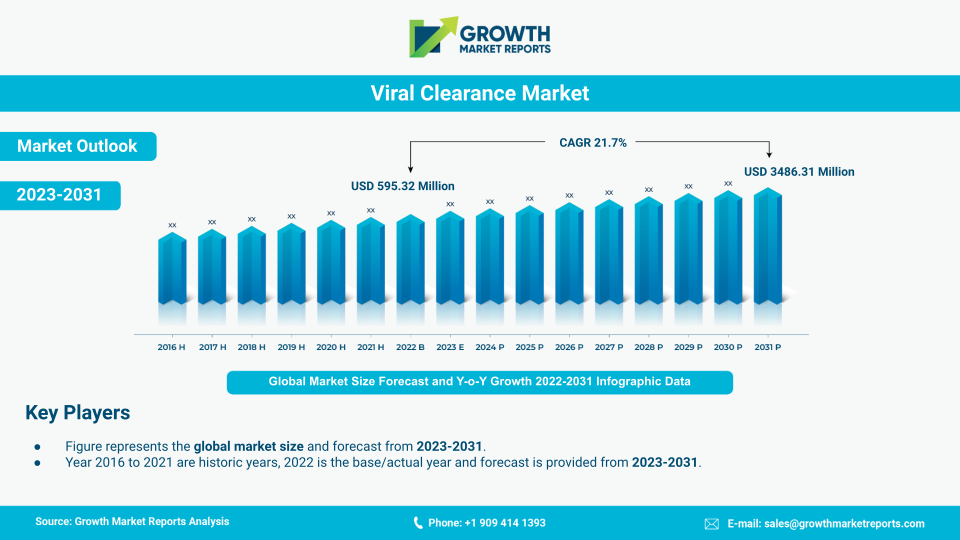
The global viral clearance market size was valued at USD 595.32 Million in 2022 and is expected to reach USD 3486.31 Million by 2031, expanding at a CAGR of 21.7% during the forecast period, 2023-2031. The growth of the market is attributed to the rising government funding for the pharmaceutical and biotechnology industries.
Viruses are types of organisms that are responsible for various infectious diseases that can reproduce rapidly inside the living cells of human beings. Viruses generally infect all types of life forms including animals and plants. Viruses have the ability to multiply on their own and can infect animal or human cell.
They also have the ability to infect bacterial cells by damaging the cell and bringing out their multiplication and growth in the host cell. The infected cell produces viral particles rather than their regular products. The analysis of the capability to produce a risk-free product and ensure the safety of the product for human use is a vital aspect of viral clearance method.
Several technical calculation are deployed to gauge the level of the products safety by controlling the presence or infection by virus during the manufacturing of the product. To achieve this agenda, there is a requirement to eventually conduct viral clearance and implementation of viral safety assessment in the course of product evolution.
Viral infections affect bioreactor contamination, raw materials, downstream processing, and cell culture processes. This is expected to help in forming the demand for viral safety practice and the implementation of the virus clearance process.
Viral Clearance Market Trends, Drivers, Restraints, and Opportunities
- Rising demand for the safety of a product and the development of innovative techniques that can enhance the capability of a mechanical process to determine accurate viral clearance present a key factor boosting the market growth.
- Presence of a strong product pipeline and the growing development of the pharmaceutical industry are expected to fuel the market growth.
- Rising government funding for the biotechnology industry and rising R&D activities to develop innovative novel drugs are expected to fuel the market expansion.
- Increasing strict government regulations emphasizing on quality control and quality assurance of various industrial products are projected to boost the growth of the global market.
- High degree of consolidation act is one of the major restraining factors expected to hamper the global viral clearance market.
Scope of Viral Clearance Market Report
The report on the global viral clearance market includes an assessment of the market, trends, segments, and regional markets. Overview and dynamics have also been included in the report.
|
Attributes
|
Details
|
|
Report Title
|
Viral Clearance Market - Global Industry Analysis, Growth, Share, Size, Trends, and Forecast
|
|
Base Year
|
2022
|
|
Historic Data
|
2016–2021
|
|
Forecast Period
|
2023–2031
|
|
Segmentation
|
Applications (Cellular & Gene Therapy Products, Blood & Blood Products, Vaccines & Therapeutics, Tissue & Tissue Products, and Stem Cell Products), Methods (Viral Inactivation Method, Viral Detection Method, and Viral Removal Method), End-users (Contract Research Organizations, Pharmaceutical & Biotechnology Companies, Academic Research Institutes, and Others)
|
|
Regional Scope
|
Asia Pacific, North America, Latin America, Europe, and Middle East & Africa
|
|
Report Coverage
|
Company Share, Market Analysis and Size, Competitive Landscape, Growth Factors, and Trends, and Revenue Forecast
|
|
Key Players Covered in the Report
|
Lonza Group; Charles River Laboratories International, Inc.; Sigma-Aldrich Corporation; Merck KGaA; Avance Biosciences Inc.; Clean Cells; BSL Bioservice Scientific Laboratories GmbH; SGS S.A.; Texcell, Inc.; and WuXi PharmaTech Inc.
|
Viral Clearance Market Segment Insights
Applications Segment Analysis
Based on applications, the global viral clearance market is divided into cellular & gene therapy products, blood & blood products, vaccines & therapeutics, tissue & tissue products, and stem cell products.
The vaccines & therapeutics segment is expected to account for a key share of the market during the projected period due to advance wide development of new vaccines and implementation of advanced therapeutic procedures introduced in the market. However, the cellular & gene therapy products segment is anticipated to expand at a rapid pace during the forecast period owing to various awareness campaigns by market players and healthcare authorities.
Methods Segment Analysis
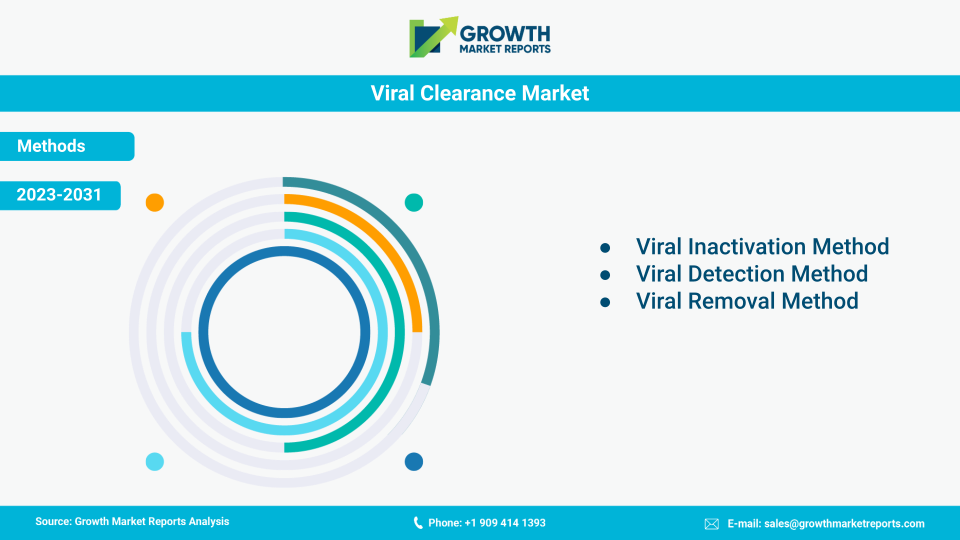
On the basis of methods, the market is segmented into viral inactivation method, viral detection method, and viral removal method.
The viral inactivation method segment is projected to expand at a considerable CAGR during the forecast period owing to various R&D activities to enhance the procedure. On the other hand, the viral removal method segment is anticipated to expand at an impressive growth rate during the forecast period due to technology advancement in the field.
End -users Segment Analysis
In terms of end-users, the global viral clearance market is classified into contract research organizations, pharmaceutical & biotechnology companies, academic research institutes, and other.
The contract research organizations segment is expected to exhibit robust growth of the market in the coming years owing to increasing investments by key market players towards several research organizations to enhance their products.
Meanwhile, the academic research institutes segment is anticipated to expand at a healthy growth rate during the forecast period due to supportive government policies towards academic institutions.
Regional Analysis
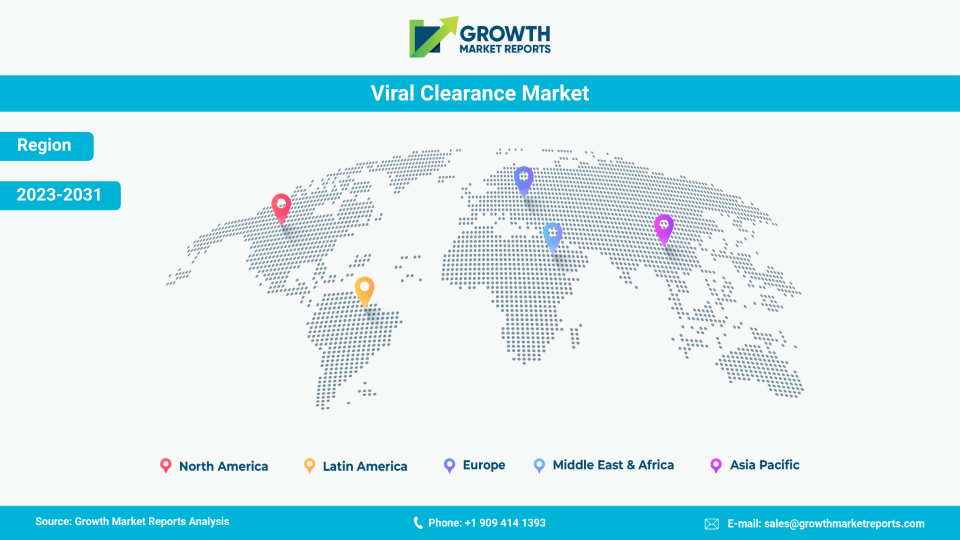
In terms of regions, the market is classified as Asia Pacific, North America, Latin America, Europe, and Middle East & Africa. North America accounted for a key share of the market in 2019 and is anticipated to constitute a key market share during the targeted period due to rising awareness and increasing investments by healthcare authorities towards viral clinical research in the region.
The market of Asia Pacific, however, is anticipated to expand at a rapid pace during the forecast period owing to increasing healthcare expenditure and developing healthcare infrastructure in the region.
Segments
The global viral clearance market has been segmented on the basis of
Applications
- Cellular & Gene Therapy Products
- Blood & Blood Products
- Vaccines & Therapeutics
- Tissue & Tissue Products
- Stem Cell Products
Methods
- Viral Inactivation Method
- Viral Detection Method
- Viral Removal Method
End-users
- Contract Research Organizations
- Pharmaceutical & Biotechnology Companies
- Academic Research Institutes
- Others
Regions
- Asia Pacific
- North America
- Latin America
- Europe
- Middle East & Africa
Key Players
Competitive Landscape
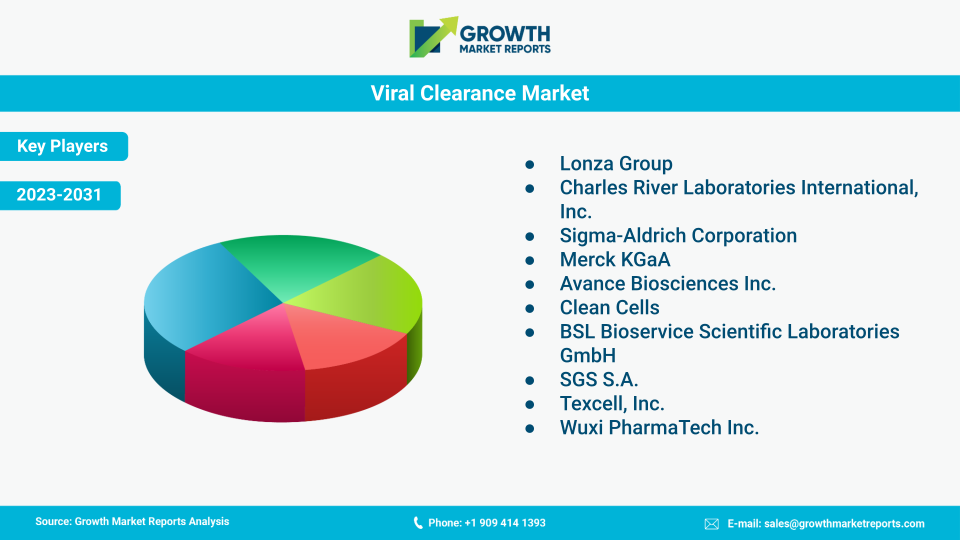
Key players competing in the global viral clearance market are Lonza Group; Charles River Laboratories International, Inc.; Sigma-Aldrich Corporation; Merck KGaA; Avance Biosciences Inc.; Clean Cells; BSL Bioservice Scientific Laboratories GmbH; SGS S.A.; Texcell, Inc.; and Wuxi PharmaTech Inc.
The main market players are continuously looking for several market development activities and opportunities such as mergers and acquisitions, research and developments, investments for innovative products, and collaborations to enhance their market positions.











 Request For Customization
 Enquiry Before Buying
 Speak With Analyst