Segments - by Component (Hardware, Software, Services), by System Type (Analog, IP-based), by Application (Commercial, Residential, Industrial, Government, Transportation, Others), by End-User (BFSI, Retail, Healthcare, Education, Hospitality, Others)
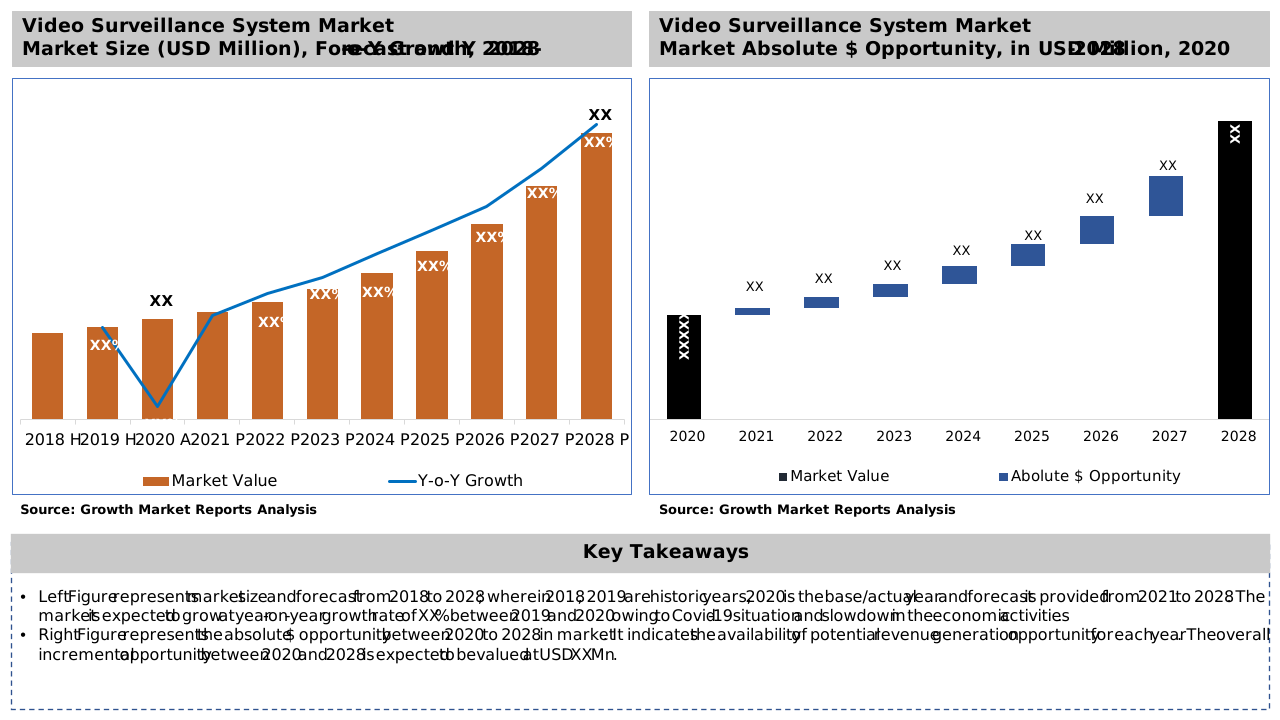
According to our latest research, the global video surveillance system market size in 2024 stood at USD 53.4 billion, reflecting robust demand across diverse sectors. The market is projected to reach USD 124.1 billion by 2033, expanding at a CAGR of 9.8% during the forecast period. This remarkable growth is primarily driven by increasing security concerns, rapid urbanization, and the adoption of advanced surveillance technologies in both developed and emerging economies. The integration of artificial intelligence (AI), Internet of Things (IoT), and cloud-based video management solutions further accelerates the adoption of video surveillance systems worldwide.
One of the key growth factors for the video surveillance system market is the escalating need for security and real-time monitoring across commercial, residential, and public sectors. Rising incidents of theft, vandalism, terrorism, and other criminal activities have compelled governments and private organizations to invest heavily in advanced surveillance infrastructure. Furthermore, the proliferation of smart cities and the implementation of stringent regulatory policies regarding public safety are fueling the adoption of video surveillance systems. The increasing deployment of high-definition (HD) and ultra-high-definition (UHD) cameras, coupled with advanced analytics, enables organizations to enhance situational awareness and respond promptly to security threats.
Technological advancements are playing a pivotal role in shaping the future of the video surveillance system market. The integration of AI-powered analytics, such as facial recognition, behavior analysis, and object detection, is transforming traditional surveillance into proactive security solutions. Cloud-based video management systems (VMS) are gaining traction due to their scalability, cost-effectiveness, and remote accessibility. Additionally, the emergence of edge computing allows for real-time data processing at the source, reducing latency and improving operational efficiency. These innovations are not only enhancing the effectiveness of surveillance systems but also expanding their applications across new verticals such as healthcare, education, and transportation.
Another significant growth driver is the increasing affordability and accessibility of surveillance hardware and software. The declining cost of IP cameras, network video recorders (NVRs), and storage solutions has made it feasible for small and medium-sized enterprises (SMEs) and residential users to deploy sophisticated surveillance systems. Moreover, the growing awareness about the benefits of surveillance in deterring crime, monitoring employee productivity, and ensuring compliance with safety regulations is encouraging end-users to invest in advanced systems. The ongoing shift from analog to IP-based solutions is expected to further boost market growth, as IP systems offer superior image quality, scalability, and integration capabilities.
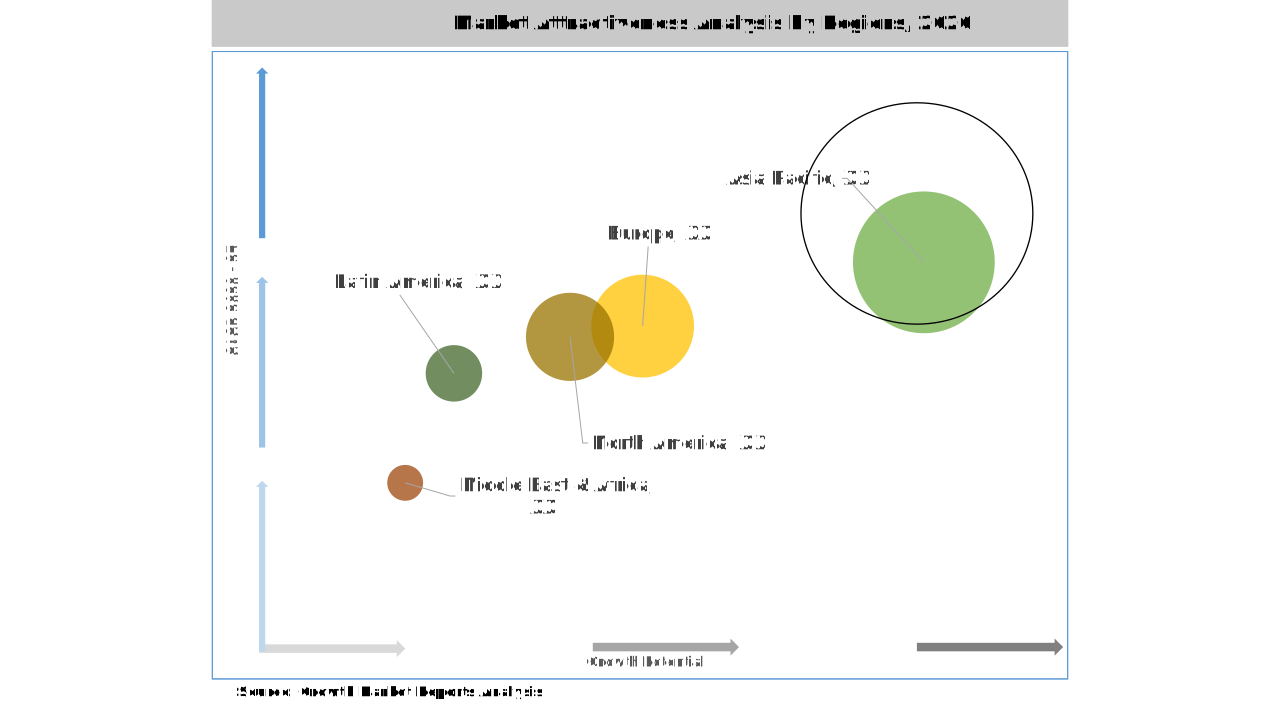
Regionally, Asia Pacific dominates the video surveillance system market owing to rapid urbanization, expanding infrastructure, and increased government spending on smart city projects. Countries such as China, India, and Japan are witnessing substantial investments in public safety and transportation surveillance. North America and Europe are also significant contributors, driven by technological innovation and stringent regulatory frameworks. Meanwhile, the Middle East & Africa and Latin America are emerging as high-growth regions due to rising security concerns and increasing adoption of digital surveillance solutions.
The component segment of the video surveillance system market is broadly categorized into hardware, software, and services. Hardware remains the backbone of surveillance infrastructure, encompassing cameras, recorders, storage devices, and accessories. The demand for high-resolution IP cameras, thermal cameras, and panoramic cameras is witnessing exponential growth, as organizations seek to enhance image clarity and coverage. Advanced hardware solutions now incorporate features such as night vision, motion detection, and wireless connectivity, catering to a wide range of applications from perimeter security to traffic monitoring. The hardware segment accounted for the largest market share in 2024, driven by continuous product innovation and the need for reliable, durable equipment.
Software is a rapidly growing segment, underpinned by the increasing adoption of video management systems (VMS), analytics platforms, and AI-driven surveillance applications. Modern VMS platforms offer centralized control, real-time event alerts, and seamless integration with third-party security solutions. The incorporation of deep learning algorithms enables automated detection of suspicious behavior, facial recognition, and license plate recognition, significantly reducing the burden on human operators. Cloud-based software solutions are gaining momentum, offering scalability, data redundancy, and remote access, which are particularly valuable for multi-site enterprises and organizations with distributed operations.
Services play an indispensable role in the video surveillance system market, encompassing installation, maintenance, consulting, and managed services. As organizations increasingly opt for comprehensive security solutions, the demand for professional services is on the rise. Service providers offer end-to-end support, from system design and deployment to ongoing maintenance and technical support. Managed video surveillance services, which include remote monitoring and incident response, are gaining popularity among businesses looking to outsource their security operations and focus on core activities. The services segment is expected to witness robust growth during the forecast period, driven by the complexity of modern surveillance systems and the need for specialized expertise.
The interplay between hardware, software, and services is critical for delivering holistic surveillance solutions that address evolving security challenges. Vendors are increasingly offering bundled solutions that combine state-of-the-art hardware with advanced analytics and value-added services. This integrated approach not only enhances system performance but also simplifies procurement and deployment for end-users. As the market matures, the focus is shifting towards interoperability, scalability, and ease of use, prompting vendors to invest in research and development and strategic partnerships.
| Attributes | Details |
| Report Title | Video Surveillance System Market Research Report 2033 |
| By Component | Hardware, Software, Services |
| By System Type | Analog, IP-based |
| By Application | Commercial, Residential, Industrial, Government, Transportation, Others |
| By End-User | BFSI, Retail, Healthcare, Education, Hospitality, Others |
| Regions Covered | North America, Europe, APAC, Latin America, MEA |
| Base Year | 2024 |
| Historic Data | 2018-2023 |
| Forecast Period | 2025-2033 |
| Number of Pages | 282 |
| Number of Tables & Figures | 292 |
| Customization Available | Yes, the report can be customized as per your need. |
The system type segment of the video surveillance system market is divided into analog and IP-based systems. Analog surveillance systems, once the industry standard, are gradually being phased out in favor of more advanced IP-based solutions. Analog systems are valued for their simplicity, reliability, and lower upfront costs, making them suitable for small-scale installations and budget-conscious users. However, they are limited in terms of scalability, image resolution, and integration with modern analytics platforms. Despite these limitations, analog systems still hold a significant share in developing regions and legacy installations, where cost considerations and familiarity with existing infrastructure drive adoption.
IP-based surveillance systems represent the future of the video surveillance system market, offering superior image quality, scalability, and flexibility. These systems leverage digital networks to transmit video data, enabling remote monitoring, centralized management, and seamless integration with other security and IT systems. The adoption of IP-based systems is accelerating, driven by the declining cost of IP cameras, advancements in network infrastructure, and the growing need for high-definition surveillance. IP systems support a wide range of features, including video analytics, motion detection, and cloud storage, making them ideal for large-scale deployments and complex security environments.
Hybrid systems, which combine analog and IP technologies, are gaining traction among organizations looking to upgrade their existing infrastructure without incurring the high costs of a complete overhaul. These systems enable gradual migration to IP-based solutions, allowing users to leverage the benefits of digital technology while maximizing the value of their legacy investments. Hybrid systems are particularly popular in sectors such as retail, education, and government, where budget constraints and operational continuity are key considerations.
The transition from analog to IP-based systems is expected to accelerate over the forecast period, fueled by technological advancements, regulatory mandates, and the increasing availability of affordable IP solutions. Vendors are focusing on developing user-friendly migration tools, interoperability standards, and cost-effective upgrade paths to facilitate this transition. As organizations prioritize future-proofing their security infrastructure, the demand for IP-based and hybrid systems is set to outpace that of traditional analog solutions.
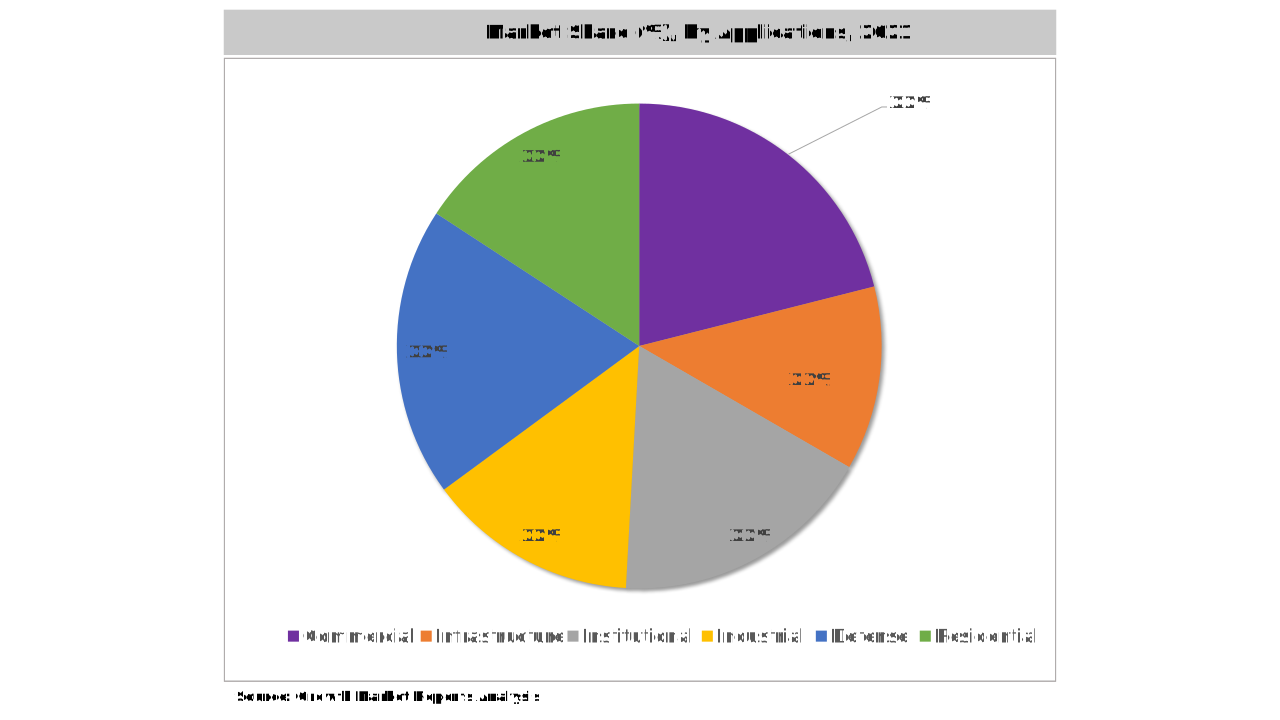
The application segment of the video surveillance system market is highly diverse, encompassing commercial, residential, industrial, government, transportation, and other sectors. The commercial sector is the largest contributor, driven by the need to safeguard assets, monitor customer behavior, and ensure regulatory compliance. Retail stores, shopping malls, banks, and corporate offices are increasingly deploying advanced surveillance solutions to deter theft, prevent fraud, and enhance customer experience. The integration of video analytics enables real-time detection of suspicious activities, queue management, and heat mapping, providing valuable insights for business optimization.
The residential segment is witnessing rapid growth, fueled by rising concerns about home security, burglary, and property crime. The proliferation of smart home devices and the availability of affordable, easy-to-install surveillance cameras have made it easier for homeowners to monitor their properties remotely. Cloud-based storage, mobile app integration, and smart alerts are key features driving adoption in the residential market. The COVID-19 pandemic has further accelerated this trend, as remote work and increased time spent at home have heightened the need for robust security solutions.
In the industrial sector, video surveillance systems are critical for ensuring workplace safety, monitoring production processes, and preventing unauthorized access. Manufacturing plants, warehouses, and logistics facilities rely on surveillance to detect safety violations, monitor equipment performance, and manage inventory. The integration of surveillance data with industrial automation systems enables predictive maintenance and process optimization, reducing downtime and operational costs.
Government and transportation applications are also significant contributors to the video surveillance system market. Public safety initiatives, smart city projects, and transportation hubs such as airports, railway stations, and highways are major deployment areas. Surveillance systems play a vital role in crowd management, traffic monitoring, and incident response, helping authorities maintain order and ensure the safety of citizens. The increasing adoption of AI-powered analytics enables real-time threat detection, facial recognition, and license plate recognition, enhancing the effectiveness of public surveillance.
The end-user segment of the video surveillance system market includes BFSI, retail, healthcare, education, hospitality, and others. The banking, financial services, and insurance (BFSI) sector is a major adopter of surveillance systems, driven by the need to protect assets, prevent fraud, and comply with regulatory requirements. Banks and financial institutions deploy surveillance solutions across branches, ATMs, and data centers to monitor transactions, detect suspicious behavior, and ensure the safety of employees and customers. Advanced analytics, such as facial recognition and transaction monitoring, are increasingly being integrated to enhance security and streamline operations.
The retail sector is another significant end-user, leveraging video surveillance to prevent theft, monitor employee performance, and optimize store layouts. Retailers use surveillance data to analyze customer behavior, manage queues, and improve inventory management. The integration of video analytics with point-of-sale (POS) systems enables real-time detection of fraudulent transactions and enhances loss prevention efforts. The growing trend of omnichannel retailing and the rise of e-commerce are further driving the adoption of surveillance solutions in warehouses, distribution centers, and fulfillment hubs.
Healthcare facilities, including hospitals, clinics, and long-term care centers, rely on video surveillance to ensure patient safety, protect sensitive areas, and comply with health and safety regulations. Surveillance systems are used to monitor entrances, emergency rooms, and restricted areas, preventing unauthorized access and ensuring a safe environment for patients and staff. The integration of surveillance with access control and alarm systems enhances incident response and facilitates compliance with regulatory standards such as HIPAA.
The education and hospitality sectors are also witnessing increased adoption of video surveillance systems. Schools, colleges, and universities deploy surveillance to monitor campus activities, prevent bullying, and ensure the safety of students and staff. Hotels, resorts, and event venues use surveillance to safeguard guests, monitor entrances and exits, and manage crowd control during large events. The growing emphasis on safety and customer experience is expected to drive further investment in surveillance solutions across these sectors.
The video surveillance system market presents significant opportunities for growth, driven by the rapid adoption of smart technologies and the expansion of surveillance applications beyond traditional security. The integration of AI, machine learning, and big data analytics is enabling the development of intelligent surveillance solutions capable of proactive threat detection, automated incident response, and predictive analytics. These innovations are opening up new use cases in areas such as retail analytics, healthcare monitoring, and industrial automation. The rise of smart cities and the increasing focus on public safety are expected to drive large-scale deployments of surveillance systems, creating substantial opportunities for vendors and service providers.
Another major opportunity lies in the growing demand for cloud-based and managed surveillance services. Organizations are increasingly seeking scalable, cost-effective solutions that offer remote access, data redundancy, and simplified management. Cloud-based video management systems (VMS) and surveillance-as-a-service (VSaaS) models are gaining traction, particularly among small and medium-sized enterprises (SMEs) and multi-site organizations. These solutions enable businesses to leverage advanced analytics, reduce capital expenditures, and focus on core operations while outsourcing security management to specialized providers. The ongoing shift towards subscription-based models is expected to drive recurring revenue streams and foster long-term customer relationships.
Despite the promising outlook, the video surveillance system market faces several restraining factors, chief among them being concerns over data privacy and cybersecurity. The proliferation of IP-based and cloud-connected surveillance systems has increased the risk of data breaches, hacking, and unauthorized access to sensitive video footage. Regulatory frameworks such as the General Data Protection Regulation (GDPR) and other data protection laws impose stringent requirements on the collection, storage, and processing of surveillance data. Organizations must invest in robust cybersecurity measures, encryption technologies, and compliance solutions to mitigate these risks and maintain stakeholder trust. Failure to address privacy concerns could hinder market growth and lead to reputational damage and legal liabilities.
Asia Pacific remains the dominant force in the video surveillance system market, accounting for the largest market share in 2024 with revenues exceeding USD 22.5 billion. The region's growth is fueled by rapid urbanization, large-scale infrastructure projects, and government initiatives focused on public safety and smart city development. China, in particular, is a global leader in surveillance deployments, driven by extensive investments in city-wide monitoring, transportation surveillance, and facial recognition technologies. India, Japan, and South Korea are also witnessing robust growth, supported by expanding commercial and industrial sectors and increasing awareness about security solutions. The Asia Pacific market is expected to register a CAGR of 11.2% during the forecast period, outpacing other regions.
North America is the second-largest market, with a value of approximately USD 13.1 billion in 2024. The region is characterized by high adoption rates of advanced surveillance technologies, stringent regulatory requirements, and significant investments in critical infrastructure protection. The United States leads the market, driven by homeland security initiatives, the proliferation of smart buildings, and the integration of AI-powered analytics. Canada and Mexico are also contributing to regional growth, particularly in sectors such as retail, transportation, and healthcare. The presence of leading technology vendors and a mature IT ecosystem further support market expansion in North America.
Europe holds a substantial share of the video surveillance system market, with revenues reaching USD 9.8 billion in 2024. The region's growth is driven by the increasing adoption of IP-based solutions, government investments in public safety, and the modernization of transportation and urban infrastructure. The United Kingdom, Germany, and France are key markets, with significant deployments in commercial, government, and transportation sectors. The Middle East & Africa and Latin America are emerging as high-growth regions, with market values of USD 5.1 billion and USD 2.9 billion respectively in 2024. These regions are benefiting from rising security concerns, urbanization, and the adoption of digital surveillance solutions in commercial and public sectors.
The video surveillance system market is highly competitive, characterized by the presence of global technology giants, specialized security solution providers, and a growing number of innovative startups. The competitive landscape is shaped by continuous product innovation, strategic partnerships, and mergers and acquisitions aimed at expanding product portfolios and market reach. Leading vendors are investing heavily in research and development to introduce advanced features such as AI-powered analytics, cloud integration, and cybersecurity enhancements. The focus is increasingly shifting towards offering end-to-end solutions that combine hardware, software, and services, enabling organizations to address complex security challenges with ease.
Market players are also differentiating themselves through value-added services such as managed surveillance, remote monitoring, and consulting. The rise of subscription-based and cloud-delivered solutions is prompting vendors to adopt new business models and forge alliances with cloud service providers and system integrators. Price competition remains intense, particularly in the hardware segment, where commoditization and declining component costs are putting pressure on margins. However, vendors are offsetting these challenges by focusing on software and services, which offer higher margins and recurring revenue opportunities.
The market is witnessing increasing consolidation, with major players acquiring niche technology providers to strengthen their capabilities in AI, analytics, and cloud computing. Strategic partnerships and collaborations are also common, enabling vendors to expand their geographic footprint and access new customer segments. The growing emphasis on interoperability and open standards is fostering collaboration across the value chain, as organizations seek to integrate surveillance systems with broader security and IT ecosystems.
Some of the major companies operating in the video surveillance system market include Hikvision Digital Technology Co., Ltd., Dahua Technology Co., Ltd., Axis Communications AB, Bosch Security Systems, Hanwha Techwin Co., Ltd., Panasonic Corporation, Honeywell International Inc., Avigilon Corporation (Motorola Solutions), FLIR Systems Inc., and Pelco (Schneider Electric). Hikvision and Dahua are global leaders, renowned for their extensive product portfolios, advanced analytics capabilities, and strong presence in Asia Pacific and international markets. Axis Communications is a pioneer in IP-based surveillance, known for its innovative camera technologies and open platform approach. Bosch Security Systems and Hanwha Techwin are recognized for their focus on quality, reliability, and integration with building automation and security systems.
Panasonic Corporation and Honeywell International Inc. offer comprehensive surveillance solutions, leveraging their expertise in electronics, automation, and building management. Avigilon, a subsidiary of Motorola Solutions, is a key player in AI-powered video analytics and end-to-end surveillance solutions. FLIR Systems specializes in thermal imaging and advanced sensor technologies, catering to critical infrastructure and industrial applications. Pelco, a brand under Schneider Electric, is known for its robust camera systems and video management platforms. These companies are continuously expanding their product offerings, investing in R&D, and pursuing strategic partnerships to maintain their competitive edge in the evolving video surveillance system market.
The Video Surveillance System market has been segmented on the basis of
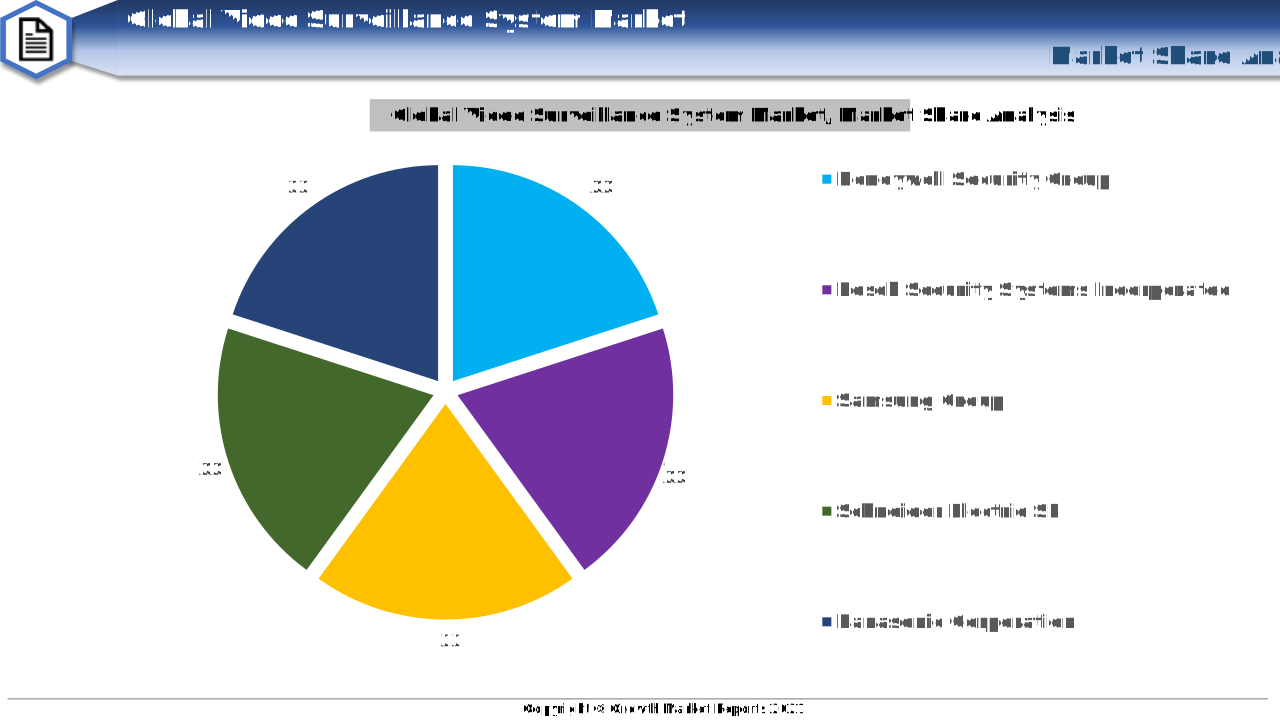
Key players operating in the global video surveillance system market includes Honeywell Security Group, Bosch Security Systems Incorporated, Samsung Group, Schneider Electric SE, Panasonic Corporation.
AI enables advanced analytics like facial recognition, behavior analysis, and object detection, turning traditional surveillance into proactive security solutions.
Major challenges include data privacy concerns, cybersecurity risks, and compliance with regulations such as GDPR.
Key companies include Hikvision, Dahua Technology, Axis Communications, Bosch Security Systems, Hanwha Techwin, Avigilon (Motorola Solutions), Honeywell Security, FLIR Systems, Pelco, and others.
Applications include commercial, residential, industrial, government, and transportation sectors, with commercial being the largest contributor.
Asia Pacific dominates the market, followed by North America and Europe. The Middle East & Africa and Latin America are emerging as high-growth regions.
IP-based systems offer higher image quality, scalability, remote monitoring, and integration with modern analytics, while analog systems are simpler and have lower upfront costs but limited features.
The main components are hardware (cameras, recorders, storage devices), software (video management systems, analytics), and services (installation, maintenance, managed services).
Key technologies include artificial intelligence (AI), Internet of Things (IoT), cloud-based video management solutions, and edge computing.
The market is expected to grow at a CAGR of 9.8% from 2025 to 2033, reaching USD 124.1 billion by 2033.
As of 2024, the global video surveillance system market is valued at USD 53.4 billion.