Ventilator Test Systems Market Report 2034

Ventilator Test Systems Market Report 2034

Segments - by Product Type (Portable Ventilator Test Systems, Benchtop Ventilator Test Systems), by Application (Hospitals, Diagnostic Centers, Ambulatory Surgical Centers, Home Care Settings, Others), by End-User (Healthcare Providers, Medical Device Manufacturers, Research & Academic Institutes, Others), by Distribution Channel (Direct Sales, Distributors, Online Sales)

https://growthmarketreports.com/raksha
Author : Raksha Sharma
https://growthmarketreports.com/Vaibhav
Fact-checked by : V. Chandola
https://growthmarketreports.com/Shruti
Editor : Shruti Bhat

Last Updated : Jun, 2026 | Report ID :HC-662 | 4.1 Rating | 89 Reviews | 299 Pages | Format : Docx PDF

Report Description

This report is updated with the latest market data and insights as of June 2026. Base year: 2025  |  Forecast period: 2026-2034


Ventilator Test Systems Market Outlook

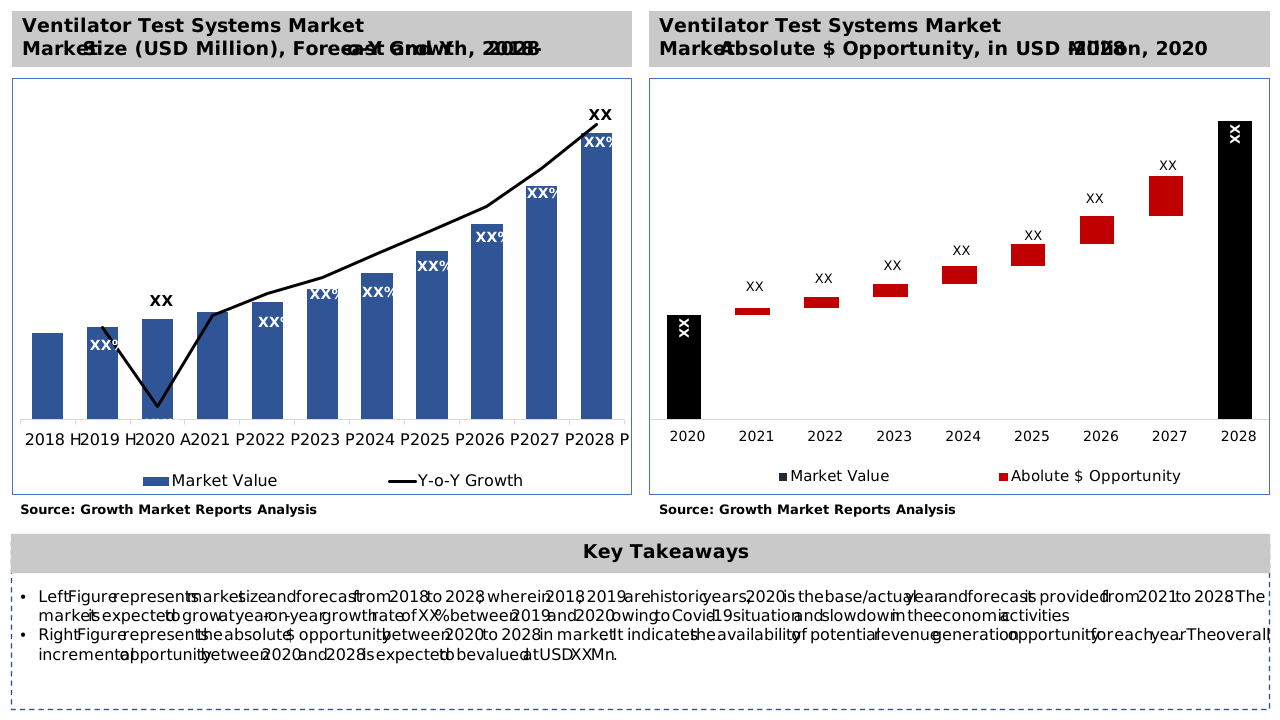
According to our latest research, the global ventilator test systems market size in 2025 stands at USD 442.6 million, registering a robust compound annual growth rate (CAGR) of 7.2% from 2026 to 2034. This growth is propelled by the rising demand for advanced respiratory care solutions, stringent regulatory standards for medical device performance, and the increasing prevalence of respiratory diseases worldwide. By 2034, the market is forecasted to reach USD 819.4 million, reflecting the sector's dynamic expansion and the critical role ventilator test systems play in ensuring patient safety and device efficacy. The market's historical trajectory from 2019 to 2024 was significantly shaped by the COVID-19 pandemic, which triggered rapid procurement of ventilators globally and consequently heightened awareness of routine device calibration and performance verification.

Global Ventilator Test Systems Market Size Forecast 2025-2034, USD Million

The growth trajectory of the ventilator test systems market is largely influenced by the escalating incidence of respiratory disorders such as chronic obstructive pulmonary disease (COPD), asthma, and acute respiratory distress syndrome (ARDS). The pandemic-era surge in mechanical ventilation demand permanently elevated institutional awareness of device readiness, spurring healthcare providers and manufacturers to invest in high-precision test solutions. These systems are essential for routine calibration, performance verification, and preventive maintenance of ventilators, thereby ensuring optimal functionality and compliance with international safety standards. As healthcare systems worldwide strive to enhance patient outcomes and reduce the risk of device-related complications, the adoption of ventilator test systems is expected to remain on an upward trend through 2034.

Technological advancements have significantly shaped the evolution of ventilator test systems, enabling the integration of digital interfaces, wireless connectivity, and advanced data analytics. Modern ventilator test systems offer enhanced portability, user-friendly interfaces, and comprehensive reporting features, making them indispensable tools for hospitals, diagnostic centers, and medical device manufacturers. The shift towards portable and benchtop models has expanded the application scope across diverse healthcare settings, from intensive care units to home care environments. Paralleling these developments, the broader growth of ventilation monitoring technology is reinforcing clinical demand for end-to-end respiratory device quality assurance. Furthermore, the growing emphasis on preventive equipment maintenance, coupled with stringent regulatory requirements imposed by agencies such as the FDA and the European Medicines Agency, is driving continuous innovation and adoption in this market.

From a regional perspective, North America currently dominates the ventilator test systems market, owing to its advanced healthcare infrastructure, high healthcare expenditure, and strong presence of leading medical device manufacturers. Europe follows closely, benefiting from robust regulatory frameworks and significant investments in healthcare technology. The Asia Pacific region is emerging as a high-growth market, driven by rising healthcare awareness, increasing government initiatives to improve respiratory care, and expanding healthcare infrastructure in countries such as China, India, and Japan. Meanwhile, Latin America and the Middle East & Africa are witnessing gradual market penetration, supported by efforts to upgrade healthcare facilities and address the growing burden of respiratory illnesses.

Product Type Analysis

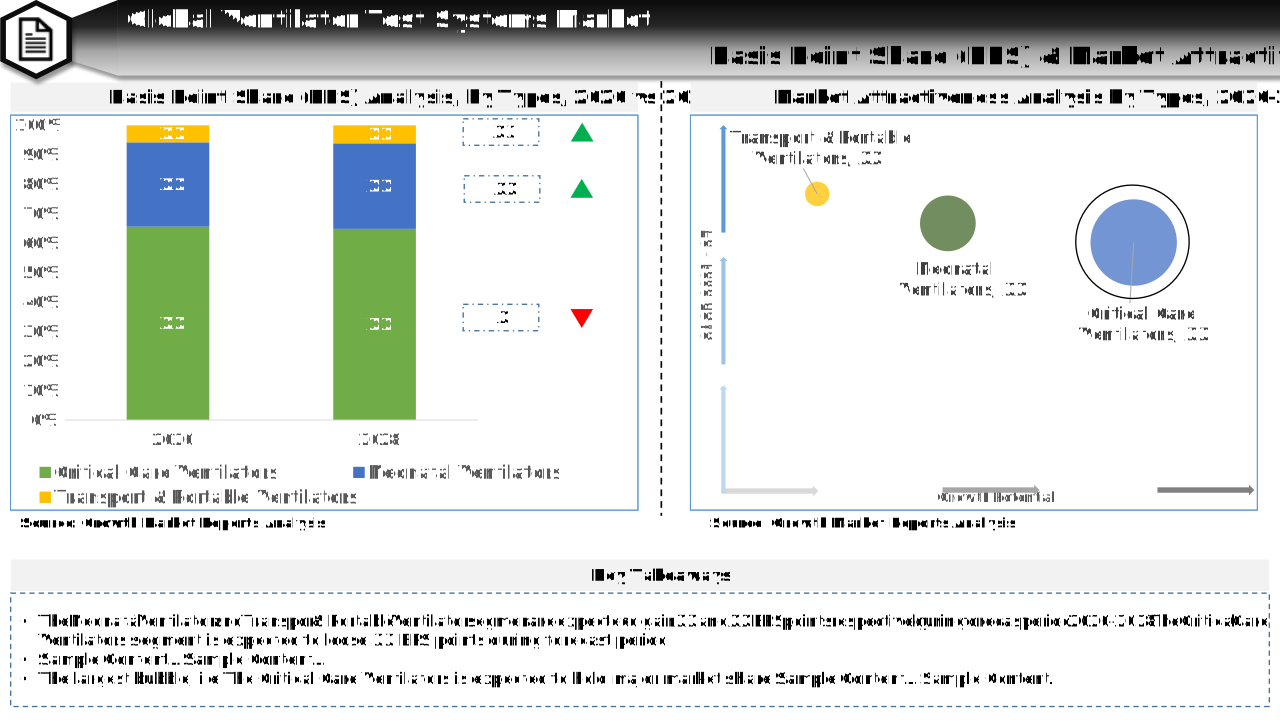
The ventilator test systems market by product type is segmented into portable ventilator test systems and benchtop ventilator test systems. Portable ventilator test systems have garnered significant attention due to their compact design, ease of use, and ability to facilitate on-site testing in diverse healthcare environments. These systems are particularly valuable in emergency situations, field hospitals, and home care settings, where mobility and rapid deployment are crucial. The growing trend towards decentralized healthcare and the need for frequent equipment calibration in remote locations have further accelerated the adoption of portable models, which account for approximately 54.5% of the global market in 2025. Additionally, technological advancements have enabled the incorporation of wireless data transmission and advanced diagnostic features, enhancing the operational efficiency of portable ventilator test systems.

Ventilator Test Systems Market Share by Product Type 2025

On the other hand, benchtop ventilator test systems remain the preferred choice for centralized healthcare facilities, research laboratories, and medical device manufacturing units, holding roughly 45.5% of the 2025 market. These systems are designed to offer high-precision testing, comprehensive data logging, and advanced analytical capabilities, making them ideal for rigorous performance verification and compliance testing. Benchtop systems are often equipped with multiple test channels, sophisticated sensors, and user-friendly software interfaces, enabling healthcare professionals to conduct detailed assessments of ventilator functionality. The demand for benchtop ventilator test systems is further fueled by the increasing focus on device quality assurance and the need to adhere to stringent regulatory standards. Complementary tools such as lung function testing instruments are frequently deployed alongside benchtop test systems, reinforcing integrated respiratory diagnostic workflows in large hospital settings.

The market dynamics between portable and benchtop ventilator test systems are influenced by the specific requirements of end-users. While portable systems offer unmatched flexibility and convenience, benchtop models provide superior accuracy and reliability for high-volume testing. As healthcare providers and manufacturers seek to balance operational efficiency with regulatory compliance, both product segments are expected to witness steady growth through 2034. The ongoing shift towards digitalization and the integration of IoT-enabled features are likely to bridge the gap between portability and performance, paving the way for hybrid solutions that cater to a broader spectrum of applications.

Another notable trend in the product type segment is the increasing emphasis on user-centric design and intuitive interfaces. Manufacturers are investing in the development of ventilator test systems that offer simplified workflows, automated calibration routines, and real-time data visualization. These enhancements not only improve the user experience but also minimize the risk of human error during testing procedures. As the market continues to evolve through the forecast period, product differentiation based on features such as battery life, data storage capacity, and compatibility with various ventilator models will become key determinants of competitive advantage.

Report Scope

AttributesDetails
Report TitleVentilator Test Systems Market Research Report 2034
By Product TypePortable Ventilator Test Systems, Benchtop Ventilator Test Systems
By ApplicationHospitals, Diagnostic Centers, Ambulatory Surgical Centers, Home Care Settings, Others
By End-UserHealthcare Providers, Medical Device Manufacturers, Research & Academic Institutes, Others
By Distribution ChannelDirect Sales, Distributors, Online Sales
Regions CoveredNorth America, Europe, APAC, Latin America, MEA
Base Year2025
Historic Data2019-2024
Forecast Period2026-2034
Number of Pages299
Number of Tables & Figures282
Customization AvailableYes, the report can be customized as per your need.

Application Analysis

The application segment of the ventilator test systems market encompasses hospitals, diagnostic centers, ambulatory surgical centers, home care settings, and others. Hospitals represent the largest application segment, accounting for a substantial share of the global market in 2025. The critical need for regular maintenance, calibration, and performance verification of ventilators in intensive care units, emergency departments, and operating rooms drives the demand for advanced test systems in hospital settings. Hospitals also benefit from economies of scale, enabling them to invest in high-end benchtop systems and comprehensive maintenance programs to ensure uninterrupted patient care.

Diagnostic centers are increasingly adopting ventilator test systems to support the growing demand for respiratory function testing and equipment calibration. These centers play a pivotal role in the early detection and management of respiratory disorders, necessitating the use of reliable and accurate test systems. The integration of ventilator test systems in diagnostic workflows enhances the quality of patient assessments and ensures compliance with regulatory standards. As the prevalence of chronic respiratory diseases continues to rise through the forecast period, diagnostic centers are expected to emerge as significant contributors to market growth. The synergy between ventilator test systems and broader cardiopulmonary assessment solutions is also prompting multi-specialty diagnostic centers to expand their device quality assurance capabilities.

The ambulatory surgical centers (ASCs) segment is witnessing steady growth, driven by the rising number of outpatient procedures and the need for efficient respiratory support in perioperative care. ASCs require portable and easy-to-use ventilator test systems that can be seamlessly integrated into their workflow. The ability to conduct on-the-spot testing and maintenance of ventilators enhances patient safety and reduces the risk of equipment failure during surgical procedures. As the trend towards minimally invasive surgeries and same-day discharge gains momentum, the demand for ventilator test systems in ASCs is poised for further expansion during the 2026-2034 period.

Home care settings represent a rapidly growing application area, fueled by the increasing adoption of home-based respiratory therapies and the shift towards patient-centric care models. Portable ventilator test systems are particularly well-suited for home care environments, enabling caregivers and patients to perform routine equipment checks and ensure optimal device performance. The rise of telehealth and remote patient monitoring solutions has further accelerated the adoption of ventilator test systems in home care settings. The concurrent expansion of home-use ventilation devices is directly amplifying demand for portable test solutions that can verify equipment performance outside clinical settings. Other applications, such as emergency medical services and military healthcare facilities, also contribute to the expanding scope of the market.

End-User Analysis

The end-user segment of the ventilator test systems market includes healthcare providers, medical device manufacturers, research and academic institutes, and others. Healthcare providers, comprising hospitals, clinics, and long-term care facilities, constitute the largest end-user group. Their reliance on ventilator test systems stems from the need to maintain high standards of patient safety, regulatory compliance, and operational efficiency. Regular testing and calibration of ventilators are essential to prevent device malfunctions, reduce the risk of adverse events, and ensure optimal therapeutic outcomes. Healthcare providers are increasingly investing in both portable and benchtop test systems to support their diverse operational requirements through 2034.

Medical device manufacturers represent a key end-user segment, as they are responsible for the design, production, and quality assurance of ventilators and related respiratory devices. Ventilator test systems are integral to the manufacturing process, enabling manufacturers to conduct rigorous performance verification, functional testing, and quality control. The growing emphasis on product innovation, regulatory compliance, and international market expansion has heightened the demand for advanced test systems in this segment. Manufacturers are also leveraging ventilator test systems to support research and development activities, facilitate product validation, and streamline the certification process under evolving standards such as ISO 80601.

Research and academic institutes utilize ventilator test systems for a wide range of applications, including clinical research, device development, and educational purposes. These institutions play a crucial role in advancing the understanding of respiratory physiology, evaluating new ventilator technologies, and training healthcare professionals. Ventilator test systems equipped with advanced data analytics, simulation capabilities, and customizable testing protocols are particularly valuable in research and academic settings. The increasing focus on translational research and the development of next-generation respiratory therapies are expected to drive sustained demand for ventilator test systems in this segment through the forecast horizon.

Other end-users, such as government agencies, regulatory bodies, and non-governmental organizations, also contribute to the market's growth. These entities are involved in the oversight, standardization, and quality assurance of medical devices, necessitating the use of ventilator test systems for compliance testing and certification. The collective efforts of healthcare providers, manufacturers, researchers, and regulatory authorities underscore the critical importance of ventilator test systems in safeguarding public health and advancing respiratory care.

Distribution Channel Analysis

The distribution channel segment of the ventilator test systems market comprises direct sales, distributors, and online sales. Direct sales remain the dominant distribution channel, particularly for large healthcare institutions and medical device manufacturers. Direct engagement with manufacturers enables end-users to access customized solutions, comprehensive technical support, and value-added services such as installation, training, and maintenance. The direct sales model fosters long-term relationships between suppliers and customers, facilitating the adoption of advanced ventilator test systems and ensuring timely access to product upgrades and technical expertise.

Distributors play a vital role in expanding the market reach of ventilator test systems, especially in emerging markets and regions with fragmented healthcare infrastructure. Distributors leverage their extensive networks, local market knowledge, and logistics capabilities to facilitate the efficient delivery of products to end-users. They also provide essential services such as product demonstrations, after-sales support, and regulatory guidance, thereby enhancing the overall customer experience. The growing trend towards strategic partnerships between manufacturers and distributors is expected to drive market penetration and accelerate the adoption of ventilator test systems in underserved regions during the 2026-2034 period.

Online sales have gained significant traction since 2020 and continue to expand in 2025, driven by the increasing digitalization of procurement processes and the growing preference for convenient, cost-effective purchasing options. Online platforms offer end-users access to a wide range of ventilator test systems, enabling them to compare features, prices, and customer reviews before making informed purchasing decisions. The integration of e-commerce solutions, digital marketing, and virtual product demonstrations is expected to further enhance the growth of online sales in the ventilator test systems market through 2034.

The interplay between direct sales, distributors, and online channels reflects the evolving dynamics of the ventilator test systems market. Manufacturers are increasingly adopting omni-channel distribution strategies to cater to the diverse needs of end-users, optimize market coverage, and enhance customer engagement. The ability to offer seamless, personalized, and responsive distribution solutions will be a key differentiator for market players seeking to strengthen their competitive position and capitalize on emerging growth opportunities.

Opportunities & Threats

The ventilator test systems market is poised for substantial growth through 2034, driven by a multitude of opportunities that span technological innovation, expanding healthcare infrastructure, and rising awareness of respiratory health. The ongoing digital transformation of the healthcare sector presents significant opportunities for the integration of advanced features such as IoT connectivity, cloud-based data management, and predictive analytics in ventilator test systems. These innovations enable real-time monitoring, remote diagnostics, and proactive maintenance, thereby enhancing device reliability and patient safety. Additionally, the increasing focus on personalized medicine and home-based respiratory care opens new avenues for the development of portable, user-friendly test systems tailored to the needs of individual patients and caregivers.

Emerging markets in Asia Pacific, Latin America, and the Middle East & Africa offer untapped growth potential for the ventilator test systems market. Rapid urbanization, rising healthcare investments, and government initiatives to strengthen respiratory care infrastructure are driving the demand for advanced medical devices and testing solutions in these regions. Strategic collaborations between local distributors, healthcare providers, and international manufacturers can facilitate market entry, accelerate product adoption, and address region-specific challenges such as regulatory compliance and affordability. Furthermore, the growing emphasis on preventive maintenance and equipment lifecycle management creates opportunities for value-added services, including training, calibration, and technical support throughout the 2026-2034 forecast period.

Despite these opportunities, the ventilator test systems market faces several restraining factors that could impede its growth. High initial costs associated with advanced test systems, coupled with budget constraints in public healthcare institutions, may limit market penetration in certain regions. Additionally, the complexity of regulatory approval processes and the need for continuous product innovation to meet evolving safety standards pose challenges for manufacturers. Intense competition, price pressures, and the risk of technological obsolescence further underscore the importance of strategic investment in research and development, customer education, and market differentiation.

Regional Outlook

North America holds the largest share of the global ventilator test systems market, with an estimated market value of USD 158.5 million in 2025, representing approximately 35.8% of global revenue. The region's leadership is underpinned by its advanced healthcare infrastructure, high levels of healthcare spending, and a strong presence of leading medical device manufacturers such as Fluke Biomedical and TSI Incorporated. The United States, in particular, accounts for the majority of regional demand, driven by stringent regulatory requirements, a high prevalence of chronic respiratory diseases, and robust investments in healthcare technology. The North American market is expected to maintain a steady CAGR of 6.9% through 2034, supported by ongoing innovation and the increasing adoption of digital health solutions.

Ventilator Test Systems Market Regional Share 2025

Europe represents the second-largest regional market, with a current market size of USD 112.4 million in 2025, accounting for roughly 25.4% of the global total. The region benefits from well-established regulatory frameworks, significant investments in healthcare modernization, and a strong focus on patient safety and quality assurance. Key markets such as Germany, the United Kingdom, and France are driving demand for advanced ventilator test systems, particularly in hospital and diagnostic center settings. The European market is characterized by a high degree of product standardization, widespread adoption of preventive maintenance practices, and a growing emphasis on research and development in respiratory care.

The Asia Pacific region is emerging as a high-growth market, with a current value of USD 100.0 million in 2025 and a projected CAGR of 8.1% through 2034, making it the fastest-growing regional segment. Rapid urbanization, increasing healthcare expenditure, and government initiatives to improve access to advanced medical technologies are fueling market expansion in countries such as China, India, and Japan. The region's large and aging population, coupled with rising awareness of respiratory health, is creating significant demand for ventilator test systems across hospitals, home care settings, and ambulatory surgical centers. Strategic partnerships, local manufacturing, and tailored product offerings are expected to further accelerate market growth in Asia Pacific. Latin America, valued at approximately USD 40.7 million in 2025, and the Middle East & Africa, at approximately USD 31.0 million, are gradually gaining traction as healthcare systems in these regions invest in upgrading respiratory care capabilities and adopting international quality standards.

Competitor Outlook

The competitive landscape of the ventilator test systems market in 2025 is characterized by the presence of several global and regional players, each striving to strengthen their market position through product innovation, strategic partnerships, and expansion into emerging markets. Leading companies are focused on developing technologically advanced ventilator test systems that offer enhanced accuracy, reliability, and user experience. The integration of digital interfaces, wireless connectivity, and cloud-based data management solutions has become a key differentiator for market leaders, enabling them to address the evolving needs of healthcare providers, manufacturers, and research institutions.

Mergers and acquisitions, collaborations, and distribution agreements are common strategies employed by major players to expand their product portfolios, enhance market reach, and capitalize on emerging growth opportunities. Companies are also investing in research and development to introduce next-generation test systems with advanced diagnostic features, automated workflows, and compatibility with a wide range of ventilator models. The competitive environment is further shaped by the increasing emphasis on regulatory compliance, customer support, and after-sales services, as end-users seek comprehensive solutions that ensure long-term device performance and safety throughout the 2026-2034 forecast period.

The market is witnessing the entry of new players, particularly in the Asia Pacific and Latin America regions, where local manufacturers are leveraging their understanding of regional requirements and cost advantages to capture market share. However, established global players continue to dominate the market, benefiting from their extensive product portfolios, strong brand recognition, and robust distribution networks. The ability to offer customized solutions, responsive technical support, and value-added services will be critical for companies seeking to differentiate themselves and sustain growth in an increasingly competitive market.

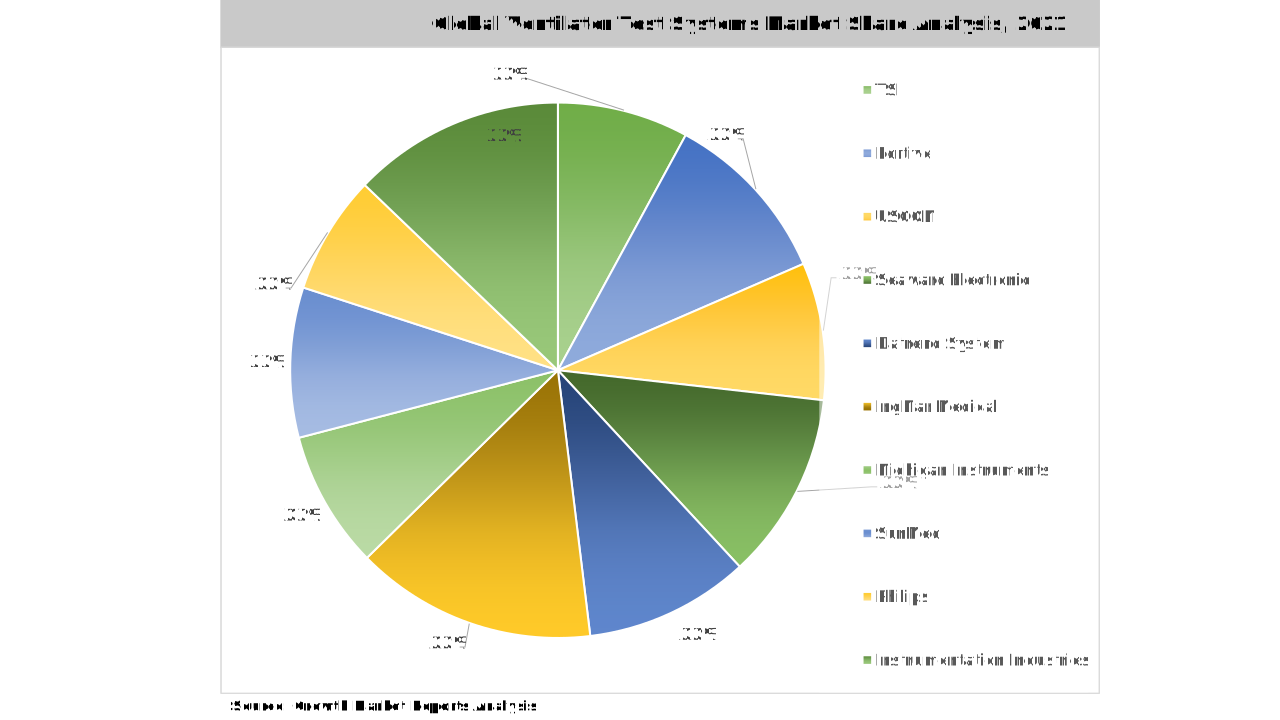
Some of the major companies operating in the ventilator test systems market include Fluke Biomedical, TSI Incorporated, IMT Analytics AG, Datrend Systems Inc., BC Group International, Inc., and Rigel Medical. Fluke Biomedical is renowned for its comprehensive range of biomedical test equipment, including advanced ventilator analyzers that are widely used in hospitals and manufacturing facilities worldwide. TSI Incorporated offers innovative respiratory testing solutions, with a focus on precision, reliability, and ease of use. IMT Analytics AG specializes in high-performance ventilator testers and calibration devices, catering to the needs of healthcare providers and device manufacturers. Datrend Systems Inc. and BC Group International, Inc. are recognized for their commitment to quality, customer support, and ongoing product development. Rigel Medical, a part of Seaward Group, is known for its robust and user-friendly test systems designed to meet the stringent requirements of modern healthcare environments. Drägerwerk AG & Co. KGaA brings deep domain expertise in respiratory care and medical safety technology, while large-scale health technology companies including GE Healthcare, Siemens Healthineers, and Philips Healthcare continue to integrate advanced testing capabilities within their broader respiratory device ecosystems. Collectively, these companies are shaping the future of the ventilator test systems market through continuous innovation, strategic investments, and a steadfast commitment to improving respiratory care worldwide.

Key Players

  • TSI Incorporated
  • IMT Analytics AG
  • Fluke Biomedical
  • BC Group International, Inc.
  • Datrend Systems Inc.
  • Seaward Electronic Ltd.
  • EKU Elektronik GmbH
  • Rigel Medical
  • Pronk Technologies, Inc.
  • Netech Corporation
  • Fortive Corporation
  • Drägerwerk AG & Co. KGaA
  • Michigan Instruments
  • Hans Rudolph, Inc.
  • Medtronic plc
  • GE Healthcare
  • Siemens Healthineers
  • Philips Healthcare

Segments

The Ventilator Test Systems market has been segmented on the basis of

Product Type

  • Portable Ventilator Test Systems
  • Benchtop Ventilator Test Systems

Application

  • Hospitals
  • Diagnostic Centers
  • Ambulatory Surgical Centers
  • Home Care Settings
  • Others

End-User

  • Healthcare Providers
  • Medical Device Manufacturers
  • Research & Academic Institutes
  • Others

Distribution Channel

  • Direct Sales
  • Distributors
  • Online Sales

Frequently Asked Questions

The market is led by globally recognized companies including Fluke Biomedical, TSI Incorporated, IMT Analytics AG, Datrend Systems Inc., BC Group International, Rigel Medical, Drägerwerk AG & Co. KGaA, Fortive Corporation, Seaward Electronic Ltd., EKU Elektronik GmbH, Pronk Technologies, Netech Corporation, Michigan Instruments, Hans Rudolph, GE Healthcare, Siemens Healthineers, Philips Healthcare, and Medtronic plc. These players compete on accuracy, regulatory compliance support, software ecosystems, and breadth of compatible ventilator models.

Leading trends in 2025 include the integration of IoT connectivity enabling remote diagnostics and cloud-based data storage, AI-assisted anomaly detection to flag out-of-spec ventilator performance before failures occur, and automated calibration workflows that reduce technician time and human error. Manufacturers are also developing systems compatible with a broader range of ventilator models, including high-flow and neonatal devices, while miniaturization advances continue to narrow the performance gap between portable and benchtop solutions.

Direct sales remain the dominant channel, particularly for large healthcare networks and device manufacturers seeking customized solutions and dedicated technical support. Distributors are critical for reaching fragmented markets and emerging economies, providing local expertise, logistics, and after-sales services. Online sales have grown considerably since 2020 and continue to gain share in 2025, driven by digital procurement platforms and the convenience they offer smaller clinics and independent biomedical engineering departments.

The primary applications span hospitals, diagnostic centers, ambulatory surgical centers, and home care settings. Hospitals account for the largest application share due to intensive care unit and emergency department requirements. Home care settings are the fastest-growing application area, driven by the expansion of home-based respiratory therapy programs and the rising adoption of portable test systems that allow caregivers to perform routine equipment checks outside clinical facilities.

Healthcare providers, including hospitals, clinics, and long-term care facilities, form the largest end-user group, accounting for the majority of global demand in 2025. Medical device manufacturers are the second-largest segment, using test systems for production-line quality assurance and regulatory compliance. Research and academic institutes represent a growing segment, relying on advanced test systems for clinical research, device validation, and the training of respiratory care professionals.

North America holds the largest regional share at approximately 35.8% in 2025, supported by advanced healthcare infrastructure and a strong manufacturing base. Europe follows with around 25.4%, underpinned by rigorous regulatory standards. Asia Pacific accounts for roughly 22.6% and is the fastest-growing region, expanding at a CAGR above 8.1% through 2034, led by China, India, and Japan. Latin America and the Middle East & Africa together represent the remaining market share.

The market offers two primary product types. Portable ventilator test systems are compact, battery-operated units designed for on-site and point-of-care testing in hospitals, ambulatory settings, and home care environments. Benchtop ventilator test systems are larger, higher-precision instruments used in centralized hospital workshops, quality-control laboratories, and medical device manufacturing lines where comprehensive multi-parameter testing is required.

Key growth drivers include the rising global prevalence of chronic respiratory diseases such as COPD and ARDS, increasingly stringent regulatory requirements from bodies such as the FDA and the European Medicines Agency, and heightened awareness of device safety following the COVID-19 pandemic. Technological advances including wireless connectivity, cloud-based diagnostics, and automated calibration routines are also accelerating adoption across all end-user segments.

The ventilator test systems market is projected to grow at a CAGR of 7.2% during the forecast period from 2026 to 2034. At this rate, the market is expected to reach approximately USD 819.4 million by 2034, driven by expanding healthcare infrastructure, rising regulatory scrutiny, and continued adoption of portable and IoT-enabled test solutions.

The global ventilator test systems market size stood at USD 442.6 million in 2025, the base year of this study. This valuation reflects steady post-pandemic normalization combined with sustained demand for high-precision respiratory device calibration across hospitals, diagnostic centers, and medical device manufacturing facilities worldwide.

Table Of Content

Chapter 1 Executive Summary
Chapter 2 Assumptions and Acronyms Used
Chapter 3 Research Methodology
Chapter 4 Ventilator Test Systems Market Overview
   4.1 Introduction
      4.1.1 Market Taxonomy
      4.1.2 Market Definition
      4.1.3 Macro-Economic Factors Impacting the Market Growth
   4.2 Ventilator Test Systems Market Dynamics
      4.2.1 Market Drivers
      4.2.2 Market Restraints
      4.2.3 Market Opportunity
   4.3 Ventilator Test Systems Market - Supply Chain Analysis
      4.3.1 List of Key Suppliers
      4.3.2 List of Key Distributors
      4.3.3 List of Key Consumers
   4.4 Key Forces Shaping the Ventilator Test Systems Market
      4.4.1 Bargaining Power of Suppliers
      4.4.2 Bargaining Power of Buyers
      4.4.3 Threat of Substitution
      4.4.4 Threat of New Entrants
      4.4.5 Competitive Rivalry
   4.5 Global Ventilator Test Systems Market Size & Forecast, 2023-2032
      4.5.1 Ventilator Test Systems Market Size and Y-o-Y Growth
      4.5.2 Ventilator Test Systems Market Absolute $ Opportunity

Chapter 5 Global Ventilator Test Systems Market Analysis and Forecast By Product Type
   5.1 Introduction
      5.1.1 Key Market Trends & Growth Opportunities By Product Type
      5.1.2 Basis Point Share (BPS) Analysis By Product Type
      5.1.3 Absolute $ Opportunity Assessment By Product Type
   5.2 Ventilator Test Systems Market Size Forecast By Product Type
      5.2.1 Portable Ventilator Test Systems
      5.2.2 Benchtop Ventilator Test Systems
   5.3 Market Attractiveness Analysis By Product Type

Chapter 6 Global Ventilator Test Systems Market Analysis and Forecast By Application
   6.1 Introduction
      6.1.1 Key Market Trends & Growth Opportunities By Application
      6.1.2 Basis Point Share (BPS) Analysis By Application
      6.1.3 Absolute $ Opportunity Assessment By Application
   6.2 Ventilator Test Systems Market Size Forecast By Application
      6.2.1 Hospitals
      6.2.2 Diagnostic Centers
      6.2.3 Ambulatory Surgical Centers
      6.2.4 Home Care Settings
      6.2.5 Others
   6.3 Market Attractiveness Analysis By Application

Chapter 7 Global Ventilator Test Systems Market Analysis and Forecast By End-User
   7.1 Introduction
      7.1.1 Key Market Trends & Growth Opportunities By End-User
      7.1.2 Basis Point Share (BPS) Analysis By End-User
      7.1.3 Absolute $ Opportunity Assessment By End-User
   7.2 Ventilator Test Systems Market Size Forecast By End-User
      7.2.1 Healthcare Providers
      7.2.2 Medical Device Manufacturers
      7.2.3 Research & Academic Institutes
      7.2.4 Others
   7.3 Market Attractiveness Analysis By End-User

Chapter 8 Global Ventilator Test Systems Market Analysis and Forecast By Distribution Channel
   8.1 Introduction
      8.1.1 Key Market Trends & Growth Opportunities By Distribution Channel
      8.1.2 Basis Point Share (BPS) Analysis By Distribution Channel
      8.1.3 Absolute $ Opportunity Assessment By Distribution Channel
   8.2 Ventilator Test Systems Market Size Forecast By Distribution Channel
      8.2.1 Direct Sales
      8.2.2 Distributors
      8.2.3 Online Sales
   8.3 Market Attractiveness Analysis By Distribution Channel

Chapter 9 Global Ventilator Test Systems Market Analysis and Forecast by Region
   9.1 Introduction
      9.1.1 Key Market Trends & Growth Opportunities By Region
      9.1.2 Basis Point Share (BPS) Analysis By Region
      9.1.3 Absolute $ Opportunity Assessment By Region
   9.2 Ventilator Test Systems Market Size Forecast By Region
      9.2.1 North America
      9.2.2 Europe
      9.2.3 Asia Pacific
      9.2.4 Latin America
      9.2.5 Middle East & Africa (MEA)
   9.3 Market Attractiveness Analysis By Region

Chapter 10 Coronavirus Disease (COVID-19) Impact 
   10.1 Introduction 
   10.2 Current & Future Impact Analysis 
   10.3 Economic Impact Analysis 
   10.4 Government Policies 
   10.5 Investment Scenario

Chapter 11 North America Ventilator Test Systems Analysis and Forecast
   11.1 Introduction
   11.2 North America Ventilator Test Systems Market Size Forecast by Country
      11.2.1 U.S.
      11.2.2 Canada
   11.3 Basis Point Share (BPS) Analysis by Country
   11.4 Absolute $ Opportunity Assessment by Country
   11.5 Market Attractiveness Analysis by Country
   11.6 North America Ventilator Test Systems Market Size Forecast By Product Type
      11.6.1 Portable Ventilator Test Systems
      11.6.2 Benchtop Ventilator Test Systems
   11.7 Basis Point Share (BPS) Analysis By Product Type 
   11.8 Absolute $ Opportunity Assessment By Product Type 
   11.9 Market Attractiveness Analysis By Product Type
   11.10 North America Ventilator Test Systems Market Size Forecast By Application
      11.10.1 Hospitals
      11.10.2 Diagnostic Centers
      11.10.3 Ambulatory Surgical Centers
      11.10.4 Home Care Settings
      11.10.5 Others
   11.11 Basis Point Share (BPS) Analysis By Application 
   11.12 Absolute $ Opportunity Assessment By Application 
   11.13 Market Attractiveness Analysis By Application
   11.14 North America Ventilator Test Systems Market Size Forecast By End-User
      11.14.1 Healthcare Providers
      11.14.2 Medical Device Manufacturers
      11.14.3 Research & Academic Institutes
      11.14.4 Others
   11.15 Basis Point Share (BPS) Analysis By End-User 
   11.16 Absolute $ Opportunity Assessment By End-User 
   11.17 Market Attractiveness Analysis By End-User
   11.18 North America Ventilator Test Systems Market Size Forecast By Distribution Channel
      11.18.1 Direct Sales
      11.18.2 Distributors
      11.18.3 Online Sales
   11.19 Basis Point Share (BPS) Analysis By Distribution Channel 
   11.20 Absolute $ Opportunity Assessment By Distribution Channel 
   11.21 Market Attractiveness Analysis By Distribution Channel

Chapter 12 Europe Ventilator Test Systems Analysis and Forecast
   12.1 Introduction
   12.2 Europe Ventilator Test Systems Market Size Forecast by Country
      12.2.1 Germany
      12.2.2 France
      12.2.3 Italy
      12.2.4 U.K.
      12.2.5 Spain
      12.2.6 Russia
      12.2.7 Rest of Europe
   12.3 Basis Point Share (BPS) Analysis by Country
   12.4 Absolute $ Opportunity Assessment by Country
   12.5 Market Attractiveness Analysis by Country
   12.6 Europe Ventilator Test Systems Market Size Forecast By Product Type
      12.6.1 Portable Ventilator Test Systems
      12.6.2 Benchtop Ventilator Test Systems
   12.7 Basis Point Share (BPS) Analysis By Product Type 
   12.8 Absolute $ Opportunity Assessment By Product Type 
   12.9 Market Attractiveness Analysis By Product Type
   12.10 Europe Ventilator Test Systems Market Size Forecast By Application
      12.10.1 Hospitals
      12.10.2 Diagnostic Centers
      12.10.3 Ambulatory Surgical Centers
      12.10.4 Home Care Settings
      12.10.5 Others
   12.11 Basis Point Share (BPS) Analysis By Application 
   12.12 Absolute $ Opportunity Assessment By Application 
   12.13 Market Attractiveness Analysis By Application
   12.14 Europe Ventilator Test Systems Market Size Forecast By End-User
      12.14.1 Healthcare Providers
      12.14.2 Medical Device Manufacturers
      12.14.3 Research & Academic Institutes
      12.14.4 Others
   12.15 Basis Point Share (BPS) Analysis By End-User 
   12.16 Absolute $ Opportunity Assessment By End-User 
   12.17 Market Attractiveness Analysis By End-User
   12.18 Europe Ventilator Test Systems Market Size Forecast By Distribution Channel
      12.18.1 Direct Sales
      12.18.2 Distributors
      12.18.3 Online Sales
   12.19 Basis Point Share (BPS) Analysis By Distribution Channel 
   12.20 Absolute $ Opportunity Assessment By Distribution Channel 
   12.21 Market Attractiveness Analysis By Distribution Channel

Chapter 13 Asia Pacific Ventilator Test Systems Analysis and Forecast
   13.1 Introduction
   13.2 Asia Pacific Ventilator Test Systems Market Size Forecast by Country
      13.2.1 China
      13.2.2 Japan
      13.2.3 South Korea
      13.2.4 India
      13.2.5 Australia
      13.2.6 South East Asia (SEA)
      13.2.7 Rest of Asia Pacific (APAC)
   13.3 Basis Point Share (BPS) Analysis by Country
   13.4 Absolute $ Opportunity Assessment by Country
   13.5 Market Attractiveness Analysis by Country
   13.6 Asia Pacific Ventilator Test Systems Market Size Forecast By Product Type
      13.6.1 Portable Ventilator Test Systems
      13.6.2 Benchtop Ventilator Test Systems
   13.7 Basis Point Share (BPS) Analysis By Product Type 
   13.8 Absolute $ Opportunity Assessment By Product Type 
   13.9 Market Attractiveness Analysis By Product Type
   13.10 Asia Pacific Ventilator Test Systems Market Size Forecast By Application
      13.10.1 Hospitals
      13.10.2 Diagnostic Centers
      13.10.3 Ambulatory Surgical Centers
      13.10.4 Home Care Settings
      13.10.5 Others
   13.11 Basis Point Share (BPS) Analysis By Application 
   13.12 Absolute $ Opportunity Assessment By Application 
   13.13 Market Attractiveness Analysis By Application
   13.14 Asia Pacific Ventilator Test Systems Market Size Forecast By End-User
      13.14.1 Healthcare Providers
      13.14.2 Medical Device Manufacturers
      13.14.3 Research & Academic Institutes
      13.14.4 Others
   13.15 Basis Point Share (BPS) Analysis By End-User 
   13.16 Absolute $ Opportunity Assessment By End-User 
   13.17 Market Attractiveness Analysis By End-User
   13.18 Asia Pacific Ventilator Test Systems Market Size Forecast By Distribution Channel
      13.18.1 Direct Sales
      13.18.2 Distributors
      13.18.3 Online Sales
   13.19 Basis Point Share (BPS) Analysis By Distribution Channel 
   13.20 Absolute $ Opportunity Assessment By Distribution Channel 
   13.21 Market Attractiveness Analysis By Distribution Channel

Chapter 14 Latin America Ventilator Test Systems Analysis and Forecast
   14.1 Introduction
   14.2 Latin America Ventilator Test Systems Market Size Forecast by Country
      14.2.1 Brazil
      14.2.2 Mexico
      14.2.3 Rest of Latin America (LATAM)
   14.3 Basis Point Share (BPS) Analysis by Country
   14.4 Absolute $ Opportunity Assessment by Country
   14.5 Market Attractiveness Analysis by Country
   14.6 Latin America Ventilator Test Systems Market Size Forecast By Product Type
      14.6.1 Portable Ventilator Test Systems
      14.6.2 Benchtop Ventilator Test Systems
   14.7 Basis Point Share (BPS) Analysis By Product Type 
   14.8 Absolute $ Opportunity Assessment By Product Type 
   14.9 Market Attractiveness Analysis By Product Type
   14.10 Latin America Ventilator Test Systems Market Size Forecast By Application
      14.10.1 Hospitals
      14.10.2 Diagnostic Centers
      14.10.3 Ambulatory Surgical Centers
      14.10.4 Home Care Settings
      14.10.5 Others
   14.11 Basis Point Share (BPS) Analysis By Application 
   14.12 Absolute $ Opportunity Assessment By Application 
   14.13 Market Attractiveness Analysis By Application
   14.14 Latin America Ventilator Test Systems Market Size Forecast By End-User
      14.14.1 Healthcare Providers
      14.14.2 Medical Device Manufacturers
      14.14.3 Research & Academic Institutes
      14.14.4 Others
   14.15 Basis Point Share (BPS) Analysis By End-User 
   14.16 Absolute $ Opportunity Assessment By End-User 
   14.17 Market Attractiveness Analysis By End-User
   14.18 Latin America Ventilator Test Systems Market Size Forecast By Distribution Channel
      14.18.1 Direct Sales
      14.18.2 Distributors
      14.18.3 Online Sales
   14.19 Basis Point Share (BPS) Analysis By Distribution Channel 
   14.20 Absolute $ Opportunity Assessment By Distribution Channel 
   14.21 Market Attractiveness Analysis By Distribution Channel

Chapter 15 Middle East & Africa (MEA) Ventilator Test Systems Analysis and Forecast
   15.1 Introduction
   15.2 Middle East & Africa (MEA) Ventilator Test Systems Market Size Forecast by Country
      15.2.1 Saudi Arabia
      15.2.2 South Africa
      15.2.3 UAE
      15.2.4 Rest of Middle East & Africa (MEA)
   15.3 Basis Point Share (BPS) Analysis by Country
   15.4 Absolute $ Opportunity Assessment by Country
   15.5 Market Attractiveness Analysis by Country
   15.6 Middle East & Africa (MEA) Ventilator Test Systems Market Size Forecast By Product Type
      15.6.1 Portable Ventilator Test Systems
      15.6.2 Benchtop Ventilator Test Systems
   15.7 Basis Point Share (BPS) Analysis By Product Type 
   15.8 Absolute $ Opportunity Assessment By Product Type 
   15.9 Market Attractiveness Analysis By Product Type
   15.10 Middle East & Africa (MEA) Ventilator Test Systems Market Size Forecast By Application
      15.10.1 Hospitals
      15.10.2 Diagnostic Centers
      15.10.3 Ambulatory Surgical Centers
      15.10.4 Home Care Settings
      15.10.5 Others
   15.11 Basis Point Share (BPS) Analysis By Application 
   15.12 Absolute $ Opportunity Assessment By Application 
   15.13 Market Attractiveness Analysis By Application
   15.14 Middle East & Africa (MEA) Ventilator Test Systems Market Size Forecast By End-User
      15.14.1 Healthcare Providers
      15.14.2 Medical Device Manufacturers
      15.14.3 Research & Academic Institutes
      15.14.4 Others
   15.15 Basis Point Share (BPS) Analysis By End-User 
   15.16 Absolute $ Opportunity Assessment By End-User 
   15.17 Market Attractiveness Analysis By End-User
   15.18 Middle East & Africa (MEA) Ventilator Test Systems Market Size Forecast By Distribution Channel
      15.18.1 Direct Sales
      15.18.2 Distributors
      15.18.3 Online Sales
   15.19 Basis Point Share (BPS) Analysis By Distribution Channel 
   15.20 Absolute $ Opportunity Assessment By Distribution Channel 
   15.21 Market Attractiveness Analysis By Distribution Channel

Chapter 16 Competition Landscape 
   16.1 Ventilator Test Systems Market: Competitive Dashboard
   16.2 Global Ventilator Test Systems Market: Market Share Analysis, 2023
   16.3 Company Profiles (Details – Overview, Financials, Developments, Strategy) 
      16.3.1 TSI Incorporated
      16.3.2 IMT Analytics AG
      16.3.3 Fluke Biomedical
      16.3.4 BC Group International, Inc.
      16.3.5 Datrend Systems Inc.
      16.3.6 Seaward Electronic Ltd.
      16.3.7 EKU Elektronik GmbH
      16.3.8 Rigel Medical
      16.3.9 Pronk Technologies, Inc.
      16.3.10 Netech Corporation
      16.3.11 Fortive Corporation
      16.3.12 Drägerwerk AG & Co. KGaA
      16.3.13 Michigan Instruments
      16.3.14 Hans Rudolph, Inc.
      16.3.15 Medtronic plc
      16.3.16 GE Healthcare
      16.3.17 Siemens Healthineers
      16.3.18 Philips Healthcare

Methodology

Our Clients

Microsoft
Deloitte
Siemens Healthcare
Pfizer
FedEx Logistics
General Electric
The John Holland Group
Nestle SA