Vein Illuminator Market Research Report 2033

Vein Illuminator Market Research Report 2033

Segments - by Product Type (Infrared Vein Illuminators, Ultrasound Vein Illuminators, Transillumination Vein Illuminators, Others), by Application (Hospitals, Blood Donation Centers, Academic Institutions, Others), by Technology (Near-Infrared, Ultrasound, Transillumination, Others), by End-User (Hospitals & Clinics, Ambulatory Surgical Centers, Blood Donation Centers, Others)

https://growthmarketreports.com/raksha
Author : Raksha Sharma
https://growthmarketreports.com/Vaibhav
Fact-checked by : V. Chandola
https://growthmarketreports.com/Shruti
Editor : Shruti Bhat

Upcoming | Report ID :HC-2131 | 4.0 Rating | 57 Reviews | 280 Pages | Format : Docx PDF

Report Description


Vein Illuminator Market Outlook

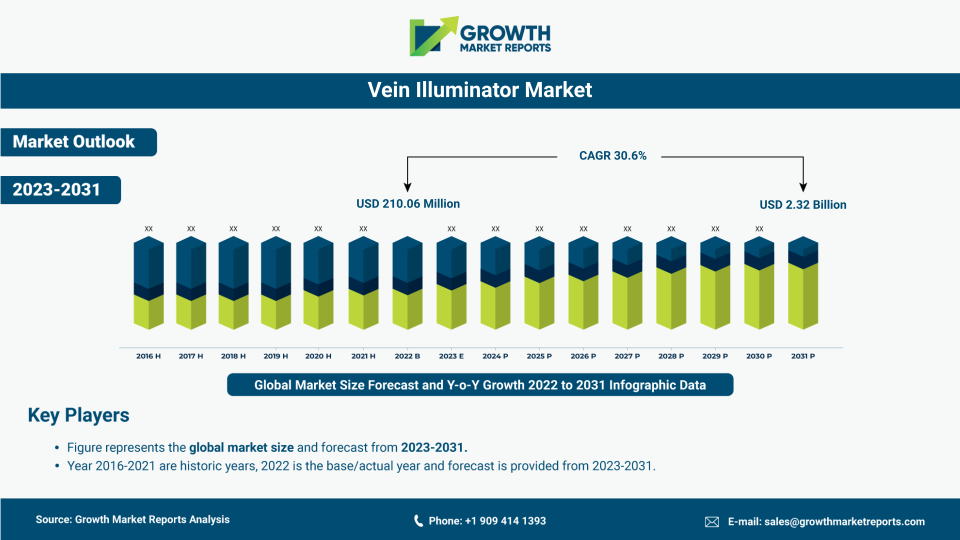
According to our latest research, the global vein illuminator market size was valued at USD 220 million in 2024, reflecting the growing adoption of advanced visualization devices in healthcare. The market is forecasted to grow at a CAGR of 14.2% from 2025 to 2033, reaching an estimated USD 647 million by 2033. This robust expansion is primarily driven by the increasing need for enhanced patient care, the surge in minimally invasive procedures, and the ongoing technological advancements in vein visualization systems. The rising prevalence of chronic diseases and the demand for efficient venipuncture procedures further fuel the marketÂ’s growth trajectory.

One of the primary growth factors for the vein illuminator market is the escalating demand for accurate and efficient vascular access, especially in pediatric and geriatric populations. These groups often present challenges in vein identification due to physiological factors, making traditional methods less effective and increasing the risk of multiple needle sticks. The integration of vein illuminators in clinical settings significantly reduces these complications, enhancing patient satisfaction and procedural success rates. The rise in chronic illnesses such as diabetes, cancer, and cardiovascular diseases, which often require frequent intravenous interventions, has further underscored the importance of reliable vein visualization, propelling the adoption of these devices globally.

Technological innovations have played a pivotal role in shaping the vein illuminator market landscape. The introduction of near-infrared (NIR) and ultrasound-based visualization technologies has revolutionized the way clinicians locate veins, offering real-time, non-invasive, and highly accurate imaging. These advancements not only minimize procedural errors but also reduce the time required for venipuncture, thereby increasing workflow efficiency in busy healthcare environments. Moreover, the integration of portable and handheld devices has expanded the scope of vein illuminators beyond hospitals to ambulatory surgical centers, blood donation camps, and even home healthcare settings, further broadening the market base.

Another significant growth driver is the increasing focus on patient-centric care and safety. Healthcare providers are under mounting pressure to improve patient outcomes and reduce procedural complications, which has led to the widespread adoption of vein visualization technologies. Additionally, the growing emphasis on reducing healthcare costs by minimizing failed venipuncture attempts and associated complications has encouraged hospitals and clinics to invest in advanced vein illuminators. The availability of user-friendly, cost-effective devices is also making these technologies accessible to a wider range of healthcare facilities, including those in emerging economies.

The integration of IV Therapy and Vein Access Devices plays a crucial role in enhancing the efficacy of vein illuminators. These devices are essential in facilitating seamless intravenous access, particularly in patients with difficult venous access. By improving the precision of vein localization, these technologies not only reduce the risk of complications but also enhance patient comfort during procedures. The synergy between IV therapy and advanced vein access devices underscores the importance of adopting comprehensive solutions in healthcare settings, where accurate and efficient vascular access is paramount.

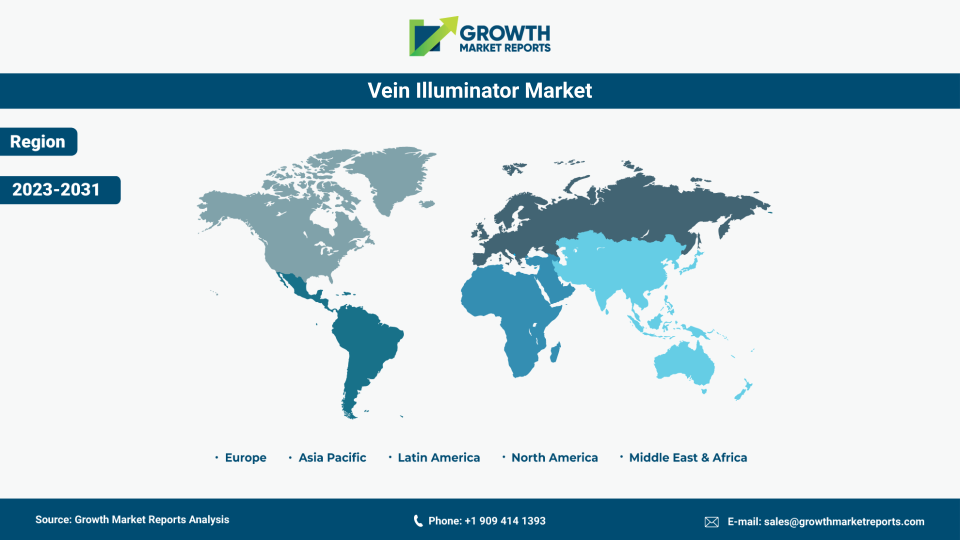
From a regional perspective, North America dominates the vein illuminator market, accounting for the largest share in 2024, followed closely by Europe and Asia Pacific. The strong presence of advanced healthcare infrastructure, high healthcare spending, and early adoption of innovative medical devices in North America have driven market growth. Meanwhile, Asia Pacific is expected to witness the fastest growth over the forecast period, fueled by increasing healthcare investments, rising awareness about patient safety, and expanding medical tourism. Europe continues to maintain a solid position, supported by favorable government initiatives and a growing elderly population. The Middle East & Africa and Latin America are also showing promising growth trends, albeit from a smaller base, as healthcare modernization accelerates in these regions.

Global Vein Illuminator Industry Outlook

Product Type Analysis

The vein illuminator market by product type is segmented into infrared vein illuminators, ultrasound vein illuminators, transillumination vein illuminators, and others. Among these, infrared vein illuminators hold the largest market share, attributed to their high accuracy, ease of use, and ability to provide real-time visualization without direct contact with the skin. These devices leverage near-infrared light to penetrate the skin and highlight subcutaneous veins, making them particularly valuable in pediatric, geriatric, and obese patients where veins are difficult to locate. The growing preference for non-invasive and safe vein localization methods in clinical practice has further fueled the adoption of infrared vein illuminators globally.

Ultrasound vein illuminators are gaining traction, especially in specialized healthcare settings such as intensive care units and surgical departments. These devices provide detailed imaging of both superficial and deep veins, enabling clinicians to perform complex vascular access procedures with greater precision and confidence. The integration of Doppler technology in ultrasound vein illuminators has further enhanced their diagnostic and procedural capabilities, making them indispensable in critical care and emergency medicine. However, the higher cost and need for specialized training may limit their widespread adoption in resource-constrained settings.

Transillumination vein illuminators represent another significant segment, particularly favored in pediatric and neonatal care. These devices utilize visible light to illuminate veins, offering a simple and cost-effective solution for routine venipuncture. While their penetration depth is limited compared to infrared and ultrasound technologies, transillumination devices remain popular in settings where budget constraints or minimal procedural complexity are key considerations. The continued development of compact and portable transillumination devices is expected to support their sustained demand in primary care and outpatient clinics.

The “others” category encompasses emerging and hybrid vein illumination technologies that combine multiple imaging modalities for enhanced visualization. Innovations such as multispectral imaging and augmented reality-based vein mapping are gradually making their way into the market, promising greater accuracy and user convenience. As healthcare providers increasingly seek versatile and multifunctional devices, the demand for hybrid vein illuminators is anticipated to rise, particularly in technologically advanced regions. Overall, the product type segment is characterized by rapid innovation and increasing customization to meet the diverse needs of healthcare professionals.

Report Scope

Attributes Details
Report Title Vein Illuminator Market Research Report 2033
By Product Type Infrared Vein Illuminators, Ultrasound Vein Illuminators, Transillumination Vein Illuminators, Others
By Application Hospitals, Blood Donation Centers, Academic Institutions, Others
By Technology Near-Infrared, Ultrasound, Transillumination, Others
By End-User Hospitals & Clinics, Ambulatory Surgical Centers, Blood Donation Centers, Others
Regions Covered North America, Europe, APAC, Latin America, MEA
Base Year 2024
Historic Data 2018-2023
Forecast Period 2025-2033
Number of Pages 280
Number of Tables & Figures 301
Customization Available Yes, the report can be customized as per your need.

Application Analysis

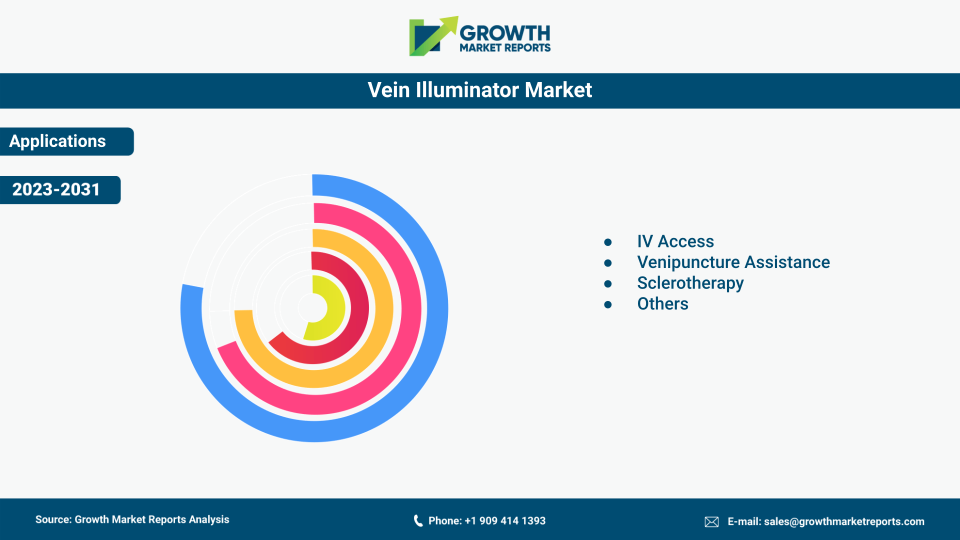
The vein illuminator market by application is broadly categorized into hospitals, blood donation centers, academic institutions, and others. Hospitals represent the largest application segment, accounting for a significant share of the global market in 2024. The high volume of intravenous procedures, coupled with the need for enhanced patient safety and efficient workflow, drives the adoption of advanced vein visualization devices in hospital settings. Vein illuminators are increasingly being integrated into emergency rooms, operating theaters, and intensive care units to support a wide range of clinical procedures, from routine blood draws to complex vascular interventions.

Blood donation centers are another critical application area, where the ability to quickly and accurately locate veins is essential for donor comfort and procedural efficiency. The deployment of vein illuminators in these settings has led to a marked reduction in failed venipuncture attempts and donor discomfort, thereby improving the overall donation experience and encouraging repeat donations. The rising global demand for safe and reliable blood collection processes, especially in the wake of public health emergencies, has further accelerated the adoption of vein visualization technologies in blood donation centers worldwide.

Academic institutions play a pivotal role in the vein illuminator market, particularly in the context of medical education and training. The use of advanced visualization devices in simulation labs and clinical skills training programs has enhanced the competency of healthcare professionals, reducing the learning curve associated with vascular access procedures. As medical schools and teaching hospitals increasingly prioritize hands-on, technology-driven education, the demand for vein illuminators in academic settings is expected to grow steadily. These devices not only improve procedural accuracy but also foster a culture of safety and innovation among future healthcare providers.

The “others” application segment includes outpatient clinics, home healthcare settings, and mobile medical units, reflecting the expanding reach of vein illuminators beyond traditional healthcare environments. The growing trend of home-based care and the proliferation of ambulatory services have created new opportunities for portable and user-friendly vein visualization devices. As healthcare delivery models continue to evolve, the versatility and adaptability of vein illuminators will be key to addressing the diverse needs of patients and providers across multiple care settings.

Technology Analysis

The technology segment of the vein illuminator market is divided into near-infrared (NIR), ultrasound, transillumination, and others. Near-infrared technology dominates the market, owing to its superior accuracy, non-invasive nature, and ability to provide real-time imaging of subcutaneous veins. NIR vein illuminators have become the gold standard in many healthcare settings, offering high sensitivity and specificity in vein detection. The continuous refinement of NIR technology, including improvements in image resolution and device portability, has further strengthened its market position.

Ultrasound technology is increasingly being adopted for its ability to visualize both superficial and deep veins, making it an invaluable tool for complex vascular access procedures. The integration of Doppler imaging and advanced signal processing has enhanced the diagnostic capabilities of ultrasound vein illuminators, enabling clinicians to assess vein patency and blood flow in real time. While ultrasound devices tend to be more expensive and require specialized training, their versatility and precision make them indispensable in critical care, anesthesia, and interventional radiology.

Transillumination technology, which utilizes visible light to highlight veins, remains popular in pediatric and neonatal care due to its simplicity and cost-effectiveness. Although its penetration depth is limited compared to NIR and ultrasound, transillumination devices are widely used in primary care, outpatient clinics, and resource-limited settings. Ongoing advancements in LED technology and device miniaturization are expected to enhance the performance and accessibility of transillumination vein illuminators, supporting their continued relevance in the market.

The “others” category includes emerging vein visualization technologies such as multispectral imaging, augmented reality (AR), and artificial intelligence (AI)-assisted devices. These innovations promise to deliver even greater accuracy, user convenience, and integration with electronic health records (EHRs), paving the way for the next generation of vein illuminators. As healthcare providers increasingly embrace digital transformation, the adoption of smart and connected vein visualization systems is expected to accelerate, driving further market growth.

End-User Analysis

By end-user, the vein illuminator market is segmented into hospitals & clinics, ambulatory surgical centers, blood donation centers, and others. Hospitals & clinics constitute the largest end-user segment, driven by the high volume of vascular access procedures and the critical need for accurate vein localization. The integration of vein illuminators into hospital workflows has led to improved patient outcomes, reduced procedural complications, and enhanced staff efficiency. As hospitals continue to invest in advanced medical technologies to meet rising patient expectations and regulatory standards, the demand for vein visualization devices is expected to remain strong.

Ambulatory surgical centers (ASCs) are emerging as a significant end-user segment, reflecting the shift towards outpatient and minimally invasive procedures. The adoption of vein illuminators in ASCs has improved the safety and efficiency of intravenous access, particularly in short-stay and day-surgery settings. The growing popularity of same-day surgeries and the increasing emphasis on patient comfort have further fueled the uptake of vein visualization devices in ambulatory care environments. As the ASC sector continues to expand, driven by cost-effectiveness and convenience, the demand for portable and easy-to-use vein illuminators is set to rise.

Blood donation centers rely heavily on vein illuminators to ensure donor safety, comfort, and procedural accuracy. The ability to quickly and accurately locate veins is critical for minimizing donor discomfort and reducing the risk of complications during blood collection. The widespread adoption of vein visualization devices in blood donation centers has contributed to higher donor satisfaction rates and improved operational efficiency. As global demand for safe and reliable blood collection continues to grow, particularly in response to public health emergencies, the importance of vein illuminators in this end-user segment will only increase.

The “others” category encompasses a diverse range of end-users, including home healthcare providers, mobile medical units, and long-term care facilities. The growing trend towards decentralized and home-based care has created new opportunities for compact, user-friendly vein illuminators that can be easily deployed outside traditional healthcare settings. As patient preferences shift towards convenient and personalized care, the adoption of portable vein visualization devices is expected to accelerate, further expanding the market’s reach.

Opportunities & Threats

The vein illuminator market is ripe with opportunities, particularly as healthcare systems worldwide prioritize patient safety, efficiency, and technological innovation. One of the most promising opportunities lies in the expansion of vein visualization technologies into emerging markets, where rising healthcare investments and growing awareness about patient-centric care are driving demand for advanced medical devices. The increasing prevalence of chronic diseases, coupled with the aging global population, is expected to create sustained demand for reliable vascular access solutions. Additionally, the development of cost-effective, portable, and user-friendly vein illuminators is opening up new avenues for adoption in outpatient, home care, and resource-limited settings. As digital health technologies continue to evolve, the integration of AI, AR, and connectivity features into vein visualization systems presents significant growth prospects for market players.

Another key opportunity stems from the rising focus on medical education and training. The use of advanced vein illuminators in simulation labs and clinical skills programs is enhancing the competency of healthcare professionals, reducing procedural errors, and fostering a culture of safety and innovation. The growing emphasis on hands-on, technology-driven education is expected to drive sustained demand for vein visualization devices in academic institutions and teaching hospitals. Furthermore, collaborations between device manufacturers, healthcare providers, and academic organizations are likely to accelerate product development and market penetration, creating a virtuous cycle of innovation and adoption.

Despite these opportunities, the vein illuminator market faces several restraining factors, the most notable being the high cost of advanced devices and the need for specialized training. While technological advancements have improved the accuracy and functionality of vein illuminators, the associated costs can be prohibitive for smaller healthcare facilities and those in resource-constrained regions. Additionally, the learning curve associated with sophisticated imaging technologies may limit their widespread adoption, particularly in settings with limited access to skilled personnel. Regulatory challenges, reimbursement issues, and concerns about device reliability and maintenance further compound these barriers, necessitating concerted efforts by stakeholders to address these challenges and unlock the marketÂ’s full potential.

Regional Outlook

North America leads the global vein illuminator market, accounting for approximately 38% of the global revenue in 2024, which translates to around USD 84 million. The regionÂ’s dominance is underpinned by a robust healthcare infrastructure, high healthcare expenditure, and early adoption of innovative medical technologies. The United States, in particular, has witnessed widespread integration of vein illuminators across hospitals, clinics, and blood donation centers, driven by the emphasis on patient safety and procedural efficiency. Canada also contributes significantly to regional growth, supported by favorable government initiatives and increasing investments in healthcare modernization.

Europe holds the second-largest share of the vein illuminator market, representing about 29% of global revenue, or approximately USD 64 million in 2024. The regionÂ’s growth is fueled by a well-established healthcare system, strong regulatory support for medical device innovation, and a growing elderly population. Countries such as Germany, the United Kingdom, and France are at the forefront of adopting advanced vein visualization technologies, particularly in hospitals and academic institutions. The increasing focus on reducing healthcare costs and improving patient outcomes is expected to drive further adoption of vein illuminators across Europe, with a projected CAGR of 13.8% from 2025 to 2033.

Asia Pacific is poised for the fastest growth over the forecast period, with a CAGR of 16.1% and a market value expected to reach USD 58 million by 2033. The regionÂ’s rapid expansion is driven by rising healthcare investments, increasing awareness about patient safety, and the proliferation of medical tourism. Countries such as China, India, and Japan are experiencing a surge in demand for advanced medical devices, supported by favorable government policies and expanding healthcare infrastructure. The growing prevalence of chronic diseases and the shift towards minimally invasive procedures are further accelerating the adoption of vein illuminators in Asia Pacific. Meanwhile, Latin America and the Middle East & Africa are emerging as promising markets, albeit from a smaller base, as healthcare modernization efforts gain momentum and awareness about vein visualization technologies increases.

Vein Illuminator Market Statistics

Competitor Outlook

The vein illuminator market is characterized by a dynamic and competitive landscape, with both established medical device giants and innovative startups vying for market share. Companies are increasingly focusing on product differentiation, technological innovation, and strategic partnerships to strengthen their market position. The rapid pace of technological advancement, particularly in near-infrared and ultrasound imaging, has led to the continuous introduction of new and improved vein visualization devices. As healthcare providers demand greater accuracy, ease of use, and integration with existing clinical workflows, manufacturers are investing heavily in research and development to meet these evolving needs.

Mergers and acquisitions, collaborations, and distribution agreements are common strategies employed by key players to expand their geographic reach and enhance product portfolios. The growing trend towards digital health and connectivity has prompted companies to explore the integration of artificial intelligence, augmented reality, and smart device features into their vein illuminators. This has not only improved device performance but also created new opportunities for data-driven insights and personalized patient care. As regulatory requirements become more stringent, companies are also prioritizing compliance and quality assurance to ensure the safety and efficacy of their products.

The competitive landscape is further shaped by the entry of new players, particularly in emerging markets, who are leveraging cost-effective manufacturing and innovative business models to capture market share. While established companies benefit from strong brand recognition and extensive distribution networks, startups are driving disruption through agile product development and targeted solutions for niche markets. The increasing demand for portable and affordable vein visualization devices has created a fertile ground for innovation, with companies racing to address the unique needs of diverse end-users.

Major companies operating in the vein illuminator market include AccuVein Inc., Christie Medical Holdings Inc., TransLite LLC, Venoscope LLC, and InfraRed Imaging Systems Inc. AccuVein Inc. is a pioneer in near-infrared vein visualization technology, offering a range of handheld and portable devices that are widely used in hospitals and clinics worldwide. Christie Medical Holdings Inc. is known for its VeinViewer product line, which utilizes advanced imaging technology to provide real-time, high-definition vein mapping. TransLite LLC specializes in transillumination devices, catering to the needs of pediatric and neonatal care providers. Venoscope LLC offers a variety of vein visualization solutions, including both infrared and transillumination devices, while InfraRed Imaging Systems Inc. focuses on innovative imaging technologies for vascular access.

These companies are continuously investing in research and development to enhance device performance, expand product offerings, and address the evolving needs of healthcare providers. Strategic collaborations with hospitals, academic institutions, and research organizations are common, enabling companies to stay at the forefront of technological innovation and clinical best practices. As the vein illuminator market continues to evolve, the competitive landscape is expected to remain dynamic, with ongoing innovation and collaboration driving sustained growth and improved patient outcomes.

Key Players

  • AccuVein Inc.
  • Christie Medical Holdings Inc.
  • TransLite LLC (Veinlite)
  • Infrared Imaging Systems Inc.
  • Near Infrared Imaging Inc.
  • Venoscope LLC
  • Medtronic plc
  • Philips Healthcare
  • GE Healthcare
  • Smiths Medical Inc.
  • Sharn Anesthesia
  • ZD Medical Inc.
  • B. Braun Melsungen AG
  • Osang Healthcare Co. Ltd.
  • Aimvein
  • Shanghai Puda Medical Technology Co. Ltd.
  • BLZ Technology Co. Ltd.
  • Wuxi Biomedical Technology Co. Ltd.
  • Nanjing Kejin Industrial Co. Ltd.
  • SIFSOF LLC
Vein Illuminator Market Overview

Segments

The Vein Illuminator market has been segmented on the basis of

Product Type

  • Infrared Vein Illuminators
  • Ultrasound Vein Illuminators
  • Transillumination Vein Illuminators
  • Others

Application

  • Hospitals
  • Blood Donation Centers
  • Academic Institutions
  • Others

Technology

  • Near-Infrared
  • Ultrasound
  • Transillumination
  • Others

End-User

  • Hospitals & Clinics
  • Ambulatory Surgical Centers
  • Blood Donation Centers
  • Others

Competitive Landscape

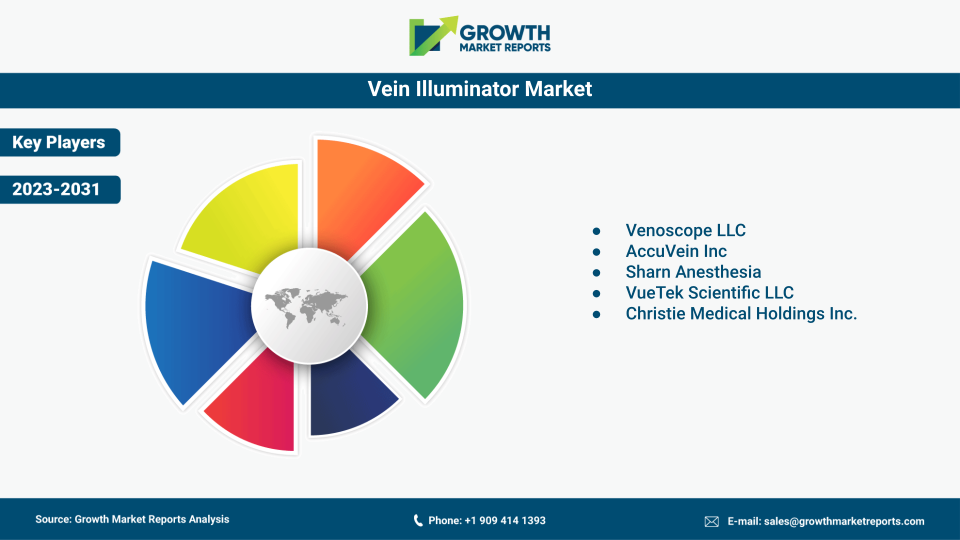
Key players competing in the global vein illuminator market are Venoscope LLC; AAccuVein Inc; Sharn Anesthesia; VueTek Scientific LLC; Christie Medical Holdings Inc. Some of these key players are investing in technological advancements and expanding their product offerings to enhance their market share.

 Vein Illuminator Market Key Players

Frequently Asked Questions

Yes, portable and handheld vein illuminators are increasingly being used in ambulatory surgical centers, blood donation camps, home healthcare, and mobile medical units, expanding access to advanced vein visualization beyond traditional hospital environments.

Technological innovations such as multispectral imaging, augmented reality (AR), and artificial intelligence (AI) integration are enhancing the accuracy, usability, and connectivity of vein illuminators. These advancements are expected to drive further adoption and improve patient outcomes.

Major challenges include the high cost of advanced devices, the need for specialized training, regulatory and reimbursement issues, and limited adoption in resource-constrained settings. Device reliability and maintenance are also concerns for some healthcare providers.

Key companies include AccuVein Inc., Christie Medical Holdings Inc., TransLite LLC (Veinlite), Infrared Imaging Systems Inc., Near Infrared Imaging Inc., Venoscope LLC, Medtronic plc, Philips Healthcare, GE Healthcare, and Smiths Medical Inc.

North America leads the global vein illuminator market, followed by Europe and Asia Pacific. North America's dominance is due to advanced healthcare infrastructure and early adoption of new technologies, while Asia Pacific is expected to witness the fastest growth through 2033.

Key growth drivers include the increasing need for accurate vascular access, rising prevalence of chronic diseases, technological advancements in visualization systems, growing demand for minimally invasive procedures, and a focus on patient safety and cost reduction.

Vein illuminators are primarily used in hospitals, blood donation centers, academic institutions, ambulatory surgical centers, and home healthcare settings. Hospitals and clinics represent the largest end-user segment due to the high volume of vascular access procedures.

The most common technologies used in vein illuminators are near-infrared (NIR), ultrasound, and transillumination. NIR is the most widely adopted due to its accuracy and non-invasive nature, while ultrasound is preferred for deep vein visualization, and transillumination is popular in pediatric and neonatal care.

The global vein illuminator market was valued at USD 220 million in 2024 and is expected to grow at a CAGR of 14.2% from 2025 to 2033, reaching approximately USD 647 million by 2033.

A vein illuminator is a medical device that uses technologies such as near-infrared (NIR) light, ultrasound, or transillumination to visualize veins beneath the skin. This helps healthcare professionals locate veins more accurately for procedures like venipuncture, reducing the risk of multiple needle sticks and improving patient comfort.

Table Of Content

Chapter 1 Executive Summary
Chapter 2 Assumptions and Acronyms Used
Chapter 3 Research Methodology
Chapter 4 Vein Illuminator Market Overview
   4.1 Introduction
      4.1.1 Market Taxonomy
      4.1.2 Market Definition
      4.1.3 Macro-Economic Factors Impacting the Market Growth
   4.2 Vein Illuminator Market Dynamics
      4.2.1 Market Drivers
      4.2.2 Market Restraints
      4.2.3 Market Opportunity
   4.3 Vein Illuminator Market - Supply Chain Analysis
      4.3.1 List of Key Suppliers
      4.3.2 List of Key Distributors
      4.3.3 List of Key Consumers
   4.4 Key Forces Shaping the Vein Illuminator Market
      4.4.1 Bargaining Power of Suppliers
      4.4.2 Bargaining Power of Buyers
      4.4.3 Threat of Substitution
      4.4.4 Threat of New Entrants
      4.4.5 Competitive Rivalry
   4.5 Global Vein Illuminator Market Size & Forecast, 2023-2032
      4.5.1 Vein Illuminator Market Size and Y-o-Y Growth
      4.5.2 Vein Illuminator Market Absolute $ Opportunity

Chapter 5 Global Vein Illuminator Market Analysis and Forecast By Product Type
   5.1 Introduction
      5.1.1 Key Market Trends & Growth Opportunities By Product Type
      5.1.2 Basis Point Share (BPS) Analysis By Product Type
      5.1.3 Absolute $ Opportunity Assessment By Product Type
   5.2 Vein Illuminator Market Size Forecast By Product Type
      5.2.1 Infrared Vein Illuminators
      5.2.2 Ultrasound Vein Illuminators
      5.2.3 Transillumination Vein Illuminators
      5.2.4 Others
   5.3 Market Attractiveness Analysis By Product Type

Chapter 6 Global Vein Illuminator Market Analysis and Forecast By Application
   6.1 Introduction
      6.1.1 Key Market Trends & Growth Opportunities By Application
      6.1.2 Basis Point Share (BPS) Analysis By Application
      6.1.3 Absolute $ Opportunity Assessment By Application
   6.2 Vein Illuminator Market Size Forecast By Application
      6.2.1 Hospitals
      6.2.2 Blood Donation Centers
      6.2.3 Academic Institutions
      6.2.4 Others
   6.3 Market Attractiveness Analysis By Application

Chapter 7 Global Vein Illuminator Market Analysis and Forecast By Technology
   7.1 Introduction
      7.1.1 Key Market Trends & Growth Opportunities By Technology
      7.1.2 Basis Point Share (BPS) Analysis By Technology
      7.1.3 Absolute $ Opportunity Assessment By Technology
   7.2 Vein Illuminator Market Size Forecast By Technology
      7.2.1 Near-Infrared
      7.2.2 Ultrasound
      7.2.3 Transillumination
      7.2.4 Others
   7.3 Market Attractiveness Analysis By Technology

Chapter 8 Global Vein Illuminator Market Analysis and Forecast By End-User
   8.1 Introduction
      8.1.1 Key Market Trends & Growth Opportunities By End-User
      8.1.2 Basis Point Share (BPS) Analysis By End-User
      8.1.3 Absolute $ Opportunity Assessment By End-User
   8.2 Vein Illuminator Market Size Forecast By End-User
      8.2.1 Hospitals & Clinics
      8.2.2 Ambulatory Surgical Centers
      8.2.3 Blood Donation Centers
      8.2.4 Others
   8.3 Market Attractiveness Analysis By End-User

Chapter 9 Global Vein Illuminator Market Analysis and Forecast by Region
   9.1 Introduction
      9.1.1 Key Market Trends & Growth Opportunities By Region
      9.1.2 Basis Point Share (BPS) Analysis By Region
      9.1.3 Absolute $ Opportunity Assessment By Region
   9.2 Vein Illuminator Market Size Forecast By Region
      9.2.1 North America
      9.2.2 Europe
      9.2.3 Asia Pacific
      9.2.4 Latin America
      9.2.5 Middle East & Africa (MEA)
   9.3 Market Attractiveness Analysis By Region

Chapter 10 Coronavirus Disease (COVID-19) Impact 
   10.1 Introduction 
   10.2 Current & Future Impact Analysis 
   10.3 Economic Impact Analysis 
   10.4 Government Policies 
   10.5 Investment Scenario

Chapter 11 North America Vein Illuminator Analysis and Forecast
   11.1 Introduction
   11.2 North America Vein Illuminator Market Size Forecast by Country
      11.2.1 U.S.
      11.2.2 Canada
   11.3 Basis Point Share (BPS) Analysis by Country
   11.4 Absolute $ Opportunity Assessment by Country
   11.5 Market Attractiveness Analysis by Country
   11.6 North America Vein Illuminator Market Size Forecast By Product Type
      11.6.1 Infrared Vein Illuminators
      11.6.2 Ultrasound Vein Illuminators
      11.6.3 Transillumination Vein Illuminators
      11.6.4 Others
   11.7 Basis Point Share (BPS) Analysis By Product Type 
   11.8 Absolute $ Opportunity Assessment By Product Type 
   11.9 Market Attractiveness Analysis By Product Type
   11.10 North America Vein Illuminator Market Size Forecast By Application
      11.10.1 Hospitals
      11.10.2 Blood Donation Centers
      11.10.3 Academic Institutions
      11.10.4 Others
   11.11 Basis Point Share (BPS) Analysis By Application 
   11.12 Absolute $ Opportunity Assessment By Application 
   11.13 Market Attractiveness Analysis By Application
   11.14 North America Vein Illuminator Market Size Forecast By Technology
      11.14.1 Near-Infrared
      11.14.2 Ultrasound
      11.14.3 Transillumination
      11.14.4 Others
   11.15 Basis Point Share (BPS) Analysis By Technology 
   11.16 Absolute $ Opportunity Assessment By Technology 
   11.17 Market Attractiveness Analysis By Technology
   11.18 North America Vein Illuminator Market Size Forecast By End-User
      11.18.1 Hospitals & Clinics
      11.18.2 Ambulatory Surgical Centers
      11.18.3 Blood Donation Centers
      11.18.4 Others
   11.19 Basis Point Share (BPS) Analysis By End-User 
   11.20 Absolute $ Opportunity Assessment By End-User 
   11.21 Market Attractiveness Analysis By End-User

Chapter 12 Europe Vein Illuminator Analysis and Forecast
   12.1 Introduction
   12.2 Europe Vein Illuminator Market Size Forecast by Country
      12.2.1 Germany
      12.2.2 France
      12.2.3 Italy
      12.2.4 U.K.
      12.2.5 Spain
      12.2.6 Russia
      12.2.7 Rest of Europe
   12.3 Basis Point Share (BPS) Analysis by Country
   12.4 Absolute $ Opportunity Assessment by Country
   12.5 Market Attractiveness Analysis by Country
   12.6 Europe Vein Illuminator Market Size Forecast By Product Type
      12.6.1 Infrared Vein Illuminators
      12.6.2 Ultrasound Vein Illuminators
      12.6.3 Transillumination Vein Illuminators
      12.6.4 Others
   12.7 Basis Point Share (BPS) Analysis By Product Type 
   12.8 Absolute $ Opportunity Assessment By Product Type 
   12.9 Market Attractiveness Analysis By Product Type
   12.10 Europe Vein Illuminator Market Size Forecast By Application
      12.10.1 Hospitals
      12.10.2 Blood Donation Centers
      12.10.3 Academic Institutions
      12.10.4 Others
   12.11 Basis Point Share (BPS) Analysis By Application 
   12.12 Absolute $ Opportunity Assessment By Application 
   12.13 Market Attractiveness Analysis By Application
   12.14 Europe Vein Illuminator Market Size Forecast By Technology
      12.14.1 Near-Infrared
      12.14.2 Ultrasound
      12.14.3 Transillumination
      12.14.4 Others
   12.15 Basis Point Share (BPS) Analysis By Technology 
   12.16 Absolute $ Opportunity Assessment By Technology 
   12.17 Market Attractiveness Analysis By Technology
   12.18 Europe Vein Illuminator Market Size Forecast By End-User
      12.18.1 Hospitals & Clinics
      12.18.2 Ambulatory Surgical Centers
      12.18.3 Blood Donation Centers
      12.18.4 Others
   12.19 Basis Point Share (BPS) Analysis By End-User 
   12.20 Absolute $ Opportunity Assessment By End-User 
   12.21 Market Attractiveness Analysis By End-User

Chapter 13 Asia Pacific Vein Illuminator Analysis and Forecast
   13.1 Introduction
   13.2 Asia Pacific Vein Illuminator Market Size Forecast by Country
      13.2.1 China
      13.2.2 Japan
      13.2.3 South Korea
      13.2.4 India
      13.2.5 Australia
      13.2.6 South East Asia (SEA)
      13.2.7 Rest of Asia Pacific (APAC)
   13.3 Basis Point Share (BPS) Analysis by Country
   13.4 Absolute $ Opportunity Assessment by Country
   13.5 Market Attractiveness Analysis by Country
   13.6 Asia Pacific Vein Illuminator Market Size Forecast By Product Type
      13.6.1 Infrared Vein Illuminators
      13.6.2 Ultrasound Vein Illuminators
      13.6.3 Transillumination Vein Illuminators
      13.6.4 Others
   13.7 Basis Point Share (BPS) Analysis By Product Type 
   13.8 Absolute $ Opportunity Assessment By Product Type 
   13.9 Market Attractiveness Analysis By Product Type
   13.10 Asia Pacific Vein Illuminator Market Size Forecast By Application
      13.10.1 Hospitals
      13.10.2 Blood Donation Centers
      13.10.3 Academic Institutions
      13.10.4 Others
   13.11 Basis Point Share (BPS) Analysis By Application 
   13.12 Absolute $ Opportunity Assessment By Application 
   13.13 Market Attractiveness Analysis By Application
   13.14 Asia Pacific Vein Illuminator Market Size Forecast By Technology
      13.14.1 Near-Infrared
      13.14.2 Ultrasound
      13.14.3 Transillumination
      13.14.4 Others
   13.15 Basis Point Share (BPS) Analysis By Technology 
   13.16 Absolute $ Opportunity Assessment By Technology 
   13.17 Market Attractiveness Analysis By Technology
   13.18 Asia Pacific Vein Illuminator Market Size Forecast By End-User
      13.18.1 Hospitals & Clinics
      13.18.2 Ambulatory Surgical Centers
      13.18.3 Blood Donation Centers
      13.18.4 Others
   13.19 Basis Point Share (BPS) Analysis By End-User 
   13.20 Absolute $ Opportunity Assessment By End-User 
   13.21 Market Attractiveness Analysis By End-User

Chapter 14 Latin America Vein Illuminator Analysis and Forecast
   14.1 Introduction
   14.2 Latin America Vein Illuminator Market Size Forecast by Country
      14.2.1 Brazil
      14.2.2 Mexico
      14.2.3 Rest of Latin America (LATAM)
   14.3 Basis Point Share (BPS) Analysis by Country
   14.4 Absolute $ Opportunity Assessment by Country
   14.5 Market Attractiveness Analysis by Country
   14.6 Latin America Vein Illuminator Market Size Forecast By Product Type
      14.6.1 Infrared Vein Illuminators
      14.6.2 Ultrasound Vein Illuminators
      14.6.3 Transillumination Vein Illuminators
      14.6.4 Others
   14.7 Basis Point Share (BPS) Analysis By Product Type 
   14.8 Absolute $ Opportunity Assessment By Product Type 
   14.9 Market Attractiveness Analysis By Product Type
   14.10 Latin America Vein Illuminator Market Size Forecast By Application
      14.10.1 Hospitals
      14.10.2 Blood Donation Centers
      14.10.3 Academic Institutions
      14.10.4 Others
   14.11 Basis Point Share (BPS) Analysis By Application 
   14.12 Absolute $ Opportunity Assessment By Application 
   14.13 Market Attractiveness Analysis By Application
   14.14 Latin America Vein Illuminator Market Size Forecast By Technology
      14.14.1 Near-Infrared
      14.14.2 Ultrasound
      14.14.3 Transillumination
      14.14.4 Others
   14.15 Basis Point Share (BPS) Analysis By Technology 
   14.16 Absolute $ Opportunity Assessment By Technology 
   14.17 Market Attractiveness Analysis By Technology
   14.18 Latin America Vein Illuminator Market Size Forecast By End-User
      14.18.1 Hospitals & Clinics
      14.18.2 Ambulatory Surgical Centers
      14.18.3 Blood Donation Centers
      14.18.4 Others
   14.19 Basis Point Share (BPS) Analysis By End-User 
   14.20 Absolute $ Opportunity Assessment By End-User 
   14.21 Market Attractiveness Analysis By End-User

Chapter 15 Middle East & Africa (MEA) Vein Illuminator Analysis and Forecast
   15.1 Introduction
   15.2 Middle East & Africa (MEA) Vein Illuminator Market Size Forecast by Country
      15.2.1 Saudi Arabia
      15.2.2 South Africa
      15.2.3 UAE
      15.2.4 Rest of Middle East & Africa (MEA)
   15.3 Basis Point Share (BPS) Analysis by Country
   15.4 Absolute $ Opportunity Assessment by Country
   15.5 Market Attractiveness Analysis by Country
   15.6 Middle East & Africa (MEA) Vein Illuminator Market Size Forecast By Product Type
      15.6.1 Infrared Vein Illuminators
      15.6.2 Ultrasound Vein Illuminators
      15.6.3 Transillumination Vein Illuminators
      15.6.4 Others
   15.7 Basis Point Share (BPS) Analysis By Product Type 
   15.8 Absolute $ Opportunity Assessment By Product Type 
   15.9 Market Attractiveness Analysis By Product Type
   15.10 Middle East & Africa (MEA) Vein Illuminator Market Size Forecast By Application
      15.10.1 Hospitals
      15.10.2 Blood Donation Centers
      15.10.3 Academic Institutions
      15.10.4 Others
   15.11 Basis Point Share (BPS) Analysis By Application 
   15.12 Absolute $ Opportunity Assessment By Application 
   15.13 Market Attractiveness Analysis By Application
   15.14 Middle East & Africa (MEA) Vein Illuminator Market Size Forecast By Technology
      15.14.1 Near-Infrared
      15.14.2 Ultrasound
      15.14.3 Transillumination
      15.14.4 Others
   15.15 Basis Point Share (BPS) Analysis By Technology 
   15.16 Absolute $ Opportunity Assessment By Technology 
   15.17 Market Attractiveness Analysis By Technology
   15.18 Middle East & Africa (MEA) Vein Illuminator Market Size Forecast By End-User
      15.18.1 Hospitals & Clinics
      15.18.2 Ambulatory Surgical Centers
      15.18.3 Blood Donation Centers
      15.18.4 Others
   15.19 Basis Point Share (BPS) Analysis By End-User 
   15.20 Absolute $ Opportunity Assessment By End-User 
   15.21 Market Attractiveness Analysis By End-User

Chapter 16 Competition Landscape 
   16.1 Vein Illuminator Market: Competitive Dashboard
   16.2 Global Vein Illuminator Market: Market Share Analysis, 2023
   16.3 Company Profiles (Details – Overview, Financials, Developments, Strategy) 
      16.3.1 AccuVein Inc.
Christie Medical Holdings Inc.
TransLite LLC (Veinlite)
Infrared Imaging Systems Inc.
Near Infrared Imaging Inc.
Venoscope LLC
Medtronic plc
Philips Healthcare
GE Healthcare
Smiths Medical Inc.
Sharn Anesthesia
ZD Medical Inc.
B. Braun Melsungen AG
Osang Healthcare Co. Ltd.
Aimvein
Shanghai Puda Medical Technology Co. Ltd.
BLZ Technology Co. Ltd.
Wuxi Biomedical Technology Co. Ltd.
Nanjing Kejin Industrial Co. Ltd.
SIFSOF LLC

Methodology

Our Clients

Microsoft
FedEx Logistics
Honda Motor Co. Ltd.
Nestle SA
The John Holland Group
Deloitte
Pfizer
Dassault Aviation