Brazil Vehicle Rental Market Report 2025-2034

Brazil Vehicle Rental Market Report 2025-2034

Segments - by Vehicle Type (Car, Van, Truck, Motorcycle, Others), by Application (Leisure, Business, Others), by Booking Mode (Online, Offline), by End-User (Individual, Corporate, Others)

https://growthmarketreports.com/Raksha
Author : Raksha Sharma
https://growthmarketreports.com/Vaibhav
Fact-checked by : V. Chandola
https://growthmarketreports.com/Shruti
Editor : Shruti Bhat

Last Updated : Jun, 2026 | Report ID :AL-1283 | 4.5 Rating | 69 Reviews | 259 Pages | Format : Docx PDF

Report Description

This report is updated with the latest market data and insights as of June 2026. Base year: 2025  |  Forecast period: 2026-2034


Brazil Vehicle Rental Market Outlook

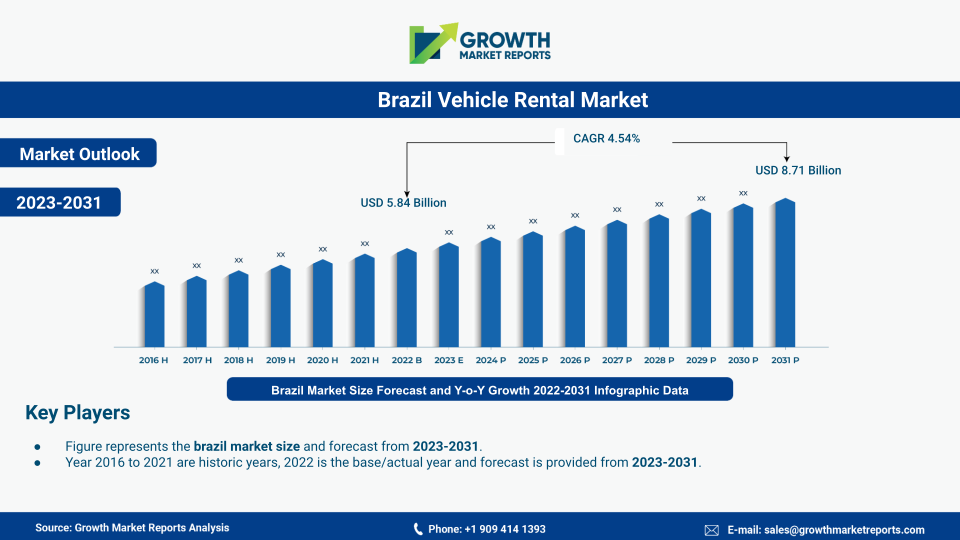
According to our latest research, the Brazil vehicle rental market was valued at USD 8.7 billion in 2025, establishing a strong base for the forecast period. The market is projected to grow at a CAGR of 8.0% from 2026 to 2034, reaching approximately USD 17.4 billion by 2034. This robust expansion is driven by rising urbanization, surging domestic tourism, and the growing preference for flexible mobility solutions among both individual and corporate users. Brazil continues to assert itself as the dominant vehicle rental market in Latin America, benefitting from a large and increasingly mobile population, a recovering economy, and sustained investment in transport infrastructure.

Global Brazil Vehicle Rental Market Size Forecast 2025-2034, USD Billion

The growth trajectory of the Brazil vehicle rental market is underpinned by several critical factors. One of the most prominent drivers is the sustained rise in domestic tourism, which has moved well beyond post-pandemic recovery and is now recording historically high activity levels. Brazilians are increasingly opting for rental vehicles to explore the country's diverse landscapes, from the Amazon basin to the vibrant coastal cities of the Northeast. Government campaigns to promote regional tourism, combined with ongoing improvements to road networks and highway connectivity, have made self-drive travel a practical and attractive choice for millions of travelers. The continued expansion of the middle class, alongside growing disposable incomes, is amplifying demand for rental vehicles in urban centers where car ownership remains cost-prohibitive for many households.

Another key factor propelling market growth is the rapid digital transformation underway across the sector. The proliferation of online booking platforms and mobile applications has fundamentally reshaped the customer experience, enabling consumers to compare prices, select vehicles, and manage reservations with unprecedented ease. This digital shift has improved pricing transparency and intensified competition among providers. The integration of telematics, GPS fleet tracking, and contactless payment systems has improved fleet management efficiency and customer safety, reinforcing confidence in rental services. Sustainability is also rising up the agenda, with the introduction of electric and hybrid vehicles into rental fleets serving as a key differentiator as environmental awareness grows among Brazilian consumers and regulators alike. For a broader perspective on vehicle rental market dynamics across the Americas, comparable demand patterns and digital adoption trends are shaping markets throughout the region.

Corporate mobility demand is also contributing materially to market expansion. As businesses scale their operations across Brazil, the need for flexible, cost-effective transportation for employees, executives, and logistics operations continues to grow. Corporate clients are increasingly turning to rental services to avoid the capital commitment and maintenance burden of owning a private fleet. This trend is especially pronounced in sectors such as construction, oil and gas, agribusiness, and technology, where project-based assignments and frequent intercity travel are routine. Rental companies are responding with tailored solutions including long-term agreements, subscription models, fleet management packages, and value-added services such as chauffeur-driven vehicles and bundled insurance.

Regionally, the Southeast and South regions of Brazil continue to dominate the vehicle rental market, anchored by high population density, strong economic output, and well-developed infrastructure. Sao Paulo and Rio de Janeiro remain the primary demand hubs for both leisure and business rentals. However, the market is also witnessing accelerating growth in the Northeast and Central-West regions, driven by rising tourism activity, agribusiness expansion, and government investments in regional infrastructure. The North region, while the smallest in market share, presents distinctive growth opportunities given its vast and often challenging terrain, which makes rental vehicles a practical necessity for residents, businesses, and visitors alike. The overall regional outlook remains strongly positive, with each area contributing meaningfully to the sector's long-term expansion.

Vehicle Type Analysis

The vehicle type segment is the primary structural axis of the Brazil vehicle rental market, encompassing cars, vans, trucks, motorcycles, and other specialized vehicles. Cars remain the largest sub-segment, representing approximately 52% of total market revenues in 2025. They are favored by individual renters and corporate clients alike for their versatility, comfort, and cost-effectiveness. Compact and mid-sized models dominate volume-driven demand, particularly among urban renters and domestic tourists, while SUVs and premium sedans are gaining ground among affluent travelers and business executives seeking experience-driven mobility. The growing availability of electric and hybrid cars in rental fleets is also attracting a new cohort of environmentally conscious consumers, reinforcing the car segment's leading position.

Brazil Vehicle Rental Market Share by Vehicle Type 2025

The van segment holds approximately 18.5% of the market in 2025 and continues to see healthy growth. Vans serve a diverse range of needs, from large-family road trips and tour group transport to corporate shuttle services and last-mile logistics. Their practicality for airport transfers, corporate events, and goods movement makes them a consistent revenue contributor. The growth of organized shuttle services and transportation network companies in major Brazilian cities has further amplified demand for van rentals, as operators look for scalable, flexible fleet solutions.

Truck rentals account for around 16% of market revenues in 2025, underpinned by Brazil's booming e-commerce sector and the ongoing expansion of logistics and supply chain networks. The use of rental trucks for short-term logistics projects, seasonal demand peaks, and last-mile delivery has grown significantly, offering companies operational flexibility without heavy capital expenditure. Specialized truck categories, including refrigerated vehicles, flatbeds, and heavy-duty models, are broadening the segment's appeal among retailers, manufacturers, and agricultural logistics providers. The Central-West region, with its large agribusiness sector, is a particularly important market for commercial truck rentals.

The motorcycle rental segment, representing roughly 8% of the market in 2025, is the fastest-growing vehicle type sub-segment. Urban traffic congestion, limited parking availability, and the explosive growth of app-based delivery platforms have positioned motorcycles as an indispensable tool for short-distance mobility and gig economy workers. The expansion of food delivery, courier, and ride-hailing services is generating sustained demand for flexible motorcycle rental arrangements. Adventure tourism is also contributing to segment growth, with an increasing number of providers introducing electric and trail-capable motorcycles to their fleets. The broader rental mobility landscape across the Americas reflects a similar rise in two-wheel and alternative vehicle categories as consumer preferences diversify.

Other vehicle types, including recreational vehicles, specialty event vehicles, and off-road units, collectively account for approximately 5.5% of the market. These cater to niche but high-value segments such as adventure tourism, corporate promotions, and specialized events. The continuous diversification of rental fleets to include a broader range of vehicle categories reflects the maturing sophistication of the Brazilian market and positions operators to capture incremental revenue streams across an expanding range of use cases.

Report Scope

Attributes Details
Report Title Brazil Vehicle Rental Market Research Report 2025-2034
By Vehicle Type Car, Van, Truck, Motorcycle, Others
By Application Leisure, Business, Others
By Booking Mode Online, Offline
By End-User Individual, Corporate, Others
Regions Covered North, Northeast, Central-West, Southeast, South
Base Year 2025
Historic Data 2019-2024
Forecast Period 2026-2034
Number of Pages 259
Number of Tables & Figures 307
Customization Available Yes, the report can be customized as per your need.

Application Analysis

The application segment of the Brazil vehicle rental market is divided into leisure, business, and other uses, each exhibiting distinct demand drivers and growth patterns as of 2025. The leisure segment remains the dominant force, accounting for a substantial portion of total rentals. Both domestic travelers and international visitors increasingly prefer rental vehicles for exploring Brazil's diverse destinations at their own pace. The flexibility, convenience, and privacy of a rental car make it a compelling alternative to public transport and guided tours, particularly in regions where infrastructure is still maturing. The sustained rise of domestic tourism, supported by active government promotional campaigns and improved road connectivity, has further cemented the leisure segment's primacy within the market.

The business application segment is registering robust growth in 2025, driven by the expansion of corporate activities across Brazil. Companies are leveraging vehicle rental services to address a range of mobility needs, from daily employee transport and executive travel to project-based logistics and client hospitality. The increasing frequency of business travel, intercity meetings, and corporate events has generated a steady baseline of demand, particularly in major urban and industrial centers. Rental companies are responding to corporate requirements with dedicated account management, long-term lease structures, fleet management services, and bundled offerings that include insurance and maintenance, making rental an operationally superior alternative to fleet ownership for many organizations.

The others segment encompasses government agencies, educational institutions, non-profit organizations, and event management companies, as well as the rapidly growing gig economy. These clients often require customized or short-notice rental arrangements to support specific projects, campaigns, or seasonal activities. The rise of app-based delivery and ride-hailing platforms has expanded the commercial scope of this segment considerably, with individual operators and small businesses renting vehicles as productive income-generating assets. Rental companies that can offer flexible, technology-enabled solutions to these users are capturing meaningful incremental revenue from this evolving segment.

The interplay between leisure and business applications is especially dynamic in the Southeast and South regions, where high concentrations of vacationers and corporate travelers coexist and frequently overlap. This convergence is driving service innovation and competitive differentiation, with leading rental providers investing in data analytics and customer segmentation tools to tailor their offerings more precisely. The growing use of subscription and membership models is blurring traditional segment boundaries, creating hybrid customers whose mobility needs span both leisure and professional contexts.

Looking ahead through 2034, the application segment will continue to evolve as consumer preferences, economic conditions, and new mobility paradigms reshape demand. The integration of shared mobility, digital-first customer journeys, and sustainability-oriented vehicle options will create new growth pathways across all three application categories, ensuring that the Brazil vehicle rental market remains both diverse and resilient.

Booking Mode Analysis

The booking mode segment is a critical determinant of customer experience and market reach in the Brazil vehicle rental market, encompassing both online and offline channels. By 2025, online bookings have become the clearly dominant channel, reflecting Brazil's expanding digital infrastructure and the widespread adoption of smartphones across all income groups. The convenience, pricing transparency, and speed of digital platforms have made them the preferred choice for the majority of consumers, particularly younger demographics and urban residents. The ability to compare options, access real-time vehicle availability, apply promotional codes, and complete secure payments from any location has fundamentally elevated customer expectations across the industry.

Mobile applications and aggregator platforms have been central to the acceleration of online bookings. These tools offer intuitive interfaces through which customers can browse vehicle categories, add supplementary services such as GPS or child seats, and manage their entire rental journey digitally. The integration of loyalty programs, personalized pricing offers, and push notifications has strengthened customer engagement and improved retention rates. Rental companies are channeling significant investment into digital marketing, search engine optimization, and customer relationship management platforms to capture high-intent consumers and optimize conversion funnels. The use of AI-driven dynamic pricing is also enabling companies to maximize revenue per vehicle while remaining competitive in real time.

Despite the dominance of digital channels, offline bookings retain an important role, particularly in regions with lower internet penetration, among older consumer segments, and for high-value or complex rental transactions. Airport counters, travel agency desks, and walk-in branch locations continue to serve as essential touchpoints for last-minute rentals, vehicle inspections, and customers seeking personal guidance. For business clients managing large, multi-vehicle accounts, dedicated account managers and phone-based booking remain a valued service element. Rental companies are therefore maintaining a hybrid approach, investing in both digital capability and physical network quality to maximize coverage and customer satisfaction.

The convergence of online and offline channels is advancing through omni-channel strategies that allow customers to initiate a booking online and complete it in-store, or vice versa. Contactless check-in kiosks, digital contract signing, and mobile key handover technologies are reducing friction at physical locations while preserving the reassurance of in-person service. As digital literacy and broadband connectivity continue to improve across Brazil's interior and northern regions, the online channel is expected to capture an even larger share of total bookings through 2034.

Future developments in booking modes will be shaped by advances in artificial intelligence, voice-activated interfaces, and predictive analytics. Virtual assistants capable of handling end-to-end booking queries, proactive rental reminders triggered by travel calendar events, and hyper-personalized vehicle recommendations based on usage history will define the next generation of customer interaction. These innovations will further consolidate the primacy of digital channels while complementing offline touchpoints in a fully integrated customer experience ecosystem.

End-User Analysis

The end-user segment is a fundamental dimension of the Brazil vehicle rental market, comprising individual, corporate, and other users. Individual customers form the largest and most diverse segment in 2025, encompassing domestic tourists, international visitors, urban residents, expatriates, and gig economy workers seeking flexible and affordable transportation. The versatility and convenience of rental services appeal to a broad demographic spectrum, from families planning road trips to young professionals requiring short-term urban mobility. The growing popularity of weekend getaways, adventure tourism, and coastal road trips has further sustained demand from individual renters, particularly in regions offering scenic attractions and recreational experiences.

The corporate end-user segment is characterized by high-value, repeat business derived from the mobility requirements of companies across a wide range of industries. Corporate clients use vehicle rental services for daily employee transport, executive travel, project-site logistics, and client entertainment, among many other applications. The ability to access diverse vehicle categories on flexible contractual terms, combined with fleet management, insurance, and maintenance services, makes rental a financially and operationally attractive alternative to fleet ownership. The growing prioritization of cost efficiency, environmental responsibility, and operational agility is prompting more businesses to migrate from owned fleets to managed rental arrangements, particularly in sectors with variable or geographically dispersed mobility needs.

The others segment includes government bodies, educational institutions, healthcare organizations, non-profits, and event management companies. These clients typically require customized solutions to support specific time-bound activities such as infrastructure projects, field research, humanitarian campaigns, and large-scale events. The ability of rental companies to offer tailored packages, dedicated account support, and scalable fleet access has been instrumental in winning and retaining these institutional clients. The gig economy dimension of this segment, encompassing delivery platforms and ride-hailing operators, continues to expand rapidly, adding a technology-driven layer of demand that is reshaping fleet composition and rental contract structures.

The interaction between individual and corporate end-users is fostering service innovation across the market. Leading rental providers are developing differentiated product tiers, loyalty schemes, and subscription offerings to address the varying expectations of each user group while maximizing customer lifetime value. Data analytics is playing a growing role in enabling more precise targeting, proactive service delivery, and churn reduction across all end-user categories.

Through 2034, the end-user landscape will continue to evolve in response to demographic shifts, remote and hybrid work patterns, and the maturation of shared mobility ecosystems. The blending of individual and corporate rental behaviors, the expansion of institutional demand, and the integration of rental services into broader mobility-as-a-service platforms will define the next phase of end-user development in the Brazil vehicle rental market.

Opportunities & Threats

The Brazil vehicle rental market presents a compelling array of opportunities through the 2026-2034 forecast period. The continued expansion of domestic and international tourism is one of the most significant growth levers, as travelers seek flexible, personalized mobility options that public transport cannot adequately provide. Adventure tourism, eco-tourism, and the growing popularity of road trip culture are creating incremental demand across multiple vehicle categories and regions. Government-led infrastructure programs, including highway upgrades and regional airport expansion, are extending the geographic reach of the rental market and opening up previously underserved destinations to vehicular tourism.

The transition toward electric and hybrid vehicles represents a transformational opportunity for rental companies willing to invest in fleet modernization. As Brazil advances its national energy transition agenda and EV charging infrastructure expands in major urban centers, rental fleets that incorporate zero-emission vehicles will gain a meaningful competitive advantage among environmentally conscious consumers and regulatory-compliant corporate clients. The digital economy also continues to generate opportunities, with AI-powered pricing, predictive fleet management, and seamless digital customer journeys enabling companies to operate more efficiently and profitably than ever before.

Despite these opportunities, the market faces meaningful threats that require careful management. Macroeconomic volatility, including inflationary pressure, currency fluctuation, and fuel price instability, creates uncertainty for both operators and consumers, with the potential to suppress demand and inflate operating costs simultaneously. The intensification of competition from ride-hailing platforms, car-sharing services, and subscription mobility providers is challenging the traditional rental model, particularly for short-duration urban use cases. Regulatory complexity, encompassing vehicle emissions standards, licensing requirements, and consumer protection legislation, adds an ongoing compliance burden. Infrastructure deficiencies in the North and parts of the Northeast also limit market penetration in high-potential regions. Navigating these threats will require agility, continuous innovation, and strong stakeholder partnerships from all market participants.

Regional Outlook

The regional distribution of the Brazil vehicle rental market reflects the country's vast geography and diverse economic landscape. The Southeast region is the largest market, accounting for approximately 40% of total vehicle rental revenues in 2025. This dominance is anchored by the region's high population density, economic concentration, and well-developed infrastructure, with Sao Paulo and Rio de Janeiro serving as the primary demand hubs for both leisure and business rentals. The Southeast's robust tourism industry, dense corporate headquarters landscape, and major events calendar generate sustained demand across all vehicle categories and application segments throughout the year.

Brazil Vehicle Rental Market Regional Share 2025

The South region is another significant contributor, representing around 22% of the national market in 2025. Known for its strong industrial base, dynamic agricultural sector, and scenic tourism attractions, the South attracts a diverse mix of individual and corporate renters. Well-maintained road networks and geographic proximity to Mercosur trade routes support efficient logistics and business travel, underpinning a healthy commercial vehicle rental sub-market. The South is also a leader in sustainability adoption, with rental operators in the region increasingly incorporating electric and hybrid models into their fleets to meet the preferences of its environmentally aware consumer base.

The Northeast, Central-West, and North regions collectively account for the remaining 38% of the market, with each exhibiting distinctive growth characteristics. The Northeast is the fastest-growing region, projected to expand at a CAGR of approximately 9.3% from 2026 to 2034, driven by rising coastal and cultural tourism, major infrastructure investments, and improving economic conditions. The Central-West is a critical market for commercial vehicle rentals, particularly trucks and vans, given the region's centrality to Brazil's agribusiness and logistics sectors. The North region, while currently the smallest market, offers longer-term growth potential as infrastructure investment and tourism development programs progress. Across all regions, rental companies are tailoring their fleet compositions and service models to local demand characteristics, reinforcing the market's breadth and resilience.

Competitor Outlook

The competitive landscape of the Brazil vehicle rental market in 2025 is characterized by a dynamic mix of dominant domestic leaders, established international brands, and agile technology-driven newcomers. The market remains moderately concentrated, with the top operators holding significant combined share, yet fragmented enough that meaningful competition persists across all segments and regions. Market leaders are leveraging extensive fleets, nationwide branch networks, and strong brand recognition to maintain their positions, while challengers compete on digital innovation, pricing agility, niche specialization, and regional market knowledge.

Innovation and digital transformation are central to competitive strategy among market leaders. Major operators are investing heavily in telematics platforms, AI-driven fleet optimization, and seamless digital customer experiences to reduce costs and improve service quality. The integration of electric vehicles into rental fleets is accelerating, both as a sustainability statement and as a practical response to evolving consumer and corporate client preferences. Omni-channel booking capability, personalized loyalty programs, and modular pricing structures are being deployed to maximize customer acquisition and retention across all end-user segments.

Strategic partnerships, mergers, and acquisitions continue to reshape the competitive order. Collaborations between rental companies and travel aggregators, corporate travel management firms, and insurance providers are expanding market reach and enabling cross-selling. The consolidation wave that saw Localiza absorb Unidas has set a precedent for further market rationalization, with mid-tier players seeking scale efficiencies through partnerships or integration. New entrants from the technology and mobility-as-a-service space are introducing subscription-based models and app-first rental concepts that are gradually gaining traction among urban consumers.

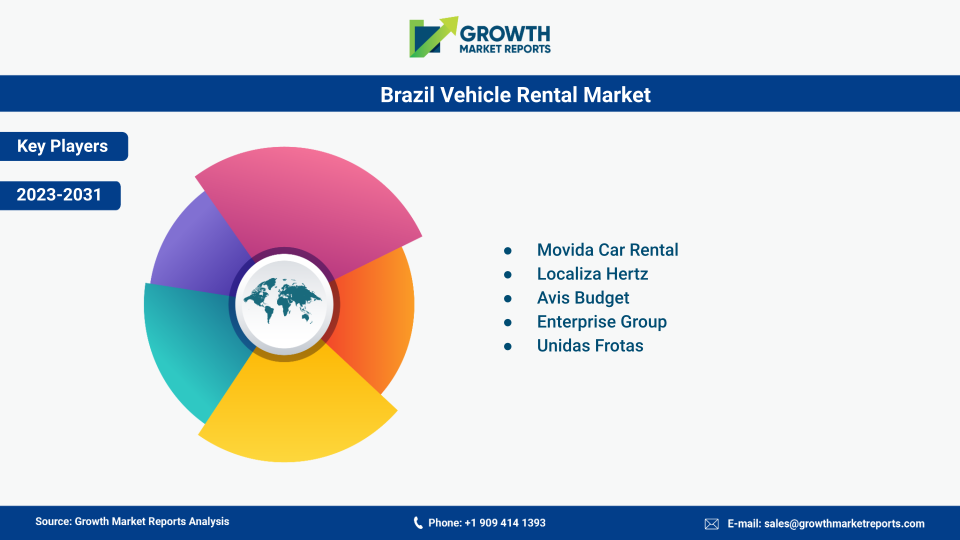
Major companies operating in the Brazil vehicle rental market include Localiza Rent a Car S.A., Movida Participacoes S.A., Unidas S.A., Hertz Global Holdings, and Avis Budget Group. Localiza retains its position as the undisputed market leader, operating the largest fleet and most extensive branch network in Brazil. Its ongoing investment in digital platforms, electric vehicle integration, and customer experience innovation reinforces its competitive moat. Movida is a formidable challenger, distinguished by its diversified fleet, technology-forward approach, and strong presence in both the retail and corporate segments. International players including Hertz, Avis Budget Group, Enterprise Holdings, Europcar Mobility Group, and Sixt SE contribute global best practices, advanced technology platforms, and international loyalty networks to the Brazilian market, raising competitive standards and service expectations. Regional and digital-native operators such as Rentcars.com and Turbi are carving out meaningful positions by focusing on online distribution, competitive pricing, and urban consumer segments, adding further dynamism to an already competitive marketplace.

Key Players

  • Localiza Rent a Car S.A.
  • Movida Participacoes S.A.
  • Unidas S.A.
  • Locamerica (VAMOS)
  • Avis Budget Group
  • Hertz Global Holdings
  • Enterprise Holdings
  • Europcar Mobility Group
  • Sixt SE
  • Rentcars.com
  • Turbi
  • Budget Rent a Car
  • National Car Rental
  • Alamo Rent a Car
  • Thrifty Car Rental

Segments

The Brazil Vehicle Rental market has been segmented on the basis of

Vehicle Type

  • Car
  • Van
  • Truck
  • Motorcycle
  • Others

Application

  • Leisure
  • Business
  • Others

Booking Mode

  • Online
  • Offline

End-User

  • Individual
  • Corporate
  • Others

Frequently Asked Questions

Yes, the report can be fully customized to meet specific research requirements. Customization options include additional vehicle type sub-segments, deeper regional breakdowns, competitor profiling, analysis of specific application verticals, and extended forecast horizons. Please contact our research team to discuss your specific needs and obtain a tailored version of the report.

Key opportunities include the accelerating growth of domestic tourism, the expansion of corporate and logistics fleet demand, the transition to electric and hybrid vehicles, and ongoing digital innovation enabling better customer engagement and operational efficiency. Strategic partnerships with travel platforms and corporate clients also offer expansion avenues. Primary threats include macroeconomic volatility such as inflation and fuel price fluctuations, intensifying competition from ride-sharing and app-based mobility platforms, regulatory complexity around licensing and environmental compliance, and infrastructure gaps in less-developed regions.

The market is led by domestic giants Localiza Rent a Car S.A. and Movida Participacoes S.A., which together hold a substantial combined market share. Other significant domestic players include Unidas S.A. (now part of the Localiza group), Locamerica (VAMOS), Rentcars.com, and Turbi. International brands with a notable presence include Hertz Global Holdings, Avis Budget Group, Enterprise Holdings, Europcar Mobility Group, Sixt SE, Budget Rent a Car, National Car Rental, and Alamo Rent a Car.

Vehicle rentals in Brazil can be booked through online channels, including company websites, mobile applications, and third-party aggregator platforms, or through offline channels such as physical rental counters, travel agencies, and airport desks. Online bookings have grown to represent the majority of transactions as of 2025, reflecting increasing digital adoption. However, offline channels remain important in regions with lower internet penetration and for customers who prefer in-person assistance or last-minute arrangements.

The primary applications are leisure, business, and others. Leisure remains the largest segment, driven by domestic tourism and the increasing preference of travelers for self-drive exploration. Business applications are growing rapidly as companies across sectors such as construction, technology, and oil and gas rely on flexible rental solutions for employee travel and project logistics. The others category includes government contracts, event management, and gig economy activities such as app-based delivery services.

Digital technology is transforming every aspect of the Brazil vehicle rental industry. Online booking platforms and mobile apps now account for the majority of reservations, offering consumers real-time pricing, vehicle selection, and contactless payment. Telematics and GPS fleet management tools are improving operational efficiency and safety. Artificial intelligence and data analytics are enabling dynamic pricing and personalized marketing. The rise of aggregator platforms is increasing market transparency and competitive pressure on rental providers.

Cars remain the dominant vehicle type, representing roughly 52% of the market in 2025, favored for their versatility across leisure and business applications. Vans account for about 18.5% of the market, driven by group travel and corporate shuttle needs. Trucks hold approximately 16% share, underpinned by logistics and e-commerce growth. Motorcycles are the fastest-growing segment at around 8%, fueled by urban congestion and the gig economy.

The Southeast region leads the market, accounting for approximately 40% of total revenues in 2025, anchored by the high economic activity and population density of Sao Paulo and Rio de Janeiro. The South region follows with around 22% market share. The Northeast is the fastest-growing region, projected to expand at a CAGR of approximately 9.3% from 2026 to 2034, supported by rising tourism and significant infrastructure investments.

Key growth drivers include the strong rebound in domestic and international tourism, rapid expansion of corporate travel and logistics requirements, growing middle-class incomes, government investment in road and tourism infrastructure, and the widespread adoption of digital booking platforms and mobile applications. The integration of electric and hybrid vehicles into rental fleets is also emerging as a significant driver as sustainability awareness grows among Brazilian consumers and businesses.

The Brazil vehicle rental market was valued at approximately USD 8.7 billion in 2025, the base year for this report. It is projected to grow at a CAGR of 8.0% from 2026 to 2034, reaching an estimated USD 17.4 billion by 2034, driven by rising domestic tourism, corporate mobility demand, and digital transformation across the sector.

Table Of Content

Chapter 1 Executive Summary
Chapter 2 Assumptions and Acronyms Used
Chapter 3 Research Methodology
Chapter 4 Brazil Vehicle Rental Market Overview
   4.1 Introduction
      4.1.1 Market Taxonomy
      4.1.2 Market Definition
      4.1.3 Macro-Economic Factors Impacting the Market Growth
   4.2 Brazil Vehicle Rental Market Dynamics
      4.2.1 Market Drivers
      4.2.2 Market Restraints
      4.2.3 Market Opportunity
   4.3 Brazil Vehicle Rental Market - Supply Chain Analysis
      4.3.1 List of Key Suppliers
      4.3.2 List of Key Distributors
      4.3.3 List of Key Consumers
   4.4 Key Forces Shaping the Brazil Vehicle Rental Market
      4.4.1 Bargaining Power of Suppliers
      4.4.2 Bargaining Power of Buyers
      4.4.3 Threat of Substitution
      4.4.4 Threat of New Entrants
      4.4.5 Competitive Rivalry
   4.5 Global Brazil Vehicle Rental Market Size & Forecast, 2023-2032
      4.5.1 Brazil Vehicle Rental Market Size and Y-o-Y Growth
      4.5.2 Brazil Vehicle Rental Market Absolute $ Opportunity

Chapter 5 Global Brazil Vehicle Rental Market Analysis and Forecast By Vehicle Type
   5.1 Introduction
      5.1.1 Key Market Trends & Growth Opportunities By Vehicle Type
      5.1.2 Basis Point Share (BPS) Analysis By Vehicle Type
      5.1.3 Absolute $ Opportunity Assessment By Vehicle Type
   5.2 Brazil Vehicle Rental Market Size Forecast By Vehicle Type
      5.2.1 Car
      5.2.2 Van
      5.2.3 Truck
      5.2.4 Motorcycle
      5.2.5 Others
   5.3 Market Attractiveness Analysis By Vehicle Type

Chapter 6 Global Brazil Vehicle Rental Market Analysis and Forecast By Application
   6.1 Introduction
      6.1.1 Key Market Trends & Growth Opportunities By Application
      6.1.2 Basis Point Share (BPS) Analysis By Application
      6.1.3 Absolute $ Opportunity Assessment By Application
   6.2 Brazil Vehicle Rental Market Size Forecast By Application
      6.2.1 Leisure
      6.2.2 Business
      6.2.3 Others
   6.3 Market Attractiveness Analysis By Application

Chapter 7 Global Brazil Vehicle Rental Market Analysis and Forecast By Booking Mode
   7.1 Introduction
      7.1.1 Key Market Trends & Growth Opportunities By Booking Mode
      7.1.2 Basis Point Share (BPS) Analysis By Booking Mode
      7.1.3 Absolute $ Opportunity Assessment By Booking Mode
   7.2 Brazil Vehicle Rental Market Size Forecast By Booking Mode
      7.2.1 Online
      7.2.2 Offline
   7.3 Market Attractiveness Analysis By Booking Mode

Chapter 8 Global Brazil Vehicle Rental Market Analysis and Forecast By End-User
   8.1 Introduction
      8.1.1 Key Market Trends & Growth Opportunities By End-User
      8.1.2 Basis Point Share (BPS) Analysis By End-User
      8.1.3 Absolute $ Opportunity Assessment By End-User
   8.2 Brazil Vehicle Rental Market Size Forecast By End-User
      8.2.1 Individual
      8.2.2 Corporate
      8.2.3 Others
   8.3 Market Attractiveness Analysis By End-User

Chapter 9 Global Brazil Vehicle Rental Market Analysis and Forecast by Region
   9.1 Introduction
      9.1.1 Key Market Trends & Growth Opportunities By Region
      9.1.2 Basis Point Share (BPS) Analysis By Region
      9.1.3 Absolute $ Opportunity Assessment By Region
   9.2 Brazil Vehicle Rental Market Size Forecast By Region
      9.2.1 North America
      9.2.2 Europe
      9.2.3 Asia Pacific
      9.2.4 Latin America
      9.2.5 Middle East & Africa (MEA)
   9.3 Market Attractiveness Analysis By Region

Chapter 10 Coronavirus Disease (COVID-19) Impact 
   10.1 Introduction 
   10.2 Current & Future Impact Analysis 
   10.3 Economic Impact Analysis 
   10.4 Government Policies 
   10.5 Investment Scenario

Chapter 11 North America Brazil Vehicle Rental Analysis and Forecast
   11.1 Introduction
   11.2 North America Brazil Vehicle Rental Market Size Forecast by Country
      11.2.1 U.S.
      11.2.2 Canada
   11.3 Basis Point Share (BPS) Analysis by Country
   11.4 Absolute $ Opportunity Assessment by Country
   11.5 Market Attractiveness Analysis by Country
   11.6 North America Brazil Vehicle Rental Market Size Forecast By Vehicle Type
      11.6.1 Car
      11.6.2 Van
      11.6.3 Truck
      11.6.4 Motorcycle
      11.6.5 Others
   11.7 Basis Point Share (BPS) Analysis By Vehicle Type 
   11.8 Absolute $ Opportunity Assessment By Vehicle Type 
   11.9 Market Attractiveness Analysis By Vehicle Type
   11.10 North America Brazil Vehicle Rental Market Size Forecast By Application
      11.10.1 Leisure
      11.10.2 Business
      11.10.3 Others
   11.11 Basis Point Share (BPS) Analysis By Application 
   11.12 Absolute $ Opportunity Assessment By Application 
   11.13 Market Attractiveness Analysis By Application
   11.14 North America Brazil Vehicle Rental Market Size Forecast By Booking Mode
      11.14.1 Online
      11.14.2 Offline
   11.15 Basis Point Share (BPS) Analysis By Booking Mode 
   11.16 Absolute $ Opportunity Assessment By Booking Mode 
   11.17 Market Attractiveness Analysis By Booking Mode
   11.18 North America Brazil Vehicle Rental Market Size Forecast By End-User
      11.18.1 Individual
      11.18.2 Corporate
      11.18.3 Others
   11.19 Basis Point Share (BPS) Analysis By End-User 
   11.20 Absolute $ Opportunity Assessment By End-User 
   11.21 Market Attractiveness Analysis By End-User

Chapter 12 Europe Brazil Vehicle Rental Analysis and Forecast
   12.1 Introduction
   12.2 Europe Brazil Vehicle Rental Market Size Forecast by Country
      12.2.1 Germany
      12.2.2 France
      12.2.3 Italy
      12.2.4 U.K.
      12.2.5 Spain
      12.2.6 Russia
      12.2.7 Rest of Europe
   12.3 Basis Point Share (BPS) Analysis by Country
   12.4 Absolute $ Opportunity Assessment by Country
   12.5 Market Attractiveness Analysis by Country
   12.6 Europe Brazil Vehicle Rental Market Size Forecast By Vehicle Type
      12.6.1 Car
      12.6.2 Van
      12.6.3 Truck
      12.6.4 Motorcycle
      12.6.5 Others
   12.7 Basis Point Share (BPS) Analysis By Vehicle Type 
   12.8 Absolute $ Opportunity Assessment By Vehicle Type 
   12.9 Market Attractiveness Analysis By Vehicle Type
   12.10 Europe Brazil Vehicle Rental Market Size Forecast By Application
      12.10.1 Leisure
      12.10.2 Business
      12.10.3 Others
   12.11 Basis Point Share (BPS) Analysis By Application 
   12.12 Absolute $ Opportunity Assessment By Application 
   12.13 Market Attractiveness Analysis By Application
   12.14 Europe Brazil Vehicle Rental Market Size Forecast By Booking Mode
      12.14.1 Online
      12.14.2 Offline
   12.15 Basis Point Share (BPS) Analysis By Booking Mode 
   12.16 Absolute $ Opportunity Assessment By Booking Mode 
   12.17 Market Attractiveness Analysis By Booking Mode
   12.18 Europe Brazil Vehicle Rental Market Size Forecast By End-User
      12.18.1 Individual
      12.18.2 Corporate
      12.18.3 Others
   12.19 Basis Point Share (BPS) Analysis By End-User 
   12.20 Absolute $ Opportunity Assessment By End-User 
   12.21 Market Attractiveness Analysis By End-User

Chapter 13 Asia Pacific Brazil Vehicle Rental Analysis and Forecast
   13.1 Introduction
   13.2 Asia Pacific Brazil Vehicle Rental Market Size Forecast by Country
      13.2.1 China
      13.2.2 Japan
      13.2.3 South Korea
      13.2.4 India
      13.2.5 Australia
      13.2.6 South East Asia (SEA)
      13.2.7 Rest of Asia Pacific (APAC)
   13.3 Basis Point Share (BPS) Analysis by Country
   13.4 Absolute $ Opportunity Assessment by Country
   13.5 Market Attractiveness Analysis by Country
   13.6 Asia Pacific Brazil Vehicle Rental Market Size Forecast By Vehicle Type
      13.6.1 Car
      13.6.2 Van
      13.6.3 Truck
      13.6.4 Motorcycle
      13.6.5 Others
   13.7 Basis Point Share (BPS) Analysis By Vehicle Type 
   13.8 Absolute $ Opportunity Assessment By Vehicle Type 
   13.9 Market Attractiveness Analysis By Vehicle Type
   13.10 Asia Pacific Brazil Vehicle Rental Market Size Forecast By Application
      13.10.1 Leisure
      13.10.2 Business
      13.10.3 Others
   13.11 Basis Point Share (BPS) Analysis By Application 
   13.12 Absolute $ Opportunity Assessment By Application 
   13.13 Market Attractiveness Analysis By Application
   13.14 Asia Pacific Brazil Vehicle Rental Market Size Forecast By Booking Mode
      13.14.1 Online
      13.14.2 Offline
   13.15 Basis Point Share (BPS) Analysis By Booking Mode 
   13.16 Absolute $ Opportunity Assessment By Booking Mode 
   13.17 Market Attractiveness Analysis By Booking Mode
   13.18 Asia Pacific Brazil Vehicle Rental Market Size Forecast By End-User
      13.18.1 Individual
      13.18.2 Corporate
      13.18.3 Others
   13.19 Basis Point Share (BPS) Analysis By End-User 
   13.20 Absolute $ Opportunity Assessment By End-User 
   13.21 Market Attractiveness Analysis By End-User

Chapter 14 Latin America Brazil Vehicle Rental Analysis and Forecast
   14.1 Introduction
   14.2 Latin America Brazil Vehicle Rental Market Size Forecast by Country
      14.2.1 Brazil
      14.2.2 Mexico
      14.2.3 Rest of Latin America (LATAM)
   14.3 Basis Point Share (BPS) Analysis by Country
   14.4 Absolute $ Opportunity Assessment by Country
   14.5 Market Attractiveness Analysis by Country
   14.6 Latin America Brazil Vehicle Rental Market Size Forecast By Vehicle Type
      14.6.1 Car
      14.6.2 Van
      14.6.3 Truck
      14.6.4 Motorcycle
      14.6.5 Others
   14.7 Basis Point Share (BPS) Analysis By Vehicle Type 
   14.8 Absolute $ Opportunity Assessment By Vehicle Type 
   14.9 Market Attractiveness Analysis By Vehicle Type
   14.10 Latin America Brazil Vehicle Rental Market Size Forecast By Application
      14.10.1 Leisure
      14.10.2 Business
      14.10.3 Others
   14.11 Basis Point Share (BPS) Analysis By Application 
   14.12 Absolute $ Opportunity Assessment By Application 
   14.13 Market Attractiveness Analysis By Application
   14.14 Latin America Brazil Vehicle Rental Market Size Forecast By Booking Mode
      14.14.1 Online
      14.14.2 Offline
   14.15 Basis Point Share (BPS) Analysis By Booking Mode 
   14.16 Absolute $ Opportunity Assessment By Booking Mode 
   14.17 Market Attractiveness Analysis By Booking Mode
   14.18 Latin America Brazil Vehicle Rental Market Size Forecast By End-User
      14.18.1 Individual
      14.18.2 Corporate
      14.18.3 Others
   14.19 Basis Point Share (BPS) Analysis By End-User 
   14.20 Absolute $ Opportunity Assessment By End-User 
   14.21 Market Attractiveness Analysis By End-User

Chapter 15 Middle East & Africa (MEA) Brazil Vehicle Rental Analysis and Forecast
   15.1 Introduction
   15.2 Middle East & Africa (MEA) Brazil Vehicle Rental Market Size Forecast by Country
      15.2.1 Saudi Arabia
      15.2.2 South Africa
      15.2.3 UAE
      15.2.4 Rest of Middle East & Africa (MEA)
   15.3 Basis Point Share (BPS) Analysis by Country
   15.4 Absolute $ Opportunity Assessment by Country
   15.5 Market Attractiveness Analysis by Country
   15.6 Middle East & Africa (MEA) Brazil Vehicle Rental Market Size Forecast By Vehicle Type
      15.6.1 Car
      15.6.2 Van
      15.6.3 Truck
      15.6.4 Motorcycle
      15.6.5 Others
   15.7 Basis Point Share (BPS) Analysis By Vehicle Type 
   15.8 Absolute $ Opportunity Assessment By Vehicle Type 
   15.9 Market Attractiveness Analysis By Vehicle Type
   15.10 Middle East & Africa (MEA) Brazil Vehicle Rental Market Size Forecast By Application
      15.10.1 Leisure
      15.10.2 Business
      15.10.3 Others
   15.11 Basis Point Share (BPS) Analysis By Application 
   15.12 Absolute $ Opportunity Assessment By Application 
   15.13 Market Attractiveness Analysis By Application
   15.14 Middle East & Africa (MEA) Brazil Vehicle Rental Market Size Forecast By Booking Mode
      15.14.1 Online
      15.14.2 Offline
   15.15 Basis Point Share (BPS) Analysis By Booking Mode 
   15.16 Absolute $ Opportunity Assessment By Booking Mode 
   15.17 Market Attractiveness Analysis By Booking Mode
   15.18 Middle East & Africa (MEA) Brazil Vehicle Rental Market Size Forecast By End-User
      15.18.1 Individual
      15.18.2 Corporate
      15.18.3 Others
   15.19 Basis Point Share (BPS) Analysis By End-User 
   15.20 Absolute $ Opportunity Assessment By End-User 
   15.21 Market Attractiveness Analysis By End-User

Chapter 16 Competition Landscape 
   16.1 Brazil Vehicle Rental Market: Competitive Dashboard
   16.2 Global Brazil Vehicle Rental Market: Market Share Analysis, 2023
   16.3 Company Profiles (Details – Overview, Financials, Developments, Strategy) 
      16.3.1 Localiza Rent a Car S.A.
      16.3.2 Movida Participacoes S.A.
      16.3.3 Unidas S.A.
      16.3.4 Locamerica (VAMOS)
      16.3.5 Avis Budget Group
      16.3.6 Hertz Global Holdings
      16.3.7 Enterprise Holdings
      16.3.8 Europcar Mobility Group
      16.3.9 Sixt SE
      16.3.10 Rentcars.com
      16.3.11 Turbi
      16.3.12 Budget Rent a Car
      16.3.13 National Car Rental
      16.3.14 Alamo Rent a Car
      16.3.15 Thrifty Car Rental

Methodology

Our Clients

Nestle SA
The John Holland Group
Deloitte
General Electric
General Mills
Microsoft
Dassault Aviation
FedEx Logistics