Ureteral Stents Market Research Report 2033

Ureteral Stents Market Research Report 2033

Segments - by Product Type (Double J Stents, Multiloop Stents, Open-End Stents, Closed-End Stents, Others), by Material (Polyurethane, Silicone, Hydrogel, Others), by Application (Kidney Stones, Ureteral Strictures, Tumors, Others), by End-User (Hospitals, Ambulatory Surgical Centers, Specialty Clinics, Others)

https://growthmarketreports.com/raksha
Author : Raksha Sharma
https://growthmarketreports.com/Vaibhav
Fact-checked by : V. Chandola
https://growthmarketreports.com/Shruti
Editor : Shruti Bhat

Upcoming | Report ID :HC-2286 | 4.3 Rating | 11 Reviews | 273 Pages | Format : Docx PDF

Report Description


Ureteral Stents Market Outlook

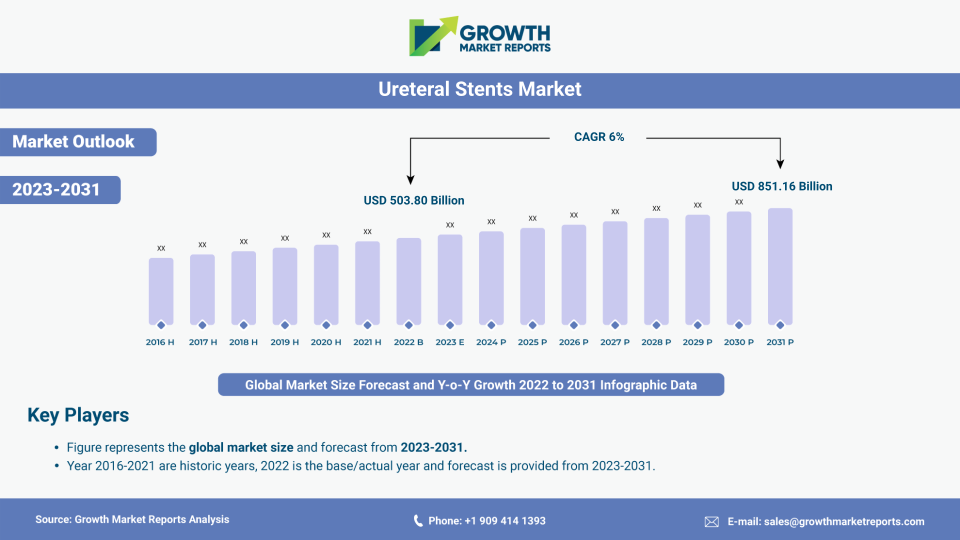
According to our latest research, the global ureteral stents market size reached USD 499.2 million in 2024, driven by rising incidences of urological disorders and the increasing adoption of minimally invasive procedures. The industry is experiencing robust growth, registering a CAGR of 6.8% from 2025 to 2033. By the end of 2033, the market is forecasted to attain a value of USD 972.3 million, reflecting the ongoing advancements in stent materials and expanding applications in both developed and emerging economies. This upward trajectory is underpinned by innovation in stent design and material, as well as the growing geriatric population globally.

One of the primary growth factors for the ureteral stents market is the increasing prevalence of kidney stones and other urological conditions such as ureteral strictures and tumors. The rise in kidney stone cases, particularly among aging populations and individuals with sedentary lifestyles, is significantly boosting the demand for ureteral stents. Additionally, improvements in diagnostic imaging and the growing awareness regarding early intervention for urological diseases are driving more patients to seek timely treatment, further supporting market expansion. Healthcare providers are also increasingly favoring ureteral stents due to their effectiveness in relieving obstructions, reducing complications, and improving patient outcomes, which collectively contribute to the marketÂ’s growth momentum.

Technological advancements in stent materials and design represent another key driver for the ureteral stents market. The development of advanced materials such as hydrogel-coated, silicone, and polyurethane stents has enhanced biocompatibility, reduced encrustation, and improved patient comfort. Manufacturers are focusing on introducing stents with features like anti-reflux mechanisms, biodegradable materials, and antimicrobial coatings to reduce infection rates and minimize the need for repeat procedures. These innovations are not only increasing the adoption of ureteral stents in routine clinical practice but are also expanding their use in complex and chronic urological cases. Furthermore, the trend toward minimally invasive urological procedures is accelerating the integration of next-generation stents, as patients and clinicians alike prioritize reduced recovery times and fewer post-operative complications.

The global rise in healthcare infrastructure investments, particularly in emerging economies, is further stimulating the ureteral stents market. Governments and private players are expanding hospital networks, improving diagnostic capabilities, and increasing access to specialized urological care, especially in regions like Asia Pacific and Latin America. Coupled with the growing number of skilled urologists and the proliferation of ambulatory surgical centers, these developments are making ureteral stent procedures more accessible and affordable. Insurance coverage for urological interventions is also expanding, encouraging more patients to opt for timely treatments. As a result, the market is witnessing robust growth across both developed and developing regions, with manufacturers responding by diversifying their product portfolios and expanding their geographic presence.

In the realm of urological procedures, the ureteroscope has become an indispensable tool for diagnosing and treating conditions affecting the urinary tract. Its ability to provide direct visualization of the ureters and kidneys allows for precise interventions, particularly in the management of kidney stones and ureteral strictures. The integration of ureteroscopes with advanced imaging technologies has further enhanced their efficacy, enabling urologists to perform minimally invasive procedures with greater accuracy and reduced patient discomfort. As the demand for efficient and patient-friendly treatment options continues to rise, the role of ureteroscopes in the ureteral stents market is becoming increasingly significant, driving innovation and adoption across healthcare settings.

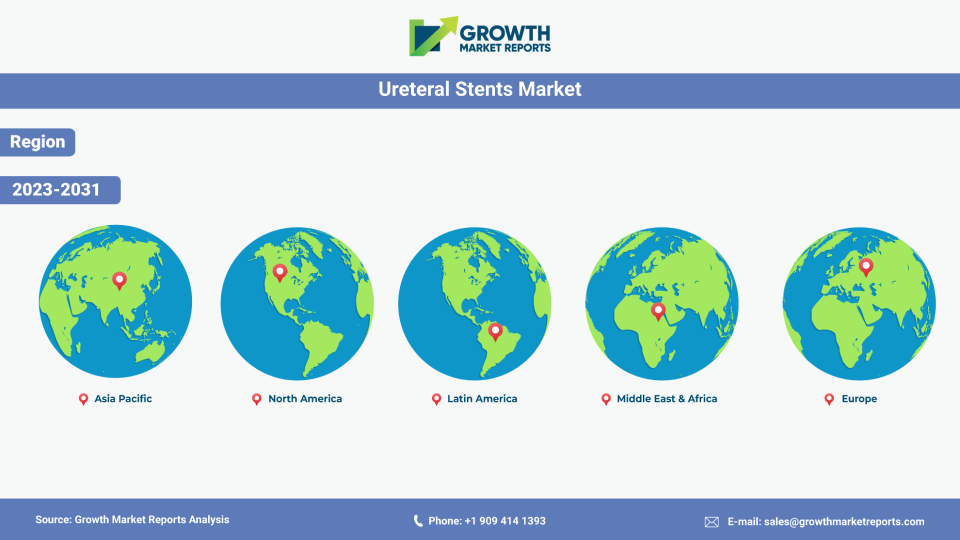
Regionally, North America continues to dominate the ureteral stents market, supported by high healthcare expenditure, advanced medical infrastructure, and a large patient pool suffering from urological disorders. Europe follows closely, benefiting from strong healthcare systems and increasing research activities in urology. Meanwhile, the Asia Pacific region is emerging as a lucrative market, propelled by rapidly improving healthcare facilities, rising awareness, and a growing middle-class population with increased healthcare spending. Latin America and the Middle East & Africa are also experiencing steady growth, albeit at a slower pace, due to ongoing improvements in healthcare access and the rising burden of chronic diseases. Collectively, these regional trends are shaping a dynamic and competitive global landscape for the ureteral stents market.

Global Ureteral Stents Industry Outlook

Product Type Analysis

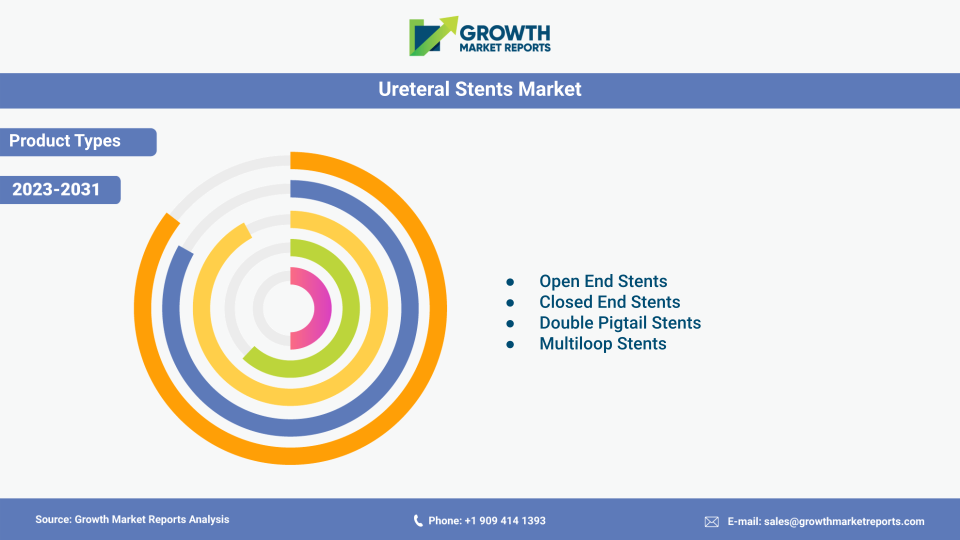
The ureteral stents market is segmented by product type into Double J Stents, Multiloop Stents, Open-End Stents, Closed-End Stents, and Others. Among these, Double J Stents hold a significant share, owing to their versatility and widespread use in managing a variety of urological conditions. Double J Stents are preferred due to their unique design, which prevents migration and ensures effective drainage of urine from the kidney to the bladder. Their ease of insertion and removal, coupled with a lower risk of complications, has made them the standard of care in both emergency and elective urological procedures. The growing prevalence of kidney stones and ureteral obstructions has further cemented the dominance of Double J Stents in the global market.

Multiloop Stents are gaining traction, particularly in cases where extended stenting is necessary or when patients have complex anatomical challenges. Their design allows for better anchorage and reduces the risk of stent migration, especially in patients with recurrent obstructions or after reconstructive surgeries. The adoption of multiloop stents is also increasing in pediatric and geriatric populations, where anatomical variations can complicate standard stent placement. Manufacturers are investing in research and development to optimize the flexibility, durability, and biocompatibility of multiloop stents, which is expected to drive their market share in the coming years.

Open-End and Closed-End Stents each have specific clinical applications, with open-end stents being used primarily for temporary drainage and closed-end stents for longer-term management. Open-end stents facilitate easier access for additional procedures, such as stone removal, while closed-end stents are preferred for their ability to reduce the risk of urine reflux and infection. The choice between these stent types is often dictated by the patientÂ’s clinical profile, the underlying condition, and the anticipated duration of stenting. As urologists become more adept at tailoring stent selection to individual patient needs, the demand for both open-end and closed-end stents is expected to remain robust.

Urinary Stone Analysis is a critical component in the management of kidney stones, providing valuable insights into the composition and etiology of stones. This analysis helps in tailoring treatment plans and preventive strategies, ensuring that patients receive the most effective care. By understanding the mineral composition of stones, healthcare providers can recommend dietary modifications and pharmacological interventions to prevent recurrence. The integration of urinary stone analysis with ureteral stenting procedures enhances patient outcomes by facilitating targeted therapies and reducing the likelihood of future stone formation. As the prevalence of nephrolithiasis continues to rise, the importance of comprehensive urinary stone analysis in urological practice cannot be overstated.

The "Others" segment includes specialty stents designed for unique clinical scenarios, such as metallic stents and drug-eluting stents. These products are typically reserved for complex cases involving malignancies or recurrent strictures, where conventional stents may not suffice. Although currently representing a smaller share of the market, the "Others" segment is poised for growth as innovation in stent technology accelerates and clinicians seek more targeted solutions for challenging urological cases. Overall, the product type segment of the ureteral stents market is characterized by continuous evolution, with manufacturers striving to address a broad spectrum of clinical needs through diverse and innovative offerings.

Report Scope

Attributes Details
Report Title Ureteral Stents Market Research Report 2033
By Product Type Double J Stents, Multiloop Stents, Open-End Stents, Closed-End Stents, Others
By Material Polyurethane, Silicone, Hydrogel, Others
By Application Kidney Stones, Ureteral Strictures, Tumors, Others
By End-User Hospitals, Ambulatory Surgical Centers, Specialty Clinics, Others
Regions Covered North America, Europe, APAC, Latin America, MEA
Base Year 2024
Historic Data 2018-2023
Forecast Period 2025-2033
Number of Pages 273
Number of Tables & Figures 363
Customization Available Yes, the report can be customized as per your need.

Material Analysis

Material selection plays a pivotal role in the performance, safety, and patient comfort associated with ureteral stents. The market is segmented into Polyurethane, Silicone, Hydrogel, and Others, with each material offering distinct advantages. Polyurethane stents are widely used due to their flexibility, ease of insertion, and cost-effectiveness. They are suitable for short to medium-term stenting and are favored in routine clinical practice. However, concerns regarding encrustation and biofilm formation have prompted the development of alternative materials with enhanced properties.

Silicone stents have gained popularity for their superior biocompatibility and reduced risk of encrustation. SiliconeÂ’s inert nature minimizes irritation and allergic reactions, making it an ideal choice for patients requiring long-term stenting or those with a history of recurrent infections. The smooth surface of silicone stents also facilitates easier removal and reduces patient discomfort. As healthcare providers increasingly prioritize patient-centric care, the demand for silicone stents is expected to grow, particularly in developed markets with advanced healthcare systems.

Hydrogel-coated stents represent a significant advancement in ureteral stent technology. The hydrogel coating enhances lubricity, reducing friction during insertion and removal, and minimizes tissue irritation. This results in improved patient comfort and lower rates of stent-related complications such as pain and hematuria. Hydrogel stents are particularly beneficial in patients with sensitive urinary tracts or those undergoing repeated stenting procedures. The adoption of hydrogel stents is on the rise, especially in hospitals and specialty clinics focused on delivering high-quality, minimally invasive urological care.

The "Others" category encompasses emerging materials such as metallic, biodegradable, and drug-eluting stents. Metallic stents are used in cases requiring long-term patency, such as malignant obstructions, while biodegradable stents are designed to gradually dissolve, eliminating the need for removal procedures. Drug-eluting stents offer the added benefit of localized drug delivery to prevent infection or reduce inflammation. Although these advanced materials currently account for a smaller share of the market, ongoing research and clinical trials are expected to accelerate their adoption in the near future. The material segment of the ureteral stents market is thus marked by a dynamic interplay of innovation, patient needs, and clinical outcomes.

Application Analysis

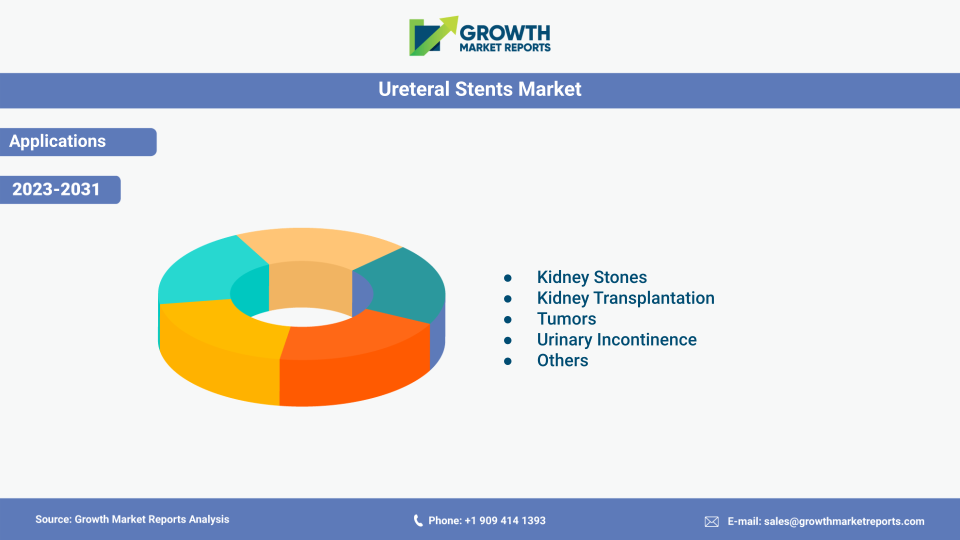
The ureteral stents market is segmented by application into Kidney Stones, Ureteral Strictures, Tumors, and Others. Kidney stones represent the largest application segment, driven by the rising incidence of nephrolithiasis worldwide. Ureteral stents are routinely used to relieve obstruction caused by stones, facilitate stone passage, and prevent recurrence. The increasing prevalence of risk factors such as obesity, dehydration, and dietary habits is contributing to the growing burden of kidney stones, thereby fueling the demand for ureteral stents. Hospitals and urology clinics are witnessing a steady increase in stone-related procedures, further supporting market growth.

Ureteral strictures, characterized by the narrowing of the ureter due to scarring or inflammation, constitute another major application for stents. Stenting is often the preferred intervention for managing strictures, as it provides immediate relief from obstruction and allows for healing or further intervention. The rising incidence of strictures, particularly among older adults and patients with a history of urological surgeries or infections, is driving the adoption of ureteral stents. Advances in imaging and endoscopic techniques are enabling earlier detection and more precise management of strictures, supporting the sustained growth of this application segment.

Tumors, both benign and malignant, can cause ureteral obstruction that necessitates stenting. In cases of urothelial carcinoma, prostate cancer, or gynecological malignancies, ureteral stents play a critical role in preserving renal function and improving patient quality of life. The growing incidence of cancer globally, coupled with advancements in oncological care, is increasing the use of ureteral stents as part of comprehensive cancer management. Additionally, the development of stents with anti-migration and anti-encrustation features is enhancing their utility in oncology settings, where long-term patency and patient comfort are paramount.

The "Others" application segment includes conditions such as congenital anomalies, trauma, and postoperative management. Pediatric patients with congenital urinary tract abnormalities often require customized stenting solutions, while trauma cases may necessitate temporary stenting to ensure urinary flow. Postoperative stenting is also common following reconstructive surgeries or complex endourological procedures. As the spectrum of urological conditions requiring stenting continues to expand, the application segment of the ureteral stents market is poised for sustained growth, driven by ongoing clinical innovation and an increasing focus on personalized patient care.

End-User Analysis

End-users in the ureteral stents market include Hospitals, Ambulatory Surgical Centers, Specialty Clinics, and Others. Hospitals represent the largest end-user segment, accounting for a significant share of stent placements. The majority of urological procedures, particularly those involving complex or high-risk patients, are performed in hospital settings equipped with advanced diagnostic and surgical facilities. Hospitals benefit from multidisciplinary teams, comprehensive post-operative care, and access to the latest stent technologies, making them the preferred choice for both patients and healthcare providers. The increasing number of hospital-based urology departments and the rising volume of inpatient procedures are further strengthening the dominance of this segment.

Ambulatory Surgical Centers (ASCs) are emerging as a dynamic segment within the ureteral stents market, driven by the trend toward minimally invasive procedures and the demand for cost-effective care. ASCs offer several advantages, including shorter wait times, reduced hospital stays, and lower overall costs. These facilities are particularly well-suited for routine stent placements and stone management procedures, where rapid turnaround and high patient throughput are critical. The growth of ASCs is being fueled by advancements in anesthesia, improved stent designs, and the increasing comfort of patients and physicians with outpatient care models.

Specialty Clinics, including urology centers and private practices, play a vital role in the ureteral stents market, especially in urban and suburban areas with high patient volumes. These clinics offer personalized care, tailored treatment plans, and access to specialized expertise in urology. The convenience and accessibility of specialty clinics are attracting a growing number of patients seeking prompt diagnosis and intervention for urological conditions. As healthcare systems continue to decentralize and prioritize patient-centric care, the role of specialty clinics in stent placement and follow-up is expected to expand.

The "Others" end-user segment encompasses long-term care facilities, academic medical centers, and research institutions. These settings often cater to patients with complex or chronic urological conditions requiring ongoing management and monitoring. Academic centers, in particular, are at the forefront of clinical research and innovation in stent technology, contributing to the development and adoption of next-generation products. The diversity of end-users in the ureteral stents market underscores the broad applicability of stenting solutions across various healthcare settings, each with unique requirements and opportunities for growth.

Opportunities & Threats

The ureteral stents market presents numerous opportunities for growth, particularly in the area of technological innovation. The development of next-generation stents with enhanced biocompatibility, anti-microbial coatings, and biodegradable materials is opening new avenues for patient care. These advancements are addressing longstanding challenges such as infection, encrustation, and the need for repeat procedures, thereby improving patient outcomes and satisfaction. Additionally, the integration of digital health technologies, such as remote monitoring and smart stents, has the potential to revolutionize post-operative care and reduce complications. Manufacturers that invest in research and development and collaborate with academic institutions are well-positioned to capitalize on these emerging opportunities and gain a competitive edge in the market.

Another significant opportunity lies in the expansion of the ureteral stents market into emerging economies. Rapid urbanization, rising healthcare expenditures, and improving access to advanced medical care are driving demand for urological interventions in regions such as Asia Pacific and Latin America. Governments and private players are investing in healthcare infrastructure, training programs, and awareness campaigns to address the growing burden of urological diseases. As a result, the adoption of ureteral stents is increasing, particularly in countries with large populations and high rates of kidney stones and other urological conditions. Companies that tailor their product offerings and distribution strategies to the unique needs of these markets are likely to achieve sustained growth and market penetration.

However, the ureteral stents market also faces certain restraining factors, chief among them being the risk of complications associated with stent placement. Issues such as infection, encrustation, migration, and patient discomfort can lead to repeat interventions, increased healthcare costs, and reduced patient satisfaction. Regulatory challenges, particularly in terms of product approvals and post-market surveillance, can also slow the introduction of new stent technologies. Additionally, the high cost of advanced stents and limited reimbursement in some regions may restrict access for certain patient populations. Addressing these challenges will require ongoing collaboration between manufacturers, healthcare providers, and regulatory authorities to ensure the safety, efficacy, and affordability of ureteral stenting solutions.

Regional Outlook

North America is the leading regional market for ureteral stents, with a market size of USD 178.6 million in 2024. The regionÂ’s dominance is attributed to high healthcare spending, advanced medical infrastructure, and a large population affected by urological disorders. The United States, in particular, accounts for the majority of procedures, supported by a robust network of hospitals, specialty clinics, and ambulatory surgical centers. Favorable reimbursement policies and widespread adoption of minimally invasive techniques are further driving market growth. Canada is also experiencing steady expansion, benefiting from ongoing investments in healthcare infrastructure and rising awareness of urological health.

Europe represents the second-largest market, with a market size of USD 143.7 million in 2024. The regionÂ’s growth is fueled by strong public healthcare systems, increasing research and development activities, and a growing elderly population prone to kidney stones and other urological conditions. Germany, the United Kingdom, and France are key contributors, with well-established urology departments and a high volume of stent placements. The European market is characterized by a strong emphasis on patient safety, quality of care, and the adoption of advanced stent technologies. The region is expected to register a CAGR of 6.4% during the forecast period, reflecting ongoing innovation and expanding access to specialized care.

The Asia Pacific region is emerging as the fastest-growing market for ureteral stents, with a market size of USD 112.4 million in 2024. Rapid urbanization, rising disposable incomes, and increasing healthcare investments are driving demand for urological interventions in countries such as China, India, and Japan. The regionÂ’s large and diverse population, coupled with a high prevalence of kidney stones and other urological diseases, presents significant growth opportunities for manufacturers. Government initiatives to improve healthcare access, expand insurance coverage, and train healthcare professionals are further supporting market expansion. Latin America and the Middle East & Africa, with market sizes of USD 35.6 million and USD 29.0 million respectively in 2024, are also experiencing steady growth, driven by improving healthcare infrastructure and rising awareness of urological health.

Ureteral Stents Market Statistics

Competitor Outlook

The ureteral stents market is characterized by a highly competitive landscape, with a mix of established multinational companies and emerging players vying for market share. Key factors influencing competition include product innovation, pricing strategies, distribution networks, and regulatory compliance. Leading manufacturers are investing heavily in research and development to introduce next-generation stents with enhanced features such as anti-microbial coatings, biodegradable materials, and improved patient comfort. Strategic partnerships, mergers, and acquisitions are common as companies seek to expand their product portfolios, enter new markets, and strengthen their competitive positions. The market also witnesses frequent product launches and clinical trials aimed at demonstrating the safety and efficacy of new stenting solutions.

Market leaders are leveraging their extensive distribution networks and strong brand recognition to maintain their dominance, particularly in developed regions like North America and Europe. These companies benefit from established relationships with hospitals, specialty clinics, and ambulatory surgical centers, enabling them to achieve high penetration rates and capture recurring business. In contrast, emerging players are focusing on niche segments and underserved markets, offering cost-effective solutions tailored to local needs. The ability to navigate complex regulatory environments and secure timely product approvals is a critical success factor, particularly for companies seeking to enter multiple geographic markets.

The competitive landscape is also shaped by ongoing efforts to address unmet clinical needs and improve patient outcomes. Manufacturers are increasingly collaborating with academic institutions, healthcare providers, and patient advocacy groups to gain insights into real-world challenges and preferences. This collaborative approach is fostering the development of innovative stent designs, materials, and delivery systems that address issues such as infection, encrustation, and migration. Companies that prioritize patient-centric innovation and invest in robust post-market surveillance are well-positioned to achieve long-term success in the ureteral stents market.

Major companies operating in the global ureteral stents market include Boston Scientific Corporation, B. Braun Melsungen AG, Cook Medical, C. R. Bard (now part of BD), Coloplast Group, Teleflex Incorporated, Allium Medical Solutions, and Olympus Corporation. Boston Scientific is known for its extensive portfolio of urological products and strong R&D capabilities, while B. Braun Melsungen AG is recognized for its focus on high-quality, biocompatible stents. Cook Medical and C. R. Bard have established themselves as leaders in innovation and clinical research, offering a range of stents for both routine and complex cases. Coloplast and Teleflex are noted for their patient-centric approach, with a focus on comfort and safety. Allium Medical Solutions and Olympus Corporation are expanding their presence through targeted product development and strategic partnerships.

These companies are continually enhancing their product offerings to meet evolving clinical needs and regulatory requirements. Boston Scientific, for example, has introduced stents with advanced coatings to reduce infection risk, while Cook Medical is investing in biodegradable and drug-eluting stent technologies. B. Braun and Coloplast are expanding their geographic reach through new distribution agreements and local manufacturing initiatives. Teleflex and Olympus are leveraging digital health technologies to improve post-operative monitoring and patient engagement. Collectively, these strategies are shaping a dynamic and innovative competitive environment, with companies striving to deliver superior outcomes for patients and healthcare providers alike.

Key Players

  • Boston Scientific Corporation
  • Becton, Dickinson and Company (BD)
  • Cook Medical
  • Teleflex Incorporated
  • Coloplast Group
  • C. R. Bard, Inc. (now part of BD)
  • Medtronic plc
  • Olympus Corporation
  • Stryker Corporation
  • Allium Medical Solutions Ltd.
  • Biosensors International Group, Ltd.
  • Pnn Medical A/S
  • Urovision-Urotech GmbH
  • Well Lead Medical Co., Ltd.
  • Kangmei Medical Device Co., Ltd.
  • Shandong Zibo Shanchuan Medical Instrument Co., Ltd.
  • Zhejiang Chuangxiang Medical Technology Co., Ltd.
  • Biosure Medical (Hangzhou) Co., Ltd.
  • SURU International Pvt. Ltd.
  • OptiMed Medizinische Instrumente GmbH
Ureteral Stents Market Overview

Segments

The Ureteral Stents market has been segmented on the basis of

Product Type

  • Double J Stents
  • Multiloop Stents
  • Open-End Stents
  • Closed-End Stents
  • Others

Material

  • Polyurethane
  • Silicone
  • Hydrogel
  • Others

Application

  • Kidney Stones
  • Ureteral Strictures
  • Tumors
  • Others

End-User

  • Hospitals
  • Ambulatory Surgical Centers
  • Specialty Clinics
  • Others

Competitive Landscape

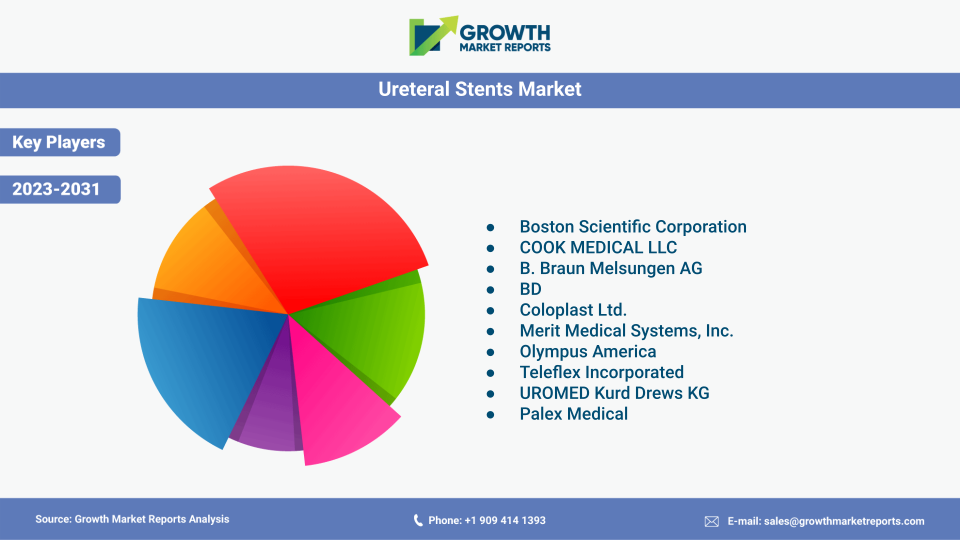
Key players focus on strategies such as product development, collaborations, partnerships, technological advancements, research and development, and mergers and acquisitions. Some key players are Boston Scientific Corporation, COOK MEDICAL LLC, B. Braun Melsungen AG, BD, Coloplast Ltd., Merit Medical Systems, Inc., Olympus America, Teleflex Incorporated, UROMED Kurd Drews KG, and Palex Medical.

Ureteral Stents Market Key Players

Frequently Asked Questions

Major companies include Boston Scientific Corporation, Becton, Dickinson and Company (BD), Cook Medical, Teleflex Incorporated, Coloplast Group, C. R. Bard (BD), Medtronic, Olympus Corporation, Stryker Corporation, and Allium Medical Solutions Ltd., among others.

Major challenges include risks of infection, encrustation, stent migration, patient discomfort, regulatory hurdles, and high costs of advanced stents, especially in regions with limited reimbursement.

Recent advancements include stents with anti-reflux mechanisms, biodegradable materials, antimicrobial coatings, and hydrogel coatings for improved patient comfort and reduced complications.

Hospitals are the largest end-users, followed by ambulatory surgical centers and specialty clinics. Long-term care facilities and academic medical centers also contribute to the market.

North America is the leading market, followed by Europe and the Asia Pacific region. North America benefits from high healthcare spending and advanced infrastructure, while Asia Pacific is the fastest-growing region due to rising healthcare investments and a large patient population.

Ureteral stents are mainly used for managing kidney stones, ureteral strictures, and tumors. They also play a role in treating congenital anomalies, trauma, and postoperative management.

Material selection is crucial for stent performance, safety, and patient comfort. Polyurethane, silicone, and hydrogel-coated stents are popular, with silicone offering superior biocompatibility and hydrogel coatings improving lubricity and comfort.

Double J Stents hold a significant market share due to their versatility, effectiveness in preventing migration, and ability to ensure proper urine drainage. Multiloop, open-end, closed-end, and specialty stents also serve specific clinical needs.

Key growth drivers include the rising incidence of kidney stones and urological disorders, increasing adoption of minimally invasive procedures, advancements in stent materials and design, and a growing geriatric population.

The global ureteral stents market reached USD 499.2 million in 2024 and is expected to grow at a CAGR of 6.8% from 2025 to 2033, reaching USD 972.3 million by 2033.

Table Of Content

Chapter 1 Executive Summary
Chapter 2 Assumptions and Acronyms Used
Chapter 3 Research Methodology
Chapter 4 Ureteral Stents Market Overview
   4.1 Introduction
      4.1.1 Market Taxonomy
      4.1.2 Market Definition
      4.1.3 Macro-Economic Factors Impacting the Market Growth
   4.2 Ureteral Stents Market Dynamics
      4.2.1 Market Drivers
      4.2.2 Market Restraints
      4.2.3 Market Opportunity
   4.3 Ureteral Stents Market - Supply Chain Analysis
      4.3.1 List of Key Suppliers
      4.3.2 List of Key Distributors
      4.3.3 List of Key Consumers
   4.4 Key Forces Shaping the Ureteral Stents Market
      4.4.1 Bargaining Power of Suppliers
      4.4.2 Bargaining Power of Buyers
      4.4.3 Threat of Substitution
      4.4.4 Threat of New Entrants
      4.4.5 Competitive Rivalry
   4.5 Global Ureteral Stents Market Size & Forecast, 2023-2032
      4.5.1 Ureteral Stents Market Size and Y-o-Y Growth
      4.5.2 Ureteral Stents Market Absolute $ Opportunity

Chapter 5 Global Ureteral Stents Market Analysis and Forecast By Product Type
   5.1 Introduction
      5.1.1 Key Market Trends & Growth Opportunities By Product Type
      5.1.2 Basis Point Share (BPS) Analysis By Product Type
      5.1.3 Absolute $ Opportunity Assessment By Product Type
   5.2 Ureteral Stents Market Size Forecast By Product Type
      5.2.1 Double J Stents
      5.2.2 Multiloop Stents
      5.2.3 Open-End Stents
      5.2.4 Closed-End Stents
      5.2.5 Others
   5.3 Market Attractiveness Analysis By Product Type

Chapter 6 Global Ureteral Stents Market Analysis and Forecast By Material
   6.1 Introduction
      6.1.1 Key Market Trends & Growth Opportunities By Material
      6.1.2 Basis Point Share (BPS) Analysis By Material
      6.1.3 Absolute $ Opportunity Assessment By Material
   6.2 Ureteral Stents Market Size Forecast By Material
      6.2.1 Polyurethane
      6.2.2 Silicone
      6.2.3 Hydrogel
      6.2.4 Others
   6.3 Market Attractiveness Analysis By Material

Chapter 7 Global Ureteral Stents Market Analysis and Forecast By Application
   7.1 Introduction
      7.1.1 Key Market Trends & Growth Opportunities By Application
      7.1.2 Basis Point Share (BPS) Analysis By Application
      7.1.3 Absolute $ Opportunity Assessment By Application
   7.2 Ureteral Stents Market Size Forecast By Application
      7.2.1 Kidney Stones
      7.2.2 Ureteral Strictures
      7.2.3 Tumors
      7.2.4 Others
   7.3 Market Attractiveness Analysis By Application

Chapter 8 Global Ureteral Stents Market Analysis and Forecast By End-User
   8.1 Introduction
      8.1.1 Key Market Trends & Growth Opportunities By End-User
      8.1.2 Basis Point Share (BPS) Analysis By End-User
      8.1.3 Absolute $ Opportunity Assessment By End-User
   8.2 Ureteral Stents Market Size Forecast By End-User
      8.2.1 Hospitals
      8.2.2 Ambulatory Surgical Centers
      8.2.3 Specialty Clinics
      8.2.4 Others
   8.3 Market Attractiveness Analysis By End-User

Chapter 9 Global Ureteral Stents Market Analysis and Forecast by Region
   9.1 Introduction
      9.1.1 Key Market Trends & Growth Opportunities By Region
      9.1.2 Basis Point Share (BPS) Analysis By Region
      9.1.3 Absolute $ Opportunity Assessment By Region
   9.2 Ureteral Stents Market Size Forecast By Region
      9.2.1 North America
      9.2.2 Europe
      9.2.3 Asia Pacific
      9.2.4 Latin America
      9.2.5 Middle East & Africa (MEA)
   9.3 Market Attractiveness Analysis By Region

Chapter 10 Coronavirus Disease (COVID-19) Impact 
   10.1 Introduction 
   10.2 Current & Future Impact Analysis 
   10.3 Economic Impact Analysis 
   10.4 Government Policies 
   10.5 Investment Scenario

Chapter 11 North America Ureteral Stents Analysis and Forecast
   11.1 Introduction
   11.2 North America Ureteral Stents Market Size Forecast by Country
      11.2.1 U.S.
      11.2.2 Canada
   11.3 Basis Point Share (BPS) Analysis by Country
   11.4 Absolute $ Opportunity Assessment by Country
   11.5 Market Attractiveness Analysis by Country
   11.6 North America Ureteral Stents Market Size Forecast By Product Type
      11.6.1 Double J Stents
      11.6.2 Multiloop Stents
      11.6.3 Open-End Stents
      11.6.4 Closed-End Stents
      11.6.5 Others
   11.7 Basis Point Share (BPS) Analysis By Product Type 
   11.8 Absolute $ Opportunity Assessment By Product Type 
   11.9 Market Attractiveness Analysis By Product Type
   11.10 North America Ureteral Stents Market Size Forecast By Material
      11.10.1 Polyurethane
      11.10.2 Silicone
      11.10.3 Hydrogel
      11.10.4 Others
   11.11 Basis Point Share (BPS) Analysis By Material 
   11.12 Absolute $ Opportunity Assessment By Material 
   11.13 Market Attractiveness Analysis By Material
   11.14 North America Ureteral Stents Market Size Forecast By Application
      11.14.1 Kidney Stones
      11.14.2 Ureteral Strictures
      11.14.3 Tumors
      11.14.4 Others
   11.15 Basis Point Share (BPS) Analysis By Application 
   11.16 Absolute $ Opportunity Assessment By Application 
   11.17 Market Attractiveness Analysis By Application
   11.18 North America Ureteral Stents Market Size Forecast By End-User
      11.18.1 Hospitals
      11.18.2 Ambulatory Surgical Centers
      11.18.3 Specialty Clinics
      11.18.4 Others
   11.19 Basis Point Share (BPS) Analysis By End-User 
   11.20 Absolute $ Opportunity Assessment By End-User 
   11.21 Market Attractiveness Analysis By End-User

Chapter 12 Europe Ureteral Stents Analysis and Forecast
   12.1 Introduction
   12.2 Europe Ureteral Stents Market Size Forecast by Country
      12.2.1 Germany
      12.2.2 France
      12.2.3 Italy
      12.2.4 U.K.
      12.2.5 Spain
      12.2.6 Russia
      12.2.7 Rest of Europe
   12.3 Basis Point Share (BPS) Analysis by Country
   12.4 Absolute $ Opportunity Assessment by Country
   12.5 Market Attractiveness Analysis by Country
   12.6 Europe Ureteral Stents Market Size Forecast By Product Type
      12.6.1 Double J Stents
      12.6.2 Multiloop Stents
      12.6.3 Open-End Stents
      12.6.4 Closed-End Stents
      12.6.5 Others
   12.7 Basis Point Share (BPS) Analysis By Product Type 
   12.8 Absolute $ Opportunity Assessment By Product Type 
   12.9 Market Attractiveness Analysis By Product Type
   12.10 Europe Ureteral Stents Market Size Forecast By Material
      12.10.1 Polyurethane
      12.10.2 Silicone
      12.10.3 Hydrogel
      12.10.4 Others
   12.11 Basis Point Share (BPS) Analysis By Material 
   12.12 Absolute $ Opportunity Assessment By Material 
   12.13 Market Attractiveness Analysis By Material
   12.14 Europe Ureteral Stents Market Size Forecast By Application
      12.14.1 Kidney Stones
      12.14.2 Ureteral Strictures
      12.14.3 Tumors
      12.14.4 Others
   12.15 Basis Point Share (BPS) Analysis By Application 
   12.16 Absolute $ Opportunity Assessment By Application 
   12.17 Market Attractiveness Analysis By Application
   12.18 Europe Ureteral Stents Market Size Forecast By End-User
      12.18.1 Hospitals
      12.18.2 Ambulatory Surgical Centers
      12.18.3 Specialty Clinics
      12.18.4 Others
   12.19 Basis Point Share (BPS) Analysis By End-User 
   12.20 Absolute $ Opportunity Assessment By End-User 
   12.21 Market Attractiveness Analysis By End-User

Chapter 13 Asia Pacific Ureteral Stents Analysis and Forecast
   13.1 Introduction
   13.2 Asia Pacific Ureteral Stents Market Size Forecast by Country
      13.2.1 China
      13.2.2 Japan
      13.2.3 South Korea
      13.2.4 India
      13.2.5 Australia
      13.2.6 South East Asia (SEA)
      13.2.7 Rest of Asia Pacific (APAC)
   13.3 Basis Point Share (BPS) Analysis by Country
   13.4 Absolute $ Opportunity Assessment by Country
   13.5 Market Attractiveness Analysis by Country
   13.6 Asia Pacific Ureteral Stents Market Size Forecast By Product Type
      13.6.1 Double J Stents
      13.6.2 Multiloop Stents
      13.6.3 Open-End Stents
      13.6.4 Closed-End Stents
      13.6.5 Others
   13.7 Basis Point Share (BPS) Analysis By Product Type 
   13.8 Absolute $ Opportunity Assessment By Product Type 
   13.9 Market Attractiveness Analysis By Product Type
   13.10 Asia Pacific Ureteral Stents Market Size Forecast By Material
      13.10.1 Polyurethane
      13.10.2 Silicone
      13.10.3 Hydrogel
      13.10.4 Others
   13.11 Basis Point Share (BPS) Analysis By Material 
   13.12 Absolute $ Opportunity Assessment By Material 
   13.13 Market Attractiveness Analysis By Material
   13.14 Asia Pacific Ureteral Stents Market Size Forecast By Application
      13.14.1 Kidney Stones
      13.14.2 Ureteral Strictures
      13.14.3 Tumors
      13.14.4 Others
   13.15 Basis Point Share (BPS) Analysis By Application 
   13.16 Absolute $ Opportunity Assessment By Application 
   13.17 Market Attractiveness Analysis By Application
   13.18 Asia Pacific Ureteral Stents Market Size Forecast By End-User
      13.18.1 Hospitals
      13.18.2 Ambulatory Surgical Centers
      13.18.3 Specialty Clinics
      13.18.4 Others
   13.19 Basis Point Share (BPS) Analysis By End-User 
   13.20 Absolute $ Opportunity Assessment By End-User 
   13.21 Market Attractiveness Analysis By End-User

Chapter 14 Latin America Ureteral Stents Analysis and Forecast
   14.1 Introduction
   14.2 Latin America Ureteral Stents Market Size Forecast by Country
      14.2.1 Brazil
      14.2.2 Mexico
      14.2.3 Rest of Latin America (LATAM)
   14.3 Basis Point Share (BPS) Analysis by Country
   14.4 Absolute $ Opportunity Assessment by Country
   14.5 Market Attractiveness Analysis by Country
   14.6 Latin America Ureteral Stents Market Size Forecast By Product Type
      14.6.1 Double J Stents
      14.6.2 Multiloop Stents
      14.6.3 Open-End Stents
      14.6.4 Closed-End Stents
      14.6.5 Others
   14.7 Basis Point Share (BPS) Analysis By Product Type 
   14.8 Absolute $ Opportunity Assessment By Product Type 
   14.9 Market Attractiveness Analysis By Product Type
   14.10 Latin America Ureteral Stents Market Size Forecast By Material
      14.10.1 Polyurethane
      14.10.2 Silicone
      14.10.3 Hydrogel
      14.10.4 Others
   14.11 Basis Point Share (BPS) Analysis By Material 
   14.12 Absolute $ Opportunity Assessment By Material 
   14.13 Market Attractiveness Analysis By Material
   14.14 Latin America Ureteral Stents Market Size Forecast By Application
      14.14.1 Kidney Stones
      14.14.2 Ureteral Strictures
      14.14.3 Tumors
      14.14.4 Others
   14.15 Basis Point Share (BPS) Analysis By Application 
   14.16 Absolute $ Opportunity Assessment By Application 
   14.17 Market Attractiveness Analysis By Application
   14.18 Latin America Ureteral Stents Market Size Forecast By End-User
      14.18.1 Hospitals
      14.18.2 Ambulatory Surgical Centers
      14.18.3 Specialty Clinics
      14.18.4 Others
   14.19 Basis Point Share (BPS) Analysis By End-User 
   14.20 Absolute $ Opportunity Assessment By End-User 
   14.21 Market Attractiveness Analysis By End-User

Chapter 15 Middle East & Africa (MEA) Ureteral Stents Analysis and Forecast
   15.1 Introduction
   15.2 Middle East & Africa (MEA) Ureteral Stents Market Size Forecast by Country
      15.2.1 Saudi Arabia
      15.2.2 South Africa
      15.2.3 UAE
      15.2.4 Rest of Middle East & Africa (MEA)
   15.3 Basis Point Share (BPS) Analysis by Country
   15.4 Absolute $ Opportunity Assessment by Country
   15.5 Market Attractiveness Analysis by Country
   15.6 Middle East & Africa (MEA) Ureteral Stents Market Size Forecast By Product Type
      15.6.1 Double J Stents
      15.6.2 Multiloop Stents
      15.6.3 Open-End Stents
      15.6.4 Closed-End Stents
      15.6.5 Others
   15.7 Basis Point Share (BPS) Analysis By Product Type 
   15.8 Absolute $ Opportunity Assessment By Product Type 
   15.9 Market Attractiveness Analysis By Product Type
   15.10 Middle East & Africa (MEA) Ureteral Stents Market Size Forecast By Material
      15.10.1 Polyurethane
      15.10.2 Silicone
      15.10.3 Hydrogel
      15.10.4 Others
   15.11 Basis Point Share (BPS) Analysis By Material 
   15.12 Absolute $ Opportunity Assessment By Material 
   15.13 Market Attractiveness Analysis By Material
   15.14 Middle East & Africa (MEA) Ureteral Stents Market Size Forecast By Application
      15.14.1 Kidney Stones
      15.14.2 Ureteral Strictures
      15.14.3 Tumors
      15.14.4 Others
   15.15 Basis Point Share (BPS) Analysis By Application 
   15.16 Absolute $ Opportunity Assessment By Application 
   15.17 Market Attractiveness Analysis By Application
   15.18 Middle East & Africa (MEA) Ureteral Stents Market Size Forecast By End-User
      15.18.1 Hospitals
      15.18.2 Ambulatory Surgical Centers
      15.18.3 Specialty Clinics
      15.18.4 Others
   15.19 Basis Point Share (BPS) Analysis By End-User 
   15.20 Absolute $ Opportunity Assessment By End-User 
   15.21 Market Attractiveness Analysis By End-User

Chapter 16 Competition Landscape 
   16.1 Ureteral Stents Market: Competitive Dashboard
   16.2 Global Ureteral Stents Market: Market Share Analysis, 2023
   16.3 Company Profiles (Details – Overview, Financials, Developments, Strategy) 
      16.3.1 Boston Scientific Corporation
Becton, Dickinson and Company (BD)
Cook Medical
Teleflex Incorporated
Coloplast Group
C. R. Bard, Inc. (now part of BD)
Medtronic plc
Olympus Corporation
Stryker Corporation
Allium Medical Solutions Ltd.
Biosensors International Group, Ltd.
Pnn Medical A/S
Urovision-Urotech GmbH
Well Lead Medical Co., Ltd.
Kangmei Medical Device Co., Ltd.
Shandong Zibo Shanchuan Medical Instrument Co., Ltd.
Zhejiang Chuangxiang Medical Technology Co., Ltd.
Biosure Medical (Hangzhou) Co., Ltd.
SURU International Pvt. Ltd.
OptiMed Medizinische Instrumente GmbH

Methodology

Our Clients

FedEx Logistics
Microsoft
Siemens Healthcare
sinopec
Nestle SA
Pfizer
Dassault Aviation
Honda Motor Co. Ltd.