Segments - by Component (Telephony, Unified Messaging, Conferencing, Collaboration Platforms, Others), by Deployment Mode (Public Cloud, Private Cloud, Hybrid Cloud), by Organization Size (Small and Medium Enterprises, Large Enterprises), by Industry Vertical (BFSI, IT and Telecommunications, Healthcare, Retail, Education, Government, Others)
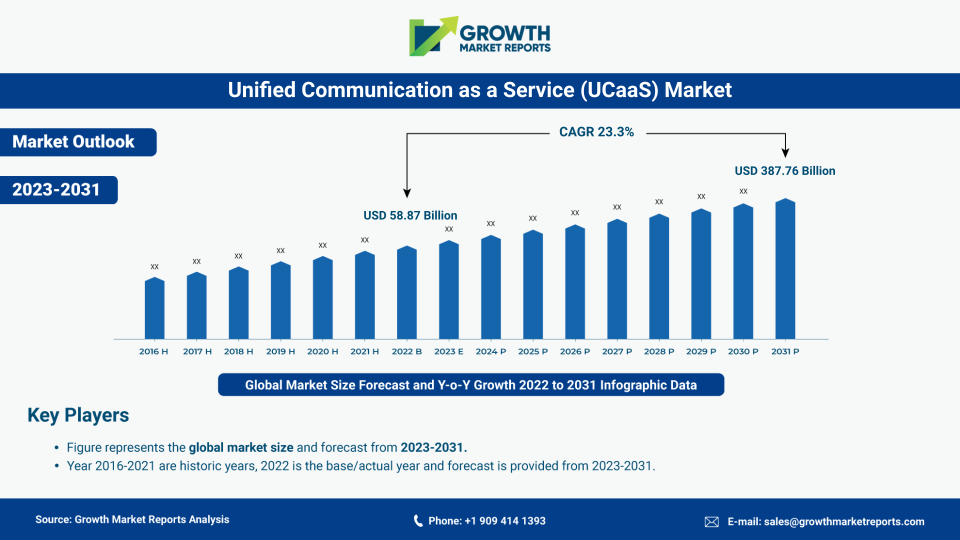
According to our latest research, the global Unified Communication as a Service (UCaaS) market size reached USD 32.5 billion in 2024, demonstrating robust expansion driven by the increasing demand for seamless communication solutions across industries. The UCaaS market is expected to grow at a CAGR of 13.2% from 2025 to 2033, reaching an estimated value of USD 98.1 billion by 2033. This sustained growth is fueled by the rapid digital transformation initiatives, proliferation of remote and hybrid work models, and the need for integrated collaboration tools that enhance productivity and operational efficiency.
A primary growth factor for the UCaaS market is the accelerated adoption of cloud-based communication platforms by enterprises of all sizes. As organizations strive to support distributed workforces, the demand for unified solutions that integrate telephony, messaging, conferencing, and collaboration in a single platform has surged. UCaaS enables businesses to streamline communication processes, reduce IT complexity, and lower operational costs by eliminating the need for multiple, disparate systems. The flexibility and scalability offered by UCaaS platforms further empower organizations to quickly adapt to changing business requirements, making them a preferred choice in todayÂ’s dynamic digital environment.
Another significant driver is the continuous innovation in collaboration technologies, including the integration of artificial intelligence, automation, and advanced analytics into UCaaS offerings. These enhancements are transforming how employees interact, share information, and make decisions, resulting in improved business outcomes. AI-powered features such as real-time language translation, intelligent meeting assistants, and automated transcription are elevating user experience and enabling more inclusive communication. Moreover, the increasing focus on security and compliance in cloud communications is prompting vendors to develop robust, enterprise-grade UCaaS solutions that address the evolving needs of regulated industries such as BFSI, healthcare, and government.
The rise of digital-native businesses and the rapid expansion of the global gig economy are also contributing to the growth of the UCaaS market. Small and medium enterprises (SMEs) are leveraging UCaaS to gain access to enterprise-level communication capabilities without significant upfront investment. This democratization of advanced communication tools is fostering innovation and enabling SMEs to compete more effectively in global markets. Additionally, the growing trend of mergers, acquisitions, and strategic partnerships among UCaaS providers is resulting in enhanced product offerings, broader geographic reach, and improved customer support, further accelerating market expansion.
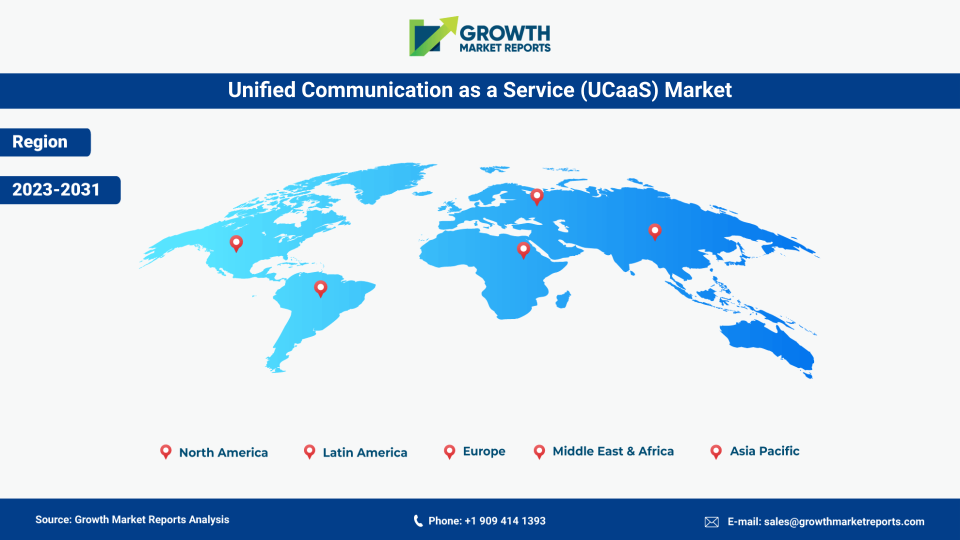
Regionally, North America continues to dominate the UCaaS market due to its mature IT infrastructure, high adoption rates of cloud technologies, and strong presence of leading industry players. However, the Asia Pacific region is emerging as the fastest-growing market, driven by rapid digitalization, increasing internet penetration, and a burgeoning startup ecosystem. Europe also presents significant growth opportunities, particularly in sectors such as BFSI, healthcare, and education, where regulatory compliance and data security are paramount. The Middle East & Africa and Latin America are witnessing steady growth as businesses in these regions increasingly recognize the value of unified communication solutions in enhancing operational efficiency and customer engagement.
Unified Communications Endpoints play a crucial role in the UCaaS ecosystem by providing the necessary hardware and software interfaces that enable seamless communication and collaboration. These endpoints, which include devices such as IP phones, video conferencing systems, and softphone applications, are essential for ensuring high-quality audio and video interactions. As organizations continue to adopt UCaaS solutions, the demand for advanced Unified Communications Endpoints is rising, driven by the need for reliable, user-friendly devices that support remote and hybrid work environments. The integration of these endpoints with UCaaS platforms enhances user experience by providing intuitive interfaces and seamless connectivity, facilitating efficient communication across various channels.
The Component segment of the UCaaS market encompasses telephony, unified messaging, conferencing, collaboration platforms, and other essential tools that facilitate seamless communication within organizations. Telephony remains a foundational component, offering businesses reliable voice communication capabilities that are now enhanced with VoIP, SIP trunking, and integration with other digital channels. As organizations transition from legacy PBX systems to cloud-based telephony, they benefit from increased flexibility, cost savings, and the ability to support remote workforces. The integration of telephony with other UCaaS components ensures a unified user experience, enabling employees to initiate calls, join meetings, and access voicemail from any device or location.
Unified messaging is another critical component, providing a centralized platform for managing emails, voicemails, SMS, and instant messages. This integration streamlines communication workflows and reduces the risk of missed messages or delayed responses. Advanced unified messaging solutions offer features such as message prioritization, automated routing, and secure archiving, which are particularly valuable for regulated industries. By consolidating multiple communication channels into a single interface, organizations can improve response times, enhance collaboration, and ensure compliance with data retention policies.
Conferencing solutions, including audio, video, and web conferencing, have become indispensable in the modern workplace. The surge in remote and hybrid work arrangements has driven demand for high-quality, reliable conferencing tools that enable virtual meetings, webinars, and team collaborations. UCaaS providers are continuously enhancing their conferencing offerings with features such as HD video, screen sharing, virtual backgrounds, and real-time collaboration tools. These advancements are making virtual meetings more engaging and productive, reducing the need for business travel, and supporting global collaboration.
Collaboration platforms represent a rapidly growing component of the UCaaS market, enabling teams to work together in real time, regardless of geographic location. These platforms integrate chat, file sharing, project management, and workflow automation, fostering a culture of collaboration and innovation. The integration of AI and machine learning is further enhancing collaboration platforms, enabling intelligent recommendations, automated task assignments, and predictive analytics. As organizations increasingly prioritize agility and innovation, the demand for robust collaboration tools within UCaaS solutions is expected to rise.
| Attributes | Details |
| Report Title | Unified Communication as a Service (UCaaS) Market Research Report 2033 |
| By Component | Telephony, Unified Messaging, Conferencing, Collaboration Platforms, Others |
| By Deployment Mode | Public Cloud, Private Cloud, Hybrid Cloud |
| By Organization Size | Small and Medium Enterprises, Large Enterprises |
| By Industry Vertical | BFSI, IT and Telecommunications, Healthcare, Retail, Education, Government, Others |
| Regions Covered | North America, Europe, APAC, Latin America, MEA |
| Base Year | 2024 |
| Historic Data | 2018-2023 |
| Forecast Period | 2025-2033 |
| Number of Pages | 261 |
| Number of Tables & Figures | 360 |
| Customization Available | Yes, the report can be customized as per your need. |
The Deployment Mode segment of the UCaaS market includes public cloud, private cloud, and hybrid cloud options, each offering distinct advantages and considerations for organizations. Public cloud UCaaS solutions are favored by businesses seeking cost-effective, scalable communication platforms that can be rapidly deployed and easily managed. These solutions are ideal for SMEs and organizations with limited IT resources, as they eliminate the need for on-premises infrastructure and provide access to the latest features and updates. Public cloud UCaaS also offers seamless integration with other SaaS applications, enhancing overall business productivity.
Private cloud deployment is preferred by organizations with stringent security, compliance, and customization requirements. Industries such as BFSI, healthcare, and government often opt for private cloud UCaaS to maintain greater control over data, ensure regulatory compliance, and customize solutions to meet specific business needs. Private cloud deployments offer enhanced data protection, dedicated resources, and the ability to integrate with existing on-premises systems. However, they typically involve higher upfront costs and require ongoing management and maintenance by the organizationÂ’s IT team.
Hybrid cloud deployment is gaining traction as organizations seek to balance the benefits of public and private cloud models. Hybrid UCaaS solutions enable businesses to leverage the scalability and flexibility of the public cloud while maintaining control over sensitive data and applications in a private cloud environment. This approach is particularly attractive to large enterprises with complex IT environments and diverse communication requirements. Hybrid deployment also supports gradual migration from legacy systems to cloud-based solutions, minimizing disruption and enabling organizations to adopt new technologies at their own pace.
The rise of Contact Center as a Service (CCaaS) is another significant trend shaping the UCaaS market. CCaaS solutions are designed to provide businesses with scalable, cloud-based contact center capabilities that can be easily integrated with existing UCaaS platforms. This integration allows organizations to deliver superior customer service by enabling seamless interactions across multiple communication channels, including voice, chat, email, and social media. As customer expectations continue to evolve, the demand for CCaaS solutions is increasing, driven by the need for flexible, cost-effective contact center operations that enhance customer engagement and satisfaction. The synergy between UCaaS and CCaaS is empowering businesses to streamline their communication strategies and improve overall operational efficiency.
The choice of deployment mode is influenced by factors such as organizational size, industry regulations, budget constraints, and IT maturity. UCaaS providers are increasingly offering flexible deployment options, allowing organizations to tailor solutions to their unique needs. As cloud adoption continues to accelerate, the demand for hybrid and multi-cloud UCaaS solutions is expected to rise, driving innovation and competition among vendors.
The Organization Size segment in the UCaaS market is divided into Small and Medium Enterprises (SMEs) and Large Enterprises, each with distinct needs and adoption patterns. SMEs are increasingly turning to UCaaS solutions to access advanced communication tools without the burden of significant capital investment or ongoing maintenance. The subscription-based pricing model of UCaaS makes it accessible to smaller organizations, enabling them to benefit from enterprise-grade features such as video conferencing, unified messaging, and collaboration platforms. The scalability of UCaaS allows SMEs to start with basic services and expand as their business grows, ensuring cost-effective and future-proof communication infrastructure.
Large enterprises, on the other hand, require robust, scalable UCaaS solutions that can support thousands of users across multiple locations and geographies. These organizations often have complex communication needs, including integration with existing on-premises systems, advanced security and compliance requirements, and the need for customization. UCaaS providers cater to large enterprises by offering dedicated support, advanced analytics, and integration capabilities with CRM, ERP, and other business applications. The ability to centralize communication management and gain insights into usage patterns and performance metrics is particularly valuable for large organizations seeking to optimize their communication strategies.
The adoption of UCaaS by large enterprises is also driven by the need to support remote and hybrid work models, enable global collaboration, and enhance employee productivity. The flexibility of UCaaS allows large organizations to quickly adapt to changing business conditions, such as mergers, acquisitions, or geographic expansion. By consolidating communication tools into a single platform, large enterprises can reduce IT complexity, improve security, and ensure a consistent user experience across the organization.
Both SMEs and large enterprises are recognizing the strategic value of UCaaS in driving digital transformation and enabling business agility. As competition intensifies and customer expectations evolve, organizations of all sizes are prioritizing investments in unified communication solutions to stay ahead in the digital economy. The growing availability of industry-specific UCaaS solutions is further expanding the addressable market, enabling organizations to tailor communication tools to their unique requirements.
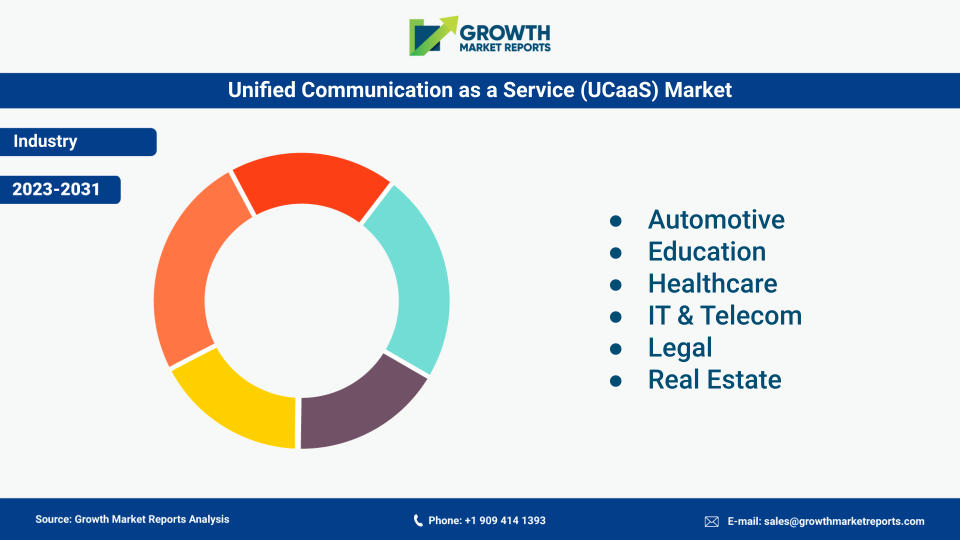
The Industry Vertical segment of the UCaaS market includes BFSI, IT and Telecommunications, Healthcare, Retail, Education, Government, and others, each driving unique requirements and adoption trends. In the BFSI sector, UCaaS solutions are essential for enabling secure, compliant communication among employees, clients, and partners. Financial institutions leverage advanced features such as encrypted messaging, secure conferencing, and integration with CRM systems to enhance customer service and streamline operations. The need for regulatory compliance, data protection, and disaster recovery further drives UCaaS adoption in this sector.
IT and Telecommunications companies are early adopters of UCaaS, utilizing these solutions to support distributed teams, streamline project collaboration, and deliver high-quality customer support. The integration of UCaaS with helpdesk, ticketing, and network management tools enables IT and telecom companies to optimize service delivery and reduce response times. The rapid pace of technological innovation in this sector ensures that UCaaS offerings are continuously evolving to meet the demands of digital-first businesses.
Healthcare organizations are increasingly embracing UCaaS to facilitate secure communication among clinicians, administrative staff, and patients. The adoption of telemedicine, electronic health records, and remote patient monitoring has highlighted the need for integrated communication platforms that support voice, video, and messaging while ensuring compliance with healthcare regulations such as HIPAA. UCaaS solutions enable healthcare providers to improve care coordination, enhance patient engagement, and streamline administrative workflows.
The retail sector is leveraging UCaaS to enhance customer service, support omnichannel engagement, and enable real-time collaboration among store associates, supply chain partners, and corporate teams. Retailers benefit from features such as contact center integration, automated workflows, and mobile access, which improve operational efficiency and drive sales growth. Similarly, the education sector is adopting UCaaS to support remote learning, virtual classrooms, and collaboration among students, faculty, and administrators. The government sector is also investing in UCaaS to enable secure communication, improve citizen engagement, and enhance disaster response capabilities.
The UCaaS market presents significant opportunities for growth and innovation, particularly as organizations continue to embrace digital transformation and hybrid work models. The ongoing shift towards remote and distributed workforces is driving demand for integrated communication platforms that enable seamless collaboration across geographies and time zones. UCaaS providers have the opportunity to differentiate themselves by offering industry-specific solutions, advanced security features, and AI-powered automation that enhance user experience and productivity. The rapid evolution of technologies such as 5G, IoT, and edge computing is also opening new avenues for UCaaS innovation, enabling real-time communication and collaboration in previously underserved markets.
Another major opportunity lies in the growing demand for unified communication solutions among small and medium enterprises. As SMEs seek to compete with larger organizations, UCaaS offers a cost-effective way to access advanced communication tools and improve business agility. The proliferation of cloud marketplaces, pay-as-you-go pricing models, and simplified deployment processes is making it easier for SMEs to adopt UCaaS solutions. Additionally, the increasing focus on customer experience and digital engagement is driving demand for UCaaS-enabled contact centers, chatbots, and omnichannel support platforms that enable organizations to deliver personalized, responsive service.
Despite the promising outlook, the UCaaS market faces several restraining factors, including concerns about data security, privacy, and regulatory compliance. Organizations operating in highly regulated industries such as BFSI, healthcare, and government must ensure that their UCaaS solutions meet stringent security standards and comply with data protection regulations. The risk of data breaches, unauthorized access, and service outages remains a significant concern, prompting organizations to carefully evaluate UCaaS providers and deployment models. Additionally, the complexity of integrating UCaaS with existing legacy systems and ensuring interoperability across diverse communication channels can pose challenges for organizations with complex IT environments.
North America remains the largest market for UCaaS, accounting for USD 13.4 billion in 2024, driven by the regionÂ’s advanced IT infrastructure, high adoption rates of cloud technologies, and strong presence of leading UCaaS providers. The United States is at the forefront of UCaaS adoption, with enterprises across various industries leveraging unified communication solutions to support remote work, enhance collaboration, and drive digital transformation. The regionÂ’s focus on innovation, coupled with a mature regulatory environment, supports the development and deployment of advanced UCaaS offerings tailored to the needs of large enterprises and regulated industries.
The Asia Pacific region is experiencing the fastest growth in the UCaaS market, with a projected CAGR of 16.8% from 2025 to 2033. The market size in Asia Pacific reached USD 7.2 billion in 2024, fueled by rapid digitalization, increasing internet penetration, and a burgeoning startup ecosystem. Countries such as China, India, Japan, and Australia are witnessing significant investments in cloud infrastructure and digital communication platforms. The growing adoption of remote work, coupled with government initiatives to promote digital transformation, is driving demand for UCaaS solutions across sectors such as BFSI, healthcare, education, and retail.
Europe represents a significant share of the UCaaS market, with a market size of USD 6.5 billion in 2024. The regionÂ’s focus on data privacy, regulatory compliance, and digital innovation is driving the adoption of secure, enterprise-grade UCaaS solutions. Industries such as BFSI, healthcare, and government are leading adopters, leveraging UCaaS to enhance operational efficiency, improve customer service, and ensure compliance with data protection regulations such as GDPR. The Middle East & Africa and Latin America are also experiencing steady growth, with market sizes of USD 2.9 billion and USD 2.5 billion respectively in 2024, as organizations in these regions increasingly recognize the value of unified communication solutions in supporting business growth and digital transformation.
The UCaaS market is characterized by intense competition, with a diverse array of global and regional players vying for market share. Leading UCaaS providers are investing heavily in research and development to enhance their product offerings, improve user experience, and address the evolving needs of organizations across industries. The competitive landscape is shaped by factors such as technological innovation, product differentiation, pricing strategies, and customer support. As the demand for integrated communication solutions continues to grow, UCaaS vendors are focusing on expanding their portfolios to include advanced features such as AI-powered automation, analytics, and security enhancements.
Strategic partnerships, mergers, and acquisitions are common in the UCaaS market, enabling companies to expand their geographic reach, access new customer segments, and strengthen their competitive position. For example, leading players are forming alliances with cloud infrastructure providers, system integrators, and managed service providers to deliver end-to-end communication solutions that address the unique needs of different industries. The emergence of vertical-specific UCaaS solutions is also driving competition, with providers tailoring their offerings to meet the regulatory, security, and operational requirements of sectors such as BFSI, healthcare, and education.
The market is witnessing a shift towards open, interoperable UCaaS platforms that enable seamless integration with third-party applications and legacy systems. This trend is being driven by customer demand for flexibility, scalability, and the ability to leverage existing IT investments. UCaaS vendors are responding by offering robust APIs, developer tools, and integration capabilities that enable organizations to customize and extend their communication solutions. The focus on user-centric design, mobile accessibility, and intuitive interfaces is also shaping the competitive dynamics, as vendors seek to differentiate themselves through superior user experience and customer satisfaction.
Among the major companies operating in the UCaaS market are Microsoft Corporation, Cisco Systems Inc., RingCentral Inc., Zoom Video Communications Inc., 8x8 Inc., Mitel Networks Corporation, Avaya Holdings Corp., Google LLC, and Vonage Holdings Corp. MicrosoftÂ’s Teams platform has become a dominant force in the market, offering integrated messaging, conferencing, and collaboration tools that are widely adopted by enterprises of all sizes. CiscoÂ’s Webex suite is renowned for its security, scalability, and enterprise-grade features, making it a preferred choice for large organizations and regulated industries. RingCentral and 8x8 have established strong positions in the SME segment, offering flexible, cost-effective UCaaS solutions with robust customer support.
Zoom Video Communications has experienced rapid growth, particularly in the wake of the global shift to remote work, with its video conferencing platform becoming synonymous with virtual meetings. Mitel and Avaya continue to serve a broad customer base with their comprehensive UCaaS offerings, while GoogleÂ’s Workspace and VonageÂ’s cloud communication solutions are gaining traction among digital-native businesses and SMEs. These companies are continuously innovating, expanding their product portfolios, and investing in customer success to maintain their competitive edge in the dynamic and rapidly evolving UCaaS market.
The Unified Communication as a Service (UCaaS) market has been segmented on the basis of
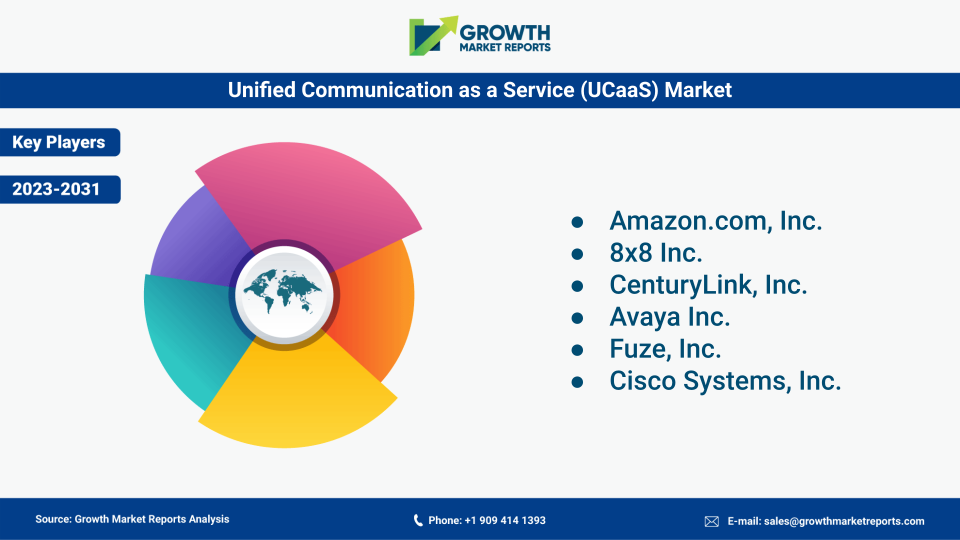
Key players in the unified communication as a service market include Amazon.com, Inc., 8x8 Inc., CenturyLink, Inc., Avaya Inc., Fuze, Inc., and Cisco Systems, Inc. Developers are concentrating more on product launches and innovations to generate revenue.
Key challenges include concerns about data security, privacy, regulatory compliance, integration with legacy systems, and ensuring interoperability across diverse communication channels.
Leading UCaaS providers include Microsoft, Cisco, RingCentral, Zoom Video Communications, 8x8, Vonage, Google, Mitel, Avaya, GoTo, Dialpad, Fuze, Nextiva, Alcatel-Lucent Enterprise, Windstream, Star2Star Communications, BT Group, Orange Business Services, AT&T, and Verizon Communications.
Asia Pacific is the fastest-growing region for UCaaS, driven by rapid digitalization, increasing internet penetration, and a growing startup ecosystem. North America remains the largest market, while Europe, Latin America, and the Middle East & Africa are also experiencing steady growth.
Core components of UCaaS include telephony (VoIP, SIP trunking), unified messaging (email, voicemail, SMS, instant messaging), conferencing (audio, video, web), and collaboration platforms (chat, file sharing, project management).
Key industry verticals adopting UCaaS include BFSI, IT and Telecommunications, Healthcare, Retail, Education, and Government, each leveraging UCaaS for secure, compliant, and efficient communication.
SMEs benefit from UCaaS through cost-effective access to advanced communication tools, scalability, reduced IT complexity, and the ability to compete with larger organizations without significant upfront investment.
UCaaS solutions can be deployed via public cloud, private cloud, or hybrid cloud models, each offering distinct advantages in terms of scalability, security, and customization.
Key growth drivers include rapid digital transformation, the rise of remote and hybrid work models, increased demand for integrated collaboration tools, cloud adoption, and continuous innovation in AI-powered communication technologies.
The global UCaaS market is expected to grow from USD 32.5 billion in 2024 to USD 98.1 billion by 2033, at a CAGR of 13.2% during the forecast period.
Unified Communication as a Service (UCaaS) is a cloud-based platform that integrates various communication tools such as telephony, messaging, conferencing, and collaboration into a single solution, enabling seamless communication and collaboration across organizations.