UHT Milk Market Research Report 2033

UHT Milk Market Research Report 2033

Segments - by Product Type (Whole UHT Milk, Semi-skimmed UHT Milk, Skimmed UHT Milk, Flavored UHT Milk, Others), by Packaging Type (Cartons, Bottles, Pouches, Others), by Distribution Channel (Supermarkets/Hypermarkets, Convenience Stores, Online Retail, Specialty Stores, Others), by End-User (Households, Foodservice, Institutions, Others)

https://growthmarketreports.com/Anuradha
Author : Anuradha B. More
https://growthmarketreports.com/Vaibhav
Fact-checked by : Vaibhav Chandola
https://growthmarketreports.com/Shruti
Editor : Shruti Bhat

Upcoming | Report ID :FB-1923 | 4.2 Rating | 30 Reviews | 261 Pages | Format : Docx PDF

Report Description


UHT Milk Market Outlook

According to our latest research, the global UHT milk market size reached USD 68.2 billion in 2024, with a robust growth trajectory driven by urbanization, shifting consumer lifestyles, and increased demand for convenient dairy solutions. The market is expected to expand at a CAGR of 6.1% from 2025 to 2033, reaching an estimated value of USD 116.1 billion by the end of the forecast period. This growth is primarily attributed to rising health consciousness, expanding retail infrastructure, and the growing preference for long shelf-life dairy products, especially in emerging economies.

One of the primary growth factors fueling the UHT milk market is the increasing consumer demand for convenience and longer shelf-life dairy products. Urban populations continue to rise globally, resulting in busier lifestyles and a shift away from traditional milk consumption patterns. UHT (Ultra-High Temperature) milk, with its extended shelf life of up to six months without refrigeration, offers consumers a reliable and practical alternative to fresh milk. This makes it particularly appealing in regions where cold chain logistics are underdeveloped or where frequent grocery shopping is less feasible. The convenience factor, coupled with improved packaging innovations, has significantly contributed to the market’s rapid expansion.

Another significant driver is the growing health awareness among consumers, which has led to increased demand for nutrient-rich and safe dairy products. UHT milk undergoes a sterilization process that eliminates harmful bacteria while retaining essential nutrients, making it a preferred choice for health-conscious individuals and families. In addition, the variety of UHT milk options—such as whole, skimmed, semi-skimmed, and flavored variants—caters to diverse dietary preferences and nutritional needs. This diversification of product offerings has allowed manufacturers to target a broader consumer base, further propelling market growth. The rise in disposable incomes, particularly in developing countries, has also enabled more consumers to afford premium dairy products, including UHT milk.

Technological advancements in processing and packaging have played a crucial role in the expansion of the UHT milk market. Modern UHT processing equipment ensures the safety and quality of milk while improving operational efficiency for producers. Moreover, innovative packaging solutions, such as aseptic cartons and eco-friendly materials, enhance product shelf life and appeal to environmentally conscious consumers. The integration of smart packaging technologies, including QR codes for traceability and freshness indicators, is also gaining traction, providing added value to both manufacturers and consumers. These technological innovations are expected to drive further growth and differentiation in the market over the coming years.

Regionally, Europe continues to dominate the UHT milk market, accounting for the largest share in 2024, followed closely by the Asia Pacific region. Europe’s dominance can be attributed to established dairy consumption habits, high awareness of food safety, and a well-developed retail infrastructure. However, the Asia Pacific region is witnessing the fastest growth, driven by rising urbanization, increasing disposable incomes, and changing dietary patterns. North America and Latin America also present significant growth opportunities, supported by expanding retail channels and growing consumer acceptance of UHT milk products. The Middle East & Africa region, while currently a smaller market, is expected to exhibit steady growth as cold chain infrastructure improves and consumer awareness rises.

Global UHT Milk Industry Outlook

Product Type Analysis

The UHT milk market by product type is segmented into whole UHT milk, semi-skimmed UHT milk, skimmed UHT milk, flavored UHT milk, and others. Whole UHT milk remains the most popular segment, accounting for a substantial share of global sales. This is largely due to its rich taste profile and higher nutritional content, which appeals to families with children and consumers seeking a full-fat dairy option. The demand for whole UHT milk is particularly high in regions where traditional dietary habits favor full-fat dairy products, such as parts of Europe, the Middle East, and Latin America. Manufacturers continue to innovate within this segment by offering organic and fortified variants to address evolving consumer preferences.

Semi-skimmed and skimmed UHT milk have gained considerable traction, especially among health-conscious consumers and urban populations. These variants offer lower fat content while retaining the convenience and long shelf life of UHT milk. The growing prevalence of lifestyle diseases, such as obesity and cardiovascular conditions, has prompted a shift towards reduced-fat dairy products. As a result, semi-skimmed and skimmed UHT milk are increasingly featured in supermarkets and health food stores, with manufacturers emphasizing their nutritional benefits through targeted marketing campaigns. This trend is expected to continue as more consumers adopt healthier dietary habits.

Flavored UHT milk is another dynamic segment, particularly popular among children, teenagers, and young adults. The introduction of a wide range of flavors, including chocolate, strawberry, vanilla, and exotic fruit blends, has significantly broadened the consumer base for UHT milk. Flavored UHT milk is often marketed as a nutritious and convenient snack or breakfast option, and its appeal is further enhanced by attractive packaging and promotional activities. The rise of on-the-go consumption and the increasing influence of Western dietary trends in emerging markets are likely to drive further growth in this segment.

Other product types within the UHT milk market include lactose-free, organic, and fortified UHT milk. These niche segments are gaining momentum as consumers become more aware of food intolerances, dietary restrictions, and the importance of added nutrients. Lactose-free UHT milk addresses the needs of lactose-intolerant individuals, while organic and fortified variants cater to those seeking premium and functional dairy products. Although these segments currently represent a smaller portion of the market, they are expected to experience rapid growth, supported by rising health consciousness and increasing willingness to pay for value-added products.

Overall, the segmentation of the UHT milk market by product type reflects the industry’s commitment to catering to diverse consumer preferences and dietary needs. Manufacturers are investing in research and development to introduce innovative products that combine convenience, taste, and health benefits, ensuring sustained growth and competitiveness in the global market.

Report Scope

Attributes Details
Report Title UHT Milk Market Research Report 2033
By Product Type Whole UHT Milk, Semi-skimmed UHT Milk, Skimmed UHT Milk, Flavored UHT Milk, Others
By Packaging Type Cartons, Bottles, Pouches, Others
By Distribution Channel Supermarkets/Hypermarkets, Convenience Stores, Online Retail, Specialty Stores, Others
By End-User Households, Foodservice, Institutions, Others
Regions Covered North America, Europe, APAC, Latin America, MEA
Base Year 2024
Historic Data 2018-2023
Forecast Period 2025-2033
Number of Pages 261
Number of Tables & Figures 329
Customization Available Yes, the report can be customized as per your need.

Packaging Type Analysis

Packaging plays a pivotal role in the UHT milk market, influencing both product shelf life and consumer purchasing decisions. The market is segmented into cartons, bottles, pouches, and other packaging formats. Cartons remain the dominant packaging type, accounting for a significant share of global UHT milk sales. This is primarily due to their excellent barrier properties, lightweight nature, and ease of storage and transportation. Cartons are widely preferred by both consumers and retailers for their convenience, recyclability, and ability to preserve the freshness and nutritional quality of UHT milk. Leading packaging companies continue to innovate in this segment, introducing eco-friendly materials and designs to address growing environmental concerns.

Bottles, both plastic and glass, represent another important packaging segment in the UHT milk market. Bottled UHT milk is often perceived as a premium offering, particularly in developed markets where consumers associate glass packaging with higher quality and freshness. Plastic bottles, on the other hand, are favored for their durability, portability, and resealability, making them ideal for on-the-go consumption. The adoption of advanced packaging technologies, such as tamper-evident seals and UV-blocking materials, further enhances the appeal of bottled UHT milk. As sustainability becomes a key consideration for consumers, manufacturers are exploring biodegradable and recyclable bottle options to minimize environmental impact.

Pouches are gaining popularity as a cost-effective and flexible packaging solution for UHT milk, especially in price-sensitive markets such as Asia Pacific and Africa. Pouches offer advantages in terms of lower material costs, reduced transportation expenses, and minimal environmental footprint. They are particularly well-suited for single-serve and small family packs, catering to the needs of urban consumers with limited storage space. The growing adoption of pouch packaging by dairy producers in emerging economies is expected to drive significant growth in this segment over the forecast period.

Other packaging types, including tetra packs, cans, and innovative smart packaging formats, are also making inroads in the UHT milk market. Tetra packs, in particular, are renowned for their aseptic properties and ability to extend product shelf life without the need for preservatives. Smart packaging solutions, such as QR codes for product traceability and freshness indicators, are gaining traction among tech-savvy consumers seeking transparency and assurance regarding product quality. These advancements in packaging technology not only enhance consumer trust but also provide valuable data to manufacturers for supply chain optimization.

In summary, packaging type remains a critical differentiator in the UHT milk market, with manufacturers and packaging companies continuously striving to balance functionality, sustainability, and consumer appeal. The ongoing shift towards eco-friendly and innovative packaging solutions is expected to shape the future of the market, driving both growth and competitive advantage.

Distribution Channel Analysis

The distribution channel landscape in the UHT milk market is diverse and rapidly evolving, encompassing supermarkets/hypermarkets, convenience stores, online retail, specialty stores, and other channels. Supermarkets and hypermarkets dominate the distribution landscape, accounting for the largest share of UHT milk sales globally. These retail formats offer a wide variety of product choices, attractive promotions, and the convenience of one-stop shopping, making them the preferred destination for most consumers. The expansion of modern retail infrastructure, particularly in urban and semi-urban areas, has further bolstered the prominence of supermarkets and hypermarkets as key distribution channels for UHT milk.

Convenience stores play a crucial role in the distribution of UHT milk, especially in densely populated urban centers and regions with high foot traffic. The appeal of convenience stores lies in their accessibility, extended operating hours, and strategic locations near residential and commercial hubs. UHT milk, with its long shelf life and compact packaging, is ideally suited for sale in convenience stores, catering to consumers seeking quick and hassle-free purchases. The proliferation of convenience store chains in Asia Pacific and Latin America is expected to drive further growth in this segment.

Online retail has emerged as a transformative force in the UHT milk market, offering unparalleled convenience, competitive pricing, and direct-to-door delivery. The rapid adoption of e-commerce platforms, accelerated by the COVID-19 pandemic, has significantly expanded the reach of UHT milk products to a broader consumer base. Online channels enable manufacturers and retailers to showcase a wider range of products, including specialty and niche variants that may not be available in traditional stores. The integration of subscription services, personalized recommendations, and digital marketing initiatives is further enhancing the visibility and sales of UHT milk through online retail.

Specialty stores, including health food outlets and organic grocery stores, cater to a niche segment of the UHT milk market, focusing on premium, organic, and functional dairy products. These stores appeal to health-conscious consumers and those with specific dietary requirements, offering curated selections of high-quality UHT milk variants. The growing popularity of specialty stores, particularly in developed markets, reflects the increasing demand for differentiated and value-added dairy products. Manufacturers are leveraging partnerships with specialty retailers to strengthen their brand presence and reach targeted consumer segments.

Other distribution channels, such as institutional sales and direct-to-consumer models, also contribute to the overall growth of the UHT milk market. Institutional sales encompass sales to schools, hospitals, and foodservice providers, where bulk purchasing and consistent quality are paramount. Direct-to-consumer models, including farm-to-home delivery services and subscription-based offerings, are gaining traction among urban consumers seeking freshness and convenience. The diversification of distribution channels is expected to enhance market penetration and ensure sustained growth in the coming years.

End-User Analysis

The UHT milk market caters to a diverse range of end-users, including households, foodservice providers, institutions, and others. Households represent the largest end-user segment, driven by the widespread adoption of UHT milk as a staple in daily diets. The convenience, safety, and long shelf life of UHT milk make it an attractive choice for families, particularly in urban areas where frequent grocery shopping may not be feasible. Manufacturers continue to target households through innovative packaging, value packs, and promotional activities aimed at enhancing brand loyalty and repeat purchases.

The foodservice segment, comprising restaurants, cafes, hotels, and catering services, is a significant contributor to the growth of the UHT milk market. Foodservice providers value UHT milk for its consistency, ease of storage, and versatility in culinary applications. The ability to store UHT milk at room temperature without spoilage is particularly advantageous for foodservice operations, reducing the need for refrigeration and minimizing waste. The growing demand for specialty beverages, desserts, and dairy-based menu items in the foodservice industry is expected to drive increased adoption of UHT milk in this segment.

Institutions, including schools, hospitals, and government organizations, also constitute an important end-user segment in the UHT milk market. Institutional buyers prioritize product safety, nutritional value, and cost-effectiveness, making UHT milk an ideal solution for large-scale procurement. The use of UHT milk in school meal programs, hospital nutrition services, and military rations underscores its role as a reliable and nutritious dairy option. Governments and non-governmental organizations in developing countries are increasingly incorporating UHT milk into food aid programs to address malnutrition and improve public health outcomes.

Other end-users of UHT milk include industrial buyers, such as food and beverage manufacturers, who utilize UHT milk as an ingredient in processed foods, confectionery, and bakery products. The consistent quality and extended shelf life of UHT milk make it a preferred choice for industrial applications, ensuring product stability and reducing supply chain complexities. As the demand for value-added and functional dairy products continues to rise, the industrial end-user segment is expected to experience steady growth.

In summary, the diverse end-user base of the UHT milk market underscores the product’s versatility and broad appeal. Manufacturers and distributors are increasingly tailoring their offerings to meet the specific needs and preferences of different end-user segments, driving innovation and fostering long-term market growth.

Opportunities & Threats

The UHT milk market presents a wealth of opportunities for industry participants, driven by evolving consumer preferences, technological advancements, and expanding global reach. One of the most promising opportunities lies in the development and commercialization of value-added UHT milk products, such as fortified, organic, and lactose-free variants. As consumers become more health-conscious and seek products that align with their dietary needs, manufacturers can capitalize on this trend by introducing innovative formulations and functional ingredients. Additionally, the growing demand for sustainable and eco-friendly packaging presents an opportunity for companies to differentiate their products and appeal to environmentally conscious consumers.

Another significant opportunity is the expansion of UHT milk into emerging markets, where rising urbanization, increasing disposable incomes, and improving retail infrastructure are driving demand for convenient and safe dairy products. Strategic partnerships with local distributors, investment in cold chain logistics, and targeted marketing campaigns can help manufacturers penetrate these high-growth markets. The integration of digital technologies, such as e-commerce platforms and smart packaging, also offers new avenues for reaching consumers and enhancing the overall value proposition of UHT milk. By leveraging these opportunities, industry players can achieve sustained growth and strengthen their competitive position.

Despite the numerous opportunities, the UHT milk market faces several challenges that could hinder its growth. One of the primary restrainers is the perception among some consumers that UHT milk is less fresh or nutritious compared to traditional pasteurized milk. This perception, often fueled by misinformation or lack of awareness, can limit market penetration, particularly in regions with strong cultural preferences for fresh dairy products. Manufacturers must invest in consumer education initiatives and transparent labeling to address these concerns and build trust in the safety and nutritional benefits of UHT milk. Additionally, fluctuations in raw milk prices, regulatory complexities, and competition from plant-based dairy alternatives pose ongoing challenges for market participants.

Regional Outlook

Europe remains the largest regional market for UHT milk, accounting for approximately 32% of global sales in 2024, with a market value of around USD 21.8 billion. The region’s dominance is underpinned by well-established dairy consumption patterns, high consumer awareness of food safety, and a mature retail infrastructure. Countries such as France, Germany, Italy, and Spain are among the leading consumers of UHT milk, with per capita consumption rates significantly higher than the global average. The European market is expected to maintain steady growth, supported by ongoing product innovation and the increasing popularity of organic and value-added UHT milk variants.

The Asia Pacific region is the fastest-growing market for UHT milk, with a projected CAGR of 8.2% from 2025 to 2033. The market value in Asia Pacific reached USD 15.9 billion in 2024, driven by rapid urbanization, rising incomes, and changing dietary habits in countries such as China, India, Japan, and Southeast Asian nations. The expansion of modern retail channels, coupled with increasing consumer awareness of the benefits of UHT milk, is fueling robust demand across the region. Manufacturers are investing in localized product development and targeted marketing strategies to capture the diverse preferences of Asian consumers, further accelerating market growth.

North America and Latin America collectively accounted for approximately USD 18.7 billion in UHT milk sales in 2024, with North America representing USD 11.3 billion and Latin America contributing USD 7.4 billion. The market in these regions is characterized by increasing adoption of UHT milk in households, foodservice, and institutional settings. The Middle East & Africa region, while currently a smaller market, is witnessing steady growth as cold chain infrastructure improves and consumer awareness rises. The regional outlook for the UHT milk market remains positive, with each region presenting unique opportunities and challenges for industry participants.

UHT Milk Market Statistics

Competitor Outlook

The UHT milk market is characterized by intense competition among global and regional players, each striving to capture a larger share of the growing market. Leading companies are focused on product innovation, strategic partnerships, and expansion into emerging markets to strengthen their competitive position. The competitive landscape is marked by the presence of established dairy giants, as well as agile regional players who leverage local insights and distribution networks to cater to specific consumer preferences. Continuous investment in research and development, marketing, and supply chain optimization is essential for companies to maintain their market leadership and respond to evolving consumer needs.

Mergers and acquisitions are a common strategy among major players seeking to expand their product portfolios, enhance production capabilities, and enter new geographic markets. Companies are also investing in sustainable practices, such as eco-friendly packaging and responsible sourcing of raw materials, to align with consumer expectations and regulatory requirements. The adoption of advanced processing technologies and automation is enabling manufacturers to improve operational efficiency, reduce costs, and ensure consistent product quality. Private label brands are gaining traction, particularly in developed markets, as retailers seek to offer high-quality UHT milk products at competitive prices.

The competitive dynamics in the UHT milk market are further influenced by the entry of new players, particularly in emerging markets where demand for convenient and safe dairy products is rising. These entrants often focus on niche segments, such as organic, fortified, or flavored UHT milk, to differentiate themselves from established brands. Strategic collaborations with packaging companies, distributors, and e-commerce platforms are also becoming increasingly important for market expansion and brand building. The ability to adapt to changing consumer preferences, regulatory landscapes, and technological advancements will be critical for companies seeking long-term success in the UHT milk market.

Major companies operating in the global UHT milk market include Lactalis Group, Nestlé S.A., Danone S.A., Fonterra Co-operative Group Limited, Arla Foods, FrieslandCampina, Parmalat S.p.A., and Saputo Inc. Lactalis Group is a leading player with a strong global presence and a diverse portfolio of UHT milk products catering to various consumer segments. Nestlé S.A. leverages its extensive distribution network and brand equity to maintain a significant market share, while Danone S.A. focuses on health-oriented and sustainable dairy solutions. Fonterra and Arla Foods are renowned for their commitment to quality and innovation, with a strong emphasis on sustainable practices and value-added products.

FrieslandCampina and Parmalat S.p.A. are prominent players in the European market, known for their wide range of UHT milk offerings and strong regional distribution capabilities. Saputo Inc., based in North America, has expanded its footprint through strategic acquisitions and a focus on premium and specialty dairy products. These companies, along with numerous regional and local players, are driving the growth and evolution of the UHT milk market through continuous innovation, strategic investments, and a customer-centric approach. The competitive landscape is expected to remain dynamic, with ongoing consolidation, technological advancements, and shifting consumer preferences shaping the future of the market.

Key Players

  • Nestlé S.A.
  • Danone S.A.
  • Fonterra Co-operative Group Limited
  • Arla Foods amba
  • Parmalat S.p.A. (Lactalis Group)
  • FrieslandCampina
  • Saputo Inc.
  • Gujarat Cooperative Milk Marketing Federation (Amul)
  • China Mengniu Dairy Company Limited
  • Yili Group
  • Dean Foods
  • Almarai Company
  • DMK Group
  • Müller Group
  • Candia (Sodiaal Group)
  • Tetra Pak International S.A.
  • Vinamilk
  • Murray Goulburn Co-operative Co. Limited
  • Dairy Farmers of America
  • Meiji Holdings Co., Ltd.
UHT Milk Market Overview

Segments

The UHT Milk market has been segmented on the basis of

Product Type

  • Whole UHT Milk
  • Semi-skimmed UHT Milk
  • Skimmed UHT Milk
  • Flavored UHT Milk
  • Others

Packaging Type

  • Cartons
  • Bottles
  • Pouches
  • Others

Distribution Channel

  • Supermarkets/Hypermarkets
  • Convenience Stores
  • Online Retail
  • Specialty Stores
  • Others

End-User

  • Households
  • Foodservice
  • Institutions
  • Others

Competitive Landscape

Key players competing in the Middle East & Africa UHT milk market include Dairy Farmers Of South Africa (Pty) Ltd, Clover S.A. (Pty) Ltd, Coega Dairy, Parmalat S.p.A. and Almarai.

Some of these players are using several market strategies such as mergers, acquisitions, partnerships, collaborations, capacity expansion, and product launches to enhance their market shares. For instances,

In August 2017, Koita's inaugurated organic UHT milk in a suitable tetra packs with a twist cap and offering door-to-door service. The product was made from grass-fed cow milk with unique pasteurization process, which makes it taste like fresh milk with halal-certified vitamin A and D3.
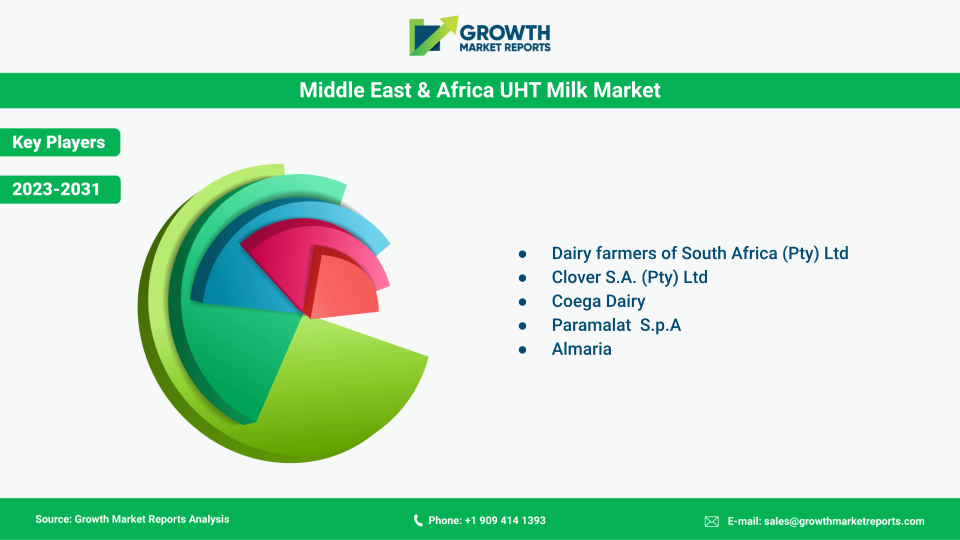

Middle East and Africa UHT Milk Market Key Players

Frequently Asked Questions

Major players include Nestlé S.A., Danone S.A., Fonterra Co-operative Group Limited, Arla Foods, Parmalat S.p.A. (Lactalis Group), FrieslandCampina, Saputo Inc., Amul, China Mengniu Dairy, Yili Group, and others.

Opportunities include the development of value-added products (fortified, organic, lactose-free), expansion into emerging markets, and adoption of sustainable packaging. Challenges include consumer perceptions about freshness, competition from plant-based alternatives, and regulatory complexities.

Major end-users include households, foodservice providers (restaurants, cafes, hotels), institutions (schools, hospitals), and industrial buyers (food and beverage manufacturers).

UHT milk is widely available through supermarkets/hypermarkets, convenience stores, online retail platforms, specialty stores, and other channels such as institutional sales and direct-to-consumer models.

Cartons are the dominant packaging type due to their barrier properties and recyclability. Bottles (plastic and glass), pouches, tetra packs, and innovative smart packaging formats are also used, with eco-friendly and smart packaging gaining popularity.

The main product types include whole UHT milk, semi-skimmed UHT milk, skimmed UHT milk, flavored UHT milk, and other variants such as lactose-free, organic, and fortified UHT milk.

Europe is the largest regional market for UHT milk, followed by the Asia Pacific region, which is the fastest-growing. North America and Latin America also hold significant market shares, while the Middle East & Africa region is experiencing steady growth.

Key growth drivers include rising urbanization, shifting consumer lifestyles, increased demand for convenient and long shelf-life dairy products, growing health consciousness, technological advancements in processing and packaging, and expanding retail infrastructure, especially in emerging economies.

The global UHT milk market reached USD 68.2 billion in 2024 and is expected to grow at a CAGR of 6.1% from 2025 to 2033, reaching approximately USD 116.1 billion by the end of the forecast period.

UHT (Ultra-High Temperature) milk is milk that has been heated to a very high temperature (typically above 135°C) for a few seconds to kill bacteria and extend its shelf life. Unlike regular pasteurized milk, UHT milk can last up to six months without refrigeration if unopened, making it a convenient option for consumers.

Table Of Content

Chapter 1 Executive Summary
Chapter 2 Assumptions and Acronyms Used
Chapter 3 Research Methodology
Chapter 4 UHT Milk Market Overview
   4.1 Introduction
      4.1.1 Market Taxonomy
      4.1.2 Market Definition
      4.1.3 Macro-Economic Factors Impacting the Market Growth
   4.2 UHT Milk Market Dynamics
      4.2.1 Market Drivers
      4.2.2 Market Restraints
      4.2.3 Market Opportunity
   4.3 UHT Milk Market - Supply Chain Analysis
      4.3.1 List of Key Suppliers
      4.3.2 List of Key Distributors
      4.3.3 List of Key Consumers
   4.4 Key Forces Shaping the UHT Milk Market
      4.4.1 Bargaining Power of Suppliers
      4.4.2 Bargaining Power of Buyers
      4.4.3 Threat of Substitution
      4.4.4 Threat of New Entrants
      4.4.5 Competitive Rivalry
   4.5 Global UHT Milk Market Size & Forecast, 2023-2032
      4.5.1 UHT Milk Market Size and Y-o-Y Growth
      4.5.2 UHT Milk Market Absolute $ Opportunity

Chapter 5 Global UHT Milk Market Analysis and Forecast By Product Type
   5.1 Introduction
      5.1.1 Key Market Trends & Growth Opportunities By Product Type
      5.1.2 Basis Point Share (BPS) Analysis By Product Type
      5.1.3 Absolute $ Opportunity Assessment By Product Type
   5.2 UHT Milk Market Size Forecast By Product Type
      5.2.1 Whole UHT Milk
      5.2.2 Semi-skimmed UHT Milk
      5.2.3 Skimmed UHT Milk
      5.2.4 Flavored UHT Milk
      5.2.5 Others
   5.3 Market Attractiveness Analysis By Product Type

Chapter 6 Global UHT Milk Market Analysis and Forecast By Packaging Type
   6.1 Introduction
      6.1.1 Key Market Trends & Growth Opportunities By Packaging Type
      6.1.2 Basis Point Share (BPS) Analysis By Packaging Type
      6.1.3 Absolute $ Opportunity Assessment By Packaging Type
   6.2 UHT Milk Market Size Forecast By Packaging Type
      6.2.1 Cartons
      6.2.2 Bottles
      6.2.3 Pouches
      6.2.4 Others
   6.3 Market Attractiveness Analysis By Packaging Type

Chapter 7 Global UHT Milk Market Analysis and Forecast By Distribution Channel
   7.1 Introduction
      7.1.1 Key Market Trends & Growth Opportunities By Distribution Channel
      7.1.2 Basis Point Share (BPS) Analysis By Distribution Channel
      7.1.3 Absolute $ Opportunity Assessment By Distribution Channel
   7.2 UHT Milk Market Size Forecast By Distribution Channel
      7.2.1 Supermarkets/Hypermarkets
      7.2.2 Convenience Stores
      7.2.3 Online Retail
      7.2.4 Specialty Stores
      7.2.5 Others
   7.3 Market Attractiveness Analysis By Distribution Channel

Chapter 8 Global UHT Milk Market Analysis and Forecast By End-User
   8.1 Introduction
      8.1.1 Key Market Trends & Growth Opportunities By End-User
      8.1.2 Basis Point Share (BPS) Analysis By End-User
      8.1.3 Absolute $ Opportunity Assessment By End-User
   8.2 UHT Milk Market Size Forecast By End-User
      8.2.1 Households
      8.2.2 Foodservice
      8.2.3 Institutions
      8.2.4 Others
   8.3 Market Attractiveness Analysis By End-User

Chapter 9 Global UHT Milk Market Analysis and Forecast by Region
   9.1 Introduction
      9.1.1 Key Market Trends & Growth Opportunities By Region
      9.1.2 Basis Point Share (BPS) Analysis By Region
      9.1.3 Absolute $ Opportunity Assessment By Region
   9.2 UHT Milk Market Size Forecast By Region
      9.2.1 North America
      9.2.2 Europe
      9.2.3 Asia Pacific
      9.2.4 Latin America
      9.2.5 Middle East & Africa (MEA)
   9.3 Market Attractiveness Analysis By Region

Chapter 10 Coronavirus Disease (COVID-19) Impact 
   10.1 Introduction 
   10.2 Current & Future Impact Analysis 
   10.3 Economic Impact Analysis 
   10.4 Government Policies 
   10.5 Investment Scenario

Chapter 11 North America UHT Milk Analysis and Forecast
   11.1 Introduction
   11.2 North America UHT Milk Market Size Forecast by Country
      11.2.1 U.S.
      11.2.2 Canada
   11.3 Basis Point Share (BPS) Analysis by Country
   11.4 Absolute $ Opportunity Assessment by Country
   11.5 Market Attractiveness Analysis by Country
   11.6 North America UHT Milk Market Size Forecast By Product Type
      11.6.1 Whole UHT Milk
      11.6.2 Semi-skimmed UHT Milk
      11.6.3 Skimmed UHT Milk
      11.6.4 Flavored UHT Milk
      11.6.5 Others
   11.7 Basis Point Share (BPS) Analysis By Product Type 
   11.8 Absolute $ Opportunity Assessment By Product Type 
   11.9 Market Attractiveness Analysis By Product Type
   11.10 North America UHT Milk Market Size Forecast By Packaging Type
      11.10.1 Cartons
      11.10.2 Bottles
      11.10.3 Pouches
      11.10.4 Others
   11.11 Basis Point Share (BPS) Analysis By Packaging Type 
   11.12 Absolute $ Opportunity Assessment By Packaging Type 
   11.13 Market Attractiveness Analysis By Packaging Type
   11.14 North America UHT Milk Market Size Forecast By Distribution Channel
      11.14.1 Supermarkets/Hypermarkets
      11.14.2 Convenience Stores
      11.14.3 Online Retail
      11.14.4 Specialty Stores
      11.14.5 Others
   11.15 Basis Point Share (BPS) Analysis By Distribution Channel 
   11.16 Absolute $ Opportunity Assessment By Distribution Channel 
   11.17 Market Attractiveness Analysis By Distribution Channel
   11.18 North America UHT Milk Market Size Forecast By End-User
      11.18.1 Households
      11.18.2 Foodservice
      11.18.3 Institutions
      11.18.4 Others
   11.19 Basis Point Share (BPS) Analysis By End-User 
   11.20 Absolute $ Opportunity Assessment By End-User 
   11.21 Market Attractiveness Analysis By End-User

Chapter 12 Europe UHT Milk Analysis and Forecast
   12.1 Introduction
   12.2 Europe UHT Milk Market Size Forecast by Country
      12.2.1 Germany
      12.2.2 France
      12.2.3 Italy
      12.2.4 U.K.
      12.2.5 Spain
      12.2.6 Russia
      12.2.7 Rest of Europe
   12.3 Basis Point Share (BPS) Analysis by Country
   12.4 Absolute $ Opportunity Assessment by Country
   12.5 Market Attractiveness Analysis by Country
   12.6 Europe UHT Milk Market Size Forecast By Product Type
      12.6.1 Whole UHT Milk
      12.6.2 Semi-skimmed UHT Milk
      12.6.3 Skimmed UHT Milk
      12.6.4 Flavored UHT Milk
      12.6.5 Others
   12.7 Basis Point Share (BPS) Analysis By Product Type 
   12.8 Absolute $ Opportunity Assessment By Product Type 
   12.9 Market Attractiveness Analysis By Product Type
   12.10 Europe UHT Milk Market Size Forecast By Packaging Type
      12.10.1 Cartons
      12.10.2 Bottles
      12.10.3 Pouches
      12.10.4 Others
   12.11 Basis Point Share (BPS) Analysis By Packaging Type 
   12.12 Absolute $ Opportunity Assessment By Packaging Type 
   12.13 Market Attractiveness Analysis By Packaging Type
   12.14 Europe UHT Milk Market Size Forecast By Distribution Channel
      12.14.1 Supermarkets/Hypermarkets
      12.14.2 Convenience Stores
      12.14.3 Online Retail
      12.14.4 Specialty Stores
      12.14.5 Others
   12.15 Basis Point Share (BPS) Analysis By Distribution Channel 
   12.16 Absolute $ Opportunity Assessment By Distribution Channel 
   12.17 Market Attractiveness Analysis By Distribution Channel
   12.18 Europe UHT Milk Market Size Forecast By End-User
      12.18.1 Households
      12.18.2 Foodservice
      12.18.3 Institutions
      12.18.4 Others
   12.19 Basis Point Share (BPS) Analysis By End-User 
   12.20 Absolute $ Opportunity Assessment By End-User 
   12.21 Market Attractiveness Analysis By End-User

Chapter 13 Asia Pacific UHT Milk Analysis and Forecast
   13.1 Introduction
   13.2 Asia Pacific UHT Milk Market Size Forecast by Country
      13.2.1 China
      13.2.2 Japan
      13.2.3 South Korea
      13.2.4 India
      13.2.5 Australia
      13.2.6 South East Asia (SEA)
      13.2.7 Rest of Asia Pacific (APAC)
   13.3 Basis Point Share (BPS) Analysis by Country
   13.4 Absolute $ Opportunity Assessment by Country
   13.5 Market Attractiveness Analysis by Country
   13.6 Asia Pacific UHT Milk Market Size Forecast By Product Type
      13.6.1 Whole UHT Milk
      13.6.2 Semi-skimmed UHT Milk
      13.6.3 Skimmed UHT Milk
      13.6.4 Flavored UHT Milk
      13.6.5 Others
   13.7 Basis Point Share (BPS) Analysis By Product Type 
   13.8 Absolute $ Opportunity Assessment By Product Type 
   13.9 Market Attractiveness Analysis By Product Type
   13.10 Asia Pacific UHT Milk Market Size Forecast By Packaging Type
      13.10.1 Cartons
      13.10.2 Bottles
      13.10.3 Pouches
      13.10.4 Others
   13.11 Basis Point Share (BPS) Analysis By Packaging Type 
   13.12 Absolute $ Opportunity Assessment By Packaging Type 
   13.13 Market Attractiveness Analysis By Packaging Type
   13.14 Asia Pacific UHT Milk Market Size Forecast By Distribution Channel
      13.14.1 Supermarkets/Hypermarkets
      13.14.2 Convenience Stores
      13.14.3 Online Retail
      13.14.4 Specialty Stores
      13.14.5 Others
   13.15 Basis Point Share (BPS) Analysis By Distribution Channel 
   13.16 Absolute $ Opportunity Assessment By Distribution Channel 
   13.17 Market Attractiveness Analysis By Distribution Channel
   13.18 Asia Pacific UHT Milk Market Size Forecast By End-User
      13.18.1 Households
      13.18.2 Foodservice
      13.18.3 Institutions
      13.18.4 Others
   13.19 Basis Point Share (BPS) Analysis By End-User 
   13.20 Absolute $ Opportunity Assessment By End-User 
   13.21 Market Attractiveness Analysis By End-User

Chapter 14 Latin America UHT Milk Analysis and Forecast
   14.1 Introduction
   14.2 Latin America UHT Milk Market Size Forecast by Country
      14.2.1 Brazil
      14.2.2 Mexico
      14.2.3 Rest of Latin America (LATAM)
   14.3 Basis Point Share (BPS) Analysis by Country
   14.4 Absolute $ Opportunity Assessment by Country
   14.5 Market Attractiveness Analysis by Country
   14.6 Latin America UHT Milk Market Size Forecast By Product Type
      14.6.1 Whole UHT Milk
      14.6.2 Semi-skimmed UHT Milk
      14.6.3 Skimmed UHT Milk
      14.6.4 Flavored UHT Milk
      14.6.5 Others
   14.7 Basis Point Share (BPS) Analysis By Product Type 
   14.8 Absolute $ Opportunity Assessment By Product Type 
   14.9 Market Attractiveness Analysis By Product Type
   14.10 Latin America UHT Milk Market Size Forecast By Packaging Type
      14.10.1 Cartons
      14.10.2 Bottles
      14.10.3 Pouches
      14.10.4 Others
   14.11 Basis Point Share (BPS) Analysis By Packaging Type 
   14.12 Absolute $ Opportunity Assessment By Packaging Type 
   14.13 Market Attractiveness Analysis By Packaging Type
   14.14 Latin America UHT Milk Market Size Forecast By Distribution Channel
      14.14.1 Supermarkets/Hypermarkets
      14.14.2 Convenience Stores
      14.14.3 Online Retail
      14.14.4 Specialty Stores
      14.14.5 Others
   14.15 Basis Point Share (BPS) Analysis By Distribution Channel 
   14.16 Absolute $ Opportunity Assessment By Distribution Channel 
   14.17 Market Attractiveness Analysis By Distribution Channel
   14.18 Latin America UHT Milk Market Size Forecast By End-User
      14.18.1 Households
      14.18.2 Foodservice
      14.18.3 Institutions
      14.18.4 Others
   14.19 Basis Point Share (BPS) Analysis By End-User 
   14.20 Absolute $ Opportunity Assessment By End-User 
   14.21 Market Attractiveness Analysis By End-User

Chapter 15 Middle East & Africa (MEA) UHT Milk Analysis and Forecast
   15.1 Introduction
   15.2 Middle East & Africa (MEA) UHT Milk Market Size Forecast by Country
      15.2.1 Saudi Arabia
      15.2.2 South Africa
      15.2.3 UAE
      15.2.4 Rest of Middle East & Africa (MEA)
   15.3 Basis Point Share (BPS) Analysis by Country
   15.4 Absolute $ Opportunity Assessment by Country
   15.5 Market Attractiveness Analysis by Country
   15.6 Middle East & Africa (MEA) UHT Milk Market Size Forecast By Product Type
      15.6.1 Whole UHT Milk
      15.6.2 Semi-skimmed UHT Milk
      15.6.3 Skimmed UHT Milk
      15.6.4 Flavored UHT Milk
      15.6.5 Others
   15.7 Basis Point Share (BPS) Analysis By Product Type 
   15.8 Absolute $ Opportunity Assessment By Product Type 
   15.9 Market Attractiveness Analysis By Product Type
   15.10 Middle East & Africa (MEA) UHT Milk Market Size Forecast By Packaging Type
      15.10.1 Cartons
      15.10.2 Bottles
      15.10.3 Pouches
      15.10.4 Others
   15.11 Basis Point Share (BPS) Analysis By Packaging Type 
   15.12 Absolute $ Opportunity Assessment By Packaging Type 
   15.13 Market Attractiveness Analysis By Packaging Type
   15.14 Middle East & Africa (MEA) UHT Milk Market Size Forecast By Distribution Channel
      15.14.1 Supermarkets/Hypermarkets
      15.14.2 Convenience Stores
      15.14.3 Online Retail
      15.14.4 Specialty Stores
      15.14.5 Others
   15.15 Basis Point Share (BPS) Analysis By Distribution Channel 
   15.16 Absolute $ Opportunity Assessment By Distribution Channel 
   15.17 Market Attractiveness Analysis By Distribution Channel
   15.18 Middle East & Africa (MEA) UHT Milk Market Size Forecast By End-User
      15.18.1 Households
      15.18.2 Foodservice
      15.18.3 Institutions
      15.18.4 Others
   15.19 Basis Point Share (BPS) Analysis By End-User 
   15.20 Absolute $ Opportunity Assessment By End-User 
   15.21 Market Attractiveness Analysis By End-User

Chapter 16 Competition Landscape 
   16.1 UHT Milk Market: Competitive Dashboard
   16.2 Global UHT Milk Market: Market Share Analysis, 2023
   16.3 Company Profiles (Details – Overview, Financials, Developments, Strategy) 
      16.3.1 Nestlé S.A.
Danone S.A.
Fonterra Co-operative Group Limited
Arla Foods amba
Parmalat S.p.A. (Lactalis Group)
FrieslandCampina
Saputo Inc.
Gujarat Cooperative Milk Marketing Federation (Amul)
China Mengniu Dairy Company Limited
Yili Group
Dean Foods
Almarai Company
DMK Group
Müller Group
Candia (Sodiaal Group)
Tetra Pak International S.A.
Vinamilk
Murray Goulburn Co-operative Co. Limited
Dairy Farmers of America
Meiji Holdings Co., Ltd.

Methodology

Our Clients

Siemens Healthcare
General Mills
Honda Motor Co. Ltd.
Deloitte
Dassault Aviation
Pfizer
Microsoft
FedEx Logistics