Tunnel Boring Machine (TBM) Market Research Report 2033

Tunnel Boring Machine (TBM) Market Research Report 2033

Segments - by Type (Slurry TBM, Earth Pressure Balance TBM, Shielded TBM, Open Gripper TBM, Others), by Diameter (Less than 5 Meters, 5-10 Meters, More than 10 Meters), by Application (Railway and Metro, Road, Municipal Engineering, Mining, Oil & Gas, Others), by End-User (Construction Companies, Mining Companies, Government Agencies, Others)

https://growthmarketreports.com/Raksha
Author : Raksha Sharma
https://growthmarketreports.com/Vaibhav
Fact-checked by : V. Chandola
https://growthmarketreports.com/Rucha
Editor : Rucha Phatak

Upcoming | Report ID :CM-4056 | 4.3 Rating | 17 Reviews | 294 Pages | Format : Docx PDF

Report Description


Tunnel Boring Machine (TBM) Market Outlook

According to our latest research, the global Tunnel Boring Machine (TBM) market size stood at USD 6.2 billion in 2024, reflecting robust industry momentum amid growing infrastructure investments. The sector is expected to expand at a CAGR of 7.1% from 2025 to 2033, with the market forecasted to reach USD 11.5 billion by 2033. This growth is predominantly driven by urbanization, the expansion of metro and railway networks, and the increasing need for efficient underground construction solutions. The TBM market is witnessing technological advancements and rising adoption in emerging economies, which are further accelerating its trajectory.

A key growth factor for the Tunnel Boring Machine (TBM) market is the rapid urbanization witnessed across both developed and developing economies. As cities expand, the demand for underground infrastructure such as subways, sewage systems, and utility tunnels is surging. Urban centers are increasingly opting for TBM solutions due to their ability to minimize surface disruption and deliver precise, safe tunneling operations in densely populated areas. Additionally, governments are prioritizing sustainable urban mobility, leading to large investments in metro and railway projects. These projects are often executed in challenging geological conditions, making TBMs indispensable due to their adaptability and efficiency. The continuous evolution of TBM technology, including automation and real-time monitoring, is further enhancing productivity and safety, thereby fueling market growth.

Another significant growth driver is the increased focus on infrastructure modernization and expansion in emerging markets, particularly in Asia Pacific and the Middle East. These regions are investing heavily in transportation, water management, and energy infrastructure, which frequently require complex tunneling work. The adoption of advanced TBMs in these projects is a testament to the growing recognition of their operational and economic advantages. Moreover, the rising demand for resource extraction and the development of underground mining operations are creating additional opportunities for TBM manufacturers. The ability of TBMs to reduce project timelines and labor costs, while ensuring high-quality tunnel construction, makes them an attractive choice for both public and private sector stakeholders.

The Hard Rock Tunnel Boring Machine is a specialized type of TBM designed to efficiently excavate tunnels through solid rock formations. These machines are equipped with robust cutterheads and advanced rock-breaking technology, allowing them to tackle some of the most challenging geological conditions. The demand for Hard Rock Tunnel Boring Machines is particularly high in regions with mountainous terrain and in projects that require long-distance tunneling through hard rock. Their ability to maintain high excavation rates while ensuring structural stability makes them an indispensable tool in the construction of hydroelectric projects, mining operations, and transportation tunnels. As infrastructure projects continue to expand globally, the role of Hard Rock Tunnel Boring Machines in facilitating efficient and safe tunneling is becoming increasingly critical.

Sustainability and environmental considerations are also shaping the TBM market landscape. As regulatory frameworks become more stringent, project developers are seeking tunneling solutions that minimize environmental impact and enhance safety. TBMs, with their capacity to limit surface disruption and control ground settlement, are increasingly preferred over traditional drilling and blasting methods. Furthermore, technological innovations such as slurry and earth pressure balance TBMs are enabling tunneling in soft ground and water-logged areas, expanding the scope of their application. These advancements are not only improving project outcomes but also contributing to the marketÂ’s long-term sustainability and resilience.

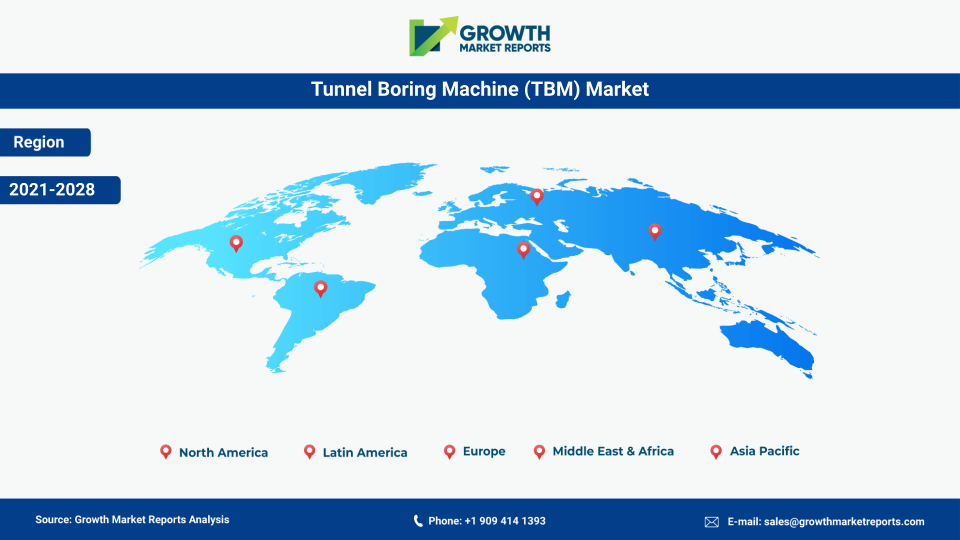
Regionally, the Asia Pacific market is emerging as the dominant force, accounting for the largest share of global TBM demand in 2024. This trend is driven by massive infrastructure projects in China, India, Japan, and Southeast Asia. Europe and North America continue to witness steady demand, particularly in urban renewal and transportation projects. Meanwhile, the Middle East and Latin America are experiencing a surge in tunnel construction activities, supported by government initiatives and foreign investments. The regional diversification of TBM adoption underscores the global nature of underground construction trends and highlights the strategic importance of this market across continents.

Global Tunnel Boring Machine (TBM) Industry Outlook

Type Analysis

The Tunnel Boring Machine (TBM) market is segmented by type into Slurry TBM, Earth Pressure Balance TBM, Shielded TBM, Open Gripper TBM, and Others. Each type addresses specific geological and project requirements, contributing to the overall dynamism of the market. Slurry TBMs are highly favored for projects involving soft ground and water-bearing strata, as they use pressurized slurry to stabilize the tunnel face and remove excavated material efficiently. This type is extensively used in urban subway and sewage projects where ground conditions are unpredictable. The technological sophistication of slurry TBMs, including real-time monitoring and automated control systems, has significantly improved their reliability and adoption rates in challenging environments.

Earth Pressure Balance (EPB) TBMs are another critical segment, designed for use in cohesive soils with moderate water content. EPB TBMs maintain tunnel face stability by controlling the earth pressure, making them ideal for urban tunneling where ground settlement must be minimized. The rising demand for metro and railway tunnels in densely populated cities is propelling the adoption of EPB TBMs. Their ability to operate efficiently in mixed ground conditions and their lower environmental impact compared to traditional methods are key factors driving their market share. Manufacturers are also investing in the development of hybrid TBMs that combine the features of both slurry and EPB machines, further expanding their application range.

Shielded TBMs and Open Gripper TBMs cater to hard rock tunneling and long-distance projects. Shielded TBMs provide structural support during excavation, which is crucial for maintaining tunnel integrity in unstable ground. These machines are widely used in hydroelectric and transportation tunnels that traverse mountainous regions. Open Gripper TBMs, on the other hand, are preferred for their ability to operate in strong, stable rock formations. They offer high excavation rates and are particularly suited for large-diameter tunnels. The ongoing expansion of hydropower and mining projects globally is boosting demand for these TBM types.

The "Others" category includes specialized TBMs designed for unique applications such as micro-tunneling and pipe jacking. These machines are gaining traction in utility and municipal engineering projects that require precision and minimal surface disruption. The versatility of TBM types, coupled with continuous technological advancements, is enabling project developers to select machines tailored to specific geological and operational needs. As a result, the type segment is expected to witness sustained innovation and growth throughout the forecast period.

Report Scope

Attributes Details
Report Title Tunnel Boring Machine (TBM) Market Research Report 2033
By Type Slurry TBM, Earth Pressure Balance TBM, Shielded TBM, Open Gripper TBM, Others
By Diameter Less than 5 Meters, 5-10 Meters, More than 10 Meters
By Application Railway and Metro, Road, Municipal Engineering, Mining, Oil & Gas, Others
By End-User Construction Companies, Mining Companies, Government Agencies, Others
Regions Covered North America, Europe, APAC, Latin America, MEA
Base Year 2024
Historic Data 2018-2023
Forecast Period 2025-2033
Number of Pages 294
Number of Tables & Figures 381
Customization Available Yes, the report can be customized as per your need.

Diameter Analysis

The TBM market is further segmented by diameter: Less than 5 Meters, 5-10 Meters, and More than 10 Meters. Each diameter range serves distinct project requirements, shaping procurement and deployment strategies. TBMs with a diameter of less than 5 meters are primarily used for utility tunnels, water supply networks, and micro-tunneling applications. Their compact size allows for deployment in urban environments where space constraints and minimal surface disruption are critical. These machines are increasingly being adopted for municipal engineering projects, especially in cities with aging infrastructure that requires rehabilitation or expansion without disturbing existing structures.

The 5-10 meter diameter segment represents the largest share of the TBM market, driven by its suitability for metro, railway, and road tunnels. This size range offers a balance between operational efficiency and versatility, making it the preferred choice for most urban and intercity tunneling projects. The ongoing expansion of metro networks in Asia Pacific and Europe is a major factor contributing to the dominance of this segment. Additionally, advancements in cutterhead design and material handling systems are enhancing the performance and reliability of mid-sized TBMs, further solidifying their market position.

TBMs with diameters exceeding 10 meters are deployed in mega-projects requiring large cross-sectional tunnels, such as high-capacity transportation corridors, hydroelectric projects, and underground storage facilities. These machines are engineered for high productivity and are capable of handling the most challenging geological conditions. The growing scale of infrastructure projects, particularly in China and the Middle East, is driving demand for large-diameter TBMs. However, the high capital investment and technical complexity associated with these machines mean that their adoption is typically limited to flagship projects with significant funding and strategic importance.

The segmentation by diameter reflects the diverse application landscape of the TBM market. Manufacturers are focusing on developing modular and customizable TBMs that can be adapted to different diameter requirements, thereby enhancing operational flexibility and cost-effectiveness. The trend towards larger and more complex tunnel projects is expected to drive innovation in TBM design and construction methodologies, ensuring that the diameter segment remains a key determinant of market evolution.

Application Analysis

The application segment of the Tunnel Boring Machine (TBM) market encompasses Railway and Metro, Road, Municipal Engineering, Mining, Oil & Gas, and Others. Railway and Metro applications constitute the largest share, propelled by the global surge in urban transit development. Cities worldwide are investing in new metro lines and expanding existing networks to alleviate traffic congestion and promote sustainable mobility. TBMs are indispensable in these projects due to their ability to construct tunnels with minimal disruption to surface activities. The growing emphasis on high-speed rail and intercity connectivity is further fueling demand for TBMs in this segment.

The Road application segment is witnessing robust growth, driven by the need for underground highways, bypasses, and urban road tunnels. As surface space becomes increasingly scarce in metropolitan areas, underground road construction offers a viable solution for enhancing transportation capacity without impacting existing infrastructure. TBMs enable efficient excavation of long, continuous tunnels, making them the preferred choice for large-scale road projects. The adoption of TBMs in road construction is also supported by advancements in tunneling technology, which have improved safety, reduced construction time, and minimized environmental impact.

Municipal Engineering applications include water supply, sewage, and utility tunnels, which are critical for urban infrastructure development and maintenance. The rising demand for reliable water and wastewater management systems is driving the adoption of TBMs in municipal projects. These machines are particularly suited for constructing tunnels in densely populated areas where open-cut methods are impractical. The integration of TBMs with digital monitoring and control systems is enhancing project efficiency and reducing operational risks, making them an increasingly attractive option for municipal authorities.

The Mining and Oil & Gas segments are also contributing to the growth of the TBM market. In mining, TBMs are used for accessing ore bodies, constructing transportation tunnels, and developing underground storage facilities. Their ability to operate in challenging geological conditions and deliver high excavation rates is driving their adoption in large-scale mining projects. In the oil and gas sector, TBMs are utilized for pipeline installation and underground storage, particularly in regions with complex terrain. The versatility and adaptability of TBMs across diverse applications underscore their critical role in modern infrastructure development.

End-User Analysis

The end-user segment of the TBM market includes Construction Companies, Mining Companies, Government Agencies, and Others. Construction companies represent the primary end-users, accounting for the largest market share. These organizations are responsible for executing large-scale infrastructure projects, including metro systems, highways, and utility tunnels. The adoption of TBMs by construction companies is driven by the need to enhance operational efficiency, reduce project timelines, and comply with stringent safety and environmental regulations. Leading construction firms are increasingly investing in advanced TBM technology to gain a competitive edge and secure high-value contracts.

Mining companies are another significant end-user group, leveraging TBMs to access mineral resources and construct underground transportation networks. The ability of TBMs to operate in difficult geological conditions and deliver consistent excavation rates is particularly valuable in mining operations. As the global demand for minerals and metals continues to rise, mining companies are expanding their underground operations and investing in state-of-the-art TBMs to improve productivity and safety.

Government agencies play a pivotal role in the TBM market, particularly in the planning, funding, and oversight of public infrastructure projects. Governments are increasingly recognizing the benefits of TBMs in delivering complex projects on time and within budget. Public sector investment in transportation, water management, and urban development is a key driver of TBM demand. In many cases, government agencies collaborate with private contractors and technology providers to implement large-scale tunneling projects, fostering innovation and best practices in the industry.

The "Others" category includes utility companies, engineering consultancies, and specialized contractors involved in niche tunneling applications. These end-users typically require customized TBM solutions tailored to specific project requirements. The diversity of end-users in the TBM market highlights the broad applicability of tunneling technology and underscores the importance of collaboration and innovation in meeting evolving infrastructure needs.

Opportunities & Threats

The Tunnel Boring Machine (TBM) market presents several compelling opportunities for stakeholders across the value chain. One of the most significant opportunities lies in the ongoing wave of urbanization and the corresponding demand for advanced underground infrastructure. As cities expand and modernize, the need for efficient, safe, and minimally disruptive tunneling solutions is growing. TBM manufacturers and service providers can leverage this trend by developing machines tailored to the unique requirements of urban projects, such as compact designs, noise reduction features, and enhanced automation. Additionally, the adoption of digital technologies, including artificial intelligence and IoT-based monitoring systems, offers opportunities to improve TBM performance, reduce operational risks, and enhance project outcomes. Companies that invest in R&D and embrace digital transformation are well-positioned to capitalize on these emerging opportunities.

Another promising opportunity is the expansion of TBM applications beyond traditional infrastructure projects. The growing interest in underground data centers, energy storage facilities, and resilient urban infrastructure is creating new markets for TBMs. The increasing focus on sustainability and environmental stewardship is also driving demand for tunneling solutions that minimize ecological impact and support green construction practices. TBM manufacturers can differentiate themselves by offering eco-friendly machines, energy-efficient systems, and solutions that support circular economy principles. Strategic partnerships with construction firms, technology providers, and government agencies can further unlock growth opportunities and facilitate market expansion.

Despite these opportunities, the TBM market faces several restraining factors that could impact its growth trajectory. One of the primary challenges is the high capital investment required for TBM procurement and operation. The cost of acquiring, maintaining, and operating advanced TBMs can be prohibitive for small and medium-sized contractors, limiting market penetration. Additionally, the complexity of tunneling projects, including geological uncertainties and regulatory hurdles, can lead to project delays and cost overruns. Addressing these challenges requires a concerted effort by industry stakeholders to develop cost-effective solutions, streamline project management processes, and foster collaboration across the supply chain.

Regional Outlook

The Asia Pacific region dominates the global TBM market, accounting for approximately 48% of the total market value in 2024, or around USD 3.0 billion. This leadership is driven by massive infrastructure investments in China, India, Japan, and Southeast Asian countries. China alone is responsible for a significant share of global TBM deployments, fueled by its ambitious metro expansion and high-speed rail projects. India is rapidly catching up, with metro and urban infrastructure projects underway in major cities. The regionÂ’s robust economic growth, coupled with government initiatives to enhance urban mobility and water management, is expected to sustain high TBM demand. The Asia Pacific TBM market is forecasted to grow at a CAGR of 8.2% through 2033, outpacing other regions.

Europe represents the second-largest regional market, valued at approximately USD 1.5 billion in 2024. The regionÂ’s mature infrastructure sector and ongoing investments in metro, railway, and road tunnels are key growth drivers. Countries such as Germany, France, the United Kingdom, and Italy are leading adopters of TBM technology, supported by stringent safety and environmental regulations. The European market is also witnessing increased adoption of advanced TBMs for complex projects, including underwater tunnels and cross-border transportation links. The focus on sustainability and innovation is likely to drive further market expansion in the coming years.

North America, with a market size of around USD 1.2 billion in 2024, is experiencing steady growth, particularly in urban renewal and transportation infrastructure projects. The United States and Canada are investing in subway extensions, water management systems, and utility tunnels to address urbanization and aging infrastructure challenges. The region is also a hub for technological innovation, with manufacturers and contractors adopting digital solutions to enhance TBM performance. The Middle East & Africa and Latin America, though smaller in market size (collectively accounting for about USD 0.5 billion), are witnessing increased TBM adoption in response to infrastructure modernization efforts and strategic investments in transportation and energy sectors. These regions are expected to register moderate to high growth rates as governments prioritize underground construction solutions.

Tunnel Boring Machine (TBM) Market Statistics

Competitor Outlook

The Tunnel Boring Machine (TBM) market is characterized by intense competition and a diverse array of global and regional players. The competitive landscape is shaped by technological innovation, project execution capabilities, and strategic partnerships. Leading companies are continuously investing in research and development to enhance TBM performance, reliability, and versatility. The integration of digital technologies, such as real-time monitoring, predictive maintenance, and automation, is emerging as a key differentiator. Market leaders are also expanding their service offerings to include project consulting, machine customization, and after-sales support, thereby strengthening customer relationships and securing repeat business.

The market is witnessing consolidation as major players acquire or partner with specialized TBM manufacturers and technology providers. This trend is driven by the need to broaden product portfolios, access new markets, and leverage synergies in engineering and manufacturing. Companies are also focusing on sustainability, developing energy-efficient TBMs and eco-friendly tunneling solutions to align with evolving regulatory standards and customer preferences. The ability to deliver turnkey solutions, from machine design and manufacturing to project management and support, is becoming increasingly important in securing large-scale contracts.

Regional players are also making significant inroads, particularly in emerging markets where local expertise and cost competitiveness are critical. These companies are leveraging their understanding of local geological conditions, regulatory frameworks, and customer needs to offer tailored solutions. Collaboration with international players through joint ventures and technology transfer agreements is enabling regional manufacturers to enhance their capabilities and compete more effectively on the global stage. The competitive intensity is further heightened by the entry of new players, particularly from Asia, who are introducing cost-effective TBM solutions and challenging established incumbents.

Some of the major companies operating in the global Tunnel Boring Machine (TBM) market include Herrenknecht AG, The Robbins Company, China Railway Construction Heavy Industry Co., Ltd. (CRCHI), Hitachi Zosen Corporation, Mitsubishi Heavy Industries, Ltd., and TERRATEC Ltd. Herrenknecht AG, based in Germany, is a global leader known for its comprehensive range of TBMs and innovative tunneling solutions. The Robbins Company, headquartered in the United States, specializes in hard rock TBMs and has a strong track record in complex infrastructure projects. CRCHI, a leading Chinese manufacturer, has rapidly expanded its market presence through large-scale metro and railway projects in Asia and beyond.

Hitachi Zosen Corporation and Mitsubishi Heavy Industries, both based in Japan, are renowned for their technological expertise and reliability in TBM manufacturing. TERRATEC Ltd., with operations in Australia and Asia, is recognized for its customized TBM solutions and strong regional presence. These companies are at the forefront of innovation, continuously developing new technologies to address the evolving needs of the global tunneling industry. Their commitment to quality, safety, and sustainability positions them as preferred partners for infrastructure developers worldwide.

Key Players

  • Herrenknecht AG
  • The Robbins Company
  • China Railway Engineering Equipment Group Co., Ltd. (CREG)
  • Terratec Ltd.
  • Hitachi Zosen Corporation
  • Kawasaki Heavy Industries, Ltd.
  • CRCHI (China Railway Construction Heavy Industry Corporation Limited)
  • Mitsubishi Heavy Industries, Ltd.
  • Seli Overseas S.p.A.
  • Tunneling Systems S.R.L.
  • NFM Technologies
  • JIM Technology Corporation
  • Shanghai Tunnel Engineering Co., Ltd. (STEC)
  • Tianhe Mechanical Equipment Manufacturing Co., Ltd.
  • Bauer Maschinen GmbH
  • Komatsu Ltd.
  • IHI Corporation
  • Xugong Kaigong Machinery Co., Ltd. (XCMG)
  • Lovat Inc.
  • Bessac – Soletanche Bachy Group
Tunnel Boring Machine (TBM) Market Overview

Segments

The Tunnel Boring Machine (TBM) market has been segmented on the basis of

Type

  • Slurry TBM
  • Earth Pressure Balance TBM
  • Shielded TBM
  • Open Gripper TBM
  • Others

Diameter

  • Less than 5 Meters
  • 5-10 Meters
  • More than 10 Meters

Application

  • Railway and Metro
  • Road
  • Municipal Engineering
  • Mining
  • Oil & Gas
  • Others

End-User

  • Construction Companies
  • Mining Companies
  • Government Agencies
  • Others

Competitive Landscape

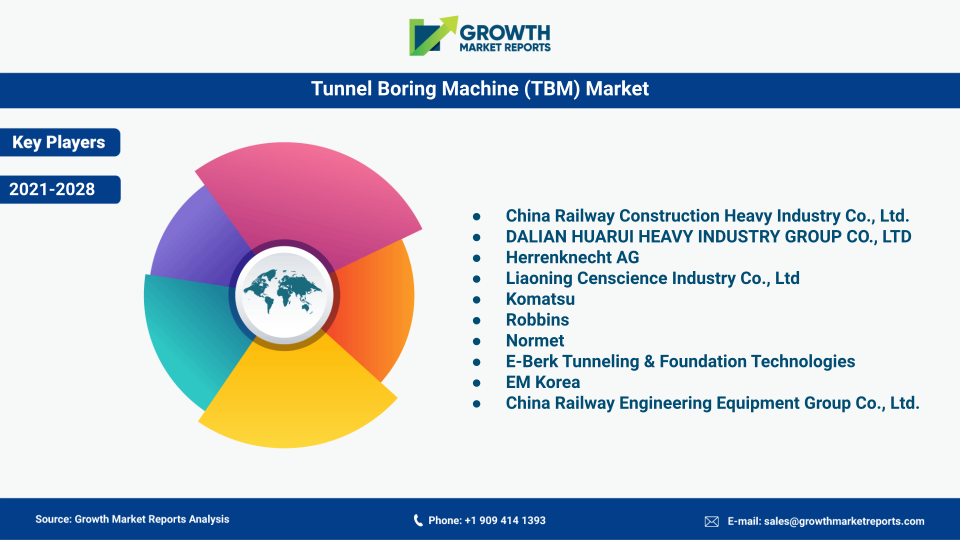
  • Top players in the market include China Railway Construction Heavy Industry Co., Ltd., DALIAN HUARUI HEAVY INDUSTRY GROUP CO.,LTD, Herrenknecht AG, Liaoning Censcience Industry Co., Ltd, Kawasaki Heavy Industries, Ltd, and Others.
  • These companies are considered as key manufacturers of piezoelectric element based on their revenue, product offerings, regional presence, and supply chain management system.
  • The players are adopting key strategies such as acquisition, collaborations, and geographical expansion where potential opportunity for the Tunnel Boring Machine (TBM) market.

Tunnel Boring Machine (TBM) Market Key Players

Frequently Asked Questions

Additional company profiles can be provided on request

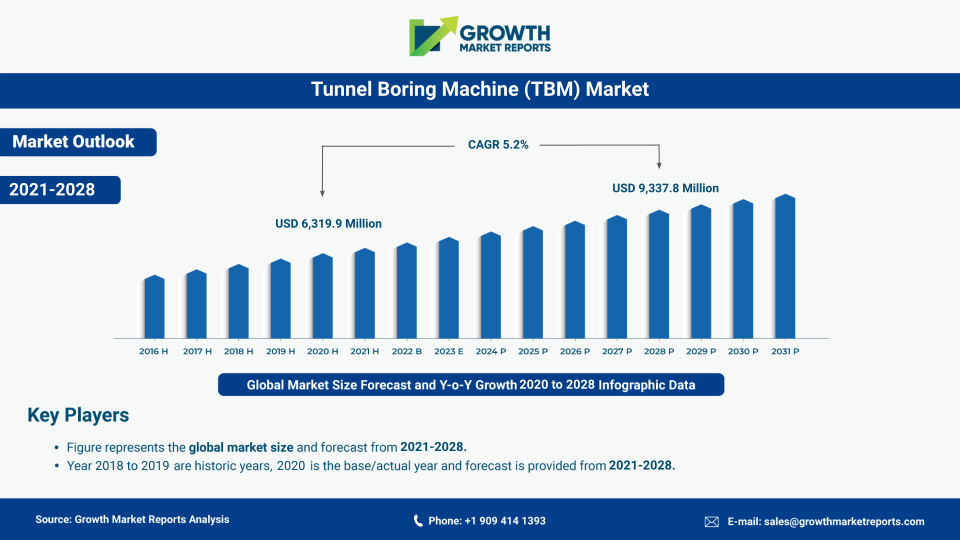
According to this Growth Market Reports report, the Tunnel Boring Machine (TBM) market is likely to register a CAGR of 5.2% during forecast period 2020-2027, with an anticipated valuation of USD 9,337.8 Mn by the end of the 2028.

In addition to market size (in US$ Million), Company Market Share (in % for base year 2019), and quality parameter overview is provided.

Factors such as competitive strength and market positioning are key areas considered while selecting top companies to be profiled.

Increasing Expenditure on Road And Railway Infrastructure and Rising Disposable Income Across the World Supports Various Projects are expected to act as a driving force for the market during forecast period.

The major applications of Tunnel Boring Machine (TBM) are City Rail Systems, Railway and Highway, Municipal Engineering, and Others.

The market is expected to witness a significant decrease in growth between 2019 and 2020 owing to the COVID 19 pandemic on the Tunnel Boring Machine (TBM) market.

The base year considered for the global Tunnel Boring Machine (TBM) market report is 2020. The complete analysis period is 2018 to 2028, wherein, 2018, and 2019 are the historic years, and the forecast is provided from 2021 to 2028.

Factors such as growth of Construction Industry, R&D Activities in Various Industries, Industrial Outlook, Technological Innovations, and Economic Growth are expected to act as a driving force for the market.

Major Manufacturers China Railway Construction Heavy Industry Co., Ltd., DALIAN HUARUI HEAVY INDUSTRY GROUP CO.,LTD, Herrenknecht AG, Liaoning Censcience Industry Co., Ltd, Kawasaki Heavy Industries, Ltd, and Others.

Table Of Content

Chapter 1 Executive Summary
Chapter 2 Assumptions and Acronyms Used
Chapter 3 Research Methodology
Chapter 4 Tunnel Boring Machine (TBM) Market Overview
   4.1 Introduction
      4.1.1 Market Taxonomy
      4.1.2 Market Definition
      4.1.3 Macro-Economic Factors Impacting the Market Growth
   4.2 Tunnel Boring Machine (TBM) Market Dynamics
      4.2.1 Market Drivers
      4.2.2 Market Restraints
      4.2.3 Market Opportunity
   4.3 Tunnel Boring Machine (TBM) Market - Supply Chain Analysis
      4.3.1 List of Key Suppliers
      4.3.2 List of Key Distributors
      4.3.3 List of Key Consumers
   4.4 Key Forces Shaping the Tunnel Boring Machine (TBM) Market
      4.4.1 Bargaining Power of Suppliers
      4.4.2 Bargaining Power of Buyers
      4.4.3 Threat of Substitution
      4.4.4 Threat of New Entrants
      4.4.5 Competitive Rivalry
   4.5 Global Tunnel Boring Machine (TBM) Market Size & Forecast, 2023-2032
      4.5.1 Tunnel Boring Machine (TBM) Market Size and Y-o-Y Growth
      4.5.2 Tunnel Boring Machine (TBM) Market Absolute $ Opportunity

Chapter 5 Global Tunnel Boring Machine (TBM) Market Analysis and Forecast By Type
   5.1 Introduction
      5.1.1 Key Market Trends & Growth Opportunities By Type
      5.1.2 Basis Point Share (BPS) Analysis By Type
      5.1.3 Absolute $ Opportunity Assessment By Type
   5.2 Tunnel Boring Machine (TBM) Market Size Forecast By Type
      5.2.1 Slurry TBM
      5.2.2 Earth Pressure Balance TBM
      5.2.3 Shielded TBM
      5.2.4 Open Gripper TBM
      5.2.5 Others
   5.3 Market Attractiveness Analysis By Type

Chapter 6 Global Tunnel Boring Machine (TBM) Market Analysis and Forecast By Diameter
   6.1 Introduction
      6.1.1 Key Market Trends & Growth Opportunities By Diameter
      6.1.2 Basis Point Share (BPS) Analysis By Diameter
      6.1.3 Absolute $ Opportunity Assessment By Diameter
   6.2 Tunnel Boring Machine (TBM) Market Size Forecast By Diameter
      6.2.1 Less than 5 Meters
      6.2.2 5-10 Meters
      6.2.3 More than 10 Meters
   6.3 Market Attractiveness Analysis By Diameter

Chapter 7 Global Tunnel Boring Machine (TBM) Market Analysis and Forecast By Application
   7.1 Introduction
      7.1.1 Key Market Trends & Growth Opportunities By Application
      7.1.2 Basis Point Share (BPS) Analysis By Application
      7.1.3 Absolute $ Opportunity Assessment By Application
   7.2 Tunnel Boring Machine (TBM) Market Size Forecast By Application
      7.2.1 Railway and Metro
      7.2.2 Road
      7.2.3 Municipal Engineering
      7.2.4 Mining
      7.2.5 Oil & Gas
      7.2.6 Others
   7.3 Market Attractiveness Analysis By Application

Chapter 8 Global Tunnel Boring Machine (TBM) Market Analysis and Forecast By End-User
   8.1 Introduction
      8.1.1 Key Market Trends & Growth Opportunities By End-User
      8.1.2 Basis Point Share (BPS) Analysis By End-User
      8.1.3 Absolute $ Opportunity Assessment By End-User
   8.2 Tunnel Boring Machine (TBM) Market Size Forecast By End-User
      8.2.1 Construction Companies
      8.2.2 Mining Companies
      8.2.3 Government Agencies
      8.2.4 Others
   8.3 Market Attractiveness Analysis By End-User

Chapter 9 Global Tunnel Boring Machine (TBM) Market Analysis and Forecast by Region
   9.1 Introduction
      9.1.1 Key Market Trends & Growth Opportunities By Region
      9.1.2 Basis Point Share (BPS) Analysis By Region
      9.1.3 Absolute $ Opportunity Assessment By Region
   9.2 Tunnel Boring Machine (TBM) Market Size Forecast By Region
      9.2.1 North America
      9.2.2 Europe
      9.2.3 Asia Pacific
      9.2.4 Latin America
      9.2.5 Middle East & Africa (MEA)
   9.3 Market Attractiveness Analysis By Region

Chapter 10 Coronavirus Disease (COVID-19) Impact 
   10.1 Introduction 
   10.2 Current & Future Impact Analysis 
   10.3 Economic Impact Analysis 
   10.4 Government Policies 
   10.5 Investment Scenario

Chapter 11 North America Tunnel Boring Machine (TBM) Analysis and Forecast
   11.1 Introduction
   11.2 North America Tunnel Boring Machine (TBM) Market Size Forecast by Country
      11.2.1 U.S.
      11.2.2 Canada
   11.3 Basis Point Share (BPS) Analysis by Country
   11.4 Absolute $ Opportunity Assessment by Country
   11.5 Market Attractiveness Analysis by Country
   11.6 North America Tunnel Boring Machine (TBM) Market Size Forecast By Type
      11.6.1 Slurry TBM
      11.6.2 Earth Pressure Balance TBM
      11.6.3 Shielded TBM
      11.6.4 Open Gripper TBM
      11.6.5 Others
   11.7 Basis Point Share (BPS) Analysis By Type 
   11.8 Absolute $ Opportunity Assessment By Type 
   11.9 Market Attractiveness Analysis By Type
   11.10 North America Tunnel Boring Machine (TBM) Market Size Forecast By Diameter
      11.10.1 Less than 5 Meters
      11.10.2 5-10 Meters
      11.10.3 More than 10 Meters
   11.11 Basis Point Share (BPS) Analysis By Diameter 
   11.12 Absolute $ Opportunity Assessment By Diameter 
   11.13 Market Attractiveness Analysis By Diameter
   11.14 North America Tunnel Boring Machine (TBM) Market Size Forecast By Application
      11.14.1 Railway and Metro
      11.14.2 Road
      11.14.3 Municipal Engineering
      11.14.4 Mining
      11.14.5 Oil & Gas
      11.14.6 Others
   11.15 Basis Point Share (BPS) Analysis By Application 
   11.16 Absolute $ Opportunity Assessment By Application 
   11.17 Market Attractiveness Analysis By Application
   11.18 North America Tunnel Boring Machine (TBM) Market Size Forecast By End-User
      11.18.1 Construction Companies
      11.18.2 Mining Companies
      11.18.3 Government Agencies
      11.18.4 Others
   11.19 Basis Point Share (BPS) Analysis By End-User 
   11.20 Absolute $ Opportunity Assessment By End-User 
   11.21 Market Attractiveness Analysis By End-User

Chapter 12 Europe Tunnel Boring Machine (TBM) Analysis and Forecast
   12.1 Introduction
   12.2 Europe Tunnel Boring Machine (TBM) Market Size Forecast by Country
      12.2.1 Germany
      12.2.2 France
      12.2.3 Italy
      12.2.4 U.K.
      12.2.5 Spain
      12.2.6 Russia
      12.2.7 Rest of Europe
   12.3 Basis Point Share (BPS) Analysis by Country
   12.4 Absolute $ Opportunity Assessment by Country
   12.5 Market Attractiveness Analysis by Country
   12.6 Europe Tunnel Boring Machine (TBM) Market Size Forecast By Type
      12.6.1 Slurry TBM
      12.6.2 Earth Pressure Balance TBM
      12.6.3 Shielded TBM
      12.6.4 Open Gripper TBM
      12.6.5 Others
   12.7 Basis Point Share (BPS) Analysis By Type 
   12.8 Absolute $ Opportunity Assessment By Type 
   12.9 Market Attractiveness Analysis By Type
   12.10 Europe Tunnel Boring Machine (TBM) Market Size Forecast By Diameter
      12.10.1 Less than 5 Meters
      12.10.2 5-10 Meters
      12.10.3 More than 10 Meters
   12.11 Basis Point Share (BPS) Analysis By Diameter 
   12.12 Absolute $ Opportunity Assessment By Diameter 
   12.13 Market Attractiveness Analysis By Diameter
   12.14 Europe Tunnel Boring Machine (TBM) Market Size Forecast By Application
      12.14.1 Railway and Metro
      12.14.2 Road
      12.14.3 Municipal Engineering
      12.14.4 Mining
      12.14.5 Oil & Gas
      12.14.6 Others
   12.15 Basis Point Share (BPS) Analysis By Application 
   12.16 Absolute $ Opportunity Assessment By Application 
   12.17 Market Attractiveness Analysis By Application
   12.18 Europe Tunnel Boring Machine (TBM) Market Size Forecast By End-User
      12.18.1 Construction Companies
      12.18.2 Mining Companies
      12.18.3 Government Agencies
      12.18.4 Others
   12.19 Basis Point Share (BPS) Analysis By End-User 
   12.20 Absolute $ Opportunity Assessment By End-User 
   12.21 Market Attractiveness Analysis By End-User

Chapter 13 Asia Pacific Tunnel Boring Machine (TBM) Analysis and Forecast
   13.1 Introduction
   13.2 Asia Pacific Tunnel Boring Machine (TBM) Market Size Forecast by Country
      13.2.1 China
      13.2.2 Japan
      13.2.3 South Korea
      13.2.4 India
      13.2.5 Australia
      13.2.6 South East Asia (SEA)
      13.2.7 Rest of Asia Pacific (APAC)
   13.3 Basis Point Share (BPS) Analysis by Country
   13.4 Absolute $ Opportunity Assessment by Country
   13.5 Market Attractiveness Analysis by Country
   13.6 Asia Pacific Tunnel Boring Machine (TBM) Market Size Forecast By Type
      13.6.1 Slurry TBM
      13.6.2 Earth Pressure Balance TBM
      13.6.3 Shielded TBM
      13.6.4 Open Gripper TBM
      13.6.5 Others
   13.7 Basis Point Share (BPS) Analysis By Type 
   13.8 Absolute $ Opportunity Assessment By Type 
   13.9 Market Attractiveness Analysis By Type
   13.10 Asia Pacific Tunnel Boring Machine (TBM) Market Size Forecast By Diameter
      13.10.1 Less than 5 Meters
      13.10.2 5-10 Meters
      13.10.3 More than 10 Meters
   13.11 Basis Point Share (BPS) Analysis By Diameter 
   13.12 Absolute $ Opportunity Assessment By Diameter 
   13.13 Market Attractiveness Analysis By Diameter
   13.14 Asia Pacific Tunnel Boring Machine (TBM) Market Size Forecast By Application
      13.14.1 Railway and Metro
      13.14.2 Road
      13.14.3 Municipal Engineering
      13.14.4 Mining
      13.14.5 Oil & Gas
      13.14.6 Others
   13.15 Basis Point Share (BPS) Analysis By Application 
   13.16 Absolute $ Opportunity Assessment By Application 
   13.17 Market Attractiveness Analysis By Application
   13.18 Asia Pacific Tunnel Boring Machine (TBM) Market Size Forecast By End-User
      13.18.1 Construction Companies
      13.18.2 Mining Companies
      13.18.3 Government Agencies
      13.18.4 Others
   13.19 Basis Point Share (BPS) Analysis By End-User 
   13.20 Absolute $ Opportunity Assessment By End-User 
   13.21 Market Attractiveness Analysis By End-User

Chapter 14 Latin America Tunnel Boring Machine (TBM) Analysis and Forecast
   14.1 Introduction
   14.2 Latin America Tunnel Boring Machine (TBM) Market Size Forecast by Country
      14.2.1 Brazil
      14.2.2 Mexico
      14.2.3 Rest of Latin America (LATAM)
   14.3 Basis Point Share (BPS) Analysis by Country
   14.4 Absolute $ Opportunity Assessment by Country
   14.5 Market Attractiveness Analysis by Country
   14.6 Latin America Tunnel Boring Machine (TBM) Market Size Forecast By Type
      14.6.1 Slurry TBM
      14.6.2 Earth Pressure Balance TBM
      14.6.3 Shielded TBM
      14.6.4 Open Gripper TBM
      14.6.5 Others
   14.7 Basis Point Share (BPS) Analysis By Type 
   14.8 Absolute $ Opportunity Assessment By Type 
   14.9 Market Attractiveness Analysis By Type
   14.10 Latin America Tunnel Boring Machine (TBM) Market Size Forecast By Diameter
      14.10.1 Less than 5 Meters
      14.10.2 5-10 Meters
      14.10.3 More than 10 Meters
   14.11 Basis Point Share (BPS) Analysis By Diameter 
   14.12 Absolute $ Opportunity Assessment By Diameter 
   14.13 Market Attractiveness Analysis By Diameter
   14.14 Latin America Tunnel Boring Machine (TBM) Market Size Forecast By Application
      14.14.1 Railway and Metro
      14.14.2 Road
      14.14.3 Municipal Engineering
      14.14.4 Mining
      14.14.5 Oil & Gas
      14.14.6 Others
   14.15 Basis Point Share (BPS) Analysis By Application 
   14.16 Absolute $ Opportunity Assessment By Application 
   14.17 Market Attractiveness Analysis By Application
   14.18 Latin America Tunnel Boring Machine (TBM) Market Size Forecast By End-User
      14.18.1 Construction Companies
      14.18.2 Mining Companies
      14.18.3 Government Agencies
      14.18.4 Others
   14.19 Basis Point Share (BPS) Analysis By End-User 
   14.20 Absolute $ Opportunity Assessment By End-User 
   14.21 Market Attractiveness Analysis By End-User

Chapter 15 Middle East & Africa (MEA) Tunnel Boring Machine (TBM) Analysis and Forecast
   15.1 Introduction
   15.2 Middle East & Africa (MEA) Tunnel Boring Machine (TBM) Market Size Forecast by Country
      15.2.1 Saudi Arabia
      15.2.2 South Africa
      15.2.3 UAE
      15.2.4 Rest of Middle East & Africa (MEA)
   15.3 Basis Point Share (BPS) Analysis by Country
   15.4 Absolute $ Opportunity Assessment by Country
   15.5 Market Attractiveness Analysis by Country
   15.6 Middle East & Africa (MEA) Tunnel Boring Machine (TBM) Market Size Forecast By Type
      15.6.1 Slurry TBM
      15.6.2 Earth Pressure Balance TBM
      15.6.3 Shielded TBM
      15.6.4 Open Gripper TBM
      15.6.5 Others
   15.7 Basis Point Share (BPS) Analysis By Type 
   15.8 Absolute $ Opportunity Assessment By Type 
   15.9 Market Attractiveness Analysis By Type
   15.10 Middle East & Africa (MEA) Tunnel Boring Machine (TBM) Market Size Forecast By Diameter
      15.10.1 Less than 5 Meters
      15.10.2 5-10 Meters
      15.10.3 More than 10 Meters
   15.11 Basis Point Share (BPS) Analysis By Diameter 
   15.12 Absolute $ Opportunity Assessment By Diameter 
   15.13 Market Attractiveness Analysis By Diameter
   15.14 Middle East & Africa (MEA) Tunnel Boring Machine (TBM) Market Size Forecast By Application
      15.14.1 Railway and Metro
      15.14.2 Road
      15.14.3 Municipal Engineering
      15.14.4 Mining
      15.14.5 Oil & Gas
      15.14.6 Others
   15.15 Basis Point Share (BPS) Analysis By Application 
   15.16 Absolute $ Opportunity Assessment By Application 
   15.17 Market Attractiveness Analysis By Application
   15.18 Middle East & Africa (MEA) Tunnel Boring Machine (TBM) Market Size Forecast By End-User
      15.18.1 Construction Companies
      15.18.2 Mining Companies
      15.18.3 Government Agencies
      15.18.4 Others
   15.19 Basis Point Share (BPS) Analysis By End-User 
   15.20 Absolute $ Opportunity Assessment By End-User 
   15.21 Market Attractiveness Analysis By End-User

Chapter 16 Competition Landscape 
   16.1 Tunnel Boring Machine (TBM) Market: Competitive Dashboard
   16.2 Global Tunnel Boring Machine (TBM) Market: Market Share Analysis, 2023
   16.3 Company Profiles (Details – Overview, Financials, Developments, Strategy) 
      16.3.1 Herrenknecht AG
The Robbins Company
China Railway Engineering Equipment Group Co., Ltd. (CREG)
Terratec Ltd.
Hitachi Zosen Corporation
Kawasaki Heavy Industries, Ltd.
CRCHI (China Railway Construction Heavy Industry Corporation Limited)
Mitsubishi Heavy Industries, Ltd.
Seli Overseas S.p.A.
Tunneling Systems S.R.L.
NFM Technologies
JIM Technology Corporation
Shanghai Tunnel Engineering Co., Ltd. (STEC)
Tianhe Mechanical Equipment Manufacturing Co., Ltd.
Bauer Maschinen GmbH
Komatsu Ltd.
IHI Corporation
Xugong Kaigong Machinery Co., Ltd. (XCMG)
Lovat Inc.
Bessac – Soletanche Bachy Group

Methodology

Our Clients

Microsoft
sinopec
FedEx Logistics
Nestle SA
Deloitte
General Mills
Dassault Aviation
Siemens Healthcare