Segments - by Component (Software, Hardware, Services), by Application (Traffic Management, Logistics Management, Planning and Maintenance, Incident Management, Others), by Deployment Mode (On-Premises, Cloud), by End-User (Public Sector, Private Sector, Transportation Agencies, Logistics Companies, Others)
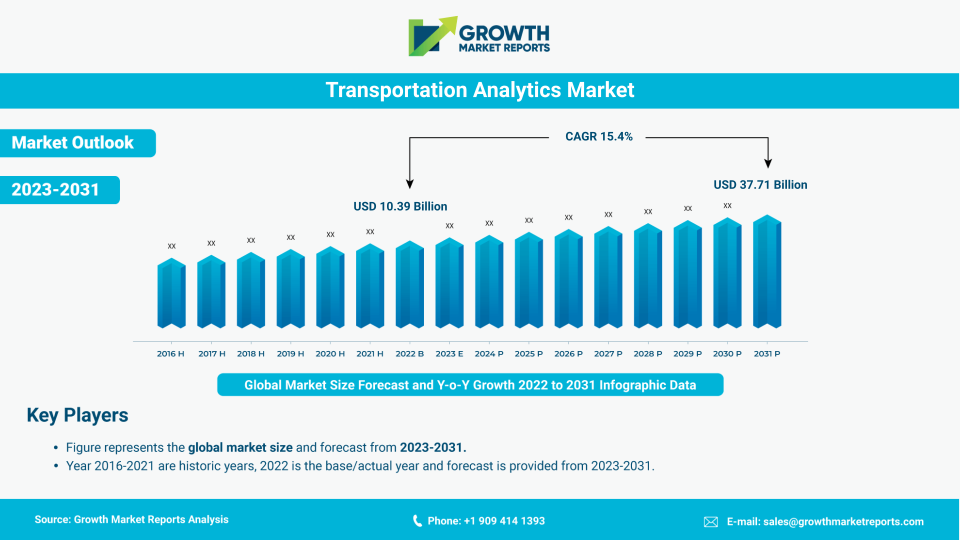
According to our latest research, the global transportation analytics market size reached USD 14.7 billion in 2024, reflecting robust growth driven by the increasing demand for real-time data insights and advanced mobility solutions. The market is projected to expand at a CAGR of 18.2% from 2025 to 2033, reaching a forecasted value of USD 62.1 billion by 2033. This remarkable growth is primarily fueled by the integration of artificial intelligence, big data, and IoT technologies across transportation systems, enabling organizations to optimize operations, reduce costs, and enhance commuter experiences. As per our latest research, the ongoing digital transformation in transportation infrastructure is a key driver propelling the market forward.
One of the most significant growth factors in the transportation analytics market is the increasing adoption of smart city initiatives worldwide. Governments and urban planners are leveraging advanced analytics to address traffic congestion, improve public safety, and ensure efficient use of infrastructure. The proliferation of connected devices and sensors in vehicles and roadways generates massive volumes of data, which, when analyzed, provide actionable insights for traffic management, predictive maintenance, and resource allocation. This trend is further supported by rising investments in intelligent transportation systems (ITS), which are designed to enhance urban mobility and reduce environmental impact by optimizing traffic flow and minimizing idle times.
Another key growth catalyst is the rapid evolution of e-commerce and logistics services, which has created a pressing need for data-driven decision-making in supply chain and fleet management. Logistics companies and transportation agencies are increasingly deploying analytics solutions to streamline route planning, monitor vehicle performance, and anticipate disruptions. The ability to predict and respond to incidents in real time not only improves operational efficiency but also enhances customer satisfaction and reduces operational costs. Furthermore, the integration of machine learning algorithms and predictive analytics enables stakeholders to identify patterns and trends, supporting proactive maintenance and minimizing downtime.
The increasing focus on sustainability and regulatory compliance is also accelerating the adoption of transportation analytics. Environmental concerns and stringent emission standards are compelling organizations to optimize fuel consumption, reduce carbon footprints, and comply with regulatory requirements. Analytics platforms offer detailed insights into energy usage, vehicle emissions, and route optimization, aiding organizations in achieving sustainability goals. Additionally, the growing prevalence of Mobility-as-a-Service (MaaS) platforms is reshaping the transportation landscape, as these solutions rely extensively on analytics to provide seamless, multimodal travel experiences to users, further driving market growth.
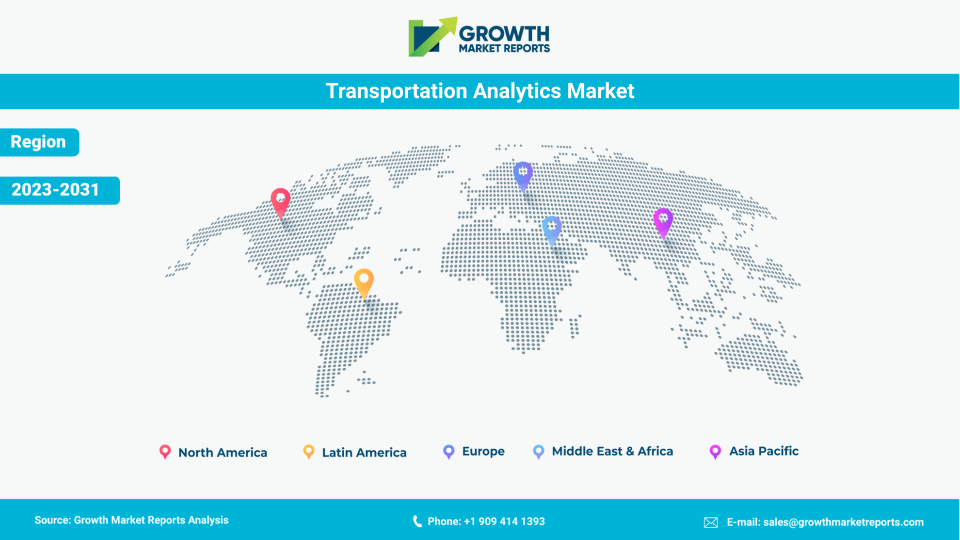
From a regional perspective, North America currently dominates the transportation analytics market owing to its advanced transportation infrastructure, high adoption of smart technologies, and strong presence of leading market players. Europe follows closely, driven by significant investments in smart city projects and sustainability initiatives. Meanwhile, the Asia Pacific region is anticipated to exhibit the highest growth rate during the forecast period, fueled by rapid urbanization, increasing government support for intelligent transportation systems, and expanding digital connectivity. Latin America and the Middle East & Africa are also witnessing growing interest in transportation analytics as they modernize their transportation networks to accommodate rising urban populations and economic development.
The component segment of the transportation analytics market is broadly categorized into software, hardware, and services, each playing a pivotal role in enabling effective data-driven transportation solutions. Software solutions form the backbone of transportation analytics, providing platforms for data integration, visualization, predictive modeling, and real-time monitoring. With advancements in artificial intelligence and machine learning, software tools are increasingly capable of delivering sophisticated insights, supporting dynamic route optimization, incident detection, and demand forecasting. The rising emphasis on user-friendly interfaces and customizable dashboards is further enhancing the adoption of analytics software among transportation agencies, logistics companies, and urban planners.
Hardware components, including sensors, GPS devices, cameras, and communication modules, are essential for data collection and transmission in transportation analytics ecosystems. The proliferation of IoT-enabled devices in vehicles, roadways, and infrastructure has significantly increased the volume and variety of data available for analysis. Modern hardware solutions are designed for high reliability, scalability, and integration with cloud-based analytics platforms, ensuring seamless data flow across transportation networks. The ongoing advancements in sensor technology, such as LIDAR and advanced telematics, are enabling more precise and comprehensive data capture, which is critical for real-time analytics and predictive maintenance applications.
Services, encompassing consulting, system integration, support, and maintenance, are crucial for the successful implementation and optimization of transportation analytics solutions. Organizations often require expert guidance to select appropriate analytics tools, integrate disparate data sources, and customize solutions to meet specific operational needs. Service providers play a vital role in ensuring the scalability, security, and ongoing performance of analytics platforms, offering training, technical support, and system upgrades. As transportation analytics solutions become more complex and mission-critical, the demand for specialized services is expected to grow, particularly among public sector agencies and large logistics firms seeking to maximize return on investment.
The interplay between software, hardware, and services is shaping the future of the transportation analytics market. Integrated solutions that combine robust hardware infrastructure with advanced software capabilities and comprehensive support services are increasingly preferred by end-users. This holistic approach enables organizations to harness the full potential of analytics, from data acquisition to actionable insights, fostering greater operational efficiency and innovation in transportation systems. The ongoing evolution of cloud computing and edge analytics is further enhancing the synergy between these components, enabling real-time, scalable, and cost-effective analytics solutions for diverse transportation applications.
| Attributes | Details |
| Report Title | Transportation Analytics Market Research Report 2033 |
| By Component | Software, Hardware, Services |
| By Application | Traffic Management, Logistics Management, Planning and Maintenance, Incident Management, Others |
| By Deployment Mode | On-Premises, Cloud |
| By End-User | Public Sector, Private Sector, Transportation Agencies, Logistics Companies, Others |
| Regions Covered | North America, Europe, APAC, Latin America, MEA |
| Countries Covered | North America (United States, Canada), Europe (Germany, France, Italy, United Kingdom, Spain, Russia, Rest of Europe), Asia Pacific (China, Japan, South Korea, India, Australia, South East Asia (SEA), Rest of Asia Pacific), Latin America (Mexico, Brazil, Rest of Latin America), Middle East & Africa (Saudi Arabia, South Africa, United Arab Emirates, Rest of Middle East & Africa) |
| Base Year | 2024 |
| Historic Data | 2018-2023 |
| Forecast Period | 2025-2033 |
| Number of Pages | 261 |
| Number of Tables & Figures | 267 |
| Customization Available | Yes, the report can be customized as per your need. |
The application segment of the transportation analytics market is highly diverse, encompassing traffic management, logistics management, planning and maintenance, incident management, and other specialized use cases. Traffic management remains one of the most prominent applications, as cities and transportation agencies strive to alleviate congestion, improve safety, and enhance commuter experiences. Advanced analytics platforms enable real-time monitoring of traffic conditions, identification of bottlenecks, and dynamic adjustment of traffic signals, resulting in smoother traffic flow and reduced travel times. The integration of predictive analytics further allows for proactive congestion management and incident prevention, contributing to safer and more efficient urban mobility.
Logistics management is another critical application area, particularly in the context of the booming e-commerce sector and global supply chains. Transportation analytics solutions empower logistics companies to optimize route planning, monitor fleet performance, and anticipate potential disruptions. By leveraging real-time and historical data, organizations can reduce fuel consumption, minimize delivery delays, and enhance overall supply chain visibility. Predictive analytics also supports inventory management, demand forecasting, and resource allocation, enabling logistics providers to respond swiftly to changing market dynamics and customer requirements.
Planning and maintenance applications are gaining traction as transportation agencies and infrastructure operators seek to extend asset lifecycles and minimize downtime. Analytics platforms facilitate data-driven decision-making for infrastructure investments, maintenance scheduling, and resource prioritization. By analyzing sensor data and historical maintenance records, organizations can identify emerging issues, predict equipment failures, and implement condition-based maintenance strategies. This proactive approach not only reduces operational costs but also enhances the reliability and safety of transportation networks, supporting sustainable urban development.
Incident management is a rapidly evolving application, driven by the need to respond swiftly to accidents, breakdowns, and other disruptions. Transportation analytics platforms enable real-time incident detection, automated alerts, and coordinated response efforts among emergency services, traffic controllers, and maintenance crews. By analyzing incident data and identifying root causes, organizations can implement targeted interventions to prevent recurrence and improve overall system resilience. Other emerging applications, such as environmental monitoring, fare optimization, and passenger flow analysis, are further expanding the scope and impact of transportation analytics across diverse sectors.
The deployment mode segment of the transportation analytics market is primarily divided into on-premises and cloud-based solutions, each offering distinct advantages and considerations. On-premises deployment has traditionally been favored by organizations seeking greater control over data security, system customization, and compliance with regulatory requirements. This deployment model allows for direct management of hardware and software infrastructure, enabling tailored analytics solutions that align with specific operational needs. However, on-premises solutions often entail higher upfront costs, longer implementation timelines, and ongoing maintenance responsibilities, which can be challenging for smaller organizations or those with limited IT resources.
Cloud-based deployment is rapidly gaining traction in the transportation analytics market, driven by its scalability, flexibility, and cost-effectiveness. Cloud platforms enable organizations to access advanced analytics tools and computational resources on demand, without the need for significant capital investment in IT infrastructure. This deployment model supports seamless integration with IoT devices, real-time data processing, and remote access to analytics dashboards, making it ideal for organizations with distributed operations or dynamic data requirements. The growing availability of cloud-native analytics solutions from leading technology providers is further accelerating the adoption of cloud-based transportation analytics across public and private sectors.
Hybrid deployment models are also emerging as organizations seek to balance the benefits of both on-premises and cloud-based solutions. Hybrid approaches allow for sensitive data to be stored and processed locally, while leveraging the scalability and advanced analytics capabilities of cloud platforms for less critical workloads. This flexibility is particularly valuable for transportation agencies and logistics companies operating in highly regulated environments or dealing with large volumes of sensitive data. The ability to seamlessly transition between deployment models as operational requirements evolve is a key advantage driving the adoption of hybrid transportation analytics solutions.
The choice of deployment mode is influenced by several factors, including organizational size, budget constraints, data sensitivity, and regulatory compliance. As cloud security and data privacy technologies continue to advance, concerns regarding data protection are diminishing, further supporting the shift towards cloud-based analytics. The ongoing digital transformation of the transportation sector, coupled with the increasing complexity of analytics workloads, is expected to drive continued innovation in deployment models, enabling organizations to harness the full potential of transportation analytics in diverse operational contexts.
The end-user segment of the transportation analytics market encompasses a wide range of stakeholders, including the public sector, private sector, transportation agencies, logistics companies, and other specialized entities. Public sector organizations, such as city governments and transportation authorities, are among the primary adopters of analytics solutions, leveraging data-driven insights to enhance urban mobility, improve public safety, and optimize infrastructure investments. These organizations often face complex challenges related to traffic congestion, environmental sustainability, and regulatory compliance, making transportation analytics an essential tool for informed decision-making and effective resource allocation.
The private sector, including commercial transportation providers, ridesharing companies, and infrastructure operators, is increasingly investing in analytics solutions to gain a competitive edge and deliver superior customer experiences. By harnessing real-time data and predictive analytics, private sector organizations can optimize fleet management, reduce operational costs, and respond swiftly to market demands. The growing emphasis on customer-centric services, such as personalized travel recommendations and dynamic pricing, is further driving the adoption of analytics platforms among private sector stakeholders.
Transportation agencies, responsible for managing public transit systems, highways, and other critical infrastructure, are leveraging analytics to monitor system performance, plan maintenance activities, and coordinate emergency responses. These agencies require robust analytics platforms capable of integrating data from diverse sources, including sensors, ticketing systems, and surveillance cameras. The ability to analyze large volumes of data in real time enables transportation agencies to proactively address operational challenges, enhance service reliability, and ensure passenger safety.
Logistics companies are at the forefront of adopting transportation analytics, driven by the need to optimize supply chain operations, enhance delivery efficiency, and minimize costs. Analytics solutions enable logistics providers to monitor vehicle locations, track shipment status, and predict potential disruptions, supporting informed decision-making and agile response to changing market conditions. The integration of analytics with telematics, RFID, and GPS technologies is further enhancing supply chain visibility and operational transparency. Other end-users, such as airports, seaports, and freight operators, are also increasingly recognizing the value of transportation analytics in improving operational efficiency and customer satisfaction.
The transportation analytics market presents significant opportunities for innovation and growth, driven by advancements in artificial intelligence, machine learning, and IoT technologies. The increasing adoption of smart city initiatives and intelligent transportation systems is creating new avenues for analytics providers to deliver value-added solutions that address complex urban mobility challenges. The integration of analytics with emerging technologies, such as autonomous vehicles, connected infrastructure, and Mobility-as-a-Service (MaaS) platforms, offers immense potential for transforming transportation networks and enhancing user experiences. Furthermore, the growing emphasis on sustainability and environmental stewardship is driving demand for analytics solutions that support energy optimization, emissions reduction, and regulatory compliance.
Another major opportunity lies in the expansion of transportation analytics into emerging markets, particularly in the Asia Pacific, Latin America, and Middle East & Africa regions. Rapid urbanization, increasing government investments in infrastructure modernization, and expanding digital connectivity are creating fertile ground for the adoption of analytics solutions. As these regions strive to address challenges related to traffic congestion, safety, and environmental impact, transportation analytics providers have a unique opportunity to establish a strong foothold and drive market growth. Additionally, the rise of public-private partnerships and collaborative innovation ecosystems is fostering the development of tailored analytics solutions that address the specific needs of diverse stakeholders across the transportation value chain.
Despite the promising outlook, the transportation analytics market faces several restraining factors, with data privacy and security concerns being among the most significant. The proliferation of connected devices and the increasing volume of sensitive transportation data raise important questions about data protection, regulatory compliance, and cybersecurity. Organizations must invest in robust security frameworks, data encryption, and access controls to mitigate the risk of data breaches and unauthorized access. Additionally, the complexity of integrating analytics solutions with legacy infrastructure, limited technical expertise, and budget constraints can pose challenges for some organizations, particularly in developing regions. Addressing these restraining factors will be critical to unlocking the full potential of transportation analytics and ensuring sustainable market growth.
North America is currently the largest market for transportation analytics, accounting for approximately 38% of the global market in 2024, with a market value of around USD 5.6 billion. The region’s leadership is underpinned by advanced transportation infrastructure, high levels of technology adoption, and significant investments in smart city projects. The United States, in particular, is a major contributor, with numerous cities implementing intelligent transportation systems and leveraging analytics to improve traffic management, public safety, and sustainability. Canada is also making strides in integrating analytics into its transportation networks, driven by government support for digital transformation and urban mobility initiatives.
Europe follows closely, representing about 29% of the global transportation analytics market in 2024, equivalent to approximately USD 4.3 billion. The region’s growth is fueled by the widespread adoption of smart mobility solutions, strong regulatory frameworks promoting environmental sustainability, and significant investments in public transit modernization. Countries such as Germany, the United Kingdom, and France are at the forefront of deploying analytics platforms to optimize urban transportation, reduce emissions, and enhance commuter experiences. The European Union’s focus on sustainable urban development and digital innovation is expected to drive a steady CAGR of 17.5% in the region over the forecast period.
The Asia Pacific region is poised for the fastest growth, with a projected CAGR exceeding 21.3% from 2025 to 2033. In 2024, the region accounted for 24% of the global market, valued at approximately USD 3.5 billion. Rapid urbanization, expanding middle-class populations, and increasing government investments in transportation infrastructure are key drivers of market growth in countries such as China, India, Japan, and South Korea. The proliferation of smart city projects and the adoption of digital technologies in public transit systems are creating significant opportunities for analytics providers. Latin America and the Middle East & Africa, while representing smaller market shares, are witnessing growing interest in transportation analytics as they modernize their transportation networks to accommodate rising urban populations and economic development.
The transportation analytics market is characterized by intense competition and a dynamic landscape, with established technology giants, specialized analytics providers, and emerging startups vying for market share. Leading companies are focusing on innovation, strategic partnerships, and mergers and acquisitions to strengthen their product portfolios and expand their geographic presence. The market is marked by rapid technological advancements, with players continually enhancing their offerings through the integration of artificial intelligence, machine learning, and IoT capabilities. The ability to deliver scalable, customizable, and secure analytics solutions is a key differentiator for market leaders, as organizations seek to address diverse operational challenges and capitalize on emerging opportunities.
In addition to established players, the transportation analytics market has witnessed the emergence of niche vendors and startups specializing in specific applications, such as traffic management, incident detection, and predictive maintenance. These companies are leveraging agile development methodologies, cloud-native architectures, and open-source technologies to deliver innovative solutions that cater to the evolving needs of transportation agencies, logistics providers, and urban planners. The growing demand for industry-specific analytics platforms is driving collaboration between technology vendors, system integrators, and end-users, fostering the development of tailored solutions that deliver measurable business value.
The competitive landscape is further shaped by the increasing importance of data security, regulatory compliance, and interoperability. Companies are investing in robust cybersecurity frameworks, data encryption, and privacy-enhancing technologies to address the growing concerns around data protection and regulatory requirements. The ability to seamlessly integrate analytics solutions with existing transportation infrastructure and legacy systems is a critical success factor, as organizations seek to maximize the value of their data assets and ensure smooth operational continuity. Strategic alliances with government agencies, research institutions, and industry consortia are also playing a pivotal role in driving innovation and market growth.
Major companies operating in the transportation analytics market include IBM Corporation, Siemens AG, Cubic Corporation, INRIX, Trimble Inc., Alteryx Inc., TomTom International BV, SAP SE, Cellint, and Kapsch TrafficCom AG. IBM Corporation is renowned for its advanced analytics platforms and AI-driven solutions for traffic management and urban mobility. Siemens AG offers a comprehensive suite of intelligent transportation systems, leveraging IoT and analytics to optimize traffic flow and reduce congestion. Cubic Corporation specializes in integrated payment and analytics solutions for public transit systems, while INRIX provides real-time traffic data and mobility analytics services to governments and enterprises worldwide.
Trimble Inc. is a leading provider of analytics solutions for fleet management and logistics optimization, offering advanced telematics and data visualization tools. Alteryx Inc. is recognized for its user-friendly analytics platforms, enabling organizations to perform complex data analysis and visualization with ease. TomTom International BV delivers real-time navigation and traffic data services, supporting dynamic route planning and incident management. SAP SE offers end-to-end analytics solutions for transportation and logistics, integrating data from multiple sources to support informed decision-making. Cellint and Kapsch TrafficCom AG are also notable players, providing innovative traffic monitoring, incident detection, and smart city solutions that enhance the efficiency and sustainability of transportation networks.
The Transportation Analytics market has been segmented on the basis of
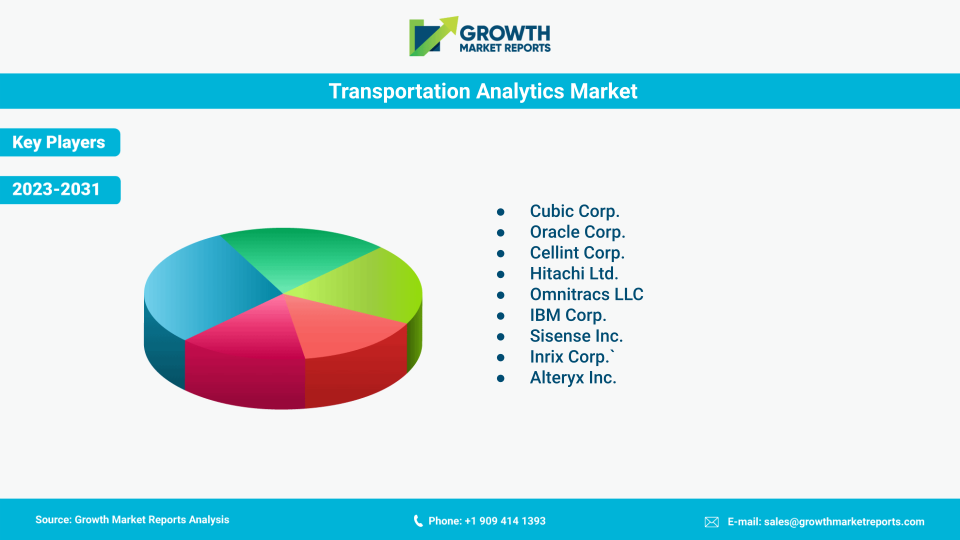
Key players competing in the global transportation analytics market are Cubic Corp.; Oracle Corp.; Cellint Corp.; Hitachi Ltd.; Omnitracs LLC; IBM Corp.; Sisense Inc.; Inrix Corp.; and Alteryx Inc.
As part of their efforts to expand their client base and acquire a competitive advantage over competitors, manufacturers operating in the market have adopted various strategic initiatives, such as partnerships, collaborations, and mergers & acquisitions.
Moreover, companies are focusing on investment in R&D for development and launching of new products to maintain their competitive positions in the market. For instance, in January 2019, Cubic Corp. obtained GRIDSMART Technologies Inc., a company that makes video tracking technologies for intelligent traffic systems.
Major players include IBM Corporation, Siemens AG, Cubic Corporation, INRIX, Trimble Inc., Alteryx Inc., TomTom International BV, SAP SE, Cellint, and Kapsch TrafficCom AG.
Opportunities include advancements in AI, IoT, and smart city initiatives, as well as expansion into emerging markets. Challenges involve data privacy and security concerns, integration with legacy systems, and budget constraints.
End-users include public sector organizations (city governments, transportation authorities), private sector companies (ridesharing, logistics, infrastructure operators), transportation agencies, and specialized entities like airports and seaports.
Deployment modes include on-premises, cloud-based, and hybrid solutions. Cloud-based deployment is gaining popularity due to scalability and cost-effectiveness, while hybrid models offer flexibility for data-sensitive operations.
Key applications include traffic management, logistics management, planning and maintenance, incident management, environmental monitoring, fare optimization, and passenger flow analysis.
Transportation analytics solutions consist of software (for data integration, visualization, and predictive modeling), hardware (such as sensors, GPS devices, and cameras), and services (including consulting, integration, and support).
North America currently dominates the market, followed by Europe. The Asia Pacific region is expected to experience the highest growth rate due to rapid urbanization and government investments in intelligent transportation systems.
Major growth drivers include the integration of AI, big data, and IoT technologies, the rise of smart city initiatives, increased investments in intelligent transportation systems, and the expansion of e-commerce and logistics services.
The transportation analytics market is expected to grow at a CAGR of 18.2% from 2025 to 2033, reaching a forecasted value of USD 62.1 billion by 2033.
As of 2024, the global transportation analytics market size reached USD 14.7 billion, reflecting strong growth driven by increasing demand for real-time data insights and advanced mobility solutions.