Segments - by Service Type (Road Transport, Rail Transport, Air Transport, Sea Transport, Others), by Application (Passenger Transport, Freight Transport, Others), by End-User (Retail, Manufacturing, Healthcare, Automotive, Oil & Gas, Others), by Mode (Domestic, International)
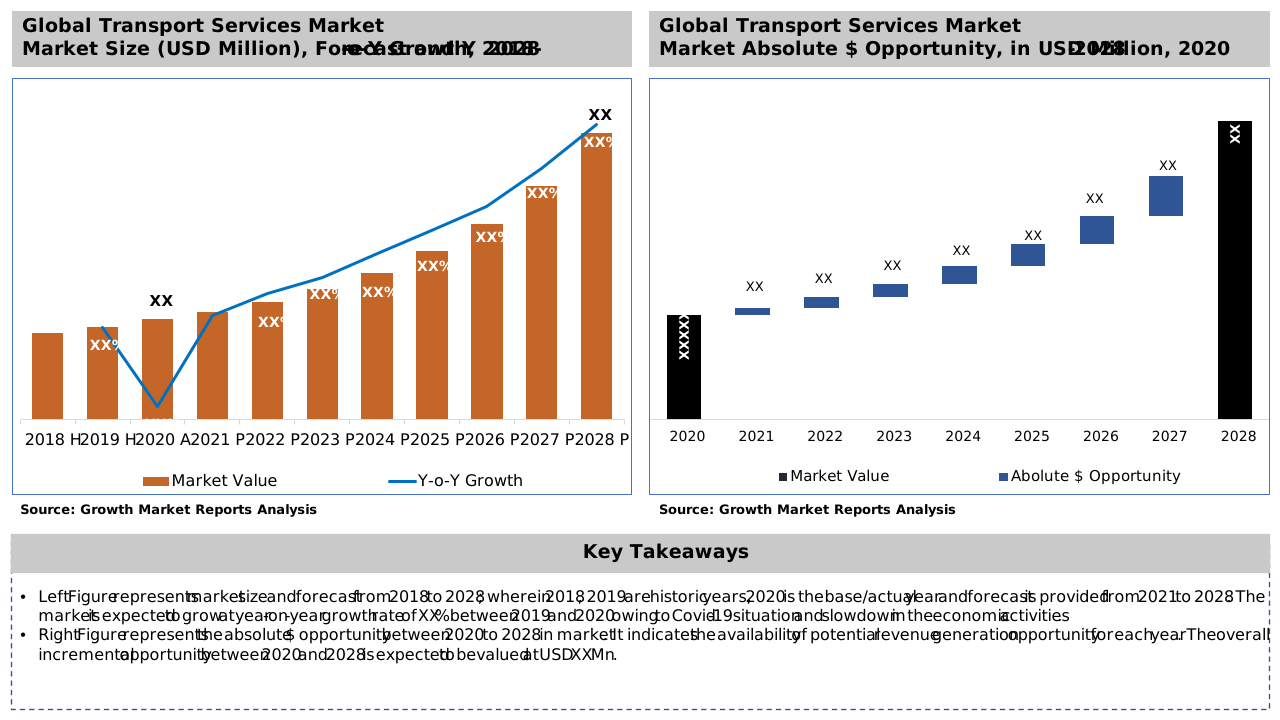
According to our latest research, the global transport services market size in 2024 is valued at USD 8.9 trillion. The market is expected to grow at a robust CAGR of 5.1% from 2025 to 2033, reaching approximately USD 14.2 trillion by 2033. This sustained growth is driven by increasing globalization, rapid urbanization, and the expansion of e-commerce, which are collectively boosting demand across both passenger and freight transport segments. The transport services market is witnessing transformative changes due to technological advancements, sustainability initiatives, and shifting consumer preferences, all of which are shaping the future trajectory of this dynamic industry.
A critical growth factor propelling the transport services market is the ongoing digital transformation within the industry. The adoption of advanced technologies such as the Internet of Things (IoT), artificial intelligence (AI), and big data analytics has revolutionized logistics and fleet management, enabling real-time tracking, predictive maintenance, and optimized route planning. These technological advancements are not only enhancing operational efficiency but also reducing costs and improving customer experiences. Furthermore, the increasing integration of automation and smart mobility solutions is facilitating seamless intermodal transportation, which is essential for meeting the rising expectations of both businesses and consumers in a highly connected global landscape.
Urbanization and demographic shifts are also significantly influencing market growth. As more people migrate to urban centers, there is a heightened need for efficient passenger transport services, including public transit, ride-sharing, and last-mile connectivity solutions. Simultaneously, the surge in e-commerce has led to a dramatic increase in freight transport requirements, particularly for last-mile delivery. These trends are compelling service providers to innovate and expand their offerings, focusing on sustainability, flexibility, and reliability. Governments across the globe are investing heavily in infrastructure development, smart city initiatives, and green transport solutions, further fueling the expansion of the transport services market.
Sustainability has emerged as a pivotal driver in the transport services market, with stakeholders across the value chain prioritizing eco-friendly practices and green technologies. Regulatory mandates aimed at reducing carbon emissions and promoting the adoption of electric vehicles (EVs) are reshaping industry strategies. Companies are increasingly investing in alternative fuel vehicles, energy-efficient logistics, and carbon offset programs to align with global sustainability goals. These initiatives are not only enhancing brand reputation but also attracting environmentally conscious consumers and investors, thereby creating new growth avenues for market participants.
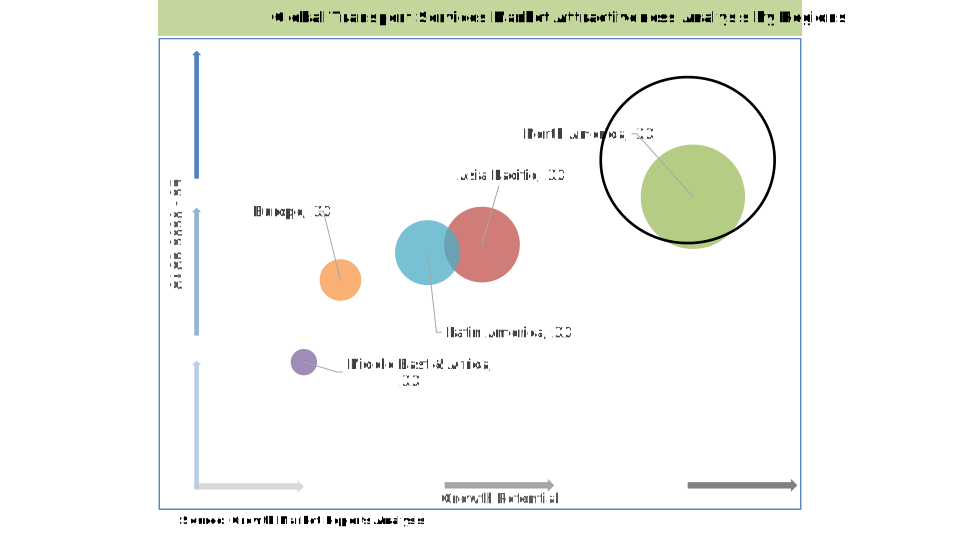
From a regional perspective, Asia Pacific continues to dominate the global transport services market, accounting for the largest share in 2024 due to rapid industrialization, burgeoning middle-class populations, and significant infrastructure investments. North America and Europe follow closely, driven by advanced technological adoption, high urbanization rates, and strong regulatory frameworks supporting innovation and sustainability. Meanwhile, emerging economies in Latin America and the Middle East & Africa are experiencing accelerated growth due to increased trade activities, infrastructure modernization, and rising demand for both passenger and freight transport services. These regional dynamics underscore the diverse opportunities and challenges facing market players across different geographies.
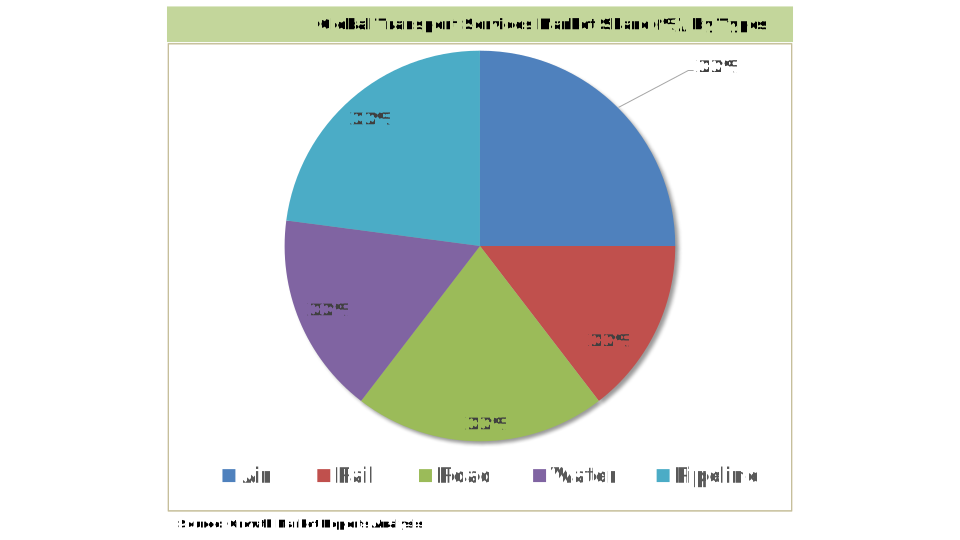
The transport services market is segmented by service type into road transport, rail transport, air transport, sea transport, and others, each playing a distinct role in the global supply chain. Road transport remains the backbone of the industry, accounting for the largest market share due to its flexibility, accessibility, and cost-effectiveness for both short-haul and last-mile deliveries. The proliferation of e-commerce and the demand for rapid delivery solutions have further cemented the importance of road transport, prompting significant investments in fleet modernization, telematics, and route optimization technologies. However, challenges such as traffic congestion, regulatory compliance, and environmental concerns are driving innovation in electric and autonomous vehicles, which are poised to transform the road transport landscape in the coming years.
Rail transport continues to be a vital component of the market, particularly for bulk commodities and long-distance freight movement. Railways offer a sustainable and energy-efficient alternative to road transport, especially in regions with well-developed rail infrastructure such as Europe, North America, and parts of Asia Pacific. The integration of digital technologies, including automated signaling systems and predictive maintenance, is enhancing rail network efficiency and safety. Governments and private operators are also investing in high-speed rail and intermodal transport solutions to meet growing demand while minimizing environmental impact. Despite its advantages, rail transport faces challenges related to infrastructure investment, interoperability, and competition from other modes.
Air transport plays a critical role in the movement of high-value, time-sensitive, and perishable goods, as well as international passenger travel. The segment has rebounded strongly post-pandemic, with increasing global connectivity and rising demand for express delivery services driving growth. Airlines are investing in next-generation aircraft, digital booking platforms, and enhanced cargo handling capabilities to improve service quality and operational efficiency. However, the air transport sector is under pressure to address its environmental footprint, prompting the adoption of sustainable aviation fuels (SAFs), carbon offset programs, and more efficient flight operations. Regulatory frameworks and technological innovation will be key to balancing growth with sustainability in this segment.
Sea transport remains indispensable for international trade, handling the majority of global cargo volumes. Containerization, automation, and digitalization are transforming port operations and shipping logistics, improving turnaround times and reducing costs. The sea transport segment is also at the forefront of sustainability efforts, with industry leaders investing in alternative fuels, energy-efficient vessels, and emissions reduction technologies to comply with stringent international regulations. While sea transport offers significant economies of scale, it faces challenges such as port congestion, geopolitical risks, and supply chain disruptions. Strategic investments in smart ports and resilient supply chains are essential for maintaining competitiveness in this segment.
The "others" category, encompassing emerging modes such as drone delivery, hyperloop, and pipeline transport, is gaining traction as technological advancements and regulatory support drive innovation. These modes offer unique value propositions for specialized applications, such as rapid urban deliveries, bulk liquid transport, and high-speed intercity travel. While still in the nascent stages, these emerging service types have the potential to disrupt traditional transport paradigms and create new market opportunities for agile and forward-thinking companies.
| Attributes | Details |
| Report Title | Transport Services Market Research Report 2033 |
| By Service Type | Road Transport, Rail Transport, Air Transport, Sea Transport, Others |
| By Application | Passenger Transport, Freight Transport, Others |
| By End-User | Retail, Manufacturing, Healthcare, Automotive, Oil & Gas, Others |
| By Mode | Domestic, International |
| Regions Covered | North America, Europe, APAC, Latin America, MEA |
| Base Year | 2024 |
| Historic Data | 2018-2023 |
| Forecast Period | 2025-2033 |
| Number of Pages | 252 |
| Number of Tables & Figures | 271 |
| Customization Available | Yes, the report can be customized as per your need. |
The transport services market is broadly segmented by application into passenger transport, freight transport, and others, each with distinct growth drivers and challenges. Passenger transport encompasses a wide range of services, including public transit, intercity buses, ride-sharing, and air travel. The segment is experiencing robust growth due to rising urbanization, increasing disposable incomes, and the proliferation of smart mobility solutions. Governments and private operators are investing in modernizing public transport infrastructure, integrating digital ticketing systems, and expanding multimodal connectivity to enhance user convenience and accessibility. The rise of Mobility-as-a-Service (MaaS) platforms is further transforming the passenger transport landscape, enabling seamless journey planning and payment across multiple modes.
Freight transport is the backbone of global trade and commerce, facilitating the movement of goods across domestic and international markets. The segment has witnessed significant growth in recent years, driven by the e-commerce boom, globalization of supply chains, and increasing demand for just-in-time deliveries. Logistics providers are leveraging advanced technologies such as IoT-enabled tracking, warehouse automation, and predictive analytics to optimize operations and improve service reliability. Sustainability is becoming a key focus area, with companies exploring alternative fuels, green logistics solutions, and carbon-neutral shipping options to meet regulatory requirements and customer expectations.
The "others" application segment includes specialized transport services such as hazardous materials handling, refrigerated transport, and oversized cargo movement. These niche applications require specialized equipment, regulatory compliance, and tailored logistics solutions to ensure safety and efficiency. The growth of industries such as pharmaceuticals, chemicals, and energy is driving demand for these specialized services, prompting providers to invest in advanced vehicles, monitoring systems, and training programs. Collaboration with regulatory authorities and industry stakeholders is essential to address the unique challenges associated with these applications and ensure safe, reliable, and compliant transport operations.
The interplay between passenger and freight transport is becoming increasingly important as urbanization and e-commerce reshape demand patterns. Integrated transport solutions that combine passenger and freight services, such as urban logistics hubs and shared mobility platforms, are gaining traction in response to changing consumer expectations and urban congestion challenges. These integrated approaches offer significant efficiency gains, cost savings, and environmental benefits, positioning them as key growth drivers in the evolving transport services market.
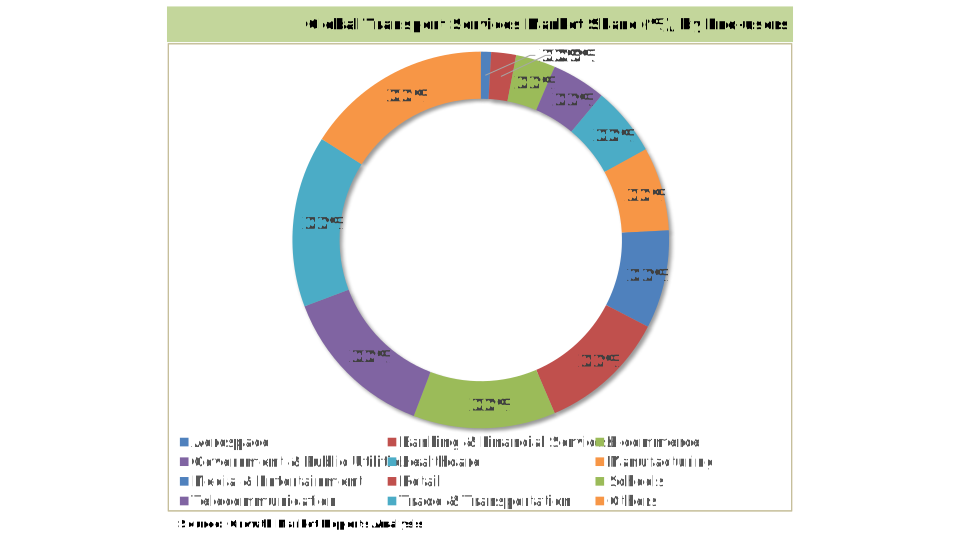
The transport services market serves a diverse array of end-users, including retail, manufacturing, healthcare, automotive, oil & gas, and others, each with unique requirements and growth dynamics. Retail is a major end-user segment, particularly in the context of the e-commerce revolution. The demand for rapid, reliable, and cost-effective delivery solutions has led to the proliferation of last-mile logistics providers, fulfillment centers, and innovative delivery models such as lockers and drones. Retailers are increasingly partnering with third-party logistics providers (3PLs) and leveraging advanced analytics to optimize inventory management, reduce delivery times, and enhance customer satisfaction.
Manufacturing is another key end-user segment, relying heavily on efficient transport services to manage complex, global supply chains. The adoption of just-in-time (JIT) manufacturing and lean production methodologies has heightened the importance of reliable and responsive logistics solutions. Manufacturers are investing in supply chain visibility tools, automated warehousing, and multimodal transport options to mitigate risks, reduce costs, and improve operational agility. The trend towards nearshoring and regionalization of supply chains in response to geopolitical uncertainties and trade disruptions is also influencing transport service requirements and investment priorities.
The healthcare sector presents unique challenges and opportunities for transport service providers. The need for timely, secure, and temperature-controlled transport of pharmaceuticals, medical devices, and biological samples is driving demand for specialized logistics solutions. The COVID-19 pandemic underscored the critical importance of resilient and agile transport networks for vaccine distribution and medical supply chains. Providers are investing in advanced tracking systems, cold chain logistics, and compliance management to meet stringent regulatory standards and ensure the safety and integrity of healthcare shipments.
Automotive and oil & gas are also significant end-user segments, each with distinct transport requirements. The automotive industry relies on just-in-time delivery of components and finished vehicles, necessitating precise coordination and multimodal transport solutions. The oil & gas sector, on the other hand, requires specialized equipment for the transport of hazardous materials, bulk liquids, and oversized cargo. Providers serving these industries must adhere to strict safety and environmental regulations, invest in specialized fleets, and maintain robust risk management protocols to ensure safe and efficient operations.
The "others" category includes sectors such as agriculture, construction, and energy, each with unique transport needs. The growth of renewable energy projects, infrastructure development, and cross-border trade is creating new opportunities for transport service providers to diversify their offerings and tap into emerging markets. Customization, flexibility, and compliance are key differentiators for providers seeking to serve these diverse and evolving end-user segments.
The transport services market is segmented by mode into domestic and international transport, reflecting the diverse operational landscapes and regulatory environments that providers must navigate. Domestic transport dominates the market in terms of volume, driven by the need for efficient movement of goods and passengers within national borders. The expansion of urban areas, regional trade corridors, and local e-commerce ecosystems is fueling demand for reliable and flexible domestic transport solutions. Providers are investing in regional logistics hubs, advanced fleet management systems, and integrated multimodal networks to enhance service quality and operational efficiency.
International transport is a critical enabler of global trade, facilitating the movement of goods and people across borders. This segment is characterized by complex regulatory requirements, customs procedures, and documentation processes that necessitate specialized expertise and robust risk management capabilities. The growth of cross-border e-commerce, global supply chains, and international tourism is driving demand for seamless and cost-effective international transport solutions. Providers are leveraging digital platforms, trade facilitation tools, and strategic partnerships to streamline operations, reduce transit times, and enhance customer experiences.
The interplay between domestic and international transport is becoming increasingly important as companies seek to optimize their supply chains and respond to shifting market dynamics. Integrated logistics solutions that combine domestic and international transport services, supported by advanced digital platforms and real-time visibility, are gaining traction among businesses seeking to enhance agility, reduce costs, and mitigate risks. The adoption of trade facilitation agreements and harmonization of regulatory frameworks is further supporting the growth of cross-border transport services, creating new opportunities for market expansion.
Sustainability and resilience are emerging as key priorities in both domestic and international transport segments. Providers are investing in green logistics solutions, alternative fuel vehicles, and carbon-neutral shipping options to meet regulatory requirements and customer expectations. The COVID-19 pandemic and recent geopolitical disruptions have underscored the importance of resilient and flexible transport networks, prompting companies to diversify their supplier bases, invest in risk management tools, and enhance supply chain visibility to mitigate future disruptions.
The transport services market is brimming with opportunities, particularly in the areas of digital transformation and sustainability. The integration of advanced technologies such as AI, machine learning, blockchain, and IoT is enabling providers to optimize operations, enhance transparency, and deliver superior customer experiences. The rise of Mobility-as-a-Service (MaaS) platforms, autonomous vehicles, and smart logistics solutions is creating new business models and revenue streams for market participants. Additionally, the growing emphasis on sustainability and green transport is opening up opportunities for providers to differentiate themselves through eco-friendly practices, alternative fuel vehicles, and carbon-neutral logistics solutions. Companies that embrace innovation and sustainability are well-positioned to capture a larger share of the market and drive long-term growth.
Emerging markets present significant growth opportunities for the transport services industry. Rapid urbanization, rising middle-class populations, and increasing investment in infrastructure development are driving demand for both passenger and freight transport services in regions such as Asia Pacific, Latin America, and Africa. The expansion of regional trade agreements and the development of new trade corridors are further boosting cross-border transport activities. Providers that can navigate the unique challenges of these markets, such as regulatory complexity, infrastructure gaps, and security risks, stand to benefit from robust growth and market expansion. Strategic partnerships, local market knowledge, and investment in talent development are critical success factors for companies seeking to capitalize on these opportunities.
Despite the positive outlook, the transport services market faces several restraints and threats. Regulatory compliance, environmental concerns, and geopolitical risks are persistent challenges that can impact operational efficiency and profitability. The sector is also vulnerable to economic downturns, fuel price volatility, and supply chain disruptions, which can affect demand and margins. Additionally, the rapid pace of technological change and the emergence of new competitors, such as digital freight platforms and mobility startups, are intensifying competition and putting pressure on traditional business models. Companies must continuously invest in innovation, risk management, and operational excellence to stay ahead of the curve and mitigate potential threats.
Asia Pacific leads the global transport services market, accounting for approximately USD 3.7 trillion in 2024, driven by rapid industrialization, urbanization, and significant government investments in infrastructure. The region is home to some of the world's fastest-growing economies, including China, India, and Southeast Asian countries, which are witnessing robust growth in both passenger and freight transport segments. The expansion of e-commerce, rising middle-class populations, and increasing cross-border trade are fueling demand for efficient and reliable transport services. Major infrastructure projects, such as China's Belt and Road Initiative and India's Dedicated Freight Corridor, are further enhancing connectivity and supporting market growth. The Asia Pacific market is expected to grow at a CAGR of 6.2% through 2033, outpacing other regions.
North America holds the second-largest share of the global transport services market, with a market size of approximately USD 2.1 trillion in 2024. The region benefits from advanced technological adoption, well-developed infrastructure, and a strong regulatory framework supporting innovation and sustainability. The United States and Canada are major contributors, with high levels of urbanization, extensive road and rail networks, and significant investments in smart mobility solutions. The growth of e-commerce, increasing demand for last-mile delivery, and the adoption of green transport initiatives are key drivers of market expansion in North America. The region is also witnessing growing interest in autonomous vehicles, electric trucks, and digital freight platforms, which are reshaping the competitive landscape.
Europe is another major market, valued at approximately USD 1.8 trillion in 2024, characterized by high urbanization rates, stringent environmental regulations, and a strong focus on sustainability. The region is at the forefront of green transport initiatives, with significant investments in electric vehicles, high-speed rail, and multimodal logistics solutions. The European Union's Green Deal and Fit for 55 package are driving the adoption of low-emission transport technologies and infrastructure upgrades. The region's well-developed transport networks, advanced digital platforms, and strong regulatory support position it as a leader in sustainable and innovative transport solutions. Emerging markets in Latin America and the Middle East & Africa, with market sizes of USD 0.7 trillion and USD 0.6 trillion respectively in 2024, are experiencing accelerated growth due to infrastructure modernization, urbanization, and rising demand for both passenger and freight transport services.
The global transport services market is characterized by intense competition, with a diverse array of players ranging from multinational logistics giants to regional service providers and innovative startups. The competitive landscape is shaped by factors such as service quality, operational efficiency, technological innovation, and sustainability initiatives. Market leaders are leveraging their scale, extensive networks, and advanced digital capabilities to offer end-to-end logistics solutions, integrated supply chain management, and value-added services. Strategic partnerships, mergers and acquisitions, and investments in technology and talent are common strategies employed by leading companies to enhance their market position and drive growth.
Innovation is a key differentiator in the transport services market, with companies investing heavily in digital platforms, automation, and data analytics to optimize operations and deliver superior customer experiences. The rise of digital freight platforms, Mobility-as-a-Service (MaaS) solutions, and autonomous vehicles is disrupting traditional business models and creating new opportunities for agile and forward-thinking providers. Sustainability is also a major focus area, with leading companies investing in alternative fuel vehicles, green logistics solutions, and carbon-neutral shipping options to meet regulatory requirements and customer expectations. The ability to balance innovation, sustainability, and operational excellence is critical for success in this dynamic and evolving market.
Regional and niche players play a vital role in the competitive landscape, offering specialized services, local market expertise, and customized solutions to meet the unique needs of specific industries and geographies. These companies often excel in areas such as last-mile delivery, cold chain logistics, and hazardous materials transport, leveraging their agility and customer focus to compete effectively with larger players. Collaboration with technology providers, industry associations, and regulatory authorities is essential for regional and niche players to stay abreast of industry trends, regulatory changes, and emerging opportunities.
Major companies in the global transport services market include Deutsche Post DHL Group, FedEx Corporation, United Parcel Service (UPS), Maersk Group, CMA CGM Group, DB Schenker, Kuehne + Nagel, SNCF Group, DSV Panalpina, and Nippon Express. These industry leaders have established extensive global networks, advanced digital platforms, and strong brand reputations, enabling them to offer comprehensive transport and logistics solutions across multiple modes and geographies. For example, Deutsche Post DHL Group is a global leader in express and logistics services, with a strong focus on digitalization and sustainability. FedEx and UPS are renowned for their extensive air and ground networks, advanced tracking technologies, and commitment to customer service excellence. Maersk Group and CMA CGM Group are major players in sea transport, investing in smart port solutions, alternative fuels, and integrated logistics services to enhance efficiency and sustainability.
DB Schenker, Kuehne + Nagel, and DSV Panalpina are leading providers of integrated logistics and supply chain management solutions, leveraging their global reach, advanced technology, and industry expertise to serve a diverse array of customers. SNCF Group is a key player in rail transport, with significant investments in high-speed rail and intermodal solutions. Nippon Express is a major player in the Asia Pacific region, offering comprehensive transport and logistics services across road, rail, air, and sea. These companies are continuously innovating and expanding their service offerings to meet the evolving needs of customers and stay ahead in an increasingly competitive market.
In conclusion, the transport services market is poised for sustained growth, driven by digital transformation, sustainability initiatives, and evolving customer expectations. Companies that embrace innovation, invest in technology and talent, and prioritize sustainability are well-positioned to capitalize on emerging opportunities and navigate the challenges of this dynamic and rapidly evolving industry.
The Transport Services market has been segmented on the basis of
Key players in the transport services market are Uber; FedEx Corp.; Ford Mobility; Ola Cabs; DTDC Express Limited; P. Moller – Maersk; Cubic Transportation Systems; Consat; H. Robinson Worldwide, Inc.; DSV Global Transports and Logistics; and XPO Logistics Inc. These players have constantly engaged in several market development activities including collaborations, agreements, mergers & acquisitions, production capacity expansion, new product launches, and partnerships to increase their market share.

Key trends include digital transformation, the rise of Mobility-as-a-Service (MaaS), autonomous vehicles, smart logistics, integrated supply chains, and a strong emphasis on sustainability and resilience.
Major companies include Deutsche Post DHL Group, FedEx Corporation, United Parcel Service (UPS), Maersk Group, CMA CGM Group, DB Schenker, Kuehne + Nagel, SNCF Group, DSV Panalpina, and Nippon Express.
Sustainability is a key focus, with companies investing in alternative fuel vehicles, green logistics, and carbon-neutral shipping to meet regulatory requirements and attract eco-conscious customers.
Challenges include regulatory compliance, environmental concerns, geopolitical risks, economic downturns, fuel price volatility, and supply chain disruptions.
Asia Pacific dominates the market, driven by rapid industrialization, urbanization, and significant infrastructure investments.
The market is segmented into road transport, rail transport, air transport, sea transport, and emerging modes such as drone delivery and hyperloop.
Technologies like IoT, AI, and big data analytics are revolutionizing logistics and fleet management, enabling real-time tracking, predictive maintenance, and optimized route planning.
Key growth drivers include increasing globalization, rapid urbanization, expansion of e-commerce, digital transformation, and sustainability initiatives.
The market is expected to grow at a CAGR of 5.1% from 2025 to 2033, reaching approximately USD 14.2 trillion by 2033.
The global transport services market is valued at USD 8.9 trillion in 2024.