Tourism Vehicle Rental Market Research Report 2033

Tourism Vehicle Rental Market Research Report 2033

Segments - by Vehicle Type (Cars, Vans, Buses, Motorcycles, Others), by Booking Mode (Online, Offline), by Application (Leisure Tourism, Business Tourism, Others), by End-User (Individual, Corporate, Group)

https://growthmarketreports.com/Debadatta
Author : Debadatta Patel
https://growthmarketreports.com/Vaibhav
Fact-checked by : V. Chandola
https://growthmarketreports.com/Shruti
Editor : Shruti Bhat

Upcoming | Report ID :CG-2473 | 4.9 Rating | 81 Reviews | 281 Pages | Format : Docx PDF

Report Description


Tourism Vehicle Rental Market Outlook

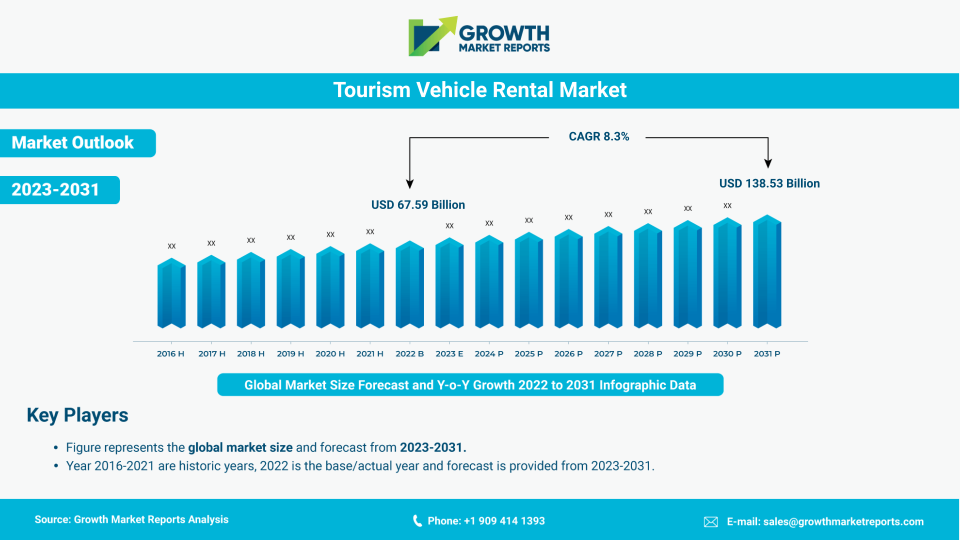
According to our latest research, the global tourism vehicle rental market size reached USD 75.3 billion in 2024, driven by the resurgence of international and domestic travel and the growing preference for flexible mobility solutions. The market is expected to grow at a robust CAGR of 8.1% from 2025 to 2033, with the forecasted market size anticipated to reach USD 146.2 billion by 2033. This significant growth is underpinned by rising disposable incomes, digital transformation in booking processes, and increased demand for personalized travel experiences, as per our latest research findings.

One of the primary growth factors propelling the tourism vehicle rental market is the global recovery of the tourism industry, which has seen a marked rebound post-pandemic. As travel restrictions ease and consumer confidence returns, both leisure and business travelers are seeking convenient, safe, and private transportation options. Vehicle rentals offer the flexibility to explore destinations at oneÂ’s own pace, which has become increasingly important in the era of health consciousness and social distancing. Additionally, the proliferation of travel apps and digital platforms has made it easier than ever for users to compare prices, book vehicles instantly, and access a wide variety of vehicle types tailored to their specific needs.

Technological advancements are another critical driver shaping the tourism vehicle rental market landscape. The integration of AI-powered booking systems, real-time fleet management, and IoT-enabled vehicles has significantly enhanced operational efficiency and customer satisfaction. Rental companies are leveraging data analytics to offer personalized recommendations and dynamic pricing, further encouraging customer engagement. Moreover, the growing adoption of electric vehicles (EVs) and hybrid models in rental fleets aligns with the increasing emphasis on sustainability and eco-friendly travel. These innovations not only attract environmentally conscious travelers but also help companies comply with evolving regulatory standards regarding emissions and green mobility.

Changing consumer preferences and demographic shifts are also influencing the market trajectory. Millennials and Gen Z travelers, who prioritize experiences over possessions, are more inclined to rent vehicles for unique travel adventures rather than rely on traditional ownership. This demographic is highly tech-savvy, favoring seamless digital interactions and value-added services such as GPS navigation, Wi-Fi connectivity, and contactless payments. Furthermore, the rise of “workcations” and blended travel, where business and leisure trips merge, is fueling demand for flexible rental solutions that cater to diverse travel itineraries and group sizes. The ability to customize rental periods, vehicle types, and ancillary services has become a key differentiator among market players.

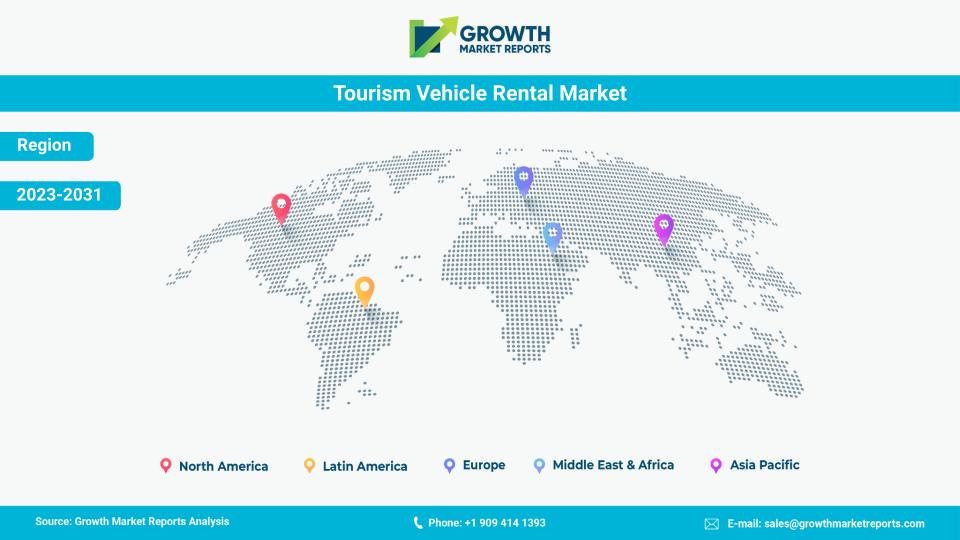
From a regional perspective, Asia Pacific is emerging as the fastest-growing market for tourism vehicle rentals, supported by rapid urbanization, expanding middle-class populations, and government initiatives to boost tourism infrastructure. North America and Europe remain mature markets with high penetration of organized rental services and a strong presence of global players. Meanwhile, Latin America and the Middle East & Africa are witnessing steady growth due to increasing inbound tourism and investments in travel and hospitality sectors. Each region presents unique opportunities and challenges, influenced by local travel trends, regulatory environments, and consumer behaviors.

Global Tourism Vehicle Rental Industry Outlook

Vehicle Type Analysis

The vehicle type segment plays a pivotal role in shaping the dynamics of the tourism vehicle rental market. Among the various options, cars dominate the segment, accounting for over 55% of the total market share in 2024. This dominance is attributed to their versatility, affordability, and suitability for both short and long-distance travel. Cars are the preferred choice for solo travelers, couples, and small families, offering a balance of comfort, convenience, and fuel efficiency. The availability of a wide range of models, from economy to premium and luxury variants, allows rental companies to cater to diverse customer preferences and budgets.

In the context of Latin America, Brazil stands out as a pivotal market for vehicle rentals, driven by its vibrant tourism sector and diverse landscapes. The Brazil Vehicle Rental market is experiencing a surge in demand, fueled by both domestic travelers and international tourists eager to explore the country's rich cultural heritage and natural wonders. With its expansive coastline, bustling cities, and iconic landmarks like the Amazon rainforest and Iguazu Falls, Brazil offers a myriad of travel opportunities that are best experienced with the flexibility of a rental vehicle. The growing middle class and increasing disposable incomes are further contributing to the market's expansion, as more Brazilians opt for rental vehicles for leisure and business purposes.

Vans and buses are gaining traction, particularly among group travelers, corporate clients, and tour operators. These vehicle types are ideal for transporting larger groups, making them popular for guided tours, corporate retreats, and family vacations. Vans offer spacious interiors and ample luggage capacity, while buses provide cost-effective solutions for mass transit and sightseeing excursions. Rental companies are increasingly investing in modern, well-equipped vans and buses with amenities such as air conditioning, entertainment systems, and ergonomic seating to enhance the travel experience and attract repeat customers.

The motorcycles sub-segment is witnessing notable growth, especially in adventure tourism hotspots and regions with scenic landscapes. Motorcycle rentals appeal to thrill-seekers and solo explorers who value the freedom to navigate challenging terrains and off-the-beaten-path destinations. The rise of motorcycle touring clubs and the popularity of long-distance biking routes have further fueled demand for this segment. Rental providers are expanding their fleets to include a variety of models, from cruisers to sports bikes, and are offering value-added services such as guided tours, safety gear, and route planning assistance.

The others category, which includes specialty vehicles such as recreational vehicles (RVs), convertibles, and electric scooters, is gradually expanding as travelers seek unique and personalized mobility experiences. RV rentals, in particular, have surged in popularity among families and adventure enthusiasts who prefer road trips and camping vacations. The flexibility to travel and stay in remote locations without compromising on comfort has made RVs a sought-after option, especially in North America and Europe. As consumer demand evolves, rental companies are diversifying their fleets and introducing innovative vehicle types to capture emerging market segments.

Report Scope

Attributes Details
Report Title Tourism Vehicle Rental Market Research Report 2033
By Vehicle Type Cars, Vans, Buses, Motorcycles, Others
By Booking Mode Online, Offline
By Application Leisure Tourism, Business Tourism, Others
By End-User Individual, Corporate, Group
Regions Covered North America, Europe, APAC, Latin America, MEA
Base Year 2024
Historic Data 2018-2023
Forecast Period 2025-2033
Number of Pages 281
Number of Tables & Figures 393
Customization Available Yes, the report can be customized as per your need.

Booking Mode Analysis

The booking mode segment is undergoing a profound transformation, driven by the rapid digitization of travel services. Online booking has become the dominant channel, accounting for nearly 70% of all tourism vehicle rental transactions in 2024. The proliferation of user-friendly websites, mobile apps, and third-party aggregators has made it convenient for travelers to search, compare, and book vehicles from anywhere at any time. Online platforms offer features such as instant confirmation, secure payment options, and real-time availability, significantly enhancing the customer experience and reducing the friction associated with traditional booking methods.

The integration of advanced technologies, including artificial intelligence, machine learning, and big data analytics, has further optimized the online booking process. Rental companies are leveraging these tools to offer personalized recommendations, dynamic pricing, and targeted promotions based on user preferences and travel history. Additionally, the adoption of contactless and self-service solutions, such as digital check-ins and keyless vehicle access, has gained traction in response to heightened health and safety concerns. These innovations not only streamline operations but also position online booking as the preferred choice among tech-savvy and safety-conscious travelers.

Despite the surge in online bookings, the offline booking channel continues to play a significant role, particularly in regions with limited internet penetration or among customer segments that prefer face-to-face interactions. Offline bookings are prevalent at airports, hotels, and travel agencies, where travelers can receive personalized assistance, negotiate rates, and clarify specific requirements. Rental companies maintain a strong offline presence through dedicated kiosks, franchise partnerships, and collaborations with travel agents to cater to diverse customer preferences and ensure accessibility across various touchpoints.

The coexistence of online and offline booking modes reflects the importance of an omnichannel strategy in the tourism vehicle rental market. Companies that seamlessly integrate digital and physical channels are better positioned to capture a broader customer base and deliver a consistent brand experience. As technology adoption continues to rise and consumer expectations evolve, the balance between online and offline bookings is expected to shift further in favor of digital platforms, with ongoing investments in mobile optimization, AI-powered chatbots, and virtual customer support enhancing the overall booking journey.

Application Analysis

The application segment of the tourism vehicle rental market is primarily categorized into leisure tourism, business tourism, and others. Leisure tourism remains the largest application, accounting for approximately 62% of the total market share in 2024. The resurgence of holiday travel, weekend getaways, and family vacations has driven demand for rental vehicles, as travelers seek flexible and personalized transportation solutions. The ability to explore destinations at oneÂ’s own pace, access remote attractions, and avoid crowded public transport has reinforced the appeal of vehicle rentals among leisure tourists.

Business tourism constitutes a significant portion of the market, fueled by the return of corporate travel, conferences, and industry events. Business travelers prioritize reliability, comfort, and efficiency, often opting for premium vehicles and value-added services such as chauffeur-driven rentals, executive transfers, and on-demand mobility solutions. Rental companies are tailoring their offerings to meet the specific needs of corporate clients, including flexible rental periods, loyalty programs, and dedicated account management. The rise of hybrid work models and “workcations” has further expanded the scope of business tourism, with travelers combining work commitments with leisure activities.

The others category encompasses specialized applications such as event transportation, sports tourism, medical tourism, and educational tours. Event organizers and tour operators frequently rely on rental vehicles to transport participants and equipment, ensuring seamless logistics and enhanced guest experiences. Sports tourism, which includes activities such as marathons, cycling tours, and adventure expeditions, has also contributed to the demand for specialized vehicles and support services. As the tourism landscape diversifies, rental companies are developing tailored solutions to capture emerging opportunities across niche segments.

The growing trend of experiential and thematic travel is influencing application-specific demand for vehicle rentals. Travelers are increasingly seeking curated experiences, such as wine tours, heritage trails, and wildlife safaris, which require specialized vehicles and knowledgeable drivers. Rental companies are collaborating with tour operators, hotels, and destination management organizations to offer bundled packages and exclusive itineraries, further enhancing the value proposition for customers. As consumer preferences evolve, the application segment is expected to witness continued innovation and expansion.

End-User Analysis

The end-user segment is a key determinant of demand patterns and service delivery in the tourism vehicle rental market. Individuals represent the largest end-user group, accounting for over 58% of total rentals in 2024. This segment includes solo travelers, couples, and families who prioritize convenience, privacy, and flexibility in their travel arrangements. Individuals typically book vehicles for leisure trips, short getaways, and personal errands, favoring user-friendly booking platforms, transparent pricing, and a wide selection of vehicle types. Rental companies are focusing on enhancing the customer experience for individual users through personalized offers, loyalty programs, and seamless digital interfaces.

Corporate clients form a significant end-user segment, driven by the resurgence of business travel and the growing importance of employee mobility solutions. Corporates often require premium vehicles, chauffeur services, and customized rental agreements to meet the needs of executives, visiting clients, and project teams. Rental companies are developing dedicated corporate programs that offer benefits such as priority bookings, negotiated rates, and centralized billing, strengthening long-term partnerships and ensuring repeat business. The increasing adoption of corporate travel management platforms is further streamlining the rental process for business users.

The group end-user segment encompasses tour groups, event organizers, educational institutions, and sports teams that require transportation for larger parties. Group rentals typically involve vans, minibuses, or buses, with a focus on comfort, safety, and cost-effectiveness. Rental companies are investing in modern, well-maintained fleets with amenities tailored to group travel, such as ample luggage space, entertainment systems, and on-board refreshments. The rise of group travel for destination weddings, corporate retreats, and cultural tours has contributed to the steady growth of this segment.

The evolving needs of end-users are prompting rental companies to adopt a customer-centric approach, offering flexible rental terms, value-added services, and 24/7 support. The integration of digital identity verification, contactless payments, and real-time vehicle tracking is enhancing security and convenience for all user segments. As travel patterns become more diverse and complex, the ability to understand and anticipate end-user preferences will be critical for sustained growth and competitive differentiation in the tourism vehicle rental market.

Opportunities & Threats

The tourism vehicle rental market presents a wealth of opportunities for growth and innovation. The increasing adoption of electric vehicles and green mobility solutions is opening new avenues for rental companies to differentiate themselves and appeal to environmentally conscious travelers. Governments and tourism boards are offering incentives and subsidies to promote sustainable tourism, encouraging rental operators to invest in eco-friendly fleets and charging infrastructure. The integration of advanced technologies, such as AI-powered route planning, telematics, and predictive maintenance, is enhancing operational efficiency and enabling companies to deliver superior customer experiences. Furthermore, the rise of peer-to-peer vehicle sharing platforms and subscription-based models is expanding access to rental services and creating new revenue streams.

Strategic partnerships and collaborations with hotels, airlines, travel agencies, and destination management organizations offer significant opportunities for cross-selling and bundled offerings. Rental companies can leverage these alliances to reach new customer segments, enhance brand visibility, and provide seamless end-to-end travel solutions. The expansion into emerging markets, particularly in Asia Pacific and Latin America, presents untapped potential for growth, driven by rising tourism flows and improving infrastructure. Customization and personalization of rental services, including tailored packages for niche segments such as adventure tourism, medical travel, and cultural experiences, will further drive market expansion and customer loyalty.

Despite these opportunities, the market faces several restraining factors that could hinder growth. Intense competition, both from established players and new entrants, is exerting downward pressure on prices and margins, necessitating continuous innovation and cost optimization. Regulatory challenges, such as evolving emissions standards, licensing requirements, and safety regulations, can increase compliance costs and operational complexity. Additionally, economic uncertainties, geopolitical tensions, and fluctuations in fuel prices can impact travel demand and rental volumes. Companies must remain agile and proactive in addressing these challenges to sustain long-term growth and profitability.

Regional Outlook

The regional distribution of the tourism vehicle rental market reveals distinct patterns and growth trajectories. Asia Pacific is emerging as the fastest-growing region, with a market size of USD 18.7 billion in 2024 and a projected CAGR of 10.2% through 2033. The regionÂ’s expansion is fueled by rapid urbanization, rising disposable incomes, and government initiatives to promote tourism and infrastructure development. Countries such as China, India, Japan, and Southeast Asian nations are witnessing a surge in both inbound and domestic tourism, driving demand for diverse and affordable rental options. The proliferation of digital booking platforms and the growing popularity of road trips and adventure tourism are further supporting market growth in Asia Pacific.

North America remains a mature and highly competitive market, accounting for USD 21.5 billion of the global market size in 2024. The region benefits from a well-established rental ecosystem, high vehicle ownership rates, and strong demand from both leisure and business travelers. The United States leads the market, supported by a robust network of airports, highways, and tourist attractions. The adoption of electric and hybrid vehicles in rental fleets is gaining momentum, driven by regulatory mandates and consumer preferences for sustainable travel. Canada and Mexico also contribute to regional growth, with increasing cross-border travel and investments in tourism infrastructure.

Europe holds a significant share of the tourism vehicle rental market, valued at USD 19.8 billion in 2024. The regionÂ’s growth is underpinned by a rich cultural heritage, diverse travel destinations, and a high concentration of international tourists. Countries such as France, Germany, Italy, and Spain are key markets, with well-developed transportation networks and a strong presence of global rental brands. The rise of experiential travel, eco-tourism, and cross-border road trips is driving demand for customized rental solutions. Meanwhile, Latin America and Middle East & Africa are experiencing steady growth, with market sizes of USD 8.1 billion and USD 7.2 billion respectively in 2024, fueled by increasing tourism flows and investments in hospitality and mobility sectors.

Tourism Vehicle Rental Market Statistics

Competitor Outlook

The competitive landscape of the tourism vehicle rental market is characterized by the presence of global giants, regional players, and emerging startups, all vying for market share through innovation, service excellence, and strategic expansion. Leading companies such as Enterprise Holdings, Hertz Global Holdings, Avis Budget Group, Europcar Mobility Group, and Sixt SE dominate the market with extensive fleets, robust distribution networks, and strong brand recognition. These players leverage economies of scale, advanced technology platforms, and comprehensive service offerings to cater to a wide range of customer segments, from individual travelers to large corporate clients.

In recent years, the market has witnessed a wave of consolidation, with mergers, acquisitions, and strategic alliances reshaping the competitive landscape. Companies are pursuing inorganic growth strategies to expand their geographic footprint, diversify their service portfolios, and enhance operational efficiencies. The integration of digital and mobile technologies has become a key differentiator, enabling market leaders to offer seamless booking experiences, real-time vehicle tracking, and personalized customer engagement. Investment in electric and hybrid vehicle fleets is also emerging as a competitive advantage, positioning companies to capture the growing demand for sustainable mobility solutions.

Regional and local players play a vital role in addressing market-specific needs and preferences, particularly in emerging markets where customer requirements and travel patterns differ from those in mature regions. These companies often focus on niche segments, such as adventure tourism, luxury rentals, or peer-to-peer sharing, leveraging local expertise and agile business models to compete effectively. Startups and technology-driven entrants are disrupting traditional business models by introducing innovative solutions such as subscription-based rentals, on-demand mobility services, and integrated travel platforms. The competitive intensity is further heightened by the entry of ride-hailing and car-sharing companies, which are expanding their offerings to include short-term and long-term rentals.

Among the major companies, Enterprise Holdings stands out for its extensive global network, diversified fleet, and commitment to customer service excellence. Hertz Global Holdings is known for its strong presence at airports and its focus on premium and luxury segments. Avis Budget Group leverages its multi-brand strategy to cater to different customer segments and price points. Europcar Mobility Group emphasizes sustainability and innovation, with a growing portfolio of electric and low-emission vehicles. Sixt SE differentiates itself through premium offerings, digitalization, and a strong focus on customer experience. These companies continue to invest in technology, fleet modernization, and strategic partnerships to maintain their competitive edge and drive future growth in the dynamic tourism vehicle rental market.

Key Players

  • Enterprise Holdings Inc.
  • Hertz Global Holdings Inc.
  • Avis Budget Group Inc.
  • Europcar Mobility Group
  • Sixt SE
  • Localiza Rent a Car S.A.
  • ALD Automotive
  • LeasePlan Corporation N.V.
  • Enterprise Rent-A-Car
  • National Car Rental
  • Alamo Rent A Car
  • Budget Rent a Car
  • Dollar Thrifty Automotive Group
  • Fox Rent A Car
  • China Auto Rental Inc. (CAR Inc.)
  • Redspot Car Rentals
  • Movida Participações S.A.
  • Shouqi Car Rental
  • Zoomcar
  • Orix Corporation
Tourism Vehicle Rental Market Overview

Segments

The Tourism Vehicle Rental market has been segmented on the basis of

Vehicle Type

  • Cars
  • Vans
  • Buses
  • Motorcycles
  • Others

Booking Mode

  • Online
  • Offline

Application

  • Leisure Tourism
  • Business Tourism
  • Others

End-User

  • Individual
  • Corporate
  • Group

Competitive Landscape

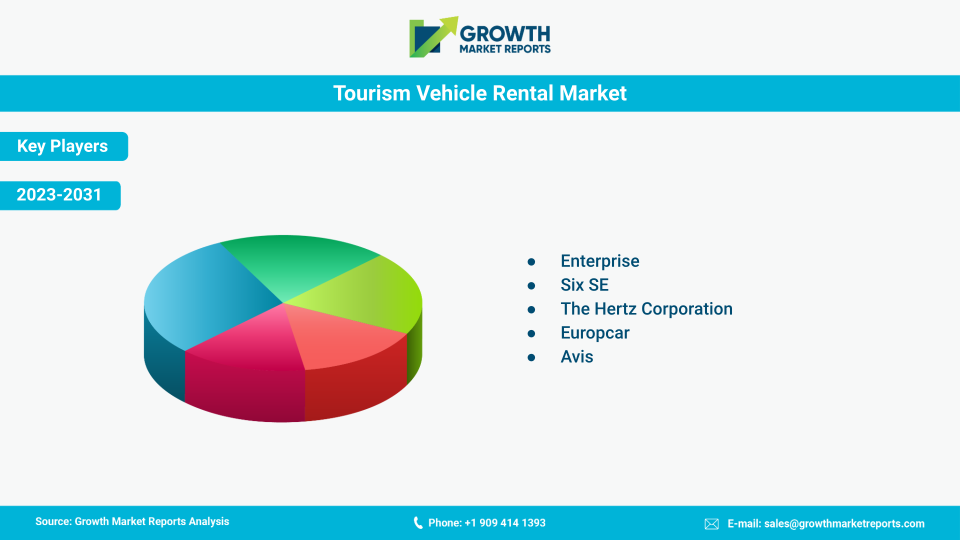
Key players competing in the global tourism vehicle rental market such as enterprise; Six SE; The Hertz Corporation; Europcar; Avis, and others.

Companies are expanding their presence their online presence to leverage their market presence.
Tourism Vehicle Rental Market Key Players

Frequently Asked Questions

Major players include Enterprise Holdings, Hertz Global Holdings, Avis Budget Group, Europcar Mobility Group, Sixt SE, and several regional and local companies such as Localiza, China Auto Rental, and Zoomcar.

Opportunities include the adoption of electric vehicles, digital transformation, and expansion into emerging markets. Challenges involve intense competition, regulatory compliance, and economic uncertainties.

Individuals (solo travelers, couples, families) represent the largest end-user group, followed by corporate clients and groups such as tour groups, event organizers, and educational institutions.

Leisure tourism is the largest application, accounting for about 62% of the market in 2024. Business tourism and specialized uses like event transportation, sports tourism, and educational tours also contribute significantly.

Asia Pacific is the fastest-growing region, while North America and Europe are mature markets with high penetration. Latin America and the Middle East & Africa are experiencing steady growth due to rising tourism and investments.

Online booking is the dominant channel, accounting for nearly 70% of all transactions in 2024, thanks to user-friendly websites, mobile apps, and third-party aggregators. Offline bookings remain important in regions with limited internet access.

Technological advancements like AI-powered booking systems, real-time fleet management, IoT-enabled vehicles, and digital booking platforms are enhancing operational efficiency and customer experience in the tourism vehicle rental market.

Cars dominate the market, accounting for over 55% of the total market share in 2024, followed by vans, buses, motorcycles, and specialty vehicles such as RVs and electric scooters.

The tourism vehicle rental market is expected to grow at a CAGR of 8.1% from 2025 to 2033, with the market size anticipated to reach USD 146.2 billion by 2033.

As of 2024, the global tourism vehicle rental market size reached USD 75.3 billion, driven by the resurgence of travel and increasing demand for flexible mobility solutions.

Table Of Content

Chapter 1 Executive Summary
Chapter 2 Assumptions and Acronyms Used
Chapter 3 Research Methodology
Chapter 4 Tourism Vehicle Rental Market Overview
   4.1 Introduction
      4.1.1 Market Taxonomy
      4.1.2 Market Definition
      4.1.3 Macro-Economic Factors Impacting the Market Growth
   4.2 Tourism Vehicle Rental Market Dynamics
      4.2.1 Market Drivers
      4.2.2 Market Restraints
      4.2.3 Market Opportunity
   4.3 Tourism Vehicle Rental Market - Supply Chain Analysis
      4.3.1 List of Key Suppliers
      4.3.2 List of Key Distributors
      4.3.3 List of Key Consumers
   4.4 Key Forces Shaping the Tourism Vehicle Rental Market
      4.4.1 Bargaining Power of Suppliers
      4.4.2 Bargaining Power of Buyers
      4.4.3 Threat of Substitution
      4.4.4 Threat of New Entrants
      4.4.5 Competitive Rivalry
   4.5 Global Tourism Vehicle Rental Market Size & Forecast, 2023-2032
      4.5.1 Tourism Vehicle Rental Market Size and Y-o-Y Growth
      4.5.2 Tourism Vehicle Rental Market Absolute $ Opportunity

Chapter 5 Global Tourism Vehicle Rental Market Analysis and Forecast By Vehicle Type
   5.1 Introduction
      5.1.1 Key Market Trends & Growth Opportunities By Vehicle Type
      5.1.2 Basis Point Share (BPS) Analysis By Vehicle Type
      5.1.3 Absolute $ Opportunity Assessment By Vehicle Type
   5.2 Tourism Vehicle Rental Market Size Forecast By Vehicle Type
      5.2.1 Cars
      5.2.2 Vans
      5.2.3 Buses
      5.2.4 Motorcycles
      5.2.5 Others
   5.3 Market Attractiveness Analysis By Vehicle Type

Chapter 6 Global Tourism Vehicle Rental Market Analysis and Forecast By Booking Mode
   6.1 Introduction
      6.1.1 Key Market Trends & Growth Opportunities By Booking Mode
      6.1.2 Basis Point Share (BPS) Analysis By Booking Mode
      6.1.3 Absolute $ Opportunity Assessment By Booking Mode
   6.2 Tourism Vehicle Rental Market Size Forecast By Booking Mode
      6.2.1 Online
      6.2.2 Offline
   6.3 Market Attractiveness Analysis By Booking Mode

Chapter 7 Global Tourism Vehicle Rental Market Analysis and Forecast By Application
   7.1 Introduction
      7.1.1 Key Market Trends & Growth Opportunities By Application
      7.1.2 Basis Point Share (BPS) Analysis By Application
      7.1.3 Absolute $ Opportunity Assessment By Application
   7.2 Tourism Vehicle Rental Market Size Forecast By Application
      7.2.1 Leisure Tourism
      7.2.2 Business Tourism
      7.2.3 Others
   7.3 Market Attractiveness Analysis By Application

Chapter 8 Global Tourism Vehicle Rental Market Analysis and Forecast By End-User
   8.1 Introduction
      8.1.1 Key Market Trends & Growth Opportunities By End-User
      8.1.2 Basis Point Share (BPS) Analysis By End-User
      8.1.3 Absolute $ Opportunity Assessment By End-User
   8.2 Tourism Vehicle Rental Market Size Forecast By End-User
      8.2.1 Individual
      8.2.2 Corporate
      8.2.3 Group
   8.3 Market Attractiveness Analysis By End-User

Chapter 9 Global Tourism Vehicle Rental Market Analysis and Forecast by Region
   9.1 Introduction
      9.1.1 Key Market Trends & Growth Opportunities By Region
      9.1.2 Basis Point Share (BPS) Analysis By Region
      9.1.3 Absolute $ Opportunity Assessment By Region
   9.2 Tourism Vehicle Rental Market Size Forecast By Region
      9.2.1 North America
      9.2.2 Europe
      9.2.3 Asia Pacific
      9.2.4 Latin America
      9.2.5 Middle East & Africa (MEA)
   9.3 Market Attractiveness Analysis By Region

Chapter 10 Coronavirus Disease (COVID-19) Impact 
   10.1 Introduction 
   10.2 Current & Future Impact Analysis 
   10.3 Economic Impact Analysis 
   10.4 Government Policies 
   10.5 Investment Scenario

Chapter 11 North America Tourism Vehicle Rental Analysis and Forecast
   11.1 Introduction
   11.2 North America Tourism Vehicle Rental Market Size Forecast by Country
      11.2.1 U.S.
      11.2.2 Canada
   11.3 Basis Point Share (BPS) Analysis by Country
   11.4 Absolute $ Opportunity Assessment by Country
   11.5 Market Attractiveness Analysis by Country
   11.6 North America Tourism Vehicle Rental Market Size Forecast By Vehicle Type
      11.6.1 Cars
      11.6.2 Vans
      11.6.3 Buses
      11.6.4 Motorcycles
      11.6.5 Others
   11.7 Basis Point Share (BPS) Analysis By Vehicle Type 
   11.8 Absolute $ Opportunity Assessment By Vehicle Type 
   11.9 Market Attractiveness Analysis By Vehicle Type
   11.10 North America Tourism Vehicle Rental Market Size Forecast By Booking Mode
      11.10.1 Online
      11.10.2 Offline
   11.11 Basis Point Share (BPS) Analysis By Booking Mode 
   11.12 Absolute $ Opportunity Assessment By Booking Mode 
   11.13 Market Attractiveness Analysis By Booking Mode
   11.14 North America Tourism Vehicle Rental Market Size Forecast By Application
      11.14.1 Leisure Tourism
      11.14.2 Business Tourism
      11.14.3 Others
   11.15 Basis Point Share (BPS) Analysis By Application 
   11.16 Absolute $ Opportunity Assessment By Application 
   11.17 Market Attractiveness Analysis By Application
   11.18 North America Tourism Vehicle Rental Market Size Forecast By End-User
      11.18.1 Individual
      11.18.2 Corporate
      11.18.3 Group
   11.19 Basis Point Share (BPS) Analysis By End-User 
   11.20 Absolute $ Opportunity Assessment By End-User 
   11.21 Market Attractiveness Analysis By End-User

Chapter 12 Europe Tourism Vehicle Rental Analysis and Forecast
   12.1 Introduction
   12.2 Europe Tourism Vehicle Rental Market Size Forecast by Country
      12.2.1 Germany
      12.2.2 France
      12.2.3 Italy
      12.2.4 U.K.
      12.2.5 Spain
      12.2.6 Russia
      12.2.7 Rest of Europe
   12.3 Basis Point Share (BPS) Analysis by Country
   12.4 Absolute $ Opportunity Assessment by Country
   12.5 Market Attractiveness Analysis by Country
   12.6 Europe Tourism Vehicle Rental Market Size Forecast By Vehicle Type
      12.6.1 Cars
      12.6.2 Vans
      12.6.3 Buses
      12.6.4 Motorcycles
      12.6.5 Others
   12.7 Basis Point Share (BPS) Analysis By Vehicle Type 
   12.8 Absolute $ Opportunity Assessment By Vehicle Type 
   12.9 Market Attractiveness Analysis By Vehicle Type
   12.10 Europe Tourism Vehicle Rental Market Size Forecast By Booking Mode
      12.10.1 Online
      12.10.2 Offline
   12.11 Basis Point Share (BPS) Analysis By Booking Mode 
   12.12 Absolute $ Opportunity Assessment By Booking Mode 
   12.13 Market Attractiveness Analysis By Booking Mode
   12.14 Europe Tourism Vehicle Rental Market Size Forecast By Application
      12.14.1 Leisure Tourism
      12.14.2 Business Tourism
      12.14.3 Others
   12.15 Basis Point Share (BPS) Analysis By Application 
   12.16 Absolute $ Opportunity Assessment By Application 
   12.17 Market Attractiveness Analysis By Application
   12.18 Europe Tourism Vehicle Rental Market Size Forecast By End-User
      12.18.1 Individual
      12.18.2 Corporate
      12.18.3 Group
   12.19 Basis Point Share (BPS) Analysis By End-User 
   12.20 Absolute $ Opportunity Assessment By End-User 
   12.21 Market Attractiveness Analysis By End-User

Chapter 13 Asia Pacific Tourism Vehicle Rental Analysis and Forecast
   13.1 Introduction
   13.2 Asia Pacific Tourism Vehicle Rental Market Size Forecast by Country
      13.2.1 China
      13.2.2 Japan
      13.2.3 South Korea
      13.2.4 India
      13.2.5 Australia
      13.2.6 South East Asia (SEA)
      13.2.7 Rest of Asia Pacific (APAC)
   13.3 Basis Point Share (BPS) Analysis by Country
   13.4 Absolute $ Opportunity Assessment by Country
   13.5 Market Attractiveness Analysis by Country
   13.6 Asia Pacific Tourism Vehicle Rental Market Size Forecast By Vehicle Type
      13.6.1 Cars
      13.6.2 Vans
      13.6.3 Buses
      13.6.4 Motorcycles
      13.6.5 Others
   13.7 Basis Point Share (BPS) Analysis By Vehicle Type 
   13.8 Absolute $ Opportunity Assessment By Vehicle Type 
   13.9 Market Attractiveness Analysis By Vehicle Type
   13.10 Asia Pacific Tourism Vehicle Rental Market Size Forecast By Booking Mode
      13.10.1 Online
      13.10.2 Offline
   13.11 Basis Point Share (BPS) Analysis By Booking Mode 
   13.12 Absolute $ Opportunity Assessment By Booking Mode 
   13.13 Market Attractiveness Analysis By Booking Mode
   13.14 Asia Pacific Tourism Vehicle Rental Market Size Forecast By Application
      13.14.1 Leisure Tourism
      13.14.2 Business Tourism
      13.14.3 Others
   13.15 Basis Point Share (BPS) Analysis By Application 
   13.16 Absolute $ Opportunity Assessment By Application 
   13.17 Market Attractiveness Analysis By Application
   13.18 Asia Pacific Tourism Vehicle Rental Market Size Forecast By End-User
      13.18.1 Individual
      13.18.2 Corporate
      13.18.3 Group
   13.19 Basis Point Share (BPS) Analysis By End-User 
   13.20 Absolute $ Opportunity Assessment By End-User 
   13.21 Market Attractiveness Analysis By End-User

Chapter 14 Latin America Tourism Vehicle Rental Analysis and Forecast
   14.1 Introduction
   14.2 Latin America Tourism Vehicle Rental Market Size Forecast by Country
      14.2.1 Brazil
      14.2.2 Mexico
      14.2.3 Rest of Latin America (LATAM)
   14.3 Basis Point Share (BPS) Analysis by Country
   14.4 Absolute $ Opportunity Assessment by Country
   14.5 Market Attractiveness Analysis by Country
   14.6 Latin America Tourism Vehicle Rental Market Size Forecast By Vehicle Type
      14.6.1 Cars
      14.6.2 Vans
      14.6.3 Buses
      14.6.4 Motorcycles
      14.6.5 Others
   14.7 Basis Point Share (BPS) Analysis By Vehicle Type 
   14.8 Absolute $ Opportunity Assessment By Vehicle Type 
   14.9 Market Attractiveness Analysis By Vehicle Type
   14.10 Latin America Tourism Vehicle Rental Market Size Forecast By Booking Mode
      14.10.1 Online
      14.10.2 Offline
   14.11 Basis Point Share (BPS) Analysis By Booking Mode 
   14.12 Absolute $ Opportunity Assessment By Booking Mode 
   14.13 Market Attractiveness Analysis By Booking Mode
   14.14 Latin America Tourism Vehicle Rental Market Size Forecast By Application
      14.14.1 Leisure Tourism
      14.14.2 Business Tourism
      14.14.3 Others
   14.15 Basis Point Share (BPS) Analysis By Application 
   14.16 Absolute $ Opportunity Assessment By Application 
   14.17 Market Attractiveness Analysis By Application
   14.18 Latin America Tourism Vehicle Rental Market Size Forecast By End-User
      14.18.1 Individual
      14.18.2 Corporate
      14.18.3 Group
   14.19 Basis Point Share (BPS) Analysis By End-User 
   14.20 Absolute $ Opportunity Assessment By End-User 
   14.21 Market Attractiveness Analysis By End-User

Chapter 15 Middle East & Africa (MEA) Tourism Vehicle Rental Analysis and Forecast
   15.1 Introduction
   15.2 Middle East & Africa (MEA) Tourism Vehicle Rental Market Size Forecast by Country
      15.2.1 Saudi Arabia
      15.2.2 South Africa
      15.2.3 UAE
      15.2.4 Rest of Middle East & Africa (MEA)
   15.3 Basis Point Share (BPS) Analysis by Country
   15.4 Absolute $ Opportunity Assessment by Country
   15.5 Market Attractiveness Analysis by Country
   15.6 Middle East & Africa (MEA) Tourism Vehicle Rental Market Size Forecast By Vehicle Type
      15.6.1 Cars
      15.6.2 Vans
      15.6.3 Buses
      15.6.4 Motorcycles
      15.6.5 Others
   15.7 Basis Point Share (BPS) Analysis By Vehicle Type 
   15.8 Absolute $ Opportunity Assessment By Vehicle Type 
   15.9 Market Attractiveness Analysis By Vehicle Type
   15.10 Middle East & Africa (MEA) Tourism Vehicle Rental Market Size Forecast By Booking Mode
      15.10.1 Online
      15.10.2 Offline
   15.11 Basis Point Share (BPS) Analysis By Booking Mode 
   15.12 Absolute $ Opportunity Assessment By Booking Mode 
   15.13 Market Attractiveness Analysis By Booking Mode
   15.14 Middle East & Africa (MEA) Tourism Vehicle Rental Market Size Forecast By Application
      15.14.1 Leisure Tourism
      15.14.2 Business Tourism
      15.14.3 Others
   15.15 Basis Point Share (BPS) Analysis By Application 
   15.16 Absolute $ Opportunity Assessment By Application 
   15.17 Market Attractiveness Analysis By Application
   15.18 Middle East & Africa (MEA) Tourism Vehicle Rental Market Size Forecast By End-User
      15.18.1 Individual
      15.18.2 Corporate
      15.18.3 Group
   15.19 Basis Point Share (BPS) Analysis By End-User 
   15.20 Absolute $ Opportunity Assessment By End-User 
   15.21 Market Attractiveness Analysis By End-User

Chapter 16 Competition Landscape 
   16.1 Tourism Vehicle Rental Market: Competitive Dashboard
   16.2 Global Tourism Vehicle Rental Market: Market Share Analysis, 2023
   16.3 Company Profiles (Details – Overview, Financials, Developments, Strategy) 
      16.3.1 Enterprise Holdings Inc.
Hertz Global Holdings Inc.
Avis Budget Group Inc.
Europcar Mobility Group
Sixt SE
Localiza Rent a Car S.A.
ALD Automotive
LeasePlan Corporation N.V.
Enterprise Rent-A-Car
National Car Rental
Alamo Rent A Car
Budget Rent a Car
Dollar Thrifty Automotive Group
Fox Rent A Car
China Auto Rental Inc. (CAR Inc.)
Redspot Car Rentals
Movida Participações S.A.
Shouqi Car Rental
Zoomcar
Orix Corporation

Methodology

Our Clients

General Mills
FedEx Logistics
sinopec
Nestle SA
Dassault Aviation
The John Holland Group
Deloitte
Microsoft