Touch Controller IC Market Research Report 2033

Touch Controller IC Market Research Report 2033

Segments - by Product Type (Capacitive Touch Controller IC, Resistive Touch Controller IC, Infrared Touch Controller IC, Surface Acoustic Wave Touch Controller IC, Others), by Application (Smartphones & Tablets, Laptops & PCs, Automotive, Industrial, Wearables, Consumer Electronics, Others), by End-User (Consumer Electronics, Automotive, Industrial, Healthcare, Others), by Technology (Single-Touch, Multi-Touch)

https://growthmarketreports.com/Raksha
Author : Raksha Sharma
https://growthmarketreports.com/Vaibhav
Fact-checked by : V. Chandola
https://growthmarketreports.com/Shruti
Editor : Shruti Bhat

Upcoming | Report ID :ICT-SE-3217 | 4.8 Rating | 38 Reviews | 262 Pages | Format : Docx PDF

Report Description


Touch Controller IC Market Outlook

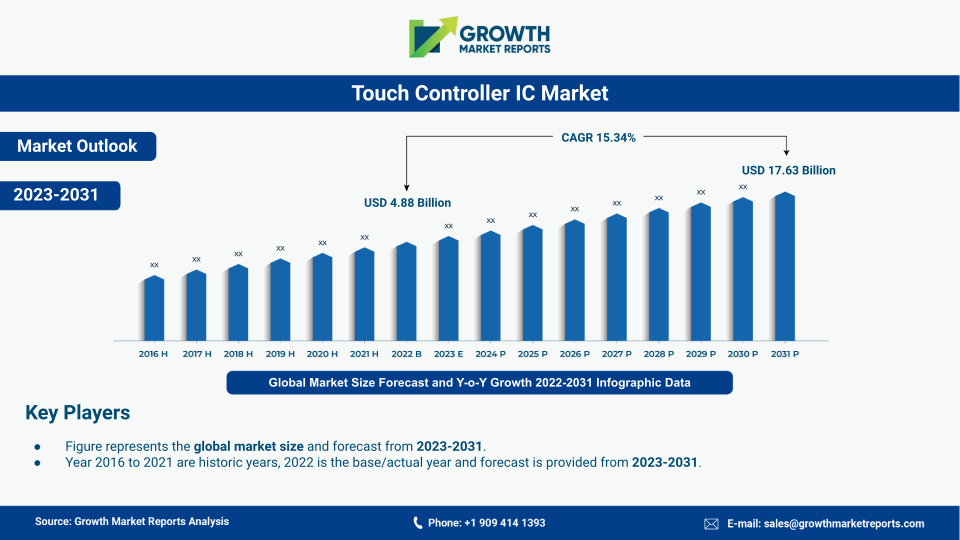
According to our latest research, the global Touch Controller IC market size is valued at USD 6.9 billion in 2024, with a robust compound annual growth rate (CAGR) of 8.2% expected from 2025 to 2033. By the end of 2033, the market is forecasted to reach approximately USD 13.3 billion. The primary growth factor driving this expansion is the surging integration of touch-enabled interfaces in a wide array of consumer electronics, automotive, and industrial applications, propelled by increasing consumer demand for intuitive, interactive, and seamless user experiences worldwide.

The Touch Controller IC market is experiencing significant momentum due to the rapid proliferation of smart devices, including smartphones, tablets, laptops, and wearables. As consumers increasingly prioritize devices with responsive and sophisticated touch functionalities, manufacturers are compelled to adopt advanced touch controller ICs that offer enhanced accuracy, multi-touch capabilities, and low latency. Furthermore, the shift towards bezel-less and edge-to-edge displays in consumer electronics has necessitated the development of highly sensitive and compact touch controller ICs, further fueling market growth. The ongoing innovation in display technologies, such as OLED and flexible screens, is also creating new avenues for touch controller IC manufacturers to cater to evolving design requirements and user expectations.

Another pivotal growth factor is the expanding adoption of touch interfaces in the automotive and industrial sectors. In automotive applications, touch controller ICs are increasingly integrated into infotainment systems, navigation panels, climate control interfaces, and advanced driver assistance systems (ADAS). This trend is underpinned by the automotive industry's shift towards digital cockpits and connected vehicles, where touch-based human-machine interfaces (HMIs) are becoming standard. Similarly, in industrial environments, touch controller ICs are powering ruggedized touchscreens for automation controls, kiosks, and industrial PCs, enhancing operational efficiency and user safety. The growing emphasis on Industry 4.0 and the Industrial Internet of Things (IIoT) is expected to further accelerate the deployment of touch controller ICs in smart factories and industrial automation solutions.

The rising demand for touch-enabled healthcare devices and medical equipment is also contributing to the expansion of the Touch Controller IC market. Medical professionals and patients alike are increasingly relying on touch-based interfaces for diagnostic equipment, patient monitoring systems, and portable medical devices, owing to their ease of use and hygienic benefits. The COVID-19 pandemic has amplified this trend, with touchless and contactless interfaces gaining traction in healthcare settings to minimize the risk of contamination. As a result, touch controller IC manufacturers are focusing on developing solutions that support glove and wet-hand operation, as well as enhanced electromagnetic interference (EMI) immunity, to meet the stringent requirements of medical applications.

The emergence of Integrated Touch Display Driver technology is revolutionizing the touch controller IC market, offering a seamless integration of touch and display functionalities into a single chip. This innovation is particularly significant in the context of bezel-less and edge-to-edge displays, where space optimization is crucial. Integrated Touch Display Drivers not only reduce the overall component count but also enhance the performance and reliability of touch interfaces by minimizing signal interference and latency. As manufacturers strive to deliver thinner and more efficient devices, the adoption of integrated solutions is expected to accelerate, driving further advancements in display technology and user experience.

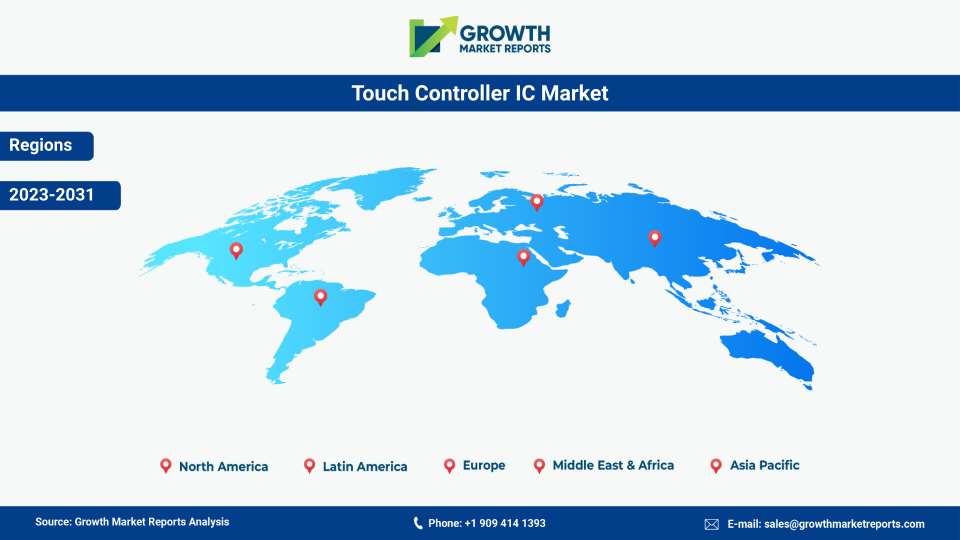
Regionally, Asia Pacific remains the dominant force in the Touch Controller IC market, driven by the presence of leading electronics manufacturers, rapid industrialization, and the burgeoning automotive sector. North America and Europe are also significant contributors, with strong demand from the consumer electronics, automotive, and healthcare industries. Meanwhile, Latin America and the Middle East & Africa are witnessing steady growth, supported by increasing investments in digital infrastructure and rising adoption of smart devices. The competitive landscape is characterized by continuous innovation, strategic partnerships, and mergers and acquisitions, as key players strive to expand their product portfolios and global footprint.

Global Touch Controller IC Industry Outlook

Product Type Analysis

The Touch Controller IC market is segmented by product type into capacitive, resistive, infrared, surface acoustic wave (SAW), and other touch controller ICs. Capacitive touch controller ICs currently dominate the market, accounting for the largest revenue share in 2024. This dominance is attributable to their widespread adoption in smartphones, tablets, and other consumer electronics, where they offer superior sensitivity, multi-touch support, and durability compared to other technologies. Capacitive touch solutions are also favored for their ability to support sleek, bezel-less designs and high-resolution displays, making them the de facto standard in premium device segments. As the demand for high-performance and aesthetically pleasing devices continues to rise, capacitive touch controller ICs are expected to maintain their lead throughout the forecast period.

Resistive touch controller ICs, while less prevalent in consumer electronics, retain a significant presence in industrial and rugged applications. Their ability to function reliably in harsh environments, support for stylus or gloved operation, and cost-effectiveness make them a preferred choice for industrial automation panels, ATMs, and point-of-sale (POS) terminals. The market for resistive touch controller ICs is expected to witness steady growth, particularly in emerging markets and sectors where environmental robustness and affordability are critical considerations. However, ongoing advancements in capacitive technology, such as improved EMI immunity and support for gloved touch, may gradually erode the market share of resistive solutions over time.

Infrared and surface acoustic wave (SAW) touch controller ICs represent niche segments within the overall market, primarily serving specialized applications that require large-format touchscreens, such as interactive kiosks, digital signage, and public information displays. Infrared touch solutions are prized for their high durability and ability to detect any input object, while SAW technology offers excellent optical clarity and touch accuracy. However, both technologies face limitations in terms of cost, scalability, and susceptibility to environmental contaminants, which restrict their adoption to specific use cases. Nevertheless, as demand for interactive public displays and collaborative workspaces grows, these segments are expected to maintain a stable presence in the market.

Other touch controller IC technologies, including optical and force-sensing solutions, are gaining traction in emerging applications where traditional touch technologies fall short. For instance, force-sensing touch controller ICs are being integrated into next-generation smartphones and wearables to enable pressure-sensitive features and haptic feedback, enhancing the overall user experience. Optical touch solutions, on the other hand, are finding applications in large-format and curved displays, as well as environments where touch accuracy and reliability are paramount. As innovation continues to drive the evolution of touch technologies, the product type landscape within the Touch Controller IC market is expected to become increasingly diversified, catering to a broader range of applications and user requirements.

Report Scope

Attributes Details
Report Title Touch Controller IC Market Research Report 2033
By Product Type Capacitive Touch Controller IC, Resistive Touch Controller IC, Infrared Touch Controller IC, Surface Acoustic Wave Touch Controller IC, Others
By Application Smartphones & Tablets, Laptops & PCs, Automotive, Industrial, Wearables, Consumer Electronics, Others
By End-User Consumer Electronics, Automotive, Industrial, Healthcare, Others
By Technology Single-Touch, Multi-Touch
Regions Covered North America, Europe, APAC, Latin America, MEA
Base Year 2024
Historic Data 2018-2023
Forecast Period 2025-2033
Number of Pages 262
Number of Tables & Figures 347
Customization Available Yes, the report can be customized as per your need.

Application Analysis

The Touch Controller IC market spans a diverse array of applications, with smartphones and tablets constituting the largest segment by revenue in 2024. The ubiquity of touch-enabled mobile devices has cemented their position as the primary growth engine for touch controller IC manufacturers. The relentless pace of innovation in mobile hardware, coupled with consumer expectations for seamless, responsive, and feature-rich user interfaces, continues to drive demand for advanced touch controller solutions. As smartphone and tablet penetration deepens in emerging markets, and as premium devices incorporate ever-more sophisticated touch functionalities, this application segment is poised for sustained expansion through 2033.

Laptops and PCs represent another significant application area, particularly as the lines between traditional computing and mobile devices blur. The rise of 2-in-1 convertibles, ultrabooks, and touchscreen-enabled laptops has spurred demand for touch controller ICs that can deliver both high responsiveness and low power consumption. In the enterprise and education sectors, the adoption of touch-enabled devices is facilitating new modes of productivity, collaboration, and learning, further bolstering market growth. As remote work and digital learning become entrenched in the post-pandemic era, the laptops and PCs segment is expected to remain a key driver of the Touch Controller IC market.

The automotive sector is rapidly emerging as a high-growth application for touch controller ICs, fueled by the digital transformation of vehicle interiors. Modern vehicles are increasingly equipped with touch-based infotainment systems, digital instrument clusters, and climate control panels, all of which rely on advanced touch controller ICs for intuitive operation. The push towards autonomous and connected vehicles is further accelerating the integration of touch interfaces, as automakers seek to enhance driver safety, comfort, and convenience. This trend is particularly pronounced in electric vehicles (EVs), where large touchscreens and minimalistic dashboards are becoming hallmarks of next-generation automotive design.

Industrial and wearable applications are also gaining prominence in the Touch Controller IC market. In industrial settings, touch controller ICs are enabling the deployment of ruggedized HMIs, automation controls, and smart kiosks, improving operational efficiency and user safety. Wearables, including smartwatches, fitness trackers, and augmented reality (AR) devices, are driving demand for ultra-compact, low-power touch controller ICs that can deliver precise and reliable performance in miniature form factors. As the Internet of Things (IoT) ecosystem expands and the adoption of connected devices accelerates, these application segments are expected to contribute significantly to market growth in the coming years.

End-User Analysis

The end-user landscape of the Touch Controller IC market is characterized by the dominance of the consumer electronics sector, which accounted for the largest share of global revenues in 2024. The relentless innovation cycle in smartphones, tablets, laptops, and wearables has established consumer electronics as the primary engine of demand for touch controller ICs. Leading device manufacturers are continually striving to differentiate their products through enhanced touch performance, multi-touch capabilities, and support for emerging display technologies. As consumer preferences evolve towards bezel-less, foldable, and flexible devices, touch controller IC vendors are under pressure to deliver solutions that can support these advanced form factors without compromising on responsiveness or reliability.

The automotive end-user segment is witnessing rapid growth, driven by the integration of touch interfaces into a wide range of in-vehicle systems. Automakers are increasingly leveraging touch controller ICs to power infotainment systems, navigation panels, and digital dashboards, as well as advanced driver assistance and safety features. The shift towards electric and autonomous vehicles is further amplifying demand, as touch-based controls become central to the user experience in next-generation vehicles. With consumer expectations for seamless connectivity and intuitive interfaces on the rise, the automotive sector is expected to remain a key growth driver for the Touch Controller IC market through 2033.

Industrial end-users are also embracing touch controller ICs to enable digital transformation across manufacturing, logistics, and process automation. The adoption of touch-enabled HMIs, control panels, and smart kiosks is streamlining operations, improving safety, and enhancing productivity in industrial environments. As Industry 4.0 and IIoT initiatives gain momentum, the demand for ruggedized, high-reliability touch controller ICs is set to increase, particularly in sectors such as energy, transportation, and utilities. The ability of touch controller ICs to withstand harsh conditions, support gloved operation, and deliver consistent performance is a key differentiator in these applications.

The healthcare sector represents an emerging end-user segment for touch controller ICs, with applications spanning diagnostic equipment, patient monitoring systems, and portable medical devices. The emphasis on hygiene, ease of use, and contactless operation in medical environments is driving demand for touch controller solutions that offer enhanced sensitivity, EMI immunity, and support for wet or gloved touch. As the adoption of digital health technologies accelerates, and as telemedicine and remote patient monitoring become more prevalent, the healthcare sector is expected to present significant growth opportunities for touch controller IC manufacturers.

Technology Analysis

The Touch Controller IC market is segmented by technology into single-touch and multi-touch solutions. Single-touch technology, while foundational to the evolution of touch interfaces, is increasingly being supplanted by multi-touch solutions in most consumer and commercial applications. Single-touch controller ICs remain relevant in cost-sensitive and specialized use cases, such as basic industrial controls, point-of-sale terminals, and select automotive applications, where multi-touch functionality is not a critical requirement. However, the limitations of single-touch technology in terms of user experience and feature set are driving a gradual shift towards more advanced solutions.

Multi-touch technology has become the standard in modern touch-enabled devices, offering users the ability to interact with screens using multiple fingers simultaneously. This capability unlocks a host of intuitive gestures, such as pinch-to-zoom, swipe, and rotate, which have become integral to the user experience in smartphones, tablets, laptops, and automotive infotainment systems. The proliferation of multi-touch interfaces across consumer electronics, automotive, and industrial applications is driving robust demand for multi-touch controller ICs that can deliver high accuracy, low latency, and robust noise immunity. As device manufacturers continue to push the boundaries of user interface design, multi-touch technology is expected to capture an ever-larger share of the Touch Controller IC market.

The evolution of multi-touch technology is also enabling the development of next-generation touch interfaces, such as force sensing, haptic feedback, and gesture recognition. These advancements are opening up new possibilities for device interaction, particularly in premium smartphones, wearables, and automotive applications. Touch controller IC vendors are investing heavily in R&D to enhance the performance, scalability, and integration capabilities of their multi-touch solutions, in order to meet the demands of increasingly complex and feature-rich devices.

Looking ahead, the convergence of touch technology with other sensing modalities, such as voice, proximity, and biometrics, is expected to drive further innovation in the Touch Controller IC market. Hybrid solutions that combine touch, force, and gesture recognition are poised to redefine the user experience across a wide range of applications, from consumer electronics to automotive and healthcare. As device manufacturers seek to differentiate their products and deliver more natural and immersive interfaces, the technology segment of the market is set for continued evolution and growth.

Opportunities & Threats

The Touch Controller IC market presents a wealth of opportunities for innovation and expansion, driven by the relentless pace of technological advancement and the diversification of end-use applications. One of the most promising opportunities lies in the integration of touch controller ICs with emerging display technologies, such as flexible OLED, microLED, and transparent displays. As device manufacturers explore new form factors and use cases, touch controller IC vendors have the chance to develop solutions that enable bendable, foldable, and rollable devices, opening up entirely new markets and product categories. Additionally, the growing adoption of touch interfaces in automotive, industrial, and healthcare applications presents significant opportunities for market players to tailor their offerings to the unique requirements of these sectors, such as enhanced durability, EMI immunity, and support for gloved or wet-hand operation.

Another key opportunity is the expansion of touch controller ICs into the Internet of Things (IoT) ecosystem, where the proliferation of connected devices is driving demand for compact, low-power, and highly integrated touch solutions. As smart home, smart city, and wearable applications gain traction, touch controller IC manufacturers can capitalize on the need for intuitive, user-friendly interfaces that facilitate seamless interaction with a wide range of connected devices. Furthermore, the trend towards contactless and hygienic interfaces, accelerated by the COVID-19 pandemic, is creating new opportunities for touch controller ICs that support gesture recognition, proximity sensing, and other touchless technologies. By leveraging these trends, market players can position themselves at the forefront of the next wave of touch interface innovation.

Despite the numerous opportunities, the Touch Controller IC market faces several restraining factors that could hinder growth. Chief among these is the intense price competition and commoditization of touch controller ICs, particularly in the consumer electronics sector. As device manufacturers seek to minimize costs and maximize margins, touch controller IC vendors are under constant pressure to reduce prices, which can erode profitability and limit investment in R&D. Additionally, the rapid pace of technological change and the need to support an ever-expanding array of display types, form factors, and user requirements pose significant challenges for market players. Navigating these complexities while maintaining product quality, performance, and cost competitiveness will be critical for sustained success in the market.

Regional Outlook

Asia Pacific is the undisputed leader in the Touch Controller IC market, accounting for approximately USD 3.2 billion of the global market size in 2024. The region's dominance is underpinned by the presence of major electronics manufacturing hubs in China, South Korea, Japan, and Taiwan, as well as the rapid adoption of smartphones, tablets, and other touch-enabled devices across emerging economies. The burgeoning automotive industry, coupled with increasing investments in industrial automation and digital infrastructure, is further fueling demand for touch controller ICs in the region. With a projected CAGR of 8.7% through 2033, Asia Pacific is expected to retain its leadership position, driven by ongoing innovation, favorable government policies, and the expansion of domestic and export-oriented manufacturing capabilities.

North America is the second-largest regional market, with a market size of approximately USD 1.8 billion in 2024. The region benefits from strong demand across consumer electronics, automotive, healthcare, and industrial sectors, as well as a vibrant ecosystem of technology innovators and OEMs. The prevalence of premium devices, early adoption of emerging technologies, and a focus on user experience are key factors supporting growth in the North American market. Additionally, the region's leadership in connected and autonomous vehicles is driving demand for advanced touch controller ICs in automotive applications, while the increasing adoption of touch-enabled medical devices is opening up new opportunities in the healthcare sector.

Europe follows closely, with a market size of around USD 1.1 billion in 2024. The region's growth is driven by strong demand from the automotive, industrial, and healthcare sectors, as well as a focus on sustainability, energy efficiency, and digital transformation. European automakers are at the forefront of integrating touch interfaces into next-generation vehicles, while the region's industrial base is embracing touch-enabled automation solutions to enhance productivity and competitiveness. The Middle East & Africa and Latin America, though smaller in market size (estimated at USD 0.5 billion and USD 0.3 billion respectively in 2024), are witnessing steady growth, supported by rising investments in digital infrastructure, increasing smartphone penetration, and the gradual adoption of touch-enabled technologies across various sectors.

Touch Controller IC Market Statistics

Competitor Outlook

The Touch Controller IC market is characterized by intense competition and a dynamic landscape, with numerous global and regional players vying for market share. The competitive environment is shaped by rapid technological advancements, evolving customer requirements, and the constant drive for cost optimization. Leading companies are investing heavily in research and development to introduce innovative touch controller ICs that offer enhanced performance, lower power consumption, and support for next-generation display technologies. Strategic partnerships, mergers and acquisitions, and collaborations with OEMs and display manufacturers are common strategies employed by market players to expand their product portfolios, enter new markets, and strengthen their competitive positions.

One of the defining features of the competitive landscape is the emphasis on differentiation through technology leadership and customization. Major vendors are focusing on developing touch controller ICs that can support a wide range of applications, form factors, and user requirements, from ultra-thin smartphones and foldable devices to ruggedized industrial panels and automotive infotainment systems. The ability to deliver solutions that offer superior noise immunity, multi-touch support, and compatibility with emerging display technologies is a key differentiator in the market. Additionally, the growing importance of software and firmware in touch controller ICs is prompting companies to invest in integrated solutions that combine hardware and software to deliver a seamless and responsive user experience.

The market is also witnessing the entry of new players and startups, particularly in niche segments such as force-sensing, haptic feedback, and gesture recognition. These entrants are leveraging cutting-edge technologies and agile development approaches to disrupt established market dynamics and capture share in high-growth application areas. At the same time, established players are expanding their presence in emerging markets, leveraging their scale, brand reputation, and extensive distribution networks to tap into new customer segments and drive growth.

Some of the major companies operating in the Touch Controller IC market include Synaptics Incorporated, Cypress Semiconductor (now part of Infineon Technologies), Texas Instruments, Microchip Technology, STMicroelectronics, Analog Devices, NXP Semiconductors, Goodix Technology, Elan Microelectronics, and FocalTech Systems. Synaptics is recognized for its leadership in capacitive touch solutions for smartphones, tablets, and PCs, while Cypress/Infineon is known for its broad portfolio of touch controller ICs catering to automotive, industrial, and consumer applications. Texas Instruments and Microchip Technology are prominent players in industrial and automotive segments, offering highly reliable and robust touch controller solutions. STMicroelectronics and NXP Semiconductors have a strong presence in automotive and IoT applications, leveraging their expertise in mixed-signal and embedded technologies. Goodix Technology and Elan Microelectronics are leading suppliers in the Asia Pacific region, particularly in the mobile and consumer electronics segments, while FocalTech Systems is noted for its innovations in multi-touch and force-sensing technologies.

In summary, the Touch Controller IC market is poised for robust growth through 2033, driven by relentless innovation, expanding application areas, and the increasing integration of touch interfaces across consumer, automotive, industrial, and healthcare sectors. The competitive landscape will continue to evolve as market players strive to differentiate themselves through technology leadership, customer-centric solutions, and strategic partnerships, ensuring a vibrant and dynamic market environment for years to come.

Key Players

  • Synaptics Inc.
  • Cypress Semiconductor (Infineon Technologies)
  • Texas Instruments Incorporated
  • Microchip Technology Inc.
  • Analog Devices, Inc.
  • STMicroelectronics
  • NXP Semiconductors
  • ROHM Semiconductor
  • Samsung Electronics Co., Ltd.
  • MELFAS Inc.
  • FocalTech Systems Co., Ltd.
  • Goodix Technology Inc.
  • Elan Microelectronics Corporation
  • Himax Technologies, Inc.
  • Silicon Laboratories Inc.
  • Atmel Corporation (Microchip Technology)
  • Novatek Microelectronics Corp.
  • MediaTek Inc.
  • ILITEK (Integrated Logic Technology)
  • Holleit Technologies Co., Ltd.
Touch Controller IC Market Overview

Segments

The Touch Controller IC market has been segmented on the basis of

Product Type

  • Capacitive Touch Controller IC
  • Resistive Touch Controller IC
  • Infrared Touch Controller IC
  • Surface Acoustic Wave Touch Controller IC
  • Others

Application

  • Smartphones & Tablets
  • Laptops & PCs
  • Automotive
  • Industrial
  • Wearables
  • Consumer Electronics
  • Others

End-User

  • Consumer Electronics
  • Automotive
  • Industrial
  • Healthcare
  • Others

Technology

  • Single-Touch
  • Multi-Touch

Competitive Landscape

Key players competing in the global touch controller IC market are Cypress; Melfas Inc.; Image Technology Inc.; Atmel Corp.; Synaptics; and Zinitix Co., Ltd. Companies are focusing on investment in R&D to develop touch controller IC with more technological advancements. Furthermore, companies have been widely engaged in strategic partnership, merger & acquisition, new product launch, and collaborations to boost their market share and acquiring new buyers.
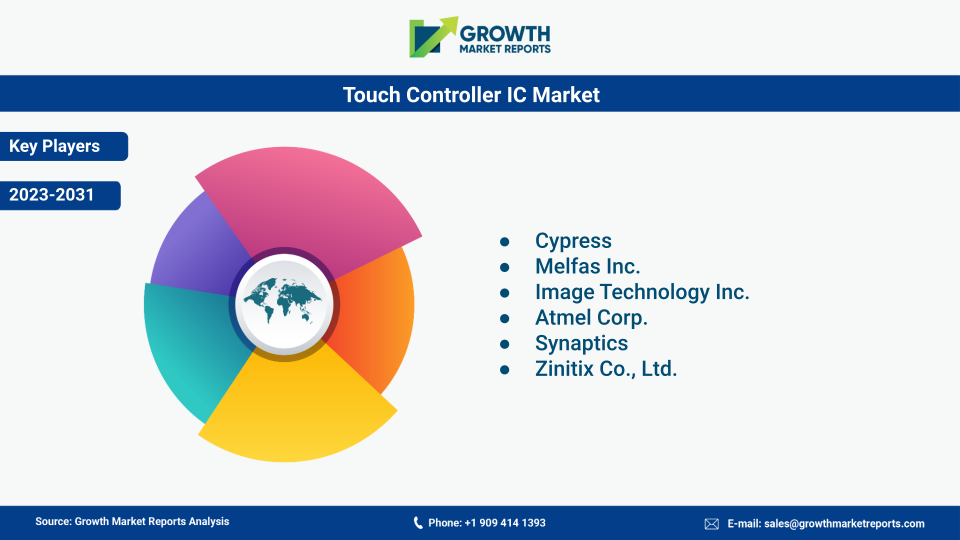

Touch Controller IC Market Key Players

Frequently Asked Questions

Healthcare is an emerging segment, with increasing adoption of touch-enabled medical devices and equipment for diagnostic, monitoring, and telemedicine applications, driven by the need for hygienic and easy-to-use interfaces.

Challenges include intense price competition, commoditization, rapid technological changes, and the need to support diverse display types and user requirements while maintaining cost competitiveness.

Major companies include Synaptics Inc., Cypress Semiconductor (Infineon Technologies), Texas Instruments, Microchip Technology, STMicroelectronics, NXP Semiconductors, Goodix Technology, Elan Microelectronics, and FocalTech Systems.

Trends include the shift from single-touch to multi-touch technology, integration with flexible and foldable displays, force-sensing, haptic feedback, gesture recognition, and hybrid touch solutions.

The automotive sector is rapidly adopting touch controller ICs for infotainment systems, digital dashboards, and advanced driver assistance systems (ADAS), especially in electric and connected vehicles.

Asia Pacific is the leading region, followed by North America and Europe. Asia Pacific's dominance is driven by major electronics manufacturing hubs and rapid adoption of touch-enabled devices.

Major applications include smartphones and tablets, laptops and PCs, automotive infotainment and control systems, industrial automation panels, wearables, and healthcare devices.

Capacitive touch controller ICs dominate the market due to their widespread use in smartphones, tablets, and other consumer electronics, offering superior sensitivity, multi-touch support, and durability.

Key growth drivers include the increasing integration of touch-enabled interfaces in consumer electronics, automotive, and industrial applications, as well as rising demand for intuitive and seamless user experiences.

The Touch Controller IC market is expected to reach approximately USD 13.3 billion by 2033, growing from USD 6.9 billion in 2024 at a CAGR of 8.2%.

Table Of Content

Chapter 1 Executive Summary
Chapter 2 Assumptions and Acronyms Used
Chapter 3 Research Methodology
Chapter 4 Touch Controller IC Market Overview
   4.1 Introduction
      4.1.1 Market Taxonomy
      4.1.2 Market Definition
      4.1.3 Macro-Economic Factors Impacting the Market Growth
   4.2 Touch Controller IC Market Dynamics
      4.2.1 Market Drivers
      4.2.2 Market Restraints
      4.2.3 Market Opportunity
   4.3 Touch Controller IC Market - Supply Chain Analysis
      4.3.1 List of Key Suppliers
      4.3.2 List of Key Distributors
      4.3.3 List of Key Consumers
   4.4 Key Forces Shaping the Touch Controller IC Market
      4.4.1 Bargaining Power of Suppliers
      4.4.2 Bargaining Power of Buyers
      4.4.3 Threat of Substitution
      4.4.4 Threat of New Entrants
      4.4.5 Competitive Rivalry
   4.5 Global Touch Controller IC Market Size & Forecast, 2023-2032
      4.5.1 Touch Controller IC Market Size and Y-o-Y Growth
      4.5.2 Touch Controller IC Market Absolute $ Opportunity

Chapter 5 Global Touch Controller IC Market Analysis and Forecast By Product Type
   5.1 Introduction
      5.1.1 Key Market Trends & Growth Opportunities By Product Type
      5.1.2 Basis Point Share (BPS) Analysis By Product Type
      5.1.3 Absolute $ Opportunity Assessment By Product Type
   5.2 Touch Controller IC Market Size Forecast By Product Type
      5.2.1 Capacitive Touch Controller IC
      5.2.2 Resistive Touch Controller IC
      5.2.3 Infrared Touch Controller IC
      5.2.4 Surface Acoustic Wave Touch Controller IC
      5.2.5 Others
   5.3 Market Attractiveness Analysis By Product Type

Chapter 6 Global Touch Controller IC Market Analysis and Forecast By Application
   6.1 Introduction
      6.1.1 Key Market Trends & Growth Opportunities By Application
      6.1.2 Basis Point Share (BPS) Analysis By Application
      6.1.3 Absolute $ Opportunity Assessment By Application
   6.2 Touch Controller IC Market Size Forecast By Application
      6.2.1 Smartphones & Tablets
      6.2.2 Laptops & PCs
      6.2.3 Automotive
      6.2.4 Industrial
      6.2.5 Wearables
      6.2.6 Consumer Electronics
      6.2.7 Others
   6.3 Market Attractiveness Analysis By Application

Chapter 7 Global Touch Controller IC Market Analysis and Forecast By End-User
   7.1 Introduction
      7.1.1 Key Market Trends & Growth Opportunities By End-User
      7.1.2 Basis Point Share (BPS) Analysis By End-User
      7.1.3 Absolute $ Opportunity Assessment By End-User
   7.2 Touch Controller IC Market Size Forecast By End-User
      7.2.1 Consumer Electronics
      7.2.2 Automotive
      7.2.3 Industrial
      7.2.4 Healthcare
      7.2.5 Others
   7.3 Market Attractiveness Analysis By End-User

Chapter 8 Global Touch Controller IC Market Analysis and Forecast By Technology
   8.1 Introduction
      8.1.1 Key Market Trends & Growth Opportunities By Technology
      8.1.2 Basis Point Share (BPS) Analysis By Technology
      8.1.3 Absolute $ Opportunity Assessment By Technology
   8.2 Touch Controller IC Market Size Forecast By Technology
      8.2.1 Single-Touch
      8.2.2 Multi-Touch
   8.3 Market Attractiveness Analysis By Technology

Chapter 9 Global Touch Controller IC Market Analysis and Forecast by Region
   9.1 Introduction
      9.1.1 Key Market Trends & Growth Opportunities By Region
      9.1.2 Basis Point Share (BPS) Analysis By Region
      9.1.3 Absolute $ Opportunity Assessment By Region
   9.2 Touch Controller IC Market Size Forecast By Region
      9.2.1 North America
      9.2.2 Europe
      9.2.3 Asia Pacific
      9.2.4 Latin America
      9.2.5 Middle East & Africa (MEA)
   9.3 Market Attractiveness Analysis By Region

Chapter 10 Coronavirus Disease (COVID-19) Impact 
   10.1 Introduction 
   10.2 Current & Future Impact Analysis 
   10.3 Economic Impact Analysis 
   10.4 Government Policies 
   10.5 Investment Scenario

Chapter 11 North America Touch Controller IC Analysis and Forecast
   11.1 Introduction
   11.2 North America Touch Controller IC Market Size Forecast by Country
      11.2.1 U.S.
      11.2.2 Canada
   11.3 Basis Point Share (BPS) Analysis by Country
   11.4 Absolute $ Opportunity Assessment by Country
   11.5 Market Attractiveness Analysis by Country
   11.6 North America Touch Controller IC Market Size Forecast By Product Type
      11.6.1 Capacitive Touch Controller IC
      11.6.2 Resistive Touch Controller IC
      11.6.3 Infrared Touch Controller IC
      11.6.4 Surface Acoustic Wave Touch Controller IC
      11.6.5 Others
   11.7 Basis Point Share (BPS) Analysis By Product Type 
   11.8 Absolute $ Opportunity Assessment By Product Type 
   11.9 Market Attractiveness Analysis By Product Type
   11.10 North America Touch Controller IC Market Size Forecast By Application
      11.10.1 Smartphones & Tablets
      11.10.2 Laptops & PCs
      11.10.3 Automotive
      11.10.4 Industrial
      11.10.5 Wearables
      11.10.6 Consumer Electronics
      11.10.7 Others
   11.11 Basis Point Share (BPS) Analysis By Application 
   11.12 Absolute $ Opportunity Assessment By Application 
   11.13 Market Attractiveness Analysis By Application
   11.14 North America Touch Controller IC Market Size Forecast By End-User
      11.14.1 Consumer Electronics
      11.14.2 Automotive
      11.14.3 Industrial
      11.14.4 Healthcare
      11.14.5 Others
   11.15 Basis Point Share (BPS) Analysis By End-User 
   11.16 Absolute $ Opportunity Assessment By End-User 
   11.17 Market Attractiveness Analysis By End-User
   11.18 North America Touch Controller IC Market Size Forecast By Technology
      11.18.1 Single-Touch
      11.18.2 Multi-Touch
   11.19 Basis Point Share (BPS) Analysis By Technology 
   11.20 Absolute $ Opportunity Assessment By Technology 
   11.21 Market Attractiveness Analysis By Technology

Chapter 12 Europe Touch Controller IC Analysis and Forecast
   12.1 Introduction
   12.2 Europe Touch Controller IC Market Size Forecast by Country
      12.2.1 Germany
      12.2.2 France
      12.2.3 Italy
      12.2.4 U.K.
      12.2.5 Spain
      12.2.6 Russia
      12.2.7 Rest of Europe
   12.3 Basis Point Share (BPS) Analysis by Country
   12.4 Absolute $ Opportunity Assessment by Country
   12.5 Market Attractiveness Analysis by Country
   12.6 Europe Touch Controller IC Market Size Forecast By Product Type
      12.6.1 Capacitive Touch Controller IC
      12.6.2 Resistive Touch Controller IC
      12.6.3 Infrared Touch Controller IC
      12.6.4 Surface Acoustic Wave Touch Controller IC
      12.6.5 Others
   12.7 Basis Point Share (BPS) Analysis By Product Type 
   12.8 Absolute $ Opportunity Assessment By Product Type 
   12.9 Market Attractiveness Analysis By Product Type
   12.10 Europe Touch Controller IC Market Size Forecast By Application
      12.10.1 Smartphones & Tablets
      12.10.2 Laptops & PCs
      12.10.3 Automotive
      12.10.4 Industrial
      12.10.5 Wearables
      12.10.6 Consumer Electronics
      12.10.7 Others
   12.11 Basis Point Share (BPS) Analysis By Application 
   12.12 Absolute $ Opportunity Assessment By Application 
   12.13 Market Attractiveness Analysis By Application
   12.14 Europe Touch Controller IC Market Size Forecast By End-User
      12.14.1 Consumer Electronics
      12.14.2 Automotive
      12.14.3 Industrial
      12.14.4 Healthcare
      12.14.5 Others
   12.15 Basis Point Share (BPS) Analysis By End-User 
   12.16 Absolute $ Opportunity Assessment By End-User 
   12.17 Market Attractiveness Analysis By End-User
   12.18 Europe Touch Controller IC Market Size Forecast By Technology
      12.18.1 Single-Touch
      12.18.2 Multi-Touch
   12.19 Basis Point Share (BPS) Analysis By Technology 
   12.20 Absolute $ Opportunity Assessment By Technology 
   12.21 Market Attractiveness Analysis By Technology

Chapter 13 Asia Pacific Touch Controller IC Analysis and Forecast
   13.1 Introduction
   13.2 Asia Pacific Touch Controller IC Market Size Forecast by Country
      13.2.1 China
      13.2.2 Japan
      13.2.3 South Korea
      13.2.4 India
      13.2.5 Australia
      13.2.6 South East Asia (SEA)
      13.2.7 Rest of Asia Pacific (APAC)
   13.3 Basis Point Share (BPS) Analysis by Country
   13.4 Absolute $ Opportunity Assessment by Country
   13.5 Market Attractiveness Analysis by Country
   13.6 Asia Pacific Touch Controller IC Market Size Forecast By Product Type
      13.6.1 Capacitive Touch Controller IC
      13.6.2 Resistive Touch Controller IC
      13.6.3 Infrared Touch Controller IC
      13.6.4 Surface Acoustic Wave Touch Controller IC
      13.6.5 Others
   13.7 Basis Point Share (BPS) Analysis By Product Type 
   13.8 Absolute $ Opportunity Assessment By Product Type 
   13.9 Market Attractiveness Analysis By Product Type
   13.10 Asia Pacific Touch Controller IC Market Size Forecast By Application
      13.10.1 Smartphones & Tablets
      13.10.2 Laptops & PCs
      13.10.3 Automotive
      13.10.4 Industrial
      13.10.5 Wearables
      13.10.6 Consumer Electronics
      13.10.7 Others
   13.11 Basis Point Share (BPS) Analysis By Application 
   13.12 Absolute $ Opportunity Assessment By Application 
   13.13 Market Attractiveness Analysis By Application
   13.14 Asia Pacific Touch Controller IC Market Size Forecast By End-User
      13.14.1 Consumer Electronics
      13.14.2 Automotive
      13.14.3 Industrial
      13.14.4 Healthcare
      13.14.5 Others
   13.15 Basis Point Share (BPS) Analysis By End-User 
   13.16 Absolute $ Opportunity Assessment By End-User 
   13.17 Market Attractiveness Analysis By End-User
   13.18 Asia Pacific Touch Controller IC Market Size Forecast By Technology
      13.18.1 Single-Touch
      13.18.2 Multi-Touch
   13.19 Basis Point Share (BPS) Analysis By Technology 
   13.20 Absolute $ Opportunity Assessment By Technology 
   13.21 Market Attractiveness Analysis By Technology

Chapter 14 Latin America Touch Controller IC Analysis and Forecast
   14.1 Introduction
   14.2 Latin America Touch Controller IC Market Size Forecast by Country
      14.2.1 Brazil
      14.2.2 Mexico
      14.2.3 Rest of Latin America (LATAM)
   14.3 Basis Point Share (BPS) Analysis by Country
   14.4 Absolute $ Opportunity Assessment by Country
   14.5 Market Attractiveness Analysis by Country
   14.6 Latin America Touch Controller IC Market Size Forecast By Product Type
      14.6.1 Capacitive Touch Controller IC
      14.6.2 Resistive Touch Controller IC
      14.6.3 Infrared Touch Controller IC
      14.6.4 Surface Acoustic Wave Touch Controller IC
      14.6.5 Others
   14.7 Basis Point Share (BPS) Analysis By Product Type 
   14.8 Absolute $ Opportunity Assessment By Product Type 
   14.9 Market Attractiveness Analysis By Product Type
   14.10 Latin America Touch Controller IC Market Size Forecast By Application
      14.10.1 Smartphones & Tablets
      14.10.2 Laptops & PCs
      14.10.3 Automotive
      14.10.4 Industrial
      14.10.5 Wearables
      14.10.6 Consumer Electronics
      14.10.7 Others
   14.11 Basis Point Share (BPS) Analysis By Application 
   14.12 Absolute $ Opportunity Assessment By Application 
   14.13 Market Attractiveness Analysis By Application
   14.14 Latin America Touch Controller IC Market Size Forecast By End-User
      14.14.1 Consumer Electronics
      14.14.2 Automotive
      14.14.3 Industrial
      14.14.4 Healthcare
      14.14.5 Others
   14.15 Basis Point Share (BPS) Analysis By End-User 
   14.16 Absolute $ Opportunity Assessment By End-User 
   14.17 Market Attractiveness Analysis By End-User
   14.18 Latin America Touch Controller IC Market Size Forecast By Technology
      14.18.1 Single-Touch
      14.18.2 Multi-Touch
   14.19 Basis Point Share (BPS) Analysis By Technology 
   14.20 Absolute $ Opportunity Assessment By Technology 
   14.21 Market Attractiveness Analysis By Technology

Chapter 15 Middle East & Africa (MEA) Touch Controller IC Analysis and Forecast
   15.1 Introduction
   15.2 Middle East & Africa (MEA) Touch Controller IC Market Size Forecast by Country
      15.2.1 Saudi Arabia
      15.2.2 South Africa
      15.2.3 UAE
      15.2.4 Rest of Middle East & Africa (MEA)
   15.3 Basis Point Share (BPS) Analysis by Country
   15.4 Absolute $ Opportunity Assessment by Country
   15.5 Market Attractiveness Analysis by Country
   15.6 Middle East & Africa (MEA) Touch Controller IC Market Size Forecast By Product Type
      15.6.1 Capacitive Touch Controller IC
      15.6.2 Resistive Touch Controller IC
      15.6.3 Infrared Touch Controller IC
      15.6.4 Surface Acoustic Wave Touch Controller IC
      15.6.5 Others
   15.7 Basis Point Share (BPS) Analysis By Product Type 
   15.8 Absolute $ Opportunity Assessment By Product Type 
   15.9 Market Attractiveness Analysis By Product Type
   15.10 Middle East & Africa (MEA) Touch Controller IC Market Size Forecast By Application
      15.10.1 Smartphones & Tablets
      15.10.2 Laptops & PCs
      15.10.3 Automotive
      15.10.4 Industrial
      15.10.5 Wearables
      15.10.6 Consumer Electronics
      15.10.7 Others
   15.11 Basis Point Share (BPS) Analysis By Application 
   15.12 Absolute $ Opportunity Assessment By Application 
   15.13 Market Attractiveness Analysis By Application
   15.14 Middle East & Africa (MEA) Touch Controller IC Market Size Forecast By End-User
      15.14.1 Consumer Electronics
      15.14.2 Automotive
      15.14.3 Industrial
      15.14.4 Healthcare
      15.14.5 Others
   15.15 Basis Point Share (BPS) Analysis By End-User 
   15.16 Absolute $ Opportunity Assessment By End-User 
   15.17 Market Attractiveness Analysis By End-User
   15.18 Middle East & Africa (MEA) Touch Controller IC Market Size Forecast By Technology
      15.18.1 Single-Touch
      15.18.2 Multi-Touch
   15.19 Basis Point Share (BPS) Analysis By Technology 
   15.20 Absolute $ Opportunity Assessment By Technology 
   15.21 Market Attractiveness Analysis By Technology

Chapter 16 Competition Landscape 
   16.1 Touch Controller IC Market: Competitive Dashboard
   16.2 Global Touch Controller IC Market: Market Share Analysis, 2023
   16.3 Company Profiles (Details – Overview, Financials, Developments, Strategy) 
      16.3.1 Synaptics Inc.
Cypress Semiconductor (Infineon Technologies)
Texas Instruments Incorporated
Microchip Technology Inc.
Analog Devices, Inc.
STMicroelectronics
NXP Semiconductors
ROHM Semiconductor
Samsung Electronics Co., Ltd.
MELFAS Inc.
FocalTech Systems Co., Ltd.
Goodix Technology Inc.
Elan Microelectronics Corporation
Himax Technologies, Inc.
Silicon Laboratories Inc.
Atmel Corporation (Microchip Technology)
Novatek Microelectronics Corp.
MediaTek Inc.
ILITEK (Integrated Logic Technology)
Holleit Technologies Co., Ltd.

Methodology

Our Clients

The John Holland Group
Honda Motor Co. Ltd.
General Mills
General Electric
sinopec
Nestle SA
FedEx Logistics
Pfizer