Segments - by Solution Type (Core Banking Software, Multi-Channel Banking Software, Business Intelligence Software, Others), by Deployment Mode (On-Premises, Cloud-Based), by Application (Risk Management, Information Security, Business Intelligence, Others), by End-User (Retail Banks, Commercial Banks, Others)
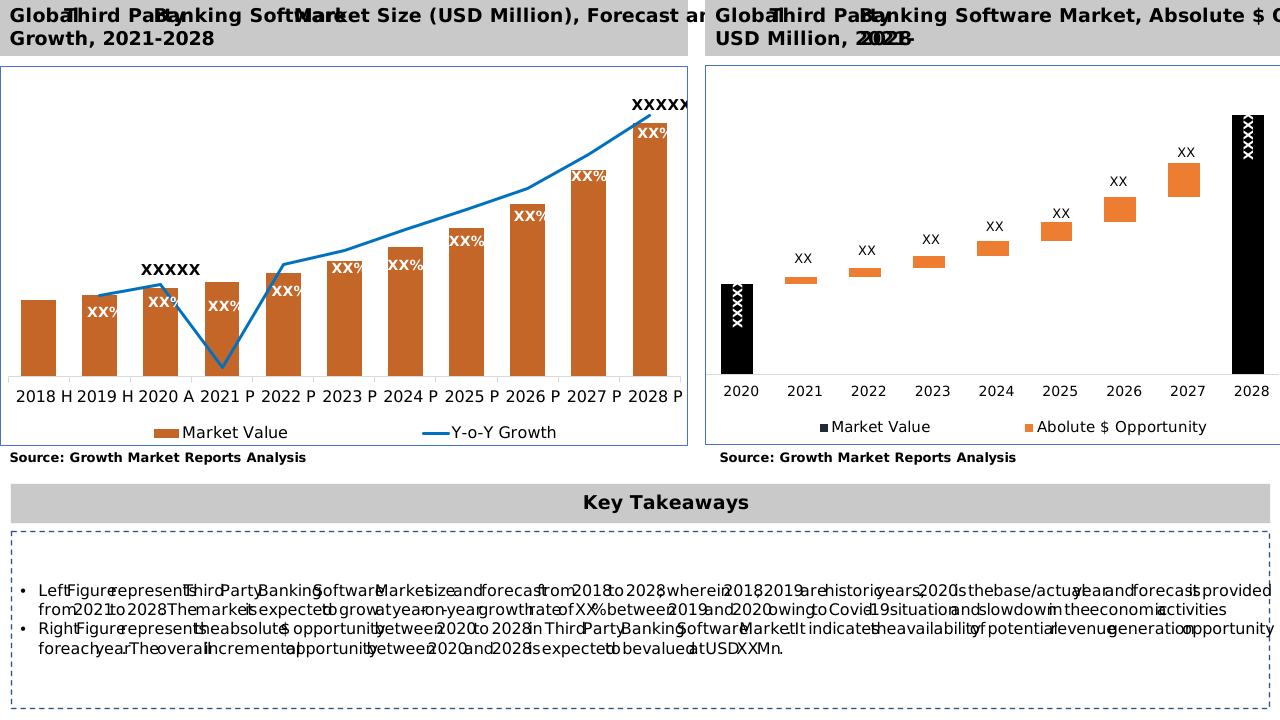
According to our latest research, the global Third Party Banking Software market size reached USD 32.1 billion in 2024, exhibiting robust momentum with a compound annual growth rate (CAGR) of 8.7%. This growth trajectory is primarily attributed to the increasing digital transformation in the banking sector, surging demand for seamless customer experiences, and the rapid adoption of cloud-based solutions. By 2033, the Third Party Banking Software market is forecasted to reach USD 67.2 billion, underscoring the sector's resilience and adaptability amid evolving technological and regulatory landscapes. As per our latest research, the market is benefiting from significant investments in IT infrastructure and the ongoing shift towards open banking frameworks, which are further fueling innovation and competitive differentiation.
The growth of the Third Party Banking Software market is driven by the relentless pursuit of operational efficiency and cost optimization among financial institutions. Banks worldwide are under increasing pressure to modernize their legacy systems, streamline processes, and reduce manual intervention. The adoption of third-party banking software enables institutions to automate routine tasks, enhance data accuracy, and minimize operational risks. Furthermore, the growing complexity of regulatory compliance requirements has compelled banks to invest in advanced software solutions that facilitate real-time monitoring, reporting, and auditing. These factors collectively contribute to the sustained demand for third-party banking software, as banks seek to remain agile, compliant, and customer-centric in a highly competitive environment.
Another significant growth factor is the rising emphasis on customer-centric banking and personalized financial services. In todayÂ’s digital era, consumers expect seamless, omnichannel experiences, fast transaction processing, and tailored product offerings. Third-party banking software providers are leveraging advanced technologies such as artificial intelligence, machine learning, and big data analytics to help banks gain deeper insights into customer behavior, preferences, and needs. This enables banks to deliver customized solutions, enhance customer engagement, and foster long-term loyalty. Additionally, the proliferation of mobile and online banking channels has created new opportunities for software vendors to develop innovative solutions that cater to the evolving expectations of tech-savvy consumers, further propelling market growth.
The rapid adoption of cloud-based deployment models is also a major catalyst for the expansion of the Third Party Banking Software market. Cloud-based solutions offer unparalleled scalability, flexibility, and cost-effectiveness, enabling banks of all sizes to access cutting-edge technologies without the need for substantial upfront investments in hardware and infrastructure. The cloud model also supports seamless integration with other fintech solutions and third-party applications, facilitating the creation of a robust and interconnected digital ecosystem. As banks increasingly prioritize agility and digital innovation, the demand for cloud-based third-party banking software is expected to surge, driving market growth over the forecast period.
From a regional perspective, North America currently dominates the Third Party Banking Software market, accounting for the largest share in 2024. This leadership position can be attributed to the presence of a mature banking sector, high IT spending, and early adoption of advanced technologies. However, the Asia Pacific region is poised for the fastest growth during the forecast period, fueled by the rapid expansion of digital banking, increasing investments in fintech, and favorable regulatory initiatives. Europe remains a key market, supported by stringent compliance requirements and a strong focus on innovation. Meanwhile, Latin America and the Middle East & Africa are witnessing steady growth, driven by ongoing digital transformation efforts and the rising penetration of mobile banking services.
The Third Party Banking Software market is segmented by solution type into Core Banking Software, Multi-Channel Banking Software, Business Intelligence Software, and Others. Core Banking Software remains the backbone of banking operations, providing essential functionalities such as account management, transaction processing, and customer relationship management. As banks strive to modernize their infrastructure and enhance operational efficiency, the demand for robust and scalable core banking solutions continues to surge. These platforms enable banks to consolidate disparate systems, reduce redundancy, and achieve real-time processing capabilities, which are critical for delivering seamless services to customers across multiple channels.
Core Banking Software plays a pivotal role in the modernization efforts of financial institutions. As the backbone of banking operations, it ensures that banks can manage their day-to-day activities efficiently while providing a stable platform for growth and innovation. With the increasing demand for digital banking solutions, Core Banking Software is evolving to incorporate advanced features such as real-time data processing, enhanced security protocols, and seamless integration with other banking systems. This evolution is crucial for banks aiming to provide a superior customer experience and maintain a competitive edge in the rapidly changing financial landscape.
Multi-Channel Banking Software is gaining significant traction as banks seek to offer integrated and consistent experiences across various touchpoints, including branches, ATMs, online portals, and mobile applications. This segment is driven by the increasing adoption of digital banking and the growing preference for omnichannel engagement among consumers. Multi-channel solutions empower banks to unify their service delivery, streamline customer interactions, and personalize offerings based on individual preferences and behaviors. The ability to provide a cohesive and frictionless experience across all channels is becoming a key differentiator for banks in an increasingly competitive landscape.
Business Intelligence Software is emerging as a vital component of the Third Party Banking Software market, enabling banks to harness the power of data analytics for informed decision-making and strategic planning. These solutions facilitate the aggregation, analysis, and visualization of vast amounts of data generated by banking operations, customer transactions, and external sources. By leveraging business intelligence tools, banks can identify trends, detect anomalies, and uncover actionable insights that drive revenue growth, mitigate risks, and optimize resource allocation. The integration of advanced analytics capabilities, such as predictive modeling and machine learning, further enhances the value proposition of business intelligence software in the banking sector.
The 'Others' category encompasses a diverse range of specialized software solutions, including payment processing, customer onboarding, anti-money laundering (AML), and fraud detection. These niche offerings address specific pain points and regulatory requirements faced by banks, enabling them to enhance security, improve compliance, and deliver superior customer experiences. The growing complexity of financial crimes and the evolving threat landscape are prompting banks to invest in advanced security and compliance solutions, thereby driving growth in this segment. As regulatory frameworks continue to evolve, the demand for specialized third-party software is expected to remain robust.
| Attributes | Details |
| Report Title | Third Party Banking Software Market Research Report 2033 |
| By Solution Type | Core Banking Software, Multi-Channel Banking Software, Business Intelligence Software, Others |
| By Deployment Mode | On-Premises, Cloud-Based |
| By Application | Risk Management, Information Security, Business Intelligence, Others |
| By End-User | Retail Banks, Commercial Banks, Others |
| Regions Covered | North America, Europe, APAC, Latin America, MEA |
| Base Year | 2024 |
| Historic Data | 2018-2023 |
| Forecast Period | 2025-2033 |
| Number of Pages | 288 |
| Number of Tables & Figures | 377 |
| Customization Available | Yes, the report can be customized as per your need. |
Deployment mode is a critical consideration for banks when selecting third-party software solutions, with the market segmented into On-Premises and Cloud-Based deployments. On-premises deployment has traditionally been the preferred choice for large banks and financial institutions, offering greater control over data security, customization, and integration with existing systems. Despite the growing popularity of cloud-based solutions, many banks continue to rely on on-premises deployments for mission-critical applications, particularly in regions with stringent data sovereignty regulations. The on-premises segment remains significant, especially among institutions with complex legacy systems and specific compliance requirements.
Cloud-Based deployment, however, is witnessing exponential growth, driven by the need for scalability, flexibility, and cost-effectiveness. Cloud solutions eliminate the need for substantial capital investments in hardware and infrastructure, enabling banks to rapidly deploy new functionalities and scale operations as needed. The cloud model also supports seamless integration with fintech partners and third-party applications, fostering innovation and agility. As banks increasingly prioritize digital transformation and customer-centricity, the adoption of cloud-based third-party banking software is expected to accelerate, particularly among small and medium-sized banks seeking to compete with larger incumbents.
The shift towards cloud-based deployment is further supported by advancements in cybersecurity and data protection measures, which address concerns related to data privacy and regulatory compliance. Leading cloud service providers are investing heavily in robust security frameworks, encryption technologies, and compliance certifications to reassure banks and regulators. As a result, the perceived risks associated with cloud adoption are diminishing, paving the way for broader acceptance of cloud-based third-party banking software across the industry. This trend is particularly pronounced in regions with supportive regulatory environments and high levels of digital maturity.
Hybrid deployment models are also gaining traction, enabling banks to leverage the benefits of both on-premises and cloud-based solutions. Hybrid approaches allow institutions to retain sensitive data and core functions on-premises while migrating less critical workloads to the cloud. This flexibility is especially valuable for banks navigating complex regulatory landscapes or undergoing gradual digital transformation. The growing popularity of hybrid models reflects the industry's recognition of the need for a balanced approach to technology adoption, combining the advantages of security, control, and agility.
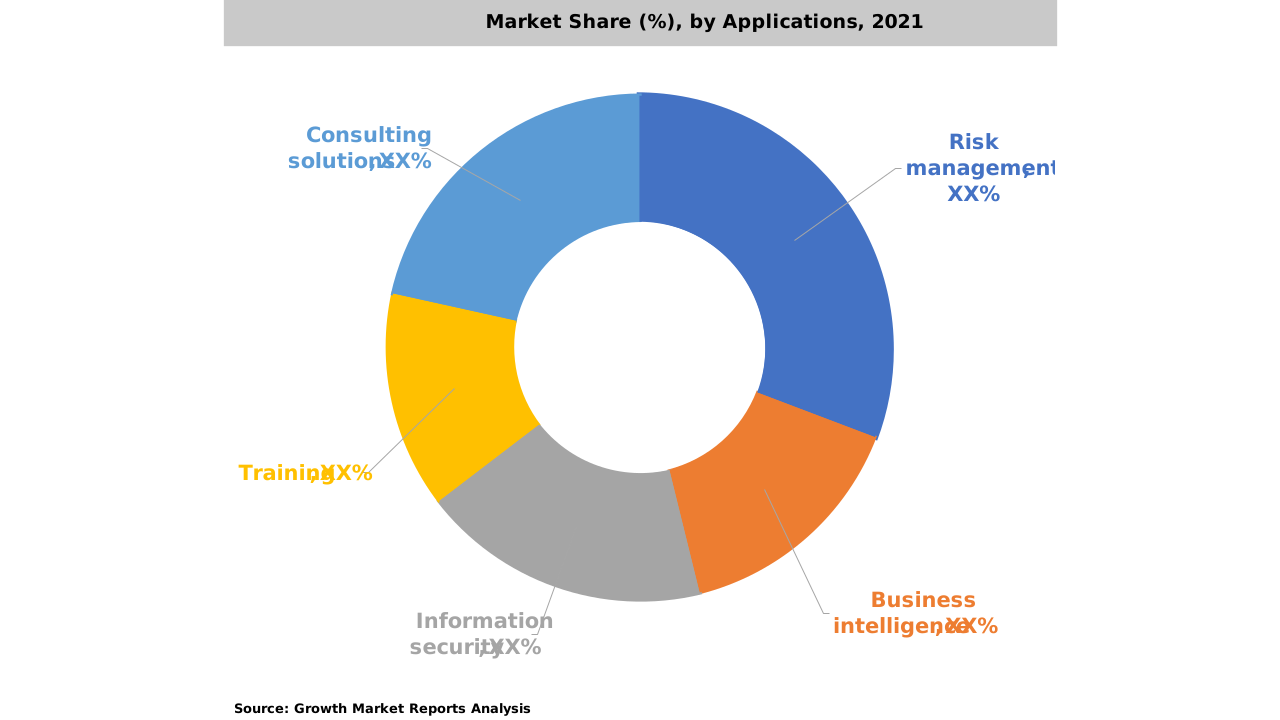
The Third Party Banking Software market is segmented by application into Risk Management, Information Security, Business Intelligence, and Others. Risk Management applications play a pivotal role in helping banks identify, assess, and mitigate various types of risks, including credit, market, operational, and compliance risks. The increasing complexity of financial products, coupled with heightened regulatory scrutiny, has made effective risk management essential for banks of all sizes. Third-party risk management software provides advanced analytics, real-time monitoring, and automated reporting capabilities, enabling banks to proactively manage risks and ensure regulatory compliance.
Information Security is another critical application area, as banks face growing threats from cyberattacks, data breaches, and financial crimes. Third-party information security solutions offer comprehensive protection against a wide range of threats, including malware, phishing, ransomware, and insider attacks. These solutions leverage advanced technologies such as artificial intelligence, machine learning, and behavioral analytics to detect and respond to threats in real time. The increasing frequency and sophistication of cyber threats are driving banks to invest heavily in robust information security software, making this segment one of the fastest-growing areas within the Third Party Banking Software market.
Business Intelligence applications are gaining prominence as banks seek to leverage data-driven insights for strategic decision-making and competitive advantage. Third-party business intelligence software enables banks to aggregate, analyze, and visualize large volumes of data from multiple sources, including customer transactions, market trends, and operational metrics. By harnessing the power of advanced analytics, banks can identify growth opportunities, optimize product offerings, and enhance customer experiences. The integration of artificial intelligence and machine learning capabilities further enhances the predictive and prescriptive analytics functions of business intelligence software, enabling banks to stay ahead in a rapidly evolving market.
The 'Others' category includes a wide range of specialized applications, such as customer relationship management, anti-money laundering, fraud detection, and payment processing. These solutions address specific operational and regulatory challenges faced by banks, enabling them to enhance efficiency, improve compliance, and deliver superior customer experiences. The growing complexity of banking operations and the evolving threat landscape are driving demand for specialized third-party software applications, ensuring continued growth and innovation in this segment.
Within the Third Party Banking Software market, end-users are segmented into Retail Banks, Commercial Banks, and Others. Retail Banks represent a significant share of the market, driven by the need to deliver personalized and seamless customer experiences in a highly competitive environment. Retail banks are increasingly adopting third-party software solutions to modernize their core systems, enhance digital channels, and offer innovative products and services. The focus on customer-centricity, operational efficiency, and regulatory compliance is fueling demand for advanced software solutions tailored to the unique needs of retail banking institutions.
Commercial Banks are also major adopters of third-party banking software, leveraging these solutions to manage complex operations, mitigate risks, and comply with stringent regulatory requirements. Commercial banks often deal with large volumes of transactions, diverse product portfolios, and intricate risk profiles, necessitating robust and scalable software platforms. Third-party solutions enable commercial banks to streamline processes, enhance data accuracy, and improve decision-making, thereby driving operational excellence and competitive differentiation. The increasing emphasis on digital transformation and innovation is expected to further accelerate software adoption among commercial banks.
The 'Others' category encompasses a diverse range of financial institutions, including cooperative banks, credit unions, and non-banking financial companies (NBFCs). These institutions are increasingly recognizing the benefits of third-party banking software in enhancing operational efficiency, improving customer service, and ensuring regulatory compliance. The growing penetration of digital banking and the rising demand for specialized financial services are driving adoption among these end-users. As the financial services landscape continues to evolve, the role of third-party software in supporting diverse business models and customer segments is expected to expand.
Across all end-user segments, the demand for third-party banking software is being driven by the need for agility, scalability, and innovation. Financial institutions are under pressure to adapt to changing customer expectations, regulatory requirements, and competitive dynamics. Third-party software providers are responding by offering modular, configurable, and interoperable solutions that can be tailored to the specific needs of different end-users. This flexibility is enabling banks and financial institutions to accelerate digital transformation, enhance operational resilience, and deliver superior value to customers.
The Third Party Banking Software market presents a wealth of opportunities for vendors, banks, and other stakeholders. One of the most significant opportunities lies in the integration of emerging technologies such as artificial intelligence, machine learning, and blockchain into banking software solutions. These technologies have the potential to revolutionize banking operations, enhance security, and deliver unprecedented levels of personalization and efficiency. Vendors that can successfully incorporate these innovations into their offerings are well-positioned to capture a larger share of the market and drive long-term growth. Additionally, the rise of open banking and API-driven ecosystems is creating new avenues for collaboration and innovation, enabling banks to offer a broader range of services and tap into new revenue streams.
Another key opportunity is the growing demand for cloud-based and SaaS banking solutions, particularly among small and medium-sized banks and financial institutions. Cloud-based solutions offer significant advantages in terms of scalability, flexibility, and cost-effectiveness, making them an attractive option for banks seeking to modernize their IT infrastructure and accelerate digital transformation. As regulatory frameworks evolve to support cloud adoption, the market for cloud-based third-party banking software is expected to expand rapidly. Vendors that can offer secure, compliant, and interoperable cloud solutions will be well-positioned to capitalize on this trend and drive market growth.
Despite the numerous opportunities, the Third Party Banking Software market also faces several restraining factors. One of the primary challenges is the complexity and cost of integrating third-party software with existing legacy systems. Many banks, particularly in emerging markets, continue to rely on outdated IT infrastructure that may not be compatible with modern software solutions. The process of migrating to new platforms can be time-consuming, costly, and disruptive, posing significant barriers to adoption. Additionally, concerns related to data security, privacy, and regulatory compliance continue to hinder the widespread adoption of third-party software, particularly in regions with stringent data protection laws.
North America remains the largest regional market for Third Party Banking Software, accounting for approximately 38% of the global market size in 2024, or around USD 12.2 billion. The region's dominance is underpinned by a highly developed banking sector, strong IT infrastructure, and early adoption of advanced technologies. Major banks and financial institutions in the United States and Canada are leading the way in digital transformation, driving demand for innovative software solutions that enhance operational efficiency, security, and customer experience. The presence of leading technology vendors and a robust fintech ecosystem further contribute to the region's leadership position.
The Asia Pacific region is poised for the fastest growth, with a projected CAGR of 11.2% during the forecast period. In 2024, the Asia Pacific market size stood at approximately USD 7.8 billion, driven by rapid urbanization, increasing smartphone penetration, and a burgeoning middle class. Countries such as China, India, and Singapore are at the forefront of digital banking innovation, supported by favorable regulatory initiatives and significant investments in fintech. The region's large unbanked and underbanked population presents significant growth opportunities for third-party software vendors, as banks seek to expand their reach and offer inclusive financial services.
Europe represents a mature and highly regulated market, accounting for about 28% of the global Third Party Banking Software market, or roughly USD 9 billion in 2024. The region is characterized by a strong focus on compliance, data protection, and innovation, with banks investing heavily in software solutions to meet evolving regulatory requirements and customer expectations. The introduction of open banking directives, such as PSD2, has accelerated the adoption of third-party software and fostered a vibrant fintech ecosystem. Meanwhile, Latin America and the Middle East & Africa are experiencing steady growth, with market sizes of USD 1.8 billion and USD 1.3 billion respectively in 2024, driven by ongoing digital transformation initiatives and the rising adoption of mobile banking services.
The competitive landscape of the Third Party Banking Software market is characterized by intense rivalry among established players, innovative startups, and niche vendors. Leading companies are investing heavily in research and development to enhance their product portfolios, integrate emerging technologies, and address the evolving needs of banks and financial institutions. Strategic partnerships, mergers and acquisitions, and collaborations with fintech firms are common strategies employed by market participants to expand their market presence, accelerate innovation, and gain a competitive edge. The market is also witnessing the emergence of specialized vendors that focus on specific segments, such as risk management, information security, or business intelligence, offering tailored solutions that address unique customer requirements.
Product differentiation and customer-centricity are key competitive factors in the Third Party Banking Software market. Vendors are increasingly focusing on delivering modular, configurable, and interoperable solutions that can be easily integrated with existing systems and customized to meet the specific needs of different banks. The ability to offer seamless integration, robust security, and compliance with global and regional regulations is becoming a critical differentiator in the market. Additionally, vendors that can provide comprehensive support, training, and consulting services are better positioned to build long-term relationships with customers and drive repeat business.
Innovation remains at the core of competitive strategy, with vendors leveraging advanced technologies such as artificial intelligence, machine learning, blockchain, and cloud computing to enhance the functionality, security, and scalability of their solutions. The rapid pace of technological change and the evolving threat landscape require vendors to continuously update their offerings and stay ahead of emerging trends. Companies that can effectively balance innovation with reliability, security, and compliance are likely to succeed in capturing a larger share of the market.
Some of the major players in the Third Party Banking Software market include Infosys Finacle, Temenos Group AG, FIS Global, Oracle Corporation, SAP SE, Tata Consultancy Services, Fiserv Inc., Finastra, Jack Henry & Associates, and Avaloq Group AG. These companies are recognized for their comprehensive product portfolios, global reach, and strong customer relationships. Infosys Finacle, for instance, is renowned for its core banking and digital transformation solutions, while Temenos is a leader in cloud-native banking software. FIS Global and Fiserv Inc. are well-known for their payment processing and financial technology solutions, serving a diverse range of banks and financial institutions worldwide.
Oracle Corporation and SAP SE are major players that leverage their expertise in enterprise software to deliver robust banking solutions that address the needs of large and complex financial institutions. Tata Consultancy Services and Avaloq Group AG are recognized for their focus on innovation, customer-centricity, and global delivery capabilities. Jack Henry & Associates specializes in providing technology solutions for community banks and credit unions, while Finastra is known for its open banking and API-driven approach. These companies continue to invest in product development, strategic partnerships, and global expansion to maintain their competitive positions and drive growth in the rapidly evolving Third Party Banking Software market.
The Third Party Banking Software market has been segmented on the basis of
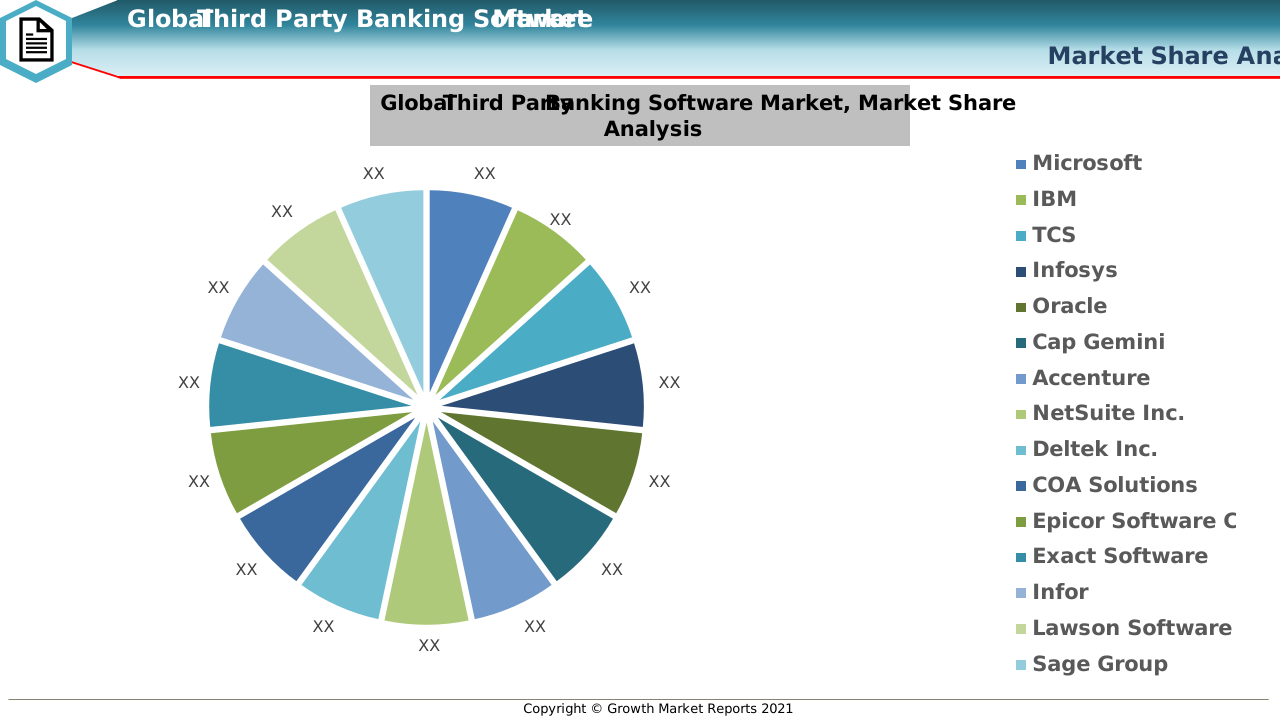
Key players competing in the global third party banking software market are Microsoft; IBM; TCS; Infosys; Oracle; Cap Gemini; Accenture; NetSuite Inc.; Deltek Inc.; COA Solutions; Epicor Software Corp.; Exact Software; Infor; Lawson Software Inc.; and Sage Group. Some of these key players engage in product launching, production capacity expansion, and entering into partnership to enhance their market position.
Innovation is driven by the adoption of advanced technologies like AI, machine learning, blockchain, and cloud computing, which enhance functionality, security, and scalability of banking software solutions.
Key players include Oracle Corporation, SAP SE, Fiserv Inc., FIS Global, Temenos AG, Infosys Limited, Tata Consultancy Services, Jack Henry & Associates, Avaloq Group AG, and Finastra.
Opportunities include the integration of AI, machine learning, blockchain, and the rise of cloud-based solutions. Challenges involve legacy system integration, high costs, and concerns over data security and regulatory compliance.
End-users include Retail Banks, Commercial Banks, and other financial institutions such as credit unions, cooperative banks, and non-banking financial companies (NBFCs).
Major applications include Risk Management, Information Security, Business Intelligence, and other specialized functions such as anti-money laundering and customer onboarding.
Deployment modes include On-Premises, Cloud-Based, and Hybrid models. Cloud-based solutions are growing rapidly due to their scalability, flexibility, and cost-effectiveness.
The market is segmented into Core Banking Software, Multi-Channel Banking Software, Business Intelligence Software, and other specialized solutions like payment processing and fraud detection.
North America holds the largest market share, followed by Europe and Asia Pacific. Asia Pacific is expected to experience the fastest growth due to digital banking expansion and fintech investments.
Key growth drivers include digital transformation in banking, demand for seamless customer experiences, rapid adoption of cloud-based solutions, regulatory compliance needs, and investments in IT infrastructure.
The global Third Party Banking Software market reached USD 32.1 billion in 2024 and is projected to grow at a CAGR of 8.7%, reaching USD 67.2 billion by 2033.