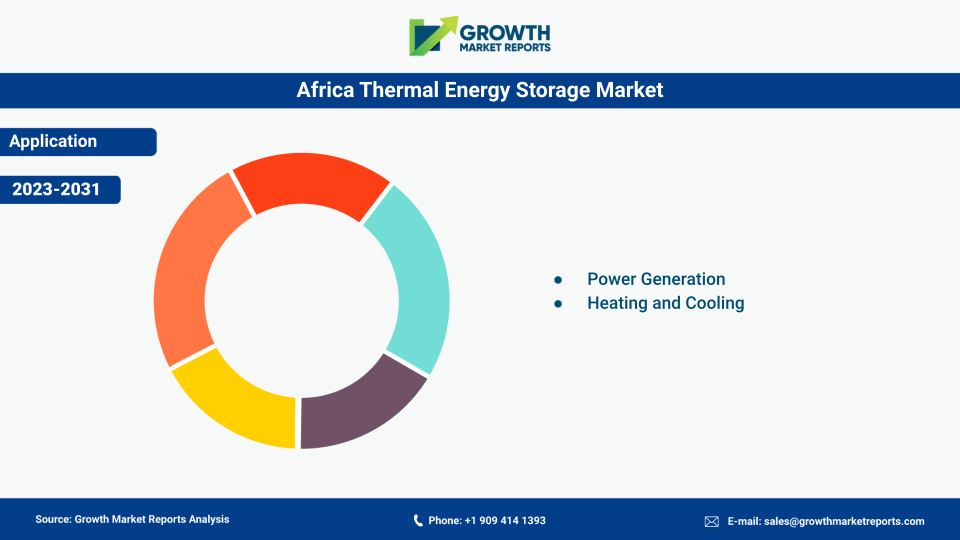
Segments - by Technology (Sensible Heat Storage, Latent Heat Storage, Thermochemical Storage), by Storage Material (Molten Salt, Water, Phase Change Materials, Others), by Application (Power Generation, District Heating and Cooling, Process Heating and Cooling, Others), by End-User (Utilities, Industrial, Commercial, Residential)
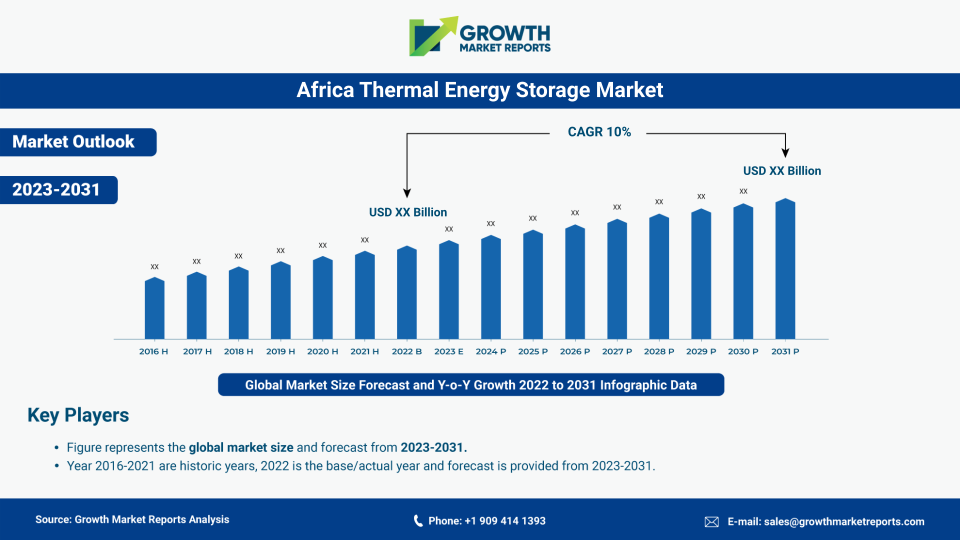
According to our latest research, the global thermal energy storage market size reached USD 6.8 billion in 2024, driven by rising demand for renewable energy integration and grid flexibility. The market is projected to expand at a robust CAGR of 10.7% between 2025 and 2033, reaching a forecasted value of USD 17.1 billion by the end of the period. This impressive growth trajectory is primarily fueled by increasing investments in sustainable energy infrastructure, government incentives for clean energy, and the urgent need to decarbonize heating and cooling sectors globally.
One of the primary growth factors for the thermal energy storage market is the accelerating adoption of renewable energy sources such as solar and wind, which are inherently intermittent. Thermal energy storage systems play a critical role in balancing supply and demand by storing excess energy during periods of low demand and releasing it when needed. This capability is especially valuable for grid operators seeking to maintain stability and reliability in the face of fluctuating renewable generation. Additionally, the push for energy efficiency in industrial processes and building operations has further amplified the need for advanced storage solutions, as they enable the capture and reuse of waste heat, thereby reducing overall energy consumption and greenhouse gas emissions.
Another significant driver is the growing emphasis on decarbonizing urban infrastructure, particularly in heating and cooling applications. District heating and cooling systems, which serve large urban populations, benefit immensely from thermal energy storage technologies by enabling the integration of renewable heat sources and optimizing energy distribution. Governments across Europe, Asia Pacific, and North America are implementing stringent regulations and offering financial incentives to promote the adoption of clean heating and cooling solutions. This policy landscape, combined with technological advancements in storage materials and system design, is propelling the market forward at a rapid pace.
Furthermore, advancements in storage materials and system integration are enhancing the cost-effectiveness and scalability of thermal energy storage solutions. Innovations such as high-performance phase change materials, improved molten salt formulations, and advanced thermochemical storage systems are expanding the range of applications and improving round-trip efficiency. These technological breakthroughs are attracting investments from both public and private sectors, fostering a competitive ecosystem and accelerating commercialization. As a result, the thermal energy storage market is poised to play a pivotal role in the global transition to a low-carbon energy system.
High-Temperature Thermal Energy Storage is becoming a crucial component in the advancement of renewable energy systems. As the demand for efficient energy storage solutions grows, high-temperature systems offer the ability to store large amounts of energy at elevated temperatures, which is particularly beneficial for industrial applications and concentrated solar power (CSP) plants. These systems utilize materials that can withstand extreme temperatures, providing a reliable and efficient means of storing thermal energy. The development of high-temperature storage solutions is not only enhancing the performance of existing renewable energy systems but also paving the way for new applications in sectors that require high-grade heat, such as metallurgy and chemical processing.
Regionally, Europe leads the adoption of thermal energy storage technologies, driven by ambitious climate targets and extensive district heating networks. The Asia Pacific region is rapidly emerging as a key growth market, supported by large-scale renewable energy projects and urbanization trends. North America, while mature in certain segments, continues to witness strong demand from industrial and commercial end-users seeking to enhance energy resilience and sustainability. Together, these regions account for the majority of global market revenues, with Latin America and the Middle East & Africa showing increasing potential as policy frameworks evolve and energy transition initiatives gain momentum.
The thermal energy storage market is segmented by technology into sensible heat storage, latent heat storage, and thermochemical storage, each offering unique advantages and applications. Sensible heat storage, which relies on temperature changes in storage media such as water or rocks, remains the most widely deployed technology due to its simplicity, reliability, and cost-effectiveness. This technology is especially prevalent in large-scale district heating and solar thermal power plants, where it enables efficient storage and retrieval of thermal energy over extended periods. The scalability of sensible heat systems and their compatibility with various heat sources make them a cornerstone of the market, particularly in regions with established infrastructure and high thermal demand.
Latent heat storage, which utilizes phase change materials (PCMs) to store and release energy during material transitions, is gaining traction for its high energy density and ability to maintain near-constant temperatures during energy transfer. This technology is increasingly being adopted in building HVAC systems, cold storage applications, and industrial processes where precise temperature control is critical. Recent advancements in PCM formulations and encapsulation techniques have improved the durability, thermal conductivity, and cost-effectiveness of latent heat storage systems, making them a viable option for both retrofitting existing facilities and deploying new installations.
Thermochemical storage represents the cutting edge of the thermal energy storage market, offering the highest energy density and long-duration storage capabilities. By leveraging reversible chemical reactions to store and release heat, thermochemical systems can achieve greater efficiency and flexibility compared to traditional methods. Although currently at a nascent stage of commercialization, ongoing research and pilot projects are demonstrating the potential of thermochemical storage for seasonal storage, industrial waste heat recovery, and integration with renewable energy sources. The ability to store energy for months without significant losses positions this technology as a game-changer for future energy systems.
Solar Thermal Phase-Change Storage is gaining traction as a viable solution for harnessing solar energy more effectively. This technology leverages the unique properties of phase-change materials (PCMs) to store and release thermal energy during the transition between solid and liquid states. By integrating solar thermal phase-change storage systems, solar power plants can achieve greater efficiency and reliability, as these systems provide a consistent energy output even when solar radiation is intermittent. The ability to maintain stable temperatures during energy transfer makes this technology particularly attractive for applications in residential and commercial heating, as well as in industrial processes that require precise thermal management.
The competitive dynamics among these technologies are shaped by factors such as application requirements, cost considerations, and regulatory frameworks. Sensible heat storage continues to dominate in terms of installed capacity, but latent heat and thermochemical storage are rapidly gaining market share as technological barriers are overcome and new use cases emerge. The interplay between these technologies will define the trajectory of the thermal energy storage market over the coming decade, with hybrid systems and integrated solutions expected to become increasingly prevalent.
| Attributes | Details |
| Report Title | Thermal Energy Storage Market Research Report 2033 |
| By Technology | Sensible Heat Storage, Latent Heat Storage, Thermochemical Storage |
| By Storage Material | Molten Salt, Water, Phase Change Materials, Others |
| By Application | Power Generation, District Heating and Cooling, Process Heating and Cooling, Others |
| By End-User | Utilities, Industrial, Commercial, Residential |
| Regions Covered | North America, Europe, APAC, Latin America, MEA |
| Base Year | 2024 |
| Historic Data | 2018-2023 |
| Forecast Period | 2025-2033 |
| Number of Pages | 294 |
| Number of Tables & Figures | 297 |
| Customization Available | Yes, the report can be customized as per your need. |
The choice of storage material is a critical determinant of system performance, cost, and application suitability within the thermal energy storage market. Molten salt is the most prominent storage medium, particularly in concentrated solar power (CSP) plants, due to its high thermal stability, low cost, and ability to operate at elevated temperatures. Molten salt systems have proven their reliability in large-scale deployments, enabling CSP plants to deliver dispatchable power even after sunset. Ongoing research is focused on extending the operating temperature range and improving the corrosion resistance of molten salt formulations, further enhancing their competitiveness in the market.
Water remains a widely used storage material for both sensible heat and latent heat storage applications, owing to its abundance, low environmental impact, and favorable thermophysical properties. Thermal storage tanks using water are common in district heating and cooling networks, as well as in building-scale HVAC systems. The integration of water-based storage with heat pumps and renewable energy sources is expanding the application scope, particularly in regions with strong policy support for clean heating and cooling solutions.
Phase change materials (PCMs) are at the forefront of innovation in the thermal energy storage market, offering superior energy density and the ability to store and release heat at specific temperatures. PCMs are being increasingly adopted in commercial buildings, cold chain logistics, and industrial processes where temperature stability is paramount. Advances in PCM encapsulation, thermal conductivity enhancement, and cost reduction are driving broader adoption and enabling new business models such as thermal batteries and portable storage units.
Other storage materials, including rocks, concrete, and advanced composites, are being explored for specialized applications such as high-temperature industrial processes and long-duration storage. These materials offer unique advantages in terms of durability, scalability, and integration with existing infrastructure. The ongoing diversification of storage materials is expanding the addressable market and enabling tailored solutions for a wide range of end-users and applications.
The thermal energy storage market serves a diverse array of applications, each with distinct requirements and growth drivers. Power generation remains the largest application segment, with thermal storage systems playing a critical role in enabling the dispatchability of renewable energy sources, particularly solar thermal plants. By decoupling energy generation from consumption, thermal storage enhances grid stability, reduces curtailment, and supports the integration of variable renewables. The growing penetration of renewables in global energy mixes is expected to drive sustained demand for thermal storage solutions in this segment.
Lunar Night Thermal Storage Materials are emerging as a critical innovation in the quest to support long-duration energy storage solutions for extraterrestrial applications. These materials are designed to store thermal energy during the lunar day and release it during the lunar night, providing a continuous energy supply for lunar bases and exploration missions. The unique challenges of the lunar environment, such as extreme temperature fluctuations and the absence of an atmosphere, necessitate the development of advanced thermal storage materials that can withstand these conditions. By enabling sustainable energy management on the moon, lunar night thermal storage materials are paving the way for future space exploration and the establishment of permanent human presence beyond Earth.
District heating and cooling represent another major application area, particularly in Europe, China, and North America. Thermal storage enables these systems to optimize energy use, integrate renewable heat sources, and provide reliable service to urban populations. The modernization of district energy networks, coupled with policy mandates for decarbonization, is fueling investment in advanced storage technologies and driving market growth in this segment.
Process heating and cooling in industrial sectors such as chemicals, food and beverage, and manufacturing are emerging as high-growth applications for thermal energy storage. These industries require large quantities of thermal energy, often at specific temperatures and time intervals. Thermal storage systems facilitate demand-side management, waste heat recovery, and process optimization, resulting in significant energy savings and emissions reductions. As industries seek to improve competitiveness and comply with environmental regulations, the adoption of thermal storage solutions is expected to accelerate.
Other applications, including residential heating and cooling, cold chain logistics, and data center thermal management, are gaining traction as technology costs decline and awareness of energy efficiency benefits increases. The versatility of thermal energy storage technologies enables their deployment across a wide range of sectors, supporting the broader transition to sustainable and resilient energy systems.
End-user segmentation in the thermal energy storage market reveals distinct adoption patterns and growth opportunities across utilities, industrial, commercial, and residential sectors. Utilities are the primary adopters of large-scale thermal storage systems, leveraging these technologies to enhance grid flexibility, integrate renewable energy, and provide ancillary services. The transition to smart grids and the increasing prevalence of distributed energy resources are driving utilities to invest in advanced storage solutions that can support both centralized and decentralized energy systems.
The industrial sector represents a significant and growing market for thermal energy storage, driven by the need to improve energy efficiency, reduce operating costs, and comply with environmental regulations. Industries such as chemicals, steel, and food processing are deploying thermal storage systems to capture and reuse waste heat, optimize process heating and cooling, and manage peak energy demand. The potential for substantial cost savings and emissions reductions is prompting increased investment in tailored storage solutions for industrial applications.
Commercial end-users, including office buildings, shopping centers, hospitals, and data centers, are increasingly adopting thermal energy storage to manage energy consumption, reduce utility bills, and enhance resilience against power outages. The integration of thermal storage with building management systems and renewable energy sources is enabling commercial facilities to achieve sustainability targets and respond to dynamic electricity pricing. As energy efficiency becomes a key differentiator in the commercial real estate market, demand for advanced storage solutions is expected to rise.
Residential adoption of thermal energy storage, while currently limited compared to other segments, is poised for growth as technology costs decline and awareness of energy efficiency benefits increases. Homeowners are beginning to explore thermal batteries, heat pumps with integrated storage, and solar thermal systems to reduce energy bills and enhance comfort. Policy incentives and the proliferation of smart home technologies are expected to accelerate residential uptake in the coming years.
The thermal energy storage market is brimming with opportunities driven by global decarbonization efforts, technological innovation, and evolving energy systems. One of the most significant opportunities lies in the integration of thermal storage with renewable energy projects, particularly solar and wind. As countries ramp up renewable capacity to meet climate targets, the need for flexible, reliable storage solutions will only intensify. Thermal storage offers a cost-effective alternative to electrochemical batteries for long-duration and large-scale applications, positioning it as a key enabler of the clean energy transition.
Another promising opportunity is the modernization and expansion of district heating and cooling networks, especially in urban areas facing rapid population growth and increasing energy demand. Thermal storage can help utilities and municipalities optimize energy use, reduce peak loads, and integrate diverse heat sources, including waste heat and renewables. The emergence of smart grid technologies and digitalization is further enhancing the value proposition of thermal storage by enabling real-time monitoring, predictive maintenance, and seamless integration with other energy assets.
Despite these opportunities, the thermal energy storage market faces several restraining factors that could hinder growth. High upfront capital costs, especially for advanced storage technologies and large-scale installations, remain a significant barrier to adoption. While the long-term operational savings and environmental benefits are compelling, securing financing for new projects can be challenging, particularly in regions with limited policy support or uncertain regulatory frameworks. Addressing these challenges will require continued innovation, supportive policies, and creative financing models to unlock the full potential of thermal energy storage.
Regionally, Europe is the undisputed leader in the thermal energy storage market, accounting for approximately 32% of global revenues in 2024. The region's dominance is underpinned by ambitious climate policies, extensive district heating networks, and a strong commitment to renewable energy integration. Countries such as Germany, Denmark, and Sweden are at the forefront of deploying advanced thermal storage systems, supported by robust government incentives and a well-developed regulatory framework. The European market is projected to grow at a steady CAGR of 9.8% through 2033, driven by ongoing investments in clean energy infrastructure and urban sustainability initiatives.
The Asia Pacific region is rapidly emerging as a key growth engine for the thermal energy storage market, capturing around 28% of global market share in 2024. China, Japan, South Korea, and India are leading the charge, fueled by large-scale renewable energy projects, rapid urbanization, and increasing energy demand. The region's strong manufacturing base and proactive policy measures are fostering innovation and driving down technology costs, making thermal energy storage an attractive option for utilities, industries, and commercial end-users alike. Asia Pacific is expected to register the highest CAGR of 12.3% over the forecast period, reflecting its pivotal role in the global energy transition.
North America holds a significant share of the thermal energy storage market, representing approximately 22% of global revenues in 2024. The United States and Canada are leading adopters, with strong demand from power generation, industrial, and commercial sectors. The region's focus on grid modernization, energy resilience, and decarbonization is driving investment in advanced storage technologies. While the market is relatively mature compared to other regions, ongoing policy support and the proliferation of distributed energy resources are expected to sustain growth in the coming years. Latin America and the Middle East & Africa, though smaller in terms of market size, are showing increasing potential as energy transition initiatives gain momentum and policy frameworks evolve.
The thermal energy storage market is characterized by a dynamic and competitive landscape, with a diverse mix of multinational corporations, specialized technology providers, and emerging startups vying for market share. The competitive intensity is fueled by rapid technological advancements, evolving customer requirements, and the growing importance of sustainability in energy systems. Companies are investing heavily in research and development to enhance system efficiency, reduce costs, and expand the application scope of their solutions. Strategic partnerships, mergers and acquisitions, and collaborations with utilities and research institutions are common strategies employed to strengthen market position and accelerate commercialization.
Market leaders are focusing on developing integrated solutions that combine multiple storage technologies and materials to address the diverse needs of end-users. The ability to offer turnkey solutions, from system design and engineering to installation and maintenance, is emerging as a key differentiator in the market. Additionally, digitalization and the integration of smart control systems are enabling companies to deliver value-added services such as predictive maintenance, real-time performance monitoring, and energy management optimization. These capabilities are enhancing customer value and driving long-term adoption.
The competitive landscape is also shaped by the entry of new players and the emergence of innovative business models. Startups and technology disruptors are introducing novel storage materials, modular systems, and flexible financing options to lower barriers to adoption and address untapped market segments. The proliferation of pilot projects and demonstration plants is accelerating the validation and commercialization of next-generation storage technologies, further intensifying competition and expanding the addressable market.
Some of the major companies operating in the thermal energy storage market include Abengoa Solar S.A., Siemens Energy AG, Burns & McDonnell, CALMAC (A Trane Technologies Company), DN Tanks, BrightSource Energy, Inc., Ice Energy, Steffes Corporation, SolarReserve, LLC, and Baltimore Aircoil Company. These companies are at the forefront of technology innovation, project execution, and market expansion. For instance, Abengoa Solar is renowned for its expertise in molten salt storage systems for CSP plants, while Siemens Energy is a leader in integrated thermal storage solutions for power and industrial applications. CALMAC and Ice Energy specialize in commercial and residential thermal storage systems, offering modular and scalable solutions for building energy management.
BrightSource Energy and SolarReserve have established themselves as pioneers in large-scale solar thermal power plants with integrated storage, enabling dispatchable renewable power generation. DN Tanks and Baltimore Aircoil Company are recognized for their expertise in water-based storage systems for district energy and industrial applications. Steffes Corporation is known for its innovative thermal storage solutions for residential and commercial customers, particularly in the North American market. These companies, through continuous innovation and strategic partnerships, are shaping the future of the thermal energy storage industry and driving the global transition to sustainable energy systems.
The Thermal Energy Storage market has been segmented on the basis of
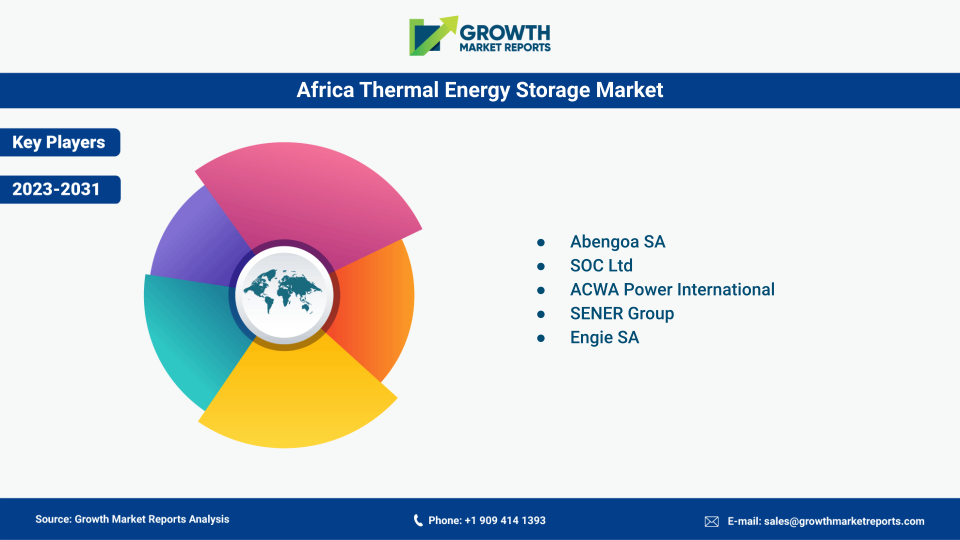
Key players competing in the Africa thermal energy storage market includes SOC Ltd, Abengoa SA; ACWA Power International; SENER Group; and Engie SA.
Some of these players are engaging in business strategies such as mergers, acquisitions, partnerships, collaborations, capacity expansion, and product launches to enhance their market share.
Advancements in storage materials (like improved molten salt and PCMs), system integration, and digitalization are enhancing cost-effectiveness, scalability, and operational efficiency, driving broader adoption.
Major players include Abengoa Solar, Siemens Energy, BrightSource Energy, SolarReserve, Baltimore Aircoil Company, DN Tanks, CALMAC (Trane Technologies), Ice Energy, Steffes Corporation, and others.
Opportunities include integration with renewables, modernization of district energy networks, and smart grid adoption. Challenges include high upfront capital costs and the need for supportive policies and financing.
End-users include utilities, industrial sectors (like chemicals and food processing), commercial buildings (offices, hospitals, data centers), and residential customers.
Major applications include power generation, district heating and cooling, process heating and cooling in industries, residential heating and cooling, cold chain logistics, and data center thermal management.
Common storage materials include molten salt (especially for CSP plants), water (for district heating and cooling), phase change materials (PCMs), rocks, concrete, and advanced composites.
The market is segmented into sensible heat storage, latent heat storage (using phase change materials), and thermochemical storage, each with unique advantages and applications.
Europe leads the market with 32% of global revenues, followed by Asia Pacific (28%) and North America (22%). Europe is driven by ambitious climate policies and extensive district heating networks.
Key growth drivers include rising renewable energy integration, grid flexibility needs, government incentives for clean energy, and the push to decarbonize heating and cooling sectors globally.
The global thermal energy storage market reached USD 6.8 billion in 2024 and is projected to grow at a CAGR of 10.7% from 2025 to 2033, reaching USD 17.1 billion by 2033.