Technology CAD Software Market Research Report 2033

Technology CAD Software Market Research Report 2033

Segments - by Component (Software, Services), by Deployment Mode (On-Premises, Cloud-Based), by Application (Semiconductor Device Simulation, Process Simulation, TCAD for MEMS, Optoelectronics, Power Devices, Others), by End-User (Semiconductor Manufacturers, Foundries, Research Institutes, Others)

https://growthmarketreports.com/Raksha
Author : Raksha Sharma
https://growthmarketreports.com/Vaibhav
Fact-checked by : V. Chandola
https://growthmarketreports.com/Shruti
Editor : Shruti Bhat

Upcoming | Report ID :ICT-SE-563 | 4.5 Rating | 50 Reviews | 296 Pages | Format : Docx PDF

Report Description


Technology CAD Software Market Outlook

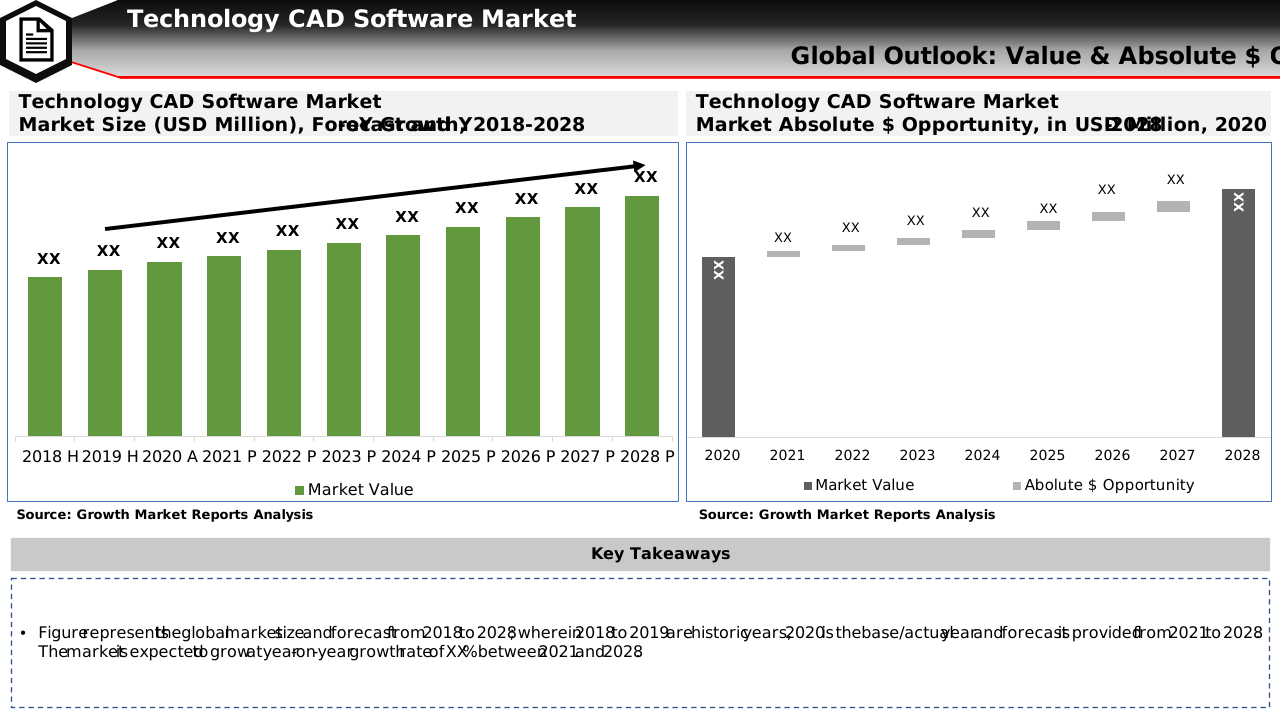
According to our latest research, the global Technology CAD Software market size reached USD 1.42 billion in 2024, with a robust compound annual growth rate (CAGR) of 10.8% projected from 2025 to 2033. The market is forecasted to expand significantly, reaching approximately USD 3.58 billion by 2033. This impressive growth trajectory is primarily driven by the escalating demand for advanced semiconductor device simulation and process optimization solutions across various industries, including electronics, automotive, and telecommunications. The integration of AI and machine learning capabilities within TCAD platforms, coupled with the surging investments in semiconductor R&D, are further propelling the market forward as per our latest research findings.

One of the fundamental growth factors for the Technology CAD Software market is the rapid evolution of the global semiconductor industry. As chip manufacturing processes become increasingly complex, there is a heightened need for precise modeling, simulation, and verification tools to ensure optimal device performance and yield. Technology CAD (TCAD) software enables engineers to simulate intricate physical phenomena at the atomic, device, and circuit levels, thereby reducing costly trial-and-error in fabrication. The recent surge in demand for high-performance computing, 5G, and IoT devices has placed unprecedented pressure on semiconductor manufacturers to innovate and accelerate time-to-market. TCAD tools play a pivotal role in this ecosystem by facilitating faster prototyping, design validation, and process optimization, which are essential for maintaining competitiveness in a rapidly evolving technological landscape.

Another significant driver for the Technology CAD Software market is the increasing adoption of advanced technologies such as artificial intelligence, machine learning, and automation within the design and simulation workflow. Modern TCAD platforms are being equipped with intelligent algorithms that automate routine tasks, enhance simulation accuracy, and provide predictive insights into device behavior. This technological convergence not only streamlines the entire semiconductor design process but also empowers engineers to tackle more complex design challenges with greater efficiency. The proliferation of cloud-based deployment models is further democratizing access to powerful simulation tools, enabling small and medium enterprises (SMEs) and research institutes to leverage cutting-edge TCAD solutions without the need for significant capital investment in hardware infrastructure.

The growing emphasis on miniaturization and the development of next-generation electronic devices is also fueling the demand for Technology CAD Software. As manufacturers strive to produce smaller, faster, and more energy-efficient chips, the need for accurate modeling of nanoscale phenomena has become paramount. TCAD software enables the simulation of quantum effects, thermal management, and material properties at the nanoscale, which are critical for the successful development of advanced semiconductor devices such as MEMS, optoelectronics, and power devices. The ongoing transition towards electric vehicles, renewable energy systems, and smart infrastructure is further expanding the application scope of TCAD solutions, thereby driving market growth across diverse end-user segments.

The advent of 3D CAD Software has revolutionized the way engineers and designers approach semiconductor device modeling. By providing a three-dimensional perspective, these tools enable more accurate and comprehensive visualization of complex device structures and interactions. This capability is particularly beneficial in the realm of nanoscale semiconductor design, where minute variations can significantly impact device performance. The integration of 3D CAD Software with TCAD platforms allows for enhanced simulation accuracy, enabling engineers to predict device behavior with greater precision. As a result, manufacturers can optimize their designs more effectively, reducing the need for costly physical prototypes and accelerating the development process.

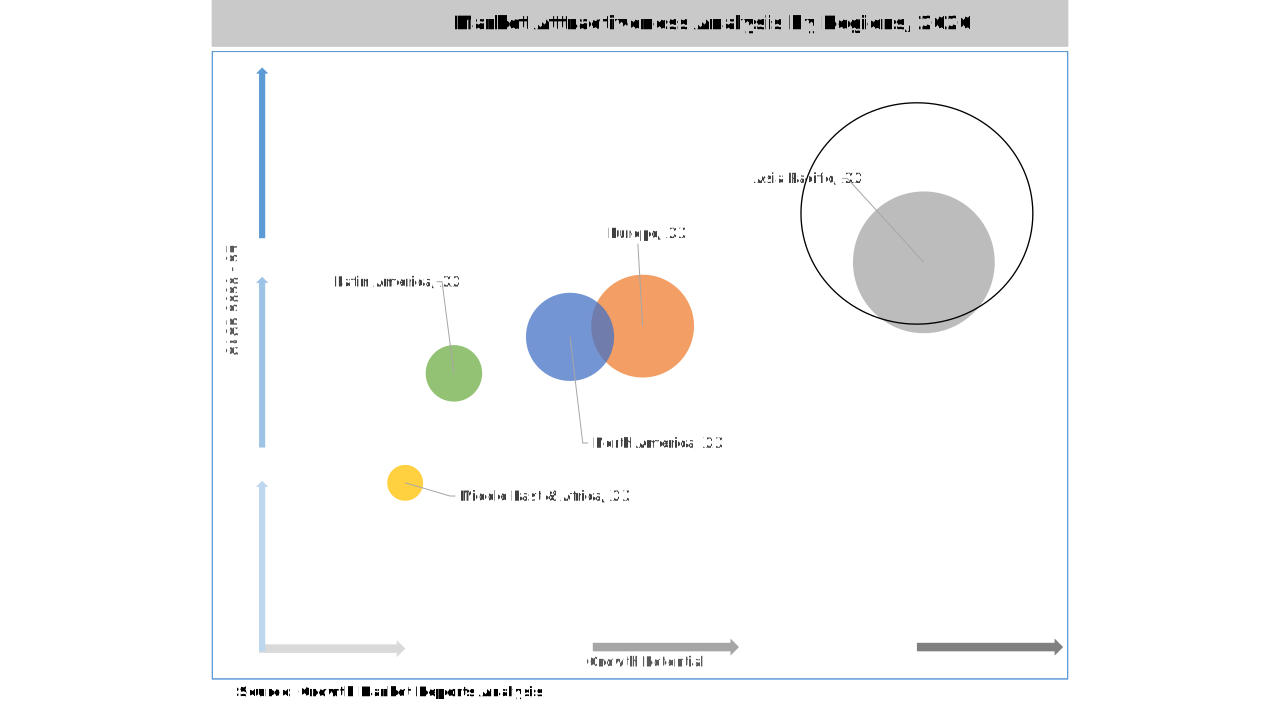
From a regional perspective, the Asia Pacific region continues to dominate the Technology CAD Software market, accounting for the largest share in 2024. This dominance is attributed to the presence of major semiconductor manufacturing hubs in countries such as China, Taiwan, South Korea, and Japan. The region's robust electronics industry, coupled with substantial government investments in R&D and innovation, has created a fertile environment for the adoption of advanced TCAD solutions. North America and Europe are also witnessing significant growth, driven by strong research ecosystems, leading foundries, and the presence of global technology giants. The Middle East & Africa and Latin America, while currently representing smaller market shares, are poised for steady growth as digital transformation initiatives gain momentum across these regions.

Global Technology CAD Software Industry Outlook

Component Analysis

The Component segment of the Technology CAD Software market is bifurcated into Software and Services. The software sub-segment holds the lionÂ’s share of the market, driven by the continuous innovation in simulation algorithms, user interfaces, and integration capabilities with other electronic design automation (EDA) tools. Modern TCAD software platforms offer comprehensive modeling and simulation functionalities, covering a wide range of device structures, materials, and process technologies. The ability to accurately predict device performance, optimize fabrication processes, and reduce development cycles has made software solutions indispensable for semiconductor manufacturers, foundries, and research institutes alike. Furthermore, the shift towards cloud-based software delivery models is enhancing accessibility and scalability, enabling organizations of all sizes to leverage advanced TCAD capabilities without substantial upfront investments.

The services sub-segment, while smaller in comparison to software, is exhibiting rapid growth due to the increasing demand for consulting, training, and technical support services. As semiconductor technologies become more advanced and the design landscape more complex, organizations are seeking expert guidance to maximize the value of their TCAD investments. Service providers offer a range of solutions, including custom simulation development, workflow optimization, and integration with existing EDA ecosystems. The growing trend of outsourcing non-core activities and the need for specialized expertise in areas such as quantum device modeling and process calibration are further boosting the demand for professional TCAD services. This trend is particularly pronounced among SMEs and research institutes, which may lack in-house technical resources.

Integration and interoperability have become key considerations in the selection of TCAD software and services. Organizations are increasingly looking for solutions that seamlessly interface with other design and simulation tools, such as layout editors, process simulators, and circuit simulators. This has led to the emergence of open standards and APIs, which facilitate data exchange and workflow automation across the semiconductor design chain. Service providers are playing a crucial role in enabling this integration, offering customization and support to ensure smooth interoperability and maximize productivity. As the semiconductor industry continues to evolve, the demand for integrated, end-to-end TCAD solutions is expected to rise, driving further growth in both the software and services segments.

The competitive landscape within the component segment is characterized by intense innovation and differentiation. Leading software vendors are investing heavily in R&D to enhance simulation accuracy, speed, and usability, while service providers are expanding their offerings to include advanced analytics, AI-driven optimization, and cloud-based support. The ability to deliver comprehensive, user-friendly, and scalable TCAD solutions is emerging as a key differentiator in the market. As organizations increasingly prioritize digital transformation and automation, the component segment of the Technology CAD Software market is poised for sustained growth and innovation in the coming years.

Report Scope

Attributes Details
Report Title Technology CAD Software Market Research Report 2033
By Component Software, Services
By Deployment Mode On-Premises, Cloud-Based
By Application Semiconductor Device Simulation, Process Simulation, TCAD for MEMS, Optoelectronics, Power Devices, Others
By End-User Semiconductor Manufacturers, Foundries, Research Institutes, Others
Regions Covered North America, Europe, APAC, Latin America, MEA
Base Year 2024
Historic Data 2018-2023
Forecast Period 2025-2033
Number of Pages 296
Number of Tables & Figures 396
Customization Available Yes, the report can be customized as per your need.

Deployment Mode Analysis

The Deployment Mode segment of the Technology CAD Software market is categorized into On-Premises and Cloud-Based solutions. On-premises deployment has traditionally been the preferred choice among large semiconductor manufacturers and foundries, primarily due to concerns related to data security, intellectual property protection, and the need for high-performance computing resources. These organizations often possess the infrastructure and technical expertise required to manage complex TCAD environments in-house, enabling them to maintain strict control over their simulation workflows and sensitive design data. The on-premises model also allows for greater customization and integration with proprietary tools and processes, which is critical for organizations operating in highly competitive and innovation-driven markets.

However, the cloud-based deployment model is rapidly gaining traction, particularly among small and medium enterprises (SMEs), research institutes, and organizations with distributed teams. Cloud-based TCAD solutions offer unparalleled scalability, flexibility, and cost-efficiency, enabling users to access powerful simulation tools from anywhere, at any time. The pay-as-you-go pricing model eliminates the need for significant upfront investments in hardware and software, making advanced TCAD capabilities accessible to a broader range of users. Cloud platforms also facilitate collaboration and knowledge sharing, allowing geographically dispersed teams to work together seamlessly on complex design projects. As cloud security and compliance standards continue to improve, more organizations are expected to migrate their TCAD workflows to the cloud, driving robust growth in this segment.

The hybrid deployment model is also emerging as a viable option for organizations seeking to balance the benefits of both on-premises and cloud-based solutions. By leveraging a combination of local and cloud resources, organizations can optimize performance, security, and cost while maintaining the flexibility to scale resources as needed. Hybrid deployments enable organizations to retain sensitive data and critical workflows on-premises while leveraging the cloud for burst workloads, collaboration, and remote access. This approach is particularly attractive to organizations operating in regulated industries or regions with stringent data sovereignty requirements. As the demand for flexible and adaptive TCAD solutions grows, the hybrid deployment model is expected to gain further traction in the market.

The ongoing digital transformation of the semiconductor industry is driving innovation in deployment models, with vendors increasingly offering cloud-native, API-driven, and containerized TCAD solutions. These advancements are enabling organizations to accelerate simulation workflows, reduce operational complexity, and enhance business agility. As the Technology CAD Software market continues to evolve, the deployment mode segment will remain a key area of focus for vendors and end-users alike, shaping the future of simulation-driven semiconductor design and manufacturing.

Application Analysis

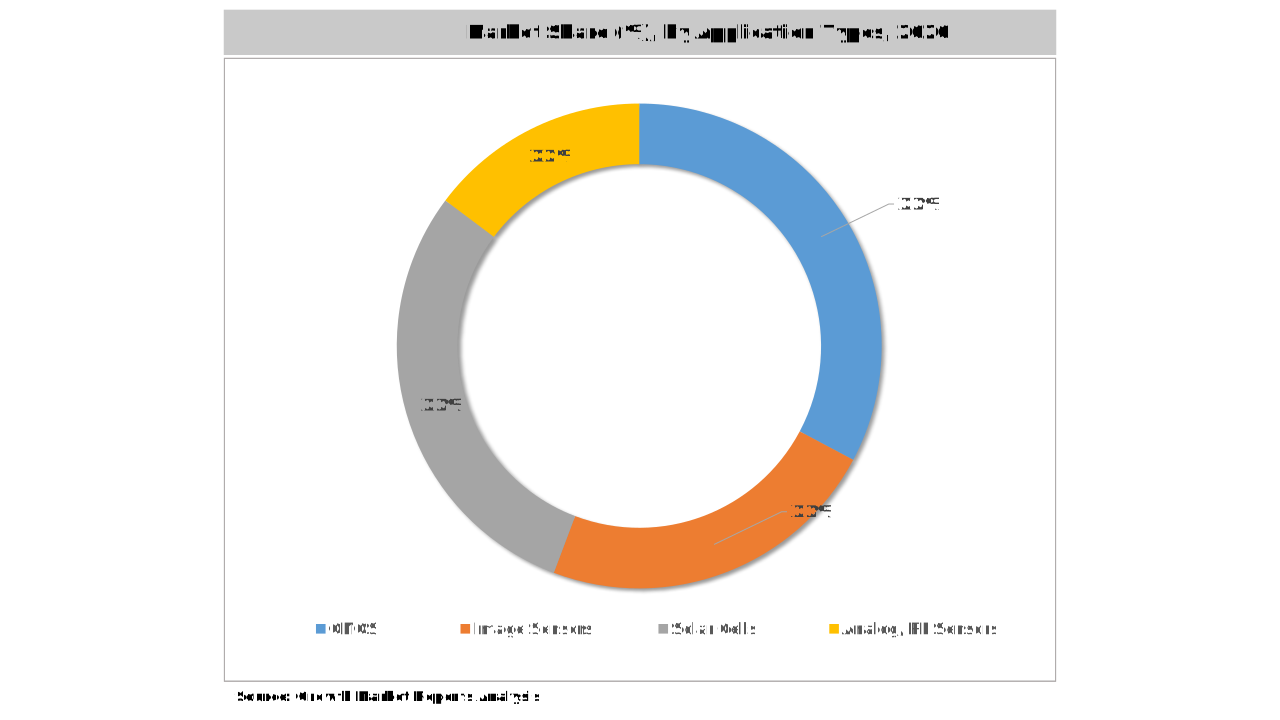
The Application segment of the Technology CAD Software market encompasses Semiconductor Device Simulation, Process Simulation, TCAD for MEMS, Optoelectronics, Power Devices, and Others. Semiconductor device simulation represents the largest application area, driven by the need to model and optimize the electrical, thermal, and physical behavior of advanced semiconductor devices. TCAD tools enable engineers to simulate device characteristics such as threshold voltage, leakage current, and breakdown voltage, facilitating the development of high-performance, energy-efficient chips. The increasing complexity of device architectures, such as FinFETs, gate-all-around transistors, and 3D NAND, is fueling the demand for sophisticated simulation capabilities that can accurately capture nanoscale phenomena and predict real-world performance.

Process simulation is another critical application area, enabling manufacturers to model and optimize fabrication processes such as lithography, etching, deposition, and doping. TCAD process simulation tools help identify process variations, predict yield, and optimize process parameters, thereby reducing manufacturing costs and improving device reliability. The ongoing transition to advanced process nodes, such as 5nm and below, is amplifying the importance of process simulation in ensuring successful technology scaling. As manufacturers push the boundaries of MooreÂ’s Law, the ability to accurately simulate and optimize complex process flows is becoming essential for maintaining competitiveness and achieving first-pass silicon success.

The application of TCAD for microelectromechanical systems (MEMS) is experiencing rapid growth, driven by the proliferation of MEMS devices in automotive, healthcare, consumer electronics, and industrial automation. TCAD tools enable the simulation of mechanical, thermal, and electrical behavior of MEMS structures, facilitating the design of sensors, actuators, and microfluidic devices. The integration of MEMS with semiconductor devices is creating new opportunities for innovation, particularly in areas such as IoT, wearable devices, and smart infrastructure. As MEMS devices become increasingly complex and miniaturized, the demand for advanced simulation tools that can model multi-physics interactions is expected to rise.

Optoelectronics and power devices are also emerging as significant application areas within the Technology CAD Software market. The growing demand for energy-efficient lighting, high-speed communication, and renewable energy systems is driving the development of advanced optoelectronic and power semiconductor devices. TCAD tools enable the simulation of optical, electrical, and thermal behavior in these devices, supporting the design of LEDs, lasers, photodetectors, power MOSFETs, and IGBTs. The ability to accurately model material properties, device structures, and performance under varying operating conditions is critical for the successful commercialization of next-generation optoelectronic and power devices. As the market continues to evolve, the application segment will remain a key driver of innovation and value creation in the Technology CAD Software market.

End-User Analysis

The End-User segment of the Technology CAD Software market includes Semiconductor Manufacturers, Foundries, Research Institutes, and Others. Semiconductor manufacturers represent the largest end-user group, leveraging TCAD solutions to accelerate device innovation, optimize process flows, and improve yield. The relentless pursuit of smaller, faster, and more energy-efficient chips is driving manufacturers to adopt advanced simulation tools that can accurately model nanoscale phenomena and predict device performance under real-world operating conditions. TCAD software has become an integral part of the semiconductor design and manufacturing workflow, enabling manufacturers to reduce development cycles, minimize costly iterations, and achieve first-pass silicon success.

Foundries are another key end-user group, providing advanced manufacturing services to fabless semiconductor companies and integrated device manufacturers (IDMs). Foundries rely on TCAD tools to optimize process technologies, ensure process compatibility with diverse customer designs, and maintain high levels of yield and reliability. The increasing complexity of process nodes, coupled with the growing demand for customized solutions, is driving foundries to invest in state-of-the-art TCAD platforms that can support a wide range of device architectures and materials. The ability to offer differentiated process technologies and deliver superior performance is emerging as a key competitive advantage for leading foundries in the global market.

Research institutes and academic organizations play a vital role in advancing the state of the art in semiconductor technology and TCAD methodologies. These organizations leverage TCAD tools to explore new materials, device structures, and process technologies, driving innovation and knowledge creation across the industry. The growing emphasis on collaboration between academia and industry is fostering the development of open-source TCAD platforms, shared simulation databases, and collaborative research initiatives. As the pace of technological change accelerates, the role of research institutes in shaping the future of the Technology CAD Software market is expected to become increasingly prominent.

The “Others” category encompasses a diverse range of end-users, including government agencies, defense organizations, and consulting firms. These entities leverage TCAD solutions for specialized applications such as radiation-hardened device design, security analysis, and regulatory compliance. The expanding application scope of TCAD tools is creating new opportunities for value creation across a broad spectrum of industries and end-user segments. As the Technology CAD Software market continues to evolve, the end-user segment will remain a key driver of adoption, innovation, and market growth.

Opportunities & Threats

The Technology CAD Software market presents significant opportunities for growth and innovation, particularly in the context of emerging technologies such as artificial intelligence, quantum computing, and advanced materials. The integration of AI and machine learning algorithms within TCAD platforms is enabling the automation of complex simulation tasks, predictive modeling, and real-time optimization. These advancements are not only enhancing simulation accuracy and speed but also empowering engineers to tackle previously intractable design challenges. The ongoing shift towards cloud-based and hybrid deployment models is further democratizing access to advanced TCAD capabilities, enabling organizations of all sizes to participate in the semiconductor innovation ecosystem. As the demand for high-performance, energy-efficient electronic devices continues to rise, the market is poised to capitalize on new opportunities in areas such as IoT, automotive electronics, renewable energy, and smart infrastructure.

Collaboration and ecosystem development represent another major opportunity within the Technology CAD Software market. The increasing complexity of semiconductor devices and processes is driving organizations to seek integrated, end-to-end solutions that span the entire design and manufacturing value chain. Vendors are responding by forming strategic partnerships, developing open standards, and offering comprehensive platforms that integrate TCAD with other electronic design automation (EDA) tools. This collaborative approach is fostering innovation, reducing time-to-market, and enabling organizations to address the challenges of next-generation semiconductor design and manufacturing. The growing emphasis on sustainability and environmental responsibility is also creating new opportunities for TCAD vendors to develop solutions that optimize energy consumption, reduce waste, and support green manufacturing practices.

Despite the significant opportunities, the Technology CAD Software market faces several threats and restraining factors. One of the primary challenges is the high cost and complexity associated with implementing advanced TCAD solutions. The steep learning curve, coupled with the need for specialized technical expertise, can pose barriers to adoption, particularly for SMEs and organizations with limited resources. Additionally, concerns related to data security, intellectual property protection, and regulatory compliance can hinder the adoption of cloud-based TCAD solutions in certain regions and industries. As the market continues to evolve, vendors and end-users must address these challenges through ongoing investment in education, training, and security technologies to ensure the sustainable growth of the Technology CAD Software market.

Regional Outlook

The Asia Pacific region remains the largest and fastest-growing market for Technology CAD Software, accounting for approximately USD 600 million in 2024. This dominance is driven by the presence of major semiconductor manufacturing hubs in China, Taiwan, South Korea, and Japan, as well as substantial government investments in R&D and innovation. The regionÂ’s robust electronics industry, coupled with a large pool of skilled engineers and researchers, has created a fertile environment for the adoption of advanced TCAD solutions. The Asia Pacific market is projected to grow at a CAGR of 12.2% from 2025 to 2033, outpacing other regions and reinforcing its position as the global leader in semiconductor innovation and manufacturing.

North America holds the second-largest share of the Technology CAD Software market, with a market size of approximately USD 410 million in 2024. The regionÂ’s strong research ecosystem, leading foundries, and the presence of global technology giants such as Intel, Qualcomm, and NVIDIA are key factors driving market growth. North America is also at the forefront of technological innovation, with significant investments in AI, quantum computing, and advanced materials research. The region is expected to maintain steady growth over the forecast period, supported by ongoing digital transformation initiatives and the increasing adoption of cloud-based TCAD solutions.

Europe accounts for a significant share of the global Technology CAD Software market, with a market size of approximately USD 260 million in 2024. The region is characterized by a strong focus on research and innovation, supported by leading academic institutions, research consortia, and government funding programs. The European market is witnessing growing adoption of TCAD solutions in automotive electronics, renewable energy, and industrial automation, driven by the regionÂ’s emphasis on sustainability and energy efficiency. The Middle East & Africa and Latin America, while currently representing smaller market shares, are poised for steady growth as digital transformation initiatives gain momentum and the demand for advanced semiconductor devices increases across these regions. Collectively, these regional trends underscore the global nature of the Technology CAD Software market and the diverse opportunities for growth and innovation.

Technology CAD Software Market Statistics

Competitor Outlook

The Technology CAD Software market is characterized by intense competition and rapid innovation, with a diverse array of global and regional players vying for market share. Leading vendors are investing heavily in research and development to enhance simulation accuracy, speed, and usability, while also expanding their product portfolios to address emerging application areas such as AI, quantum computing, and advanced materials. The ability to deliver comprehensive, user-friendly, and scalable TCAD solutions is emerging as a key differentiator in the market, as organizations increasingly prioritize digital transformation and automation. Vendors are also focusing on developing open standards, APIs, and integration capabilities to facilitate seamless interoperability with other electronic design automation (EDA) tools and platforms.

The competitive landscape is further shaped by strategic partnerships, mergers and acquisitions, and ecosystem development initiatives. Leading TCAD vendors are collaborating with semiconductor manufacturers, foundries, research institutes, and cloud service providers to deliver integrated, end-to-end solutions that span the entire semiconductor design and manufacturing value chain. This collaborative approach is fostering innovation, reducing time-to-market, and enabling organizations to address the challenges of next-generation semiconductor design and manufacturing. The growing emphasis on sustainability and environmental responsibility is also driving vendors to develop solutions that optimize energy consumption, reduce waste, and support green manufacturing practices.

In addition to established players, the Technology CAD Software market is witnessing the emergence of innovative startups and niche players focused on specialized application areas such as MEMS, optoelectronics, and power devices. These companies are leveraging advanced simulation algorithms, AI-driven optimization, and cloud-native architectures to deliver differentiated solutions that address the unique needs of specific end-user segments. The increasing complexity of semiconductor devices and processes is creating new opportunities for value creation, as vendors seek to address the evolving requirements of a diverse and dynamic customer base.

Major companies operating in the Technology CAD Software market include Synopsys, Silvaco, Mentor Graphics (Siemens EDA), Coventor (Lam Research), and Crosslight Software. Synopsys is a global leader in electronic design automation and TCAD solutions, offering a comprehensive suite of tools for device and process simulation, modeling, and optimization. Silvaco specializes in TCAD, EDA, and custom IC design tools, serving a wide range of industries including automotive, consumer electronics, and industrial automation. Mentor Graphics, now a part of Siemens EDA, provides advanced simulation and verification solutions for semiconductor design and manufacturing. Coventor, a subsidiary of Lam Research, focuses on MEMS and semiconductor process modeling, while Crosslight Software offers specialized TCAD solutions for optoelectronics and power devices. These companies are at the forefront of innovation, driving the evolution of the Technology CAD Software market through ongoing investment in R&D, strategic partnerships, and customer-centric product development.

In conclusion, the Technology CAD Software market is poised for significant growth and transformation over the forecast period, driven by technological innovation, increasing complexity of semiconductor devices, and the rising demand for advanced simulation and optimization solutions. The competitive landscape will continue to evolve as vendors invest in new technologies, expand their product portfolios, and forge strategic partnerships to address the diverse needs of a global customer base. As the market matures, the ability to deliver comprehensive, integrated, and user-friendly TCAD solutions will be critical for sustained success and leadership in this dynamic and rapidly evolving industry.

Key Players

  • Autodesk Inc.
  • Siemens PLM Software
  • Dassault Systèmes
  • PTC Inc.
  • Bentley Systems Incorporated
  • ANSYS Inc.
  • Altair Engineering Inc.
  • Hexagon AB
  • Trimble Inc.
  • AVEVA Group plc
  • Bricsys NV
  • Nemetschek Group
  • ZWSOFT Co. Ltd.
  • IronCAD LLC
  • CIMdata Inc.
  • Graebert GmbH
  • Corel Corporation
  • TurboCAD (IMSI/Design)
  • CAXA Technology Co. Ltd.
  • Gstarsoft Co. Ltd.
Technology CAD Software Market Overview

Segments

The Technology CAD Software market has been segmented on the basis of

Component

  • Software
  • Services

Deployment Mode

  • On-Premises
  • Cloud-Based

Application

  • Semiconductor Device Simulation
  • Process Simulation
  • TCAD for MEMS
  • Optoelectronics
  • Power Devices
  • Others

End-User

  • Semiconductor Manufacturers
  • Foundries
  • Research Institutes
  • Others

Competitive Landscape

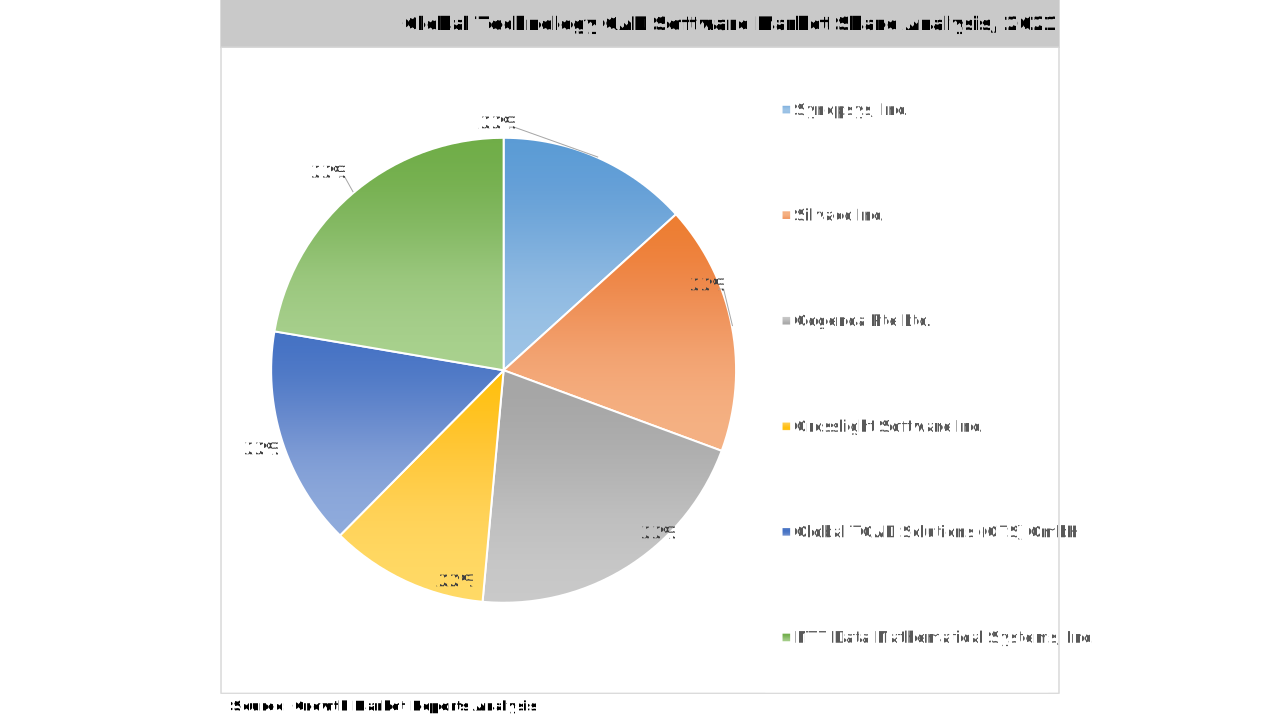
Major players in the market are Synopsys, Inc., Crosslight Software Inc., Silvaco Inc., Global TCAD Solutions (GTS) GmbH, Cogenda Pte Ltd., and NTT DataMathematical Systems, Inc. The market is consolidated, with fierce competition. Additionally, businesses have used numerous inorganic growth techniques in the recent past, such as acquisitions and mergers, alliances, and collaboration to increase their presence and market share.

In June 2020, Synopsys, Inc. announced that it extended its academic relationship and signed a contract with EPFL, the Lausanne-based Swiss Federal Institute of Technology, to license new digital synthesis technologies.

In March 2020, Silvaco, Inc. collaborate with NXP Semiconductors N.V., a semiconductor manufacturer, to develop a next-generation MIPI I3C semiconductor intellectual property. As a part of this agreement, Silvaco is likely to develop a new generation of state-of-the-art MIPI V1.1 reference implementation intellectual property core directly available to its clients.

In June 2020, Synopsys, Inc. announced an extension of its academic partnership with EPFL, the Lausanne-based Swiss Federal Institute of Technology, and a contract for licensing new digital synthesis technologies. The company has been designing a digitally triggered circuit design flow for Superconducting Electronics in partnership with Yokohama National University and the University of Rochester (SCE).

 Technology CAD Software Market By Key Players

Frequently Asked Questions

Trends include the integration of AI and machine learning, adoption of cloud and hybrid deployment models, focus on interoperability and open standards, increased collaboration across the semiconductor value chain, and the development of solutions for sustainability and green manufacturing.

Key players include Synopsys, Silvaco, Mentor Graphics (Siemens EDA), Coventor (Lam Research), Crosslight Software, Autodesk Inc., Dassault Systèmes, PTC Inc., Bentley Systems, ANSYS Inc., Altair Engineering, Hexagon AB, Trimble Inc., and others.

Challenges include the high cost and complexity of advanced TCAD solutions, the need for specialized technical expertise, data security concerns, and regulatory compliance issues, especially for cloud-based deployments.

Primary end-users include semiconductor manufacturers, foundries, research institutes, and government or consulting organizations. Manufacturers and foundries use TCAD to innovate and optimize processes, while research institutes leverage it for advanced material and device research.

Major application areas include semiconductor device simulation, process simulation, TCAD for MEMS, optoelectronics, and power devices. These tools are used for modeling electrical, thermal, and physical behaviors, optimizing fabrication processes, and supporting next-gen device development.

TCAD Software can be deployed on-premises, in the cloud, or via hybrid models. On-premises deployment is preferred by large manufacturers for security and customization, while cloud-based solutions offer scalability and cost-efficiency, especially for SMEs and research institutes.

Asia Pacific leads the market due to major semiconductor hubs in China, Taiwan, South Korea, and Japan, along with strong government R&D support. North America and Europe also hold significant shares, driven by robust research ecosystems and leading technology companies.

Key growth drivers include the complexity of semiconductor manufacturing, demand for advanced simulation tools, integration of AI and machine learning, increased R&D investments, and the push for miniaturization and energy efficiency in electronics, automotive, and telecommunications industries.

The global Technology CAD Software market reached USD 1.42 billion in 2024 and is projected to grow at a CAGR of 10.8% from 2025 to 2033, reaching approximately USD 3.58 billion by 2033. This growth is driven by rising demand for semiconductor simulation, AI integration, and process optimization.

Technology CAD (TCAD) Software is a specialized simulation tool used for modeling, simulating, and optimizing semiconductor devices and fabrication processes. It helps engineers predict device performance, optimize manufacturing processes, and reduce costly trial-and-error, making it essential for semiconductor innovation and time-to-market acceleration.

Table Of Content

Chapter 1 Executive Summary
Chapter 2 Assumptions and Acronyms Used
Chapter 3 Research Methodology
Chapter 4 Technology CAD Software Market Overview
   4.1 Introduction
      4.1.1 Market Taxonomy
      4.1.2 Market Definition
      4.1.3 Macro-Economic Factors Impacting the Market Growth
   4.2 Technology CAD Software Market Dynamics
      4.2.1 Market Drivers
      4.2.2 Market Restraints
      4.2.3 Market Opportunity
   4.3 Technology CAD Software Market - Supply Chain Analysis
      4.3.1 List of Key Suppliers
      4.3.2 List of Key Distributors
      4.3.3 List of Key Consumers
   4.4 Key Forces Shaping the Technology CAD Software Market
      4.4.1 Bargaining Power of Suppliers
      4.4.2 Bargaining Power of Buyers
      4.4.3 Threat of Substitution
      4.4.4 Threat of New Entrants
      4.4.5 Competitive Rivalry
   4.5 Global Technology CAD Software Market Size & Forecast, 2023-2032
      4.5.1 Technology CAD Software Market Size and Y-o-Y Growth
      4.5.2 Technology CAD Software Market Absolute $ Opportunity

Chapter 5 Global Technology CAD Software Market Analysis and Forecast By Component
   5.1 Introduction
      5.1.1 Key Market Trends & Growth Opportunities By Component
      5.1.2 Basis Point Share (BPS) Analysis By Component
      5.1.3 Absolute $ Opportunity Assessment By Component
   5.2 Technology CAD Software Market Size Forecast By Component
      5.2.1 Software
      5.2.2 Services
   5.3 Market Attractiveness Analysis By Component

Chapter 6 Global Technology CAD Software Market Analysis and Forecast By Deployment Mode
   6.1 Introduction
      6.1.1 Key Market Trends & Growth Opportunities By Deployment Mode
      6.1.2 Basis Point Share (BPS) Analysis By Deployment Mode
      6.1.3 Absolute $ Opportunity Assessment By Deployment Mode
   6.2 Technology CAD Software Market Size Forecast By Deployment Mode
      6.2.1 On-Premises
      6.2.2 Cloud-Based
   6.3 Market Attractiveness Analysis By Deployment Mode

Chapter 7 Global Technology CAD Software Market Analysis and Forecast By Application
   7.1 Introduction
      7.1.1 Key Market Trends & Growth Opportunities By Application
      7.1.2 Basis Point Share (BPS) Analysis By Application
      7.1.3 Absolute $ Opportunity Assessment By Application
   7.2 Technology CAD Software Market Size Forecast By Application
      7.2.1 Semiconductor Device Simulation
      7.2.2 Process Simulation
      7.2.3 TCAD for MEMS
      7.2.4 Optoelectronics
      7.2.5 Power Devices
      7.2.6 Others
   7.3 Market Attractiveness Analysis By Application

Chapter 8 Global Technology CAD Software Market Analysis and Forecast By End-User
   8.1 Introduction
      8.1.1 Key Market Trends & Growth Opportunities By End-User
      8.1.2 Basis Point Share (BPS) Analysis By End-User
      8.1.3 Absolute $ Opportunity Assessment By End-User
   8.2 Technology CAD Software Market Size Forecast By End-User
      8.2.1 Semiconductor Manufacturers
      8.2.2 Foundries
      8.2.3 Research Institutes
      8.2.4 Others
   8.3 Market Attractiveness Analysis By End-User

Chapter 9 Global Technology CAD Software Market Analysis and Forecast by Region
   9.1 Introduction
      9.1.1 Key Market Trends & Growth Opportunities By Region
      9.1.2 Basis Point Share (BPS) Analysis By Region
      9.1.3 Absolute $ Opportunity Assessment By Region
   9.2 Technology CAD Software Market Size Forecast By Region
      9.2.1 North America
      9.2.2 Europe
      9.2.3 Asia Pacific
      9.2.4 Latin America
      9.2.5 Middle East & Africa (MEA)
   9.3 Market Attractiveness Analysis By Region

Chapter 10 Coronavirus Disease (COVID-19) Impact 
   10.1 Introduction 
   10.2 Current & Future Impact Analysis 
   10.3 Economic Impact Analysis 
   10.4 Government Policies 
   10.5 Investment Scenario

Chapter 11 North America Technology CAD Software Analysis and Forecast
   11.1 Introduction
   11.2 North America Technology CAD Software Market Size Forecast by Country
      11.2.1 U.S.
      11.2.2 Canada
   11.3 Basis Point Share (BPS) Analysis by Country
   11.4 Absolute $ Opportunity Assessment by Country
   11.5 Market Attractiveness Analysis by Country
   11.6 North America Technology CAD Software Market Size Forecast By Component
      11.6.1 Software
      11.6.2 Services
   11.7 Basis Point Share (BPS) Analysis By Component 
   11.8 Absolute $ Opportunity Assessment By Component 
   11.9 Market Attractiveness Analysis By Component
   11.10 North America Technology CAD Software Market Size Forecast By Deployment Mode
      11.10.1 On-Premises
      11.10.2 Cloud-Based
   11.11 Basis Point Share (BPS) Analysis By Deployment Mode 
   11.12 Absolute $ Opportunity Assessment By Deployment Mode 
   11.13 Market Attractiveness Analysis By Deployment Mode
   11.14 North America Technology CAD Software Market Size Forecast By Application
      11.14.1 Semiconductor Device Simulation
      11.14.2 Process Simulation
      11.14.3 TCAD for MEMS
      11.14.4 Optoelectronics
      11.14.5 Power Devices
      11.14.6 Others
   11.15 Basis Point Share (BPS) Analysis By Application 
   11.16 Absolute $ Opportunity Assessment By Application 
   11.17 Market Attractiveness Analysis By Application
   11.18 North America Technology CAD Software Market Size Forecast By End-User
      11.18.1 Semiconductor Manufacturers
      11.18.2 Foundries
      11.18.3 Research Institutes
      11.18.4 Others
   11.19 Basis Point Share (BPS) Analysis By End-User 
   11.20 Absolute $ Opportunity Assessment By End-User 
   11.21 Market Attractiveness Analysis By End-User

Chapter 12 Europe Technology CAD Software Analysis and Forecast
   12.1 Introduction
   12.2 Europe Technology CAD Software Market Size Forecast by Country
      12.2.1 Germany
      12.2.2 France
      12.2.3 Italy
      12.2.4 U.K.
      12.2.5 Spain
      12.2.6 Russia
      12.2.7 Rest of Europe
   12.3 Basis Point Share (BPS) Analysis by Country
   12.4 Absolute $ Opportunity Assessment by Country
   12.5 Market Attractiveness Analysis by Country
   12.6 Europe Technology CAD Software Market Size Forecast By Component
      12.6.1 Software
      12.6.2 Services
   12.7 Basis Point Share (BPS) Analysis By Component 
   12.8 Absolute $ Opportunity Assessment By Component 
   12.9 Market Attractiveness Analysis By Component
   12.10 Europe Technology CAD Software Market Size Forecast By Deployment Mode
      12.10.1 On-Premises
      12.10.2 Cloud-Based
   12.11 Basis Point Share (BPS) Analysis By Deployment Mode 
   12.12 Absolute $ Opportunity Assessment By Deployment Mode 
   12.13 Market Attractiveness Analysis By Deployment Mode
   12.14 Europe Technology CAD Software Market Size Forecast By Application
      12.14.1 Semiconductor Device Simulation
      12.14.2 Process Simulation
      12.14.3 TCAD for MEMS
      12.14.4 Optoelectronics
      12.14.5 Power Devices
      12.14.6 Others
   12.15 Basis Point Share (BPS) Analysis By Application 
   12.16 Absolute $ Opportunity Assessment By Application 
   12.17 Market Attractiveness Analysis By Application
   12.18 Europe Technology CAD Software Market Size Forecast By End-User
      12.18.1 Semiconductor Manufacturers
      12.18.2 Foundries
      12.18.3 Research Institutes
      12.18.4 Others
   12.19 Basis Point Share (BPS) Analysis By End-User 
   12.20 Absolute $ Opportunity Assessment By End-User 
   12.21 Market Attractiveness Analysis By End-User

Chapter 13 Asia Pacific Technology CAD Software Analysis and Forecast
   13.1 Introduction
   13.2 Asia Pacific Technology CAD Software Market Size Forecast by Country
      13.2.1 China
      13.2.2 Japan
      13.2.3 South Korea
      13.2.4 India
      13.2.5 Australia
      13.2.6 South East Asia (SEA)
      13.2.7 Rest of Asia Pacific (APAC)
   13.3 Basis Point Share (BPS) Analysis by Country
   13.4 Absolute $ Opportunity Assessment by Country
   13.5 Market Attractiveness Analysis by Country
   13.6 Asia Pacific Technology CAD Software Market Size Forecast By Component
      13.6.1 Software
      13.6.2 Services
   13.7 Basis Point Share (BPS) Analysis By Component 
   13.8 Absolute $ Opportunity Assessment By Component 
   13.9 Market Attractiveness Analysis By Component
   13.10 Asia Pacific Technology CAD Software Market Size Forecast By Deployment Mode
      13.10.1 On-Premises
      13.10.2 Cloud-Based
   13.11 Basis Point Share (BPS) Analysis By Deployment Mode 
   13.12 Absolute $ Opportunity Assessment By Deployment Mode 
   13.13 Market Attractiveness Analysis By Deployment Mode
   13.14 Asia Pacific Technology CAD Software Market Size Forecast By Application
      13.14.1 Semiconductor Device Simulation
      13.14.2 Process Simulation
      13.14.3 TCAD for MEMS
      13.14.4 Optoelectronics
      13.14.5 Power Devices
      13.14.6 Others
   13.15 Basis Point Share (BPS) Analysis By Application 
   13.16 Absolute $ Opportunity Assessment By Application 
   13.17 Market Attractiveness Analysis By Application
   13.18 Asia Pacific Technology CAD Software Market Size Forecast By End-User
      13.18.1 Semiconductor Manufacturers
      13.18.2 Foundries
      13.18.3 Research Institutes
      13.18.4 Others
   13.19 Basis Point Share (BPS) Analysis By End-User 
   13.20 Absolute $ Opportunity Assessment By End-User 
   13.21 Market Attractiveness Analysis By End-User

Chapter 14 Latin America Technology CAD Software Analysis and Forecast
   14.1 Introduction
   14.2 Latin America Technology CAD Software Market Size Forecast by Country
      14.2.1 Brazil
      14.2.2 Mexico
      14.2.3 Rest of Latin America (LATAM)
   14.3 Basis Point Share (BPS) Analysis by Country
   14.4 Absolute $ Opportunity Assessment by Country
   14.5 Market Attractiveness Analysis by Country
   14.6 Latin America Technology CAD Software Market Size Forecast By Component
      14.6.1 Software
      14.6.2 Services
   14.7 Basis Point Share (BPS) Analysis By Component 
   14.8 Absolute $ Opportunity Assessment By Component 
   14.9 Market Attractiveness Analysis By Component
   14.10 Latin America Technology CAD Software Market Size Forecast By Deployment Mode
      14.10.1 On-Premises
      14.10.2 Cloud-Based
   14.11 Basis Point Share (BPS) Analysis By Deployment Mode 
   14.12 Absolute $ Opportunity Assessment By Deployment Mode 
   14.13 Market Attractiveness Analysis By Deployment Mode
   14.14 Latin America Technology CAD Software Market Size Forecast By Application
      14.14.1 Semiconductor Device Simulation
      14.14.2 Process Simulation
      14.14.3 TCAD for MEMS
      14.14.4 Optoelectronics
      14.14.5 Power Devices
      14.14.6 Others
   14.15 Basis Point Share (BPS) Analysis By Application 
   14.16 Absolute $ Opportunity Assessment By Application 
   14.17 Market Attractiveness Analysis By Application
   14.18 Latin America Technology CAD Software Market Size Forecast By End-User
      14.18.1 Semiconductor Manufacturers
      14.18.2 Foundries
      14.18.3 Research Institutes
      14.18.4 Others
   14.19 Basis Point Share (BPS) Analysis By End-User 
   14.20 Absolute $ Opportunity Assessment By End-User 
   14.21 Market Attractiveness Analysis By End-User

Chapter 15 Middle East & Africa (MEA) Technology CAD Software Analysis and Forecast
   15.1 Introduction
   15.2 Middle East & Africa (MEA) Technology CAD Software Market Size Forecast by Country
      15.2.1 Saudi Arabia
      15.2.2 South Africa
      15.2.3 UAE
      15.2.4 Rest of Middle East & Africa (MEA)
   15.3 Basis Point Share (BPS) Analysis by Country
   15.4 Absolute $ Opportunity Assessment by Country
   15.5 Market Attractiveness Analysis by Country
   15.6 Middle East & Africa (MEA) Technology CAD Software Market Size Forecast By Component
      15.6.1 Software
      15.6.2 Services
   15.7 Basis Point Share (BPS) Analysis By Component 
   15.8 Absolute $ Opportunity Assessment By Component 
   15.9 Market Attractiveness Analysis By Component
   15.10 Middle East & Africa (MEA) Technology CAD Software Market Size Forecast By Deployment Mode
      15.10.1 On-Premises
      15.10.2 Cloud-Based
   15.11 Basis Point Share (BPS) Analysis By Deployment Mode 
   15.12 Absolute $ Opportunity Assessment By Deployment Mode 
   15.13 Market Attractiveness Analysis By Deployment Mode
   15.14 Middle East & Africa (MEA) Technology CAD Software Market Size Forecast By Application
      15.14.1 Semiconductor Device Simulation
      15.14.2 Process Simulation
      15.14.3 TCAD for MEMS
      15.14.4 Optoelectronics
      15.14.5 Power Devices
      15.14.6 Others
   15.15 Basis Point Share (BPS) Analysis By Application 
   15.16 Absolute $ Opportunity Assessment By Application 
   15.17 Market Attractiveness Analysis By Application
   15.18 Middle East & Africa (MEA) Technology CAD Software Market Size Forecast By End-User
      15.18.1 Semiconductor Manufacturers
      15.18.2 Foundries
      15.18.3 Research Institutes
      15.18.4 Others
   15.19 Basis Point Share (BPS) Analysis By End-User 
   15.20 Absolute $ Opportunity Assessment By End-User 
   15.21 Market Attractiveness Analysis By End-User

Chapter 16 Competition Landscape 
   16.1 Technology CAD Software Market: Competitive Dashboard
   16.2 Global Technology CAD Software Market: Market Share Analysis, 2023
   16.3 Company Profiles (Details – Overview, Financials, Developments, Strategy) 
      16.3.1 Autodesk Inc.
Siemens PLM Software
Dassault Systèmes
PTC Inc.
Bentley Systems Incorporated
ANSYS Inc.
Altair Engineering Inc.
Hexagon AB
Trimble Inc.
AVEVA Group plc
Bricsys NV
Nemetschek Group
ZWSOFT Co. Ltd.
IronCAD LLC
CIMdata Inc.
Graebert GmbH
Corel Corporation
TurboCAD (IMSI/Design)
CAXA Technology Co. Ltd.
Gstarsoft Co. Ltd.

Methodology

Our Clients

Deloitte
Siemens Healthcare
sinopec
Pfizer
FedEx Logistics
Nestle SA
Honda Motor Co. Ltd.
Dassault Aviation