Segments - by Component (Software, Services), by Deployment Mode (Cloud-Based, On-Premises), by Application (Taxi Companies, Ride-Sharing Companies, Fleet Management, Others), by End-User (Small and Medium Enterprises, Large Enterprises)
According to our latest research, the global Taxi Dispatch Software market size reached USD 1.45 billion in 2024, reflecting a robust expansion driven by digital transformation in urban mobility. The market is expected to maintain a healthy momentum, registering a CAGR of 12.7% from 2025 to 2033. By the end of 2033, the Taxi Dispatch Software market is forecasted to reach USD 4.26 billion. This growth is propelled by the rising demand for efficient, real-time, and automated dispatch solutions, as well as the increasing penetration of smartphones and internet connectivity worldwide.
One of the primary growth factors for the Taxi Dispatch Software market is the rapid urbanization witnessed globally, which has led to a significant surge in demand for organized transportation services. Cities are experiencing increased population densities, resulting in heightened traffic congestion and the need for smarter mobility solutions. Taxi dispatch software enables seamless communication between drivers and passengers, optimizes routes, and reduces wait times, thereby improving the overall efficiency of urban transport systems. The integration of advanced features such as GPS tracking, automated fare calculation, and real-time analytics further enhances operational productivity for taxi operators, making these solutions indispensable for modern fleet management.
Another crucial driver is the proliferation of ride-sharing and mobility-as-a-service (MaaS) platforms, which has transformed the traditional taxi industry landscape. Companies like Uber, Lyft, and regional ride-hailing giants have set new standards for convenience and customer experience, compelling traditional taxi companies to adopt advanced dispatch software to stay competitive. The scalability and flexibility offered by cloud-based taxi dispatch solutions allow both small and large operators to manage their fleets efficiently, respond to dynamic market demands, and integrate with third-party services such as payment gateways and customer feedback systems. These factors collectively contribute to the sustained growth of the Taxi Dispatch Software market.
Furthermore, the increasing focus on safety, compliance, and regulatory requirements is driving the adoption of sophisticated dispatch platforms. Modern taxi dispatch software incorporates features like driver background checks, digital payment processing, ride history tracking, and compliance reporting, which help operators adhere to evolving local and international regulations. These capabilities are particularly vital in regions where governments are tightening oversight on ride-hailing and taxi services to ensure passenger safety and fair pricing. As a result, the demand for robust, feature-rich dispatch solutions is expected to continue rising, supporting the long-term expansion of the market.
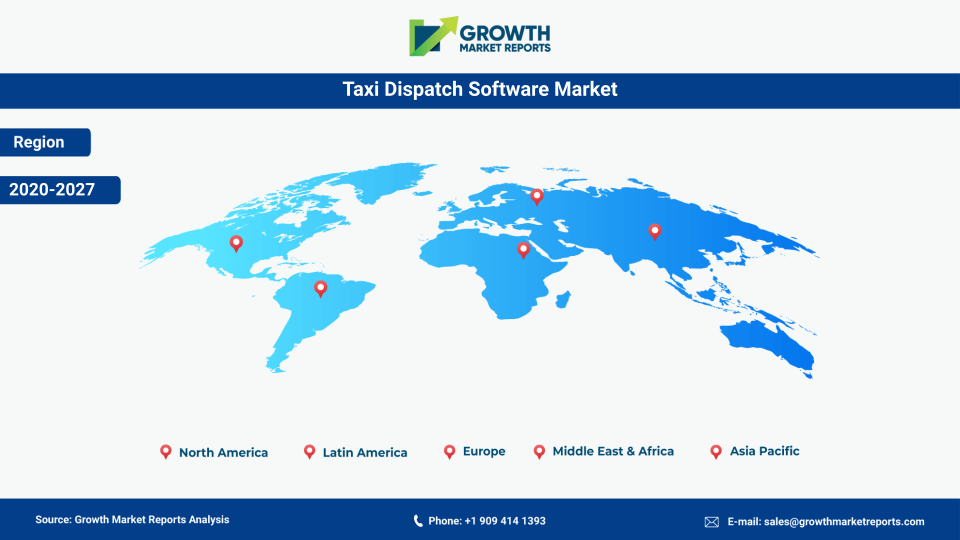
From a regional perspective, Asia Pacific stands out as the fastest-growing market for taxi dispatch software, owing to its large urban populations, rapid technological adoption, and burgeoning ride-hailing sector. North America and Europe also represent significant markets, driven by high digital penetration, established taxi and ride-sharing ecosystems, and a strong focus on innovation. Meanwhile, emerging markets in Latin America and the Middle East & Africa are witnessing increasing investments in smart transportation infrastructure, which bodes well for the future growth of taxi dispatch solutions in these regions.
In the realm of transportation, Shuttle Dispatch Software is emerging as a pivotal tool for managing shuttle services efficiently. As urban centers continue to grow, the demand for reliable shuttle services has increased, necessitating the use of advanced software solutions to streamline operations. Shuttle Dispatch Software offers features such as real-time tracking, automated scheduling, and route optimization, which are essential for reducing operational costs and improving service reliability. By integrating with existing transportation systems, this software ensures seamless coordination between different modes of transport, enhancing the overall commuter experience. As cities aim to reduce traffic congestion and promote sustainable mobility, the role of Shuttle Dispatch Software becomes increasingly important, providing operators with the tools needed to meet the evolving demands of urban transportation.
The Component segment of the Taxi Dispatch Software market is categorized into software and services, both of which play pivotal roles in enabling seamless taxi operations. The software component, which includes core dispatch platforms, mobile applications, and integrated analytics, forms the backbone of any taxi dispatch solution. These platforms leverage cloud computing, artificial intelligence, and big data analytics to provide real-time vehicle tracking, automated scheduling, and route optimization. The growing trend of digitalization in transportation has led to the development of highly customizable and user-friendly software solutions, catering to the specific needs of taxi companies and ride-sharing operators across different geographies.
On the other hand, the services component encompasses a range of support offerings, including implementation, training, maintenance, and technical support. As taxi companies increasingly migrate to advanced dispatch platforms, the demand for professional services to ensure smooth deployment and integration has surged. Service providers assist operators in configuring the software, training staff and drivers, and providing ongoing technical support to address any operational challenges. This holistic approach not only enhances the overall user experience but also maximizes the value derived from the software investment, thereby driving the growth of the services segment within the Taxi Dispatch Software market.
The synergy between software and services is further amplified by the growing adoption of cloud-based solutions, which require continuous updates, security monitoring, and scalability management. Vendors are increasingly offering bundled packages that combine software licenses with managed services, enabling operators to focus on their core business while leaving the technical complexities to experts. This trend is particularly evident among small and medium enterprises (SMEs), which often lack the in-house resources to manage sophisticated IT systems but still require reliable and scalable dispatch solutions to compete effectively in the market.
Responder Tasking and Dispatch Apps are becoming indispensable in emergency management and public safety operations. These applications facilitate the rapid deployment of emergency responders by providing real-time location tracking, task assignment, and communication capabilities. In critical situations where every second counts, Responder Tasking and Dispatch Apps ensure that the nearest and most appropriate resources are dispatched promptly, thereby enhancing the efficiency of emergency response efforts. The integration of these apps with existing emergency management systems allows for seamless data sharing and coordination, improving situational awareness and decision-making. As public safety agencies continue to embrace digital transformation, the adoption of these advanced dispatch apps is expected to rise, contributing to more effective and timely emergency responses.
Moreover, the component landscape is evolving with the integration of emerging technologies such as artificial intelligence, machine learning, and Internet of Things (IoT). These advancements are enabling predictive analytics, automated decision-making, and enhanced connectivity between vehicles and central dispatch systems. As a result, both the software and services segments are expected to witness significant growth, driven by the need for continuous innovation and the desire to deliver superior customer experiences in an increasingly competitive market environment.
| Attributes | Details |
| Report Title | Taxi Dispatch Software Market Research Report 2033 |
| By Component | Software, Services |
| By Deployment Mode | Cloud-Based, On-Premises |
| By Application | Taxi Companies, Ride-Sharing Companies, Fleet Management, Others |
| By End-User | Small and Medium Enterprises, Large Enterprises |
| Regions Covered | North America, Europe, APAC, Latin America, MEA |
| Base Year | 2024 |
| Historic Data | 2018-2023 |
| Forecast Period | 2025-2033 |
| Number of Pages | 257 |
| Number of Tables & Figures | 251 |
| Customization Available | Yes, the report can be customized as per your need. |
The Deployment Mode segment in the Taxi Dispatch Software market is bifurcated into cloud-based and on-premises solutions. Cloud-based dispatch software has emerged as the preferred choice for many taxi operators due to its scalability, flexibility, and cost-effectiveness. Cloud deployment allows taxi companies to access the software from any location, ensuring real-time updates, seamless integration with third-party services, and hassle-free scalability. The pay-as-you-go pricing model associated with cloud-based solutions is particularly attractive for SMEs, as it eliminates the need for significant upfront investments in IT infrastructure and enables operators to scale their operations in line with business growth.
On-premises deployment, while less prevalent in recent years, remains relevant for certain segments of the market, particularly large enterprises and government-regulated taxi services that require greater control over data security and compliance. On-premises solutions offer the advantage of customizability and direct control over the software environment, making them suitable for organizations with complex operational requirements or stringent regulatory mandates. However, the higher costs associated with hardware, maintenance, and IT personnel often limit the adoption of on-premises solutions to larger operators with substantial resources.
Computer-Aided Dispatch Software is revolutionizing the way dispatch centers operate across various industries, including transportation, logistics, and public safety. This software provides dispatchers with a comprehensive platform to manage and coordinate resources efficiently, utilizing features such as automated call handling, real-time tracking, and data analytics. By leveraging Computer-Aided Dispatch Software, organizations can optimize their operations, reduce response times, and enhance service delivery. The software's ability to integrate with other systems, such as GPS and communication networks, ensures seamless information flow and coordination. As industries continue to prioritize efficiency and customer satisfaction, the demand for sophisticated dispatch solutions like Computer-Aided Dispatch Software is anticipated to grow, driving innovation and improvements in dispatch operations.
The shift toward cloud-based deployment is further accelerated by the increasing integration of mobile and web-based applications, which require seamless connectivity and real-time data synchronization. Cloud platforms facilitate these capabilities by providing centralized data storage, automated software updates, and robust security protocols. Additionally, cloud-based solutions enable taxi operators to leverage advanced analytics, artificial intelligence, and machine learning features without the need for dedicated IT infrastructure, thereby democratizing access to cutting-edge technologies for businesses of all sizes.
Despite the clear advantages of cloud deployment, some operators remain cautious due to concerns over data privacy, network reliability, and vendor lock-in. To address these issues, leading vendors are investing heavily in enhancing data encryption, multi-factor authentication, and disaster recovery capabilities. Hybrid deployment models, which combine the benefits of both cloud and on-premises solutions, are also gaining traction, offering operators the flexibility to choose the most appropriate deployment strategy based on their unique operational needs and regulatory environment.
The Application segment of the Taxi Dispatch Software market is diverse, encompassing taxi companies, ride-sharing companies, fleet management, and other specialized applications. Traditional taxi companies remain the primary adopters of dispatch software, leveraging these platforms to streamline operations, reduce idle time, and enhance customer satisfaction. By automating the dispatch process and integrating features such as real-time vehicle tracking, fare calculation, and digital payments, taxi companies can improve efficiency and remain competitive in an increasingly crowded market.
Ride-sharing companies, which have revolutionized urban mobility in recent years, represent a rapidly growing segment within the Taxi Dispatch Software market. These companies rely heavily on sophisticated dispatch algorithms, dynamic pricing models, and real-time data analytics to match drivers with passengers efficiently. The ability to scale operations quickly and adapt to fluctuating demand patterns is a key differentiator for ride-sharing platforms, driving the adoption of advanced, cloud-based dispatch solutions that can handle high transaction volumes and complex routing requirements.
Fleet management is another critical application area, particularly for organizations that operate large fleets of taxis, shuttles, or corporate vehicles. Dispatch software enables fleet managers to monitor vehicle locations, track driver performance, optimize routes, and schedule maintenance activities, thereby reducing operational costs and improving asset utilization. The integration of telematics, IoT sensors, and predictive analytics further enhances the value proposition of dispatch software in fleet management, enabling proactive decision-making and data-driven optimization of fleet operations.
Beyond traditional taxi and ride-sharing use cases, the Taxi Dispatch Software market is witnessing growing adoption in specialized applications such as paratransit services, airport shuttles, and corporate transportation. These segments require customized dispatch solutions that can accommodate unique scheduling, accessibility, and compliance requirements. Vendors are responding by offering modular, configurable platforms that can be tailored to the specific needs of different application areas, thereby expanding the addressable market and driving incremental growth.
The End-User segment of the Taxi Dispatch Software market is divided into small and medium enterprises (SMEs) and large enterprises, each with distinct requirements and adoption patterns. SMEs, which constitute a significant portion of the market, are increasingly turning to taxi dispatch software to automate manual processes, reduce operational costs, and enhance service quality. The availability of affordable, cloud-based solutions has lowered the barriers to entry for smaller operators, enabling them to compete effectively with larger, more established players. SMEs benefit from features such as automated dispatch, real-time tracking, and integrated payment processing, which help them deliver a seamless customer experience and build brand loyalty.
Large enterprises, including multinational taxi operators and major ride-sharing platforms, require highly scalable and customizable dispatch solutions to manage complex, multi-city operations. These organizations often demand advanced features such as AI-powered demand forecasting, dynamic pricing, multi-language support, and integration with enterprise resource planning (ERP) systems. Security, compliance, and data privacy are also top priorities for large enterprises, leading them to invest in robust, enterprise-grade dispatch platforms with advanced security features and comprehensive reporting capabilities.
The adoption patterns between SMEs and large enterprises are also influenced by resource availability, regulatory requirements, and competitive pressures. While SMEs prioritize ease of use, affordability, and quick deployment, large enterprises focus on scalability, customization, and integration with existing IT systems. Vendors are responding to these diverse needs by offering tiered pricing models, modular feature sets, and flexible deployment options, ensuring that both small and large operators can find solutions that align with their specific business objectives.
Furthermore, the increasing prevalence of hybrid work models and remote fleet management is driving demand for cloud-based dispatch solutions among enterprises of all sizes. These platforms enable operators to manage their fleets from any location, monitor driver performance in real time, and respond quickly to changing market conditions. As the competitive landscape continues to evolve, the ability to leverage advanced dispatch software will be a key differentiator for both SMEs and large enterprises seeking to optimize their operations and deliver superior customer experiences.
The Taxi Dispatch Software market presents a wealth of opportunities for innovation and growth, driven by the ongoing digital transformation of the transportation sector. The rise of smart cities, increased investment in urban mobility infrastructure, and the proliferation of connected vehicles are creating new avenues for the adoption of advanced dispatch solutions. Vendors have the opportunity to capitalize on emerging technologies such as artificial intelligence, machine learning, and IoT to develop next-generation dispatch platforms that offer predictive analytics, automated decision-making, and seamless integration with other mobility services. The growing focus on sustainability and green mobility also presents opportunities for software providers to develop solutions that support electric vehicle fleets, optimize fuel consumption, and reduce carbon emissions.
Another significant opportunity lies in the expansion of the Taxi Dispatch Software market into emerging economies, where rapid urbanization, rising smartphone penetration, and increasing demand for organized transportation services are driving adoption. As governments in these regions invest in smart transportation infrastructure and implement regulatory reforms to support ride-hailing and taxi services, vendors can tap into new customer segments and expand their market presence. Strategic partnerships with local taxi operators, fleet management companies, and technology providers can further accelerate market penetration and drive sustainable growth in these high-potential regions.
Despite the favorable growth outlook, the market faces several restraining factors that could hinder adoption. Data privacy and cybersecurity concerns remain top of mind for both operators and regulators, particularly in regions with stringent data protection laws. The risk of data breaches, unauthorized access, and system downtime can undermine trust in digital dispatch solutions and deter potential customers from adopting these platforms. Additionally, the high cost of implementing and maintaining advanced dispatch systems, particularly for smaller operators, can be a barrier to entry. Vendors must invest in robust security protocols, transparent data management practices, and affordable pricing models to address these challenges and ensure sustained market growth.
Asia Pacific dominates the Taxi Dispatch Software market, accounting for approximately 38% of the global revenue in 2024, or roughly USD 550 million. The regionÂ’s rapid urbanization, growing middle-class population, and high smartphone adoption rates have fueled the demand for organized taxi and ride-hailing services. Countries such as China, India, and Southeast Asian nations are witnessing exponential growth in online mobility platforms, supported by government initiatives to modernize transportation infrastructure. The competitive landscape in Asia Pacific is characterized by the presence of both international and local players, driving continuous innovation and price competitiveness. With a projected CAGR of 14.2% from 2025 to 2033, Asia Pacific is expected to remain the fastest-growing region throughout the forecast period.
North America is another major market, with a market size of approximately USD 410 million in 2024, representing about 28% of the global market. The region benefits from high digital penetration, a mature ride-sharing ecosystem, and strong regulatory frameworks that promote safety and innovation. The United States, in particular, is home to some of the world's largest taxi and ride-hailing companies, which are continually investing in advanced dispatch solutions to enhance operational efficiency and customer experience. The adoption of electric vehicles and the integration of smart city technologies are further driving the growth of the taxi dispatch software market in North America.
Europe holds a significant share of the Taxi Dispatch Software market, with a market size of approximately USD 290 million in 2024. The regionÂ’s emphasis on sustainable urban mobility, stringent data privacy regulations, and growing demand for integrated transportation solutions are key drivers of market growth. Leading European cities are investing in digital infrastructure and smart mobility initiatives, creating favorable conditions for the adoption of advanced dispatch software. Meanwhile, Latin America and the Middle East & Africa, with market sizes of USD 130 million and USD 70 million respectively, are emerging as high-potential regions. These markets are benefiting from rising urbanization, increasing smartphone adoption, and government efforts to modernize public transportation systems, although they still face challenges related to infrastructure and regulatory complexity.
The Taxi Dispatch Software market is highly competitive, characterized by the presence of both established technology giants and innovative startups. The competitive landscape is shaped by continuous technological advancements, evolving customer preferences, and the need for seamless integration with other mobility solutions. Leading vendors are differentiating themselves through the development of feature-rich, scalable, and user-friendly dispatch platforms that cater to the diverse needs of taxi companies, ride-sharing operators, and fleet management organizations. The ability to offer end-to-end solutions, including software, services, and integration with third-party applications, is a key success factor in this dynamic market.
Strategic partnerships, mergers, and acquisitions are common strategies employed by market players to expand their product portfolios, enter new markets, and enhance their technological capabilities. Companies are investing heavily in research and development to incorporate emerging technologies such as artificial intelligence, machine learning, and IoT into their dispatch platforms. These investments are aimed at improving route optimization, demand forecasting, driver safety, and customer engagement, thereby delivering greater value to end-users and strengthening competitive positioning.
The market also witnesses intense competition in terms of pricing, service quality, and customer support. Vendors are offering flexible pricing models, including subscription-based and pay-per-use options, to cater to the varying budgetary constraints of SMEs and large enterprises. The focus on customer-centric innovation is driving the development of intuitive user interfaces, mobile-first solutions, and customizable feature sets that address the specific requirements of different market segments. As the market continues to evolve, the ability to deliver reliable, secure, and scalable dispatch solutions will be critical for sustained success.
Major players in the Taxi Dispatch Software market include Autocab (a subsidiary of Uber), TaxiCaller, CabStartup, Magenta Technology, iCabbi, and Dispatch Science. Autocab, backed by Uber, leverages its global expertise to offer advanced dispatch platforms that integrate seamlessly with ride-hailing networks. TaxiCaller is renowned for its cloud-based solutions, serving clients in over 70 countries and supporting both taxi and private hire businesses. CabStartup focuses on providing white-label taxi dispatch solutions tailored to the needs of SMEs and regional operators. Magenta Technology and iCabbi are recognized for their robust fleet management capabilities and support for multi-city operations, while Dispatch Science specializes in AI-powered route optimization and real-time analytics for large enterprise fleets.
These companies are continuously enhancing their offerings through strategic collaborations, technology upgrades, and customer feedback-driven innovation. For instance, iCabbi has partnered with leading automotive and telematics providers to deliver integrated mobility solutions, while Autocab is leveraging UberÂ’s global network to expand its reach and enhance its technology stack. TaxiCaller and CabStartup are focusing on expanding their presence in emerging markets through localized solutions and strategic alliances with regional taxi operators. As competition intensifies, the ability to innovate, adapt to changing market dynamics, and deliver superior customer experiences will be paramount for sustained leadership in the Taxi Dispatch Software market.
The Taxi Dispatch Software market has been segmented on the basis of
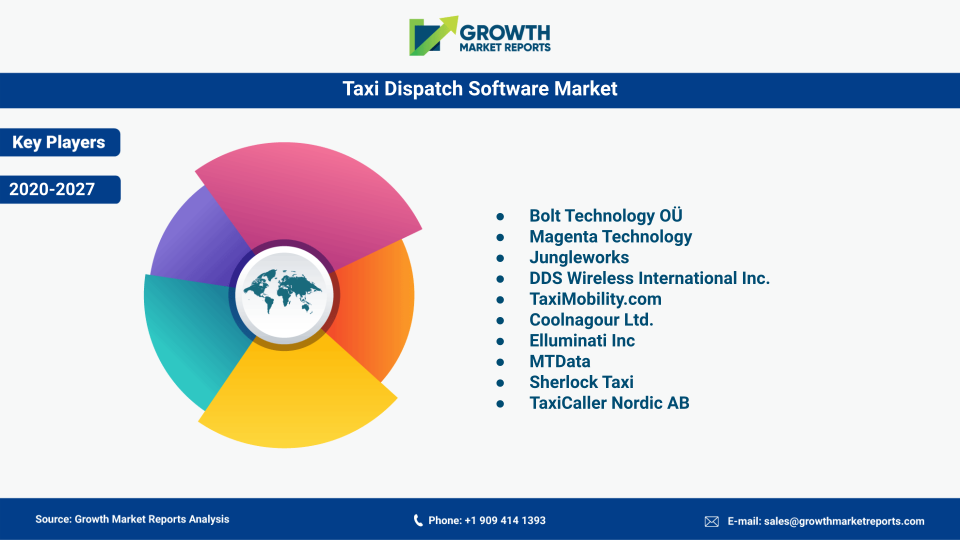
Major market players include Bolt Technology OÜ, Magenta Technology, Jungleworks, DD, Wireless International Inc., TaxiMobility.com, Coolnagour Ltd., Elluminati Inc, MTData, Sherlock Taxi, and TaxiCaller Nordic AB.
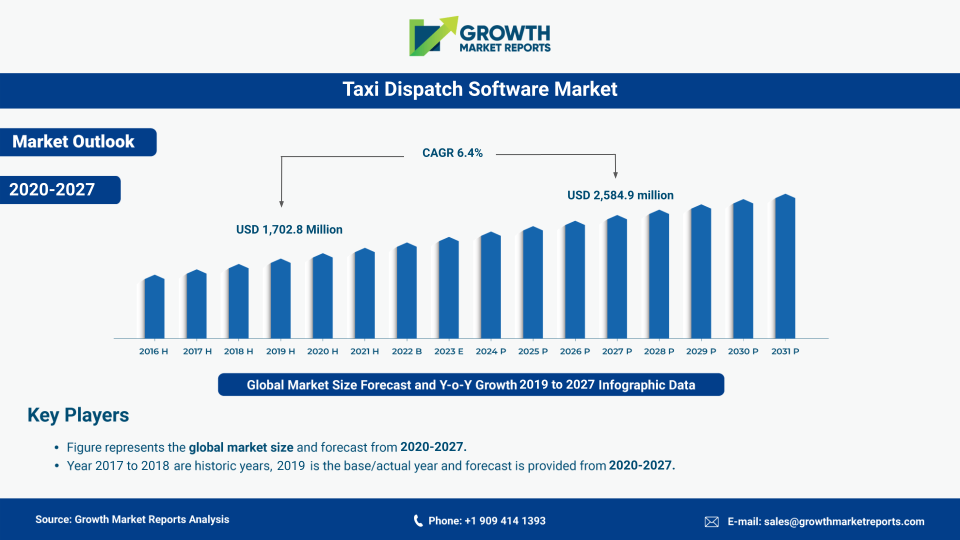
The base year considered for the global taxi dispatch software Market report is 2019. The complete analysis period is 2017 to 2027, wherein, 2017 & 2018 are the historic years and the forecast is provided from 2020 to 2027.
The market is expected to witness moderate growth in terms of demand during 2019-2020 owing to the impact of COVID-19 pandemic on the taxi dispatch software market.
Factors such as competitive strength and market positioning are key areas considered while selecting top companies to be profiled.
The large enterprises segment is anticipated to account for a key share of the market, owing to the increasing use of taxi dispatch software.
The Taxi Dispatch Software Market is anticipated to grow significantly during forecast period due to the emerging trends in enterprise information technology (IT) infrastructure have fueled the demand for complex, high-margin taxi dispatch software, which in turn, is creating opportunities for the market across the globe.
In addition to market size (in USD Million) and Company Market Share (in % for base year 2019), other data such Macro-economic factors, COVID-19 Impact on the Taxi Dispatch Software Market is available in final report.
According to this GMR report, the market from Taxi Dispatch Software Market is likely to register a CAGR of 13.9% during forecast period 2020-2027, with an anticipated valuation of USD 749.9 million by the end of the 2027.
Yes, the report covers types of taxi dispatch software such as cloud-based, web-based taxi dispatch software.
Additional company profiles can be provided on request. For a discussion related to above findings, click Speak to Analyst