Tax and Accounting Software Market Research Report 2033

Tax and Accounting Software Market Research Report 2033

Segments - by Component (Software, Services), by Deployment Mode (On-Premises, Cloud-Based), by Organization Size (Small and Medium Enterprises, Large Enterprises), by Application (Personal, Commercial, Industrial), by End-User (BFSI, Healthcare, Retail, Manufacturing, IT and Telecommunications, Government, Others)

https://growthmarketreports.com/Raksha
Author : Raksha Sharma
https://growthmarketreports.com/Vaibhav
Fact-checked by : V. Chandola
https://growthmarketreports.com/Shruti
Editor : Shruti Bhat

Upcoming | Report ID :ICT-SE-4971 | 4.7 Rating | 22 Reviews | 294 Pages | Format : Docx PDF

Report Description


Tax and Accounting Software Market Outlook

According to our latest research, the global Tax and Accounting Software market size reached USD 15.8 billion in 2024, driven by increased digitization across industries and the growing demand for automation in financial operations. The market is expected to expand at a robust CAGR of 8.4% from 2025 to 2033, with projections indicating a market value of approximately USD 32.9 billion by 2033. This growth is primarily fueled by evolving regulatory frameworks, increased adoption of cloud-based solutions, and the rising necessity for real-time financial data analysis.

One of the most significant growth factors for the Tax and Accounting Software market is the rapid digital transformation of business processes worldwide. Organizations, regardless of size, are increasingly seeking to streamline their financial operations, reduce manual errors, and enhance compliance with ever-changing tax regulations. The integration of artificial intelligence (AI) and machine learning (ML) into tax and accounting solutions has enabled real-time data processing and predictive analytics, allowing businesses to make informed decisions quickly. Furthermore, the shift towards remote and hybrid work models has accelerated the adoption of cloud-based accounting platforms, which offer scalability, accessibility, and enhanced data security.

Another key driver propelling the Tax and Accounting Software market is the growing complexity of tax codes and compliance requirements across different jurisdictions. As governments worldwide continue to introduce new tax reforms and reporting standards, businesses are under increasing pressure to ensure accurate and timely filings. Tax and accounting software solutions are evolving to keep pace with these changes, offering automated updates and customizable modules that cater to specific industry needs. This not only reduces the risk of non-compliance and associated penalties but also improves operational efficiency and cost-effectiveness, particularly for organizations with cross-border operations.

The surge in small and medium enterprises (SMEs) is also contributing significantly to the expansion of the Tax and Accounting Software market. SMEs are increasingly recognizing the value of leveraging technology to manage their finances, optimize tax planning, and gain competitive advantages. Affordable subscription-based models, user-friendly interfaces, and integration capabilities with other business applications have made tax and accounting software accessible to a broader audience. This democratization of financial technology is expected to sustain strong market growth over the forecast period, as more businesses seek to modernize their accounting practices and enhance financial transparency.

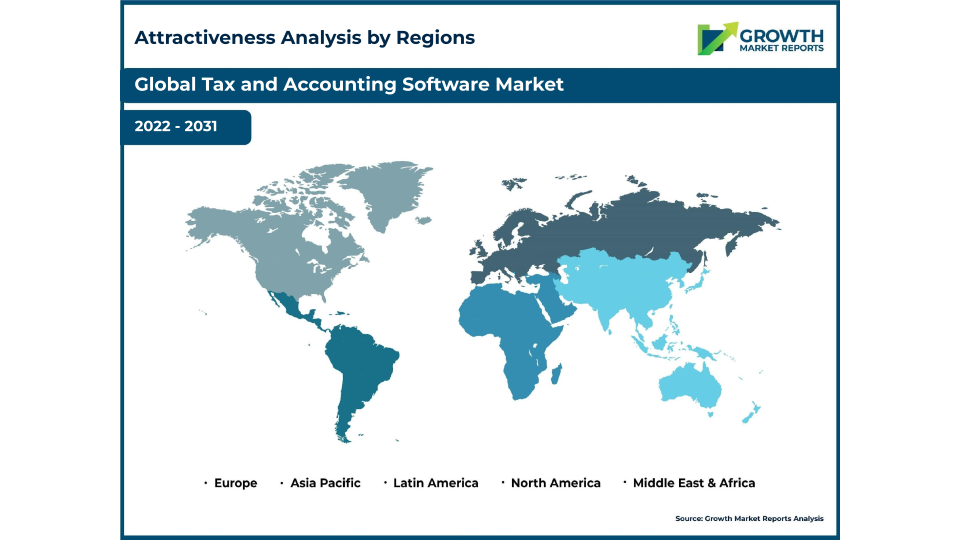
From a regional perspective, North America continues to dominate the Tax and Accounting Software market, owing to the presence of major industry players, advanced IT infrastructure, and high awareness regarding regulatory compliance. However, the Asia Pacific region is emerging as the fastest-growing market, driven by rapid economic development, increasing digital adoption among SMEs, and supportive government initiatives promoting financial transparency. Europe also holds a substantial share due to stringent tax regulations and the widespread adoption of cloud-based solutions among enterprises. The Middle East & Africa and Latin America are witnessing steady growth, supported by ongoing digital transformation efforts and the rising need for efficient financial management tools.

Global Tax and Accounting Software Industry Outlook

Component Analysis

The Component segment of the Tax and Accounting Software market is broadly classified into Software and Services. The software component dominates the market, accounting for the largest revenue share in 2024. This dominance is attributed to the continuous advancements in software functionalities, including real-time analytics, automated tax calculations, and integration with enterprise resource planning (ERP) systems. Vendors are increasingly focusing on developing user-friendly interfaces and customizable modules to cater to diverse industry requirements, which has significantly enhanced user adoption rates. The proliferation of SaaS (Software-as-a-Service) models has further accelerated the uptake of tax and accounting software, especially among SMEs and startups seeking cost-effective solutions.

On the other hand, the services segment, which includes consulting, implementation, support, and maintenance, is witnessing robust growth. As organizations strive to maximize the value of their software investments, the demand for specialized services such as software customization, integration, and training is on the rise. Service providers are increasingly offering end-to-end solutions that encompass system deployment, data migration, and ongoing technical support, ensuring seamless operations and minimal downtime. Additionally, the growing complexity of tax regulations and the need for continuous software updates have made managed services an attractive option for businesses lacking in-house IT expertise.

The software segment is further segmented into on-premises and cloud-based solutions, each catering to distinct business needs. On-premises software offers enhanced control over data and system configurations, making it a preferred choice for large enterprises with stringent security requirements. However, the scalability, flexibility, and lower upfront costs associated with cloud-based software are driving its rapid adoption across all organization sizes. Leading vendors are investing heavily in cloud infrastructure and cybersecurity measures to address concerns related to data privacy and compliance, thereby bolstering market growth.

Service providers are also focusing on value-added offerings such as compliance audits, tax advisory, and process optimization, which help organizations stay abreast of regulatory changes and industry best practices. The integration of AI-driven chatbots and virtual assistants into service portfolios is enhancing customer support and reducing response times, further improving user satisfaction. As the market continues to evolve, the synergy between software and services will play a pivotal role in shaping the future of the Tax and Accounting Software market, enabling organizations to achieve greater operational efficiency and regulatory compliance.

Report Scope

Attributes Details
Report Title Tax and Accounting Software Market Research Report 2033
By Component Software, Services
By Deployment Mode On-Premises, Cloud-Based
By Organization Size Small and Medium Enterprises, Large Enterprises
By Application Personal, Commercial, Industrial
By End-User BFSI, Healthcare, Retail, Manufacturing, IT and Telecommunications, Government, Others
Regions Covered North America, Europe, APAC, Latin America, MEA
Base Year 2024
Historic Data 2018-2023
Forecast Period 2025-2033
Number of Pages 294
Number of Tables & Figures 272
Customization Available Yes, the report can be customized as per your need.

Deployment Mode Analysis

The Deployment Mode segment of the Tax and Accounting Software market is classified into On-Premises and Cloud-Based solutions. Historically, on-premises deployment held a significant share, particularly among large enterprises and organizations operating in highly regulated industries such as banking and finance. On-premises solutions offer enhanced control over data, customization capabilities, and compliance with internal security policies, making them an attractive option for businesses with complex IT environments. However, the high upfront costs, ongoing maintenance requirements, and limited scalability associated with on-premises solutions have prompted many organizations to reconsider their deployment strategies.

In contrast, cloud-based deployment has witnessed exponential growth in recent years, emerging as the preferred choice for businesses of all sizes. Cloud-based tax and accounting software offers several advantages, including lower initial investment, automatic software updates, and the ability to access financial data from anywhere, at any time. The COVID-19 pandemic further accelerated the shift towards cloud solutions, as remote and hybrid work models became the norm and organizations sought to ensure business continuity. Leading vendors are prioritizing cloud-native development, robust data encryption, and multi-factor authentication to address security concerns and foster trust among users.

The scalability and flexibility of cloud-based deployment are particularly beneficial for SMEs, enabling them to scale their operations quickly and efficiently as their business grows. Subscription-based pricing models and pay-as-you-go options have democratized access to advanced tax and accounting tools, allowing even small businesses to leverage the latest technologies without significant capital expenditure. Integration with other cloud-based business applications, such as customer relationship management (CRM) and human resources management (HRM) systems, further enhances the value proposition of cloud-based solutions.

Despite the rapid adoption of cloud-based deployment, certain industries and organizations with strict data residency and compliance requirements continue to prefer on-premises solutions. Hybrid deployment models, which combine the benefits of both on-premises and cloud-based solutions, are gaining traction among enterprises seeking to balance security, control, and flexibility. As the Tax and Accounting Software market evolves, the choice of deployment mode will be influenced by factors such as regulatory landscape, organizational size, and industry-specific needs, with cloud-based solutions expected to maintain their growth momentum in the coming years.

Organization Size Analysis

The Organization Size segment of the Tax and Accounting Software market is divided into Small and Medium Enterprises (SMEs) and Large Enterprises. SMEs represent a rapidly growing segment, driven by the increasing awareness of the benefits of digitized financial management and the need to comply with evolving tax regulations. Cloud-based and subscription-driven software models have made advanced tax and accounting solutions accessible and affordable for SMEs, enabling them to automate routine tasks, reduce manual errors, and focus on core business activities. The integration of mobile applications and user-friendly interfaces has further facilitated the adoption of these solutions among small business owners and entrepreneurs.

Large enterprises, on the other hand, have traditionally been the primary adopters of comprehensive tax and accounting software suites. These organizations require advanced functionalities such as multi-entity consolidation, global tax compliance, and integration with other enterprise systems. Customization capabilities, scalability, and robust security features are critical considerations for large enterprises, particularly those operating in multiple jurisdictions. Vendors are increasingly offering modular solutions that can be tailored to the unique needs of large organizations, enabling them to optimize tax planning, enhance compliance, and gain real-time visibility into financial performance.

The growing trend towards digital transformation among SMEs is expected to drive significant growth in this segment over the forecast period. Government initiatives aimed at promoting financial inclusion and digital literacy are further supporting the adoption of tax and accounting software among small businesses. Additionally, the proliferation of fintech startups and the availability of localized solutions tailored to specific markets are expanding the addressable market for tax and accounting software vendors. As SMEs continue to recognize the value of technology-driven financial management, their contribution to overall market growth is expected to increase substantially.

Large enterprises are also investing in advanced analytics, AI-driven automation, and blockchain technology to enhance the accuracy and transparency of their financial operations. The need to comply with complex regulatory requirements, manage large volumes of financial data, and support global operations is driving the demand for integrated tax and accounting platforms. As the business environment becomes increasingly dynamic and competitive, both SMEs and large enterprises are prioritizing investments in tax and accounting software to improve efficiency, reduce risk, and achieve sustainable growth.

Application Analysis

The Application segment of the Tax and Accounting Software market encompasses Personal, Commercial, and Industrial use cases. Personal tax and accounting software is primarily targeted at individuals and self-employed professionals seeking to manage their finances, file tax returns, and track expenses efficiently. The growing complexity of personal tax codes and the increasing adoption of digital payment methods have driven demand for user-friendly, affordable software solutions that simplify tax preparation and ensure compliance. Mobile applications and cloud-based platforms have made personal tax management more accessible, enabling users to manage their finances on the go.

The commercial application segment, which includes small businesses, startups, and professional service firms, represents a significant share of the Tax and Accounting Software market. Commercial users require software solutions that offer invoicing, payroll management, expense tracking, and tax compliance functionalities. The integration of these features into a single platform streamlines financial operations, reduces administrative overhead, and improves decision-making. As businesses increasingly seek to automate routine accounting tasks, the demand for commercial tax and accounting software is expected to grow steadily, supported by the availability of scalable, cloud-based solutions.

Industrial applications of tax and accounting software are characterized by the need for advanced functionalities such as multi-entity management, global tax compliance, and integration with manufacturing resource planning (MRP) systems. Industrial organizations often operate in highly regulated environments and require robust solutions that can handle complex tax structures, multiple currencies, and cross-border transactions. The adoption of tax and accounting software in the industrial sector is driven by the need to optimize tax planning, enhance operational efficiency, and ensure compliance with industry-specific regulations. Vendors are increasingly offering industry-specific modules and customization options to address the unique requirements of industrial users.

The convergence of personal, commercial, and industrial applications is fostering innovation in the Tax and Accounting Software market. Vendors are leveraging AI, ML, and big data analytics to develop intelligent solutions that cater to diverse user needs, from individual taxpayers to multinational corporations. The growing demand for integrated platforms that offer end-to-end financial management capabilities is expected to drive further growth in all application segments, as organizations seek to achieve greater visibility, control, and compliance in their financial operations.

End-User Analysis

The End-User segment of the Tax and Accounting Software market is highly diverse, encompassing industries such as BFSI, Healthcare, Retail, Manufacturing, IT and Telecommunications, Government, and others. The BFSI sector is a major adopter of tax and accounting software, driven by the need for stringent regulatory compliance, risk management, and accurate financial reporting. Financial institutions rely on advanced software solutions to automate tax calculations, manage large volumes of transactions, and ensure timely filings. The integration of AI and blockchain technology is further enhancing transparency, security, and efficiency in BFSI operations.

The healthcare industry is witnessing increasing adoption of tax and accounting software, as providers seek to manage complex billing processes, comply with healthcare-specific tax regulations, and optimize revenue cycle management. The shift towards value-based care, coupled with the growing emphasis on financial transparency and accountability, is driving demand for specialized software solutions tailored to the unique needs of healthcare organizations. Vendors are responding by offering modules that support medical billing, claims processing, and compliance with healthcare tax codes, enabling providers to improve financial performance and patient outcomes.

Retail and manufacturing sectors are also significant end-users of tax and accounting software, leveraging these solutions to manage inventory, track sales, and ensure compliance with industry-specific tax requirements. The rise of e-commerce, omnichannel retailing, and global supply chains has increased the complexity of tax management in these sectors, necessitating the adoption of advanced software solutions. Integration with point-of-sale (POS) systems, real-time analytics, and automated tax calculations are key features driving adoption in retail and manufacturing industries.

Government agencies and public sector organizations are increasingly adopting tax and accounting software to enhance transparency, improve budget management, and ensure compliance with public sector accounting standards. The digitization of government services and the implementation of electronic tax filing systems are creating new opportunities for software vendors. Other end-users, including non-profits, educational institutions, and professional service firms, are also embracing tax and accounting software to streamline financial operations and achieve greater efficiency. As the market continues to evolve, end-user requirements will play a critical role in shaping product development and innovation in the Tax and Accounting Software market.

Opportunities & Threats

The Tax and Accounting Software market presents numerous opportunities for growth and innovation, particularly in the areas of AI-driven automation, cloud computing, and data analytics. The increasing adoption of AI and ML technologies is enabling the development of intelligent software solutions that automate routine tasks, detect anomalies, and provide actionable insights for tax planning and financial management. Cloud-based platforms offer scalability, accessibility, and cost-effectiveness, making advanced tax and accounting tools available to a broader range of users. The integration of big data analytics is empowering organizations to gain deeper insights into their financial performance, identify trends, and make data-driven decisions. These technological advancements are expected to drive significant market growth over the forecast period.

Another major opportunity lies in the expansion of the Tax and Accounting Software market into emerging economies, where digital transformation is accelerating and the demand for efficient financial management tools is on the rise. Government initiatives aimed at promoting digital literacy, financial inclusion, and tax compliance are creating a conducive environment for software adoption. Vendors are increasingly offering localized solutions that cater to the unique regulatory requirements and business practices of different regions, thereby expanding their addressable market. Strategic partnerships, mergers, and acquisitions are also enabling vendors to enhance their product portfolios, enter new markets, and strengthen their competitive position.

Despite the numerous opportunities, the Tax and Accounting Software market faces several challenges and threats that could hinder growth. Data security and privacy concerns remain a significant restrainer, particularly as organizations increasingly rely on cloud-based solutions and handle sensitive financial information. Cybersecurity threats, data breaches, and compliance with data protection regulations such as GDPR and CCPA are major concerns for both vendors and users. Additionally, the rapid pace of technological change and the need for continuous software updates pose challenges for vendors seeking to keep their solutions relevant and compliant with evolving tax laws. Addressing these challenges will be critical to sustaining long-term growth and maintaining user trust in the Tax and Accounting Software market.

Regional Outlook

North America remains the largest regional market for Tax and Accounting Software, accounting for approximately USD 6.5 billion of the global revenue in 2024. The region's dominance is underpinned by the presence of major industry players, advanced IT infrastructure, and a high level of regulatory awareness among businesses. The United States, in particular, is a key contributor, with widespread adoption of tax and accounting software across enterprises of all sizes. The region's focus on innovation, coupled with the early adoption of cloud-based solutions and AI-driven automation, is expected to sustain its leadership position over the forecast period. North America is projected to grow at a CAGR of 7.9% through 2033.

The Asia Pacific region is emerging as the fastest-growing market for Tax and Accounting Software, with a market size of USD 3.9 billion in 2024. Rapid economic development, increasing digital adoption among SMEs, and supportive government initiatives are driving market growth in countries such as China, India, Japan, and Australia. The region's large and diverse business landscape presents significant opportunities for software vendors, particularly those offering localized solutions tailored to specific regulatory requirements. The Asia Pacific market is expected to expand at a CAGR of 10.2% from 2025 to 2033, outpacing other regions and contributing significantly to global market growth.

Europe holds a substantial share of the Tax and Accounting Software market, with a market size of USD 3.1 billion in 2024. The region's growth is driven by stringent tax regulations, the widespread adoption of cloud-based solutions, and the increasing emphasis on financial transparency and compliance. Countries such as the United Kingdom, Germany, and France are leading adopters of advanced tax and accounting software, particularly among large enterprises and multinational corporations. The Middle East & Africa and Latin America are also witnessing steady growth, supported by ongoing digital transformation efforts and the rising need for efficient financial management tools. Collectively, these regions accounted for approximately USD 2.3 billion of the global market in 2024, with growth expected to accelerate over the forecast period.

Tax and Accounting Software Market Statistics

Competitor Outlook

The Tax and Accounting Software market is highly competitive, characterized by the presence of a mix of established global players and emerging regional vendors. The competitive landscape is shaped by factors such as product innovation, pricing strategies, customer support, and the ability to address evolving regulatory requirements. Leading vendors are investing heavily in research and development to enhance software functionalities, integrate advanced technologies such as AI and ML, and improve user experience. The shift towards cloud-based solutions has intensified competition, with vendors vying to offer scalable, secure, and cost-effective platforms that cater to businesses of all sizes.

Strategic partnerships, mergers, and acquisitions are common in the Tax and Accounting Software market, as companies seek to expand their product portfolios, enter new markets, and strengthen their competitive position. Vendors are increasingly collaborating with technology providers, consulting firms, and industry associations to develop integrated solutions that address the unique needs of different industries and regions. Customization capabilities, industry-specific modules, and value-added services such as compliance audits and tax advisory are key differentiators in the market. The ability to provide seamless integration with other business applications, such as ERP and CRM systems, is also a critical success factor.

Customer-centricity is at the core of competitive strategies, with vendors focusing on delivering superior customer support, training, and ongoing technical assistance. The integration of AI-driven chatbots and virtual assistants into customer service offerings is enhancing user satisfaction and reducing response times. Data security and privacy are also top priorities, with leading vendors implementing robust encryption, multi-factor authentication, and regular security audits to protect sensitive financial information. As the market continues to evolve, the ability to anticipate and respond to changing customer needs will be essential for maintaining a competitive edge.

Major companies operating in the Tax and Accounting Software market include Intuit Inc., SAP SE, Oracle Corporation, Wolters Kluwer N.V., Sage Group plc, Thomson Reuters Corporation, and Xero Limited. Intuit Inc. is renowned for its QuickBooks and TurboTax solutions, catering to both individual and business users. SAP SE and Oracle Corporation offer comprehensive enterprise solutions that integrate tax and accounting functionalities with broader business management systems. Wolters Kluwer and Thomson Reuters are recognized for their robust compliance and regulatory software, serving large enterprises and professional service firms. Sage Group and Xero Limited focus on cloud-based accounting solutions tailored to SMEs, offering user-friendly interfaces and scalable features. These companies are continuously innovating to stay ahead of the competition, leveraging emerging technologies and expanding their global reach through strategic partnerships and acquisitions.

Key Players

  • Intuit Inc.
  • Sage Group plc
  • Wolters Kluwer N.V.
  • Thomson Reuters Corporation
  • Xero Limited
  • SAP SE
  • Oracle Corporation
  • Microsoft Corporation
  • Workday, Inc.
  • Epicor Software Corporation
  • Unit4
  • FreshBooks
  • MYOB Group Pty Ltd
  • BlackLine, Inc.
  • Avalara, Inc.
  • Vertex, Inc.
  • Drake Software
  • CCH Incorporated
  • Acclivity Group LLC
  • TaxSlayer LLC
Tax and Accounting Software Market Overview

Segments

The Tax and Accounting Software market has been segmented on the basis of

Component

  • Software
  • Services

Deployment Mode

  • On-Premises
  • Cloud-Based

Organization Size

  • Small and Medium Enterprises
  • Large Enterprises

Application

  • Personal
  • Commercial
  • Industrial

End-User

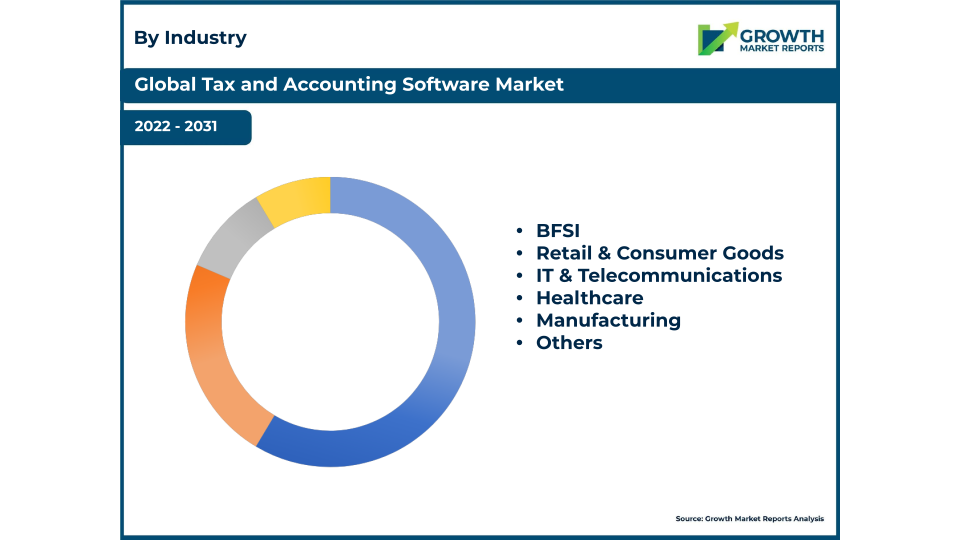
  • BFSI
  • Healthcare
  • Retail
  • Manufacturing
  • IT and Telecommunications
  • Government
  • Others

Competitive Landscape

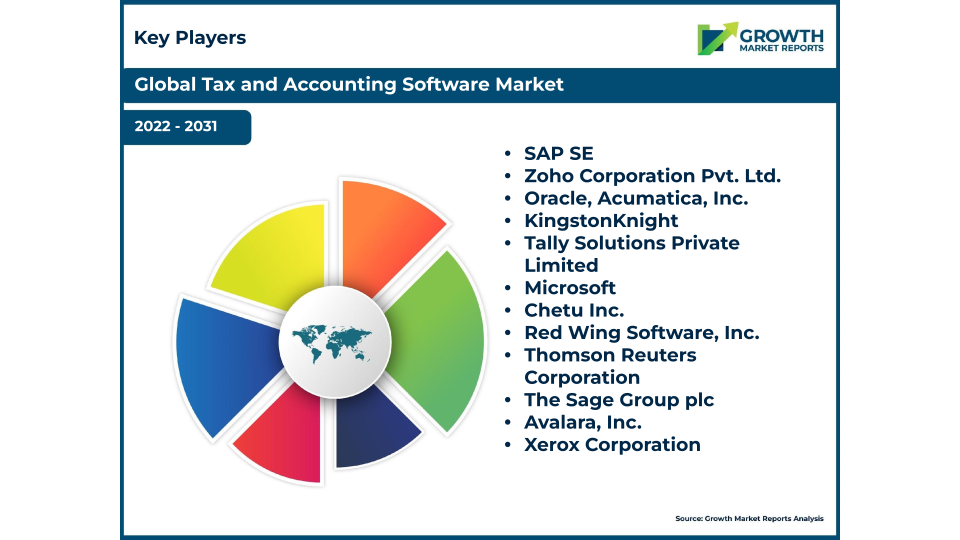
Key players competing in the global tax and accounting software market are SAP SE; Zoho Corporation Pvt. Ltd.; Oracle; Acumatica, Inc.; KingstonKnight; Tally Solutions Private Limited; Microsoft; Chetu Inc.; Red Wing Software, Inc.; Thomson Reuters Corporation; The Sage Group plc; Avalara, Inc.; and Xerox Corporation.

These companies adopted development strategies including mergers, acquisitions, partnerships, collaboration, product launches, and production expansion to expand their consumer base worldwide.

On January 03, 2023, Thomson Reuters Corporation announced the completion of the acquisition of SurePrep, LLC a US-based leader in tax automation software and services.

On August 16, 2022, The Sage Group plc a global leader in accounting, financial, HR, and payroll technologies for small and mid-sized businesses (SMBs), announces the acquisition of Lockstep, a cloud-native technology provider that aids in automating accounting workflows between organizations.

Global Tax and Accounting Software Market Key Players

Frequently Asked Questions

The key players competing in the tax and accounting software market are SAP SE, Zoho Corporation Pvt. Ltd., Oracle, Acumatica, Inc., KingstonKnight, Tally Solutions Private Limited, Microsoft, Chetu Inc., Red Wing Software, Inc., Thomson Reuters Corporation, The Sage Group plc, Avalara, Inc., and Xerox Corporation.

For regional analysis, North America is likely to dominate the tax and accounting software market during the forecast period.

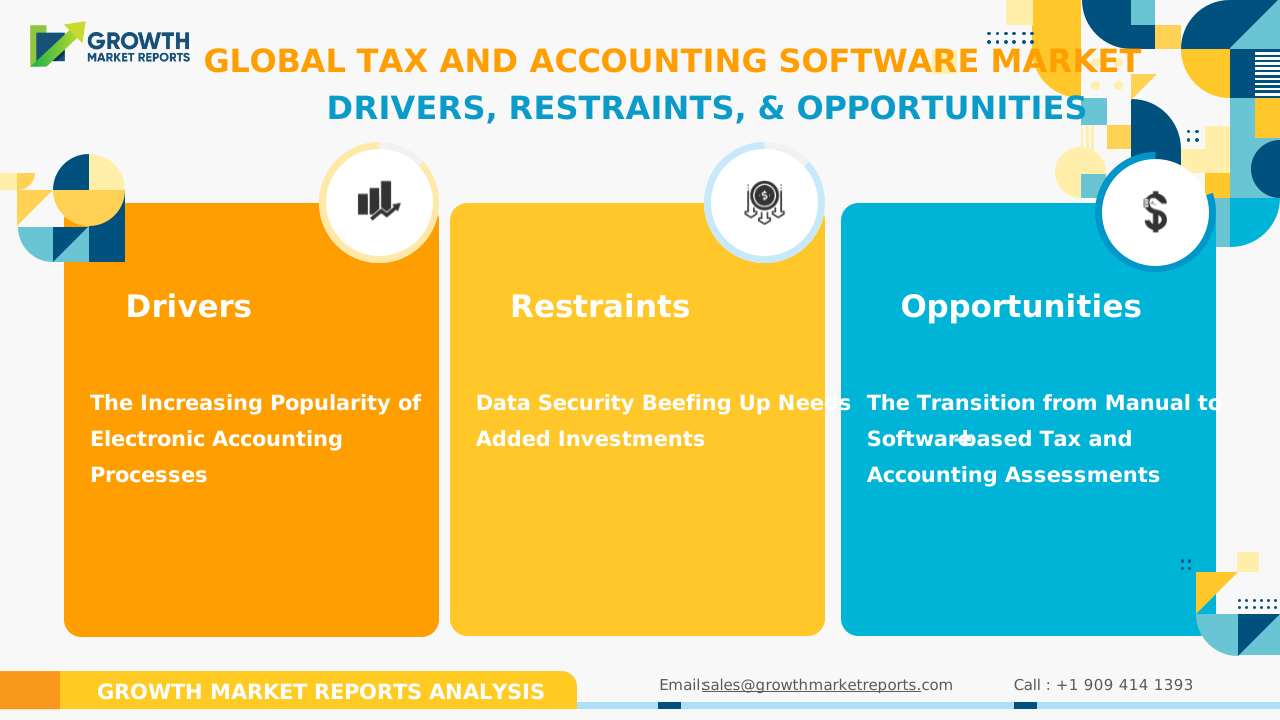
The market growth is attributed to the increased automation of tax and accounting processes and the elimination of manual tasks through electronic accounting.

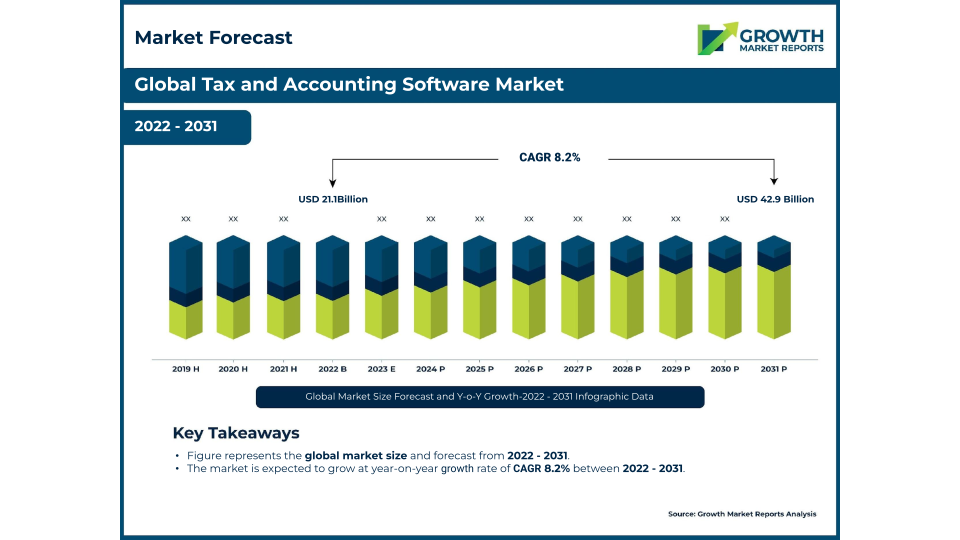
The global tax and accounting software market size was USD 21.1 Bn in 2022 and is likely to reach USD 42.9 Bn by 2031, expanding at a compound annual growth rate of 8.2% during 2023–2031.

Table Of Content

Chapter 1 Executive Summary
Chapter 2 Assumptions and Acronyms Used
Chapter 3 Research Methodology
Chapter 4 Tax and Accounting Software Market Overview
   4.1 Introduction
      4.1.1 Market Taxonomy
      4.1.2 Market Definition
      4.1.3 Macro-Economic Factors Impacting the Market Growth
   4.2 Tax and Accounting Software Market Dynamics
      4.2.1 Market Drivers
      4.2.2 Market Restraints
      4.2.3 Market Opportunity
   4.3 Tax and Accounting Software Market - Supply Chain Analysis
      4.3.1 List of Key Suppliers
      4.3.2 List of Key Distributors
      4.3.3 List of Key Consumers
   4.4 Key Forces Shaping the Tax and Accounting Software Market
      4.4.1 Bargaining Power of Suppliers
      4.4.2 Bargaining Power of Buyers
      4.4.3 Threat of Substitution
      4.4.4 Threat of New Entrants
      4.4.5 Competitive Rivalry
   4.5 Global Tax and Accounting Software Market Size & Forecast, 2023-2032
      4.5.1 Tax and Accounting Software Market Size and Y-o-Y Growth
      4.5.2 Tax and Accounting Software Market Absolute $ Opportunity

Chapter 5 Global Tax and Accounting Software Market Analysis and Forecast By Component
   5.1 Introduction
      5.1.1 Key Market Trends & Growth Opportunities By Component
      5.1.2 Basis Point Share (BPS) Analysis By Component
      5.1.3 Absolute $ Opportunity Assessment By Component
   5.2 Tax and Accounting Software Market Size Forecast By Component
      5.2.1 Software
      5.2.2 Services
   5.3 Market Attractiveness Analysis By Component

Chapter 6 Global Tax and Accounting Software Market Analysis and Forecast By Deployment Mode
   6.1 Introduction
      6.1.1 Key Market Trends & Growth Opportunities By Deployment Mode
      6.1.2 Basis Point Share (BPS) Analysis By Deployment Mode
      6.1.3 Absolute $ Opportunity Assessment By Deployment Mode
   6.2 Tax and Accounting Software Market Size Forecast By Deployment Mode
      6.2.1 On-Premises
      6.2.2 Cloud-Based
   6.3 Market Attractiveness Analysis By Deployment Mode

Chapter 7 Global Tax and Accounting Software Market Analysis and Forecast By Organization Size
   7.1 Introduction
      7.1.1 Key Market Trends & Growth Opportunities By Organization Size
      7.1.2 Basis Point Share (BPS) Analysis By Organization Size
      7.1.3 Absolute $ Opportunity Assessment By Organization Size
   7.2 Tax and Accounting Software Market Size Forecast By Organization Size
      7.2.1 Small and Medium Enterprises
      7.2.2 Large Enterprises
   7.3 Market Attractiveness Analysis By Organization Size

Chapter 8 Global Tax and Accounting Software Market Analysis and Forecast By Application
   8.1 Introduction
      8.1.1 Key Market Trends & Growth Opportunities By Application
      8.1.2 Basis Point Share (BPS) Analysis By Application
      8.1.3 Absolute $ Opportunity Assessment By Application
   8.2 Tax and Accounting Software Market Size Forecast By Application
      8.2.1 Personal
      8.2.2 Commercial
      8.2.3 Industrial
   8.3 Market Attractiveness Analysis By Application

Chapter 9 Global Tax and Accounting Software Market Analysis and Forecast By End-User
   9.1 Introduction
      9.1.1 Key Market Trends & Growth Opportunities By End-User
      9.1.2 Basis Point Share (BPS) Analysis By End-User
      9.1.3 Absolute $ Opportunity Assessment By End-User
   9.2 Tax and Accounting Software Market Size Forecast By End-User
      9.2.1 BFSI
      9.2.2 Healthcare
      9.2.3 Retail
      9.2.4 Manufacturing
      9.2.5 IT and Telecommunications
      9.2.6 Government
      9.2.7 Others
   9.3 Market Attractiveness Analysis By End-User

Chapter 10 Global Tax and Accounting Software Market Analysis and Forecast by Region
   10.1 Introduction
      10.1.1 Key Market Trends & Growth Opportunities By Region
      10.1.2 Basis Point Share (BPS) Analysis By Region
      10.1.3 Absolute $ Opportunity Assessment By Region
   10.2 Tax and Accounting Software Market Size Forecast By Region
      10.2.1 North America
      10.2.2 Europe
      10.2.3 Asia Pacific
      10.2.4 Latin America
      10.2.5 Middle East & Africa (MEA)
   10.3 Market Attractiveness Analysis By Region

Chapter 11 Coronavirus Disease (COVID-19) Impact 
   11.1 Introduction 
   11.2 Current & Future Impact Analysis 
   11.3 Economic Impact Analysis 
   11.4 Government Policies 
   11.5 Investment Scenario

Chapter 12 North America Tax and Accounting Software Analysis and Forecast
   12.1 Introduction
   12.2 North America Tax and Accounting Software Market Size Forecast by Country
      12.2.1 U.S.
      12.2.2 Canada
   12.3 Basis Point Share (BPS) Analysis by Country
   12.4 Absolute $ Opportunity Assessment by Country
   12.5 Market Attractiveness Analysis by Country
   12.6 North America Tax and Accounting Software Market Size Forecast By Component
      12.6.1 Software
      12.6.2 Services
   12.7 Basis Point Share (BPS) Analysis By Component 
   12.8 Absolute $ Opportunity Assessment By Component 
   12.9 Market Attractiveness Analysis By Component
   12.10 North America Tax and Accounting Software Market Size Forecast By Deployment Mode
      12.10.1 On-Premises
      12.10.2 Cloud-Based
   12.11 Basis Point Share (BPS) Analysis By Deployment Mode 
   12.12 Absolute $ Opportunity Assessment By Deployment Mode 
   12.13 Market Attractiveness Analysis By Deployment Mode
   12.14 North America Tax and Accounting Software Market Size Forecast By Organization Size
      12.14.1 Small and Medium Enterprises
      12.14.2 Large Enterprises
   12.15 Basis Point Share (BPS) Analysis By Organization Size 
   12.16 Absolute $ Opportunity Assessment By Organization Size 
   12.17 Market Attractiveness Analysis By Organization Size
   12.18 North America Tax and Accounting Software Market Size Forecast By Application
      12.18.1 Personal
      12.18.2 Commercial
      12.18.3 Industrial
   12.19 Basis Point Share (BPS) Analysis By Application 
   12.20 Absolute $ Opportunity Assessment By Application 
   12.21 Market Attractiveness Analysis By Application
   12.22 North America Tax and Accounting Software Market Size Forecast By End-User
      12.22.1 BFSI
      12.22.2 Healthcare
      12.22.3 Retail
      12.22.4 Manufacturing
      12.22.5 IT and Telecommunications
      12.22.6 Government
      12.22.7 Others
   12.23 Basis Point Share (BPS) Analysis By End-User 
   12.24 Absolute $ Opportunity Assessment By End-User 
   12.25 Market Attractiveness Analysis By End-User

Chapter 13 Europe Tax and Accounting Software Analysis and Forecast
   13.1 Introduction
   13.2 Europe Tax and Accounting Software Market Size Forecast by Country
      13.2.1 Germany
      13.2.2 France
      13.2.3 Italy
      13.2.4 U.K.
      13.2.5 Spain
      13.2.6 Russia
      13.2.7 Rest of Europe
   13.3 Basis Point Share (BPS) Analysis by Country
   13.4 Absolute $ Opportunity Assessment by Country
   13.5 Market Attractiveness Analysis by Country
   13.6 Europe Tax and Accounting Software Market Size Forecast By Component
      13.6.1 Software
      13.6.2 Services
   13.7 Basis Point Share (BPS) Analysis By Component 
   13.8 Absolute $ Opportunity Assessment By Component 
   13.9 Market Attractiveness Analysis By Component
   13.10 Europe Tax and Accounting Software Market Size Forecast By Deployment Mode
      13.10.1 On-Premises
      13.10.2 Cloud-Based
   13.11 Basis Point Share (BPS) Analysis By Deployment Mode 
   13.12 Absolute $ Opportunity Assessment By Deployment Mode 
   13.13 Market Attractiveness Analysis By Deployment Mode
   13.14 Europe Tax and Accounting Software Market Size Forecast By Organization Size
      13.14.1 Small and Medium Enterprises
      13.14.2 Large Enterprises
   13.15 Basis Point Share (BPS) Analysis By Organization Size 
   13.16 Absolute $ Opportunity Assessment By Organization Size 
   13.17 Market Attractiveness Analysis By Organization Size
   13.18 Europe Tax and Accounting Software Market Size Forecast By Application
      13.18.1 Personal
      13.18.2 Commercial
      13.18.3 Industrial
   13.19 Basis Point Share (BPS) Analysis By Application 
   13.20 Absolute $ Opportunity Assessment By Application 
   13.21 Market Attractiveness Analysis By Application
   13.22 Europe Tax and Accounting Software Market Size Forecast By End-User
      13.22.1 BFSI
      13.22.2 Healthcare
      13.22.3 Retail
      13.22.4 Manufacturing
      13.22.5 IT and Telecommunications
      13.22.6 Government
      13.22.7 Others
   13.23 Basis Point Share (BPS) Analysis By End-User 
   13.24 Absolute $ Opportunity Assessment By End-User 
   13.25 Market Attractiveness Analysis By End-User

Chapter 14 Asia Pacific Tax and Accounting Software Analysis and Forecast
   14.1 Introduction
   14.2 Asia Pacific Tax and Accounting Software Market Size Forecast by Country
      14.2.1 China
      14.2.2 Japan
      14.2.3 South Korea
      14.2.4 India
      14.2.5 Australia
      14.2.6 South East Asia (SEA)
      14.2.7 Rest of Asia Pacific (APAC)
   14.3 Basis Point Share (BPS) Analysis by Country
   14.4 Absolute $ Opportunity Assessment by Country
   14.5 Market Attractiveness Analysis by Country
   14.6 Asia Pacific Tax and Accounting Software Market Size Forecast By Component
      14.6.1 Software
      14.6.2 Services
   14.7 Basis Point Share (BPS) Analysis By Component 
   14.8 Absolute $ Opportunity Assessment By Component 
   14.9 Market Attractiveness Analysis By Component
   14.10 Asia Pacific Tax and Accounting Software Market Size Forecast By Deployment Mode
      14.10.1 On-Premises
      14.10.2 Cloud-Based
   14.11 Basis Point Share (BPS) Analysis By Deployment Mode 
   14.12 Absolute $ Opportunity Assessment By Deployment Mode 
   14.13 Market Attractiveness Analysis By Deployment Mode
   14.14 Asia Pacific Tax and Accounting Software Market Size Forecast By Organization Size
      14.14.1 Small and Medium Enterprises
      14.14.2 Large Enterprises
   14.15 Basis Point Share (BPS) Analysis By Organization Size 
   14.16 Absolute $ Opportunity Assessment By Organization Size 
   14.17 Market Attractiveness Analysis By Organization Size
   14.18 Asia Pacific Tax and Accounting Software Market Size Forecast By Application
      14.18.1 Personal
      14.18.2 Commercial
      14.18.3 Industrial
   14.19 Basis Point Share (BPS) Analysis By Application 
   14.20 Absolute $ Opportunity Assessment By Application 
   14.21 Market Attractiveness Analysis By Application
   14.22 Asia Pacific Tax and Accounting Software Market Size Forecast By End-User
      14.22.1 BFSI
      14.22.2 Healthcare
      14.22.3 Retail
      14.22.4 Manufacturing
      14.22.5 IT and Telecommunications
      14.22.6 Government
      14.22.7 Others
   14.23 Basis Point Share (BPS) Analysis By End-User 
   14.24 Absolute $ Opportunity Assessment By End-User 
   14.25 Market Attractiveness Analysis By End-User

Chapter 15 Latin America Tax and Accounting Software Analysis and Forecast
   15.1 Introduction
   15.2 Latin America Tax and Accounting Software Market Size Forecast by Country
      15.2.1 Brazil
      15.2.2 Mexico
      15.2.3 Rest of Latin America (LATAM)
   15.3 Basis Point Share (BPS) Analysis by Country
   15.4 Absolute $ Opportunity Assessment by Country
   15.5 Market Attractiveness Analysis by Country
   15.6 Latin America Tax and Accounting Software Market Size Forecast By Component
      15.6.1 Software
      15.6.2 Services
   15.7 Basis Point Share (BPS) Analysis By Component 
   15.8 Absolute $ Opportunity Assessment By Component 
   15.9 Market Attractiveness Analysis By Component
   15.10 Latin America Tax and Accounting Software Market Size Forecast By Deployment Mode
      15.10.1 On-Premises
      15.10.2 Cloud-Based
   15.11 Basis Point Share (BPS) Analysis By Deployment Mode 
   15.12 Absolute $ Opportunity Assessment By Deployment Mode 
   15.13 Market Attractiveness Analysis By Deployment Mode
   15.14 Latin America Tax and Accounting Software Market Size Forecast By Organization Size
      15.14.1 Small and Medium Enterprises
      15.14.2 Large Enterprises
   15.15 Basis Point Share (BPS) Analysis By Organization Size 
   15.16 Absolute $ Opportunity Assessment By Organization Size 
   15.17 Market Attractiveness Analysis By Organization Size
   15.18 Latin America Tax and Accounting Software Market Size Forecast By Application
      15.18.1 Personal
      15.18.2 Commercial
      15.18.3 Industrial
   15.19 Basis Point Share (BPS) Analysis By Application 
   15.20 Absolute $ Opportunity Assessment By Application 
   15.21 Market Attractiveness Analysis By Application
   15.22 Latin America Tax and Accounting Software Market Size Forecast By End-User
      15.22.1 BFSI
      15.22.2 Healthcare
      15.22.3 Retail
      15.22.4 Manufacturing
      15.22.5 IT and Telecommunications
      15.22.6 Government
      15.22.7 Others
   15.23 Basis Point Share (BPS) Analysis By End-User 
   15.24 Absolute $ Opportunity Assessment By End-User 
   15.25 Market Attractiveness Analysis By End-User

Chapter 16 Middle East & Africa (MEA) Tax and Accounting Software Analysis and Forecast
   16.1 Introduction
   16.2 Middle East & Africa (MEA) Tax and Accounting Software Market Size Forecast by Country
      16.2.1 Saudi Arabia
      16.2.2 South Africa
      16.2.3 UAE
      16.2.4 Rest of Middle East & Africa (MEA)
   16.3 Basis Point Share (BPS) Analysis by Country
   16.4 Absolute $ Opportunity Assessment by Country
   16.5 Market Attractiveness Analysis by Country
   16.6 Middle East & Africa (MEA) Tax and Accounting Software Market Size Forecast By Component
      16.6.1 Software
      16.6.2 Services
   16.7 Basis Point Share (BPS) Analysis By Component 
   16.8 Absolute $ Opportunity Assessment By Component 
   16.9 Market Attractiveness Analysis By Component
   16.10 Middle East & Africa (MEA) Tax and Accounting Software Market Size Forecast By Deployment Mode
      16.10.1 On-Premises
      16.10.2 Cloud-Based
   16.11 Basis Point Share (BPS) Analysis By Deployment Mode 
   16.12 Absolute $ Opportunity Assessment By Deployment Mode 
   16.13 Market Attractiveness Analysis By Deployment Mode
   16.14 Middle East & Africa (MEA) Tax and Accounting Software Market Size Forecast By Organization Size
      16.14.1 Small and Medium Enterprises
      16.14.2 Large Enterprises
   16.15 Basis Point Share (BPS) Analysis By Organization Size 
   16.16 Absolute $ Opportunity Assessment By Organization Size 
   16.17 Market Attractiveness Analysis By Organization Size
   16.18 Middle East & Africa (MEA) Tax and Accounting Software Market Size Forecast By Application
      16.18.1 Personal
      16.18.2 Commercial
      16.18.3 Industrial
   16.19 Basis Point Share (BPS) Analysis By Application 
   16.20 Absolute $ Opportunity Assessment By Application 
   16.21 Market Attractiveness Analysis By Application
   16.22 Middle East & Africa (MEA) Tax and Accounting Software Market Size Forecast By End-User
      16.22.1 BFSI
      16.22.2 Healthcare
      16.22.3 Retail
      16.22.4 Manufacturing
      16.22.5 IT and Telecommunications
      16.22.6 Government
      16.22.7 Others
   16.23 Basis Point Share (BPS) Analysis By End-User 
   16.24 Absolute $ Opportunity Assessment By End-User 
   16.25 Market Attractiveness Analysis By End-User

Chapter 17 Competition Landscape 
   17.1 Tax and Accounting Software Market: Competitive Dashboard
   17.2 Global Tax and Accounting Software Market: Market Share Analysis, 2023
   17.3 Company Profiles (Details – Overview, Financials, Developments, Strategy) 
      17.3.1 Intuit Inc.
Sage Group plc
Wolters Kluwer N.V.
Thomson Reuters Corporation
Xero Limited
SAP SE
Oracle Corporation
Microsoft Corporation
Workday, Inc.
Epicor Software Corporation
Unit4
FreshBooks
MYOB Group Pty Ltd
BlackLine, Inc.
Avalara, Inc.
Vertex, Inc.
Drake Software
CCH Incorporated
Acclivity Group LLC
TaxSlayer LLC

Methodology

Our Clients

Dassault Aviation
Nestle SA
Microsoft
sinopec
Siemens Healthcare
General Mills
Deloitte
Honda Motor Co. Ltd.