Segments - by Product Type (Shrink Bands, Induction Seals, Breakable Caps, Lidding Films, Others), by Material (Plastic, Glass, Metal, Paperboard, Others), by End-Use Industry (Food & Beverages, Pharmaceuticals, Personal Care & Cosmetics, Chemicals, Others), by Distribution Channel (Online, Offline)
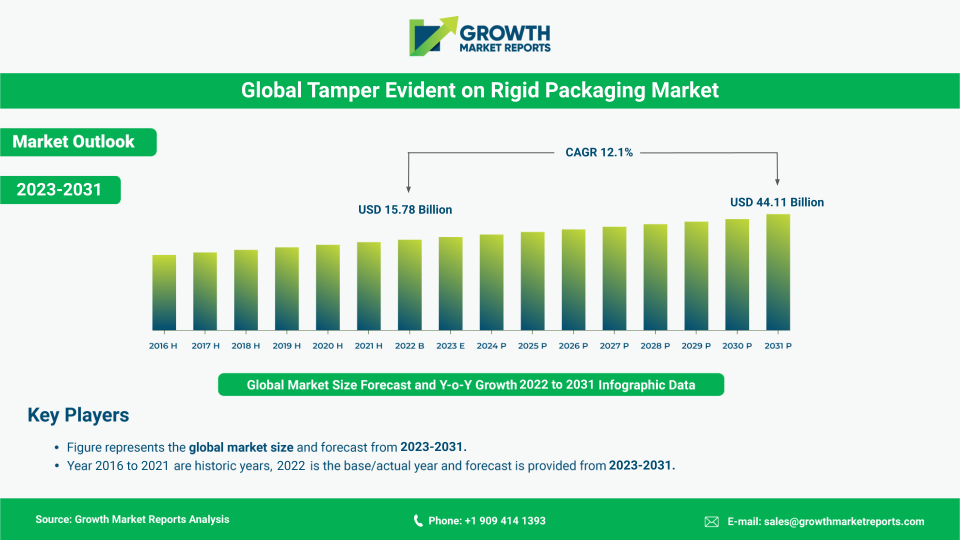
According to our latest research, the global tamper evident on rigid packaging market size reached USD 18.7 billion in 2024, highlighting its critical role in safeguarding product integrity across industries. The market is advancing at a robust CAGR of 7.2% from 2025 to 2033, propelled by stringent regulatory requirements and heightened consumer awareness regarding product safety. By 2033, the tamper evident on rigid packaging market is forecasted to achieve a value of USD 35.2 billion, as per our comprehensive analysis. The growth is primarily fueled by the increasing demand for secure packaging solutions in food & beverages, pharmaceuticals, and personal care sectors, where product authenticity and consumer trust are paramount.
The growth trajectory of the tamper evident on rigid packaging market is being significantly shaped by evolving regulatory frameworks and compliance standards across the globe. Governments and international regulatory bodies have ramped up their focus on consumer safety, mandating the use of tamper-evident features, especially in high-risk industries such as pharmaceuticals and food. This has led to a surge in adoption of advanced tamper evident technologies, including shrink bands, induction seals, and breakable caps, among manufacturers seeking to avoid legal repercussions and maintain brand integrity. Furthermore, the rise in counterfeit activities and product recalls has underscored the necessity for robust packaging solutions, compelling companies to invest in innovative tamper evident packaging that offers both visual and functional assurance of product safety.
Another pivotal factor driving the expansion of the tamper evident on rigid packaging market is the heightened consumer awareness and demand for transparency in product packaging. Today’s consumers are more informed and vigilant, expecting clear indicators that products have not been tampered with prior to purchase. This shift in consumer behavior is particularly pronounced in the food & beverage and personal care sectors, where the risks associated with product contamination or adulteration can have severe health implications. As a result, brands are increasingly leveraging tamper evident packaging not only as a compliance measure but also as a marketing tool to enhance consumer trust and differentiate their offerings on crowded retail shelves. The integration of smart packaging technologies, such as QR codes and RFID tags, further augments this trend by enabling traceability and real-time authentication.
Technological advancements and the ongoing transition towards sustainable packaging materials are also catalyzing growth in the tamper evident on rigid packaging market. Manufacturers are actively exploring eco-friendly alternatives such as recyclable plastics, biodegradable films, and paperboard-based solutions to align with global sustainability goals. This shift is particularly evident in regions where environmental regulations are stringent, and consumer preference for green packaging is on the rise. The convergence of tamper evident features with sustainable materials not only addresses safety concerns but also meets the growing demand for responsible packaging. This dual focus is expected to open new avenues for innovation, driving the market forward and encouraging collaboration between packaging designers, material scientists, and technology providers.
Regionally, Asia Pacific stands out as the fastest-growing market for tamper evident on rigid packaging, supported by rapid urbanization, expanding middle-class population, and increased awareness of product safety. Countries such as China, India, and Japan are witnessing significant investments in packaging infrastructure, driven by the burgeoning food & beverage and pharmaceutical sectors. North America and Europe continue to maintain substantial market shares, owing to their mature regulatory environments and early adoption of advanced packaging technologies. Meanwhile, Latin America and the Middle East & Africa are gradually catching up, with local manufacturers increasingly recognizing the value of tamper evident packaging in protecting brand reputation and meeting export standards. This diverse regional landscape underscores the global relevance and dynamic nature of the tamper evident on rigid packaging market.
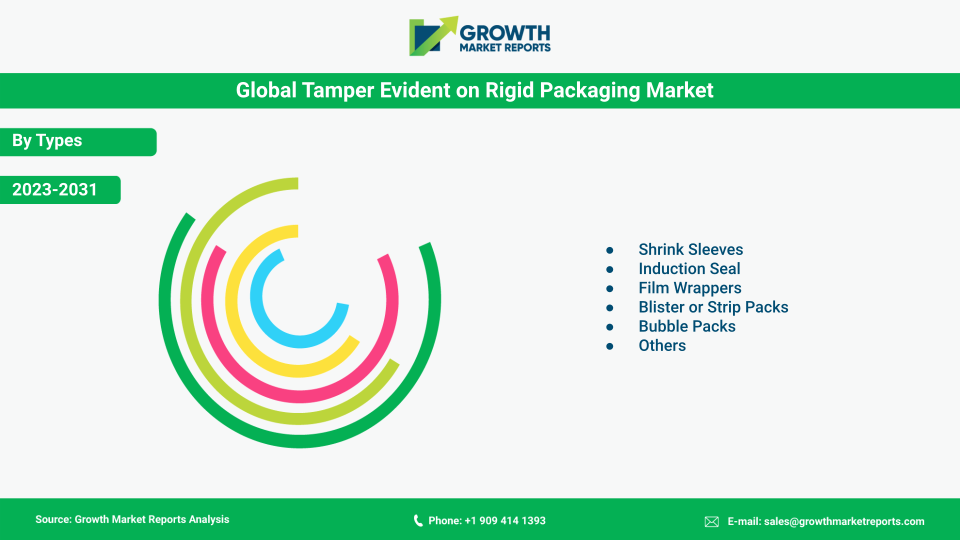
The product type segment of the tamper evident on rigid packaging market is characterized by a wide array of solutions, each tailored to specific application needs and regulatory requirements. Shrink bands remain a popular choice due to their cost-effectiveness, ease of application, and clear visual indication of tampering. These bands are extensively used in the food & beverage and personal care industries, where consumer trust is closely linked to the perceived integrity of the packaging. The adoption of shrink bands has been further bolstered by advancements in material science, enabling the production of bands that are both durable and environmentally friendly. As brands seek to balance security with sustainability, the demand for recyclable and biodegradable shrink bands is expected to rise, adding a new dimension to product innovation in this segment.
Induction seals have emerged as a preferred tamper evident solution in the pharmaceutical and chemical sectors, where product contamination can have severe consequences. This technology involves the application of a heat-sealed foil to the container opening, providing a hermetic seal that is only broken upon opening. The effectiveness of induction seals in preventing leakage and safeguarding against unauthorized access has made them indispensable for manufacturers aiming to comply with stringent safety standards. Recent advancements in induction sealing technology, such as the integration of easy-open features and compatibility with a broader range of container materials, have further expanded their applicability and appeal across industries.
The breakable caps segment addresses the need for intuitive and user-friendly tamper evident packaging, particularly in the food & beverage and personal care markets. These caps are designed to break or display visible damage upon first opening, providing an immediate indication of tampering. The growing popularity of breakable caps can be attributed to their simplicity, effectiveness, and versatility, as they can be incorporated into a wide range of rigid containers. Manufacturers are increasingly investing in the development of innovative cap designs that enhance user experience while maintaining the highest standards of product security. This focus on both functionality and aesthetics is expected to drive further growth in the breakable caps segment.
Lidding films represent another critical product type within the tamper evident on rigid packaging market, particularly for applications involving trays, tubs, and other rigid containers. These films offer a secure seal that is visibly altered upon opening, making them ideal for perishable goods and ready-to-eat meals. The use of high-performance lidding films not only enhances product safety but also extends shelf life by providing a barrier against moisture, oxygen, and contaminants. Innovations in film materials and sealing technologies are enabling manufacturers to offer customizable solutions that cater to diverse packaging formats and environmental requirements. As the demand for convenience foods and on-the-go packaging continues to rise, lidding films are poised to capture a larger share of the market.
Other tamper evident product types, such as tamper-evident labels and security tapes, are also gaining traction in niche applications where specialized security features are required. These solutions are particularly valuable in the electronics and luxury goods sectors, where product authenticity and anti-counterfeiting measures are of utmost importance. The ongoing evolution of tamper evident technologies, driven by advancements in materials, design, and digital integration, is expected to further diversify the product type segment and create new opportunities for market players.
| Attributes | Details |
| Report Title | Tamper Evident on Rigid Packaging Market Research Report 2033 |
| By Product Type | Shrink Bands, Induction Seals, Breakable Caps, Lidding Films, Others |
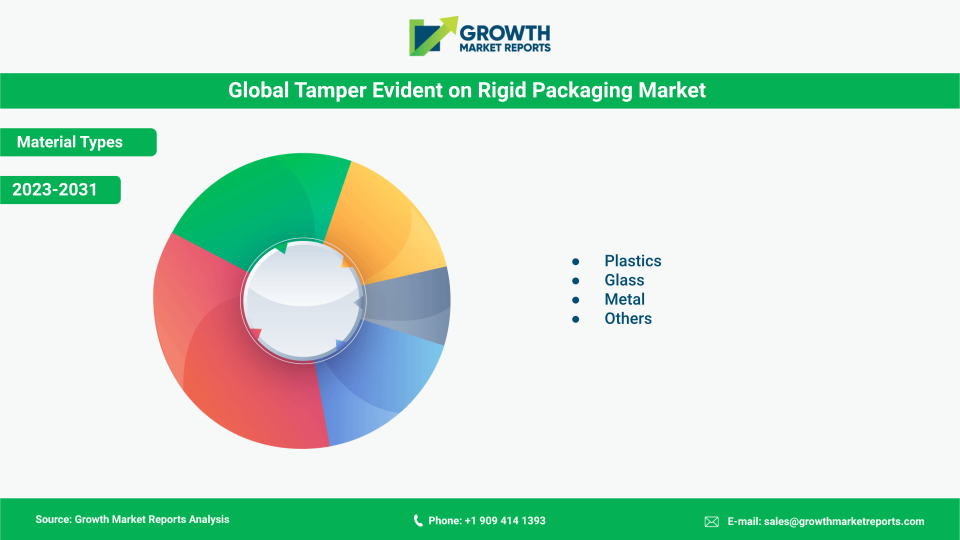
| By Material | Plastic, Glass, Metal, Paperboard, Others |
| By End-Use Industry | Food & Beverages, Pharmaceuticals, Personal Care & Cosmetics, Chemicals, Others |
| By Distribution Channel | Online, Offline |
| Regions Covered | North America, Europe, APAC, Latin America, MEA |
| Base Year | 2024 |
| Historic Data | 2018-2023 |
| Forecast Period | 2025-2033 |
| Number of Pages | 285 |
| Number of Tables & Figures | 399 |
| Customization Available | Yes, the report can be customized as per your need. |
The material segment of the tamper evident on rigid packaging market is dominated by plastic, owing to its versatility, durability, and cost-effectiveness. Plastics such as polyethylene, polypropylene, and PET are widely used in the production of shrink bands, induction seals, and breakable caps, offering excellent barrier properties and compatibility with various container types. The ongoing shift towards sustainable packaging has prompted manufacturers to explore bio-based and recyclable plastics, which not only address environmental concerns but also comply with evolving regulatory standards. The integration of tamper evident features into recyclable plastic packaging is emerging as a key trend, driven by consumer demand for both safety and sustainability.
Glass remains a preferred material for high-value and sensitive products, particularly in the pharmaceutical and premium beverage sectors. The inherent impermeability and chemical inertness of glass make it an ideal choice for packaging applications where product purity is paramount. Tamper evident solutions for glass containers often involve the use of breakable caps, induction seals, and shrink bands, which provide both physical security and visual assurance of integrity. Despite its advantages, the relatively higher cost and fragility of glass packaging have limited its widespread adoption, prompting manufacturers to focus on niche markets and value-added applications.
Metal is another significant material in the tamper evident on rigid packaging market, especially for products requiring enhanced protection against contamination and tampering. Metal containers, such as cans and tins, are commonly used in the food, chemical, and pharmaceutical industries, where durability and barrier properties are critical. Tamper evident features for metal packaging typically include breakable seals, security tabs, and lidding films designed to provide clear evidence of tampering. The recyclability of metal further enhances its appeal in markets with strong environmental regulations and sustainability goals. As manufacturers seek to balance security, functionality, and environmental impact, the demand for innovative tamper evident solutions for metal packaging is expected to grow.
Paperboard is gaining traction as an eco-friendly alternative for tamper evident rigid packaging, particularly in the food service and personal care sectors. Advances in material technology have enabled the development of paperboard-based containers with integrated tamper evident features, such as tear strips, security seals, and reinforced closures. These solutions offer a sustainable and cost-effective option for brands seeking to reduce their environmental footprint without compromising on product security. The growing emphasis on circular economy principles and consumer preference for biodegradable packaging are expected to drive further innovation in paperboard-based tamper evident packaging.
Other materials, including composites and specialty polymers, are being explored for their potential to deliver enhanced security and performance in specific applications. These materials are often used in combination with traditional substrates to create multi-layered packaging solutions that offer superior barrier properties, tamper evidence, and user convenience. The ongoing research and development in material science is expected to yield new solutions that address the evolving needs of the tamper evident on rigid packaging market, enabling manufacturers to stay ahead of regulatory and consumer expectations.
The food & beverages sector represents the largest end-use industry for tamper evident on rigid packaging, accounting for a substantial share of the global market. The rising incidence of food fraud, contamination, and product recalls has heightened the need for secure packaging solutions that provide clear evidence of tampering. Tamper evident features such as shrink bands, induction seals, and lidding films are widely used to protect packaged foods, beverages, and ready-to-eat meals. The increasing demand for convenience foods, coupled with the growth of online grocery delivery, has further accelerated the adoption of tamper evident packaging in this sector. Manufacturers are also leveraging tamper evident packaging as a branding tool, using customized designs and smart technologies to enhance consumer trust and engagement.
The pharmaceutical industry is another major driver of demand for tamper evident on rigid packaging, given the critical importance of product safety, authenticity, and regulatory compliance. Regulatory agencies such as the US FDA and the European Medicines Agency have made tamper evident packaging mandatory for a wide range of pharmaceutical products, including over-the-counter medications, prescription drugs, and medical devices. Induction seals, breakable caps, and security labels are commonly used to prevent unauthorized access, counterfeiting, and contamination. The growing prevalence of chronic diseases, aging populations, and increased access to healthcare are expected to sustain the demand for tamper evident packaging in the pharmaceutical sector.
In the personal care & cosmetics industry, tamper evident on rigid packaging plays a crucial role in protecting product integrity, preventing adulteration, and enhancing consumer confidence. The high value and sensitivity of personal care products, combined with the risk of counterfeiting and contamination, have prompted brands to invest in advanced tamper evident solutions. Breakable caps, shrink bands, and security seals are commonly used to safeguard products such as creams, lotions, fragrances, and cosmetics. The growing focus on premiumization and brand differentiation in the personal care sector is driving the adoption of customized tamper evident packaging that combines security with aesthetic appeal.
The chemicals industry also relies heavily on tamper evident on rigid packaging to ensure the safe storage, transportation, and handling of hazardous materials. Tamper evident features such as induction seals, breakable caps, and security tapes are used to prevent accidental exposure, unauthorized access, and product adulteration. The increasing regulatory scrutiny of chemical packaging, coupled with the need for robust supply chain security, is expected to drive further innovation and adoption of tamper evident solutions in this sector. Manufacturers are also exploring the integration of digital technologies, such as RFID tags and blockchain, to enhance traceability and compliance.
Other end-use industries, including electronics, automotive, and household products, are gradually recognizing the value of tamper evident on rigid packaging in protecting product authenticity and preventing losses due to theft or counterfeiting. The ongoing diversification of application areas, supported by advancements in packaging technology and materials, is expected to create new growth opportunities for market participants across a wide range of industries.
The distribution channel segment of the tamper evident on rigid packaging market is bifurcated into online and offline channels, each playing a distinct role in the market’s growth and accessibility. Offline channels, including direct sales, distributors, and specialty packaging stores, have traditionally dominated the market, offering personalized service, technical support, and immediate product availability. These channels are particularly favored by large enterprises and end-users with complex packaging requirements, as they provide opportunities for customization, consultation, and after-sales support. The strong presence of offline channels in developed regions such as North America and Europe has contributed to the widespread adoption of tamper evident packaging solutions among established brands and manufacturers.
The online distribution channel is experiencing rapid growth, driven by the digitalization of procurement processes and the increasing preference for convenience and cost savings. E-commerce platforms and online marketplaces offer a wide range of tamper evident packaging products, enabling businesses of all sizes to access the latest solutions with ease. The online channel is particularly attractive to small and medium enterprises (SMEs) and emerging brands, as it provides access to competitive pricing, product reviews, and a broader selection of suppliers. The rise of digital marketing and targeted advertising has further enhanced the visibility and reach of tamper evident packaging products, supporting market expansion in both developed and emerging economies.
The integration of advanced technologies such as AI-driven recommendations, virtual product demonstrations, and real-time inventory tracking is transforming the online distribution landscape, making it easier for buyers to identify and purchase tamper evident packaging solutions that meet their specific needs. Online platforms are also facilitating the adoption of customized and on-demand packaging, allowing brands to respond quickly to changing market trends and consumer preferences. The growing importance of omni-channel strategies, which combine the strengths of online and offline channels, is expected to drive further innovation and competition in the distribution segment.
Despite the rapid growth of online channels, offline distribution remains essential for industries with stringent regulatory requirements and complex supply chains. The ability to provide hands-on support, technical expertise, and tailored solutions gives offline channels a competitive edge in certain segments of the tamper evident on rigid packaging market. As the market continues to evolve, the interplay between online and offline channels is expected to shape the future of distribution, with manufacturers and suppliers increasingly adopting hybrid models to maximize reach and customer satisfaction.
The ongoing shift towards digital procurement and the growing emphasis on customer experience are expected to drive further consolidation and innovation in the distribution channel segment. Market participants that can effectively leverage both online and offline channels, while offering value-added services such as customization, technical support, and rapid delivery, are likely to emerge as leaders in the competitive landscape of the tamper evident on rigid packaging market.
The tamper evident on rigid packaging market is brimming with opportunities driven by technological innovation and the rising demand for product safety across industries. One of the most significant opportunities lies in the integration of smart packaging technologies, such as RFID tags, QR codes, and blockchain-based authentication systems. These technologies not only enhance the security and traceability of packaged goods but also offer brands valuable data on consumer behavior and supply chain performance. The growing adoption of e-commerce and direct-to-consumer sales channels is further amplifying the need for tamper evident packaging, as products are exposed to multiple touchpoints and potential risks during transit. Manufacturers that can develop and commercialize innovative, cost-effective, and user-friendly tamper evident solutions are well-positioned to capture new market segments and drive long-term growth.
Another promising opportunity for market participants is the shift towards sustainable and eco-friendly packaging materials. As consumers and regulators increasingly prioritize environmental responsibility, there is a growing demand for tamper evident packaging solutions that minimize environmental impact without compromising on security or functionality. This trend is driving research and development efforts focused on recyclable plastics, biodegradable films, and renewable materials such as paperboard. Companies that can successfully combine tamper evident features with sustainable materials are likely to gain a competitive advantage, particularly in markets with stringent environmental regulations and high consumer awareness. The pursuit of circular economy principles and closed-loop packaging systems is expected to open new avenues for collaboration and innovation in the tamper evident on rigid packaging market.
Despite the numerous growth opportunities, the market faces certain restraints that could hinder its expansion. One of the primary challenges is the high cost associated with the development and implementation of advanced tamper evident packaging solutions, particularly for small and medium enterprises. The need to comply with diverse regulatory requirements across different regions adds to the complexity and cost of market entry. Additionally, the risk of false positives or accidental activation of tamper evident features can lead to consumer dissatisfaction and increased product returns. Addressing these challenges will require ongoing investment in research, standardization, and consumer education to ensure that tamper evident packaging solutions deliver the intended benefits without unintended consequences.
Asia Pacific is the fastest-growing region in the tamper evident on rigid packaging market, with a market size of USD 6.8 billion in 2024 and an impressive CAGR of 8.5% projected through 2033. The region’s rapid urbanization, expanding middle-class population, and rising demand for packaged foods and pharmaceuticals are key drivers of market growth. Countries such as China, India, and Japan are witnessing significant investments in packaging infrastructure and technology, supported by favorable government policies and increasing consumer awareness of product safety. The growing presence of multinational brands and the expansion of e-commerce platforms are further accelerating the adoption of tamper evident packaging solutions in Asia Pacific, making it a focal point for market innovation and investment.
North America remains a mature and highly regulated market for tamper evident on rigid packaging, with a market size of USD 5.1 billion in 2024. The region’s advanced regulatory environment, early adoption of innovative packaging technologies, and strong presence of leading packaging manufacturers have contributed to its sustained market leadership. The food & beverage and pharmaceutical sectors are the primary drivers of demand, as brands seek to comply with stringent safety standards and enhance consumer trust. The increasing focus on sustainability and the integration of smart packaging technologies are expected to drive further growth and differentiation in the North American market over the forecast period.
Europe holds a significant share of the global tamper evident on rigid packaging market, with a market size of USD 4.7 billion in 2024. The region’s strong regulatory framework, high consumer awareness, and emphasis on environmental responsibility have shaped the adoption of tamper evident packaging solutions across industries. The pharmaceutical and personal care sectors are particularly active in driving innovation and demand, supported by robust supply chains and a culture of quality assurance. Latin America and the Middle East & Africa, with combined market sizes of USD 2.1 billion, are gradually catching up, as local manufacturers and brands increasingly recognize the value of tamper evident packaging in meeting export standards and protecting brand reputation. The diverse regional landscape underscores the global relevance and dynamic nature of the tamper evident on rigid packaging market.
The competitive landscape of the tamper evident on rigid packaging market is characterized by the presence of numerous global and regional players, each vying for market share through innovation, product differentiation, and strategic partnerships. Leading companies are investing heavily in research and development to introduce advanced tamper evident solutions that address the evolving needs of end-users across industries. The focus on sustainability, smart packaging technologies, and customization is driving a wave of innovation, as manufacturers seek to balance security, functionality, and environmental impact. The market is also witnessing increased consolidation, with larger players acquiring smaller firms to expand their product portfolios, enhance technological capabilities, and strengthen their global footprint.
Collaboration and partnerships are emerging as key strategies for market participants seeking to stay ahead in the competitive landscape. Companies are joining forces with material suppliers, technology providers, and regulatory bodies to develop integrated solutions that meet the highest standards of safety and compliance. The integration of digital technologies, such as blockchain and IoT, into tamper evident packaging is enabling real-time monitoring, authentication, and traceability, offering new value propositions for brands and consumers alike. The ability to offer end-to-end solutions, from design and material selection to manufacturing and distribution, is becoming a critical differentiator in the market.
The competitive dynamics are further influenced by the growing importance of customer experience and brand differentiation. Manufacturers are increasingly offering customized tamper evident packaging solutions that cater to the unique needs of different industries and applications. The use of advanced printing, labeling, and design technologies enables brands to create packaging that not only ensures product safety but also enhances shelf appeal and consumer engagement. The emphasis on user-friendly and intuitive tamper evident features is driving innovation in product design, as companies seek to deliver both security and convenience.
Key players in the tamper evident on rigid packaging market include Amcor plc, Berry Global Group, Inc., Sonoco Products Company, Sealed Air Corporation, and Bemis Company, Inc. These companies are recognized for their extensive product portfolios, global reach, and commitment to innovation. Amcor plc is a leader in sustainable packaging solutions, offering a wide range of tamper evident products for the food, beverage, and pharmaceutical sectors. Berry Global Group, Inc. is known for its expertise in plastic packaging and advanced tamper evident technologies, serving customers across diverse industries. Sonoco Products Company specializes in customized packaging solutions, with a strong focus on security and sustainability. Sealed Air Corporation is a pioneer in smart packaging technologies, integrating digital features into tamper evident solutions to enhance product traceability and consumer engagement. Bemis Company, Inc. is renowned for its high-performance lidding films and induction seals, catering to the needs of the food and healthcare industries.
In addition to these major players, a host of regional and niche companies contribute to the vibrancy and competitiveness of the market. These firms often focus on specialized applications, materials, or technologies, offering tailored solutions that address specific customer requirements. The ongoing influx of new entrants and the rapid pace of technological advancement are expected to intensify competition, driving continuous improvement and value creation in the tamper evident on rigid packaging market. As the market evolves, companies that can anticipate and respond to changing regulatory, technological, and consumer trends will be best positioned to succeed and lead the industry forward.
The Tamper Evident on Rigid Packaging market has been segmented on the basis of
Key challenges include the high cost of advanced tamper evident solutions, compliance with diverse global regulations, and the risk of false positives or accidental activation of tamper evident features.
Major companies include Amcor plc, Berry Global Group, Inc., Sonoco Products Company, Sealed Air Corporation, Bemis Company, Inc., Avery Dennison Corporation, 3M Company, and others, each offering innovative and customized packaging solutions.
Advancements include the integration of smart packaging technologies like QR codes, RFID tags, and blockchain for real-time authentication and traceability, as well as improved materials for greater security and sustainability.
Key materials include plastic (such as polyethylene, polypropylene, and PET), glass, metal, and paperboard. The choice depends on product requirements, regulatory standards, and sustainability goals.
Asia Pacific is the fastest-growing region, driven by urbanization and rising demand for packaged goods. North America and Europe hold significant market shares due to mature regulatory environments and early adoption of advanced packaging technologies.
Sustainability is driving innovation in tamper evident packaging, with manufacturers increasingly using recyclable plastics, biodegradable films, and paperboard-based solutions to meet environmental regulations and consumer demand for eco-friendly packaging.
Popular tamper evident features include shrink bands, induction seals, breakable caps, lidding films, tamper-evident labels, and security tapes. Each type is tailored to specific product and regulatory needs.
The main end-use industries for tamper evident rigid packaging are food & beverages, pharmaceuticals, personal care & cosmetics, and chemicals. These sectors prioritize product safety, authenticity, and regulatory compliance.
The global tamper evident on rigid packaging market reached USD 18.7 billion in 2024 and is projected to grow at a CAGR of 7.2% from 2025 to 2033, reaching USD 35.2 billion by 2033.
Tamper evident on rigid packaging refers to packaging solutions designed to show visible signs if a product has been opened or tampered with. These features help ensure product integrity and consumer safety, especially in industries like food, pharmaceuticals, and personal care.