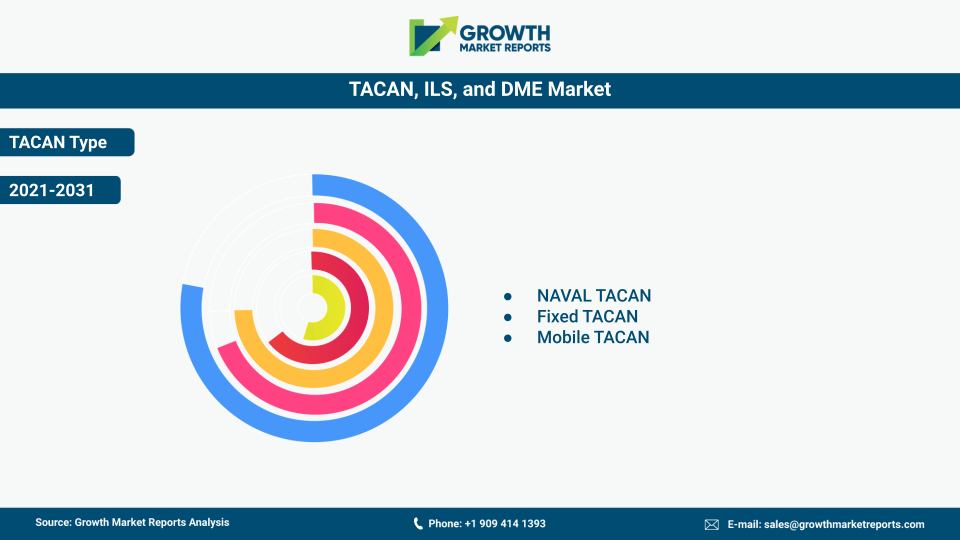
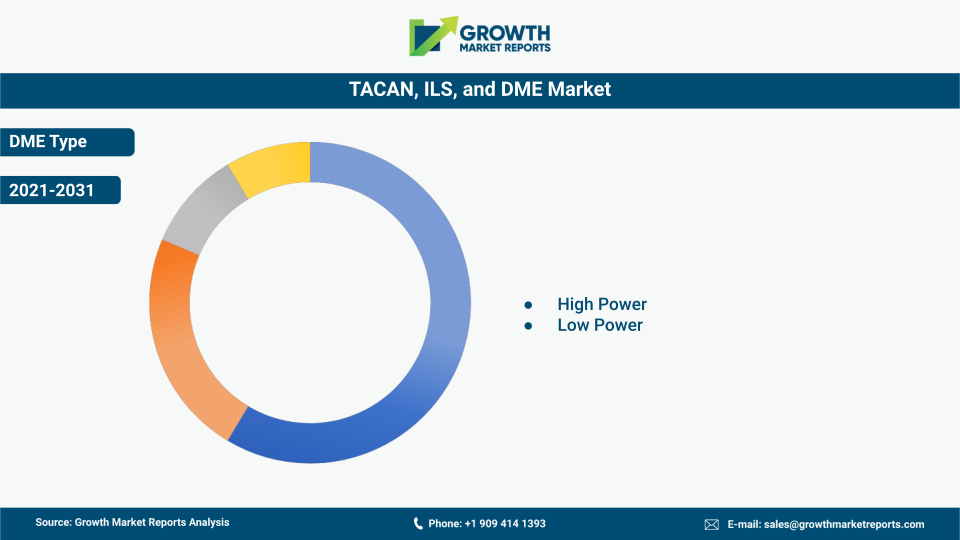
Segments - by ILS, And DME Market System Type (TACAN, Instrument Landing System (ILS), Distance Measuring Equipment (DME)), by Application (Commercial Aviation, Military Aviation, Civil Aviation, Others), by End-User (Airports, Airlines, Defense, Others)
According to our latest research, the global TACAN, ILS, and DME market size is valued at USD 1.82 billion in 2024, reflecting robust demand across both commercial and military aviation sectors. The market is projected to grow at a CAGR of 5.2% during the forecast period from 2025 to 2033, reaching a forecasted market value of USD 2.87 billion by 2033. This growth is primarily driven by the increasing modernization of airport infrastructure, advancements in aviation navigation technology, and the rising need for precise and reliable navigation aids to ensure flight safety and operational efficiency.
A key growth factor for the TACAN, ILS, and DME market is the ongoing expansion and modernization of global airport infrastructure. Governments and private stakeholders worldwide are investing heavily in upgrading navigation systems to meet the growing demands of air traffic and to comply with stringent international aviation safety standards. The integration of advanced navigation aids such as TACAN, ILS, and DME is becoming a standard requirement for both new and existing airports, facilitating safer and more efficient aircraft operations. These upgrades are especially critical in regions experiencing rapid air traffic growth, where efficient navigation systems are essential for managing increased volumes and minimizing delays.
Another major driver is the rising emphasis on aviation safety and precision in both civil and military aviation. As airspace becomes increasingly congested, the need for accurate, reliable, and resilient navigation aids is more pronounced. Instrument Landing Systems (ILS) and Distance Measuring Equipment (DME) are vital for ensuring safe landings, especially under adverse weather conditions or low visibility. Meanwhile, Tactical Air Navigation (TACAN) systems remain indispensable for military operations, providing precise navigational data to support complex missions. The continuous evolution of these systems, including the integration of digital and satellite-based technologies, is further propelling market growth by enhancing their accuracy, reliability, and interoperability.
Technological advancements in navigation systems are also significantly impacting market expansion. The adoption of digital and software-defined navigation aids, integration with satellite-based augmentation systems (SBAS), and the development of next-generation landing and distance measuring technologies are transforming the landscape. These innovations not only improve the performance and reliability of TACAN, ILS, and DME systems but also reduce operational costs and maintenance requirements. As a result, both commercial and military aviation stakeholders are increasingly adopting these advanced solutions to stay ahead in a highly competitive and safety-critical industry.
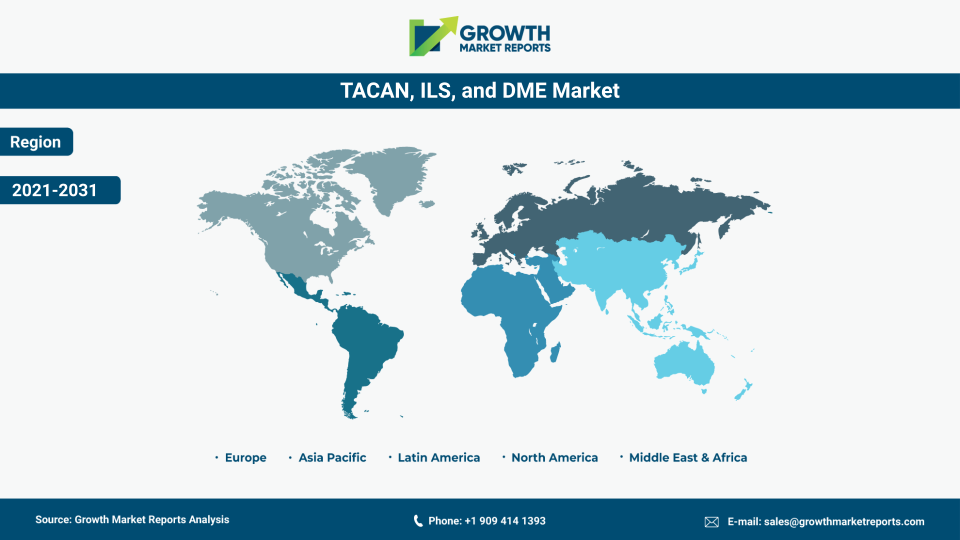
From a regional perspective, North America continues to dominate the TACAN, ILS, and DME market, supported by a mature aviation sector, significant defense spending, and ongoing investments in airport modernization. Europe follows closely, driven by stringent regulatory requirements and a strong focus on aviation safety. The Asia Pacific region, however, is emerging as the fastest-growing market, fueled by rapid urbanization, the expansion of airline networks, and substantial government initiatives to upgrade aviation infrastructure. Latin America and the Middle East & Africa are also witnessing steady growth, albeit at a slower pace, as they gradually invest in modernizing their aviation sectors to accommodate rising air traffic and enhance operational safety.
The system type segment of the TACAN, ILS, and DME market includes Tactical Air Navigation (TACAN), Instrument Landing System (ILS), and Distance Measuring Equipment (DME). Each of these systems plays a critical role in modern aviation navigation, catering to both commercial and military requirements. TACAN systems are primarily utilized by military aircraft, offering precise distance and bearing information, which is crucial for tactical operations and mission success. The ongoing modernization of military fleets and the increasing complexity of defense missions are driving sustained demand for advanced TACAN systems globally. Moreover, interoperability with civil navigation aids is becoming more important, prompting further innovation in TACAN technologies.
The Instrument Landing System (ILS) segment represents the largest share within the system type category, owing to its widespread adoption across commercial and civil airports. ILS is essential for enabling safe aircraft landings, particularly during adverse weather conditions or low visibility scenarios. The growing emphasis on aviation safety and the rising number of airports upgrading to Category II and III ILS systems are key factors boosting this segment. Additionally, regulatory mandates from international aviation authorities are compelling airports to invest in advanced ILS solutions, further expanding the market. The trend towards digital and satellite-augmented ILS systems is also gaining momentum, offering enhanced accuracy and operational efficiency.
Distance Measuring Equipment (DME) is another vital component of the market, providing accurate distance information to pilots and air traffic controllers. DME systems are extensively used in conjunction with ILS and VOR (VHF Omnidirectional Range) systems to ensure precise navigation and approach procedures. The increasing volume of air traffic and the need for efficient airspace management are driving the adoption of DME solutions, particularly in high-density regions. Technological advancements, such as the integration of DME with satellite navigation systems and the development of low-maintenance, high-reliability units, are further propelling growth in this segment.
Overall, the system type analysis underscores the critical importance of TACAN, ILS, and DME in ensuring the safety, efficiency, and reliability of global aviation operations. As the industry continues to evolve, the demand for advanced, interoperable, and digitally enhanced navigation systems is expected to rise, creating significant opportunities for market players to innovate and expand their product offerings. The interplay between legacy systems and next-generation technologies will shape the future trajectory of this dynamic market segment.
| Attributes | Details |
| Report Title | TACAN, ILS, and DME Market Market Research Report 2033 |
| By ILS, And DME Market System Type | TACAN, Instrument Landing System (ILS), Distance Measuring Equipment (DME) |
| By Application | Commercial Aviation, Military Aviation, Civil Aviation, Others |
| By End-User | Airports, Airlines, Defense, Others |
| Regions Covered | North America, Europe, APAC, Latin America, MEA |
| Base Year | 2024 |
| Historic Data | 2018-2023 |
| Forecast Period | 2025-2033 |
| Number of Pages | 296 |
| Number of Tables & Figures | 399 |
| Customization Available | Yes, the report can be customized as per your need. |
The application segment of the TACAN, ILS, and DME market is diversified across commercial aviation, military aviation, civil aviation, and other specialized use cases. Commercial aviation holds the largest share, driven by the exponential growth in passenger and cargo air traffic worldwide. Airlines and airport operators are increasingly investing in advanced navigation aids to enhance operational safety, minimize delays, and comply with international regulations. The integration of ILS and DME systems is particularly crucial for busy airports, where precise landing guidance and efficient airspace management are essential for maintaining high throughput and minimizing disruptions.
Military aviation represents a significant and technologically demanding application area for TACAN systems. Defense forces around the world rely on TACAN for its robust performance, high accuracy, and resilience in challenging environments. The modernization of military aircraft fleets and the growing complexity of tactical missions are propelling demand for next-generation TACAN systems that offer enhanced interoperability with civil navigation aids and improved resistance to electronic interference. The increasing focus on joint civil-military operations and the need for seamless integration of navigation systems across different platforms are further driving innovation in this segment.
Civil aviation, encompassing general aviation, business jets, and regional carriers, is another important application area. The adoption of ILS and DME systems is gaining traction among smaller airports and private operators seeking to improve safety and operational efficiency. Regulatory support and government incentives for upgrading navigation infrastructure are encouraging wider deployment of these systems across the civil aviation sector. The trend towards digital and software-defined navigation aids is also making advanced systems more accessible and cost-effective for smaller operators.
Other applications, including specialized government and research aviation operations, are also contributing to market growth. These segments often require customized navigation solutions tailored to unique operational requirements, such as search and rescue missions, aerial surveys, and scientific research flights. The versatility and adaptability of TACAN, ILS, and DME systems make them well-suited for a wide range of applications, ensuring sustained demand across diverse aviation sectors.
The end-user segment of the TACAN, ILS, and DME market includes airports, airlines, defense organizations, and other specialized users. Airports represent the largest end-user group, as they are responsible for installing and maintaining navigation aids to support safe and efficient aircraft operations. The ongoing expansion and modernization of airport infrastructure, particularly in emerging markets, are driving significant investments in advanced TACAN, ILS, and DME systems. Regulatory mandates and international safety standards are further incentivizing airports to upgrade their navigation infrastructure, ensuring compliance and enhancing their competitive positioning.
Airlines are another key end-user segment, with a strong focus on operational safety, efficiency, and cost-effectiveness. The adoption of advanced navigation aids enables airlines to optimize flight paths, reduce fuel consumption, and minimize delays, all of which contribute to improved profitability and customer satisfaction. As airlines expand their fleets and route networks, the demand for reliable and interoperable navigation systems is expected to grow, creating new opportunities for market players to deliver tailored solutions that meet the specific needs of airline operators.
Defense organizations represent a technologically sophisticated and demanding end-user group, particularly for TACAN systems. Military forces require navigation aids that offer high accuracy, robustness, and resilience against electronic warfare and cyber threats. The modernization of defense infrastructure, coupled with the increasing complexity of military missions, is driving sustained investment in advanced TACAN, ILS, and DME solutions. The growing emphasis on interoperability with civil navigation systems and the integration of digital and satellite-based technologies are further shaping the evolution of defense-oriented navigation aids.
Other end-users, including government agencies, research institutions, and specialized aviation operators, also contribute to market growth. These users often require customized solutions to address unique operational challenges, such as search and rescue, emergency response, and scientific research missions. The flexibility and adaptability of TACAN, ILS, and DME systems make them well-suited for a wide range of end-user requirements, ensuring continued demand across diverse market segments.
Significant opportunities exist in the TACAN, ILS, and DME market, particularly in the areas of technological innovation and emerging market expansion. The ongoing shift towards digital, software-defined, and satellite-augmented navigation systems presents a major opportunity for market players to differentiate their offerings and capture new market share. The development of next-generation ILS and DME systems that offer enhanced accuracy, reliability, and interoperability is expected to drive adoption among both commercial and military aviation stakeholders. Additionally, the increasing focus on sustainability and operational efficiency is creating demand for navigation aids that can support fuel-efficient flight paths and reduce environmental impact.
Emerging markets in Asia Pacific, Latin America, and the Middle East & Africa present substantial growth opportunities, driven by rapid urbanization, expanding air travel networks, and significant government investments in aviation infrastructure. The rising number of new airports, coupled with the modernization of existing facilities, is expected to generate strong demand for advanced TACAN, ILS, and DME systems. Market players that can offer cost-effective, scalable, and easy-to-integrate solutions are well-positioned to capitalize on these growth opportunities. Strategic partnerships with local stakeholders and government agencies will be critical for navigating regulatory complexities and securing long-term contracts in these regions.
However, the market also faces significant restraints, primarily related to the high cost of installation, maintenance, and upgrades of advanced navigation systems. Budget constraints, particularly in developing regions, can limit the pace of adoption and modernization efforts. Additionally, the increasing complexity of navigation systems and the need for specialized technical expertise can pose challenges for end-users, potentially leading to operational disruptions and increased training requirements. Regulatory hurdles and lengthy certification processes can further delay deployment and limit market growth, particularly for new and innovative technologies.
North America remains the largest regional market for TACAN, ILS, and DME systems, with a market size of USD 610 million in 2024, accounting for approximately 33.5% of the global market. The region’s dominance is underpinned by a mature aviation sector, significant defense spending, and ongoing investments in airport modernization and safety upgrades. The United States, in particular, leads in the adoption of advanced navigation aids, driven by stringent regulatory requirements and a strong focus on aviation safety and efficiency. Canada and Mexico are also investing in upgrading their aviation infrastructure, further supporting regional market growth.
Europe follows as the second largest market, with a market value of USD 510 million in 2024. The region’s growth is driven by the presence of major international airports, a strong regulatory framework, and a proactive approach to aviation safety and modernization. Countries such as the United Kingdom, Germany, and France are at the forefront of adopting next-generation ILS and DME systems, supported by robust government initiatives and public-private partnerships. The European market is expected to grow at a steady CAGR of 4.8% through 2033, reflecting sustained investment in navigation infrastructure and ongoing air traffic growth.
The Asia Pacific region is emerging as the fastest-growing market, with a market size of USD 410 million in 2024 and an anticipated CAGR of 6.7% from 2025 to 2033. Rapid urbanization, expanding airline networks, and significant government investments in new airport construction are driving strong demand for TACAN, ILS, and DME systems across China, India, Japan, and Southeast Asian countries. The region’s dynamic aviation landscape, coupled with rising passenger and cargo traffic, is creating substantial opportunities for market players. Latin America and the Middle East & Africa, with market sizes of USD 170 million and USD 120 million respectively in 2024, are also witnessing steady growth as they gradually modernize their aviation infrastructure to accommodate rising air traffic and enhance operational safety.
The competitive landscape of the TACAN, ILS, and DME market is characterized by the presence of several global and regional players, each vying to capture a larger share through technological innovation, strategic partnerships, and comprehensive service offerings. Leading companies are focusing on research and development to introduce next-generation navigation systems that offer enhanced accuracy, interoperability, and operational efficiency. The integration of digital and satellite-based technologies is a key area of focus, as market players seek to differentiate their products and address evolving customer requirements. Strategic collaborations with airport authorities, airlines, and defense organizations are also common, enabling companies to secure long-term contracts and expand their market presence.
The market is witnessing increasing consolidation, with major players acquiring smaller firms to broaden their product portfolios and strengthen their geographic reach. This trend is particularly evident in the development of integrated navigation solutions that combine TACAN, ILS, and DME functionalities, offering comprehensive and cost-effective options for end-users. Companies are also investing in after-sales services, training, and technical support to enhance customer satisfaction and build long-term relationships. The ability to offer customized solutions tailored to the unique needs of different end-users is becoming a critical differentiator in this highly competitive market.
Innovation remains at the core of competitive strategy, with leading players investing in advanced manufacturing processes, software development, and cybersecurity measures to ensure the reliability and resilience of their navigation systems. The growing emphasis on sustainability and operational efficiency is also driving the development of navigation aids that support fuel-efficient flight paths and minimize environmental impact. As regulatory requirements continue to evolve, companies are working closely with international aviation authorities to ensure compliance and facilitate the adoption of new technologies.
Major companies operating in the TACAN, ILS, and DME market include Thales Group, Honeywell International Inc., Raytheon Technologies Corporation, Indra Sistemas S.A., and Leonardo S.p.A. Thales Group is renowned for its comprehensive range of navigation aids and strong presence in both commercial and defense sectors. Honeywell International Inc. is a global leader in avionics and navigation systems, with a strong focus on innovation and customer-centric solutions. Raytheon Technologies Corporation brings extensive expertise in defense and aerospace technologies, offering advanced TACAN and ILS systems for military and civil applications. Indra Sistemas S.A. is a key player in air traffic management and navigation solutions, with a strong footprint in Europe and Latin America. Leonardo S.p.A. specializes in integrated navigation and communication systems, serving both commercial and military aviation markets.
These companies are continuously expanding their product portfolios and geographic reach through strategic investments, mergers and acquisitions, and collaborations with key stakeholders. Their focus on innovation, quality, and customer service positions them well to capitalize on the growing demand for advanced TACAN, ILS, and DME systems worldwide. As the market continues to evolve, competition is expected to intensify, driving further advancements in technology and service delivery.
The TACAN, ILS, and DME market has been segmented on the basis of
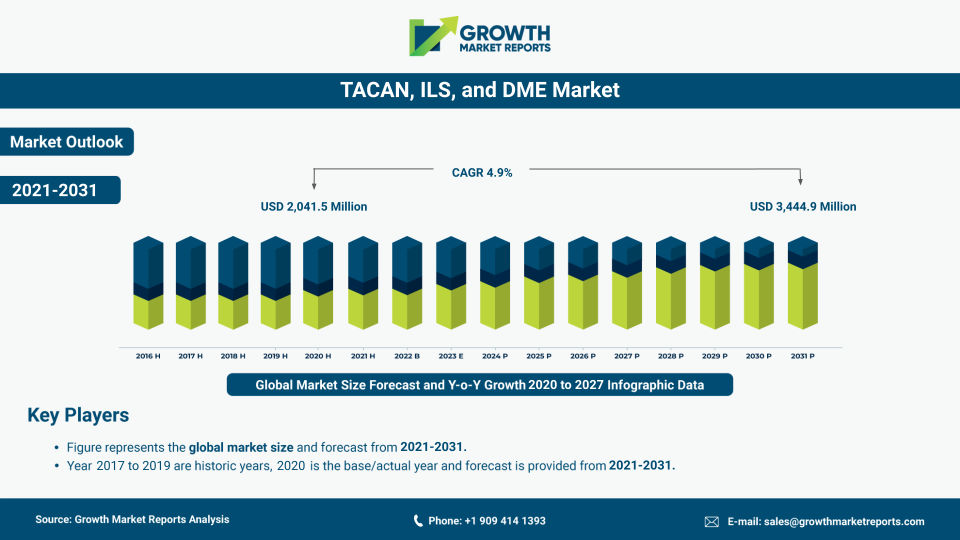
According to this Growth Market Reports report, the global TACAN market was valued at USD 2,041.5 Mn in 2020 and is anticipated to reach USD 3,444.9 Mn by 2031, expanding at a CAGR of 4.9% during the forecast period. The global ILS market was valued at USD 5,683.0 Mn in 2020 and is anticipated to reach USD 6,099.3 Mn by 2031, expanding at a CAGR of 0.6% during the forecast period. The global DME market was valued at USD 232.4 Mn in 2020 and is anticipated to reach USD 679.3 Mn by 2031, expanding at a CAGR of 10.2% during the forecast period.
In addition to market size (in US$ Million), Company Market Share (in % for base year 2019), and quality parameter overview is provided.
Increasing use for navigation aids, economic growth in developing economies, and growing importance for pilot assist and aircraft control systems expected to act as a driving force for the market and rise in prevalence of biological diseases is expected to drive the market growth during forecast period.
Factors such as competitive strength and market positioning are key areas considered while selecting top companies to be profiled.
The market is expected to witness a significant decrease in growth between 2019 and 2020 owing to the COVID 19 pandemic on the TACAN, ILS, and DME market.

The base year considered for the global TACAN, ILS, and DME market report is 2020. The complete analysis period is 2018 to 2031, wherein, 2018, and 2019 are the historic years, and the forecast is provided from 2021 to 2031.
Factors such as military expenditure, GDP, growth of aerospace & defense industry, and aircrafts adoption are analyzed in the final report.
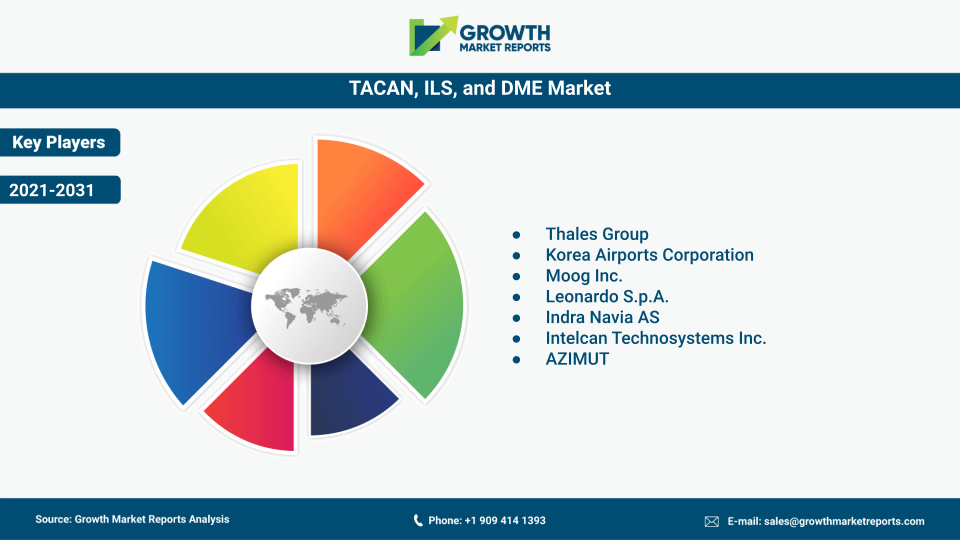
Major Manufacturers Thales Group, Korea Airports Corporation, Moog Inc., Leonardo S.p.A., Indra Navia AS, Intelcan Technosystems Inc., and AZIMUT.
Additional company profiles can be provided on request For a discussion related to above findings, click Speak to Analyst