Switch Point Heating System Market Research Report 2033

Switch Point Heating System Market Research Report 2033

Segments - by Product Type (Electric Switch Point Heating System, Gas Switch Point Heating System, Oil Switch Point Heating System), by Application (Railways, Metros, Light Rail, Tramways, Others), by Component (Heating Elements, Control Panels, Sensors, Power Supply Units, Others), by Installation Type (New Installation, Retrofit)

https://growthmarketreports.com/Raksha
Author : Raksha Sharma
https://growthmarketreports.com/Vaibhav
Fact-checked by : V. Chandola
https://growthmarketreports.com/Rucha
Editor : Rucha Phatak

Upcoming | Report ID :CM-3266 | 4.8 Rating | 16 Reviews | 286 Pages | Format : Docx PDF

Report Description


Switch Point Heating System Market Outlook

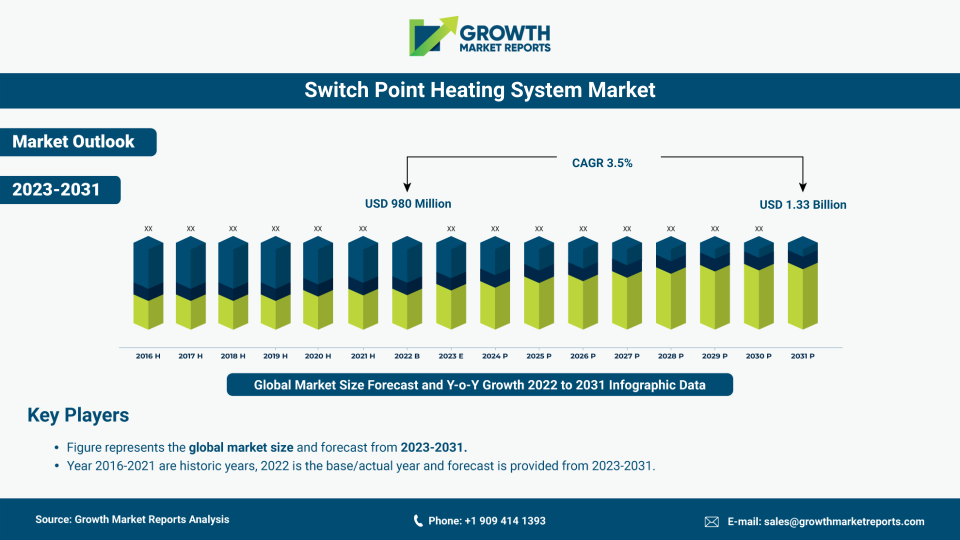
According to our latest research, the global switch point heating system market size stood at USD 1.24 billion in 2024, reflecting steady demand across key transportation sectors. The market is expected to grow at a robust CAGR of 6.7% during the forecast period, reaching approximately USD 2.14 billion by 2033. This growth is primarily driven by the increasing expansion and modernization of railway infrastructure worldwide, coupled with stringent safety regulations and the need for uninterrupted rail operations in harsh climates. The adoption of advanced heating technologies and automation solutions further contributes to the sustained growth trajectory of the switch point heating system market.

One of the primary growth factors propelling the switch point heating system market is the ongoing expansion and electrification of rail networks, particularly in regions with severe winter conditions. As railways remain a critical mode of transportation for both passengers and freight, ensuring operational reliability during snow and ice events is paramount. Switch point heating systems play a vital role in preventing rail switches from freezing, which can cause significant delays, accidents, and maintenance costs. The increasing investments in high-speed rail, metro systems, and light rail projects—especially in emerging economies—are fueling the demand for both new installations and retrofit solutions. Governments and private operators are prioritizing safety, efficiency, and automation, leading to a higher adoption rate of technologically advanced switch point heating systems.

Another significant driver for the switch point heating system market is the growing emphasis on energy efficiency and sustainability. Traditional heating systems, while effective, are often energy-intensive and costly to operate. In response, manufacturers are developing innovative solutions such as smart control panels, adaptive sensors, and energy-efficient heating elements that optimize power consumption based on real-time weather and track conditions. The integration of renewable energy sources, such as solar-powered systems, is also gaining traction, especially in regions with stringent environmental regulations. These technological advancements not only reduce operational costs but also align with global efforts to minimize carbon emissions, thereby enhancing the market appeal of modern switch point heating solutions.

Furthermore, the market benefits from increased awareness regarding railway safety and the implementation of strict regulatory standards. Transport authorities in North America, Europe, and parts of Asia Pacific have issued guidelines mandating the installation of reliable switch point heating systems, particularly in areas prone to snow and ice accumulation. The rising focus on passenger safety, coupled with the economic imperative to minimize service disruptions, has led to higher investments in maintenance and upgrade activities. This regulatory push, combined with the adoption of digital monitoring and predictive maintenance technologies, is expected to further accelerate market growth over the coming years.

Regionally, Europe continues to dominate the switch point heating system market, accounting for the largest share due to its extensive rail network and frequent exposure to harsh winter conditions. North America follows closely, driven by ongoing upgrades to aging rail infrastructure and the need for robust solutions to ensure year-round operation. The Asia Pacific region is emerging as a high-growth market, fueled by rapid urbanization, government investments in rail transport, and increasing adoption of advanced technologies. Latin America and the Middle East & Africa, while representing smaller shares, are witnessing steady growth as rail projects expand and modernize. Overall, the regional outlook underscores the global necessity for reliable switch point heating systems as railways continue to play an essential role in transportation networks.

The electrification of heating systems is becoming a pivotal trend in the switch point heating system market. This shift is largely driven by the need to reduce carbon emissions and enhance energy efficiency across the transportation sector. Electrification not only aligns with global sustainability goals but also offers operational advantages such as precise temperature control and integration with smart monitoring technologies. As countries worldwide commit to reducing their carbon footprint, the adoption of electric heating systems is expected to accelerate, particularly in regions with robust electricity infrastructure. This transition is further supported by government policies and incentives aimed at promoting clean energy solutions, making electrification a key focus area for manufacturers and rail operators alike.

Global Switch Point Heating System Industry Outlook

Product Type Analysis

The switch point heating system market is segmented by product type into Electric Switch Point Heating System, Gas Switch Point Heating System, and Oil Switch Point Heating System. The electric switch point heating system segment holds the largest market share, owing to its efficiency, ease of installation, and compatibility with modern control systems. Electric systems are highly favored in regions with well-developed electricity infrastructure and stringent environmental regulations, as they offer precise temperature control and can be integrated with smart monitoring technologies. The adoption of electric systems is further supported by government initiatives to reduce carbon emissions and improve energy efficiency across transportation sectors. As a result, this segment is expected to maintain its dominance throughout the forecast period.

Gas switch point heating systems, while less prevalent than their electric counterparts, are gaining traction in regions with limited access to reliable electricity or where natural gas is readily available and cost-effective. These systems are valued for their rapid heating capabilities and ability to function independently of the main power grid, making them suitable for remote or rural rail lines. However, concerns regarding emissions and operational safety may restrain their widespread adoption, especially in markets with stringent environmental standards. Manufacturers are exploring hybrid solutions that combine gas and electric elements to provide flexibility and operational resilience.

Oil switch point heating systems represent a niche segment, primarily used in legacy rail networks or areas with specific operational requirements. Although oil-based systems offer reliable performance in extreme cold, their adoption is declining due to higher operational costs, maintenance complexities, and environmental concerns. The shift towards cleaner and more efficient heating technologies is prompting many operators to phase out oil-based systems in favor of electric or hybrid alternatives. Nevertheless, oil systems continue to serve critical functions in certain geographies where other energy sources are not viable.

The competitive landscape within the product type segment is marked by ongoing innovation and customization. Leading manufacturers are investing in research and development to enhance the efficiency, durability, and environmental performance of their solutions. The integration of advanced sensors, real-time monitoring, and remote control capabilities is becoming standard, especially in electric systems. As rail operators seek to modernize their infrastructure, the demand for retrofit solutions that enable a seamless transition from traditional to advanced heating technologies is expected to rise, further shaping the dynamics of the product type segment.

Report Scope

Attributes Details
Report Title Switch Point Heating System Market Research Report 2033
By Product Type Electric Switch Point Heating System, Gas Switch Point Heating System, Oil Switch Point Heating System
By Application Railways, Metros, Light Rail, Tramways, Others
By Component Heating Elements, Control Panels, Sensors, Power Supply Units, Others
By Installation Type New Installation, Retrofit
Regions Covered North America, Europe, APAC, Latin America, MEA
Base Year 2024
Historic Data 2018-2023
Forecast Period 2025-2033
Number of Pages 286
Number of Tables & Figures 295
Customization Available Yes, the report can be customized as per your need.

Application Analysis

The application segment of the switch point heating system market encompasses Railways, Metros, Light Rail, Tramways, and Others. Railways constitute the largest application area, driven by the sheer scale of national and regional rail networks and the critical need to ensure operational reliability in all weather conditions. The adoption of switch point heating systems in railways is often mandated by regulatory authorities, particularly in regions with frequent snowfall and icy conditions. Investments in high-speed rail and freight corridors further augment demand, as these systems are essential for maintaining punctuality and safety standards.

Metros represent a rapidly growing application segment, particularly in urban centers undergoing rapid population growth and infrastructure development. The expansion of metro networks in cities across Asia Pacific, Europe, and North America has led to increased demand for advanced switch point heating solutions. Metros require highly reliable and low-maintenance systems due to their high frequency of service and critical role in urban mobility. The integration of smart control panels and predictive maintenance tools is increasingly common, helping operators minimize downtime and extend the lifespan of their assets.

Light rail and tramway systems, while smaller in scale compared to national railways and metros, are also significant contributors to market growth. These systems are often exposed to harsh weather conditions, especially in northern Europe and parts of North America, necessitating the installation of efficient switch point heating solutions. The growing popularity of light rail and tramways as sustainable urban transport options is driving investments in modern infrastructure, including the adoption of energy-efficient and remotely monitored heating systems.

The "Others" category includes specialized applications such as industrial railways, mining transport, and airport shuttles. While these segments represent a smaller share of the overall market, they exhibit unique requirements and growth opportunities. For instance, industrial railways operating in remote or extreme environments may prioritize robust, low-maintenance heating systems that can operate autonomously. The diversification of application areas underscores the versatility and adaptability of switch point heating technologies, catering to a wide range of operational needs across the global transportation landscape.

Component Analysis

The component segment of the switch point heating system market is divided into Heating Elements, Control Panels, Sensors, Power Supply Units, and Others. Heating elements form the core of these systems, directly responsible for preventing ice and snow accumulation on critical switch points. Advances in material science and engineering have led to the development of more efficient, durable, and energy-saving heating elements, such as self-regulating cables and composite materials. These innovations not only enhance performance but also reduce maintenance requirements, making them highly attractive to rail operators seeking long-term reliability.

Control panels are another vital component, enabling operators to monitor and manage heating systems in real time. The shift towards digitalization and automation is driving the adoption of smart control panels equipped with user-friendly interfaces, remote access capabilities, and integration with broader railway management systems. These panels facilitate predictive maintenance, energy optimization, and rapid response to changing weather conditions, thereby improving operational efficiency and reducing costs. As rail networks become more complex and interconnected, the demand for advanced control panels is expected to rise significantly.

Sensors play an increasingly important role in modern switch point heating systems, providing real-time data on temperature, humidity, and track conditions. The integration of IoT (Internet of Things) technologies allows for continuous monitoring and adaptive control, ensuring that heating elements operate only when necessary. This not only conserves energy but also extends the lifespan of system components. The growing emphasis on data-driven decision-making and preventive maintenance is fueling investments in sensor technologies, making them a critical focus area for manufacturers and operators alike.

Power supply units are essential for ensuring the reliable operation of switch point heating systems, particularly in remote or challenging environments. Innovations in power management, including the use of renewable energy sources and backup systems, are enhancing system resilience and sustainability. The "Others" category includes ancillary components such as mounting brackets, insulation materials, and communication modules, all of which contribute to the overall performance and reliability of the system. The ongoing trend towards modular and scalable designs is enabling operators to customize their solutions to specific operational requirements, further driving market growth within the component segment.

Installation Type Analysis

The installation type segment is categorized into New Installation and Retrofit. New installations account for a significant portion of the market, driven by the construction of new rail lines, metro systems, and light rail projects worldwide. Governments and private operators are investing heavily in expanding and modernizing transportation infrastructure, particularly in emerging economies and urban centers experiencing rapid population growth. New installations offer the advantage of integrating the latest technologies and design standards from the outset, ensuring optimal performance and future-proofing assets against evolving operational challenges.

Retrofit installations represent a substantial and growing market segment, as rail operators seek to upgrade existing infrastructure to meet modern safety and efficiency standards. Aging rail networks in North America, Europe, and parts of Asia Pacific are undergoing extensive renovation programs, with a strong focus on enhancing reliability and minimizing service disruptions. Retrofit solutions are designed to be compatible with legacy systems while incorporating advanced features such as smart controls, energy-efficient heating elements, and real-time monitoring capabilities. The ability to extend the lifespan of existing assets while reducing operational costs is a key driver for the retrofit segment.

The decision between new installation and retrofit is often influenced by factors such as budget constraints, regulatory requirements, and the specific needs of the rail network. In regions with established rail infrastructure, retrofitting is often the preferred approach due to lower upfront costs and minimal service interruptions. However, in rapidly developing regions or new urban projects, new installations are more prevalent, allowing for the seamless integration of state-of-the-art technologies. Both segments are expected to experience robust growth, supported by ongoing investments in rail transport and the increasing adoption of digital and energy-efficient solutions.

Manufacturers and service providers are responding to these trends by offering flexible, modular solutions that can be tailored to the unique requirements of each project. The emphasis on ease of installation, minimal downtime, and compatibility with existing systems is driving innovation in product design and service delivery. As the global rail industry continues to evolve, the demand for both new installation and retrofit switch point heating systems is set to remain strong, underpinning the long-term growth prospects of the market.

Opportunities & Threats

The switch point heating system market presents significant opportunities for growth, particularly in the context of ongoing rail network expansion and modernization projects worldwide. The increasing adoption of smart technologies, such as IoT-enabled sensors and predictive maintenance platforms, is opening new avenues for innovation and value creation. These advancements enable operators to optimize energy consumption, reduce maintenance costs, and enhance system reliability, thereby improving overall operational efficiency. Additionally, the growing emphasis on sustainability and environmental responsibility is driving demand for energy-efficient and renewable-powered heating solutions, creating opportunities for manufacturers to differentiate their offerings and capture new market segments.

Another major opportunity lies in the integration of switch point heating systems with broader railway management and automation platforms. The trend towards digitalization and the development of intelligent transportation systems (ITS) is enabling seamless coordination between heating systems, signaling, and train control operations. This integration enhances safety, reduces downtime, and supports the implementation of predictive maintenance strategies, ultimately leading to higher levels of service reliability and customer satisfaction. The increasing availability of government funding and public-private partnerships for rail infrastructure projects further supports market growth, providing a favorable environment for innovation and investment.

Despite these opportunities, the switch point heating system market faces several restraining factors. One of the primary challenges is the high initial cost associated with the installation and modernization of advanced heating systems, particularly in regions with limited budgetary resources. Additionally, the complexity of integrating new technologies with legacy infrastructure can pose technical and operational challenges, potentially leading to delays and increased costs. Environmental concerns related to the use of fossil fuel-based heating systems, such as gas and oil, may also limit their adoption in markets with stringent emissions regulations. Addressing these challenges will require ongoing innovation, strategic partnerships, and a focus on cost-effective, scalable solutions that meet the evolving needs of the global rail industry.

Regional Outlook

Europe remains the leading region in the switch point heating system market, accounting for approximately 38% of the global market share in 2024, or around USD 471 million. The region's dominance is driven by its extensive and highly developed rail network, frequent exposure to harsh winter conditions, and strong regulatory framework mandating the use of advanced heating systems. Countries such as Germany, France, the United Kingdom, and the Nordic nations are at the forefront of adopting energy-efficient and digitally integrated solutions. The European market is expected to maintain a robust growth trajectory, supported by ongoing investments in rail modernization and sustainability initiatives.

North America follows as the second-largest market, with a share of 29%, translating to approximately USD 360 million in 2024. The region's growth is fueled by the need to upgrade aging rail infrastructure, particularly in the United States and Canada, where extreme weather events can severely disrupt rail operations. The adoption of smart control systems and energy-efficient technologies is gaining momentum, as operators seek to enhance reliability and reduce operational costs. The North American market is projected to grow at a CAGR of 6.2% during the forecast period, driven by both new installations and retrofit projects.

The Asia Pacific region is emerging as a high-growth market, capturing 23% of the global share or approximately USD 285 million in 2024. Rapid urbanization, government investments in rail transport, and the expansion of metro and light rail networks are key drivers of market growth in countries such as China, India, Japan, and Australia. The increasing adoption of advanced technologies and the focus on enhancing passenger safety and operational efficiency are expected to propel the Asia Pacific market at a CAGR of 8.1% through 2033, outpacing other regions. Latin America and the Middle East & Africa, while representing smaller shares, are witnessing steady growth as rail projects expand and modernize, with a combined market size of USD 124 million in 2024.

Switch Point Heating System Market Statistics

Competitor Outlook

The competitive landscape of the switch point heating system market is characterized by the presence of several global and regional players, each striving to enhance their market position through innovation, strategic partnerships, and expansion into emerging markets. Leading companies are focused on developing technologically advanced solutions that offer superior energy efficiency, reliability, and ease of integration with modern rail infrastructure. The market is witnessing increased investment in research and development, with a strong emphasis on digitalization, automation, and sustainability. Companies are also expanding their service offerings, including installation, maintenance, and remote monitoring, to provide comprehensive solutions to rail operators.

Mergers, acquisitions, and collaborations are common strategies employed by key players to strengthen their market presence and access new customer segments. The growing trend towards public-private partnerships in rail infrastructure projects is creating opportunities for companies to collaborate with government agencies and transportation authorities. Additionally, the entry of new players, particularly in the Asia Pacific region, is intensifying competition and driving innovation. Market leaders are leveraging their technical expertise, global reach, and established customer relationships to maintain a competitive edge in this dynamic market.

Key players in the switch point heating system market include Siemens AG, Thermon Group Holdings, Inc., nVent Electric plc, Network Rail Infrastructure Ltd., Heat Trace Ltd., and Eland Cables. Siemens AG is renowned for its comprehensive portfolio of railway automation and heating solutions, offering advanced systems that integrate seamlessly with digital rail management platforms. Thermon Group Holdings, Inc. specializes in industrial heating and offers a range of switch point heating solutions designed for harsh environments and critical infrastructure. nVent Electric plc is recognized for its innovative heating technologies and focus on energy efficiency, catering to both new installation and retrofit markets.

Network Rail Infrastructure Ltd. plays a pivotal role in the UK market, managing extensive rail infrastructure and driving the adoption of advanced heating systems across the network. Heat Trace Ltd. is a leading provider of electric heating solutions, known for its focus on safety, efficiency, and reliability. Eland Cables offers a wide range of heating cables and related components, supporting both standard and custom applications. These companies, along with several regional and niche players, are shaping the future of the switch point heating system market through continuous innovation, customer-centric solutions, and a commitment to operational excellence.

The overall competitive environment is expected to remain dynamic, with ongoing advancements in technology, evolving customer requirements, and increasing regulatory scrutiny driving continuous improvement. Companies that can effectively balance innovation, cost efficiency, and sustainability will be well-positioned to capitalize on the significant growth opportunities in the global switch point heating system market over the coming decade.

Key Players

  • Danfoss
  • Honeywell International Inc.
  • Siemens AG
  • Thermon Group Holdings, Inc.
  • nVent Electric plc
  • Pentair plc
  • Emerson Electric Co.
  • Watlow Electric Manufacturing Company
  • Chromalox, Inc.
  • Eltherm GmbH
  • Raychem (TE Connectivity)
  • Oventrop GmbH & Co. KG
  • Heat Trace Limited
  • Warmup Plc
  • Ebeco AB
  • SST Heating Solutions
  • Bartec GmbH
  • Indeeco
  • BriskHeat Corporation
  • Urecon Ltd.
Switch Point Heating System Market Overview

Segments

The Switch Point Heating System market has been segmented on the basis of

Product Type

  • Electric Switch Point Heating System
  • Gas Switch Point Heating System
  • Oil Switch Point Heating System

Application

  • Railways
  • Metros
  • Light Rail
  • Tramways
  • Others

Component

  • Heating Elements
  • Control Panels
  • Sensors
  • Power Supply Units
  • Others

Installation Type

  • New Installation
  • Retrofit

Competitive Landscape

The key players in the global switch point market includes Kable, Terrapinn Holdings ltd., ORIGO SwitchPoint Heating, PINTSCH ABEN B.V., Switchpoint heating, A. Proctor Group ltd., Caloplex GmbH, eltherm GnbH, Western Sierras, HEAT TRACE, Pentair, Thermal-Fex Systems, Inc., GrayBar Ltd., Heat Trace ltd.
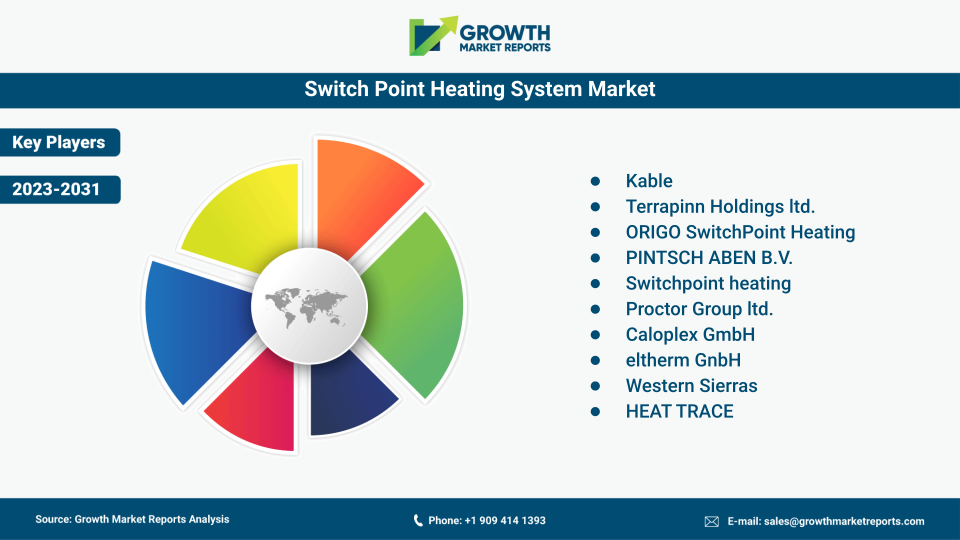

Switch Point Heating System Market Key Players

Frequently Asked Questions

Yes, retrofit solutions are widely available and increasingly popular, allowing operators to upgrade legacy systems with advanced features like smart controls and energy-efficient heating elements while minimizing service disruptions.

Challenges include high initial installation costs, the complexity of integrating new technologies with legacy infrastructure, and environmental concerns related to gas and oil-based heating systems in regions with strict emissions regulations.

Major players include Siemens AG, Thermon Group Holdings, nVent Electric plc, Network Rail Infrastructure Ltd., Heat Trace Ltd., Eland Cables, Danfoss, Honeywell, Pentair, Emerson, Raychem (TE Connectivity), and others.

Switch point heating systems are used in Railways, Metros, Light Rail, Tramways, and specialized transport such as industrial railways and airport shuttles. Railways remain the largest application segment.

Smart control panels, adaptive sensors, IoT integration, and renewable-powered heating solutions are making systems more energy-efficient, reducing operational costs, and aligning with global sustainability goals to minimize carbon emissions.

Key drivers include the expansion and modernization of railway infrastructure, stringent safety regulations, the need for uninterrupted rail operations in harsh climates, and the adoption of advanced, energy-efficient heating technologies.

The main types are Electric Switch Point Heating Systems, Gas Switch Point Heating Systems, and Oil Switch Point Heating Systems. Electric systems are the most widely used due to their efficiency and compatibility with modern control technologies.

Europe leads the market with a 38% share, followed by North America (29%) and Asia Pacific (23%). Europe’s dominance is due to its extensive rail network and frequent harsh winters, while Asia Pacific is experiencing rapid growth due to urbanization and rail investments.

The global switch point heating system market is expected to grow from USD 1.24 billion in 2024 to approximately USD 2.14 billion by 2033, registering a CAGR of 6.7% during the forecast period.

A switch point heating system prevents rail switches from freezing due to snow and ice, ensuring reliable and safe railway operations, especially in harsh winter conditions. These systems are essential for minimizing delays, accidents, and maintenance costs.

Table Of Content

Chapter 1 Executive Summary
Chapter 2 Assumptions and Acronyms Used
Chapter 3 Research Methodology
Chapter 4 Switch Point Heating System Market Overview
   4.1 Introduction
      4.1.1 Market Taxonomy
      4.1.2 Market Definition
      4.1.3 Macro-Economic Factors Impacting the Market Growth
   4.2 Switch Point Heating System Market Dynamics
      4.2.1 Market Drivers
      4.2.2 Market Restraints
      4.2.3 Market Opportunity
   4.3 Switch Point Heating System Market - Supply Chain Analysis
      4.3.1 List of Key Suppliers
      4.3.2 List of Key Distributors
      4.3.3 List of Key Consumers
   4.4 Key Forces Shaping the Switch Point Heating System Market
      4.4.1 Bargaining Power of Suppliers
      4.4.2 Bargaining Power of Buyers
      4.4.3 Threat of Substitution
      4.4.4 Threat of New Entrants
      4.4.5 Competitive Rivalry
   4.5 Global Switch Point Heating System Market Size & Forecast, 2023-2032
      4.5.1 Switch Point Heating System Market Size and Y-o-Y Growth
      4.5.2 Switch Point Heating System Market Absolute $ Opportunity

Chapter 5 Global Switch Point Heating System Market Analysis and Forecast By Product Type
   5.1 Introduction
      5.1.1 Key Market Trends & Growth Opportunities By Product Type
      5.1.2 Basis Point Share (BPS) Analysis By Product Type
      5.1.3 Absolute $ Opportunity Assessment By Product Type
   5.2 Switch Point Heating System Market Size Forecast By Product Type
      5.2.1 Electric Switch Point Heating System
      5.2.2 Gas Switch Point Heating System
      5.2.3 Oil Switch Point Heating System
   5.3 Market Attractiveness Analysis By Product Type

Chapter 6 Global Switch Point Heating System Market Analysis and Forecast By Application
   6.1 Introduction
      6.1.1 Key Market Trends & Growth Opportunities By Application
      6.1.2 Basis Point Share (BPS) Analysis By Application
      6.1.3 Absolute $ Opportunity Assessment By Application
   6.2 Switch Point Heating System Market Size Forecast By Application
      6.2.1 Railways
      6.2.2 Metros
      6.2.3 Light Rail
      6.2.4 Tramways
      6.2.5 Others
   6.3 Market Attractiveness Analysis By Application

Chapter 7 Global Switch Point Heating System Market Analysis and Forecast By Component
   7.1 Introduction
      7.1.1 Key Market Trends & Growth Opportunities By Component
      7.1.2 Basis Point Share (BPS) Analysis By Component
      7.1.3 Absolute $ Opportunity Assessment By Component
   7.2 Switch Point Heating System Market Size Forecast By Component
      7.2.1 Heating Elements
      7.2.2 Control Panels
      7.2.3 Sensors
      7.2.4 Power Supply Units
      7.2.5 Others
   7.3 Market Attractiveness Analysis By Component

Chapter 8 Global Switch Point Heating System Market Analysis and Forecast By Installation Type
   8.1 Introduction
      8.1.1 Key Market Trends & Growth Opportunities By Installation Type
      8.1.2 Basis Point Share (BPS) Analysis By Installation Type
      8.1.3 Absolute $ Opportunity Assessment By Installation Type
   8.2 Switch Point Heating System Market Size Forecast By Installation Type
      8.2.1 New Installation
      8.2.2 Retrofit
   8.3 Market Attractiveness Analysis By Installation Type

Chapter 9 Global Switch Point Heating System Market Analysis and Forecast by Region
   9.1 Introduction
      9.1.1 Key Market Trends & Growth Opportunities By Region
      9.1.2 Basis Point Share (BPS) Analysis By Region
      9.1.3 Absolute $ Opportunity Assessment By Region
   9.2 Switch Point Heating System Market Size Forecast By Region
      9.2.1 North America
      9.2.2 Europe
      9.2.3 Asia Pacific
      9.2.4 Latin America
      9.2.5 Middle East & Africa (MEA)
   9.3 Market Attractiveness Analysis By Region

Chapter 10 Coronavirus Disease (COVID-19) Impact 
   10.1 Introduction 
   10.2 Current & Future Impact Analysis 
   10.3 Economic Impact Analysis 
   10.4 Government Policies 
   10.5 Investment Scenario

Chapter 11 North America Switch Point Heating System Analysis and Forecast
   11.1 Introduction
   11.2 North America Switch Point Heating System Market Size Forecast by Country
      11.2.1 U.S.
      11.2.2 Canada
   11.3 Basis Point Share (BPS) Analysis by Country
   11.4 Absolute $ Opportunity Assessment by Country
   11.5 Market Attractiveness Analysis by Country
   11.6 North America Switch Point Heating System Market Size Forecast By Product Type
      11.6.1 Electric Switch Point Heating System
      11.6.2 Gas Switch Point Heating System
      11.6.3 Oil Switch Point Heating System
   11.7 Basis Point Share (BPS) Analysis By Product Type 
   11.8 Absolute $ Opportunity Assessment By Product Type 
   11.9 Market Attractiveness Analysis By Product Type
   11.10 North America Switch Point Heating System Market Size Forecast By Application
      11.10.1 Railways
      11.10.2 Metros
      11.10.3 Light Rail
      11.10.4 Tramways
      11.10.5 Others
   11.11 Basis Point Share (BPS) Analysis By Application 
   11.12 Absolute $ Opportunity Assessment By Application 
   11.13 Market Attractiveness Analysis By Application
   11.14 North America Switch Point Heating System Market Size Forecast By Component
      11.14.1 Heating Elements
      11.14.2 Control Panels
      11.14.3 Sensors
      11.14.4 Power Supply Units
      11.14.5 Others
   11.15 Basis Point Share (BPS) Analysis By Component 
   11.16 Absolute $ Opportunity Assessment By Component 
   11.17 Market Attractiveness Analysis By Component
   11.18 North America Switch Point Heating System Market Size Forecast By Installation Type
      11.18.1 New Installation
      11.18.2 Retrofit
   11.19 Basis Point Share (BPS) Analysis By Installation Type 
   11.20 Absolute $ Opportunity Assessment By Installation Type 
   11.21 Market Attractiveness Analysis By Installation Type

Chapter 12 Europe Switch Point Heating System Analysis and Forecast
   12.1 Introduction
   12.2 Europe Switch Point Heating System Market Size Forecast by Country
      12.2.1 Germany
      12.2.2 France
      12.2.3 Italy
      12.2.4 U.K.
      12.2.5 Spain
      12.2.6 Russia
      12.2.7 Rest of Europe
   12.3 Basis Point Share (BPS) Analysis by Country
   12.4 Absolute $ Opportunity Assessment by Country
   12.5 Market Attractiveness Analysis by Country
   12.6 Europe Switch Point Heating System Market Size Forecast By Product Type
      12.6.1 Electric Switch Point Heating System
      12.6.2 Gas Switch Point Heating System
      12.6.3 Oil Switch Point Heating System
   12.7 Basis Point Share (BPS) Analysis By Product Type 
   12.8 Absolute $ Opportunity Assessment By Product Type 
   12.9 Market Attractiveness Analysis By Product Type
   12.10 Europe Switch Point Heating System Market Size Forecast By Application
      12.10.1 Railways
      12.10.2 Metros
      12.10.3 Light Rail
      12.10.4 Tramways
      12.10.5 Others
   12.11 Basis Point Share (BPS) Analysis By Application 
   12.12 Absolute $ Opportunity Assessment By Application 
   12.13 Market Attractiveness Analysis By Application
   12.14 Europe Switch Point Heating System Market Size Forecast By Component
      12.14.1 Heating Elements
      12.14.2 Control Panels
      12.14.3 Sensors
      12.14.4 Power Supply Units
      12.14.5 Others
   12.15 Basis Point Share (BPS) Analysis By Component 
   12.16 Absolute $ Opportunity Assessment By Component 
   12.17 Market Attractiveness Analysis By Component
   12.18 Europe Switch Point Heating System Market Size Forecast By Installation Type
      12.18.1 New Installation
      12.18.2 Retrofit
   12.19 Basis Point Share (BPS) Analysis By Installation Type 
   12.20 Absolute $ Opportunity Assessment By Installation Type 
   12.21 Market Attractiveness Analysis By Installation Type

Chapter 13 Asia Pacific Switch Point Heating System Analysis and Forecast
   13.1 Introduction
   13.2 Asia Pacific Switch Point Heating System Market Size Forecast by Country
      13.2.1 China
      13.2.2 Japan
      13.2.3 South Korea
      13.2.4 India
      13.2.5 Australia
      13.2.6 South East Asia (SEA)
      13.2.7 Rest of Asia Pacific (APAC)
   13.3 Basis Point Share (BPS) Analysis by Country
   13.4 Absolute $ Opportunity Assessment by Country
   13.5 Market Attractiveness Analysis by Country
   13.6 Asia Pacific Switch Point Heating System Market Size Forecast By Product Type
      13.6.1 Electric Switch Point Heating System
      13.6.2 Gas Switch Point Heating System
      13.6.3 Oil Switch Point Heating System
   13.7 Basis Point Share (BPS) Analysis By Product Type 
   13.8 Absolute $ Opportunity Assessment By Product Type 
   13.9 Market Attractiveness Analysis By Product Type
   13.10 Asia Pacific Switch Point Heating System Market Size Forecast By Application
      13.10.1 Railways
      13.10.2 Metros
      13.10.3 Light Rail
      13.10.4 Tramways
      13.10.5 Others
   13.11 Basis Point Share (BPS) Analysis By Application 
   13.12 Absolute $ Opportunity Assessment By Application 
   13.13 Market Attractiveness Analysis By Application
   13.14 Asia Pacific Switch Point Heating System Market Size Forecast By Component
      13.14.1 Heating Elements
      13.14.2 Control Panels
      13.14.3 Sensors
      13.14.4 Power Supply Units
      13.14.5 Others
   13.15 Basis Point Share (BPS) Analysis By Component 
   13.16 Absolute $ Opportunity Assessment By Component 
   13.17 Market Attractiveness Analysis By Component
   13.18 Asia Pacific Switch Point Heating System Market Size Forecast By Installation Type
      13.18.1 New Installation
      13.18.2 Retrofit
   13.19 Basis Point Share (BPS) Analysis By Installation Type 
   13.20 Absolute $ Opportunity Assessment By Installation Type 
   13.21 Market Attractiveness Analysis By Installation Type

Chapter 14 Latin America Switch Point Heating System Analysis and Forecast
   14.1 Introduction
   14.2 Latin America Switch Point Heating System Market Size Forecast by Country
      14.2.1 Brazil
      14.2.2 Mexico
      14.2.3 Rest of Latin America (LATAM)
   14.3 Basis Point Share (BPS) Analysis by Country
   14.4 Absolute $ Opportunity Assessment by Country
   14.5 Market Attractiveness Analysis by Country
   14.6 Latin America Switch Point Heating System Market Size Forecast By Product Type
      14.6.1 Electric Switch Point Heating System
      14.6.2 Gas Switch Point Heating System
      14.6.3 Oil Switch Point Heating System
   14.7 Basis Point Share (BPS) Analysis By Product Type 
   14.8 Absolute $ Opportunity Assessment By Product Type 
   14.9 Market Attractiveness Analysis By Product Type
   14.10 Latin America Switch Point Heating System Market Size Forecast By Application
      14.10.1 Railways
      14.10.2 Metros
      14.10.3 Light Rail
      14.10.4 Tramways
      14.10.5 Others
   14.11 Basis Point Share (BPS) Analysis By Application 
   14.12 Absolute $ Opportunity Assessment By Application 
   14.13 Market Attractiveness Analysis By Application
   14.14 Latin America Switch Point Heating System Market Size Forecast By Component
      14.14.1 Heating Elements
      14.14.2 Control Panels
      14.14.3 Sensors
      14.14.4 Power Supply Units
      14.14.5 Others
   14.15 Basis Point Share (BPS) Analysis By Component 
   14.16 Absolute $ Opportunity Assessment By Component 
   14.17 Market Attractiveness Analysis By Component
   14.18 Latin America Switch Point Heating System Market Size Forecast By Installation Type
      14.18.1 New Installation
      14.18.2 Retrofit
   14.19 Basis Point Share (BPS) Analysis By Installation Type 
   14.20 Absolute $ Opportunity Assessment By Installation Type 
   14.21 Market Attractiveness Analysis By Installation Type

Chapter 15 Middle East & Africa (MEA) Switch Point Heating System Analysis and Forecast
   15.1 Introduction
   15.2 Middle East & Africa (MEA) Switch Point Heating System Market Size Forecast by Country
      15.2.1 Saudi Arabia
      15.2.2 South Africa
      15.2.3 UAE
      15.2.4 Rest of Middle East & Africa (MEA)
   15.3 Basis Point Share (BPS) Analysis by Country
   15.4 Absolute $ Opportunity Assessment by Country
   15.5 Market Attractiveness Analysis by Country
   15.6 Middle East & Africa (MEA) Switch Point Heating System Market Size Forecast By Product Type
      15.6.1 Electric Switch Point Heating System
      15.6.2 Gas Switch Point Heating System
      15.6.3 Oil Switch Point Heating System
   15.7 Basis Point Share (BPS) Analysis By Product Type 
   15.8 Absolute $ Opportunity Assessment By Product Type 
   15.9 Market Attractiveness Analysis By Product Type
   15.10 Middle East & Africa (MEA) Switch Point Heating System Market Size Forecast By Application
      15.10.1 Railways
      15.10.2 Metros
      15.10.3 Light Rail
      15.10.4 Tramways
      15.10.5 Others
   15.11 Basis Point Share (BPS) Analysis By Application 
   15.12 Absolute $ Opportunity Assessment By Application 
   15.13 Market Attractiveness Analysis By Application
   15.14 Middle East & Africa (MEA) Switch Point Heating System Market Size Forecast By Component
      15.14.1 Heating Elements
      15.14.2 Control Panels
      15.14.3 Sensors
      15.14.4 Power Supply Units
      15.14.5 Others
   15.15 Basis Point Share (BPS) Analysis By Component 
   15.16 Absolute $ Opportunity Assessment By Component 
   15.17 Market Attractiveness Analysis By Component
   15.18 Middle East & Africa (MEA) Switch Point Heating System Market Size Forecast By Installation Type
      15.18.1 New Installation
      15.18.2 Retrofit
   15.19 Basis Point Share (BPS) Analysis By Installation Type 
   15.20 Absolute $ Opportunity Assessment By Installation Type 
   15.21 Market Attractiveness Analysis By Installation Type

Chapter 16 Competition Landscape 
   16.1 Switch Point Heating System Market: Competitive Dashboard
   16.2 Global Switch Point Heating System Market: Market Share Analysis, 2023
   16.3 Company Profiles (Details – Overview, Financials, Developments, Strategy) 
      16.3.1 Danfoss
Honeywell International Inc.
Siemens AG
Thermon Group Holdings, Inc.
nVent Electric plc
Pentair plc
Emerson Electric Co.
Watlow Electric Manufacturing Company
Chromalox, Inc.
Eltherm GmbH
Raychem (TE Connectivity)
Oventrop GmbH & Co. KG
Heat Trace Limited
Warmup Plc
Ebeco AB
SST Heating Solutions
Bartec GmbH
Indeeco
BriskHeat Corporation
Urecon Ltd.

Methodology

Our Clients

Deloitte
General Electric
Pfizer
Honda Motor Co. Ltd.
Nestle SA
The John Holland Group
sinopec
FedEx Logistics