Swine Feed Market Research Report 2033

Swine Feed Market Research Report 2033

Segments - by Product Type (Starter Feed, Grower Feed, Sow Feed, Others), by Form (Pellets, Mash, Crumbles, Others), by Ingredient (Cereals, Oilseed Meals, Additives, Others), by Additive Type (Vitamins, Minerals, Amino Acids, Enzymes, Antibiotics, Others), by Distribution Channel (Direct, Indirect)

https://growthmarketreports.com/Anuradha
Author : Anuradha B. More
https://growthmarketreports.com/Vaibhav
Fact-checked by : Vaibhav Chandola
https://growthmarketreports.com/Shruti
Editor : Shruti Bhat

Upcoming | Report ID :FB-1153 | 4.9 Rating | 88 Reviews | 277 Pages | Format : Docx PDF

Report Description


Swine Feed Market Outlook

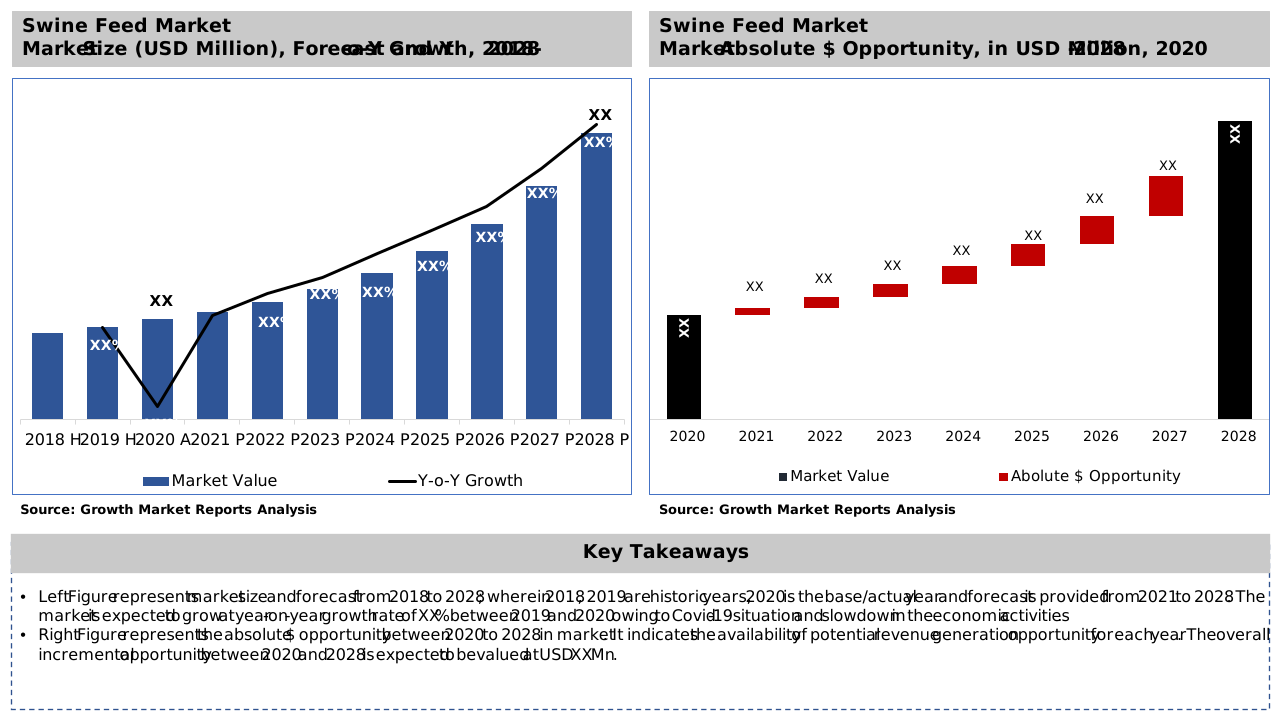
According to our latest research, the global swine feed market size reached USD 119.2 billion in 2024, with a robust compound annual growth rate (CAGR) of 4.6% between 2025 and 2033. This growth trajectory is anticipated to propel the market to a forecasted value of USD 178.3 billion by 2033. The primary growth drivers include the increasing global demand for pork, advancements in feed formulation technologies, and the rising focus on animal health and productivity across key pork-producing regions. As per our latest research, the swine feed market continues to witness significant innovation and investment, underpinned by evolving consumer preferences and the intensification of commercial pig farming worldwide.

One of the most significant growth factors shaping the swine feed market is the escalating demand for pork, which is one of the most widely consumed meats globally. The rising population, particularly in developing economies, has led to an upsurge in pork consumption, thereby driving the need for efficient and nutritionally balanced swine feed. This trend is further amplified by urbanization and changing dietary patterns, which have contributed to the expansion of commercial pig farming operations. Additionally, the emergence of modern retail formats and the growing middle-class population with higher disposable incomes are contributing to the increased consumption of pork products, creating a ripple effect on the demand for high-quality swine feed.

Another pivotal factor fueling the growth of the swine feed market is the advancement in feed formulation and nutrition science. Feed manufacturers are increasingly focusing on developing specialized products tailored to the specific nutritional requirements of pigs at various growth stages. The integration of innovative additives, such as amino acids, enzymes, and probiotics, has significantly improved feed efficiency, animal health, and overall productivity. Furthermore, the adoption of precision nutrition and digital technologies in feed formulation is enabling producers to optimize feed conversion ratios, reduce wastage, and enhance sustainability. These technological advancements are not only improving the profitability of pig farming but also supporting the global push towards sustainable livestock production.

Government regulations and policies aimed at ensuring food safety and animal welfare are also playing a crucial role in shaping the swine feed market. Stringent guidelines regarding the use of antibiotics and growth promoters in animal feed have prompted manufacturers to invest in research and development of alternative additives, such as prebiotics and organic minerals. Moreover, the growing emphasis on traceability and transparency in the animal feed supply chain is driving the adoption of quality assurance programs and certification standards. These regulatory dynamics are fostering innovation and encouraging the development of safer, more sustainable swine feed products, thereby supporting long-term market growth.

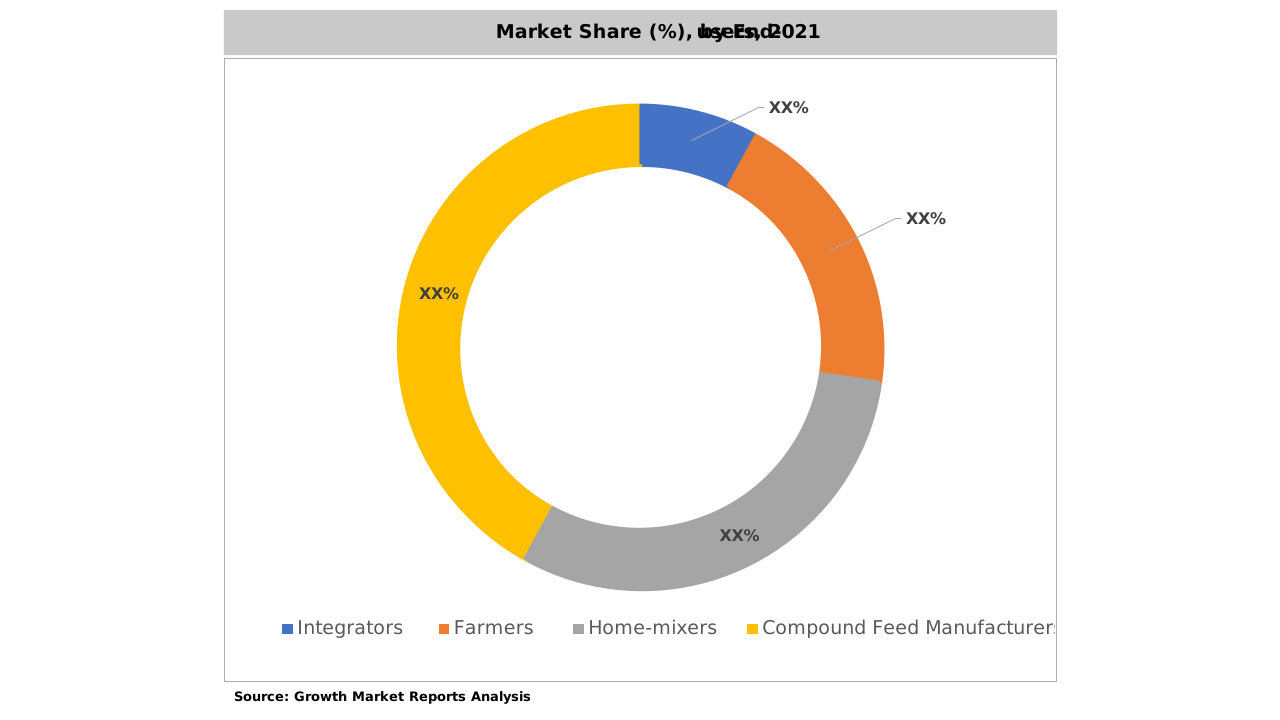
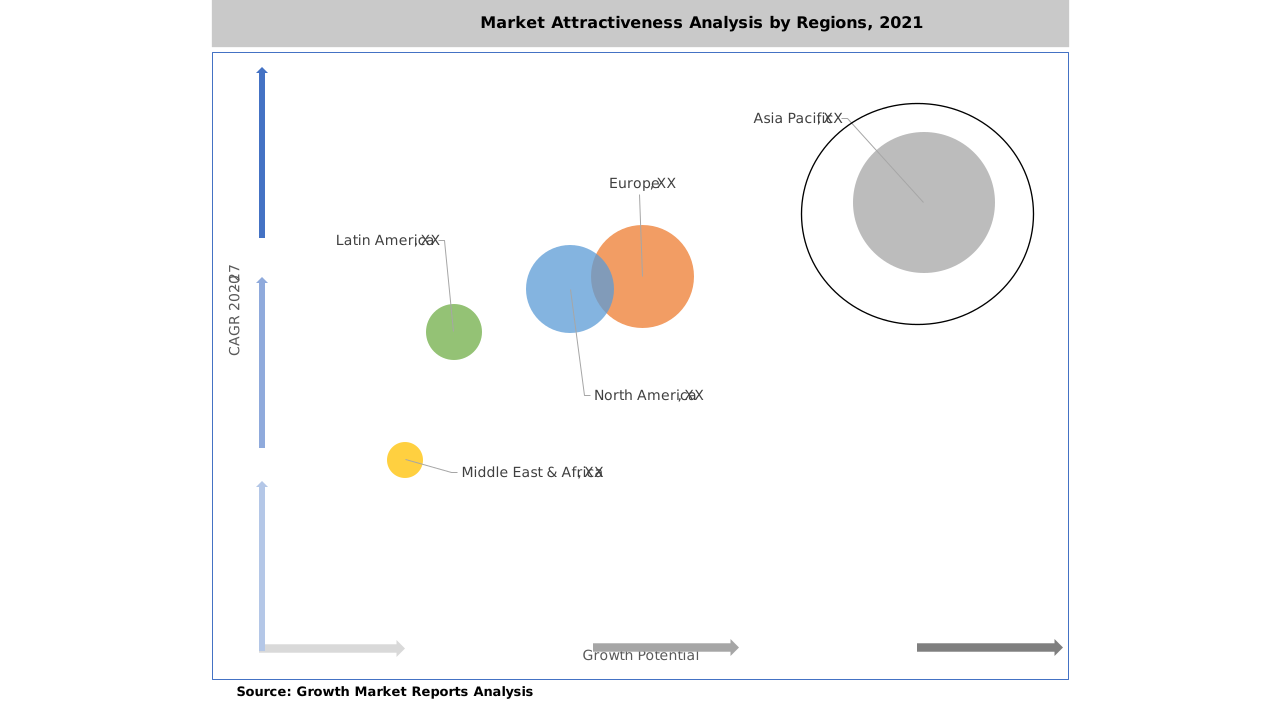
From a regional perspective, Asia Pacific continues to dominate the global swine feed market, accounting for the largest share in both production and consumption. This is primarily attributed to the region's substantial pig population, particularly in countries like China and Vietnam, where pork is a dietary staple. North America and Europe also represent significant markets, driven by advanced farming practices and high standards of animal nutrition. Latin America and the Middle East & Africa are emerging as promising regions, supported by increasing investments in livestock infrastructure and rising pork consumption. The regional dynamics of the swine feed market are influenced by factors such as local dietary preferences, regulatory frameworks, and the availability of feed ingredients, creating diverse opportunities and challenges for market participants.

Global Swine Feed Industry Outlook

Product Type Analysis

The swine feed market is segmented by product type into starter feed, grower feed, sow feed, and others, each catering to specific life stages and nutritional requirements of pigs. Starter feed, designed for piglets, is formulated to provide essential nutrients for early growth and development, ensuring a strong foundation for subsequent weight gain and health. This segment has witnessed significant innovation, with manufacturers incorporating highly digestible ingredients and functional additives to enhance feed intake and immune function in young pigs. The demand for starter feed is particularly strong in regions with intensive pig farming operations, where early weaning and rapid growth are critical for profitability.

Grower feed, which supports pigs during their rapid growth phase, is another vital segment of the swine feed market. This product type is formulated to optimize muscle development and feed efficiency, balancing energy, protein, and micronutrient content to meet the evolving needs of growing pigs. The grower feed segment benefits from advancements in feed formulation technology, including the use of precision nutrition and targeted additives to improve growth rates and reduce feed conversion ratios. Producers are increasingly seeking customized grower feed solutions that align with specific genetic lines and production systems, driving demand for innovative and flexible product offerings.

Sow feed, designed for breeding and lactating sows, plays a crucial role in reproductive performance and piglet survival. This segment is characterized by a focus on optimizing nutrient density, digestibility, and functional ingredient inclusion to support sow health, fertility, and milk production. The increasing adoption of specialized sow feed products reflects the growing recognition of the impact of maternal nutrition on overall herd productivity and profitability. Feed manufacturers are investing in research to develop advanced sow feed formulations that address challenges such as oxidative stress, immune modulation, and nutrient partitioning, thereby enhancing sow longevity and piglet outcomes.

The "others" category within the product type segment encompasses a range of specialty feeds, such as pre-starter feeds, finisher feeds, and medicated feeds, each designed to address specific production challenges or health conditions. The growing demand for tailored nutrition solutions and the rising prevalence of disease outbreaks in pig populations are driving innovation in this segment. Manufacturers are leveraging advances in feed additive technology and digital monitoring tools to develop products that support gut health, disease resistance, and overall performance. This trend is expected to continue as producers seek to maximize returns while adhering to evolving regulatory and consumer expectations.

Report Scope

Attributes Details
Report Title Swine Feed Market Research Report 2033
By Product Type Starter Feed, Grower Feed, Sow Feed, Others
By Form Pellets, Mash, Crumbles, Others
By Ingredient Cereals, Oilseed Meals, Additives, Others
By Additive Type Vitamins, Minerals, Amino Acids, Enzymes, Antibiotics, Others
By Distribution Channel Direct, Indirect
Regions Covered North America, Europe, APAC, Latin America, MEA
Base Year 2024
Historic Data 2018-2023
Forecast Period 2025-2033
Number of Pages 277
Number of Tables & Figures 304
Customization Available Yes, the report can be customized as per your need.

Form Analysis

Swine feed is available in various forms, including pellets, mash, crumbles, and others, each offering distinct advantages in terms of handling, palatability, and nutritional delivery. Pelleted feed is the most widely used form in commercial pig farming, owing to its superior feed conversion efficiency, reduced wastage, and ease of storage and transportation. The pelleting process also enhances nutrient availability and minimizes the risk of feed contamination, making it a preferred choice among large-scale producers. Technological advancements in pelleting equipment and process optimization have further improved the quality and consistency of pelleted swine feed, contributing to its growing adoption across key markets.

Mash feed, which consists of ground ingredients mixed together, remains popular in regions with traditional or small-scale pig farming operations. Mash feed is valued for its simplicity, cost-effectiveness, and flexibility in ingredient selection, allowing producers to formulate diets based on locally available raw materials. However, mash feed is associated with higher feed wastage and lower feed efficiency compared to pelleted forms, prompting a gradual shift towards more processed feed formats in many regions. Despite these challenges, mash feed continues to play a significant role in markets where infrastructure and technology adoption are limited.

Crumbles, which are essentially broken pellets, offer a compromise between the palatability of mash and the efficiency of pellets. Crumbled feed is particularly suitable for young pigs and piglets, as it is easier to consume and digest, promoting higher feed intake and growth rates. The growing focus on early piglet nutrition and the rising adoption of intensive pig farming systems are driving demand for crumbled feed products. Manufacturers are developing specialized crumble formulations with enhanced nutritional profiles and functional additives to meet the unique requirements of different production stages.

The "others" category within the form segment includes liquid feeds, extruded feeds, and specialty formats designed for specific applications or production systems. Liquid feeds, for example, are gaining traction in certain markets due to their ability to deliver precise nutrient blends and support gut health in young pigs. Similarly, extruded feeds offer improved digestibility and nutrient availability, making them suitable for high-performance production systems. The diversification of swine feed forms reflects the industry's commitment to addressing the evolving needs of producers and optimizing animal performance across diverse farming environments.

Ingredient Analysis

The ingredient composition of swine feed is a critical determinant of its nutritional value, cost-effectiveness, and overall performance. Cereals, such as corn, wheat, and barley, constitute the primary energy source in most swine feed formulations, providing the carbohydrates necessary for growth and maintenance. The availability and price volatility of cereals significantly influence feed costs and profitability, prompting producers to explore alternative energy sources and optimize ingredient inclusion rates. The integration of precision nutrition tools and feed formulation software is enabling manufacturers to balance cost and performance while ensuring compliance with nutritional standards.

Oilseed meals, including soybean meal, canola meal, and sunflower meal, are the main protein sources in swine feed, supplying essential amino acids required for muscle development and metabolic functions. The quality and digestibility of oilseed meals are critical factors affecting feed efficiency and animal performance. Advances in processing technologies and the development of high-protein meal variants are enhancing the nutritional profile of oilseed meals, supporting their widespread use in commercial swine feed production. The sustainability of oilseed meal sourcing and the management of anti-nutritional factors are emerging as key considerations for feed manufacturers and producers alike.

Additives play a vital role in swine feed formulations, contributing to animal health, growth, and feed efficiency. Common additives include vitamins, minerals, amino acids, enzymes, antibiotics, and probiotics, each serving specific functions such as immune support, nutrient utilization, and disease prevention. The increasing focus on antibiotic-free and natural feed solutions is driving innovation in additive development, with manufacturers introducing novel bioactive compounds and functional ingredients to enhance gut health and performance. Regulatory restrictions on antibiotic use are further accelerating the adoption of alternative additives, shaping the future landscape of swine feed ingredients.

The "others" category within the ingredient segment encompasses a diverse range of raw materials, including by-products, fiber sources, and specialty ingredients tailored to specific production goals or regional preferences. The utilization of agro-industrial by-products, such as distillers' grains and bakery waste, is gaining traction as a cost-effective and sustainable approach to feed formulation. The incorporation of fiber-rich ingredients and functional compounds is also supporting gut health and nutrient absorption, particularly in weaning and finishing diets. The ongoing diversification of swine feed ingredients reflects the industry's commitment to optimizing nutrition, reducing costs, and enhancing sustainability.

Additive Type Analysis

The additive segment of the swine feed market encompasses a broad spectrum of products, each designed to address specific nutritional, health, and performance objectives. Vitamins are essential for metabolic functions, growth, and immune support, making them a staple in all swine feed formulations. The precise inclusion of vitamins, tailored to the animal's life stage and production goals, is critical for optimizing health and productivity. Advances in vitamin synthesis and delivery technologies are enhancing their bioavailability and stability, supporting improved animal outcomes and feed efficiency.

Minerals, including macro and trace elements, are crucial for bone development, enzyme function, and overall metabolic health in pigs. The bioavailability and interaction of minerals with other feed components are key factors influencing their effectiveness. Manufacturers are increasingly focusing on the development of organic and chelated mineral sources, which offer superior absorption and reduced environmental impact compared to traditional inorganic forms. The growing emphasis on precision mineral nutrition is driving demand for specialized mineral blends and premixes tailored to specific production systems and regional requirements.

Amino acids, both essential and non-essential, are fundamental building blocks of protein and play a pivotal role in muscle development, growth, and feed efficiency. The supplementation of synthetic amino acids, such as lysine, methionine, and threonine, allows for the formulation of low-protein diets without compromising performance, thereby reducing feed costs and environmental nitrogen output. The increasing adoption of amino acid supplementation reflects the industry's commitment to sustainable and cost-effective swine production. Innovations in amino acid production and delivery are further supporting the development of customized feed solutions for diverse production systems.

Enzymes, antibiotics, and other functional additives are integral to modern swine feed formulations, supporting nutrient utilization, gut health, and disease prevention. The use of feed enzymes, such as phytases and proteases, enhances the digestibility of feed ingredients and reduces nutrient excretion, contributing to improved feed efficiency and environmental sustainability. With the tightening of regulations on antibiotic use, the market is witnessing a shift towards natural alternatives, including probiotics, prebiotics, and phytogenic compounds. These trends are driving ongoing research and development in the additive segment, with manufacturers striving to deliver innovative solutions that meet evolving regulatory and consumer demands.

Distribution Channel Analysis

The swine feed market is segmented by distribution channel into direct and indirect channels, each offering distinct advantages and challenges for manufacturers and producers. Direct distribution channels involve the sale of feed products directly from manufacturers to large-scale pig farms, cooperatives, or integrated production systems. This approach allows for greater control over pricing, quality assurance, and customer relationships, enabling manufacturers to tailor products and services to specific client needs. The direct channel is particularly prevalent in regions with advanced commercial pig farming operations, where large volumes and consistent quality are critical for operational efficiency.

Indirect distribution channels, which include wholesalers, retailers, and distributors, play a vital role in reaching small and medium-sized pig farms, particularly in regions with fragmented market structures. Indirect channels offer broader market coverage and accessibility, enabling manufacturers to penetrate remote or underserved areas. However, this approach often involves higher distribution costs and reduced control over product quality and branding. The growing adoption of digital platforms and e-commerce solutions is transforming the indirect distribution landscape, offering new opportunities for market expansion and customer engagement.

The choice of distribution channel is influenced by factors such as market maturity, infrastructure development, and regulatory environment. In developed markets, where commercial pig farming is highly organized, direct distribution channels dominate, supported by integrated supply chains and advanced logistics networks. In contrast, emerging markets with a high prevalence of smallholder farms rely more heavily on indirect channels, which facilitate access to a diverse range of feed products and services. The ongoing evolution of distribution strategies reflects the industry's commitment to meeting the diverse needs of producers while optimizing operational efficiency and market reach.

Manufacturers are increasingly investing in customer relationship management, technical support, and after-sales services to differentiate their offerings and build long-term partnerships with producers. The integration of digital technologies, such as online ordering platforms and precision farming tools, is enhancing the efficiency and transparency of distribution channels, supporting improved decision-making and resource allocation. The future of swine feed distribution will be shaped by ongoing innovations in logistics, customer engagement, and value-added services, driving continued growth and competitiveness in the global market.

Opportunities & Threats

The swine feed market presents significant opportunities for growth and innovation, driven by the rising global demand for pork and the ongoing transformation of the livestock industry. The increasing adoption of advanced feed technologies, such as precision nutrition, digital monitoring, and functional additives, is creating new avenues for product differentiation and value creation. Manufacturers that invest in research and development, sustainability initiatives, and customer-centric solutions are well-positioned to capture emerging opportunities and strengthen their competitive advantage. The expansion of commercial pig farming in developing regions, coupled with the growing focus on animal health and welfare, is expected to fuel demand for high-quality, specialized feed products in the coming years.

Another major opportunity lies in the development of sustainable and cost-effective feed ingredients, such as alternative proteins, agro-industrial by-products, and novel bioactive compounds. The increasing pressure to reduce the environmental footprint of livestock production is driving innovation in feed formulation and ingredient sourcing. Companies that prioritize sustainability, traceability, and circular economy principles are likely to benefit from evolving regulatory frameworks and consumer preferences. Collaborations with research institutions, technology providers, and value chain partners will be critical for unlocking new growth opportunities and addressing the complex challenges facing the swine feed industry.

Despite the positive outlook, the swine feed market faces several restraining factors, including price volatility of raw materials, regulatory uncertainties, and the risk of disease outbreaks in pig populations. Fluctuations in the prices of key feed ingredients, such as cereals and oilseed meals, can significantly impact production costs and profitability, particularly for small and medium-sized producers. Stringent regulations on feed safety, antibiotic use, and environmental emissions require ongoing investment in compliance and quality assurance, increasing operational complexity. Additionally, the threat of diseases such as African Swine Fever poses significant risks to pig production and feed demand, underscoring the importance of robust biosecurity measures and risk management strategies.

Regional Outlook

Asia Pacific remains the dominant region in the global swine feed market, accounting for approximately 55% of the total market value in 2024, or around USD 65.6 billion. China, as the world's largest producer and consumer of pork, drives much of the demand in this region, followed by countries like Vietnam, Thailand, and the Philippines. The rapid expansion of commercial pig farming, coupled with rising incomes and changing dietary preferences, is fueling demand for high-quality feed products. The Asia Pacific market is expected to maintain a strong CAGR of 5.1% through 2033, supported by ongoing investments in livestock infrastructure and feed technology.

North America and Europe collectively represent a significant share of the global swine feed market, with market values of USD 21.4 billion and USD 19.1 billion respectively in 2024. These regions are characterized by advanced farming practices, stringent regulatory standards, and a strong focus on animal nutrition and welfare. The adoption of precision feeding, sustainable ingredients, and digital farming technologies is driving innovation and efficiency in these markets. While growth rates in North America and Europe are moderate compared to Asia Pacific, the emphasis on quality, safety, and sustainability is expected to sustain steady market expansion over the forecast period.

Latin America and the Middle East & Africa are emerging as promising markets for swine feed, with combined market values of USD 13.1 billion in 2024. These regions are witnessing increased investments in commercial pig farming, driven by rising pork consumption and government support for livestock development. The adoption of modern feed technologies and the expansion of distribution networks are supporting market growth, although infrastructure and regulatory challenges persist. As these regions continue to develop, they are expected to contribute an increasing share to the global swine feed market, providing new opportunities for manufacturers and value chain participants.

Swine Feed Market Statistics

Competitor Outlook

The global swine feed market is highly competitive, characterized by the presence of both multinational corporations and regional players vying for market share through product innovation, strategic partnerships, and geographic expansion. The leading companies in this space are continually investing in research and development to introduce advanced feed formulations, functional additives, and digital solutions that address the evolving needs of commercial pig producers. The competitive landscape is further shaped by mergers and acquisitions, joint ventures, and collaborations aimed at strengthening market presence and expanding product portfolios. Companies are also focusing on sustainability initiatives, such as responsible sourcing and emission reduction, to align with regulatory requirements and consumer expectations.

Innovation and differentiation are key drivers of competitive advantage in the swine feed market. Leading manufacturers are leveraging cutting-edge technologies, such as precision nutrition, data analytics, and automation, to enhance feed efficiency, animal health, and overall productivity. The development of customized feed solutions tailored to specific production systems, genetic lines, and regional preferences is enabling companies to capture niche markets and build long-term customer relationships. Additionally, the integration of value-added services, such as technical support, farm management tools, and training programs, is enhancing customer loyalty and driving repeat business.

The competitive dynamics of the swine feed market are also influenced by regulatory compliance, quality assurance, and brand reputation. Companies that invest in robust quality control systems, traceability programs, and certification standards are better positioned to meet the stringent requirements of global markets and gain the trust of producers and consumers alike. The ability to navigate complex regulatory environments and adapt to changing policies on feed safety, antibiotic use, and environmental sustainability is critical for maintaining market leadership and mitigating operational risks.

Major companies operating in the global swine feed market include Cargill Inc., Archer Daniels Midland Company (ADM), Nutreco N.V., Alltech Inc., and Charoen Pokphand Group. Cargill Inc. is renowned for its extensive portfolio of animal nutrition products and its commitment to innovation and sustainability. ADM leverages its global sourcing capabilities and advanced feed technologies to deliver high-quality, customized solutions to swine producers worldwide. Nutreco N.V. is a leader in animal nutrition and aquafeed, with a strong focus on research-driven product development and sustainable practices. Alltech Inc. is recognized for its expertise in feed additives and natural solutions, supporting animal health and performance. Charoen Pokphand Group, based in Asia, is a major player in integrated livestock production and feed manufacturing, with a strong presence in key Asian markets. These companies, among others, are shaping the future of the swine feed industry through continuous innovation, strategic investments, and a commitment to meeting the evolving needs of global pork producers.

Key Players

  • Cargill, Inc.
  • Archer Daniels Midland Company (ADM)
  • Alltech, Inc.
  • Nutreco N.V.
  • Land O’Lakes, Inc. (Purina Animal Nutrition)
  • Charoen Pokphand Foods Public Company Limited (CP Foods)
  • New Hope Group
  • De Heus Animal Nutrition
  • Kent Nutrition Group
  • AB Agri Ltd.
  • ForFarmers N.V.
  • Lallemand Inc.
  • Evonik Industries AG
  • DSM Nutritional Products
  • J.D. Heiskell & Co.
  • Sunner Group
  • Wens Foodstuff Group Co., Ltd.
  • Tyson Foods, Inc.
  • BRF S.A.
  • Nutriad International NV
Swine Feed Market Overview

Segments

The Swine Feed market has been segmented on the basis of

Product Type

  • Starter Feed
  • Grower Feed
  • Sow Feed
  • Others

Form

  • Pellets
  • Mash
  • Crumbles
  • Others

Ingredient

  • Cereals
  • Oilseed Meals
  • Additives
  • Others

Additive Type

  • Vitamins
  • Minerals
  • Amino Acids
  • Enzymes
  • Antibiotics
  • Others

Distribution Channel

  • Direct
  • Indirect

Competitive Landscape

Key players competing in the swine feed market De Heus B.V., Nutreco N.V., Forfarmers B.V., Archer Daniels Midland Company, Land O’ Lakes Inc., Charoen Pokphand Foods, Cargill, Inc., Alltech, Inc., New Hope Group Co., Ltd., Agribusiness Holding Miratorg, and J.D. Heiskell & Co.

Some of these players are using several market strategies such as acquisitions, merger, collaborations, partnerships, capacity expansion, and product launches to enhance their market shares and to generate revenue and rise their production line of the business in the coming years.
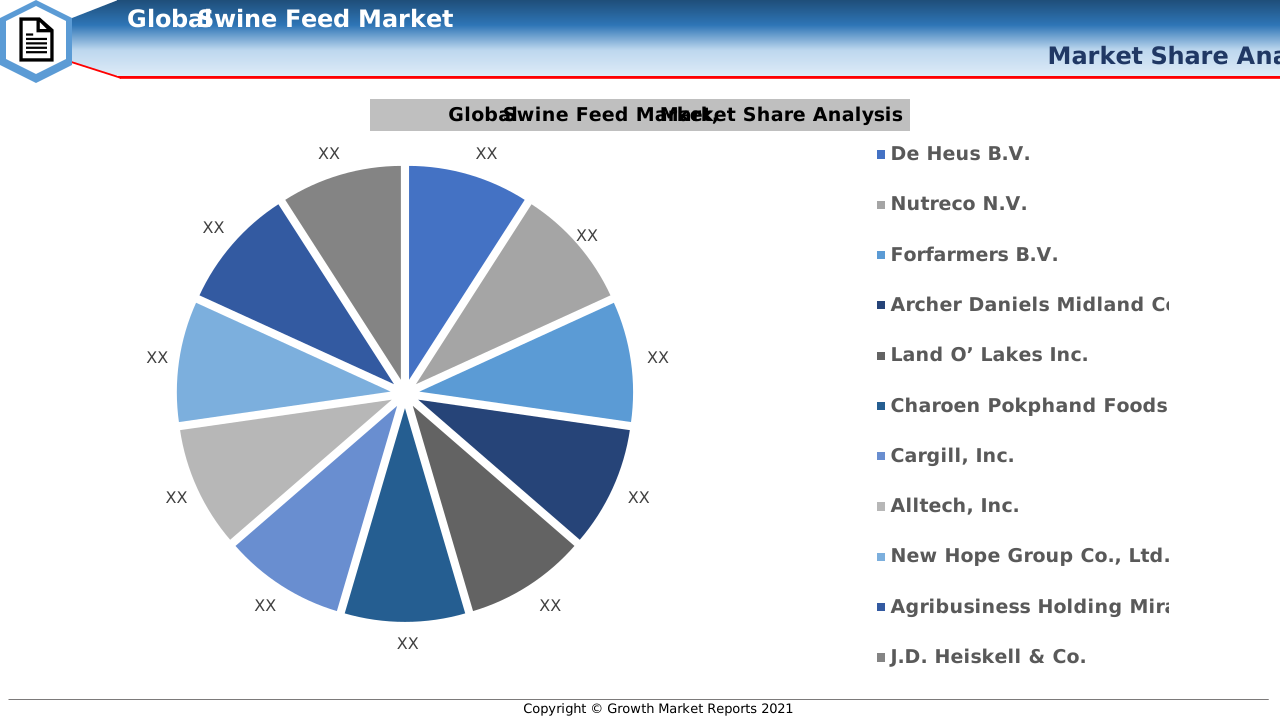
 

Swine Feed Market by Key Players


Frequently Asked Questions

Challenges include price volatility of raw materials, regulatory uncertainties, disease outbreaks like African Swine Fever, and the need for compliance with food safety and environmental regulations.

Key players include Cargill Inc., Archer Daniels Midland Company (ADM), Nutreco N.V., Alltech Inc., Charoen Pokphand Foods (CP Foods), New Hope Group, De Heus Animal Nutrition, and others.

Major trends include the adoption of precision nutrition, digital monitoring, sustainable and alternative feed ingredients, antibiotic-free additives, and a focus on animal welfare. Opportunities exist in developing sustainable products and expanding into emerging markets.

Swine feed is distributed through direct channels (manufacturer to large farms or cooperatives) and indirect channels (wholesalers, retailers, distributors). Digital platforms and e-commerce are increasingly used for broader market reach.

The main ingredients include cereals (corn, wheat, barley) for energy, oilseed meals (soybean, canola, sunflower) for protein, and various additives such as vitamins, minerals, amino acids, enzymes, and probiotics.

Swine feed is available in pellets, mash, crumbles, and specialty forms like liquid or extruded feeds. Pelleted feed is the most widely used due to its efficiency, reduced wastage, and ease of handling.

Swine feed products are segmented into starter feed (for piglets), grower feed (for growing pigs), sow feed (for breeding and lactating sows), and specialty feeds such as pre-starter, finisher, and medicated feeds.

Asia Pacific is the largest market, accounting for around 55% of global value in 2024, led by China, Vietnam, Thailand, and the Philippines. North America and Europe are also significant markets, while Latin America and the Middle East & Africa are emerging as promising regions.

Key growth drivers include rising global demand for pork, advancements in feed formulation technologies, increased focus on animal health and productivity, and the expansion of commercial pig farming, especially in developing economies.

The global swine feed market reached USD 119.2 billion in 2024 and is expected to grow at a CAGR of 4.6% from 2025 to 2033, reaching a projected value of USD 178.3 billion by 2033.

Table Of Content

Chapter 1 Executive Summary
Chapter 2 Assumptions and Acronyms Used
Chapter 3 Research Methodology
Chapter 4 Swine Feed Market Overview
   4.1 Introduction
      4.1.1 Market Taxonomy
      4.1.2 Market Definition
      4.1.3 Macro-Economic Factors Impacting the Market Growth
   4.2 Swine Feed Market Dynamics
      4.2.1 Market Drivers
      4.2.2 Market Restraints
      4.2.3 Market Opportunity
   4.3 Swine Feed Market - Supply Chain Analysis
      4.3.1 List of Key Suppliers
      4.3.2 List of Key Distributors
      4.3.3 List of Key Consumers
   4.4 Key Forces Shaping the Swine Feed Market
      4.4.1 Bargaining Power of Suppliers
      4.4.2 Bargaining Power of Buyers
      4.4.3 Threat of Substitution
      4.4.4 Threat of New Entrants
      4.4.5 Competitive Rivalry
   4.5 Global Swine Feed Market Size & Forecast, 2023-2032
      4.5.1 Swine Feed Market Size and Y-o-Y Growth
      4.5.2 Swine Feed Market Absolute $ Opportunity

Chapter 5 Global Swine Feed Market Analysis and Forecast By Product Type
   5.1 Introduction
      5.1.1 Key Market Trends & Growth Opportunities By Product Type
      5.1.2 Basis Point Share (BPS) Analysis By Product Type
      5.1.3 Absolute $ Opportunity Assessment By Product Type
   5.2 Swine Feed Market Size Forecast By Product Type
      5.2.1 Starter Feed
      5.2.2 Grower Feed
      5.2.3 Sow Feed
      5.2.4 Others
   5.3 Market Attractiveness Analysis By Product Type

Chapter 6 Global Swine Feed Market Analysis and Forecast By Form
   6.1 Introduction
      6.1.1 Key Market Trends & Growth Opportunities By Form
      6.1.2 Basis Point Share (BPS) Analysis By Form
      6.1.3 Absolute $ Opportunity Assessment By Form
   6.2 Swine Feed Market Size Forecast By Form
      6.2.1 Pellets
      6.2.2 Mash
      6.2.3 Crumbles
      6.2.4 Others
   6.3 Market Attractiveness Analysis By Form

Chapter 7 Global Swine Feed Market Analysis and Forecast By Ingredient
   7.1 Introduction
      7.1.1 Key Market Trends & Growth Opportunities By Ingredient
      7.1.2 Basis Point Share (BPS) Analysis By Ingredient
      7.1.3 Absolute $ Opportunity Assessment By Ingredient
   7.2 Swine Feed Market Size Forecast By Ingredient
      7.2.1 Cereals
      7.2.2 Oilseed Meals
      7.2.3 Additives
      7.2.4 Others
   7.3 Market Attractiveness Analysis By Ingredient

Chapter 8 Global Swine Feed Market Analysis and Forecast By Additive Type
   8.1 Introduction
      8.1.1 Key Market Trends & Growth Opportunities By Additive Type
      8.1.2 Basis Point Share (BPS) Analysis By Additive Type
      8.1.3 Absolute $ Opportunity Assessment By Additive Type
   8.2 Swine Feed Market Size Forecast By Additive Type
      8.2.1 Vitamins
      8.2.2 Minerals
      8.2.3 Amino Acids
      8.2.4 Enzymes
      8.2.5 Antibiotics
      8.2.6 Others
   8.3 Market Attractiveness Analysis By Additive Type

Chapter 9 Global Swine Feed Market Analysis and Forecast By Distribution Channel
   9.1 Introduction
      9.1.1 Key Market Trends & Growth Opportunities By Distribution Channel
      9.1.2 Basis Point Share (BPS) Analysis By Distribution Channel
      9.1.3 Absolute $ Opportunity Assessment By Distribution Channel
   9.2 Swine Feed Market Size Forecast By Distribution Channel
      9.2.1 Direct
      9.2.2 Indirect
   9.3 Market Attractiveness Analysis By Distribution Channel

Chapter 10 Global Swine Feed Market Analysis and Forecast by Region
   10.1 Introduction
      10.1.1 Key Market Trends & Growth Opportunities By Region
      10.1.2 Basis Point Share (BPS) Analysis By Region
      10.1.3 Absolute $ Opportunity Assessment By Region
   10.2 Swine Feed Market Size Forecast By Region
      10.2.1 North America
      10.2.2 Europe
      10.2.3 Asia Pacific
      10.2.4 Latin America
      10.2.5 Middle East & Africa (MEA)
   10.3 Market Attractiveness Analysis By Region

Chapter 11 Coronavirus Disease (COVID-19) Impact 
   11.1 Introduction 
   11.2 Current & Future Impact Analysis 
   11.3 Economic Impact Analysis 
   11.4 Government Policies 
   11.5 Investment Scenario

Chapter 12 North America Swine Feed Analysis and Forecast
   12.1 Introduction
   12.2 North America Swine Feed Market Size Forecast by Country
      12.2.1 U.S.
      12.2.2 Canada
   12.3 Basis Point Share (BPS) Analysis by Country
   12.4 Absolute $ Opportunity Assessment by Country
   12.5 Market Attractiveness Analysis by Country
   12.6 North America Swine Feed Market Size Forecast By Product Type
      12.6.1 Starter Feed
      12.6.2 Grower Feed
      12.6.3 Sow Feed
      12.6.4 Others
   12.7 Basis Point Share (BPS) Analysis By Product Type 
   12.8 Absolute $ Opportunity Assessment By Product Type 
   12.9 Market Attractiveness Analysis By Product Type
   12.10 North America Swine Feed Market Size Forecast By Form
      12.10.1 Pellets
      12.10.2 Mash
      12.10.3 Crumbles
      12.10.4 Others
   12.11 Basis Point Share (BPS) Analysis By Form 
   12.12 Absolute $ Opportunity Assessment By Form 
   12.13 Market Attractiveness Analysis By Form
   12.14 North America Swine Feed Market Size Forecast By Ingredient
      12.14.1 Cereals
      12.14.2 Oilseed Meals
      12.14.3 Additives
      12.14.4 Others
   12.15 Basis Point Share (BPS) Analysis By Ingredient 
   12.16 Absolute $ Opportunity Assessment By Ingredient 
   12.17 Market Attractiveness Analysis By Ingredient
   12.18 North America Swine Feed Market Size Forecast By Additive Type
      12.18.1 Vitamins
      12.18.2 Minerals
      12.18.3 Amino Acids
      12.18.4 Enzymes
      12.18.5 Antibiotics
      12.18.6 Others
   12.19 Basis Point Share (BPS) Analysis By Additive Type 
   12.20 Absolute $ Opportunity Assessment By Additive Type 
   12.21 Market Attractiveness Analysis By Additive Type
   12.22 North America Swine Feed Market Size Forecast By Distribution Channel
      12.22.1 Direct
      12.22.2 Indirect
   12.23 Basis Point Share (BPS) Analysis By Distribution Channel 
   12.24 Absolute $ Opportunity Assessment By Distribution Channel 
   12.25 Market Attractiveness Analysis By Distribution Channel

Chapter 13 Europe Swine Feed Analysis and Forecast
   13.1 Introduction
   13.2 Europe Swine Feed Market Size Forecast by Country
      13.2.1 Germany
      13.2.2 France
      13.2.3 Italy
      13.2.4 U.K.
      13.2.5 Spain
      13.2.6 Russia
      13.2.7 Rest of Europe
   13.3 Basis Point Share (BPS) Analysis by Country
   13.4 Absolute $ Opportunity Assessment by Country
   13.5 Market Attractiveness Analysis by Country
   13.6 Europe Swine Feed Market Size Forecast By Product Type
      13.6.1 Starter Feed
      13.6.2 Grower Feed
      13.6.3 Sow Feed
      13.6.4 Others
   13.7 Basis Point Share (BPS) Analysis By Product Type 
   13.8 Absolute $ Opportunity Assessment By Product Type 
   13.9 Market Attractiveness Analysis By Product Type
   13.10 Europe Swine Feed Market Size Forecast By Form
      13.10.1 Pellets
      13.10.2 Mash
      13.10.3 Crumbles
      13.10.4 Others
   13.11 Basis Point Share (BPS) Analysis By Form 
   13.12 Absolute $ Opportunity Assessment By Form 
   13.13 Market Attractiveness Analysis By Form
   13.14 Europe Swine Feed Market Size Forecast By Ingredient
      13.14.1 Cereals
      13.14.2 Oilseed Meals
      13.14.3 Additives
      13.14.4 Others
   13.15 Basis Point Share (BPS) Analysis By Ingredient 
   13.16 Absolute $ Opportunity Assessment By Ingredient 
   13.17 Market Attractiveness Analysis By Ingredient
   13.18 Europe Swine Feed Market Size Forecast By Additive Type
      13.18.1 Vitamins
      13.18.2 Minerals
      13.18.3 Amino Acids
      13.18.4 Enzymes
      13.18.5 Antibiotics
      13.18.6 Others
   13.19 Basis Point Share (BPS) Analysis By Additive Type 
   13.20 Absolute $ Opportunity Assessment By Additive Type 
   13.21 Market Attractiveness Analysis By Additive Type
   13.22 Europe Swine Feed Market Size Forecast By Distribution Channel
      13.22.1 Direct
      13.22.2 Indirect
   13.23 Basis Point Share (BPS) Analysis By Distribution Channel 
   13.24 Absolute $ Opportunity Assessment By Distribution Channel 
   13.25 Market Attractiveness Analysis By Distribution Channel

Chapter 14 Asia Pacific Swine Feed Analysis and Forecast
   14.1 Introduction
   14.2 Asia Pacific Swine Feed Market Size Forecast by Country
      14.2.1 China
      14.2.2 Japan
      14.2.3 South Korea
      14.2.4 India
      14.2.5 Australia
      14.2.6 South East Asia (SEA)
      14.2.7 Rest of Asia Pacific (APAC)
   14.3 Basis Point Share (BPS) Analysis by Country
   14.4 Absolute $ Opportunity Assessment by Country
   14.5 Market Attractiveness Analysis by Country
   14.6 Asia Pacific Swine Feed Market Size Forecast By Product Type
      14.6.1 Starter Feed
      14.6.2 Grower Feed
      14.6.3 Sow Feed
      14.6.4 Others
   14.7 Basis Point Share (BPS) Analysis By Product Type 
   14.8 Absolute $ Opportunity Assessment By Product Type 
   14.9 Market Attractiveness Analysis By Product Type
   14.10 Asia Pacific Swine Feed Market Size Forecast By Form
      14.10.1 Pellets
      14.10.2 Mash
      14.10.3 Crumbles
      14.10.4 Others
   14.11 Basis Point Share (BPS) Analysis By Form 
   14.12 Absolute $ Opportunity Assessment By Form 
   14.13 Market Attractiveness Analysis By Form
   14.14 Asia Pacific Swine Feed Market Size Forecast By Ingredient
      14.14.1 Cereals
      14.14.2 Oilseed Meals
      14.14.3 Additives
      14.14.4 Others
   14.15 Basis Point Share (BPS) Analysis By Ingredient 
   14.16 Absolute $ Opportunity Assessment By Ingredient 
   14.17 Market Attractiveness Analysis By Ingredient
   14.18 Asia Pacific Swine Feed Market Size Forecast By Additive Type
      14.18.1 Vitamins
      14.18.2 Minerals
      14.18.3 Amino Acids
      14.18.4 Enzymes
      14.18.5 Antibiotics
      14.18.6 Others
   14.19 Basis Point Share (BPS) Analysis By Additive Type 
   14.20 Absolute $ Opportunity Assessment By Additive Type 
   14.21 Market Attractiveness Analysis By Additive Type
   14.22 Asia Pacific Swine Feed Market Size Forecast By Distribution Channel
      14.22.1 Direct
      14.22.2 Indirect
   14.23 Basis Point Share (BPS) Analysis By Distribution Channel 
   14.24 Absolute $ Opportunity Assessment By Distribution Channel 
   14.25 Market Attractiveness Analysis By Distribution Channel

Chapter 15 Latin America Swine Feed Analysis and Forecast
   15.1 Introduction
   15.2 Latin America Swine Feed Market Size Forecast by Country
      15.2.1 Brazil
      15.2.2 Mexico
      15.2.3 Rest of Latin America (LATAM)
   15.3 Basis Point Share (BPS) Analysis by Country
   15.4 Absolute $ Opportunity Assessment by Country
   15.5 Market Attractiveness Analysis by Country
   15.6 Latin America Swine Feed Market Size Forecast By Product Type
      15.6.1 Starter Feed
      15.6.2 Grower Feed
      15.6.3 Sow Feed
      15.6.4 Others
   15.7 Basis Point Share (BPS) Analysis By Product Type 
   15.8 Absolute $ Opportunity Assessment By Product Type 
   15.9 Market Attractiveness Analysis By Product Type
   15.10 Latin America Swine Feed Market Size Forecast By Form
      15.10.1 Pellets
      15.10.2 Mash
      15.10.3 Crumbles
      15.10.4 Others
   15.11 Basis Point Share (BPS) Analysis By Form 
   15.12 Absolute $ Opportunity Assessment By Form 
   15.13 Market Attractiveness Analysis By Form
   15.14 Latin America Swine Feed Market Size Forecast By Ingredient
      15.14.1 Cereals
      15.14.2 Oilseed Meals
      15.14.3 Additives
      15.14.4 Others
   15.15 Basis Point Share (BPS) Analysis By Ingredient 
   15.16 Absolute $ Opportunity Assessment By Ingredient 
   15.17 Market Attractiveness Analysis By Ingredient
   15.18 Latin America Swine Feed Market Size Forecast By Additive Type
      15.18.1 Vitamins
      15.18.2 Minerals
      15.18.3 Amino Acids
      15.18.4 Enzymes
      15.18.5 Antibiotics
      15.18.6 Others
   15.19 Basis Point Share (BPS) Analysis By Additive Type 
   15.20 Absolute $ Opportunity Assessment By Additive Type 
   15.21 Market Attractiveness Analysis By Additive Type
   15.22 Latin America Swine Feed Market Size Forecast By Distribution Channel
      15.22.1 Direct
      15.22.2 Indirect
   15.23 Basis Point Share (BPS) Analysis By Distribution Channel 
   15.24 Absolute $ Opportunity Assessment By Distribution Channel 
   15.25 Market Attractiveness Analysis By Distribution Channel

Chapter 16 Middle East & Africa (MEA) Swine Feed Analysis and Forecast
   16.1 Introduction
   16.2 Middle East & Africa (MEA) Swine Feed Market Size Forecast by Country
      16.2.1 Saudi Arabia
      16.2.2 South Africa
      16.2.3 UAE
      16.2.4 Rest of Middle East & Africa (MEA)
   16.3 Basis Point Share (BPS) Analysis by Country
   16.4 Absolute $ Opportunity Assessment by Country
   16.5 Market Attractiveness Analysis by Country
   16.6 Middle East & Africa (MEA) Swine Feed Market Size Forecast By Product Type
      16.6.1 Starter Feed
      16.6.2 Grower Feed
      16.6.3 Sow Feed
      16.6.4 Others
   16.7 Basis Point Share (BPS) Analysis By Product Type 
   16.8 Absolute $ Opportunity Assessment By Product Type 
   16.9 Market Attractiveness Analysis By Product Type
   16.10 Middle East & Africa (MEA) Swine Feed Market Size Forecast By Form
      16.10.1 Pellets
      16.10.2 Mash
      16.10.3 Crumbles
      16.10.4 Others
   16.11 Basis Point Share (BPS) Analysis By Form 
   16.12 Absolute $ Opportunity Assessment By Form 
   16.13 Market Attractiveness Analysis By Form
   16.14 Middle East & Africa (MEA) Swine Feed Market Size Forecast By Ingredient
      16.14.1 Cereals
      16.14.2 Oilseed Meals
      16.14.3 Additives
      16.14.4 Others
   16.15 Basis Point Share (BPS) Analysis By Ingredient 
   16.16 Absolute $ Opportunity Assessment By Ingredient 
   16.17 Market Attractiveness Analysis By Ingredient
   16.18 Middle East & Africa (MEA) Swine Feed Market Size Forecast By Additive Type
      16.18.1 Vitamins
      16.18.2 Minerals
      16.18.3 Amino Acids
      16.18.4 Enzymes
      16.18.5 Antibiotics
      16.18.6 Others
   16.19 Basis Point Share (BPS) Analysis By Additive Type 
   16.20 Absolute $ Opportunity Assessment By Additive Type 
   16.21 Market Attractiveness Analysis By Additive Type
   16.22 Middle East & Africa (MEA) Swine Feed Market Size Forecast By Distribution Channel
      16.22.1 Direct
      16.22.2 Indirect
   16.23 Basis Point Share (BPS) Analysis By Distribution Channel 
   16.24 Absolute $ Opportunity Assessment By Distribution Channel 
   16.25 Market Attractiveness Analysis By Distribution Channel

Chapter 17 Competition Landscape 
   17.1 Swine Feed Market: Competitive Dashboard
   17.2 Global Swine Feed Market: Market Share Analysis, 2023
   17.3 Company Profiles (Details – Overview, Financials, Developments, Strategy) 
      17.3.1 Cargill, Inc.
Archer Daniels Midland Company (ADM)
Alltech, Inc.
Nutreco N.V.
Land O’Lakes, Inc. (Purina Animal Nutrition)
Charoen Pokphand Foods Public Company Limited (CP Foods)
New Hope Group
De Heus Animal Nutrition
Kent Nutrition Group
AB Agri Ltd.
ForFarmers N.V.
Lallemand Inc.
Evonik Industries AG
DSM Nutritional Products
J.D. Heiskell & Co.
Sunner Group
Wens Foodstuff Group Co., Ltd.
Tyson Foods, Inc.
BRF S.A.
Nutriad International NV

Methodology

Our Clients

Siemens Healthcare
Deloitte
Honda Motor Co. Ltd.
General Mills
Microsoft
The John Holland Group
FedEx Logistics
Nestle SA