Superfood Market Research Report 2033

Superfood Market Research Report 2033

Segments - by Product Type (Fruits, Vegetables, Grains & Seeds, Herbs & Roots, Others), by Application (Beverages, Bakery & Confectionery, Snacks, Dairy Products, Others), by Distribution Channel (Supermarkets/Hypermarkets, Convenience Stores, Online Retail, Specialty Stores, Others)

https://growthmarketreports.com/Anuradha
Author : Anuradha B. More
https://growthmarketreports.com/Vaibhav
Fact-checked by : Vaibhav Chandola
https://growthmarketreports.com/Shruti
Editor : Shruti Bhat

Upcoming | Report ID :FB-4482 | 4.7 Rating | 66 Reviews | 270 Pages | Format : Docx PDF

Report Description


Superfood Market Outlook

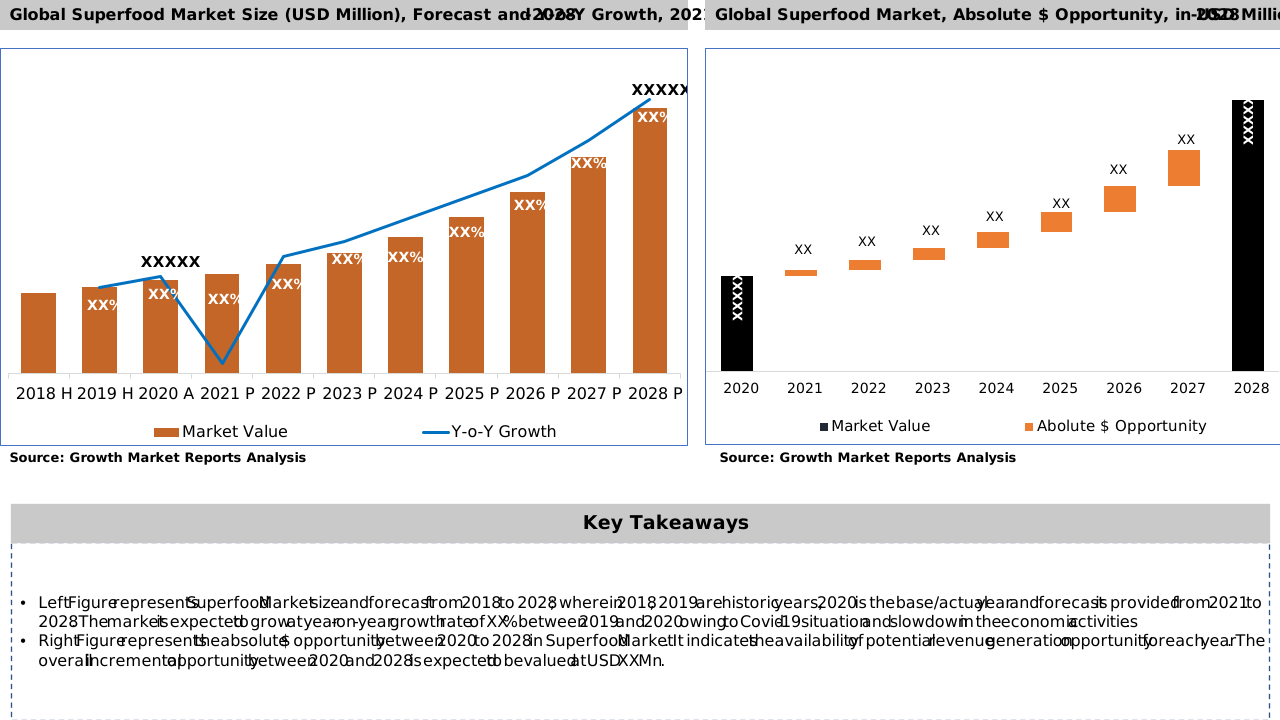
As per our latest research, the global superfood market size reached USD 178.6 billion in 2024, driven by increasing consumer awareness of health and wellness, coupled with the rising prevalence of lifestyle-related diseases. The market is projected to grow at a robust CAGR of 7.5% from 2025 to 2033, reaching an estimated USD 340.2 billion by 2033. This significant expansion is attributed to the escalating demand for nutrient-dense foods, evolving dietary preferences, and the incorporation of superfoods into mainstream food and beverage products. The superfood market is witnessing substantial innovation, with manufacturers introducing new product offerings and expanding their distribution networks to cater to a broader consumer base.

One of the primary growth factors propelling the superfood market is the global shift towards preventive healthcare and wellness-oriented lifestyles. Consumers are increasingly seeking foods that offer functional benefits beyond basic nutrition, such as antioxidants, vitamins, minerals, and phytochemicals. The rising prevalence of chronic conditions like obesity, diabetes, and cardiovascular diseases has led individuals to adopt healthier eating habits, fueling the adoption of superfoods such as berries, seeds, and leafy greens. Additionally, the influence of social media, celebrity endorsements, and health-focused marketing campaigns has heightened consumer awareness and amplified the perceived value of superfoods in daily diets.

Another key driver of the superfood market is the rapid innovation in product development and formulation. Food and beverage companies are continuously introducing new superfood-infused products, including beverages, snacks, bakery items, and dairy alternatives, to cater to diverse consumer preferences. The integration of superfoods into convenient, ready-to-eat, and on-the-go formats has further expanded their accessibility and appeal, especially among busy urban populations. Furthermore, advancements in food processing technologies have enabled the preservation of nutritional integrity and taste, allowing superfoods to be incorporated into a wide range of applications without compromising quality.

Sustainability and ethical sourcing are also playing a pivotal role in shaping the superfood market landscape. Consumers are increasingly conscious of the environmental and social impact of their food choices, prompting manufacturers to adopt transparent sourcing practices and certifications such as organic, non-GMO, and fair trade. The demand for locally sourced and minimally processed superfoods is on the rise, reflecting a broader trend towards clean label and eco-friendly products. This focus on sustainability not only enhances brand credibility but also fosters long-term consumer loyalty, contributing to the sustained growth of the superfood market.

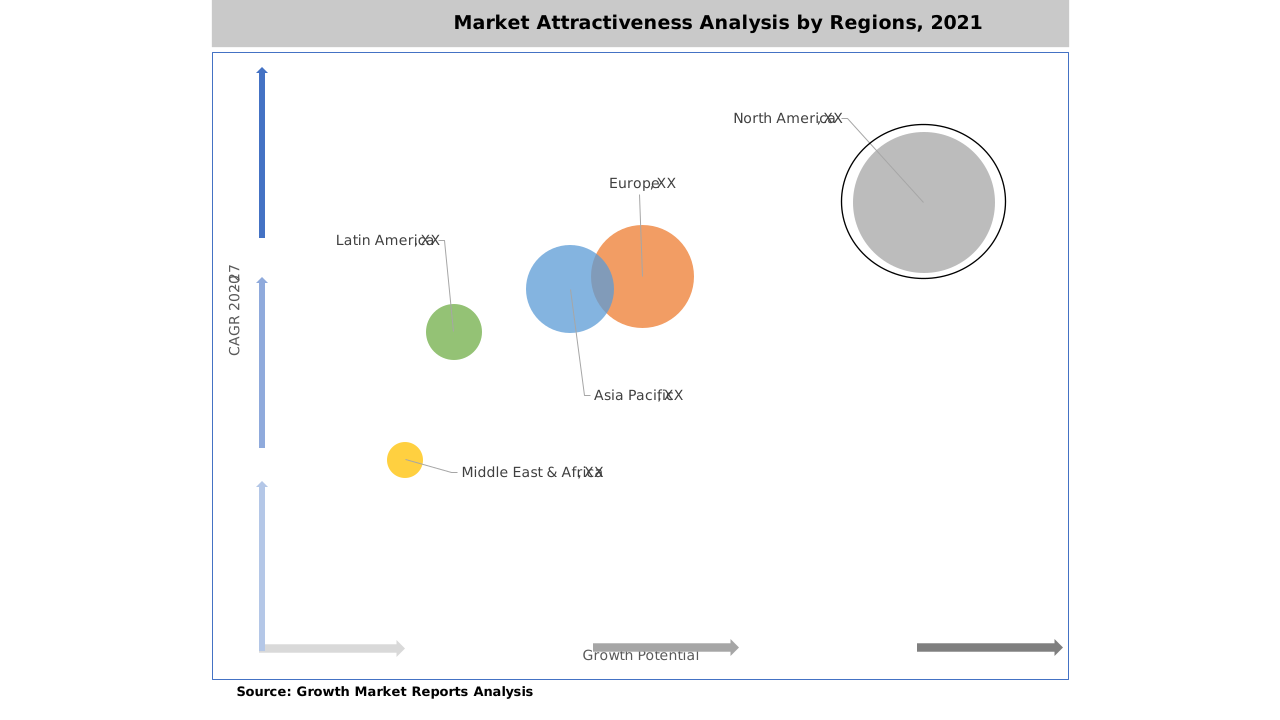
From a regional perspective, North America and Europe currently dominate the superfood market, accounting for a significant share of global revenue due to high consumer awareness, advanced retail infrastructure, and strong presence of leading market players. However, the Asia Pacific region is emerging as the fastest-growing market, driven by rising disposable incomes, urbanization, and increasing adoption of Western dietary patterns. Latin America and the Middle East & Africa are also witnessing steady growth, supported by expanding distribution networks and growing health consciousness among consumers. Overall, the global superfood market is poised for robust expansion across all major regions, underpinned by favorable demographic and socioeconomic trends.

Global Superfood Industry Outlook

Product Type Analysis

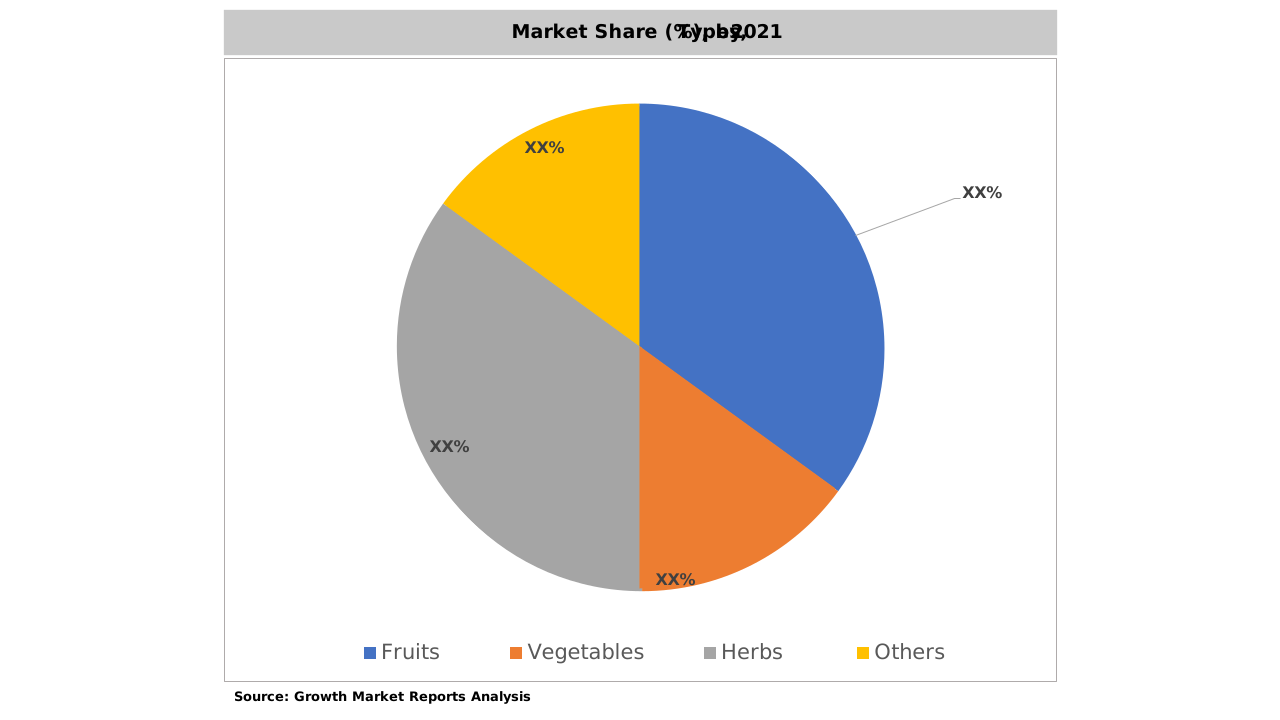
The superfood market, when segmented by product type, reveals a diverse landscape encompassing fruits, vegetables, grains & seeds, herbs & roots, and other niche categories. Among these, fruits such as acai berries, blueberries, and goji berries have garnered significant attention due to their high antioxidant content and associated health benefits. The popularity of fruit-based superfoods is further bolstered by their versatile usage in smoothies, juices, and snack bars, making them a staple in health-conscious households. Vegetables like kale, spinach, and broccoli are also gaining momentum, driven by their rich nutrient profiles and their integration into salads, green juices, and functional food products. The grains & seeds segment, featuring chia seeds, quinoa, and flaxseeds, is experiencing robust growth as consumers seek plant-based protein sources and fiber-rich alternatives for improved digestive health and weight management.

Herbs & roots, including turmeric, ginger, and maca root, represent another dynamic segment within the superfood market. These products are renowned for their anti-inflammatory, immune-boosting, and adaptogenic properties, making them popular ingredients in herbal teas, supplements, and functional beverages. The increasing consumer interest in traditional medicine and holistic wellness practices has further propelled the demand for herbs and roots, particularly in regions with strong cultural ties to Ayurveda and Traditional Chinese Medicine. The "others" category, which encompasses products like seaweed, algae, and edible flowers, is also witnessing gradual growth as consumers explore novel superfoods with unique nutritional profiles and culinary applications.

The competitive landscape within each product type segment is characterized by continuous innovation and product diversification. Manufacturers are not only focusing on the nutritional value of superfoods but also emphasizing taste, convenience, and visual appeal to attract a broader consumer base. For example, the introduction of freeze-dried fruit powders, sprouted grain snacks, and ready-to-drink herbal elixirs has expanded the market reach of superfoods beyond traditional health food stores to mainstream retail channels. This trend is expected to intensify in the coming years, with companies investing in research and development to uncover new superfood sources and optimize their functional properties.

Supply chain dynamics play a crucial role in the product type segment, particularly with respect to sourcing, quality control, and traceability. The growing demand for organic and sustainably sourced superfoods has prompted manufacturers to establish direct relationships with farmers and cooperatives, ensuring consistent supply and adherence to stringent quality standards. Certifications such as USDA Organic, Fair Trade, and Non-GMO Project Verified are becoming increasingly important in building consumer trust and differentiating products in a crowded marketplace. As the superfood market continues to evolve, product type segmentation will remain a key determinant of market success, with innovation, transparency, and sustainability serving as critical differentiators.

Report Scope

Attributes Details
Report Title Superfood Market Research Report 2033
By Product Type Fruits, Vegetables, Grains & Seeds, Herbs & Roots, Others
By Application Beverages, Bakery & Confectionery, Snacks, Dairy Products, Others
By Distribution Channel Supermarkets/Hypermarkets, Convenience Stores, Online Retail, Specialty Stores, Others
Regions Covered North America, Europe, APAC, Latin America, MEA
Base Year 2024
Historic Data 2018-2023
Forecast Period 2025-2033
Number of Pages 270
Number of Tables & Figures 283
Customization Available Yes, the report can be customized as per your need.

Application Analysis

The application segment of the superfood market encompasses a wide range of end-use categories, including beverages, bakery & confectionery, snacks, dairy products, and others. Beverages represent the largest application segment, accounting for a significant share of market revenue due to the popularity of superfood-infused smoothies, juices, teas, and functional drinks. The convenience, portability, and perceived health benefits of these beverages have made them a preferred choice among urban consumers seeking quick and nutritious options. Moreover, the integration of superfoods into ready-to-drink formats has facilitated their mainstream adoption, with leading beverage brands continuously launching new flavors and formulations to cater to evolving consumer preferences.

Bakery & confectionery products infused with superfoods are also gaining traction, as consumers seek healthier alternatives to traditional baked goods and sweets. The incorporation of ingredients such as chia seeds, flaxseeds, and dried fruits into bread, muffins, cookies, and energy bars has enhanced the nutritional value and appeal of these products. Similarly, the snacks segment is witnessing robust growth, driven by the demand for guilt-free, nutrient-dense snacking options. Superfood-based chips, trail mixes, granola bars, and protein bites are increasingly available across retail channels, catering to the needs of health-conscious consumers and fitness enthusiasts.

Dairy products, including yogurt, kefir, and plant-based alternatives, represent another important application area for superfoods. The addition of probiotics, prebiotics, and superfood powders such as spirulina and matcha has elevated the functional profile of dairy products, appealing to consumers seeking digestive health and immune support. The "others" category encompasses a range of innovative applications, including sauces, dressings, meal replacements, and dietary supplements, reflecting the versatility and adaptability of superfoods across diverse culinary contexts.

Manufacturers operating in the application segment are increasingly focused on product differentiation, clean label formulations, and functional claims to capture market share. The use of natural sweeteners, plant-based proteins, and allergen-free ingredients has become a standard practice, aligning with consumer preferences for transparency and healthfulness. Furthermore, collaborations between food scientists, nutritionists, and culinary experts are driving the development of novel superfood applications that combine taste, convenience, and nutrition. As consumer demand for functional foods continues to rise, the application segment of the superfood market is expected to witness sustained innovation and expansion.

Distribution Channel Analysis

The distribution channel segment of the superfood market is undergoing significant transformation, with the emergence of new retail formats and the increasing penetration of e-commerce. Supermarkets and hypermarkets remain the dominant distribution channels, accounting for the largest share of market sales due to their extensive product assortments, competitive pricing, and widespread accessibility. These retail outlets serve as one-stop destinations for consumers seeking a variety of superfood products, including fresh produce, packaged snacks, and beverages. The presence of dedicated health food sections and in-store promotions has further enhanced the visibility and availability of superfoods in mainstream retail environments.

Convenience stores and specialty stores also play a vital role in the distribution of superfoods, particularly in urban and suburban areas where consumers prioritize convenience and personalized service. Specialty stores, including health food shops and organic markets, cater to niche consumer segments seeking premium, organic, and ethically sourced superfoods. These outlets often offer expert guidance, product sampling, and educational resources, fostering consumer trust and loyalty. The growth of specialty stores is particularly pronounced in developed markets, where health and wellness trends are deeply ingrained in consumer culture.

Online retail has emerged as a game-changer in the superfood market, offering unparalleled convenience, product variety, and competitive pricing. The proliferation of e-commerce platforms, direct-to-consumer brands, and subscription services has democratized access to superfoods, enabling consumers to explore and purchase products from the comfort of their homes. Online channels also facilitate the dissemination of product information, customer reviews, and educational content, empowering consumers to make informed purchasing decisions. The COVID-19 pandemic accelerated the shift towards online shopping, and this trend is expected to persist, with digital channels accounting for an increasingly significant share of superfood sales.

Other distribution channels, such as foodservice, institutional sales, and farmers' markets, contribute to the overall growth of the superfood market by reaching diverse consumer segments. Foodservice operators, including cafes, restaurants, and smoothie bars, are incorporating superfoods into their menus to cater to health-conscious diners and capitalize on the growing demand for functional foods. Farmers' markets and community-supported agriculture (CSA) programs offer locally sourced, seasonal superfoods, appealing to consumers seeking freshness, traceability, and sustainability. As the superfood market continues to evolve, the distribution channel segment will play a critical role in shaping consumer access, preferences, and purchasing behavior.

Opportunities & Threats

The superfood market presents a wealth of opportunities for stakeholders across the value chain, driven by shifting consumer preferences, technological advancements, and evolving regulatory frameworks. One of the most promising opportunities lies in product innovation and diversification, as manufacturers explore new superfood sources, formulations, and delivery formats. The development of personalized nutrition solutions, functional beverages, and fortified foods tailored to specific health needs is expected to unlock new growth avenues and enhance consumer engagement. Additionally, the rising demand for plant-based and allergen-free superfoods presents a lucrative opportunity for brands to cater to vegan, vegetarian, and health-conscious consumers, further expanding the addressable market.

Another significant opportunity is the expansion into emerging markets, where rising disposable incomes, urbanization, and increasing health awareness are driving the adoption of superfoods. Companies that invest in local sourcing, culturally relevant product offerings, and targeted marketing campaigns are well-positioned to capture market share in regions such as Asia Pacific, Latin America, and the Middle East & Africa. Furthermore, the integration of digital technologies, such as e-commerce platforms, mobile apps, and data analytics, offers opportunities to enhance supply chain efficiency, improve customer engagement, and personalize marketing strategies. Strategic partnerships, mergers, and acquisitions are also expected to play a pivotal role in accelerating market growth and expanding global reach.

Despite the numerous opportunities, the superfood market faces several restraining factors that could impede its growth trajectory. One of the primary challenges is the high cost of superfood products, which limits their accessibility to price-sensitive consumers, particularly in developing markets. The premium pricing of organic, sustainably sourced, and imported superfoods can act as a barrier to widespread adoption, necessitating efforts to optimize production costs, streamline supply chains, and develop affordable product alternatives. Additionally, the proliferation of misleading health claims, lack of standardized definitions, and regulatory uncertainties pose risks to consumer trust and market credibility. Addressing these challenges will require concerted efforts from industry stakeholders, policymakers, and regulatory bodies to ensure transparency, quality, and consumer protection.

Regional Outlook

North America remains the largest regional market for superfoods, accounting for approximately 38% of the global market share in 2024, with a market value of USD 67.9 billion. The region's dominance is attributed to high consumer awareness, advanced retail infrastructure, and a strong presence of leading market players. The United States, in particular, is a major contributor to regional growth, driven by the popularity of health and wellness trends, the prevalence of lifestyle-related diseases, and the widespread availability of superfood products across retail channels. Canada and Mexico are also witnessing steady growth, supported by rising health consciousness and expanding distribution networks.

Europe represents the second-largest market for superfoods, with a market size of USD 54.7 billion in 2024 and a projected CAGR of 6.8% through 2033. The region's growth is fueled by increasing demand for organic and sustainably sourced superfoods, stringent food safety regulations, and the integration of functional ingredients into mainstream food and beverage products. Key markets such as Germany, the United Kingdom, France, and Italy are at the forefront of innovation, with manufacturers introducing new product offerings and expanding their presence in both traditional and digital retail channels. The emphasis on clean label, plant-based, and allergen-free products is particularly pronounced in Europe, reflecting evolving consumer preferences and regulatory trends.

The Asia Pacific region is emerging as the fastest-growing market for superfoods, with a market value of USD 33.2 billion in 2024 and a projected CAGR of 9.3% over the forecast period. The rapid growth in this region is driven by rising disposable incomes, urbanization, and increasing adoption of Western dietary patterns. Countries such as China, India, Japan, and Australia are witnessing a surge in demand for superfood products, supported by expanding distribution networks, government initiatives promoting healthy eating, and the influence of global health and wellness trends. Latin America and the Middle East & Africa are also experiencing steady growth, with market sizes of USD 13.8 billion and USD 8.9 billion respectively in 2024, driven by increasing health awareness, urbanization, and the introduction of superfood products tailored to local tastes and preferences.

Superfood Market Statistics

Competitor Outlook

The competitive landscape of the superfood market is characterized by intense rivalry, continuous innovation, and a dynamic mix of global and regional players. Leading companies are investing heavily in research and development to introduce new superfood products, enhance nutritional profiles, and differentiate their offerings in a crowded marketplace. Product innovation, brand positioning, and strategic partnerships are key strategies employed by market leaders to capture consumer attention and build long-term loyalty. The market is also witnessing a wave of mergers, acquisitions, and collaborations, as companies seek to expand their product portfolios, enter new markets, and leverage synergies across the value chain.

Brand reputation, quality assurance, and transparency are critical success factors in the superfood market, with consumers placing a premium on certifications such as organic, non-GMO, and fair trade. Companies are increasingly adopting sustainable sourcing practices, establishing direct relationships with farmers and cooperatives, and investing in traceability systems to ensure product integrity and build consumer trust. The rise of digital marketing, influencer collaborations, and social media campaigns has further intensified competition, enabling brands to engage with consumers, educate them about the benefits of superfoods, and drive product adoption.

The entry of new players, including startups and direct-to-consumer brands, has added dynamism to the market, fostering innovation and challenging established players to stay ahead of emerging trends. These new entrants are often agile, digitally savvy, and focused on niche segments, such as plant-based, allergen-free, or personalized nutrition solutions. The proliferation of e-commerce platforms and subscription services has lowered barriers to entry, enabling small and medium-sized enterprises to reach a global audience and compete on an equal footing with larger incumbents. As the market continues to evolve, the ability to innovate, adapt, and respond to changing consumer preferences will be critical to sustaining competitive advantage.

Some of the major companies operating in the global superfood market include Sunfood Superfoods, Nutiva Inc., Navitas Organics, Archer Daniels Midland Company, Nature’s Superfoods LLP, Superlife Co. Pte Ltd., The Green Labs LLC, Del Monte Pacific Limited, General Mills Inc., and Nestlé S.A. These companies are known for their extensive product portfolios, strong distribution networks, and commitment to quality and sustainability. For example, Sunfood Superfoods and Navitas Organics are pioneers in organic and raw superfoods, offering a wide range of products sourced from around the world. Nutiva Inc. is recognized for its focus on plant-based and organic superfoods, while Archer Daniels Midland Company leverages its global supply chain and research capabilities to deliver high-quality ingredients to food manufacturers and consumers.

General Mills Inc. and Nestlé S.A. are leveraging their scale, brand equity, and innovation capabilities to expand their presence in the superfood market, launching new products and acquiring emerging brands to capitalize on evolving consumer trends. Del Monte Pacific Limited and The Green Labs LLC are focusing on product diversification, sustainability, and regional expansion to strengthen their market positions. Nature’s Superfoods LLP and Superlife Co. Pte Ltd. are gaining traction in the Asia Pacific region, offering superfood products tailored to local tastes and preferences. As competition intensifies, market players are expected to prioritize innovation, sustainability, and consumer engagement to capture growth opportunities and maintain a competitive edge in the global superfood market.

Key Players

  • Sunfood Superfoods
  • Navitas Organics
  • Nutiva
  • Nature’s Way
  • Terrasoul Superfoods
  • Amazing Grass
  • Orgain
  • Garden of Life
  • NOW Foods
  • The Green Labs LLC
  • Superlife Co.
  • Your Super
  • Aduna
  • Pukka Herbs
  • Glanbia plc
  • Archer Daniels Midland Company (ADM)
  • Del Monte Foods
  • General Mills
  • Kraft Heinz Company
  • Nutraceutical International Corporation
Superfood Market Overview

Segments

The Superfood market has been segmented on the basis of

Product Type

  • Fruits
  • Vegetables
  • Grains & Seeds
  • Herbs & Roots
  • Others

Application

  • Beverages
  • Bakery & Confectionery
  • Snacks
  • Dairy Products
  • Others

Distribution Channel

  • Supermarkets/Hypermarkets
  • Convenience Stores
  • Online Retail
  • Specialty Stores
  • Others

Competitive Landscape

The key players of the market are Supernutrients, Nestle, Nature's Superfoods LLP and OMG Superfoods.

These companies have collaborated and partnerships in the form of co-operatives with farmers across the globe which has resulted in the growth this market and these players are anticipated to grow in the projected years.
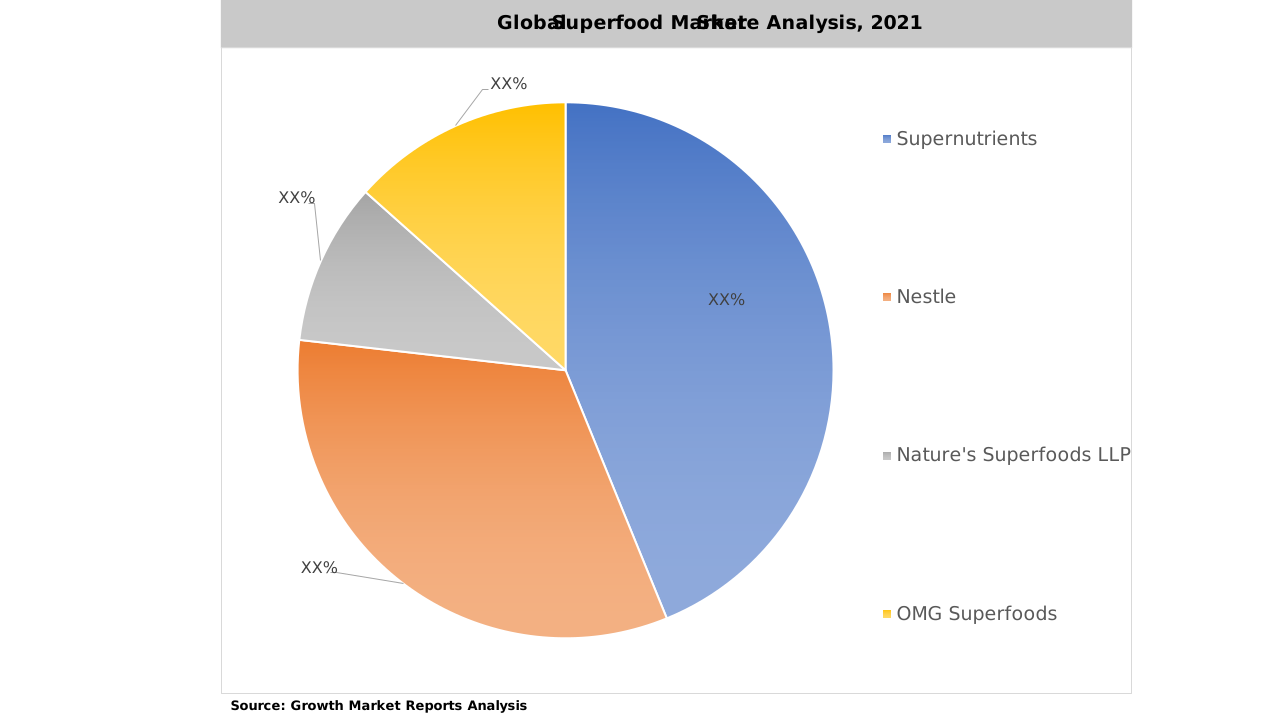

Global Superfood Market Key Players

Frequently Asked Questions

Consumers are increasingly demanding sustainably and ethically sourced superfoods, prompting manufacturers to adopt transparent sourcing practices and obtain certifications like organic, non-GMO, and fair trade.

Major players include Sunfood Superfoods, Navitas Organics, Nutiva, Archer Daniels Midland Company, General Mills, Nestlé S.A., Del Monte Foods, and The Green Labs LLC.

Key challenges include high product costs, misleading health claims, lack of standardized definitions, and regulatory uncertainties that can affect consumer trust.

Growth is driven by rising health and wellness awareness, demand for nutrient-dense foods, innovation in product development, and the integration of superfoods into mainstream diets.

Supermarkets/hypermarkets are the leading distribution channels, followed by convenience stores, specialty stores, and online retail, which is rapidly growing due to e-commerce expansion.

Superfoods are widely used in beverages, bakery & confectionery, snacks, dairy products, and other applications such as sauces, dressings, and supplements.

The superfood market includes fruits (like acai berries and blueberries), vegetables (such as kale and spinach), grains & seeds (chia, quinoa), herbs & roots (turmeric, ginger), and other categories like seaweed and algae.

North America and Europe currently dominate the superfood market, with North America accounting for about 38% of the global market share in 2024.

The superfood market is expected to grow at a CAGR of 7.5% from 2025 to 2033, reaching an estimated USD 340.2 billion by 2033.

As of 2024, the global superfood market size reached USD 178.6 billion, driven by increasing consumer awareness of health and wellness.

Table Of Content

Chapter 1 Executive Summary
Chapter 2 Assumptions and Acronyms Used
Chapter 3 Research Methodology
Chapter 4 Superfood Market Overview
   4.1 Introduction
      4.1.1 Market Taxonomy
      4.1.2 Market Definition
      4.1.3 Macro-Economic Factors Impacting the Market Growth
   4.2 Superfood Market Dynamics
      4.2.1 Market Drivers
      4.2.2 Market Restraints
      4.2.3 Market Opportunity
   4.3 Superfood Market - Supply Chain Analysis
      4.3.1 List of Key Suppliers
      4.3.2 List of Key Distributors
      4.3.3 List of Key Consumers
   4.4 Key Forces Shaping the Superfood Market
      4.4.1 Bargaining Power of Suppliers
      4.4.2 Bargaining Power of Buyers
      4.4.3 Threat of Substitution
      4.4.4 Threat of New Entrants
      4.4.5 Competitive Rivalry
   4.5 Global Superfood Market Size & Forecast, 2023-2032
      4.5.1 Superfood Market Size and Y-o-Y Growth
      4.5.2 Superfood Market Absolute $ Opportunity

Chapter 5 Global Superfood Market Analysis and Forecast By Product Type
   5.1 Introduction
      5.1.1 Key Market Trends & Growth Opportunities By Product Type
      5.1.2 Basis Point Share (BPS) Analysis By Product Type
      5.1.3 Absolute $ Opportunity Assessment By Product Type
   5.2 Superfood Market Size Forecast By Product Type
      5.2.1 Fruits
      5.2.2 Vegetables
      5.2.3 Grains & Seeds
      5.2.4 Herbs & Roots
      5.2.5 Others
   5.3 Market Attractiveness Analysis By Product Type

Chapter 6 Global Superfood Market Analysis and Forecast By Application
   6.1 Introduction
      6.1.1 Key Market Trends & Growth Opportunities By Application
      6.1.2 Basis Point Share (BPS) Analysis By Application
      6.1.3 Absolute $ Opportunity Assessment By Application
   6.2 Superfood Market Size Forecast By Application
      6.2.1 Beverages
      6.2.2 Bakery & Confectionery
      6.2.3 Snacks
      6.2.4 Dairy Products
      6.2.5 Others
   6.3 Market Attractiveness Analysis By Application

Chapter 7 Global Superfood Market Analysis and Forecast By Distribution Channel
   7.1 Introduction
      7.1.1 Key Market Trends & Growth Opportunities By Distribution Channel
      7.1.2 Basis Point Share (BPS) Analysis By Distribution Channel
      7.1.3 Absolute $ Opportunity Assessment By Distribution Channel
   7.2 Superfood Market Size Forecast By Distribution Channel
      7.2.1 Supermarkets/Hypermarkets
      7.2.2 Convenience Stores
      7.2.3 Online Retail
      7.2.4 Specialty Stores
      7.2.5 Others
   7.3 Market Attractiveness Analysis By Distribution Channel

Chapter 8 Global Superfood Market Analysis and Forecast by Region
   8.1 Introduction
      8.1.1 Key Market Trends & Growth Opportunities By Region
      8.1.2 Basis Point Share (BPS) Analysis By Region
      8.1.3 Absolute $ Opportunity Assessment By Region
   8.2 Superfood Market Size Forecast By Region
      8.2.1 North America
      8.2.2 Europe
      8.2.3 Asia Pacific
      8.2.4 Latin America
      8.2.5 Middle East & Africa (MEA)
   8.3 Market Attractiveness Analysis By Region

Chapter 9 Coronavirus Disease (COVID-19) Impact 
   9.1 Introduction 
   9.2 Current & Future Impact Analysis 
   9.3 Economic Impact Analysis 
   9.4 Government Policies 
   9.5 Investment Scenario

Chapter 10 North America Superfood Analysis and Forecast
   10.1 Introduction
   10.2 North America Superfood Market Size Forecast by Country
      10.2.1 U.S.
      10.2.2 Canada
   10.3 Basis Point Share (BPS) Analysis by Country
   10.4 Absolute $ Opportunity Assessment by Country
   10.5 Market Attractiveness Analysis by Country
   10.6 North America Superfood Market Size Forecast By Product Type
      10.6.1 Fruits
      10.6.2 Vegetables
      10.6.3 Grains & Seeds
      10.6.4 Herbs & Roots
      10.6.5 Others
   10.7 Basis Point Share (BPS) Analysis By Product Type 
   10.8 Absolute $ Opportunity Assessment By Product Type 
   10.9 Market Attractiveness Analysis By Product Type
   10.10 North America Superfood Market Size Forecast By Application
      10.10.1 Beverages
      10.10.2 Bakery & Confectionery
      10.10.3 Snacks
      10.10.4 Dairy Products
      10.10.5 Others
   10.11 Basis Point Share (BPS) Analysis By Application 
   10.12 Absolute $ Opportunity Assessment By Application 
   10.13 Market Attractiveness Analysis By Application
   10.14 North America Superfood Market Size Forecast By Distribution Channel
      10.14.1 Supermarkets/Hypermarkets
      10.14.2 Convenience Stores
      10.14.3 Online Retail
      10.14.4 Specialty Stores
      10.14.5 Others
   10.15 Basis Point Share (BPS) Analysis By Distribution Channel 
   10.16 Absolute $ Opportunity Assessment By Distribution Channel 
   10.17 Market Attractiveness Analysis By Distribution Channel

Chapter 11 Europe Superfood Analysis and Forecast
   11.1 Introduction
   11.2 Europe Superfood Market Size Forecast by Country
      11.2.1 Germany
      11.2.2 France
      11.2.3 Italy
      11.2.4 U.K.
      11.2.5 Spain
      11.2.6 Russia
      11.2.7 Rest of Europe
   11.3 Basis Point Share (BPS) Analysis by Country
   11.4 Absolute $ Opportunity Assessment by Country
   11.5 Market Attractiveness Analysis by Country
   11.6 Europe Superfood Market Size Forecast By Product Type
      11.6.1 Fruits
      11.6.2 Vegetables
      11.6.3 Grains & Seeds
      11.6.4 Herbs & Roots
      11.6.5 Others
   11.7 Basis Point Share (BPS) Analysis By Product Type 
   11.8 Absolute $ Opportunity Assessment By Product Type 
   11.9 Market Attractiveness Analysis By Product Type
   11.10 Europe Superfood Market Size Forecast By Application
      11.10.1 Beverages
      11.10.2 Bakery & Confectionery
      11.10.3 Snacks
      11.10.4 Dairy Products
      11.10.5 Others
   11.11 Basis Point Share (BPS) Analysis By Application 
   11.12 Absolute $ Opportunity Assessment By Application 
   11.13 Market Attractiveness Analysis By Application
   11.14 Europe Superfood Market Size Forecast By Distribution Channel
      11.14.1 Supermarkets/Hypermarkets
      11.14.2 Convenience Stores
      11.14.3 Online Retail
      11.14.4 Specialty Stores
      11.14.5 Others
   11.15 Basis Point Share (BPS) Analysis By Distribution Channel 
   11.16 Absolute $ Opportunity Assessment By Distribution Channel 
   11.17 Market Attractiveness Analysis By Distribution Channel

Chapter 12 Asia Pacific Superfood Analysis and Forecast
   12.1 Introduction
   12.2 Asia Pacific Superfood Market Size Forecast by Country
      12.2.1 China
      12.2.2 Japan
      12.2.3 South Korea
      12.2.4 India
      12.2.5 Australia
      12.2.6 South East Asia (SEA)
      12.2.7 Rest of Asia Pacific (APAC)
   12.3 Basis Point Share (BPS) Analysis by Country
   12.4 Absolute $ Opportunity Assessment by Country
   12.5 Market Attractiveness Analysis by Country
   12.6 Asia Pacific Superfood Market Size Forecast By Product Type
      12.6.1 Fruits
      12.6.2 Vegetables
      12.6.3 Grains & Seeds
      12.6.4 Herbs & Roots
      12.6.5 Others
   12.7 Basis Point Share (BPS) Analysis By Product Type 
   12.8 Absolute $ Opportunity Assessment By Product Type 
   12.9 Market Attractiveness Analysis By Product Type
   12.10 Asia Pacific Superfood Market Size Forecast By Application
      12.10.1 Beverages
      12.10.2 Bakery & Confectionery
      12.10.3 Snacks
      12.10.4 Dairy Products
      12.10.5 Others
   12.11 Basis Point Share (BPS) Analysis By Application 
   12.12 Absolute $ Opportunity Assessment By Application 
   12.13 Market Attractiveness Analysis By Application
   12.14 Asia Pacific Superfood Market Size Forecast By Distribution Channel
      12.14.1 Supermarkets/Hypermarkets
      12.14.2 Convenience Stores
      12.14.3 Online Retail
      12.14.4 Specialty Stores
      12.14.5 Others
   12.15 Basis Point Share (BPS) Analysis By Distribution Channel 
   12.16 Absolute $ Opportunity Assessment By Distribution Channel 
   12.17 Market Attractiveness Analysis By Distribution Channel

Chapter 13 Latin America Superfood Analysis and Forecast
   13.1 Introduction
   13.2 Latin America Superfood Market Size Forecast by Country
      13.2.1 Brazil
      13.2.2 Mexico
      13.2.3 Rest of Latin America (LATAM)
   13.3 Basis Point Share (BPS) Analysis by Country
   13.4 Absolute $ Opportunity Assessment by Country
   13.5 Market Attractiveness Analysis by Country
   13.6 Latin America Superfood Market Size Forecast By Product Type
      13.6.1 Fruits
      13.6.2 Vegetables
      13.6.3 Grains & Seeds
      13.6.4 Herbs & Roots
      13.6.5 Others
   13.7 Basis Point Share (BPS) Analysis By Product Type 
   13.8 Absolute $ Opportunity Assessment By Product Type 
   13.9 Market Attractiveness Analysis By Product Type
   13.10 Latin America Superfood Market Size Forecast By Application
      13.10.1 Beverages
      13.10.2 Bakery & Confectionery
      13.10.3 Snacks
      13.10.4 Dairy Products
      13.10.5 Others
   13.11 Basis Point Share (BPS) Analysis By Application 
   13.12 Absolute $ Opportunity Assessment By Application 
   13.13 Market Attractiveness Analysis By Application
   13.14 Latin America Superfood Market Size Forecast By Distribution Channel
      13.14.1 Supermarkets/Hypermarkets
      13.14.2 Convenience Stores
      13.14.3 Online Retail
      13.14.4 Specialty Stores
      13.14.5 Others
   13.15 Basis Point Share (BPS) Analysis By Distribution Channel 
   13.16 Absolute $ Opportunity Assessment By Distribution Channel 
   13.17 Market Attractiveness Analysis By Distribution Channel

Chapter 14 Middle East & Africa (MEA) Superfood Analysis and Forecast
   14.1 Introduction
   14.2 Middle East & Africa (MEA) Superfood Market Size Forecast by Country
      14.2.1 Saudi Arabia
      14.2.2 South Africa
      14.2.3 UAE
      14.2.4 Rest of Middle East & Africa (MEA)
   14.3 Basis Point Share (BPS) Analysis by Country
   14.4 Absolute $ Opportunity Assessment by Country
   14.5 Market Attractiveness Analysis by Country
   14.6 Middle East & Africa (MEA) Superfood Market Size Forecast By Product Type
      14.6.1 Fruits
      14.6.2 Vegetables
      14.6.3 Grains & Seeds
      14.6.4 Herbs & Roots
      14.6.5 Others
   14.7 Basis Point Share (BPS) Analysis By Product Type 
   14.8 Absolute $ Opportunity Assessment By Product Type 
   14.9 Market Attractiveness Analysis By Product Type
   14.10 Middle East & Africa (MEA) Superfood Market Size Forecast By Application
      14.10.1 Beverages
      14.10.2 Bakery & Confectionery
      14.10.3 Snacks
      14.10.4 Dairy Products
      14.10.5 Others
   14.11 Basis Point Share (BPS) Analysis By Application 
   14.12 Absolute $ Opportunity Assessment By Application 
   14.13 Market Attractiveness Analysis By Application
   14.14 Middle East & Africa (MEA) Superfood Market Size Forecast By Distribution Channel
      14.14.1 Supermarkets/Hypermarkets
      14.14.2 Convenience Stores
      14.14.3 Online Retail
      14.14.4 Specialty Stores
      14.14.5 Others
   14.15 Basis Point Share (BPS) Analysis By Distribution Channel 
   14.16 Absolute $ Opportunity Assessment By Distribution Channel 
   14.17 Market Attractiveness Analysis By Distribution Channel

Chapter 15 Competition Landscape 
   15.1 Superfood Market: Competitive Dashboard
   15.2 Global Superfood Market: Market Share Analysis, 2023
   15.3 Company Profiles (Details – Overview, Financials, Developments, Strategy) 
      15.3.1 Sunfood Superfoods
Navitas Organics
Nutiva
Nature’s Way
Terrasoul Superfoods
Amazing Grass
Orgain
Garden of Life
NOW Foods
The Green Labs LLC
Superlife Co.
Your Super
Aduna
Pukka Herbs
Glanbia plc
Archer Daniels Midland Company (ADM)
Del Monte Foods
General Mills
Kraft Heinz Company
Nutraceutical International Corporation

Methodology

Our Clients

The John Holland Group
Honda Motor Co. Ltd.
Pfizer
Deloitte
Microsoft
Dassault Aviation
Nestle SA
sinopec